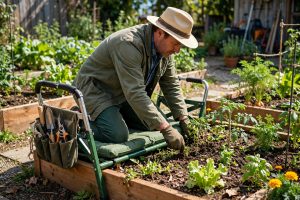
A good hat is the piece of garden gear most people buy last and regret waiting on. You feel it by noon: ears hot, the back of your neck tight and pink, and a headache building behind your eyes. The best gardening hat fixes all of that at once. It shades your face, ears and neck, it stays on when you bend over a bed, and it vents enough heat that you actually keep it on for the whole session.
That last part matters more than any spec sheet. A hat you take off after twenty minutes protects nothing. So this guide weighs comfort and fit alongside UPF ratings and brim size. Every pick below carries a verified UPF 50 or UPF 50+ rating on its main fabric, a brim at or near the three inch minimum the Skin Cancer Foundation recommends, and a way to keep it in place when you lean, reach and turn.
We did not handle these hats in a workshop test. The scores and shortlists come from verified manufacturer specifications and published owner feedback, checked at writing time in October 2026. Where listings disagreed, we used the conservative figure and said so.
Affiliate disclosure: Agribloom is reader-supported. When you buy through links in this guide, we may earn a commission from Amazon or the retailer, at no extra cost to you. It does not change which hats we recommend: every score below comes from verified manufacturer specifications and owner feedback patterns, and we do not accept payment for placement.
Table of Contents
- Best Gardening Hats at a Glance
- How We Selected the Hats
- Best Hats by Gardening Need
- Detailed Product Reviews
- How to Choose a Gardening Hat
- Sun Protection and UPF Ratings
- Hat Care and Maintenance
- Frequently Asked Questions
Quick Recommendation
Short on time? Start here.
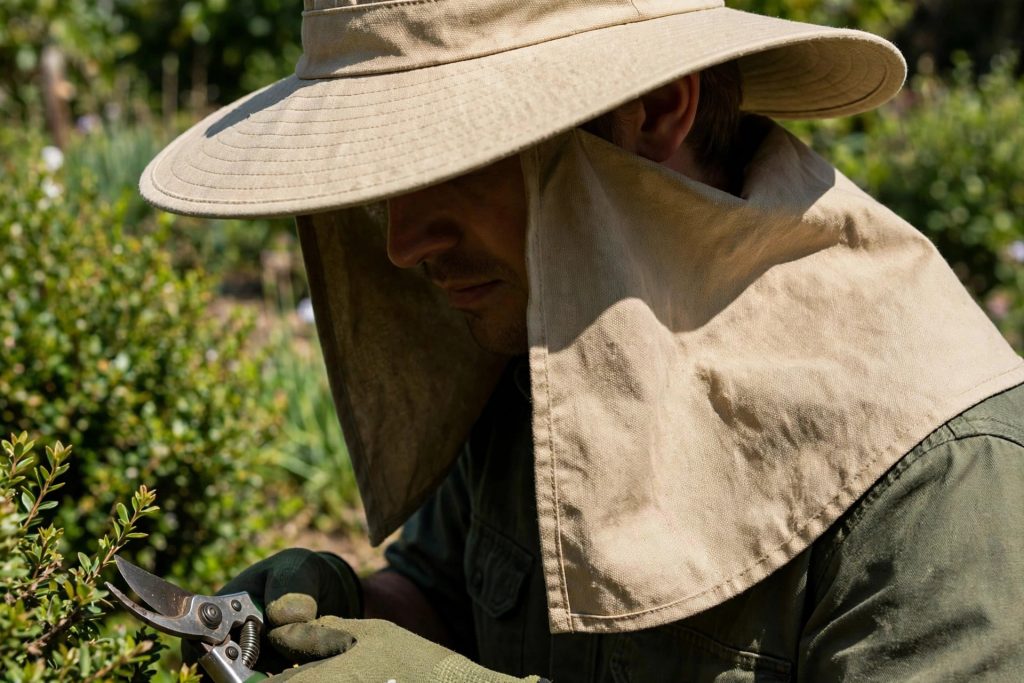
- Best for most gardeners: Sunday Afternoons Ultra Adventure Hat. Light at 2.5 oz measured, UPF 50+, with a folding brim and a 6 inch neck cape. It is the easiest hat on this list to wear for three hours straight.
- Best for maximum neck coverage: Sunday Afternoons Adventure Hat, the original. A 3.75 inch brim and a 7.5 inch neck cape cover more skin than anything else here.
- Best premium, buy once option: Tilley LTM6 Airflo. Sized fits, a lifetime guarantee, and a mesh crown that actually moves air.
- Best value booney: Columbia Bora Bora Booney II. UPF 50, a 3 inch brim, a wicking sweatband, and a price band well below the premium picks.
- Best on a tight budget: EINSKEY Wide Brim Sun Hat. A near 4 inch brim and UPF 50+ fabric for the lowest price band in the table.
- Best looking on the bench and in the yard: Coolibar Crushable Ventilated Canvas Hat. A clean 3 inch brim, UPF 50+, and it crushes flat and springs back.
Comparison Table
Price bands only, no fixed prices: $ = budget, $$ = mid range, $$$ = premium. Check the live listing for the current price.
| Product | Price band | Brim | UPF | Weight | Sizes and fit | Neck coverage | Ventilation | Chin strap | Best for | Our Score | Official page |
|---|---|---|---|---|---|---|---|---|---|---|---|
| Sunday Afternoons Ultra Adventure Hat | $$ | 3.5 in, 6 in cape | 50+ (mesh included) | 2.5 oz (measured) | S/M, L/XL, adjustable | 6 in cape | Mesh crown | Yes, adjustable | Most gardeners | 9.4 | Sunday Afternoons |
| Sunday Afternoons Adventure Hat | $$ | 3.75 in, 7.5 in cape | 50+ (mesh not rated) | 2.6 oz (measured) | S/M, L/XL, adjustable | 7.5 in cape | Mesh crown insets | Yes, adjustable | Maximum coverage | 9.2 | Sunday Afternoons |
| Tilley LTM6 Airflo Broad Brim Hat | $$$ | 3.5 in front/back, 2.5 in sides | 50+ (mesh caveat) | 3.6 to 4 oz by size | 11 sizes, 6 7/8 to 8+ | None | Airflo mesh band | Wind cord | Buy once quality | 9.0 | Tilley |
| Outdoor Research Sunbriolet Sun Hat | $$ | About 3.1 in front, 4.1 in back (measured) | 50+ | 2.8 oz (Sunbriolet) | M, L, XL, drawcord | None | Crown vents, mesh lining | Yes, removable | Windy, open plots | 8.8 | Outdoor Research |
| Columbia Bora Bora Booney II | $ | 3 in | 50 (mesh not rated) | 2.6 oz (measured) | One size 6 1/2 to 7 1/2, drawcord | None | Mesh vents | Yes, adjustable | Value booney | 8.7 | Columbia |
| Coolibar Crushable Ventilated Canvas Hat | $$ to $$$ | 3 in | 50+ (lined mesh) | Not published | Sizes, elastic band | None | Lined mesh crown | Yes | Style and packability | 8.6 | Coolibar |
| GearTOP Navigator Safari Sun Hat | $ | 3 in (maker), 3.7 in measured | 50+ | 3.5 oz (measured) | One size | None | Ventilated crown | Yes, adjustable cord | Value with wide brim | 8.5 | GearTOP |
| Solbari Trekker Sun Hat | $$ to $$$ | 3.5 in front, 6.75 in cape | 50 | 4.2 oz (tested) | S, M, L/XL | 6.75 in cape | Mesh panels | Yes, removable | Long cape coverage | 8.5 | Solbari |
| Sunday Afternoons Latitude Hat | $$ | 3.75 in front, 4 in sides, 4.75 in back | 50+ | 4.3 oz | M, L, XL | None | Not published | Yes, drawstring | Wide all around shade | 8.4 | Sunday Afternoons |
| EINSKEY Wide Brim Sun Hat | $ | 3.9 in | 50+ | Not published | One size 22 to 24 in, elastic drawstring | None | Mesh panels | Yes, adjustable | Tight budget | 8.2 | Amazon listing |
A note on weights: several makers do not publish a weight at all. Where this table prints a weight for those hats it is an independent measurement (OutdoorGearLab or CleverHiker) and is labelled measured. Sized hats like the Tilley LTM6 also gain weight as the size rises, so we print the honest range rather than the most flattering number.
How We Chose
We started with sun protection basics from the Skin Cancer Foundation: a brim of at least three inches all around, a tight weave, and rated fabric where possible. Then we filtered for garden work specifically. Gardeners bend, kneel and turn far more than hikers walk in a straight line, so a hat needs a chin strap or an adjustable sizing system, a brim that does not collapse into your eyes, and ventilation that works when you are standing still in humid air, not just moving through it.
Each hat was scored on the system below. Scores come from verified specifications and owner feedback only. We make no hands on testing claim.
| Factor | Weight | What we checked |
|---|---|---|
| Sun protection and coverage | 30% | UPF rating, brim width, neck cape or rear brim length |
| Comfort and ventilation | 25% | Mesh or vent design, sweatband, weight on the head |
| Fit and stability | 20% | Chin strap, sizing range, adjustment when bending |
| Durability and care | 15% | Fabric, water resistance, washing and guarantee |
| Value | 10% | Price band against coverage and build |
How a score is built. Each hat is scored out of 10 on every factor in the table above, using the manufacturer’s published specifications first: brim measurements, the UPF rating and what it covers, stated weight, sizes and materials. Where a maker does not publish a figure, we say so, and any figure from independent testing (OutdoorGearLab, CleverHiker) is labelled as measured, never presented as a factory specification. The factor scores are combined by the weights above to give the single Our Score beside each hat. Owner feedback shapes only the comfort and durability judgements, and it is reported as feedback, not as test data. We have not handled these hats ourselves, and no score here comes from hands-on testing.
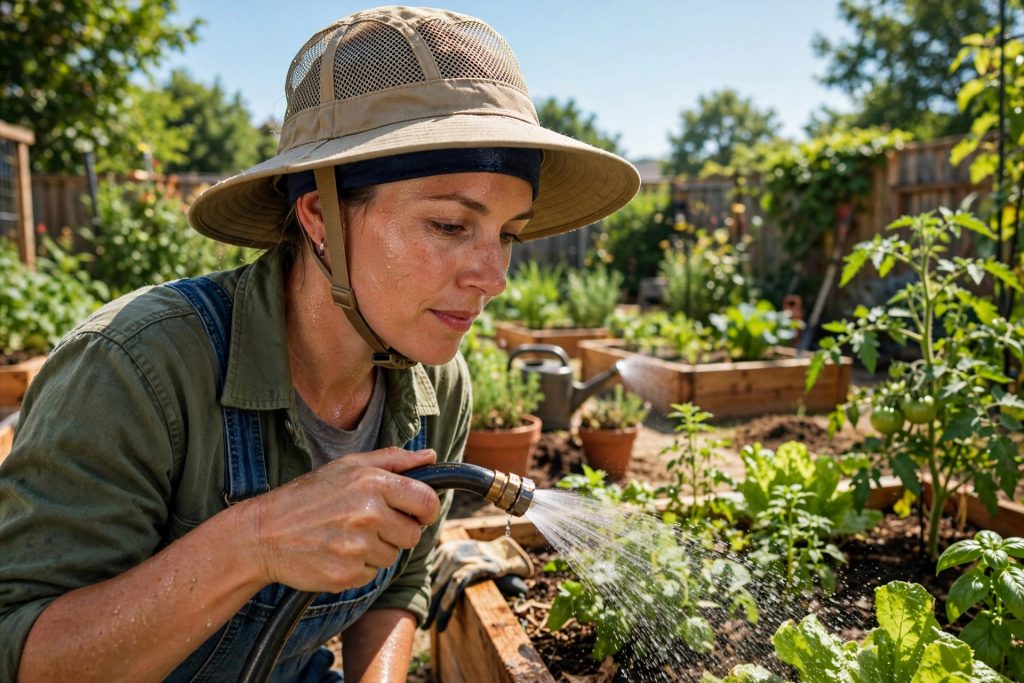
Buy First, by Gardener Type
Fair skin, or a history of sun damage: go straight to a cape hat, the Ultra Adventure or the original Adventure Hat, and treat the hat as safety gear, not clothing. Add sunscreen on your lower face and forearms, because a brim cannot catch reflected light from pale soil and mulch.
Hot, humid climates: pick ventilation first. The Tilley LTM6 Airflo and the Columbia Bora Bora both move air through the crown, and both dry fast after a sweaty morning.
Smallholding and market garden work, long hours: weight and stability win. The Sunbriolet has a foam stiffened brim that holds its line in wind, and the Ultra Adventure folds into a pocket when you go indoors.
Occasional weekend gardener: do not overspend. The EINSKEY or the GearTOP Navigator will cover a Saturday morning session well, and the money saved buys gloves and seed.
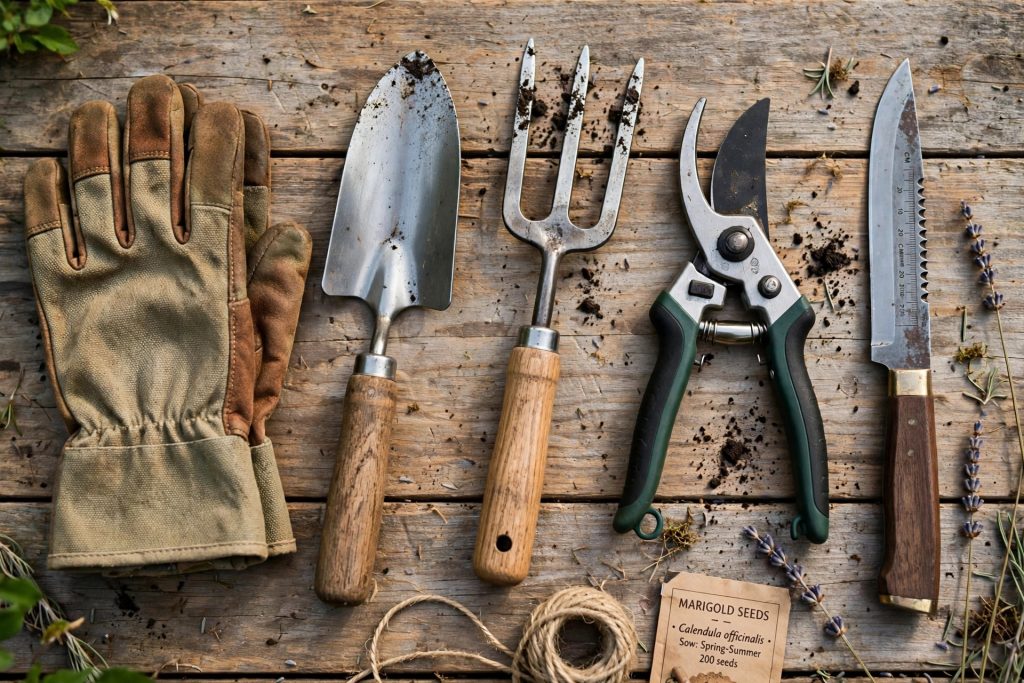
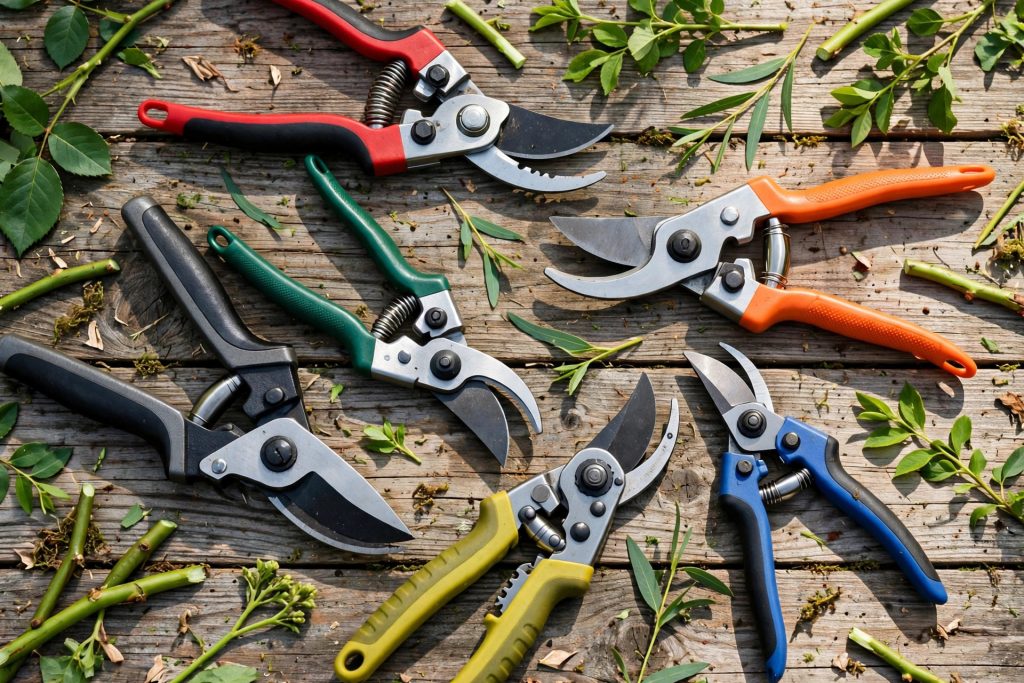
If you are building out the rest of your kit at the same time, the cluster hub and the pruning shears roundup below are the natural next reads.
The 10 Picks in Detail
1. Sunday Afternoons Ultra Adventure Hat
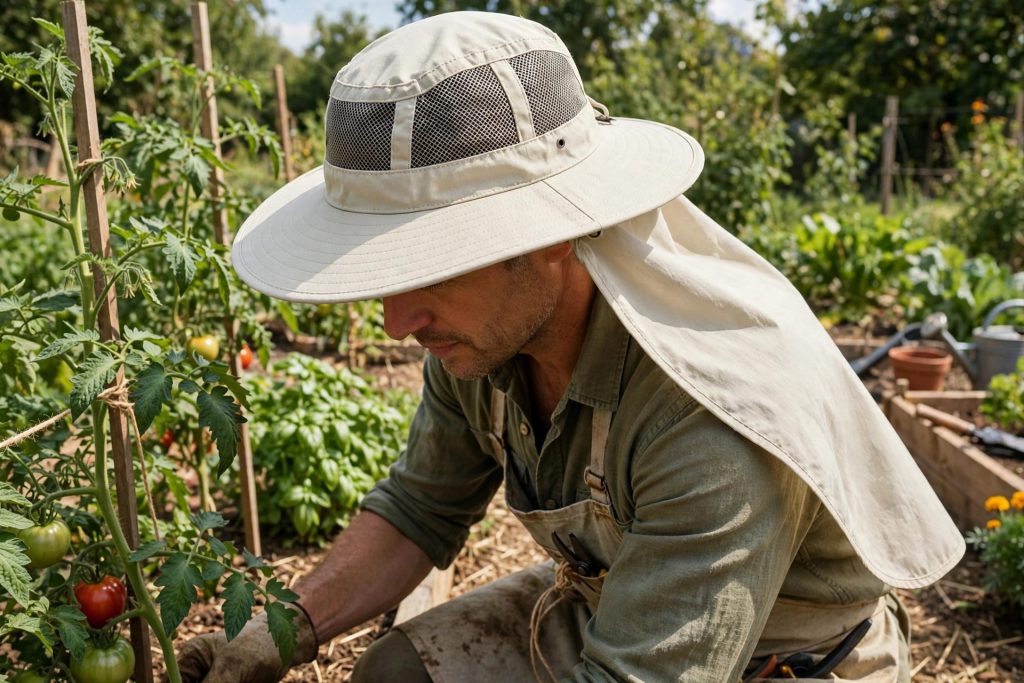
Best for most gardeners, and the lightest serious option here.
Specifications: UPF 50+, and that rating includes the mesh, brim 3.5 in at the front with a 6 in neck cape, 88% nylon and 12% polyester, weight not published by the maker, 2.5 oz measured by OutdoorGearLab, adjustable chin strap and rear sizing, folding clamshell brim, sunglass holder, water and stain resistant finish. List price $60.
This is the hat we would hand to a gardener who has never worn a cape hat and is not sure about the look. It weighs almost nothing, the cape sits flat against your back instead of flapping, and the brim folds so it lives in a tote or a truck door pocket instead of on a hook you forget. Owner feedback is unusually consistent on one point: people keep it on, which is the whole game.
Real world limitation: the cape looks utilitarian, and in a strong gust it can lift. On a windy, exposed plot, cinch the chin strap properly or pick the Sombriolet instead.
Who should buy: anyone who gardens two or more hours at a stretch and wants one hat that handles beds, lawn edges and the farmers market run.
2. Sunday Afternoons Adventure Hat
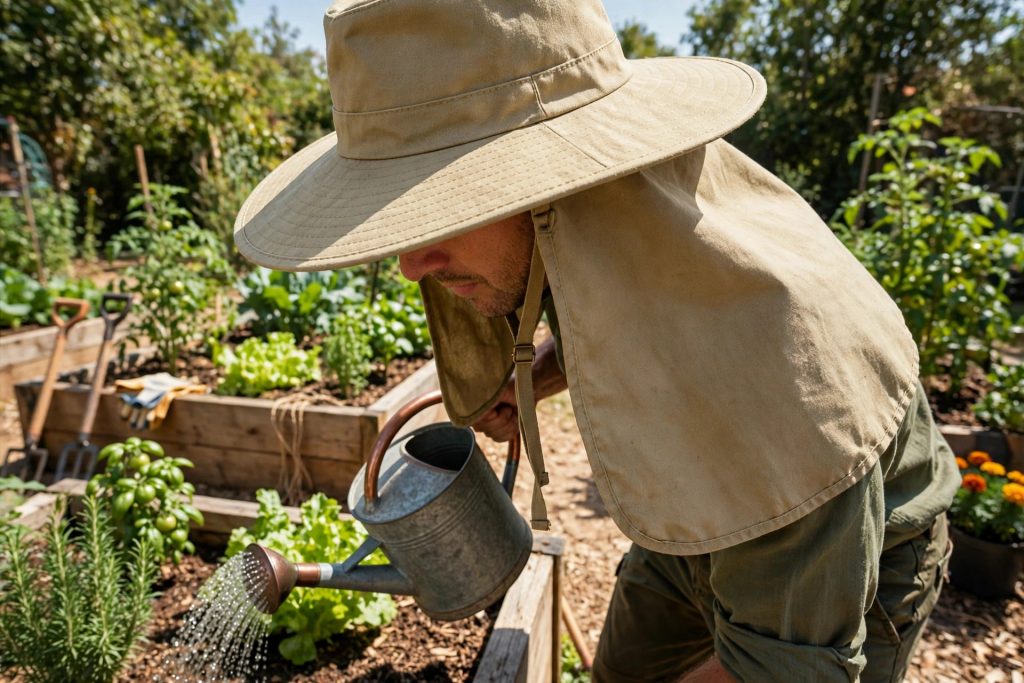
The original full coverage design, still the coverage leader.
Specifications: UPF 50+ with the mesh not rated, brim 3.75 in, 7.5 in neck cape, nylon and polyester, weight not published by the maker, 2.6 oz measured by OutdoorGearLab, adjustable chin strap and sizing, strategic crown ventilation, floats in water. List price $54.
If your neck burns every June no matter what you do, this is your hat. The cape is longer than the Ultra Adventure cape, and the brim is wider, so low morning and late afternoon sun gets blocked from the side as well. It has been in production for three decades, which shows in the details: the sweatband, the way the cape clears a collar, the sizing that actually adjusts.
Real world limitation: it packs flat but you should not fold or crush the brim the way you can with the Ultra. Treat it a little more carefully in storage.
Who should buy: gardeners with sun sensitive skin, anyone working open ground with no shade, and anyone who has already burned through cheaper hats.
3. Tilley LTM6 Airflo Broad Brim Hat
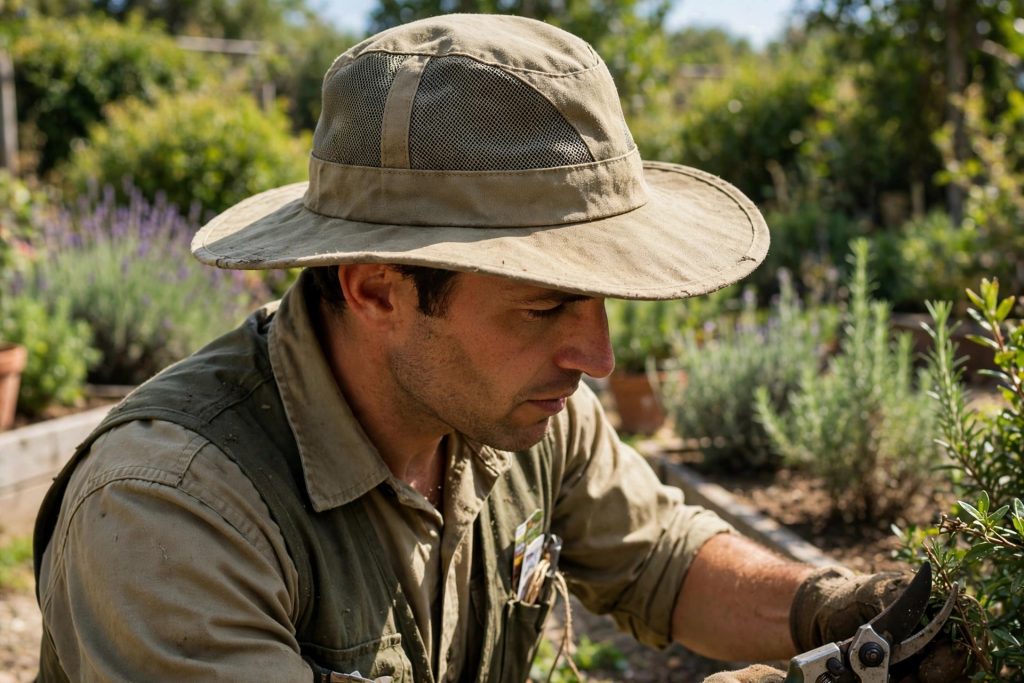
A sized, guaranteed for life hat for gardeners who hate buying twice.
Specifications: UPF 50+, brim 3.5 in front and back and 2.5 in at the sides, recycled nylon with a polyester mesh crown panel, and Tilley notes that some rays could enter through the 3/4 inch mesh, water repellent finish, hidden pocket, wind cord that tucks away, weight about 3.6 to 4 oz depending on size, sizes 6 7/8 to 8+ in 11 sizes. Price $99.
Tilley does sizing properly, in hat sizes rather than one size fits most, and that shows after an hour: no pressure line, no constant pushing it back up. The Airflo mesh strip around the crown is the reason this model suits gardeners better than the classic cotton Tilleys. It vents when you are standing still over a bed, which is exactly when cheaper hats turn into a sweat box.
Real world limitation: the side brim, at about 2.5 in, is narrower than the front and back, so ear coverage at low sun angles is a step below the cape hats. It is also the most expensive hat in this guide.
Who should buy: gardeners who want one hat for years, who prefer a traditional brim over a cape, and who will use the lifetime guarantee as the value argument.
Spec source: https://www.tilley.com/collections/summer-hats/products/ltm6-airflo-sun-hat
4. Outdoor Research Sunbriolet Sun Hat

The stiff brim pick for windy ground.
Specifications: UPF 50+, ripstop nylon and polyester blend, mesh lined crown, removable chin cord, sizes M, L and XL with external drawcord adjustment, brim piping that helps it hold shape in wind, floats. The Sombriolet has been discontinued and replaced by the Sunbriolet (style 243441). The Sombriolet’s published weight was 3.1 oz, the Sunbriolet is about 2.8 oz (80 g). The brim is varied, about 3.1 in front and 4.1 in back (measured, not maker published). The Sombriolet last sold at $42 and the Sunbriolet’s US price is not verified.
Most wide brims go soft and floppy. The Sunbriolet brim is foam stiffened with flexible piping at the edge, so it keeps a clean line when a breeze crosses an open plot, and it does not slap down over your eyes when you bend to a low bed. The crown vents at the rear, a small detail that helps on still, humid days.
Real world limitation: at about 3.1 in at the front, the brim is close to the minimum we recommend. It shades well at midday and less completely early and late in the day compared with the wider options.
Who should buy: coastal and prairie gardeners, allotment holders on exposed sites, and anyone frustrated by floppy brims.
Spec source: https://www.outdoorresearch.com
5. Columbia Bora Bora Booney II
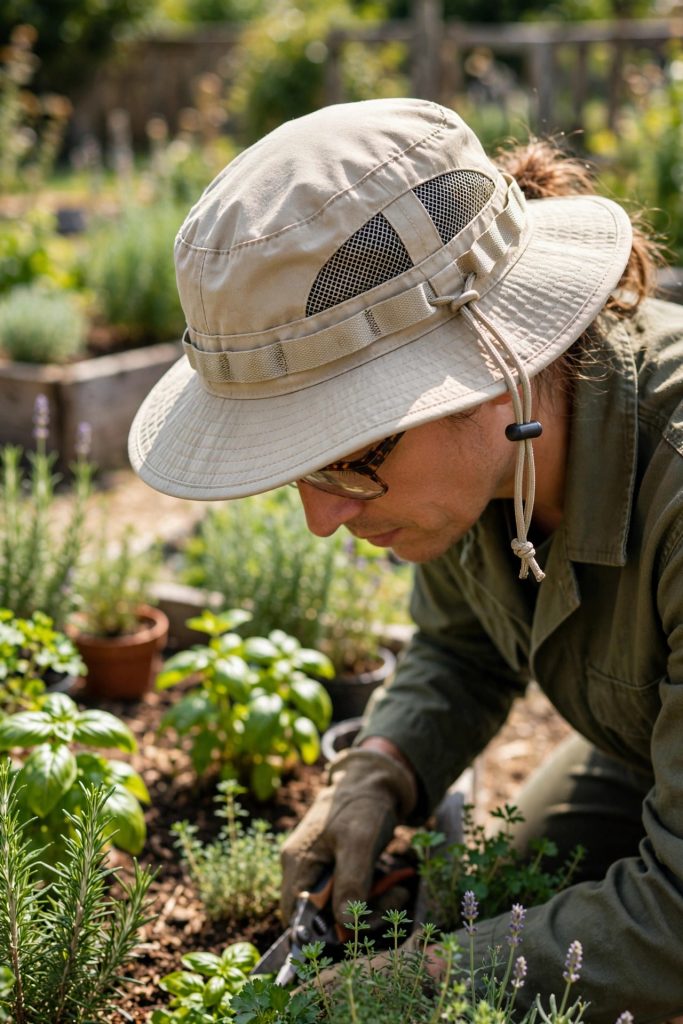
The proven value booney, with one honest caveat.
Specifications: Omni-Shade UPF 50 on the main fabric, and that rating does not apply to the mesh portion, 3 in brim, 100% textured nylon poplin, Omni-Wick sweatband, mesh side vents, adjustable drawcord and back toggle, chin strap, weight not published by Columbia, 2.6 oz measured, one size fitting hat sizes 6 1/2 to 7 1/2. Price $30. Style note: style 144709 has been replaced by 212477 in Columbia’s programme catalogue, while the retail name is unchanged.
Columbia has sold this hat for years because the formula works: light fabric, a sweatband that actually wicks, vents that cool, and a fit system that handles most heads. For garden work it is a sensible default, and it washes and packs without complaint.
Real world limitation, stated plainly: the UPF rating does not apply to the mesh portion, a caveat Columbia prints itself. If your hair is thinning, wear sunscreen on your scalp under this hat, or choose a solid crown model like the Latitude.
Who should buy: gardeners who want a known brand, a fair price band, and a hat they can also use for fishing and walking.
Spec source: https://www.blanks.ca/media/sellsheet/columbia/144709.pdf
6. Coolibar Crushable Ventilated Canvas Hat
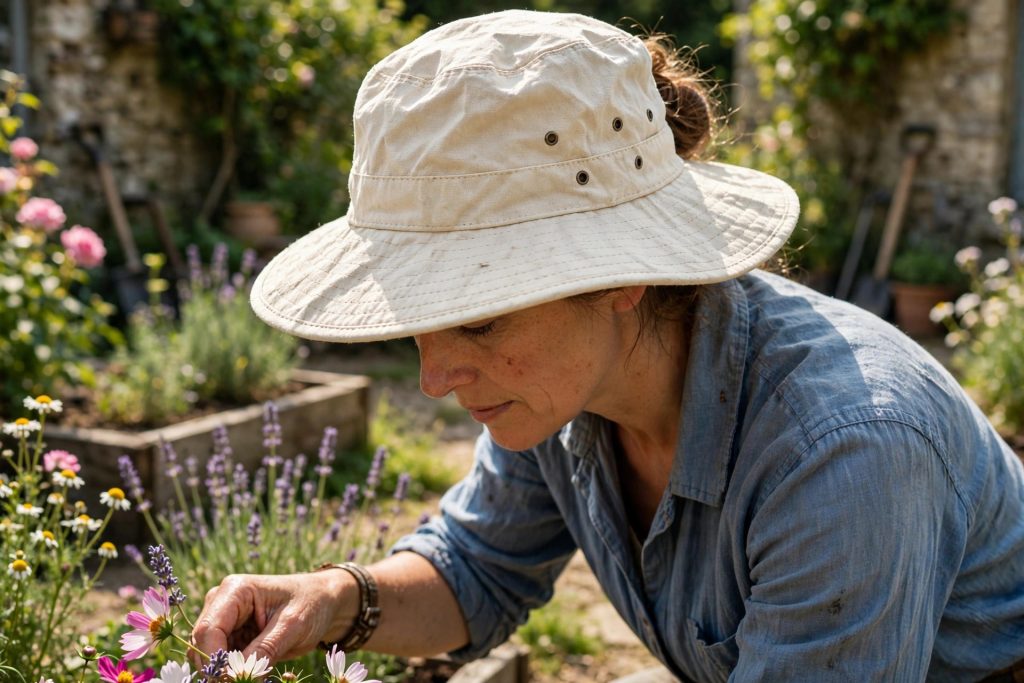
For gardeners who will not wear anything that looks like hiking gear.
Specifications: UPF 50+, 3 in brim all around, ventilated canvas construction with a protective liner behind the mesh, so ventilation does not void the UPF protection, crushable brim and crown, weight not published. List price $70. Availability note: this model has been retired from Coolibar’s current line and remaining stock sits with retailers.
Coolibar builds around fabric protection first, and this hat keeps its UPF coverage behind its ventilation instead of leaving open mesh unrated, which answers the Bora Bora caveat above. It also looks like a garden hat rather than expedition kit, which for some gardeners is the difference between wearing it daily and leaving it in the shed. It crushes completely flat and recovers, so it travels to a community garden plot easily.
Real world limitation: light canvas shows dirt fast, and a season of soil and sweat will mark it. Budget for washing it, gently, more often than a nylon hat.
Who should buy: style conscious gardeners, community gardeners who travel to their plot, and anyone who wants rated protection behind the vents.
Spec source: https://www.outdoorgearlab.com/reviews/camping-and-hiking/sun-hat/coolibar-crushable-ventilated-canvas-hat
7. GearTOP Navigator Safari Sun Hat
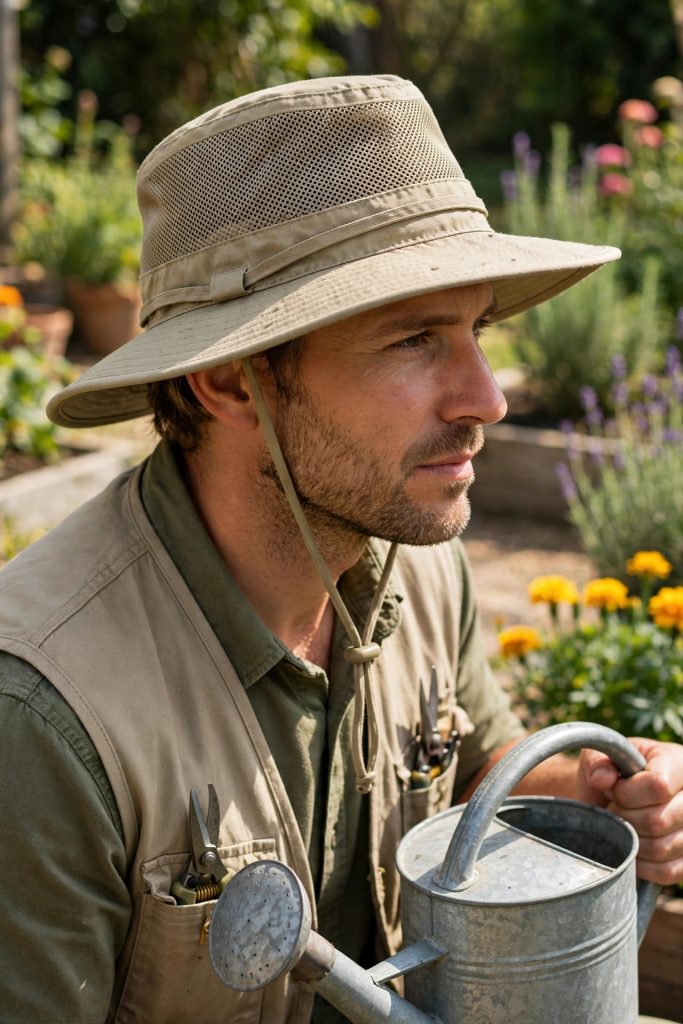
Wide brim value, with strong independent scores for the price band.
Specifications: UPF 50+ in polyester, brim: the maker states 3 in, while CleverHiker measured 3.7 in, weight not published by the maker, 3.5 oz measured by CleverHiker, one size, adjustable fit and chin cord, mesh panels, sweatband. Price about $22 to $30.
In independent comparison scoring the Navigator rated notably well on sun protection and weather handling for its price band, ahead of some better known booneys. For gardening, the wide brim is the headline: at 3.7 in it shades ears better than the 3 in hats, and the fit system keeps it seated when you bend.
Real world limitation: one size only. If you are at either end of the head size range, a sized hat like the Tilley or a two size hat like the Ultra Adventure is a safer order.
Who should buy: gardeners who want the widest brim they can get without moving into the premium price band.
Spec source: https://geartopdesign.com/blogs/news/summer-headwear
8. Solbari Trekker Sun Hat
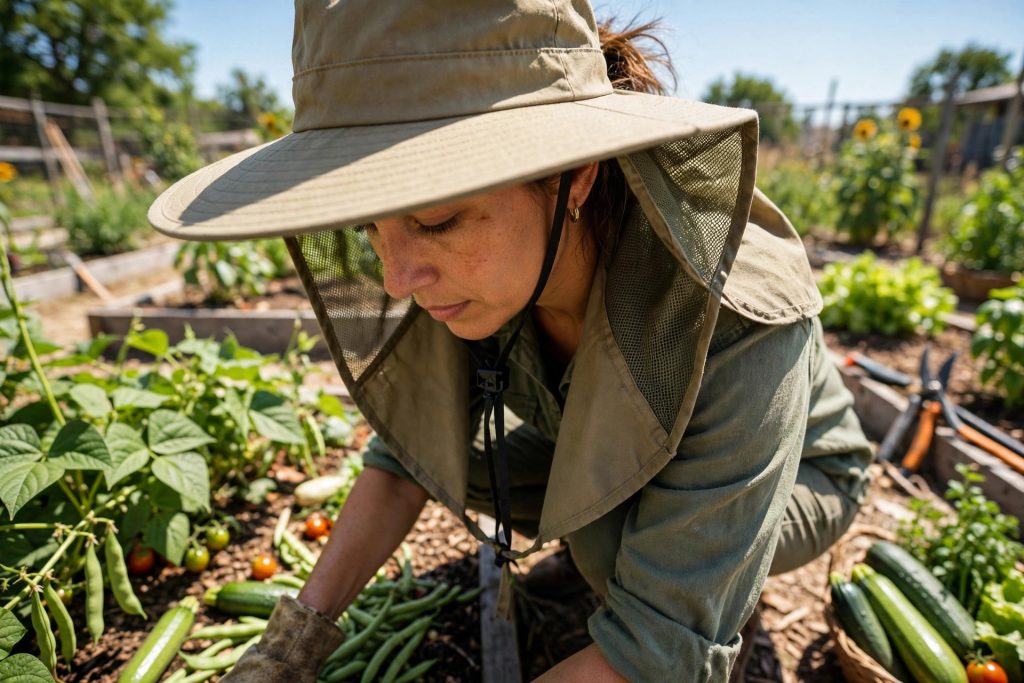
A long cape hat with the highest protection scores in its comparison set.
Specifications, from CleverHiker’s hands-on testing (the maker’s page could not be retrieved): UPF 50 (Australian standard) in nylon, 3.5 in front brim with a 6.75 in neck cape, 4.2 oz, the heaviest here, removable chin strap, sizes S, M and L/XL. Price $65.
Solbari specialises in sun protective clothing, and the Trekker scored at the top of its comparison group for sun protection, weather handling and durability. The cape length sits between the Ultra Adventure and the original Adventure Hat, and the build feels more substantial than either, which some gardeners prefer for rough work around brambles and fencing.
Real world limitation: at 4.2 oz it is one of the heavier hats here. On a very hot, still day you will notice it more than the 2.6 oz Ultra Adventure.
Who should buy: gardeners who want cape coverage with a sturdier build, and who garden in strong sun for long sessions.
Spec source: https://www.cleverhiker.com/apparel/best-sun-hats/
9. Sunday Afternoons Latitude Hat
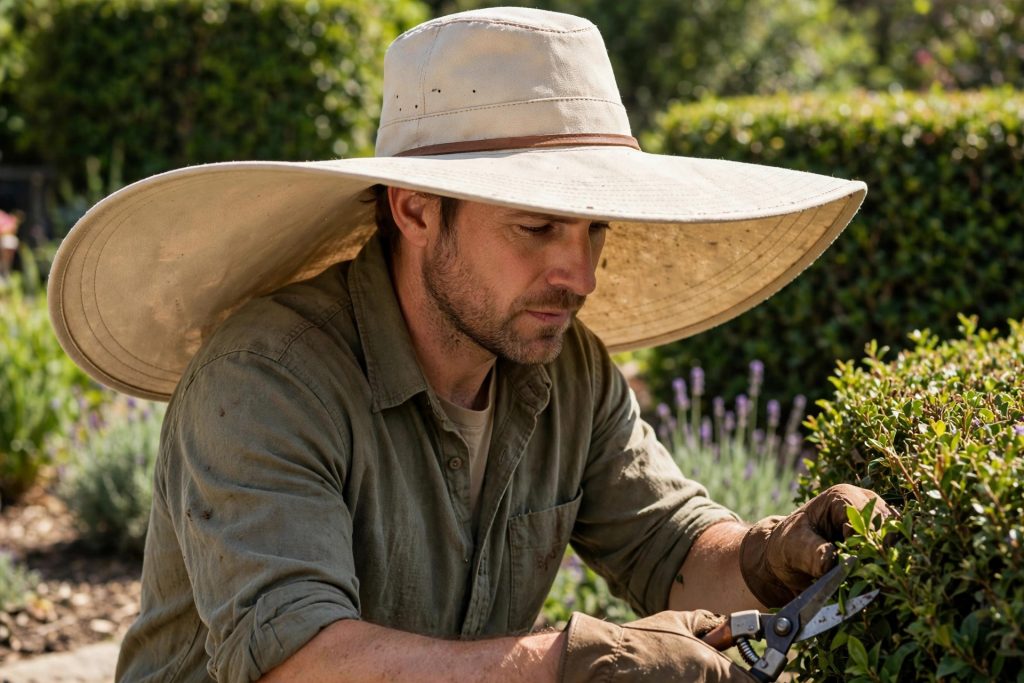
The widest all around brim here, with no cape.
Specifications: UPF 50+ in polyester, brim 3.75 in at the front, 4 in at the sides and 4.75 in at the back, 4.3 oz, sizes M, L and XL, chin strap, packable to a degree but best stored flatter. The maker does not publish a ventilation spec for this model. Price $60.
Not everyone wants a cape. The Latitude answers with brim, and a lot of it, especially at the back where it does the cape job with structure instead of fabric. Side coverage at 4 in is the best in this guide, which helps with low sun when you are working along a fence line in the morning.
Real world limitation: it is the heaviest hat here at 4.3 oz, and its wide rear brim can catch on a high collar or a backpack strap. For pure bed work that rarely matters, for mixed yard work it might.
Who should buy: gardeners who want maximum brim coverage and dislike capes, and who mostly work in open beds rather than tight greenhouse spaces.
Spec source: https://www.sundayafternoons.com
10. EINSKEY Wide Brim Sun Hat
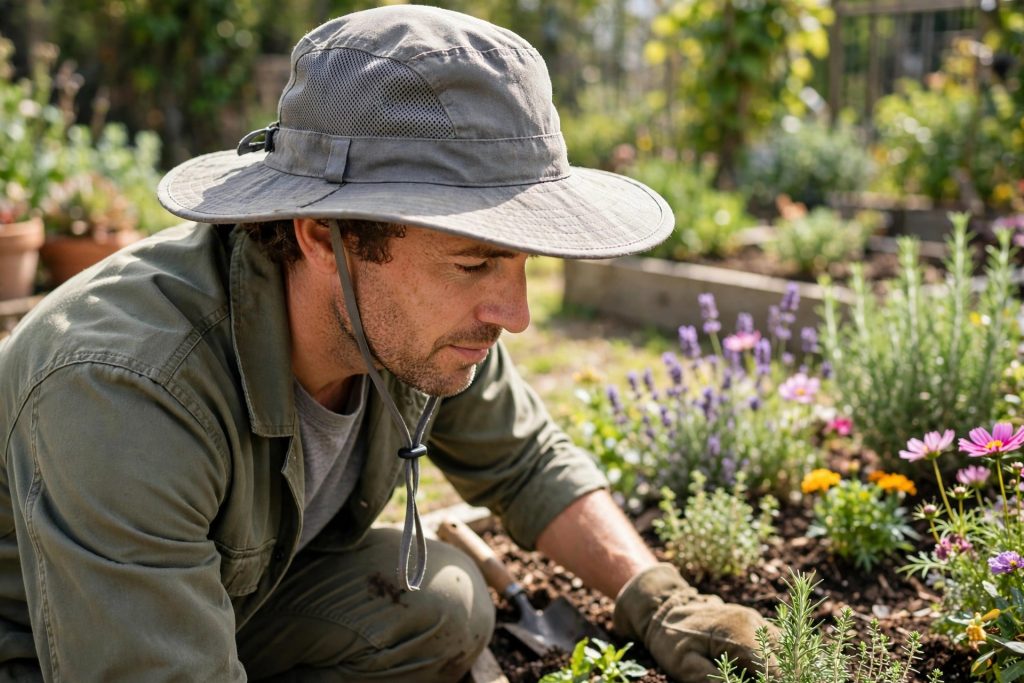
The budget hat that still meets the protection basics.
Specifications: UPF 50+ on the main polyester fabric, brim 3.9 in with an EVA foam interlayer, weight not published, adjustable chin strap and elastic rear drawstring, one size fitting 22 to 24 in, mesh panels, water repellent finish, built in sweatband. Price not verified.
EINSKEY is the hat to buy when the alternative is no hat, or a baseball cap that leaves your ears and neck exposed. The brim is genuinely wide, the fabric is rated, and it handles water and packing better than its price band suggests. It is a common first proper gardening hat, and many owners keep it as a spare for visitors and helpers.
Real world limitation: the mesh vents let some light through the crown, a point independent testing notes directly. The drawcord hardware is also simpler than the premium picks and wears sooner.
Who should buy: new gardeners, anyone outfitting helpers, and anyone who wants a spare hat in the shed, car and greenhouse.
Spec source: https://www.amazon.com/dp/B01J1GQ1HY
Sun Protection and UPF Ratings
UPF is the fabric equivalent of SPF. A UPF 50 fabric lets through about 1/50th of the UV that hits it, roughly 2 percent, and UPF 50+ is the highest label category, used when a fabric tests above 50. The rating belongs to the fabric, not to the hat as a whole, which is why shape matters too: the Skin Cancer Foundation’s guidance for protective hats is a brim of at least 3 inches all around, in a tightly woven fabric.
Read the rating’s small print, because brands scope it differently. Sunday Afternoons rates the Ultra Adventure Hat UPF 50+ including its mesh. The same brand’s original Adventure Hat is UPF 50+ with the mesh not rated. Columbia states plainly that its Omni-Shade UPF 50 rating does not apply to the mesh portion of the Bora Bora. Tilley warns that some rays could enter through the LTM6’s mesh band. None of this makes a vented hat a bad hat: a hat you will actually wear for three hours protects you better than a perfect hat left in the shed. It does mean that on the longest, brightest days, a lined or tightly woven mesh (Coolibar, Solbari) or a solid crown earns its keep.
A hat also does not finish the job. UV reflects off soil, concrete and water, and reaches the face from below the brim line, so pair the hat with sunscreen on the ears, nose and neck, and reapply it. The neck capes on picks 1, 2 and 8 exist precisely for the spot gardeners burn most: the back of the neck while bending over beds.
How to Choose the Right Gardening Hat
Measure before you order. Wrap a soft tape around your head just above your eyebrows. Use that number against the maker size chart, not against the hat you already own. Between sizes, go up and use the adjustment, because a tight hat comes off by mid morning.
Brim first, then ventilation. Three inches is the floor, not the target. If you garden at midday in the South or Southwest, look at 3.5 in and up, or add a cape. If you garden in humid heat, a ventilated crown you will tolerate beats a wider brim you will not.
Check what the rating covers. A UPF claim that excludes the mesh is still useful information, as long as you know it. Solid crowns and lined vents protect thinning hair best.
Plan for bending. Gardeners look down more than almost any other outdoor group. A chin strap is not a hiking extra, it is what keeps your shade where your face is.
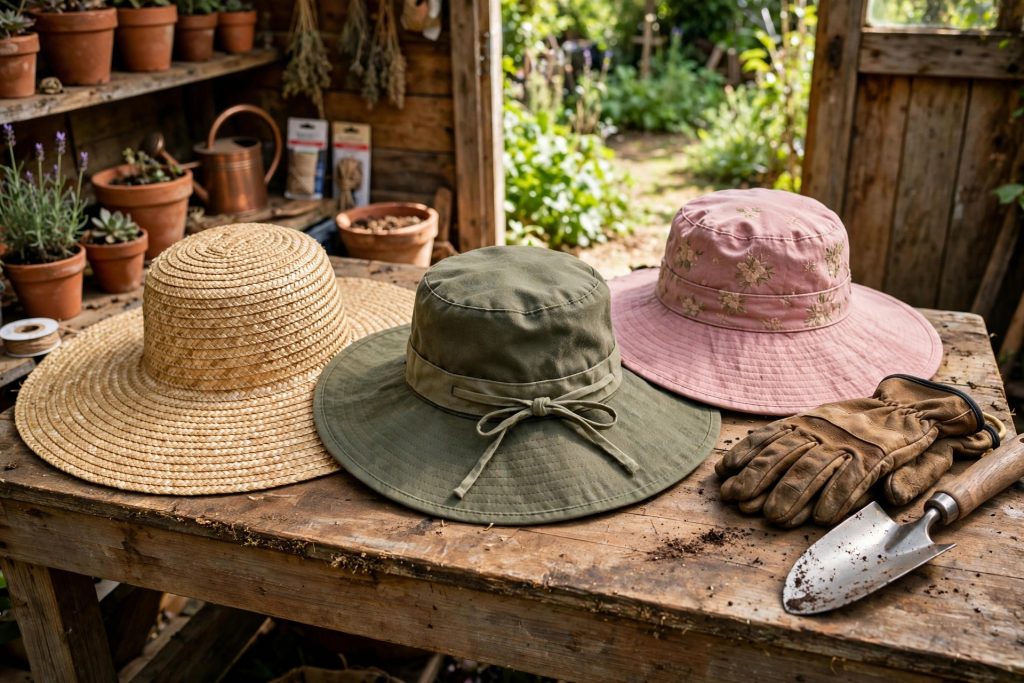
Brim width is coverage you can measure. Every extra inch of brim shades more of the face, ears and neck, but the angle changes as you bend: gardeners work looking down, which is why the back of the neck burns first and why a longer back brim (pick 9) or a cape (picks 1, 2 and 8) outperforms a wide front brim alone. Around 3 inches all around is the practical minimum for long sessions.
Ventilation trades a little protection for a lot of wearability. Mesh crowns dump heat on humid days, and the honest cost is the UPF scoping covered above. Fit decides whether any of it matters: measure around your head just above the ears, match the maker’s size chart rather than guessing, and prefer an adjustable drawcord or sizing tape if you fall between sizes. A hat that needs constant one-handed holding while you work will end up on the fence post.
For wind, the chin strap is not optional, and a lower, closer crown catches less air than a tall one. For long hours, weight tells by midday: the lightest hats here are near 2.5 ounces measured, the heaviest 4.3, and your neck will know the difference by the third hour.
Care Basics That Keep the Rating Working
Wash hats gently and only as often as they need it, because coatings and tight weaves do the protective work. Let a sweaty hat dry in shade, not on a hot dashboard. Store wide brims flat or on a wide hook, and keep capes unfolded so the fabric does not crease into weak lines. Replace a hat when the brim cracks, the fabric thins, or the fit system fails, because a worn out hat gives a false sense of cover.
Final Choice
If we could keep only one hat from this list in the shed, it would be the Sunday Afternoons Ultra Adventure Hat. It is the lightest serious option, its cape covers the neck that gardeners burn most, it folds away when you do not need it, and its UPF 50+ fabric meets the standard the Skin Cancer Foundation points to. That combination is why it is the best gardening hat for most people reading this guide.
Keep the original Adventure Hat in mind if you burn easily and want the longest cape, the Tilley LTM6 Airflo if you buy once and keep things for years, and the EINSKEY if the budget is the deciding factor this season. Any of the ten, worn for the whole session, beats a premium hat left hanging by the door.
About the Author and How We Review
This guide is written and edited by Sayed Zahur Ahmed, a plant pathologist (BSc Agriculture, MSc Plant Pathology, Bangladesh Agricultural University) who runs his own nursery and edits Agribloom. The review process: every specification in this guide was checked against the manufacturer’s own product page or published spec sheet in October 2026, prices are the makers’ list prices at that check, and scores follow the rubric published in How We Chose. We do not claim hands-on testing we have not done.
References
- Each source below supports the specific claim noted beside it.
- Skin Cancer Foundation, Sun Protective Clothing: Supports the three inch minimum brim guidance, the tight weave point, and why hats matter for head and neck skin cancers.
- Outdoor Gear Lab, The Best Sun Hats: Supports the Ultra Adventure, Tilley LTM6, Columbia Bora Bora, Coolibar and EINSKEY specifications and test notes used in this guide.
- CleverHiker, Best Sun Hats for Hiking: Supports the GearTOP Navigator, Solbari Trekker and Sunday Afternoons Latitude specifications in the comparison table.
- Columbia, Bora Bora Booney specification sheet for model 144709: Supports the Omni Shade UPF 50 claim, the note that the rating does not apply to the mesh portion, the 3 inch brim and the Omni Wick sweatband.
- Sunday Afternoons, Adventure Hat product information, via the maker announcement summarising the current model: Supports the Adventure Hat 3.75 inch brim, 7.5 inch neck cape and UPF 50+ claims.
- Tilley, LTM6 Airflo Sun Hat (official product page), https://www.tilley.com/collections/summer-hats/products/ltm6-airflo-sun-hat : Supports the 3.5 inch front and back brim, 2.5 inch sides, the 11-size range, UPF 50+ and the mesh caveat.
- Sunday Afternoons, brand release on the Adventure Hat line, https://www.endurancesportswire.com/sunday-afternoons-marks-30-years-of-the-original-adventure-hat-and-10-years-of-its-technical-successor-the-ultra-adventure-hat/ : Supports both Sunday Afternoons hats’ UPF scoping (mesh included on the Ultra Adventure, mesh not rated on the Adventure), brim and cape measurements, and list prices.
Frequently Asked Questions
What UPF rating should a gardening hat have?
Look for UPF 50 or UPF 50+. That rating means the fabric lets through about one fiftieth of UV radiation, blocking roughly 98 percent. An unrated hat, including many loose weave straw hats, can let far more through even when it feels shady.
How wide should the brim be on the best gardening hat?
At least three inches all around, which is the Skin Cancer Foundation minimum for shading the face, scalp, neck and tops of the ears. Gardeners who work at midday often do better with 3.5 to 4 inches, or a shorter brim plus a neck cape.
Is a neck cape worth it for gardening?
For most gardeners, yes. You spend long stretches bent forward, which points the back of your neck straight at the sun. A cape covers that spot without relying on you remembering to reapply sunscreen there.
Are mesh vents a problem for sun protection?
They can be. Some makers state clearly that their UPF rating does not apply to the mesh portion. If your hair is thinning, choose a solid crown or a hat with a rated liner behind the vents, and use sunscreen on your scalp as a backup.
How do I stop my hat blowing or slipping off when I bend over?
Use the chin strap and the rear sizing adjustment together, and size the hat to sit level, not tilted back. A hat that fits at the crown and is strapped under the chin stays in place through most bed work.
How long does a good gardening hat last?
A nylon or polyester hat from the mid and premium bands here should last several seasons with gentle washing and shade drying. Replace it when the fabric thins, the brim cracks, or the sweatband and fit system stop working, because protection drops as the fabric wears.

Thesis Link : https://saulibrary.edu.bd/daatj/public/uploads/BAU200601_19-Pp_5.pdf
- 10 Best Sun Hats for Gardening - October 19, 2026
- How to Get Rid of Lawn Grubs for Good - October 18, 2026
- 10 Best Garden Kneelers With Handles - October 18, 2026