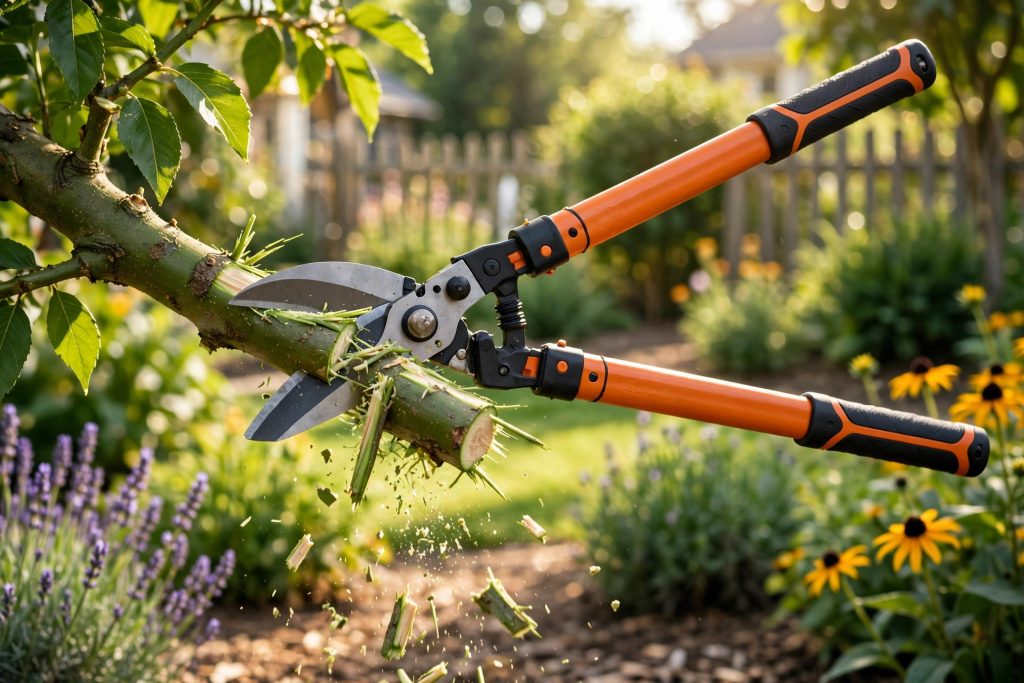

Thick branches are where the best loppers earn their place, and where ordinary pruning tools stop being helpful. A branch that looks manageable from the ground can be dense, heavy and awkward once you try to cut it, especially when it sits just out of comfortable reach or deep inside a shrub. Force a small tool through wood like that and you usually get a crushed, torn cut, a tired hand, and a plant that takes much longer to heal.
Pruning shears stall at about three quarters of an inch on live wood. A pruning saw will get through thicker branches, but it is slow work in a crowded canopy and awkward for lots of repeated cuts. Loppers sit in between. Their long handles give leverage and reach, so you can cut branches that are too thick for shears and too numerous for a saw, while staying on the ground for much of the work.
This guide ranks ten loppers by verified cutting capacity, head type, handle length, weight and warranty, using the most conservative figure when listings disagree. We did not do hands-on testing for this roundup. The ratings come from verified manufacturer specifications and patterns in owner feedback, so you can see exactly why each tool earned its place and where its limits are.
Quick Recommendation
If you buy one lopper for most home pruning, buy the Fiskars PowerGear2 32 inch Bypass Lopper. Its geared bypass head is rated for branches up to 2 inches, it suits live wood, and its lifetime warranty backs a tool most homeowners will use on shrubs, small trees and fruit trees all year.
For extra reach, look at the Corona SL 4364 DualLINK Extendable, which adjusts from 29.5 to 37.5 inches. If most of your cuts stay under 1.5 inches and you want a lighter telescoping tool, the Fiskars Extendable Bypass Lopper is the easier carry. For dead and dry wood only, the Tabor Tools GG12A Anvil Lopper is the dedicated choice, because an anvil head should never be used on live wood.
For the cleanest cut on live wood, choose the Felco 211-60 or the Bahco P160-SL-75. Both are bypass tools built for precision work, and both reward a gardener who prunes fruit trees and roses every week. If space is tight, the compact Tabor Tools GB19A at 19 inches and the Felco 211-60 at 23.6 inches are the easiest tools on this list to use in dense shrubs.
This loppers guide is part of our wider garden hand tools cluster, where each cutting tool gets its own detailed guide so you can build a kit that covers stems, branches and thicker wood without overlap.
Comparison Table
| Product | Approx price | Cutting capacity | Head type | Handle length | Weight | Warranty | Best user | Our Rating |
|---|---|---|---|---|---|---|---|---|
| Fiskars PowerGear2 32 in Bypass | $$ | 2 in | Bypass, geared | 32 in | 3.9 lb | Lifetime | Most homeowners, live wood | 9.4 |
| Corona SL 4364 DualLINK Extendable | $$ | 1.75 in | Bypass, compound | 29.5 to 37.5 in | 4.2 lb | Limited | Reach and mixed pruning | 9.1 |
| Felco 211-60 | $$$ | 1.38 in | Bypass, curved head | 23.6 in | 1.95 lb | Limited, spare parts | Precision and orchard work | 9.2 |
| Bahco P160-SL-75 | $$$ | 1.75 in | Bypass | 29.5 in | 2.4 lb | Not published | Orchard and overhead work | 9.0 |
| ARS LPB-30M | $$$ | 1.42 in | Bypass | 24.8 in | 2.25 lb | Not published | Professional daily use | 8.9 |
| Tabor Tools GG12A Anvil | $ | 2 in | Anvil, compound | 30 in | 3.44 lb | Not published | Dead and dry wood | 8.8 |
| Tabor Tools GG21A Extendable Bypass | $ | 1.5 in | Bypass, compound | 27 to 40 in | Not published | Not published | High reach on a budget | 8.6 |
| Fiskars Extendable Bypass | $$ | 1.5 in | Bypass | 24.5 to 37 in | 2.84 lb | Lifetime | Lighter telescoping work | 8.7 |
| Fiskars 15 in PowerGear | $ | 1.25 in | Anvil, geared | 15 in | Not published | Lifetime | Small shrubs, close work | 8.5 |
| Tabor Tools GB19A Anvil | $ | 1.5 in | Anvil, compound | 19 in | Not published | Not published | Compact dead wood work | 8.4 |
Prices are shown as bands only, because listings change often and a band stays honest for longer than a single figure. Check the live listing for the model you choose before you buy, and treat the band as a guide to how the ten tools compare with each other, not as a quote.
How We Chose
We started with the job, not the brand list. A lopper has to match the wood you actually cut, so cutting capacity and head type came first, then the handle length that lets you reach that wood safely, then weight, because a tool that tires your arms will be left in the shed. Blade steel, spare parts, and warranty came next, because a lopper is a long term tool and a replaceable blade can double its useful life.
Every figure in this guide was checked against manufacturer data or a reputable listing, and where sources disagreed we used the lower, more conservative number. That is why one popular extendable model is listed here at 1.75 inches even though some sellers print a higher figure. Where a maker does not publish a weight or a warranty, the table says Not published rather than guessing, and the review text keeps the same rule.
Scoring system
| Factor | Weight |
|---|---|
| Cutting power and capacity | 30% |
| Blade quality and replaceability | 20% |
| Weight and ergonomics | 20% |
| Handle length and reach | 15% |
| Build quality and warranty | 15% |
To be clear about how these scores were produced: they come from the verified specifications above and from patterns in owner feedback, weighted with the system in this table. We did not test these loppers hands on for this guide, and no score here should be read as a lab result. Where two tools score closely, the deciding factor is usually the kind of wood you cut most often.
Bypass vs Anvil Loppers
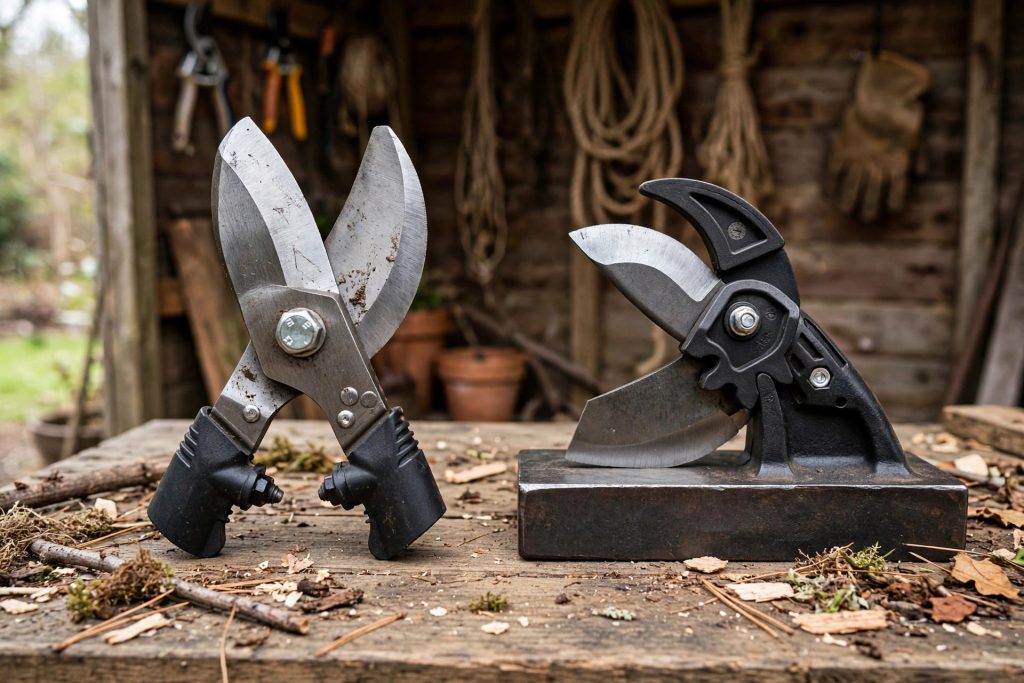
A bypass lopper works like a pair of scissors. Two curved blades pass each other and slice the branch, leaving a clean edge that heals well. That makes bypass the right head for live, green wood, which is most of the pruning in a typical garden: shaping shrubs, cutting back fruit trees, and removing live growth that has crossed or crowded its neighbours.
An anvil lopper works differently. A straight blade closes down onto a flat pad, like a knife on a board. That action can power through hard, dead wood, but it crushes living tissue instead of slicing it, which slows healing and can invite disease. Keep anvil tools for dead and dry wood only. If you can buy just one lopper, buy a bypass model, and add an anvil tool later only if dead wood is a regular job in your garden.
The 10 Best Loppers, Reviewed
1. Fiskars PowerGear2 32 in Bypass Lopper
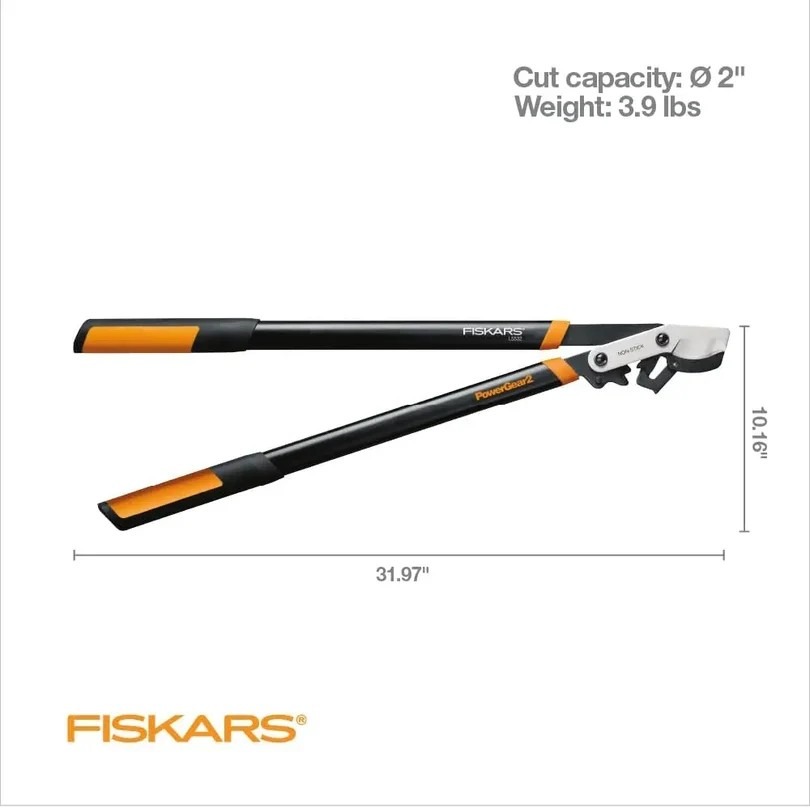
The PowerGear2 is the default pick for a reason. Its gear and cam mechanism multiplies force through the middle of the cut, which is exactly where a thick branch resists most, and the maker rates it for branches up to 2 inches. The hardened steel blade has a low friction coating that helps it move through live wood without gumming up as fast, the handles are 32 inches long, and the current model weighs 3.9 pounds in most listings. Note that older PowerGear listings show a lighter weight near 2.55 pounds, so check which version a listing describes. A lifetime warranty covers it.
Its real limitation is space, not power. Long geared handles need a wide swing to open fully, so in a dense shrub you may have to reposition the head several times before a cut lines up. Buy it if you are a homeowner whose main work is live wood up to 2 inches and you want one strong, warranty backed tool for shrubs, small trees, and fruit trees. It is the safest single purchase in this list.
2. Corona SL 4364 DualLINK Extendable Bypass Lopper
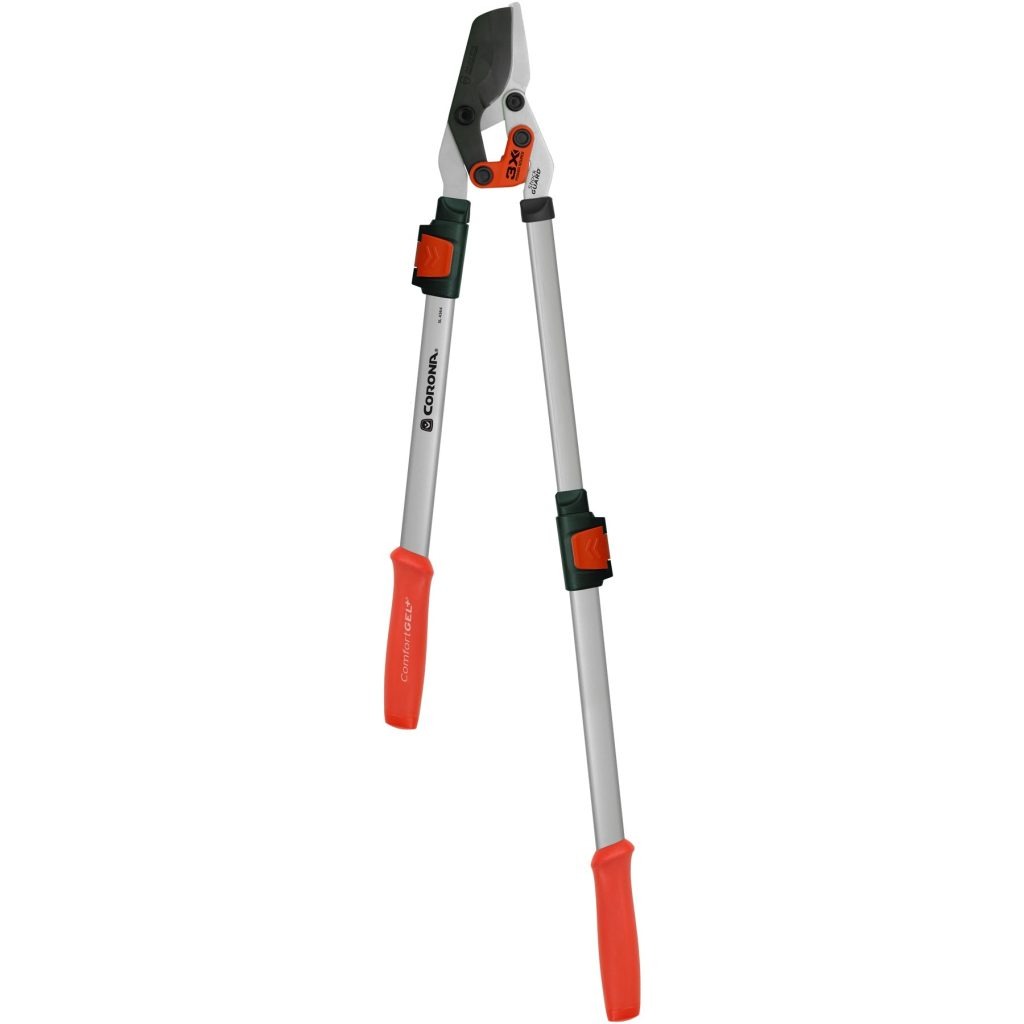
The Corona is the reach pick in the top half of this list. Its compound link action squeezes extra force out of each squeeze, the steel handles extend from 29.5 to 37.5 inches, and the grips use a cushioned gel design with a shock absorbing bumper to soften the jolt at the end of a cut. Listings disagree on capacity, with some printing a higher or lower figure, so this guide uses the conservative 1.75 inches. A limited warranty applies.
Weight is its honest drawback. At 4.2 pounds it is the heaviest tool in this roundup, and you feel that on repeated overhead cuts. Choose it if reach matters more than lightness and your pruning mixes medium branches at several heights. Gardeners who mostly cut at waist level will be happier with a fixed handle tool that weighs less.
3. Felco 211-60
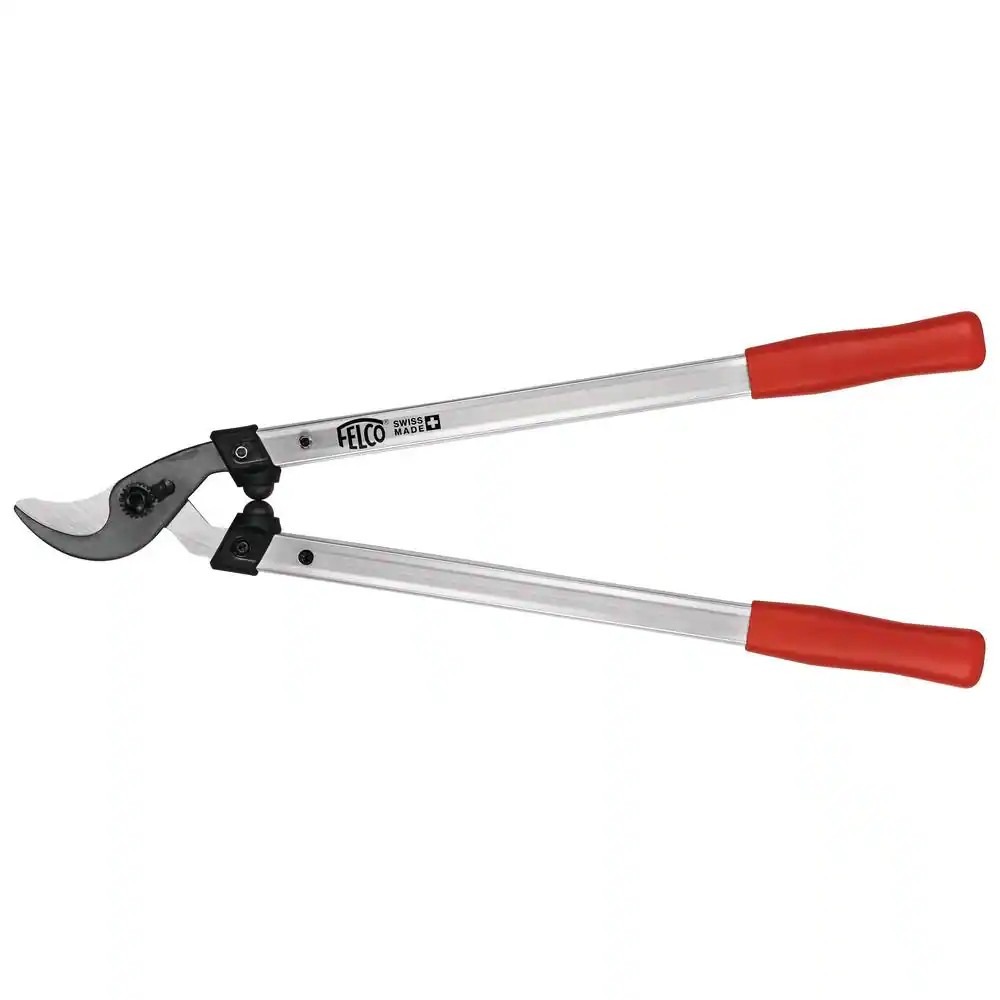
Felco takes a different route to a clean cut. The curved cutting head and hooked counter blade pull the branch into the cut instead of letting it slide out, which is why orchard workers trust this design on live wood. Capacity is 35 mm, or 1.38 inches, the handles are 60 cm, or 23.6 inches, of aluminium in an I-beam profile, and the tool weighs just 885 g, or 1.95 pounds. Shock absorbers soften the stop at the end of each cut, and the blade and most small parts are replaceable under a limited warranty with spare parts support.
The trade off is capacity. At 1.38 inches this is not the tool for the thickest limbs, and forcing it past that limit is how good blades get damaged. Buy it if you prune fruit trees or vines every week and value a light, precise tool that can be kept working for years with spare parts instead of being replaced.
4. Bahco P160-SL-75
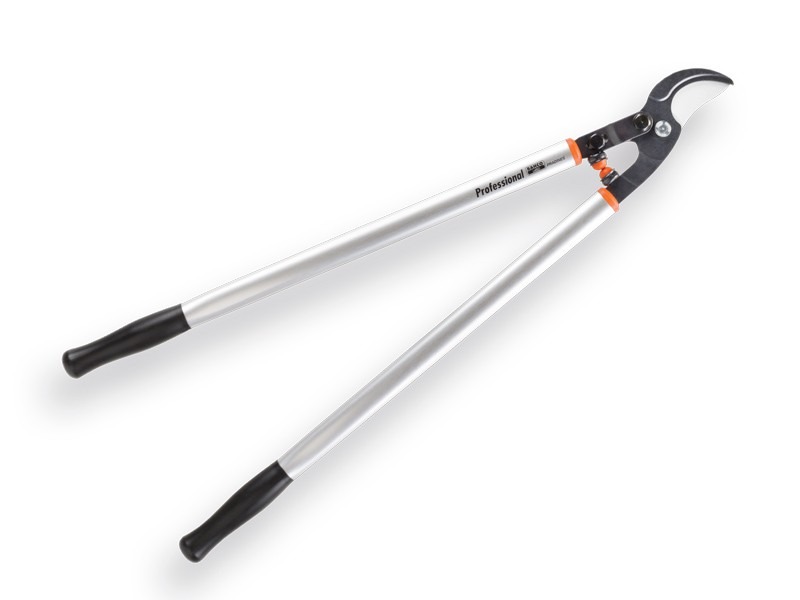
Bahco builds this model for orchard work, where a narrow head matters more than raw leverage. The slim blade and forged hooked counter blade are shaped to get into tight crotches and pull the branch in, capacity is 45 mm, or 1.75 inches, the aluminium handles are 75 cm, or 29.5 inches, and weight is 1.09 kg, or 2.4 pounds. Spare parts support is available from the maker, although a US warranty period is not published, so we record it that way in the table.
That specialist shape is also its limit. The narrow head that slips into crowded canopies feels less general purpose on open, heavy cuts, where a geared tool does the work with less effort. Buy it if your pruning is mostly orchard or overhead work on live wood up to 1.75 inches and you want a light, long handled bypass tool that rewards careful placement.
5. ARS LPB-30M
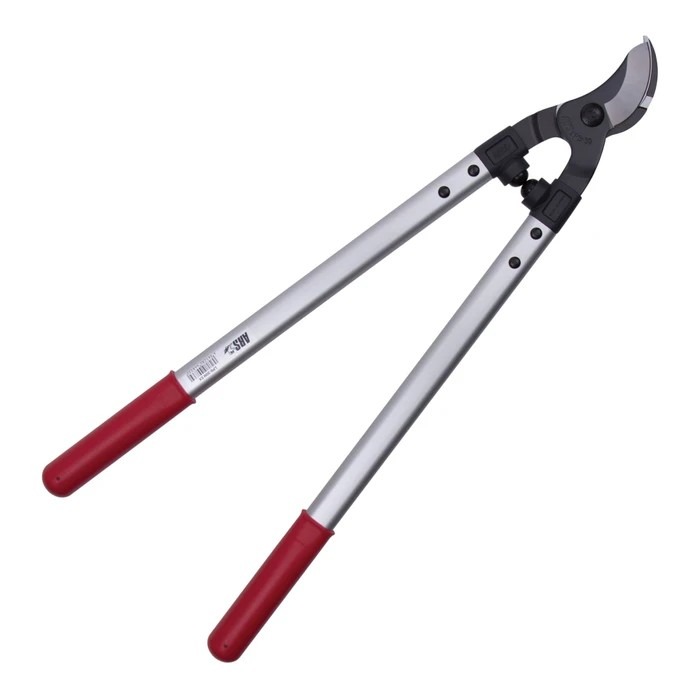
ARS is the professional daily use option here. The forged high carbon steel blade and slim head are made for repeated clean cuts, overall length is 630 mm, or 24.8 inches, weight is 1020 g, or 2.25 pounds, and capacity is 36 mm, or 1.42 inches. Blades and bumpers are replaceable, which matters when a tool earns its keep every day. A warranty period is not published in the sources we checked.
Availability is the practical caveat. US stock and replacement part supply for this model can be thinner than for the big domestic brands, so a repair may take longer to arrange. Buy it if you prune for a living, or prune like you do, and want a forged blade tool that stays in service with replaceable wear parts.
6. Tabor Tools GG12A Anvil Lopper
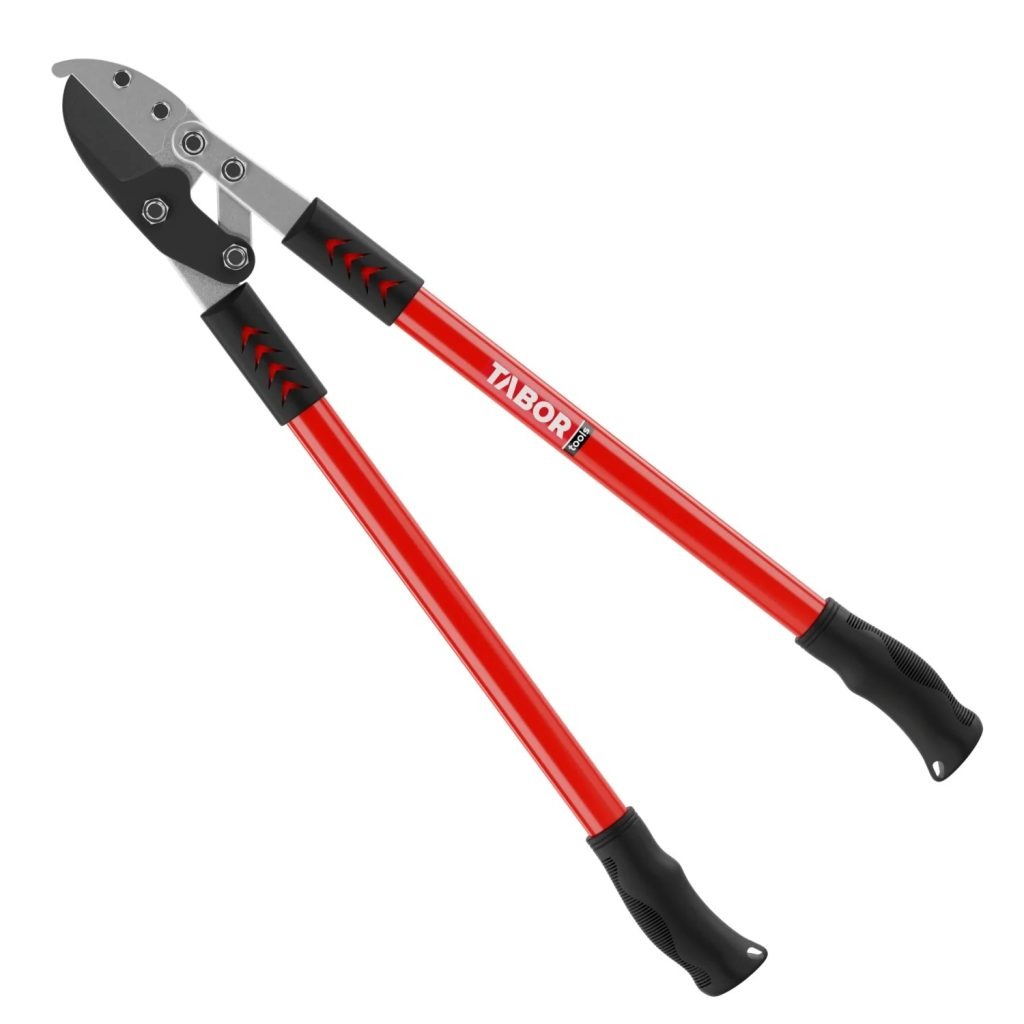
This is the one anvil tool most gardens actually need, built for dead and dry wood rather than live growth. The compound anvil head is rated to 2 inches, the handles are 30 inches, the carbon steel blade has a non-stick coating, and weight is 1.56 kg, or 3.44 pounds. It sits in the lowest price band in this guide, and a warranty period is not published, so treat it as a hard working utility tool rather than a lifetime purchase.
The rule for this tool is absolute: never use it on live wood, because the anvil action crushes green tissue instead of slicing it. Kept to dead wood, it earns its place quickly. Buy it if your work includes clearing dead branches, breaking down dry growth, and storm cleanup, and keep a bypass lopper beside it for everything living.
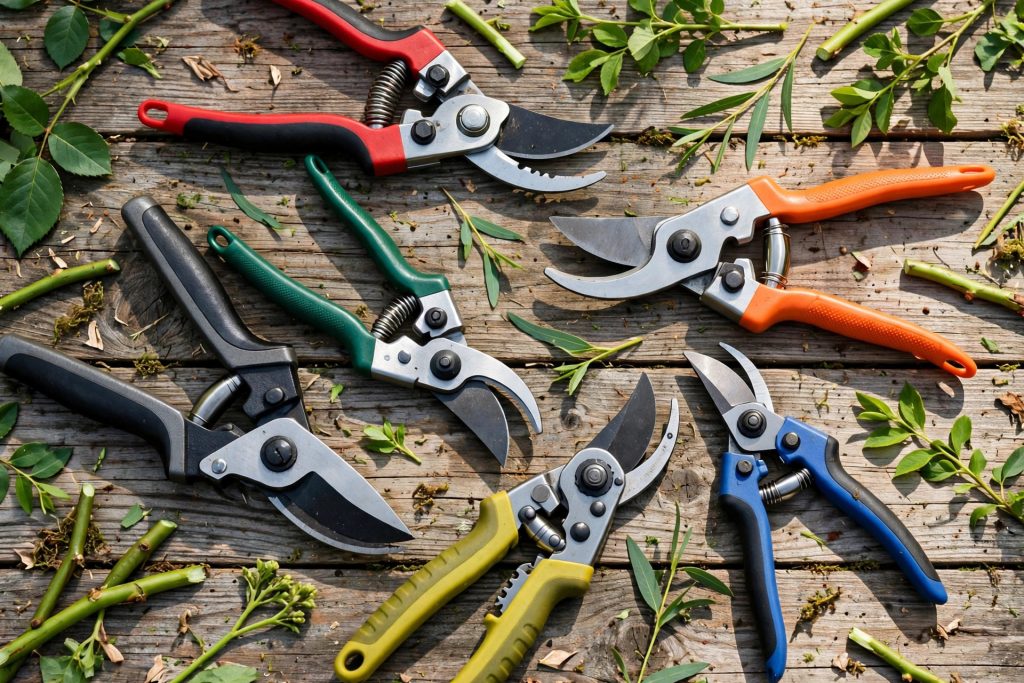
Not every cut in this size range needs a lopper, either. For smaller live stems and detailed shaping, pruning shears remain the right hand tool, and they pair with a lopper rather than competing with it.
7. Tabor Tools GG21A Extendable Bypass Lopper
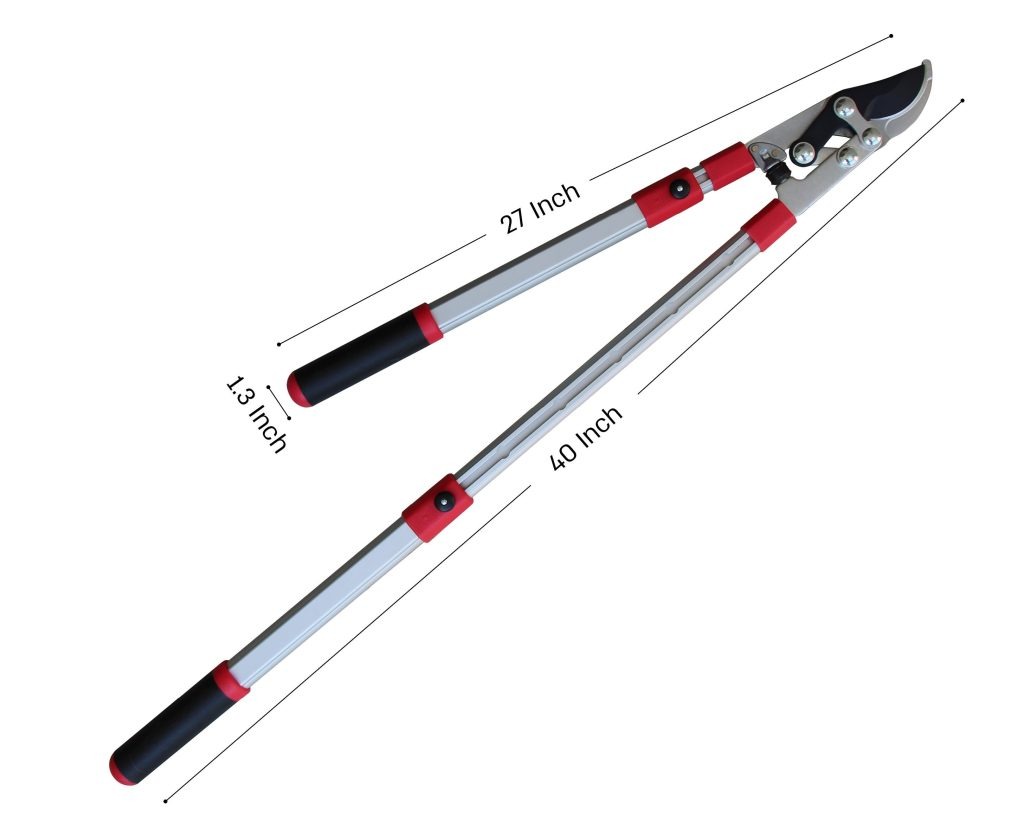
If reach per dollar is the priority, this is the standout. The handles extend from 27 to 40 inches, the longest reach in this guide, the head is a compound action bypass design, and rated capacity is 1.5 inches. It also sits in the lowest price band. Two figures are not published by the maker in the sources we checked, the weight and the warranty period, and the table records both honestly that way instead of guessing.
Expect flex at full extension. Like every telescoping tool in this guide, it feels least rigid stretched to 40 inches, so work at the shortest length that reaches the branch. Buy it if you need high reach on a budget for live wood up to 1.5 inches and you accept that trade off.
8. Fiskars Extendable Bypass Lopper
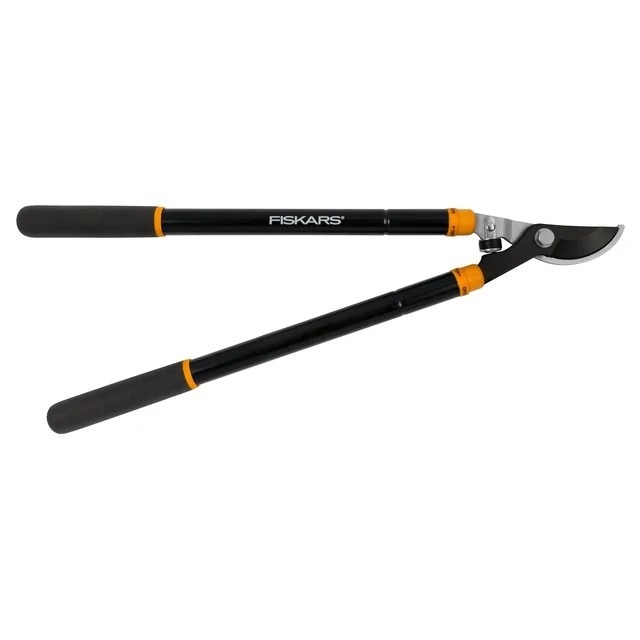
Think of this as the lighter telescoping option from a familiar maker. The steel handles adjust from 24.5 to 37 inches, the bypass blade is precision ground for clean live wood cuts, capacity is 1.5 inches, and weight is 2.84 pounds, noticeably less than the Corona at full stretch. A lifetime warranty backs it, which is rare among the extendable models here.
Its ceiling is capacity. At 1.5 inches it cannot match the PowerGear2 on the thickest live branches, so it works best as the reach tool in a two tool setup rather than the only lopper. Buy it if you want telescoping reach for lighter pruning and prefer a lighter tool with strong warranty cover.
9. Fiskars 15 in PowerGear Anvil Lopper
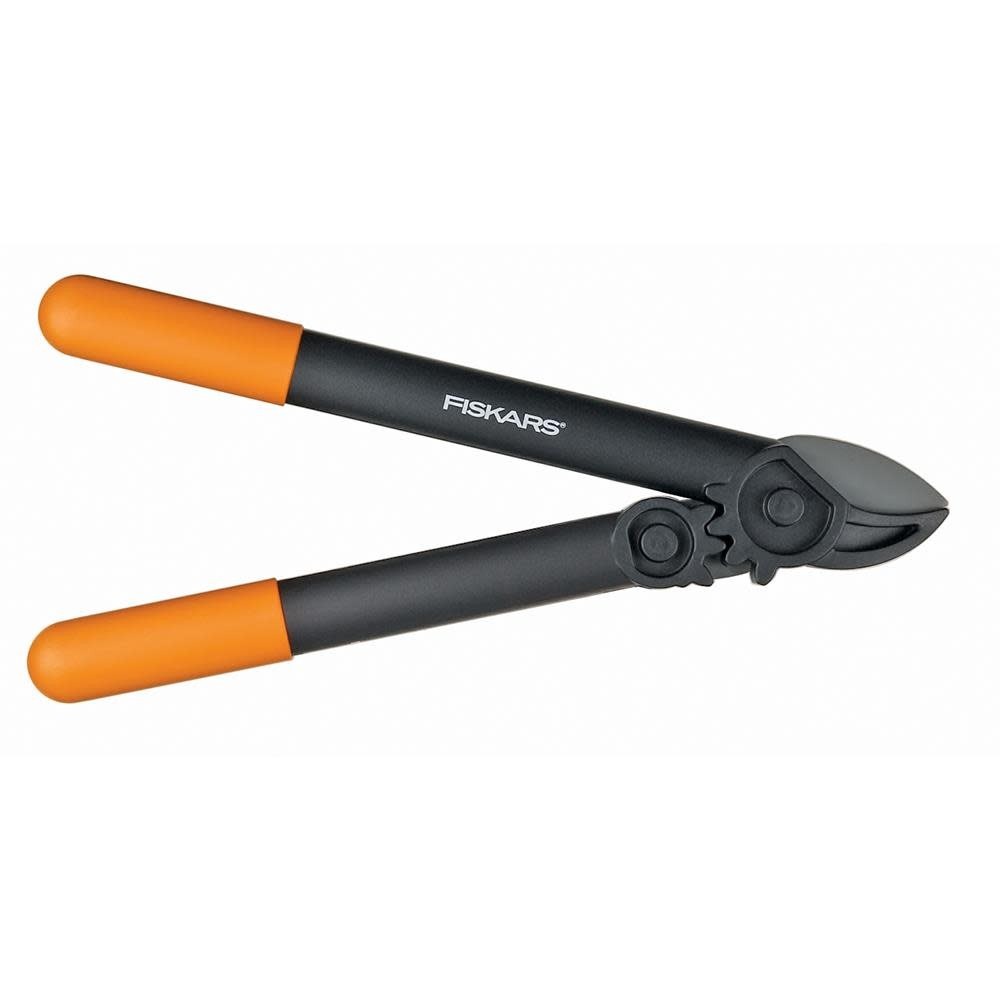
This compact geared model brings the same geared idea down to a 15 inch tool for close work. Capacity is about 1.25 inches, it sits in the lowest price band, and a lifetime warranty applies. A weight figure is not published in the sources we checked. Treat it as a small shrub tool that borrows big tool technology, not as a thick branch tool in miniature.
Short handles mean limited leverage, whatever the gearing adds, so thick or hard branches quickly become a strain. Buy it for small shrubs, roses, and close work where a full size lopper will not fit, and pair it with a full size model for anything near its limit.
10. Tabor Tools GB19A Anvil Lopper
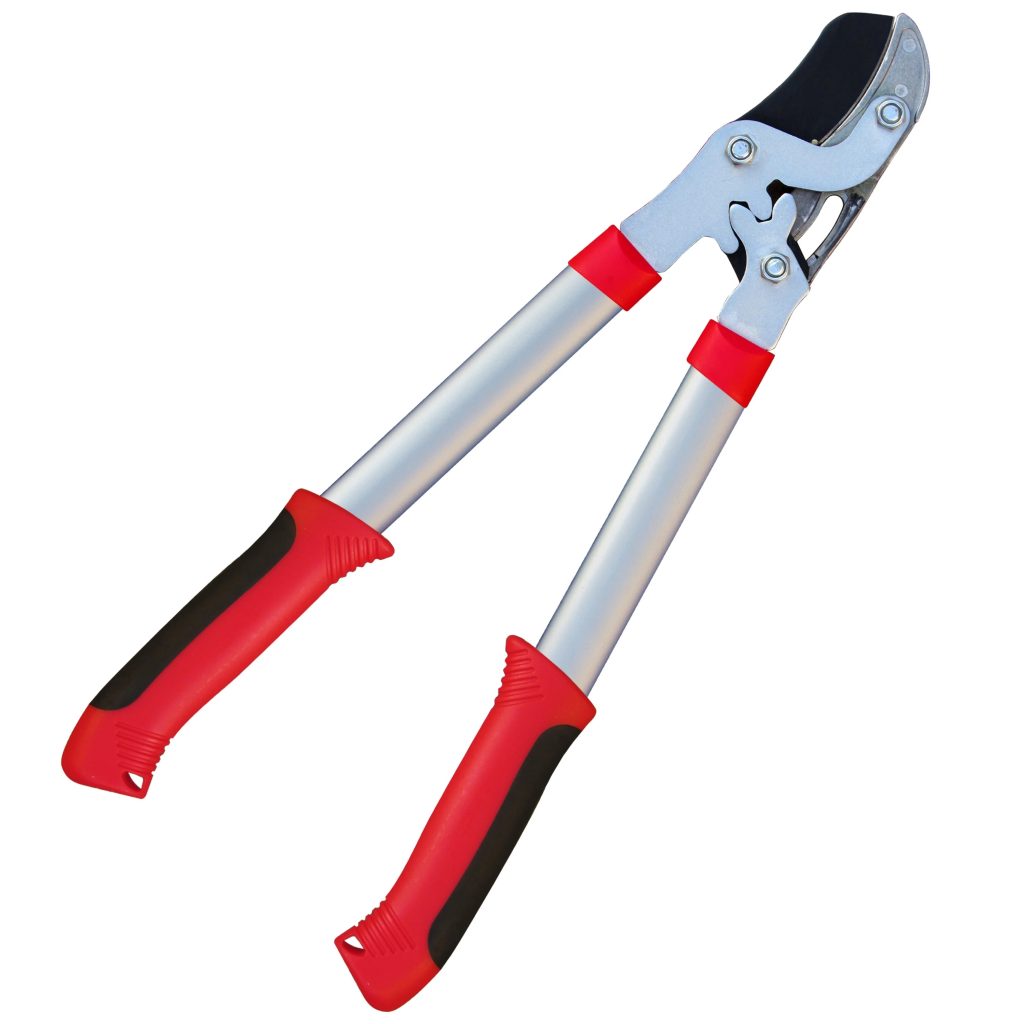
The compact anvil option closes the list. Aluminium handles keep this 19 inch tool light and easy to carry, the compound anvil head is rated to 1.5 inches, and the blade is carbon steel. Weight and warranty figures are not published in the sources we checked. It suits medium dry, woody growth and the prep cuts that break material down before it goes on a pile or into a bin.
The anvil rule still applies, so this tool is for dead wood only, and its short handles give up leverage on the hardest pieces near its limit. Buy it if you want a compact second lopper for dead wood in tight spots, or for breaking down dry material, alongside a bypass tool for live growth.
Ratchet Loppers and Geared Loppers: What Is the Difference?
Geared and compound loppers multiply your squeezing force through gears or linked pivots, and the cut finishes in one continuous squeeze. Most of the tools in this guide work that way, including the PowerGear2 and the compound models from Corona and Tabor. The trade off is that the handles often need to open wide to deliver that full stroke of power.
A ratchet lopper takes the opposite approach. Instead of finishing in one squeeze, it advances the blade in small stages, so each squeeze is easier and the mechanism holds your progress between squeezes. That helps a weaker grip, but it is slower on a pile of branches. Honest note: none of the ten tools in this guide is a pure ratchet model, because the strongest verified listings in this class right now use gear or compound designs instead.
Telescoping Loppers: When They Help, When They Do Not
Telescoping handles earn their place when your pruning mixes heights. They reach higher branches while your feet stay on the ground, they adjust down for hedge work at chest level, and they store in a smaller space than a fixed long handled tool. For a garden with one tall hedge and several lower shrubs, one extendable lopper can cover both jobs.
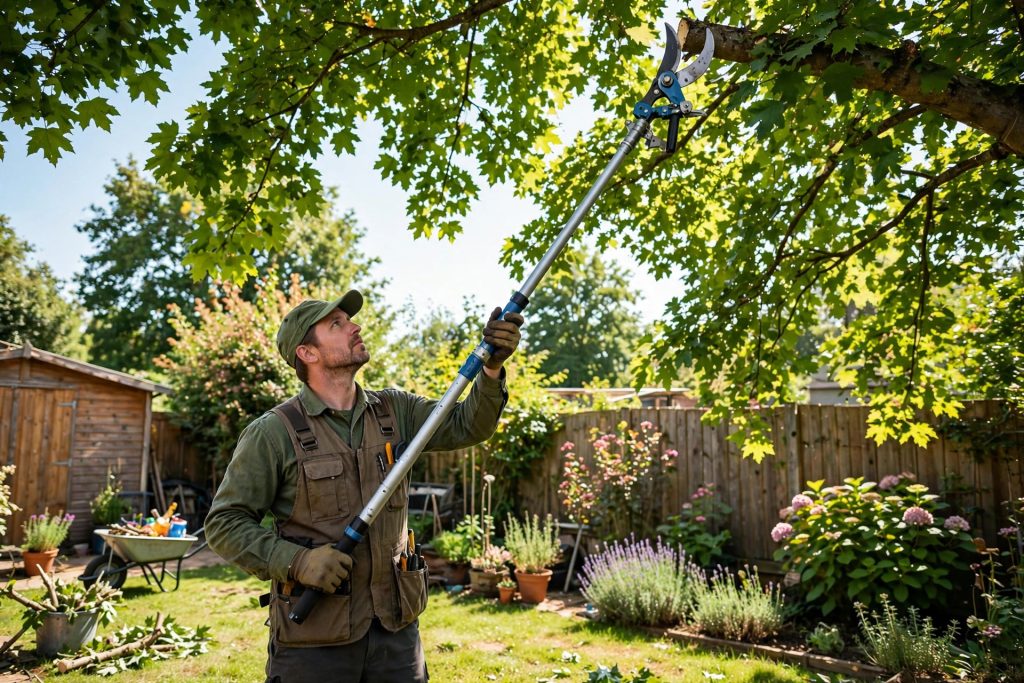
Know the limits before you buy one. A telescoping lopper is not a pole pruner, so it will not reach true tree canopy work, and every model here is at its weakest stretched to full extension, where flex steals cutting force. Work at the shortest handle length that reaches the branch, and step up to a fixed handle tool or a saw when the wood is near the capacity limit.
How to Choose Loppers
Start with the wood, not the brand. If most of your pruning is live growth, you need a bypass head. If it is dead and dry, an anvil head earns its place. Then match capacity to the branches you actually cut in a normal month, not the single worst branch you can imagine, and remember that anything clearly above lopper range belongs to a pruning saw, not to a lopper forced past its limit.
Then think about fit. Longer handles give leverage and reach but need room to open, so a compact garden with dense shrubs may suit a mid length tool better than the longest model. Finally, check replaceability before you buy: a lopper with replaceable blades, anvils and bumpers can stay in service for years, while a sealed tool is replaced whole when the edge is gone.
How to Sharpen and Maintain Loppers
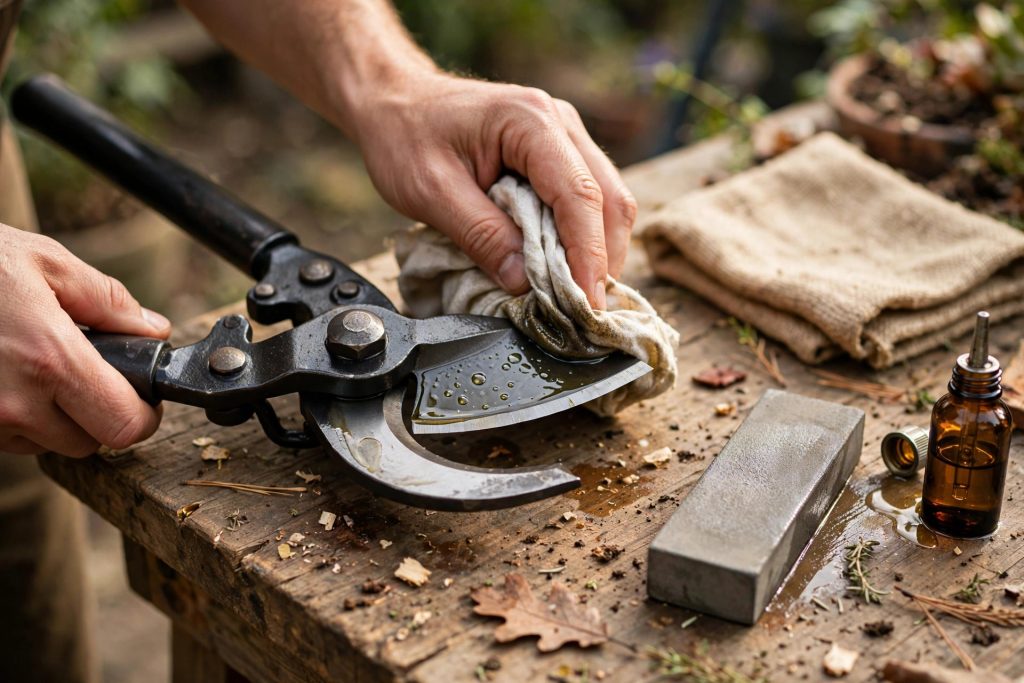
Most lopper problems start with sap and moisture, not with the blade steel. Wipe the blade clean after each session, dry the head before you store the tool, and work a drop of oil into the pivot so the action stays smooth. A minute of care after pruning prevents the stiff, gritty feel that makes people force cuts a sharp tool would finish easily.
When the edge dulls, sharpen a bypass blade on its bevelled side only, following the original angle, and keep the flat side flat so the two blades still pass each other closely. Check the centre bolt as part of the same job, since a loose bolt opens a gap that tears wood instead of cutting it. On an anvil tool, replace the pad when it is scored or worn rather than trying to sharpen it back to shape. A fuller step by step sharpening guide is planned later in this hand tools cluster, and it will sit alongside this maintenance overview when it is published.
Final Choice
If you only buy one lopper from this list, buy the Fiskars PowerGear2 32 in. It covers the widest range of live wood work for most homeowners, and the lifetime warranty removes most of the risk. If reach is your main problem, choose the Corona SL 4364 instead and accept the extra weight. Dead wood is a separate job, so add the Tabor Tools GG12A as a second tool rather than asking one bypass lopper to do both kinds of work.
If you prune fruit trees every week, start with the Felco 211-60 or the Bahco P160-SL-75 instead, since clean cuts and replaceable parts matter more at that pace than headline capacity. For most gardens, the setup that lasts is a split one: one bypass lopper for live wood and one anvil lopper kept for dead wood, each used only for the job its head was made for.
References
- Fiskars PowerGear2 loppers, official Fiskars site
- Corona DualLINK loppers, official Corona store
- Felco 211-60 loppers, official Felco store
- Bahco P160-SL-75 loppers, official Bahco catalog
- ARS LPB-30M lopping shears, ARS Corporation
- Pruning guide for trees and shrubs, University of Minnesota Extension
Frequently Asked Questions
What are the best loppers for thick branches?
For live wood up to 2 inches, the Fiskars PowerGear2 32 in is the top pick. For dead wood up to 2 inches, choose the Tabor Tools GG12A anvil. Match the head type to your wood first, then capacity.
Should I choose bypass or anvil loppers?
Choose bypass for live, green wood, since the passing blades slice cleanly like scissors. Choose anvil only for dead, dry wood, because the flat pad action crushes living tissue and leaves a ragged wound.
How thick can loppers cut safely?
Treat the stated capacity as the maximum in ideal wood, not an everyday target. Work comfortably below it, and switch to a pruning saw for anything above the lopper range.
Are telescoping loppers strong enough for thick branches?
Yes, within their rated capacity, but they flex more at full extension and feel less solid on the thickest wood. Use the shortest handle length that reaches the cut.
How do I sharpen loppers correctly?
Clean sap off the blade first, then sharpen a bypass blade on its bevel side only, at the original angle, keeping the flat side flat. Oil the pivot and keep the centre bolt snug.
When should I replace a lopper blade instead of sharpening it?
Replace it when a nick is too deep to file out, when the blade is bent, or when the head no longer passes closely even after you adjust the centre bolt. Felco, Bahco and ARS all sell replaceable blades.

Thesis Link : https://saulibrary.edu.bd/daatj/public/uploads/BAU200601_19-Pp_5.pdf
- 10 Best Loppers for Thick Branches - October 14, 2026
- Fall Lawn Care Checklist – 9 Jobs Before Winter - October 14, 2026
- 10 Best Garden Tool Sets for Beginners - October 13, 2026