$44.99
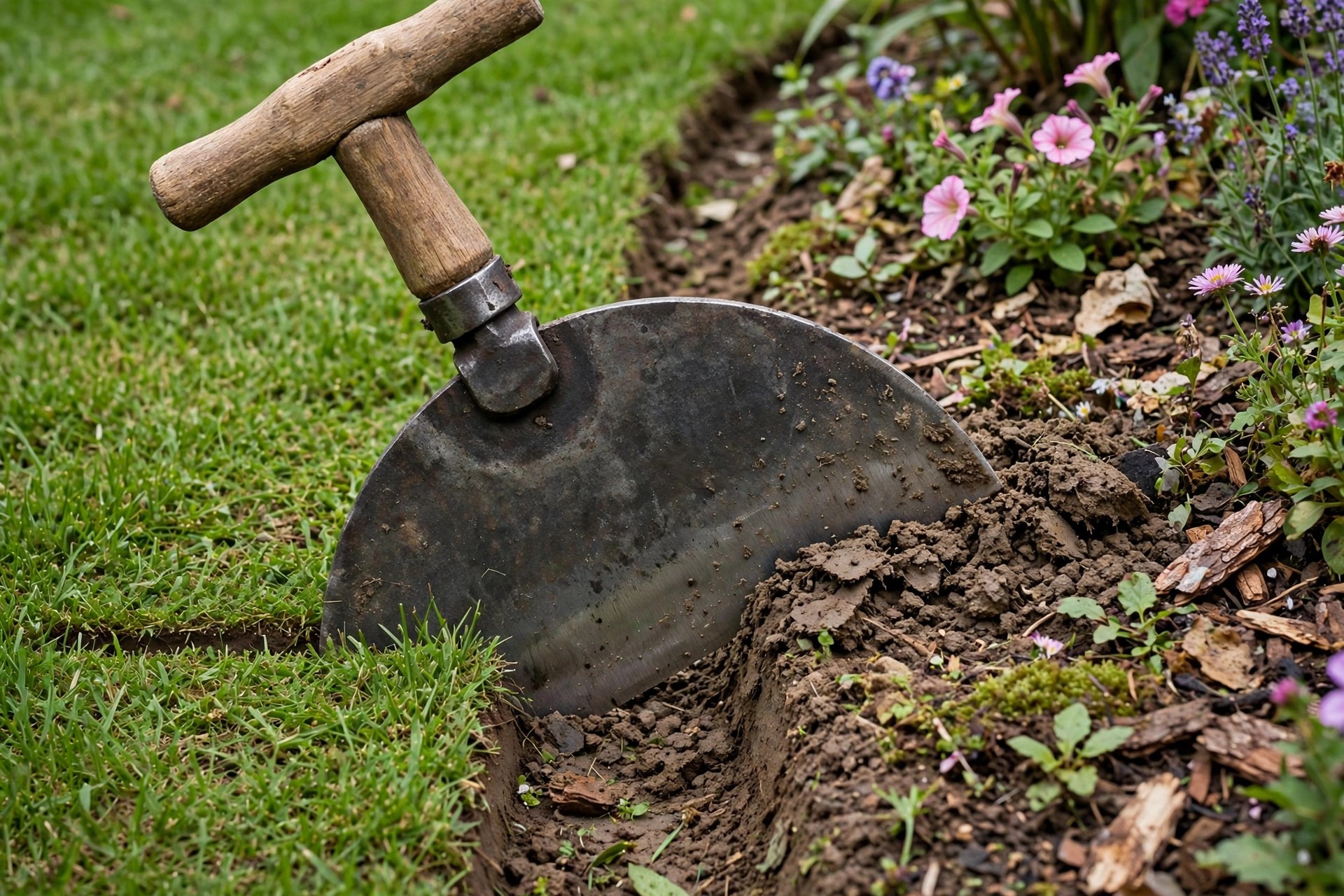
The Razor-Back 61108 is a professional grade half moon edger with a forged steel head, a 9-1/8 in blade and a 48 in wood handle, rated for hard and rocky soil as well as ordinary loam.
Description
The half moon edger is the oldest design in our comparison: a steel crescent on a long handle, driven by your foot, unchanged for decades because it never needed to change. The razor-back 61108 is the professional version of that tool. Its head is forged steel rather than stamped, 9-1/8 in across the blade, mounted on a 48 in wood handle for an overall length of about 56.5 in, with a forward turned step your boot lands on and a working weight of about 3.8 lb. AMES, which makes the Razor-Back line, rates it for hard and rocky soil as well as ordinary loam, which is exactly where cheap stamped half moons bend. For flower beds, curved borders and new lines cut freehand, nothing in this guide, powered or not, gives you more control.
Key Features
Forged steel half moon head
Forging aligns the steel’s grain with the shape of the tool, which is why this head shrugs off rocky, rooty soil that folds a stamped blade. The 9-1/8 in crescent cuts a full bite with every step, so progress along a bed is measured in satisfying feet rather than inches.
Forward turned step
The step turns forward, toward the cut, so your boot lands squarely and your weight drives straight down the blade line. It is the small geometric detail that separates a tool you lean on from a tool you wrestle.
48 in wood handle, 56.5 in overall
The long handle gives leverage for the rocking motion that walks the blade through turf, and it keeps your back straight while your leg does the work. Wood also absorbs the shock of striking a stone in a way steel tube never quite matches.
Built for hard and rocky soil
The manufacturer rates the tool for hard, rocky ground as well as loam, and the limited lifetime warranty offered on the model backs the claim. This is the half moon that landscapers keep in the truck.
Silent, fuelless, effectively unbreakable
No motor, no battery, no cord, no noise. You can edge at 7 am on a Sunday, in silence, with a tool that will outlive every powered pick in this guide if you keep the blade filed and the handle oiled.
Product Description
The Razor-Back 61108 (UPC 079617611084) is a manual half moon turf edger from AMES’s professional Razor-Back line. Technique is the whole game: place the blade on the line, step down on the forward step, rock the blade slightly, lift, move half a blade width, and repeat. It is slow, at a few feet per minute, and it is also the most precise edging in this entire guide: the only method that lets you sculpt a new bed line freehand, follow any curve you can imagine, and cut the crisp V trench against mulch that keeps beds and lawn apart.
Owner and professional feedback is unusually loyal. Landscapers describe buying one per crew and replacing handles rather than tools, and gardeners praise the control around roots and irrigation lines, where a power blade is a liability and this tool simply stops where you stop. The honest limits are pace and physicality: the work is in your legs, and 300 feet of sidewalk is a morning, not a moment.
Benefits of Using This Product
- Total control: new bed lines, curves and V trenches no power edger can shape
- Forged head handles rocky, rooty soil that bends cheap half moons
- Silent and fuelless: edge any time, including early mornings
- Long handle gives leverage and keeps your back straight
- Nothing to charge, fuel, service or store carefully
Specifications
| Head | Forged steel half moon, industrial gauge socket pattern |
| Blade width | 9-1/8 in |
| Handle | 48 in wood, straight |
| Overall length | 56.5 in |
| Step | Forward turned, for secure foot placement |
| Weight | About 3.8 lb |
| Soil rating | Hard and rocky soil, as well as loam (manufacturer) |
| Warranty | Limited lifetime (per retailer specification listings) |
| UPC | 079617611084 |
How to Use
Lay out new lines with a hose or rope and live with the shape for a day before cutting. Work on moist soil. Stand behind the blade, place your boot on the forward step, and drive the crescent straight down; rock it slightly to finish the cut, lift, and step forward half a blade width so the cuts overlap into a continuous face. For beds, follow the vertical cut with a 45 degree slice from the bed side to lift a shallow wedge: that little V trench is what keeps mulch and grass apart. File the blade edge when it starts to tear rather than slice, and rub the handle with linseed oil once a season.
Why Choose the Razor-Back 61108?
Choose the razor-back 61108 when the edging that matters to you is shaped, not just straight: flower beds, curved borders, tree rings and new lines drawn freehand. It is the bed tool, full stop, and in its professional forged form it is a buy once purchase. Do not buy it to maintain hundreds of feet of pavement; that is what the powered and rotary picks are for.
Frequently Asked Questions
What is a half moon edger used for?
Cutting bed edges by hand: you step on the forward step and rock the crescent blade through turf and soil. It shapes new curved bed lines, cuts the V trench against mulch, and works precisely around roots and irrigation lines.
How fast can I edge with it?
Figure on a few feet per minute in average soil. A typical bed border is a pleasant half hour; a long driveway is a project. Match the tool to the footage honestly.
Will it handle rocky soil?
Yes. The forged head is rated by the manufacturer for hard and rocky soil, which is the main reason to choose this model over stamped hardware store half moons.
How do I maintain it?
File the blade edge when it dulls, clean soil off after use, and oil the wood handle occasionally. There is nothing else to maintain.
Final Verdict
The best edging tool for flower beds ever made has no motor, and the Razor-Back 61108 is its sturdiest common form: forged where rivals are stamped, long where rivals are short, and quiet everywhere. Buy it for beds, tree rings and new lines, and it will still be in your shed when every battery in this guide has been recycled.
Still deciding? Our guide to the best lawn edger for clean lines compares all ten models on cutting depth, blade, weight and ease of use, with an honest Best for and Not ideal for for each one.
Related products
-

Buy Soil Moisture Meter 4 in 1 Digital Tester – pH, Temperature & Light Sensor
$32.98 Buy product -

Buy SUMIO 6PCS Gardening Tool Set– Pruner, Trowel & Hand Tools Kit
$19.29 Buy product -
Buy CKG Metal Detecting Shovel – Heavy Duty Gardening
$26.99 Buy product -
Buy Fiskars 3-in-1 Garden Tool Set – Best Choice for Garden Tool Set
$24.95 Buy product