$63.66
The post-emergent crabgrass killer the pros reach for. Kills mature, tillered crabgrass that weaker products miss, plus white clover and foxtail.
Description
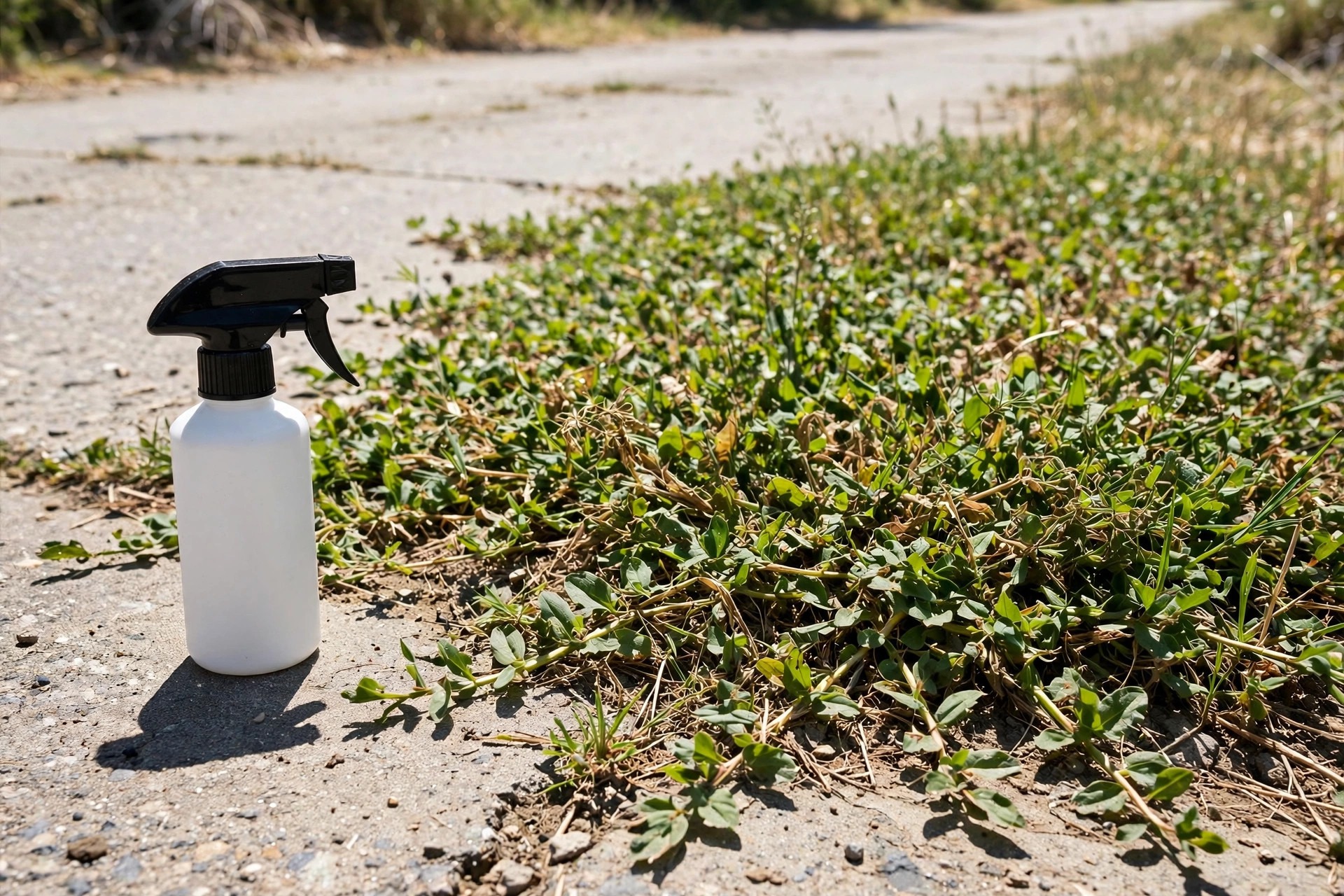
By midsummer, the crabgrass spreading from the driveway edges is no longer a seedling problem. It is a mature, tillered mat, and most post-emergent sprays simply cannot kill plants that size. Quinclorac 75 DF can, and that single ability is why lawn professionals keep it in the truck.
This dry flowable concentrate pairs with a methylated seed oil surfactant to penetrate crabgrass’s waxy leaves, and the label also covers white clover, foxtail and torpedograss. Killing mature plants before they set seed also cuts next year’s infestation, since one plant scatters thousands of seeds. One pound mixes into many gallons of finished spray for whole-lawn rescues. It suits lawns where the spring pre-emergent window was missed and the crabgrass is already up and spreading.
Key Features
Kills Mature, Tillered Crabgrass
This is quinclorac’s defining strength. Most post-emergent crabgrass products only work on young, single-stem plants, which means they fail exactly when most homeowners notice the problem. Quinclorac kills tillered, mature crabgrass, the flat, spreading mats that own your lawn edges by July. If you missed your pre-emergent window, this is the rescue the pros reach for.
Also Controls White Clover, Foxtail and Torpedograss
The label reaches beyond crabgrass. White clover, foxtail and torpedograss are all listed, and those are three stubborn summer problems that shrug off standard broadleaf sprays. One concentrate on the shelf covers the worst of the summer grassy and broadleaf escapes in a typical lawn.
Economical Dry Flowable Concentrate
Quinclorac 75 DF is a dry flowable concentrate: a pound of product mixes into many gallons of finished spray, so the cost per treatment stays low across a full lawn. Dry concentrates also store well between seasons without the freeze and shelf-life worries of liquids, which suits a product you may only need in summer.
Built for Use with a Surfactant
Quinclorac is formulated to pair with a methylated seed oil (MSO) surfactant, which helps the spray stick to and penetrate crabgrass’s waxy leaves. That pairing is part of why it succeeds on mature plants. It is a small extra step, clearly called for on the label, and it is the difference between a partial burn and a full kill.
Product Description
Every lawn owner knows the moment: the pre-emergent window closed in spring, summer heat arrived, and crabgrass started spreading from the driveway edges. Quinclorac 75 DF exists for that moment. It is a post-emergent herbicide with quinclorac as the active ingredient, aimed squarely at grassy weeds that have already emerged and grown past the fragile stage.
This description is based on the manufacturer’s specifications and owner feedback. The feedback pattern is clear: it works on crabgrass that defeated other products, provided it is mixed accurately, paired with MSO surfactant, and applied while the crabgrass is actively growing and before it sets seed. It has limited use on some warm-season grasses, so the label check matters more than usual here.
Benefits of Using This Product
The main benefit is a second chance. Without quinclorac 75 df, a missed pre-emergent usually means a summer of hand-pulling crabgrass or watching it spread and reseed the lawn for next year. Killing mature plants before they set seed removes this year’s eyesore and cuts next year’s infestation at the source, because one crabgrass plant scatters thousands of seeds.
The secondary benefit is breadth in a single mix. The same tank that handles the crabgrass along the drive also handles the white clover patch and the foxtail at the lawn’s edge. One application, several problems solved, and the lawn can be fed and thickened afterward so the gaps close with grass instead of the next weed.
Specifications
| Type | Post-emergent herbicide, dry flowable concentrate |
| Active ingredient | Quinclorac |
| Kills | Mature crabgrass, white clover, foxtail, torpedograss (see label for full list) |
| Size | 1 lb |
| Application | Mix with water and a methylated seed oil surfactant; spray actively growing weeds |
| Timing | While crabgrass is actively growing, before it sets seed |
| Best for | Emerged crabgrass on cool-season and listed lawns |
How to Use
- Read the label carefully for your grass type. Quinclorac has limited use on some warm-season grasses, and the label list governs.
- Weigh or measure the concentrate for your sprayer volume and mix with water as directed. Precision matters with concentrates.
- Add a methylated seed oil (MSO) surfactant at the label rate. This is not optional for mature crabgrass.
- Spray when crabgrass is actively growing, ideally before it sets seed, coating the foliage evenly on a calm day.
- Keep people and pets off until the spray has dried, follow label watering intervals, and reassess in 2 weeks. Very mature plants can need a follow-up at the label interval.
Why Choose Quinclorac 75 DF?
Because it does the one job the rest of the shelf cannot: kill crabgrass that is already big. Pre-emergents prevent, three-way sprays handle broadleaf weeds, and neither touches a tillered crabgrass mat in July. Based on specifications and owner feedback, quinclorac 75 df is the reliable post-emergent answer, which is why lawn professionals keep it in the truck. Paired with a spring prodiamine barrier, it closes the crabgrass loop completely.
Frequently Asked Questions
Why do I need a surfactant with quinclorac?
Crabgrass leaves are waxy, and water-based spray beads and rolls off them. A methylated seed oil surfactant breaks that surface tension, spreads the spray across the leaf and helps the herbicide penetrate. Our guide and the product label both call for MSO specifically, and skipping it is the most common reason owners report weak results.
How mature is too mature for crabgrass?
Quinclorac’s reputation rests on killing tillered, multi-stem plants that defeat other post-emergents. The practical limit is seed set and stress: apply while the plant is actively growing and before it drops seed, and avoid spraying drought-stressed weeds, which barely absorb herbicide.
Can I use quinclorac on warm-season lawns?
Only where the label lists your grass. Quinclorac 75 DF has limited use on some warm-season grasses, and sensitive southern lawns are exactly where label mistakes damage turf. Check the label for your grass type before mixing anything; for St. Augustine and similar sensitive turf, our guide points warm-season owners to Celsius WG instead.
Does quinclorac prevent crabgrass from coming back?
It is a post-emergent, so it kills the plants it contacts and does not leave a soil barrier. Killing this summer’s plants before they seed sharply reduces next year’s pressure, and a spring prodiamine application provides the actual prevention layer.
Final Verdict
On specifications and owner feedback, Quinclorac 75 DF is the crabgrass rescue product: the one that still works after the weed has grown up. It asks for accurate mixing, a surfactant and a label check, and returns mature crabgrass control nothing else in our guide matches. Best for: lawns where crabgrass has already emerged and spread. Skip if: your lawn is a warm-season grass the label does not list, where a warm-season product is the safe route.
Want to compare it with the other weed killers before you buy? Read our full guide: 10 Best Weed Killers for Lawns That Won’t Kill Grass
Related products
-

Buy American Lawn Mower – Best Corded Lawn Mower
$159.99 Buy product -
Buy SUNPOW Metal Detector Shovel – Heavy Duty Serrated Digger
$19.99 Buy product -

Buy Soil Test Kit – 2 in 1 Soil Moisture Meter & Soil pH Meter
$16.99 Buy product -

Buy LawnMaster Electric Corded Lawn Mower – Smart Lawn Care
$114.99 Buy product