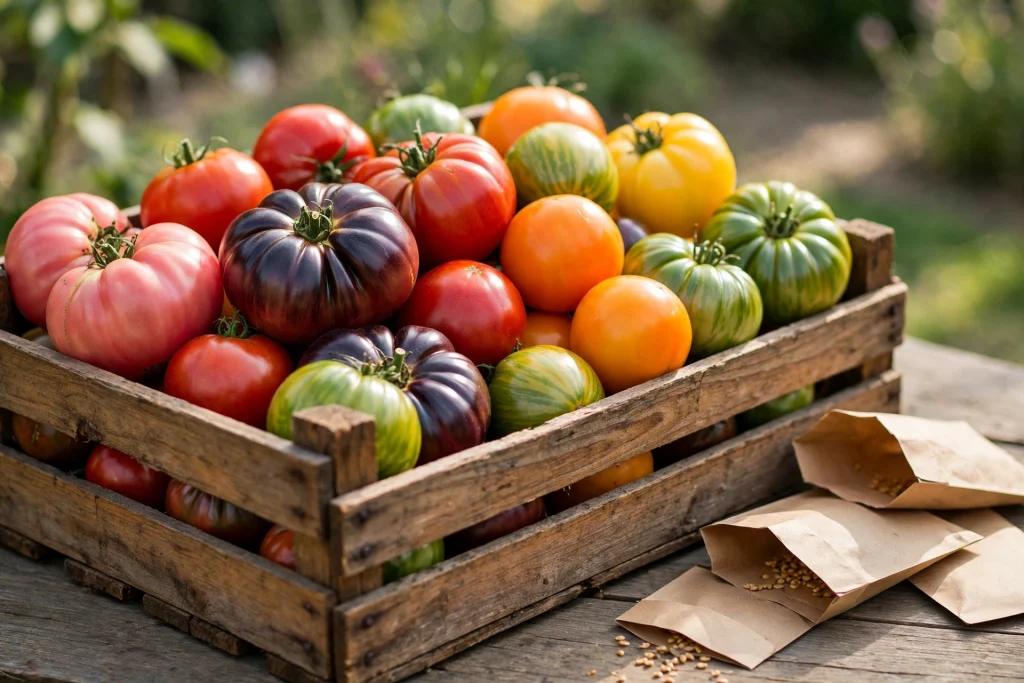

A supermarket tomato and a homegrown heirloom tomato are barely the same fruit. One is bred to survive shipping. The other is bred, or rather kept alive by generations of gardeners, for flavour. That is the whole reason to grow heirlooms. The best heirloom tomato seeds give you fruit that tastes like summer, in colours and shapes no grocery store stocks, and seed you can save and sow again next year.
Choosing seed is where the season is won or lost. A packet from a reputable company carries a named variety, a real days-to-maturity figure and seed that has been tested. A nameless packet from a marketplace listing carries none of that. This guide compares 10 named heirloom tomato seed products from trusted US seed companies, with every fact checked against the seller’s own listing or a university Extension page.
A note on the numbers in this guide: days to maturity are counted from transplanting outdoors, not from sowing seed indoors. Add 6 to 8 weeks of indoor growing time to get the full span from sowing to first ripe fruit. Where sellers disagree on a figure, this guide prints the range and says so.
Quick Recommendation
If you want one packet to start with, buy Brandywine Sudduth’s Strain from Baker Creek. It is the benchmark for heirloom flavour, a big pink beefsteak that regularly tops taste trials, and it suits any gardener with a long enough season. For the smoky, complex flavour that converts sceptics, choose Cherokee Purple from Seed Savers Exchange. For sheer size and a good story, Mortgage Lifter is the pick. Sauce makers should go straight to San Marzano from Botanical Interests. Yellow Pear from Burpee is our pick for cherry tomato lovers who want an early, productive variety for snacking and salads. If you want a tomato that looks as good as it tastes, Green Zebra from Johnny’s Selected Seeds is the one for the salad bowl.
The 10 Best Heirloom Tomato Seeds at a Glance
| Product | Best For | Type/Seed Count | Days to Maturity | Our Rating |
|---|---|---|---|---|
 Brandywine Sudduth’s Strain, Baker Creek | Best overall flavour | Indeterminate beefsteak, seed count not published | 80 | 9.2 |
 Cherokee Purple, Seed Savers Exchange | Smoky, complex flavour | Indeterminate beefsteak, 50 seeds per packet | 80 | 9.1 |
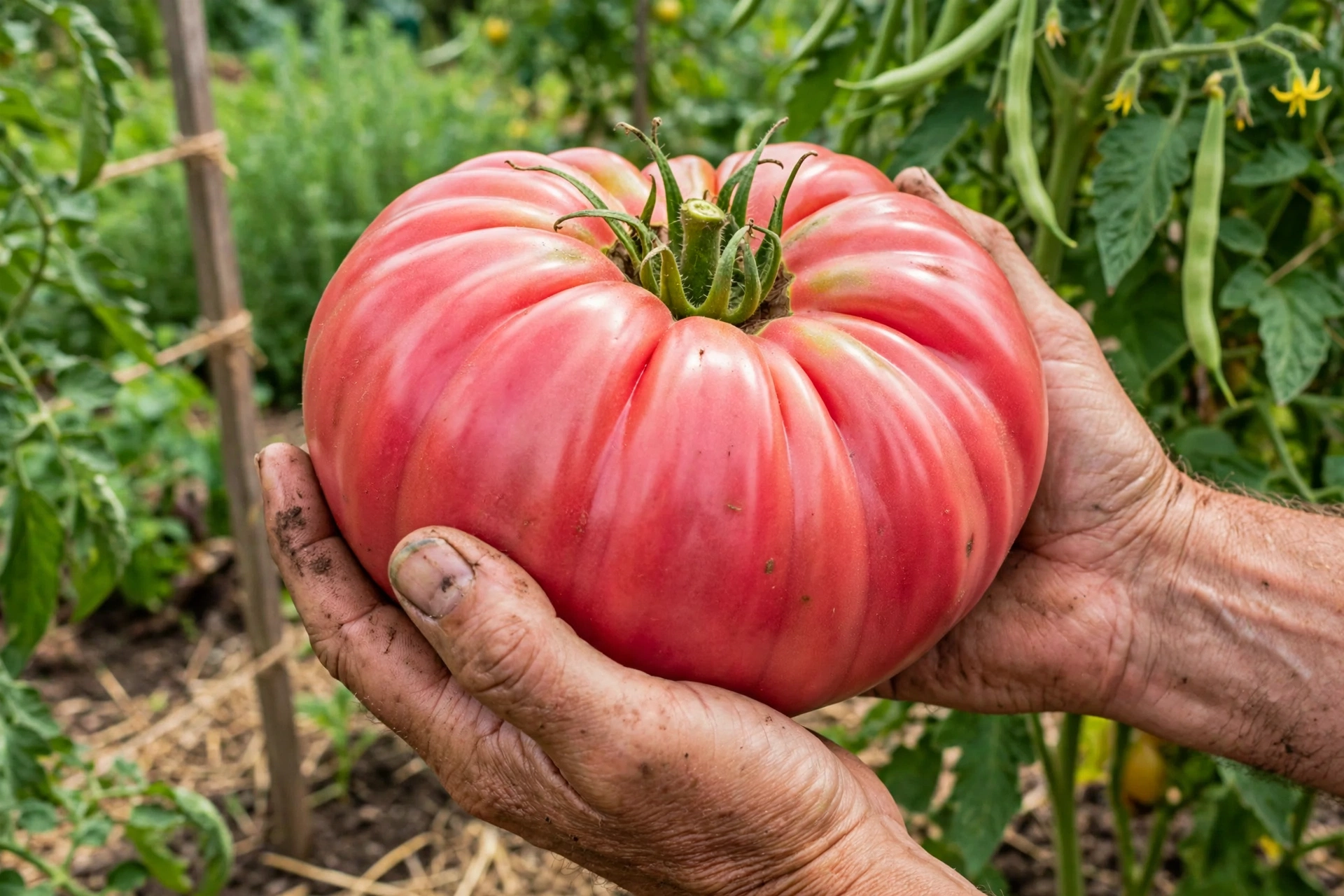 Mortgage Lifter, Baker Creek | Biggest fruit, best story | Indeterminate beefsteak, seed count not published | 80-85 | 9.0 |
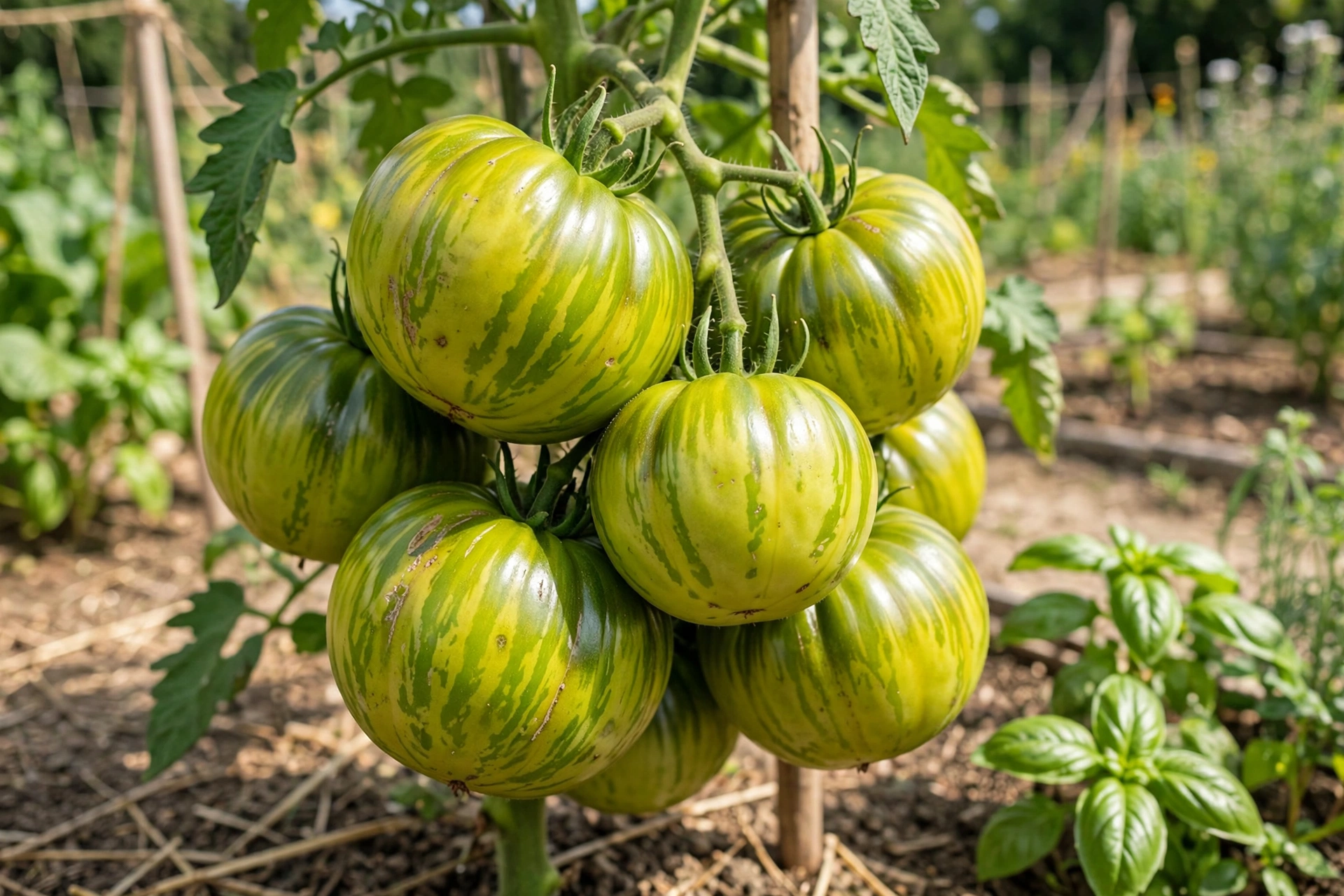 Green Zebra, Johnny’s Selected Seeds | Salads and colour | Indeterminate slicer, seed count varies by pack | 72 | 8.9 |
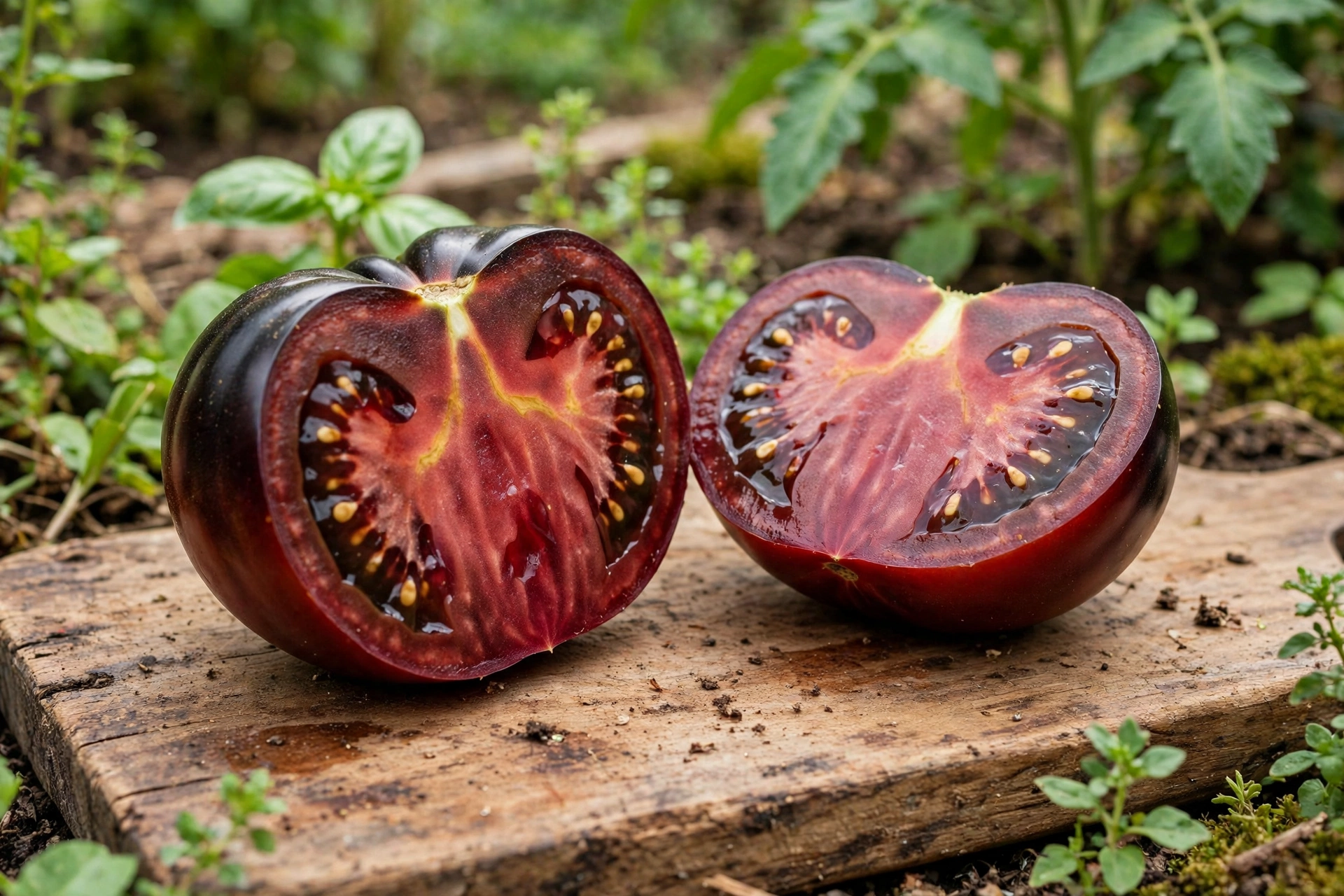 Black Krim, Baker Creek | Dark, salty-sweet flavour | Indeterminate beefsteak, 15 seeds per packet | 80 | 8.8 |
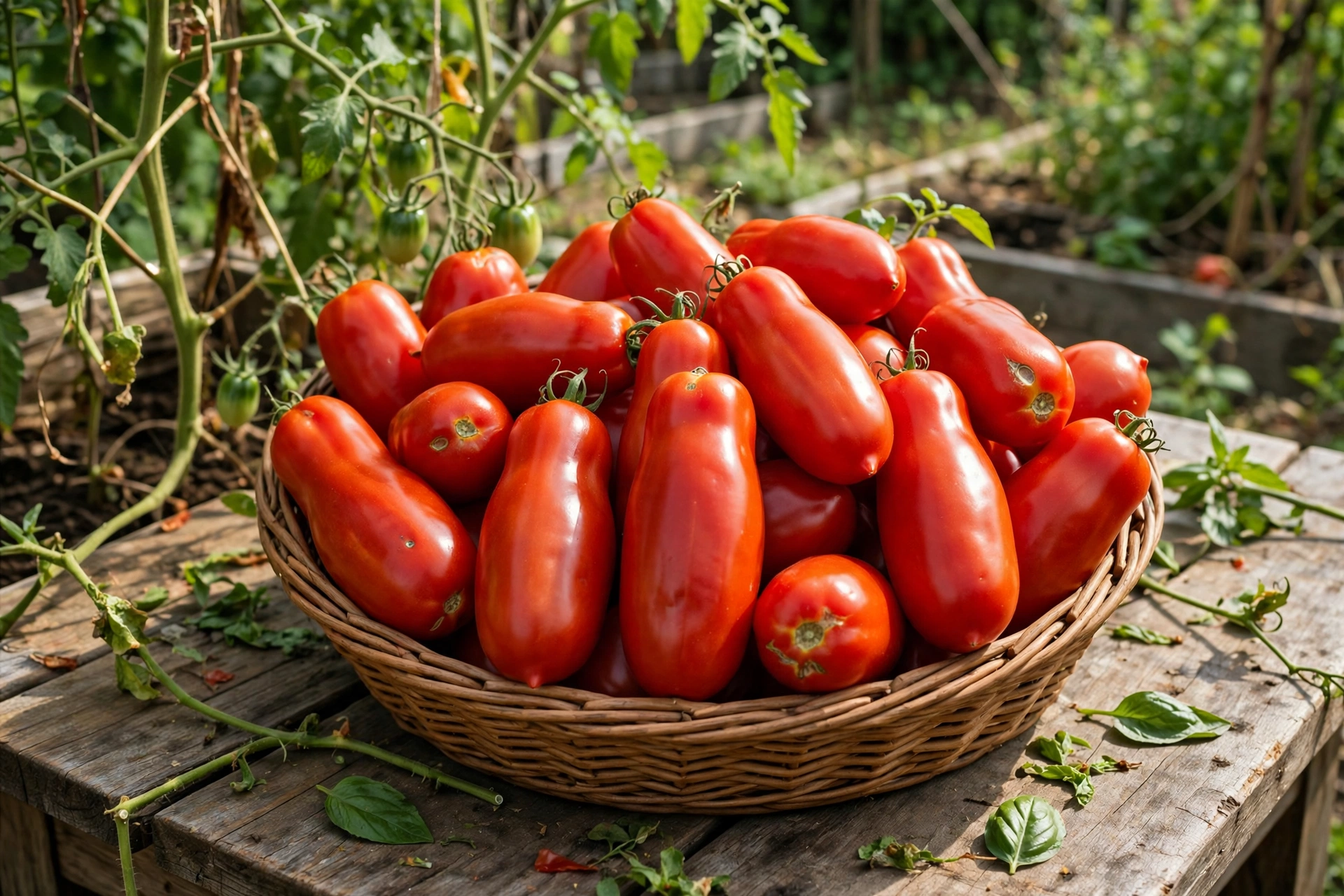 San Marzano Roma Pole, Botanical Interests | Sauce and canning | Indeterminate paste, organic and conventional options | 80-85 | 8.7 |
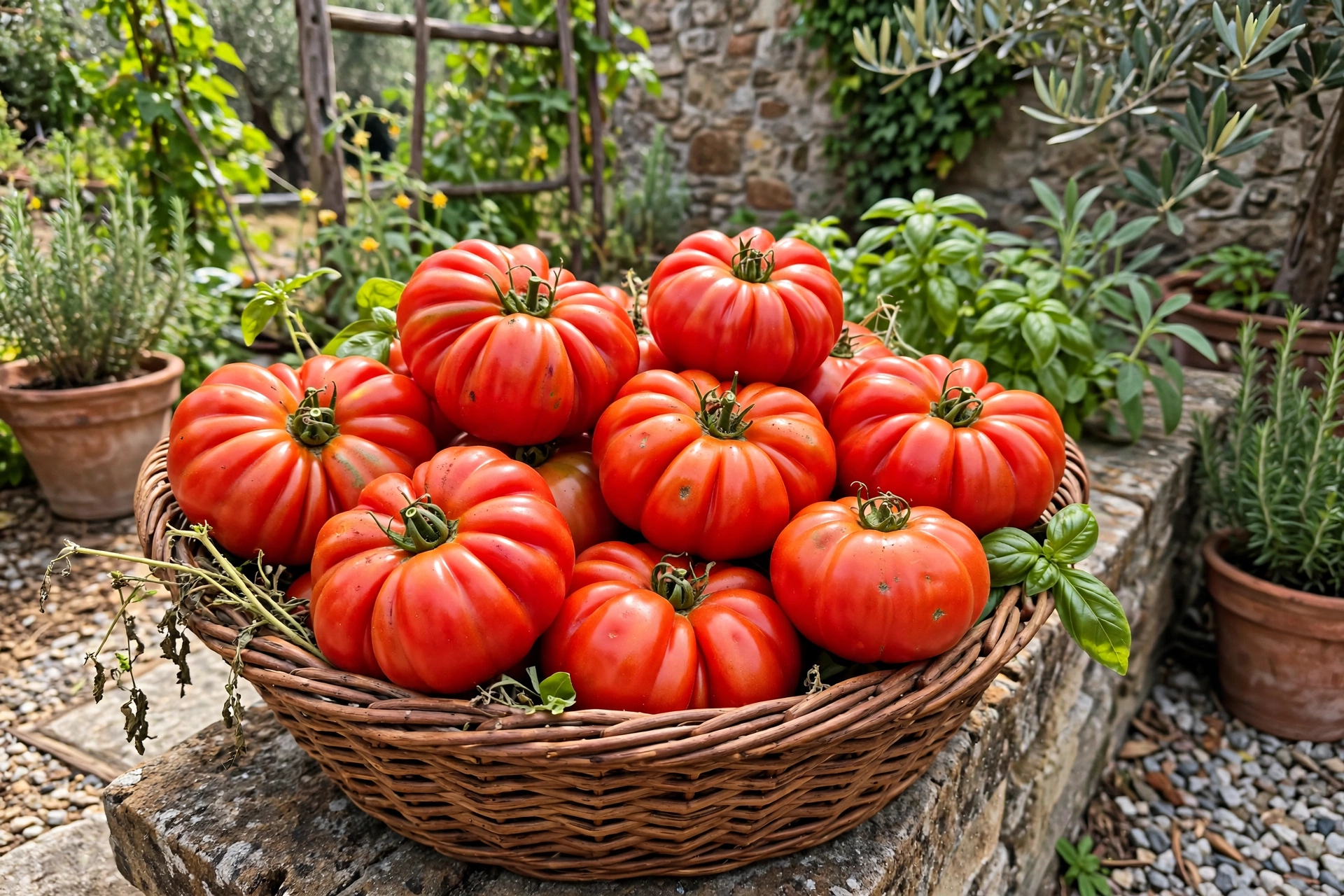 Costoluto Genovese, Eden Brothers | Italian cooking and sauce | Indeterminate ribbed slicer, seed count not published | About 85 | 8.6 |
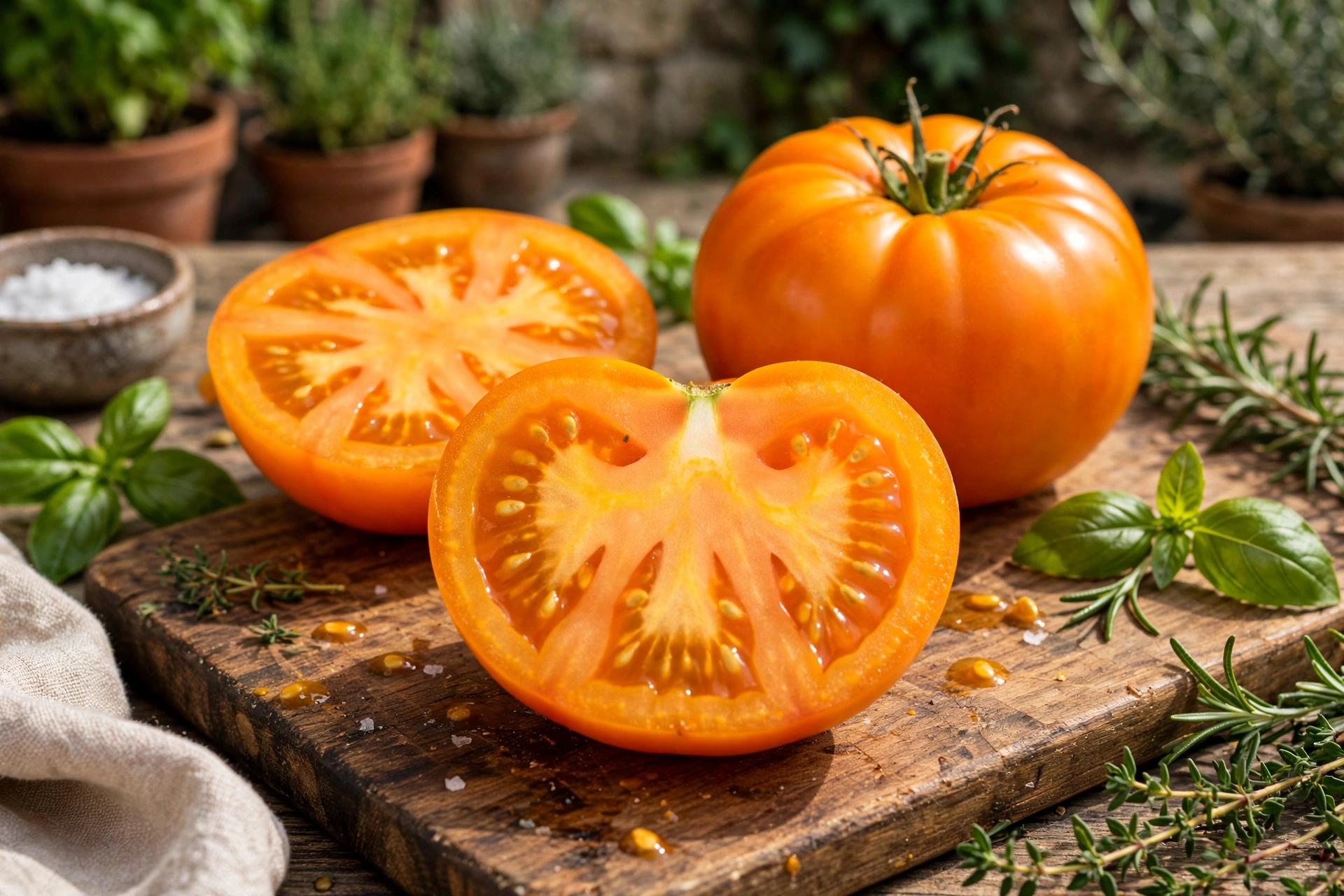 Kellogg’s Breakfast, Seed Savers Exchange | Orange beefsteak flavour | Indeterminate beefsteak, 50 seeds per packet | 80-85 | 8.5 |
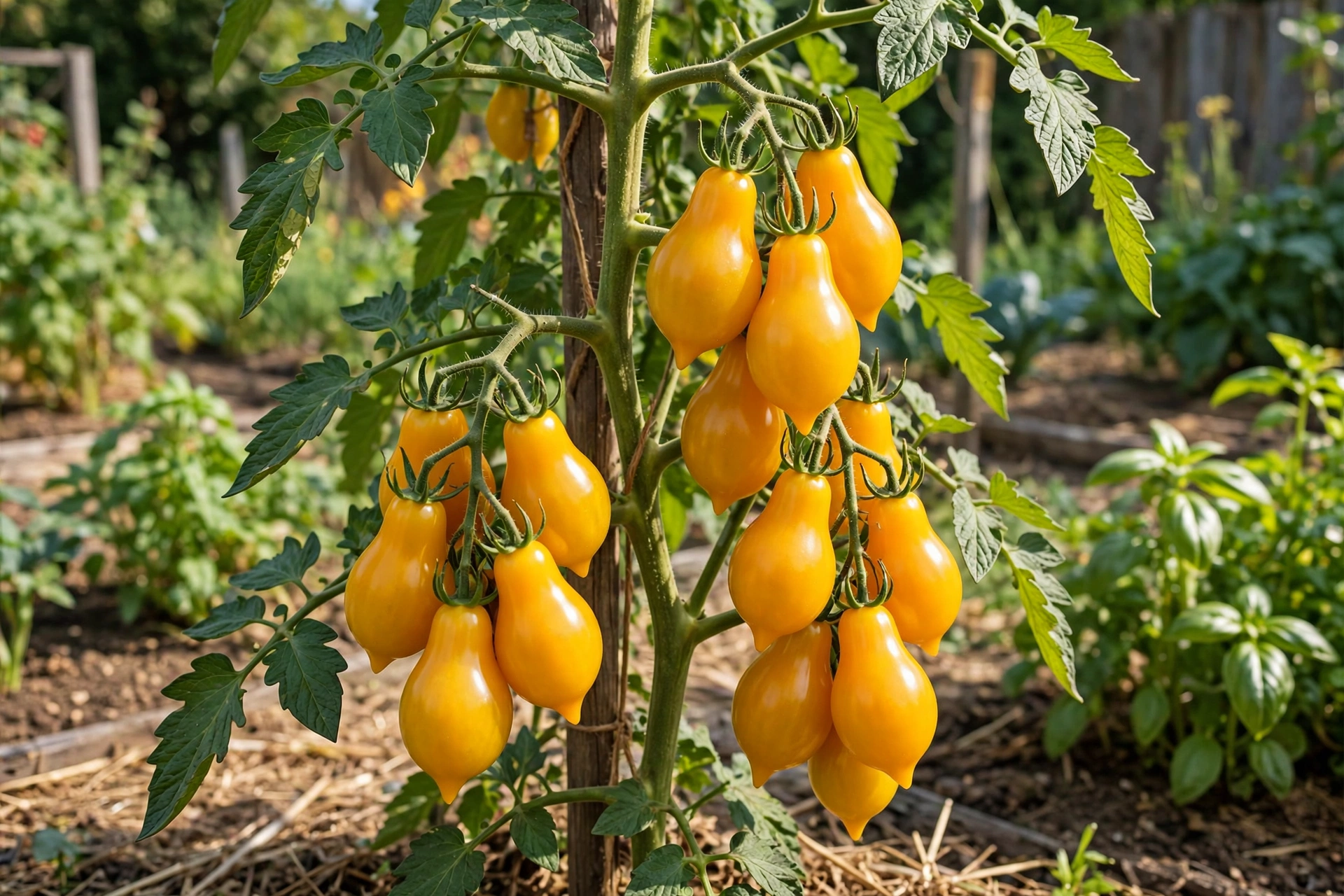 Yellow Pear, Burpee | Cherry tomatoes and snacking | Indeterminate cherry, seed count not published | 75 | 8.4 |
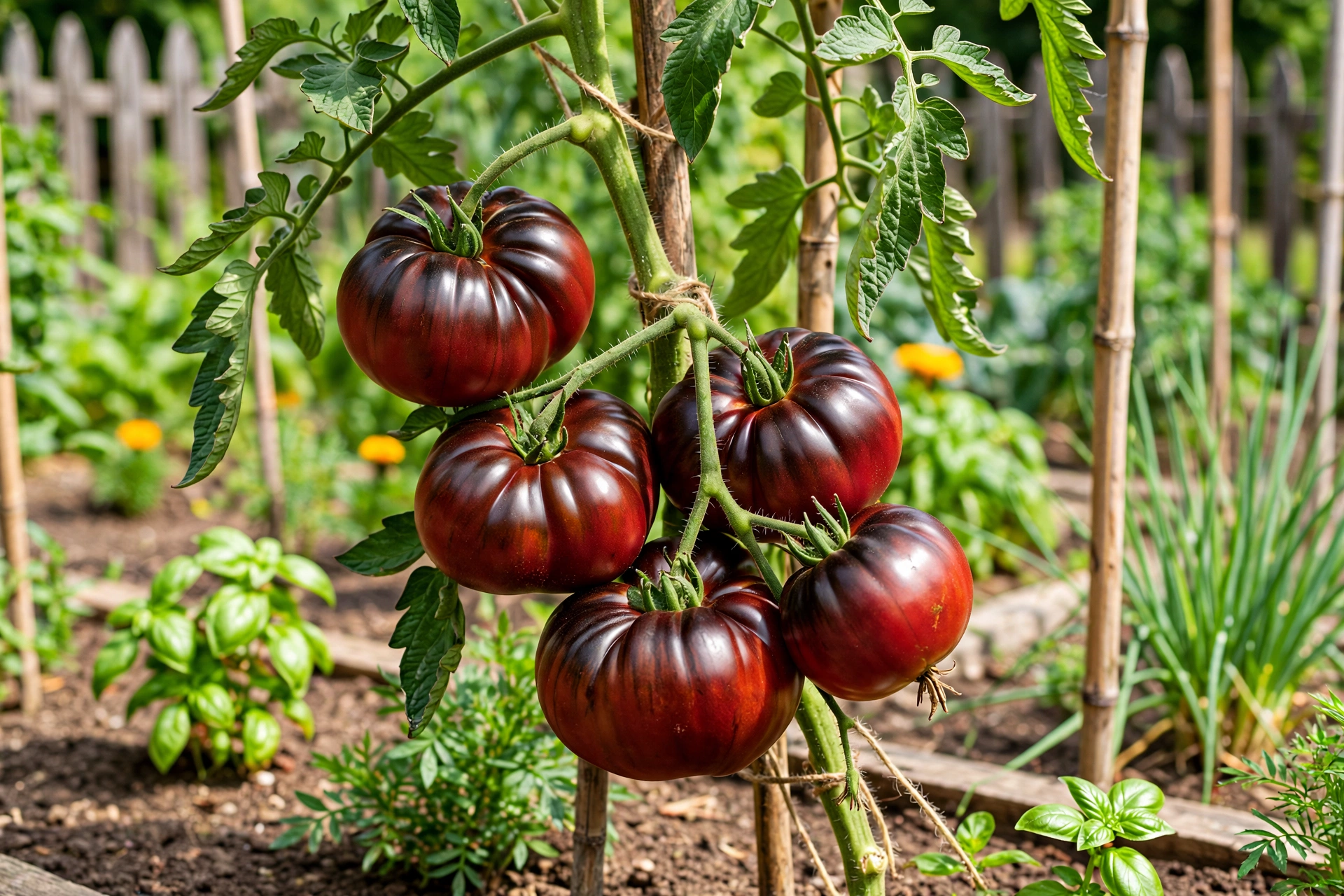 Paul Robeson, Seed Savers Exchange | Dark, smoky slicer | Indeterminate beefsteak, seed count not published | 75-80 | 8.3 |
1. Brandywine Sudduth’s Strain, Baker Creek Heirloom Seeds
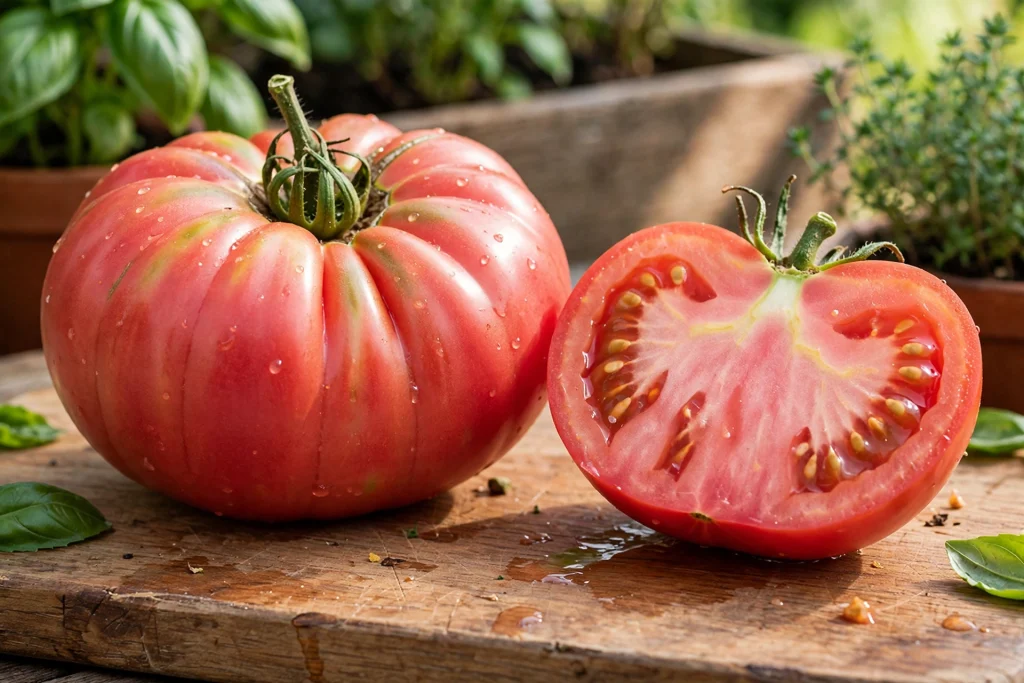
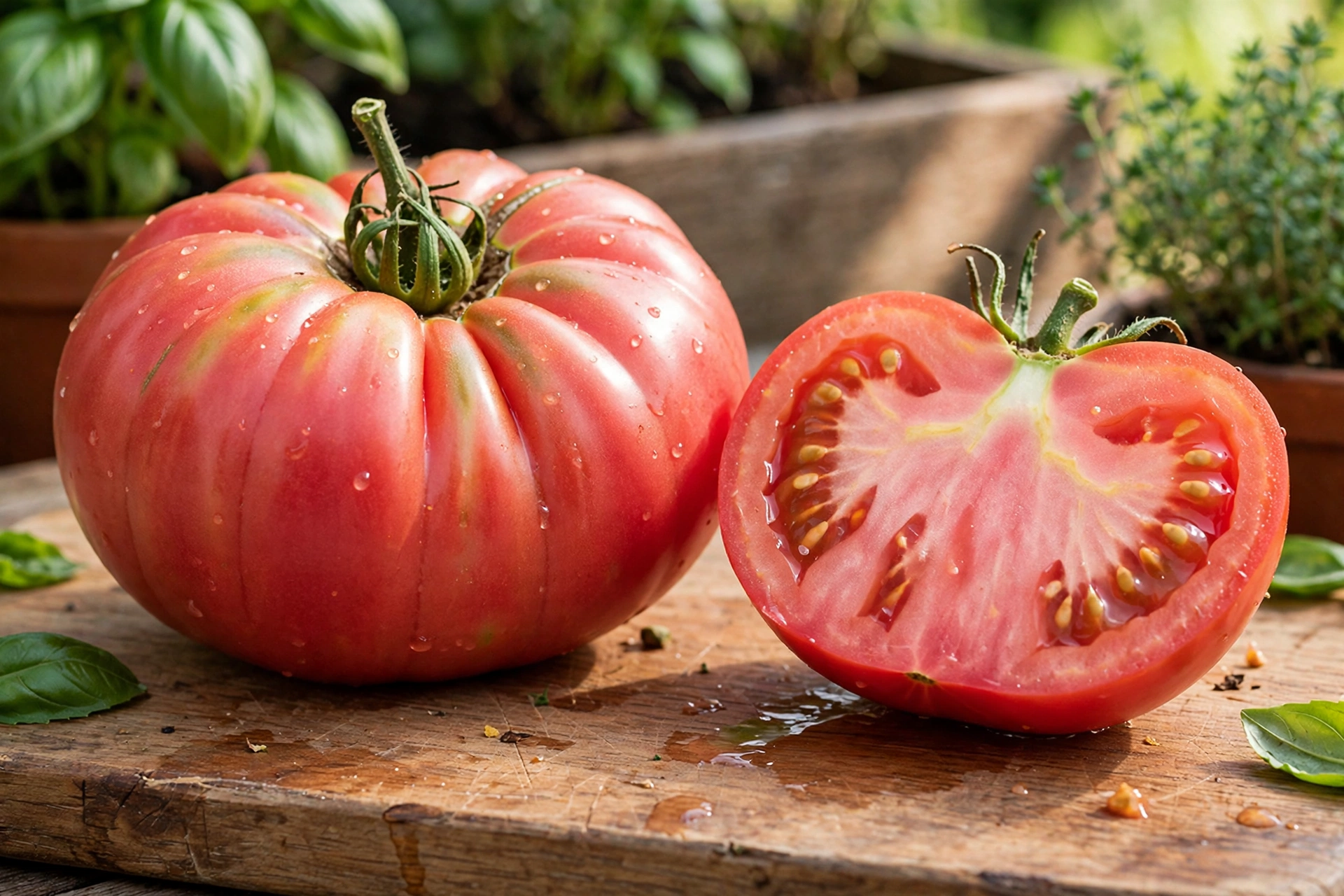
Brandywine is the tomato other heirlooms are measured against, and the Sudduth’s Strain sold by Baker Creek Heirloom Seeds is the version most growers mean when they say the name. Baker Creek lists it at 80 days to maturity from transplant, with an indeterminate, potato-leaf plant. The fruit are large pink beefsteaks, often reaching 1 pound or more, with the rich, sweet-acid balance that has made Brandywine a fixture of flavour trials for decades.
Johnny’s Selected Seeds lists its own Brandywine strain, Quisenberry, at 78 days, and West Virginia University Extension lists Brandywine at 85 days. The difference is strain and counting method, not a mistake, and it tells you something useful: Brandywine is a late tomato by any measure, so start it early and give it a long season.
What you get for the wait is a tomato that many gardeners consider among the best-tasting heirlooms. Its meaty flesh, sweet juice and balanced tang make it a favourite for slicing. The flesh is meaty, the juice is sweet with a real tang, and a single slice covers a sandwich. Baker Creek sells 100% heirloom, open-pollinated, non-GMO seed, so seed saved from your own fruit should grow true to type. In Louisiana State University AgCenter’s 2012 heirloom trial, Pink Brandywine won the taste test at Burden Center, with about 175 people rating the tomatoes. Iowa State University Extension and Outreach’s Dubuque County tomato variety trial also found Brandywine Red the favourite tasting cultivar, a different strain from the pink Sudduth’s Strain.
Real-world limitation: Brandywine is the slowest tomato on this list to ripen, and its yields are moderate rather than heavy. In a short season or a bad blight year, you may get fewer fruit than a hybrid would give you. It also needs a tall, strong stake or cage, because the vines keep growing until frost.
Who should buy: any gardener with at least 80 frost-free days after transplant who puts flavour first and is willing to wait for it.
2. Cherokee Purple, Seed Savers Exchange
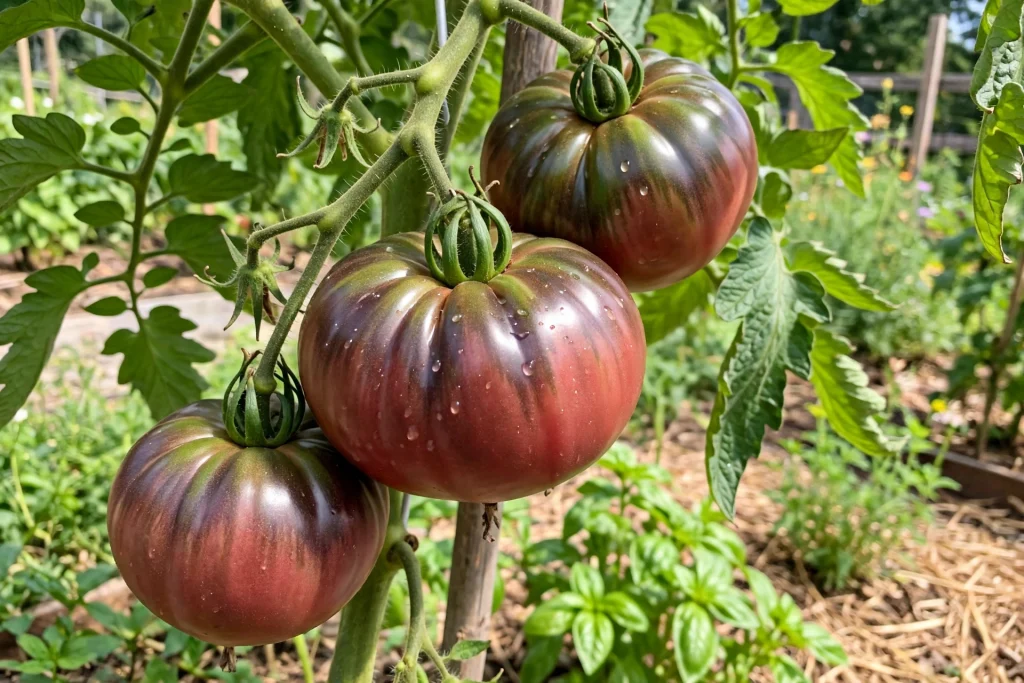
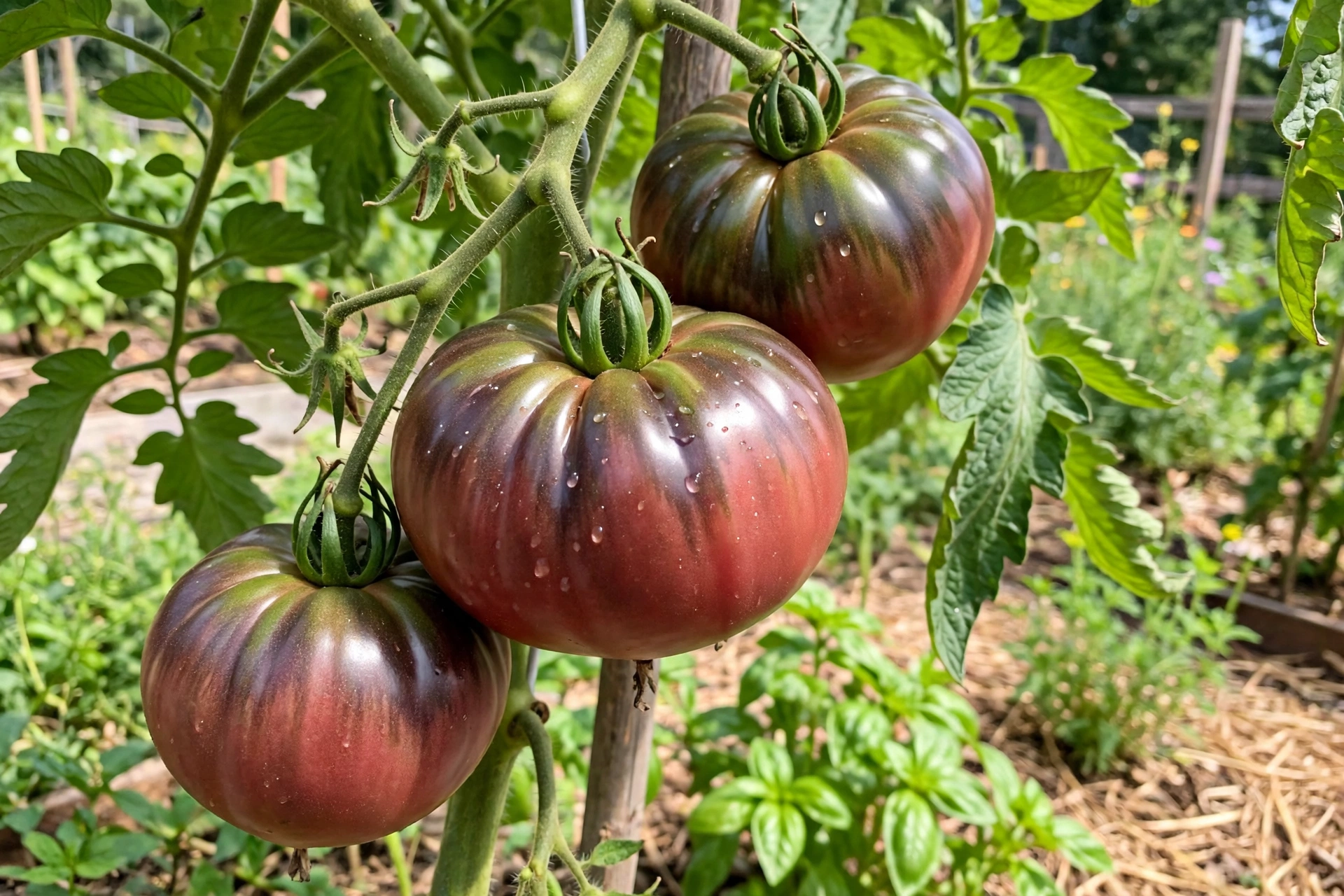
Cherokee Purple entered Seed Savers Exchange in 1990, and in the decades since it has become the dark tomato most gardeners compare all others with. Seed Savers Exchange lists it at 80 days from transplant, indeterminate, with 50 seeds per packet. The fruit are dusky rose-purple beefsteaks with green shoulders, weighing up to 1 pound, with a smoky, sweet and complex flavour that stands out in any taste test.
The variety’s story is part of its appeal. The seed came from John D. Green of Sevierville, Tennessee, who had received it from a neighbour, and the strain Seed Savers sells came through the USDA National Genetic Resources Program. It is open-pollinated, so seed you save will grow true.
One honest flag: sources disagree slightly on maturity. Seed Savers Exchange and Baker Creek both list 80 days, while the University of Tennessee Extension table lists Cherokee Purple at 72 days. We print the seller’s figure of 80 days in the table, because that is the number on the packet you will buy, and note the range here.
Real-world limitation: like most dark heirlooms, Cherokee Purple can crack after heavy rain, and the fruit are softer and more perishable than a hybrid slicer. Pick them when they yield slightly to pressure and eat them soon.
Who should buy: gardeners who want the most talked-about dark tomato flavour, and seed savers who value a variety with a documented American history.
3. Mortgage Lifter, Baker Creek Heirloom Seeds
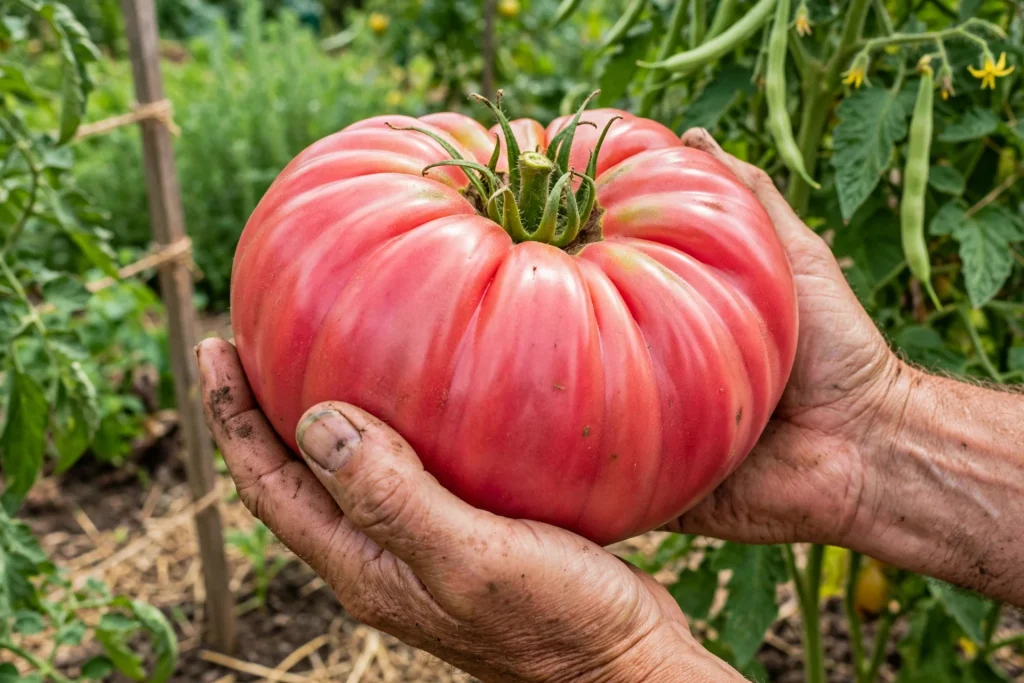
Mortgage Lifter is the big-fruit pick on this list, and it comes with the best story in the heirloom world. M. C. Byles of Logan, West Virginia, known as Radiator Charlie, crossed large-fruited varieties for six years, then sold the plants for a dollar each until he had paid off his 6,000 dollar mortgage. The variety has been a favourite ever since.
Baker Creek sells Mortgage Lifter as an indeterminate pink beefsteak. Sources list maturity at 80 to 85 days from transplant, and Cornell Cooperative Extension lists 80 to 85 days with fruit of 2.5 pounds or more. Most catalogues describe fruit of 1 to 2 pounds, so treat the biggest figures as what a well-grown plant can do in a good year, not what every fruit will weigh. The flavour is rich, sweet and meaty, with few seeds.
Real-world limitation: the fruit are so large that they need strong support and steady watering. West Virginia University Extension notes the variety is susceptible to cracking if it is not properly mulched, so keep soil moisture even and mulch well once the plants are established.
Who should buy: gardeners who want the biggest slicers for sandwiches and burgers, and anyone who enjoys growing a tomato with a real story behind it.
4. Green Zebra, Johnny’s Selected Seeds
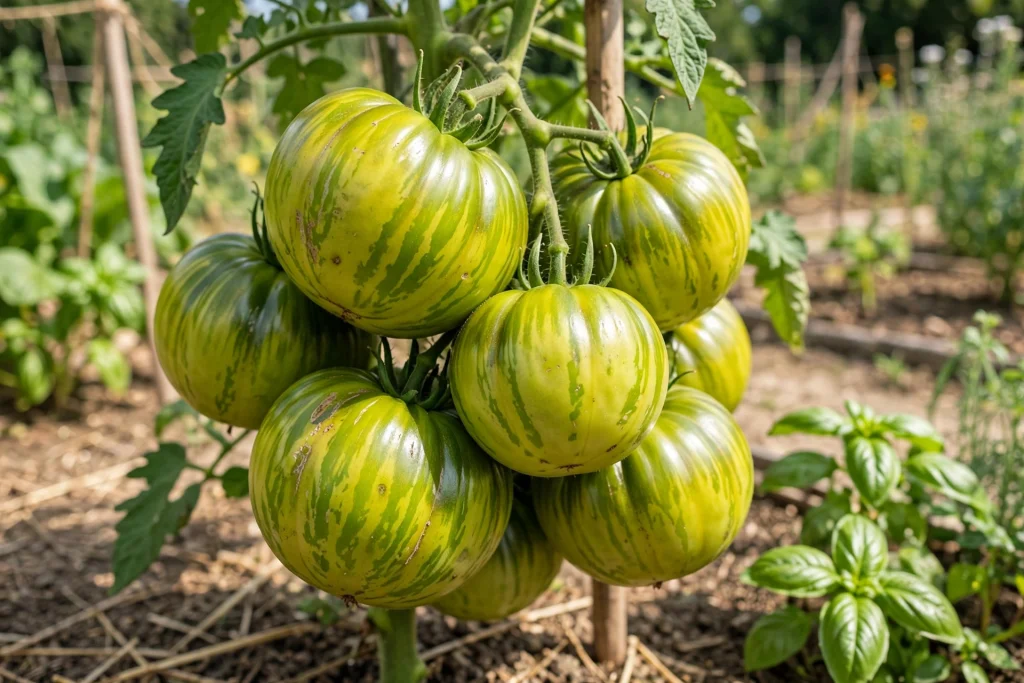
Green Zebra is the salad tomato on this list, and the one that starts the most conversations. Bred by Tom Wagner and introduced in the early 1980s, it ripens chartreuse green with darker green stripes, so it never turns red. That confuses first-time growers, and it is the single most useful thing to know before you plant it: judge ripeness by a slight give when you press the fruit, not by colour.
Johnny’s Selected Seeds lists Green Zebra at 72 days to maturity, indeterminate, with fruit of about 3 to 4 ounces. Other sellers list 75 to 80 days, so the honest range is 72 to 80 days, and Johnny’s figure is the fastest. The flavour is bright, tangy and slightly citrusy, a sharp contrast to the sweet beefsteaks above it on this list.
Green Zebra is a modern open-pollinated cultivar, so it is not a 100-year-old heirloom in the strict sense, but it is sold as an heirloom by every major seed house and it breeds true, so it belongs here. It is also one of the more productive varieties in this roundup, setting fruit heavily through the season.
Real-world limitation: the ripeness test takes practice, and a picked-too-early Green Zebra is tart and firm rather than sweet. Tell everyone in the house to squeeze before they pick.
Who should buy: salad gardeners, cooks who want colour and tang in the bowl, and anyone growing tomatoes for a farmers market stall where unusual fruit sells fast.
5. Black Krim, Baker Creek Heirloom Seeds
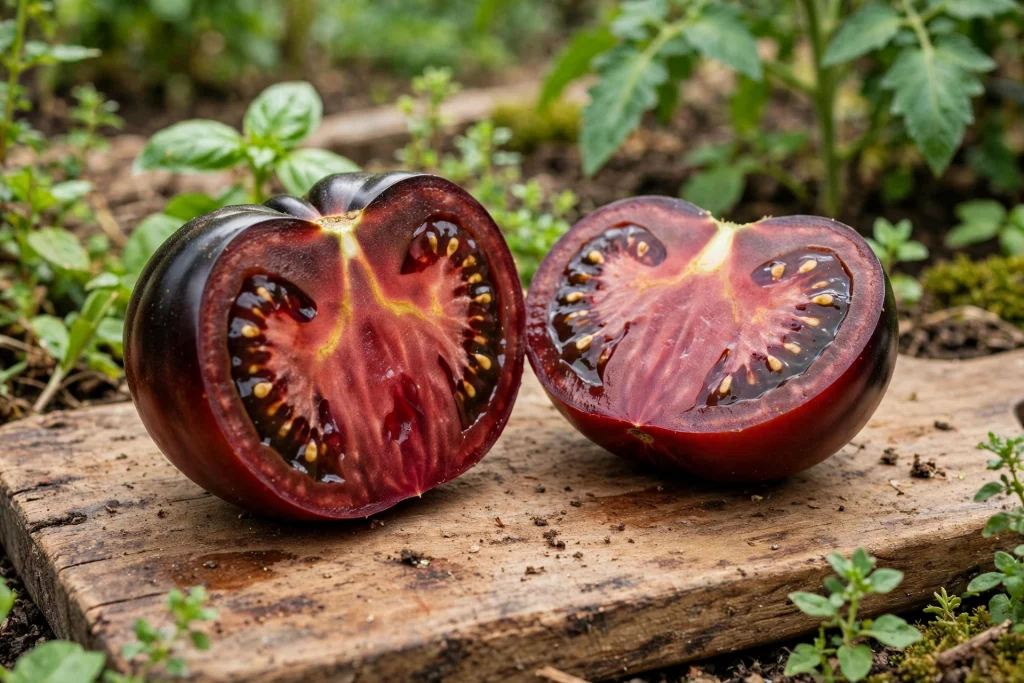
Black Krim comes from the town of Krymysk near the Black Sea, in Crimea, and it brings a flavour no red tomato can match: dark, rich, slightly salty and smoky. Baker Creek lists it at 80 days to maturity, indeterminate, with 15 seeds per packet. The fruit are 8 to 12 ounce beefsteaks, dark red to purplish-brown with green shoulders, and the flesh inside is a deep wine red.
The variety is open-pollinated, so seed saving works, and it is known as a hardy plant that tolerates heat and variable conditions better than many heirlooms. Park Seed lists the same 80 days and 30 seeds per packet, so packet sizes vary by seller, and the 15-seed figure here is Baker Creek’s own listing.
Real-world limitation: Black Krim cracks more readily than most varieties on this list, especially after a dry spell followed by rain. Water evenly, mulch, and pick fruit as soon as the shoulders colour up rather than leaving them to fully soften on the vine.
Who should buy: gardeners who love dark tomatoes and want a hardier plant than Cherokee Purple, and cooks who want a tomato with a salty, almost savoury edge for slicing.
6. San Marzano Roma Pole, Botanical Interests
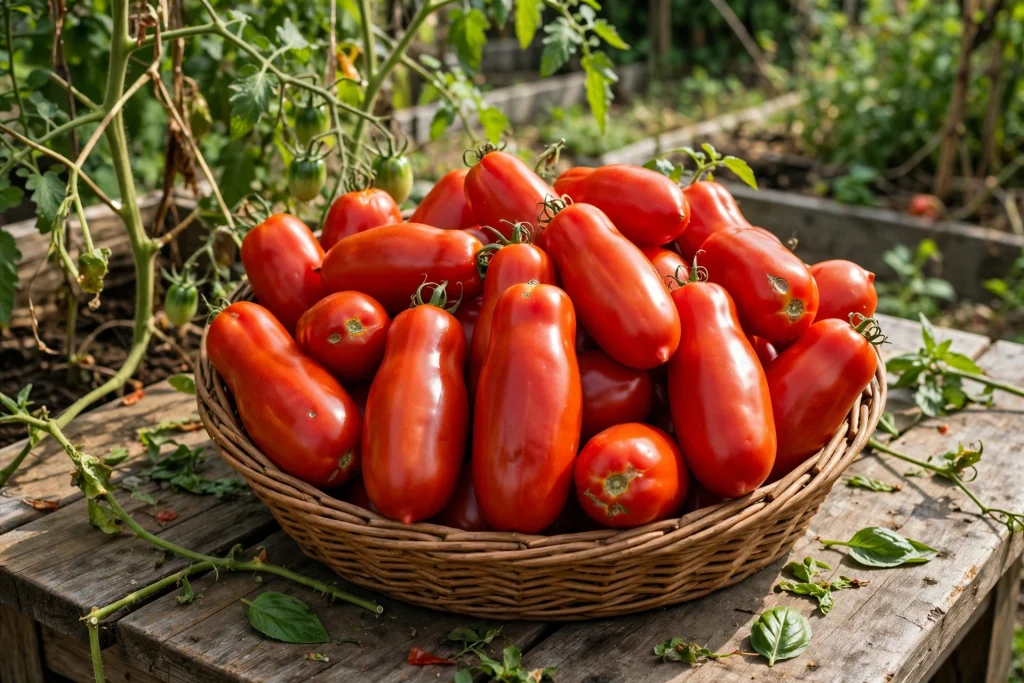
If you make sauce, San Marzano is not optional. San Marzano is one of the best-known paste tomato varieties, an Italian heirloom associated with the region near Naples, valued for its thick, meaty flesh, fewer seeds and relatively low moisture content, which makes it especially useful for sauces that need less reduction.
Botanical Interests sells San Marzano Roma Pole Tomato Seeds in organic heirloom and conventional heirloom options, with a 4.2 out of 5 star rating from 61 reviews on its site. The vines reach 6 feet or more and need a tall stake or trellis. One gap to be honest about: Botanical Interests does not publish days to maturity on the product page we checked. Other sources list 80 to 85 days from transplant, with some listing 75 to 90, so we use 80 to 85 days in the table and flag the range here rather than printing a single number we cannot source.
The fruit are elongated plums of about 4 to 5 ounces, and the plants are heavy producers over a long season. Because the seed is open-pollinated and heirloom, you can save seed from your best fruit and grow the same tomato next year.
Real-world limitation: San Marzano is a sauce tomato first and a slicing tomato second. Eaten raw it is pleasant but not remarkable, so do not judge it by the sandwich test. It also needs a long, warm season to reach full production.
Who should buy: anyone who cans, freezes or cooks down tomatoes, and gardeners who want one reliable paste variety instead of three mediocre ones.
7. Costoluto Genovese, Eden Brothers
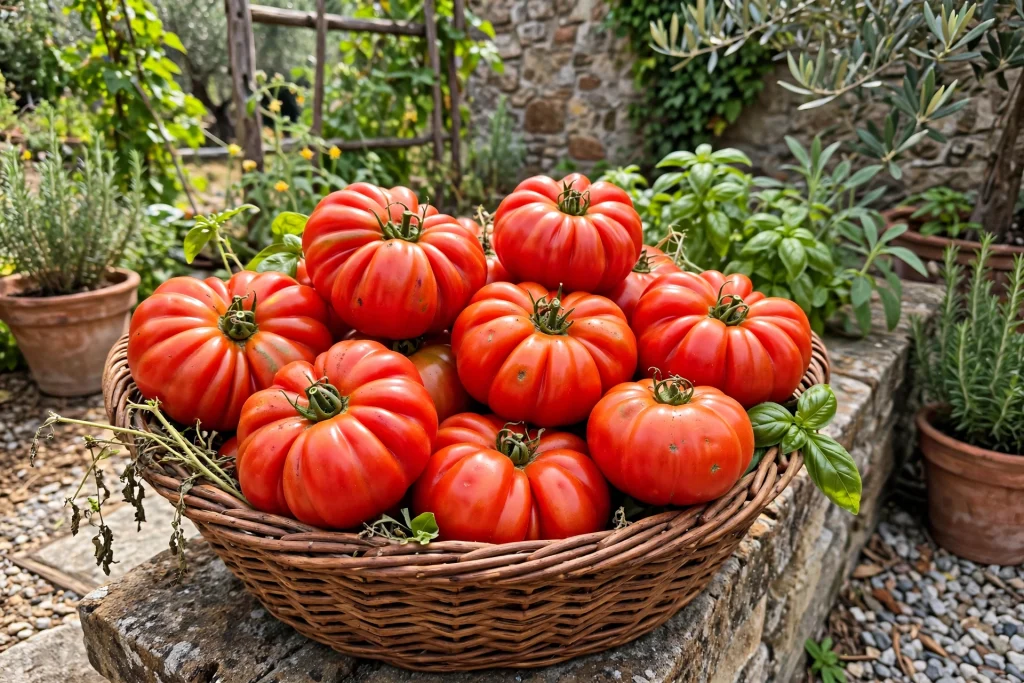
Costoluto Genovese is the Italian heirloom for cooks who want a tomato that does two jobs: slice it fresh and it is rich and tangy, cook it down and it makes a deep, flavourful sauce. It comes from the Genoa region of Liguria, and it has been grown there for generations. Thomas Jefferson grew it at Monticello from 1809, which is as good a pedigree as any tomato can claim.
Eden Brothers lists Costoluto Genovese as a deeply ridged Italian heirloom, indeterminate, with days to maturity of 60 to 90 days. That is an unusually wide range, and other sellers narrow it to 80 to 90 days, with most listing about 85 days. We use about 85 days in the table and note Eden Brothers’ wider range here. The fruit are flattened, heavily ribbed, deep red, and about 6 to 10 ounces.
Real-world limitation: the wide maturity range means you should plan on the late end, about 85 to 90 days, and start seed early. The ribbed shape also traps water in the folds after rain, so give the plants good airflow and space.
Who should buy: gardeners who cook Italian food and want one variety for both the salad bowl and the sauce pot, and anyone who likes a tomato with visible character.
8. Kellogg’s Breakfast, Seed Savers Exchange
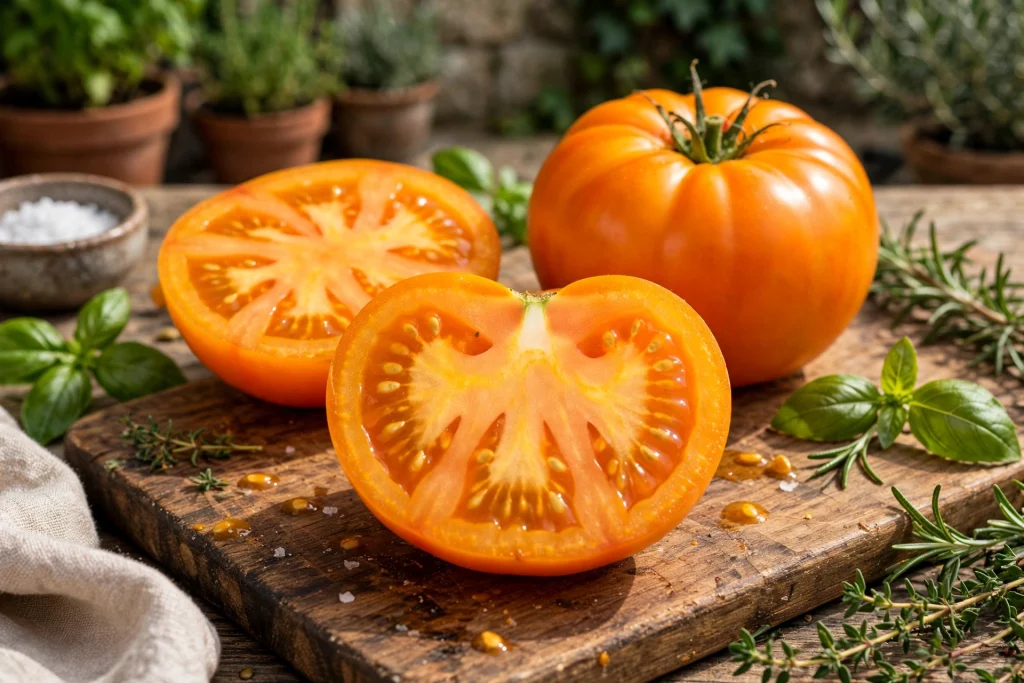
Kellogg’s Breakfast is the orange beefsteak on this list, and it is the sweetest of the big slicers here. It was preserved by Darrell Kellogg of Redford, Michigan, a railroad supervisor and seed saver, and introduced to Seed Savers Exchange in 1993. Seed Savers Exchange sells it as an indeterminate orange beefsteak, with fruit of 1 to 2 pounds and a vivid orange colour inside and out.
Maturity figures vary: most sellers list 80 days, some list 80 to 85 days, and West Virginia University Extension lists 85 days. We use 80 to 85 days in the table to reflect that range. The flavour is sweet, rich and low in acid, with very few seeds, which makes it a good choice for people who find red tomatoes too sharp.
One honest note: Kellogg’s Breakfast is a newer heirloom than most on this list, preserved in the 1990s rather than grown for a century, but it is open-pollinated and breeds true, and its flavour has earned it a permanent place in the catalogues.
Real-world limitation: like Brandywine, it is a late, large-fruited variety that needs a long season and strong support. The vines can reach 8 to 10 feet, so plan on a tall trellis rather than a short cage.
Who should buy: gardeners who want a sweet, low-acid slicer, and anyone building a colour range of beefsteaks for the table.
9. Yellow Pear, Burpee
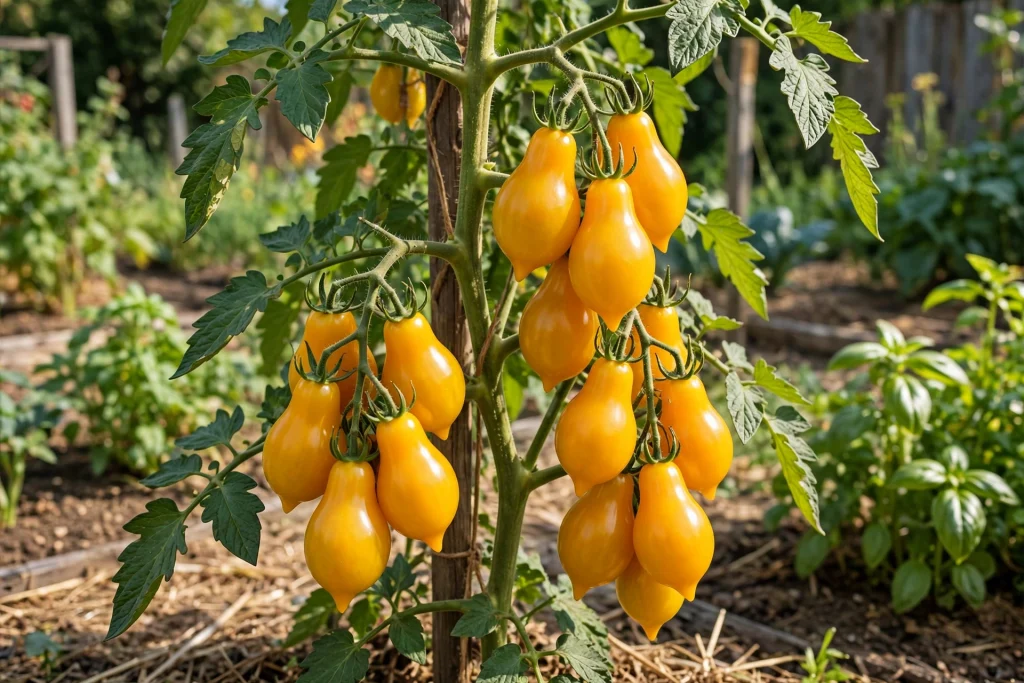
Yellow Pear is the cherry tomato on this list, an early and productive variety. Burpee lists it at 75 days from transplant, indeterminate, with vines reaching about 60 inches. The fruit are small, about 1 to 1.5 inches long, bright yellow and pear-shaped, borne in long clusters that keep coming all summer.
This is an old open-pollinated variety, documented since the early 19th century, and it is one of the most productive tomatoes you can grow. A single plant can carry dozens of fruit at once, which makes it the best pick on this list for children, snacking straight off the vine, and salads where a handful of golden fruit brightens the bowl.
Real-world limitation: the thin skins split after rain or uneven watering, so water steadily and pick fruit as soon as it turns full gold. The vines are vigorous and sprawling, so they need a tall support and regular tying, or they will take over the bed.
Who should buy: families with children, container gardeners with a large pot and a tall trellis, and anyone who wants an early, steady supply of cherry tomatoes.
10. Paul Robeson, Seed Savers Exchange
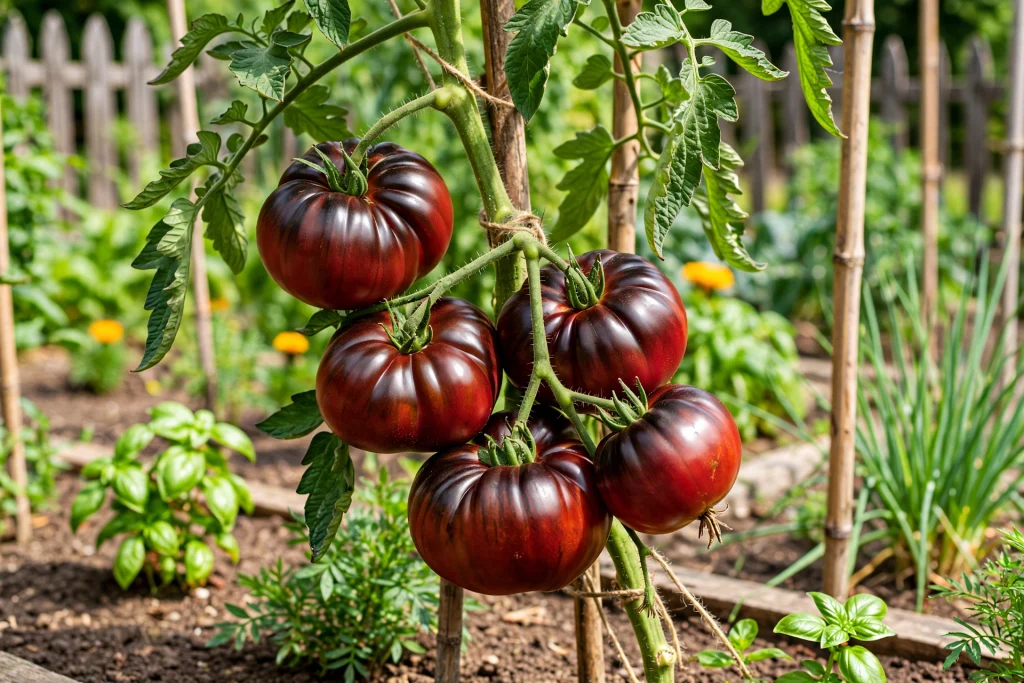
Paul Robeson is the dark horse of this list, in both senses. It is a Russian heirloom named after the American singer, actor and civil rights activist Paul Robeson, who was a hero in the Soviet Union. The seed reached American gardeners in the mid-1990s through Marina Danilenko, a seed seller from Moscow, and Seed Savers Exchange has preserved it since 1995.
The fruit are maroon-black beefsteaks with a smoky, sweet flavour and a rich, almost wine-like depth. Victory Seed Company lists it at 80 days, indeterminate, with fruit up to 20 ounces, while other sources list 75 to 80 days. We use 75 to 80 days in the table. The plants are vigorous and productive for a dark variety, and the fruit are meaty with a low seed count, which makes them good for sandwiches as well as slicing.
Real-world limitation: dark tomatoes are harder to judge for ripeness than red ones, and Paul Robeson can crack if watering is uneven. It also needs consistent warmth to develop its dark colour fully, so in a cool summer the fruit may stay redder than expected.
Who should buy: gardeners who already grow Cherokee Purple or Black Krim and want a third dark variety with a different flavour, and anyone who values a variety with a remarkable history.
Best Tasting Heirloom Tomatoes
Taste is subjective, but the catalogues and the flavour trials agree more often than you might expect. Brandywine sits at the top of most lists for its rich, sweet-acid balance. Cherokee Purple and Paul Robeson follow for their smoky, complex depth. Black Krim adds a salty edge that suits slicing, and Kellogg’s Breakfast is the sweetest of the beefsteaks, with very little acid bite.
For a different kind of flavour, Green Zebra brings a bright, tangy, almost citrus note that cuts through rich food, and Yellow Pear brings a mild, sweet pop that children love. The best tasting heirloom tomatoes are not all sweet: the range from tangy to smoky is the point, and growing three or four varieties gives you more flavour than growing ten of one kind.
Heirloom vs Hybrid Tomatoes
The labels on a seed packet can be confusing, so here is the plain version. A hybrid, usually marked F1, is a cross between two parent lines, bred for consistency, disease resistance and yield. It is not the same as GMO. An heirloom is an open-pollinated variety with a long history, usually defined as 50 years or more in cultivation, that breeds true from seed.
The practical difference is seed saving. Save seed from an heirloom and next year’s plants should match this year’s. Save seed from a hybrid and they will not reliably grow true to type, so you buy fresh seed each year. Hybrids usually give heavier yields and better disease resistance in a bad year. Heirlooms usually give better flavour, more variety in colour and shape, and seed you can keep. Many experienced gardeners grow both, using hybrids for reliability and heirlooms for flavour.
Best Heirloom Tomato Varieties
If you are choosing varieties rather than seed products, the shortlist from this roundup is a good place to start. Brandywine and Cherokee Purple are the two classic slicers. Mortgage Lifter and Kellogg’s Breakfast are the big-fruit alternatives. San Marzano and Costoluto Genovese cover sauce and cooking. Green Zebra and Yellow Pear cover salads and snacking. Black Krim and Paul Robeson cover the dark, smoky end of the range.
Our companion guide, Best Tomato Varieties to Grow from Seed, compares ten varieties with a different lens, including disease-resistant hybrids such as Celebrity and Sungold, and it is worth reading alongside this roundup before you order. The two guides do different jobs: that one helps you choose varieties, this one helps you choose the seed products to buy.
Where to Buy Heirloom Seeds
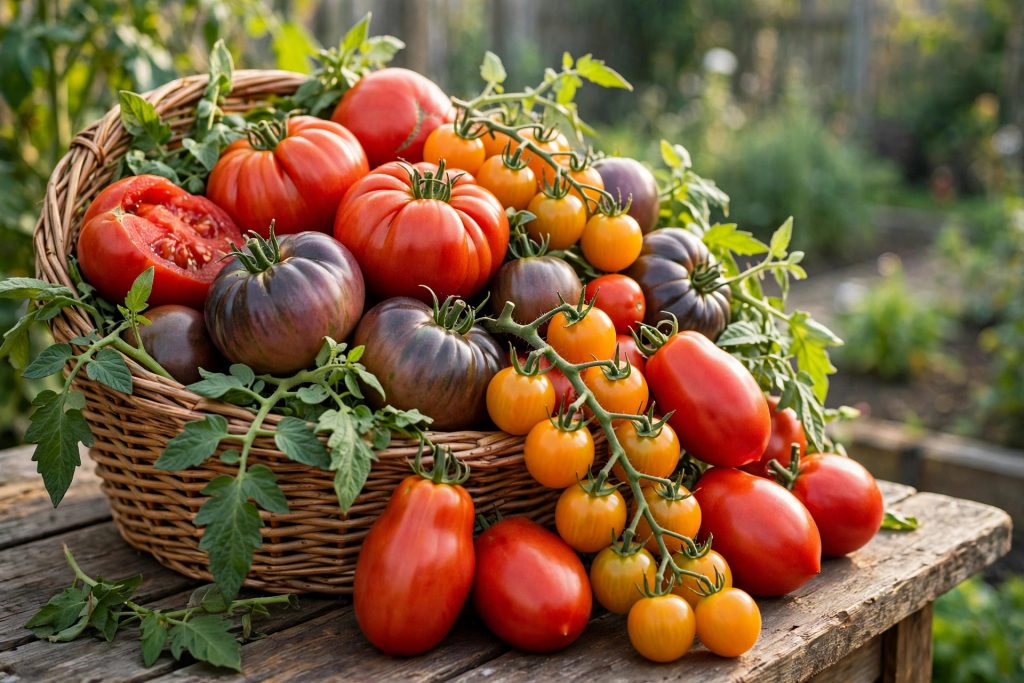
Buy heirloom tomato seeds from a named, reputable seed company rather than an anonymous marketplace listing. The companies in this roundup, Baker Creek, Seed Savers Exchange, Johnny’s Selected Seeds, Botanical Interests, Eden Brothers and Burpee, all publish variety details, germination standards and guarantees, and all sell open-pollinated seed you can save.
Before you order, check three things on the product page: whether the variety is listed as heirloom and open-pollinated, whether days to maturity are given from transplant, and whether the company states a germination standard or a guarantee. If a listing gives none of those, shop elsewhere. Every product in this roundup passes that test.
Saving Heirloom Tomato Seeds
Saving seed is the reason many gardeners choose heirlooms, and tomatoes are one of the easiest crops to save from. Let fruit ripen fully on the vine, then scoop the seeds and pulp into a jar with a little water and leave it for two to three days until a mouldy layer forms on top. That fermentation step, which Nebraska Extension describes in its seed-saving guidance, kills many seed-borne diseases. Rinse the seed clean, spread it on a plate or paper towel to dry fully, then store it in a labelled paper envelope in a cool, dry place.
Tomato seed stays viable for a long time when stored well. Seed Savers Exchange notes that tomato seed can remain viable for up to 10 years under ideal conditions, though germination falls with age, so test older seed on a damp paper towel before you sow a whole bed with it. Save seed only from healthy plants, and from open-pollinated varieties, never from hybrids, if you want the next generation to match.
Growing Heirloom Tomatoes Tips
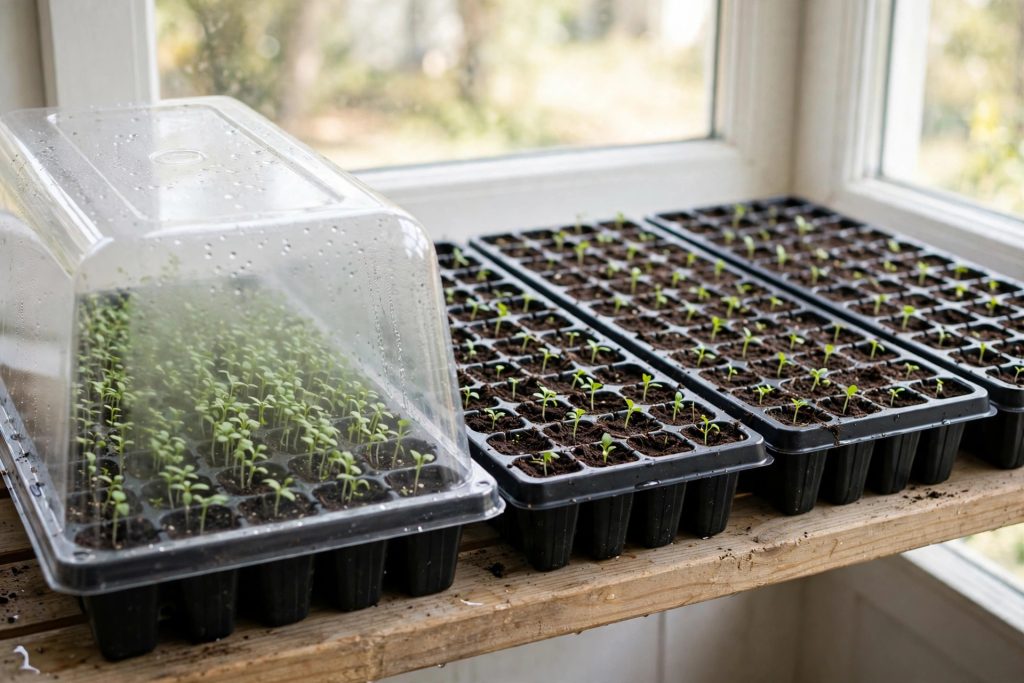
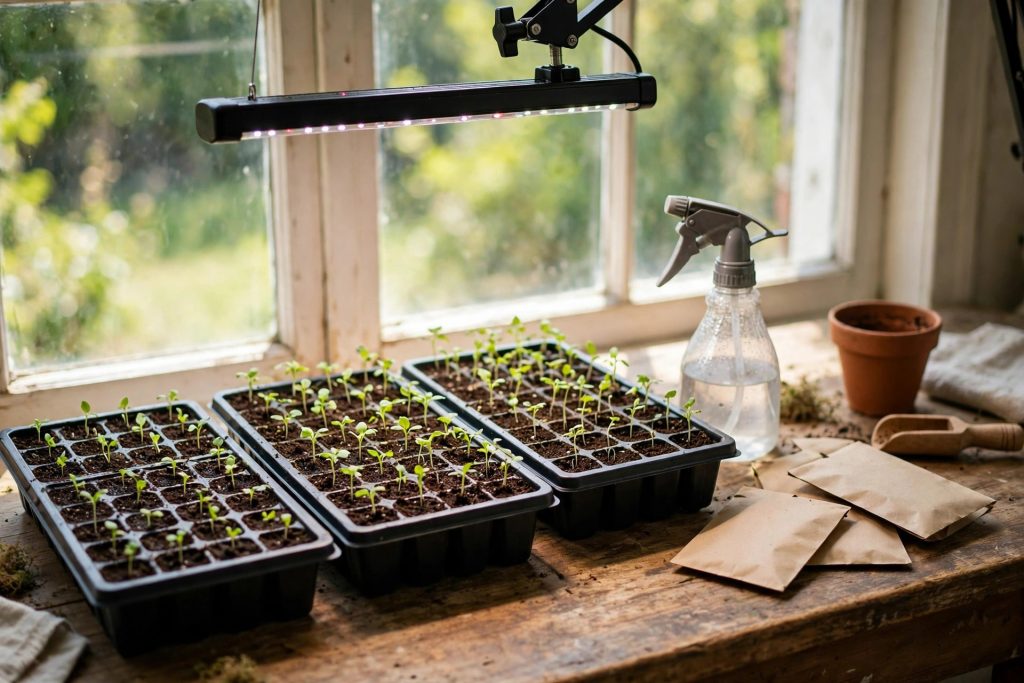
Heirlooms need the same care as any tomato, with a few extra points worth knowing. Start seed indoors 6 to 8 weeks before your average last frost date, sow a quarter inch deep in moist seed starting mix, and keep the soil at 70 to 80 degrees for germination, which usually takes 7 to 14 days. Give seedlings 14 to 16 hours of bright light a day so they stay stocky rather than leggy.
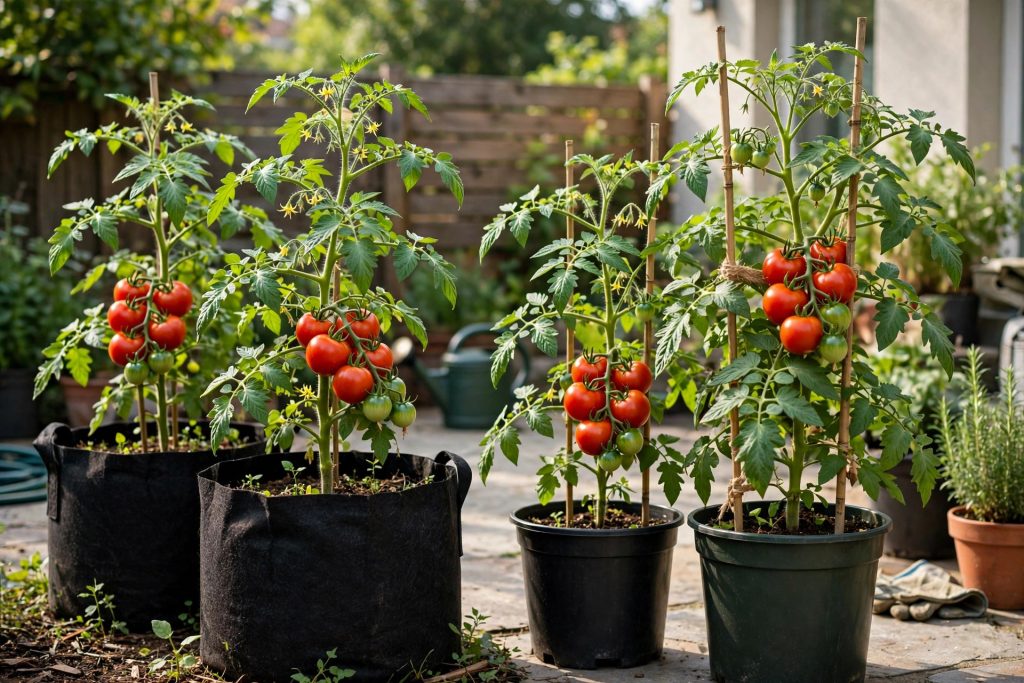
Harden plants off for 7 to 10 days before transplanting, and do not move them outside until nights stay above 50 degrees. Plant deep, burying the stem up to the first true leaves, because tomatoes root along the buried stem. Give indeterminate heirlooms a tall, strong support from day one, not after they flop over, and mulch once the soil warms to keep moisture even, which is the single best defence against cracking. Water the soil, not the leaves, and feed for fruit, not foliage, once the first flowers appear.
How We Chose: Our Scoring System
We did not test these seeds in a garden, and we want to be honest about that. This ranking is an analysis of manufacturer specifications and owner feedback, built from each seller’s own product page, its published guarantees and testing practices, and the flavour and growing reputation of each variety. No hands-on testing was carried out.
Each product was scored out of 10 against six factors:
| Factor | Weight | What we looked for |
|---|---|---|
| Flavour reputation | 30% | Taste-trial standing, catalogue and owner flavour reports |
| Variety quality | 20% | Fruit size and type, days to maturity, growth habit |
| Seed company trust | 20% | Testing, guarantees, clarity of the product listing |
| Seed saving value | 10% | Open-pollinated status, seed count per packet |
| Growing reliability | 10% | Yield reports, hardiness, cracking and disease notes |
| Range and usefulness | 10% | How the variety fits a home garden, kitchen use, colour range |
| Total | 100% |
Scoring breakdown
| Product | Flavour (30%) | Variety quality (20%) | Company trust (20%) | Seed saving (10%) | Growing reliability (10%) | Range (10%) | Weighted total |
|---|---|---|---|---|---|---|---|
| Brandywine Sudduth’s, Baker Creek | 9.5 | 9.0 | 9.5 | 9.0 | 8.5 | 9.0 | 9.2 |
| Cherokee Purple, Seed Savers Exchange | 9.5 | 9.0 | 9.0 | 9.0 | 8.5 | 9.0 | 9.1 |
| Mortgage Lifter, Baker Creek | 9.0 | 8.5 | 9.5 | 9.0 | 9.0 | 9.0 | 9.0 |
| Green Zebra, Johnny’s Selected Seeds | 9.0 | 9.0 | 9.0 | 8.5 | 8.5 | 9.0 | 8.9 |
| Black Krim, Baker Creek | 9.0 | 8.5 | 9.0 | 8.5 | 8.5 | 9.0 | 8.8 |
| San Marzano, Botanical Interests | 8.5 | 9.0 | 9.0 | 8.0 | 9.0 | 8.5 | 8.7 |
| Costoluto Genovese, Eden Brothers | 8.5 | 8.5 | 9.0 | 8.5 | 8.5 | 8.5 | 8.6 |
| Kellogg’s Breakfast, Seed Savers Exchange | 8.5 | 8.5 | 8.5 | 8.5 | 8.0 | 8.5 | 8.5 |
| Yellow Pear, Burpee | 8.0 | 8.5 | 9.0 | 8.0 | 8.5 | 8.5 | 8.4 |
| Paul Robeson, Seed Savers Exchange | 8.5 | 8.0 | 8.5 | 8.0 | 8.0 | 8.5 | 8.3 |
Factor scores are editorial judgments based on the published evidence in each product section, weighted as shown above. Totals are rounded half-up to one decimal place; Kellogg’s Breakfast scores 8.45 before rounding, shown as 8.5.
Why each pick scored as it did:
- Brandywine Sudduth’s Strain, 9.2. The benchmark for heirloom flavour, with a large pink beefsteak and a long, well-documented history. It loses a few tenths only because it is slow to ripen and its yields are moderate.
- Cherokee Purple, 9.1. Smoky, complex flavour, a documented American history, and 50 seeds per packet from Seed Savers Exchange. It loses points because the fruit crack and perish more easily than a hybrid slicer.
- Mortgage Lifter, 9.0. Huge fruit, rich flavour and a great story, with a wide maturity range of 80 to 85 days. It loses points on cracking risk and the need for very strong support.
- Green Zebra, 8.9. The most distinctive salad tomato on the list, productive and bright-flavoured, with Johnny’s trial-backed listing. It loses points because ripeness is hard to judge by colour alone.
- Black Krim, 8.8. A dark, salty-sweet flavour and a hardier plant than most dark varieties. It loses points because it cracks readily after uneven watering.
- San Marzano Roma Pole, 8.7. One of the best-known sauce tomatoes in the roundup, with organic and conventional options and strong owner reviews. It loses points because Botanical Interests does not publish days to maturity on the product page.
- Costoluto Genovese, 8.6. A versatile Italian heirloom for slicing and sauce, with a long history. It loses points because sellers give a wide maturity range, 60 to 90 days at Eden Brothers, so planning is less precise.
- Kellogg’s Breakfast, 8.5. The sweetest beefsteak here, vivid orange inside and out, with few seeds. It loses points because it is a late, tall variety that needs a long season and a tall trellis.
- Yellow Pear, 8.4. An early and productive tomato on this list, and the best for snacking. It loses points because the thin skins split easily and the vines sprawl.
- Paul Robeson, 8.3. A smoky, dark slicer with a remarkable history and meaty, low-seed fruit. It scores lowest overall because ripeness is hard to judge and it needs consistent warmth to colour fully, though its flavour earns it a place on the list.
Final Choice
If you are buying your first heirloom tomato seeds, start with Brandywine Sudduth’s Strain from Baker Creek. It is the flavour benchmark, and one plant will show you what the fuss is about. Add Cherokee Purple for a dark, smoky contrast, and Yellow Pear for early cherries that keep coming all summer.
Sauce makers should buy San Marzano from Botanical Interests and add Costoluto Genovese for a tomato that also slices well. Salad gardeners should add Green Zebra from Johnny’s, and anyone with a long season should try Mortgage Lifter once, just to hold a two-pound tomato in their hands. Grow three or four varieties, not ten, save seed from the ones you love, and next year’s garden will already be better.
References
- West Virginia University Extension, “Growing Tomatoes in West Virginia” (variety maturity figures, indeterminate habit, starting seed indoors 6 to 8 weeks before transplanting)
- Kansas State University Extension, “Making Sense of Seed Catalogs” (heirloom vs hybrid, judging a catalogue)
- Nebraska Extension, “Saving and Storing Garden Seeds” (seed saving, fermentation, storage temperature, viability)
- Baker Creek Heirloom Seeds, “Cherokee Purple Tomato Seeds” (80 days to maturity, indeterminate, 25 seeds per packet)
- Johnny’s Selected Seeds, “Brandywine, Heirloom and Organic Tomato Seed” (78 days to maturity, indeterminate, Quisenberry strain)
- LSU AgCenter, “2012 Heirloom Tomato Trial Results“
- Iowa State University Extension and Outreach, “Dubuque County Tomato Variety Trial Results“
- Baker Creek Heirloom Seeds, “Brandywine Sudduth’s Strain Tomato Seeds“
- Baker Creek Heirloom Seeds, “Cherokee Purple Tomato Seeds“
- Baker Creek Heirloom Seeds, “Mortgage Lifter Tomato Seeds“
- Seed Savers Exchange, “Cherokee Purple Tomato (Organic)”
- Seed Savers Exchange, “Kellogg’s Breakfast Tomato (Organic)”
- Seed Savers Exchange, “Paul Robeson Tomato (Organic)”
- Botanical Interests, “San Marzano Roma Pole Tomato Seeds“
- Burpee, “Yellow Pear Tomato“
- Eden Brothers, “Costoluto Genovese Tomato Seeds“
- Johnny’s Selected Seeds, “Green Zebra Organic Tomato Seed“
- Cornell Garden-Based Learning, “Tomato growing guide“
- Cornell Cooperative Extension, Warren County, “Growing Tomatoes“
Frequently Asked Questions
What are the best heirloom tomato seeds for beginners?
Yellow Pear from Burpee is the most forgiving first pick, because it is early, productive and generous. Brandywine is the best-tasting first pick, but it needs a long season and patience. Start with one of each and see which suits your garden.
Are heirloom tomatoes better than hybrid tomatoes?
For flavour and seed saving, heirlooms usually win. For yield and disease resistance in a bad year, hybrids usually win. Hybrids are crosses of two parent lines bred for consistency, and they are not the same as GMO. Many gardeners grow both.
How many days do heirloom tomatoes take to grow?
Most heirloom tomatoes take 70 to 90 days from transplanting outdoors to first ripe fruit, plus 6 to 8 weeks of indoor growing before transplant. Early types such as Yellow Pear ripen in about 75 days, while late beefsteaks such as Brandywine and Mortgage Lifter need 80 to 85 days.
Can you save seeds from heirloom tomatoes?
Yes. Heirlooms are open-pollinated, so seed saved from healthy fruit should grow true to type. Ferment the seed for two to three days to kill seed-borne disease, dry it fully, and store it cool and dry. Tomato seed can stay viable for up to 10 years under ideal conditions.
Where is the best place to buy heirloom tomato seeds?
Buy from a named seed company that publishes variety details, a germination standard and a guarantee, such as Baker Creek, Seed Savers Exchange, Johnny’s Selected Seeds, Botanical Interests, Eden Brothers or Burpee. Avoid anonymous marketplace listings with no variety information.
Do heirloom tomatoes need a cage or a stake?
Almost all the varieties in this roundup are indeterminate, which means the vines keep growing and fruiting until frost. They need a tall, strong stake, cage or trellis installed at planting time, not after they flop over.

Thesis Link : https://saulibrary.edu.bd/daatj/public/uploads/BAU200601_19-Pp_5.pdf
- 10 Best Heirloom Tomato Seeds - November 20, 2026
- 10 Best Pet-Safe Slug Killers - November 20, 2026
- 10 Best Vegetable Seeds to Buy Online - November 20, 2026