


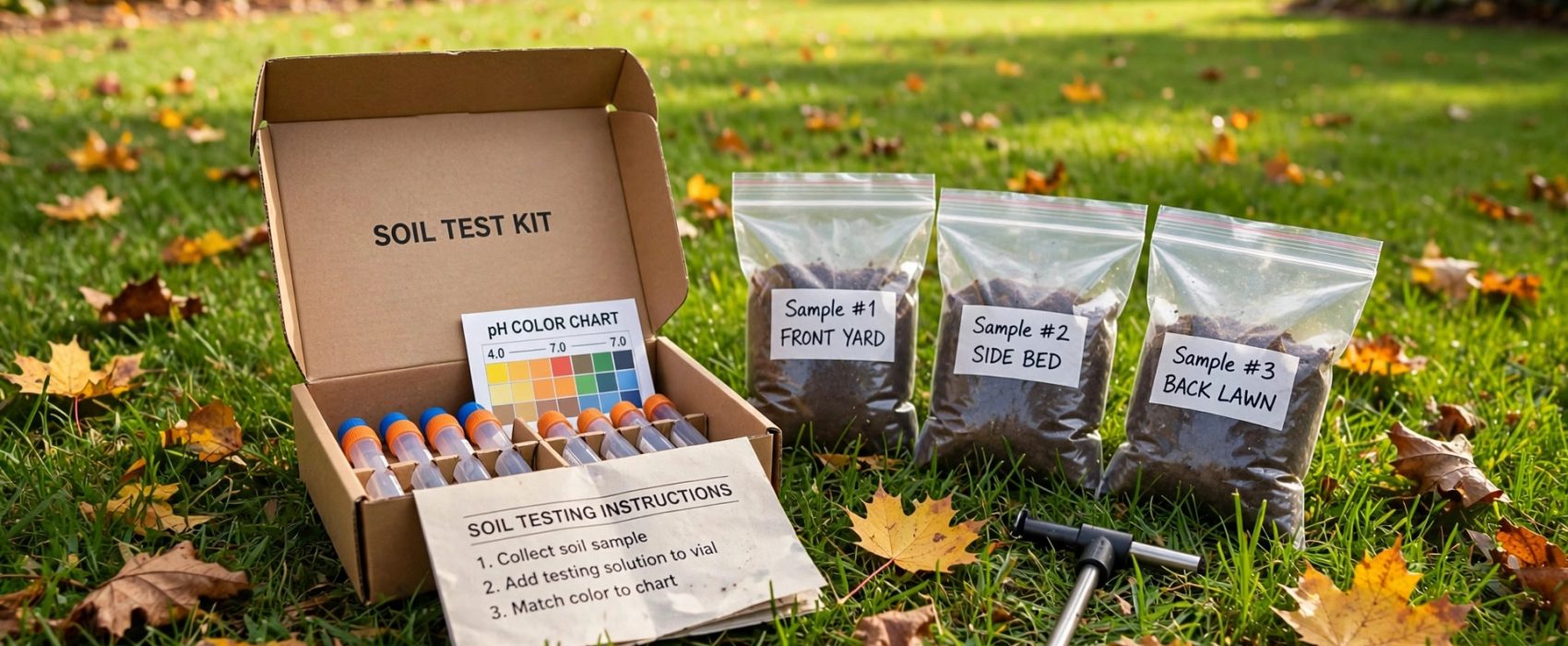
Soil pH calculator results are easiest to use when you start from a real soil test, so this page walks you through the numbers step by step.
A soil pH number on its own does not tell you what to do. This calculator turns your test result into a plan: it compares your pH with the range your grass type actually prefers, then estimates how much lime or elemental sulfur your lawn needs, at a safe application rate.
It takes less than a minute. You need three things: your current soil pH from a soil test, your lawn size in square feet, and a rough idea of your soil texture. If your lab report also shows magnesium, the calculator uses that to choose between calcitic and dolomitic lime.
The Soil pH Calculator
Soil pH Calculator
Enter your soil test result and lawn details. The calculator compares your pH with your grass type’s preferred range and estimates how much lime or elemental sulfur you need.
Estimates only, based on extension-style rates. A laboratory soil test with a buffer pH reading gives the exact rate for your soil and always overrides this calculator.
How to Use This Calculator
In practice, the soil pH calculator works best when you enter the lab figure exactly as reported and retest after a season, because pH change is gradual. If your report is unclear, your local Cooperative Extension office can help you read it before you apply anything.
- Pick your grass type. The preferred pH ranges come from university extension turfgrass guidance.
- Enter your current soil pH exactly as your soil test reports it.
- Enter your lawn size in square feet. For a rough figure, lawn length times width is close enough.
- Choose your soil texture. Clay soils resist pH change and need more amendment per step; sandy soils shift faster.
- If your test reported low magnesium, say so. That single answer decides between calcitic and dolomitic lime.
The result tells you whether your pH is below, inside or above your grass type’s range, and gives an estimated amount per 1,000 square feet plus the total for your lawn, split into safe applications where needed.
How the Estimates Work
The calculator follows the same guardrails as our written guide. For lime, it estimates about 20 lb per 1,000 square feet per 0.5 pH unit on sandy soil, 30 lb on loam and 40 lb on clay, and it never recommends more than about 50 lb per 1,000 square feet in a single application, splitting larger amounts about four months apart. For sulfur, it works in applications of about 2 lb per 1,000 square feet, spaced 8 to 10 weeks apart, and never above 5 lb per 1,000 square feet at once.
| Soil texture | Lime per 0.5 pH unit (per 1,000 sq ft) | Notes |
|---|---|---|
| Sandy | About 20 lb | Shifts fastest; split big doses anyway |
| Loam | About 30 lb | The middle case most lawns match |
| Clay | About 40 lb | Resists change; allow a full season |
These are estimates. A laboratory soil test with a buffer pH reading gives the exact lime requirement for your soil, and that figure always overrides this calculator.
Soil pH Calculator: Two Worked Examples
Example one, an acid lawn. A Kentucky bluegrass lawn of 5,000 square feet tests at pH 5.4 on loam soil. The soil pH calculator compares 5.4 with the bluegrass range of 6.0 to 7.0 and works out that the lawn sits 0.6 below the bottom of the range. At the loam rate it estimates about 36 lb of calcitic lime per 1,000 square feet, roughly 180 lb in total, which is under the 50 lb single-application limit, so it can go down in one visit, ideally in fall.
Example two, an alkaline lawn. A Bermudagrass lawn of the same size tests at pH 7.4. The soil pH calculator now measures 0.9 above the Bermuda range of 5.5 to 6.5 and plans elemental sulfur in small steps instead: two applications of about 2 lb per 1,000 square feet, 8 to 10 weeks apart, each watered in. Two lawns, two opposite fixes, and the soil pH calculator reaches both from the same four inputs.
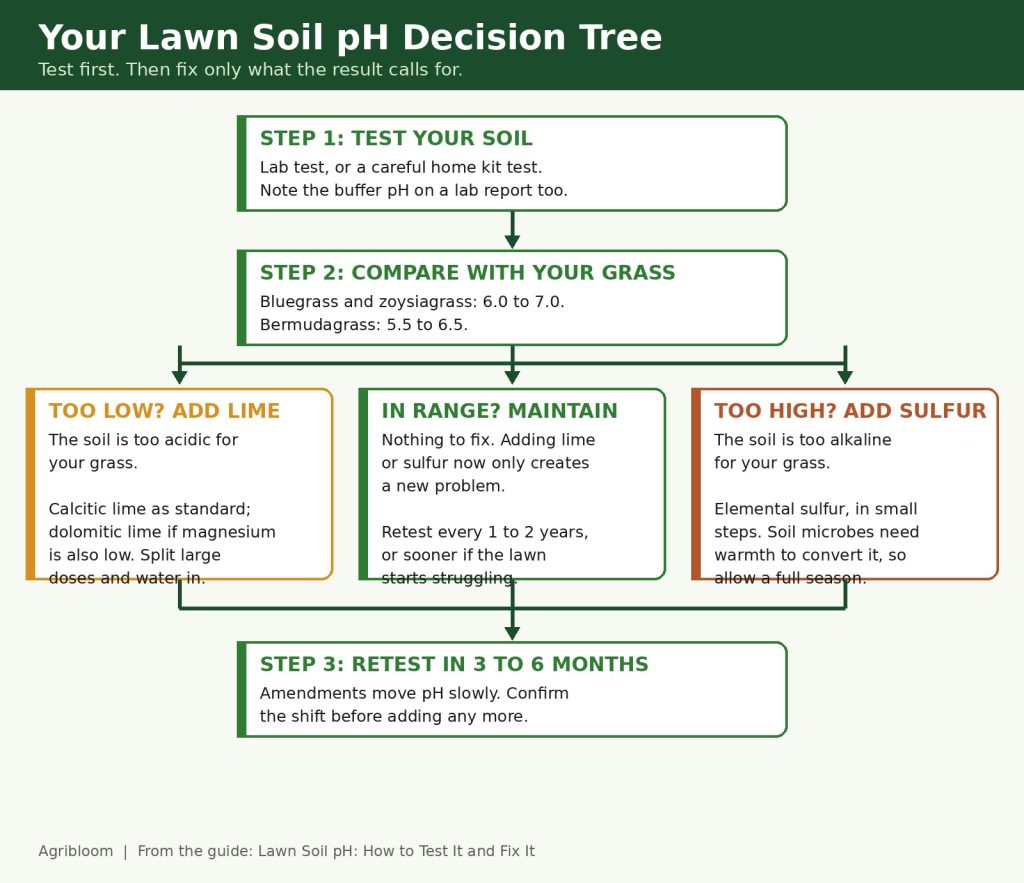
Lime or Sulfur: Getting the Choice Right
Lime raises pH, sulfur lowers it, and applying the wrong one, or the right one to a lawn that is already in range, creates the very nutrient lockout you were trying to fix. That is why the calculator starts from your grass type’s range rather than a generic target: a pH that suits Kentucky bluegrass overshoots centipedegrass completely. If your result says your pH is in range, the correct prescription really is to do nothing and retest in a year or two.
Frequently Asked Questions
How accurate is this soil pH calculator?
It gives a sound estimate from extension-style rates, safe enough to plan purchases and applications. Your laboratory’s buffer pH recommendation is more precise and always wins where the two differ.
I do not know my soil texture. What should I pick?
Choose Loam, the middle case. If your soil is visibly gritty and drains fast, pick Sandy; if it is sticky, heavy and slow to drain, pick Clay.
My pH is very high. Will sulfur definitely fix it?
Not always. On soils containing free lime or carbonate, common in dry western areas, sulfur may barely move the number. The calculator flags this; managing around the pH with a tolerant grass and acidifying fertilizer is often the better plan there.
When is the best time to apply lime or sulfur?
Fall is best for lime, because it reacts over months. Sulfur needs warm soil for the microbes that convert it, so apply it in the growing season, in small steps, and avoid the hottest weeks of summer.