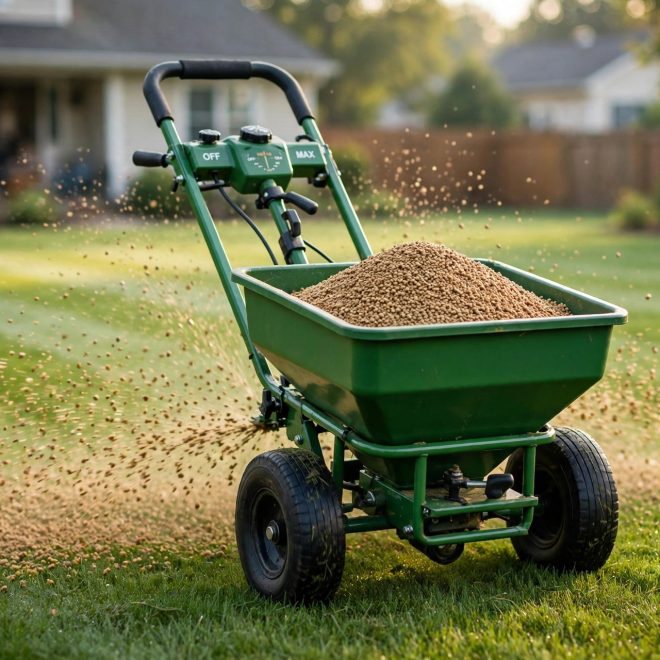

A lawn tells on its spreader. The dark green stripes down one side of the yard, the pale patch by the fence, the burnt tips after a weed and feed: nine times out of ten those are not fertilizer problems. They are application problems, and the tool doing the applying is a broadcast spreader that throws heavy on one side, dribbles at walking speed, or holds so little that you rush the last third of the lawn on an empty hopper.
The best broadcast spreader fixes that quietly. It throws a wide, even fan of granules, its rate dial means the same thing in April as it did in October, and its hopper is sized so a normal lawn is one fill, not three. This guide compares ten current models for home lawns, from a hand-crank spreader that costs less than a bag of premium seed to a welded steel pro machine, and judges them on pattern evenness, rate control, capacity, wheels, and build.
A note on how we picked: Agribloom is written by a plant pathologist (BSc Agriculture, MSc in Plant Pathology). We compared manufacturer and major retailer specifications and cross checked them against owner feedback on the same listings. We did not hands on test these spreaders, and we will not pretend otherwise. Where listings conflict, we print the smaller figure and say so. Prices change too fast to print honestly, so each pick links to the live price instead; some of those links are affiliate links that may earn Agribloom a commission.
Quick Recommendation
Short on time? Start here, then read the full notes for the pick that matches your lawn and how you work.
- Most home lawns, one sensible buy: Scotts Turf Builder EdgeGuard DLX, pick 1.
- Large lawn near half an acre: Scotts Elite Spreader, pick 2.
- Even pattern and metal build over plastic: EarthWay 2600A-Plus, pick 3.
- Biggest push hopper, fewest refills: Agri-Fab 45-0462, pick 4.
- Buy it once, pro grade: Spyker ERGO-PRO SPY50L-1P, pick 5.
- Small lawn, small shed: Scotts Turf Builder EdgeGuard Mini, pick 6.
- You already own a riding mower: Agri-Fab 45-0530 Tow-Behind, pick 7.
- Seeding, slopes and rough patches: EarthWay 2750 Bag Seeder, pick 8.
- Small lawn, no cranking: Scotts Wizz, pick 9.
- Cheapest simple option for spot work: Scotts Whirl, pick 10.
Quick Picks: All 10 Spreaders Compared
| Model | Best For | Type / Capacity | Price | Action |
|---|---|---|---|---|
 | Most home lawns | Push, holds 15,000 sq ft of product | Check live price | View Deal |
 | Large lawns | Push, 65 lb hopper | Check live price | |
 | Even pattern, mid sized lawns | Push, 40 lb hopper | Check live price | View Deal |
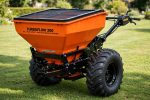 | High capacity push | Push, 130 lb hopper | Check live price | View Deal |
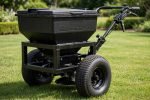 | Pro grade build | Push, 50 lb hopper | Check live price | View Deal |
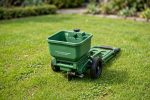 | Small lawns | Push, holds 5,000 sq ft of product | Check live price | View Deal |
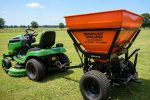 | Riding mower owners | Tow-behind, 85 lb hopper | Check live price | View Deal |
 | Grass seed, slopes | Shoulder bag, 25 lb | Check live price | View Deal |
 | Small lawns, battery powered | Handheld, holds 2,500 sq ft of product | Check live price | View Deal |
 | Budget handheld | Handheld, holds 1,500 sq ft of product | Check live price | View Deal |
How We Chose: Broadcast Spreader Reviews You Can Check
A spreader has one job: put down the rate on the bag, evenly, everywhere. Everything else is comfort. So our scoring weights the pattern and the rate control first, then the practical questions of capacity, wheels, and whether the thing rusts solid in its second winter. Owner feedback mattered most where it repeated: complaints about one-sided patterns, broken plastic gears, and dials that drifted were counted against a model even when its spec sheet looked fine.
Our scoring system
| Factor | Weight | What we looked at |
|---|---|---|
| Spread pattern evenness | 30% | Rotor design, drop system, feathered edges, owner reports of striping |
| Rate control and calibration | 20% | Dial quality, positive shut off, linkage versus cable, setting repeatability |
| Hopper capacity and refills | 15% | Capacity against realistic lawn sizes, hopper shape, bridging behaviour |
| Wheels and terrain handling | 15% | Pneumatic versus plastic wheels, wheel size, stability on slopes and rough ground |
| Build quality and corrosion resistance | 10% | Frame material, gearbox enclosure, rust proofing, warranty |
| Edge control and ease of use | 10% | Edge guard or side control, assembly, storage, handle comfort |
The judgements in this guide come from this system applied to verified specifications and owner feedback. They are not lab test scores, and no spreader here was bench tested by us.
Is a Broadcast Spreader Worth It?
For any lawn bigger than a pocket handkerchief, yes. Spreading fertilizer or seed by hand throws product in handfuls, and handfuls land heavy near your feet and light at arm’s length. The lawn reads that as stripes within a fortnight. A broadcast spreader meters granules onto a spinning plate and fans them out in a swath several feet wide, which is what turns a bag rate into an even rate.
The honest limits: a broadcast spreader is not the most precise tool near flower beds, pools, or a pond, where a drop spreader earns its keep, and it will not rescue a lawn whose real problem is soil or shade. Within a yearly routine of feeding, seeding, and weed control, it is the tool that decides whether the products you already buy actually work as labelled.
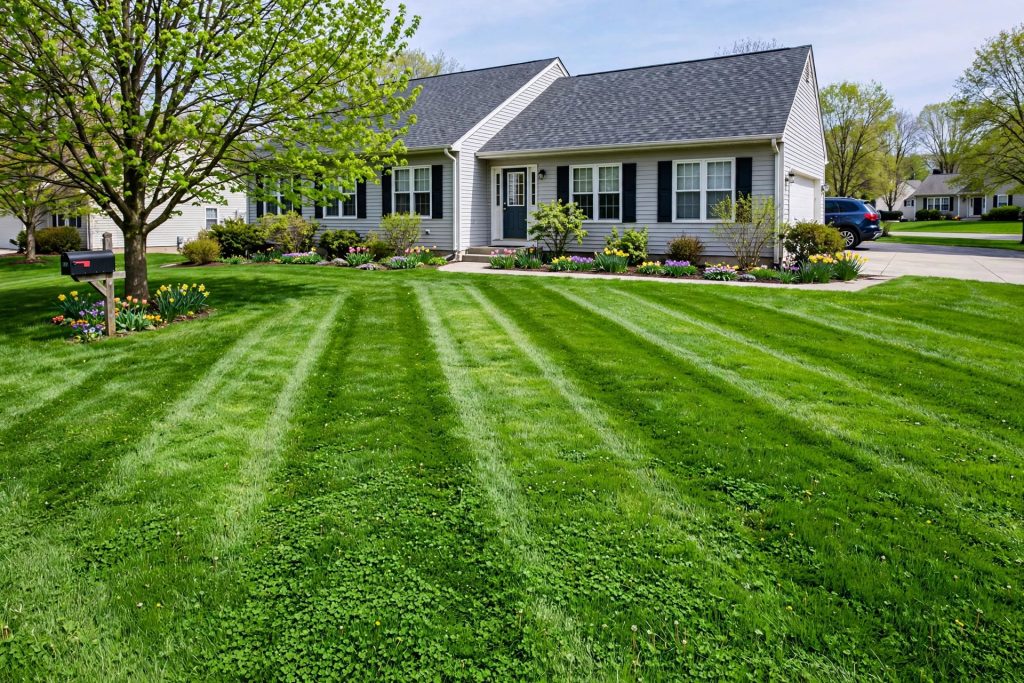
Spreading is not a single spring event: feeding, pre-emergent, overseeding, and winterizer land in different months, and the spreader that makes those jobs quick is the one that gets used on schedule.
The 10 Best Broadcast Spreaders for Home Lawns
Scotts Turf Builder EdgeGuard DLX: Best for Most Home Lawns
Manufacturer specifications and editorial assessment.
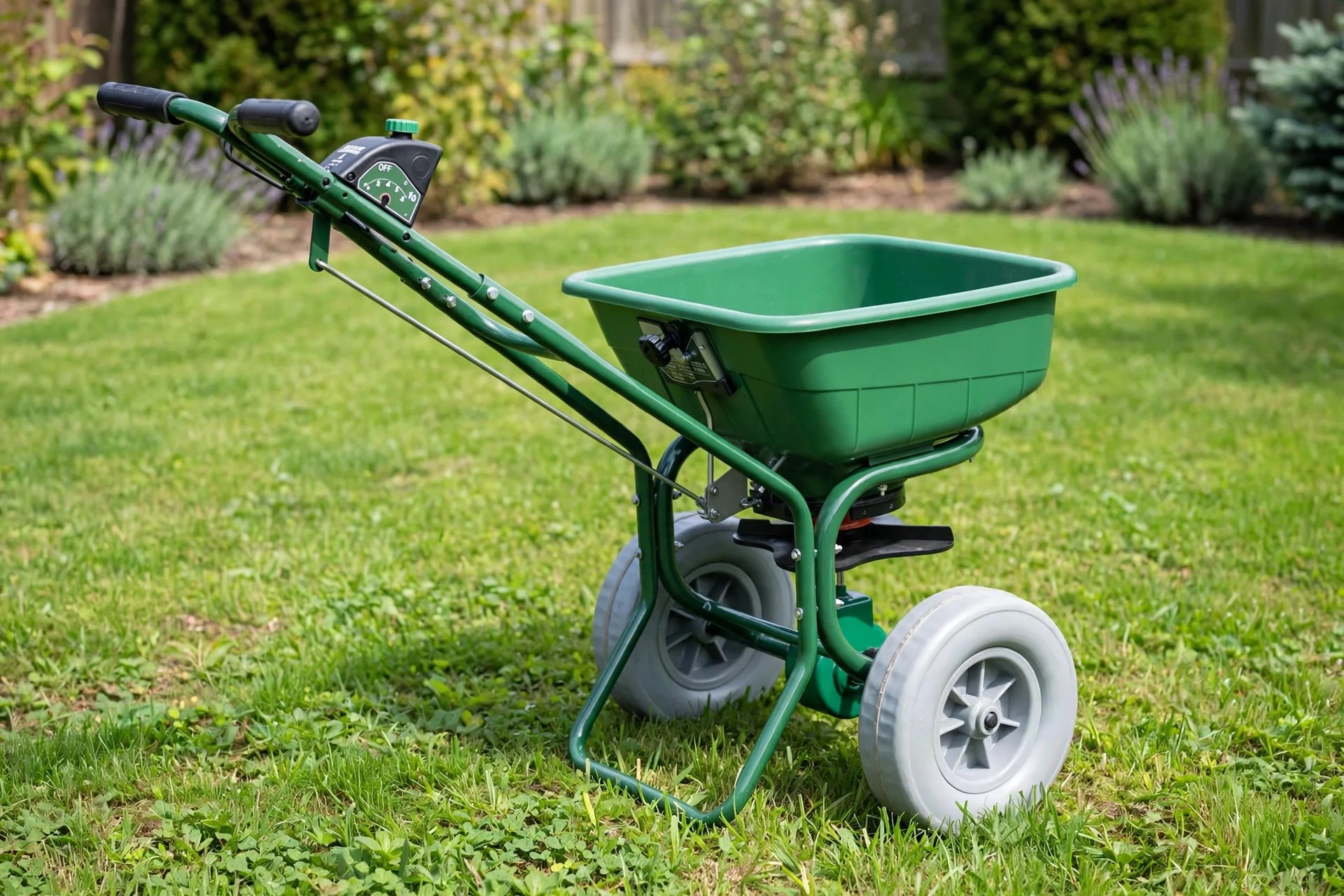
The DLX holds enough product to cover up to 15,000 sq ft per fill, which takes in most suburban front and back lawns in one load. Its EdgeGuard feature blocks off the right side of the spread pattern at the slide of a lever, so granules stay off driveways, sidewalks, and beds while you work the edges. It arrives pre-calibrated with no assembly, the curved hopper and dual-bladed agitator keep product funneling smoothly, and the control panel uses a precision rate dial matched to the settings printed on Scotts bags.
Quick Verdict: The default answer for a typical home lawn. It is not the toughest spreader here, but its combination of capacity, edge control, and settings that match the bag you just bought is why it outsells everything else in the category.
Pros
- EdgeGuard keeps product off hard surfaces and out of beds
- Hopper sized for 15,000 sq ft, one fill for most lawns
- Pre-calibrated, no assembly, dial settings match Scotts product labels
Cons
- Plastic wheels ride rougher than pneumatic tires on bumpy lawns
- Pattern accuracy depends on a steady walking pace, like all single-rotor models
Best for: Typical suburban lawns up to about 15,000 sq ft.
Not ideal for: Very rough ground or owners who want a metal gearbox.
When you are ready to price it: Check Price on Amazon. See the full specifications on our Scotts EdgeGuard DLX product page. Scotts’ own specifications are on the Scotts EdgeGuard DLX product page.
Scotts Elite Spreader: Best for Large Lawns
Manufacturer specifications and editorial assessment.
The Elite is Scotts’ step-up machine: a 65 lb hopper that holds enough product for up to 20,000 sq ft, and a patented dual rotor system that throws a 6 ft spread pattern with better left to right balance than a single fan. It keeps EdgeGuard for the edges, adds 10 in never-flat tires that roll over rough ground without punctures, a stainless steel axle, and an ergonomic handle with a smartphone holder for the MyLawn app.
Quick Verdict: The pick when the lawn is big enough that the DLX means a refill halfway. The dual rotors are the real upgrade, because pattern evenness, not capacity, is what usually disappoints on large lawns.
Pros
- Dual rotors give the most even pattern in the Scotts line
- 20,000 sq ft per fill, 6 ft spread pattern
- Never-flat 10 in tires and a stainless axle for rough use
Cons
- Heavier and bulkier to store than the DLX
- The phone holder and app tie-in are extras many owners never use
Best for: Lawns from about 15,000 to 25,000 sq ft.
Not ideal for: Small lawns or tight storage.
When you are ready to price it: Check Price on Amazon. Sc See the full specifications on our Scotts Elite product page.otts’ own specifications are on the Scotts Elite Spreader product page.
EarthWay 2600A-Plus: Best for an Even Pattern on Mid Sized Lawns
Manufacturer specifications and editorial assessment.
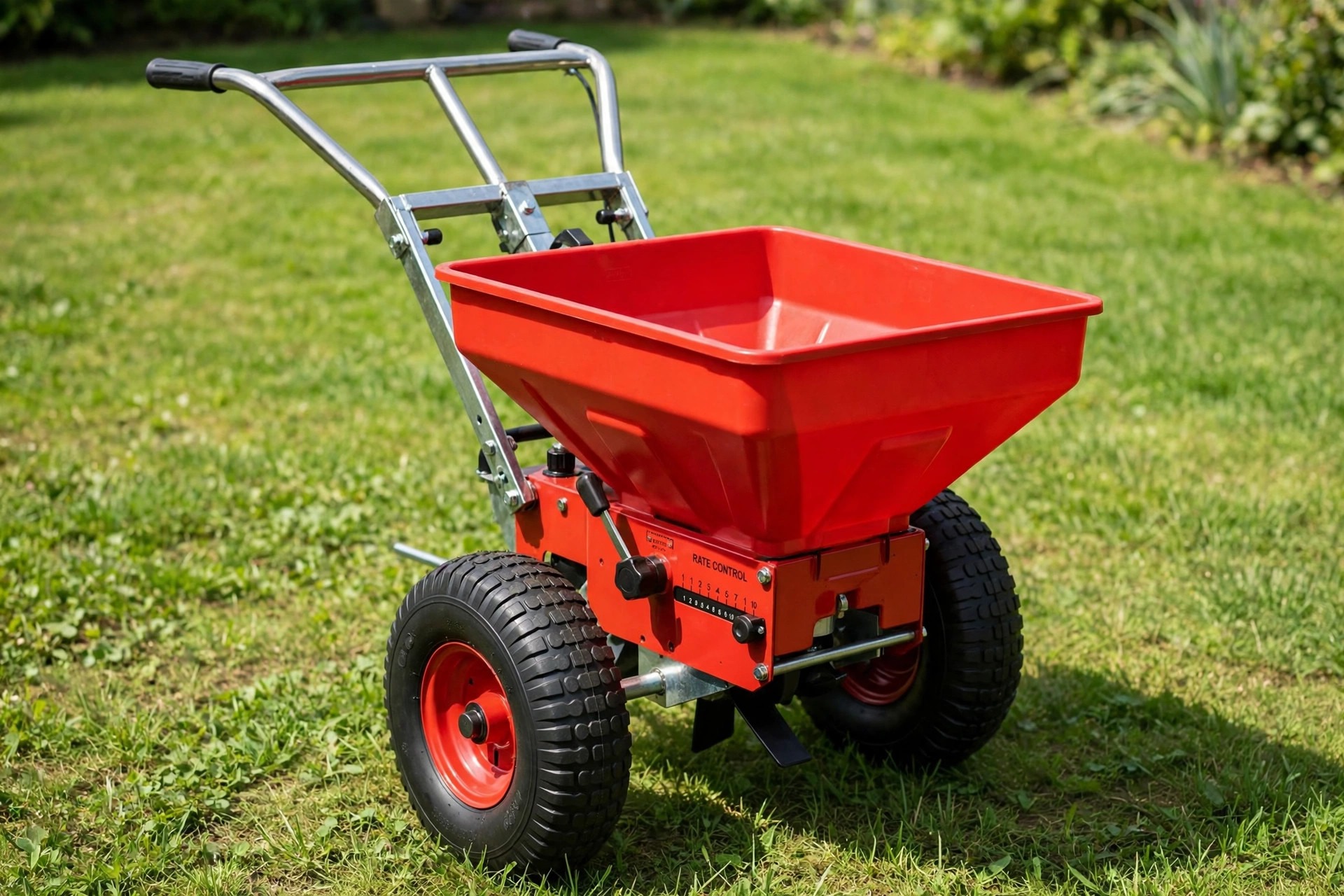
EarthWay builds this one in Indiana around a different idea: instead of one drop hole over the spinner, its patented EV-N-SPRED 3-hole drop shut-off feeds the plate in three places, which produces the feathered, balanced pattern that resists striping. The rustproof poly hopper holds 40 lb, the frame is epoxy powder coated steel with a solid linkage rate control rather than a cable, and it rolls on 9 in pneumatic tires. SideSpread Control shuts off the left side of the pattern along beds and drives, the same edge job as Scotts’ EdgeGuard.
Quick Verdict: The thinking owner’s spreader. It costs more than a DLX and holds less, but the pattern quality and the metal linkage are the two things that decide whether a spreader still works well in year five.
Pros
- 3-hole drop system gives a genuinely even, feathered pattern
- Pneumatic tires and a steel frame with solid linkage control
- SideSpread Control for clean edges along beds and drives
Cons
- 40 lb hopper means refills on lawns over about half an acre
- Assembly takes around twenty minutes out of the box
Best for: Lawns of about 5,000 to 20,000 sq ft where pattern quality matters.
Not ideal for: Anyone who wants zero assembly or the lowest price.
When you are ready to price it: Check Price on Amazon. See the full specifications on our EarthWay 2600A-Plus product page. EarthWay’s own specifications are on the EarthWay spreaders page.
Agri-Fab 45-0462 SmartSpreader: Best High Capacity Push Spreader
Manufacturer specifications and editorial assessment.
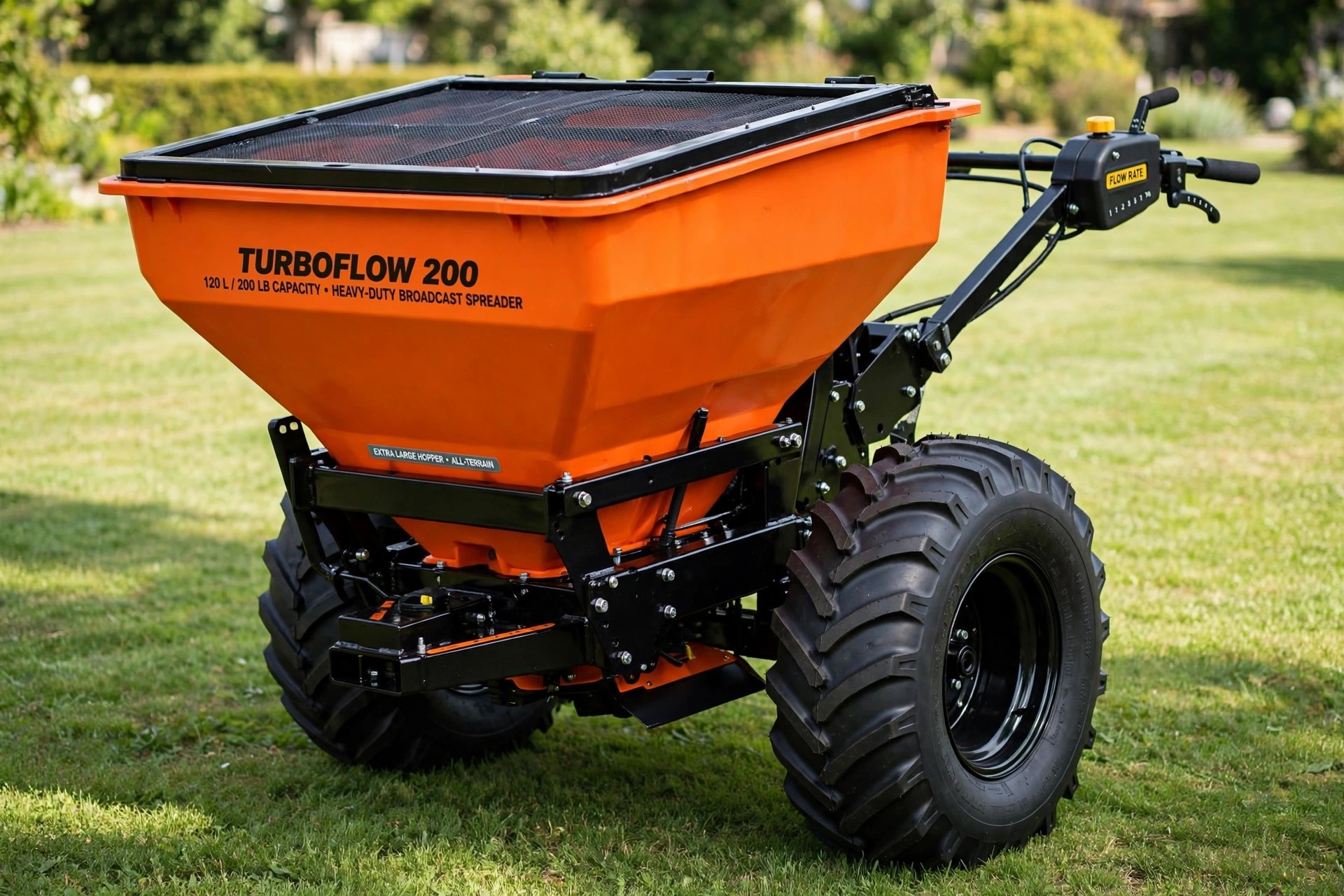
Everything about the 45-0462 is scaled up: a 130 lb poly hopper, coverage of roughly 25,000 sq ft per fill, a spread width of 10 to 12 ft, and 13 in pneumatic tires under it. The gearbox is an enclosed commercial grade unit, the flow control uses an easy to read adjustable stop so you return to the same rate every time, and Agri-Fab backs it with a 3-year limited warranty.
Quick Verdict: Buy it for the hopper and the width. On a half acre lawn it halves the job: one fill, wide passes, no walking back to the garage with the bag. On a small lawn it is simply more spreader than the space justifies.
Pros
- 130 lb hopper covers about 25,000 sq ft per fill
- 10 to 12 ft spread width finishes big lawns fast
- Enclosed gearbox, 13 in pneumatic tires, 3-year warranty
Cons
- Bulky to store and heavy to push when fully loaded
- Overkill below about 15,000 sq ft
Best for: Lawns of half an acre and up that are spread on foot.
Not ideal for: Small yards, tight sheds, or steep slopes when loaded.
When you are ready to price it: Check Price on Amazon. See the full specifications on our Agri-Fab 45-0462 product page. The full specification sheet is on the DK Hardware listing for the 45-0462.
Spyker ERGO-PRO SPY50L-1P: Best Pro Grade Broadcast Spreader
Manufacturer specifications and editorial assessment.
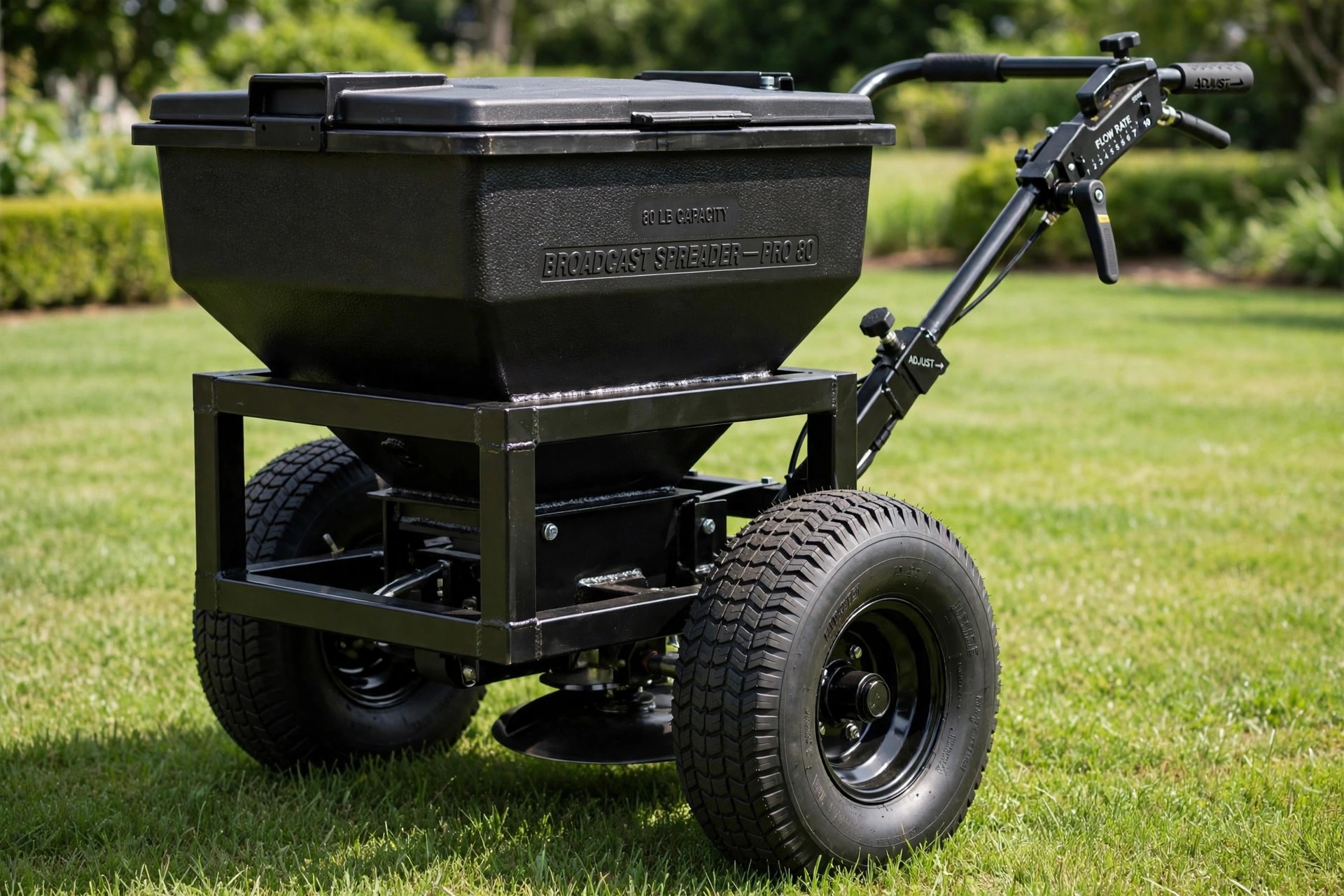
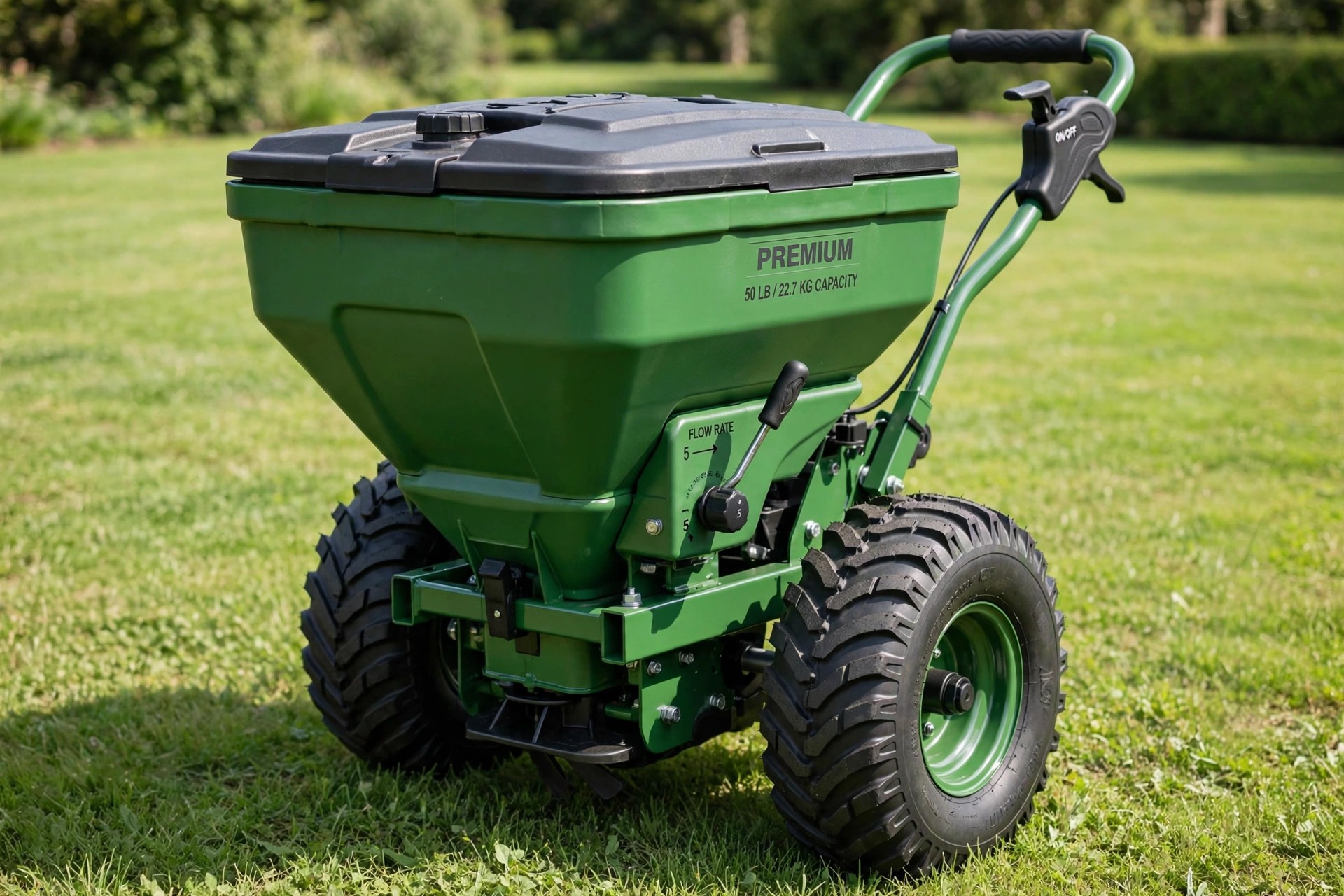
Spyker builds spreaders for people who spread for a living, and the SPY50L-1P shows it: an all welded powder coated frame, a solid stainless steel axle, fully enclosed metal gears with zerk fittings and a lifetime warranty on the gear set, and 13 x 5 in pneumatic tires. The 50 lb poly hopper is bridge-free, shaped so material flows to empty without the shaking and bouncing cheaper hoppers need. Rate control is the Spyker Dial with 90 settings, pattern balance is handled by the AccuWay system with fan accuracy up to 12 ft.
Quick Verdict: The buy once answer. It costs several times a DLX, and the money is in things a homeowner feels slowly: gears that never strip, a dial that stays accurate, a hopper that empties clean. For a large home lawn kept for decades, that maths works.
Pros
- Enclosed metal gears with a lifetime warranty, stainless axle
- Bridge-free hopper empties without shaking
- 90-setting dial and AccuWay pattern control up to 12 ft
Cons
- Price is firmly in professional territory
- 40 lb machine before you add product
Best for: Large home lawns and owners who keep equipment for the long term.
Not ideal for: Small lawns or budget-first buying.
When you are ready to price it: Check Price on Amazon. See the full specifications on our Spyker SPY50L-1P product page. Spyker’s own specifications are on the Spyker ERGO-PRO SPY50L-1P product page.
Scotts Turf Builder EdgeGuard Mini: Best for Small Lawns
Manufacturer specifications and editorial assessment.
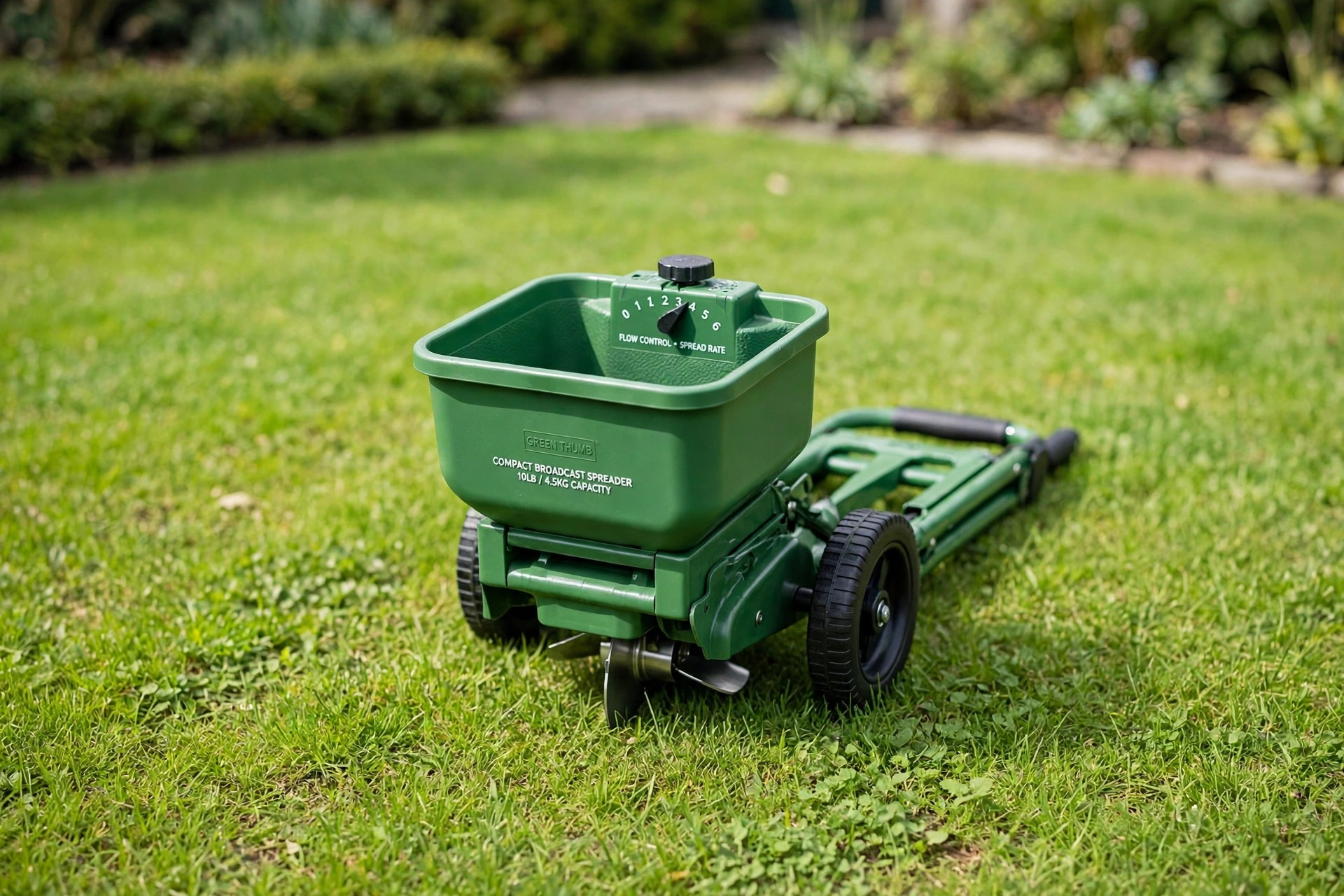
The Mini is the DLX idea shrunk honestly: it holds enough product for up to 5,000 sq ft, keeps the same EdgeGuard right side block off, the same curved hopper and dual-bladed agitator, and arrives fully assembled and pre-calibrated. The handle folds down, which is why it hangs on a garage wall or slides onto a shelf where a full size spreader will not.
Quick Verdict: For a small lawn this is the right amount of spreader, and the one most likely to still be used in three years because storing it is effortless. Buy the DLX instead the moment your lawn creeps past about 5,000 sq ft, because refilling a Mini mid lawn is where uneven applications start.
Pros
- EdgeGuard edge control in a compact body
- Fold-down handle, fully assembled, easy storage
- Dial settings match Scotts bag labels directly
Cons
- 5,000 sq ft per fill is a hard ceiling for growing lawns
- Light build feels toy like next to metal framed models
Best for: Lawns up to about 5,000 sq ft.
Not ideal for: Lawns that need a full 40 lb bag in one pass.
When you are ready to price it: Check Price on Amazon. See the full specifications on our Scotts EdgeGuard Mini product page. Scotts’ own specifications are on the ScottsMiracle-Gro EdgeGuard Mini product page.
Agri-Fab 45-0530-131 Tow-Behind: Best Tow-Behind for Riding Mower Owners
Manufacturer specifications and editorial assessment.
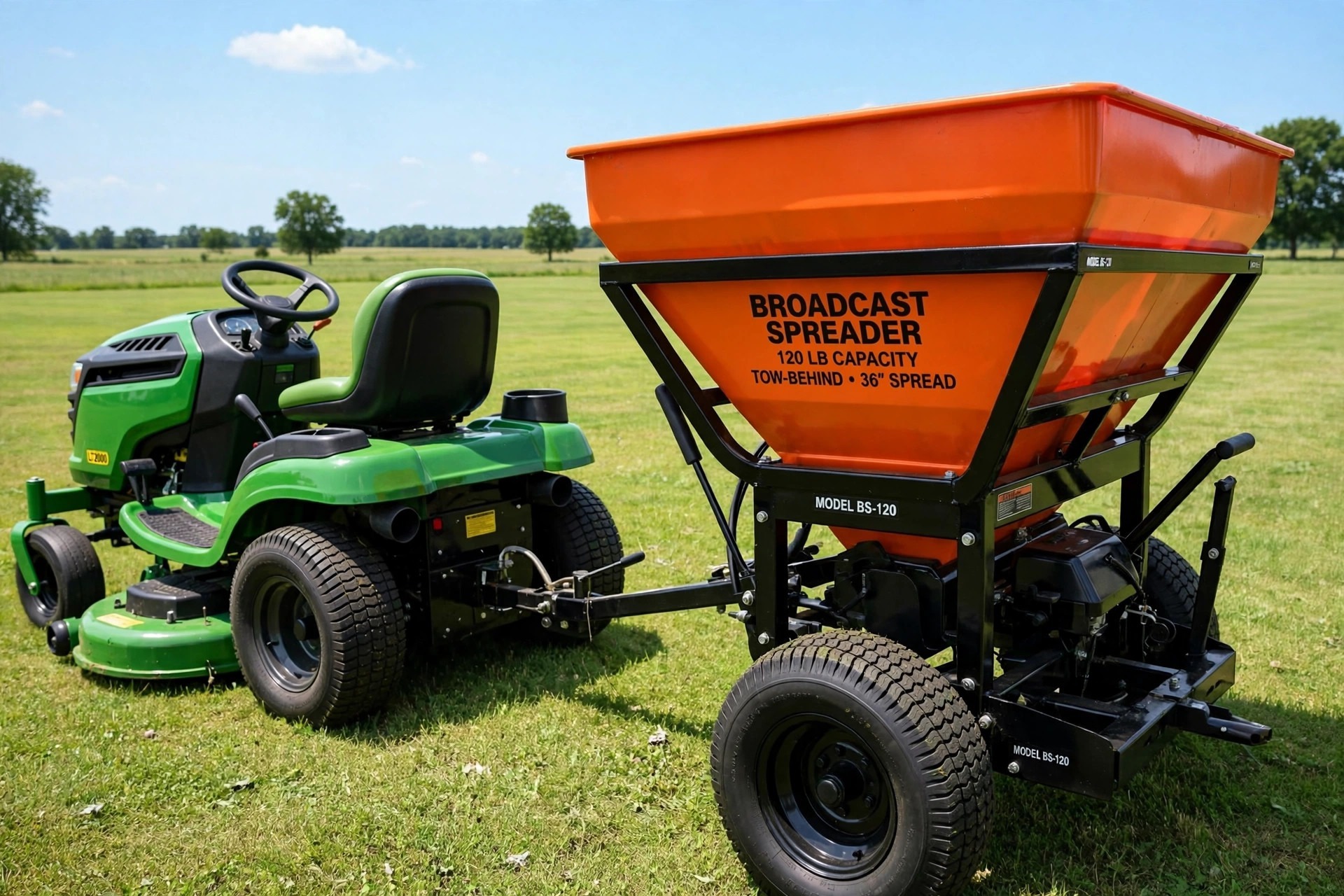
If the lawn is big enough for a riding mower, walking it with a push spreader is optional. The 45-0530-131 hangs on a universal hitch behind most lawn tractors, carries 85 lb of product for roughly 14,000 sq ft of coverage per fill, and throws up to a 10 ft spread width. Flow is controlled by a cable you operate from the tractor seat, so you can shut off at the headland without stopping. It runs on 10 in pneumatic tires, the hopper and spread plate are rust proof poly, the gearbox is enclosed.
Quick Verdict: The cheapest way to make a big lawn feel small. It asks for assembly patience and a steady towing speed, and owner feedback on flow consistency from the seat is mixed, so calibrate it (the section below shows how) before trusting the dial.
Pros
- Spreads from the tractor seat, 85 lb per fill
- Up to 10 ft spread width, universal hitch fits most tractors
- Rust proof poly hopper and plate, enclosed gearbox
Cons
- Needs a riding mower or tractor to tow it
- Rate varies with towing speed, so calibration matters more than on push models
Best for: Lawns of about 14,000 sq ft and up with a riding mower already in the shed.
Not ideal for: Small lawns, tight gates, or steep ground.
When you are ready to price it: Check Price on Amazon. See the full specifications on our Agri-Fab 45-0530 product page. Agri-Fab sells this model mainly through dealers, so the Amazon listing carries the full specification sheet to check before you buy.
EarthWay 2750 Bag Seeder: Best for Grass Seed, Slopes and Rough Ground
Manufacturer specifications and editorial assessment.
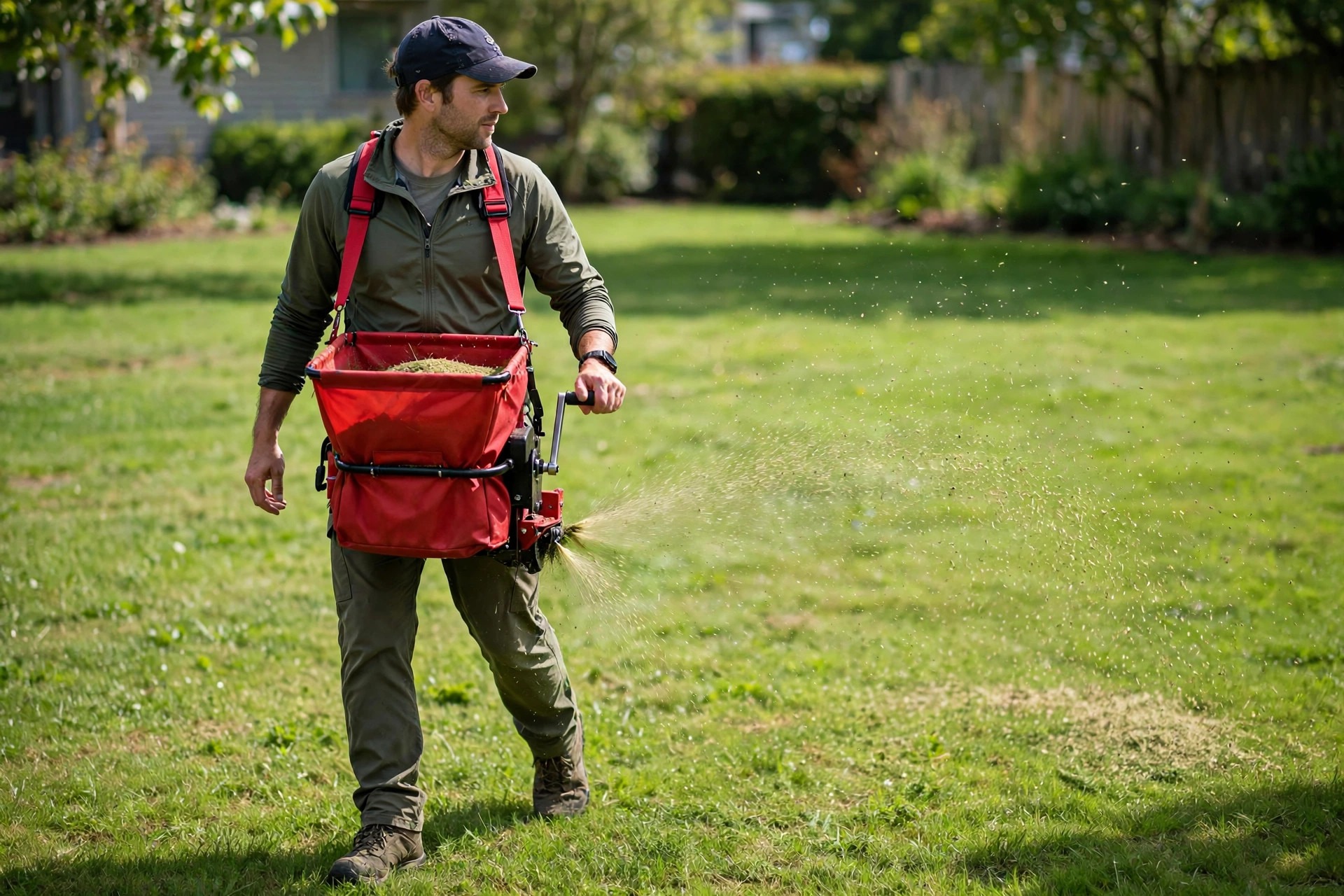
The 2750 skips wheels entirely. A 25 lb bag of 600 denier nylon hangs from a cross shoulder strap, a hand crank drives a sealed high speed gearbox, and spread width runs from about 8 to 12 ft depending on how fast you crank. What makes it a seeder rather than just a small spreader is the metering: a sloped floor and integrated agitator feed fine seed evenly, the gate has precise settings for small material, and a spring-close shutoff plus side spread control keep placement honest. A built in stand keeps the filled bag upright between fills.
Quick Verdict: The best spreader for grass seed on ground a wheeled spreader hates: slopes, rough corners, ditch banks, and the patch behind the shed. It is also the overseeding tool many pros reach for, because your feet do not compact the soil the way wheels and a loaded hopper do.
Pros
- Works on slopes and rough ground where wheeled spreaders struggle
- Fine metering suits small grass seed, with a real shutoff
- 25 lb capacity is generous for a shoulder carried tool
Cons
- You carry the full load, so long sessions tire the shoulder
- Pattern depends on your cranking rhythm staying steady
Best for: Overseeding, patch repair, slopes, and lawns with awkward corners.
Not ideal for: Feeding a flat half acre in one session.
When you are ready to price it: Check Price on Amazon. See the full specifications on our EarthWay 2750 product page.EarthWay’s own specifications are on the EarthWay spreaders page.
Scotts Wizz: Best Battery Handheld Spreader
Manufacturer specifications and editorial assessment.
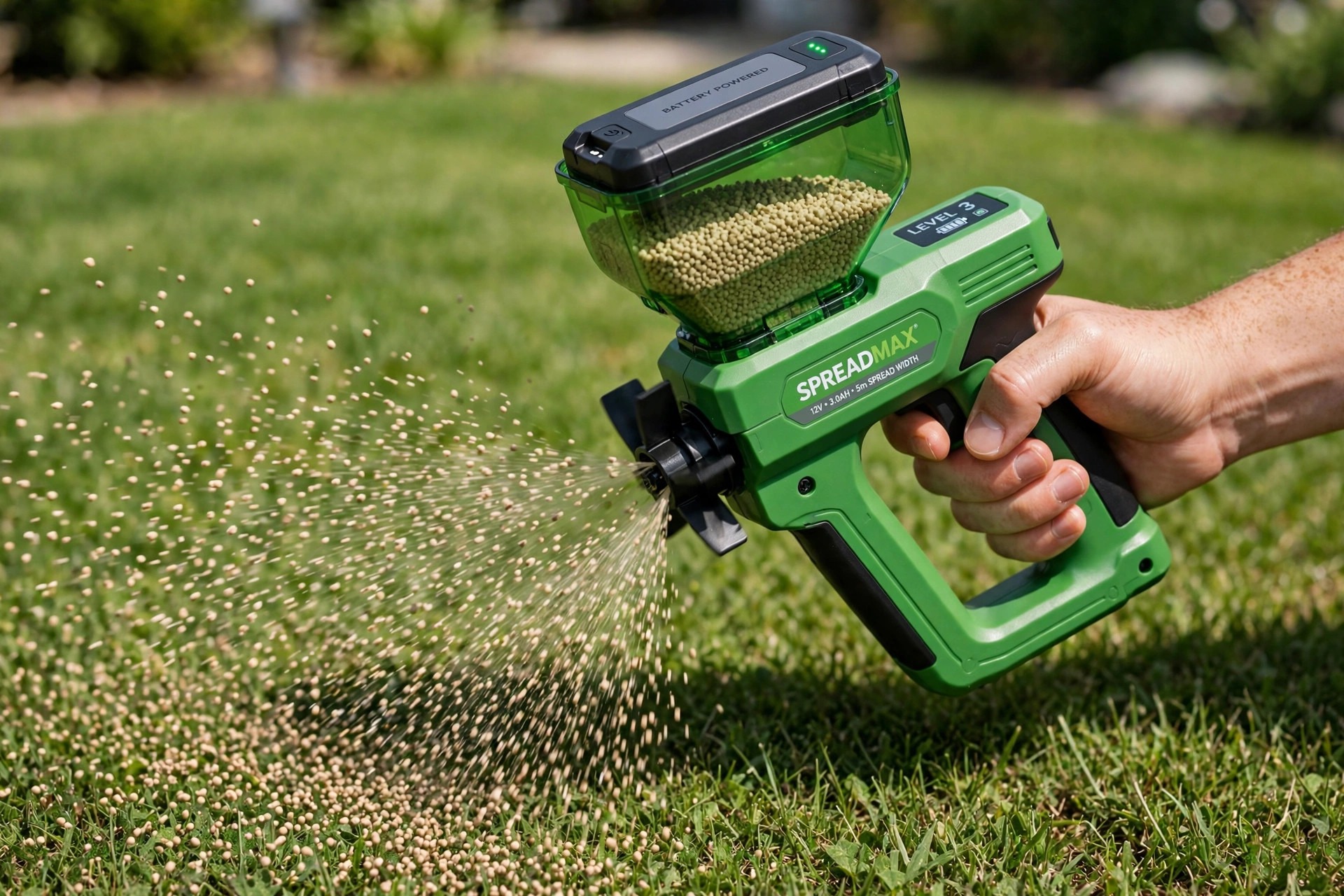
The Wizz replaces the crank with a motor: 4 AA batteries spin the disc, a one-touch trigger starts and stops the flow, and it holds enough product for up to 2,500 sq ft. It throws about a 5 ft broadcast and, unusually for a handheld, includes EdgeGuard. There are 23 rate settings, far more granular than most hand spreaders, which is what makes it usable for seed as well as fertilizer.
Quick Verdict: The handheld for people who dislike handhelds. No cranking means your walking pace, not your arm, sets the pattern, and the 23 settings give it a precision the crank models cannot match. Batteries are the tax: keep a spare set in the garage.
Pros
- Battery power for an even, effortless pattern
- EdgeGuard and 23 settings, rare control at this size
- Covers up to 2,500 sq ft per fill
Cons
- Depends on AA batteries, which fade in cold weather
- Too small for whole lawn feeding beyond a small yard
Best for: Small lawns, spot seeding, and ice melt on walks.
Not ideal for: Lawns over about 2,500 sq ft per job.
When you are ready to price it: Check Price on Amazon. See the full specifications on our Scotts Wizz product page. Scotts lists this model in its spreader range, and the Amazon listing carries the full specification sheet to check before you buy.
Scotts Whirl: Best Budget Handheld Spreader
Manufacturer specifications and editorial assessment.
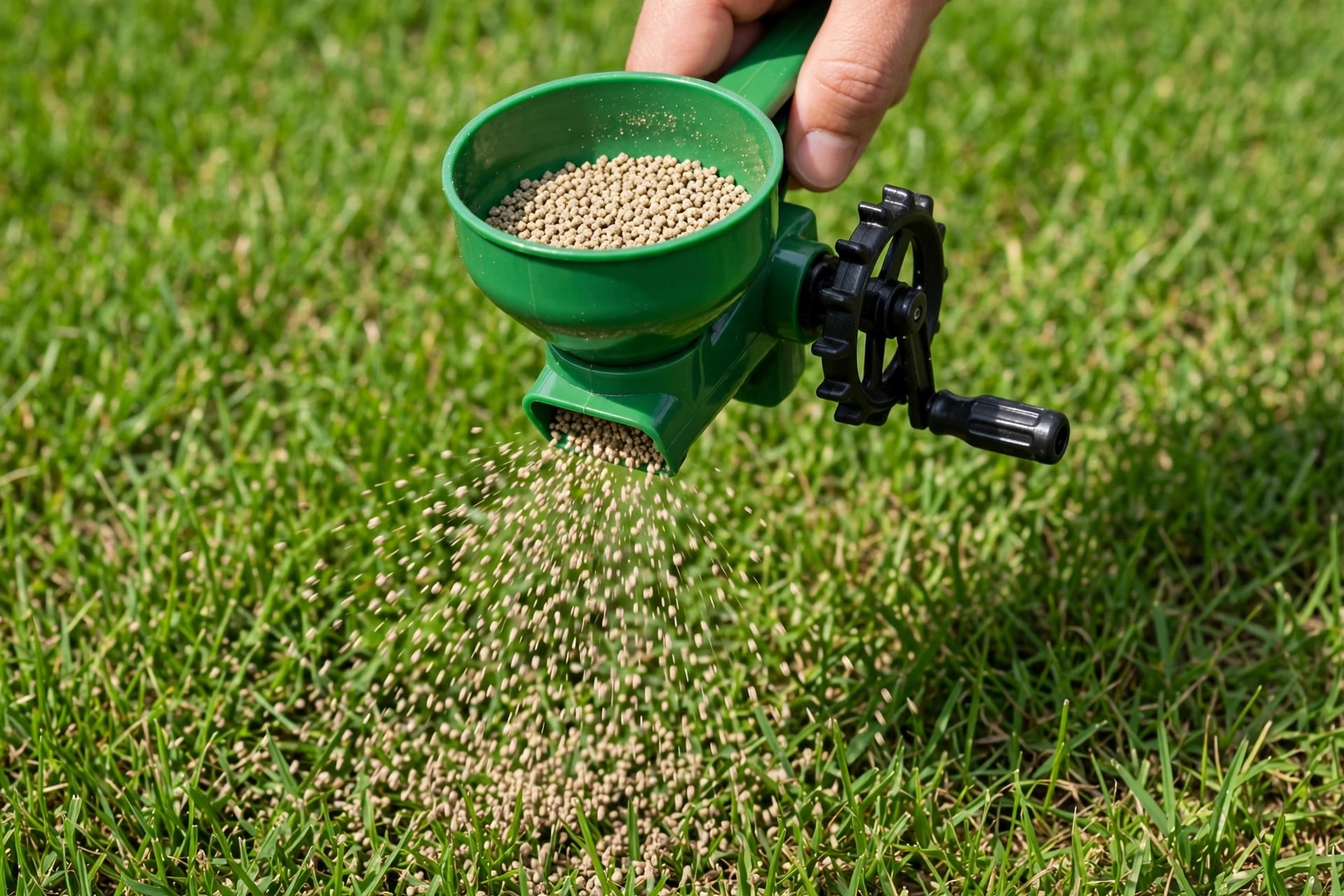
The Whirl is the simplest spreader in this guide: a hand held hopper, a crank, and an adjustable flow, holding enough product for up to 1,500 sq ft. It weighs under 2 lb, the handle design supports your forearm so a full hopper does not hang off your wrist, and there is nothing to assemble, charge, or calibrate beyond the dial.
Quick Verdict: Buy it for the jobs a push spreader is too much for: reseeding a dog spot, feeding a narrow side yard, salting a walk. As a whole lawn tool it works, slowly, and a season of that usually convinces owners to add the Mini at pick 6.
Pros
- Lowest cost way to spread evenly instead of by hand
- Under 2 lb, with arm support for a full hopper
- No assembly, no batteries, nothing to maintain
Cons
- 1,500 sq ft per fill means constant refills on bigger jobs
- Pattern consistency depends on your cranking
Best for: Spot repairs, small patches, and walkways.
Not ideal for: Feeding a full lawn every season.
When you are ready to price it: Check Price on Amazon. See the full specifications on our Scotts Whirl product page. Scotts lists this model in its spreader range, and the Amazon listing carries the full specification sheet to check before you buy.
Broadcast vs Drop Spreader: Which Does a Home Lawn Need?
This is the first fork in the road, and it is a real one. A broadcast spreader throws granules outward in a fan, covering a swath from about 5 ft on a handheld to 12 ft on a big push model. A drop spreader releases product straight down between its wheels, in a strip exactly as wide as the hopper, usually around 20 to 24 in.
Broadcast wins on speed and forgiveness. The fan pattern feathers at the edges, so small overlaps blend instead of stacking, and a big lawn is simply fewer passes. It is also the only sensible way to spread on rough or sloped ground. Its weakness is aim: granules fly, so some land in beds, on drives, and toward water unless the model has an edge guard and you walk the borders with it engaged.
Drop wins on precision. Nothing lands outside the wheel line, which makes it the right tool beside a pool, a pond, or expensive planting, and for applying products where overshoot is a real problem. Its weakness is the operator: every pass must meet the last exactly, and any gap or double overlap prints as a stripe. It is also slow on a big lawn.
For most home lawns, broadcast is the better first and usually only spreader, with an edge guard model from this list handling the border problem. Choose a drop spreader instead when your lawn is small, intensely edged, or wrapped around water features, and accept the slower, fussier passes as the price of precision.
How to Calibrate a Broadcast Spreader
Dial numbers are a starting point, not a promise. Granules differ in size and weight, spreaders wear, and your walking pace is part of the machine. University extension services are blunt about this: the only way to know your rate is to measure what actually lands. The good news is that a proper calibration takes ten minutes and a bathroom scale.
- Set the target. Read the bag. If it says 3.2 lb per 1,000 sq ft, that is your number. If it gives only a total coverage, divide the bag weight by the coverage to get the rate per 1,000 sq ft.
- Mark a test area. Use your spread width: with a 10 ft effective swath, a 100 ft run gives you exactly 1,000 sq ft. A driveway works well, because you can sweep the product up and weigh it.
- Weigh in, spread, weigh out. Put a known weight of product in the hopper, say 5 lb. Spread the test strip at your normal pace, opening the gate at the start line and closing it at the end. Weigh what is left.
- Do the maths. Start weight minus leftover weight is what landed on 1,000 sq ft. Too much: close the dial a step. Too little: open it a step. Repeat until the landed weight matches the target within about 10 percent.
- Write it down. Note the dial setting, the product, and your pace on a card kept with the spreader. That card is worth more than any printed chart, including the one below.
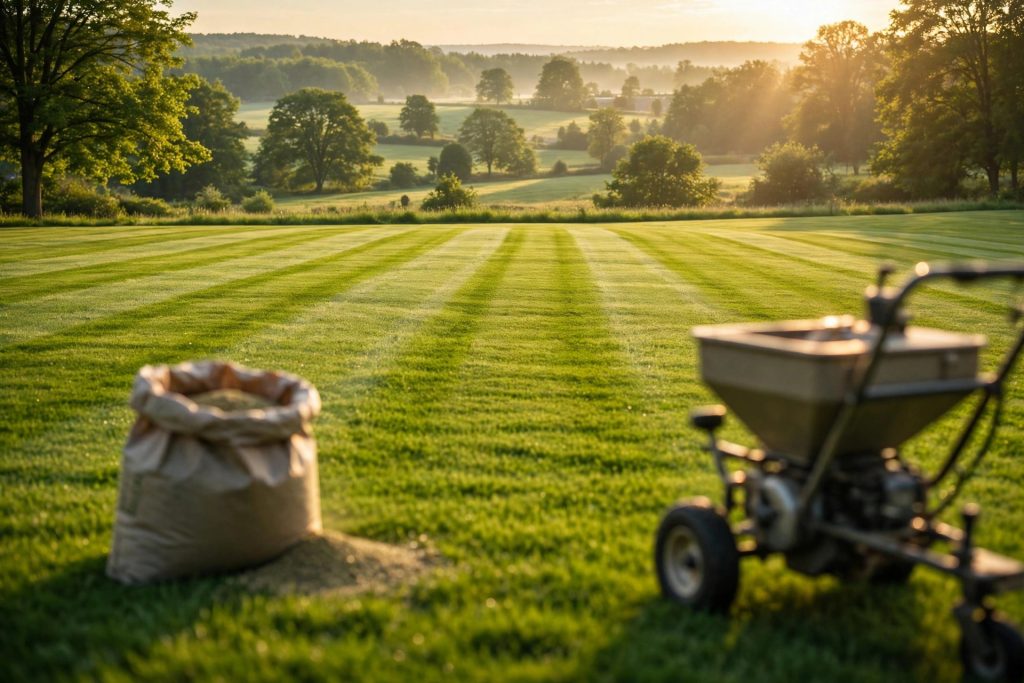
Calibration is where fertilizer choice and spreader choice meet: the rate on the bag only becomes real grass response when the spreader actually delivers it, which is why our fertilizer guide and this one belong to the same routine.
Spreader settings chart: starting points
Use this chart only to choose your first test setting. Product formulations change, so always confirm with the calibration test above and the setting printed on your product bag, which wins any disagreement.
| Product | Typical target rate | Starting point (generic dial) | Calibration note |
|---|---|---|---|
| Granular lawn fertilizer | 3 to 4 lb per 1,000 sq ft | About half open | Weigh the test strip; adjust one step at a time |
| Weed and feed granules | Per bag label, usually 3 to 4 lb per 1,000 sq ft | About half open | Apply to damp grass in calm weather so granules stick and stay put |
| Grass seed, larger seed (tall fescue, ryegrass) | 4 to 8 lb per 1,000 sq ft for overseeding | About one third to half open | Set for half rate and make two passes at right angles for even cover |
| Grass seed, fine seed (bluegrass, fine fescue) | 1 to 3 lb per 1,000 sq ft | Low setting, about one quarter open | Fine seed bridges easily; the bag seeder at pick 8 meters it best |
| Pelletized lime | 10 to 20 lb per 1,000 sq ft when soil test calls for it | Wide open, often two passes | Heavy product; never exceed your hopper’s weight comfort in one load |
| Ice melt | Light, even scatter, about 1 to 2 lb per 100 sq ft | Low to mid setting | Rinse the spreader after use; salt is the most corrosive thing it carries |
Two habits help: spread at half rate in two passes at right angles when accuracy matters, especially with seed, so the cross pattern averages out machine and pace error. Second, keep a steady pace of roughly 3 mph, a brisk walk, and open the gate only after you are moving and close it before you stop. Most stripes are born at the turn, where a stationary spreader dumps a pile and then starves the first yards of the next pass.
Handheld vs Push Spreader: Which Size Is Honest?
The handheld vs push spreader question answers itself once you time the job. A handheld like the Wizz or Whirl holds product for 1,500 to 2,500 sq ft. On a lawn that size it is perfect: no storage problem, no pushing, and you are done in minutes. On a 10,000 sq ft lawn it means five or six refills, each one a chance to lose your place, and a pattern that widens and narrows with your arm.
A push spreader holds 5,000 to 25,000 sq ft of product per fill and throws a wider, more consistent swath because the wheels, not your arm, set the disc speed. The real divide is around 5,000 sq ft: below it, a handheld or the EdgeGuard Mini earns its keep; above it, a push model pays for itself in one season of not refilling.
Where does the best spreader for grass seed fit? Seeding is the job where this choice matters most, because seed rates are low and mistakes show as patchy germination you cannot fix until the next window. For overseeding a whole lawn, a push broadcast spreader at half rate with two cross passes gives the most even result. For patches, slopes, and tight corners, the EarthWay 2750 bag seeder at pick 8 is the better instrument: it meters fine seed gently, goes anywhere your feet go, and does not compact wet soil. A drop spreader can also seed precisely in straight strips on a small, flat lawn, at the cost of many slow passes.
Buying Guide: What to Look For in a Broadcast Spreader
Hopper capacity, honestly read. Brands quote capacity two ways: pounds of product, or the square footage a fill covers at a typical fertilizer rate. Convert before you compare. A 40 lb hopper and a “holds 15,000 sq ft of product” hopper are roughly the same class. Size the hopper to cover your lawn in one fill, plus a little headroom.
Wheels decide how it ages on your ground. Pneumatic tires roll over bumps, roots, and frozen ruts, and they keep the disc height steady, which keeps the pattern steady. Plastic wheels are fine on smooth, small lawns and never go flat, but they bounce on rough ground, and every bounce prints in the spread. Never-flat foam tires sit between the two.
Rate control linkage. A solid metal linkage holds its setting for years. A cable stretches and kinks, and the dial quietly starts lying. If you spread different products across the year, this is the feature that decides whether calibration stays done.
Edge control. Some form of edge guard or side spread control is close to mandatory on a modern suburban lot. It keeps fertilizer out of beds and off drives, where it stains, washes into storm drains, and feeds nothing.
Gearbox and frame. An enclosed gearbox keeps grit out of the gears; an open one wears fast in a sandy or dusty yard. Powder coated steel and stainless hardware are what separate a five year spreader from a fifteen year one. Whatever you buy, rinse it after use and store it dry and empty.
That last point is the wider kit question: a spreader lives alongside the mower, the trimmer, and the rest of the lawn routine, and the owners who get the most from all of it buy each tool for the job it actually does on their ground.
Final Choice
If you want one clear verdict: for most US homeowners, the Scotts Turf Builder EdgeGuard DLX at pick 1 is the right broadcast spreader, because it covers a typical lawn in one fill, its dial speaks the same language as the bag labels, and EdgeGuard solves the border problem that puts people off broadcast spreaders. Step up to the Scotts Elite at pick 2 when the lawn pushes past 15,000 sq ft, or to the EarthWay 2600A-Plus at pick 3 when pattern quality and a metal build matter more than capacity. Slopes and seeding point to the EarthWay 2750 at pick 8, riding mower owners to pick 7, and the Spyker at pick 5 is the one you hand down.
That spread is the real lesson of this guide. The best broadcast spreader is a fit, not a trophy: capacity for your lawn size, wheels for your ground, and rate control you can trust enough to calibrate once and believe all season.
Final Thoughts
A good broadcast spreader, and especially the best fertilizer spreader for your own lawn, disappears into the routine. The lawn greens up evenly, the seed comes up in a sheet instead of stripes, and the spring argument about whether the fertilizer “worked” never happens, because the application was never the weak link. Choose the format your lawn supports, size it with headroom, and calibrate it once with a scale and ten spare minutes. The models above cover that range honestly, from a two pound hand spreader for patch jobs to a welded pro machine that will outlast the lawn’s next renovation.
References
- Mississippi State University Extension, Spreader Calibration Improves Fertilizer Applications: the weigh in, weigh out calibration method and the half rate, two pass practice used in the calibration section.
- LSU AgCenter, Broadcast (Rotary) Spreader Calibration: measuring effective spread width and setting a 1,000 sq ft calibration area.
- University of Florida IFAS Extension, How to Calibrate Your Fertilizer Spreader: worked calibration examples, including converting a nitrogen target into pounds of product per 1,000 sq ft.
- Scotts, Elite Spreader product page: dual rotor design, 6 ft spread pattern, capacity and application method for the Elite.
- Spyker, ERGO-PRO SPY50L-1P product page: bridge-free hopper design, AccuWay pattern control and gear warranty for the SPY50L-1P.
Frequently Asked Questions
What is the best broadcast spreader for most home lawns?
The Scotts Turf Builder EdgeGuard DLX is the safest all round answer: it covers up to 15,000 sq ft per fill, its rate dial matches the settings printed on Scotts bags, and EdgeGuard keeps granules off drives and beds. Larger lawns should look at the Scotts Elite; build quality seekers at the EarthWay 2600A-Plus.
Broadcast vs drop spreader: which is better?
For most home lawns, broadcast. It is faster, its feathered pattern forgives small overlaps, and it handles rough ground. A drop spreader is more precise because nothing lands outside its wheels, which suits small lawns wrapped around pools, ponds, or planting, but it is slower and stripes if your passes do not meet exactly.
How do I calibrate a broadcast spreader?
Weigh a known amount of product into the hopper, spread a measured 1,000 sq ft strip at your normal pace, then weigh what is left. The difference is your real rate per 1,000 sq ft. Adjust the dial one step at a time and repeat until the landed weight matches the bag rate. The full method is in the calibration section above.
What is the best spreader for grass seed?
For overseeding a whole lawn, a push broadcast spreader at half rate in two passes at right angles gives the most even cover. For patches, slopes, and fine seed, the EarthWay 2750 bag seeder meters small seed best and goes where wheels cannot. Whichever you use, seed rates are low, so calibration matters even more than with fertilizer.
Handheld or push spreader: which do I need?
Below about 5,000 sq ft of lawn, a handheld spreader or a compact push model like the EdgeGuard Mini is enough and stores easily. Above that, a push spreader wins: bigger hopper, wider and steadier pattern, and no arm fatigue setting the disc speed. Many owners end up with both, a push model for feeding and a handheld for patches and ice melt.
What spreader setting should I use for fertilizer?
Start with the setting printed on the fertilizer bag for your spreader type, then confirm it with a calibration test, because granule size and your walking pace change the real rate. The spreader settings chart in this guide gives generic starting points by product type when a bag gives no setting for your model.

Thesis Link : https://saulibrary.edu.bd/daatj/public/uploads/BAU200601_19-Pp_5.pdf
- 10 Best Broadcast Spreaders for Home Lawns - October 9, 2026
- 10 Best Robot Lawn Mowers Worth Buying - October 8, 2026
- 10 Best Sprinklers for Large Lawns - October 8, 2026