10 Best Lawn Fertilizers for a Greener Yard
Nothing beats the look of a thick, green lawn. But here’s the truth most homeowners learn the hard way: grass can’t stay green on sunlight and water alone. Every time you mow, you haul away nutrients your lawn needs to grow back strong. That’s where the best lawn fertilizer comes in. The right formula feeds your grass exactly what it’s hungry for , mostly nitrogen, plus phosphorus and potassium and turns a thin, patchy yard into the kind of lawn neighbors slow down to look at.
In this guide, we compare the 10 best lawn fertilizers you can buy right now. We cover synthetic and organic lawn fertilizer options, slow release lawn fertilizer formulas, liquids and granules, and the best lawn fertilizer for spring, summer, and fall. You’ll also get a simple lawn fertilizer schedule and straight answers to the questions everyone asks before they buy.
How We Picked the Best Lawn Fertilizers
We reviewed more than 25 lawn fertilizers by comparing manufacturer specifications, expert reviews, customer feedback, nutrient profiles, and application performance reports. We narrowed our picks using five practical criteria:
- Nutrient balance (NPK): Does the formula match what lawns actually need?
- Release type: Slow-release formulas score higher because they feed steadily and are harder to over-apply.
- Coverage and value: How many square feet does one bag cover, and what does it cost per 1,000 sq ft?
- Expert reviews and published testing: We compared our selections with hands-on reviews and product evaluations from established gardening publications and reviewers.
- Real world feedback: Thousands of homeowner reviews reveal what happens after the bag is empty , green up speed, burn risk, and ease of spreading.
One honest note: We don’t create our own performance scores. When we mention results such as green up time, coverage, or application performance, those details come from manufacturer specifications and published independent reviews, which are referenced in our sources section.
The 10 Best Lawn Fertilizers at a Glance
| # | Product | Type | NPK | Best For |
|---|---|---|---|---|
| 1 | Scotts Turf Builder Lawn Food | Granular synthetic | 32-0-4 | Best overall |
| 2 | Milorganite All-Purpose | Granular organic-based | 6-4-0 | Best organic lawn fertilizer |
| 3 | Simple Lawn Solutions 16-4-8 | Liquid synthetic | 16-4-8 | Best liquid lawn fertilizer |
| 4 | Scotts Green Max Lawn Food | Granular synthetic | 27-0-2 | Fastest green-up |
| 5 | Scotts Turf Builder Starter Food | Granular synthetic | 24-25-4 | New grass & overseeding |
| 6 | Scotts Turf Builder SummerGuard | Granular synthetic | 20-0-8 | Summer feeding + insect control |
| 7 | Espoma Organic Lawn Food | Granular organic | — | Natural slow feeding |
| 8 | Pennington UltraGreen | Granular synthetic | — | Southern & warm-season lawns |
| 9 | Jonathan Green Green-Up | Granular synthetic | — | Cool-season lawns |
| 10 | Sunday Custom Lawn Plan | Subscription | — | Personalized, soil-test-based plan |
(NPK shown where verified from manufacturer specs; always check your bag’s label before applying.)
The 10 Best Lawn Fertilizers for a Greener Yard
1. Scotts Turf Builder Lawn Food — Best Overall
NPK: 32-0-4 | Type: Slow-release granular | Coverage: 5,000 sq ft (12.5 lb bag)
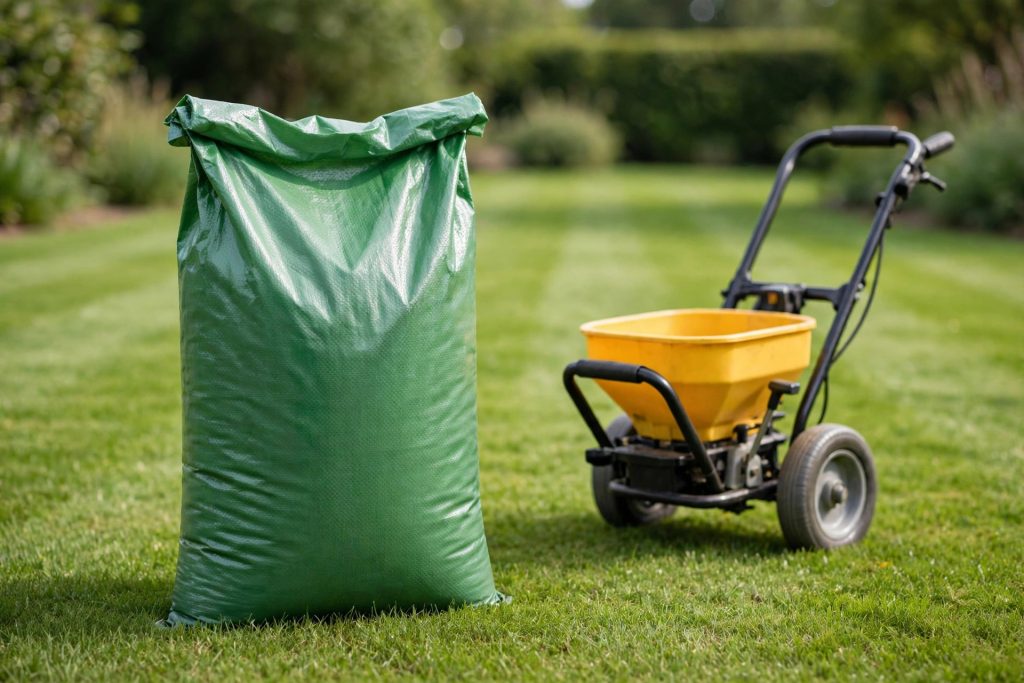
If you want one bag that works for almost any lawn, this is it. Scotts Turf Builder Lawn Food uses the brand’s All in One Particle technology, so every granule carries the same nutrient mix , no patchy green and yellow stripes from uneven spreading. The 32-0-4 analysis is heavy on nitrogen for thick, green growth, with potassium for root strength. It’s a slow release lawn fertilizer that feeds for weeks, and Scotts backs it with a no-burn guarantee when applied as directed.
- Pros: Works on all grass types; even feeding; trusted brand; no-burn guarantee
- Cons: Synthetic formula won’t build long term soil biology; no phosphorus – fine for most established lawns, but new seed needs it
2. Milorganite All-Purpose — Best Organic Lawn Fertilizer
NPK: 6-4-0 | Type: Slow-release granular (organic-based) | Coverage: ~2,500 sq ft (32 lb bag)
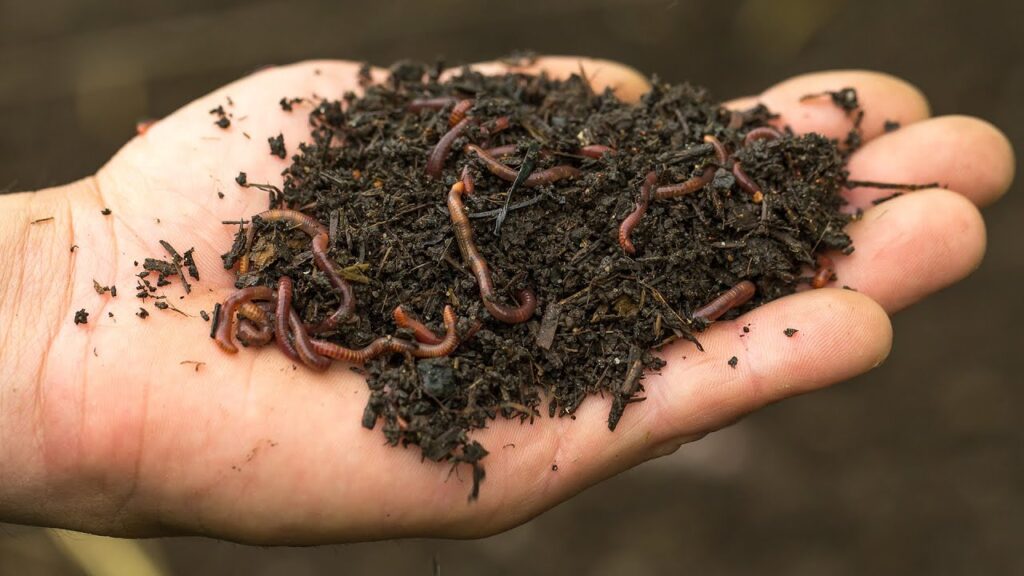
Milorganite has fed American lawns for nearly a century, and there’s a reason it keeps showing up at the top of “best organic lawn fertilizer” lists. It’s made from heat dried microbes, contains no salts, and essentially cannot burn your lawn , even in summer heat. The iron content gives grass a deep blue-green color that synthetic fertilizers struggle to match. Nutrients release slowly over 8–10 weeks.
- Pros: Virtually zero burn risk; iron-rich for deep color; feeds soil microbes; safe around kids and pets once watered in
- Cons: Contains phosphorus, which is restricted in some states , check local rules; lower coverage per bag, so big lawns need several bags

3. Simple Lawn Solutions 16-4-8 — Best Liquid Lawn Fertilizer
NPK: 16-4-8 | Type: Liquid concentrate | Coverage: Up to 3,200 sq ft per 32 oz bottle (with hose-end sprayer)
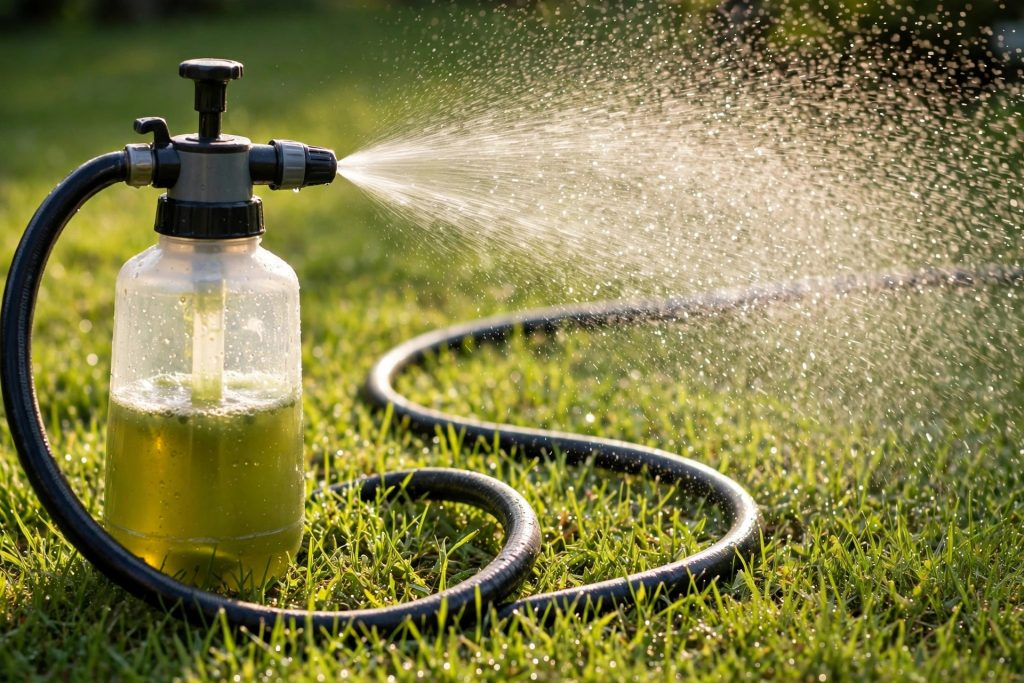
Prefer spraying to spreading? This balanced liquid earned top marks in Bob Vila’s hands-on testing for ease of application and visible results. The 16-4-8 ratio covers the three macronutrients lawns need, and because it’s liquid, nutrients reach the root zone fast , expect visible green-up within days, not weeks. It hooks straight to your garden hose, so there’s no mixing or special equipment.
- Pros: Fast results; easy hose end application; balanced nutrition; great for quick touch-ups
- Cons: Needs reapplying more often than granular slow release; less economical for very large lawns
4. Scotts Green Max Lawn Food — Fastest Green-Up
NPK: 27-0-2 (+5% iron) | Type: Granular | Coverage: 10,000 sq ft (33.33 lb bag)
When your lawn looks tired and you need it green by the weekend, reach for Green Max. The combo of 27% nitrogen and 5% iron pushes fast, deep greening — often within 3 days. Unlike some iron products, it won’t stain concrete or driveways. Think of it as the espresso shot of lawn fertilizers: quick, visible, and best used when the lawn is actively growing.
- Pros: Very fast visible results; huge coverage per bag; no staining
- Cons: Not a slow-release formula, so feed doesn’t last as long; focused on color more than root health
5. Scotts Turf Builder Starter Food for New Grass — Best for Seeding
NPK: 24-25-4 | Type: Granular | Coverage: 5,000 sq ft (15 lb bag)
New seed and new sod are hungry for phosphorus — it drives root development when grass is getting established. With an NPK of 24-25-4, this starter fertilizer delivers exactly that. Apply it the same day you seed (it’s designed to go down right on top of the seed), and you’ll get faster germination and thicker establishment than with a standard lawn food.
- Pros: High phosphorus for root growth; can be applied at seeding time; speeds up establishment
- Cons: Not for established lawns (too much phosphorus for routine feeding); single-purpose product
6. Scotts Turf Builder SummerGuard — Best for Summer
NPK: 20-0-8 | Type: Slow-release granular with insect control | Coverage: 15,000 sq ft (40 lb bag)
Summer is brutal on lawns: heat, drought, and grubs chewing roots underground. SummerGuard handles two jobs at once — feeding with a 20-0-8 slow-release formula (extra potassium helps with heat and drought tolerance) while controlling listed lawn insects. One application covers a huge area, making it one of the most economical summer options per square foot.
- Pros: Feeds + kills insects in one pass; high potassium for summer stress; massive coverage
- Cons: Contains insecticide, so it’s not for organic programs; keep kids and pets off until watered in and dry.
7. Espoma Organic Lawn Food — Best Natural Slow Feeding
Type: Granular organic, slow-release | Coverage: ~5,000 sq ft per bag (check label for your size)
Espoma has been making organic plant foods since 1929, and their lawn formula follows the same philosophy: feed the soil, and the soil feeds the grass. It’s a true organic lawn fertilizer with slow-release nitrogen from natural sources, plus beneficial microbes. Results come on slower than synthetics, think weeks, not days but the improvement in soil health compounds year after year.
- Pros: Certified-organic ingredients; builds long-term soil health; safe for the whole yard
- Cons: Slower visible results; typically pricier per square foot than synthetic options
8. Pennington UltraGreen — Best for Warm-Season Lawns
Type: Granular synthetic, quick + slow-release blend
Bermuda, zoysia and St. Augustine grasses are heavy feeders with long growing seasons, and UltraGreen is formulated with them in mind. It blends quick release nitrogen for fast green-up with slow-release nitrogen for steady feeding, plus iron for color. Southern homeowners consistently rate it as one of the easiest ways to keep warm season turf dense through the long summer.
- Pros: Great for Bermuda, zoysia, St. Augustine; fast + sustained feeding; widely available
- Cons: Less ideal for cool-season northern lawns; follow label rates closely to avoid surge growth
9. Jonathan Green Green-Up — Best for Cool-Season Lawns
Type: Granular synthetic with iron
Kentucky bluegrass, fescue, and ryegrass dominate northern lawns, and Green-Up is built for them. It pairs quality nitrogen with iron for that deep, dark green cool-season lawns are famous for, and it works well in the spring and fall feeding windows when northern grass grows most actively.
- Pros: Tailored to cool-season grasses; strong spring/fall performance; good color response
- Cons: Regional availability varies; premium price vs. national brands
10. Sunday Custom Lawn Plan — Best Personalized Option
Type: Subscription, granular + liquid matched to your soil test
If you’d rather not guess, Sunday sends you a soil test kit, analyzes your yard, and ships a custom plan , the right nutrients, in the right amounts, on the right schedule. It’s the closest thing to hiring a lawn coach. The formulas lean low waste and pet-friendly, and the app reminds you exactly when to fertilize your lawn.
- Pros: Customized to your actual soil; takes the guesswork out; convenient reminders
- Cons: Subscription cost adds up; you still do the spreading yourself
How to Choose the Best Lawn Fertilizer for Your Yard
With ten solid options above, here’s how to narrow it down to one.
Know your grass type
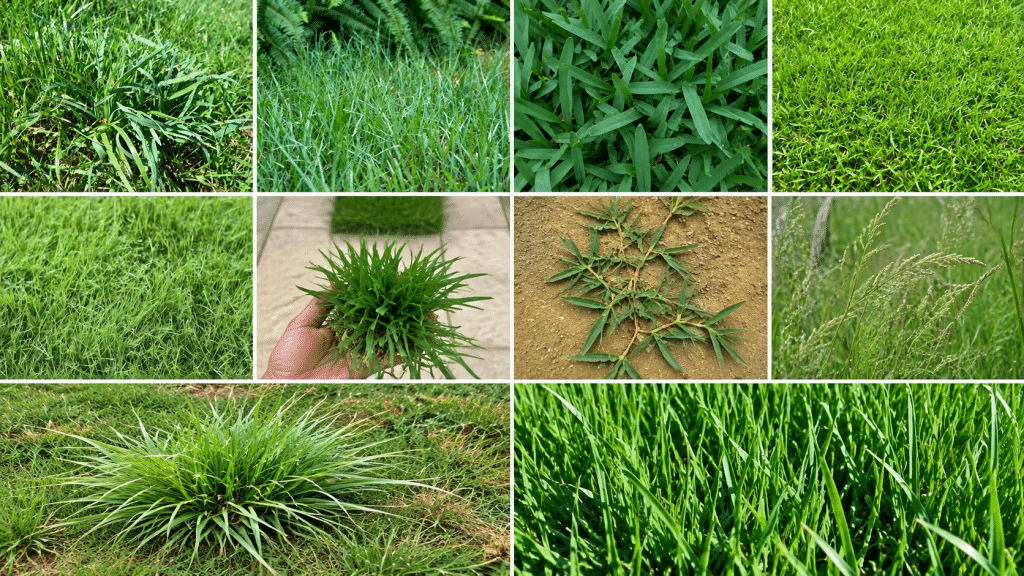
Cool season grasses (Kentucky bluegrass, tall fescue, perennial ryegrass) grow most in spring and fall. Warm season grasses (Bermuda, zoysia, St. Augustine) peak in summer. Match your fertilizer timing and sometimes the formula, to your grass. When in doubt, a balanced all-purpose feed like Scotts Turf Builder works for both.
Get a soil test first
This is the single most skipped step in lawn care, and the most valuable. A $15–$20 soil test from your local cooperative extension tells you your pH and exactly which nutrients your soil lacks. Why guess? If your soil already has plenty of phosphorus, buying a high phosphorus fertilizer is literally throwing money and runoff away.
Read the NPK label
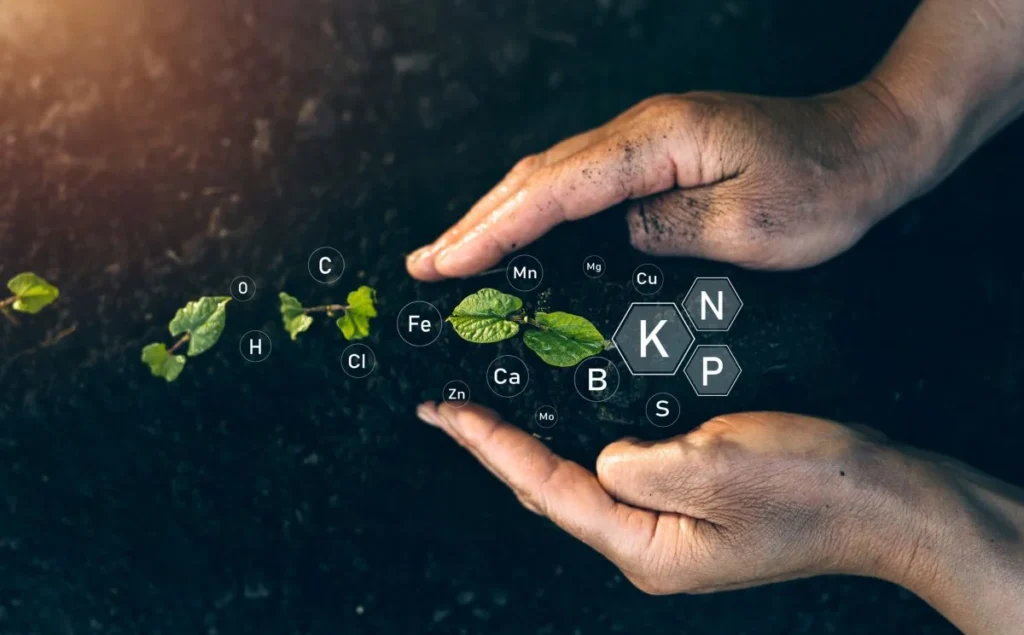
Those three numbers (nitrogen-phosphorus-potassium) are the whole story in miniature:
- Nitrogen (N): Drives green, leafy growth. The most important number for lawns.
- Phosphorus (P): Builds roots. Key for new seed, usually unnecessary for established lawns.
- Potassium (K): Supports overall plant health, drought tolerance, and disease resistance.
A 32-0-4 bag is 32% nitrogen, 0% phosphorus, 4% potassium by weight. High first number = greener grass, fast.
Organic vs. synthetic: which is better?
Neither is “better” in every situation , they solve different problems:
- Synthetic fertilizers deliver precise nutrients fast, cost less per square foot, and green up a lawn in days. They don’t improve soil biology, and over application can burn grass or pollute waterways.
- Organic lawn fertilizer feeds slowly, builds soil health over time, and is very hard to over apply. It costs more, works slower, and the nutrient content varies by batch.
Many experienced homeowners do both: synthetic for quick spring green-up, organic for steady summer feeding. That’s a perfectly valid strategy.
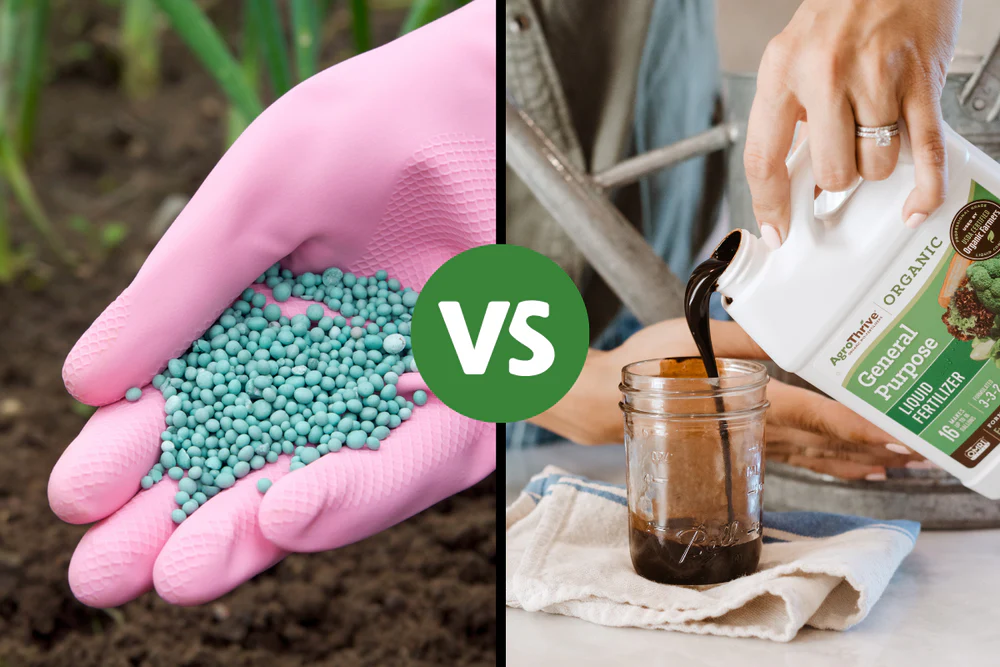
Granular vs Liquid Lawn Fertilizer: Which Should You Buy?
This is the “granular vs liquid lawn fertilizer” debate every forum argues about. Here’s the honest breakdown:
Choose granular if: you have a medium or large lawn, want slow release feeding that lasts 6–10 weeks, and prefer fewer applications per season. Granules + a broadcast spreader is the most economical way to feed a big yard.
Choose liquid if: you want the fastest visible results, have a small lawn, or need to spot treat thin areas. Liquids absorb quickly through leaves and roots, but they wash through the soil faster, so you’ll reapply more often.
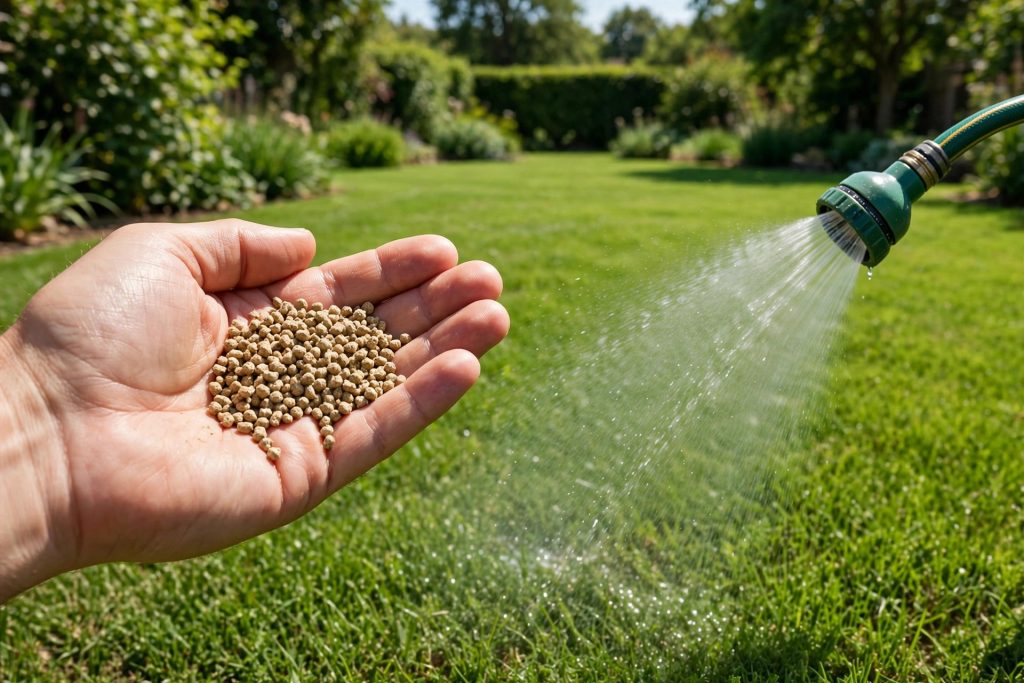
The verdict: For most homeowners, granular slow release is the workhorse. Keep a liquid on hand for quick touch-ups before a party or event.
Why Slow Release Lawn Fertilizer Wins for Most Lawns
A slow release lawn fertilizer meters out nutrients over 6–10 weeks instead of dumping them all at once. That matters for three reasons:
- No feast and famine growth. Quick-release nitrogen causes a surge of weak, fast growth, then nothing. Slow-release keeps growth steady.
- Lower burn risk. Because nutrients release gradually, it’s much harder to scorch your lawn, even if your spreader technique isn’t perfect.
- Less waste. Heavy rain washes quick-release nutrients into storm drains. Slow-release granules stay put and feed longer.
If you only remember one buying tip from this guide, make it this: when comparing two similar products, pick the slow-release one.
When to Fertilize Your Lawn: A Simple Schedule
Timing matters as much as product. Fertilizing at the wrong time wastes money and can even hurt your grass. Here’s a straightforward lawn fertilizer schedule:
Spring (the most important feeding)
Apply the best lawn fertilizer for spring when grass starts actively growing and soil temperatures reach about 55°F , usually when you’re mowing regularly. For cool season lawns, a light spring feeding wakes the lawn up. For warm-season lawns, wait until the grass is fully green before the first application.
Early summer
A slow-release feeding in early summer carries cool-season lawns through heat stress. Skip fertilizing during extreme heat or drought — feeding stressed, dormant grass does more harm than good.
Fall (the second most important feeding)
Fall is prime time. Grass shifts energy to root growth, so a fall feeding builds the root system that powers next spring’s green-up. Many lawn pros call the late-fall application “winterizer”, it’s the one feeding they’d never skip.

The 4 step lawn fertilizer schedule
| Timing | Cool-Season Lawns | Warm-Season Lawns |
|---|---|---|
| Early spring | Light feeding as growth starts | Wait until fully green |
| Late spring / early summer | Slow-release feeding | First full feeding |
| Early fall | Feed for recovery | Feed while still growing |
| Late fall | Winterizer feeding | Final feeding before dormancy |
Adjust for your region , Florida lawns and Minnesota lawns don’t run on the same calendar. Your local extension office publishes timing tuned to your zip code.
How to Apply Lawn Fertilizer – Without Burning Your Lawn
- Measure your lawn. Pace it off or use a satellite measuring tool. Guessing leads to over application the #1 cause of fertilizer burn.
- Read the bag. Set your spreader to the exact setting printed on the label for your spreader model.
- Mow first, then fertilize. Short grass lets granules reach the soil.
- Use a crisscross pattern. Apply half the bag walking north south, half walking east west. This evens out coverage.
- Water it in. A light watering (about ¼ inch) activates granular fertilizer and washes granules off grass blades.
- Sweep hard surfaces. Fertilizer on driveways washes straight into storm drains. Sweep it back onto the lawn.
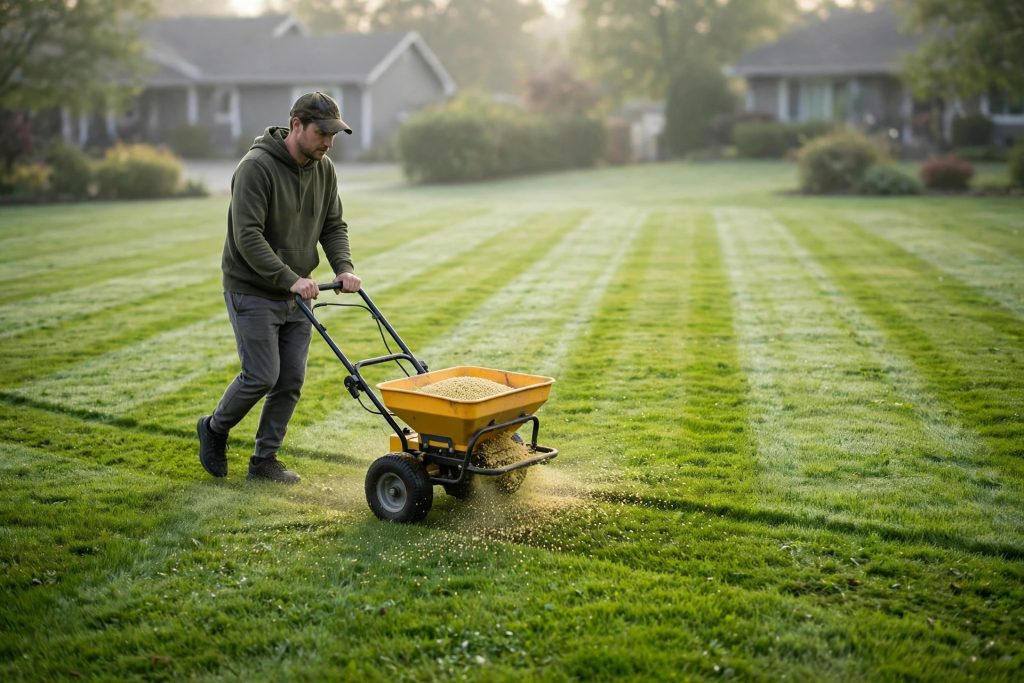
A typical feeding delivers roughly ½ to 1 pound of nitrogen per 1,000 square feet. More is not better, it’s just more expensive and riskier.
5 Fertilizing Mistakes That Ruin Lawns
- Fertilizing dormant or drought stressed grass. If your lawn is brown and crunchy, water first, feed later.
- Applying before heavy rain. A downpour washes nutrients away before roots can grab them and pollutes local water.
- Ignoring the spreader setting. “Eyeballing it” is how stripes and burns happen.
- Fertilizing at the wrong time of day. Midday summer heat + fertilizer = stress. Apply in the cooler morning or evening.
- Skipping the soil test. Three years of blind fertilizing costs more than one $15 test.
Frequently Asked Questions
When is the best time to fertilize my lawn?
The best time to fertilize is when your grass is actively growing , spring and fall for cool-season grasses, late spring through summer for warm, season grasses. Avoid fertilizing dormant, drought-stressed, or frozen lawns.
How often should I fertilize my lawn?
Most lawns do well with 2–4 feedings per year following a seasonal lawn fertilizer schedule. Slow, release formulas need fewer applications (2–3 per year), while quick release or liquid fertilizers need reapplying every 4–6 weeks during the growing season.
Can lawn fertilizer burn my grass?
Yes : over application of synthetic fertilizer can burn (scorch) your lawn, leaving brown patches. Prevent it by measuring your lawn, using the spreader setting on the bag, and watering fertilizer in after application. Organic and slow-release formulas are much harder to over-apply.
Is organic lawn fertilizer better than synthetic?
Organic lawn fertilizer improves long-term soil health and is very safe to apply, but it works slowly and costs more per square foot. Synthetic fertilizer gives faster, more predictable results at a lower price. Many homeowners use both: synthetic in spring for quick green-up, organic through summer for steady feeding.
Should I buy granular or liquid lawn fertilizer?
Granular fertilizer is best for medium to large lawns and long-lasting feeding (6–10 weeks per application). Liquid fertilizer works fastest and is ideal for small lawns or quick touch-ups, but needs reapplying more often.
How long does lawn fertilizer take to work?
Quick-release and liquid fertilizers can green up a lawn in 3–7 days. Slow-release granular fertilizers take 2–4 weeks to show full results but feed for 6–10 weeks. Organic fertilizers are slowest, often taking 3–6 weeks for visible change.
Do I really need a soil test before fertilizing?
You don’t need one, but it’s the smartest $15 you’ll spend on your lawn. A soil test reveals pH problems and nutrient deficiencies, so you buy the right fertilizer instead of guessing and you may discover you don’t need phosphorus at all.
The Bottom Line
If you want the short answer: Scotts Turf Builder Lawn Food is the best lawn fertilizer for most homeowners , proven 32-0-4 nutrition, slow release feeding, and a formula that works on any grass type. If you’d rather go natural, Milorganite is the gold standard of organic lawn fertilizer: it simply won’t burn your lawn, and the iron gives you that deep, rich color.
But the real secret isn’t the bag , it’s the schedule. The homeowners with the best lawns on the block aren’t using magic products. They soil test once, feed on a simple spring and fall lawn fertilizer schedule, water deeply, and mow high. Do that with any fertilizer on this list, and your yard will be the green one.
Found this guide helpful? Share it with a neighbor who’s fighting brown patches and drop a comment below telling us which fertilizer transformed your lawn. We read every one.
Further Reading & Sources
- Bob Vila’s tested liquid lawn fertilizer reviews — hands on testing methodology and results
- Men’s Journal: Best Lawn Fertilizers of 2026 — expert picks across categories
- In-depth organic lawn fertilizer reviews — Milorganite and organic options compared

Thesis Link : https://saulibrary.edu.bd/daatj/public/uploads/BAU200601_19-Pp_5.pdf
- Best Lawn Fertilizer – 10 Expert Picks That Actually Work - October 2, 2026
- Best Grass Seed – 10 Top Choices for a Thick Green Lawn - October 1, 2026
- Why Are My Pepper Plant Leaves Curling? 9 Causes & Fixes - September 17, 2026