Most beginners buy garden hand tools the wrong way round. They start with a big boxed set because it looks like good value, then discover half the pieces never leave the shed. A few bend on the first tough root. One rusts after a single wet weekend outside.
You do not need twenty tools to start a garden. You need about eight garden hand tools that fit your hands, suit your soil, and are strong enough to still be working in ten years. This guide walks through each one plainly: what it does, when you reach for it, and what separates a tool worth keeping from one you will replace by spring.
Start small. Add tools only when a real job asks for them. That is how a useful kit grows, and it is cheaper in the end.
Quick Starter Checklist
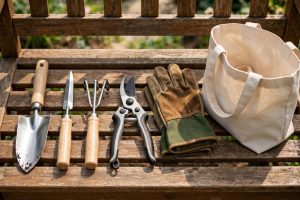
If you bought nothing else, these eight garden hand tools would cover most work in a home garden:
- Hand trowel, for planting, digging small holes, and moving compost and soil mixes
- Transplant trowel, the narrow version, for tight spaces and seedlings
- Hand fork or three-prong cultivator, for loosening soil and teasing out weeds
- Bypass pruning shears, for clean cuts on live stems
- Hori hori knife, for dividing, weeding, cutting, and measuring planting depth
- Hand weeder, for levering out tap-rooted weeds like dandelions
- Gardening gloves, for protection without losing feel
- A sturdy tote or bucket, to carry tools, weeds, and harvest in one trip
Everything else in this guide supports or upgrades that core list. Keep this checklist open when you shop, and resist bundles that pad the count with tools you cannot name a job for.
Digging and Planting Tools
Digging is where cheap tools fail first. The soil pushes back, and a thin blade or a weak handle joint gives way exactly when you lean on it.
The hand trowel
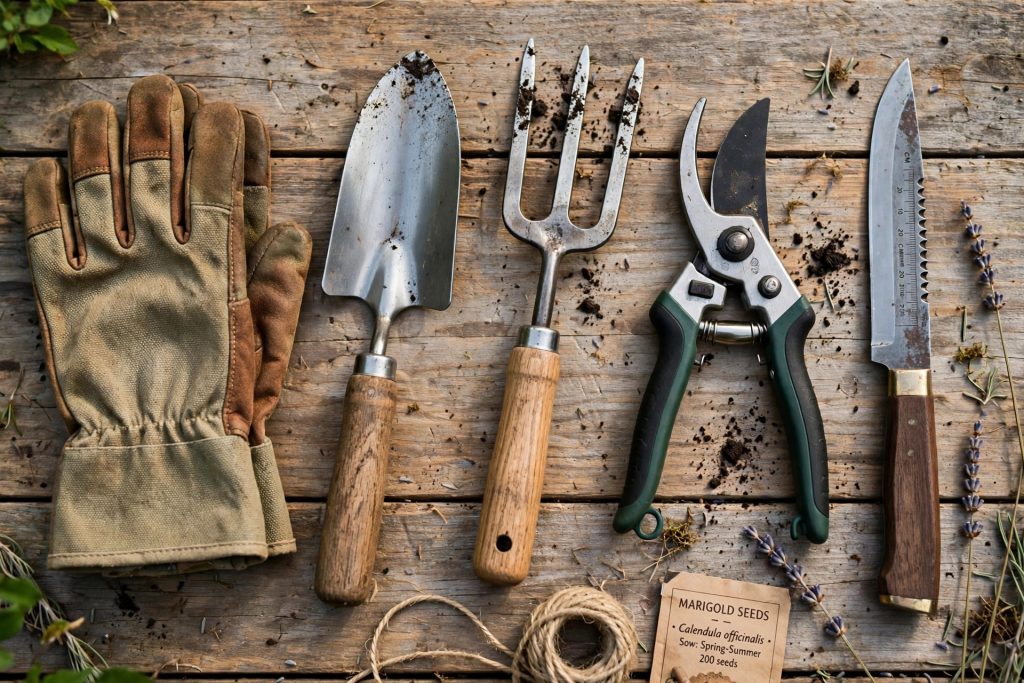
The trowel is the tool most gardeners use every single session. You dig planting holes with it, scoop compost into pots, and pry out the odd stone. Look for a blade forged or cast from a single piece of metal that runs into the handle, not a thin blade spot-welded to a short tang. A one-piece or full-tang build bends less and lasts longer. Depth marks etched on the blade are a small feature you will use more than you expect when setting bulbs and transplants at a consistent depth.
The transplant trowel
A transplant trowel is narrower, with a longer, slimmer blade. It slips between crowded plants, lifts seedlings with more root intact, and digs in narrow beds where a standard trowel feels clumsy. If you grow in raised beds or dense borders, this quickly stops feeling like a luxury.
Hand fork and cultivator
A hand fork, sometimes sold as a three-prong cultivator, loosens the top few inches of soil, breaks up clods, and mixes in compost or granular feed around plants. Short, thick tines matter here. Thin tines flex in heavy clay and never quite recover their shape. Work the fork with a twisting, raking motion rather than trying to pry up whole sections of bed.
The hori hori knife
The hori hori started as a Japanese digging knife, and it earns its place by doing four jobs decently instead of one job perfectly. One edge is smooth, the other serrated. You can dig with the pointed blade, cut roots and twine with the serrated side, lever out weeds, and use the ruler marks along the blade to check planting depth. For small gardens where storage space is tight, it is often the second tool to buy after a trowel.
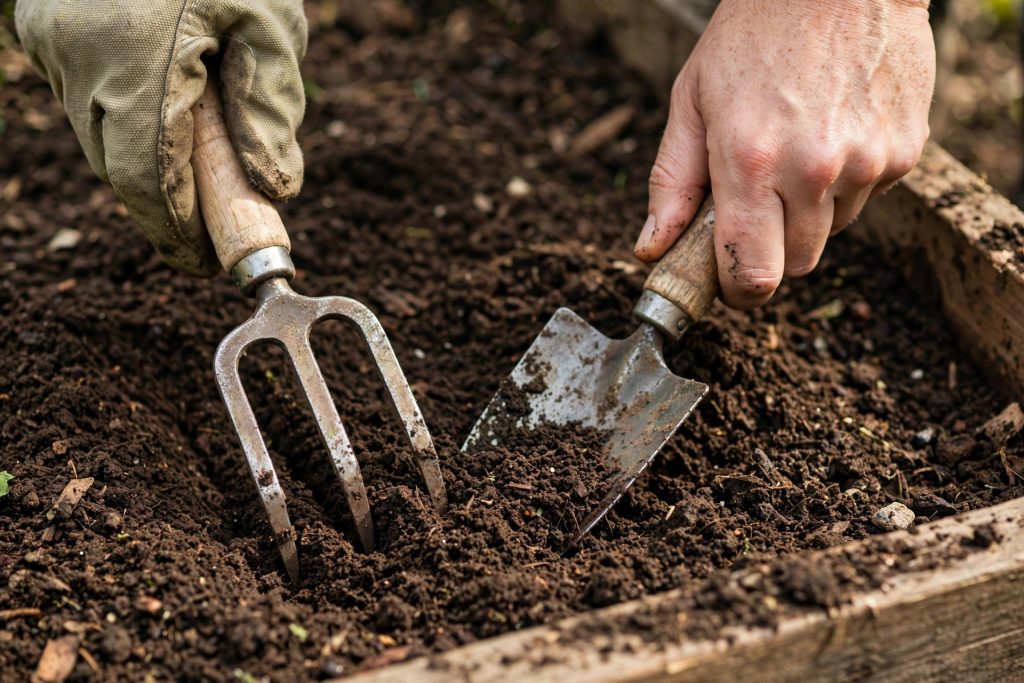
Good soil makes every one of these tools work better. Friable, well-fed soil digs easier, drains better, and lets roots establish faster than compacted ground.

Cutting Tools
Cutting tools live or die by the quality of their steel and the fit in your hand. A clean cut heals fast. A crushed, torn cut invites disease and dieback, so the right tool for the thickness of the stem matters more than brand names.
Pruning shears: your main cutting tool
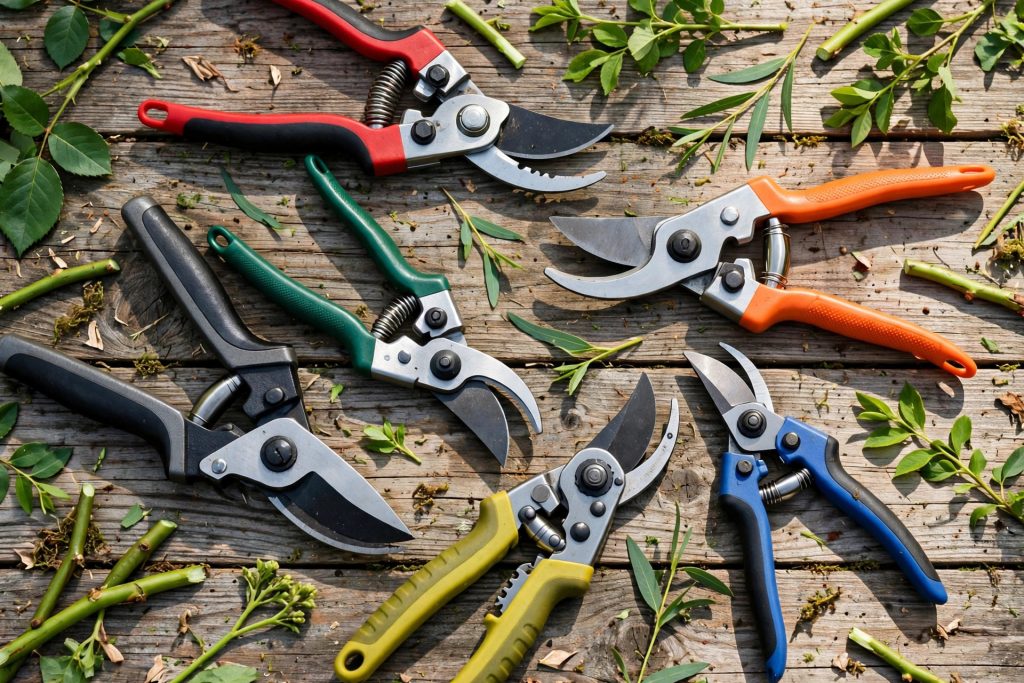
Bypass pruning shears work like scissors, with two curved blades passing each other. They are the right choice for live, green stems up to about three quarters of an inch thick, depending on the model. Anvil shears, where a straight blade closes onto a flat pad, suit dead, dry wood better and tend to crush live tissue. For most home gardeners, one good pair of bypass shears covers roses, shrubs, herbs, and perennials. Size them to your hand. A pair that is too large forces your grip wide open on every cut and tires your hand within half an hour.
Pruning saw
When a branch is too thick for shears but too small to justify a full saw, a folding pruning saw fills the gap. Its teeth cut on the pull stroke, which gives you control in tight canopies. Reach for it on branches roughly one to three inches thick, fruit trees, and overgrown shrubs.
Loppers
Loppers are long-handled cutting tools with bypass or anvil heads. The long handles give you leverage and reach, so you can cut branches up to about one and a half to two inches thick without a ladder for the lower canopy. They bridge the space between shears and a saw. If you have mature shrubs or a small orchard, they move from optional to essential quite fast.
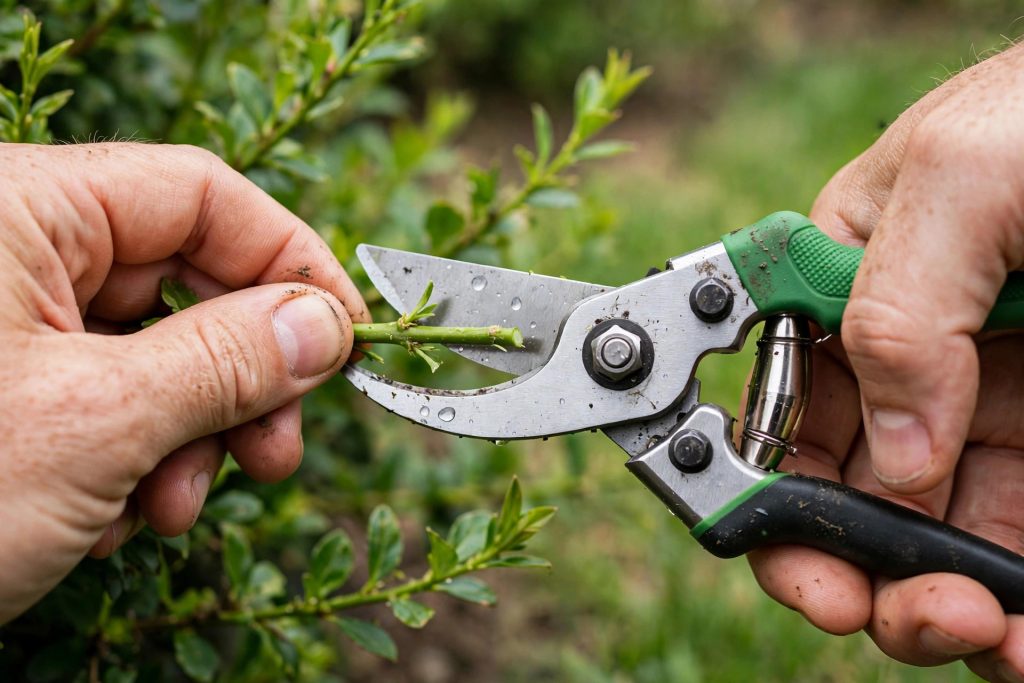
A simple rule saves plants and tools alike: if you have to force it, you are using the wrong size. Step up to the next tool instead of squeezing harder.
Weeding Tools
Weeding is mostly a timing game. Pull weeds young, after rain or watering when the soil is soft, and most hand tools will do the job with little drama.
Hand weeder and crack weeder
A classic hand weeder has a forked, V-shaped tip on a short shaft. You push it down beside the root, lever gently, and lift the whole plant, root and all. That matters for dandelions and other tap-rooted weeds, which regrow from any root fragment left behind. A crack weeder is the slimmer cousin, shaped to get into paving joints and path edges where roots hide in almost no soil at all.
The hand hoe
A small hand hoe chops and slices just below the surface, severing annual weeds before they set seed. Draw hoes pull toward you. Stirrup or scuffle hoes push and pull with a shallow oscillating blade. For beds you tend weekly, a light hoe used little and often beats an exhausting monthly clear-out.
For a closer look at the weeding tools themselves, our hand weeder roundup compares the designs that clear beds and paths fastest, and explains which type suits which weed.
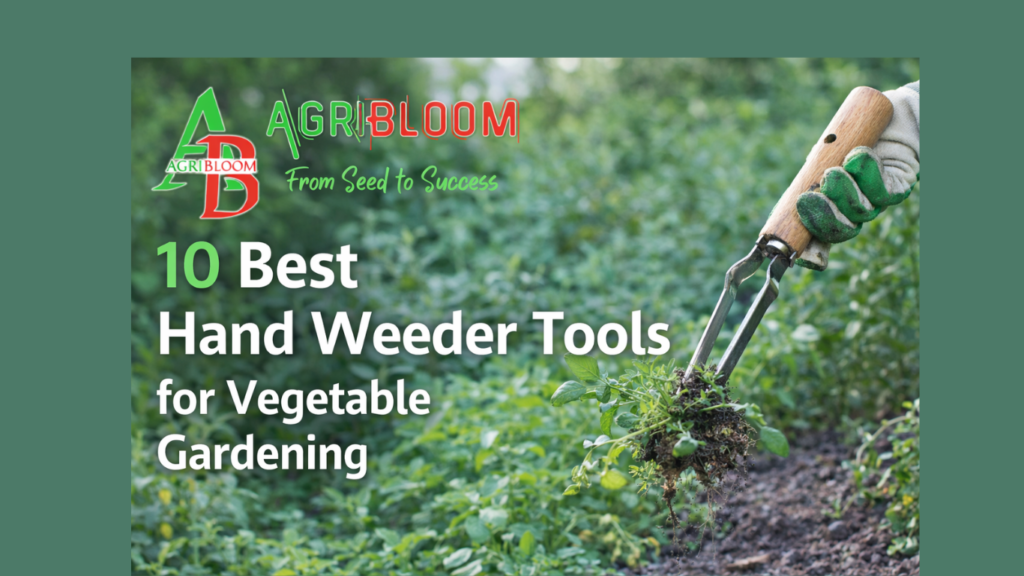
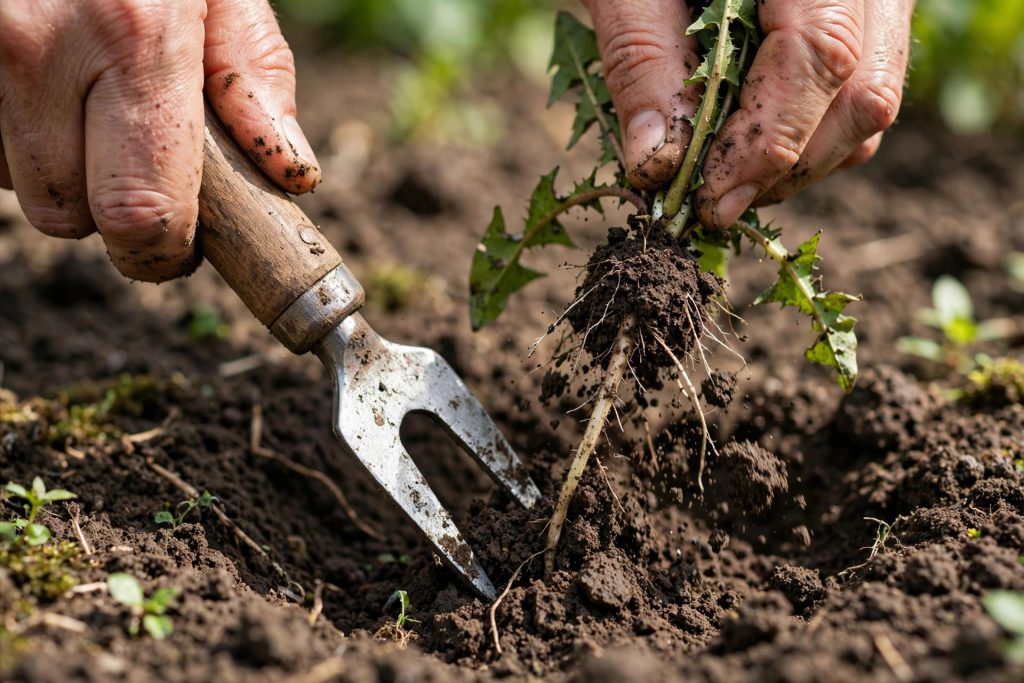
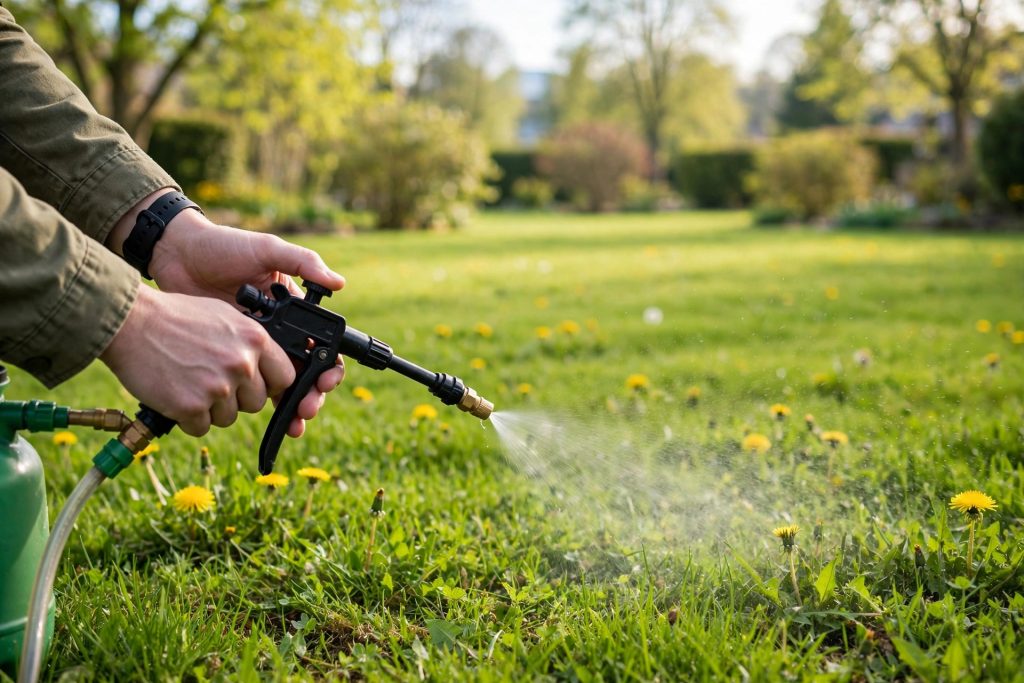
Hand weeding and spraying solve different problems. Hand tools win in beds, around seedlings, and anywhere you want to remove one weed without touching the plants beside it. For large lawn areas covered in broadleaf weeds, a targeted lawn treatment can be the more practical route, and our weed killer guide linked below covers that side in full.
Watering and Soil Support
No hand tool waters a garden on its own, but two supporting habits make watering and feeding far more effective.
First, loosen before you water. A quick pass with a hand fork over dry, crusted soil breaks the surface so water soaks in instead of running off. Second, mulch after you water. Bare soil loses moisture fast in summer sun, and a simple layer of organic mulch protects both the moisture and the soil life below it.
A trowel tip pushed a few inches down also tells you how dry the soil really is before you reach for the hose, which prevents more overwatering mistakes than any gadget.
Comfort and Carry
Comfort tools rarely get the spotlight, yet they decide whether you garden for twenty minutes or two hours.
Gloves come first. Choose a pair that fits snugly with padded palms and reinforced fingertips, and keep a tougher pair aside for thorny work like roses and brambles. Loose gloves catch, bunch, and actually make your grip work harder.
A kneeler or a simple kneeling pad protects your knees on hard ground and, on models with handles, gives you something solid to push against when standing back up. An apron with deep pockets keeps shears, twine, and labels on your body instead of scattered across the beds, and a tote or trug carries the whole kit in one trip so you stop making five journeys back to the shed.
None of these cut, dig, or weed. All of them reduce the small strains that add up into sore wrists, aching knees, and a garden you visit less often than you planned.
Garden Hand Tools at a Glance
Use this table to match each tool to its main job before you spend anything.
| Tool | Main job | What to look for | Starter priority | Beginner need | Typical lifespan |
|---|---|---|---|---|---|
| Hand trowel | Planting and digging small holes | One-piece blade and handle, depth marks | Essential | Must have | 5-10 years |
| Transplant trowel | Seedlings and tight spaces | Narrow, sturdy blade | Add later | Useful | 5-10 years |
| Hand fork / cultivator | Loosening soil and mixing feed | Short, thick tines that do not flex | Essential | Must have | 5-10 years |
| Hori hori knife | Digging, dividing, weeding, measuring | Serrated edge plus depth ruler | Essential | Useful | 10+ years |
| Bypass pruning shears | Clean cuts on live stems | Blade sized to your hand, replaceable parts | Essential | Must have | 5+ years |
| Pruning saw | Branches too thick for shears | Folding blade, pull-stroke teeth | Add later | Useful | 5-10 years |
| Loppers | Thick branches with reach and leverage | Lightweight handles, bypass head for live wood | Add later | Useful | 5-10 years |
| Hand weeder | Removing tap-rooted weeds whole | Forked tip, strong shaft | Essential | Must have | 5+ years |
| Hand hoe | Slicing young weeds below the surface | Sharp edge, comfortable working angle | Add later | Useful | 5-10 years |
| Gloves | Hand protection and grip | Snug fit, padded palm, reinforced fingertips | Essential | Must have | 1-3 years |
| Kneeler | Knee protection and standing support | Handles on both sides, thick pad | Add later | Nice to have | 3-5 years |
| Apron or tote | Carrying tools and small harvests | Deep pockets, washable fabric | Add later | Nice to have | 3-5 years |
Lifespans assume basic care: cleaned after use, stored dry, and oiled or sharpened when needed, as covered in the care section below.
Which Tools Should You Buy First?
The right first three tools depend on how you garden. Use your garden type below as a shopping order, and add everything else only when the work asks for it.
If you garden in containers
- Hand trowel: planting, repotting and topping up pots.
- Bypass pruning shears: deadheading, trimming and tidy cuts on pot plants.
- Hand fork: refreshing compacted potting mix and working feed in.
If you garden in raised beds
- Hori hori knife: digging, dividing and weeding in a confined bed.
- Hand fork: loosening soil and mixing compost between close-spaced plants.
- Hand weeder: lifting tap-rooted weeds whole without disturbing neighbours.
If you grow vegetables
- Hand trowel: transplanting seedlings at the right depth.
- Hand hoe: slicing young weeds below the surface, little and often.
- Bypass pruning shears: harvesting cleanly and pruning fruiting plants.
Buy those three first and use them for a full season. Your own beds will tell you, far better than any bundle can, what deserves to come next.
How to Choose Garden Hand Tools That Last
Price alone tells you very little. Construction tells you almost everything. Use these checks in the shop, in this order.
Steel: carbon or stainless
Carbon steel holds a sharper edge and is usually easier to resharpen, which suits cutting tools you use weekly. Its trade-off is simple: it rusts if you put it away wet. Stainless steel resists rust with far less care and suits busy gardeners, though it can be a little harder to sharpen and top grades cost more. Neither is automatically better. Match the steel to the care routine you will honestly keep.
Handles and construction
Look at how the blade meets the handle. A full tang running through the handle, a solid socket fitting, or a one-piece forged body will outlast a thin tang glued into a hollow grip. Handles come in wood, moulded plastic, and cushioned composites. Wood feels warm and can be sanded and oiled back to life. Cushioned grips reduce vibration and blistering on long jobs. Whichever you choose, hold the tool as if you were working, not just carrying it. Your wrist should stay fairly straight and neutral, the grip should fill your hand without forcing your fingers wide, and the tool should feel balanced rather than head-heavy.
Ergonomics is not a marketing extra here. Extension guidance on tool selection makes the same point repeatedly: try the tool in your hand before you buy, keep handles clean and edges sharp, and remember that a dull tool is both tiring and unsafe because it demands extra force. If you have smaller hands, look for compact models rather than struggling with full-size tools built for larger grips.
Weight, hand size, and the set trap
Heavier is not always stronger, and lighter is not always weaker. Forged steel can be both slim and very strong. What matters is whether you can use the tool for half an hour without your forearm complaining. Finally, be sceptical of large sets at suspiciously low prices. Twelve pieces mean little if the steel is thin and the handles split. One good trowel you use for a decade beats a full set you replace every spring. Buy the eight essentials well, then let real jobs, not bundle deals, decide what joins them.
Care Basics: Clean, Dry, Oil, Sharpen
Garden hand tools ask for very little care, but they do ask for it consistently. Five minutes after a session saves hours of rust removal later.
Clean first. Knock off soil, scrub the blade with a stiff brush or scouring pad, and wash away sap with warm soapy water. Dry thoroughly, every time. Most rust starts because a tool went into the shed damp.
Oil second. Wipe metal parts with a thin coat of oil to block moisture, and work a drop into the pivot of shears and loppers so they keep opening smoothly. Wooden handles benefit from an occasional sanding if they roughen, followed by a coat of boiled linseed oil to stop them drying and cracking.
Sharpen third. Cutting tools need a fine stone or diamond file worked along the original bevel, in one direction. Digging tools need a mill file to restore a working edge. Sharp tools cut cleaner, which helps plants heal and reduces the spread of disease between plants, especially when you also disinfect pruning blades after working on a diseased plant.
Store tools dry, off the ground, and out of the weather. Hang them or stand them in a bucket or on a rack where air can move around them. The full sharpening and cleaning guides in this cluster go deeper, step by step, once they are published.
Related Guides
This guide is the hub of our garden hand tools series. Companion guides in the series cover garden tool sets for beginners, loppers, crack weeders, cordless hedge trimmers, garden kneelers, sun hats, garden aprons, garden carts, slow-release fertilizers, hori hori knives, garden trowels, hand weeding tools, gardening gloves and pruning saws, plus how to sharpen your tools and how to clean, oil and store them. Each one is linked from here as it is published.

Final Thoughts
A good set of garden hand tools is not large, expensive, or impressive to look at. It is eight or so honest tools that fit your hands, suit your soil, and get cleaned before they get put away. Buy them one or two at a time, choose construction over bundle size, and let the work in your own garden tell you what to add next.
Start with the trowel, the shears, and the fork. Add the hori hori and the weeder. Protect your hands and knees. From there, you are not collecting tools any more. You are building a kit that will quietly outlast most of the plants it tends.
References
University of Georgia Extension, Stocking the Toolshed: Hand Tools
Penn State Extension, Using the Right Tool is Self-Care
University of Missouri Extension, Consider Ergonomics When Buying Garden Tools
Kansas State University Extension, How to Clean and Sharpen Garden Tools (MF3288)
University of Georgia Extension, Clean Gardening Tools Before Storing Them for the Winter
Frequently Asked Questions
What are the most essential garden hand tools for a beginner?
Start with eight: a hand trowel, a transplant trowel, a hand fork, bypass pruning shears, a hori hori knife, a hand weeder, gloves, and a tote to carry them in. Those eight cover planting, digging, cutting, weeding, and carrying for most home gardens. Add a pruning saw, loppers, and a hand hoe later, when specific jobs call for them.
Is it better to buy a garden tool set or individual tools?
For most beginners, individual tools are the better buy. Sets look like value, but they often pad the count with pieces you will rarely use, and the steel and handles are built to a bundle price. Buying the essentials one at a time lets you choose the fit, weight, and construction of each tool. A set can still suit a complete beginner on a tight budget, provided the core tools in it are solid.
Carbon steel or stainless steel: which is better for garden tools?
Carbon steel takes and holds a sharper edge and is easier to resharpen, but it rusts if stored wet. Stainless steel resists rust with much less upkeep, though it can be harder to sharpen. Choose carbon steel if you enjoy maintaining tools and want the keenest edge on cutters. Choose stainless if you know the tools will sometimes be put away in a hurry.
How many garden hand tools do I actually need to start?
About eight. Most new gardeners overbuy at the start and underuse half of what they bought. The eight tools in our Quick Starter Checklist handle the large majority of everyday jobs in beds, borders, and containers. Your garden will tell you what is missing within one season, and that missing tool is the right next purchase.
How do I stop my garden hand tools from rusting?
Clean soil and sap off after use, dry the metal completely, then wipe it with a thin coat of oil before storing. Keep tools indoors, off damp floors, and out of the rain. If light rust appears, remove it promptly with steel wool or a scouring pad, then oil the surface again. Rust is almost always a storage habit problem, not a steel problem.
What is a hori hori knife used for?
A hori hori is a versatile digging knife with one smooth edge, one serrated edge, and depth marks along the blade. Gardeners use it to dig planting holes, divide perennials, cut roots and twine, lever out weeds, and check planting depth as they work. In small gardens it often replaces a separate trowel, weeder, and knife for quick jobs around the beds.

Thesis Link : https://saulibrary.edu.bd/daatj/public/uploads/BAU200601_19-Pp_5.pdf
- 10 Best Garden Tool Sets for Beginners - October 13, 2026
- Lawn Mowing Height by Grass Type -The Complete Chart - October 13, 2026
- Essential Garden Hand Tools -The Complete Guide - October 13, 2026