10 Best Hand Weeder Tools for Vegetable Gardening That Actually Work
Homegrown vegetables are one of the best rewards of gardening, right up until weeds start taking over. Picking the 10 Best Hand Weeder Tools for Vegetable Gardening is a practical move if you want stronger plants, fuller harvests, and clean, chemical free beds.
Weeds aren’t just “ugly extras.” They compete directly with your crops for moisture, sunlight, and soil nutrients, and that competition adds up fast in small backyard plots where plants are spaced close together. Extension educators routinely warn that when weeds are left unchecked, harvest losses can be significant. In many vegetable systems, yield reductions in the range of about 30% to 45% are commonly reported when weed pressure is high and control is delayed.
That’s why many experienced gardeners stick with reliable hand tools instead of relying on quick fix sprays. A good weeding routine, supported by the right tools, removes weeds at the root, protects soil health, and keeps your vegetable rows productive all season.
In this guide, you’ll learn how the 10 Best Hand Weeder Tools for Vegetable Gardening compare, how to use each weed pulling tool correctly, and which options are best for different soil types, weed varieties, and physical needs.
Disclosure: Some links in this post are Amazon affiliate links. This means I may earn a small commission if you purchase through them, at no additional cost to you. As an Amazon Associate, I earn from qualifying purchases.
Why Hand Weeder Tools Still Matter in 2026
Even with all the new garden products on the market, hand weeding is still one of the most dependable ways to protect a vegetable garden. Manual removal lets you target weeds precisely, avoid unnecessary soil disruption, and keep edible crops free from chemical exposure. For many gardeners, especially those growing food for family use, a solid hand tool is not old-fashioned. It is simply effective.

Practical benefits of hand weeding tools
- Helps preserve soil life such as earthworms and beneficial microbes by avoiding heavy disturbance
- Reduces the risk of herbicide residue near vegetables and herbs
- Supports better soil structure over time, especially in beds amended with compost
- Removes weeds with more of the root system intact, which lowers the chance of fast regrowth
- Makes it easier to weed around seedlings without damaging crop roots
If you garden organically or use raised beds, a dependable weed removal tool becomes even more valuable because those growing spaces are usually more intensively planted and easier to manage with precise, hand powered work.
Understand Weed Types Before You Choose Tools
The “best” tool depends on the kind of weeds you have. Many gardeners waste time because they use the wrong tool for the wrong root system. A quick look at weed types can save a lot of effort and helps you choose wisely from the 10 Best Hand Weeder Tools for Vegetable Gardening.
Common weeds in vegetable beds
Taproot weeds
Examples include dandelion and dock. These grow a single deep root that must be pulled fully or it often returns.
Fibrous root weeds
Examples include crabgrass and chickweed. These spread with many thin roots close to the surface and can multiply quickly.
Creeping weeds
Examples include bindweed and clover. These can spread through runners or underground growth, so consistent removal matters.

In general, a weed puller tool is most effective on deep rooted weeds because it grips below the crown and lifts the root system more cleanly. For shallow weeds, a hoe or shallow slicing tool can be faster because it severs weeds just under the soil surface before they mature and seed.p roots, while a garden hoe tool excels at shallow, spreading weeds.
10 Best Hand Weeder Tools for Vegetable Gardening
Here is a carefully selected roundup of the 10 Best Hand Weeder Tools for Vegetable Gardening, chosen with real-world use in mind. The picks below focus on four things gardeners actually care about: durability over multiple seasons, how cleanly the tool removes roots, comfort during longer sessions, and how well it performs in typical vegetable-bed conditions like loose compost, mulched rows, or compacted paths.
1. Grandpa’s Weeder
If you have ever wished you could remove deep rooted weeds without spending the afternoon on your knees, grandpa’s weeder is built for exactly that. This classic weed puller tool uses a simple claw and lever design. You place the jaws over the weed, press the tool into the soil, and pull back to clamp the root. The result is a surprisingly clean lift, especially on taproot weeds like dandelion.

Many gardeners also refer to it as grandpa’s weed puller or simply a weed pulling tool. You may see alternate spellings like grampa’s weeder or grampa’s weeder tool online, but they point to the same well known style of stand up weeder.
Why gardeners keep it in the shed
- Strong at removing full taproots, not just the top growth
- Saves your back because it is designed for standing use
- Works best when the soil is slightly moist, which helps roots slide free
If you are searching where to buy Grandpa’s Weeder, many gardeners prefer ordering it from Amazon because it is usually available year round with reliable shipping.
Quick technique tip
When learning how to use a weed puller tool, timing matters. Water the bed lightly or weed the day after rain. Then pull straight up after the claw grips the root. This reduces root breakage and improves success on mature weeds.
References
- Penn State Extension, recommendations for non-chemical weed management in home vegetable gardens, including hand tools and cultivation principles.
- University of California Agriculture and Natural Resources, guidance on mechanical weed control and timing weeding to soil moisture for better removal.
- Oregon State University Extension, weed identification and root system notes that explain why taproot weeds require full root removal.
2. Fiskars Stand Up Weed Puller Tool
For gardeners who want the back saving benefits of a stand-up tool but prefer a more modern build, the Fiskars Stand Up Weed Puller Tool is a practical upgrade for gardeners who want to stay upright while removing deep rooted weeds., you use a foot step to drive the claws into the soil, then lift the handle to pull the weed up from the root zone. This style works especially well when you are dealing with repeated weeding rounds in a productive vegetable garden.

Best suited for
- Larger vegetable plots where you need to cover ground efficiently
- Gardeners with back or knee discomfort who want to stay upright
- High volume weeding sessions during peak growth weeks
Real world tip for better results
Weed when the soil is slightly moist, such as the day after watering or rainfall. In many soils, roots release more cleanly and you are less likely to snap the weed at the surface, which helps reduce regrowth.
References
- University of California Agriculture and Natural Resources, recommendations on mechanical weed control and timing weeding with soil moisture for more complete removal.
- Penn State Extension, non-chemical weed management guidance for home vegetable gardens, including cultivation and hand removal best practices.
- Oregon State University Extension, weed biology and root system notes explaining why full extraction is important for certain weed types.
3. CobraHead Original Hand Weeder
When weeds pop up in the narrow gaps between vegetables, bulky tools can do more harm than good. The CobraHead Original Hand Weeder is a compact weed removal tool built for close work in tight vegetable beds. Its curved, pointed head slips into tight spaces, loosens soil around the crown, and helps you lift weeds with fewer broken roots. In a busy vegetable bed, that precision can protect nearby seedlings and reduce the need to disturb the soil repeatedly.

Where it performs best
- Raised beds where planting is dense and spacing is tight
- Clay or heavier soils where weeds hold on firmly and need prying
- Precision root removal around crop stems, drip lines, and bed edges
Practical technique tip
For the cleanest removal, push the tip slightly under the weed’s base, twist gently to loosen the root zone, then pull the weed upward with steady pressure. This approach improves success with fibrous-root weeds and reduces the chance of snapping taproots near the surface.
References
- University of California Agriculture and Natural Resources, home garden weed control guidance emphasizing early removal, minimal soil disturbance, and mechanical control methods.
- Oregon State University Extension, weed identification and root-system information explaining why loosening the soil around the crown improves complete removal.
- Penn State Extension, vegetable garden weed management recommendations including hand removal strategies and cultivating carefully near crops.
4. Radius Garden Ergonomic Weeder
If your hands or wrists get tired quickly, If your hands or wrists get tired quickly, the Radius Garden Ergonomic Weeder is the kind of tool that can make weeding feel manageable again. Instead of forcing your wrist into an awkward angle, it is designed to support a more natural grip, which can reduce strain during the small, repetitive motions that hand weeding requires.

This matters most in vegetable beds, where you often work close to seedlings and shallow crop roots. Better comfort usually leads to better control, and better control means fewer accidental nicks to your plants. For gardeners dealing with stiffness, reduced grip strength, or arthritis symptoms, an ergonomic handle can be the difference between weeding for ten minutes and keeping up with the garden all season.
If you are learning how to use a weed puller tool properly, comfort is not a luxury. A steady grip helps you place the tip right beside the weed crown, loosen the soil with a gentle rocking motion, and lift more of the root system instead of snapping it near the surface. That simple improvement can reduce how often the same weeds return.
References
- University extension guidance on mechanical weed control emphasizes careful hand removal and minimizing soil disturbance around desirable plants, which aligns with precision hand weeding approaches.
- Adaptive and ergonomic gardening handle designs that keep the wrist in a more neutral position to reduce strain are commonly recommended in arthritis focused gardening aids.
5. Traditional Garden Hoe Tool
A sharp hoe garden tool is still one of the quickest ways to manage weeds in a vegetable patch. If you need a durable option, you can check this traditional garden hoe on Amazon, especially when the weeds are young. Instead of pulling roots one by one, a hoe works like a shallow blade that cuts weeds at or just below the surface. Done at the right time, this simple method can keep beds clean before weeds get established and start stealing water and nutrients from your crops.

How to use a hoe garden tool effectively
- Skim, do not dig: keep the blade just under the soil surface so you slice seedlings cleanly without turning up new weed seeds
- Weed early: target weeds while they are small, before they flower or set seed
- Pick dry weather: hoe on a warm, dry day so the cut weeds dry out on the soil surface instead of re-rooting
When a garden hoe tool is the best choice
A garden hoe tool is most useful for prevention and maintenance. It is ideal for “white thread” weeds and tiny seedlings that appear after watering or rain. For deep-rooted weeds with strong crowns, a weed puller tool or hand weeder usually works better because those weeds often regrow if only the top is cut.
References
- Teagasc (Agriculture and Food Development Authority): mechanical weeding guidance notes that timing and dry, sunny conditions help uprooted weeds dry out on the surface.preventing weeds rather than removing established roots.
- UC Agriculture and Natural Resources, WeedCUT: hoe and grubbing methods explain that hoes sever roots below the soil surface and emphasize keeping blades sharp for efficient cutting.
6. Hori Hori Japanese Soil Knife
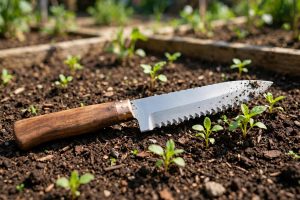
A Hori Hori is often described as the one tool that earns a permanent spot in a gardener’s back pocket. It is a Japanese soil knife with a sturdy, slightly concave blade, typically sharp on one edge and serrated on the other. That design makes it useful for jobs that normally require switching between a trowel, a small saw, and a hand weeder.
If you’re looking for a well made version, you can check this Hori Hori Japanese soil knife on Amazon.

In vegetable beds, this tool shines when weeds are growing close to crop stems and you need control. You can slide the blade beside the weed crown, loosen the soil gently, then lift the roots without disturbing nearby seedlings. Many gardeners also use the serrated edge to slice through stubborn roots that would otherwise snap and regrow.
What it is best used for
- Cutting thick roots and crowns cleanly, especially in compacted soil
- Digging small planting holes, opening narrow trenches, and transplanting seedlings with minimal soil disruption
- Removing weeds close to vegetables where larger tools can damage crop roots
Practical tip from real garden use
For weeding, aim the tip just outside the weed’s base, push down a few centimeters, then rock the handle slightly to loosen the root zone before pulling. This reduces breakage and helps you remove more of the root system in one go.
References
- Overview of Hori Hori design and common garden uses such as weeding, digging, cutting roots, and transplanting.
- Manufacturer style guidance describing Hori Hori use for weeding and tight spaces, emphasizing versatility and strong cutting edges.
- Professional and editorial tool recommendations highlighting Hori Hori utility for digging, weeding, and cutting with dual edges and measurement markings.
7. Corona ComfortGEL Hand Weeder
For small gardens and close up work, the Corona ComfortGEL hand weeder is a dependable classic.If you want to see the current price or reviews, you can check it on Amazon here. It is built for the kind of weeding you do in vegetable beds, containers, and borders, where you need control more than brute force. Corona describes this tool as designed to remove weeds and small roots, using a forked tip and a serrated blade to help you dig in, loosen the crown, and lift the weed with more of its roots attached.

What makes it especially practical for everyday gardeners is comfort. The ComfortGEL grip is intended to reduce hand fatigue, and features like a thumb rest and finger guard improve control while you work close to seedlings.
Ideal for
• Container gardening where space is tight and precision matters
• Softer or well amended soil where roots release cleanly
• Light weeding sessions in raised beds and around young vegetable plants
Quick use tip from extension best practices
Hand weeding is most effective when soil is damp, because roots slide out more easily and you are more likely to remove the full root system. If the ground is dry or compacted, a small hand weeder like this helps you get under the crown and lift without snapping the root.
References
- Corona Clipper product details for the ComfortGEL Weeder, including blade design and grip features.
- UC Master Gardener guidance on hand weeding and removing roots most easily when soil is damp.
8. Twist Style Weed Puller Tool
A twist style weed puller is a simple idea that works surprisingly well in real gardens. Instead of yanking straight up and risking a snapped stem, you use a gentle rotation to loosen the soil grip around the roots first. That small twist can free stubborn weeds more cleanly, especially when you are still learning how to pull weeds without breaking the root at the surface.

Why the twisting action helps
- Rotation can loosen the root zone before lifting, which reduces root breakage and makes full removal more likely
- Slow, steady pulling improves the chances of getting more of the roots out in one piece
- Working when the ground is slightly moist also helps prevent weeds from snapping off and returning
Quick method that works in vegetable beds
- Place the tool close to the weed base so you grab below the crown
- Twist gently to loosen the roots
- Lift upward with steady pressure
- Check the hole and remove leftover root bits if needed
If you notice repeated regrowth, it usually means the root broke below the surface. In that case, loosen the soil a little more before pulling, or switch to a narrow hand weeder for precision work.
References
- Patent description of a weed puller that uses twisting and lifting to loosen roots and support whole plant removal
- University of New Hampshire Extension, mechanical control guidance noting that moist soil and slow pulling reduce snapping and improve root removal
9. Cape Cod Narrow Weeder
When weeds show up in tight rows or in soil that feels more like packed earth than fluffy compost, a narrow weeder can be a quiet hero. The Cape Cod style narrow weeder is built for that kind of work. Its angled blade is designed to slide just under the soil surface and slice weeds off cleanly, which is useful when you want control without digging up your vegetable roots.

Gardeners like this tool because it is precise. You can guide the tip between closely spaced crops, work along bed edges, and reach into spots where wider blades feel clumsy. Many Cape Cod style weeders are specifically described as effective for confined spaces such as between vegetable rows and for cutting weeds below the soil surface.
Why it works well in compacted soil and narrow rows
- The thin, angled head helps you cut under weeds even when the soil is firm
- The narrow tip can reach tight areas, including densely planted rows and hard to reach gaps
- Many designs are intended to slice weeds below the surface, limiting regrowth without heavy disturbance
Simple technique tip
Use a shallow pull stroke so the blade skims just under the surface. This is the same principle used in shallow cultivation: you remove small weeds efficiently while avoiding deep digging that can bring new weed seeds up to the topsoil.
References
- DeWit Cape Cod weeder description noting use in densely planted beds and also for cultivating compacted soil.
- Burton’s Cape Cod Weeder official site describing the L shaped blade for precise, clean removal in tight spaces.
- A M Leonard Cape Cod Weeder product description explaining how the angled blade cuts weeds below the surface and the narrow tip helps in tight spaces.
10. Flexrake Classic Hand Weeder
If you prefer a simple, traditional hand tool that does the job without feeling bulky, the Flexrake Classic hand weeder is a strong everyday choice. It is light in the hand, easy to control, and made for the kind of close work you do in vegetable beds, borders, and containers. The “classic” appeal is not only about looks. A straightforward steel head paired with a wood handle gives you a tool that stays dependable season after season, without adding extra weight.

Why many gardeners like it
- Lightweight and easy to maneuver for quick weed cleanups
- Durable build with a steel head and wood handle, which holds up well to regular use
- Affordable entry tool for gardeners building a basic weeding kit
Best way to use it for cleaner root removal
For better results, work when the soil is damp. When the ground has a little moisture, roots slide out more easily and you are more likely to remove the whole weed instead of snapping it at the surface. This is a common recommendation in university backed home gardening guidance.
References
- UC IPM guidance on handweeding and cultivation, including careful tool use near shallow-rooted plants and removing weeds before they seed.
- Flexrake Classic weeder product specifications including wood handle and steel head.
- UC Master Gardener guidance on hand weeding, removing full roots, and weeding when soil is damp.
Together, these options form the 10 Best Hand Weeder Tools for Vegetable Gardening, covering nearly every garden scenario.
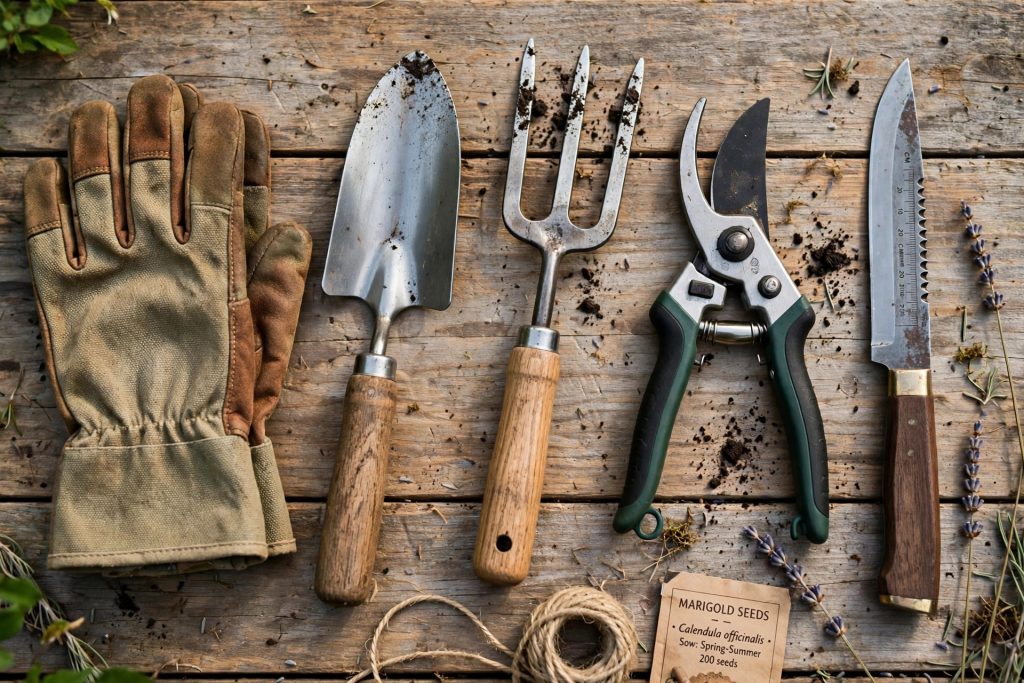
Weeding tools are just one part of the wider hand tool kit, and our complete guide covers the full range of essential tools that belong alongside them in the shed.
If you are still putting that wider kit together, a complete set is a practical shortcut, because most sets bundle a weeder with the trowel, transplanter and pruner you will use alongside it.

Weed Puller Tool vs Hoe: Which Should You Use?
| Feature | Weed Puller | Garden Hoe Tool |
|---|---|---|
| Deep roots | Excellent | Poor |
| Surface weeds | Fair | Excellent |
| Precision | High | Medium |
| Speed | Medium | Fast |
Most experienced gardeners use both types from the 10 Best Hand Weeder Tools for Vegetable Gardening list.
How to Get Rid of Weeds Without Chemicals
Weed sprays often feel like the quickest fix, but vegetable gardens are different from lawns. You are growing food, working in tight rows, and trying to build living soil year after year. Broad spectrum herbicides are not always a good match for that kind of space, especially when you are weeding close to edible plants. A more dependable approach for most home gardeners is a three part routine: pull early, prevent new sprouts, and manage the soil surface so weeds do not get comfortable.
Below are practical, field tested methods that work well in real vegetable beds.
Natural weed control methods that work in real vegetable beds
1. Pull weeds at the right moment
Hand pulling is most effective when weeds are still small and the soil has a little moisture. Slightly damp ground helps roots slide out with fewer breaks, which lowers the chance the weed returns. Many extension programs also recommend avoiding wet, sticky conditions because that can compact soil, especially in raised beds and heavy ground.

Practical tip: Weed the day after watering or a light rain, then gently firm the soil back around your crops.
2. Mulch to block light and stop germination
Mulch works because most weed seeds need light near the soil surface to sprout. A thick layer of straw, shredded leaves, or wood chips shades the ground and slows new weeds. Organic mulches also improve soil as they break down, which is a bonus for vegetable gardens that rely on compost and healthy microbial activity.

Practical tip: Apply enough mulch to cover bare soil, and refill it as it settles through the season.
3. Use crop rotation and planned bed resets
Crop rotation is often discussed for pests and disease, but it can also reduce weed pressure over time. Changing where you plant certain crops changes how you water, how you cultivate, and how much shade the soil gets. Some gardeners also use planned reset periods, such as a short cover crop window or a clean cultivation phase, to interrupt weed cycles and reduce the number of mature weeds that set seed.

Practical tip: Keep simple notes each season so you can rotate heavy feeders and sprawling crops to different beds.

4. Let your crops shade the soil, then protect the paths
Slightly tighter spacing, when appropriate for the crop, helps reduce the sunlight that reaches the soil surface. Less light often means fewer weed seedlings. This works especially well for leafy crops once they fill in. Pair that strategy with mulched pathways so weeds do not creep in from the sides.

Practical tip: If you plant closer, stay consistent with watering and airflow needs to avoid disease problems.
5. Hoe often, but keep it shallow
Hoeing is most effective when weeds are tiny. The goal is not deep digging. It is a shallow cut just under the surface that severs young weeds before they establish. Scuffle style hoes are commonly recommended for this skim and slice method because they move quickly down rows.

Practical tip: Hoe on a dry day so the cut weeds dry out on the surface instead of rooting again.
Why this approach improves soil over time
When you remove weeds early and prevent them from going to seed, you gradually reduce the weed seed bank in the soil. That means fewer weeds germinate each season. Add consistent mulching and shallow cultivation, and your garden becomes easier to manage while your soil structure improves rather than getting beaten up.
References
- Oregon State University Newsroom. Practical recommendations for weed prevention, mulch use, and timing of removal in home gardens.
- Oregon State University Extension. Growing Your Own. Weed management guidance covering mulching, spacing, and cultivation practices.
- Oregon State University Extension. Educator resources on vegetable gardening, including early weed removal and avoiding soil compaction.
- University of New Hampshire Extension. Home garden guidance on mulching materials and weed suppression principles.
How to Use a Weed Puller Tool Correctly
A weed puller can be incredibly effective, but technique matters. If you grab too shallow or pull at an angle, the top comes off and the root stays behind. That leftover root is why the same weed often returns a week or two later. The goal is simple: loosen the soil around the crown, clamp the root zone, and lift the whole plant cleanly.
Step by step method that works in most gardens
- Moisten the soil first
Water lightly or weed after a gentle rain. Slightly damp soil releases roots more easily than dry, compacted ground. - Center the tool over the weed base
Aim for the crown, the point where stems meet the soil. This is where you need control, especially for taproot weeds. - Press deep enough to grab below the crown
Push the tool down until it reaches the root zone. This is the most common mistake beginners make, going too shallow. - Lift straight up with steady pressure
Keep the pull vertical. Twisting or yanking sideways increases root breakage, especially in older weeds. - Remove and dispose before seeds spread
Shake loose soil back into the bed, then discard weeds before they flower or drop seed. That step helps reduce next season’s weed pressure.
This approach works whether you are using grandpa’s weeder or any other weed removal tool designed to grip and lift roots.
Practical tip from experienced gardeners
If a weed snaps, do not keep pulling the stem. Reinsert the tool slightly deeper and loosen the soil around the root zone first, then try again. In compacted soil, a small hand weeder can help you loosen the area before using the puller.
References
- University of New Hampshire Extension. Mechanical weed control guidance emphasizing soil moisture and careful pulling for complete removal.
- University of California Integrated Pest Management. Home and garden guidance on hand weeding and removing weeds before they set seed.
- Oregon State University Extension. Vegetable garden maintenance recommendations, including timing weeding when soil conditions support full root removal.
Safety and Legal Clarification: Is Weed Legal in Florida?
Gardeners sometimes land on the question is weed legal in florida while researching “weeds” in general. It is an understandable mix-up, but it helps to separate the two topics: garden weeds are unwanted plants, while “weed” in legal searches usually refers to cannabis.
As of the most recent reporting and statute summaries available, Florida permits medical marijuana for qualified patients under state rules, while recreational marijuana remains illegal under Florida law.
A recent Associated Press report also noted that a proposed constitutional amendment to legalize recreational marijuana did not qualify for Florida’s 2026 ballot by the signature deadline.
Important note: Laws can change, so readers should verify details through official Florida statutes or state election updates when making legal decisions.
Why This Gardening Guide Is Trustworthy
This guide is written to be practical, evidence informed, and rooted in how vegetable gardens actually work. The recommendations are based on three sources of reliability.
1. University and public agency horticulture guidance
Extension resources and integrated pest management programs emphasize prevention, early removal, and mechanical control , hand pulling, shallow hoeing, mulching as core strategies for managing weeds while protecting soil.
2. Real garden practice that matches the science
Weeding success depends on timing and method. For example, removing weeds when they are small and soil is slightly moist improves root removal, and shallow cultivation helps avoid bringing buried weed seeds to the surface. These points are consistent across multiple extension publications.
3. Tool design and usage aligned with food garden standards
For vegetable gardens, the priority is precision, root removal, and minimal soil disruption near crops. This aligns with integrated pest management principles that encourage using multiple low risk approaches rather than relying on a single chemical solution.
Where to verify and learn more
- USDA guidance on gardening and integrated pest management principles
- University extension weed management and non-chemical control methods
- Florida-specific crop and weed management education through UF IFAS Extension materials
References
- UF IFAS EDIS IPM chapter emphasizing weed competition and management, with gardening advice in 2026.
- Florida Statutes Section 381.986
- Associated Press reporting on the 2026 Florida ballot qualification status for recreational marijuana initiative
- USDA Integrated Pest Management and gardening guidance
- UC IPM weed management guidance on hand weeding, cultivation, and avoiding deep tilling
- University of Maryland Extension guidance on managing weeds without chemicals
Summary table – 10 hand weeder tools at a glance
| Tool | Best for | Soil and weed match | Key advantage | Quick tip |
|---|---|---|---|---|
| Grandpa’s Weeder | Deep taproots, no bending | Best in slightly moist soil, great for dandelion and dock | Back friendly full root pull | Water lightly first for cleaner root release |
| Fiskars Stand Up Weed Puller | Large plots, repetitive sessions | Works well after rain or watering | Foot leverage speeds up weeding | Push deep enough to grip below the crown |
| CobraHead Original Hand Weeder | Tight rows, raised beds | Strong in clay and compact soil | Precision prying near crops | Twist to loosen soil, then pull steadily |
| Radius Garden Ergonomic Weeder | Joint comfort, longer sessions | Great for close work around seedlings | Reduced wrist strain | Use leverage, not force, to avoid root break |
| Traditional Garden Hoe Tool | Fast surface control | Best for tiny weeds and “thread stage” seedlings | Speed and prevention | Hoe shallow to avoid bringing new seeds up |
| Hori Hori Soil Knife | Multi purpose bed work | Cuts thick roots, works in compact soil | Digs, slices, weeds in one tool | Rock the blade to loosen roots before lifting |
| Corona ComfortGEL Hand Weeder | Small gardens, containers | Best in soft, amended soil | Comfortable grip, good control | Weed when soil is damp for full removal |
| Twist style weed puller | Beginners learning clean pulls | Helpful on stubborn weeds that snap | Loosens root zone first | Twist gently, then lift straight up |
| Cape Cod narrow weeder | Narrow rows, compacted paths | Excellent for shallow slicing in tight spaces | Precision between plants | Skim under the surface, do not dig deep |
| Flexrake classic hand weeder | Budget friendly basics | Good for small weeds and quick cleanups | Simple and reliable | Use after watering to reduce breakage |
Quick comparison table – weed puller tool vs garden hoe tool
| Feature | Weed puller tool | Garden hoe tool |
|---|---|---|
| Deep roots | Excellent | Weak |
| Surface weeds | Moderate | Excellent |
| Precision near crops | High | Medium |
| Speed on big areas | Medium | High |
| Best use case | Pulling established weeds with crowns and taproots | Preventing weeds early with shallow slicing |
Final Thoughts
A vegetable garden feels very different when weeds are under control. The right tools turn weeding from a dreaded chore into a quick routine you can knock out in small bursts. With the 10 Best Hand Weeder Tools for Vegetable Gardening, you can stay on top of problem spots without tearing up your beds or depending on chemical solutions. Pulling weeds early and removing the roots cleanly gives your crops a real advantage, since they no longer have to fight for moisture, nutrients, and light.
Maybe you prefer grandpa’s weeder because it saves your back, or you lean on a sharp garden hoe tool to wipe out tiny seedlings before they get established. If your rows are tight, a precise weed puller tool can help you work close to crops without disturbing their roots. No matter which tool you reach for, results come from consistency. Short, regular weeding sessions stop weeds from flowering and dropping seed, which means fewer problems later in the season.
If your goal is a calmer, more productive garden, buy a few solid tools and stick to a simple routine. Over time you will notice cleaner beds, healthier soil, and bigger harvests with the 10 Best Hand Weeder Tools for Vegetable Gardening.


References
- UC Statewide Integrated Pest Management Program. “Weed Management in Landscapes.” Guidance on hand weeding, cultivation, and avoiding deep tilling to prevent bringing buried weed seeds to the surface.
- UC IPM Agriculture Guidelines. “Integrated Weed Management.” Notes on shallow cultivation and minimizing soil disturbance after germinating weed seeds near the surface.
- Florida Senate. Florida Statutes Section 381.986 (medical use of marijuana).
- Associated Press. Report that a recreational marijuana constitutional amendment did not qualify for Florida’s 2026 ballot by the signature deadline.
- ABC News wire story (Associated Press). Summary of the same Florida 2026 ballot outcome reporting.
Frequently Asked Questions for Best Hand Weeder Tools
1. What is the best hand weeder for deep taproot weeds?
A stand up claw style weed puller is usually best for taproots because it grips below the crown and lifts more of the root in one pull.
2. Should I use a weed puller tool or a garden hoe tool?
Use a weed puller for established weeds with strong roots. Use a hoe for early stage weeds by slicing just under the soil surface. Shallow cultivation also helps avoid bringing new weed seeds up.
3. When is the best time to pull weeds?
Right after light watering or the day after rain, when soil is damp but not muddy. This improves root removal and reduces snapping.
4. How do I stop weeds from coming back without chemicals?
Combine early removal, shallow hoeing, and mulching. Preventing weeds from setting seed gradually reduces the weed seed bank over time.
5. Is weed legal in Florida?
Florida law allows medical marijuana for qualified patients under state rules, while recreational use remains illegal. A proposed recreational marijuana amendment also failed to qualify for Florida’s 2026 ballot by the signature deadline.

Thesis Link : https://saulibrary.edu.bd/daatj/public/uploads/BAU200601_19-Pp_5.pdf
- How to Stripe a Lawn Like a Pro - October 24, 2026
- Spring Lawn Care Checklist: 10 Jobs for a Strong Start - October 24, 2026
- 10 Best Garden Trowels for 2026: Top Picks Compared - October 23, 2026