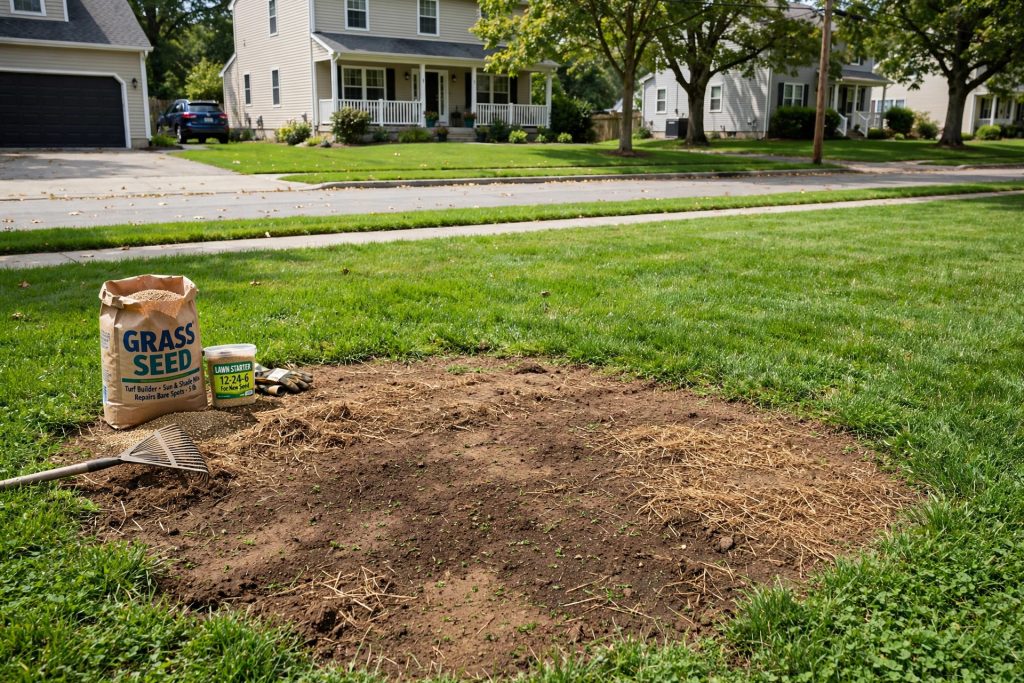

A bare patch in the middle of an otherwise decent lawn draws the eye like a stain on a shirt. The good news is that knowing how to fix bare spots in lawn areas is not complicated, and most patches can be repaired in a single afternoon. The part homeowners get wrong is the order of the work. Seed scattered over hard, dead ground with no preparation rarely grows, and a patch repaired without fixing its cause usually comes back in the same place next season.
This guide walks through the full repair: diagnose why the grass died, choose between seed, sod and plugs, prepare the soil properly, and keep the new grass alive until it knits in. It covers cool-season and warm-season lawns, dog spots, shady patches and thin areas that do not need a full patch repair at all.
Quick Repair Checklist
If you want the short version before the detail, this is the whole job in nine lines:
- Find the cause first: dog urine, grubs, shade, compaction, a spill, drought or disease.
- Fix the cause, or at least treat it, before you add any new grass.
- Mow the area a little short and rake out every bit of dead grass.
- Loosen the top 2 to 3 inches of soil and level it with the lawn around it.
- Mix in a thin layer of compost if the soil is poor, sandy or heavy clay.
- Spread seed that matches your existing grass, at the label rate, in two passes.
- Rake lightly, firm the seed into the soil, and cover with a very thin layer of compost or clean straw.
- Keep the top half inch of soil moist at all times until the grass is up and growing.
- Keep feet, pets and mower wheels off the patch until after the first mow.
Why Bare Spots Happen in the First Place
A bare spot is a symptom, not a diagnosis. Seeding over the symptom without reading it is the main reason repairs fail. Work through the common causes below and match the pattern in your yard before you buy anything.
Dog urine. Round spots, often 4 to 8 inches across, with dead grass in the center and a ring of darker, faster growing grass around the edge. Concentrated nitrogen and salts in urine burn the roots, while the diluted nitrogen at the edges feeds the surrounding grass. These spots will not grow back on their own. The dead grass has to come out and the area has to be flushed and reseeded or sodded.
Grubs and insects. Patches that feel spongy and lift up like a loose piece of carpet when you tug them. Grubs feed on grass roots, so the turf dies in irregular patches and often pulls up with almost no resistance. Dig a small square at the edge of a suspect patch and look in the top few inches of soil before you reseed. Seeding over an active grub problem wastes the seed.
Shade. Grass thins gradually under trees and beside buildings, getting weaker every year rather than dying suddenly. Most sun-loving grasses need at least 4 to 6 hours of direct sun. A patch that dies in the same shady place every summer needs a shade tolerant grass type, thinner tree canopy, or a different ground cover altogether. More of the same seed will give the same result.
Compaction and foot traffic. Hard, bare soil along paths, gate entrances, play areas and the route the dog runs every day. Seed cannot root in concrete-hard ground. These spots need loosening or core aeration first, and heavy traffic areas may need stepping stones or a tougher grass type to survive.
Drought and heat. Patches on high spots, slopes and soil over buried rubble dry out first in summer. The grass may only be dormant rather than dead, especially Bermuda and Kentucky bluegrass in a dry spell. Scratch the crowns at soil level: green or white tissue means the plant is alive and watering may bring it back without any seed.
Spills and scalping. A sharply defined dead shape that matches a fertilizer spill, a fuel spill, a parked hot mower or a mower deck set too low on a bump. Fertilizer spills need heavy flushing with water. Fuel or oil contaminated soil has to be dug out, roughly 4 to 6 inches deep, and replaced before anything will grow there.
Disease. Rings, circles with green centers, or patches with spotted and discolored blades at the edges that keep expanding in wet weather. Repair the patch after the disease pressure has passed, improve air flow and avoid watering in the evening, or the new seedlings will catch the same problem.
| Damage type | What it looks like | Quick check | The fix |
|---|---|---|---|
| Dog urine | Round yellow or brown patches with a dark green ring around the edge, usually in spots the dog uses often | The grass in the centre is dead but the ring grows faster; patches stay small, about a hand to a dinner plate wide | Rake out the dead grass, water the spot deeply to dilute salts, then reseed |
| Grub damage | Irregular brown patches that keep spreading in late summer and fall; the grass feels spongy | Tug the grass: it lifts like a carpet because the roots are eaten; dig up one square foot and count the white grubs | Treat the grubs first, then rake, level and reseed once the grubs are gone |
| Shade damage | Thin, sparse grass under trees or beside fences that gets a little worse every year, often with moss | The area gets less than 4 hours of direct sun; grass grows tall and weak as it reaches for light | Rake lightly, sow a shade tolerant seed mix, and prune low branches if you can |
Will Grass Fill In Bare Spots on Its Own?
Sometimes, and it depends entirely on the grass type. Spreading grasses grow sideways through rhizomes or stolons, so a small gap next to healthy turf can close on its own given time, water and fertilizer. Kentucky bluegrass, Bermuda grass, zoysia and St. Augustine all spread this way. A hole smaller than about 2 inches in a healthy spreading lawn is often not worth a special repair.
Bunch grasses do not spread sideways in any useful way. Tall fescue, perennial ryegrass and fine fescues grow as individual clumps that get slightly wider but never send out runners. A bare spot in a fescue or ryegrass lawn will still be bare next year if you do nothing, and weeds will usually claim it first. Those lawns need seed, every time.
A practical rule: if the patch is bigger than your hand and your lawn is a bunch grass, plan to seed it. If it is a spreading grass, give small gaps a few weeks of good care, and repair anything that is not visibly closing.
Best Time to Repair Bare Spots
Timing decides more repairs than technique does. Seed needs warm soil to germinate and mild weather to establish before stress arrives.
For cool-season lawns (Kentucky bluegrass, fescues, perennial ryegrass), late summer to early fall is the best repair window by a wide margin. Soil is still warm, weed pressure is dropping, and seedlings get the rest of fall plus the following spring to build roots before summer heat. Penn State Extension puts late summer to early fall at the top of the list for the same reasons. Spring repair also works if you do it early, but the young grass has far less time before heat and crabgrass arrive. Germination is fastest when soil sits roughly between 50 and 65 degrees F for these grasses, and species differ: perennial ryegrass can be up in 5 to 10 days, tall fescue in about 7 to 12 days, and Kentucky bluegrass can take 14 to 30 days, so a bluegrass patch needs patience and steady moisture for much longer.
For warm-season lawns (Bermuda, zoysia, centipede, bahia), repair in late spring to early summer, when soil has warmed past about 65 degrees F and the grass is growing actively. Warm-season seed sown into cold spring soil sits still or rots, and plugs or sod put down too early grow too slowly to outrun weeds. Avoid seeding warm-season patches in fall: the new grass goes dormant before it has roots deep enough to survive winter.
One warning that applies in every season: pre-emergent herbicide and weed and feed products block grass seed as effectively as they block crabgrass. If a patch area was treated with a pre-emergent, wait for the label interval to pass before seeding, which can be several months depending on the product. Extension guidance is blunt on this point: crabgrass preventers do not distinguish between weed seed and turf seed.
What You Need for the Repair
You do not need much, and most of it is probably already in the shed:
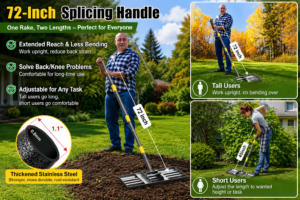
- A stiff rake or hand cultivator for removing dead grass and loosening soil
- A garden fork or core aerator if the ground is compacted
- Grass seed that matches your lawn, or a small roll of sod, or a plug tool and a donor area
- A bag of compost or screened topsoil
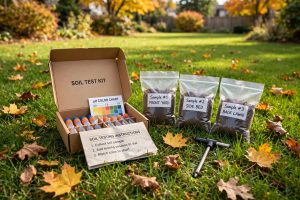
- Starter fertilizer, ideally guided by a soil test if your patches keep failing
- Clean straw or extra compost for a light cover on slopes and dry spots
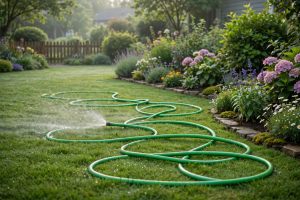
- A hose with a gentle shower setting or a sprinkler that covers the patch
- A few small stakes and string, or a low garden border, to keep feet off the repair
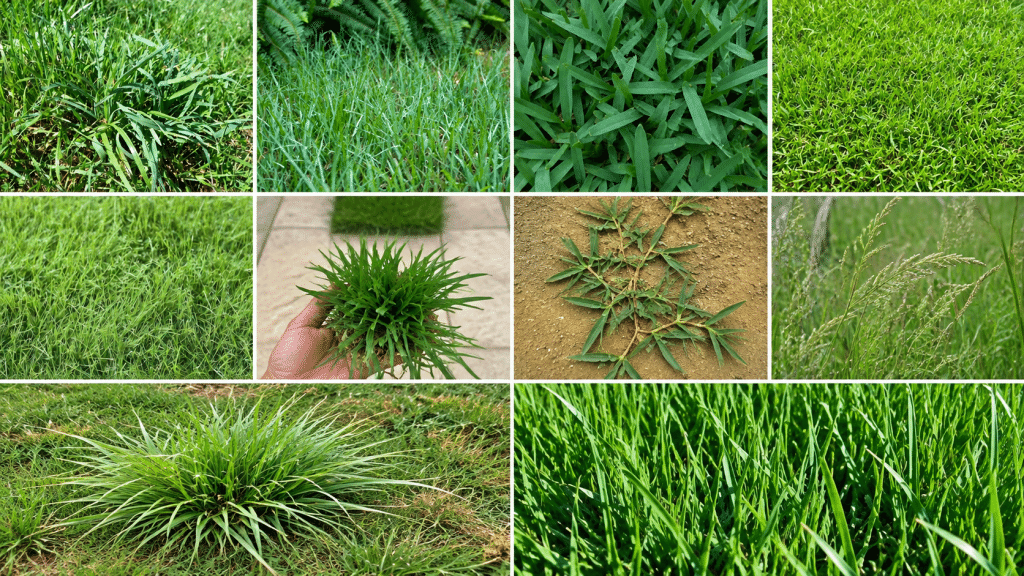
Matching the seed matters more than buying the most expensive bag. Read the label: it lists the species and cultivars, the germination rate and the weed seed percentage, which should be under 0.5 percent. A patch seeded with a visibly different grass stays visible for years, darker, lighter or coarser than everything around it.
How to Fix Bare Spots in Lawn Areas, Step by Step
Step 1: Clear the patch down to real soil
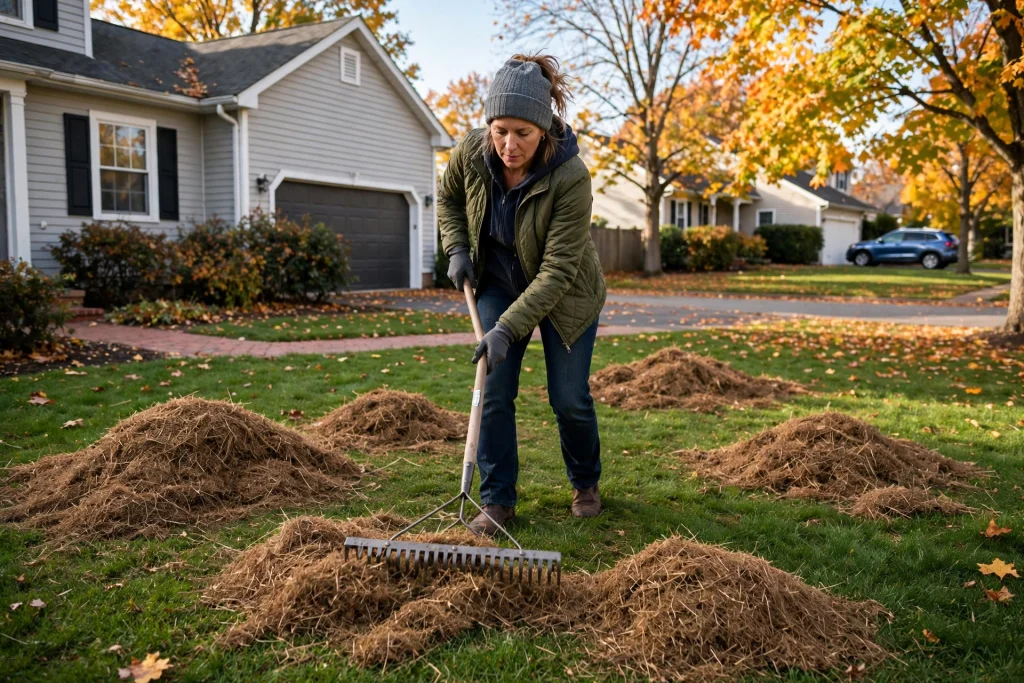
Mow the damaged area and a margin around it at your normal height, then rake out all the dead and loose grass. Pull up matted thatch and any weeds, roots included. You want to see clean soil across the whole patch. Seed lying on top of dead grass never reaches the soil, and seed to soil contact is the single factor that decides whether this repair works.
Step 2: Loosen and level the soil
Work the top 2 to 3 inches of soil loose with the rake, a hand cultivator or a fork. Break up clods, pick out stones and roots, and fix the level as you go. Fill dips with topsoil and shave down humps: a dip collects water and drowns seedlings, while a hump dries out fast and gets scalped by the mower. If the soil is compacted hard, fork it deeply or core aerate the patch and a margin around it before loosening the surface.
Step 3: Improve poor soil while it is open
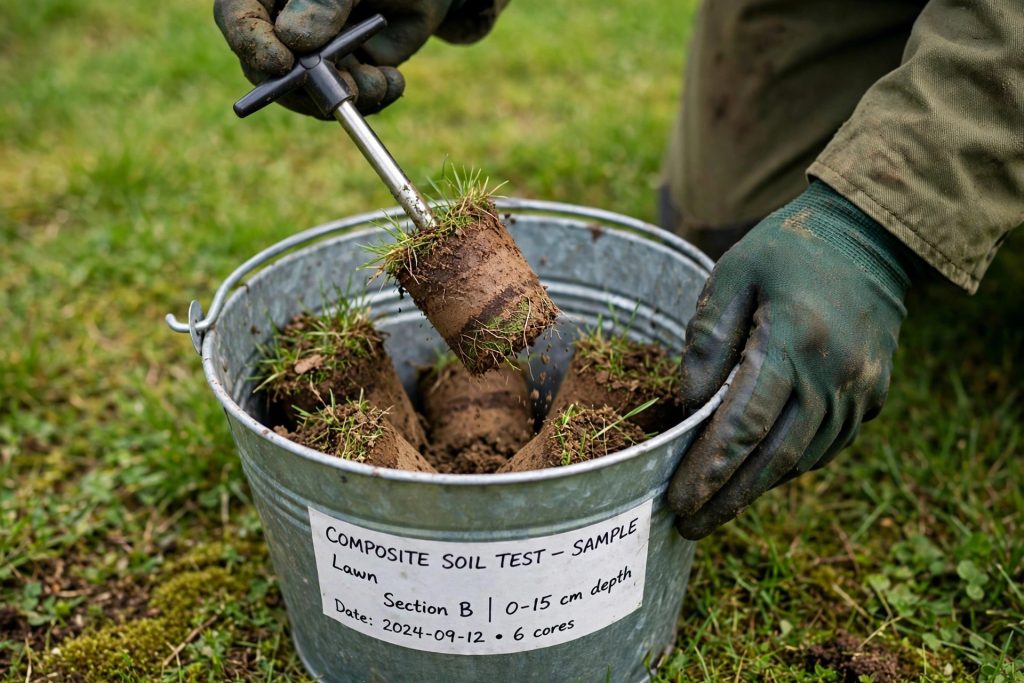
If the exposed soil is pale sand, heavy sticky clay or builders rubble, mix in about half an inch of compost across the patch and rake it into the loosened layer. Compost improves both drainage and water holding, and it feeds soil life that young roots depend on. This is also the moment to act on a soil test if you have one: lime or sulfur to correct pH goes into the loosened soil now, not on top of new seedlings later. For a dog spot, flush the area thoroughly with water first and let it drain, so the remaining salts are diluted before seed goes down.
Step 4: Spread the seed at the right rate
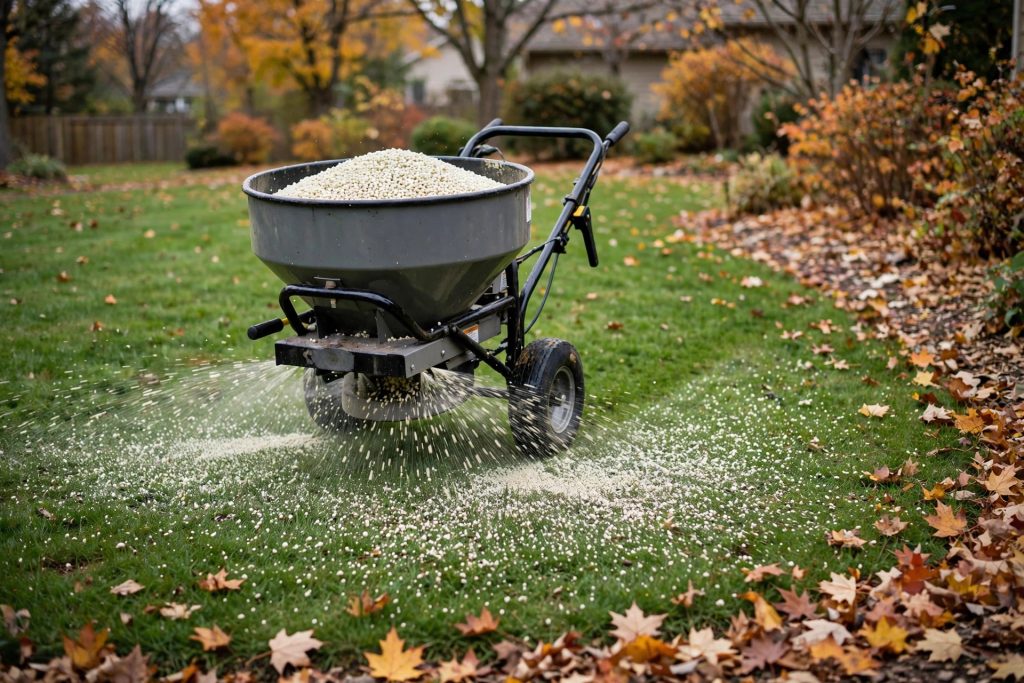
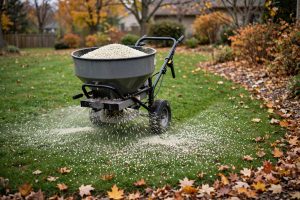
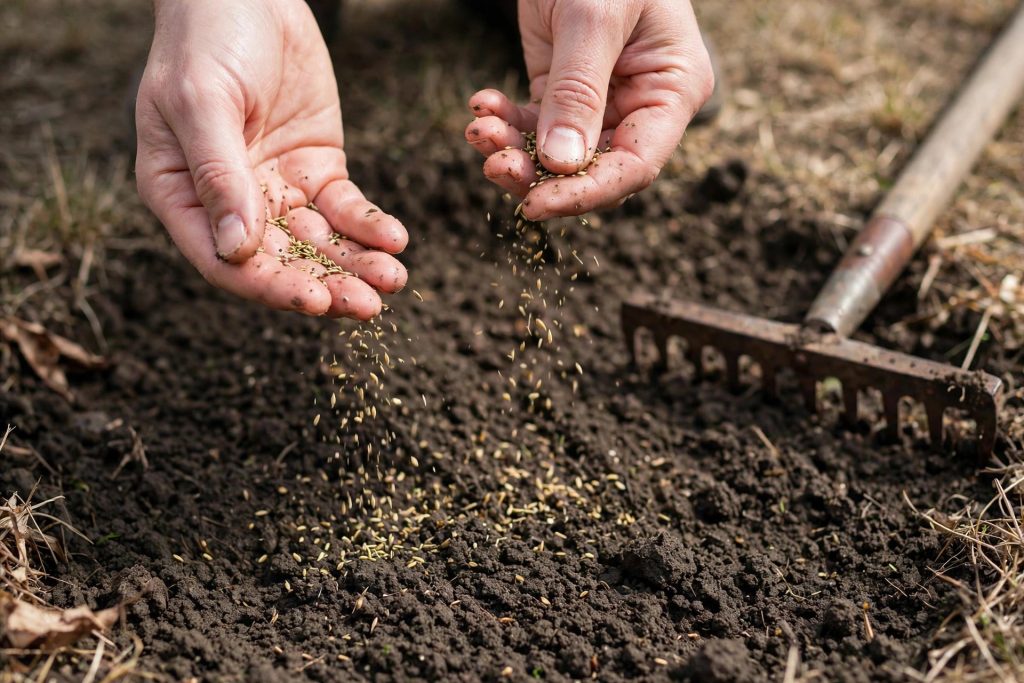
Scatter seed evenly over the patch in two light passes, the second at right angles to the first, so there are no stripes or clumps. Use the label rate for new lawns rather than the lighter overseeding rate, because a bare patch is a new lawn in miniature. As a guide, West Virginia University Extension lists roughly 1 to 2 pounds per 1,000 square feet for Kentucky bluegrass and 4 to 8 pounds for tall fescue or perennial ryegrass on full seeding. For a single patch that translates to a small handful spread thinly, not a thick pile. Too much seed is a real problem: crowded seedlings compete, stay weak and invite disease.
Step 5: Rake in, firm down and cover lightly
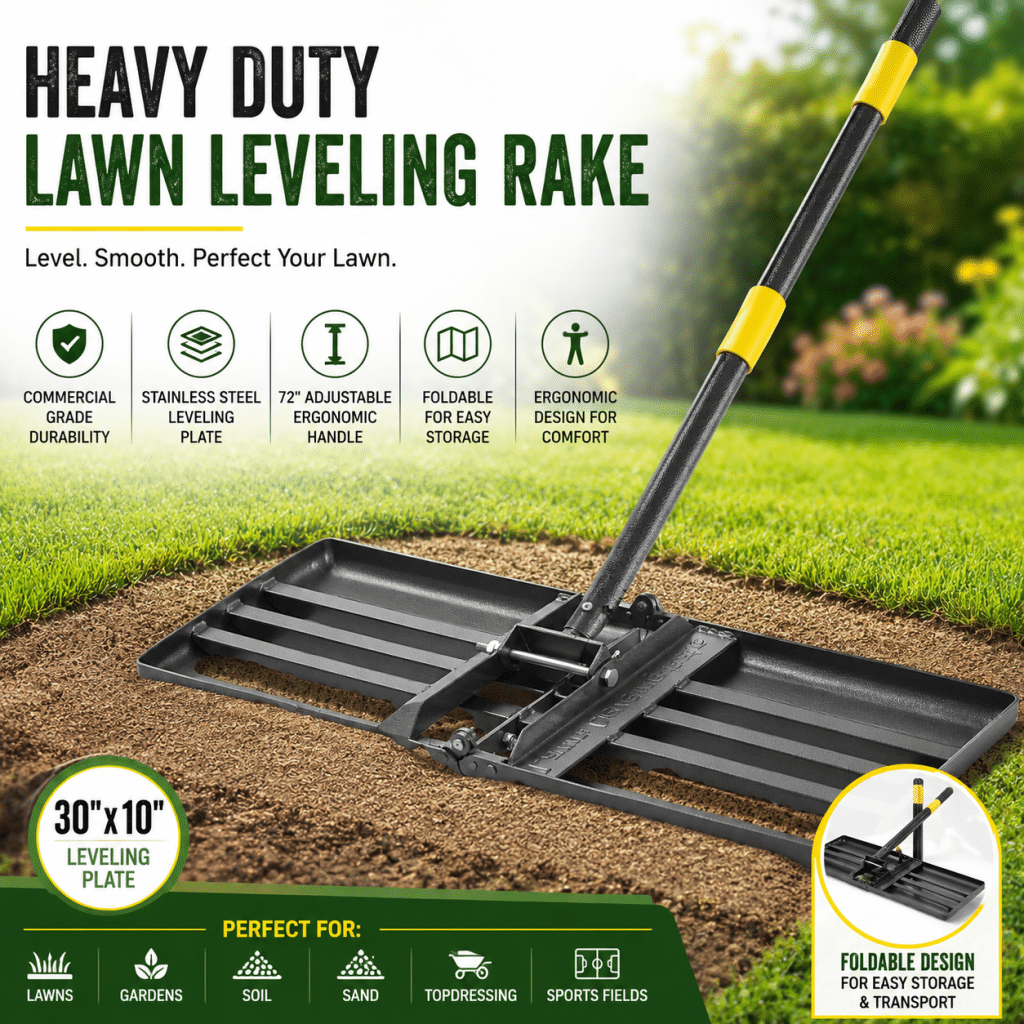
Rake the patch very lightly so most seed settles just under the surface, then firm it with the back of the rake, a roller or your feet on a board. The goal is seed pressed against moist soil on all sides. Cover with a thin dusting of compost or a light layer of clean straw, thin enough that you can still see soil through it. The cover holds moisture, stops birds taking quite so much seed, and keeps a heavy shower from washing seed into the low corner of the patch. Keep the cover light: a thick blanket of straw blocks light and smothers seedlings.
Step 6: Water gently, then keep it moist
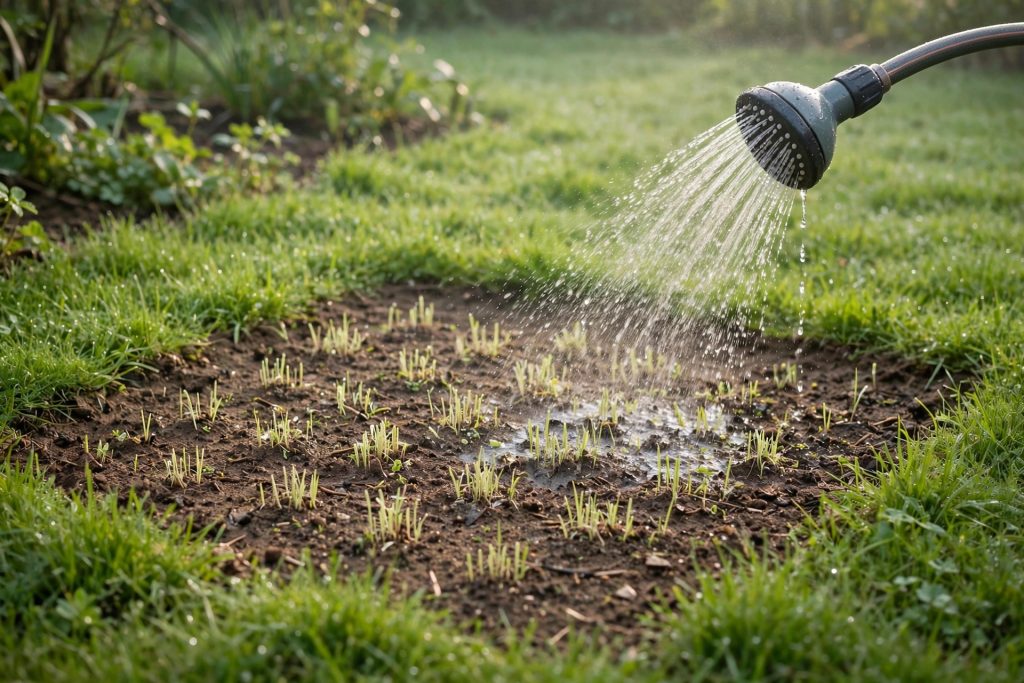
Water the patch right away with a fine, gentle spray that wets the soil without moving the seed. From here until germination, the top half inch of soil must never dry out. In warm or windy weather that can mean light watering two or three times a day. Check with a finger rather than a schedule: if the surface is dry and pale, water; if it is dark and damp, wait. Puddles are too much. Seed that dries out midway through germination usually dies, and this is where most home repairs quietly fail.
Step 7: Protect the patch until the first mow
Keep everyone off the repair: feet, pets, wheelbarrows and mower wheels. A simple ring of stakes and string works. Let the new grass grow to about 3 to 3.5 inches, then give it a first mow back to your normal height with a sharp blade, taking off no more than a third of the leaf. After that first mow, ease the watering toward the pattern the rest of the lawn gets: deeper and less often, which pushes roots down instead of training them to live at the surface.
Seed, Sod or Plugs: Which Repair Fits Your Patch?
Seed is the default for most patches, but it is not always the best tool. Use this comparison to choose.
| Method | Best for | Time to blend in | Main advantage | Main drawback |
|---|---|---|---|---|
| Seed | Patches from a dinner plate to several feet across, and thin areas | 3 to 8 weeks depending on species | Cheapest option, exact match to your grass type is possible | Needs constant moisture and patience, vulnerable to washout |
| Sod | One or two visible patches you need fixed fast, front lawn, erosion spots | Looks finished the day it goes down | Instant cover, roots in about 2 weeks with water | Costs more, matching the existing grass can be tricky |
| Plugs | Warm-season lawns (Bermuda, zoysia, St. Augustine), scattered small holes | 4 to 10 weeks to close, depending on spacing | Uses your own grass, so the match is perfect | Slow on large areas, leaves small donor holes to fill |
For sod, cut the dead turf out in a clean shape, level the soil slightly below the surrounding grade so the new piece sits flush, butt the edges tightly, press it down for soil contact and water it deeply the same day. For plugs, space them roughly 6 to 12 inches apart in a grid across the patch, water them in well, and let the runners close the gaps.
Repairing Thin Patches Without Starting Over
A lawn that is thin all over, with soil showing through in many places but grass still present, does not need dozens of individual patch repairs. That is an overseeding job: mow short, rake or core aerate to open the canopy, spread seed across the whole area and keep it moist. The existing grass shelters the seedlings, and the whole lawn thickens instead of showing a patchwork of new squares. The method is covered in full in our overseeding guide.
Thin patches also respond to feeding once the cause is sorted out. A lawn that is thin because it is hungry will thicken noticeably after a correctly timed fertilizer application, especially a spreading grass. Seed first if the gaps are truly bare, feed if the grass is there but weak, and do both if you are not sure. A balanced fertilizer program built around your grass type and season makes every other repair on this page last longer.
Special Cases Worth Handling Differently
Dog spots in a lawn the dog still uses. Repair them the same way, but accept that the pattern will repeat unless habits change. Flushing a fresh spot with a bucket of water within hours dilutes the nitrogen before it burns. Training the dog to one mulched corner of the yard is the only permanent fix. Tall fescue tolerates urine damage somewhat better than bluegrass and reseeds easily, which is one reason it suits dog owners.
Shady patches. Switch the repair seed to a shade tolerant mix built on fine fescues for cool-season lawns. Raise the mowing height in shade, prune lower tree branches where you can, and water less often than the sunny lawn, since shaded soil stays wet longer. If the spot gets under about 3 hours of sun, grass of any kind will struggle, and a shade ground cover or mulch bed is the honest answer.
Slopes and washout areas. Seed washes off slopes in the first heavy rain. Cover the seeded patch with a thin straw layer or an erosion control blanket, pin it down, and water with a fine spray. Sod is often the better choice on a steep or badly eroded patch because it holds the soil from day one.
Patches where weeds moved in first. If crabgrass or other weeds already own the bare soil, pull or dig them out before seeding rather than spraying near new seed. Most weed killers have a waiting period before seeding on the label, and breaking it kills the repair along with the weeds. Once the new grass is established and has been mowed a few times, normal weed control can resume, and a dense lawn is itself the best long-term weed defense.
Common Mistakes That Make Patches Fail
- Seeding over dead grass. No soil contact, no germination. Rake the patch out properly first.
- Skipping the diagnosis. A grub patch, a shade patch and a spill patch all look like dead grass and all need different fixes.
- Using the wrong seed. A patch of fine, dark seed in a coarse, pale lawn (or the reverse) stays obvious for years.
- Letting the seedbed dry out once. Germination is a one-way process. One hot, dry afternoon at the wrong moment can end it.
- Burying seed too deep. Seed covered by more than about a quarter inch of soil often never emerges. Light cover only.
- Applying pre-emergent or weed and feed at seeding time. These products are designed to stop seeds germinating, and they work on grass seed too.
- Mowing too early or too low. Wait until the new grass reaches about 3 inches and the roots resist a gentle tug.
- Feeding heavily right away. A light starter application at seeding is fine. Heavy nitrogen on seedlings pushes soft growth and disease.
Final Thoughts
Learning how to fix bare spots in lawn areas comes down to three habits: find the cause before you seed, prepare the soil so seed actually touches it, and never let the patch dry out until the grass is up. Do those three things and even a hand-sized hole in a fescue lawn or a dog-burned circle in bluegrass becomes a two-week project rather than a permanent feature. Keep a small bag of your lawn’s seed mix in the shed, and repairs become routine maintenance instead of a spring emergency.
References
Penn State Extension, Renovation of Lawns
West Virginia University Extension, Establishing a Lawn
Cornell University Sports Field Management, Seeding Strategies
Penn State Extension, The Cool-Season Turfgrasses: Basic Structures, Growth and Development
Pennington, How to Repair Bare Spots in Your Lawn
Frequently Asked Questions
How long does it take for a seeded bare spot to fill in?
Perennial ryegrass usually shows green in 5 to 10 days and looks filled in within about 3 to 4 weeks. Tall fescue takes a little longer, and Kentucky bluegrass can need 14 to 30 days just to germinate and 6 to 8 weeks to blend in. Sod looks finished immediately and roots in about 2 weeks.
Can I just throw seed on a bare spot without preparing the soil?
You can, but most of it will not grow. Seed needs direct contact with moist soil. A few minutes spent raking out dead grass and loosening the top 2 to 3 inches of soil makes a bigger difference than doubling the amount of seed.
What is the best grass seed for patching bare spots?
The best seed is the one that matches your existing lawn in species and color. Ryegrass blends fast and suits quick repairs, tall fescue handles heat and traffic well, and Kentucky bluegrass spreads to fill small gaps on its own. For shady patches, choose a mix with fine fescues.
Should I put topsoil over grass seed on a patch?
A very thin cover, about a quarter inch of compost or topsoil, helps hold moisture and protects the seed. A thick layer buries it. Many seeds will not emerge if they are covered by more than about a quarter inch, so dust the cover on rather than spreading it like mulch.
Why did my repaired patch die again in the same place?
The original cause was probably still there: shade, compaction, grubs, dog urine or poor drainage. Seed treats the symptom. Before reseeding a repeat patch, dig a little, check for grubs and compaction, and look honestly at how much sun the spot actually gets.
Can I seed a patch after using a weed and feed or pre-emergent product?
Not until the waiting period on the product label has passed. Pre-emergent herbicides stop grass seed germinating just as they stop crabgrass, and the interval can run from a few weeks to several months depending on the product and rate used.

Thesis Link : https://saulibrary.edu.bd/daatj/public/uploads/BAU200601_19-Pp_5.pdf
- How to Repair Bare Spots and Thin Patches in Your Lawn - October 12, 2026
- How to Overseed a Lawn: Step by Step Guide - October 11, 2026
- 10 Best Lawn Leveling Rakes - October 11, 2026