Most thin, weedy lawns are not underfed or under watered. They are cut at the wrong height, week after week. Set the lawn mowing height too low and the grass puts its energy into regrowing leaf instead of building roots, so it thins out just before summer stress arrives. Set it sensibly for your grass type and the same lawn thickens, shades its own soil, and holds moisture far better.
The catch is that there is no single best height to cut grass. A Bermuda lawn and a fescue lawn want almost opposite settings. This guide gives you the complete chart first, then the rules that sit behind the numbers: how tall grass should be before mowing,
how to measure your mower honestly, and how the height should move with the seasons.
Quick Answer: The Right Height in 30 Seconds
If you only read one section, read this one.
Most cool-season lawns (tall fescue, Kentucky bluegrass, perennial ryegrass, fine fescue) do best held between 2.5 and 3.5 inches for most of the year. Most warm-season lawns (Bermuda, zoysia, centipede) sit lower, between 1 and 2.5 inches, because they spread sideways along the ground. St. Augustine and bahiagrass are the warm-season exceptions: both want to be kept taller, around 3 to 4 inches.
Three habits matter as much as the number itself. Never remove more than one third of the blade in a single cut. Raise the deck by about half an inch in hot, dry weather. And when you are unsure, mow higher rather than lower. A lawn cut a little long recovers in a week. A scalped lawn can take a month.
The Complete Lawn Mowing Height Chart
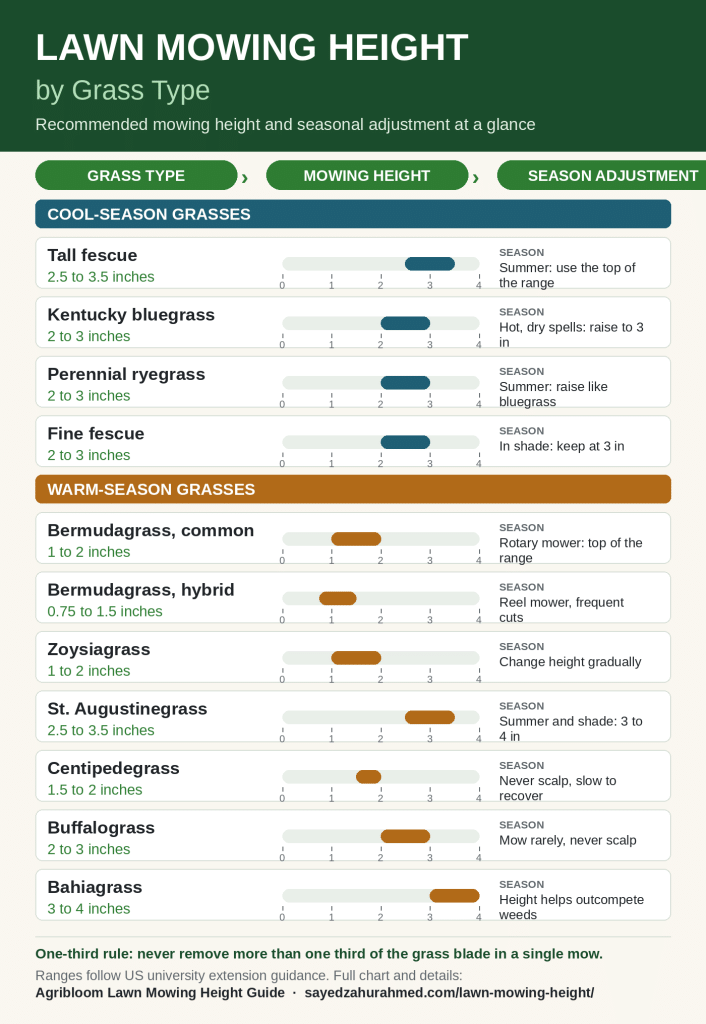
Find your grass type in the table below. Heights are in inches, measured as the height of the grass after cutting, not the number printed on your mower deck. Extension ranges vary a little by state and by whether the weather is cool and damp or hot and dry, so treat the range as a working band and aim for the middle of it in normal weather, the top of it in heat, shade, or drought.
| Grass type | Season type | Recommended height (inches) | Never cut below (inches) | Notes |
|---|---|---|---|---|
| Tall fescue | Cool season | 2.5 to 3.5 | 2 | Upright grower. Thins fast when scalped. Use the top of the range in summer. |
| Kentucky bluegrass | Cool season | 2 to 3 | 1.5 | Spreads by rhizomes, so small gaps can close. Raise to 3 inches in hot, dry spells. |
| Perennial ryegrass | Cool season | 2 to 3 | 1.5 | Fast to establish. Often mixed with bluegrass, so follow the bluegrass end of the range. |
| Fine fescue | Cool season | 2 to 3 | 1.5 | The shade option among cool-season grasses. Keep it at 3 inches in shade. |
| Buffalograss | Warm season | 2 to 3 | 2 | Low input native lawn. Infrequent mowing is fine, scalping is not. |
| Bermudagrass, common | Warm season | 1 to 2 | 0.75 | Creeping growth allows low cutting. Rotary mowers suit the top of the range. |
| Bermudagrass, hybrid | Warm season | 0.75 to 1.5 | 0.5 | Fine texture, best with a reel mower and frequent cutting. |
| Zoysiagrass | Warm season | 1 to 2 | 0.75 | Dense and slow to recover from scalping, so step height changes down gradually. |
| St. Augustinegrass | Warm season | 2.5 to 3.5 | 2.5 | Coarse leaves need height. Standard types sit at 3 to 4 inches in summer and shade. |
| Centipedegrass | Warm season | 1.5 to 2 | 1 | Low fertility lawn. Scalping shows as yellow patches that are slow to green up. |
| Bahiagrass | Warm season | 3 to 4 | 3 | Tough utility grass with fast seed heads. Height helps it outcompete weeds. |
A note on why the ranges split this way: grasses that creep along the soil on stems, such as Bermuda and zoysia, keep their growing points low, so they tolerate close cutting. Upright grasses, such as tall fescue and Kentucky bluegrass, hold more of their structure above ground. Cut them short and the plant shifts resources from roots to new leaf, roots get shallower, and the lawn enters summer weaker than it should.
Mowing height for tall fescue
Hold tall fescue at 3 to 3.5 inches for most home lawns, and never let the deck drop below 2.5 inches in summer. Fescue has no runners, so every plant you lose to scalping is a gap that only new seed can fill. In spring, while growth is fast and the weather is mild, 2.5 to 3 inches is fine. As soon as nights stay warm, move to the top of the range.
Mowing height for Kentucky bluegrass
Kentucky bluegrass is happiest at 2.5 to 3 inches in a home lawn. It can be kept a little lower in cool, wet spring weather, but hot and dry conditions call for the top of its range, around 3 inches. Its rhizomes give it a self-repair ability fescue lacks, yet that repair still depends on roots, and roots follow the leaf: taller leaf, deeper roots.
Mowing height for Bermuda grass
Common Bermuda sits at 1 to 2 inches. With a standard rotary mower, stay at 1.5 to 2 inches, because rotary decks cannot cut cleanly at the lowest settings on uneven ground. Hybrid Bermuda can go to 0.75 to 1.5 inches, but only with a reel mower, a level
lawn, and cutting at least twice a week in peak growth. If you mow once a week, keep Bermuda at the top of its range or the one-third rule will be broken at every cut.
The One-Third Rule, Explained With Numbers
Every extension guide returns to the same rule, because it is the one that decides how often you mow: never take off more than one third of the total blade height in one mowing. It sounds abstract until you put numbers on it.
If your target height is 3 inches, the grass should be mowed when it reaches 4.5 inches, and you cut it back to 3. If it grows to 6 inches while you are away, cutting straight back to 3 removes half the leaf at once. The plant is shocked, clippings smother the surface, and the pale lower stems show as a yellow cast for days.
| Target height after cutting (inches) | Mow when the grass reaches (inches) | What comes off (inches) |
|---|---|---|
| 1.5 | 2.25 | 0.75 |
| 2 | 3 | 1 |
| 3 | 4.5 | 1.5 |
| 3.5 | 5.25 | 1.75 |
So the answer to how tall should grass be before mowing is simple: about one and a half times your target height, no more. When a lawn has got away from you, bring it down in steps. Cut off one third, wait two or three days, then cut again. Two shorter passes do far less damage than one scalping pass.
This rule is also why mowing frequency changes through the year. In spring growth spurts you may need to mow every four or five days to stay inside the rule. In a dry summer slowdown, the same lawn may need cutting only every ten days. The height stays the same. The interval moves.
How to Set and Measure Your Mower Height
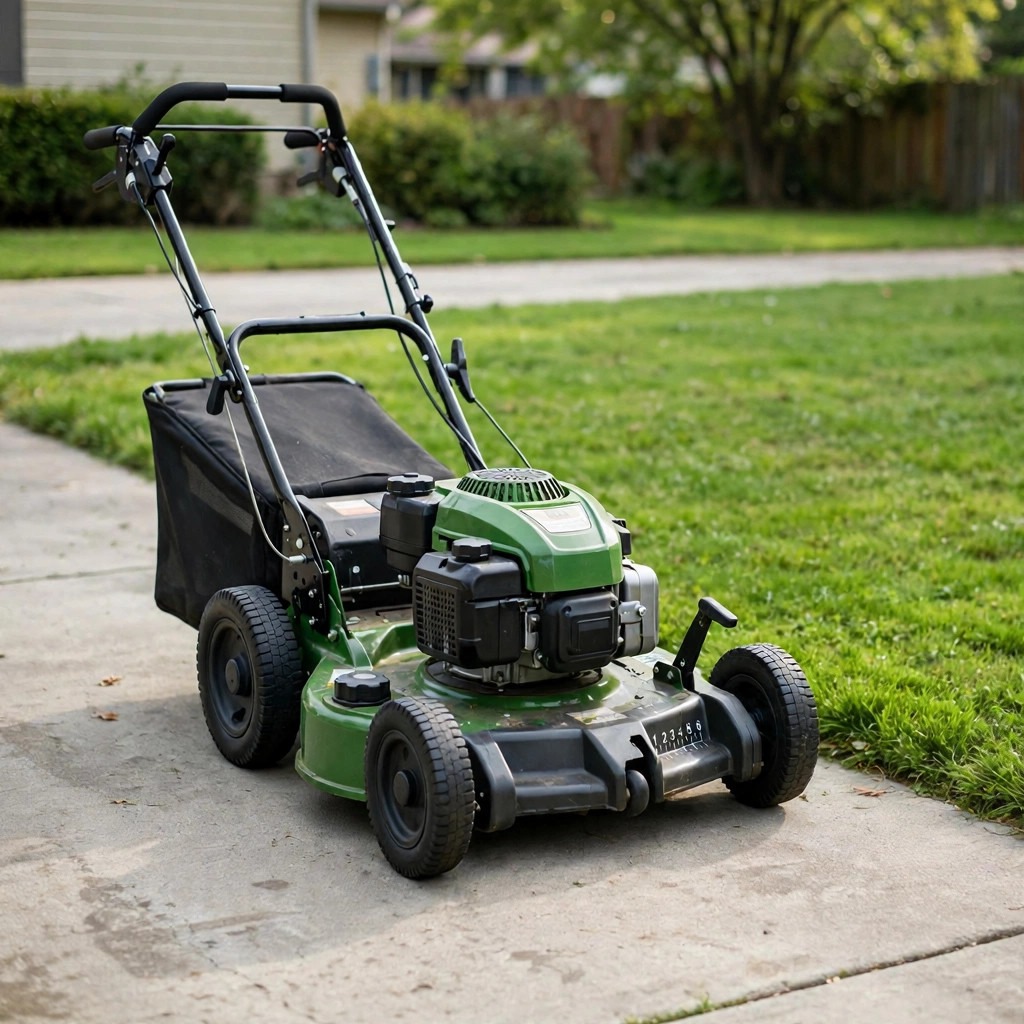
Deck numbers lie. A setting marked 3 on one brand can cut at 2.25 inches on another, and a deck that sits unevenly cuts a slope into every pass. Measuring takes five minutes and only needs doing once per season, plus after any wheel or blade change.
Step 1: Park on a flat, hard surface
Move the mower onto a driveway or garage floor, switch it off, and disconnect the spark plug lead on a petrol mower or remove the battery on a cordless model before you put a hand anywhere near the deck.
Step 2: Measure the blade, not the dial
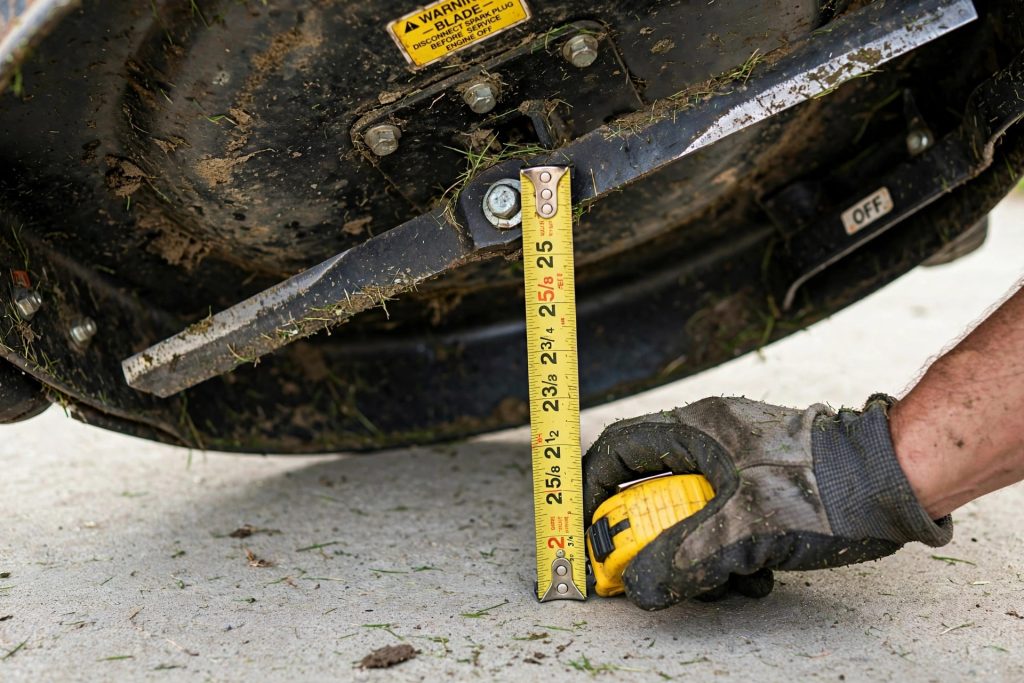
Turn the blade by hand, with a gloved hand and the engine safely off, until its tip points to the side. Measure from the floor up to the cutting edge with a tape or ruler. That distance is your real cutting height. Check both sides: if they differ, the deck or a wheel setting is off, and the mower will scalp on one side of every pass.
Step 3: Set all four wheels to the same notch
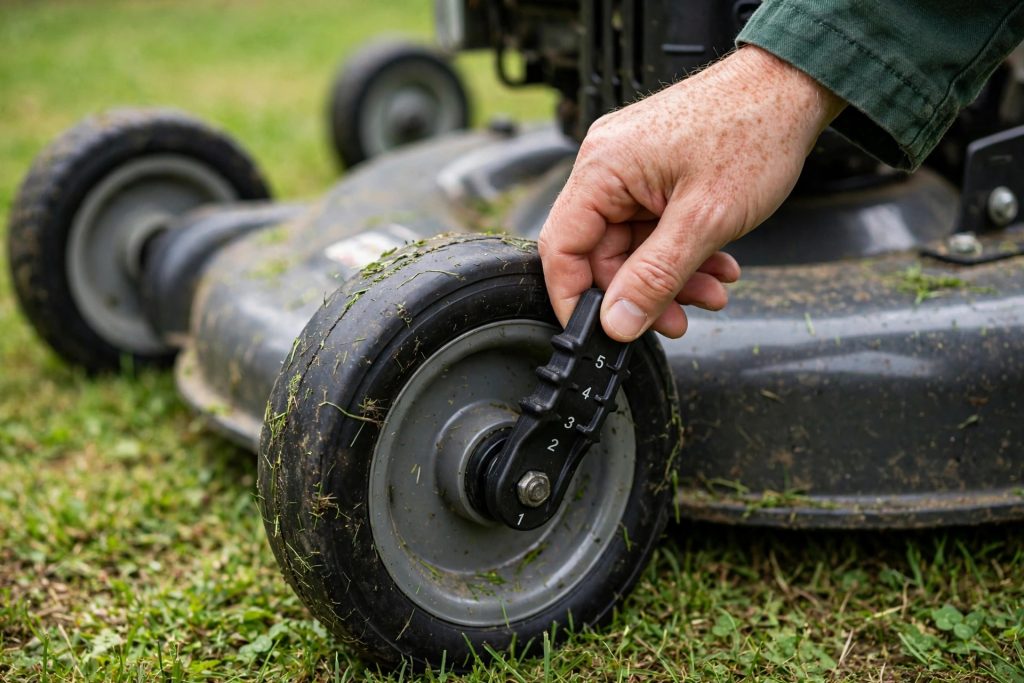
Adjust the height levers so every wheel sits in the same position, then measure again. Some mowers use a single lever for the whole deck, others one lever per wheel. Per-wheel levers drift over a season of bumps, so this is the step most people find a surprise waiting in.
Step 4: Test on a short strip and check the grass
Mow a short strip, stop, and push a small ruler down through the grass to the soil to check the leaf height left behind. Soil unevenness means the result on the lawn can sit a quarter inch either side of the driveway measurement. Adjust one notch and test again if needed. While you are there, look at the cut tips: cleanly sliced tips are right, frayed white tips mean the blade needs sharpening.

Keep the blade sharp through the season. A dull blade tears rather than cuts, leaving ragged tips that lose moisture, turn brown at the edges, and give disease an easier entry. Sharpening two or three times a season is normal for a lawn mowed weekly.
Seasonal Adjustments: The Height Moves With the Year
A fixed deck setting all year is one of the quiet causes of summer thinning. The chart gives the home range. The season decides where inside that range you sit.
Spring: Start at the middle of the range
As growth starts, mow at the middle of your range and keep up with the growth so the one-third rule holds. Spring is the one time a slightly lower cut is harmless on cool-season lawns, because roots are growing as fast as leaves. On warm-season lawns, resist scalping the dormant turf down in one pass to hurry green-up. Step it down over two cuts instead.
Month by month timing for jobs like the first mow, feeding, and pre-emergent sits in our lawn care calendar, which pairs naturally with the heights in this guide.
Summer: Should I mow higher in summer?
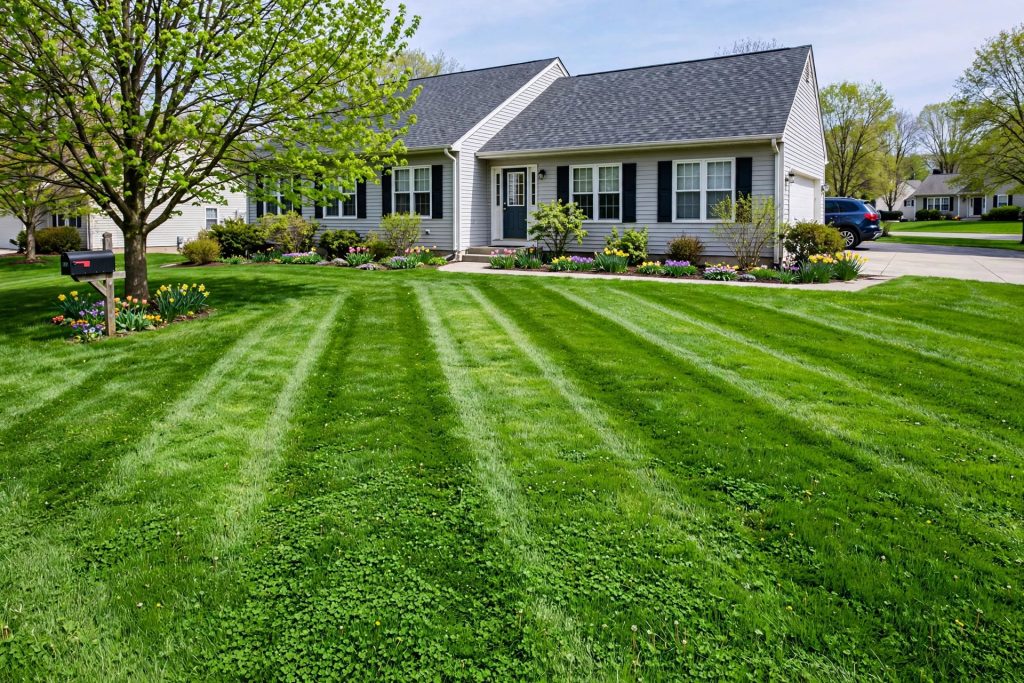
Yes. Raise the deck by about half an inch when heat and drought arrive, and hold it there until the weather breaks. Taller leaf shades the soil surface, keeps the crown and roots cooler, and slows water loss from the soil. On a tall fescue lawn that means moving from 3 inches to 3.5. On Kentucky bluegrass, move from 2.5 to 3. Warm-season lawns in active growth keep their normal range, but the same half inch raise helps any lawn that is going into a dry spell without irrigation.
Feeding interacts with height here: a lawn pushed with nitrogen in summer grows leaf it cannot support. Match feed to the season and the grass, rather than chasing colour in a heatwave.
Fall: Return to the middle, then finish right
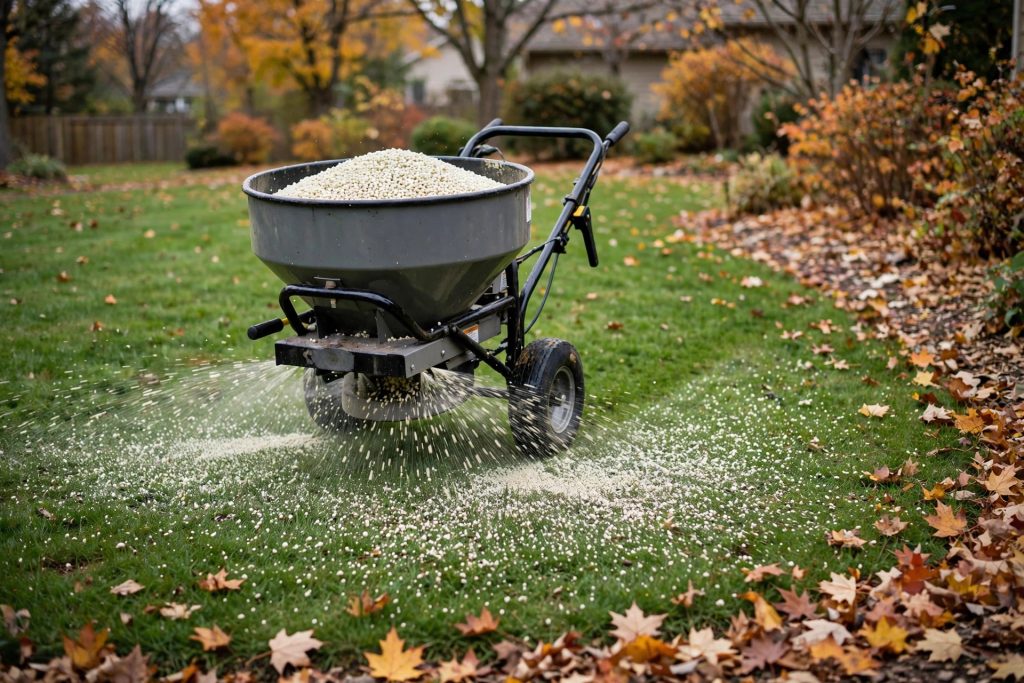
As temperatures cool, bring cool-season lawns back to the middle of the range. Fall is their main root growing season, and steady mowing at the right height, alongside aeration and overseeding, is what thickens a lawn before winter. New seed needs its own mowing care: let seedlings reach about a third taller than the target height before the first cut, and use a sharp blade so young plants are cut, not pulled.
The last mow of the season height
For cool-season lawns, finish the year a little lower than your summer height, at about 2.5 to 3 inches. Grass left long into winter mats down under leaves and snow, and matted turf is where snow mold takes hold. Bring the height down gradually over the last two or three cuts rather than dropping it in one pass. For warm-season lawns, give the lawn a final tidy cut as growth stops, then leave dormant turf alone. Do not scalp dormant Bermuda or zoysia down to the soil in winter: the crowns need what cover they have.
Mowing High vs Mowing Low: What Actually Changes
Homeowners usually cut short for one reason: to mow less often. It backfires. A short lawn grows back fast, weakens, and opens up, while a lawn kept at the top of its range settles into a slower, denser habit.
| Factor | Kept at the top of its range | Cut too low, below its range |
|---|---|---|
| Roots | Deeper roots that reach more water and nutrients | Shallow roots, because the plant diverts energy to regrowing leaf |
| Soil and moisture | Leaf canopy shades the soil, so it stays cooler and dries more slowly | Bare soil bakes in sun, moisture is lost faster, crowns are exposed |
| Weeds | Dense shade at soil level gives weed seeds little light to germinate | Open canopy lets light reach the soil, and crabgrass and other weeds move in |
| Recovery | Handles heat, drought, and foot traffic with less lasting damage | Thins in stress, and bunch grasses leave bare gaps that need reseeding |
| Look | Even, deep colour that holds between cuts | Pale or yellow cast after cutting, with scalped crowns on bumps and edges |
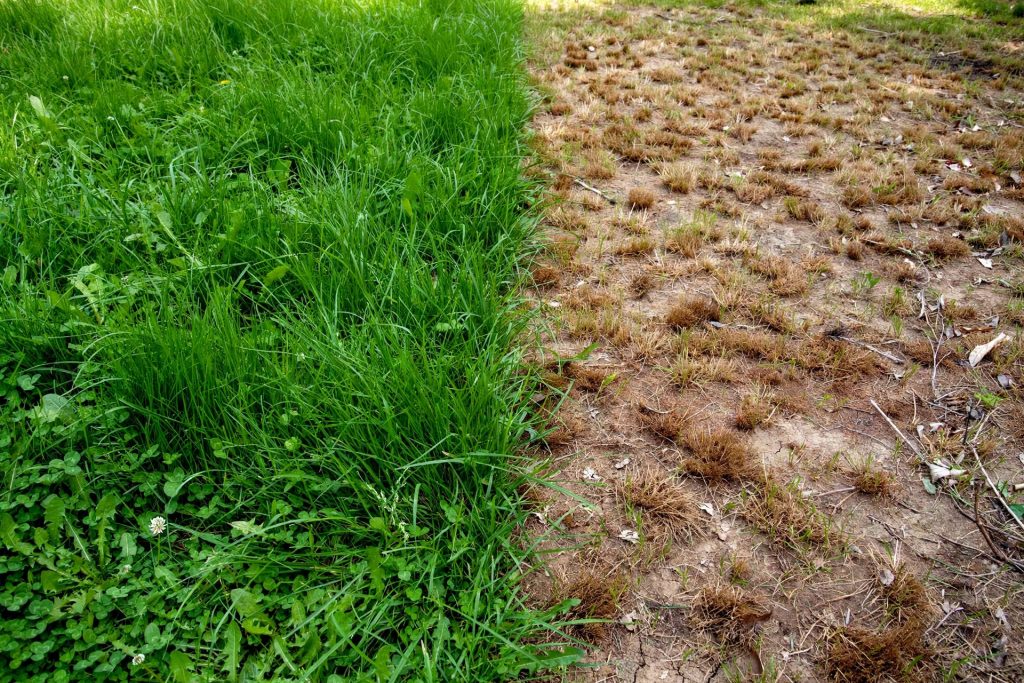
The weed row deserves emphasis, because it is the cheapest weed control you own. Most lawn weed seeds need light at the soil surface to germinate. A canopy held at the right height denies them that light all season. No spray programme compensates for a lawn scalped open every week, and our weed killer guide is best used as a partner to good mowing, not a substitute for it.
Common Mowing Height Mistakes
- Scalping to save time. Cutting extra short does not buy extra days. It stresses the plant, speeds regrowth of leaf, and thins the lawn you were trying to protect.
- One height all year. The summer half inch raise and the lower final cut in fall both exist for a reason. A deck set once in April and never touched is wrong for at least half the year.
- Trusting the deck numbers. Measure the blade on flat concrete. The printed setting and the real cut can differ by half an inch or more.
- Cutting a tall lawn back in one pass. After rain or a holiday, step the height down over several cuts, two or three days apart, following the one-third rule each time.
- Mowing with a dull blade. Torn tips, a white cast over the lawn, and higher disease pressure all trace back to a blade that should have been sharpened weeks earlier.
- Cutting wet grass at a low height. Wet clippings clump, the deck rides up and down on them, and the result is an uneven cut with scalped patches on every bump.
Final Thoughts
Getting the lawn mowing height right is the highest return habit in lawn care, because it costs nothing. Find your grass type in the chart, set the mower by measuring the blade rather than trusting the dial, follow the one-third rule so frequency looks after itself, and move the height with the seasons: middle of the range in spring and fall, half an inch higher in summer heat, and a tidy 2.5 to 3 inches for the final cool-season cut. Do that, and feeding, watering, and weed control all start working on a lawn that is no longer fighting its own haircut.
References
University of Tennessee Extension, Mowing: Optimum Heights by Turfgrass and Conditions
Mississippi State University Extension, Proper Mowing Affects Lawn Appearance and Health
University of Georgia Extension, Mowing Heights for Lawn Grasses in Georgia
LSU AgCenter, Mowing Your Lawn at the Correct Height
Kansas State University Extension guidance, How Low Should You Mow?
Frequently Asked Questions
How high should I cut my grass?
It depends on the type. Most cool-season lawns do best at 2.5 to 3.5 inches, Bermuda and zoysia at 1 to 2 inches, and St. Augustine and bahiagrass taller, at 3 to 4 inches. Use the chart in this guide to find your grass, aim for the middle of its range in mild weather, and move to the top of the range in heat or shade.
Is 4 inches too high for a lawn?
For most grasses, 4 inches is above the recommended range, and the lawn can get floppy, mat down, and hold moisture against the crowns. The exceptions are bahiagrass, which sits happily at 3 to 4 inches, and St. Augustine in summer shade, which can sit at 4 inches. For tall fescue, treat 3.5 inches as the practical ceiling.
Should the last fall mow be shorter?
Yes, a little. Finish cool-season lawns at about 2.5 to 3 inches, brought down gradually over the last few cuts. That height resists matting and snow mold better than long grass, without scalping the crowns before winter. Warm-season lawns just get a final tidy cut as growth stops.
What happens if I cut my grass too short once?
One scalping rarely kills a lawn, but it does shock it. Expect a pale or yellow look for a week or two, faster leaf regrowth at the expense of roots, and a higher chance of weeds in any spots that thin out. Water it if the weather is dry, keep off it where you can, and return to the correct height at the next cut rather than cutting short again to tidy it.
How often should I mow at the right height?
Often enough to follow the one-third rule. In fast spring growth that can mean every four or five days. In slow summer or fall growth it may mean every ten days to two weeks. Let the grass tell you: mow when it reaches about one and a half times your target height.
Does mowing height really help stop weeds?
Yes, it is one of the strongest cultural weed controls you have. A dense canopy at the right height shades the soil, and most weed seeds need light at the surface to germinate. Mowing alone will not clear weeds that are already established, but a lawn held at the correct height brings far fewer new weeds in over a season.

Thesis Link : https://saulibrary.edu.bd/daatj/public/uploads/BAU200601_19-Pp_5.pdf
- 10 Best Garden Tool Sets for Beginners - October 13, 2026
- Lawn Mowing Height by Grass Type -The Complete Chart - October 13, 2026
- Essential Garden Hand Tools -The Complete Guide - October 13, 2026