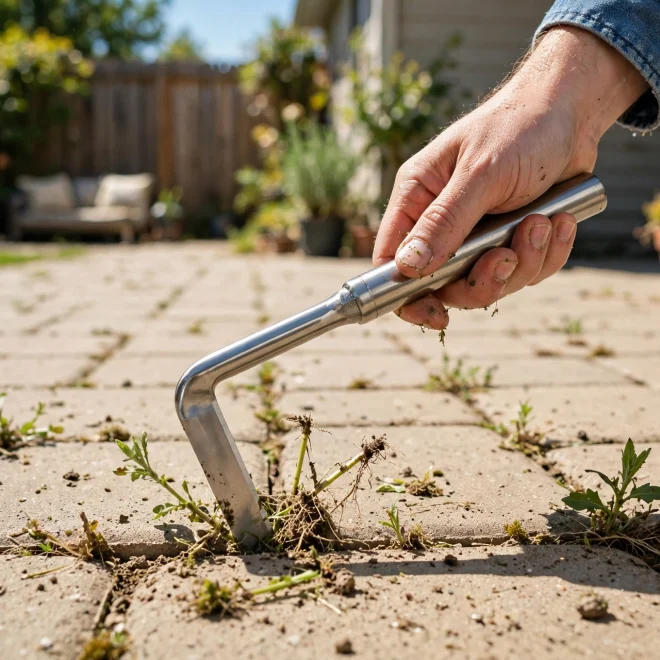

Weeds in paver joints look small, but they are stubborn. A tuft of grass in a driveway crack holds on with a crown and roots wedged into grit, so pulling the tops off only buys you a week. The best crack weeder solves that problem in a simple way: its thin head slips into the joint, gets under the crown, and lifts or slices the whole plant out. This guide compares 10 crack weeder tools by head type, steel, handle length and comfort, so you can pick the right best crack weeder for your patio, sidewalk or driveway without wasting money on a tool that bends on the first tough joint.
A quick honesty note before the picks. This is a thin, generic-heavy category. A few established names sell excellent hand weeders, but most crack-specific tools come from smaller brands, and specs vary between listings. Every pick below was checked against its Amazon or manufacturer listing at writing time. Where a maker does not publish a figure, the table says Not published instead of guessing.
Quick Recommendation
Short on time? Start here.
- Best overall hand tool: GREBSTK Crack Weeder. The classic L-blade with a beech handle, light at 0.44 lb and easy to control in tight joints.
- Best for sore or arthritic hands: Garden Guru Patio Crack Weeder. The soft grip with finger contours takes the strain out of a kneeling job, and it carries a lifetime warranty.
- Best stand-up option: Skidger Xtreme. Work standing with a push and pull cutting action, no kneeling at all.
- Best for mossy joints: CAROD 2-in-1 Wire Brush Crack Weeder. The wire brush strips moss and seedlings fast, and the handle adjusts from about 15 to 57 inches.
- Best budget route: WORKPRO 6-Piece Garden Tool Set. You get a crack weeder plus five other everyday tools in one low-cost set.
- Best precision pick: CobraHead Mini. A forged steel fingernail blade for tight corners and detail work, made in the USA.
Comparison Table: The 10 Best Crack Weeders at a Glance
| Product | Approx price | Head type | Handle length | Weight | Warranty | Best user | Our Rating |
|---|---|---|---|---|---|---|---|
| GREBSTK Crack Weeder | $10 to $16 | L-blade | 13 in | 0.44 lb | Not published | Most homeowners | 9.2 |
| Garden Guru Patio Crack Weeder | $15 to $20 | L-blade | Not published | Not published | Lifetime | Sore hands | 9.0 |
| WORKPRO Crack Weeder 12.5 in | $10 to $15 | L-blade with barb | 12.5 in | Not published | Not published | Value buyers | 8.8 |
| WORKPRO Weed Puller with Lever Base | $10 to $14 | V-fork | 12 in | 6.3 oz | Not published | Taproot weeds | 8.7 |
| CobraHead Mini | $30 to $34 | Fingernail blade | 8.75 in | 4.5 oz | 1 year | Precision work | 8.9 |
| HACHIEMON Nejiri Gama | $15 to $22 | Sickle blade | 13.7 in total | Not published | Not published | Fast slicing | 8.5 |
| Skidger Xtreme | $45 to $55 | Open V-blade | 54 to 60 in | 1.8 lb | 90 days | Stand-up weeding | 8.6 |
| CAROD 2-in-1 Wire Brush Crack Weeder | $28 to $36 | Wire brush + spike | 15 to 57 in | Not published | 18 months | Moss and joints | 8.8 |
| BARAYSTUS 3-in-1 Long Handle Crack Weeder | $25 to $35 | Brush + 2 scrapers | 30.7 to 58.6 in | Not published | Not published | Mixed joint widths | 8.4 |
| WORKPRO 6-Piece Garden Tool Set | $25 to $35 | L-blade in set | Set varies | Set varies | Not published | Budget set buyers | 8.3 |
The prices in this table are approximate bands checked at writing time, and they change often. Check the linked product page for the current price before you buy.
How We Chose
We judged each crack weeder tool from verified manufacturer specifications and owner feedback. There are no hands-on testing claims in this guide, because we did not bench test these tools. Scores come from the scoring system below, applied the same way to every pick.
| Factor | Weight |
|---|---|
| Root removal and clearing effectiveness | 30% |
| Blade quality and durability | 20% |
| Comfort and ergonomics | 20% |
| Reach and handle options | 15% |
| Value and warranty | 15% |
Effectiveness matters most because a crack weeder that leaves the crown behind has failed at its one job. Blade quality comes next: thin stainless blades flex when levered against concrete, while hardened or forged heads survive prying. Comfort counts because this is kneeling work done a few inches at a time.
The 10 Best Crack Weeders, Reviewed
1. GREBSTK Crack Weeder
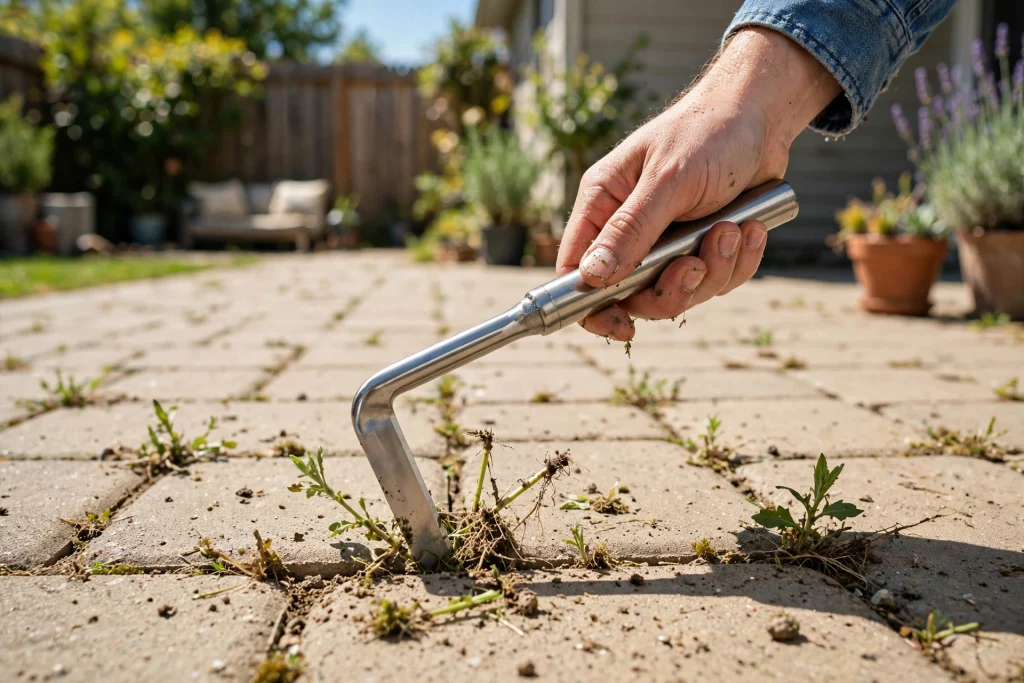
The GREBSTK is the straightforward hand tool most people picture for this job. Its L-shaped, double-sided blade is hardened stainless steel, ground sharp enough to scrape and cut with a back and forth motion, yet thin enough to slip between tightly spaced pavers. The overall length is about 13 inches and the weight is about 0.44 lb, so your wrist does not tire on a long driveway. The solid beech handle has a hanging hole for storage.
In practice, this is the pick for standard paver and sidewalk joints with grass and small broadleaf weeds. Work the blade under the crown, rock it once, and the plant usually comes out whole.
Real-world limitation: the thin blade is a cutter, not a pry bar. Levering hard against concrete can flex it, so loosen deep roots with short strokes instead of one big heave.
Who should buy: homeowners who want one simple, proven hand weeder for regular patio and driveway joints.
Manufacturer source: GREBSTK
2. Garden Guru Patio Crack Weeder
Garden Guru takes the same L-shaped stainless head and fixes the weak point of most crack weeders: the handle. The soft grip is large, with a thumb rest on top and contoured finger grooves underneath, which reduces hand and wrist fatigue during repetitive work. The head is rust resistant stainless, and the tool is backed by a lifetime warranty with a 90 day satisfaction guarantee, which is unusually strong backing for this category.
This is the comfort pick. If your hands ache after ten minutes with a narrow wooden handle, the difference here is real, and owners with grip problems praise exactly that.
Real-world limitation: the listing does not publish an overall length or weight, so if you need exact dimensions before buying, check the current listing first.
Who should buy: gardeners with arthritis, weak grip or sore wrists, and anyone who weeds joints often enough that comfort decides whether the job gets done.
Manufacturer source: Garden Guru
3. WORKPRO Crack Weeder, 12.5 Inch
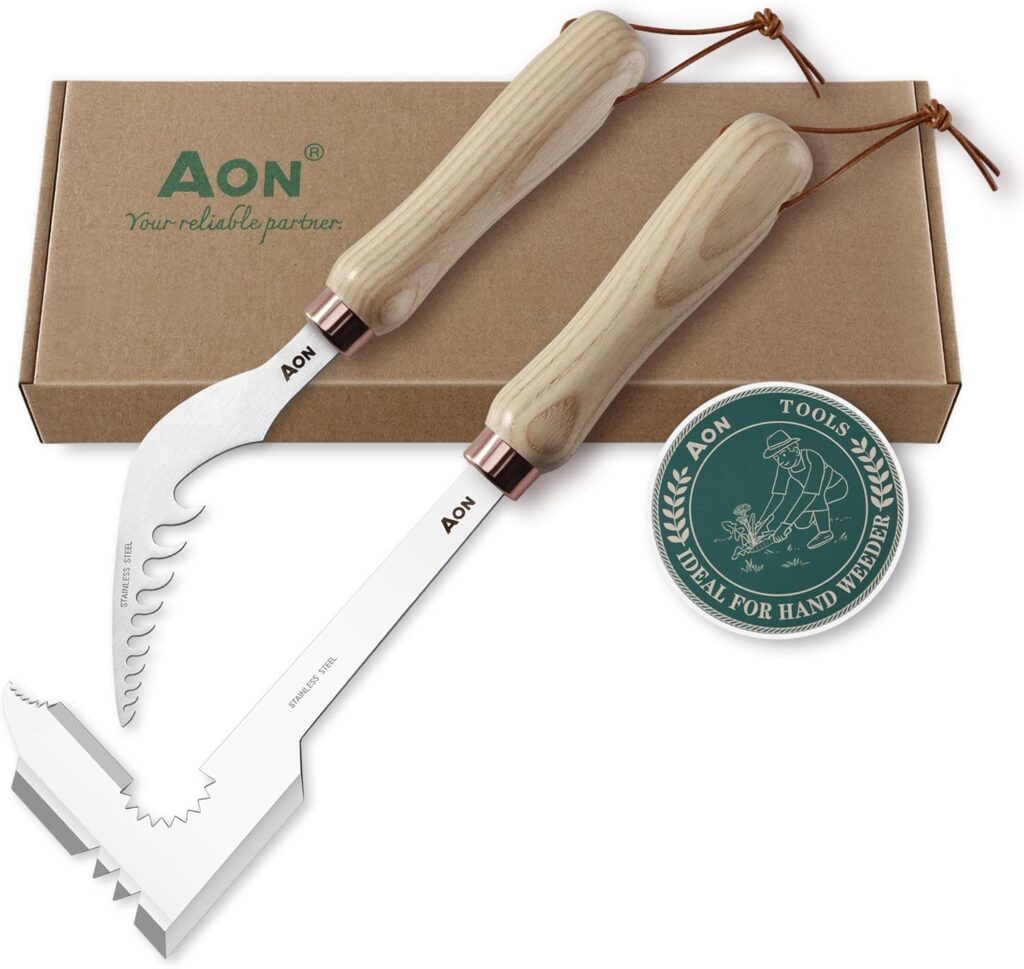
WORKPRO sells several crack weeders, and the 12.5 inch model with the soft PP and TPR handle is the one to look for. The stainless head carries a barb profile made for crack weeds and moss, and the soft handle is kinder than bare wood over a long session. At about 12.5 inches it sits in the same useful size class as the GREBSTK, with a slightly more cushioned grip.
Presentation differs here on purpose: think of this pick as the value alternative. You give up the beech handle feel, and you gain a modern soft grip at a similar street price.
Real-world limitation: WORKPRO lists several similar weeders side by side, so confirm you are ordering the 12.5 inch crack weeder and not the general 5-in-1 puller.
Who should buy: buyers who want a recognised tool brand and a soft grip without paying for a premium name.
Manufacturer source: WORKPRO official store
4. WORKPRO Weed Puller with Lever Base
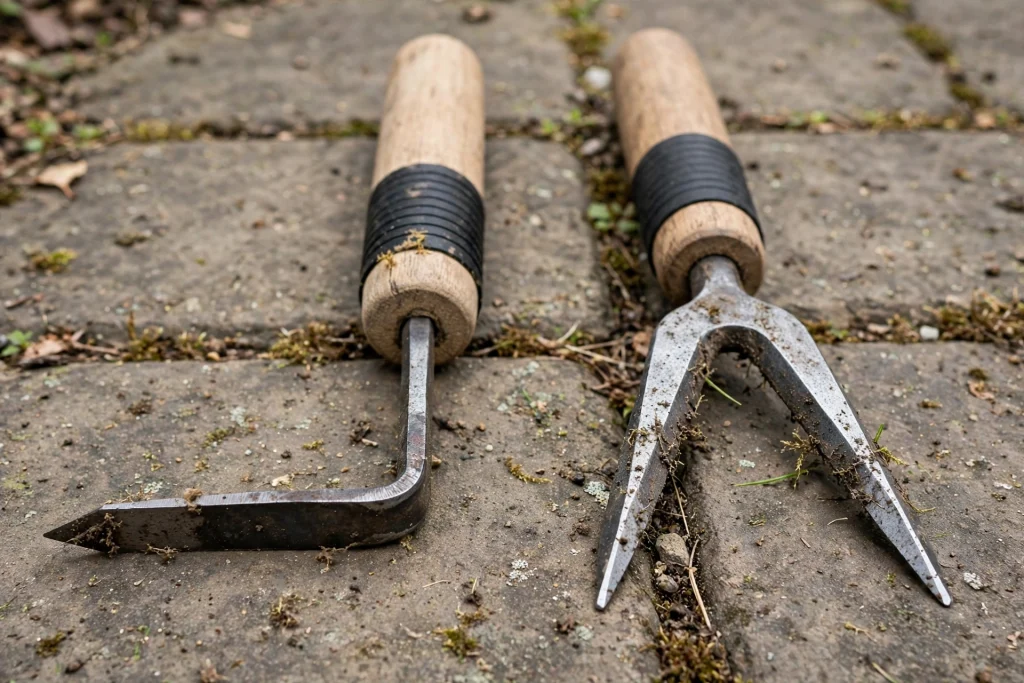
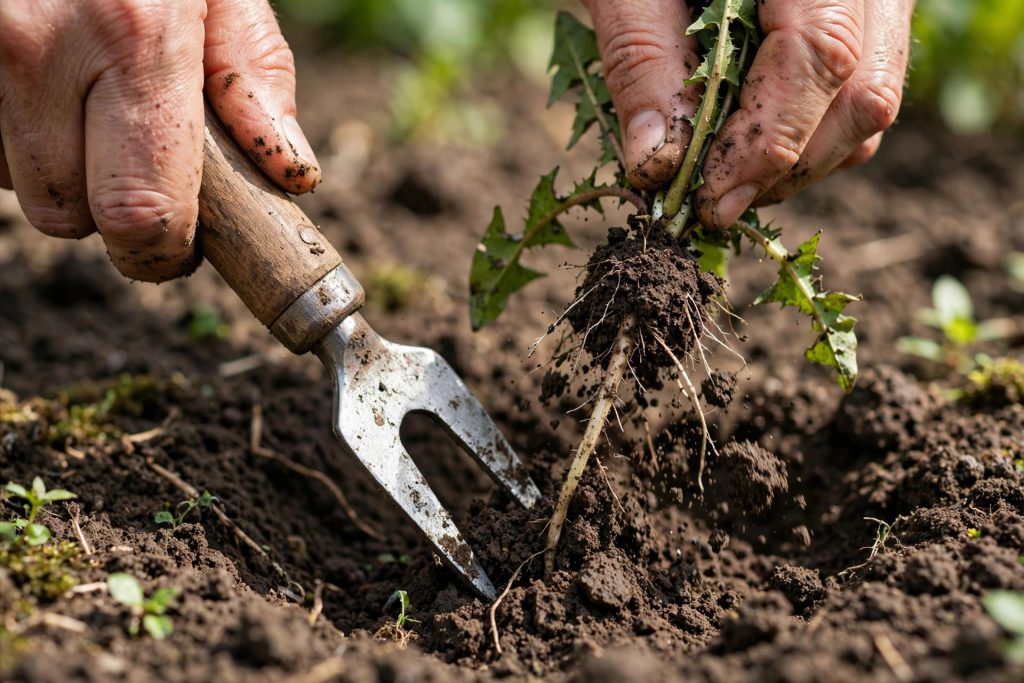
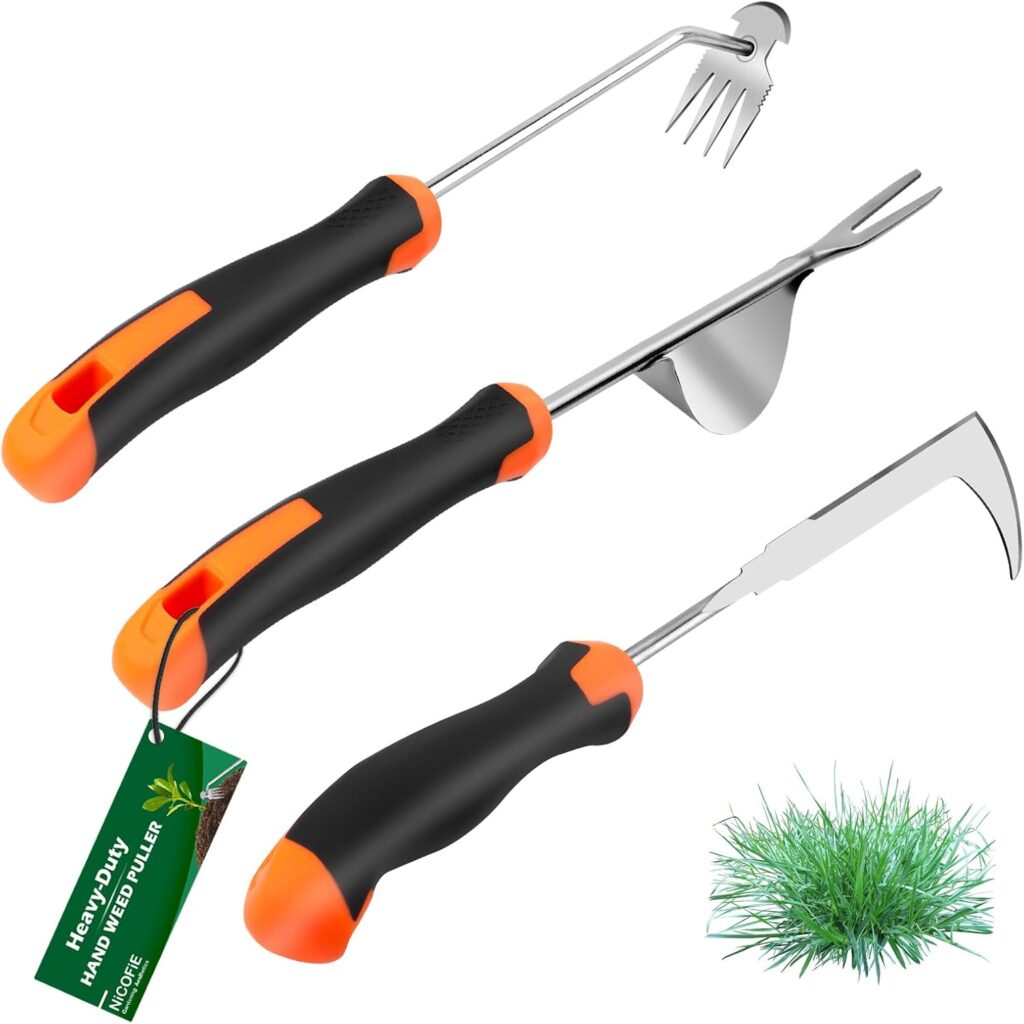
Not every crack weed is a slicing job. Dandelions and other taproot weeds that seed into wide joints need a fork and leverage, not a blade. This WORKPRO puller uses a V-shaped fork on a curved metal lever base: rest the base on the paver, work the fork around the root, and press down so the plant lifts out with the taproot intact. It is about 12 inches long and about 6.3 oz, in polished stainless with a soft handle.
Real-world limitation: the fork needs a joint wide enough to work around the root. In hairline cracks it cannot get in, and the L-blade picks above are the better tool.
Who should buy: anyone whose main problem is dandelions and taproot weeds in wider joints and gravel edges.
Manufacturer source: WORKPRO official store
5. CobraHead Mini
The CobraHead Mini is not sold as a crack weeder, and this guide says so plainly. It is a general precision weeder that owners reach for in tight spaces, which is why it earns a place here. The forged, tempered steel fingernail blade acts like an extension of your finger: it scalps, digs and lifts in corners where an L-blade feels clumsy. It weighs just 4.5 oz, measures 8.75 inches, uses a recycled composite handle, is made in Wisconsin, USA, and carries a one year warranty.
Real-world limitation: at 8.75 inches it is a detail tool. Clearing a whole driveway with it would be slow work, so pair it with a faster L-blade for the long runs.
Who should buy: detail-focused gardeners, container and raised bed owners, and anyone weeding tight corners around steps and edging.
Manufacturer source: CobraHead
6. HACHIEMON Nejiri Gama Japanese Weeding Sickle
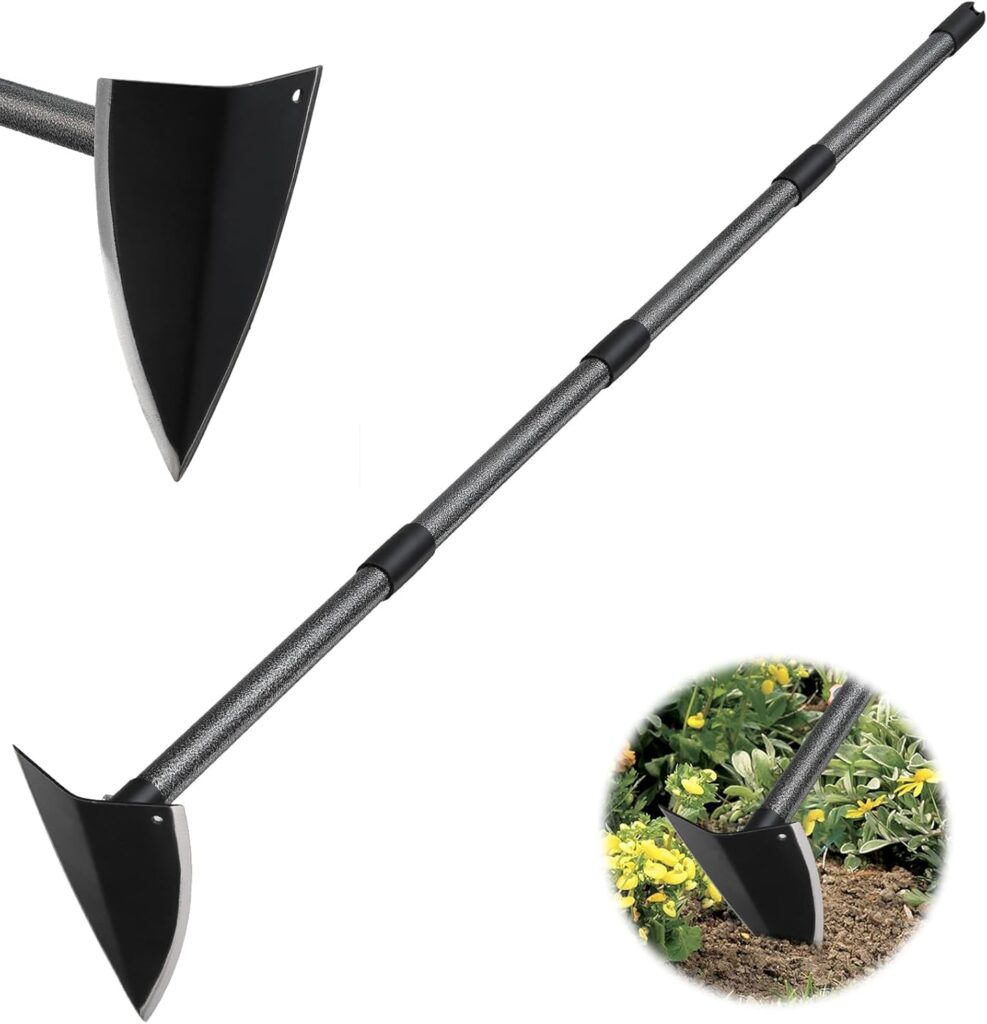
The nejiri gama takes a different approach: instead of hooking under the crown, its twisted sickle blade sits flat and slices weeds off at or just below the surface as you pull it toward you. The HACHIEMON version has a blade of about 4.8 inches and a total length of about 13.7 inches, made in Japan with a very sharp edge. In soft joint grit and gravel, a sharp sickle is the fastest tool in this roundup.
Real-world limitation: slicing leaves roots behind more often than hooking does, so tough perennial weeds can regrow. Carbon steel also needs a wipe of oil after use to stop rust, and left-handed and right-handed versions exist, so order the correct one.
Who should buy: gardeners who prefer speed, work gravel paths and loose joints, and are happy to re-slice regrowth quickly.
Listing source: eBay listing
7. Skidger Xtreme
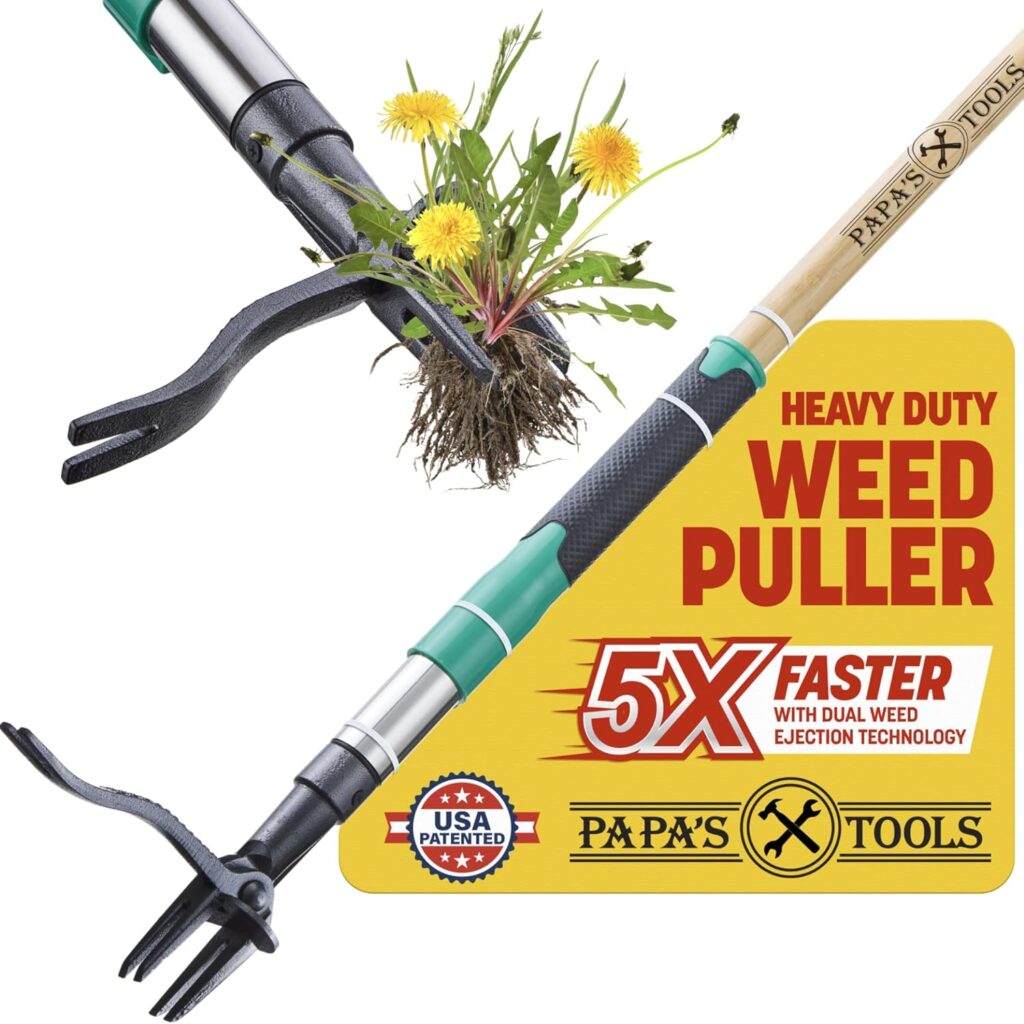
The Skidger Xtreme is the stand-up answer. Its open V-shaped blade cuts on both the push and the pull, the pointed tip reaches into corners, and the long handle, listed at 54 inches on Amazon and about 60 inches in retail coverage, keeps you off your knees entirely. It weighs about 1.8 lb, uses a fiberglass handle, and carries a 90 day manufacturer warranty.
Speed is the selling point: owners report covering ground far faster than with a hand tool, including in gravel.
Real-world limitation: owner feedback is honestly mixed. Some users find it not sharp enough and weak on tough, woody weeds, so treat it as a fast surface and joint cutter, not a deep root extractor.
Who should buy: homeowners with long driveways, bad knees or a bad back, who want to clear joints standing up.
Manufacturer source: Skidger
8. CAROD 2-in-1 Wire Brush Crack Weeder
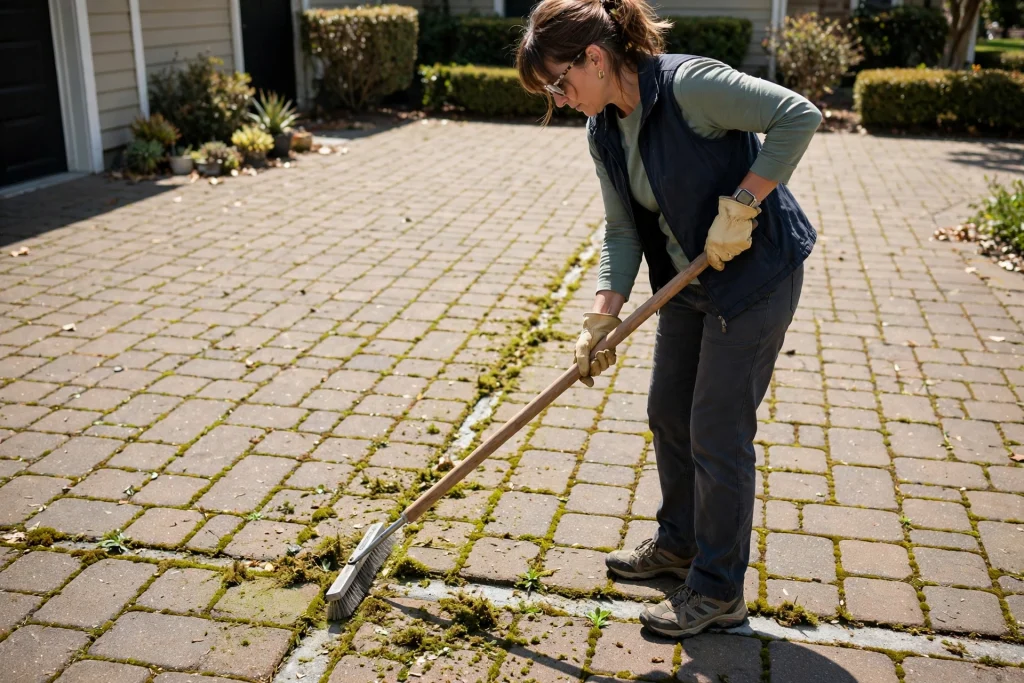
Moss is a different problem from rooted weeds, and this is the moss tool. The CAROD combines a steel wire brush head with a metal spike scraper: the spike hooks out rooted weeds and packed dirt, then the brush strips moss, algae and seedlings from the joint. The sectional stainless handle adjusts from about 15 to 57 inches, two brush heads are included so a worn head can be swapped, and the listing states an 18 month warranty.
Real-world limitation: a wire brush does not remove established roots. It is a maintenance tool between deep weedings, and on soft stone you should test the bristles in a corner first.
Who should buy: owners of shaded, damp patios and brick paths where moss returns every season.
Listing source: Desertcart listing
9. BARAYSTUS 3-in-1 Long Handle Crack Weeder
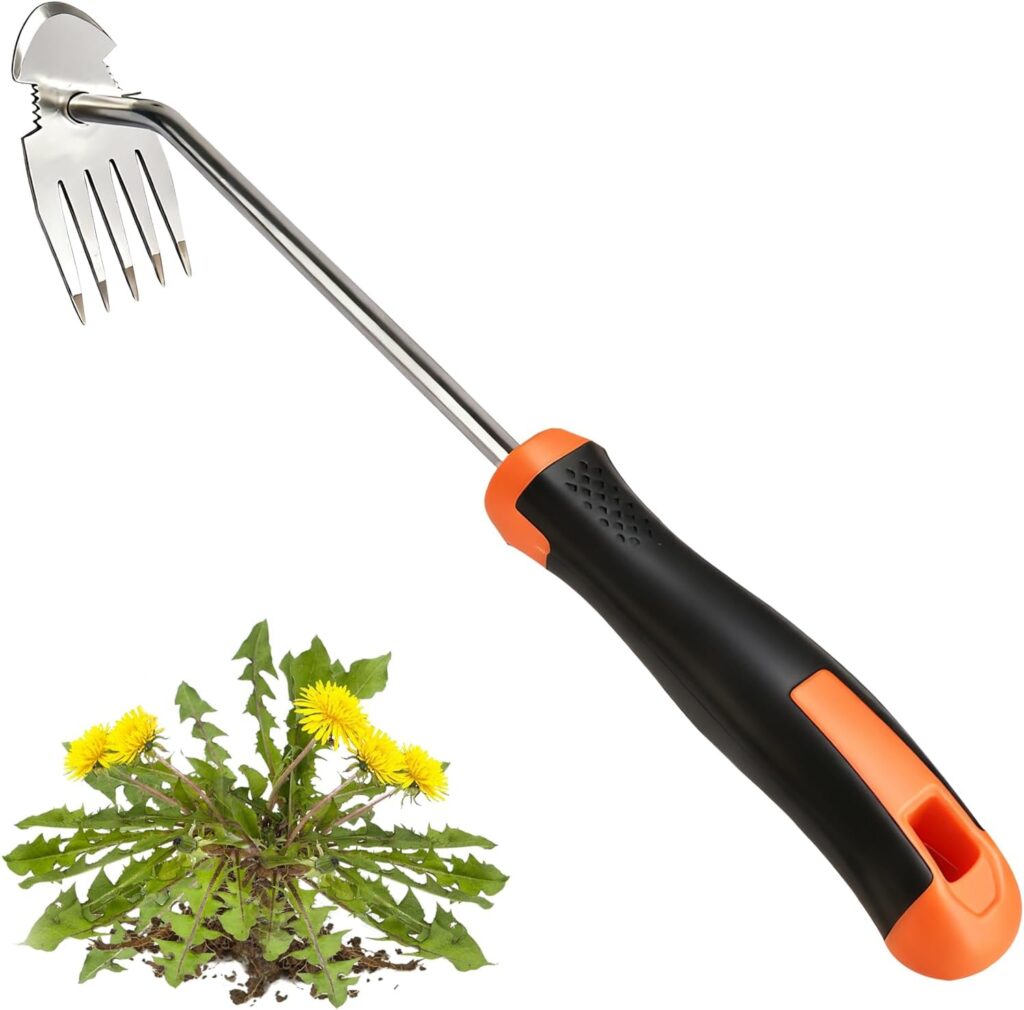
BARAYSTUS packages three heads in one long handle tool: a curved scraper for standard narrow gaps, a triangular scraper for wider crevices, and a stiff metal wire brush for moss and dirt. The blade steel is listed at 0.08 inch thick stainless, and the handle adjusts to three lengths, about 30.7, 44.5 and 58.6 inches. For a patio with mixed joint widths, one tool that swaps approach beats carrying three hand tools.
Real-world limitation: it is a small Amazon brand, so long term parts support is unproven. Check the current listing for brush head availability before relying on replacements.
Who should buy: homeowners with a mix of narrow and wide joints who want stand-up reach plus brush and scraper options in one purchase.
Listing source: eBay listing
10. WORKPRO 6-Piece Garden Tool Set
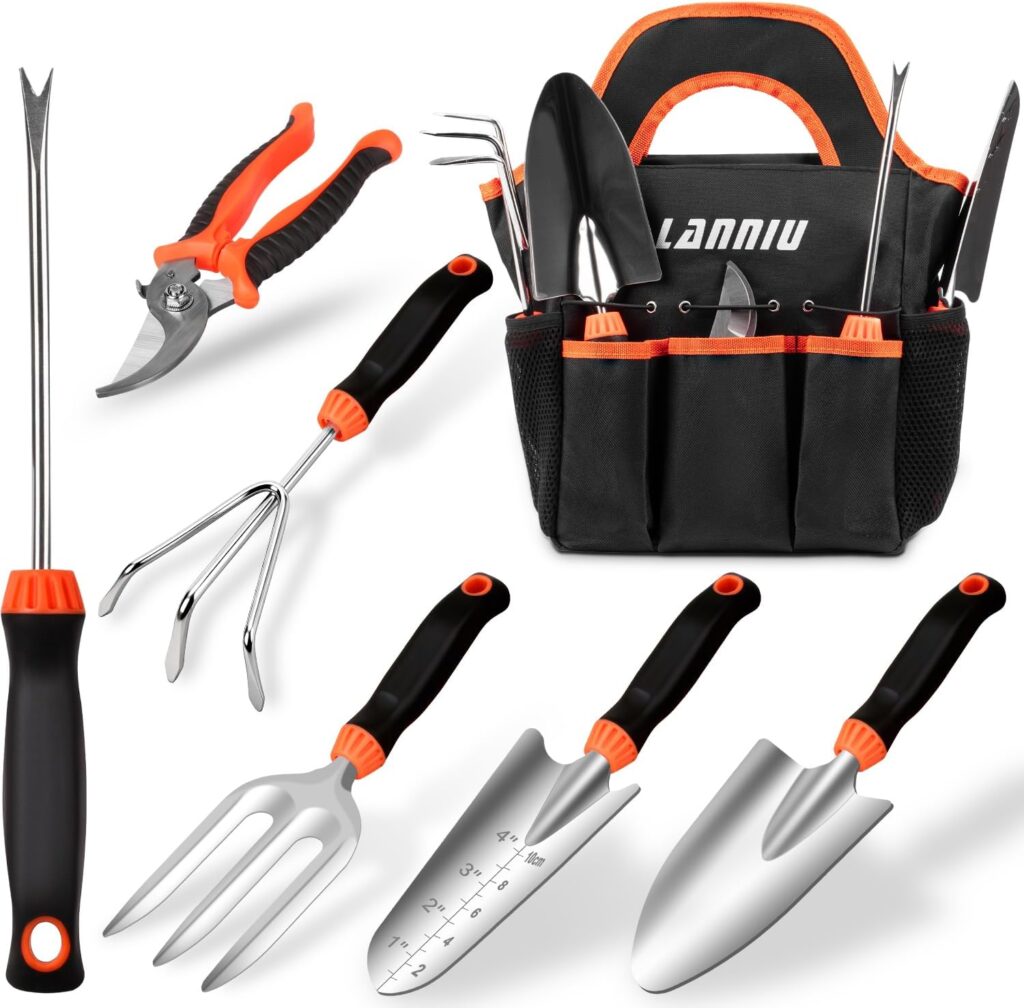
The budget slot goes to a set, not a single tool. The WORKPRO 6-piece set includes a trowel, rakes, a double hoe and cultivator, plus a crack crevice weeder, all in carbon steel with soft rubber handles. If your patio joints are only part of the weekend work, buying the weeder inside a useful set is better value than a single specialist tool.
Real-world limitation: the included crack weeder is a general set tool, not the equal of the dedicated GREBSTK or Garden Guru heads for a whole driveway of tough joints.
Who should buy: new homeowners and budget buyers who need basic tools for beds and borders as well as the patio.
Manufacturer source: WORKPRO official store
L-Shaped vs V-Shaped Weeder: Which Head Do You Need?
An L-shaped blade hooks and slices. Slide it into the joint, get the short leg under the crown, and pull: the weed comes out with most of its root, and the edge also scrapes the joint clean. This is the right default for grass, moss and small weeds in standard paver joints.
A V-shaped fork grips and levers. The notch traps the stem or taproot, and a lever base turns your press into lift. It wins on dandelions and deep taproots in wider joints, and loses in hairline cracks where the fork cannot enter.
Most patios need the L-blade first. Add the V-fork only if taproot weeds are your recurring problem.
How to Stop Weeds Coming Back in Cracks
The tool is only half the fix. Weeds return because the joint gives seeds a place to settle, with grit, moisture and shelter from mowing. After a deep weeding, do this once and the job gets much easier:
- Sweep or brush out loose debris and old, broken-down joint sand.
- Let the joints dry fully.
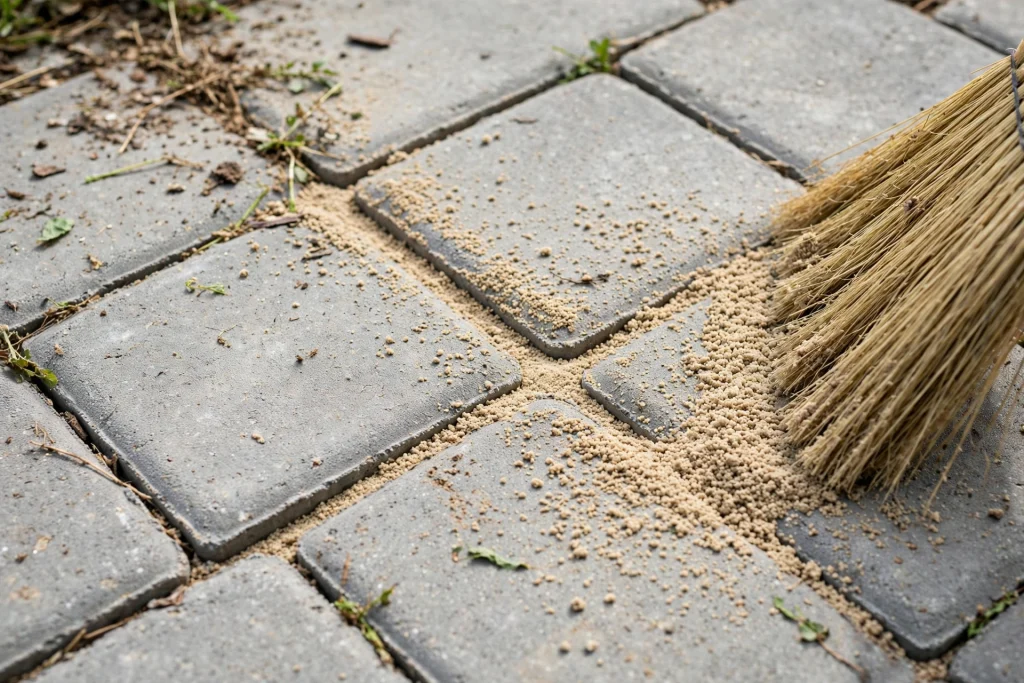
- Refill with polymeric sand, sweeping it into the joints and topping up until they are full. The binders in polymeric sand set firm when misted with water, so seeds have far fewer places to lodge.
- For stone joints, repointing with mortar is the equivalent lasting fix.
- After that, a quick pass with a wire brush every few weeks removes seedlings before they root deeply.
Skipping the refill is the most common reason people conclude that hand weeding does not work. The weeding worked. The empty joint invited the next crop.
Crack Weeders vs Weed Killer for Patios
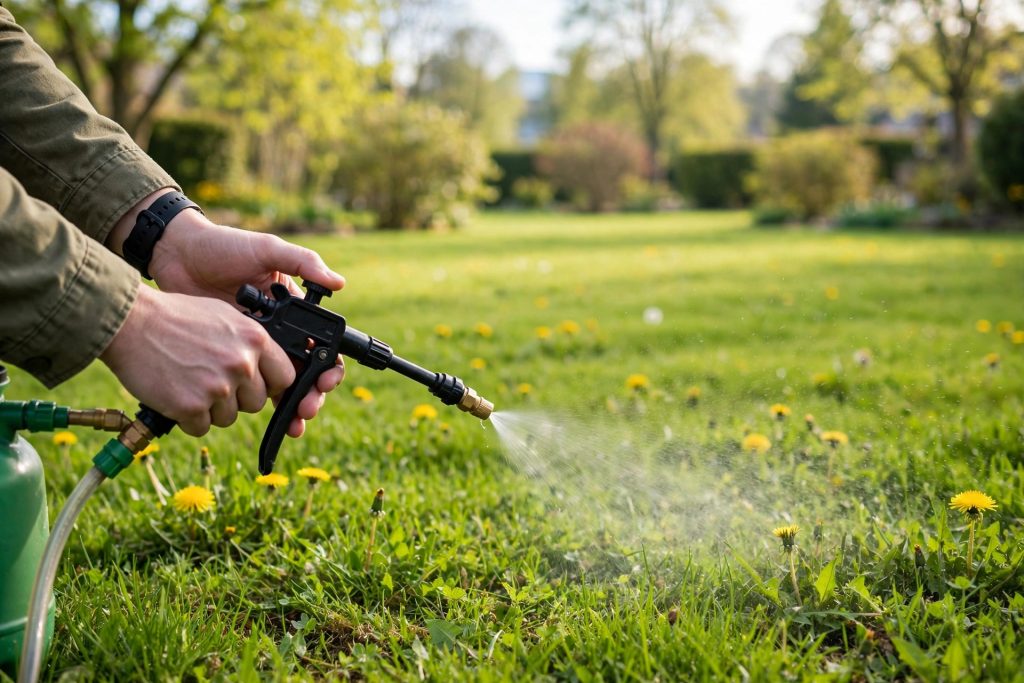
A crack weeder is the chemical-free option, and for joints near beds, pets and children that matters. It also removes the root, which a contact spray does not always do. The honest limit is scale: hand weeding a long, badly infested driveway takes real time, and lawn or bed weeds across a wide area are a different job. For those, a selective lawn weed killer used as labelled is the practical tool, and our weed killer roundup covers that side. Use each method where it is strongest instead of forcing one tool onto every weed.
Buying Guide: What to Check Before You Buy
- Head type first. L-blade for standard joints, V-fork for taproots, wire brush for moss, sickle for fast slicing in loose grit.
- Steel and thickness. Hardened stainless or forged steel survives contact with concrete. Very thin blades bend when levered, so never use any crack weeder as a pry bar.
- Handle length. Short hand tools around 12 to 13 inches give control. Adjustable long handles and stand-up tools trade some precision for a saved back and knees.
- Grip. On a kneeling job done inches at a time, a shaped soft grip is worth more than a small saving.
- Rust care. Stainless heads shrug off damp joints. Carbon steel sickles cut beautifully but need drying and a light oil wipe.
- Replaceable heads. On brush models, check that spare brush heads exist before you buy, because bristles are a wear item.
- Warranty. In a category full of no-name listings, a published warranty, from Garden Guru at one end to CAROD at the other, is a useful quality signal.
Final Choice
For most homeowners, buy the GREBSTK first. It is the simple, light, sharp L-blade that handles standard paver and sidewalk joints well, and it costs little. If your hands hurt, choose the Garden Guru instead and take the lifetime warranty with it. If kneeling is the problem, skip the hand tools entirely and start with the Skidger Xtreme for standing work, then add a hand L-blade for corners. Mossy, shaded patios should start with the CAROD brush tool and a bag of polymeric sand, because the refill after weeding is what keeps the joints clear.
References
- GREBSTK Crack Weeder (manufacturer)
- Garden Guru Patio Crack Weeder (manufacturer)
- WORKPRO Crack Weeder, 12.5 Inch (manufacturer)
- WORKPRO Weed Puller with Lever Base (manufacturer)
- CobraHead Mini Weeder and Cultivator (manufacturer)
- HACHIEMON Nejiri Gama listing (eBay)
- Skidger Xtreme Weeder (manufacturer)
- CAROD 2-in-1 Wire Brush Crack Weeder listing (Desertcart)
- BARAYSTUS 3-in-1 Long Handle Crack Weeder listing (eBay)
- WORKPRO 6-Piece Garden Tool Set (manufacturer)
- Skidger Xtreme coverage, House Digest
- How to keep weeds from growing between patio pavers, Southern Living
Frequently Asked Questions
What is a crack weeder?
A crack weeder is a hand or long handle tool with a thin head shaped to fit into paver, patio and driveway joints. L-blades hook under the weed crown, V-forks lever out taproots, and wire brushes strip moss and seedlings.
Do crack weeders remove roots?
An L-blade or V-fork used properly removes the crown and most of the root, which is what stops regrowth. Trimming the tops off, or slicing with a sickle, leaves roots behind and the weed can return.
How do I stop weeds growing back between pavers?
Weed deeply first, sweep out the loose debris, then refill the joints with polymeric sand and mist it to set. Full joints give seeds nowhere to settle. A quick brush pass every few weeks removes new seedlings early.
L-shaped or V-shaped weeder, which is better?
L-shaped is the better default for grass, moss and small weeds in standard joints. V-shaped is better for dandelions and taproot weeds in wider joints, where the fork can grip the root and lever it out.
Can I use a wire brush instead of a crack weeder?
For moss, algae and seedling weeds, yes, and it is faster over a wide area. For established rooted weeds, no: a brush cleans the surface but leaves the roots, so follow up with an L-blade for those plants.
Are crack weeders better than weed killer for patios?
For joints near beds, pets and children, a crack weeder is the chemical-free choice and it removes the root. Weed killer is more practical for large areas of lawn and bed weeds. Most homes end up using each where it works best.

Thesis Link : https://saulibrary.edu.bd/daatj/public/uploads/BAU200601_19-Pp_5.pdf
- 10 Best Crack Weeders for Pavement - October 16, 2026
- How to Aerate a Lawn: Step by Step Guide - October 15, 2026
- 10 Best Loppers for Thick Branches - October 14, 2026