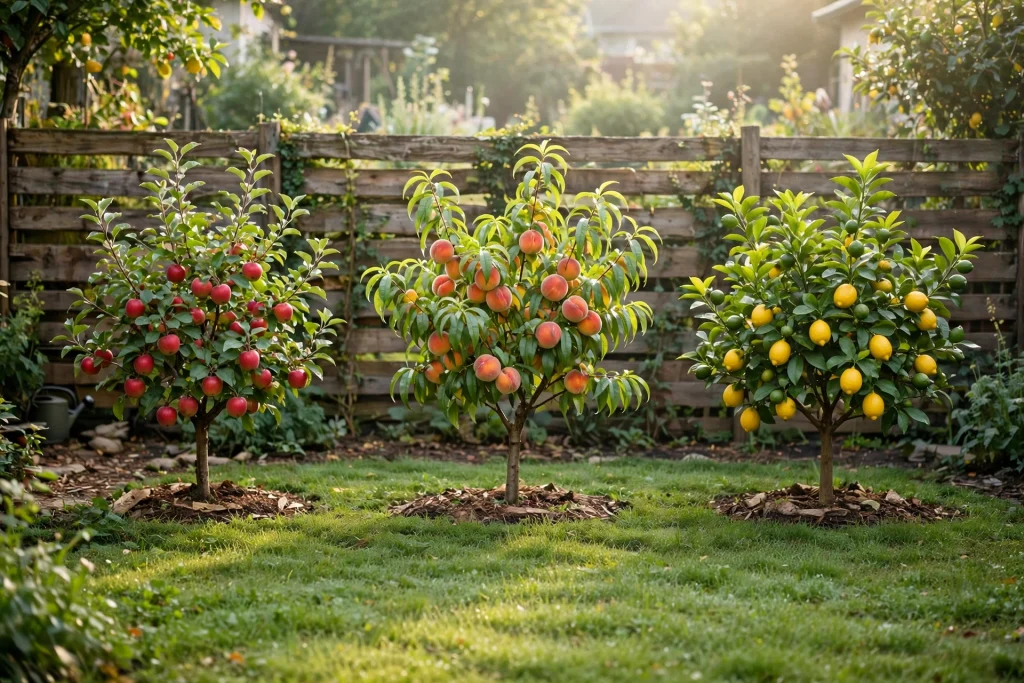

A standard apple tree can reach 25 feet tall and swallow a small yard whole. The best dwarf fruit trees do the same job in a fraction of the space: real apples, peaches, cherries and lemons from a tree you can pick without a ladder, planted in a bed the size of a parking space or a pot on a patio. A dwarf Honeycrisp on M9 rootstock tops out around 8 to 10 feet. A Bonanza peach never passes 6 feet. Three such trees fit along one fence line with room left over for a lawn chair.
This guide compares 10 real dwarf fruit trees and varieties you can buy in the United States, all verified against nursery, manufacturer, or university Extension pages in November 2026. Where sources disagree, this guide prints the range and says so instead of picking the bigger or smaller number. Where a maker does not publish a figure, this guide says ‘Not published’ instead of guessing.
A fruit tree is a long game, and most small yards pair it with a vegetable patch for faster harvests, which is why our roundup of the best vegetable seeds to buy online sits beside this one.
Quick Recommendation
Here is the short answer before the detail: the best dwarf fruit trees for your yard depend on your climate, your space, and whether you have room for a second tree.
- Best overall: Dwarf Honeycrisp Apple. The most famous eating apple in America, on a tree that stays 8 to 10 feet tall and fruits in 2 to 3 years, if you have a second apple variety nearby for pollination.
- Best for a patio pot: Bonanza Patio Peach. A genetic dwarf that never passes 6 feet, self-fertile, and happy in a 15 to 20 gallon container.
- Best for year-round fruit: Improved Meyer Lemon. Self-fertile, evergreen, and it fruits for months at a time, indoors in winter where the climate is cold.
- Best cherry for one tree only: Stella Cherry on Gisela 5. The first self-fertile sweet cherry, so a single tree in a small yard still crops.
- Best for warm climates: Brown Turkey Fig. Self-fertile, drought tolerant once established, and often two crops a year.
- Best tiny nectarine: Necta Zee. A genetic dwarf that rarely passes 6 feet, with full-size, sweet freestone fruit.
- Best plum for a small yard: Santa Rosa Plum on semi-dwarf rootstock. Large, sweet fruit and partly self-fertile, but only if you prune it every year.
- Best classic pear: Bartlett Pear on OHxF 333. The standard eating pear, on a fire blight resistant semi-dwarf rootstock, 12 to 16 feet tall.
- Best for mild winters: Gold Kist Apricot. Only 300 chill hours, self-fruitful, and bred for warm-winter regions.
- Best ornamental fruit tree: Dwarf Red Pomegranate, Punica granatum Nana. Orange-red flowers, ruby fruit, and 2 to 3 feet at maturity.
Comparison Table: 10 Best Dwarf Fruit Trees
| Product | Best For | Mature Height | Chill Hours | Zones | Pollination | Our Rating |
|---|---|---|---|---|---|---|
| Dwarf Honeycrisp Apple (M9 rootstock) | Best overall | 8-10 ft | 800-1,000 | 3-9 | Needs a partner | 9.1/10 |
| Bonanza Patio Peach | Patio pots | 4-6 ft | 250-500 | 6-9 | Self-fertile | 9.0/10 |
| Improved Meyer Lemon | Year-round fruit | 6-8 ft in pots | Not applicable | 8-11 | Self-fertile | 8.9/10 |
| Stella Cherry on Gisela 5 | One tree only | 8-12 ft | 400-800 | 5-9 | Self-fertile | 8.8/10 |
| Brown Turkey Fig | Warm climates | 10-15 ft pruned | Low, not published | 7-10 | Self-fertile | 8.7/10 |
| Necta Zee Nectarine | Tiny spaces | 5-6 ft | 400 | 6-9 | Self-fruitful | 8.6/10 |
| Santa Rosa Plum, semi-dwarf | Small yards | 12-20 ft, pruned smaller | 300-500 | 5-9 | Partly self-fertile | 8.5/10 |
| Bartlett Pear on OHxF 333 | Classic pears | 12-16 ft | 500-600 | 5-9 | Partly self-fruitful | 8.4/10 |
| Gold Kist Apricot | Mild winters | 10-15 ft | 300 | 7-10 | Self-fruitful | 8.3/10 |
| Dwarf Red Pomegranate ‘Nana’ | Ornamental fruit | 2-3 ft | About 100-150 | 7-11 | Self-pollinating | 8.2/10 |
A note on the numbers in this table: chill hours and mature heights come from different sellers, and sellers do not always agree. The table prints the range where sources conflict, and each product section names the conflict.
1. Dwarf Honeycrisp Apple (Malus domestica ‘Honeycrisp’)
Our rating: 9.1/10
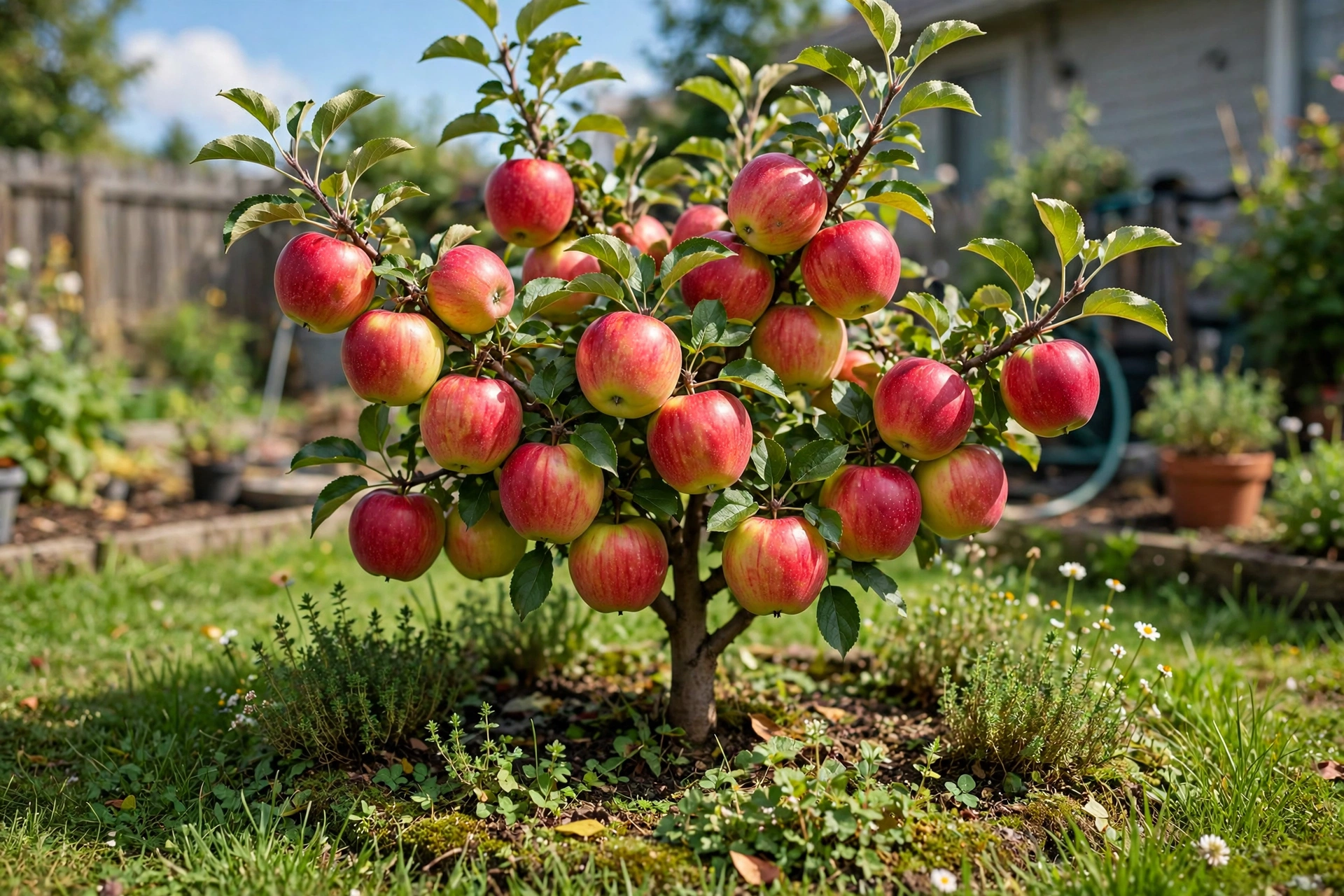
Honeycrisp is the apple most people ask for by name, and on a dwarf rootstock it finally fits a small yard. The fruit is the reason it leads this roundup: crisp, juicy, honey-sweet flesh with a striped red skin, an apple that eats as well in October as it does straight off the tree in late summer. A dwarf Honeycrisp on M9 or Bud 9 rootstock stays 8 to 10 feet tall, which means you can pick the whole crop standing on the ground.
The catch is pollination, and it is not a small one. Honeycrisp is not self-fertile. It needs a second apple variety blooming at the same time, and the usual partners are Gala, Granny Smith, McIntosh, Empire, or Red Delicious. In a small yard that second tree is often another dwarf apple, which is a fine solution if you planned for it and a nasty surprise if you did not. A flowering crabapple or a neighbour’s apple tree can also do the job, but do not count on a neighbour you have not asked.
One honest warning comes with the variety. The height on the tag depends on the rootstock, and sellers are not consistent about it. True dwarf forms on M9 or Bud 9 stay 8 to 10 feet, but the same variety sold on G.969 rootstock is semi-dwarfing and reaches 10 to 15 feet, and some sellers list it simply as “dwarf” either way. Read the rootstock on the tag.
Verified specifications: Mature height 8-10 ft on M9/Bud 9 dwarf rootstock, 10-15 ft on semi-dwarf forms. Chill hours 800-1,000. Zones 3-9 (some sellers list 3-7 or 4-9). Pollination: needs a compatible partner. Years to first fruit: 2-3. Container: yes, in a large pot with permanent staking. Source: Grow Organic (Dave Wilson Nursery data), Online Orchards, Nature Hills.
Real-world limitation: Honeycrisp is only moderately disease resistant, so expect to watch for apple scab and fire blight in humid regions.
Who should buy: Gardeners in zones 3 to 9 with cold winters who want the best eating apple in this roundup and have room, or a plan, for a second apple variety nearby.
2. Bonanza Patio Peach (Prunus persica ‘Bonanza’)
Our rating: 9.0/10
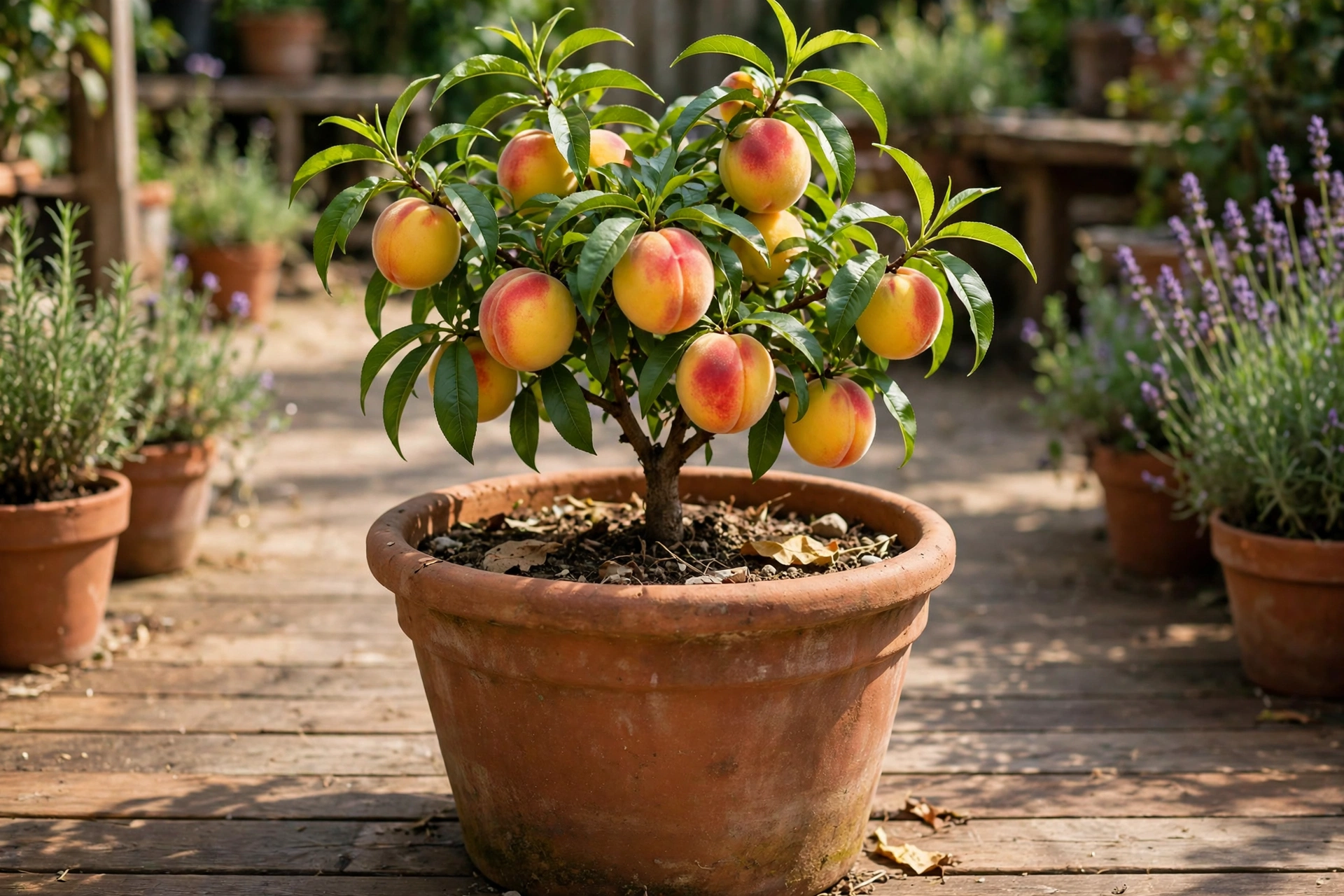
If one tree in this roundup was designed for a patio, it is Bonanza. It is a genetic dwarf. The tree stays 4 to 6 feet tall and about as wide, carries full-size yellow freestone peaches with a red blush, and opens with masses of fragrant pink double blossom in spring. It is self-fertile, so one tree alone gives you fruit, and it needs only light pruning because it never tries to outgrow its space.
Bonanza is the easiest fruit tree in this guide to place. A 15 to 20 gallon container on a sunny patio is enough for a mature tree, and the same tree works in a small bed at the edge of a lawn. It ripens in mid to late summer, and the fruit is sweet and mild rather than intensely flavoured, which suits fresh eating better than cooking. For a household that wants peaches without an orchard, this is the lowest-effort route to a real harvest.
One number in this section deserves a flag. Sellers disagree on Bonanza’s chill requirement: Stark Bros and Nature Hills list 250 hours, while other sellers list 350 to 400 or 400 to 500. The practical advice is to buy for the higher end if your winters are borderline.
Verified specifications: Mature height 4-6 ft. Genetic dwarf, no dwarfing rootstock. Chill hours 250-500 (sources disagree; see above). Zones 6-9 (Stark Bros lists 6-10). Pollination: self-fertile. Years to first fruit: Not published. Container: excellent, 15-20 gallon pot. Source: Stark Bros, Nature Hills, This Old House.
Real-world limitation: Bonanza’s fruit is smaller than a full-size peach tree’s, usually under 3 inches across, and the tree’s low chill requirement means a warm spell in late winter can push it into early bloom that a frost then kills. In zone 6, plant it where a wall or fence gives a little frost shelter, and be ready to cover it on a cold spring night.
Who should buy: Patio and balcony gardeners, and anyone with only one sunny spot, who wants the best dwarf fruit trees for pots and a self-fertile peach that asks for almost nothing.
3. Stella Cherry on Gisela 5 (Prunus avium ‘Stella’)
Our rating: 8.8/10
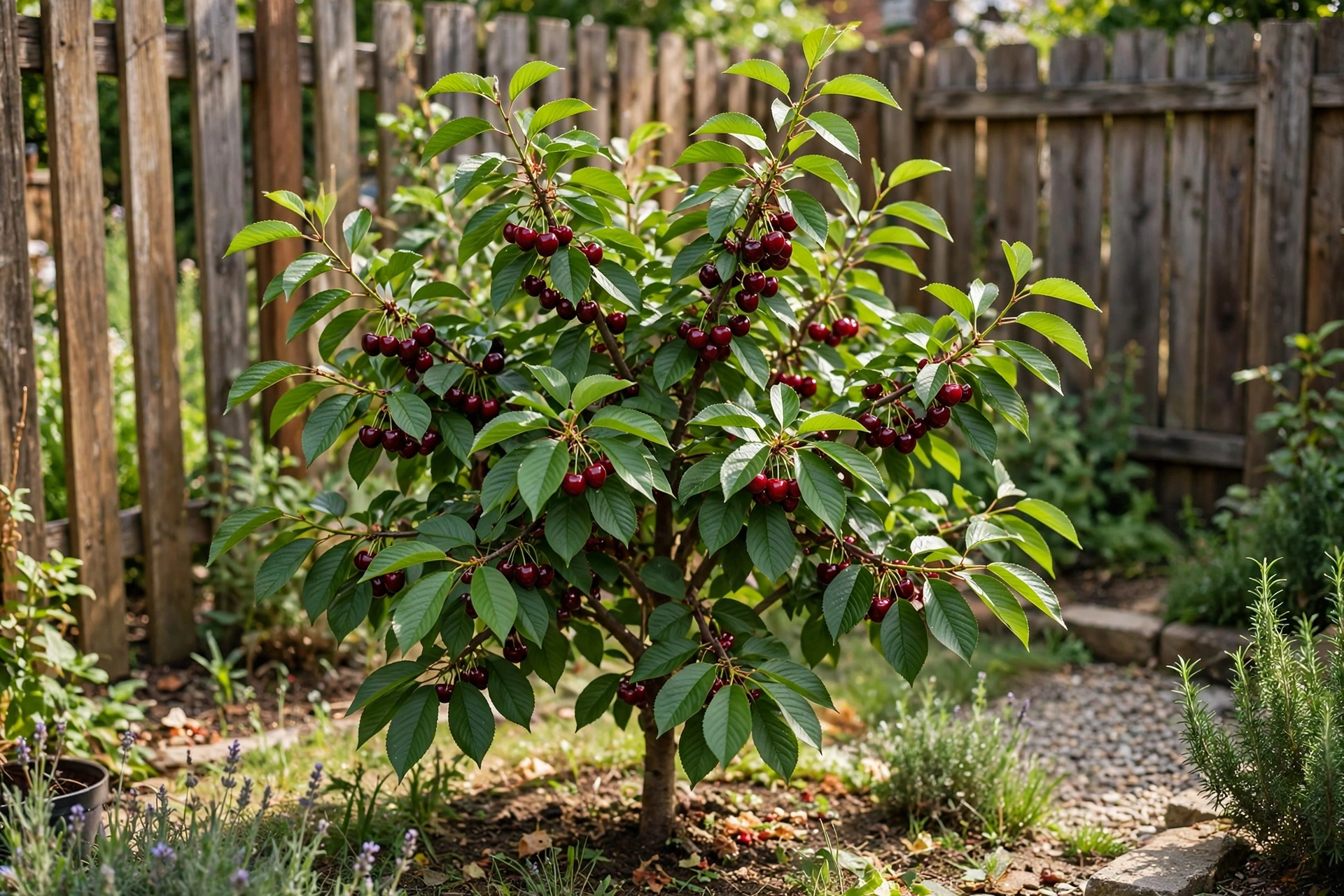
Sweet cherries are the fruit most small yards give up on, because most varieties need a second cherry tree for pollination and a standard cherry grows 30 feet tall. Stella solves both problems at once. It was the first self-fertile sweet cherry, bred at the Summerland Research Station in British Columbia and released in 1968, and it is still the standard choice where there is room for only one tree. Grafted onto Gisela 5 rootstock it gives large, dark red, heart-shaped cherries with firm, sweet flesh in mid-summer.
Stella also earns its place as a pollinator. It sheds good pollen for other sweet cherries, so if you later add a Bing or a Lapins, Stella helps them crop too. The blossom is white and heavy in spring, and the tree’s upright, compact habit suits a narrow bed along a fence better than most fruit trees in this guide.
Two figures in this section carry a conflict flag. Chill hours are listed at 400 by Nature Hills and at 700 to 800 by GrowScore, so this guide prints the full 400 to 800 range. Stella fruits reliably where winters deliver 700 or more chill hours, in zones 5 to 8; a garden with only 400 to 500 chill hours, in warm zone 8 or zone 9, is a gamble, and GrowScore calls the tree unsuitable for zones warmer than 8a without supplemental cooling. Height is also rootstock dependent: Gisela 5 gives 8 to 12 feet in most US listings.
Verified specifications: Mature height 8-12 ft on Gisela 5 rootstock. Chill hours 400-800 (sources disagree; see above). Zones 5-9 (GrowScore lists 5a-8b). Pollination: self-fertile. Years to first fruit: 2-4. Container: possible in a large pot with permanent staking; best in the ground. Source: Nature Hills, GrowScore, Thompson-Morgan.
Real-world limitation: Gisela 5 roots are shallow and the tree needs permanent staking, so do not plant Stella where wind funnels between buildings. Birds love the fruit as much as you do, so plan on netting the tree for two weeks before harvest or the crop will vanish overnight. Sweet cherries also dislike wet feet, so a low, poorly drained corner is the wrong spot.
Who should buy: Gardeners who want sweet cherries from a single tree, and anyone with a narrow sunny bed who needs the best dwarf fruit trees for small yards in the cherry family.
4. Improved Meyer Lemon (Citrus x meyeri ‘Improved Meyer’)
Our rating: 8.9/10
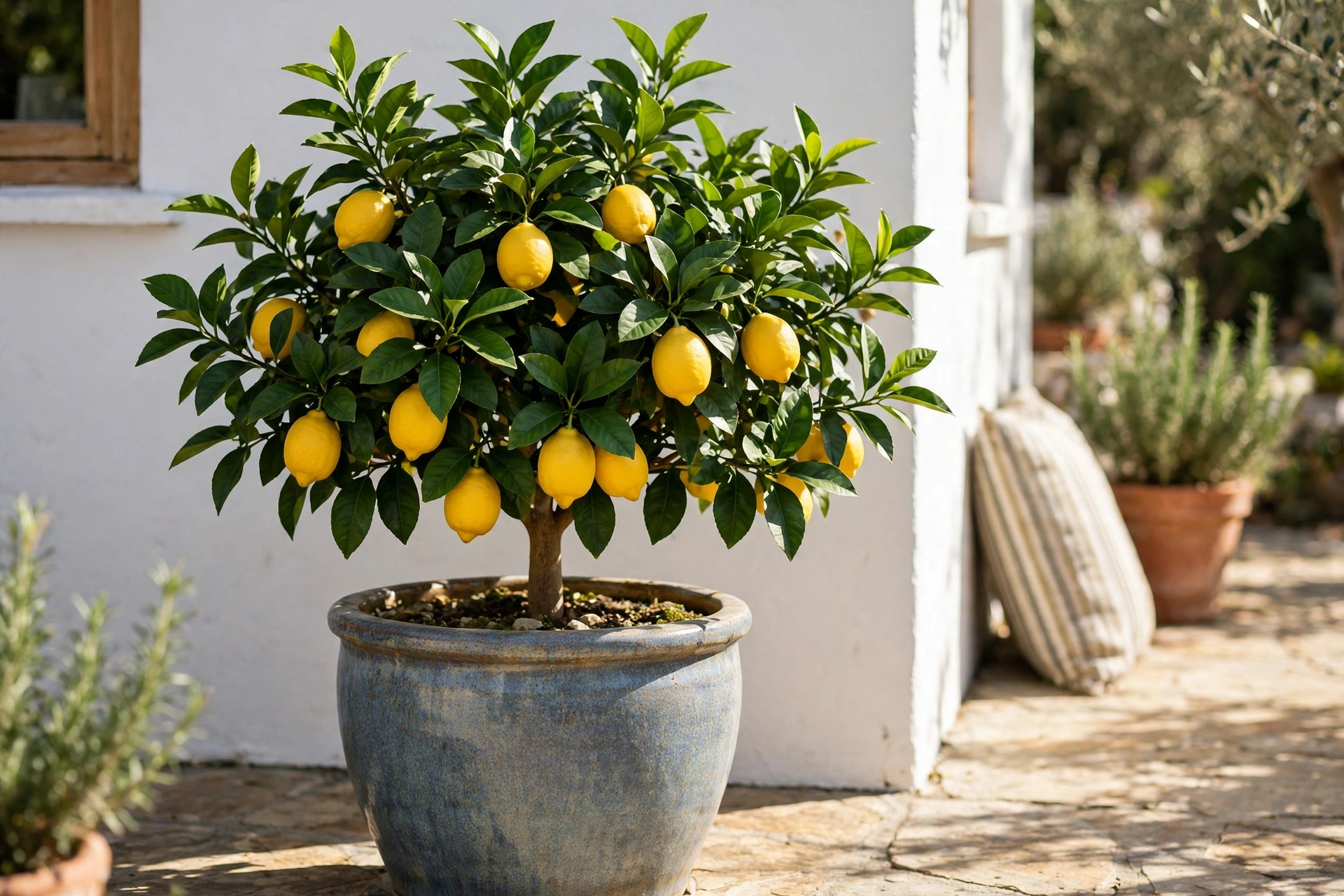
The Meyer lemon is the only evergreen tree in this roundup, and the only one that can give you fruit in every month of the year. The Improved Meyer is a cross between a lemon and a mandarin orange, and it shows in the fruit: rounder and sweeter than a grocery store lemon, with a thin, smooth rind that turns a deep golden yellow when ripe. The tree grows 6 to 8 feet tall in a container, or up to 12 feet in the ground in warm climates, and it carries fragrant white blossom and ripe fruit on the same branch for months at a time.
Improved Meyer is the safe form to buy. The original Meyer lemon carried citrus tristeza virus, so the Improved Meyer is a virus-indexed selection, and it is the form every reputable nursery sells today. If a listing just says “Meyer lemon” without the word Improved, ask the seller, because an uncertified tree is a risk to every citrus tree nearby.
This is the one tree in the guide that belongs indoors in winter. It is hardy only to zones 8 to 11 outdoors, and it is damaged by frost below about 28 degrees Fahrenheit. In zones 5 to 7, keep it in a pot, move it outside after the last frost, and bring it back in before the first frost. Indoors, give it the brightest window in the house and keep it away from heating vents, which dry the leaves.
Verified specifications: Mature height 6-8 ft in pots, up to 12 ft in the ground. Chill hours: not applicable, citrus does not need winter chill. Zones 8-11 outdoors, grow in pots elsewhere. Pollination: self-fertile. Years to first fruit: 2-3. Container: excellent, the standard way to grow it in cold climates. Source: Four Winds Growers, Stark Bros, Logee’s.
Real-world limitation: Meyer lemon hates wet feet and dry indoor air in equal measure. It needs a pot with drainage holes and a light potting mix, never garden soil in a container. In winter, the leaves drop if the air is too dry or the pot sits in a cold draft, so a pebble tray or a humidifier near the tree helps.
Who should buy: Anyone who wants fresh lemons year-round and has a sunny window for winter, or a frost-free patio for summer.
5. Brown Turkey Fig (Ficus carica ‘Brown Turkey’)
Our rating: 8.7/10
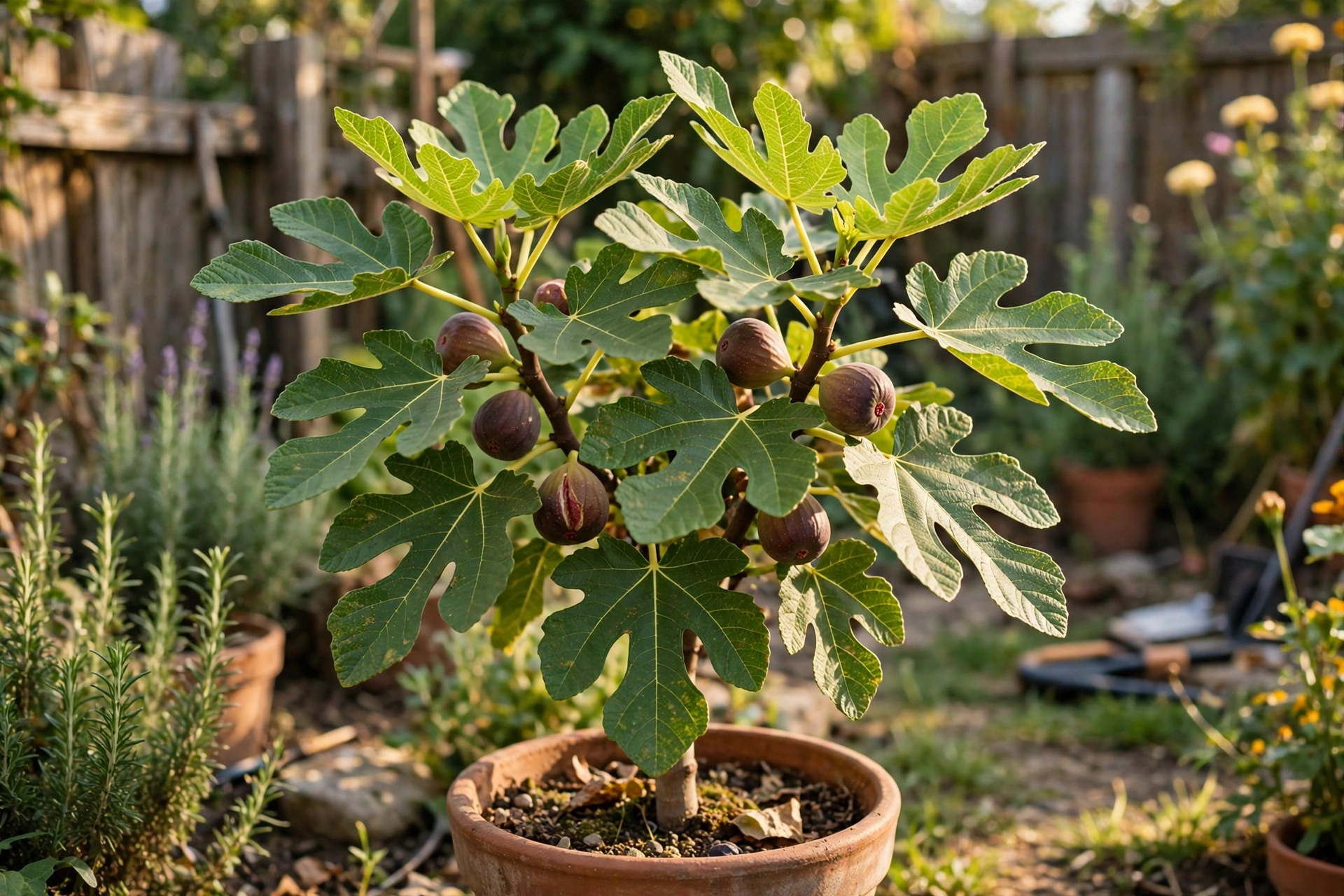
The Brown Turkey fig is the most forgiving fruit tree in this guide. It is self-fertile, so one tree alone gives you fruit. The fruit is a medium, pear-shaped fig with bronze to purple-brown skin and sweet, amber flesh, good fresh or dried, and a mature tree often gives two crops a year: a small breba crop in early summer on last year’s wood, then the main crop in late summer.
Brown Turkey is also the most cold hardy fig a small yard can grow. It is hardy to zone 7, and with winter protection it survives in zone 6 and even the warm parts of zone 5. In a cold winter, the top growth dies back to the ground and the tree regrows from the roots in spring, fruiting on the new wood by late summer.
Height is the one number to check before you buy. Brown Turkey is a dwarf only in the sense that you keep it small. Prune it every year after harvest, and keep it at 10 to 12 feet, or grow it as a multi-stem shrub against a sunny wall.
Verified specifications: Mature height 10-15 ft pruned, up to 20-30 ft unpruned in warm climates. Chill hours: low, not published. Zones 7-10, with protection to zone 5. Pollination: self-fertile. Years to first fruit: 2-3. Container: possible in a large pot, best in the ground. Source: Stark Bros, Nature Hills, Gurney’s.
Real-world limitation: Figs split after heavy rain, and birds love them. Pick the fruit when it droops and the skin cracks slightly, and net the tree if birds take more than you do. The sap is a skin irritant, so wear gloves when you prune, and keep the milky sap away from your eyes.
Who should buy: Warm-climate gardeners who want the easiest fruit tree in this guide, and anyone in zone 6 or 7 willing to prune every year and protect the tree in winter.
6. Santa Rosa Plum, semi-dwarf (Prunus salicina ‘Santa Rosa’)
Our rating: 8.5/10
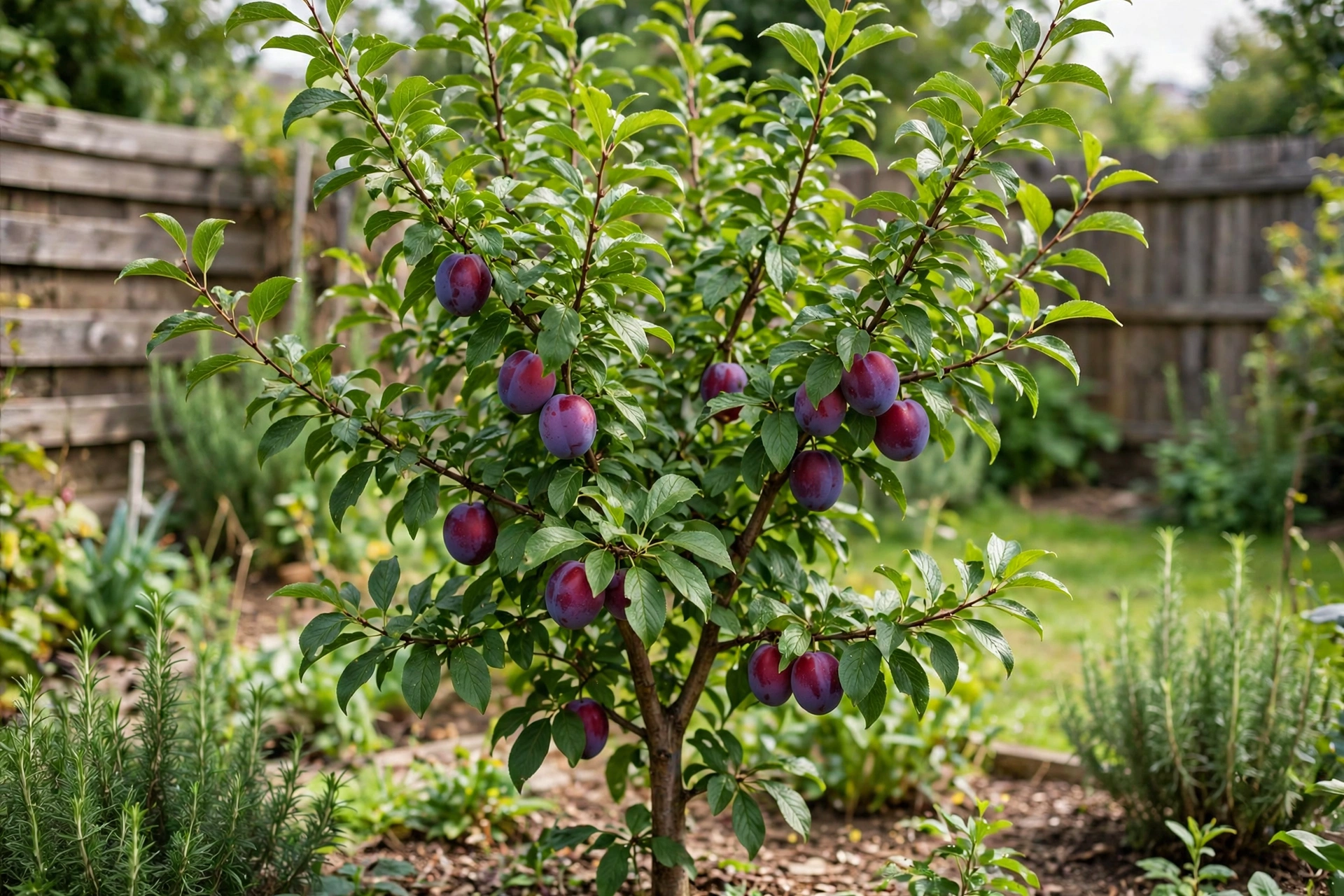
Santa Rosa is the plum most people picture when they think of a plum: large, round, deep purple-red skin over sweet, juicy, golden flesh with a tart edge. It was bred by Luther Burbank in California and released in 1906, and it is still the standard Japanese plum for home gardens because it crops heavily and reliably. On semi-dwarf rootstock it is the largest tree in this roundup, so it suits a small yard only if you prune it every year.
Santa Rosa is partly self-fertile, which means one tree alone will give you fruit, but a second Japanese plum nearby, such as Beauty or Burgundy, gives a much bigger crop. It ripens in mid-summer, and the fruit is best eaten fresh, though it also makes excellent jam.
One number in this section needs a note. Chill hours are listed at 300 by most sellers and at 500 by Stark Bros, so this guide prints the 300 to 500 range.
Verified specifications: Mature height 12-20 ft semi-dwarf, 8-10 ft on Citation dwarf rootstock. Chill hours 300-500 (sources disagree; see above). Zones 5-9. Pollination: partly self-fertile. Years to first fruit: 2-4. Container: not recommended; best in the ground. Source: Stark Bros, Nature Hills, Dave Wilson Nursery.
Real-world limitation: Santa Rosa is a vigorous grower, and without annual pruning it outgrows a small yard fast. It is also prone to brown rot and plum curculio in humid regions, so expect to thin the fruit and clean up fallen fruit promptly.
Who should buy: Gardeners with a sunny spot for one larger tree who want the best eating plum in this roundup and will prune every year.
7. Bartlett Pear on OHxF 333 (Pyrus communis ‘Bartlett’)
Our rating: 8.4/10
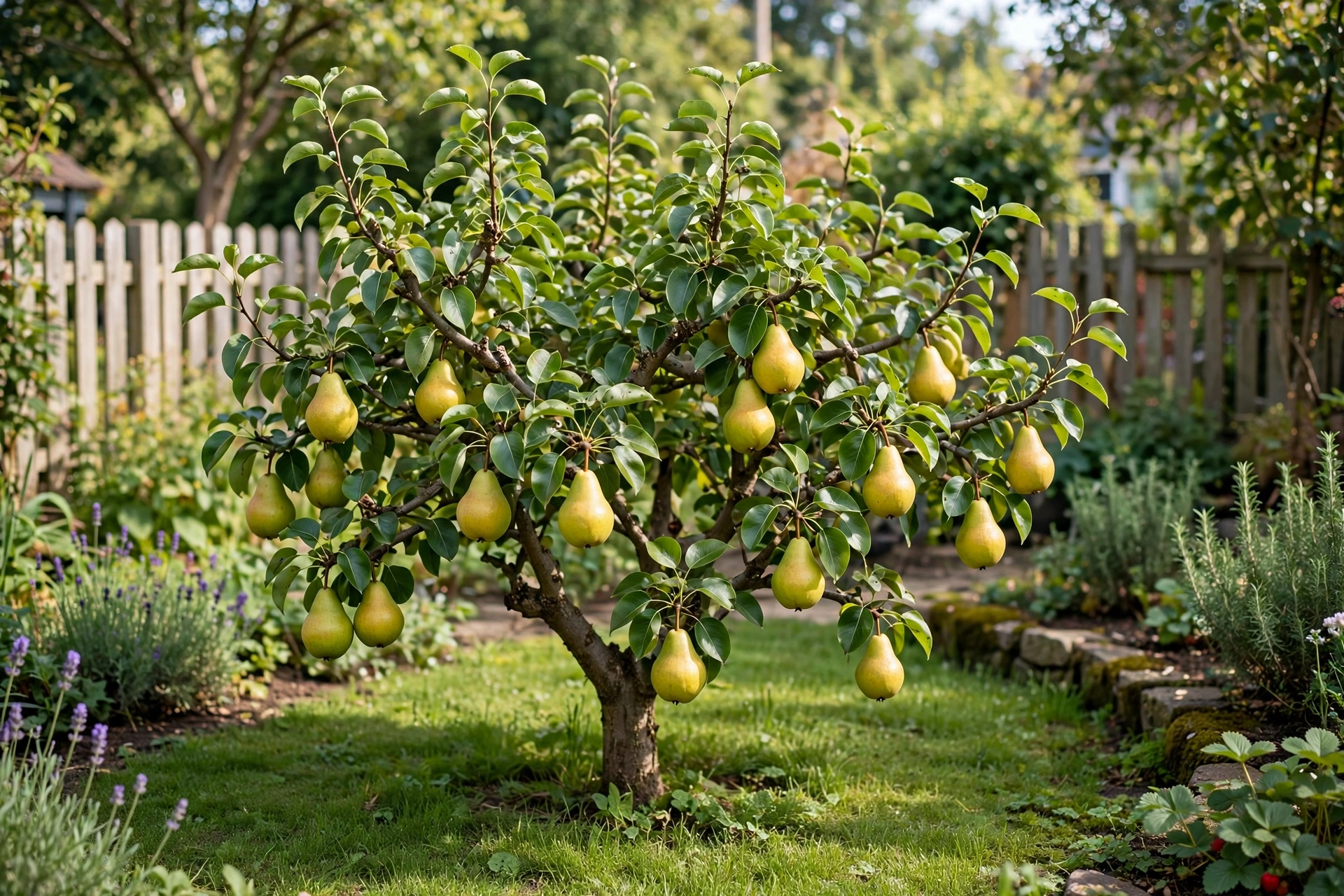
Bartlett is the pear most people have eaten: sweet, juicy, and fragrant when ripe, with a thin skin that turns from green to a buttery yellow as it softens. On OHxF 333 rootstock it grows 12 to 15 feet tall, which makes it a true semi-dwarf, and it crops well in a small yard if you prune it every winter.
Bartlett needs a second pear for good fruit set. The best partners are Anjou, Bosc, and Moonglow, and they bloom at the same time, which matters more than the variety name. One Bartlett alone will give you a few pears, but two trees give you a real crop.
Pick Bartlett pears green and let them ripen indoors. They ripen from the inside out, so a pear that looks green on the tree is already turning soft at the core, and a pear that ripens on the tree goes mealy and brown. Pick them when the fruit comes away with a gentle lift, then ripen them on the kitchen counter for a few days.
Verified specifications: Mature height 12-15 ft on OHxF 333. Chill hours 500-600. Zones 5-9. Pollination: needs a partner (Anjou, Bosc, Moonglow). Years to first fruit: 3-5. Container: possible in a large pot, best in the ground. Source: Stark Bros, Nature Hills, Cummins Nursery.
Real-world limitation: Bartlett is fire blight prone, and in a humid region it can lose whole branches in one season. Prune out blight as soon as you see it, cutting 12 inches below the damage, and disinfect the shears between cuts.
Who should buy: Anyone in a cold climate who wants the classic eating pear and has room for a second pear tree as a pollinator.
8. Necta Zee Nectarine (Prunus persica var. nucipersica ‘Necta Zee’)
Our rating: 8.6/10
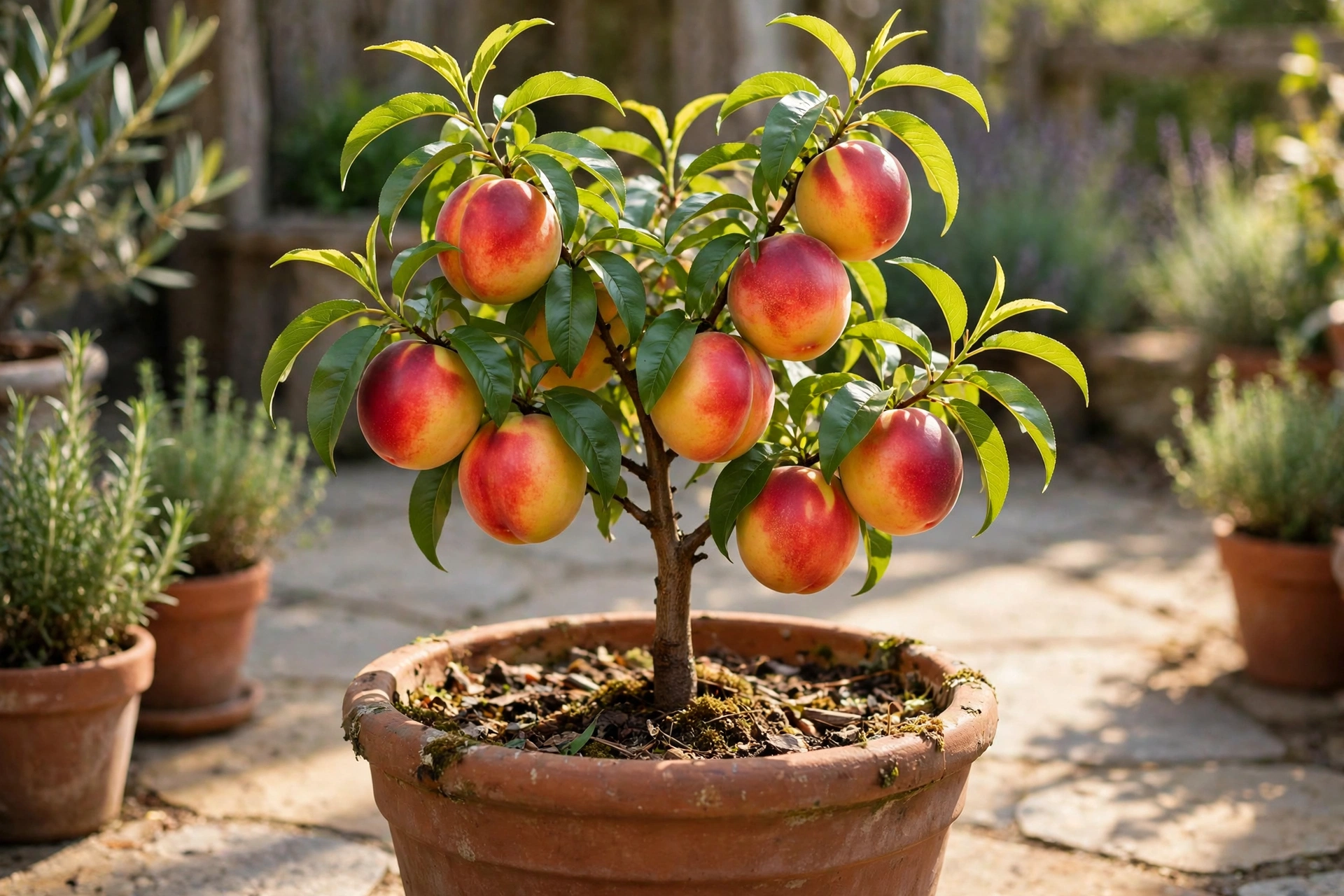
Necta Zee is the only true genetic dwarf in this guide, and it shows in the size: the tree grows to just 5 to 6 feet tall and wide, which means it fits in a large pot on a patio, or in a corner of a small yard where a full-size peach would never fit. The fruit is a full-size nectarine, large and sweet, with orange-red skin and yellow flesh that separates cleanly from the pit.
Necta Zee is self-fertile, so one tree alone gives you fruit, and it crops heavily for its size. The fruit ripens in late summer, and it is best eaten fresh, though it also makes a good jam.
Chill hours are the one number to check. Monrovia recommends 400 hours, while some listings give a 300-400 range, so this guide uses 400 hours. Either way, it is a low-chill nectarine, and it suits warm climates far better than a peach that needs 800 hours.
Verified specifications: Mature height 5-6 ft. Chill hours 400. Zones 6-9. Pollination: self-fertile. Years to first fruit: 2-3. Container: excellent, the smallest tree in this guide. Source: Dave Wilson Nursery, Stark Bros, Nature Hills.
Real-world limitation: Necta Zee is a heavy cropper, and a small tree overloaded with fruit will break branches and produce small fruit. Thin the fruit to one every 4 to 6 inches, and prune every year to keep the center open.
Who should buy: Anyone with a patio or a tiny yard who wants a full-size nectarine from a tree they can reach without a ladder.
9. Gold Kist Apricot, semi-dwarf (Prunus armeniaca ‘Gold Kist’)
Our rating: 8.3/10
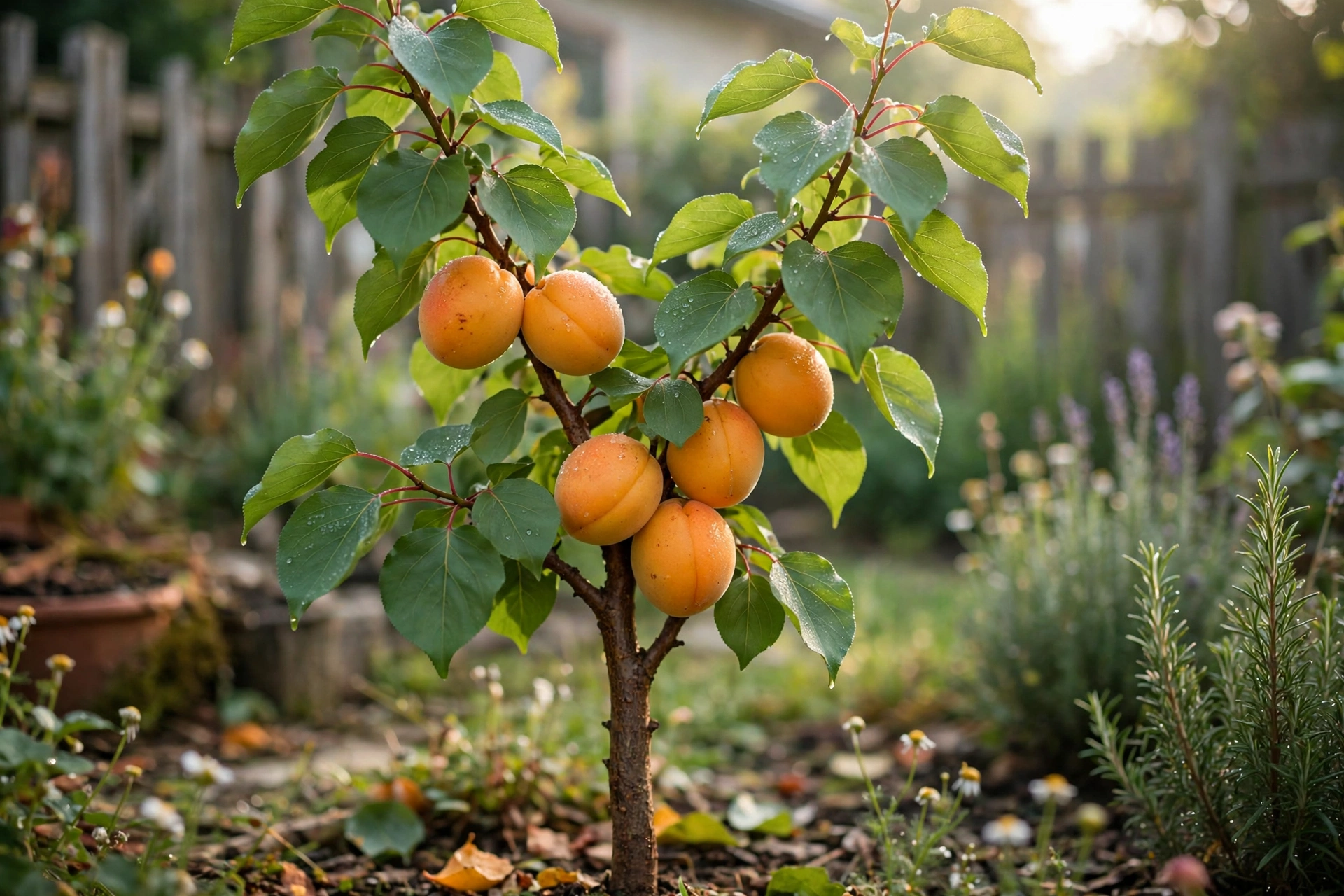
Gold Kist is the apricot for warm climates. It needs only 300 chill hours, so it fruits in zone 8 and 9 where most apricots never set fruit, and it ripens early, often in late spring or early summer. The fruit is medium size, golden orange, sweet and juicy, good fresh or dried.
Gold Kist is self-pollinating and self-fruitful, so one tree alone gives you fruit and no second tree is needed. Trees.com notes that adding an additional plant of the same variety can increase the size of the crop, but it is not required. It is a vigorous grower, so expect to prune it every year.
Apricots bloom early, and that is their weakness. A late frost can wipe out the whole year’s bloom in one night, so plant Gold Kist in a spot that warms slowly in spring, not at the bottom of a frost pocket.
Verified specifications: Mature height 10-15 ft semi-dwarf, larger unpruned. Chill hours 300. Zones 7-10 (Garden Oracle lists 7-9). Pollination: self-pollinating, self-fruitful. Years to first fruit: Not published. Container: possible in a large pot, best in the ground. Source: Trees.com, Garden Oracle.
Real-world limitation: Gold Kist blooms early and frost can take the crop, so site it carefully. It is also prone to brown rot in humid regions, so thin the fruit and clean up fallen fruit promptly.
Who should buy: Warm-climate gardeners who want an early apricot from a single tree, and who can protect the early bloom from frost.
10. Dwarf Red Pomegranate ‘Nana’ (Punica granatum var. nana)
Our rating: 8.2/10
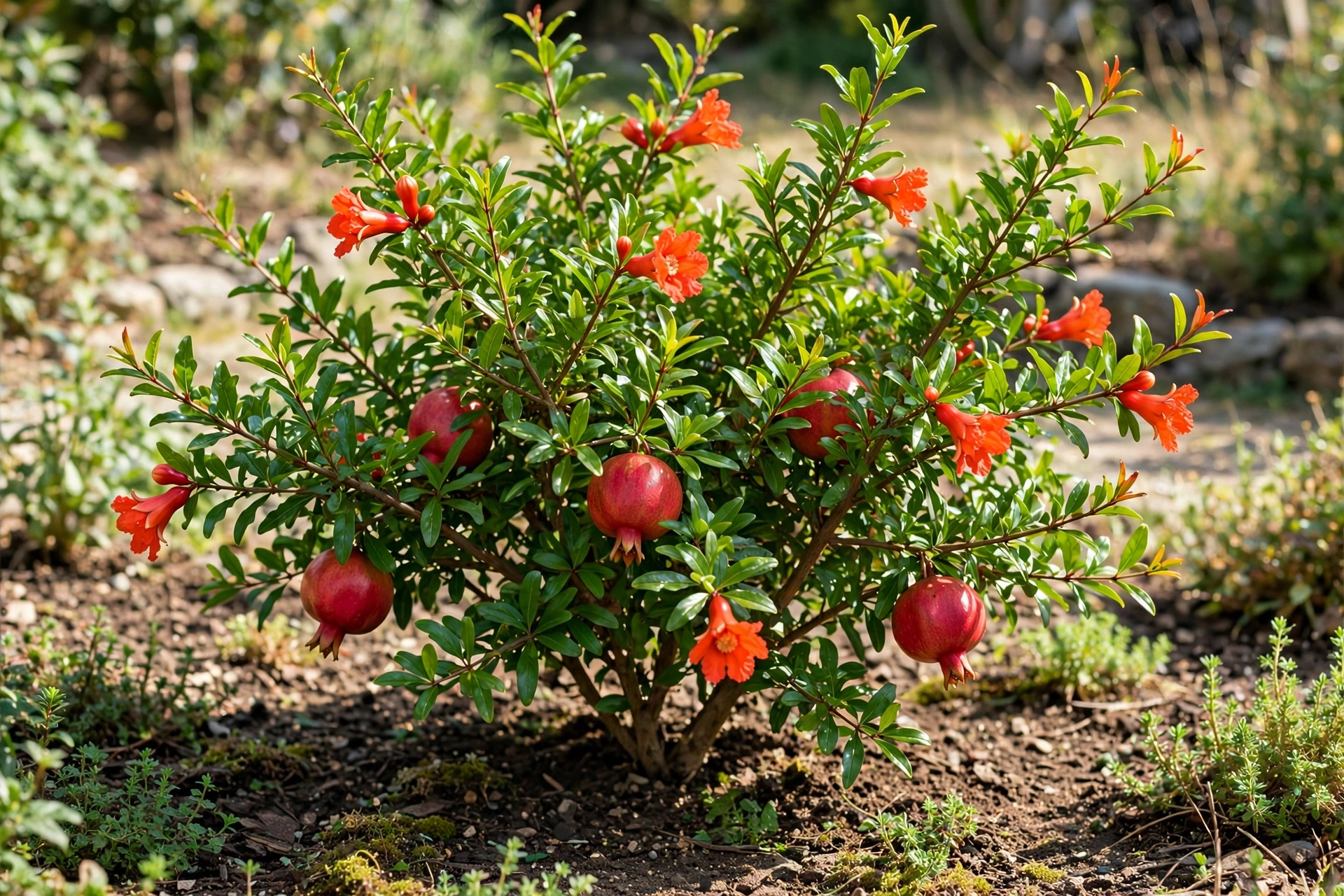
‘Nana’ is the smallest plant in this guide, and it is a shrub rather than a tree. It grows 2 to 3 feet tall and wide, which means it fits in a pot on a windowsill, or as a border plant in a small garden. The fruit is small, about the size of a walnut, with red skin and sweet-tart juice, and the tree flowers with bright orange-red blossom all summer.
Why do the height figures disagree? First, the ‘Nana’ cultivar itself is genetically small: Monrovia lists it at 2 to 3 feet tall and wide, and Oregon State University’s landscape plants database calls it “compact, to 3 ft”. Second, growing conditions change the size: a plant in the ground grows larger than one kept in a pot, pruning keeps it small, and older specimens occasionally reach 6 feet. Third, sellers differ: Stark Bros lists its own ‘Nana’ stock at 8 to 10 feet, a much larger figure than other nurseries publish, so check the tag and ask the seller which form they are buying before you plant it.
‘’Nana’ is self-fertile, so one plant alone gives you fruit, and it is drought tolerant once established. It is hardy only to zone 8, so in colder climates it must be grown in a pot and brought indoors for winter.’Nana’ is self-fertile, so one plant alone gives you fruit, and it is drought tolerant once established.
The fruit is small, and that is the honest limit of this plant. ‘Nana’ is grown as much for its flowers and its size as for its fruit, and if you want a full-size pomegranate, buy a standard variety instead.
Verified specifications: Mature height 2-3 ft (Stark Bros lists its own ‘Nana’ stock at 8-10 ft). Own roots. Chill hours about 100-150 for pomegranates generally; variety-specific figure not published. Zones 7-11 (some sources list 8-10). Pollination: self-pollinating. Years to first fruit: 2-3. Container: excellent. Source: Monrovia, Stark Bros, Raintree Nursery.
Real-world limitation: A pot-grown ‘Nana’ needs regular watering in summer. Bring it indoors before the first frost in cold climates, and give it the brightest window in the house.
Who should buy: Anyone who wants the smallest fruit plant in this guide, a container grower, or a gardener who values flowers as much as fruit.
Best Fruit Trees for Small Yards
The trees above are only half the decision. The other half is where they go, and a small yard rewards a plan drawn before the first hole is dug. Start with sun. Every tree in this roundup wants at least 6 hours of direct sun a day, and 8 is better, so walk the yard at midday and mark the spots that stay sunny from morning to afternoon. A fence line that faces south or west is usually the best strip, and it is where most small orchards belong.
Next, measure the mature spread, not the size of the pot the tree arrives in. A dwarf apple at 8 to 10 feet wide needs 8 feet of clear space, and a semi-dwarf pear at 12 to 16 feet needs more. Planting two trees 4 feet apart because they look small today is the most common small-yard mistake, and it takes five years to show. Spacing of 8 to 10 feet between dwarf trees and 12 to 15 feet between semi-dwarfs is a safe rule, and containers forgive tight spacing far better than the ground does.
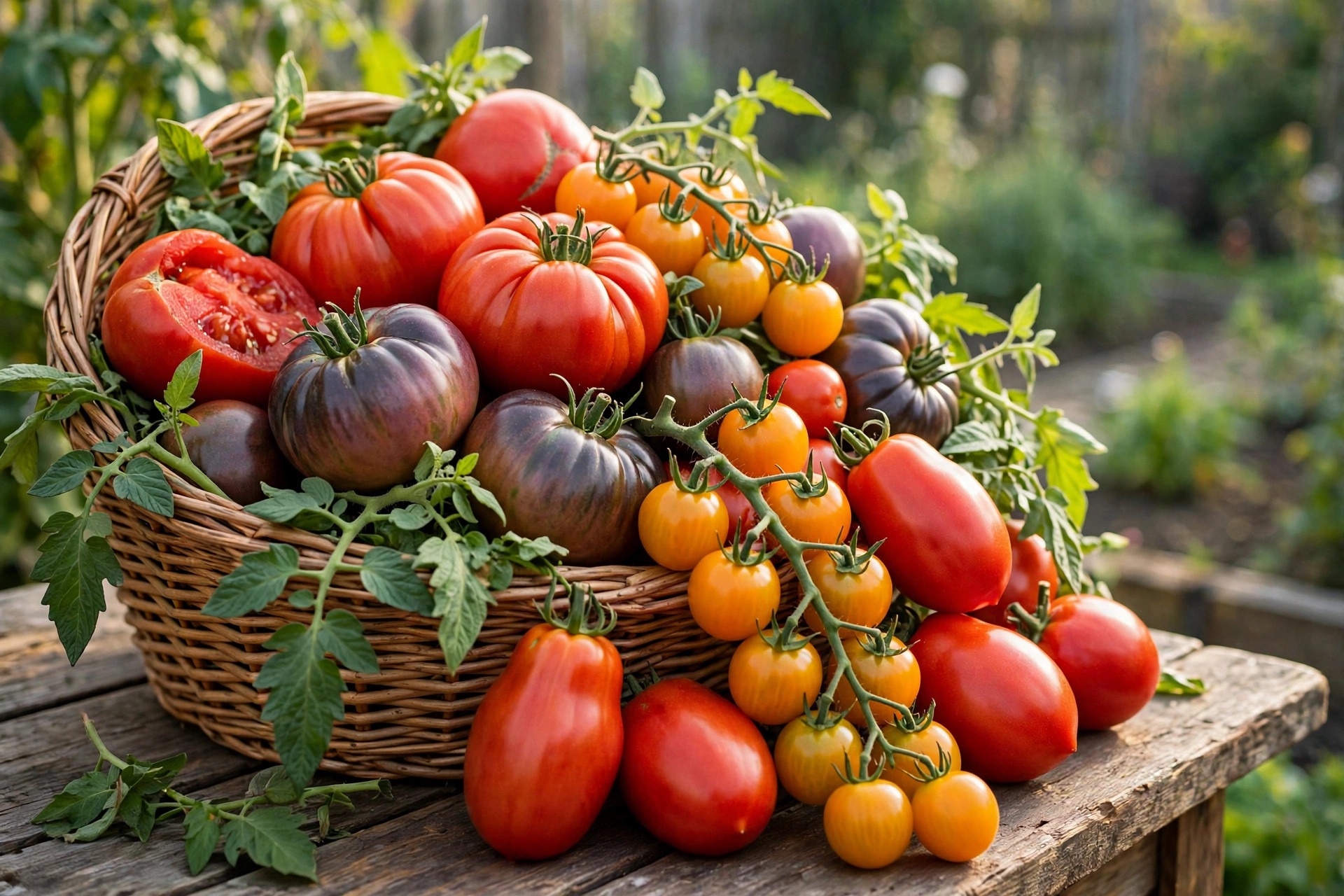
A practical three-tree plan for a 20 by 30 foot yard is one apple, one stone fruit, and one citrus or fig, chosen so their harvests do not all land in the same month. Tomatoes are the classic companion for the same small bed, and our guide to the best tomato varieties to grow from seed picks ten proven varieties for the same small spaces.
Best Dwarf Fruit Trees for Pots
Growing the best dwarf fruit trees for pots is a different skill from growing them in the ground, and the pot is the whole difference. A pot holds a small world: it dries out fast, it heats up in summer, it freezes solid in winter, and its nutrients wash out with every watering.
Pot size matters more than most gardeners expect. A 15 to 20 gallon container is the right size for a mature Bonanza peach, a 15 gallon pot or larger suits a Bartlett pear, and a Meyer lemon starts in a 10 to 14 gallon pot and moves up as it grows. A pot that is too small starves the tree and dries out daily in July. Drainage holes are not optional, and the soil must be a free-draining potting mix, never garden soil, which packs down and suffocates roots in a container. Water a potted fruit tree when the top 2 inches of mix are dry, and feed it regularly through the growing season, because nutrients leave a pot far faster than they leave the ground.
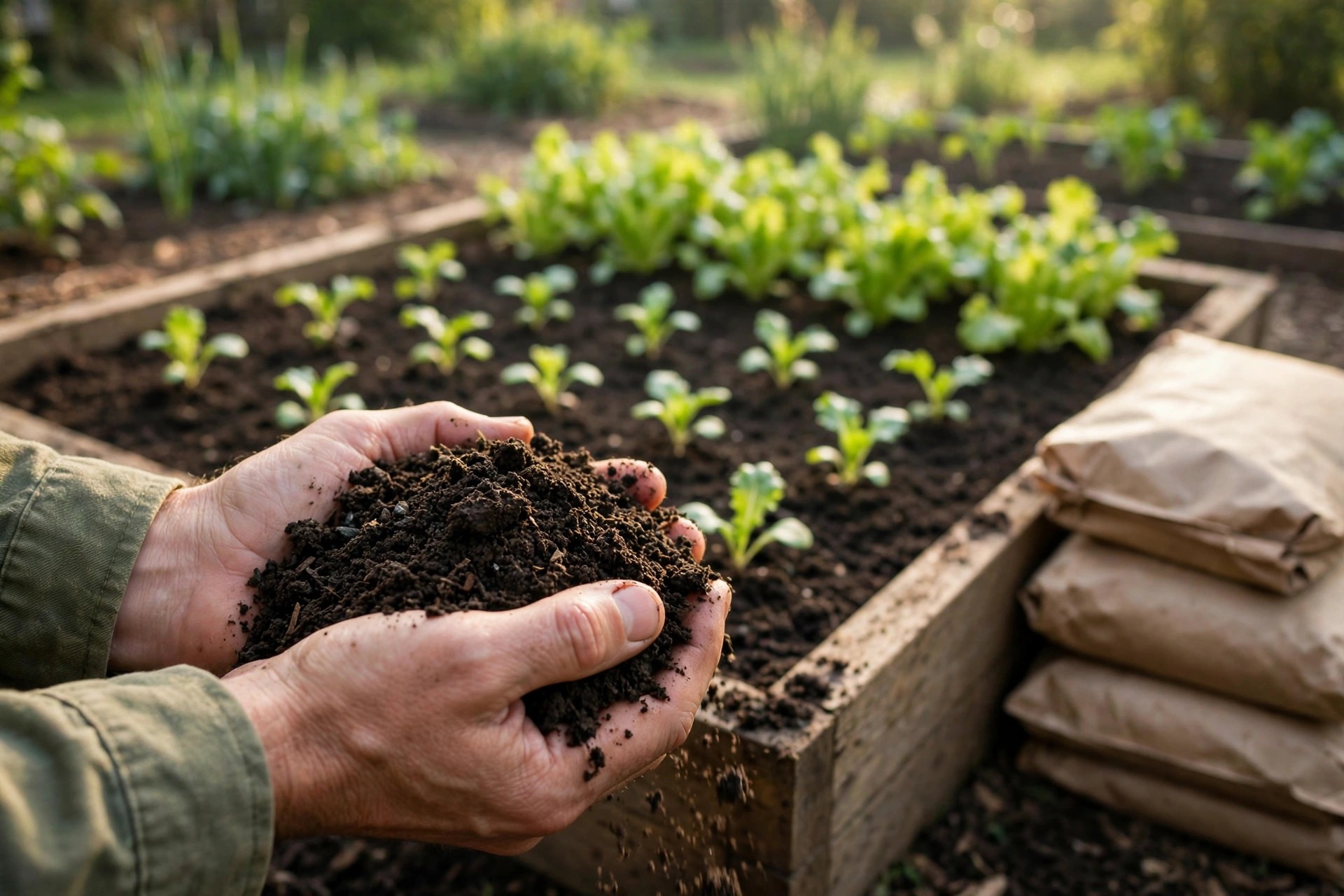
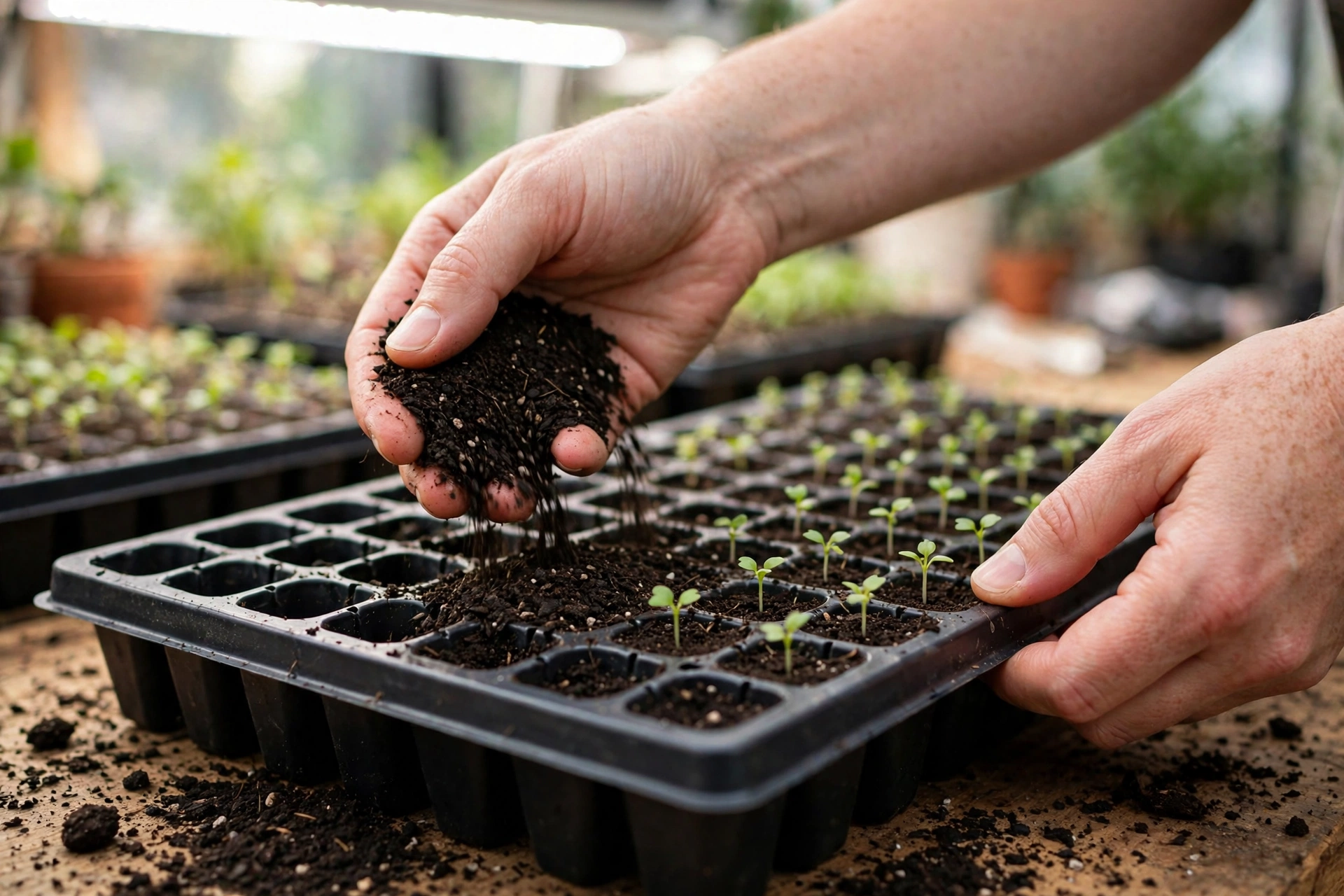
Winter is the other half of container growing: a potted tree is effectively two zones less hardy than the same tree in the ground, so move pots of fig, pomegranate, and citrus under cover before the first hard frost. If your small yard has poor soil, a raised bed gives a dwarf tree a deep, well drained root run, and our guide to the best raised bed soil mixes compares the bagged mixes worth buying. While the tree settles in, many gardeners start their spring vegetables indoors, and our guide to the best seed starting mix covers the soil and trays for that job.
Dwarf vs Semi-Dwarf Fruit Trees
The words dwarf and semi-dwarf get thrown around loosely on plant tags, and the difference matters more than the variety name. A dwarf tree is one that stays small because of its rootstock or its genetics, and it tops out around 2 to 10 feet. A semi-dwarf is the middle size, roughly half a standard tree, and it reaches 12 to 20 feet depending on the variety and the rootstock. A standard tree, for comparison, can reach 25 to 30 feet.
There are two ways a tree becomes dwarf. The first is grafting onto a dwarfing rootstock: the named variety is joined to roots that limit its size. M9 and Bud 9 do this for apples, Gisela 5 does it for cherries, and Quince C does it for pears. The second is genetics: some varieties are simply born small, with short spaces between their leaves and compact branches. The University of California Cooperative Extension notes that genetic dwarf trees usually grow about 8 to 10 feet tall and wide at maturity, and that pruning them is mostly a matter of thinning branches in the dormant season.
Semi-dwarf rootstocks work the same way with less dwarfing: G.969 for apples and OHxF 333 for pears give trees of 12 to 16 feet that fruit earlier than a standard tree. Ask the seller which rootstock the tree is on, check the mature height for that rootstock, and walk away from any listing that will not name it.
Best Dwarf Apple Varieties
Honeycrisp leads this roundup, but it is not the only dwarf apple worth planting, and the best dwarf apple varieties for a small yard depend on what you want the apples for. Gala is the most reliable pollinator partner for Honeycrisp, and it is a good eating apple in its own right, sweet, crisp, and early. Fuji is the keeper: it stores for months in a cool room and its honey-sweet flavour improves after a few weeks off the tree. Granny Smith is the cooker, tart and firm, and it pollinates Honeycrisp while giving you the best apple for pies in this group.
Two practical points apply to every dwarf apple. First, all of them need a pollination partner from a different variety that blooms at the same time. Second, apples on M9 rootstock need permanent staking for their whole lives, because the dwarfing roots never anchor a full crop on their own. A sturdy stake and a loose tie are part of the purchase, not an afterthought.
How to Prune Dwarf Fruit Trees
Pruning a dwarf fruit tree is simpler than pruning a standard one, because the tree is small and you can reach every branch from the ground. The method depends on the fruit.
Stone fruit, peach, nectarine, apricot, plum, and cherry, are trained to an open center, a vase shape with no branches in the middle. Penn State Extension recommends cutting an unbranched young tree to 26 to 30 inches after planting, then choosing three or four scaffold branches at 60 to 90 degree angles, one at each compass point, and pinching off any shoots that grow toward the center during the first summer. Prune stone fruit in late winter, from just before bloom to two weeks after petal fall, and do not prune from January through March, when the trees are most vulnerable to cytospora canker. Sweet cherries are the exception: prune them after they have fruited, or in early July.
Apples and pears suit a central leader or modified central leader shape instead, with a strong upright trunk and tiers of branches spaced along it. Genetic dwarfs such as Bonanza and Necta Zee need the least work of all: the University of California guidance is to thin the branches in the dormant season to open the canopy and hold the size, and to control the tree with thinning cuts, removing a branch at its point of attachment, rather than by heading or topping it. Topping a dwarf tree, cutting the top off flat, forces a burst of weak upright shoots and ruins the shape.
Three rules cover the rest. Prune in the dormant season, before buds swell, on a day above freezing. Remove dead, diseased, and damaged wood first, whenever you see it, at any time of year. And take out no more than about a quarter of the live canopy in one year, because a hard prune on a small tree costs you a season of fruit.
Dwarf Fruit Tree Pollination
Pollination is the part of fruit growing that most small-yard gardeners learn the hard way, usually in the second spring, when a tree flowers beautifully and sets no fruit. Some trees are self-fertile and set fruit with their own pollen. Others need pollen from a different variety of the same fruit, blooming at the same time, nearby.
Bonanza peach, Necta Zee nectarine, Gold Kist apricot, Brown Turkey fig, Dwarf Red Pomegranate, Improved Meyer Lemon, and Stella cherry are self-fertile. Honeycrisp apple needs a partner, and Bartlett pear and Santa Rosa plum crop far better with one. Purdue Extension’s fruit pollination guide puts it plainly: sweet cherries, pears, and most apples require two different compatible cultivars for fruit set, while peaches, nectarines, apricots, and sour cherries are self-pollinated.
Three details make the difference between a partner that works and one that does not. First, the bloom times must overlap, so a very early bloomer will not pollinate a very late one. Second, the partner must be close: Purdue Extension recommends planting cross-pollinated trees within 100 to 200 feet of each other, and 50 feet is the reliable distance in a small yard, where fences and houses break up bee flight. Third, bees do the work, so even a self-fertile tree sets more fruit when bees are active, which means no insecticide sprays while the tree is in flower. If you have room for only one tree and it needs a partner, a multi-grafted tree with two compatible varieties on one trunk is the honest answer, and a flowering crabapple within 50 feet can also pollinate an apple.
How We Chose the Best Dwarf Fruit Trees
We did not test these trees hands-on. Scores come from an analysis of manufacturer specifications and owner feedback, using the factor weights below. That is the honest basis for every rating in this article, and it is stated here rather than hidden.
Scoring system
| Factor | Weight | What it measures |
|---|---|---|
| Size control | 25% | How reliably the tree stays small for a small yard, by rootstock or genetics |
| Fruit quality and flavour | 20% | Eating quality of the fruit, from variety reputation and owner feedback |
| Ease of growing | 20% | Hardiness range, disease tolerance, and day-to-day care needs |
| Pollination convenience | 15% | Self-fertile (high) vs needs a partner tree (low) |
| Speed to first fruit | 10% | Years from planting to first crop |
| Container suitability | 10% | How well the tree grows in a pot on a patio or balcony |
| Total | 100% |
Scoring breakdown
| Product | Size control | Fruit quality | Ease of growing | Pollination | Speed to fruit | Container | Weighted total |
|---|---|---|---|---|---|---|---|
| Dwarf Honeycrisp Apple | 9 | 10 | 8 | 9 | 10 | 9 | 9.1 |
| Bonanza Patio Peach | 10 | 9 | 8 | 9 | 8 | 9 | 9.0 |
| Improved Meyer Lemon | 9 | 9 | 8 | 10 | 7 | 10 | 8.9 |
| Stella Cherry on Gisela 5 | 8 | 10 | 8 | 10 | 9 | 8 | 8.8 |
| Brown Turkey Fig | 8 | 9 | 8 | 10 | 8 | 10 | 8.7 |
| Necta Zee Nectarine | 9 | 8 | 7 | 10 | 9 | 9 | 8.6 |
| Santa Rosa Plum, semi-dwarf | 8 | 9 | 8 | 9 | 9 | 8 | 8.5 |
| Bartlett Pear on OHxF 333 | 8 | 10 | 8 | 7 | 9 | 8 | 8.4 |
| Gold Kist Apricot | 8 | 9 | 7 | 10 | 8 | 8 | 8.3 |
| Dwarf Red Pomegranate ‘Nana’ | 8 | 8 | 7 | 10 | 8 | 9 | 8.2 |
Factor scores run from 1 to 10. The weighted total is the sum of each factor score multiplied by its weight, rounded to one decimal place with half-up rounding. Two transparency notes belong here. First, years to first fruit are not published by the makers for Bonanza peach, Brown Turkey fig, and Gold Kist apricot, so their Speed scores are conservative mid-range editorial scores, and the article says “Not published” in their specification lines. Second, where sellers disagreed on a figure, the score uses the conservative end of the range, which is why Santa Rosa and Bartlett score lower on size control and pollination than a generous reading would allow.
Final Choice
If you have room for two trees and cold winters, buy a dwarf Honeycrisp apple and a dwarf Gala to pollinate it. That pair gives you the best eating apple in this roundup, a reliable crop, and two trees that stay under 10 feet tall.
If you have one sunny spot and no room for a second tree, buy a Bonanza peach for a patio pot or a Stella cherry for a bed in the ground. Both are self-fertile, both fruit in 2 to 4 years, and neither asks you to solve a pollination puzzle.
If you want fruit all year, buy an Improved Meyer Lemon and keep it in a pot you can move indoors. If your winters are mild, add a Brown Turkey fig and a Gold Kist apricot. If your yard is truly tiny, Necta Zee is the tree that fits where nothing else will.
Whichever tree you choose, the buying advice matters more than the variety. Check the rootstock on the tag, match the chill hours and the zone to your winters, and settle the pollination question before you plant, not in the second spring when the blossom falls without fruit. A dwarf fruit tree is a ten to twenty year planting, and an hour of checking now is worth a decade of harvests.
References
- Purdue Extension, HO-174: Pollination of Fruits and Nuts. Supports self vs cross pollination, the 100 to 200 foot planting distance for cross-pollinated trees, and that sweet cherries, pears, and most apples need two compatible cultivars. https://ag.purdue.edu/department/hla/extension/extension-publications-library/ext-pubs/ho-174-w.html
- Penn State Extension, Pruning and Training Home Fruit Trees to an Open Center. Supports the open-center vase system for stone fruit, scaffold selection at 60 to 90 degree angles, and pruning timing for stone fruit and sweet cherries. https://extension.psu.edu/pruning-and-training-home-fruit-trees-to-an-open-center
- University of California Cooperative Extension, ANR Publication 8057, Fruit Trees: Training and Pruning Deciduous Trees. Supports genetic dwarf trees growing about 8 to 10 feet tall, thinning cuts over topping, and the open-center system for stone fruit. https://www.marinmg.space/anrcatalog-sub/pdf/8057.pdf
- Grow Organic (Dave Wilson Nursery), Dwarf Honeycrisp Apple Tree. Supports Honeycrisp chill hours of 800 to 1,000, zones 3 to 9, G.969 as a semi-dwarfing rootstock, and the pollinizer list of Gala, Granny Smith, McIntosh, Empire, and Red Delicious. https://www.groworganic.com/products/apple-honey-crisp-dwarf-tree
- Stark Bro’s, Bonanza Miniature Peach Tree. Supports Bonanza at 5 to 6 feet tall, 250 chill hours, zones 6 to 10, and self-fruitful pollination. https://www.starkbros.com/products/fruit-trees/peach-trees/bonanza-miniature-peach
- Four Winds Growers, Improved Meyer Lemon Semi-Dwarf Tree. Supports Meyer lemon height of 8 to 12 feet in the ground and 6 to 8 feet in pots, zones 8 to 11, self-fertile pollination, and container growing. https://www.fourwindsgrowers.com/products/improved-meyer-lemon-tree
- Nature Hills, Stella Cherry Tree. Supports Stella at 8 to 12 feet tall, chill of at least 400 hours, zones 5 to 9, and self-pollinating. https://naturehills.com/products/stella-cherry-tree
- Four Winds Growers, Brown Turkey Fig Tree. Supports Brown Turkey at 10 to 20 feet in the ground but kept smaller with pruning, zones 7 to 10, self-fruitful, two crops a year with a large breba crop and a main crop, and a good choice for containers. https://www.fourwindsgrowers.com/products/brown-turkey-fig-tree
- Arbor Day Foundation, Santa Rosa Plum. Supports Santa Rosa in zones 5 to 9, chill hours 300 to 500, and self-pollinating but a better crop when planted with other Japanese varieties. https://shop.arborday.org/treeguide/621
- Grow Organic (Dave Wilson Nursery), Bartlett Pear Semi-Dwarf. Supports Bartlett in zones 5 to 9 with a confirmed 500 to 600 chill-hour requirement, self-fruitful in many western climates with Bosc and D’Anjou as confirmed partners, on OHxF 333 rootstock. https://www.groworganic.com/products/pear-bartlett-european-semi-dwarf
- Monrovia, Necta Zee Miniature Nectarine. Supports Necta Zee reaching 5 to 6 feet tall, recommended chill of 400 hours, zones 6 to 9, self-fruitful, and suited to patio containers. https://www.monrovia.com/necta-zee-miniature-nectarine.html
- Trees.com (Fast-Growing-Trees), Gold Kist Apricot Tree. Supports Gold Kist in zones 7 to 10, height 10 to 15 feet, self-pollinating and heavy-bearing, with low chill hours. The 300 chill-hour figure comes from Garden Oracle. https://www.trees.com/products/gold-kist-apricot-tree
- Monrovia, Dwarf Pomegranate (Punica granatum ‘Nana’). Supports the ‘Nana’ cultivar reaching 2 to 3 feet tall and wide, in zones 7 to 11. https://www.monrovia.com/dwarf-pomegranate.html
- UC IPM (University of California Statewide Integrated Pest Management Program), Fig. Supports figs needing very little winter chilling to produce fruit, and most fig varieties not requiring cross-pollination. https://ipm.ucanr.edu/home-and-landscape/fig/
- Royal Horticultural Society (RHS), Prunus avium ‘Stella’. Supports Stella as a self-fertile sweet cherry with heavy, regular crops, cropping in late July. https://www.rhs.org.uk/plants/59056/prunus-avium-stella-f/details
- UC IPM (University of California Statewide Integrated Pest Management Program), Apricot. Supports most apricot varieties being self-fertile and not requiring bee pollination, and apricots blooming early with spring frost risk. https://ipm.ucanr.edu/home-and-landscape/apricot/
- Oregon State University Landscape Plants, Punica granatum var. nana. Supports the ‘Nana’ cultivar as compact, to 3 ft tall, with small orange-red flowers and small fruit. https://landscapeplants.oregonstate.edu/plants/punica-granatum-var-nana
- Missouri Botanical Garden Plant Finder, Punica granatum var. nana. Supports ‘Nana’ generally growing two to four feet high and wide, rarely to six feet high. https://plantfinder.mobot.org/PlantFinderDetails.aspx?taxonid=256850&bt=8
Frequently Asked Questions
What are the best dwarf fruit trees for small yards?
The best dwarf fruit trees for small yards are the ten in this guide, led by dwarf Honeycrisp apple at 9.1 out of 10. Honeycrisp needs a second apple variety nearby for pollination, so if you have room for only one tree, Bonanza peach or Stella cherry are the better picks, because both are self-fertile.
How tall do dwarf fruit trees grow?
True dwarf fruit trees grow 2 to 10 feet tall, depending on the variety and the rootstock. Semi-dwarf trees are larger, 12 to 16 feet for Bartlett pear on OHxF 333 and 10 to 15 feet for Gold Kist apricot, so always check the rootstock on the tag rather than trusting the word dwarf alone.
Do dwarf fruit trees need a pollinator?
It depends on the variety. Peaches, nectarines, apricots, figs, pomegranates, Meyer lemons, and Stella cherries are self-fertile, so one tree alone gives you fruit. Apples, Bartlett pears, and Santa Rosa plums need a partner that blooms at the same time for a full crop.
Can dwarf fruit trees grow in pots?
Yes, and several in this roundup are at their best in pots. Bonanza peach, Necta Zee nectarine, Improved Meyer lemon, Brown Turkey fig, and Dwarf Red Pomegranate all grow well in containers of 15 to 20 gallons.
How long does it take a dwarf fruit tree to bear fruit?
Most dwarf fruit trees bear in 2 to 4 years. Years to first fruit are not published by the makers for Bonanza peach, Brown Turkey fig, and Gold Kist apricot.
How do you prune dwarf fruit trees?
Prune in the dormant season, before buds swell, and remove dead, diseased, and crossing wood first. Stone fruit is trained to an open center, while apples and pears suit a central leader.

Thesis Link : https://saulibrary.edu.bd/daatj/public/uploads/BAU200601_19-Pp_5.pdf
- 10 Best Dwarf Fruit Trees for Small Yards - November 25, 2026
- 10 Best Ant Killers for Gardens - November 24, 2026
- 10 Best Deer Repellents That Actually Work - November 23, 2026