
A Real Diagnosis, Not a Guessing Game
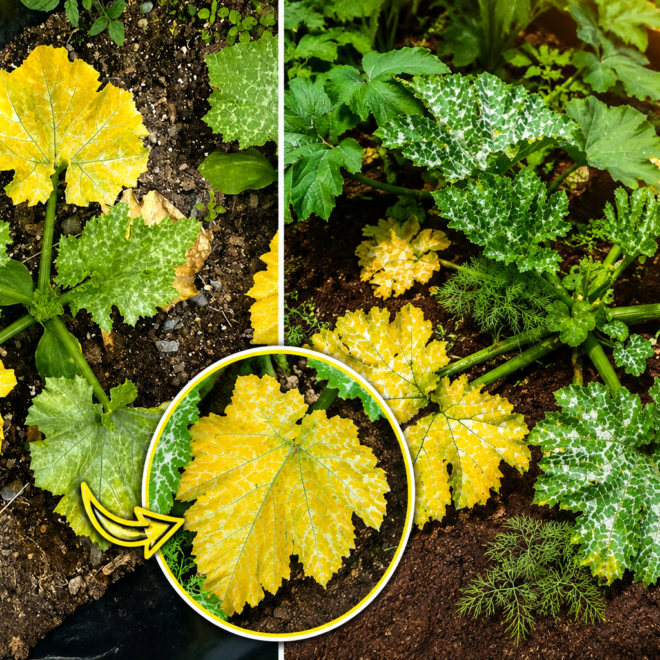
Three summers ago, I nearly ripped out an entire zucchini plant because half its leaves had gone pale, and I assumed it was dying. It turned out the soil under the mulch was still soaked from a week-old rainstorm , the roots were suffocating, not starving. I’d almost fertilized a plant that needed the opposite: less water, more air at the roots. That experience taught me an important lesson: Why Are My Zucchini Leaves Turning Yellow? is not always as simple as a nutrient deficiency. Yellow leaves can be a sign of several different problems, and knowing what the plant is telling you is the first step toward fixing it.
That’s the trap with yellow zucchini leaves. The symptom looks the same no matter what’s causing it, so the instinct to “fix” it fast is usually what makes things worse. Yellowing is a signal, not a diagnosis, and the only way to actually solve it is to slow down for five minutes and read what the plant is telling you.
Why zucchini leaves turn yellow
There’s no single cause. It can be as harmless as an old leaf finishing its job, or as serious as a virus that means pulling the plant. The usual suspects:
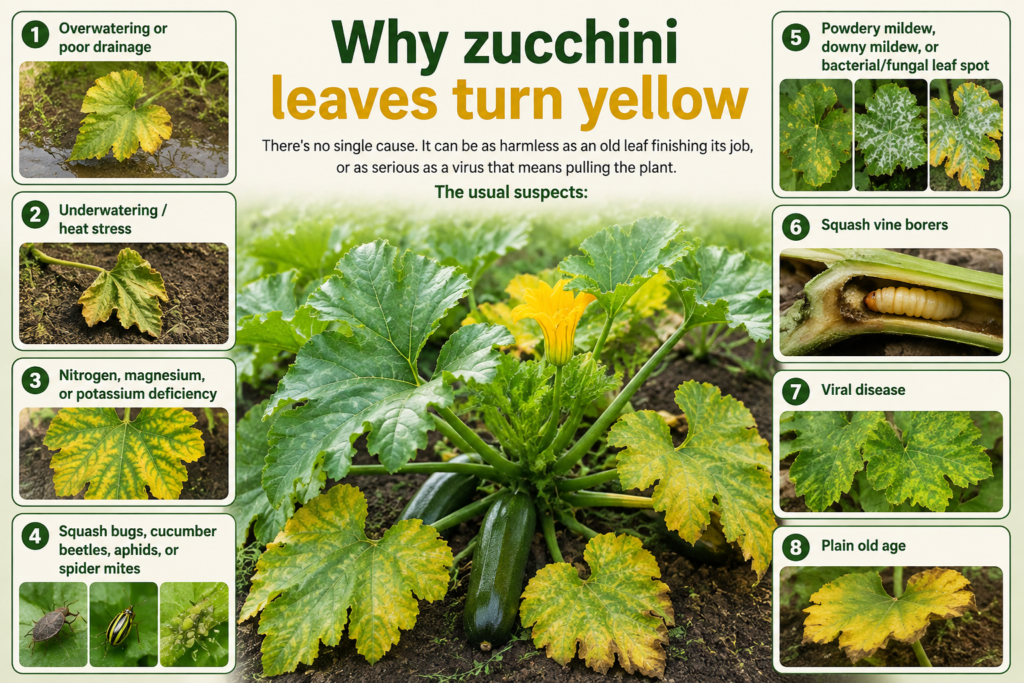
- Overwatering or poor drainage
- Underwatering / heat stress
- Nitrogen, magnesium, or potassium deficiency
- Squash bugs, cucumber beetles, aphids, or spider mites
- Powdery mildew, downy mildew, or bacterial/fungal leaf spot
- Squash vine borers
- Viral disease
- Plain old age
The trick isn’t memorizing this list it’s narrowing it down using where the yellowing shows up and what else is going on around it.
Quick Diagnosis Summary
| What You See | Likely Cause | What to Do |
|---|---|---|
| A few old leaves turn yellow while the rest of the plant is healthy | Natural aging | Usually nothing to worry about; remove only when fully dead. |
| Soil stays wet and yellowing spreads across the plant | Overwatering / Poor drainage | Reduce watering and improve drainage. |
| Leaves wilt in the afternoon and soil is dry | Underwatering / Heat stress | Water deeply and less frequently. |
| Older leaves become pale yellow with weak growth | Nutrient deficiency | Test the soil before applying fertilizer. |
| Yellow specks + egg clusters under leaves | Squash bugs | Inspect leaf undersides and remove eggs or bugs. |
| Chewed leaves + striped or spotted beetles | Cucumber beetles | Identify and control the beetles. |
| Fine pale stippling, sometimes followed by webbing | Spider mites | Check leaf undersides; use a strong stream of water for light infestations. |
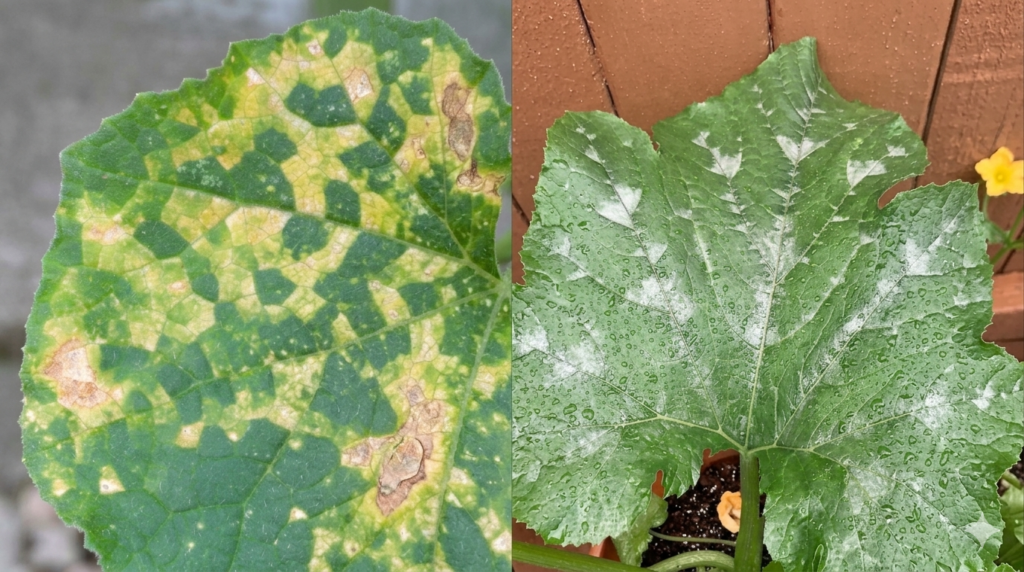
| Yellow patches followed by white powder | Powdery mildew | Improve airflow and avoid prolonged leaf wetness. |
| Angular yellow spots along leaf veins + gray/purple fuzz underneath | Downy mildew | Act quickly and reduce prolonged moisture on leaves. |
| One vine suddenly wilts + hole and sawdust-like frass at the base | Squash vine borer | Inspect the stem and act quickly. |
| Blotchy yellow-green mosaic + curled or stunted new growth | Viral disease | Remove severely infected plants to reduce spread. |
The 5-Minute Diagnosis Method
Check the Soil
Dig about 4 inches down and check whether it is dry, moist, or soggy.
Check the Leaves
Determine whether yellowing affects old leaves, new growth, or the entire plant.
Flip the Leaves
Look underneath for insects, eggs, webbing, or mildew.
Study the Pattern
Look for spots, stippling, powder, mosaic patterns, wilting, or stem damage.
Treat the Cause
Only take action after identifying the most likely cause.
Start here: three checks before you touch anything
1. Dig into the soil, not just the surface. Push a finger or a trowel four inches down. Bone dry means underwatering. Cool and soggy especially days after your last watering points to overwatering or bad drainage.
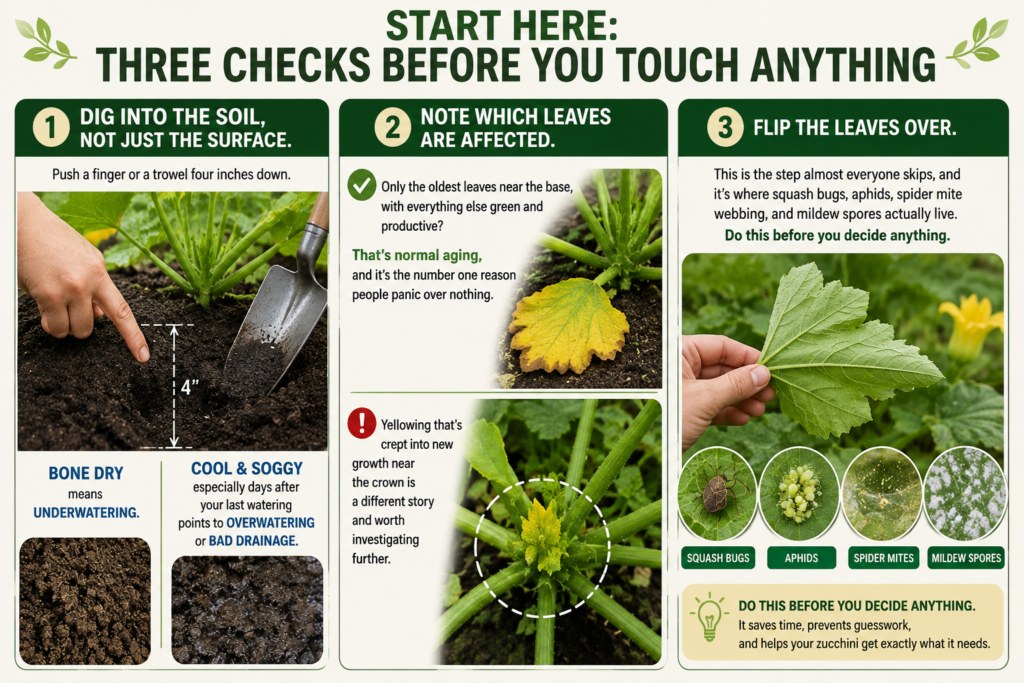
2. Note which leaves are affected. Only the oldest leaves near the base, with everything else green and productive? That’s normal aging, and it’s the number one reason people panic over nothing. Yellowing that’s crept into new growth near the crown is a different story and worth investigating further.
3. Flip the leaves over. This is the step almost everyone skips, and it’s where squash bugs, aphids, spider mite webbing, and mildew spores actually live. Do this before you decide anything.
The eight most common causes, and how to tell them apart
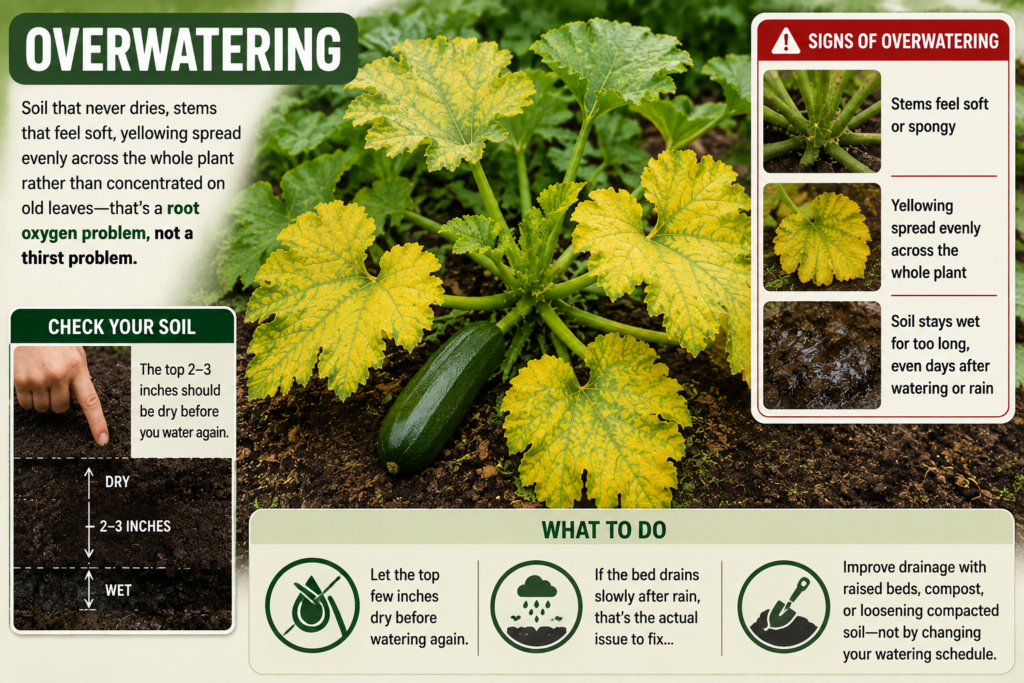
Overwatering. Soil that never dries, stems that feel soft, yellowing spread evenly across the whole plant rather than concentrated on old leaves that’s a root oxygen problem, not a thirst problem. Let the top few inches dry before watering again, and if the bed drains slowly after rain, that’s the actual issue to fix, not the watering schedule.
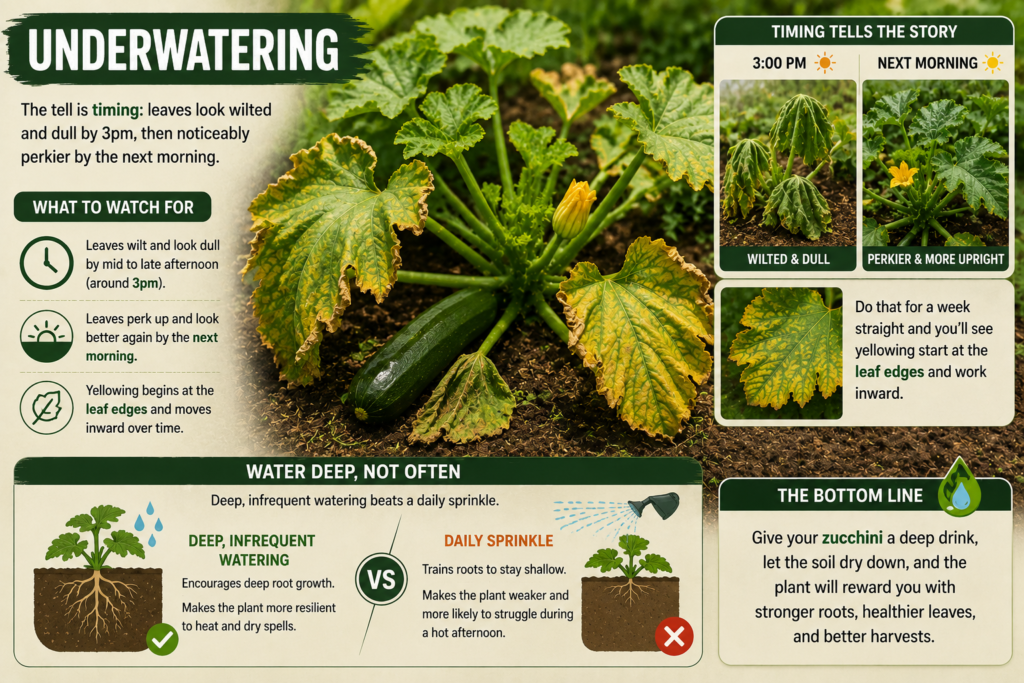
Underwatering. The tell is timing: leaves look wilted and dull by 3pm, then noticeably perkier by the next morning. Do that for a week straight and you’ll see yellowing start at the leaf edges and work inward. Deep, infrequent watering beats a daily sprinkle a light surface watering trains roots to stay shallow, which makes the plant worse at handling a hot afternoon.
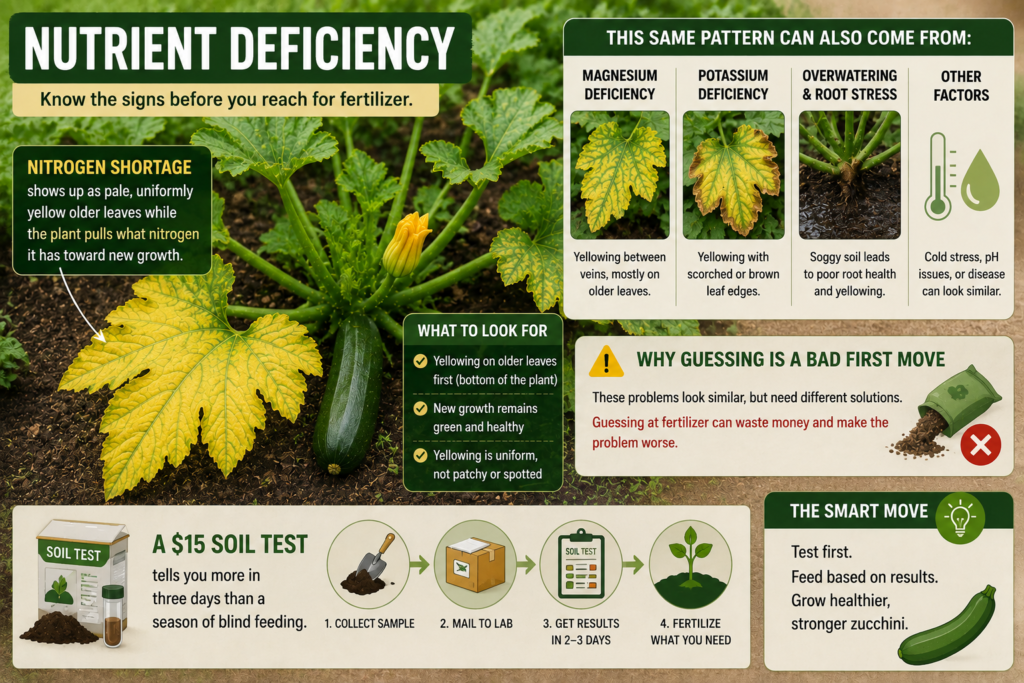
Nutrient deficiency. Nitrogen shortages show up as pale, uniformly yellow older leaves while the plant pulls what nitrogen it has toward new growth. Penn State Extension notes this same pattern can also come from magnesium or potassium deficiency or from overwatering and root stress, which is exactly why guessing at fertilizer is a bad first move. A $15 soil test tells you more in three days than a season of blind feeding.
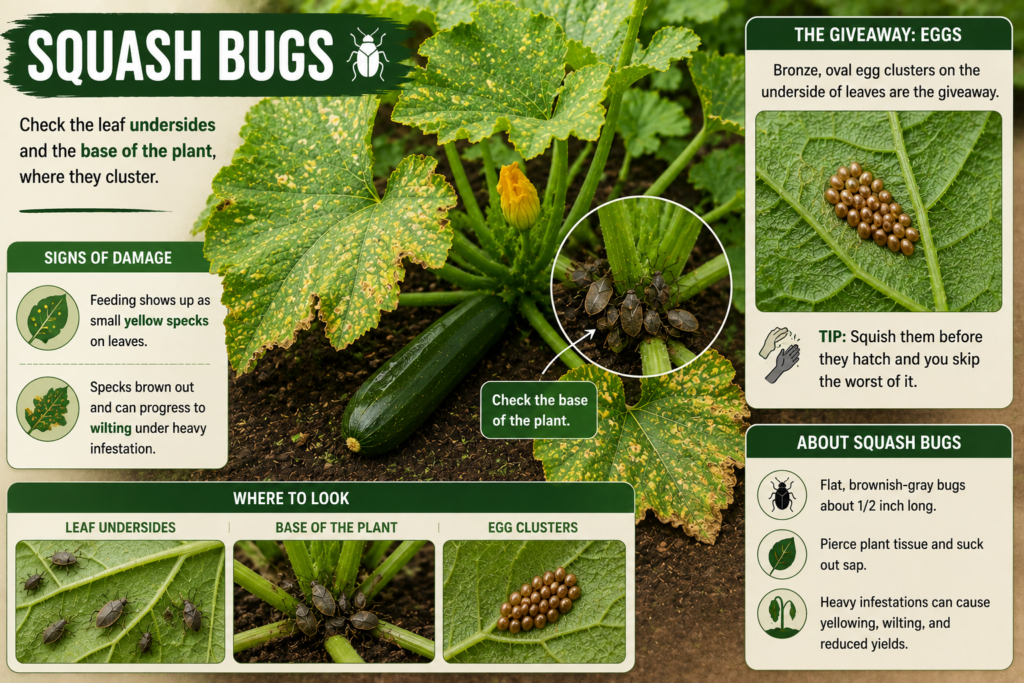
Squash bugs. Check the leaf undersides and the base of the plant, where they cluster. Feeding shows up as small yellow specks that brown out and can progress to wilting under heavy infestation. Bronze, oval egg clusters on the underside of leaves are the giveaway squish them before they hatch and you skip the worst of it.
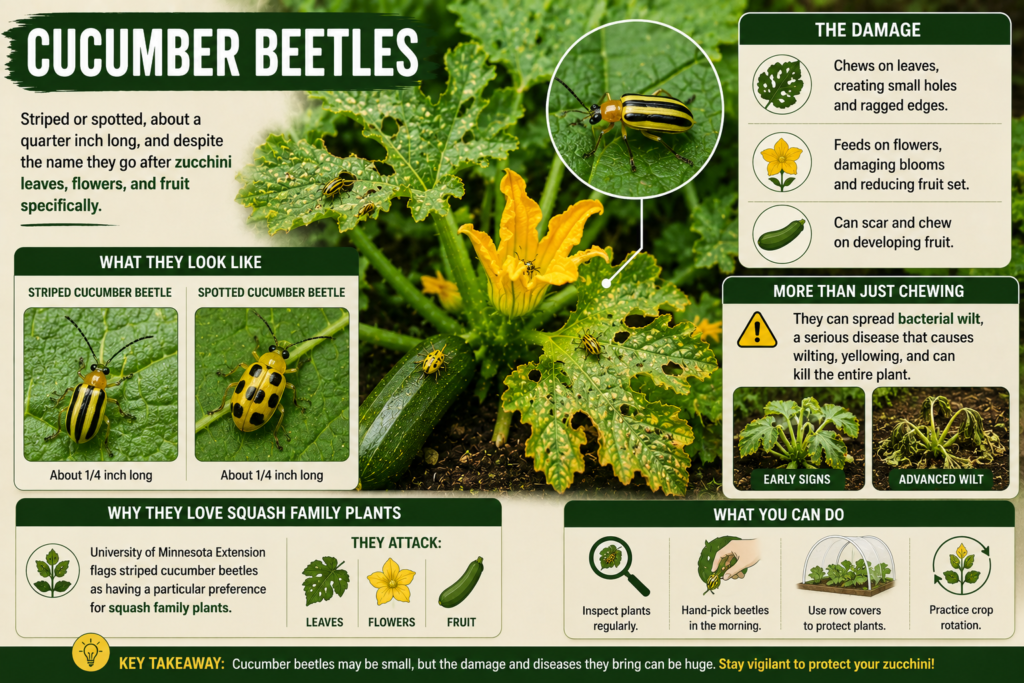
Cucumber beetles. Striped or spotted, about a quarter inch long, and despite the name they go after zucchini leaves, flowers, and fruit specifically. University of Minnesota Extension flags striped cucumber beetles as having a particular preference for squash family plants, and beyond the physical chewing damage, they can spread bacterial wilt, which is often worse than the leaf damage itself.
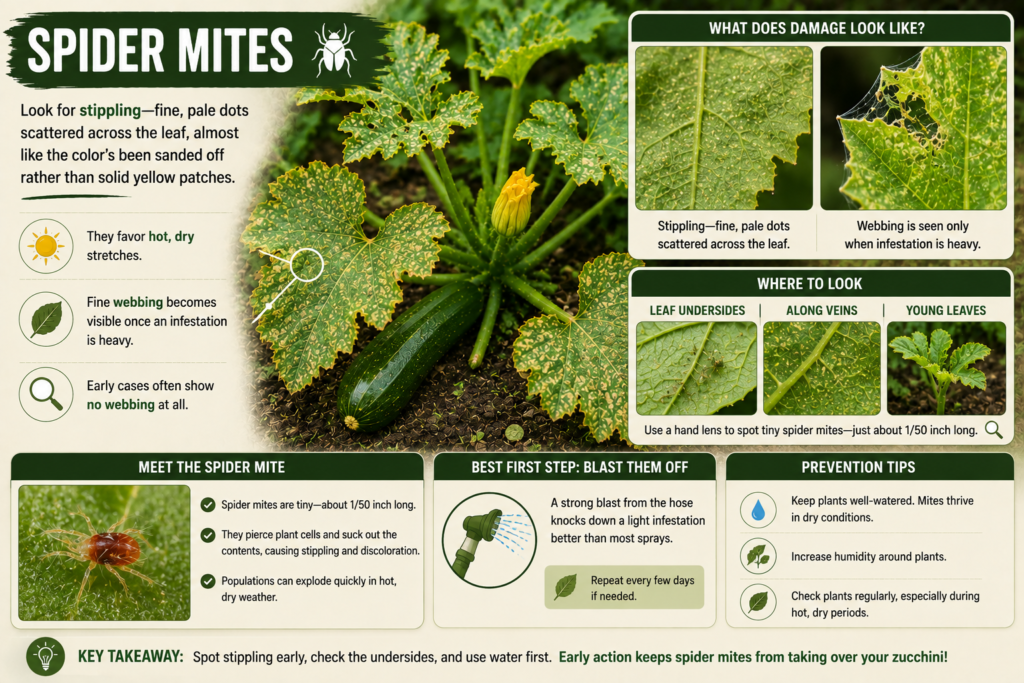
Spider mites. Look for stippling fine, pale dots scattered across the leaf, almost like the color’s been sanded off rather than solid yellow patches. They favor hot, dry stretches, and University of Minnesota Extension notes that fine webbing becomes visible once an infestation is heavy, though early cases often show no webbing at all. A strong blast from the hose knocks down a light infestation better than most sprays.
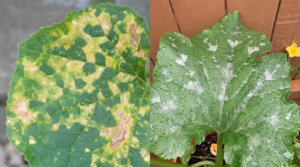
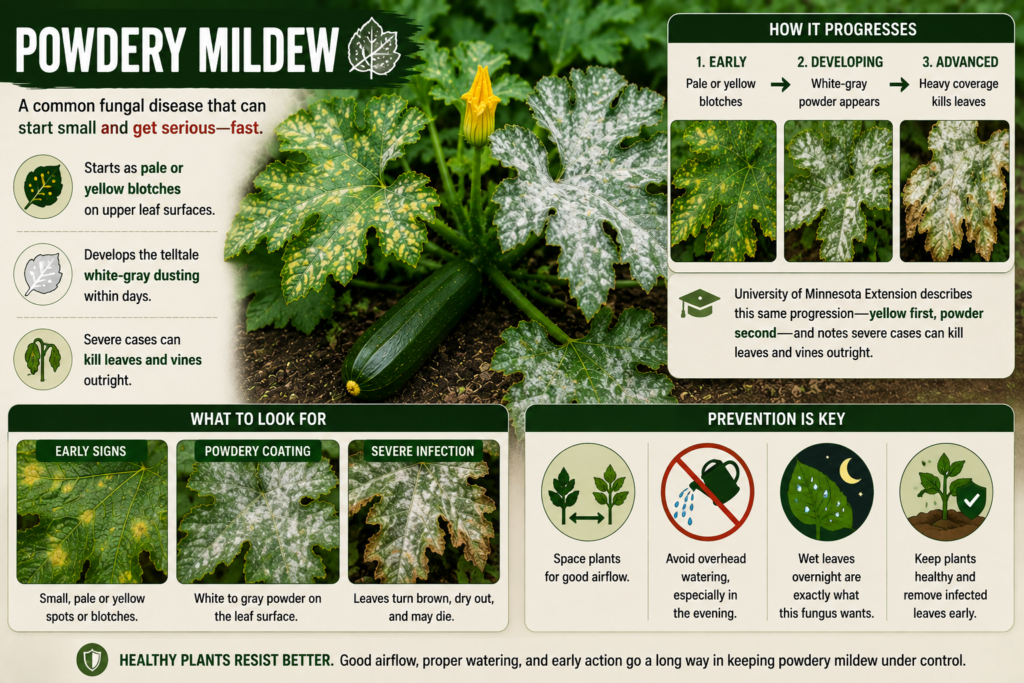
Powdery mildew. Starts as pale or yellow blotches, then develops the telltale white-gray dusting on the leaf surface within days. University of Minnesota Extension describes this same progression yellow first, powder second and notes severe cases can kill leaves and vines outright. Space plants for airflow and avoid overhead watering in the evening; wet leaves overnight are exactly what this fungus wants.
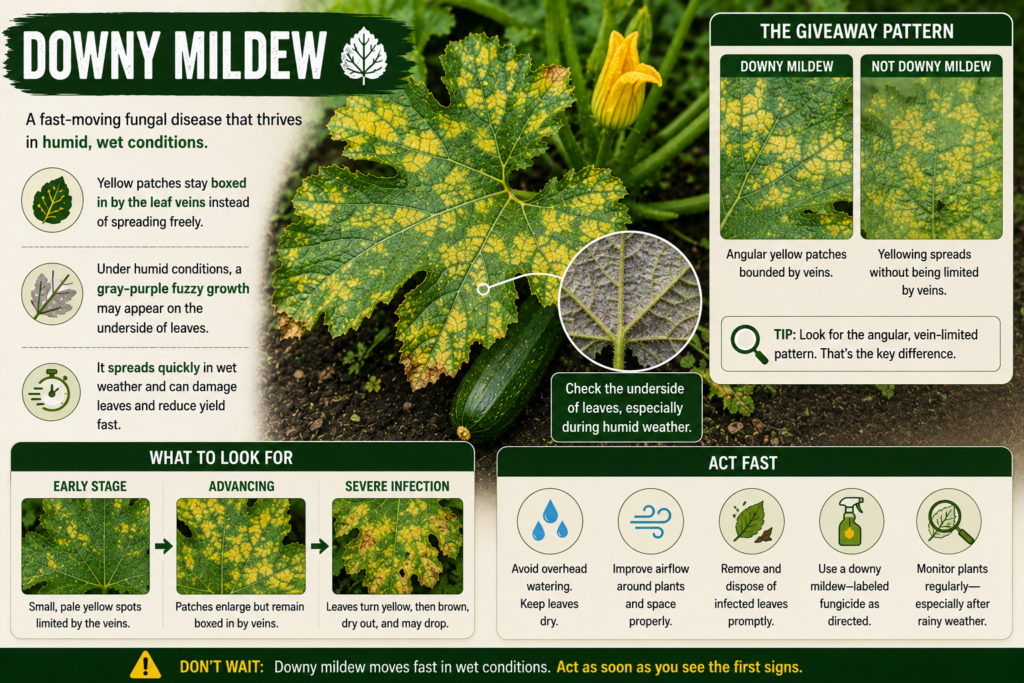
Downy mildew. The pattern is the giveaway: yellow patches that stay boxed in by the leaf veins instead of spreading freely, giving them an angular, stained glass look. Flip the leaf during humid weather and you may see a gray purple fuzz underneath. It moves fast in wet conditions, so don’t wait a week to act once you spot it.
Two problems people miss because the plant looks fine on top
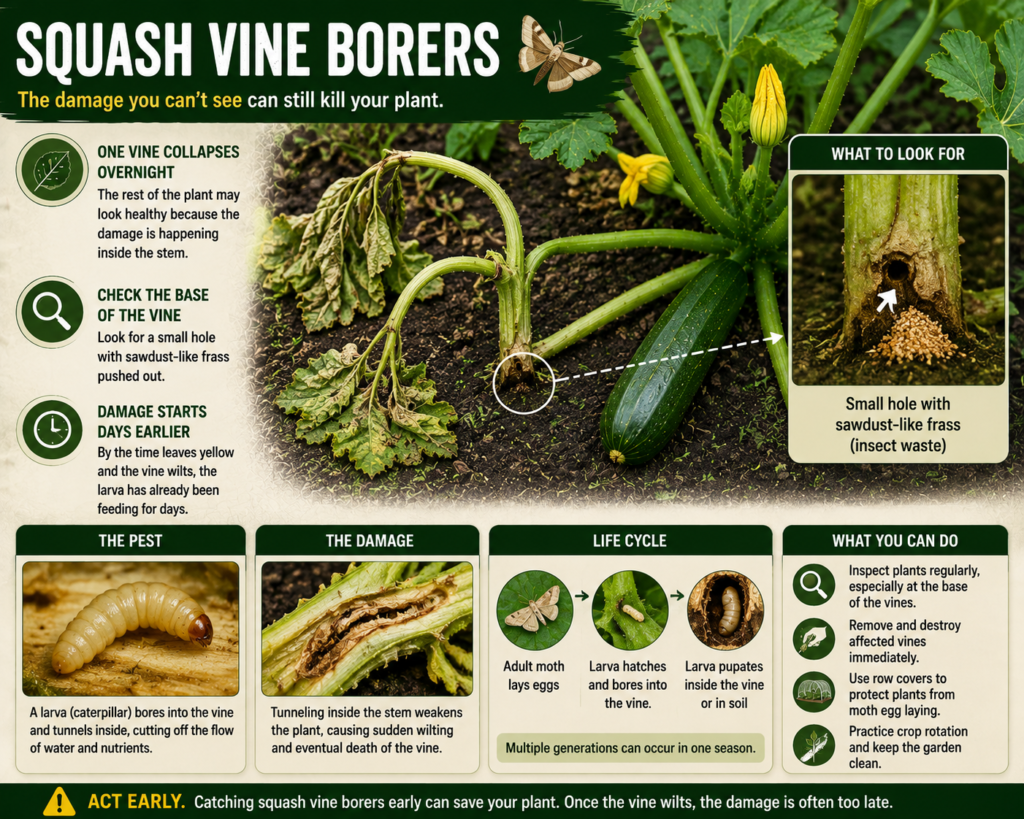
Squash vine borers. One vine collapses seemingly overnight while the rest of the plant looks normal because the damage is happening inside the stem, where you can’t see it. Check the base of the wilting vine for a small hole with a sawdust like frass pushed out. By the time leaves yellow from this, the larva has already been feeding for days.
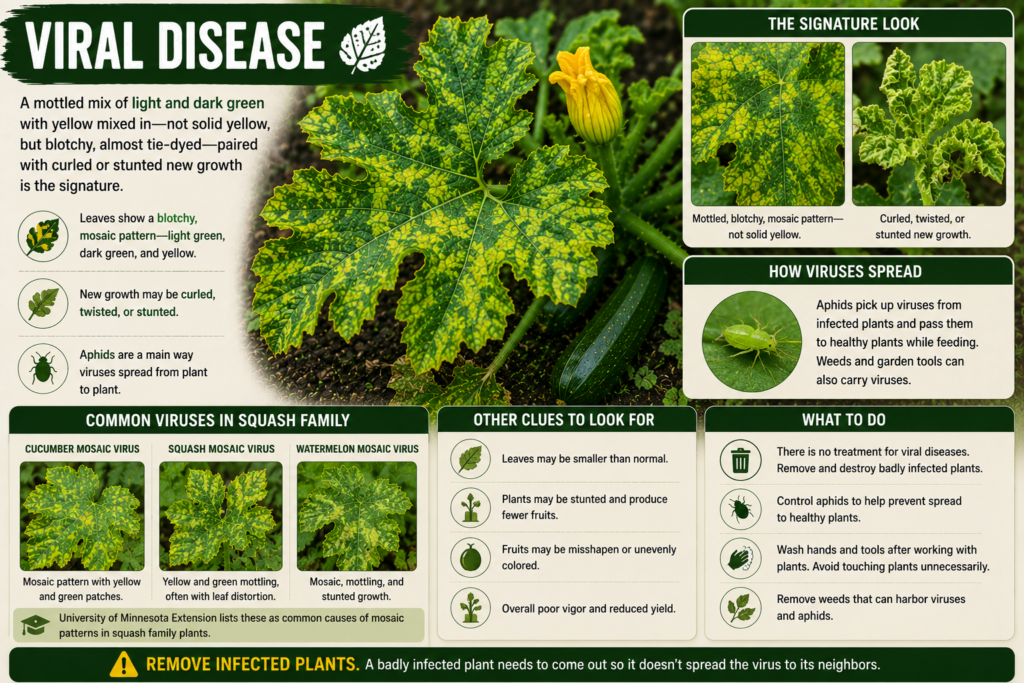
Viral disease. A mottled mix of light and dark green with yellow mixed in not solid yellow, but blotchy, almost tie dyed paired with curled or stunted new growth is the signature. University of Minnesota Extension lists cucumber mosaic, squash mosaic, and watermelon mosaic as common causes of this exact pattern in squash family plants, and aphids are one of the main ways these viruses spread from plant to plant. There’s no treatment a badly infected plant needs to come out so it doesn’t spread to its neighbors.
Quick Reference Chart
| What You See | Likely Cause |
|---|---|
| A few old leaves yellow, everything else thriving | Natural aging |
| Soil stays wet, yellowing spreads evenly | Overwatering / Poor drainage |
| Soil bone dry, afternoon wilting | Underwatering |
| Pale older leaves, weak overall growth | Nutrient deficiency |
| Yellow specks near egg clusters on leaf undersides | Squash bugs |
| Chewed leaves, striped/spotted beetles visible | Cucumber beetles |
| Fine stippling, possible webbing | Spider mites |
| Yellow patches → white powder | Powdery mildew |
| Angular yellow spots along veins | Downy mildew |
| One vine wilts suddenly, hole + frass at base | Squash vine borer |
| Blotchy yellow-green mosaic, curled new growth | Viral disease |
What not to do
Don’t fertilize before checking the soil a plant with soggy roots gets worse, not better, with more nitrogen. Don’t spray for insects you haven’t actually found; if there’s nothing under the leaves, the spray is just stressing the plant for nothing. And don’t strip off every yellowing leaf on sight a couple of naturally aging leaves at the base aren’t hurting anything, and removing healthy tissue along with dying tissue only sets the plant back further.
Keeping it from happening again
Water deeply and less often rather than a little every day this trains deeper roots that handle heat better. Mulch to steady soil moisture, but keep it an inch or two off the stem so it doesn’t trap rot friendly moisture right at the base. Give plants real spacing (36 inches or more) so leaves dry quickly after rain instead of staying damp overnight. And walk the bed once a week, flipping a few leaves each time the plants that get caught early almost never turn into the ones you have to pull.
Bottom line
The plant that taught me this lesson survived, by the way I backed off the water, let the bed dry out, and it came back within two weeks. The fix wasn’t a product. It was five minutes of actually checking the soil before reacting.
That’s really the whole method: check the soil, flip the leaves, note the pattern, then treat the specific thing you found not the yellow color itself.
FAQ
1. Should I remove yellow zucchini leaves?
Only remove leaves that are completely dead, badly damaged, or touching the soil. Partially yellow leaves may still be producing energy.
2. Is yellowing with wilting always a watering problem?
No. Check the soil first. Dry soil suggests underwatering, while wilting in wet soil can indicate root stress or squash vine borer damage.
3. Can I save a zucchini plant with viral yellowing?
Usually not. Viral diseases have no cure, so severely infected plants may need to be removed to prevent spread.
4. Should I fertilize when zucchini leaves turn yellow?
Not automatically. Yellowing can come from overwatering, pests, disease, or nutrient deficiency. Check the soil before adding fertilizer.
5. What is the fastest way to diagnose yellow zucchini leaves?
Check three things first: soil moisture, which leaves are affected, and the undersides of the leaves for pests, eggs, webbing, or disease signs.
References
- Penn State Extension — Diagnosing Poor Plant Health
Covers common causes of plant yellowing, including nutrient deficiencies, overwatering, root problems, and other plant health issues.
Penn State Extension — Diagnosing Poor Plant Health - University of Minnesota Extension — Summer Squash & Zucchini: Discolored Leaves
Provides identification information for common causes of discolored zucchini and summer squash leaves, including insects and diseases.
University of Minnesota Extension — Discolored Leaves - University of Minnesota Extension — Cucumber Beetles
Covers striped and spotted cucumber beetles, feeding damage, and their role in spreading bacterial wilt.
University of Minnesota Extension — Cucumber Beetles - University of Minnesota Extension — Cucurbit Viruses
Explains mosaic symptoms, distorted growth, virus transmission, and management of viral diseases affecting cucurbit crops.
University of Minnesota Extension — Cucurbit Viruses - University of Minnesota Extension — Winter Squash & Pumpkins: Leaf Spots
Provides information on powdery mildew, downy mildew, and other leaf-spot symptoms affecting cucurbit plants.
University of Minnesota Extension — Leaf Spots - University of Minnesota Extension — Vegetable Disease Management
A broader reference covering diseases and management practices for vegetable crops, including cucurbits.
University of Minnesota Extension — Vegetable Disease Management

Thesis Link : https://saulibrary.edu.bd/daatj/public/uploads/BAU200601_19-Pp_5.pdf
- Why Are My Zucchini Leaves Turning Yellow? Causes & Fixes - August 31, 2026
- What Is Eating My Plants at Night? - August 27, 2026
- Why Are My Tomato Leaves Curling Up? Causes & Fixes - August 20, 2026