
How to Find the Culprit and Stop the Damage
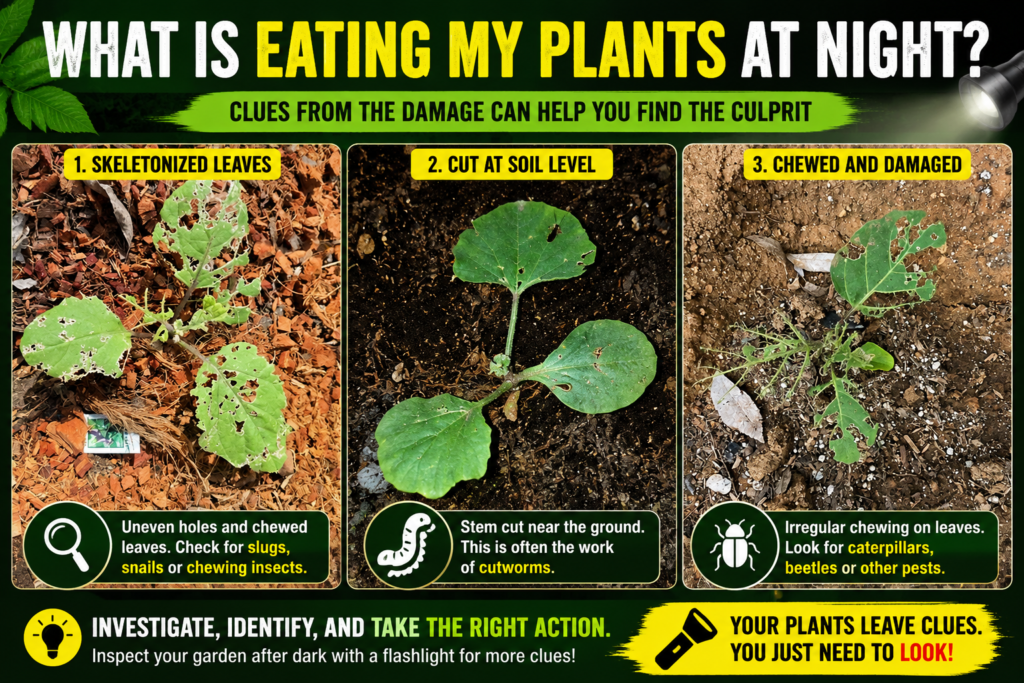
You check your garden in the morning, expecting to see the same healthy plants you left the night before. Instead, something has changed. Your lettuce leaves are full of holes. A small pepper plant has been knocked over. The hostas look as though something has been chewing on them all night. So, what is eating your plants at night? The answer could be anything from slugs and snails to caterpillars, cutworms, earwigs, rabbits, deer, or other hungry garden visitors. The good news is that the damage they leave behind can often reveal exactly what happened while you were asleep.
Nothing is there now.
That is what makes nighttime garden damage so frustrating. Whatever visited your garden has already disappeared.
The good news is that your plants usually leave behind clues. The shape of the damage, missing leaves, chewed stems, slime trails, droppings, and even the time the damage appears can help you narrow down the culprit.
A plant cut off near the ground may point to one pest, while large irregular holes in the leaves may point to another. Shiny trails on the soil tell a very different story.
Slugs, snails, cutworms, caterpillars, beetles, earwigs, rabbits, deer, and other nighttime visitors can all damage a garden. Before reaching for a spray or setting out traps, take a closer look at what happened.
Finding out what is eating your plants is the first step toward stopping it.
The 60 Second Plant Damage Check
If you want a quick answer, check these three things before doing anything else:
First, look at the stem.
If a young plant has been cut off near the soil, inspect the ground for cutworms.
Next, look for a trail.
A shiny or silvery trail around the plant is a strong clue that slugs or snails were active.
Finally, check how the plant was eaten.
Clean clipping near the ground can suggest a rabbit. Torn leaves and stems higher up may point to deer or another larger animal.
This quick check will not identify every pest, but it can help you narrow down the possibilities in less than a minute.
Quick Summary: What Is Eating My Plants at Night?
Use the clues below to identify the most likely culprit before taking action.
| Clue or Damage | Likely Culprit | What to Look For | What to Do |
|---|---|---|---|
| Uneven holes in leaves + silvery trail | Slugs or Snails | Slime trails and damp hiding places | Inspect plants after dark |
| Seedling cut off at soil level | Cutworms | Damaged stem and caterpillar in nearby soil | Check the soil around the plant |
| Large holes + small droppings | Caterpillars | Pellets under leaves and insects hiding above | Check under and behind leaves |
| Rough holes, especially in damp areas | Earwigs | Earwigs under pots, mulch, or debris | Inspect hiding places at night |
| Clean, clipped damage close to the ground | Rabbits | Small droppings and low-level damage | Check garden entry points |
| Torn, ragged damage on taller plants | Deer | Hoofprints and widespread browsing | Inspect boundaries and surrounding plants |
| Holes without slime or wildlife signs | Leaf-chewing insects | Beetles or other insects on foliage | Inspect plants closely |
| No clear signs of chewing | Weather or Physical Damage | Broken stems, wind, or hail damage | Check recent weather and plant conditions |
Quick Rule to Remember
Quick Answer: What Is Eating My Plants at Night?
The quickest way to figure out what is attacking your garden is to look closely at how your plants were damaged.
Different pests leave different signs behind.
- Slugs and snails usually leave uneven holes in leaves, along with a shiny slime trail.
- Cutworms often attack seedlings by chewing through the stem near ground level.
- Caterpillars can eat large portions of leaves, buds, and even developing fruit. Small droppings may also be visible nearby.
- Earwigs tend to cause rough, uneven holes, particularly in damp areas where they hide during the day.
- Rabbits usually leave plants looking neatly clipped, with clean cuts close to the ground.
- Deer are less tidy. They often pull and tear leaves and stems, leaving ragged edges behind.
- Larger animals and wildlife may leave much more obvious damage, including dug up soil, knocke over plants, missing fruit, or an entire section of a plant suddenly gone.
The damage you find in the morning is often the best evidence you have. A shiny trail, a severed seedling, or a torn leaf can tell you far more than simply seeing a hole in a plant.
So before using insecticide or setting traps, spend a few minutes examining the scene. The way your plants were eaten is usually the first clue to what came into your garden after dark.
Use This Simple Elimination Method
Start at the top and work your way down:
Is there a slime trail?
→ Check for slugs or snails.
Is the seedling cut off at ground level?
→ Check the nearby soil for cutworms.
Are there small droppings on the leaves?
→ Look above the damage for caterpillars.
Are stems and leaves neatly clipped close to the ground?
→ Rabbits may be responsible.
Are leaves torn and several plants damaged at once?
→ Look for signs of deer or other wildlife.
Is there no sign of chewing at all?
→ Check for hail, wind, falling branches, or other physical damage.
This is much faster than treating every hole in a leaf as an insect problem.
The Fastest Way to Figure Out What Ate Your Plants
When you find damaged plants in the morning, don’t focus only on the missing leaves. Take a closer look at the whole plant and the area around it.
In most cases, the damage leaves a few useful clues.
Pay attention to these four things:
- What the damage looks like — Are the holes small, large, smooth, ragged, or uneven?
- Where the plant was attacked — Is the damage close to the soil or higher up?
- What was left behind — Look for slime, droppings, tracks, insects, or disturbed soil.
- How quickly it happened — Did the plant look fine yesterday and suddenly appear damaged this morning?
A Simple Damage Guide
Match the clues in your garden to find out what may be damaging your plants.
| What You Find | Possible Culprit | What to Look For |
|---|---|---|
| Uneven holes in leaves | Slugs or Snails | Shiny slime on leaves or soil |
| Seedling lying flat or stem chewed through | Cutworm | Caterpillar curled up in nearby soil |
| Leaves heavily chewed with small dark pellets | Caterpillar | Droppings on leaves or underneath the plant |
| Rough holes, especially in damp areas | Earwig | Earwigs hiding under pots, mulch, or debris |
| Leaves and stems neatly clipped | Rabbit | Damage close to the ground and small droppings |
| Leaves pulled apart and torn | Deer | Higher browsing damage, tracks, or broken stems |
| Plants uprooted, soil disturbed, or fruit missing | Larger Animals | Footprints, digging, or other signs of wildlife |
| Sudden holes after bad weather | Not Always a Pest | Check for hail, strong wind, or storm damage |
One important thing to remember: not every damaged leaf has been eaten.
Hail can punch holes through foliage. Strong wind can tear leaves. Heavy rain can knock over young plants and make them look as though an animal attacked them.
So before blaming a bug or reaching for a pesticide, look at the evidence around the plant. A few extra minutes of checking can save you from treating the wrong problem.
Damage Height Can Reveal More Than You Think
The height of the damage is one of the easiest clues to overlook.
| Where the Damage Appears | What to Investigate |
|---|---|
| At soil level | Cutworms, slugs, snails |
| Low on the plant | Rabbits, slugs, caterpillars |
| Middle sections | Caterpillars and other insects |
| High on shrubs and taller plants | Deer or larger wildlife |
| Fruit disappearing from the plant | Wildlife, birds, rodents, or larger visitors |
The exact height does not prove what caused the damage, but it can quickly rule out some possibilities.
1. Slugs and Snails: The Usual Suspects After Dark
If your plants look perfectly healthy in the evening but appear chewed by morning, slugs and snails are worth investigating first.
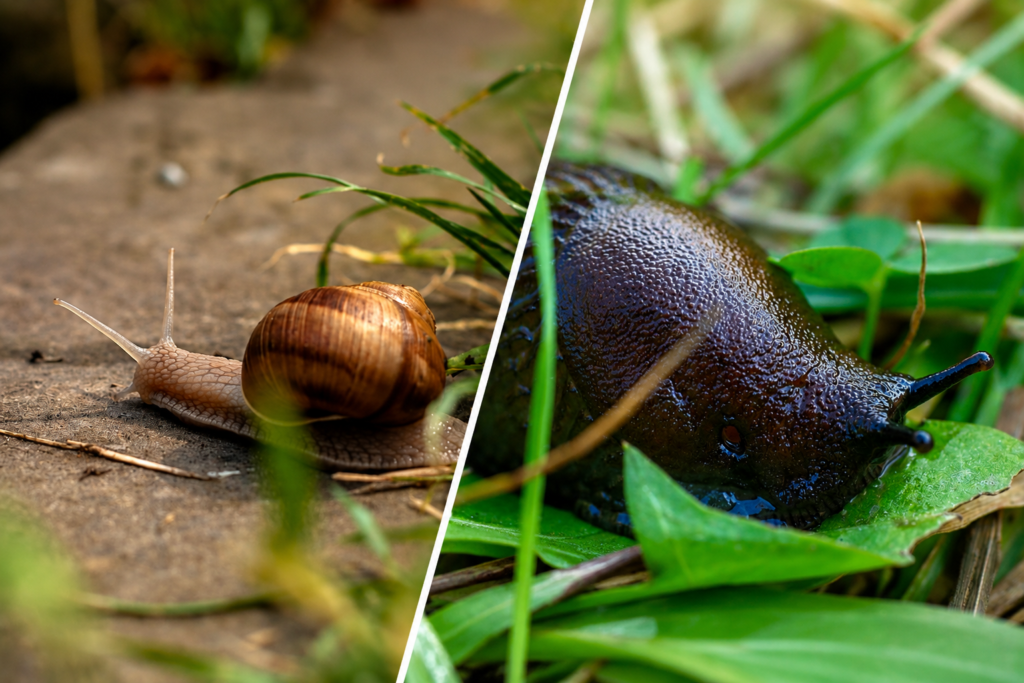
These garden visitors usually prefer damp, shady places. When the sun is out, they stay hidden. You may find them beneath flowerpots, mulch, fallen leaves, rocks, boards, or any other cool spot that holds moisture.
Once it gets dark, they come out to feed.
Tender plants are particularly attractive to them. Lettuce and other leafy vegetables are common targets, but they can also damage young beans, basil, cabbage, strawberries, hostas, seedlings, and many types of flowers.
The good news is that slugs often leave evidence behind.
How to Tell if Slugs or Snails Are Responsible
Check the damaged plants early in the morning and look around the soil as well as the leaves.
Common signs include:
- Uneven holes with rough edges
- Leaves that seem to have been scraped or eaten away
- Damage near the lower part of the plant
- A thin, shiny trail across leaves, pots, mulch, or soil
- More damage after rainy or humid weather
That shiny trail is often the biggest giveaway. Even after the slug has disappeared, its dried slime can remain visible.
If you are still unsure, go outside after dark with a flashlight. Check underneath leaves and around the base of the plants. You may catch the culprits while they are feeding.
How to Reduce Slug and Snail Damage
You do not always need to start with a pesticide. Making the garden less comfortable for slugs can help reduce the problem.
Try these simple steps:
- Clear away piles of wet leaves and unnecessary debris.
- Avoid leaving pots and boards in places where slugs can hide.
- Give crowded plants a little more space for better airflow.
- Watch for areas that stay wet for long periods.
- Check the garden at night and remove slugs by hand if you find them.
- Inspect damp hiding places regularly.
Slug control usually works best when you combine several small methods rather than relying on just one. The key is to reduce their hiding places, limit excess moisture, and check the garden before the damage gets out of hand.
A Quick Night Test for Slugs
If you suspect slugs but cannot find them, try a simple inspection.
Wait until after dark, preferably when the garden is damp or humid. Take a flashlight and check the soil around the damaged plant first.
Then inspect:
- The underside of leaves
- The edge of nearby pots
- Mulch and fallen leaves
- Boards, stones, and other damp hiding places
Do not only look at the damaged plant. Slugs may be hiding a short distance away and returning to feed later in the night.
2. Cutworms: When a Seedling Is Down by Morning
A plant that looked perfectly fine the night before can sometimes be found lying flat on the soil the next morning.
If the stem appears to have been cut near the bottom, cutworms should be high on your list of suspects.
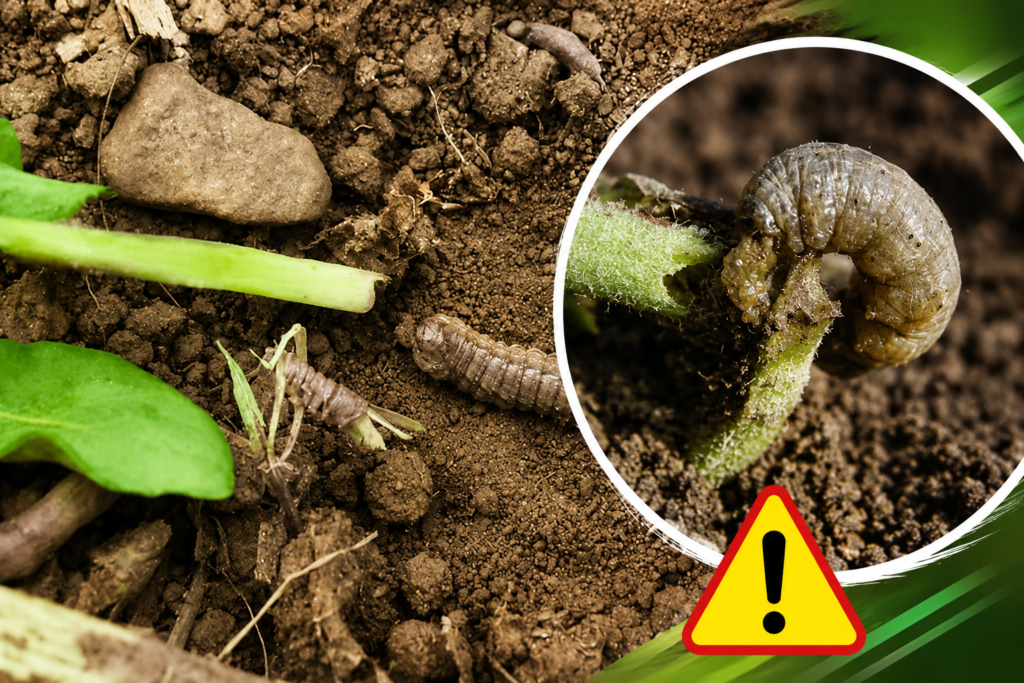
These larvae usually stay out of sight during the day, hiding in the soil or nearby debris. After dark, they move toward young plants. Some species chew through tender stems at ground level, while others may feed slightly below the surface.
That is why the damage can seem so dramatic. One night, the seedling is healthy. By morning, it is on the ground.
Signs That Point to Cutworms
Take a close look for:
- A young plant that has suddenly fallen over
- A stem chewed through near the soil
- Damage affecting newly planted seedlings
- A plump caterpillar hiding in the soil nearby
Try gently moving the soil around the base of the damaged plant. Cutworms often stay close to where they fed, and some will curl into a tight C-shape when disturbed.
Protecting Young Plants
The simplest approach is often physical protection.
Keep weeds and heavy debris away from seedlings, check vulnerable plants after dark, and place protective collars around young stems. If you find the larvae, removing them by hand can be practical in a small garden.
When only a few plants are affected, protecting those plants directly is usually more sensible than treating the entire garden.
What a Cutworm Attack Can Look Like
A cutworm problem often creates a very specific scene: the upper part of the seedling may still look healthy, but the plant is no longer attached properly to the stem at the base.
Before replanting or throwing away the seedling, inspect the soil around it.
A useful approach is to check a small circle around the damaged stem. If you find a curled caterpillar close by, you may have found the reason the plant fell overnight.
3. Caterpillars: Sometimes the Best Clue Is Above Your Head
Not every nighttime leaf eater lives in the soil.
Sometimes the culprit is sitting on the very plant you are inspecting.
Caterpillars can be difficult to notice because many of them blend remarkably well with leaves and stems. Green caterpillars disappear against green foliage, while brown species can look like a small twig.
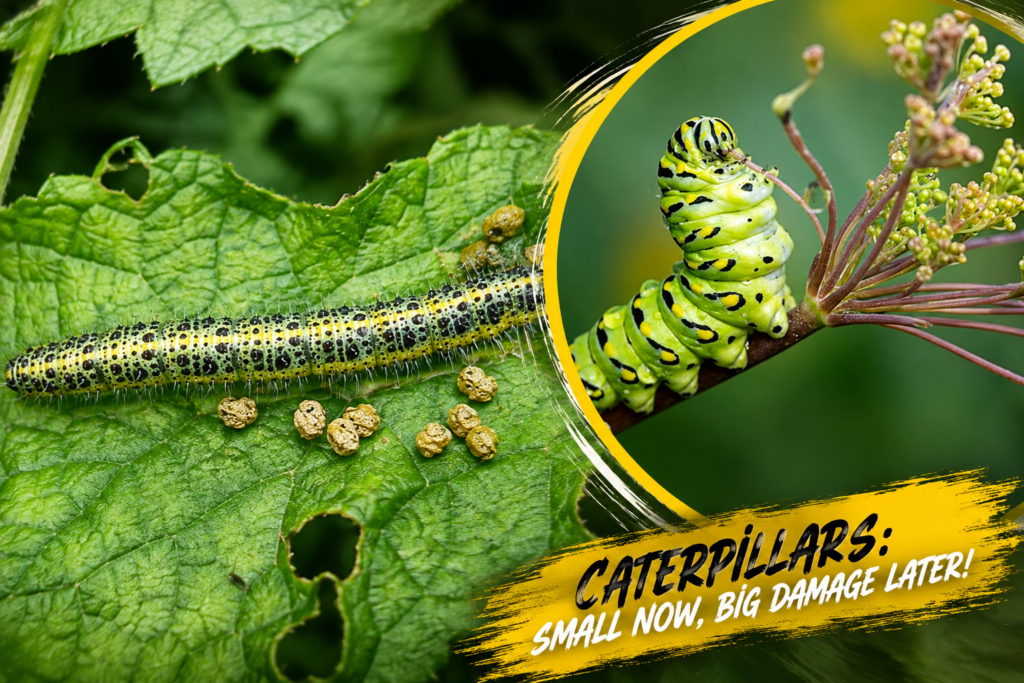
Instead of searching randomly for the insect, look for what it leaves behind.
Small pellets beneath damaged leaves can be a useful clue. These droppings, known as frass, often reveal that a caterpillar is feeding somewhere above.
What Caterpillar Damage Can Look Like
You may notice:
- Large holes in leaves
- Entire sections missing
- Chewed flower buds
- Damage to developing vegetables or fruit
- Fresh droppings on leaves or soil
- Rapidly increasing damage
If you find fresh droppings, follow the trail upward. Check the underside of leaves, folded foliage, stems, and nearby branches.
A flashlight inspection during the evening can also help.
One important point: not every caterpillar needs to be removed. Some will become butterflies or moths and may not cause significant damage. It is worth identifying what you have before deciding how to deal with it.
The “Look Above the Damage” Rule
When you see fresh caterpillar droppings, do not spend all your time searching the ground.
Look directly above the damaged area.
Check:
- The underside of the leaf
- Folded leaves
- Stems
- New growth
- Nearby branches
In many cases, the droppings are easier to find than the caterpillar itself.
4. Earwigs: Present in the Garden, but Are They the Culprit?
Earwigs have a frightening appearance, which makes them an easy target when something in the garden has been chewed.
But finding an earwig does not automatically mean it caused the damage.
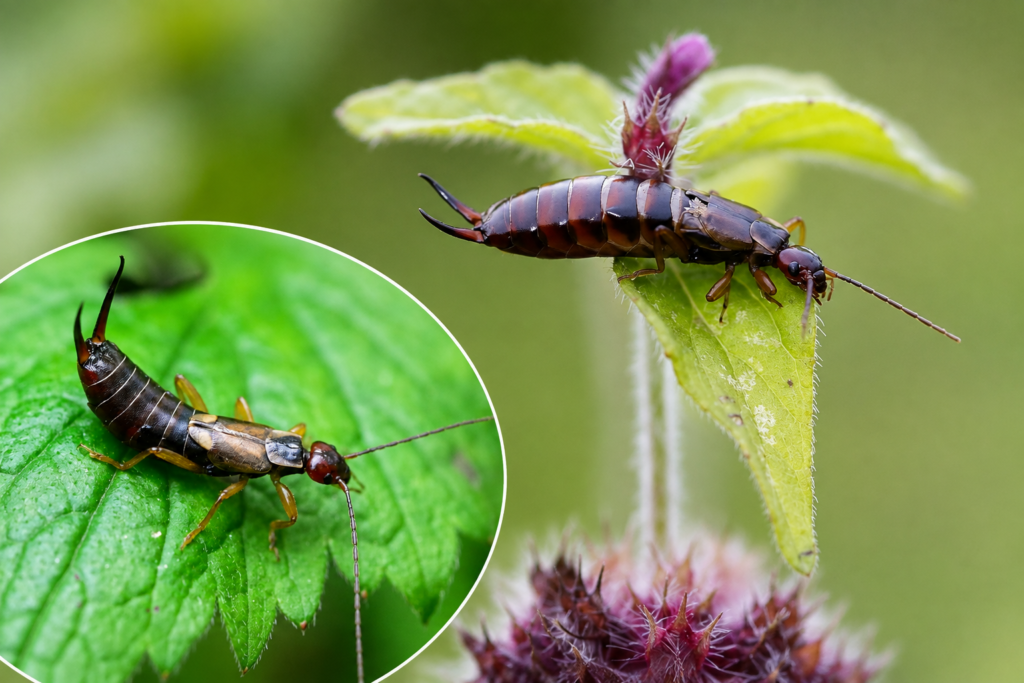
These insects prefer dark, protected places and often spend the day hiding beneath pots, mulch, loose bark, boards, or damp plant debris. They become active after dark and may feed on soft plant material.
At the same time, earwigs can also feed on other insects and decaying material. So their presence alone is not proof.
Possible Signs
Look for:
- Rough, uneven holes in soft leaves or flowers
- Damage around damp, sheltered areas
- Earwigs gathering under pots or boards
- Reddish brown insects with distinctive pincers at the rear
If you only see an occasional earwig, it may not be worth doing anything.
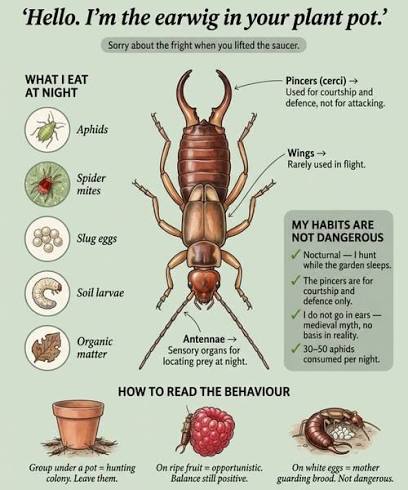
If you find large numbers around damaged plants, however, it is worth reducing the damp hiding places that are helping them stay comfortable.
Remove unnecessary debris, avoid leaving damp materials piled around plants, and improve drainage where possible.
5. Rabbits: When Plants Look Neatly Trimmed
Sometimes the damage is too clean to blame on an insect.
You walk outside and find that several leaves, shoots, or stems have simply disappeared. The remaining pieces may look almost as though they were cut with garden shears.

That is when rabbits become a likely suspect.
Rabbits tend to feed close to the ground and can quickly damage vegetables, flowers, seedlings, and young shrubs.
How Rabbit Damage Usually Looks
Watch for:
- Plants clipped low to the ground
- Stems with fairly clean cuts
- Missing leaves and tender shoots
- Small, round droppings nearby
- Damage concentrated in easy-to-reach areas
The location of the damage matters. Rabbits generally feed low, so a plant that is heavily damaged near the ground but untouched higher up may offer an important clue.
Once rabbits discover an easy food source, they often return.
For that reason, fencing and other physical barriers are usually more reliable than waiting for the next visit and trying to scare them away.
6. Deer: Bigger Animals Leave a Bigger Mess
Rabbit damage can look neat. Deer damage usually does not.
A deer can strip flowers, shoots, leaves, and tender growth surprisingly quickly. Because deer often pull vegetation as they feed, the remaining plant material may look torn rather than cleanly cut.

Clues That Suggest Deer
Look around for:
- Leaves with rough, torn edges
- Missing flowers and fresh shoots
- Damage beyond rabbit height
- Hoofprints in soft soil
- Droppings nearby
- Several different plants damaged at the same time
Deer may also leave a pattern of browsing across a wider area rather than damaging just one plant.
Once they begin visiting regularly, they can be difficult to discourage. A garden that provides easy food may become part of their routine.
For repeated deer problems, physically keeping them away is generally more dependable than relying only on scents, noises, or occasional scare devices.
Rabbit or Deer? Compare the Damage
| Clue | Rabbit | Deer |
|---|---|---|
| Cut edge | Cleaner, sharper | Torn and ragged |
| Damage height | Usually low | Often higher |
| Amount eaten | Smaller areas | Can affect many plants |
| Other evidence | Small round droppings | Hoofprints and larger droppings |
| Plant appearance | Looks clipped | Looks pulled or torn |
This comparison is particularly useful when you wake up to major plant damage but never actually see the animal.
7. Beetles and Other Leaf Chewers: Morning Damage Does Not Always Mean Night Feeding
It is easy to assume that anything discovered in the morning must have happened overnight.
That is not always true.
Some insects feed during the day, but gardeners simply do not notice the damage until the following morning.
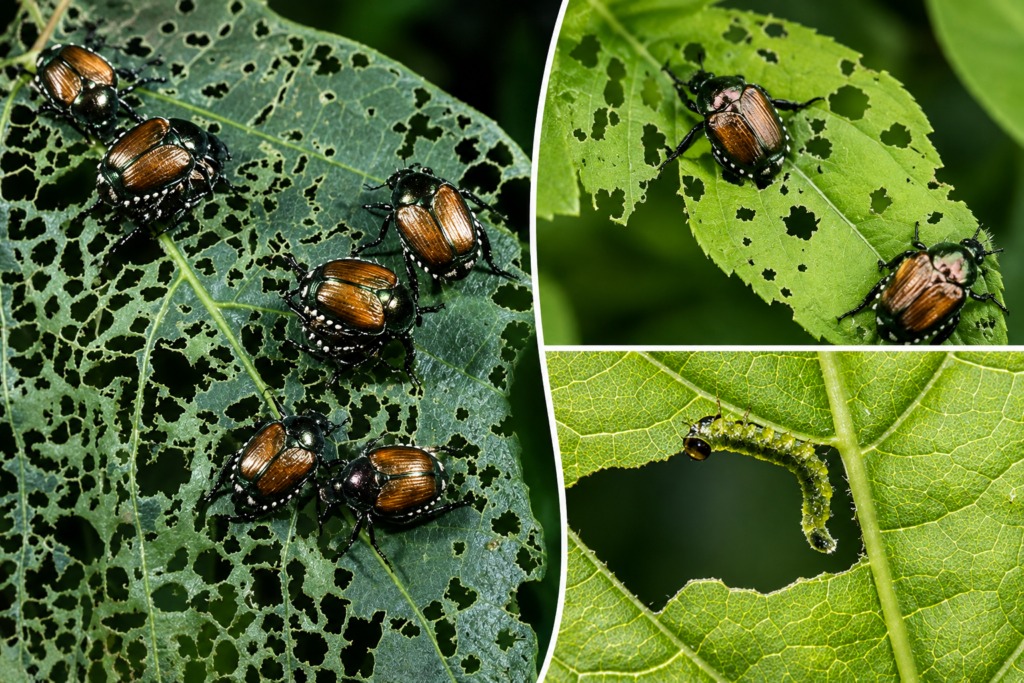
Beetles are a good example.
Certain species can remove large amounts of leaf tissue, and Japanese beetles are particularly known for eating the softer areas between leaf veins. The veins remain behind, creating a thin, lacy pattern.
Look for These Clues
- Leaf veins left behind with tissue missing between them
- A skeleton like appearance
- Damaged flowers
- Beetles visible directly on the plants
This is why identifying garden damage should not depend on the clock alone.
Finding chewed leaves in the morning does not automatically prove that a nocturnal pest was responsible. Look at the pattern, inspect the plant carefully, and check for insects during both daylight and nighttime hours.
The more clues you collect, the better chance you have of finding the real culprit.
Keep a Simple Garden Damage Record
If the same problem keeps happening, write down three things:
Date: When did you first notice the damage?
Weather: Was the night wet, dry, windy, or humid?
Location: Which plants were attacked?
After a few incidents, a pattern may begin to appear.
For example, damage that happens mostly after wet nights may point you in a different direction than damage that appears only on plants near an open fence.
This is especially helpful when the culprit does not visit every night.
How to Find Out What Is Eating Your Plants
If the same damage keeps appearing and you still do not know what is responsible, it is time to do a little detective work.
Guessing can send you in the wrong direction. A few careful checks are often enough to narrow down the problem.
Start by Recording the Damage
Before moving a leaf, cleaning up the soil, or removing the damaged plant, take a few photos.
Try to capture:
- The damaged part up close
- The entire plant
- The base of the stem
- The soil around it
- Any slime, droppings, tracks, or other unusual signs
This may seem unnecessary at first, but photos can be surprisingly helpful. If the damage happens again, you can compare the two and see whether the pattern is changing.
Go Outside When the Culprit Is Most Likely Active
A daytime inspection does not always tell the full story. Take a flashlight into the garden after dark and move slowly from plant to plant.
Check beneath leaves. Look around stems. Examine the soil surface and lift any loose mulch or debris nearby. Also inspect behind containers, around pots, and along the edges of the garden. You may find the answer while the damage is actually happening.
Slugs, snails, cutworms, and some other pests are much easier to spot at night than they are the next morning.
Try Checking at Different Times
Do not assume that one nighttime inspection is enough.
If possible, check your garden at different times during the night.
For example:
- Shortly after sunset
- Late in the evening
- Around midnight
- Early in the morning
Some garden pests become active at different times. If you check only once each night, you may miss the actual feeding activity.
Search for What Was Left Behind
The pest may be gone, but it often leaves evidence.
Look for things such as:
- Shiny slime trails
- Small droppings
- Animal footprints
- Chewed or severed stems
- Torn leaves
- Fresh digging
- Missing vegetables or fruit
Think of these clues as pieces of a puzzle. One clue may not tell you much, but several clues together can point strongly toward one particular pest or animal.
Notice How High the Damage Is
The height of the damage can tell you a lot. A seedling cut at soil level is very different from leaves disappearing two or three feet above the ground.
Low damage may suggest insects or small animals. Higher browsing damage can point toward larger wildlife.
Do not ignore this simple detail. Sometimes it eliminates half the possible suspects immediately.
Check More Than Once
You may not solve the mystery on the first night. Some animals visit only occasionally, while certain pests may feed on one plant and then move elsewhere.
Inspect the garden for several evenings if the problem continues. If you suspect rabbits, deer, raccoons, or another larger visitor, an outdoor camera can be particularly useful. It can show not only what is entering the garden, but also when and where it is getting in.
A Garden Investigation Example
Here is how a simple investigation can help solve the mystery. Imagine walking into your garden one morning and finding several lettuce leaves covered with fresh, uneven holes.
Your first thought might be that caterpillars were responsible. But instead of immediately spraying the plants, you start looking for clues.
First, you examine the damaged leaves. The holes are irregular, with rough edges.
Next, you check the soil around the lettuce. That is when you notice something important a thin, shiny trail running across the soil and toward the base of the plant.
Now you have a stronger clue.
Later that night, you return to the garden with a flashlight. You check beneath the leaves and around nearby damp debris.
There, you find the culprit: slugs.
How the Investigation Worked
The problem:
Fresh holes appeared in lettuce leaves overnight.
First clue:
The damage was uneven and irregular.
Second clue:
A shiny trail was visible on the soil near the plants.
The investigation:
The garden was inspected again after dark using a flashlight.
What was found:
Slugs were feeding near the damaged lettuce.
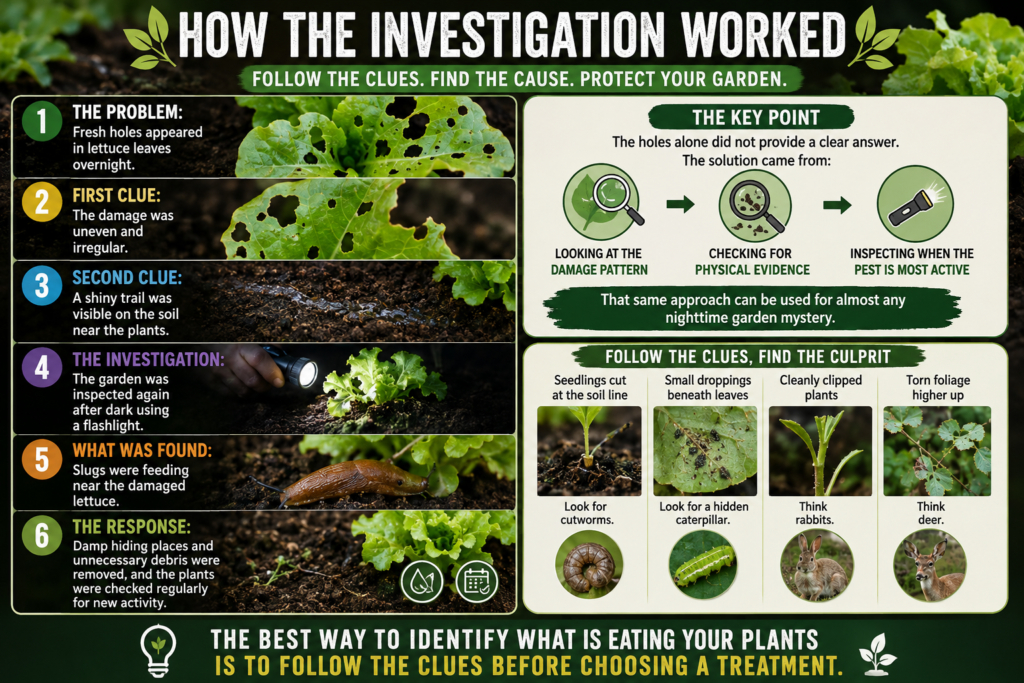
The response:
Damp hiding places and unnecessary debris were removed, and the plants were checked regularly for new activity.
The key point is that the holes alone did not provide a clear answer. The solution came from looking at the damage pattern, checking for physical evidence, and then inspecting the garden when the suspected pest was most likely to be active.
That same approach can be used for almost any nighttime garden mystery.
A seedling cut at the soil line may lead you to search for cutworms. Small droppings beneath damaged leaves may lead you to a hidden caterpillar. Cleanly clipped plants may suggest rabbits, while torn foliage higher up can point toward deer.
The best way to identify what is eating your plants is to follow the clues before choosing a treatment.
What Is Eating Holes in My Plant Leaves?
Holes are one of the most common signs gardeners notice, but not all holes are made in the same way.
The shape of the missing tissue matters.
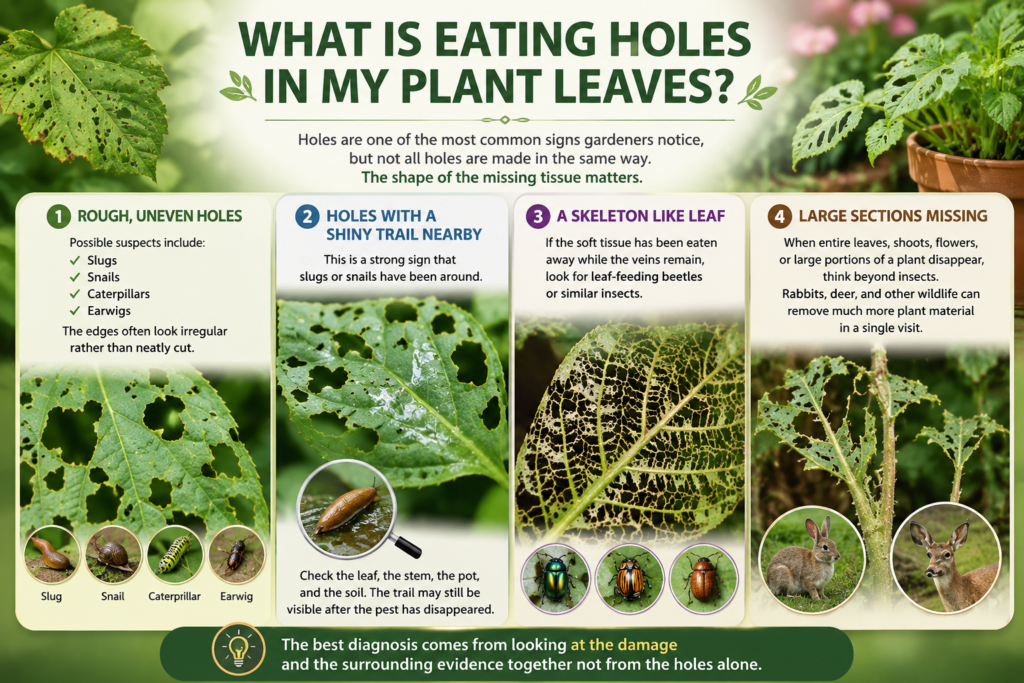
Rough, Uneven Holes
Possible suspects include:
- Slugs
- Snails
- Caterpillars
- Earwigs
The edges often look irregular rather than neatly cut.
Holes With a Shiny Trail Nearby
This is a strong sign that slugs or snails have been around.
Check the leaf, the stem, the pot, and the soil. The trail may still be visible after the pest has disappeared.
A Skeleton Like Leaf
If the soft tissue has been eaten away while the veins remain, look for leaf-feeding beetles or similar insects.
Large Sections Missing
When entire leaves, shoots, flowers, or large portions of a plant disappear, think beyond insects.
Rabbits, deer, and other wildlife can remove much more plant material in a single visit.
The best diagnosis comes from looking at the damage and the surrounding evidence together not from the holes alone.
Something Is Eating My Plants Overnight. What Should I Do?
Resist the temptation to spray first. Start by finding out what you are dealing with.
A practical order is:
- Look closely at the type of damage.
- Search for clues around the plant.
- Inspect the garden after dark.
- Identify the most likely pest or animal.
- Use a control method that matches that specific problem.
- Watch the area to see whether the damage continues.
This approach avoids unnecessary treatments and reduces the chance of harming insects that are not causing the problem.
A garden does not need the same solution for every visitor.
When the Damage Is Serious, Collect Evidence Before Cleaning Up
It is tempting to immediately remove the damaged leaves and tidy the garden.
Wait a moment.
Before cleaning:
- Take photos.
- Look for droppings or slime.
- Check the soil.
- Look for tracks.
- Inspect nearby plants.
- Note how high the damage reaches.
Once the evidence is removed, identifying the cause becomes much harder.
Mistakes That Can Make the Problem Worse
Using a Spray Without Knowing What You Have
This is one of the easiest mistakes to make.
If a deer is eating your plants, insect spray will accomplish nothing. If cutworms are severing seedlings at the soil line, treating the upper leaves may miss the problem entirely.
The solution has to fit the culprit.
Forgetting to Check the Soil
When a young plant has been cut off, do not stop at the damaged stem.
Look in the soil around it.
Some pests spend the day hidden just below the surface and may be only a few inches away from the plant they damaged.
Inspecting Only in Daylight
Many garden pests are experts at disappearing.
A garden can look perfectly quiet in the afternoon and become active after sunset.
If the damage happens overnight, change the time of your inspection.
Blaming Every Hole on an Insect
Holes and torn leaves are not always caused by bugs.
Hail can puncture foliage. Wind can rip it. Animals can tear or pull it apart.
Always consider what else happened in the garden before deciding what caused the damage.
Treating the Plant but Ignoring the Surroundings
Sometimes the damaged plant is not the real problem.
If slugs have damp places to hide nearby, they can keep returning.
If rabbits have an open path into the garden, they can simply come back the next night.
Look at the conditions that are allowing the damage to continue.
Reducing Nighttime Damage Before It Starts
You will probably never create a completely pest free garden and that is not necessarily the goal.
The goal is to stop small problems from becoming serious ones.
Keep the Area Around Young Plants Clear
Seedlings have very little room for error. A single night of feeding can destroy them. Remove unnecessary debris and inspect the area around vulnerable plants regularly.
Give Young Plants Extra Protection
Newly planted vegetables and flowers may need temporary protection while they establish themselves. A physical barrier can often prevent more damage than repeated treatments.
Check Your Garden Often
A small hole today is easier to deal with than a missing plant next week. Regular checks help you catch problems early.
Avoid Treating Everything
Not every insect is harmful. Some insects feed on garden pests and play an important role in keeping the ecosystem balanced.
Use treatments only when you have a clear reason to do so.
Keep Wildlife Out When Necessary
When the problem is rabbits, deer, or another larger animal, protecting the garden with an appropriate barrier is often more effective than repeatedly applying products to the plants.
Pay Attention to Moisture
Wet, shaded areas can become ideal hiding places for slugs and snails. If one part of your garden stays damp for long periods, inspect it more frequently.
A Real World Example of How to Solve the Mystery
Imagine waking up to find three lettuce plants full of uneven holes. At first, you might assume caterpillars are responsible. But then you notice a shiny trail across the soil.
That immediately changes the investigation.
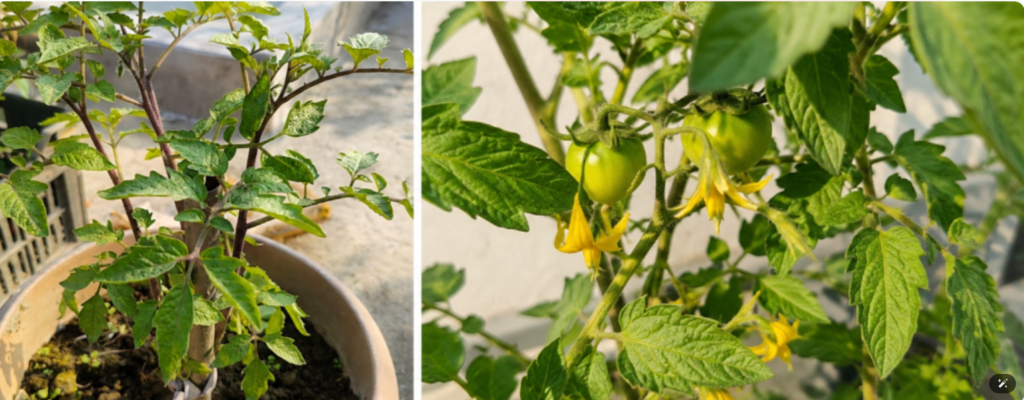
Now imagine a different situation. A tomato seedling is lying flat on the ground, but the leaves are mostly untouched. The stem is damaged right at the soil line.
In that case, searching the leaves for a leaf, chewing insect would probably waste time. The soil around the stem becomes the first place to inspect.
Or imagine several hostas have been heavily damaged, but the leaves are torn rather than covered in small holes. The damage reaches well above ground level, and nearby plants are also affected.
That tells a very different story.
The lesson is simple: start with the evidence, not with the treatment.
Final Thoughts: What Is Eating My Plants at Night?
When you wake up to damaged plants, the natural reaction is to ask, what ate my garden last night?
The answer is usually somewhere in what was left behind.
Study the leaves.
Look at the stems.
Check the soil.
Search for slime, droppings, tracks, digging, or torn plant material.
Then, if the mystery continues, grab a flashlight and check the garden after dark.
A shiny trail can lead you to slugs.
A seedling cut off at the base can point toward cutworms.
Neatly clipped growth may suggest a rabbit.
Torn plants and hoofprints can reveal a deer.
Once you stop guessing and start looking for evidence, the problem becomes much easier to solve.
And once you know what is eating your plants, you can deal with the real problem instead of wasting time and money on the wrong solution.
Frequently Asked Questions
What is eating my plants at night?
Common culprits include slugs, snails, cutworms, caterpillars, earwigs, rabbits, deer, and other wildlife. The type and pattern of damage can help you identify the likely culprit.
What eats plants at night but hides during the day?
Slugs, cutworms, and earwigs often hide in protected places during the day and become active at night. Check under leaves, pots, mulch, boards, and in the soil around damaged plants.
What is eating my leaves at night and leaving holes?
Slugs, caterpillars, earwigs, and some leaf-chewing insects can cause holes in leaves. Silvery slime trails strongly suggest slugs or snails.
What is eating my garden at night?
If large sections of plants are missing or heavily damaged overnight, check for rabbits, deer, or other wildlife. Look for footprints, droppings, clipped stems, and the height of the damage.
How do I find out what is eating my plants?
Inspect the damage closely, check for slime trails, droppings, tracks, or cut stems, examine the soil around damaged plants, and inspect your garden after dark with a flashlight.
What animal is eating my garden at night?
Rabbits often leave cleaner, sharply clipped damage close to the ground. Deer tend to leave torn, ragged browsing damage and may affect taller parts of plants.
Why are my plants damaged overnight but I cannot find any bugs?
Many garden pests feed at night and hide during the day. Slugs may hide under mulch or debris, while cutworms may remain in the soil near damaged plants.
Should I spray my plants if something is eating them?
It is usually better to identify the culprit first. The best response for slugs, caterpillars, rabbits, and deer is not the same, so treating the wrong problem may not solve the damage.
References
- University of Minnesota Extension — Slugs in Home Gardens
- University of Minnesota Extension — Diagnosing Holes and Chewed Leaves in Plants
- University of Minnesota Extension — Japanese Beetles in Yards and Gardens
- Penn State Extension — Slugs and Their Control
- Penn State Extension — Japanese Beetles in the Home Garden
- University of Minnesota Extension — Fruit and Vegetable Insects

Thesis Link : https://saulibrary.edu.bd/daatj/public/uploads/BAU200601_19-Pp_5.pdf
- 10 Best Loppers for Thick Branches - October 14, 2026
- Fall Lawn Care Checklist – 9 Jobs Before Winter - October 14, 2026
- 10 Best Garden Tool Sets for Beginners - October 13, 2026