
A thin lawn rarely fixes itself. Bare soil invites weeds, summer heat bakes the crowns that are left, and each season the gaps get a little wider. Learning how to overseed a lawn is how you reverse that slide without tearing the whole yard up and starting again. You keep the grass you have, add new seed into it, and let the new plants fill the spaces the old ones have left.
Done well, the job is simple. Done carelessly, it is a bag of seed fed to the birds. The difference is almost never the seed itself. It is timing, preparation, and whether the seed actually touches moist soil and stays moist long enough to sprout. This guide walks through each step in order, with rates and timings drawn from university extension
guidance, and it is honest about the calendar: in early October, northern cool-season lawns are at the tail end of their best window, transition-zone lawns are still in season, and Southern Bermuda lawns are entering their winter overseeding window right now.
Quick Overseeding Checklist
- ✓ Test soil
- ✓ Mow low
- ✓ Aerate if needed
- ✓ Spread seed
- ✓ Keep moist
- ✓ First mow after establishment
What Overseeding Does, and What It Cannot Do
Overseeding means spreading grass seed over an existing lawn so new plants grow in among the old ones. It thickens thin turf, fills small bare areas, and lets you introduce newer varieties that handle disease, drought, or shade better than the grass planted years ago.
It works best when a fair amount of healthy grass remains and the problem is thinning, patchiness, or tired varieties. A thicker lawn is also weed control in itself, because dense turf leaves little bare soil where weed seed can land and sprout.
Overseeding has limits worth naming before you spend money:
- It will not fix the reason the lawn thinned. Compacted soil, deep shade, poor drainage, or the wrong grass for your region will thin the new seed too. Fix the cause first, or at least in the same season.
- It is not a full renovation. If most of the lawn is weeds or dead grass, overseeding rates and methods will not rescue it. That job needs renovation rates, which are higher, and a different level of preparation.
- It cannot beat the calendar. Seed that sprouts too late to grow roots before hard frost, or before summer heat in a spring sowing, will not survive no matter how well you water it.
When Is the Best Time to Overseed a Lawn?
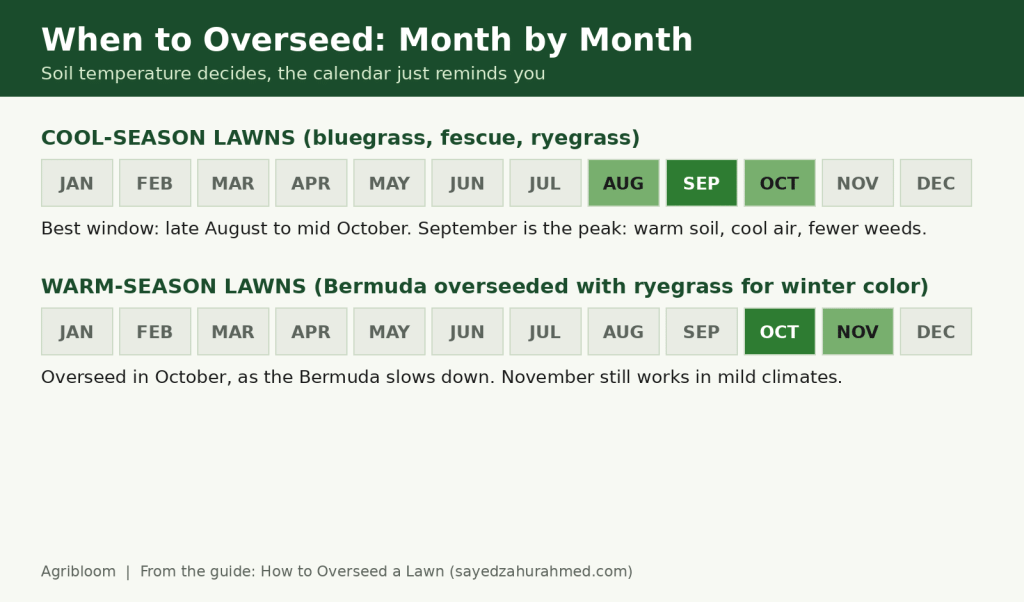
For cool-season grasses such as tall fescue, Kentucky bluegrass, and the fine fescues, late summer into fall is the prime window. The soil is still warm enough for quick germination, the air is cooling, weed pressure is falling, and the new grass gets weeks of mild growing weather to put down roots before winter. Extension guidance for the Mid-Atlantic puts the practical fall cutoff around mid-October, and northern lawns should treat the earlier part of that window as the real target.
Spring is the second choice. It can work, especially for tall fescue and perennial ryegrass, but the seedlings then face summer heat while their roots are still shallow, and spring weed competition is much stronger.
Two timing details matter more than the date on the calendar:
- Soil temperature drives germination. Cool-season seed germinates best while soil is roughly in the 50 to 65 degree range, warm enough to sprout promptly but past the worst summer stress.
- Give new grass time. Aim to finish seeding at least 6 to 8 weeks before your average first hard frost, and remember that Kentucky bluegrass needs more of that time than fescue does, because it sprouts far more slowly.
Warm-season lawns follow a different logic. You do not normally overseed a Bermuda, zoysia, or St. Augustine lawn with its own kind in fall, because those grasses are heading toward dormancy. The warm-season exception is winter overseeding Bermuda with ryegrass for green colour, covered in its own section below.
If you plan your lawn work by the season rather than by single jobs, overseeding belongs on the fall list alongside aeration and a soil test.

What You Need Before You Start
Gather everything first, so the seed does not sit in an open bag while you hunt for a spreader setting.
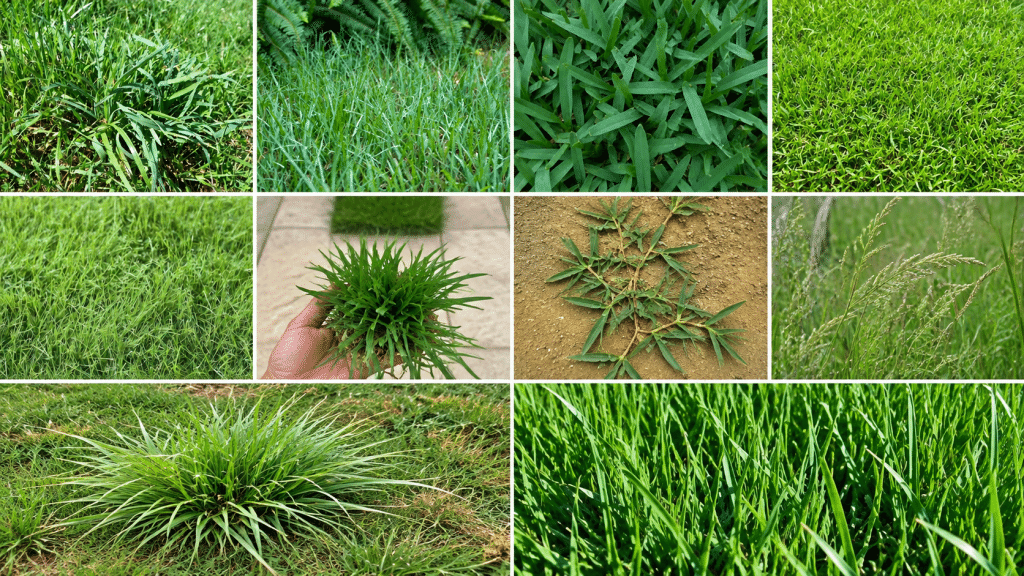
- Grass seed matched to your existing lawn, your region, and your light. Buy named varieties with a recent test date on the label, a high germination percentage, and a weed seed percentage as close to zero as you can find.
- A broadcast spreader for most lawns, or a drop spreader for small, precise areas. A slit seeder is worth renting for large or very thin lawns because it cuts seed directly into shallow grooves.
- A mower you can set low, a sturdy rake, and, for compacted or larger lawns, a rented core aerator.
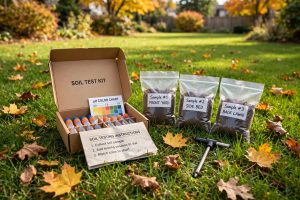
- A soil test result, or at least a test kit sent off before you seed. Seeding into soil with the wrong pH or a major nutrient gap wastes part of the job.
- Starter fertilizer only where your soil test or local rules call for it. Some states and counties restrict phosphorus, which starter products often contain, so check the label and your local rules.
- A hose and a gentle sprinkler, or an irrigation timer, because the watering in the first two to three weeks decides the result.
Choosing seed deserves one more minute. Match the species to what is already growing, unless you are deliberately shifting the lawn over several seasons. A fescue lawn overseeded with bluegrass, or the reverse, can look patchy in colour and texture for a long time.
For a full comparison of seed types and blends for different regions and uses, see our grass seed guide below.
How to Overseed a Lawn, Step by Step
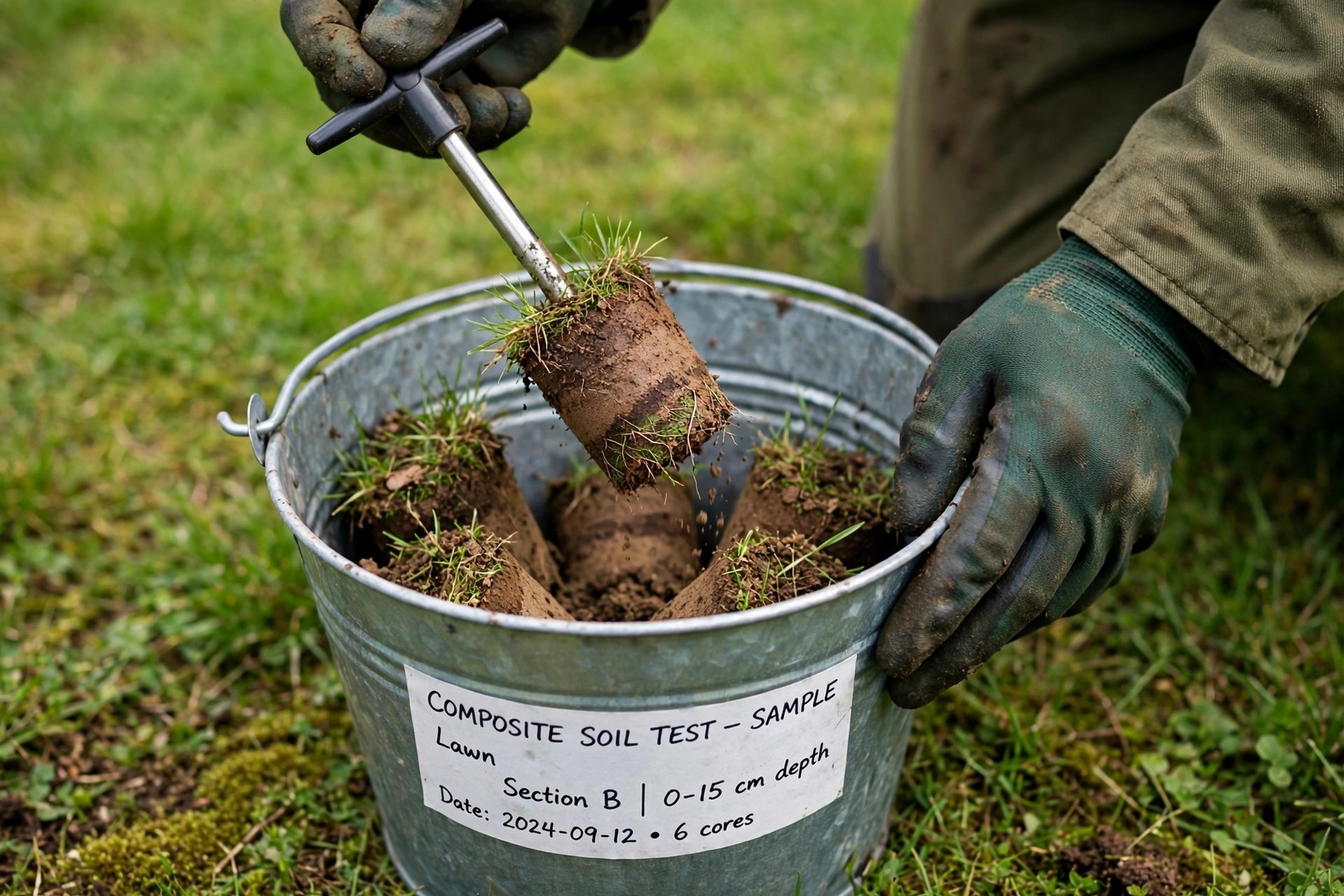
Step 1: Test the soil first
Start with a soil test, ideally a lab test through your state extension service or a reputable mail-in lab. It tells you pH and the main nutrient levels, so any lime or fertilizer you apply is based on a result rather than a guess. If the report calls for a correction, fall seeding season is a practical time to begin it, because you are already working on the lawn.
Step 2: Mow low and clear the surface
Mow the lawn shorter than usual, roughly 2 to 2.5 inches for most cool-season lawns, and bag or rake up the clippings. A lower canopy lets seed fall through to the soil instead of resting on leaves, where it dries out and never sprouts. Rake out dead grass, leaves, and loose debris, and loosen thin or bare areas with the rake so some soil is exposed.

Step 3: Open the soil: rake, aerate, or dethatch where needed
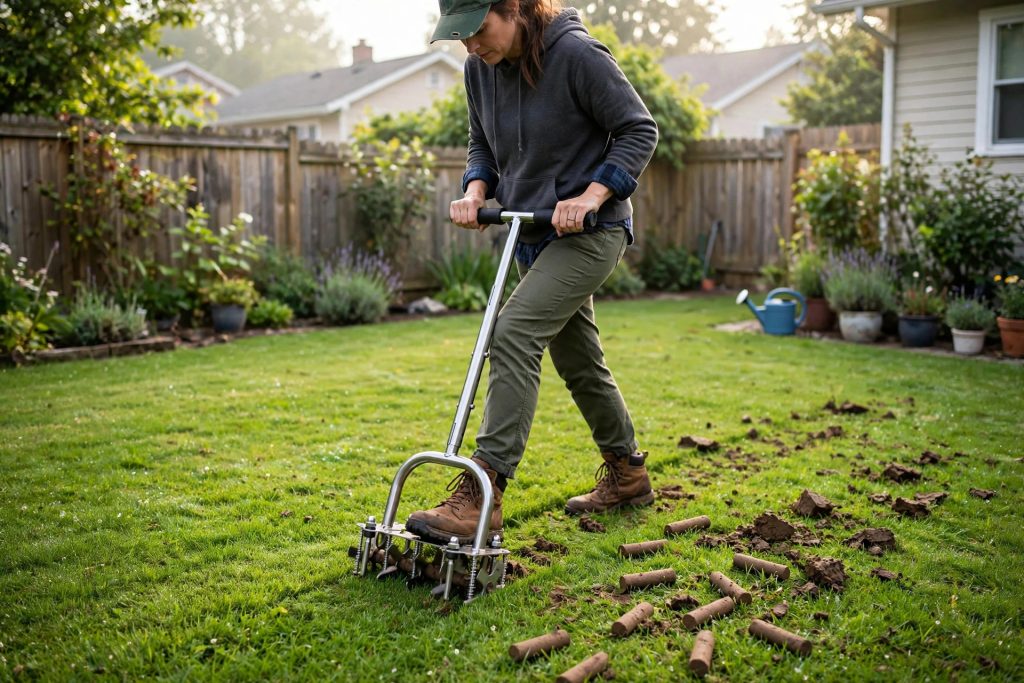
Seed needs contact with soil, not with thatch or leaf litter. On a small, soft lawn, firm raking may be enough. On compacted soil, or a lawn with heavy foot traffic, core aeration is the stronger move: it pulls small plugs, loosens the surface, and leaves holes where seed can settle and stay moist. If a thick thatch layer is the barrier, deal with that first. The decision guide further down helps you choose between aerating and dethatching.
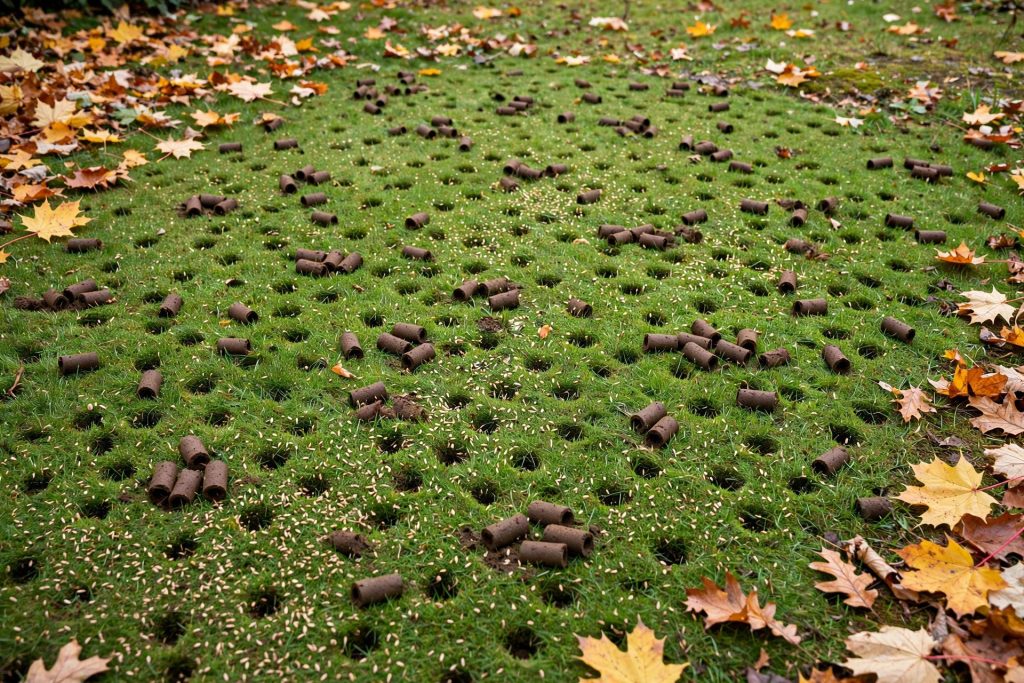
For compacted ground, the tool choice matters more than effort with a fork. Our aerator guide below compares the manual options that suit smaller lawns.
Step 4: Spread the seed at the overseeding rate, in two directions
Use the overseeding rate for your grass, not the higher rate for a brand new lawn. The table below keeps the two clearly separate, because mixing them up is one of the most common and most expensive mistakes in this job.
| Grass type | Overseeding rate (existing lawn) | Full renovation rate (bare soil) |
|---|---|---|
| Turf-type tall fescue | About 4 lb per 1,000 sq ft | 6 to 8 lb per 1,000 sq ft |
| Kentucky bluegrass | About 1.5 lb per 1,000 sq ft | 2 to 3 lb per 1,000 sq ft |
| Fine fescues | About 2.5 lb per 1,000 sq ft | 4 to 5 lb per 1,000 sq ft |
Source: University of Maryland Extension overseeding guidance. For seed blends, follow the rate on the bag for that blend, because the mix changes the maths.
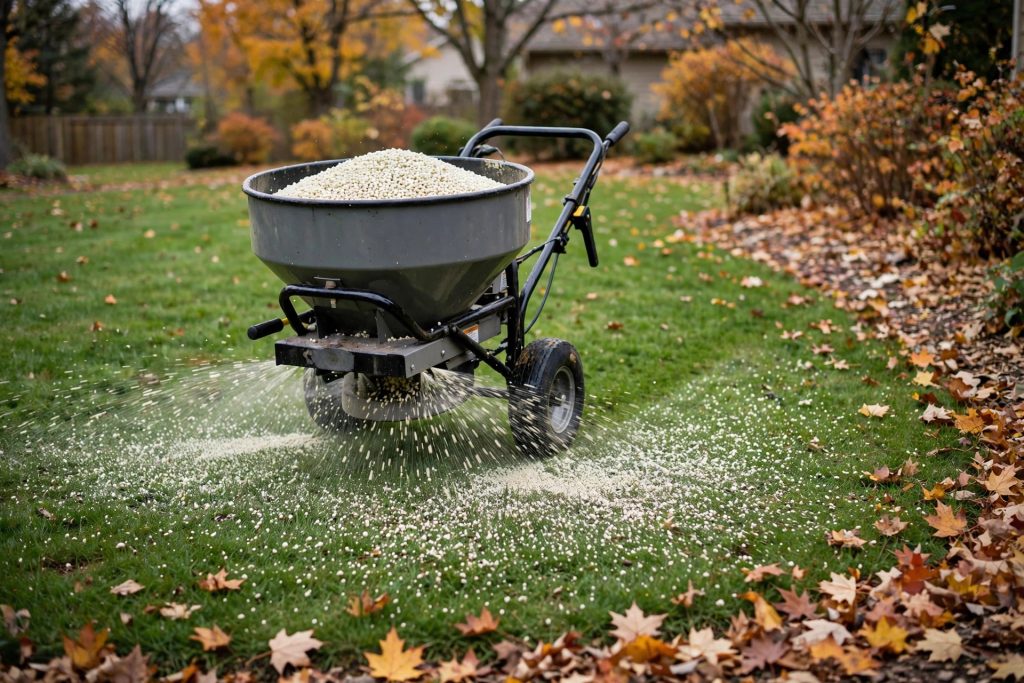
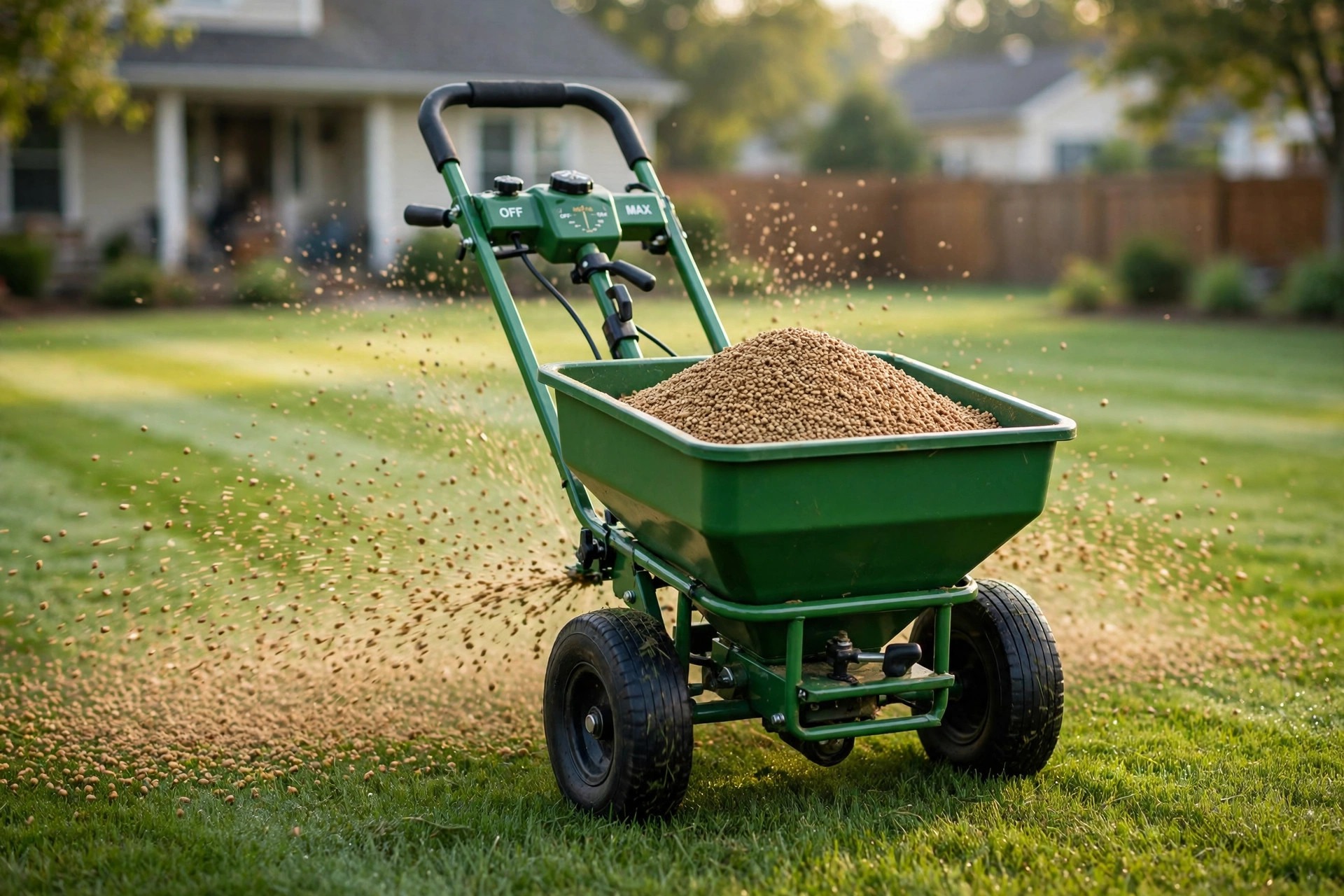
Set the spreader to deliver half the total rate, then walk the lawn in one direction. Load the second half and walk at right angles to the first pass. Splitting the seed this way evens out the skips and overlaps that a single pass always leaves. Sow a little more heavily, by hand, on genuinely bare patches, and keep seed off paths and driveways where it cannot grow.
Step 5: Firm the seed into the soil
Go over the seeded area lightly with the back of a rake, or roll it with a water-filled roller at partial weight. The aim is not to bury the seed. Most lawn seed should sit very shallow, in firm contact with moist soil, with light still able to reach it. Seed raked in too deep fails just as reliably as seed left sitting on top.
A thin topdressing helps on bare or very thin areas: roughly a quarter inch of screened compost or fine topsoil holds moisture around the seed and improves contact. Keep it thin. A thick layer smothers both the seed and the grass underneath.
Step 6: Apply starter fertilizer only where it is justified
If your soil test shows a need, apply a starter fertilizer at the label rate at seeding time, so the nutrients are in place as roots start to grow. Phosphorus supports early root growth, which is why starter products feature it, but that is also why some places restrict its use where a test does not show a need. Follow the test, the label, and your local rules, in that order. A follow-up light nitrogen feeding about a month after germination is a common extension pattern for new growth, again at a modest label rate rather than a heavy one.
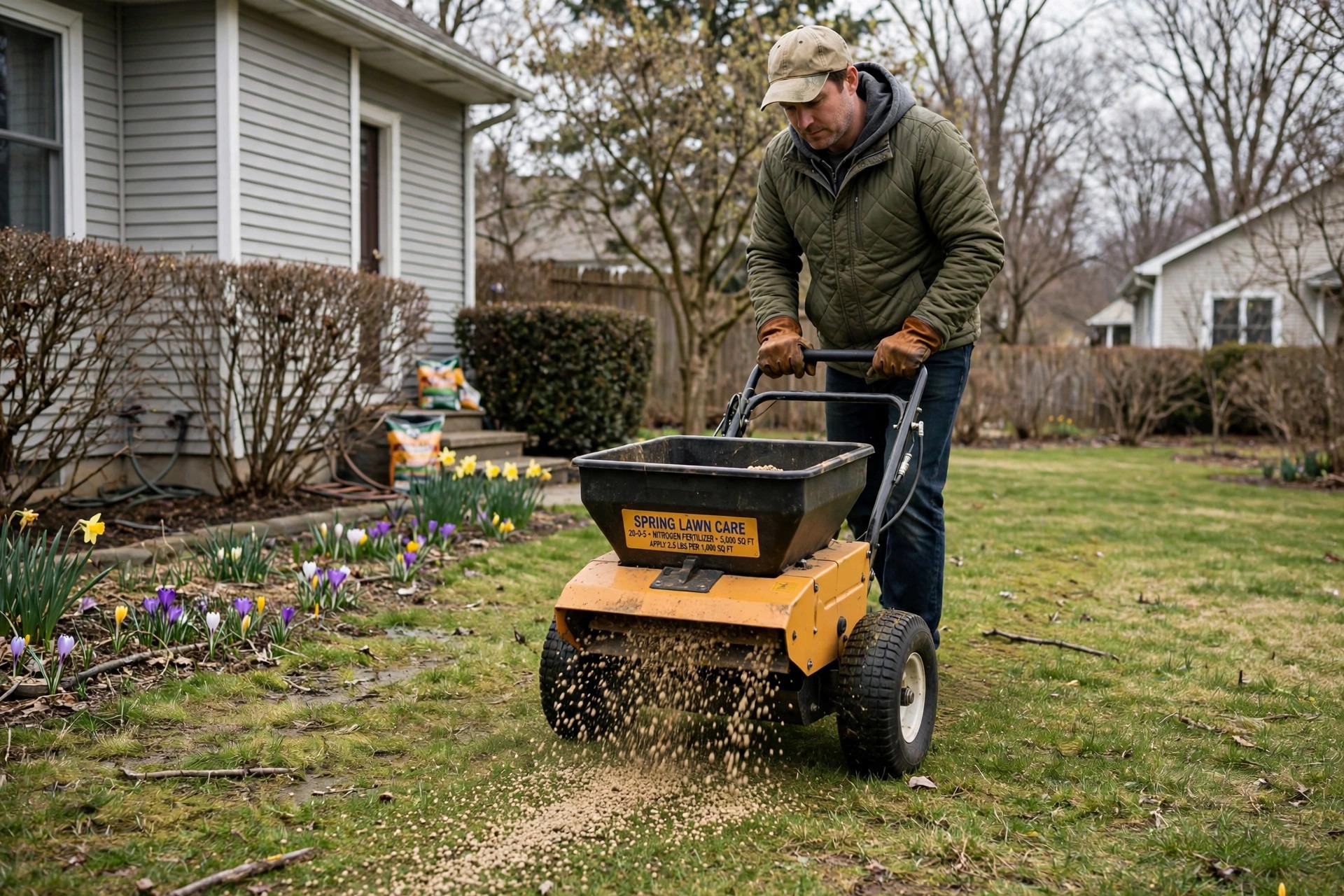
Our fertilizer guide below explains how to read labels and match a product to a test result.

Step 7: Water to keep the seedbed moist, not soaked
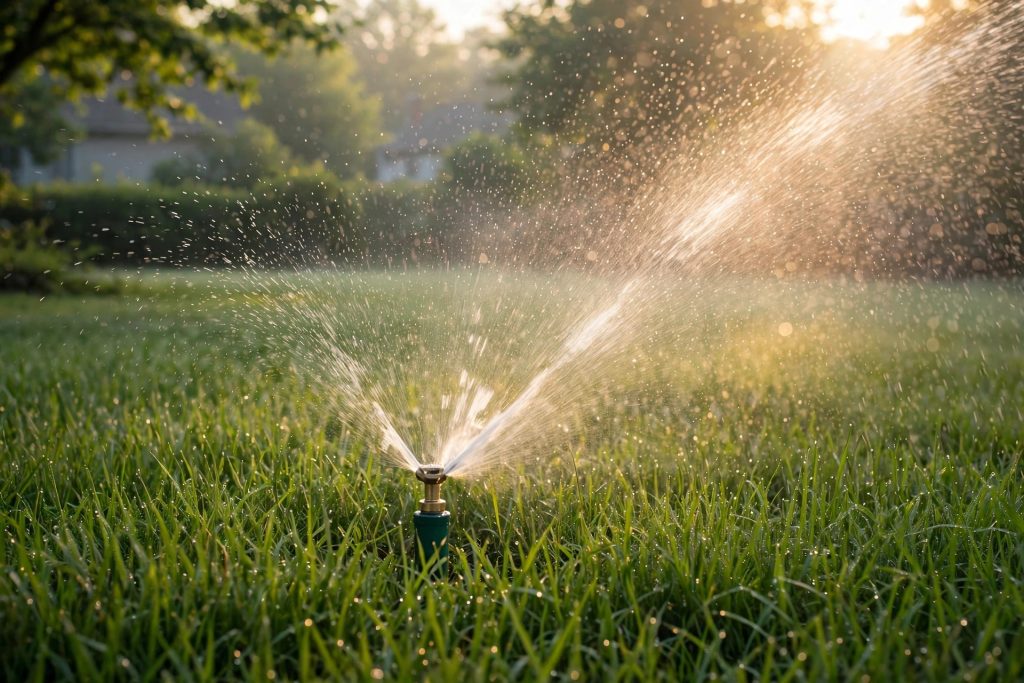
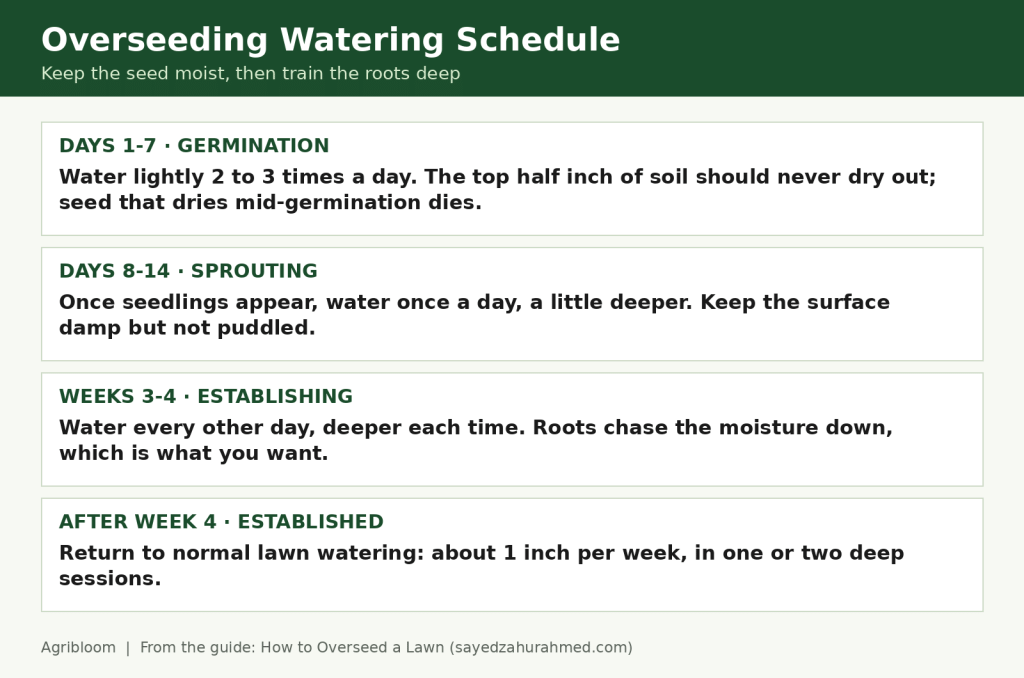
Water lightly straight after seeding to settle seed and topdressing into place. From then until germination, keep the top inch or two of soil consistently moist. In practice that usually means light watering once or twice a day, and more in sun or wind, rather than one heavy soak. Puddles and runoff move seed into clumps and leave the high spots bare, so gentle and frequent beats heavy and rare in this phase.
Watering, Germination, and the First Mow
Different grasses sprout at very different speeds, so do not judge the whole job by the first green you see.
| Grass type | Typical germination under good conditions |
|---|---|
| Perennial ryegrass | About 5 to 10 days |
| Tall fescue | About 7 to 10 days |
| Kentucky bluegrass | About 15 to 21 days |
A mixed lawn can therefore look uneven for two weeks and still be on track. Bluegrass areas that look empty at day ten may simply be slower, provided the soil has stayed moist.
Once seedlings are up and growing, shift the watering gradually: less often, but deeper, so roots chase moisture downward instead of staying at the surface. Keep foot traffic, dogs, and parked equipment off the new areas as much as you reasonably can until the grass has been mowed a few times.
Do not mow too soon, and do not scalp the new grass when you do. Wait until the new grass is about one third taller than your target mowing height, then mow at that target height with a sharp blade. A dull blade tears soft seedlings instead of cutting them. Return to your normal mowing height for the existing lawn once the new grass has settled in.
Should You Aerate or Dethatch Before Overseeding?
Both jobs open the lawn, but they fix different problems, and doing the wrong one wastes a weekend.
Aerate first when the soil itself is the problem: the ground feels hard, water runs off, roots are shallow, or the lawn gets heavy foot traffic. Core aeration is also a sound default before overseeding a compacted lawn, because the holes give seed shelter and moisture.
Dethatch first when the barrier is above the soil: a spongy thatch layer thick enough to keep seed, water, and air from reaching the ground. As a working guide from extension dethatching advice, a thin layer under about half an inch is normal and useful, while a layer approaching three quarters of an inch or more calls for action before you seed.
Many lawns need light raking and nothing more. If the soil is soft, thatch is thin, and the lawn is only moderately thin, rake firmly, seed, and water well. Save the rental money for lawns that actually show compaction or a real thatch barrier.
One warning belongs in bold in every plan, even if we keep it in plain text here: skip pre-emergent herbicide in any area you intend to seed. The barrier that stops weed seed from sprouting stops grass seed in exactly the same way. If a pre-emergent went down recently, check its label for the seeding interval before you sow anything there.
Overseeding a Bermuda Lawn With Ryegrass for Winter Green
This is a different job with a different purpose. You are not thickening the Bermuda for its own sake. You are sowing a temporary cool-season lawn, usually perennial ryegrass, over a Bermuda lawn that would otherwise turn brown and dormant in winter, so the yard stays green until spring.
New to Bermuda itself? The seed, planting and care basics are worth getting right before you plan winter overseeding.

The window is tight, and in much of the South it is open now. It runs from about mid-September to mid-October and closes around October 15. Use the triggers, not just the calendar:
- Sow when soil temperature at about 4 inches deep approaches 70 degrees.
- Night temperatures should be settling consistently into the 50s.
- Leave roughly 2 to 4 weeks before your average first killing frost, so the ryegrass can establish before real cold.
Preparation is more aggressive than for a cool-season lawn, because the seed has to get through a living Bermuda canopy:
- Mow the Bermuda low, close to a scalp, and remove the clippings.
- Dethatch or power rake lightly to open the canopy, so seed reaches soil rather than resting in the leaves. Seed-to-soil contact is the deciding factor here too.
- Sow perennial ryegrass at about 8 to 10 lb per 1,000 sq ft for a home lawn. If you use annual ryegrass instead, add about 2 lb more, and expect a coarser, clumpier result with more spring seed stalks.
- Keep the surface moist through germination, which for ryegrass is roughly 5 to 10 days, then maintain the lawn through winter with normal mowing, light feeding, and watering in dry spells. A winter overseeded lawn is a growing lawn, and it needs a growing lawn’s care.
Choose perennial ryegrass over annual where you can. Extension guidance prefers it for winter overseeding because it is finer textured, holds better winter colour, clumps less, and produces fewer unsightly seed stalks in spring.
Now the honest trade-off, stated before you sow rather than discovered in April: the ryegrass competes with your Bermuda in spring. It can slow green-up and, in a strong year, thin the permanent turf it was decorating. Manage the transition instead of ignoring it. As spring warms and nights stay above about 65 degrees, gradually lower the mowing height to stress the ryegrass and let light reach the Bermuda, and reduce the extra care that was keeping the ryegrass happy. Extension sources also note that labelled herbicide options exist for removing ryegrass from a warm-season lawn once spring growth begins. Follow any such label exactly, and treat that route as a considered step, not a routine.
And the same herbicide warning applies in reverse: skip pre-emergent on a lawn you plan to winter overseed, or the new ryegrass seed will fail for the same reason weed seed would.
If winter green is not worth the spring competition for your yard, the honest alternative is to let the Bermuda go dormant and protect it instead: keep traffic off it, control winter weeds carefully, and spend the seed money on the spring programme. Many healthy Southern lawns are better for that choice.
Common Mistakes That Make Overseeding Fail
Most failed overseeding jobs fail for one of these reasons, and all of them are avoidable:
- Seeding over a pre-emergent barrier. The seed was never given a chance to sprout.
- Poor seed-to-soil contact. Seed spread onto thick thatch, leaves, or a fluffy surface dries out between waterings and dies quietly.
- Letting the seedbed dry out once. Seed that has started to germinate and then dries hard rarely recovers. The moist phase has to be continuous, not approximate.
- Using the wrong rate. Renovation rates on an existing lawn waste seed and crowd seedlings, while a thin sprinkle at well below the overseeding rate leaves gaps that weeds find first.
- Seeding too late for the grass you chose. Bluegrass sown at the very end of the window is the classic case: it sprouts slowly, then frost arrives before its roots are ready.
- Mowing too early or too low. Tearing or scalping seedlings sets the new areas back weeks.
- Ignoring the underlying cause. Shade, compaction, and drainage problems thin the new grass exactly as they thinned the old.

Final Thoughts on How to Overseed a Lawn
How to overseed a lawn well comes down to a short sequence done in the right order and at the right time: test, mow low, open the soil, sow the right rate in two directions, firm the seed in, and keep it moist until it is growing on its own. None of those steps is difficult. Skipping any one of them is what turns a promising bag of seed into an expensive bird feeder.
Start this week if your window is still open, especially if you are in the transition zone or the South. Measure your lawn, weigh your seed, and write the watering into your day for the next three weeks. A thicker lawn next spring is mostly decided by what you do in the next few afternoons.
References
- University of Maryland Extension, Lawn Renovation and Overseeding: https://extension.umd.edu/resource/lawn-renovation-and-overseeding
- University of Maryland Extension, Grass Seed: https://extension.umd.edu/resource/grass-seed
- Mississippi State University Extension, Lawn Overseeding (Turf Tips, 10-15-12): http://extension.msstate.edu/newsletters/turf-tips-newsletter/2012/lawn-overseeding-10-15-12
- University of Kentucky, Time to Repair, Establish Home Lawns: https://news.mgcafe.uky.edu/article/time-repair-establish-home-lawns
- Virginia Tech Extension, Establishing Cool-Season Turfgrasses: https://ext.vt.edu/lawn-garden/turfandgardentips/tips/Establishing-Cool-season-Turfgrasses.html
Frequently Asked Questions
When is the best time to overseed a lawn?
For cool-season lawns, late summer into fall is best, while soil is still warm and before hard frost, with a practical cutoff around mid-October in many regions. Spring is a workable second choice. Bermuda lawns are winter overseeded in a separate window, roughly mid-September to mid-October.
How much grass seed do I need to overseed 1,000 sq ft?
At overseeding rates, about 4 lb of turf-type tall fescue, about 1.5 lb of Kentucky bluegrass, or about 2.5 lb of fine fescue per 1,000 sq ft. Blends follow the rate on the bag. Bermuda winter overseeding with perennial ryegrass uses a higher rate, about 8 to 10 lb per 1,000 sq ft.
Should I aerate or dethatch before overseeding?
Aerate when soil is compacted or water runs off. Dethatch when a thick, spongy thatch layer blocks seed from reaching soil. Many lawns need only firm raking. What matters most is that seed ends up in contact with moist soil.
Can I overseed a Bermuda lawn for winter colour?
Yes, with perennial ryegrass, when soil temperature approaches 70 degrees and nights are in the 50s, usually from mid-September to mid-October. Scalp and open the canopy first, skip pre-emergent, and expect the ryegrass to compete with the Bermuda during spring green-up.
How long does overseeded grass take to germinate?
Perennial ryegrass usually sprouts in about 5 to 10 days, tall fescue in about 7 to 10 days, and Kentucky bluegrass in about 15 to 21 days, provided the seedbed stays moist. Cold soil, dry spells, and old seed all stretch those times.
Why did my overseeding fail?
The most common causes are a recent pre-emergent application, seed resting on thatch instead of soil, the seedbed drying out during germination, sowing too late for a slow grass such as bluegrass, and mowing too early or too low. Work through that list before blaming the seed.

Thesis Link : https://saulibrary.edu.bd/daatj/public/uploads/BAU200601_19-Pp_5.pdf
- How to Overseed a Lawn: Step by Step Guide - October 11, 2026
- 10 Best Lawn Leveling Rakes - October 11, 2026
- Lawn Soil pH: How to Test It and Fix It - October 10, 2026