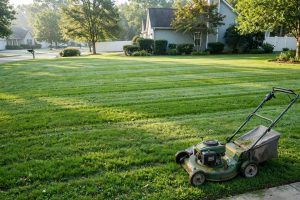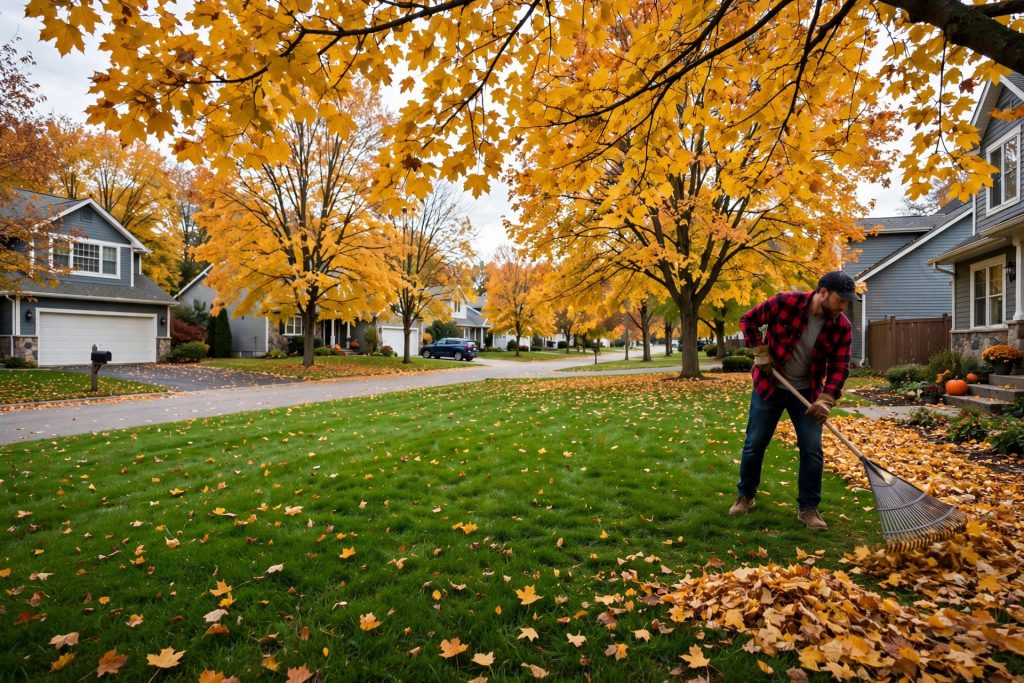

Fall lawn care is the work that decides how your lawn looks next April. While the top growth slows down in autumn, cool season grass is still building roots, storing food, and filling gaps left by summer heat. If you use these weeks well, the lawn goes into winter dense and well fed. If you skip them, winter does not pause the decline, it locks it in until spring.
This fall lawn care checklist puts the nine jobs in the order that actually works on the ground. Test first, so you are not guessing. Deal with weeds while they are vulnerable. Open compacted soil, get seed down while the soil is still warm, feed at the right moments, and keep leaves and long grass from smothering everything you have just done. Most of the jobs take an hour or two each, and none of them needs specialist skill. What they need is timing.
One note before you start: this checklist is written mainly for cool season lawns, Kentucky bluegrass, tall fescue, perennial ryegrass, and fine fescues. A short warm season section near the end covers Bermuda, zoysia, and St. Augustine, because their fall rules are different in two important ways.
Fall Lawn Care at a Glance: The 9 Jobs
| Job | Best timing | Why it matters |
|---|---|---|
| Test soil and fix pH | Early fall, before feeding or seeding | Lime and nutrients only help if the soil actually needs them |
| Control broadleaf weeds | Mid September to early November | Weeds move food to their roots in fall, and herbicide travels with it |
| Mow lower and clear the surface | Before aerating and seeding | Seed and fertilizer need to reach the soil, not sit on clippings |
| Core aerate compacted soil | Early fall, while grass is growing | Relieves compaction and opens channels for air, water, and roots |
| Overseed thin areas | Right after aerating, 6 to 8 weeks before hard frost | Fills gaps while soil is warm and weed pressure is low |
| Feed the lawn in fall | Early fall, then late fall after top growth stops | Builds roots and food reserves for early spring green up |
| Water with purpose | Through fall, deeper as seedlings establish | New seed dies without moisture, established grass needs about an inch a week in dry spells |
| Keep leaves off the grass | All season, little and often | A leaf mat blocks light, traps moisture, and invites snow mold |
| Final mow and winterize tools | When growth stops, before the ground freezes | Shorter final grass resists matting, and drained lines do not crack |
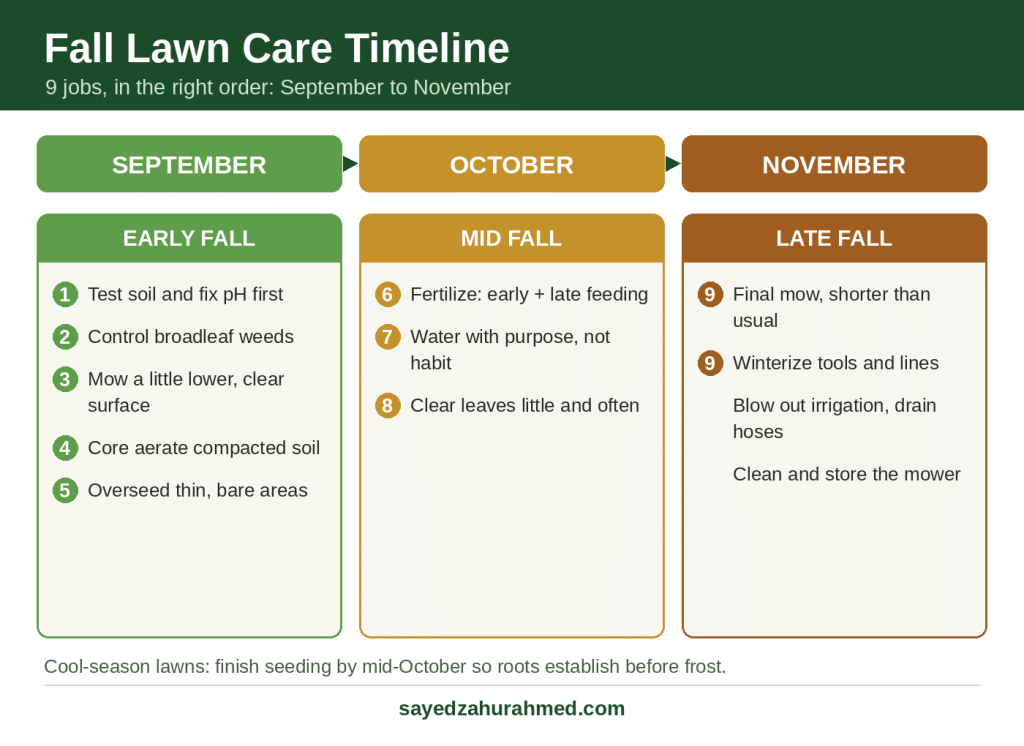
Work through the list in order where you can. Jobs 1 to 6 belong in the first half of fall in most northern states. Jobs 7 and 8 run all season. Job 9 closes the year.
Job 1: Test Your Soil and Fix pH First
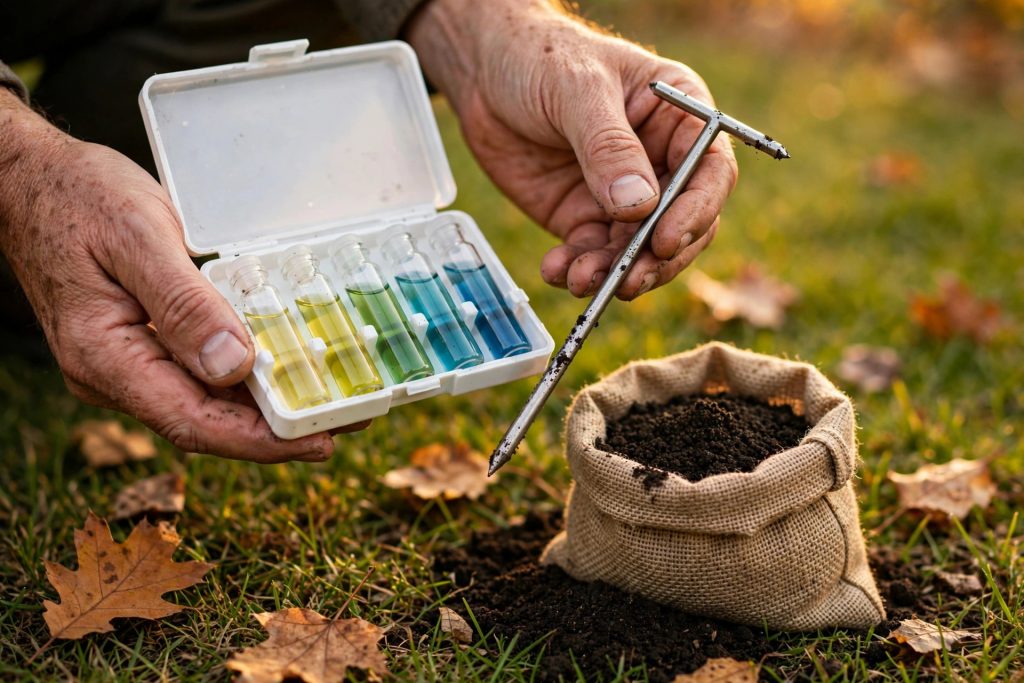
Every other job on this list works better when the soil chemistry is right. Grass takes up nutrients poorly when pH is far from its preferred range, roughly 6.0 to 7.0 for most cool season lawns. Fertilizer spread on strongly acidic soil is partly wasted money, and seed sown into it starts life at a disadvantage.Take samples from several spots, about 3 to 4 inches deep, mix them in a clean bucket, and send a cup or so to your state extension lab or a reputable mail in lab. Fall is a practical time to test because labs are quieter than in spring, and you still have time to act on the result.If the report calls for lime, fall is the best season to apply it. Winter rain, snow, and the freeze and thaw cycle help work lime down into the soil, so the pH shift is under way by spring. Apply only the amount the report recommends, and split very large recommendations into two applications a few months apart rather than dumping it all at once. If the report shows nutrients are already adequate, skip products you do not need. A test that saves you one unnecessary bag has already paid for itself.
Take samples from several spots, about 3 to 4 inches deep, mix them in a clean bucket, and send a cup or so to your state extension lab or a reputable mail in lab. Fall is a practical time to test because labs are quieter than in spring, and you still have time to act on the result.
If the report calls for lime, fall is the best season to apply it. Winter rain, snow, and the freeze and thaw cycle help work lime down into the soil, so the pH shift is under way by spring. Apply only the amount the report recommends, and split very large recommendations into two applications a few months apart rather than dumping it all at once. If the report shows nutrients are already adequate, skip products you do not need. A test that saves you one unnecessary bag has already paid for itself.
Job 2: Control Broadleaf Weeds While They Are Moving Food Down
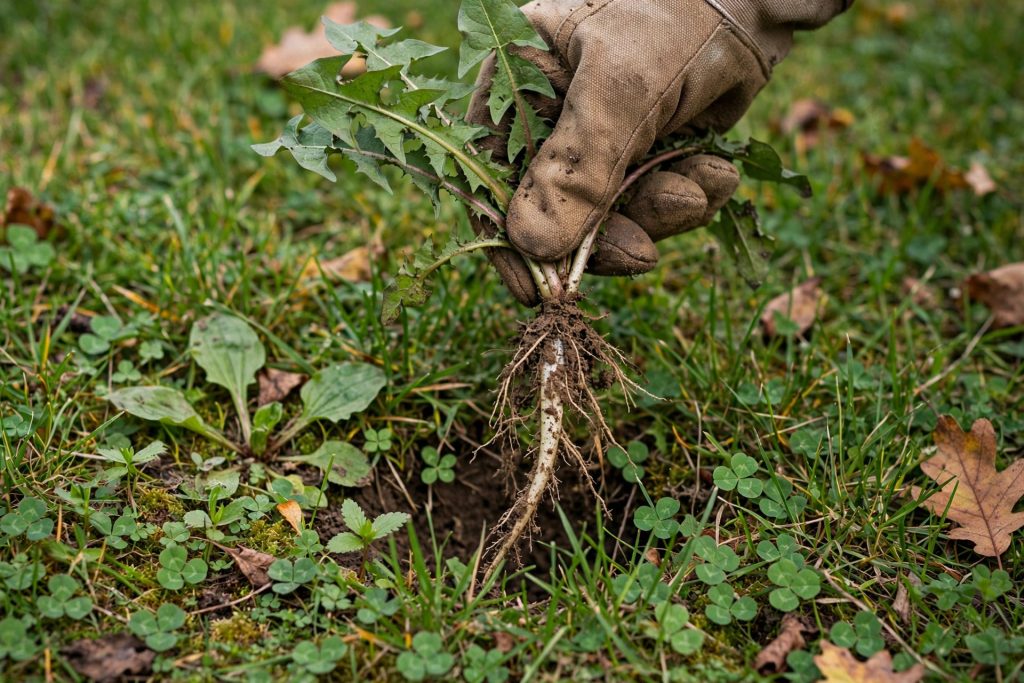
Fall is the most effective window of the year for perennial broadleaf weeds such as dandelion, white clover, plantain, and ground ivy. From mid September into early November, these weeds move carbohydrates from their leaves down into their roots to survive winter. A broadleaf herbicide applied in that window is absorbed by the foliage and carried down with that flow, which is why fall applications usually beat spring ones on the same weeds.
A few rules keep this job safe and effective:
- Treat while weeds are still actively growing and daytime temperatures are still reaching the mid 50s Fahrenheit or above. Herbicide barely moves in a dormant weed.
- Do not spray fresh seed or young seedlings. If you are overseeding this fall, read the product label for the waiting period before seeding, and for how long to wait after seeding before any herbicide can be used. On a lawn you plan to seed heavily, hand pull the worst weeds and save spraying for areas you are not seeding.
- Spot treat where you can. A lawn with twenty dandelions does not need a blanket application.
- Always follow the label. The label rate, timing, and safety intervals are the legal instructions for that product, not a suggestion.
If you prefer to skip herbicides entirely, fall still helps you. Thickening the lawn through jobs 4 to 6 is genuine weed control, because dense turf leaves little bare soil where weed seed can settle in spring.
Job 3: Mow a Little Lower and Clear the Surface
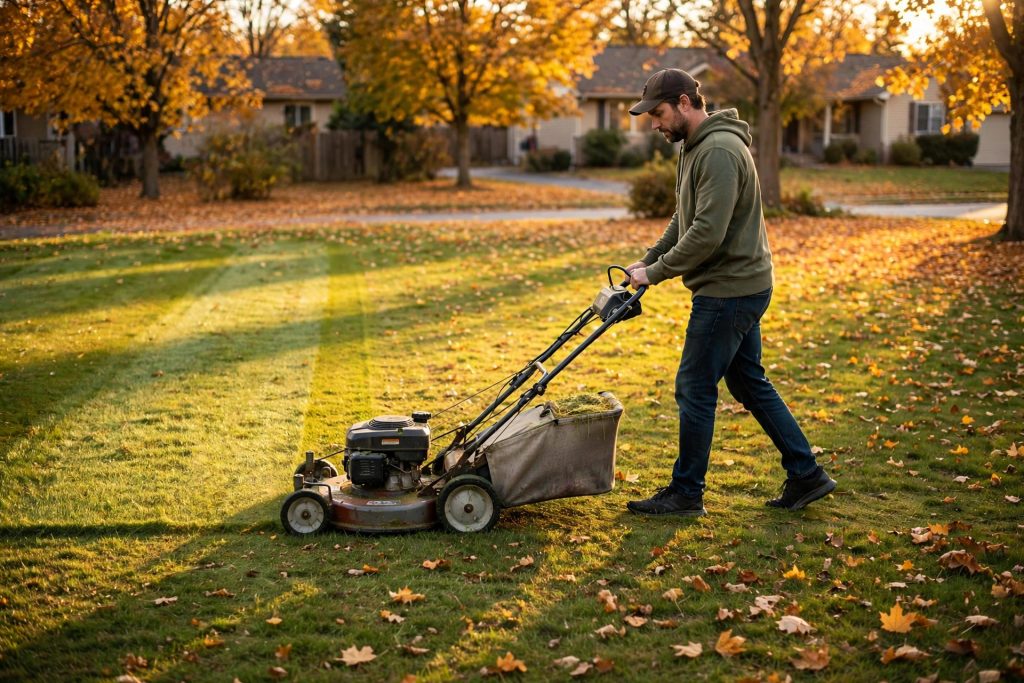
Before you aerate or seed, give the lawn a preparatory cut. Bring cool season grass down to about 2 to 2.5 inches for this working stage, following the one third rule, never removing more than a third of the leaf blade in a single mow. If the lawn has grown tall, step the height down over two mows a few days apart instead of scalping it in one pass.
Bag or rake up the clippings from this cut, and rake out dead grass, sticks, and the first fallen leaves. The point is simple: seed, lime, and fertilizer all need to land on soil. Material that lands on a mat of clippings and debris dries out on top of it and never reaches the roots. On thin or bare patches, rake firmly enough to scratch the surface and expose some soil. That roughened surface is what holds seed in place.
This is also the moment to check your thatch. Push a trowel or screwdriver through the turf and look at the spongy brown layer between the green leaves and the soil. A layer under about half an inch is normal and useful. A layer approaching three quarters of an inch or more is a barrier, and lawns like that benefit from dethatching before seeding, so seed is not stranded in thatch where it cannot root.
Job 4: Core Aerate Compacted Soil
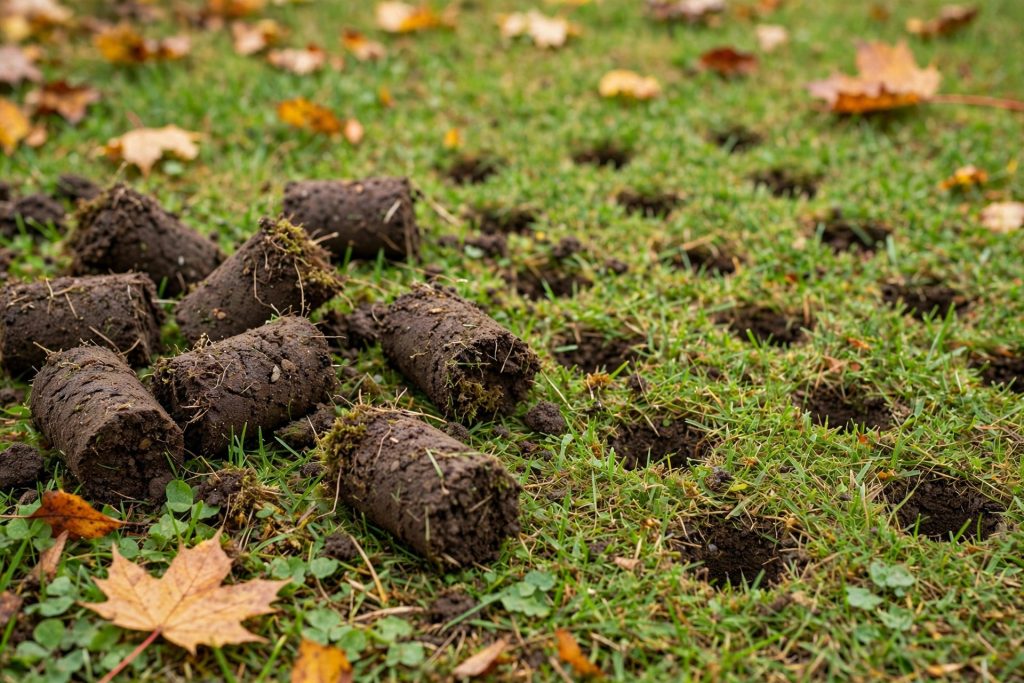
If your lawn feels hard underfoot, if water pools after rain, or if the grass stays thin despite feeding, compaction is the likely cause. Feet, mowers, pets, and summer storms press soil particles together until air and water struggle to move through it, and roots stay shallow as a result.
Core aeration is the fix that lasts. A core aerator pulls out small plugs of soil, roughly three quarters of an inch wide and about 3 inches long, and leaves them on the surface to break down. Those holes relieve compaction in a way spike tools cannot, because soil is actually removed rather than pushed aside. Early fall is an excellent time to do it, while cool season grass is growing actively and can recover quickly, and the holes double as sheltered pockets where overseed can settle and stay moist.
You do not need to aerate every lawn every year. Heavy clay soil, high traffic areas, and lawns that are overseeded annually benefit most. A soft, low traffic lawn may only need it every two to three years. Aerate when the soil is moist but not muddy, after rain or a deep watering the day before, and make enough passes that the holes are spaced a few inches apart in the worst areas. Leave the plugs where they fall. As they crumble, the soil and its microbes filter back into the turf and help digest thatch.
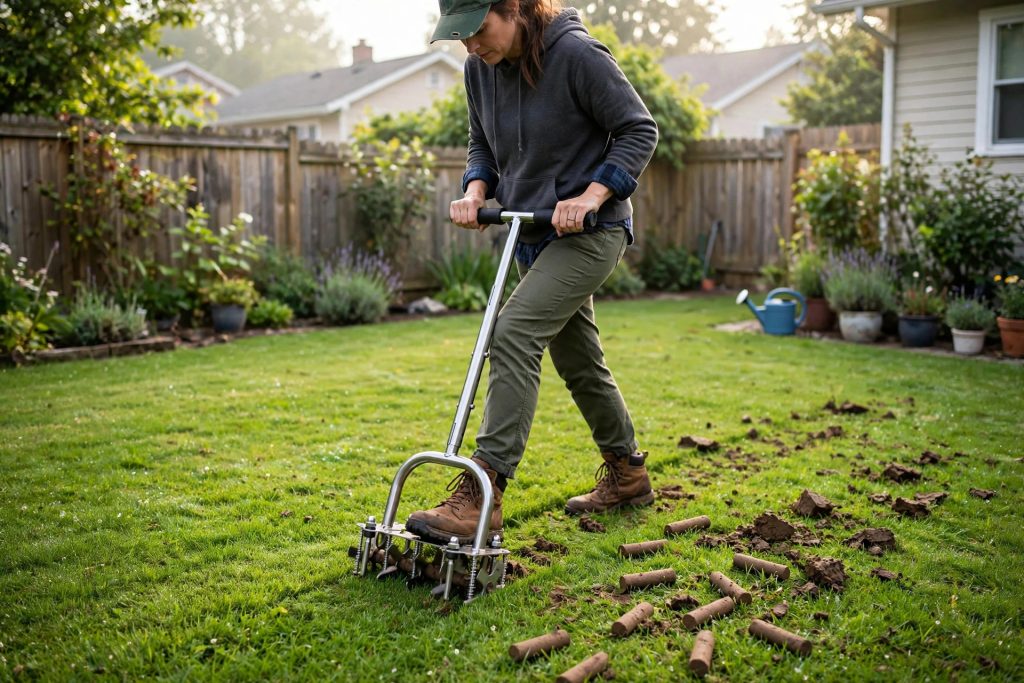
For smaller lawns, a manual coring tool handles the worst patches without a rental. The honest differences are in tine style, hollow coring tines remove soil while spikes only push it aside, and in how much ground you can cover before your arms give up. Our guide below walks through both types and who each one suits.
Job 5: Overseed Thin Areas and Repair Bare Spots
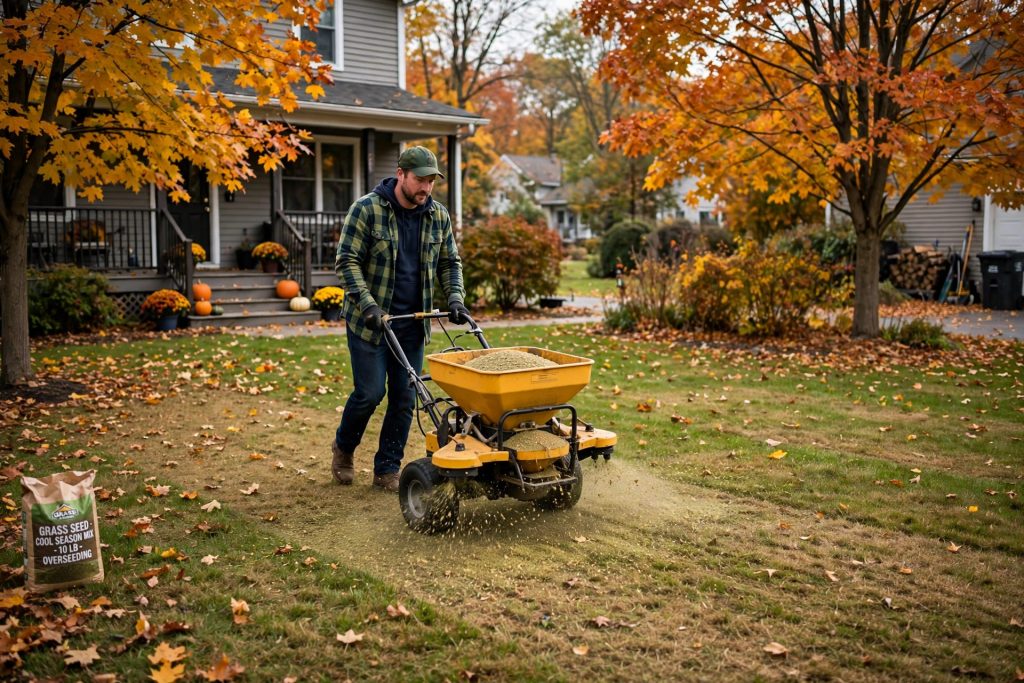
Fall is the best seeding season for cool season lawns, and it is not close. The soil is still warm, so seed germinates quickly. The air is cooling, so seedlings are under less heat stress. Weed competition is falling instead of rising. The one hard limit is the calendar: aim to finish seeding at least 6 to 8 weeks before your average first hard frost, so new plants grow roots before the ground freezes. In much of the North that means September into early October. In the transition zone the window runs a little later.
Spread seed right after aerating, while the holes are open. Use the overseeding rate on the bag for an existing lawn, not the higher rate for bare soil, and split the seed into two halves. Walk one half over the lawn in one direction and the second half at right angles to it. Two half rate passes cover far more evenly than one full rate pass. Sow a little extra by hand on genuinely bare patches, firm the seed in with the back of a rake or a light rolling, and keep seed off paths and driveways where it cannot grow.
A thin topdressing helps on bare areas: about a quarter inch of screened compost holds moisture around the seed and improves contact with the soil. Keep it thin. A thick layer smothers the seed and the grass beneath it.
Our step by step overseeding guide below walks through rates by grass type, germination times, and the first mow in full detail.
Job 6: Feed the Lawn, Early Fall and Late Fall
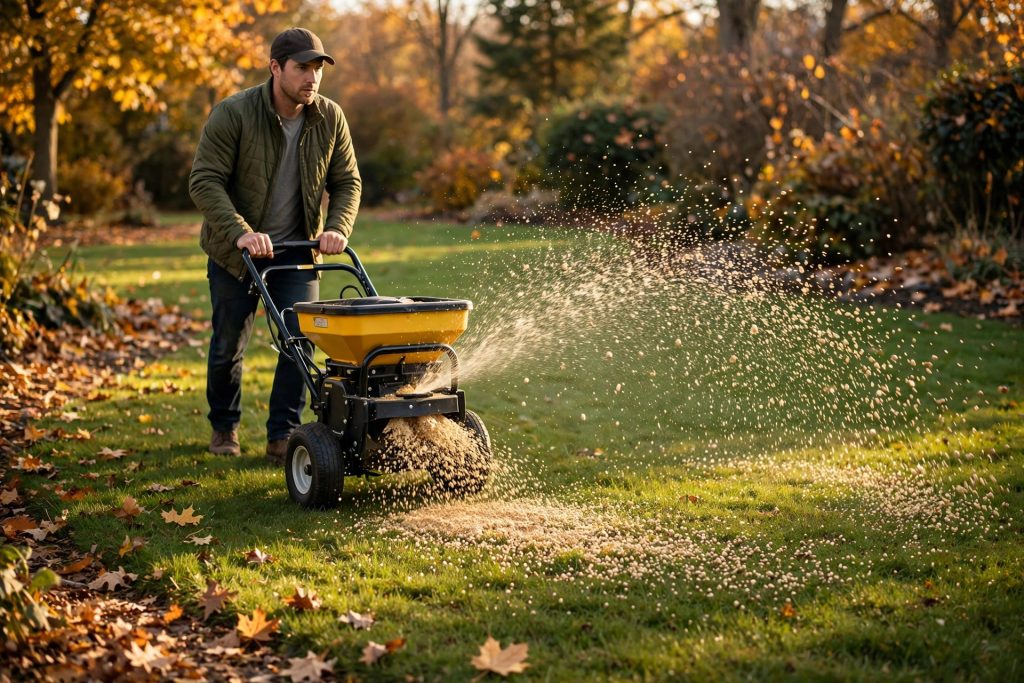
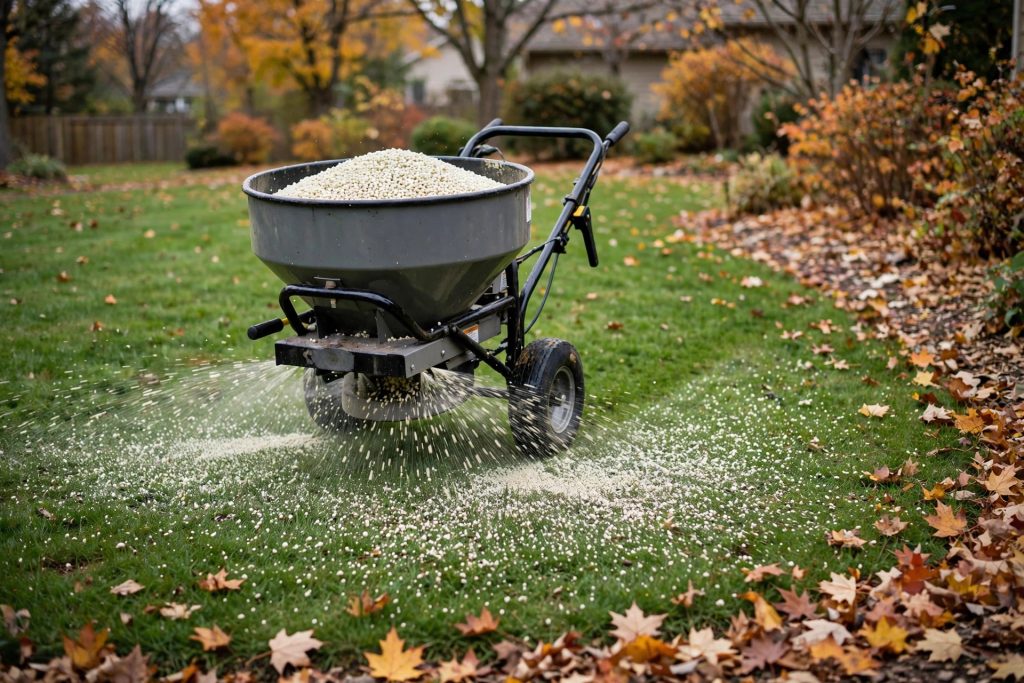
If you feed your lawn only once a year, do it in fall. Extension guidance for cool season grasses consistently treats late summer and fall as the most important feeding period, because fall nitrogen goes mainly into roots and food storage rather than soft top growth. Those reserves are what produce early, even green up next spring without a surge of mowing.
Most cool season lawns do well with two modest fall applications rather than one heavy one:
- An early fall application, around September in northern states, helps the lawn recover from summer stress and supports the new seed you have just sown. Where a soil test shows low phosphorus and local rules allow it, a starter type product suits this seeding stage.
- A late fall application, in late October or early November in many northern areas, after top growth has largely stopped but before the ground freezes. This timing favors root growth and storage over leaf growth.
Keep each application at or below about 1 pound of actual nitrogen per 1,000 square feet, and follow your soil test and the bag label over any general guide, including this one. Never spread fertilizer on frozen or snow covered ground. The grass cannot take it up, and melt water carries it toward drains and waterways instead. Sweep any granules that land on paths and driveways back onto the lawn.
Our fertilizer guide below explains how to read an NPK label and match a product to a test result. It also compares slow release and quick release products side by side, so you can see which feeding pattern fits a lawn that gets one fall application and which fits two.
Job 7: Water With Purpose, Not by Habit
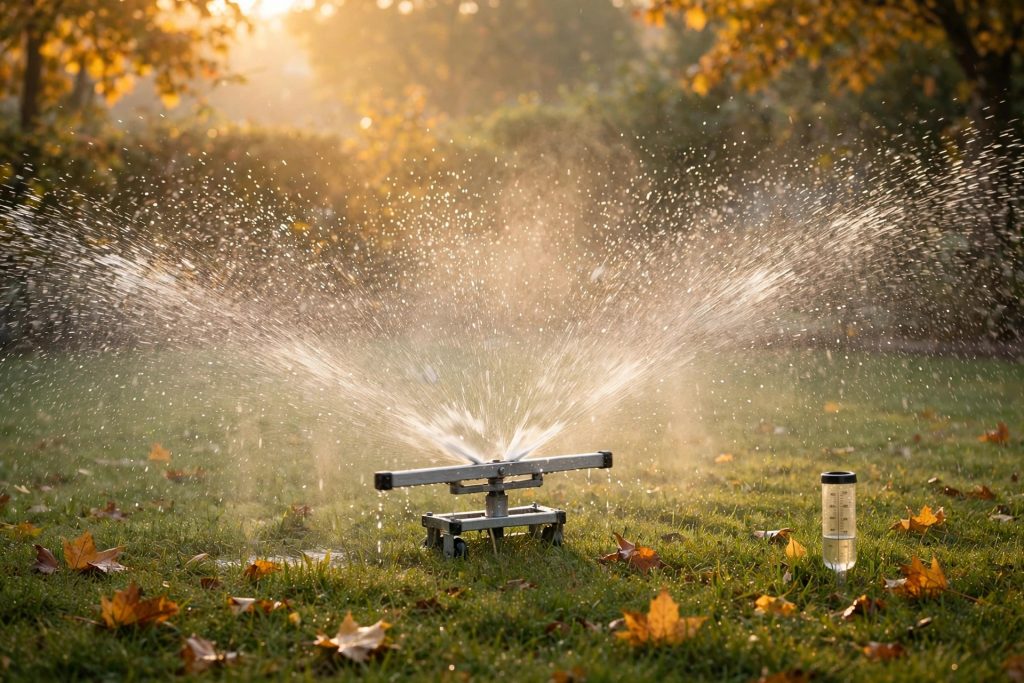
Watering needs change as fall progresses, and the seeded areas and the established lawn want different treatment for a few weeks.
New seed needs the surface kept consistently moist until it sprouts. In practice that means light watering once or twice a day in dry weather, just enough to keep the top inch damp, rather than one heavy soak that puddles and moves seed into clumps. Ryegrass usually shows in about 5 to 10 days, tall fescue in about 7 to 10 days, and Kentucky bluegrass can take two to three weeks, so a bluegrass lawn that looks empty at day ten may simply be slower, provided it has stayed moist. Once seedlings are up, stretch the interval gradually and water more deeply, so roots follow moisture downward.
Established grass needs far less. In a dry fall, about an inch of water a week, from rain and irrigation combined, keeps cool season turf healthy going into winter. Water in the morning where you can, so the leaf blades dry during the day instead of staying wet overnight, which favors disease. Keep watering established grass until the ground begins to freeze. A lawn that enters winter dry recovers more slowly in spring, especially on sandy soil.
Job 8: Keep Leaves Off the Grass, Little and Often
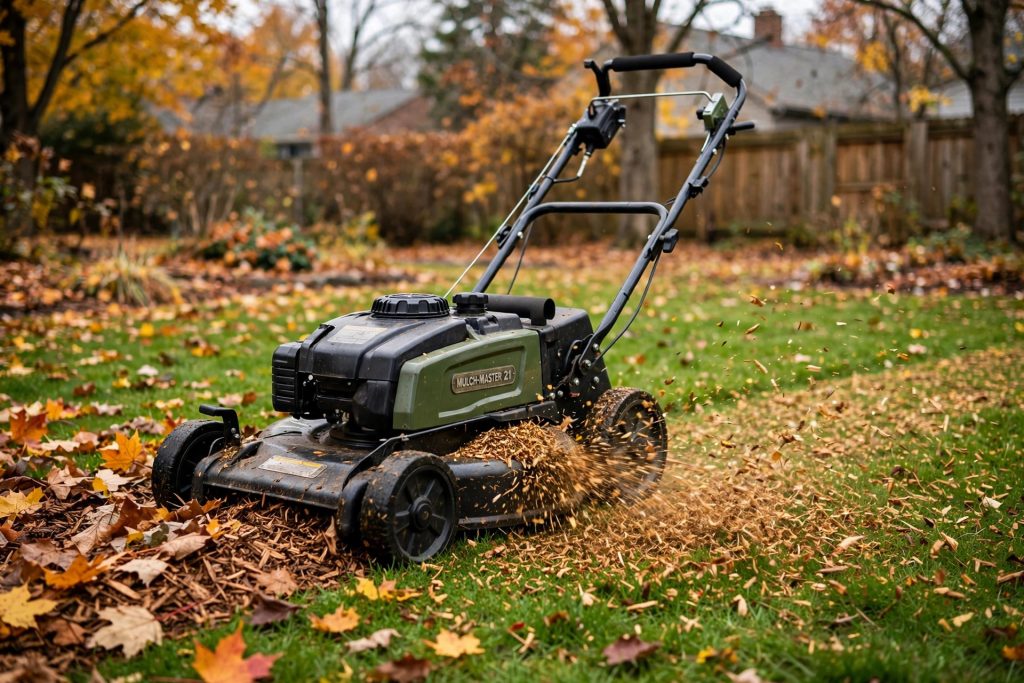
Leaves are the quiet lawn killer of fall lawn care. A thin scatter does no harm, but a layer that covers the grass blocks light, holds moisture against the crowns, and creates the conditions snow mold fungi need under winter snow. Lawns smothered for weeks often come out of winter with dead, matted patches that no amount of spring feeding fixes quickly.
You have two good options, and most lawns need a mix of both:
- Mulch mow light falls. A mulching mower chops leaves into small pieces that fall between the grass blades and break down, returning organic matter to the soil. This works while you can still see roughly half the grass through the chopped leaves. Run over heavy spots twice rather than letting a thick layer sit.
- Collect heavy falls. When leaves blanket the lawn, or when they come from trees whose large leaves mat together when wet, rake or blow them off and compost them, or use them shredded as mulch in beds. Diseased leaves are better sent to municipal composting than kept in a home pile, which rarely gets hot enough to destroy pathogens.
The habit that matters is frequency. Twenty minutes a week keeps leaves manageable. Waiting until every tree is bare turns the same job into a full day of raking wet mats off weak grass.
Job 9: Do the Final Mow and Winterize Your Tools and Lines
When growth finally stops, usually late October or early November in northern states, give the lawn its last cut. Continue mowing as long as the grass is growing, then bring the final height down modestly, to about 2.5 to 3 inches for Kentucky bluegrass and similar cool season lawns, stepping down gradually and still respecting the one third rule. Grass that goes under snow long and floppy mats down and invites snow mold. Grass scalped to the crown is weakened going into winter. The middle ground is the point.
Do not walk or mow on frost covered or frozen grass where you can avoid it. Frozen blades are brittle, and footprints and tire tracks on a frosty lawn can show as brown lines until spring growth covers them.
Close the season by putting the equipment away properly:
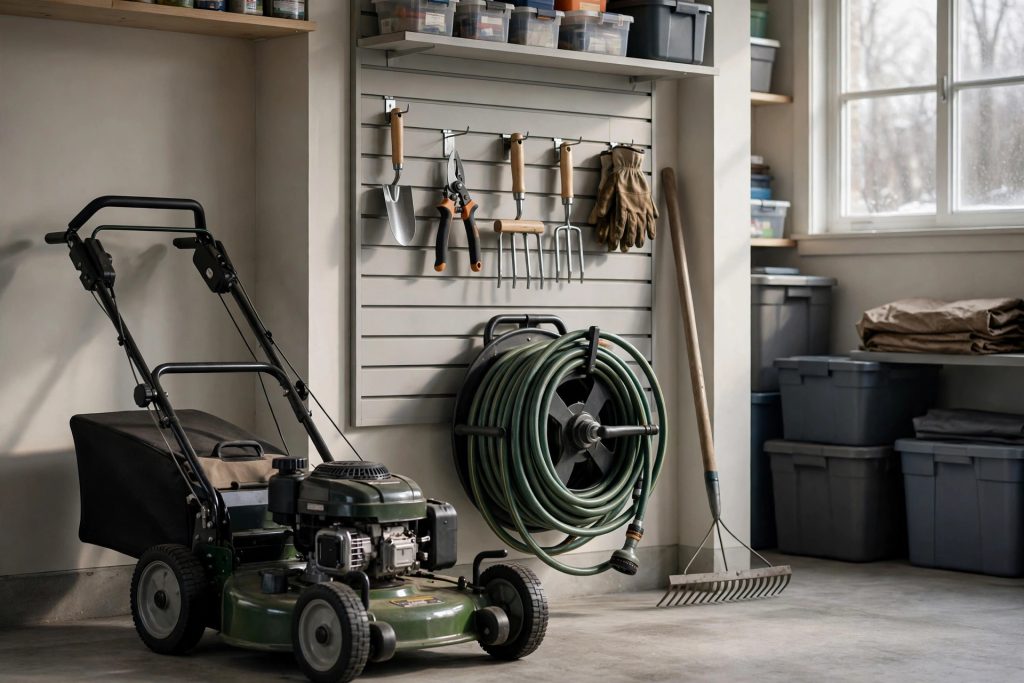
- Drain or stabilize fuel in the mower as the manufacturer directs, clean clippings and mud from the deck and tools, and sharpen the mower blade now so spring does not start with a dull cut.
- Shut off and drain outdoor irrigation and sprinkler lines before the first hard freeze. Water left in pipes expands as it freezes and can crack lines, valves, and backflow parts. Set timers to off or rain mode for winter, and insulate exposed above ground fittings.
- Bring hoses in, drained and coiled, and store seed and fertilizer dry, sealed, and off a cold damp floor, so both are usable next season.
Fall Lawn Care for Warm Season Lawns
Bermuda, zoysia, St. Augustine, and centipede lawns follow the same season in reverse. Their growth slows as nights cool, and they head toward dormancy rather than a growth spurt, so two rules change.
First, stop nitrogen well before dormancy. Extension calendars for warm season grasses call for the last feeding roughly 6 to 8 weeks before the average first frost, so the plant uses the nutrients while it is still growing. Fertilizer applied to dormant warm season grass is not taken up, and tender late growth is more easily damaged by cold.
Second, fall seeding means something different. You do not overseed a warm season lawn with its own kind in fall. The exception is overseeding Bermuda with perennial ryegrass to keep winter color, a deliberate choice with a spring cost, because the ryegrass competes with the Bermuda as it greens up and has to be managed through that transition. Soil testing, leaf removal, and watering until dormancy carry over from the main checklist unchanged, and fall is still a good season to test warm season soil, so any lime the report calls for has winter to work in.
Common Fall Lawn Care Mistakes
- Seeding too late. Seed sown with only a week or two before hard frost may sprout and still die, because roots never developed. If you have missed the window, wait for spring rather than feeding the birds.
- Spraying weeds and seeding the same weekend without reading the label. Herbicide waiting periods exist in both directions, before seeding and after it.
- One heavy fertilizer application instead of two modest ones. Heavy late nitrogen pushes soft growth, raises snow mold risk, and wastes what the plant cannot use.
- Leaving leaves until the end of the season. By then the damage is already done under the mat.
- Cutting the final mow far too short in one pass. Stepping the height down over the last two or three mows protects the crowns.
- Forgetting the irrigation system until pipes freeze. Draining lines is a half hour job in October and a repair bill in April.
Final Thoughts on Fall Lawn Care
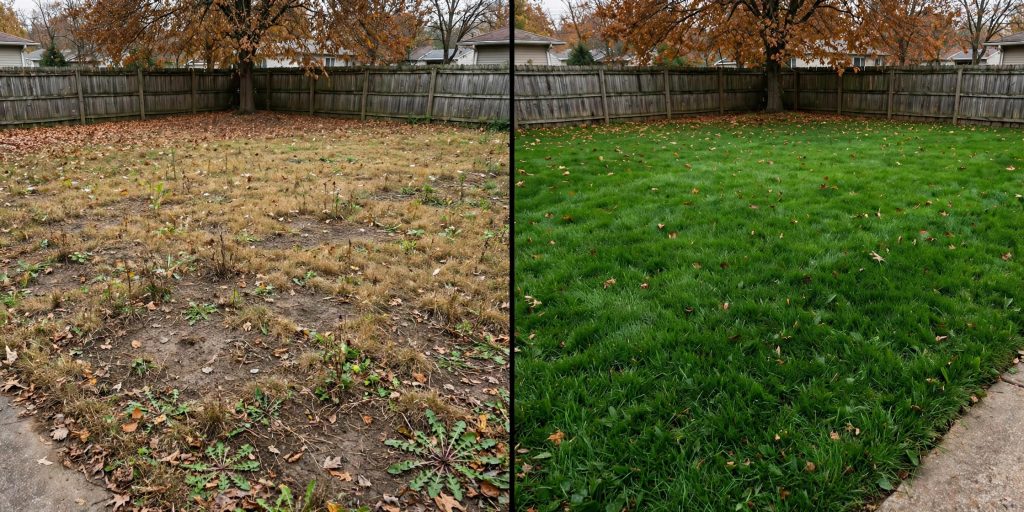
Good fall lawn care is not complicated, but it is unforgiving about timing. Test early, deal with weeds while they are moving food downward, open the soil, seed while warmth remains, feed for roots rather than color, and never let leaves or long grass smother the result. Do those nine jobs in roughly that order, and the lawn that emerges in spring will not be a surprise. It will be the one you built in fall, root by root, while most lawns on the street were being ignored.
References
- Iowa State University Extension and Outreach, Late Summer and Fall Lawn Care
- Iowa State University Extension and Outreach, Managing Fall Leaves in the Home Landscape
- University of Maryland Extension, Lawn Maintenance Calendar for Maryland Tall Fescue Home Lawns
- NC State Extension, Tall Fescue and Kentucky Bluegrass Home Lawn Calendar
- NC State Extension TurfFiles, Fall Seeding Time for Cool-Season Grasses
Frequently Asked Questions
When is the best time to start fall lawn care?
Start in late August to early September in most northern states. Soil testing, weed control, aerating, and seeding all belong in the first half of fall, while the soil is warm and new grass still has 6 to 8 weeks to grow roots before hard frost. Late fall jobs, the final feeding and the final mow, follow when top growth stops.
Is it too late to overseed in October?
It depends on your region and grass type. Northern lawns are at the tail end of the window in early October, and Kentucky bluegrass, which can take two to three weeks just to germinate, is the riskiest choice that late. Transition zone lawns usually still have time in early to mid October. If hard frost is less than about six weeks away, spring seeding is the safer plan.
Should I aerate or dethatch first in fall?
Aerate when the soil itself is compacted, hard, and shedding water. Dethatch when the barrier is the spongy layer above the soil, roughly three quarters of an inch thick or more. Many lawns need only firm raking before seeding. Doing the wrong job costs a weekend and does not fix the actual barrier between seed and soil.
How much fertilizer should a lawn get in fall?
A common extension pattern for cool season lawns is two modest applications, early fall and late fall, each at or below about 1 pound of actual nitrogen per 1,000 square feet. Your soil test and the product label override any general pattern. Never apply fertilizer to frozen or snow covered ground.
Can I mulch leaves into the lawn instead of raking them?
Yes, while the fall is light. Mulch mowing chops leaves finely enough that they settle between grass blades and break down, and you should still be able to see about half the grass through the chopped layer. Heavy falls, and large leaves that mat when wet, should be collected and composted or used shredded in beds.
How short should the last mow of the year be?
About 2.5 to 3 inches for Kentucky bluegrass and similar cool season lawns is a sound final height. Bring the height down gradually over the last few mows, never removing more than a third of the blade at once. Continue mowing while the grass is still growing, and avoid walking or mowing on frost covered grass where you can.

Thesis Link : https://saulibrary.edu.bd/daatj/public/uploads/BAU200601_19-Pp_5.pdf
- Fall Lawn Care Checklist – 9 Jobs Before Winter - October 14, 2026
- 10 Best Garden Tool Sets for Beginners - October 13, 2026
- Lawn Mowing Height by Grass Type -The Complete Chart - October 13, 2026