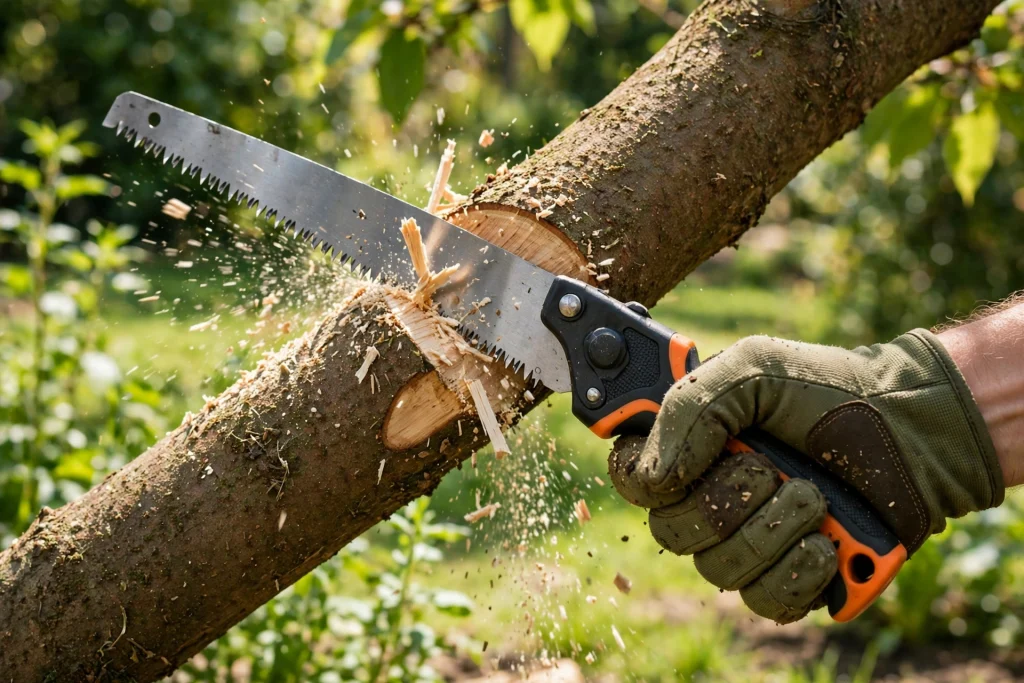

Pruning shears stop being useful at a certain branch size, and that is exactly where a good hand pruning saw earns its keep. A saw does not crush, it slices on the pull stroke, so a clean cut can heal without a ragged edge inviting disease. The trouble is choice: a short folding saw disappears into a pocket but stalls on a thick limb, while a long fixed blade powers through wood and then gets in the way everywhere else. This guide sorts that out. We compared ten real hand pruning saws, folding and fixed, straight and curved, and ranked them on published specifications, blade design, handling, and how well each one fits a real garden job. No prices are included, because listings change, and no hands-on testing is claimed. The scores below are editorial scores based on the verified specifications in this article.
Quick Recommendation
If you buy only one saw from this list, buy the Silky Gomboy Curve 240-8. Its 240 mm curved blade is long enough for most garden branches, short enough to carry, and it folds away safely when the job is done. For larger limbs and regular tree work, step up to the Silky Zubat Professional 330, a fixed curved saw with a 330 mm blade and a scabbard. For a pocket-sized backup, the Silky Pocketboy 170 is the easy carry, and for a widely available garden-store option, the Corona RazorTOOTH Folding Saw RS 7265D is a sensible, straightforward pick.
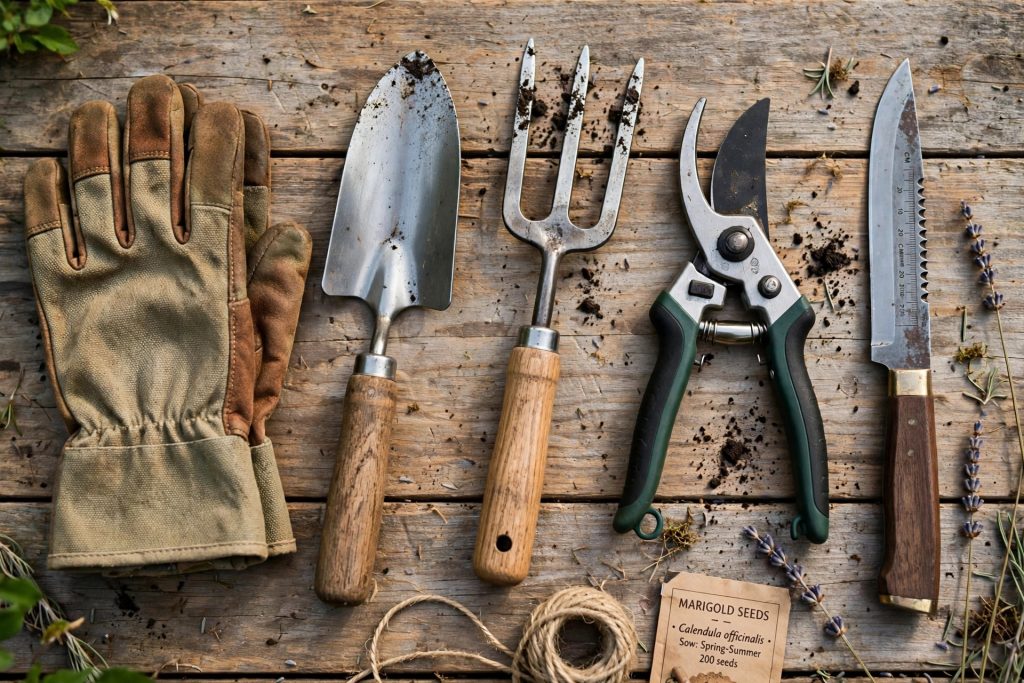
For the wider hand-tool picture, start with the Garden Hand Tools hub below.
Comparison Table
Use this table as a shortlist, then read the reviews for the detail behind each score. Blade lengths are the makers’ published figures. Where a maker does not publish a figure in the sources used here, the table says Not published rather than guessing.
| Product | Type | Blade length | Teeth | Best for | Editorial score |
|---|---|---|---|---|---|
| Silky Gomboy Curve 240-8 | Folding, curved | 240 mm | 8 teeth per 30 mm | Everyday garden pruning | 9.6/10 |
| Silky Zubat Professional 330 | Fixed, curved | 330 mm | 7.5 per 30 mm, Large teeth | Regular tree work | 9.4/10 |
| Silky Pocketboy 170 Large Teeth | Folding, pocket | 170 mm | 8 per 30 mm, Large teeth | Light pruning on the move | 9.1/10 |
| Bahco Laplander 396-LAP | Folding, straight | 190 mm | 7 TPI | Camping and garden use | 9.0/10 |
| Corona RazorTOOTH Folding Saw RS 7265D | Folding, curved | 10 in | Up to 6 TPI, triple-ground impulse-hardened | General garden pruning | 8.9/10 |
| Corona RazorTOOTH Arborist Saw RS 7120 | Fixed, curved | 13 in | 6 TPI (retailer listings report) | Larger branches | 9.2/10 |
| Fiskars Power Tooth Softgrip Folding Saw, 7 in | Folding | 7 in | Not published | Home garden pruning | 8.7/10 |
| Samurai Ichiban GC-330-LH | Fixed, curved | 330 mm | 7.5 per 30 mm (6.5 TPI, retailer listings) | Everyday pruning with a scabbard | 9.3/10 |
| TABOR TOOLS TTS25A Folding Saw | Folding, curved | 8 in | Not published | Budget-friendly garden pruning | 8.6/10 |
| Silky Bigboy 2000, 360 mm | Folding, curved | 360 mm | 6 teeth per inch | Large limbs | 9.0/10 |
How We Chose
We started with a simple filter: only genuine hand pruning saws, no shears and no pole saws. Then we checked each candidate against the makers’ own published specifications, looking for a blade length that fits a stated garden job, a tooth design that suits green wood, a safe way to carry or store the blade, and a replacement blade or scabbard where that matters. A saw lost points if a key figure was missing, because a buyer should not have to guess. Be clear about one thing: no hands-on testing was done for this guide. The scores are editorial scores built from verified published specifications and stated design features, not from cutting tests in our garden.
| Factor | Weight | What we looked for |
|---|---|---|
| Cutting ability and blade design | 30% | Blade length, curve, and tooth design for green wood |
| Blade quality, durability, and replacement availability | 25% | Published blade details and replacement blade or scabbard support |
| Handling, grip, and safety | 20% | Folding lock or scabbard, and a grip suited to the saw size |
| Size, weight, and portability | 15% | How easily the saw carries and stores |
| Maintenance and value of the design | 10% | Cleaning, sharpening, and long-term use |
| Total | 100% | Editorial scores only, no hands-on testing |
| Product | Cutting ability (30%) | Blade quality, durability and replacement (25%) | Handling, grip and safety (20%) | Size, weight and portability (15%) | Maintenance and value (10%) | Overall |
|---|---|---|---|---|---|---|
| Silky Gomboy Curve 240-8 | 9.8 | 9.7 | 9.5 | 9.3 | 9.5 | 9.6 |
| Silky Zubat Professional 330 | 9.6 | 9.5 | 9.3 | 9.0 | 9.3 | 9.4 |
| Samurai Ichiban GC-330-LH | 9.5 | 9.3 | 9.2 | 9.1 | 9.2 | 9.3 |
| Corona RazorTOOTH Arborist RS 7120 | 9.4 | 9.2 | 9.1 | 9.0 | 9.1 | 9.2 |
| Silky Pocketboy 170 Large Teeth | 9.3 | 9.2 | 9.0 | 8.9 | 9.0 | 9.1 |
| Bahco Laplander 396-LAP | 9.2 | 9.0 | 9.0 | 8.8 | 8.9 | 9.0 |
| Silky Bigboy 2000 360 mm | 9.4 | 9.1 | 8.7 | 8.4 | 8.9 | 9.0 |
| Corona RazorTOOTH Folding RS 7265D | 9.1 | 9.0 | 8.8 | 8.7 | 8.8 | 8.9 |
| Fiskars Power Tooth Softgrip 7 in | 8.9 | 8.7 | 8.8 | 8.5 | 8.5 | 8.7 |
| TABOR TOOLS TTS25A | 8.8 | 8.6 | 8.6 | 8.4 | 8.5 | 8.6 |
Why the gap between the top and the bottom? The Gomboy Curve leads on cutting ability (curved, impulse-hardened blade with 8 teeth per 30 mm) and on blade quality and replacement availability (SK4 steel, replacement blades sold separately). The Fiskars trails mainly on cutting reach and blade depth: a 7 in blade, hardened precision-ground steel with no published grade or tooth count, and no maker-published replacement blade. These factor scores are editorial judgments built from the published specifications and design features above, not measurements from cutting tests. The factor scores in the breakdown above are editorial judgments built from the published specifications and design features in each review, not measurements from cutting tests in our garden.
Folding, Fixed, or Curved: Which Shape Fits Your Pruning?
Folding saws win on carry. The blade folds into the handle, so it can ride in a pocket or a tool bucket without a separate sheath, and you are more likely to have it with you when a branch needs attention. Fixed saws win on readiness and length: the blade is always out, a scabbard covers it, and a longer blade makes fewer strokes on a thick limb. The trade is simple. If you prune a little, often, and on foot, a folding saw is usually the better companion. If you prune trees in a planned session, a fixed saw is easier to use for a longer stretch.
Curve matters too. A curved blade follows the shape of a branch and helps keep the teeth in contact through the pull stroke, which is useful on a limb you cannot reach squarely. A straight blade feels more controlled in tight, tidy work, and it is easier to judge the line of the cut when the branch is right in front of you. Tooth spacing is the other clue: coarse teeth clear green wood faster, while finer teeth leave a smoother surface on smaller stems. Check the published tooth figure before you buy, because that one detail often explains why two saws of the same length feel so different.
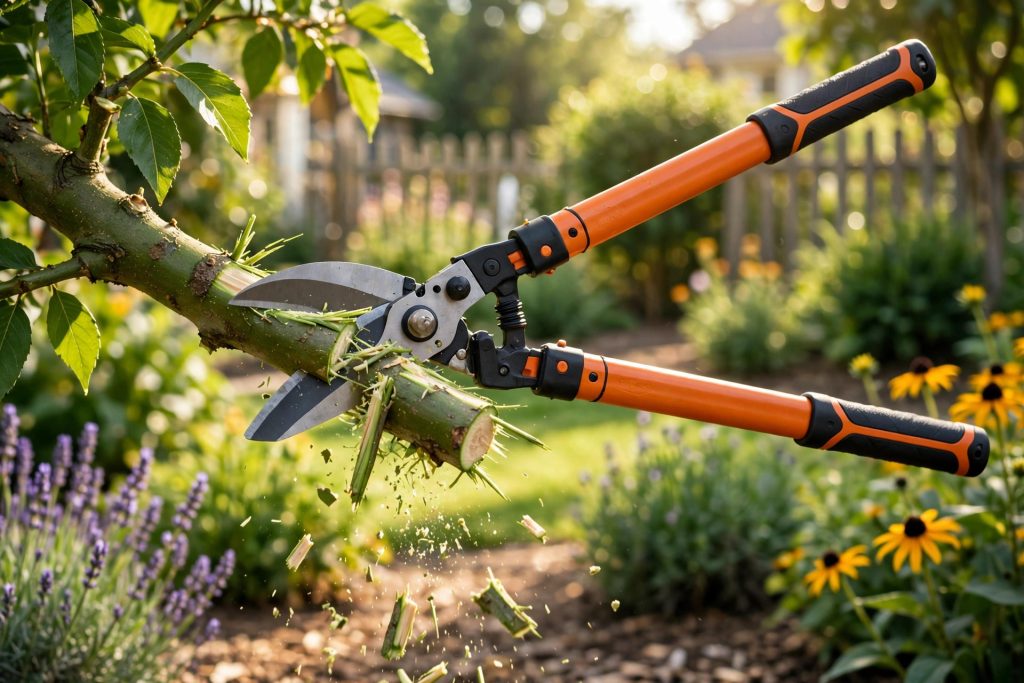
When a branch is thick enough that a saw feels slow, the next hand tool to consider is a pair of loppers, shown below.
The 10 Best Pruning Saws, Reviewed
1. Silky Gomboy Curve 240-8
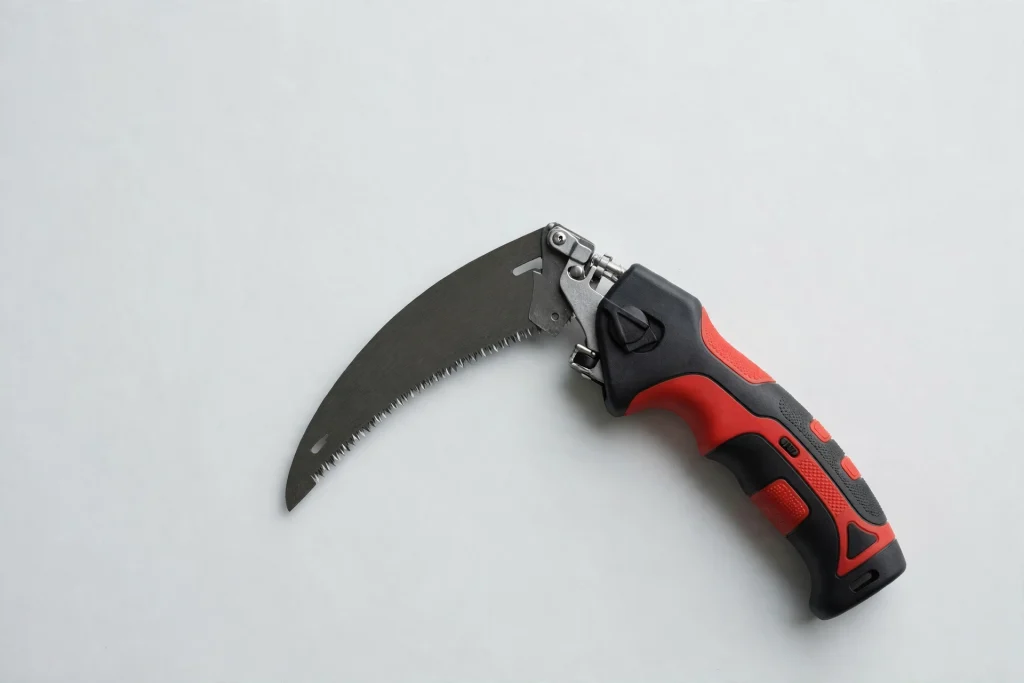
Editorial score: 9.6/10. Blade: 240 mm, curved, folding, with 8 teeth per 30 mm. This is the saw to buy if you want one tool for most garden pruning. The curved blade keeps contact on the pull stroke, the folding design makes it easy to carry, and the length is long enough for ordinary branches without feeling awkward in a shrub. Skip it only if most of your work is on large tree limbs, where a longer fixed blade will save effort. The yellow GOM rubber grip over steel alloy is the detail that sets its handling apart, and its vibration-absorbing grip suits longer pruning sessions.
Specifications: Blade: SK4 high-carbon steel, chrome-plated, taper-ground. Weight: Not published by Silky for the standard version (retailer figures 240 to 265 g; 288 g is the Outback edition only). Warranty: limited lifetime against defects in material and workmanship (US wording). Replacement blade: available (no maker part number found). Grip: yellow GOM rubber over steel alloy, vibration-absorbing. Maintenance: clean resin with olive oil, keep solvents off the rubber handle, keep dry, store in scabbard, impulse-hardened teeth cannot be re-sharpened with a hand file, use only Silky replacement blades.
2. Silky Zubat Professional 330
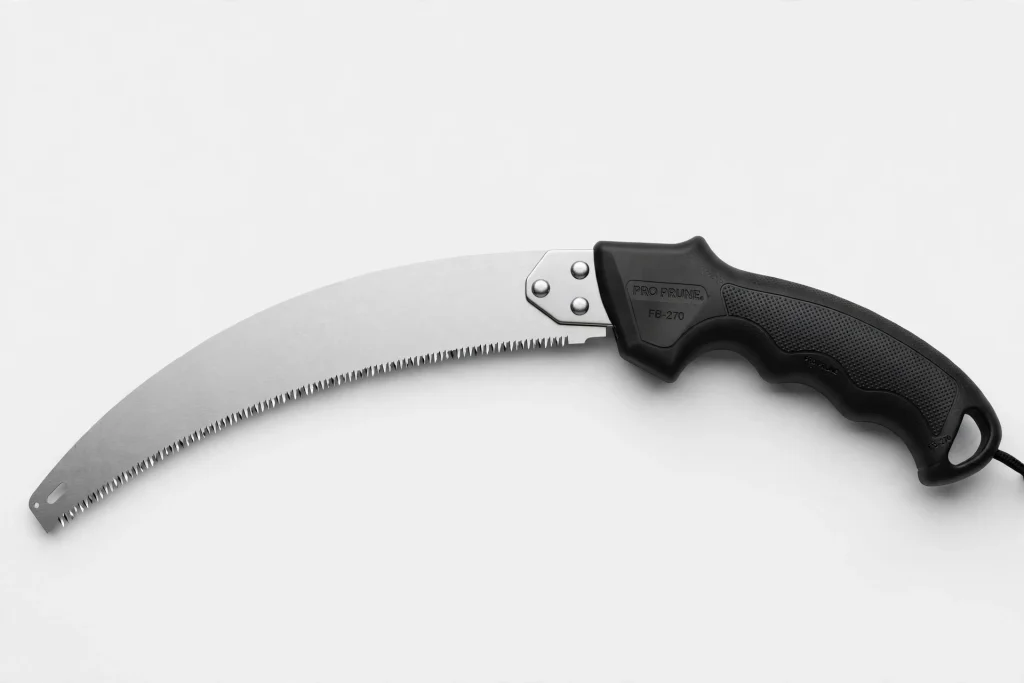
For regular tree work, reach for this one first. The fixed, curved 330 mm blade gives a longer stroke than a pocket folding saw, so a thick limb takes fewer passes, and the blade is ready the moment you draw it from its scabbard. The trade is carry: it is a dedicated tree tool, not something to slip into a pocket. Editorial score: 9.4/10. The molded GOM rubber handle and 300 g saw-only weight keep it ready in its scabbard, and its Large teeth run 7.5 per 30 mm.
Specifications: Blade: hard chrome-plated, taper-ground steel (grade Not published for model 270-33). Weight: 300 g saw only, 495 g with scabbard. Warranty: limited lifetime. Replacement blade: part 271-33. Grip: molded GOM rubber handle. Maintenance: clean resin with olive oil, keep solvents off the rubber handle, keep dry, store in scabbard, impulse-hardened teeth cannot be re-sharpened with a hand file, use only Silky replacement blades.
3. Silky Pocketboy 170 Large Teeth
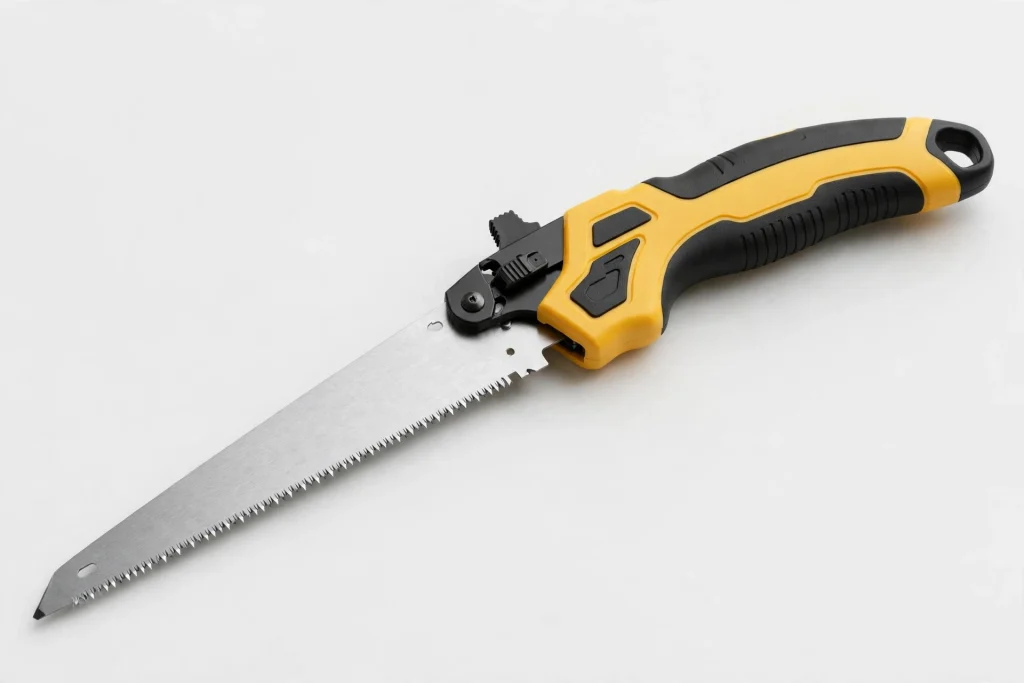
Think of this as the saw you actually carry. At 170 mm, the folding blade fits a pocket or a small pack, and the large teeth suit green wood on light pruning rounds. It will not replace a longer saw on a thick limb, and that is the point: it is a backup and a walking-round tool. Editorial score: 9.1/10. The red GOM handle marks the large-teeth version and locks in two positions, and its Large teeth run 8 per 30 mm, with a 225 g weight including the case.
Specifications: Blade: hard chrome-plated steel. Weight: 225 g with case. Warranty: limited lifetime. Replacement blade: part 727-17. Grip: GOM handle, locks in two positions; red handle marks the large-teeth version. Maintenance: clean resin with olive oil, keep solvents off the rubber handle, keep dry, store in scabbard, impulse-hardened teeth cannot be re-sharpened with a hand file, use only Silky replacement blades.
4. Bahco Laplander 396-LAP
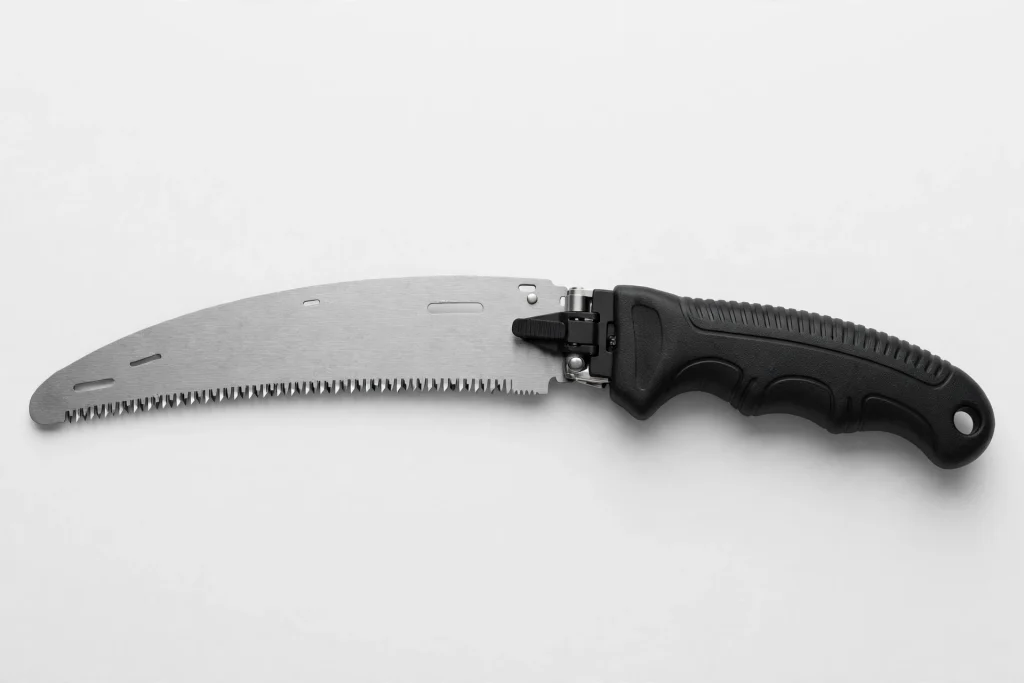
Best for: gardeners who also want a saw for camping and general outdoor use. Why it stands out: the straight 190 mm blade, at 7 teeth per inch, feels controlled in tight spots, and the folding design keeps the teeth covered in a pack. Watch out for: it is shorter than the tree saws above, so plan more strokes on a thick limb. Editorial score: 9.0/10. Its two-component plastic handle, leather strap and safety lock that also locks when folded make it easy to carry in a pack, and at 200 g per the maker datasheet it stays light for camping use.
Specifications: Blade: steel grade Not published by the maker (datasheet: specially coated for rust protection and low friction). Weight: 200 g per maker datasheet (retailers 190 to 193 g). Warranty: Not published by the maker. Replacement blade: part 396-BLADE. Grip: two-component plastic handle, leather strap, safety lock that also locks when folded. Maintenance: Not published by the maker.
5. Corona RazorTOOTH Folding Saw RS 7265D
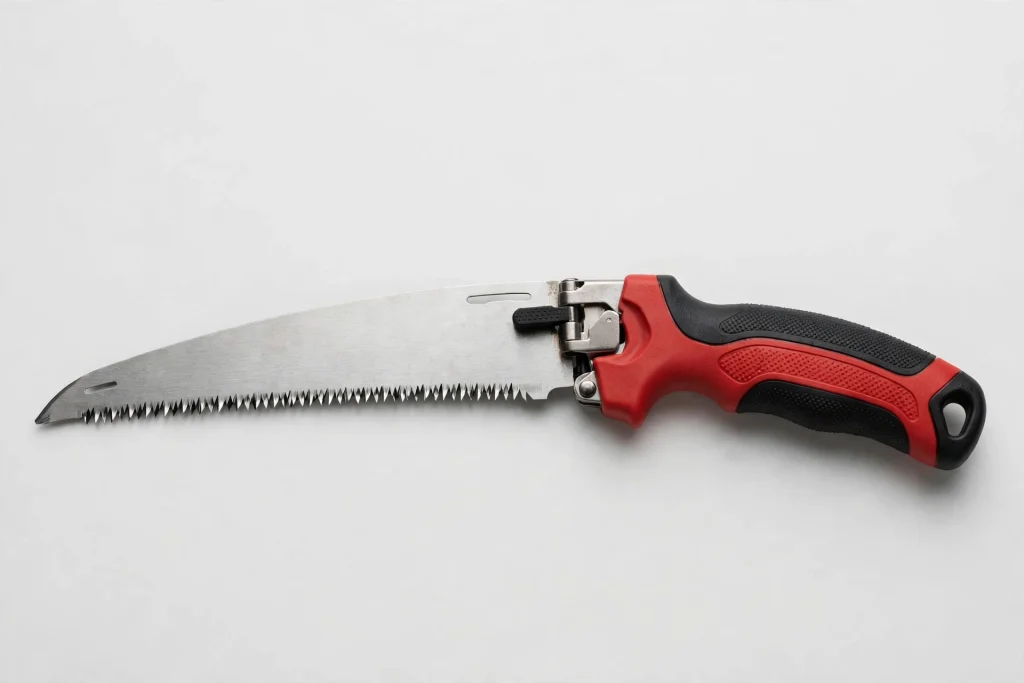
This is the easy garden-store pick: a folding, curved 10 in blade that suits general pruning around the yard, with a published replacement blade, AC 7265, so a dull blade does not mean a new saw. Keep it for everyday branches, not for the biggest limbs, where a longer fixed saw earns its keep. Editorial score: 8.9/10. Its ergonomic co-molded handle and triple-ground impulse-hardened teeth, at up to 6 TPI, suit everyday branches without needing a longer fixed saw.
Specifications: Blade: Japanese SK5 steel, chrome-plated. Weight: Not published by the maker. Warranty: lifetime (limited lifetime wording). Replacement blade: AC 7265. Grip: ergonomic co-molded handle. Maintenance: Not published by the maker.
6. Corona RazorTOOTH Arborist Saw RS 7120
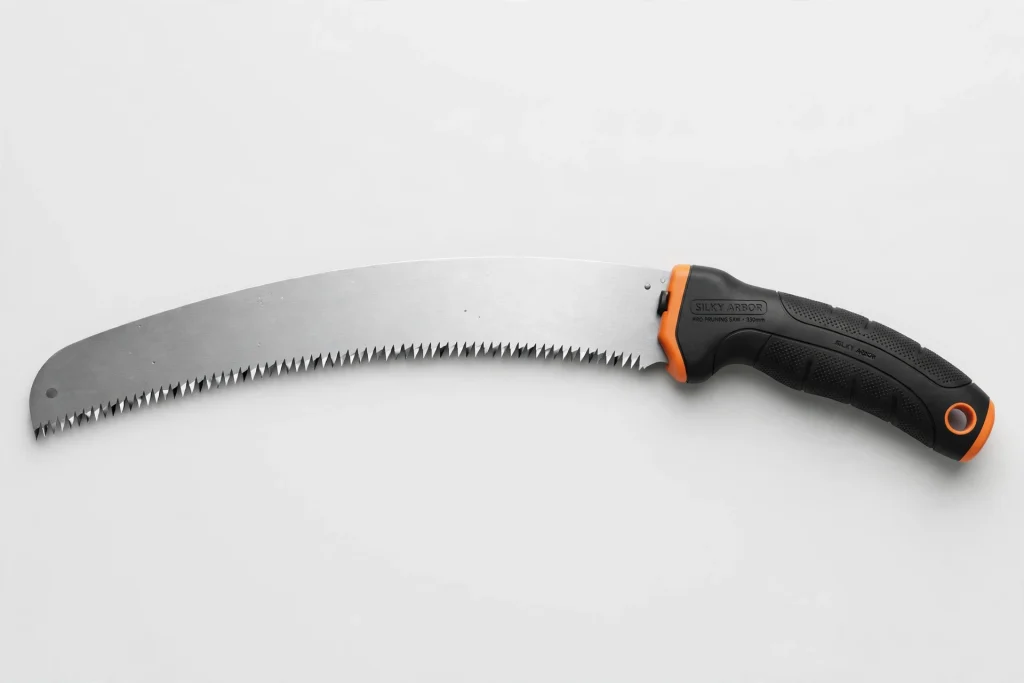
When the job moves from shrubs to trees, this fixed, curved 13 in saw is the Corona to pick. The longer blade and fixed design give a steady, confident stroke on larger branches, and it pairs naturally with the folding Corona above: one for the bucket, one for planned tree work. The fixed blade needs a scabbard or a safe storage spot, so do not toss it loose in a tool bag. Editorial score: 9.2/10. Its cushioned co-molded pistol grip, with a finger hook and hanging hole, steadies the longer fixed stroke, and retailer listings report 6 TPI for this saw.
Specifications: Blade: tempered steel alloy (retailer listings describe it as SK5). Teeth: 6 TPI, as retailer listings report; the maker catalogue is silent on tooth count. Weight: Not published by the maker (retailer figures vary 10.4 to 11.2 oz). Warranty: limited lifetime. Replacement blade: part 7100-1. Grip: cushioned co-molded pistol grip with finger hook and hanging hole. Maintenance: Not published by the maker.
7. Fiskars Power Tooth Softgrip Folding Saw, 7 in
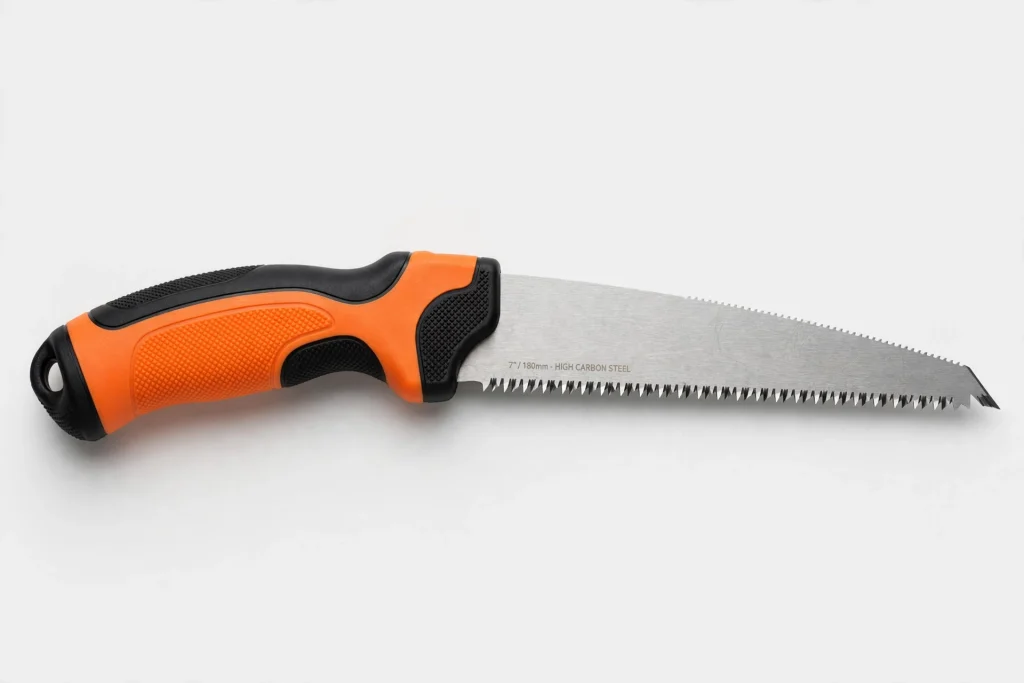
For a home garden, this 7 in folding saw is a sensible, low-fuss choice. The triple-ground blade is described by the maker for aggressive cuts, and the soft grip suits short, everyday sessions. It is not the saw for large tree limbs, but for routine garden pruning it is easy to carry, easy to close, and easy to store. Editorial score: 8.7/10. Tooth count: Not published in the sources used. Its SoftGrip touchpoints and hang hole, with a lock in two open positions, make it easy to close and store after short everyday sessions, while its 7 in blade keeps it light at about 1.58 lb per the dealer datasheet, though other listings differ.
Specifications: Blade: hardened, precision-ground steel (grade Not published). Teeth: Not published by the maker (only triple-ground teeth). Weight: about 1.58 lb per dealer datasheet (other listings differ). Warranty: manufacturer lifetime limited. Replacement blade: Not published by the maker. Grip: SoftGrip touchpoints, hang hole, locks in two open positions. Maintenance: Not published by the maker.
8. Samurai Ichiban GC-330-LH
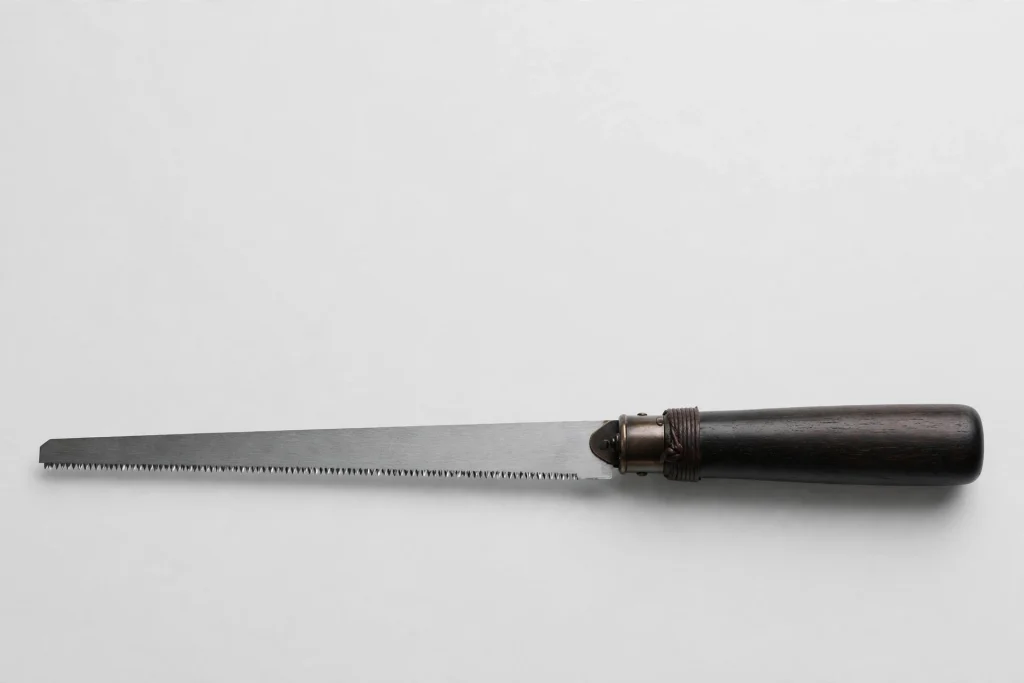
A fixed, curved 330 mm blade with a scabbard, this one suits gardeners who like a ready-to-draw saw without the length of a dedicated tree saw. It is a good middle step: longer than the pocket and folding garden saws, but still easy to manage for everyday pruning. Editorial score: 9.3/10. Its ergonomic rubber TPR handle and scabbard suit ready-to-draw everyday pruning, and retailer listings report 7.5 per 30 mm (6.5 TPI) for this saw.
Specifications: Blade: SK-5 high-carbon Japanese steel (retailer listings). Teeth: 7.5 per 30 mm (6.5 TPI, retailer listings). Weight: 0.8 lb / 360 g (retailer listings). Warranty: Not published. Replacement blade: ref 08230730 (retailer listings). Grip: ergonomic rubber handle (TPR). Maintenance: Not published by the maker.
9. TABOR TOOLS TTS25A Folding Saw
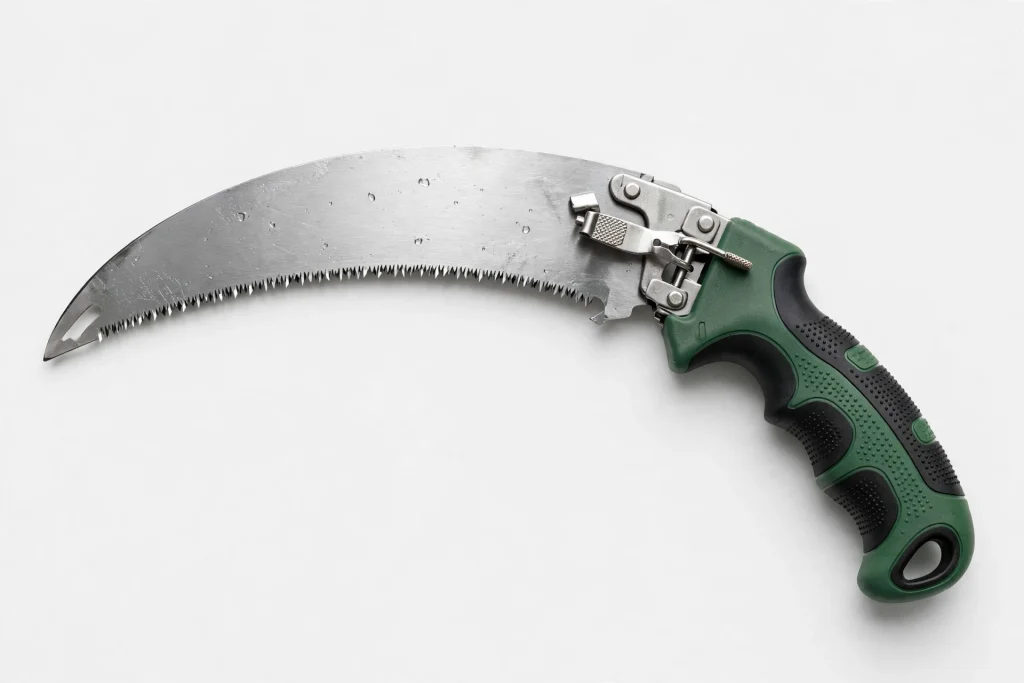
If you want a folding, curved 8 in saw for everyday garden work without spending on a premium Japanese brand, this is the sensible entry point. Source descriptions put it at branches up to 4 in, which covers most garden pruning, but it is still a general garden saw, not a large-limb tool. Editorial score: 8.6/10. Tooth count: Not published in the sources used. Its rugged non-slip grip, which works wet or dry, suits everyday garden work, and use it on the pull stroke only, or it might bend or break, as the maker notes.
Specifications: Blade material: Not published by the maker (retailer listings disagree, so no single material is printed here). Teeth: Not published. Weight: about 180 g (retailer listings; maker silent). Warranty: Limited only, terms not published. Replacement blade: Not published. Grip: rugged non-slip grip, works wet or dry. Maintenance: Not published by the maker. Maker note: pull stroke only, or it might bend or break.
10. Silky Bigboy 2000, 360 mm
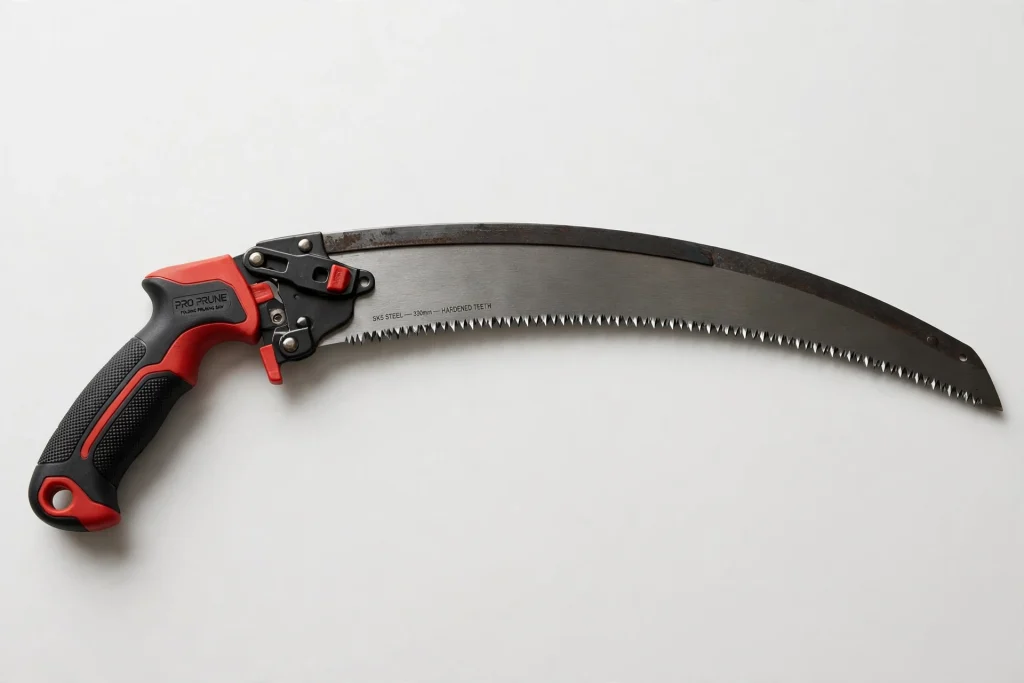
This is the big-limb specialist in the list. The folding, curved 360 mm blade, at 6 teeth per inch, gives a long stroke for large limbs, and it still folds for safer carry than a fixed saw of the same length. The trade is size: it is too much saw for light shrub work, so keep it for planned, larger cuts. Editorial score: 9.0/10. This is the Large-tooth red-handle variant: its non-slip two-handed rubberized cushioned handle gives control on planned larger cuts, and its 360 mm blade at 6 teeth per inch suits large limbs.
Specifications: Blade: hard chrome-plated Japanese steel. Weight: 570 g for the standard version (1.25 lb). Warranty: limited lifetime. Replacement blade: available (no maker part number found). Grip: non-slip two-handed rubberized cushioned handle. Maintenance: clean resin with olive oil, keep solvents off the rubber handle, keep dry, store in scabbard, impulse-hardened teeth cannot be re-sharpened with a hand file, use only Silky replacement blades.
How to Use a Pruning Saw Without Tearing Bark
Start with a shallow undercut on the underside of the branch, a short distance out from the final cut. That first notch stops the bark from peeling back toward the trunk when the branch drops. Then cut from the top, just outside the undercut, and let the branch fall away cleanly. Finish with a tidy cut at the branch collar, without leaving a long stub and without cutting into the collar itself.
Let the saw do the work on the pull stroke. Short, forced pushes bend the blade and chew the cut, while a steady pull keeps the teeth in the kerf. Keep your free hand clear of the cut line, work at a comfortable angle, and stop if the blade binds: back it out, reposition, and start again rather than forcing it through.
Care and Storage
A pruning saw stays useful longer when it is cleaned after use. Brush sap and sawdust from the teeth, wipe the blade dry, and add a light coat of oil if the maker recommends it. Store a folding saw closed and locked, and keep a fixed-blade saw in its scabbard, away from other tools that could nick the teeth. Check the blade before each session: if it is bent, cracked, or dull enough to tear rather than cut, replace the blade where a replacement is offered, or replace the saw.
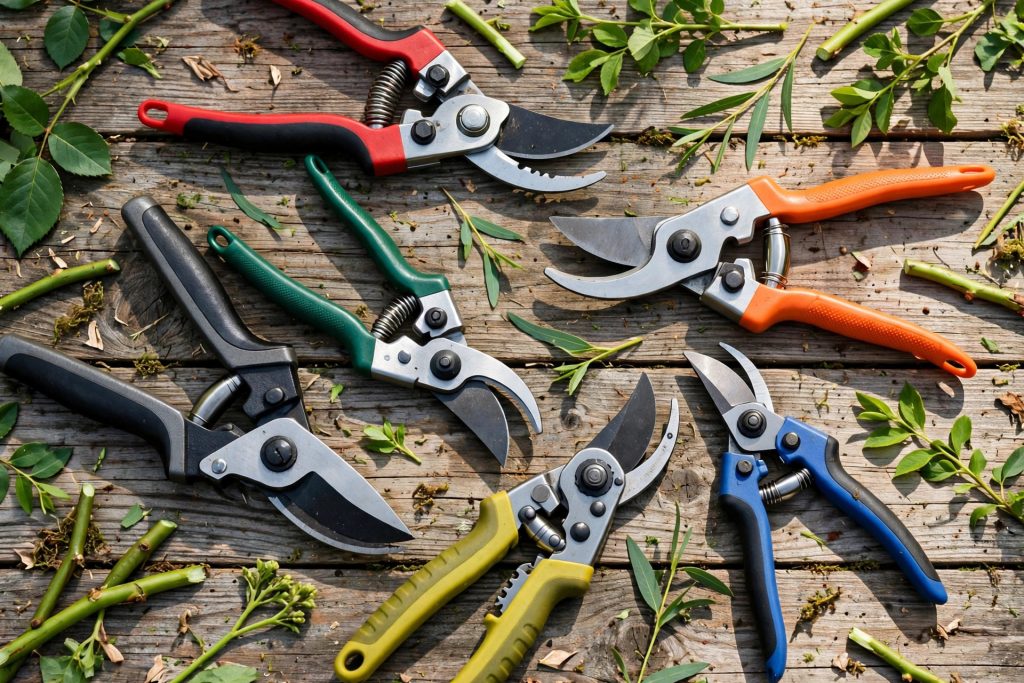
For small live stems, a saw is too much tool: reach for pruning shears instead, shown below.
Final Choice
If you buy one pruning saw, buy the Silky Gomboy Curve 240-8. It covers most garden pruning, folds safely, and carries easily. If you prune trees often, step up to the Silky Zubat Professional 330 for its longer fixed blade. If you mainly walk the garden and snip as you go, keep the Silky Pocketboy 170 in your pocket and let the bigger saws stay in the shed until they are needed.
References
- Silky Europe, Gomboy Curve 240-8: supports the 240 mm blade length and 8 teeth per 30 mm figures used for the top pick.
- Silky Saws, Zubat Professional 330: supports the 330 mm fixed curved blade used for regular tree work.
- Corona Tools, RazorTOOTH Arborist Saw RS 7120: supports the 13 in fixed curved blade used for larger branches.
- Bahco, Laplander 396-LAP: supports the 190 mm blade length and 7 teeth per inch figures.
- University of Georgia Extension, Pruning Basics: supports the undercut first, then a top cut, sequence used in the bark-tearing guidance.
- Silky Saws, Safety and Use: supports the Silky-wide maintenance guidance: cleaning, drying, storage, and impulse-hardened teeth not re-sharpenable by hand file.
- Bahco 396-LAP datasheet: supports the 7 TPI, 200 g, and 396-BLADE replacement figures.
- Corona catalogue: supports the SK5 blade, lifetime warranties, and replacement blades AC 7265 and 7100-1.
- Fiskars dealer datasheet: supports the triple-ground teeth and manufacturer lifetime limited warranty.
Frequently Asked Questions
What size branch should I cut with a pruning saw instead of pruning shears?
Reach for a saw once a branch is too thick for shears to cut cleanly without strain, usually past the small live-stem range. A saw gives a longer cutting edge and a steady pull stroke, so the cut stays tidy instead of crushed. If shears need force or leave a ragged edge, step up to a saw.
Should I choose a folding or a fixed-blade pruning saw?
Choose folding if you carry the saw often, walk the garden, or want the teeth covered in a pocket or bucket. Choose fixed if you do planned tree work and want a longer blade ready at once, with a scabbard for safe storage. Many gardeners end up with both: a folder for everyday rounds and a fixed saw for trees.
Is a curved blade better than a straight blade for pruning?
Often, yes, for branches. A curved blade follows the branch and keeps more teeth in contact through the pull stroke, which helps on larger cuts. A straight blade still has a place in tight, tidy work, where control matters more than speed. Match the shape to the job, not to a slogan.
What does tooth count mean on a pruning saw?
Tooth count tells you how many teeth sit along a set length of blade, often given as teeth per inch. Coarser, larger teeth clear green wood faster and suit larger branches, while finer teeth cut more slowly but leave a smoother surface on smaller stems. Check the maker’s published figure, since brands do not all measure it the same way.
Can I use a pruning saw on dry or dead wood?
Yes, most hand pruning saws will cut dry or dead wood, but check the maker’s description first. Green-wood teeth clear wet fibers well, while dry wood can be harder and more brittle. Cut slowly, keep the blade straight in the kerf, and inspect for cracks or loose bark before you start.
How do I clean and store a pruning saw so it stays sharp?
Brush sap and sawdust from the teeth after use, wipe the blade dry, and add a light coat of oil if the maker recommends it. Store a folding saw closed and locked, and keep a fixed-blade saw in its scabbard, away from other tools that could nick the teeth. Replace a blade that is bent, cracked, or dull enough to tear instead of cut.

Thesis Link : https://saulibrary.edu.bd/daatj/public/uploads/BAU200601_19-Pp_5.pdf
- How to Start Seeds Indoors - October 25, 2026
- Best Pruning Saws: 10 Top Picks for 2026 - October 25, 2026
- How to Stripe a Lawn Like a Pro - October 24, 2026