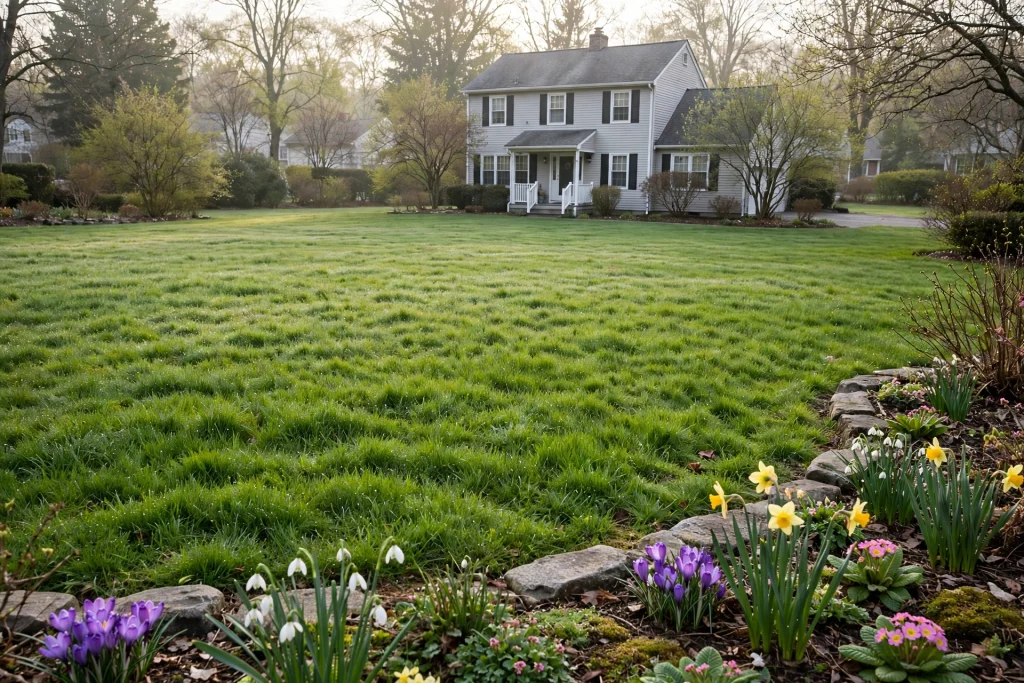

Spring is the season your lawn forgives the most and forgets the least. Cool-season grasses are waking up, roots are hungry for light and air, and weed seeds are waiting for exactly the same warm soil your grass wants. A solid spring lawn care routine is not about doing everything. It is about doing the right ten jobs, in the right order, before the heat arrives.
This checklist is built for US homeowners with cool-season lawns (Kentucky bluegrass, tall fescue, fine fescue, perennial ryegrass), with a warm-season section at the end for Bermuda, zoysia, and St. Augustine. Timing cues are given as soil temperature and growth signs, not fixed dates, because a warm March in Georgia and a cold March in Minnesota are not the same season.
Remember that spring is a season, not a date. In the South it starts weeks earlier than in the North, so the same job can fall in different months in different states. Grass type matters just as much: warm-season lawns (Bermuda, zoysia and St. Augustine) grow best in summer, while cool-season lawns (fescue, bluegrass and ryegrass) grow best in spring and fall, so the two run on different schedules. The order of the ten jobs stays the same everywhere. Only the dates move. Confirm the exact dates for your lawn with your state or county Extension office before you start.
Your Spring Lawn Care at a Glance
| Job | When to do it | Why it matters |
|---|---|---|
| 1. Clear winter debris | As soon as the lawn dries out | Lets light and air reach new growth; removes disease habitat |
| 2. Service the mower | Before the first mow | A sharp blade cuts clean; dull blades tear and invite disease |
| 3. Test the soil | Early spring | Tells you what the lawn actually needs before you buy anything |
| 4. Apply pre-emergent | Soil 50 to 55 F at 2-inch depth, several days running | Stops crabgrass and summer annual weeds before they germinate |
| 5. Make the first mow | Grass reaches about 3 inches | Sets mowing height for the season; encourages tillering |
| 6. Feed lightly | After green-up, light nitrogen only | Supports spring growth without feeding summer disease |
| 7. Patch thin spots | Once soil is workable | Fills gaps before weeds claim them |
| 8. Aerate if compacted | Spring or early summer, if needed | Opens compacted soil so roots can breathe |
| 9. Check watering setup | Before temperatures climb | Fixes coverage problems before the lawn depends on irrigation |
| 10. Scout for weeds and grubs | All season, weekly walk | Catches problems while they are small and cheap to fix |
Job 1: Clear Away Winter Debris
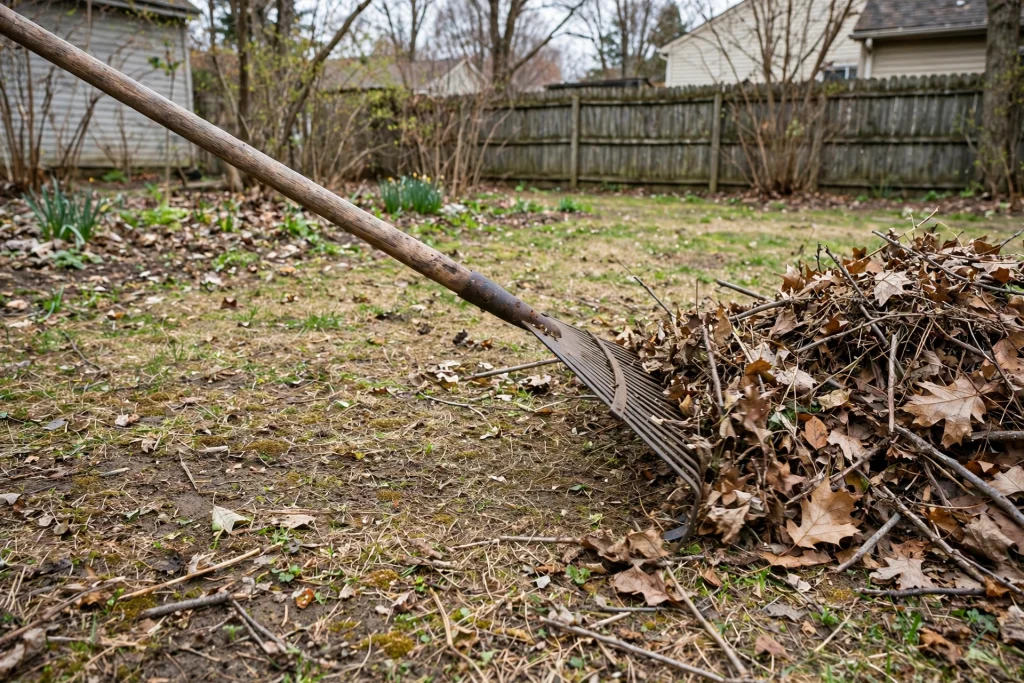
Before anything else, give the lawn a clean start. Rake up leaves, twigs, and branches that sat on the turf all winter, and fluff up any matted patches where dead grass is lying flat against the soil. That mat blocks sunlight and traps moisture against the crowns, which is exactly the combination snow mold and other cool-season diseases like.
Use a light touch. A leaf rake or a lawn rake with springy tines is enough. You are not dethatching here. Save the aggressive raking for fall, when cool-season grass can recover faster. If you compost, shredded leaves make excellent brown material, so this job feeds the compost pile too.
Job 2: Service the Mower and Sharpen the Blade

The cheapest upgrade in your whole spring lawn care plan is a sharp blade. A dull blade tears grass instead of cutting it, leaving ragged white tips that brown out within a day and give disease an open door. Sharpen the blade at the start of the season, and again if you notice tearing later.
While you are at it, do the basic tune-up: fresh oil, a new spark plug, and a clean air filter on a gas mower. Check tire pressure on riding mowers, and scrape the deck clean so clippings flow instead of clumping. Battery mowers need less, but check the battery charge and confirm the height adjustment moves freely. Five minutes in the garage now beats a breakdown in June.
Job 3: Test Your Soil Before You Feed Anything

Guessing at fertilizer is how lawns end up overfed, underfed, or fed the wrong thing entirely. A soil test through your county extension office costs little, measures pH plus phosphorus and potassium, and tells you exactly what to apply. Most turfgrasses want a pH between 6.5 and 7.0 for the best nutrient availability.
Test early in spring, because amendments like lime need weeks to months to change pH, and you want that correction working before the season peaks. If your test shows the soil is already in range and nutrient levels are fine, you just saved the cost of a bag you did not need. That is the whole point of a spring lawn care plan built on evidence instead of habit.
Source: NC State Extension, Extension Gardener Handbook: Lawns
Job 4: Apply Pre-Emergent Before Crabgrass Wakes Up
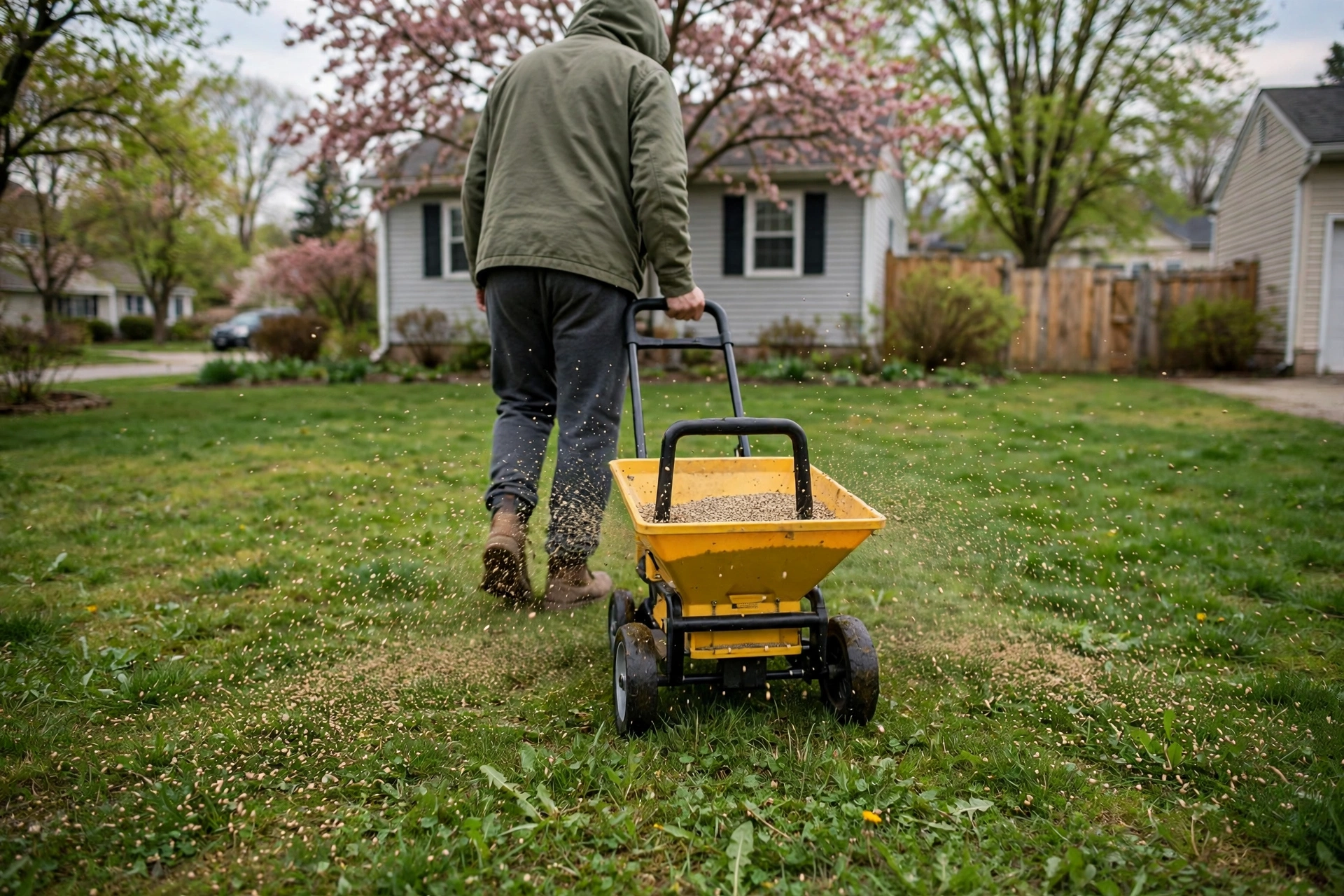
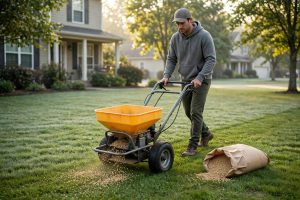
This is the single most time-sensitive job on the list. Pre-emergent herbicide forms a barrier in the top layer of soil that stops crabgrass and other summer annual weeds from establishing roots. Once those weeds have germinated, the barrier is useless, so timing is everything.
Watch soil temperature, not the calendar. The window university turf programs point to is 50 to 55 F at a 2-inch soil depth, sustained for several consecutive days. Crabgrass starts germinating in the 55 to 65 F range, so you want the barrier down before soil reaches 60. If you need a calendar cue, forsythia blooming in your neighborhood is the classic phenology signal. Water the product into the soil after application, and check your local extension for current readings near your ZIP code.
Measure it yourself rather than guessing from the air temperature. Push a soil thermometer into the lawn to about 2 inches deep, take the reading in the morning, and check it on several days in a row. Apply once the readings hold at 50 to 55 degrees F. Michigan State University Extension describes that same 50 to 55 degree range at 0 to 2 inch depth as the optimum window for application, before crabgrass germinates.
Two rules come straight from extension guidance: apply crabgrass preventers before about mid-April in most regions, and never apply pre-emergent where you plan to sow seed, because it stops turf seed from establishing just as effectively as weed seed. Seed or pre-emergent in a given area, not both.
Always follow the label of the specific product you use. Rates, maximum annual amounts and how long to wait before seeding all differ by active ingredient, and prodiamine, dithiopyr and pendimethalin are not interchangeable. A standard pre-emergent blocks grass seed as well as weed seed, so never apply one where you plan to seed.
Source: Michigan State University Extension, Timing crabgrass preemergence applications in spring
Job 5: Make the First Mow Count
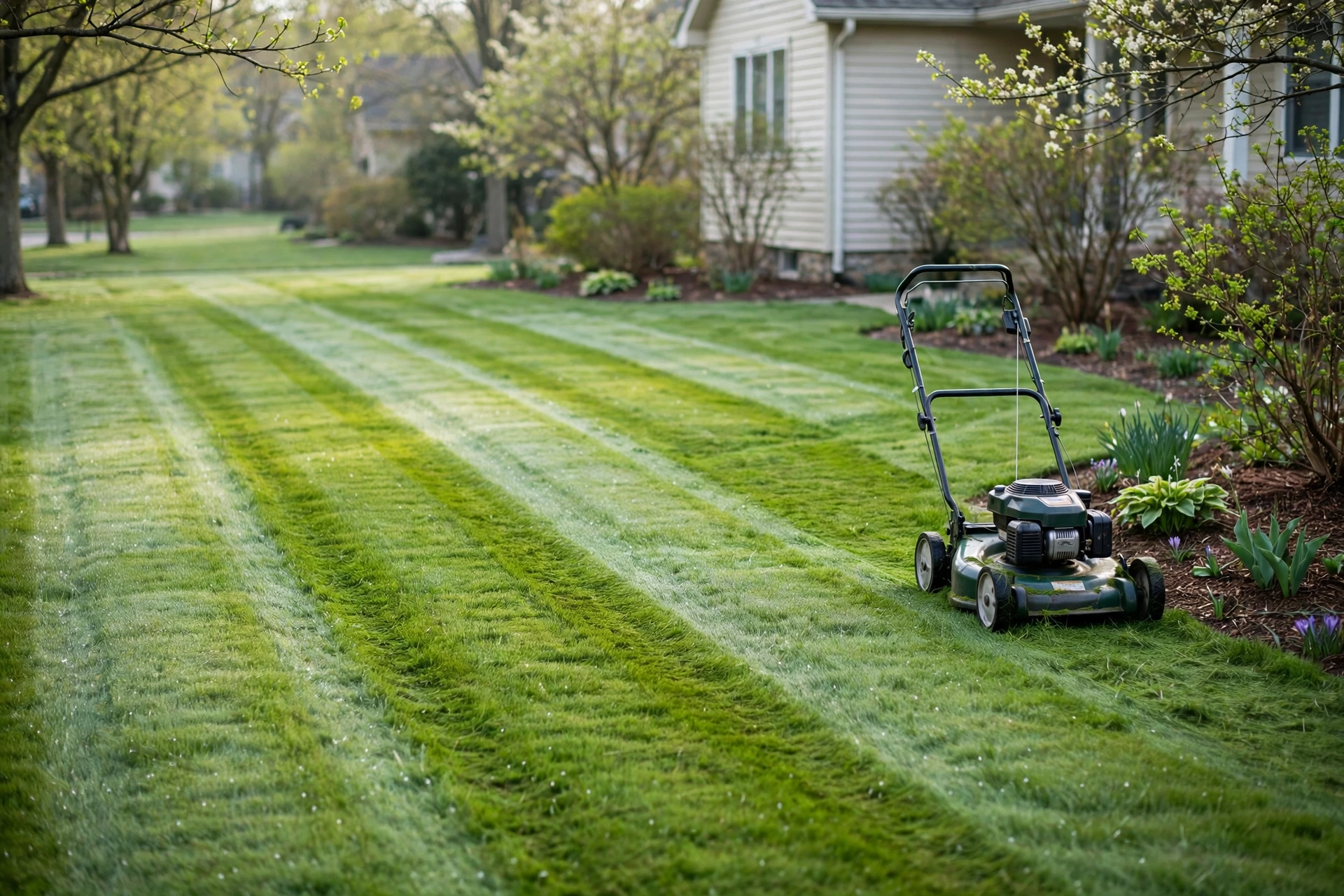
Start mowing when the grass reaches about 3 inches tall, and set the deck to cut it back to 2.5 to 3 inches. That first cut sets the tone for the season. Keep the one-third rule for every mow after that: never remove more than a third of the blade height in a single pass. Mowing tall fescue back to 3 inches when it hits 4.5 is the classic example.
Mow with a sharp blade, mow only when the grass is dry, and let the clippings stay where they fall. A spring lawn care routine that leaves clippings in place feeds the soil for free: those clippings are not thatch under proper management, and extension research notes they can return 20 to 30 percent of the lawn’s fertilizer needs. Alternate your mowing direction each week so the wheels do not wear ruts in the same lines.
Source: NC State Extension, Organic Lawn Care, Establishing a New Lawn
Job 6: Feed Lightly in Spring, Save the Big Feeding for Fall
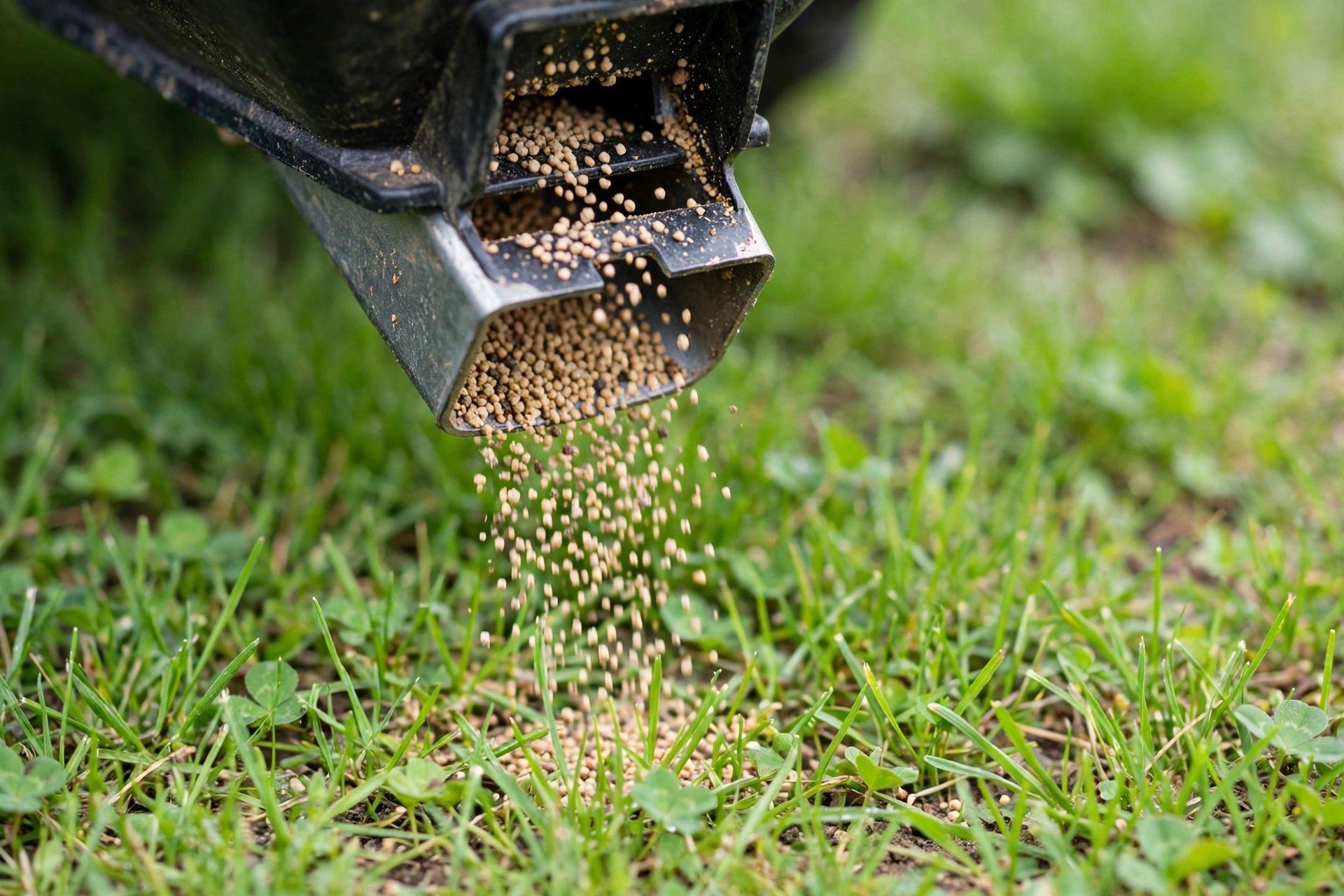
Spring feeding surprises a lot of homeowners, because the instinct is to push the lawn hard the moment it greens up. Resist it. Cool-season grasses put their energy into root growth in spring, and heavy nitrogen just produces soft, fast top growth that diseases love. North Carolina State Extension advises avoiding nitrogen on cool-season grasses after the early spring application until September, and if you add one spring application for color, keep it at or below 0.5 pound of nitrogen per 1,000 square feet, applied no later than mid-April in most regions.
A light, slow-release feeding after green-up is plenty. The heavy feeding belongs in fall, when cool-season grass is building roots and storing energy. Get this balance right and your spring lawn care routine actually reduces your summer disease problems instead of creating them.
Before you feed, run three checks. First, the soil test from Job 3: feed to the test results, not by habit, and add lime only if the test calls for it. Second, the grass species: cool-season and warm-season lawns are fed on different schedules, and warm-season lawns should wait until they are fully green and growing. Third, the rate: follow your local Extension recommendation for your area. For cool-season lawns, NC State Extension advises no nitrogen after the early spring application until September, and any spring application for colour should be at or below 0.5 lb of nitrogen per 1,000 sq ft, by mid-April.
For product picks and feeding rates, see our Best Lawn Fertilizer guide.
Source: NC State Extension, Extension Gardener Handbook: Lawns

Best Lawn Fertilizer – 10 Expert Picks That Actually Work
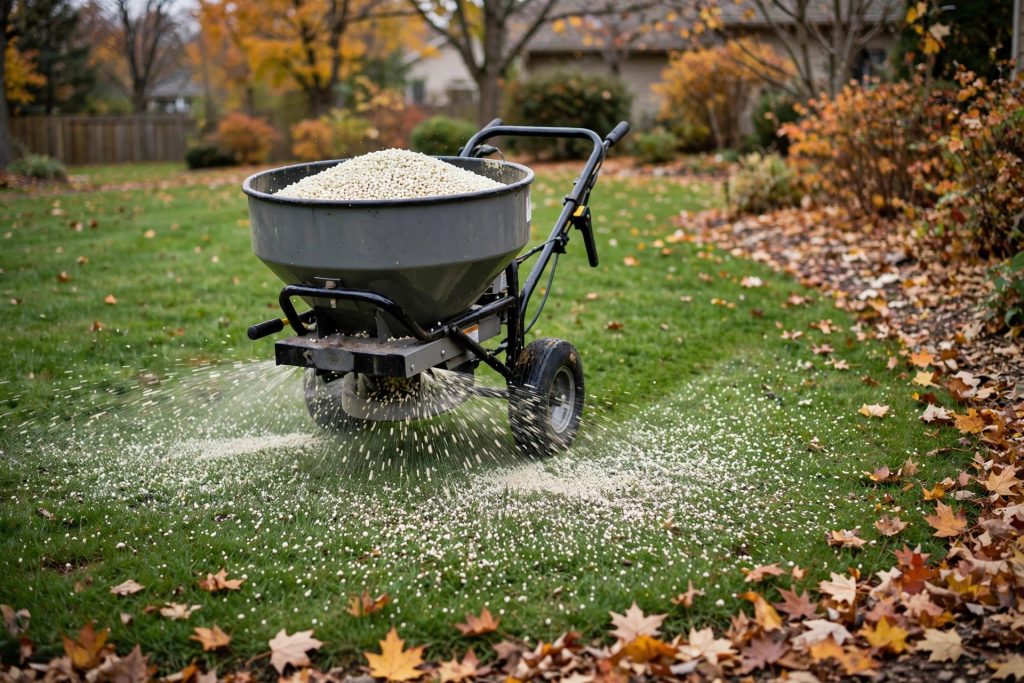
Job 7: Patch the Thin Spots
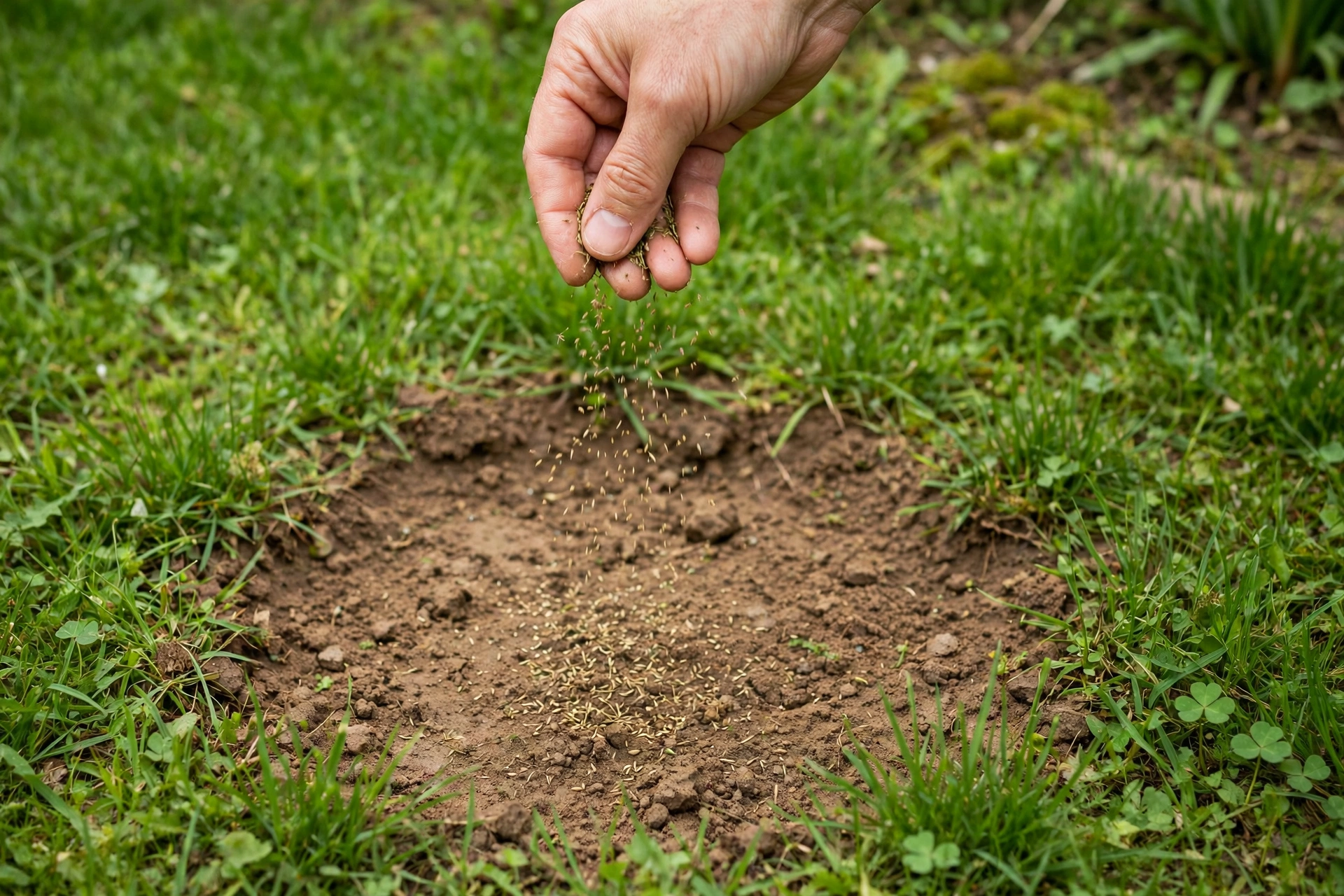
Winter kills patches every year: dog spots, snowplow edges, the shady corner under the maple. Spring is your first chance to fix them. Loosen the top 2 to 3 inches of soil in each bare spot, work in a little seed, and press it down so seed and soil make firm contact. Keep the patch moist through germination, which takes roughly 5 to 10 days for ryegrass and up to 30 for bluegrass.
Remember the pre-emergent conflict from Job 4: you cannot seed where you just applied pre-emergent, and you cannot apply pre-emergent where you just seeded. Pick one strategy per area. Perennial ryegrass is the fastest option for spring patches because it germinates quickly and its roots handle slightly compacted soil. Fall remains the best overseeding season for cool-season lawns, but a spring patch job done well still beats an empty spot full of crabgrass in July.
For the full seeding walkthrough, see How to Overseed a Lawn: Step-by-Step Guide.
Job 8: Aerate Only If the Soil Needs It
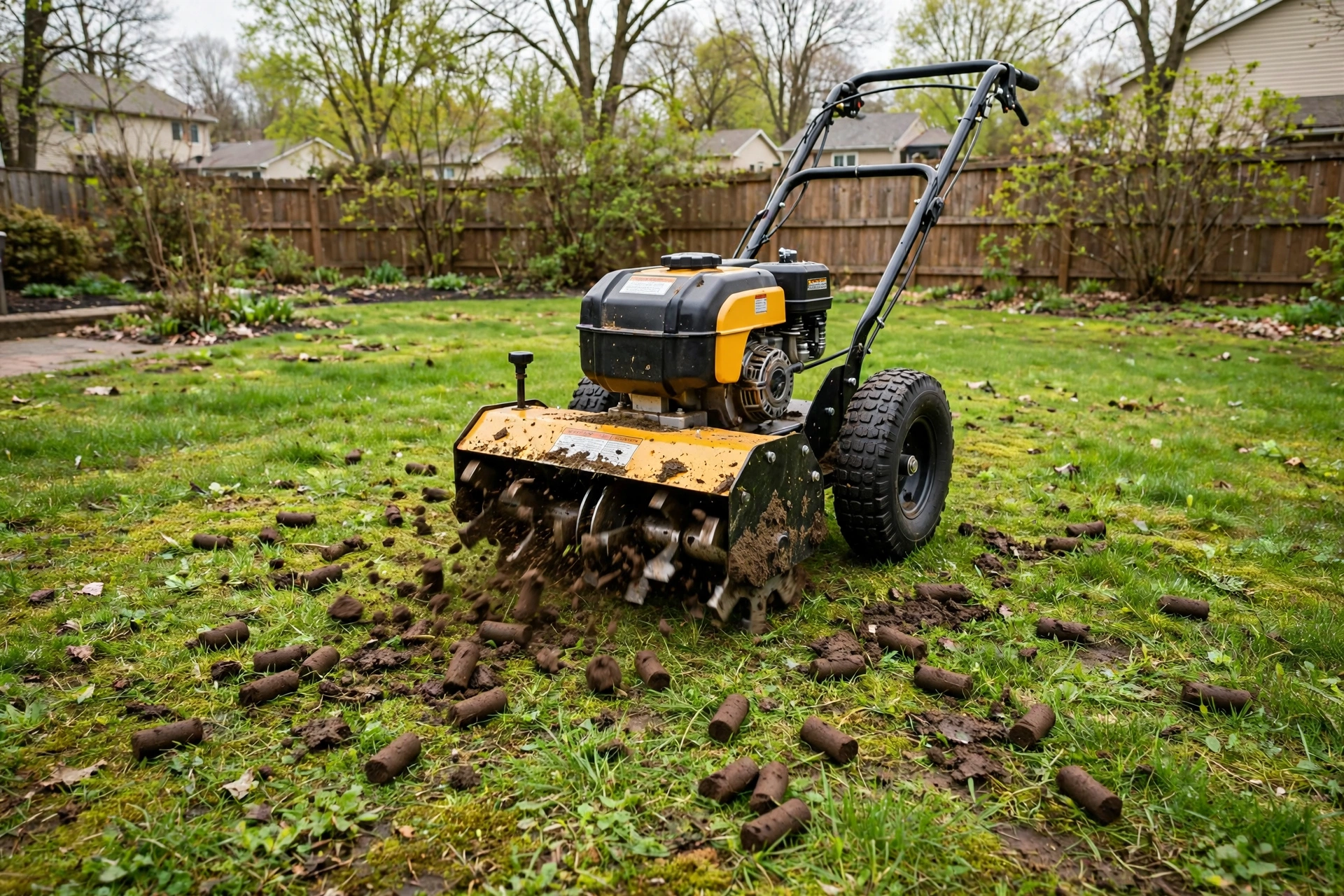
Core aeration pulls small plugs of soil out of the lawn, opening channels for air, water, and nutrients to reach the roots. It is genuinely useful where foot traffic, clay soil, or years of mowing have compacted the surface. The plugs are about 3/4 inch wide and 3 inches deep, and you leave them on the lawn to break down on their own.
For cool-season lawns, fall is the ideal aeration season, because the grass is actively growing and weed pressure is low. Spring aeration is fine when the soil clearly needs it, but be aware that it can stir up weed seeds along with the soil. If the lawn is not compacted and water soaks in normally, skip this job and save it for September.
Source: UGA Extension Fulton County, April Lawn Care Update
Job 9: Check the Watering Setup
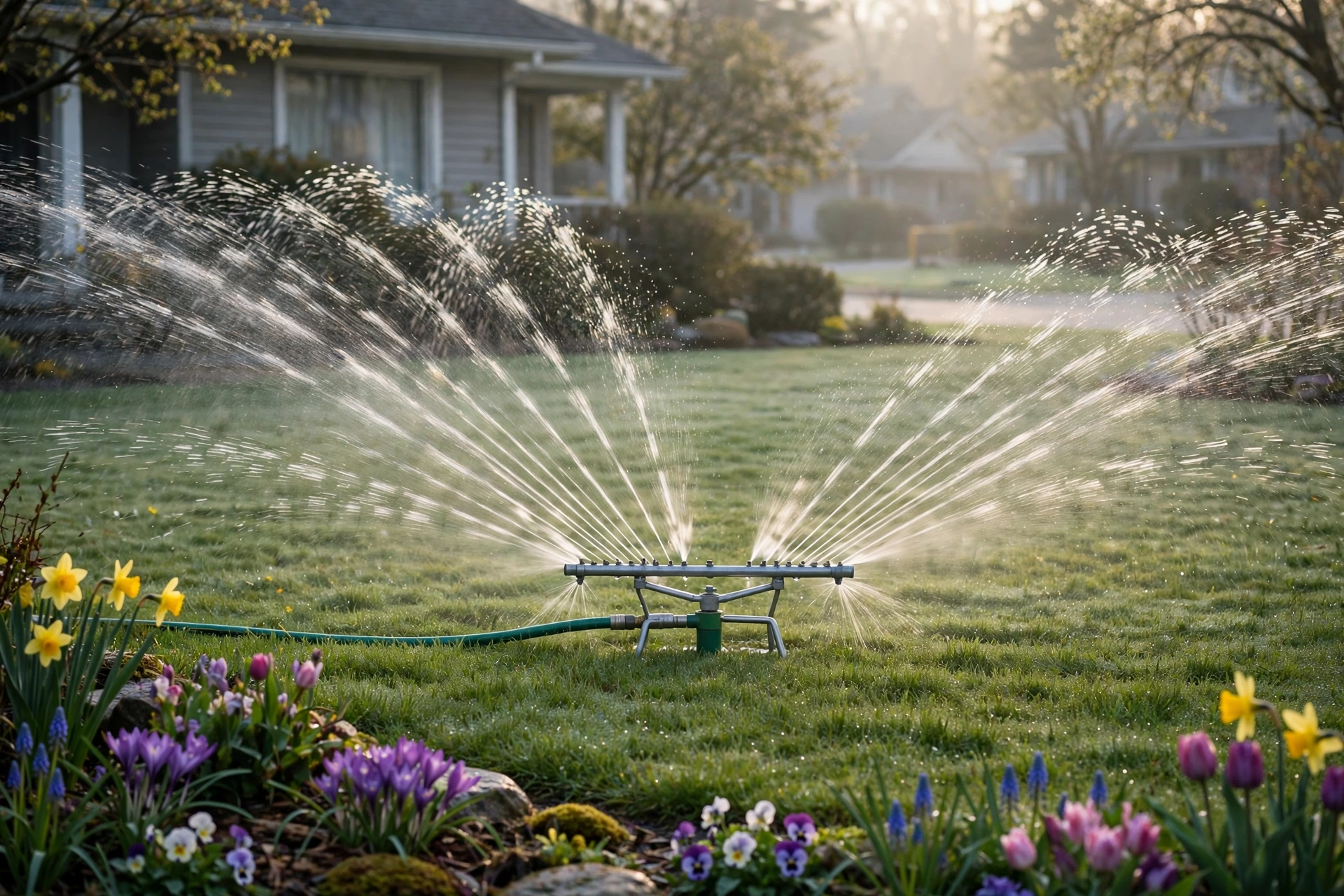
Do this before the lawn actually needs irrigation, not after. Walk each zone of your sprinkler system or hose sprinklers, check for broken heads, clogged nozzles, and dry spots where coverage overlaps poorly. A head that overshoots onto the driveway is watering concrete, and a clogged head is watering nothing.
In early spring you probably do not need to irrigate at all, because rainfall and cool temperatures do the work. As temperatures climb, aim for about 1 to 1.5 inches of water per week including rain, delivered in deep sessions so roots grow down instead of hugging the surface. Water in the early morning, before 10 AM, so blades dry before nightfall. The step test still works: if footprints stay visible in the grass after you walk across it, it is time to water.
Job 10: Scout for Early Weeds and Grubs
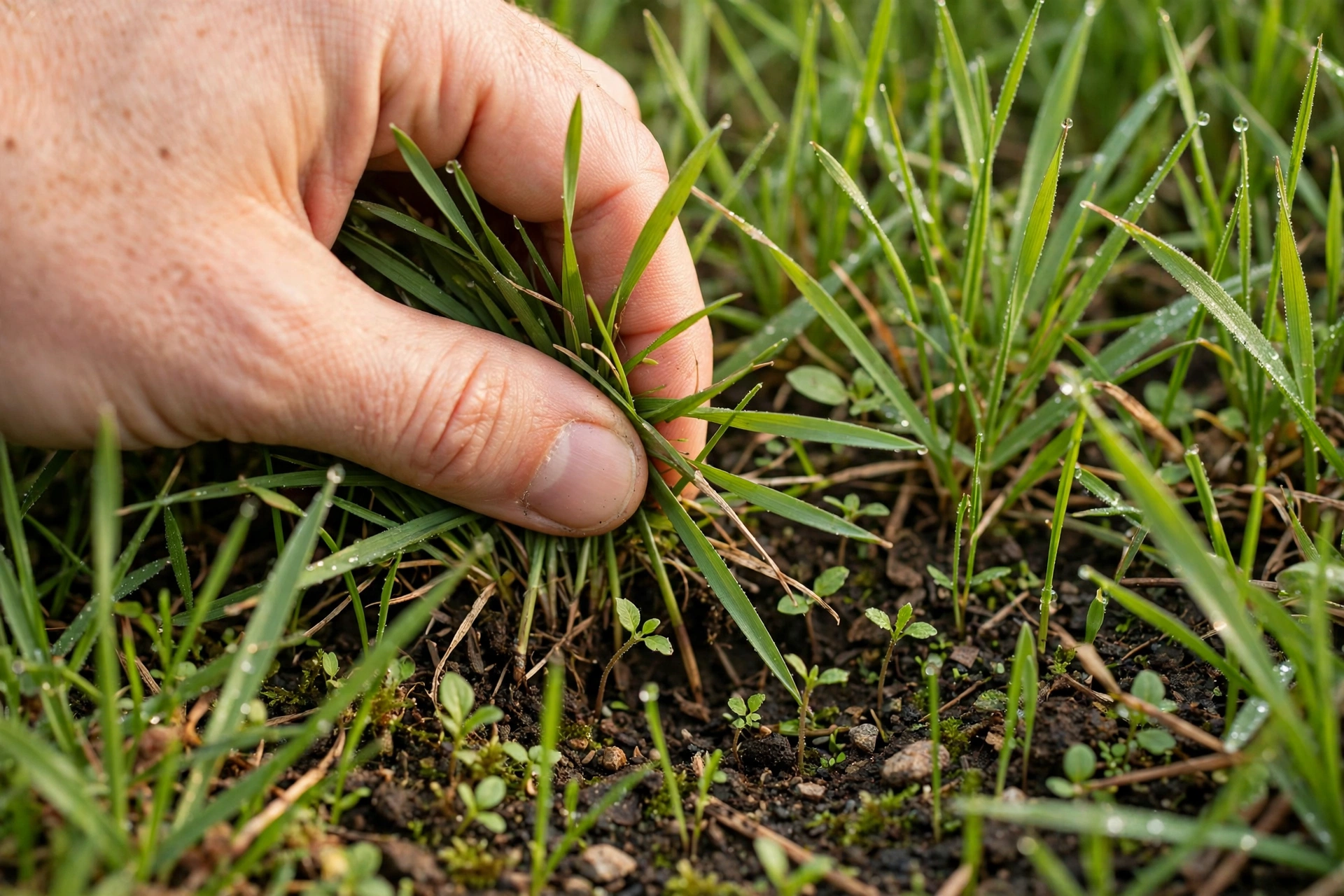
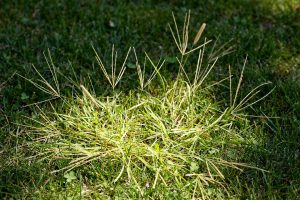
The last job is a habit, not a chore. Walk the lawn once a week and look at it closely. Pull broadleaf weeds like dandelions by hand while the soil is soft and they have not set seed yet. A few minutes with a weeding tool in April beats a yard full of seed heads in May.
While you walk, watch for the early signs of trouble: irregular brown patches that pull up easily can signal grubs feeding on roots, and thinning turf along sunny edges is where crabgrass moves in first. This kind of close observation is the backbone of any working spring lawn care plan. Preventive grub control goes down in late spring to early summer in most programs, so note what you see now and time that application by your extension’s guidance and the product label. Catching problems at the scouting stage is what keeps a spring lawn care routine cheap.
For the full year-round plan, see the Lawn Care Calendar: Month-by-Month Guide for US Lawns.

Spring Lawn Care for Warm-Season Lawns
If you grow Bermuda, zoysia, or St. Augustine, flip the script. Warm-season grasses wake up later and need a different spring. Apply pre-emergent before spring green-up, while the lawn is still dormant, and wait to fertilize until the grass is fully green and actively growing. Fertilizing a dormant warm-season lawn in early spring can cause damage instead of growth.
Late spring is also planting season for warm-season turf. University of Arkansas Extension notes that zoysia and Bermuda lawns go in from May to mid-June, when the soil is warm enough for fast establishment. And if you are in a cool-season region, resist the urge to seed fescue in spring heat: extension guidance says to wait until fall for cool-season grasses.
That timing split is regional as well as seasonal. In the South, warm-season lawns start growing weeks earlier, so their spring jobs come first. In the North, cool-season lawns such as fescue and bluegrass run later in spring. Work through the same jobs in the same order in both regions. Only the dates change.
Source: University of Arkansas Extension, Spring Lawn Care
Common Spring Mistakes to Avoid
Even a careful spring lawn care routine can go sideways in these five ways. Avoid them and the rest of the checklist gets easier.
Scalping the first mow. Cutting the lawn down to the dirt in March does not make it grow faster. It shocks the crowns, thins the turf, and hands open soil to weeds. Start at 2.5 to 3 inches and keep the one-third rule.
Piling on nitrogen. Heavy spring feeding grows lush, soft blades that brown patch and other diseases attack. A light slow-release application is enough; the serious feeding happens in fall.
Applying pre-emergent too late. Once crabgrass has germinated, the barrier does nothing. If you missed the 50 to 55 F window, switch to post-emergent control for what is already up instead of wasting product.
Seeding the same area you treated. Pre-emergent does not know the difference between crabgrass seed and grass seed. Where you patch, skip the pre-emergent, or delay the patch job until fall.
Watering a little every day. Light daily watering keeps roots shallow and the lawn dependent on the hose. Wait until the lawn actually needs water, then soak it deeply.
Final Thoughts on Your Spring Lawn Care
None of these ten jobs is complicated on its own. Their power is in the sequence: clean up first, time the pre-emergent by soil temperature, mow high with a sharp blade, feed lightly, patch what winter damaged, and fix the water before summer asks for it. Do that, and your lawn walks into summer with deep roots, thick turf, and a head start on every weed in the neighborhood.
Save this spring lawn care checklist and work through it one job at a time. The lawns that look effortless in July were built in April.
References
Frequently Asked Questions
When should I start spring lawn care?
Start when the lawn dries out and daytime temperatures sit consistently in the 50s. Begin with cleanup and mower service, then time the pre-emergent by soil temperature rather than the calendar.
Should I fertilize my lawn in spring?
Yes, but lightly. Cool-season lawns need only a light, slow-release feeding in spring after green-up, at or below 0.5 pound of nitrogen per 1,000 square feet. Save the heavy feeding for fall, when the grass builds roots. Heavy spring nitrogen increases disease risk.
When do I apply pre-emergent in spring?
When soil temperature at a 2-inch depth holds 50 to 55 F for several consecutive days. That usually falls in March to April depending on your region. Crabgrass germinates once soil reaches 55 to 65 F, so the barrier must be down and watered in before that.
Can I seed and apply pre-emergent in the same spring?
Not in the same area. Pre-emergent stops all seed from establishing, including the grass seed you just sowed. Either seed the bare spots and skip the pre-emergent there, or use pre-emergent everywhere and delay seeding until fall.
How short should I cut the grass for the first mow of spring?
Cut to 2.5 to 3 inches, and never remove more than one-third of the blade height in one pass. Starting the season high with a sharp blade encourages thicker turf and shades out weed seeds.
Is spring or fall better for aerating and overseeding?
Fall, for cool-season lawns. The grass is actively growing, weed pressure is low, and seedlings get two cool seasons to establish before summer heat. Spring aeration and patch seeding work fine as a second choice, especially where the soil is compacted.

Thesis Link : https://saulibrary.edu.bd/daatj/public/uploads/BAU200601_19-Pp_5.pdf
- Spring Lawn Care Checklist: 10 Jobs for a Strong Start - October 24, 2026
- 10 Best Garden Trowels for 2026: Top Picks Compared - October 23, 2026
- 10 Best Hori Hori Knives for Digging, Weeding and Planting - October 23, 2026