
Two gardeners can sow the same tomato seed on the same March morning and get completely different results. In one garden the seedling is stocky and ready when warm weather arrives. In the other it is tall, pale, and still waiting, because frost is still a month away. The difference is not skill. It is timing, and timing depends on where you live.
That is why a single calendar date for starting seeds never works for the whole country. The right question is not “what month do I start seeds indoors” but when to start seeds indoors by zone, using your own last frost date and counting back from the day each crop can safely go outside. This guide shows you that method in three steps, then gives you a zone table you can use as a starting point, plus the crop-by-crop adjustments that change the math.
Quick Answer: When to Start Seeds Indoors by Zone
When to start seeds indoors by zone comes down to three steps:
- Find your USDA hardiness zone with your ZIP code on the official USDA map.
- Find your average last spring frost date from your county extension service or a frost date tool.
- Count back from transplant day using the weeks on the seed packet: tender crops such as tomatoes and peppers go out 1 to 2 weeks after the last frost, and hardy crops such as broccoli and cabbage go out 2 to 4 weeks before it.
If you only remember one line from this guide, make it this one: your seed packet and your own last frost date beat any general chart, including the table below. The table is a starting guide. Your local dates are the real answer.
Your USDA Zone Is Not Your Frost Date
This is the most common point of confusion in seed starting, so it is worth clearing up first. Your USDA hardiness zone and your last frost date are two different numbers that answer two different questions.
A USDA hardiness zone is based on the average annual extreme minimum winter temperature at your location. Each zone covers a 10 degree Fahrenheit band, and each zone is split into an ‘a’ half and a ‘b’ half of 5 degrees each. Zone 6, for example, covers average winter minimums from minus 10 to 0 degrees Fahrenheit, with 6a the colder half and 6b the warmer half. The current map, published in November 2023, is built from 30 years of weather station data from 1991 to 2020. Zones tell you which perennial plants are likely to survive your winters.
A last frost date is a calendar date: the average day in spring after which frost is no longer expected in your area. It is really a 50 percent probability date, which means that in about half of past years the last frost actually came later than that date. Two towns in the same hardiness zone can have last frost dates weeks apart, because elevation, nearby water, and local weather patterns shift frost timing even when winter minimums match. That is why this guide uses zones to organize the table, but frost dates to set your actual sowing dates. Put plainly, the table values are zone-wide averages only, not a date for your town. Before you sow, check your own ZIP code on the USDA map lookup and check your county extension planting calendar for your local last frost date, and use that local date, not the zone average, to count back.
Step 1: Find Your USDA Zone
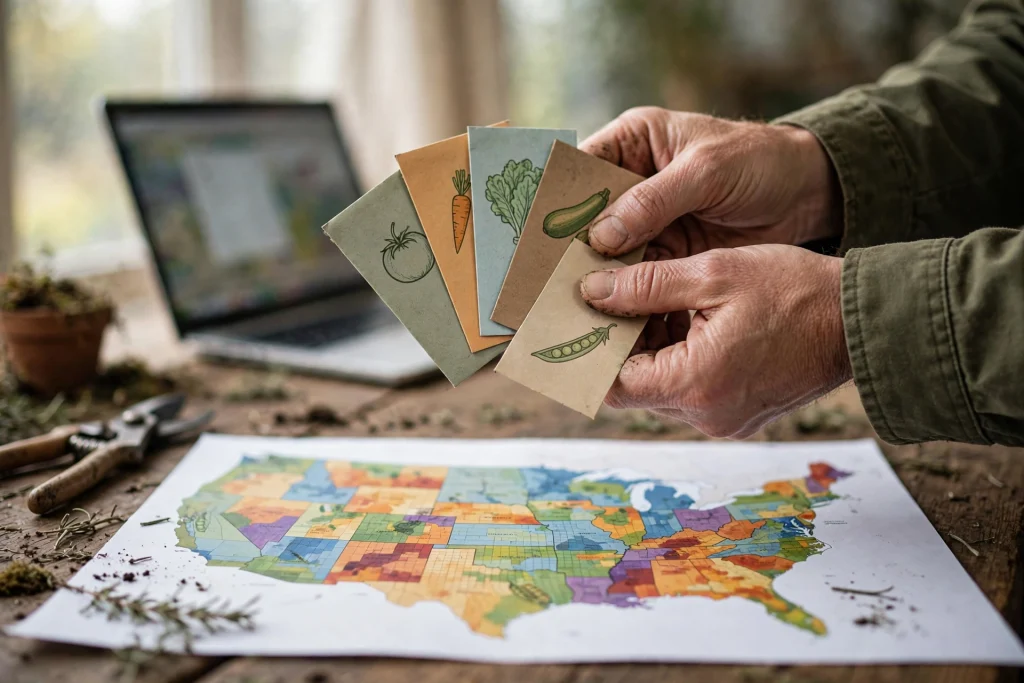
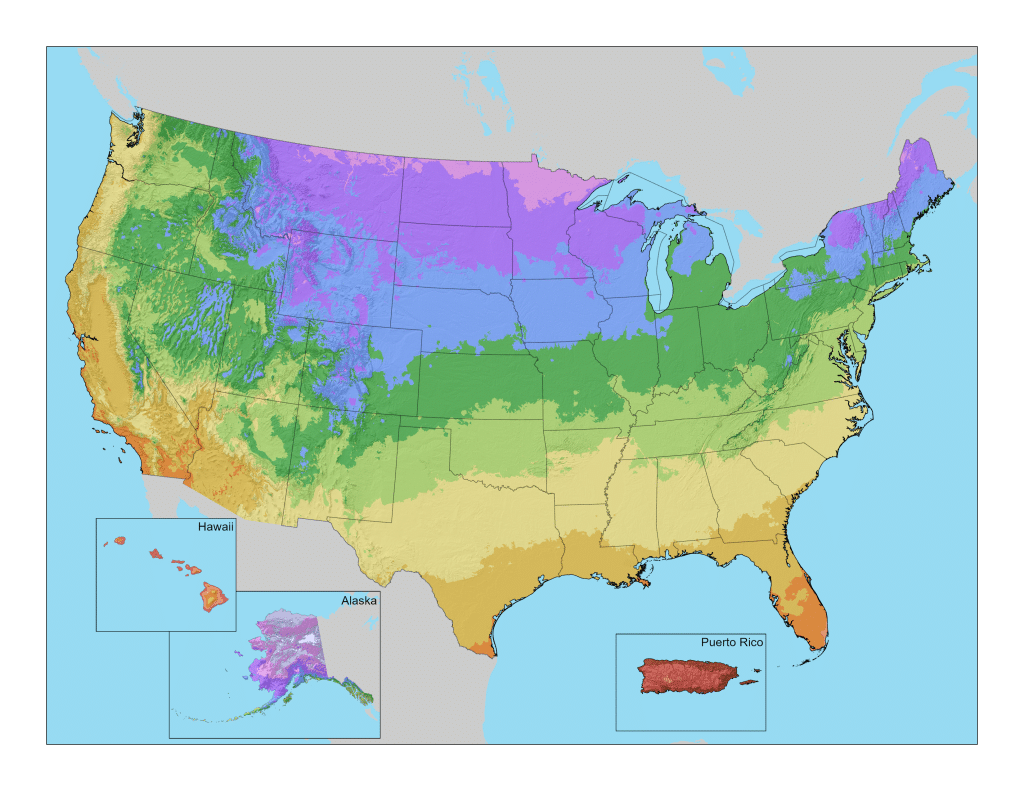
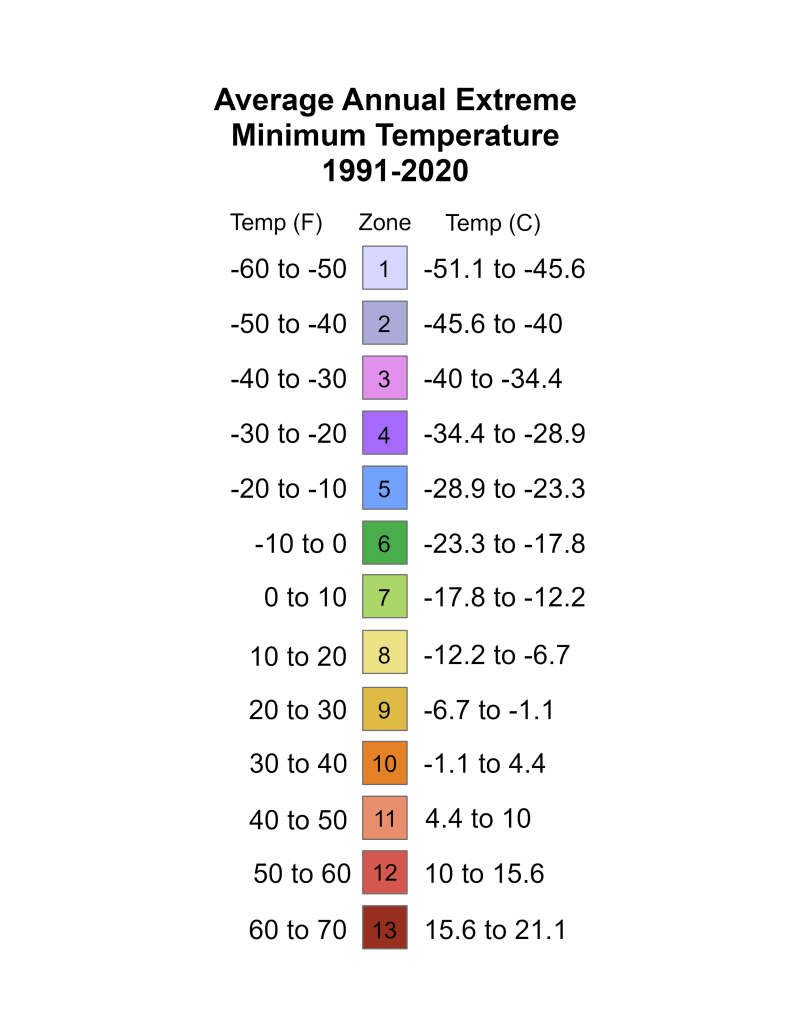
Finding your zone takes about a minute. Open the USDA Plant Hardiness Zone Map and type in your ZIP code. The map returns your zone designation, such as 7a or 5b, along with the average annual extreme minimum temperature range for that zone. Write down both the number and the letter, because the half zone matters: a plant or a schedule tuned for 7b can be a week or more off for 7a.
If you live near a zone boundary, in the mountains, or in a city, check your exact address rather than your town name. A south facing slope, a lakeside yard, and a downtown courtyard can sit in different half zones within a few miles of each other. Your own yard may also hold a microclimate: a sheltered bed against a south facing wall often runs warmer than an open bed in the same yard, and that bed can take transplants a few days earlier.
Step 2: Find Your Last Frost Date
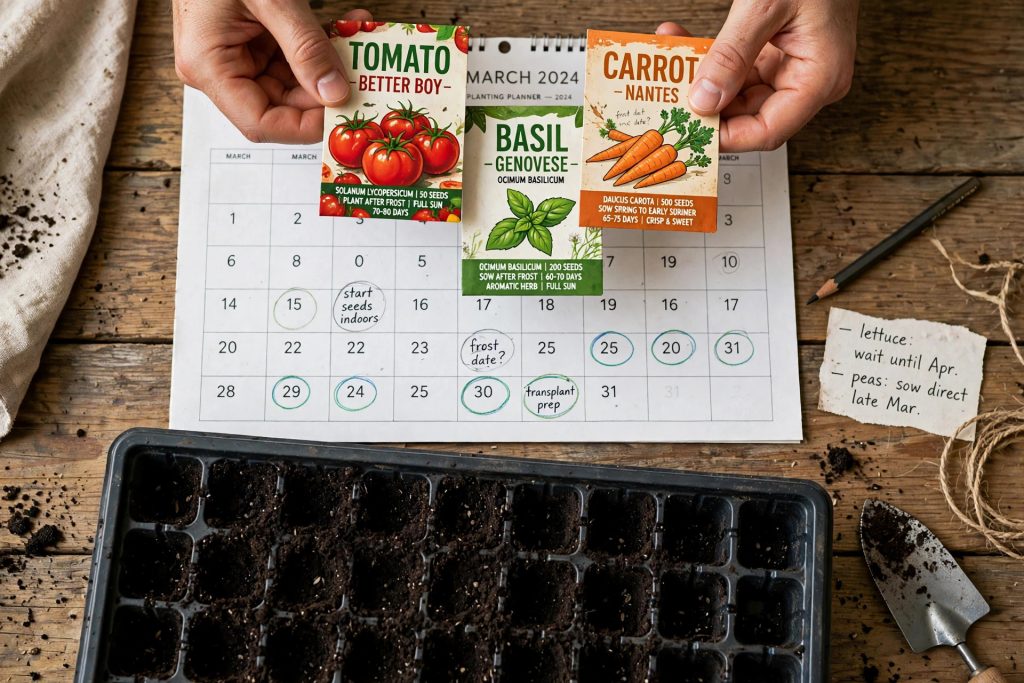
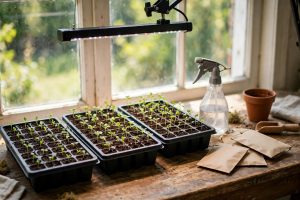
Seed packets and a planting calendar on the table while planning when to start seeds indoors by zone.
Your county cooperative extension service is the best source for this date, because its planting guides are written from local weather station records for your county. Many extension services publish a vegetable planting calendar that lists both frost dates and indoor sowing windows for each crop. If your extension site does not list one, a frost date calculator that takes your ZIP code gives a good estimate from long term averages.
Treat the published date as an average, not a promise. For tender crops such as tomatoes, peppers, eggplant, and basil, add about two weeks of buffer after the published last frost date before you plan to transplant, or be ready to cover plants if a late cold snap arrives. That buffer is also why this guide counts back from the transplant date, not from the frost date itself: the transplant date already includes the safety margin.
One more habit pays off here. Write your last frost date and your zone on the first page of your garden notebook, or on the calendar you use for sowing. You will use both numbers for every crop you start, and hunting them down again each time is how mistakes creep in.
Step 3: Count Back From Transplant Day
Once you know your transplant date for a crop, the sowing date is simple arithmetic: subtract the weeks that crop needs indoors. The University of Massachusetts Extension gives these indoor start windows, counted back from the transplant date:
| Crop group | Weeks indoors before transplanting |
|---|---|
| Broccoli, Brussels sprouts, cabbage, cauliflower | 4 to 7 weeks |
| Cucumbers, summer squash, melons | 2 to 3 weeks |
| Lettuce | 3 to 5 weeks |
| Peppers, eggplant | 8 to 10 weeks |
| Onions, tomatoes | 6 to 8 weeks |
The packet is the final word for your variety. Varieties of the same crop can differ by weeks, and the packet is written for that variety. If the packet and a general chart disagree, follow the packet. South Dakota State University Extension makes the same point in its seed starting guide: start seeds 4 to 12 weeks before transplanting depending on the crop, find your last spring frost date first, and remember that the most common mistake is starting seeds too early, which gives tall, weak, spindly plants that perform poorly in the garden.
The transplant date itself depends on the crop group. Hardy crops such as broccoli, cabbage, onions, and lettuce tolerate light frost and go out around or before the last frost date. Tender crops such as tomatoes, peppers, eggplant, cucumbers, squash, and basil need warm soil and settled nights, so they go out 1 to 2 weeks after the last frost date, once night temperatures stay above about 50 degrees Fahrenheit.
Our companion guide walks through the whole indoor process once you know your dates, from trays and mix to light and hardening off.
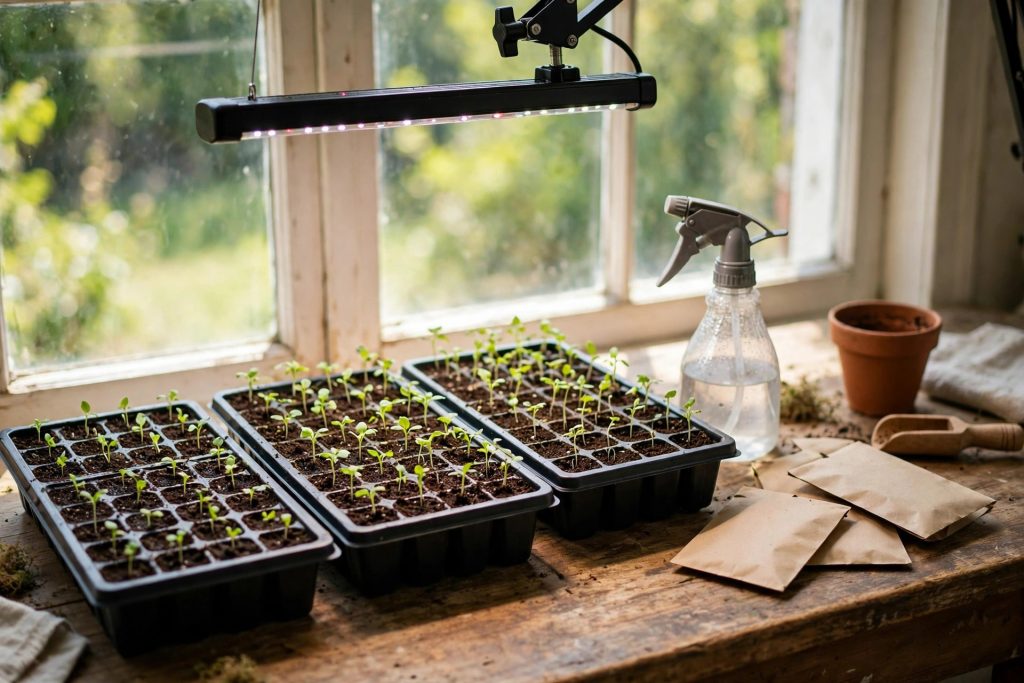
When to Start Seeds Indoors by Zone: The Table
The table below works the method above into one view. Last frost ranges follow the USDA hardiness zone method for average frost dates. Warm season sowing windows assume tender transplants go out 1 to 2 weeks after the last frost, with tomatoes at 6 to 8 weeks indoors and peppers and eggplant at 8 to 10 weeks. Cool season windows assume hardy transplants go out 2 to 4 weeks before the last frost, with brassicas at 4 to 7 weeks indoors. Use your own last frost date and your packets to refine any row. The last frost ranges in this table match the zone-wide averages published by Garden Design, and they are averages only, not local dates.
| USDA zone | Typical last spring frost | Start warm season seeds indoors | Start cool season seeds indoors |
|---|---|---|---|
| Zone 3 | May 1 to May 16 | Early March to mid-April | Mid-February to early April |
| Zone 4 | April 24 to May 12 | Late February to mid-April | Early February to late March |
| Zone 5 | April 7 to April 30 | Mid-February to late March | Late January to mid-March |
| Zone 6 | April 1 to April 21 | Early February to mid-March | Mid-January to late February |
| Zone 7 | March 22 to April 3 | Late January to late February | Early January to mid-February |
| Zone 8 | March 13 to March 28 | Mid-January to mid-February | Mid-December to mid-February |
| Zone 9 | February 6 to February 28 | Mid-December to late January | Late November to mid-January |
| Zones 10 to 13 | No usual frost | Sow by season, 6 to 10 weeks before spring planting | Sow in fall for the cool season |
Read the table as a range, not a deadline. If your own last frost date falls at the early end of your zone range, shift your sowing window earlier by the same amount. If it falls at the late end, shift later. A gardener in northern Zone 6 with a late April frost and a gardener in southern Zone 6 with an early April frost are effectively working in different schedules, even though their zone numbers match.
Zone Notes: Cold, Middle, and Warm Climates
Zones 3 and 4: Short Seasons, Late Starts
Cold zone gardeners face the shortest outdoor season, which makes indoor starting the most valuable and the easiest to get wrong. The temptation is to sow in January to gain extra weeks, but seedlings started too early outgrow their pots and their light long before transplant day, and a late May frost leaves nowhere to put them. Hold to the table, choose short season varieties, and put your effort into season extension after transplanting, such as cold frames and row covers, rather than into earlier sowing.
Zones 5 and 6: The Classic Seed Starting Belt
Most seed starting advice is written for these zones, because their April frost dates and moderate seasons suit the standard crops. The main risk here is a false spring: a warm March week that makes it feel safe to move plants out, followed by a normal April frost. Keep tender transplants indoors until the buffer has passed, and harden them off properly before they face real wind and sun.
Zones 7 and 8: Early Springs, Hot Summers
Warm zone gardeners sow in January and February, which feels odd the first time, and their cool season crops often do better as a fall planting than as a spring one. Heat is the limiting factor here, not cold: spring brassicas must mature before summer heat makes them bolt, so sow them at the early end of the window and choose heat tolerant varieties. For summer crops, the bigger decision is often which varieties tolerate heat and humidity, not when to sow.
Zones 9 and 10: Two Seasons Instead of One
Where frost is rare or absent, the frost date method stops being useful, and the season itself takes over. Tender crops can be started for spring planting, and many gardeners run a second season in fall and winter, when cool season crops such as broccoli, cabbage, lettuce, and carrots grow best. If you garden in these zones, plan around two planting calendars, spring and fall, and use your first fall frost date, if you have one, to time fall sowing the same way you use the last spring frost date for spring sowing.
Cabbage is a good example of a crop that rewards an indoor start in most zones. Our cabbage guide covers the crop from transplant to harvest, and starting its seed indoors 4 to 7 weeks before transplanting is how most gardeners get firm heads before summer heat arrives. That 4 to 7 week window is the standard brassica window used elsewhere in this guide, and the longer end of that window suits cabbage grown for firm heads before summer heat.

Local Examples: What the Dates Look Like in Real Towns
The zone table gives averages. These four towns show how the same method gives very different dates in real places. Each example uses tomatoes, counts back 6 to 8 weeks from a transplant date about 2 weeks after the last frost, and links to its Old Farmer’s Almanac frost date page.
Duluth, Minnesota, Zone 4: last spring frost May 22. Tomatoes go out about June 5, so sow them indoors April 10 to April 24. Source: Old Farmer’s Almanac frost dates for Duluth
Minneapolis, Minnesota, Zone 5: last spring frost April 30. Tomatoes go out about May 14, so sow them indoors March 19 to April 2. Source: Old Farmer’s Almanac frost dates for Minneapolis
Chicago, Illinois, Zone 6: last spring frost April 17. Tomatoes go out about May 1, so sow them indoors March 6 to March 20. Source: Old Farmer’s Almanac frost dates for Chicago
Atlanta, Georgia, Zone 8: last spring frost April 1. Tomatoes go out about April 15, so sow them indoors February 18 to March 4. Source: Old Farmer’s Almanac frost dates for Atlanta
Check your own town: type your ZIP code into the USDA Plant Hardiness Zone Map lookup at planthardiness.ars.usda.gov, then check your county extension planting calendar for your local last frost date, and count back from your own transplant date.
Crops That Change the Math
A few crops break the simple pattern, and they are worth knowing by name before you plan a season.
Peppers and eggplant are the slowest common crops. They germinate slowly, grow slowly, and need warm soil, so they go at the front of your sowing calendar even though they go out last. This is where two figures in this guide need explaining. The University of Massachusetts Extension groups onions, tomatoes, and peppers at 6 to 8 weeks indoors, and that 6 to 8 week figure is the general tender crop window for tomatoes and onions, and the minimum for fast pepper varieties grown in warm indoor conditions. The 8 to 10 week figure used in the crop table, in the zone table introduction, and in the worked example is the slow heat loving crop window: use 8 to 10 weeks for peppers and eggplant when the variety is slow growing, when indoor conditions are cool, or when peppers were small at transplant time last year, and give them bottom heat. The earlier 7 to 9 week figure for eggplant alone is therefore folded into the 8 to 10 week slow crop window, rather than kept as a separate standard. For broccoli and cabbage, the standard window is 4 to 7 weeks indoors, as in the crop table and the worked example, where broccoli is sown 4 to 7 weeks before an April 1 transplant date. In every case, count back from the transplant date for that crop, not from the last frost date alone: tender crops go out 1 to 2 weeks after the last frost, while hardy broccoli and cabbage go out 2 to 4 weeks before it, which is why the same crop can look different in different sections.
Cucumbers, squash, and melons are the opposite: they grow fast and dislike root disturbance, so they only need 2 to 3 weeks indoors. Sowing them with the tomatoes wastes a month of indoor space and produces rootbound plants that stall after transplanting. In short season zones they are still worth a short indoor start, but sow them last, in larger cells, and transplant them gently.
Some crops should never be started indoors at all. Carrots, parsnips, beans, peas, corn, and most root crops resent transplanting and germinate quickly outdoors, so direct sowing gives better plants with less work. Peas go out before the last frost, beans after it, and carrots and radishes go wherever they will grow, because moving a root crop almost always forks or stunts the root.
After Sowing: Light, Warmth, and Hardening Off
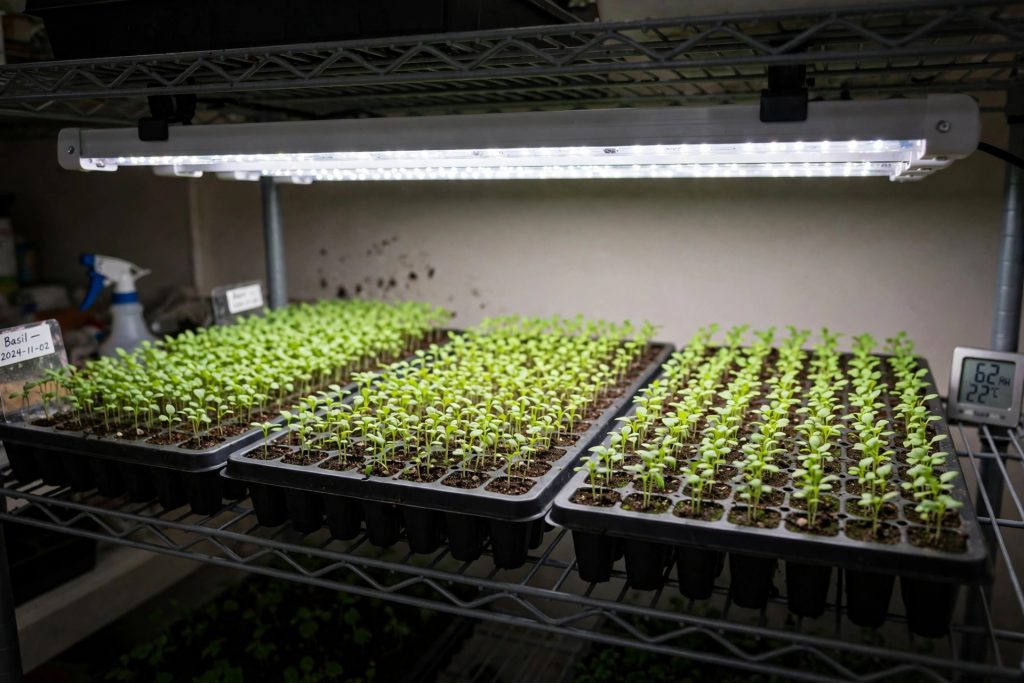
Timing only works if the seedlings stay strong between sowing and transplant day. Once seeds sprout, give them strong light for 14 to 16 hours a day, with the fixture just a few inches above the leaves, and keep tender seedlings near 60 degrees Fahrenheit at night and 70 to 75 degrees during the day. Weak light is what turns a well timed sowing into leggy seedlings, so a simple shop light on a timer beats a bright windowsill in most houses.
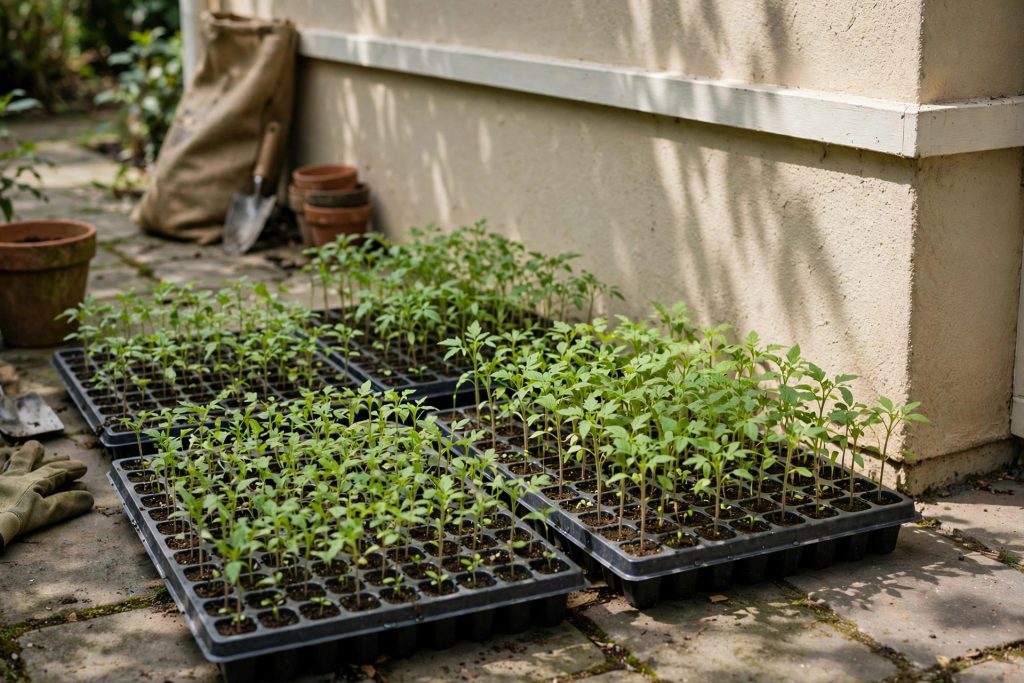
The last step of the calendar is hardening off. About a week before planting out, start moving trays outside for short periods in shade and shelter, building up to full days outdoors, then transplant on a calm day. University of Massachusetts Extension advises beginning this gradual exposure about one week before planting in the garden, and our companion guide uses a 7 to 10 day plan. Skipping this step can set plants back further than sowing a week late would have.
If you grow microgreens as well as garden seedlings, the same timing habits apply on a smaller scale, and microgreens are a good low stakes place to practice sowing dates before your tomato seed goes in.

5 Timing Mistakes to Avoid
| Mistake | What happens | Do this instead |
|---|---|---|
| Sowing by calendar month, not frost date | March 1 is early in Zone 4 and late in Zone 8 | Use your own last frost date and count back |
| Starting everything on the same day | Peppers stall, cucumbers outgrow their pots | Stagger sowing by crop group, slowest first |
| Starting too early for your light | Leggy, weak seedlings that never recover | Sow on time, and give 14 to 16 hours of strong light |
| Transplanting on the frost date | A late frost kills tender crops | Add about 2 weeks of buffer for tender crops |
| Skipping hardening off | Sun and wind scorch indoor grown leaves | Harden off over 7 to 10 days before planting out |
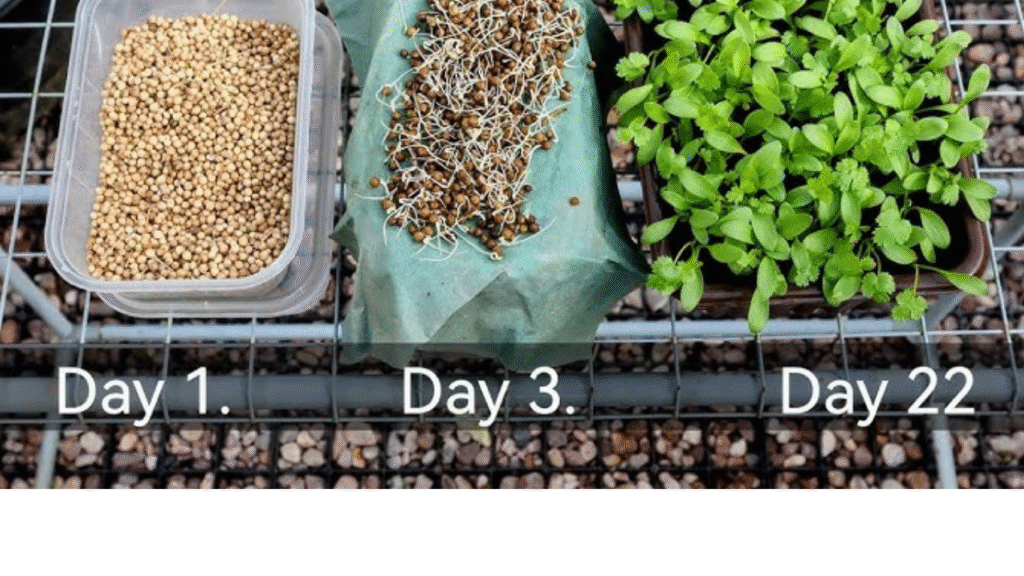
Coriander is another crop many gardeners start indoors, especially where summers are hot enough to make it bolt outdoors. The same tray, mix, and light setup works for it, with one difference: coriander dislikes root disturbance, so sow it in the pot it will grow in where you can.
Worked Example: A Zone 6 Seed Starting Calendar
Take a gardener in Zone 6 whose average last frost date is April 15. Tender crops go out about 2 weeks later, on April 29, and hardy crops go out about 2 weeks earlier, on April 1. Counting back gives this calendar:
- Peppers: sow February 18 to March 4, which is 8 to 10 weeks before the April 29 transplant date.
- Tomatoes: sow March 4 to March 18, which is 6 to 8 weeks before the April 29 transplant date.
- Broccoli: sow February 11 to March 4, which is 4 to 7 weeks before the April 1 transplant date.
- Cucumbers: sow April 8 to April 15, which is 2 to 3 weeks before the April 29 transplant date.
- Hardening off: April 19 to April 28, building from shade to full days outdoors, then transplant on April 29 if no frost is forecast.
Notice how spread out the season is. The first sowing happens in mid-February and the last in mid-April, and that spread is normal. A seed starting calendar is not one sowing day, it is a sequence, and the sequence is what keeps every crop at the right size on transplant day.
Final Thoughts
When to start seeds indoors by zone is a method, not a date. Find your zone, find your last frost date, work out each crop’s transplant day, and count back using the packet. The zone table in this guide gives you a starting point, and your own records will improve on it every year, because they will be tuned to your yard, your house, and your light.
Start with three or four crops this season and keep notes on sowing dates, germination days, and transplant dates. Next year, those notes will beat any general chart, including this one, because they will be yours. And when the seedlings are up, the next guides in this cluster cover trays and kits, grow lights, and heat mats, so you can match your setup to the calendar you have just built.
References
- United States Department of Agriculture, Agricultural Research Service. USDA Plant Hardiness Zone Map: zone definitions based on average annual extreme minimum temperature, with ZIP code lookup. https://planthardiness.ars.usda.gov/pages/view-maps
- South Dakota State University Extension. The Basics of Seed Starting for Flowers and Vegetables: the count back method, 4 to 12 weeks before transplanting, and the too early mistake.https://extension.sdstate.edu/basics-seed-starting-flowers-and-vegetables
- University of Massachusetts Extension. Starting Seeds Indoors: Caring for Your Seedlings: light for 12 to 16 hours a day, seedling temperatures, and hardening off about one week before planting.https://www.umass.edu/agriculture-food-environment/home-lawn-garden/fact-sheets/starting-seeds-indoors-caring-for-your-seedlings
- University of Georgia Extension, Fannin and Gilmer Counties. Starting Seeds Indoors: sowing 6 to 8 weeks before transplanting, container sanitation, and soilless mix.https://site.extension.uga.edu/fannin-gilmer/2021/01/starting-seeds-indoors/
- Garden Design. Average First and Last Frost Dates: zone based average last spring frost dates used for the table in this guide.https://www.gardenDesign.com/how-to/frost-date.html
What is the difference between my USDA zone and my last frost date?
Your USDA zone is based on your average annual extreme minimum winter temperature, and it tells you which perennial plants are likely to survive your winters. Your last frost date is a spring calendar date, the average day after which frost is no longer expected, and it is the number that sets your seed sowing dates. Two towns in the same zone can have last frost dates weeks apart.
When should I start tomato seeds indoors in Zone 5?
Work from your own last frost date. If it is around April 20, tender transplants go out around May 4, and tomatoes sown 6 to 8 weeks before that date go in between March 9 and March 23. If your frost date is earlier or later, shift the window by the same amount, and follow your packet if it differs.
Can I start seeds indoors in December?
In Zones 8 and 9, yes, for early spring crops, and in Zone 9 December is also the time to start cool season crops for winter growing. In Zones 3 to 5, December sowing is almost always too early: seedlings outgrow their light and pots long before transplant day, and waiting until February or March gives stronger plants.
What happens if I start seeds indoors too early?
Seedlings grow tall and weak, become rootbound, and arrive at transplant time in worse shape than later sown plants. South Dakota State University Extension calls starting too early the most common seed starting mistake, and the fix is to trust the count back method rather than sowing the day the packets arrive.
Do I need my exact zone, or is my state enough?
Use your ZIP code, not your state. States span several zones, and elevation and microclimates shift both zones and frost dates within a single county. The USDA map lookup by ZIP code is free and takes about a minute, and your county extension planting calendar adds local frost dates on top of it.
When do I start seeds for a fall garden?
Count back from your average first fall frost date the same way you count back from the last spring frost date. In Zones 8 to 10, fall is the main season for cool season crops such as broccoli, cabbage, and lettuce, so sow them in late summer or early fall to mature before hard freezes arrive.

Thesis Link : https://saulibrary.edu.bd/daatj/public/uploads/BAU200601_19-Pp_5.pdf
- When to Start Seeds Indoors by Zone - October 26, 2026
- How to Sharpen Garden Tools (Shears, Loppers, Hoes) - October 26, 2026
- How to Start Seeds Indoors - October 25, 2026