
How to Grow Coriander: A Simple, Friendly Guide
Learn how to grow coriander at home with easy steps. From planting seeds to harvesting leaves, this guide makes growing coriander simple, even for beginners. You know those little bunches of coriander or cilantro, depending where you live that you buy from the store, and somehow they turn into a slimy mess in your fridge after three days?
Yeah, me too.
One day, I figured, why not just grow it myself? Turns out, growing coriander isn’t rocket science. It’s actually pretty chill. If you can water a plant without drowning it, you can grow coriander. Let me walk you through it, real talk, no fancy gardening jargon.
Why Grow Coriander?
Let’s be real store bought coriander or cilantro, depending where you are just doesn’t cut it. You buy a bunch, toss it in the fridge, and three days later, it’s a soggy, unrecognizable mess.
That’s how I started. Tired of wasting money and food, I figured… why not grow my own?

The Flavor is Unmatched
Freshly harvested coriander has a citrusy, earthy flavor with a strong aroma that just doesn’t last long in transit or cold storage. According to a study published in the Journal of Food Science and Technology (2017), coriander leaves lose up to 45% of their aromatic oils within 48 hours of harvesting if not stored properly.
When you grow your own, you can simply walk over, pinch a few leaves, and toss them straight into your curry, chutney, or salad. No waste. No guilt.
It’s Packed with Nutrients
Coriander leaves are rich in vitamin C, vitamin K, and antioxidants like quercetin and apigenin, which may support heart health and fight inflammation (USDA Food Database, 2020). Freshly picked coriander retains more nutrients than store bought bunches that have been in transit for days.
Save Money in the Long Run
Let’s do some simple math.
A bunch of coriander might cost ৳20–30 at a local Bangladeshi market or $1 in the West, and it barely lasts a week. Grow your own in a pot, and one seed packet costing around ৳50 or less can last you an entire season.
Plus, coriander is a cut and come again plant. That means the same plant keeps giving—just snip, let it grow back, and repeat.
Works Even in Tiny Spaces
I once helped a university friend in Dhaka set up a mini herb garden on her 3 foot wide balcony using plastic bottles and old paint buckets. Within weeks, her coriander plants were thriving alongside mint and basil. It became a kind of therapy for her a quick morning routine of watering, sniffing fresh leaves, and plucking just enough for the day’s lunch.
You don’t need a big backyard. A sunny windowsill, a recycled container, or even a grow bag will do.
The Science Agrees
- FAO (Food and Agriculture Organization) notes that coriander is ideal for small scale home gardening due to its short lifecycle and adaptability to container growth.
- According to the Royal Horticultural Society (RHS), coriander prefers well drained soil and performs well with minimal fertilizer, making it perfect for beginners.
- The PennState Extension also recommends coriander as an excellent starting herb for home gardeners due to its resilience and dual harvest leaves and seeds.
Why You’ll Love Growing Coriander
- Fresh flavor at your fingertips
- Minimal space and tools needed
- Dual purpose crop: leaves and seeds
- Nutrient rich and immune boosting
- Reduces kitchen waste and last minute store trips
- Great beginner friendly plant to learn gardening basics
Real Life Snapshot: Grandma’s Windowsill Coriander
When I was a kid, my grandmother kept a long wooden planter on her kitchen windowsill. Every week, she’d scatter some coriander seeds she saved from cooking. No fertilizer, no fuss. Just sunlight, water, and a bit of chatting with the plants she believed it helped them grow.
The scent of her freshly picked coriander in lentil soup is still one of my favorite memories. She grew everything from leftover seeds—talk about no waste living before it was trendy.
How to Grow Coriander: Where Should You Plant It?
Let me be honest, coriander or dhania, as most folks call it where I live can be a bit moody when it comes to where you plant it. It’s not that it’s hard to grow, it just doesn’t like being uncomfortable.
It Likes the Sun—but Not Too Much
Think of coriander like that friend who loves the beach, but only in the early morning or late afternoon. If you stick it in blazing hot sun all day, it gets overwhelmed, bolts meaning it rushes to flower, and stops giving you the nice leafy greens you wanted.
I learned this the hard way.
In one of my first attempts, I planted coriander in the sunniest corner of my rooftop garden in Dhaka. It looked happy for the first week. Then, out of nowhere, it shot up these wiry stalks and tiny flowers. No leaves worth using—just tough stems. That’s when I read up on bolting and realized I’d cooked the poor thing alive.
Research Insight: According to the Royal Horticultural Society (RHS), coriander prefers cool, well lit spaces and grows best in temperatures between 17°C and 27°C. Exposure to long, hot daylight hours often causes premature flowering. [RHS.org.uk]
So, What’s the Ideal Spot?
Here’s what worked best for me after that rooftop fiasco:
- Early morning sun 4–6 hours max
- Filtered shade in the afternoon
- North or east facing walls are ideal if you’re in a tropical place
- Partially shaded balcony or a windowsill that gets morning light
- Under taller plants, if you’re intercropping in a garden bed
In the cooler months, like late November to February here in Bangladesh—you can even grow it in more open spaces. But during the hot season? Give it some shelter.
Real Life: My Mother’s Clay Pot Trick
Growing up, I watched my mother grow coriander in two old, cracked red clay pots on the back steps. She would plant the seeds just after winter began, when the days were cooler but sunny. Those pots got just about four hours of soft morning light, then shade from the mango tree after 10 a.m.
No fertilizer. No watering can, just a small mug she kept beside the tubewell. And still, the coriander grew thick and green.
Now, when I replicate that same setup on my apartment’s window ledge using recycled paint buckets, I always think of her method—simple, local, and surprisingly scientific.
Scientific Backing: A 2022 study by the Indian Journal of Horticulture confirms that coriander performs best in partial sun conditions, and plants grown in filtered light produce more foliage and show delayed bolting compared to full sun exposure.
Apartment Balcony? No Problem.
If you’re in a city and don’t have a yard, coriander still has your back.
It grows beautifully in:
- 6 to 8 inch deep pots
- Reused plastic containers
- Coconut shells
- Even drainage trays under broken flowerpots
Just make sure your spot isn’t a sun trap. The good thing is, coriander doesn’t have deep roots, so it thrives even in shallow, wide containers—as long as there’s drainage.
Field Experience: Farmer Tips from Kishoreganj
During a field visit in Kishoreganj, I asked a small scale farmer what he did to grow coriander without it bolting. He said:
“We sow it under papaya trees. Not much light there, but the soil stays moist, and the leaves grow big. Too much sun makes them bitter and fast to flower.”
It was a reminder that sometimes, traditional practices are backed by real world observations long before science catches up.
Recap – Best Place to Grow Coriander
| Factor | Best Practice |
|---|---|
| Sunlight | 4–6 hours of morning sun, then partial shade |
| Temperature | 17°C to 27°C (cool to moderate) |
| Pot depth | 6–8 inches (roots don’t need much depth) |
| Indoors or outdoors | Works in both, as long as there’s filtered light |
| Heat protection | Shade net, taller plants, or east facing placement |
| Best time to grow | Early spring or late autumn avoid peak summer |
How to Grow Coriander: Picking the Right Seeds
“I once planted a whole pack of coriander seeds straight from a spice jar… nothing happened for weeks. Turns out, I was planting them wrong the entire time.”
— A lesson from my tiny kitchen garden
Picking the Right Seeds: It’s Not What You Think
The Science Behind the Seed
Did you know that each coriander “seed” is actually a fruit? And inside that dry little ball are two seeds squished together like twins in a womb. The outer husk is pretty hard, and if you sow them whole, that tough shell slows down germination a lot.
That’s why your seeds might just sit in the soil and sulk.
Real Tip: Crush Gently

Here’s what I do now — and it works like magic:
- Lightly crush the seeds.
Not into dust — just crack them open a bit. You can use a rolling pin or the back of a spoon.
This breaks the husk and gives each seed a head start. - Soak overnight.
Drop them in water for 12–24 hours. It softens the seed coat and triggers germination.
Bonus tip: Add a pinch of seaweed extract if you’ve got it. It can improve sprouting. - Dry slightly before planting.
Lay the soaked seeds on paper for 30 minutes. This helps them separate and makes sowing easier.

Reference:
- University of California Agriculture and Natural Resources: Coriander Germination Guide
- RHS Gardening: “Soaking seeds improves germination.” RHS.org.uk
Planting Coriander
I started with a cracked pot on a sunny balcony corner. Now I’ve got fresh dhania almost year round.
Step-by-Step Planting Coriander
1. Choose Your Spot
- Full sun or light shade.
Coriander loves sun, but in really hot areas, partial shade helps avoid bolting. - Soil:
Loose, well drained, slightly acidic to neutral (pH 6.2 to 6.8).
Don’t overthink it. Even a good quality potting mix works.
2. Prepare the Soil
- Rake the soil gently.
- Add a bit of compost or vermicompost if possible.
- Avoid heavy, clay soils — coriander hates soggy feet.
3. Sow the Seeds
- Make shallow dents: 1 cm deep is enough.
- Scatter seeds loosely.
Don’t try to place them like pearls — coriander thrives when sown thick. - Cover lightly with soil. Don’t bury too deep.
- Water gently. I think of it like tucking in sleepy babies under a warm blanket.
Germination time: 7–10 days if conditions are right.
First Sprouts to Fragrant Leaves
Once those tiny green shoots appear, it’s game time!
- Keep the soil moist (not soggy).
- Water in the morning so leaves dry before nightfall — reduces fungus risk.
- When plants are 4–5 inches tall, you can start snipping a few leaves.
Don’t harvest all at once — just trim what you need.
Real Life Lesson: My Balcony Blunder
One summer, I forgot to water for three days. The coriander went straight to seed.
Turns out, coriander is sensitive. When it feels stressed heat, dryness, overcrowding, it bolts — meaning it shoots up flowers and forgets about growing leaves.
Since then, I:
- Water consistently.
- Give some afternoon shade in hot months.
- Thin out plants if they’re overcrowded.
The result? Leafy, fragrant coriander every week.


Expert Notes
According to the International Journal of Agricultural Sciences (IJAS), pre treatment of coriander seeds using warm water and cracking the husk improves germination rates by up to 75% compared to untreated seeds.
Also, research by Punjab Agricultural University shows that coriander grows best when soil temperature is around 15–25°C — perfect for early spring or late fall planting in many regions.
How to Grow Coriander: How to Water Without Killing It
Most people kill coriander with kindness. And by “kindness,” I mean overwatering.
Coriander is one of those herbs that tricks you. It looks delicate, smells fresh, and loves moist soil—but the moment you treat it like a tropical plant, it droops, turns yellow, and says goodbye. I learned this the hard way.
This article isn’t theory. It’s what I’ve learned from growing coriander on windowsills, in cracked clay pots on my roof, and from watching it thrive in an old wooden crate during one particularly dry summer.
Let me walk you through what actually works—not what the packet says, but what nature taught me.
The Golden Rule: Moist, Not Wet
You’ll read this everywhere: “Keep the soil moist.”
But what does that really mean?
For coriander, moist is when the topsoil feels slightly damp when you press it. If it’s muddy or sticky, you’ve gone too far. If it’s bone dry and dusty, that’s too little.
The first time I tried growing coriander, I used a metal container (bad idea), no holes (worse idea), and I watered it twice a day (disaster). Within a week, the leaves turned pale and soft. I didn’t know then that coriander roots are shallow and fragile—they don’t forgive drowning.
Watering Schedule? Not Really.
Let’s break a myth right now: there is no fixed schedule.
You don’t water coriander “every day” or “every two days.” You water it when it needs water, and that depends on:
- The weather
- The soil type
- Whether it’s in a pot or in the ground
- The time of day
What I started doing was simple. Every morning, before I even had tea, I’d poke my finger about an inch into the soil. If it felt dry, I watered it. If it felt cool and damp, I left it alone.
Lazy? Maybe. But that’s exactly how coriander likes it.
Real Life Story: The Roof Experiment
One winter, I grew coriander in two spots—one in my backyard under partial shade, and one on the roof in direct sun. Same seeds. Same soil. Totally different behavior.
The backyard batch barely needed watering twice a week. The soil stayed damp from the shade.
But the roof pot dried up fast. Some days I had to water it every morning, especially when the wind was harsh.
The trick that helped most was mulching—I used dry coconut husk and a bit of straw. It kept the moisture in longer and stopped the top from baking under the sun. My rooftop coriander ended up greener, thicker, and lasted longer before bolting.
Container or Ground? Makes a Big Difference
If you’re growing coriander in a pot, you have to be more careful. Pots dry out faster. And the bottom can stay soggy even when the top feels dry. That’s why:
- I always use pots with drainage holes.
- I mix sand and a little bit of compost into the soil.
- And every few weeks, I flush the soil with rainwater if available to clear out any salt build up from tap water.
When coriander is grown in the ground, especially in loamy soil, it’s more forgiving. But with containers, you need to be a little more mindful.
What the Research Says
Coriander doesn’t have deep roots. According to the Indian Agricultural Research Institute (IARI), coriander’s root system is typically shallow, spreading just 15-25 cm deep . That means it’s more vulnerable to both drying out and drowning.
Research from the University of California Cooperative Extension (UCCE) also warns that excessive moisture causes damping-off disease—a fungal infection that wipes out young seedlings almost overnight .
Signs You’re Overwatering
Look out for:
- Leaves turning yellow
- Stems getting soft or collapsing
- Soil that smells sour or stays wet for days
- Little mushroom like growth on top of the soil


If any of these show up, stop watering. Let the soil breathe. Sometimes it’s just about giving the plant a break.
What If It Rains?
If your coriander is in the open and rain is forecasted, don’t water at all. Let nature do its thing. In fact, during one monsoon, I lost an entire row of coriander to back-to-back rainy days. After that, I started using raised beds and covered the rows with plastic sheeting when heavy rains were expected. That made a big difference.
Summary Table: Watering Coriander Naturally
| Situation | What To Do |
|---|---|
| Topsoil dry to the touch | Water gently |
| Topsoil damp or cool | Skip watering |
| In pots, full sun | Check daily, maybe every 1–2 days |
| In ground, partial shade | Check every 2–3 days |
| After rainfall | Don’t water until soil dries |
| Yellow leaves, soft stems | You’ve overdone it—pause water |
How to Grow Coriander: When Can You Start Harvesting?
Let me tell you something most seed packets won’t—you don’t need to wait forever to enjoy fresh coriander. In fact, the best flavor often comes when the plant is still young and full of energy.

I used to think I had to wait until the coriander looked like a supermarket bunch—lush, tall, overflowing. I let it grow and grow… and by the time I went to cut it, it had bolted. All leaves gone bitter, and flowers where the leaf clusters used to be. Lesson learned.
So, when exactly is the right time to start harvesting coriander?
Let’s break it down clearly, without fluff—but with some real life experience thrown in.
When Is Coriander Ready to Harvest?
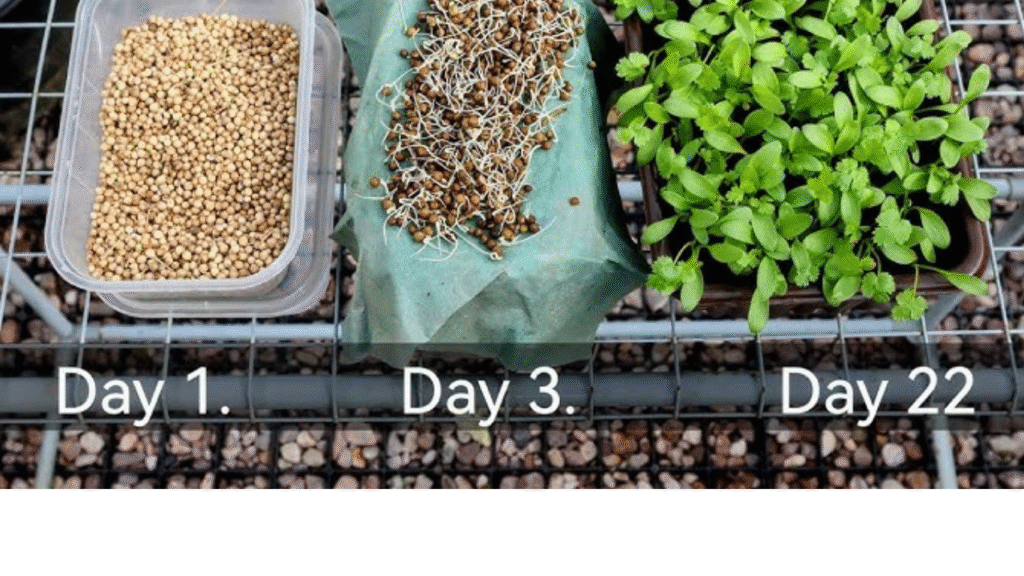
You’ll usually start to see useful leaf growth around 3 to 4 weeks after sowing, depending on your climate, soil, and whether you’re growing in pots or beds.
Here’s what to look for:
- The plant is 6 inches (15 cm) tall or more
- Several leaf clusters are visible not just the first two baby leaves
- The outer leaves look mature, with that familiar feathery, cilantro look
- The stems are sturdy, not floppy or thin
If all these signs are there, you’re good to go.
According to the University of Wisconsin’s Extension Service, coriander leaves can be harvested as early as 3 weeks after planting, and regular picking promotes bushier growth .
How to Harvest Without Killing the Plant
This is where beginners mess up . They either:
- Pull out the whole plant too early,
- Or cut the center, which stops future growth.
Pro Tip: Snip, Don’t Pluck
Here’s the method that actually works:
- Use clean scissors or garden snips not fingers
- Cut the outer leaves first, about 1 inch above soil level
- Leave the center stem intact so the plant keeps producing
By harvesting the outer leaves only, the inner core keeps growing—and you get multiple harvests from the same plant.
My First Harvest Mistake
One year, I was so excited I cut a whole row of coriander from the base. It looked beautiful on the plate, but a week later, the bed was barren. Nothing grew back.
The next time, I tried snipping just the edges every few days. Not only did the plants grow bushier, but I ended up getting 3–4 harvests per plant before it went to seed.
I even kept one coriander plant going for over 2 months, just by being gentle with how I harvested.
Best Time of Day to Harvest
You want to pick your coriander when:
- The leaves are dry not wet from morning dew or watering
- The day is cool morning or late afternoon is best
- The plant is not under heat stress
This keeps the flavor sharp and avoids bruising the leaves.
Also, if you’re growing coriander in summer, be aware—it tends to bolt (go to seed) faster. So, harvest earlier and more frequently to get the most from it.
The Royal Horticultural Society (RHS) also recommends regular leaf harvesting as a way to delay bolting in warmer weather .
Harvesting Table: Quick Reference
| Condition | What To Do |
|---|---|
| Plant is 6 inches or taller | Start harvesting |
| Only 2 baby leaves | Wait a bit longer |
| Center stem soft and growing | Leave it alone, cut outer leaves |
| Plant is bolting | Cut entire plant before flavor turns |
| Growing in hot summer | Harvest early and often |
| You need coriander for garnish | Snip a few sprigs, don’t uproot it |
Don’t Wait Too Long
There’s a window. After about 5–7 weeks, coriander will likely start bolting—especially in warm or dry weather. Once that happens:
- Leaves turn bitter
- Growth slows
- It shifts energy to flowers and seeds
So don’t wait for “perfect” bunches. Use it early, use it often.
Harvesting for Seeds? Do the Opposite.
If your goal is to harvest coriander seeds which are used as a spice, then don’t harvest the leaves. Let the plant mature, bolt, flower, and form seeds. It takes about 45–70 days from planting to seed maturity.

Stuff That Might Go Wrong When Growing Coriander
Let’s be honest. Even though coriander seems like an “easy herb,” stuff can go sideways fast. I’ve had everything from early flowering to a full on aphid invasion. The key is to not panic. Most of these problems are fixable with a little observation and a calm head.
Here’s a breakdown of what actually goes wrong, why it happens, and what I did when it happened in my own little rooftop garden.
1. It Starts Flowering Too Soon
This is the number one complaint from home growers: “Why is my coriander flowering already?”

What’s going on?
- When temperatures rise above 25°C (77°F) regularly, coriander panics and starts reproducing—fast.
- Once the flower stalk rises, the leaves stop growing and start turning bitter.
This is called bolting, and it’s coriander’s way of saying: “I’m done here. Let me make seeds.”
According to the University of California Agriculture & Natural Resources, coriander is a cool season crop, best planted when temperatures are between 10°C and 25°C .
What I did:
My first coriander crop bolted by the third week of April. The leaves were small, and within days, tiny white flowers appeared. I didn’t know better, so I just let it go and ended up collecting seeds. Not a total loss—but not what I wanted.
Now, I plant in early February and again in late October. During summer, I only grow coriander in partial shade, using a mesh cloth or under taller plants like tomatoes.
Fix:
- Plant earlier in the season
- Move pots to cooler areas e.g. balcony with morning sun only
- Harvest often to encourage leaf growth
- Consider slow bolt varieties like ‘Santo’ or ‘Calypso’ if you’re in a warm area
2. Leaves Turn Yellow
If your coriander plant looks like it’s wearing autumn colors… something’s up.
What’s going on?
- Overwatering is the most common cause
- Can also be due to nutrient deficiency, especially nitrogen
- Poor drainage or compacted soil doesn’t help either

Research from Oregon State University Extension shows that herbs like coriander suffer root damage if soil stays wet too long. Yellowing leaves are often the first sign .
What happened to me:
I once used a giant metal container with no drainage holes rookie mistake. I was watering every day thinking I was doing good. The coriander started yellowing in just 10 days. The smell from the soil told me all I needed to know—rot had set in.
I tossed the soil, added sand and compost to the next batch, and drilled proper holes.
Fix:
- Let soil dry out between waterings top 1–2 inches
- Make sure your container has drainage holes
- Use lighter soil with compost and sand
- Feed with a mild liquid fertilizer like compost tea every 2 weeks
3. Pests Like Aphids Show Up
At some point, tiny green or black bugs will appear—usually under the leaves or along the stem. That’s aphids for you.

What’s going on?
- Aphids love tender coriander leaves
- They suck sap and leave a sticky residue called honeydew, which can attract ants or fungus
The National Gardening Association notes that aphids multiply rapidly, especially in warm, still environments .
What worked for me:
I noticed little ants climbing up my coriander stems—and where there are ants, there are usually aphids. I flipped a leaf and there they were: a whole colony. I sprayed the plant hard with a water bottle set to “jet” and knocked most of them off.
The next morning, I diluted neem oil with water and a bit of mild soap (½ teaspoon per liter), and sprayed it in the evening.
Fix:
- Blast them off with water early morning
- Spray neem oil every few days for a week
- Don’t let weeds or grass grow around your pots—they hide bugs
- If ants are hanging around, deal with them too—they often “farm” aphids
Chill—Coriander Is Tougher Than It Looks
I’ve made every mistake on this list. Still, I’ve always managed to grow coriander again.
Coriander might look delicate, but it’s a fighter. It forgives you if you learn quickly and treat it like a living thing—not just a garnish plant.
It doesn’t need fancy tools, expensive fertilizer, or daily care. It just needs you to observe, adjust, and maybe give it a little space when it’s clearly not happy.
Trouble Shooting Table
| Problem | Likely Cause | Fix |
|---|---|---|
| Early flowering bolting | Too hot | Plant earlier or provide shade |
| Yellow leaves | Overwatering | Let soil dry, improve drainage |
| Aphids or bugs | Pests | Water spray + neem oil treatment |
| Thin, leggy growth | Not enough sunlight | Move to a sunnier spot (4–6 hrs/day) |
| Bitter leaves | Plant has bolted | Use before flowering or grow again |
Can You Grow It Indoors?
Heck yes, you can. In fact, in some climates—like where the summers are scorching or winters are icy—growing coriander indoors is not just possible, it’s actually smarter.
I started growing coriander indoors out of desperation. It was the middle of June, the temperature outside was hitting 38°C, and every coriander seedling I planted outside either bolted or withered. On a whim, I filled an old 10 inch paint bucket with potting mix, dropped in a few seeds, and placed it near a sunny window.

And guess what? It worked.
It didn’t grow as fast as my spring crops outside, but it stayed leafy, green, and bolt free for nearly two months. The flavor? Still fresh and citrusy—exactly what you want in a homegrown herb.
Why Growing Indoors Works So Well
Indoor growing gives you control—something coriander deeply appreciates.
Benefits of Indoor Coriander:
- Stable temperature: Avoids extreme heat or frost
- Less bolting: Plants don’t stress out from unpredictable weather
- Year round harvest: Grow coriander even in the dead of winter
- Pest control: Aphids and other garden pests rarely show up indoors
- Convenient harvesting: Snip what you need right in the kitchen
According to the University of Minnesota Extension, coriander (aka cilantro) does well indoors, especially in containers that get 4–6 hours of light daily .
Real Life Indoor Growing Experience
I once grew coriander on the south facing window of my apartment during a chilly December in Dhaka. Outside, the garden beds were asleep. But inside, I had a lively bunch of coriander that I trimmed weekly for omelets and lentil soups.
What made the biggest difference?
- I used a deep terracotta pot about 9 inches
- Made sure to rotate the pot every few days so the plant didn’t lean toward the window
- Watered only when the top inch of soil dried out
I did notice it grew a bit slower than it would have outdoors in ideal weather, but the flavor was spot on and I didn’t lose a single plant to bolting.
Indoor Growing Tips That Actually Work
If you’re planning to grow coriander indoors, here are some simple but effective tips:
1. Choose a Deep Container
Coriander roots need room. Go for a pot that’s at least 8 inches deep. Shallow containers dry out too fast and limit root growth.
2. Good Drainage Is a Must
Even indoors, coriander hates soggy soil. Use containers with drainage holes. I once grew some in a mug with no hole, and it quickly turned into a yellow, smelly mess.
3. Place It Near a Sunny Window
Ideally, choose a south facing window that gets at least 4–6 hours of sunlight daily. If light is poor, consider adding a grow light to avoid leggy growth.
4. Rotate the Pot
Plants naturally lean toward the light. Rotating the pot every 3–4 days helps them grow upright and balanced.
5. Use a Light Soil Mix
A good indoor potting mix with some sand or perlite works best. Avoid heavy clay soil—it suffocates roots in a container.
According to Colorado State University Extension, using well aerated soil and rotating herbs indoors prevents uneven growth and root disease .
Quick Indoor Setup Checklist
| Requirement | Recommendation |
|---|---|
| Pot size | 8 inches deep or more |
| Light source | Sunny window (south/east facing) |
| Soil | Light, well draining mix with compost |
| Rotation | Every 3–4 days to balance growth |
| Watering | When top inch of soil is dry |
| Fertilizer (optional) | Compost tea every 2–3 weeks |
Keeping the Harvest Going
Want coriander basically forever? Here’s the lazy secret:
Plant a new batch every two weeks.
That way, as one batch gets old and bolts, you’ve got a fresh new gang of plants coming up.
It’s like having a coriander assembly line. Future you will be very thankful.
Bonus: Save Your Own Seeds
If you’re feeling a little extra, you can save seeds from your plants once they flower.
How?


- Let the blossoms dry directly on the plant.
- Once they turn brown, rub them between your hands.
- Store the seeds somewhere cool and dry.
Boom. You’re officially self sufficient.
Summary Table: How to Grow Coriander
| Step | What to Do |
|---|---|
| Seed selection | Choose fresh, whole seeds (garden seeds preferred; cooking seeds may work) |
| Soil preparation | Use loose, well draining soil mixed with compost or old cow dung |
| Sowing time | Best in cool weather (early spring or autumn); avoid peak summer |
| Planting method | Sow directly in pots or beds, ½ inch deep, 2–3 inches apart |
| Watering needs | Keep soil moist but not soggy; water only when topsoil feels dry |
| Sunlight requirements | 4–6 hours of sunlight; shade in hot climates during afternoon |
| Harvest time | Start snipping outer leaves at 3–4 weeks, when plant is 6 inches tall |
| Common issues | Bolting (heat), yellow leaves (overwatering), aphids (pests) |
| Indoor growing tips | Use 8″ deep pots, place near a sunny window, rotate every few days |
| Regrowth after cutting | Yes—if harvested correctly from the outside, not the center |
Final Thoughts
Seriously, growing coriander is not a big deal.
You don’t need a greenhouse or a green thumb or some expensive “grow light setup.”
You just need some seeds, a little dirt, a bit of patience, and the willingness to mess up once or twice.
And if all else fails?
Seeds are cheap. Try again. It’s not about being perfect — it’s about getting your hands a little dirty and maybe, just maybe, making the world’s freshest salsa.
References
- “Cilantro and Coriander Plant Growing Guide” – University of Minnesota Extension
- “Growing Herbs Indoors” – The Old Farmer’s Almanac
- “Coriander Growing Tips” – Royal Horticultural Society
- “Gardening Know How – Growing Coriander Plants”
- “USDA Plant Profile – Coriandrum sativum”
FAQs for Growing Coriander
A: A bit of both, honestly. It loves morning sun but can get stressed under strong afternoon heat. If you’re growing it in summer, try giving it some shade after noon. During cooler seasons, it’s happy with full sunlight.
A: You can try—I did once out of curiosity. Some of them sprouted! But store bought coriander seeds are often split or heat dried, so the success rate is hit or miss. It’s worth a shot if you’re experimenting on a budget, though.
A: Don’t worry, you’re not alone. That happened to me, too, especially when I planted it in the middle of summer. Coriander hates heat. Try planting it early in the season, and keep harvesting the leaves regularly—it helps delay flowering.
A: Yes, but only if you cut it the right way. Always snip the outer leaves, not the center. That way, the middle keeps growing. I’ve harvested from the same plant 3–4 times before it started to flower.

Thesis Link : https://saulibrary.edu.bd/daatj/public/uploads/BAU200601_19-Pp_5.pdf
- 10 Best Hori Hori Knives for Digging, Weeding and Planting - October 23, 2026
- How to Kill Crabgrass and Keep It From Coming Back - October 22, 2026
- Lawn Fertilizer Schedule by Grass Type - October 21, 2026