
You plant lettuce on Saturday. By Tuesday morning, half of it is gone, the hostas look chewed to stubs, and there are neat little hoof prints in the soft soil. Deer do not visit once and move on. They learn where the good food is, and they come back every night until there is nothing left worth eating.
The best deer repellent is the one that fits your garden, your tolerance for smell, and how much ground you need to cover. A small raised bed near the back door needs a different answer than five acres of shrubs and fruit trees. This guide compares 10 deer repellents using the facts printed on their labels and the research published by university Extension services. Every active ingredient percentage, coverage figure, and reapplication interval below comes from the manufacturer label, the official product page, or a safety data sheet checked in November 2026. Where sources disagreed, the article says so instead of picking the bigger number. Where a figure was not published, the article says that too.
Quick Recommendation: The Best Deer Repellent for Gardens
Short on time? Start here.
- Best overall: Liquid Fence Deer and Rabbit Repellent Ready-To-Use. The most widely used egg-based spray here, ready to use with no mixing, and a 1 gallon jug covers 2,000 square feet. Our rating: 8.1 out of 10.
- Highest score, best organic: Plantskydd Animal Repellent Soluble Powder Concentrate. The only product here with a verified current OMRI listing, dried blood at 99.84 percent, and the longest dormant-season protection at up to 6 months. Our rating: 8.8 out of 10.
- Best smelling: I Must Garden Deer Repellent, Mint Scent. A mint-forward spray owners actually like using, with the clearest coverage figures in the roundup. Our rating: 8.7 out of 10.
- Best for large properties: Deer Stopper II Concentrate. A 32 oz quart covers about 10,000 square feet, and a 1 gallon concentrate covers 40,000 square feet, a full acre. Our rating: 8.1 out of 10.
- Best non-spray deterrent: Orbit Yard Enforcer Motion-Activated Sprinkler. No chemicals at all, just water, motion, and sound. Best as one layer of a plan, not a standalone fix. Our rating: 7.6 out of 10.
For a food garden, the label on each bottle decides, not the shortlist. Plantskydd is cleared for food crops with a 3 to 4 week pre-harvest interval, and it is the only OMRI Listed product here, which is a separate organic listing, not an edible-crop clearance. Deer Out and Nature’s Mace can be used around edible plants with limits, I Must Garden carries no edible-crop wording on its label pages, and Deer Stopper II, Ortho Deer B Gon and Bobbex must not contact food plants: their labels restrict them from food and feed crops.
Comparison Table
| Product | Type | Active Ingredients | Coverage | Lasts / Reapply | Rain Resistant | OMRI Listed | Best For |
|---|---|---|---|---|---|---|---|
| Liquid Fence Ready-To-Use | Ready-to-use spray | Egg 1.04%, garlic 0.38%, thyme oil 0.01% | 1 gal covers 2,000 sq ft; 32 oz covers up to 500 sq ft | About monthly after first 2 sprays | Rain resistant | No | Best overall |
| Deer Out Concentrate, 32 oz | Concentrate spray | Peppermint oil, garlic; percentages not published | Not published; third-party range 3,750 to 10,000 sq ft | 30 to 90 days per official FAQ | Rain resistant | No | Best for gardens, pleasant scent |
| Bobbex Concentrate, 32 oz | Concentrate spray | Egg solids, fish meal, fish oil, garlic, clove oil; percentages not published | Conflicting: 5,000 vs 10,000 sq ft | Every 7 to 14 days growing; up to 2 months dormant | Will not wash off once dry, about 6 hours drying | No | Longest lasting in dormant season |
| Plantskydd Powder, 1 lb | Powder concentrate | Dried blood 99.84% | About 400 plants 1 ft high, or 2,000 sq ft per 1 lb | 2 to 4 weeks growing; 3 to 6 months dormant | Rain resistant | Yes | Best organic |
| I Must Garden Mint, 32 oz RTU | Ready-to-use spray | Egg 1.50%, garlic 0.75%, peppermint 0.24%, white pepper, lemongrass, cinnamon | 32 oz covers up to 1,000 sq ft | Up to 4 weeks | Rain proof | No | Best smelling, mint scent |
| Nature’s Mace Concentrate, 40 oz | Concentrate spray | Egg 20.00% (concentrate strength), garlic 5%, white pepper 5%, peppermint 1% | Up to 28,000 sq ft per 40 oz | Repeat after 7 days, then monthly | Weather resistant | No | Highest active ingredient load |
| Deer Stopper II Concentrate, 32 oz | Concentrate spray | Egg 7.60%, cinnamon 2.20%, clove 1.40% (2025 label) | About 10,000 sq ft per 32 oz quart | 30 days per application, guaranteed | Weather proof per label | No | Best for large properties |
| Ortho Deer B Gon Ready-To-Spray, 32 oz | Hose-end ready-to-spray | Egg 7.60%, cinnamon 2.20%, clove 1.40% | About 10,000 sq ft per 32 oz | About every 30 days | Rain resistant per label | No | Best big-box pick, low odor |
| Bonide Repels-All Granules, 3 lb | Granular | Egg 1.12%, cloves 0.54%, garlic oil 0.03% | Up to 1,500 sq ft per 3 lb | Up to 2 months | Not published on label excerpts | No | Best granular |
| Orbit Yard Enforcer, 62100 | Motion-activated sprinkler | None, water only | Up to 1,600 sq ft per unit | No reapplication; needs hose and batteries | Not applicable | Not applicable | Best non-spray deterrent |
How We Chose
No one at Agribloom tested these products hands-on in a garden, and this guide does not claim otherwise. The scores below are editorial scores. Each product was scored out of 10 on six factors, weighted by how much each factor matters in real use, using the active ingredients and directions printed on the label, the coverage and duration figures the manufacturer publishes, and the patterns in published owner feedback. Where a spec was not published or sources conflicted, the product lost points in that factor instead of getting the benefit of the doubt.
The scoring system
| Factor | Weight | What it measures |
|---|---|---|
| Deterrent strength | 30% | Active ingredient profile, scent plus taste action, and published trial or extension support where it exists |
| Longevity and rain resistance | 25% | Label duration per application and rain resistance claim, with the shorter honest figure used where sources conflict |
| Coverage value | 15% | Square feet covered per container, using the verified figure only; conflicting coverage counts against the product |
| Ease of application | 10% | Ready-to-use versus mixing, hose-end versus hand sprayer, granule shaker versus spreader |
| Plant, pet and food safety | 10% | OMRI Listed status, food-crop clearance, pollinator and pet cautions on the label |
| Scent and user experience | 10% | Odor during and after application, drying time, and recurring owner complaints |
| Total | 100% |
Per-product factor scores
| Product | Deterrent (30%) | Longevity (25%) | Coverage (15%) | Ease (10%) | Safety (10%) | Scent (10%) | Total |
|---|---|---|---|---|---|---|---|
| 1. Liquid Fence | 9 | 8 | 8 | 9 | 7 | 6 | 8.1 |
| 2. Deer Out | 9 | 7 | 6 | 7 | 8 | 9 | 7.8 |
| 3. Bobbex | 9 | 8 | 6 | 7 | 6 | 6 | 7.5 |
| 4. Plantskydd | 10 | 9 | 8 | 7 | 10 | 6 | 8.8 |
| 5. I Must Garden | 9 | 8 | 9 | 9 | 8 | 9 | 8.7 |
| 6. Nature’s Mace | 9 | 8 | 9 | 7 | 8 | 8 | 8.4 |
| 7. Deer Stopper II | 9 | 8 | 9 | 7 | 5 | 8 | 8.1 |
| 8. Ortho Deer B Gon | 9 | 8 | 9 | 9 | 5 | 9 | 8.4 |
| 9. Bonide Repels-All | 8 | 8 | 7 | 8 | 7 | 7 | 7.7 |
| 10. Orbit Yard Enforcer | 7 | 7 | 7 | 7 | 10 | 10 | 7.6 |
Plantskydd leads safety as the only OMRI Listed product here. Bobbex scores lowest despite ranking best in the Connecticut trial, because its summer schedule is every 7 to 14 days and its coverage conflicts. Deer Out loses coverage points because the manufacturer publishes no square-foot figure.
The 10 Best Deer Repellents
1. Liquid Fence Deer and Rabbit Repellent Ready-To-Use
Best for: Most gardens, and the simplest first buy.
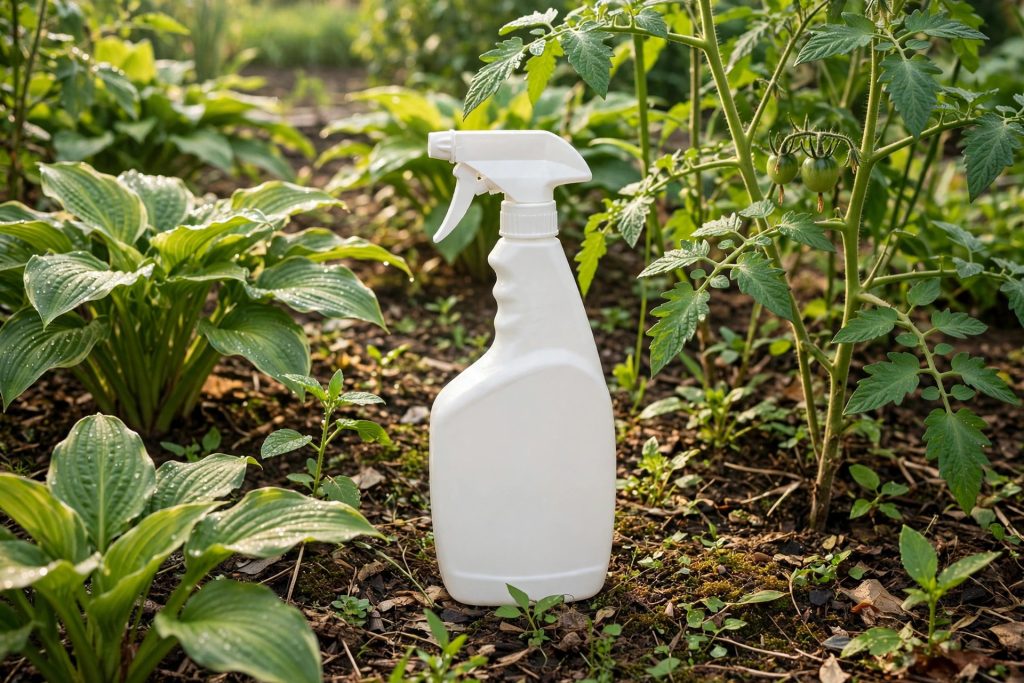
Liquid Fence is the spray most gardeners reach for first. The ready-to-use formula lists putrescent whole egg solids at 1.040 percent, garlic at 0.375 percent, sodium lauryl sulfate at 0.040 percent, and thyme oil at 0.010 percent. It is a FIFRA 25(b) minimum-risk exempt product, not EPA registered, and no OMRI claim was found for it.
One gallon of the ready-to-use spray covers 2,000 square feet, according to the label. The 32 oz trigger bottle is the common homeowner size, and the 2025 label covers up to 500 square feet per bottle.
The label says to apply once in a dry period, repeat after 1 week, then about once per month. Under intense feeding pressure, spray once a week for 3 weeks, then about once per month. The spray is rain resistant, and the label says to reapply after excessive rainfall.
Two cautions: the smell is the strongest in this roundup, though it fades as it dries, and the pollinator note. Do not apply when bees or other pollinators are foraging, so spray early in the morning or in the evening.
A concentrate version exists for bigger jobs, covering up to 5,000 square feet per 32 oz, 6,000 per 40 oz, and 20,000 per gallon, with egg solids at 10.405 percent, mixed at 12.8 fluid ounces per gallon of water.
Our rating: 8.1 out of 10. The proven formula earns the score; the odor costs points.
Manufacturer page: liquidfence.com
2. Deer Out Concentrate, 32 oz
Best for: Vegetable gardens, and gardeners who hate the smell of egg sprays.
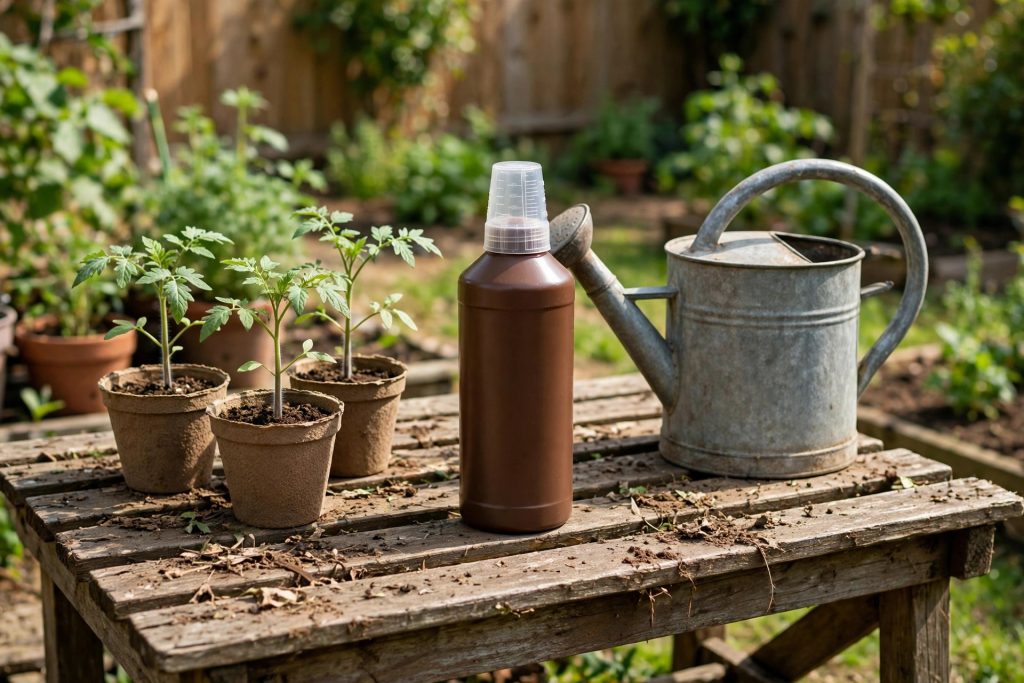
Deer Out is the pleasant one. The official site names peppermint oil, garlic, and “other all-natural ingredients” as the formula.
This product has the messiest numbers in the roundup. The exact label percentages are not published on the official site pages found. Third-party sources list putrescent egg solids, garlic oil, and white pepper as well, but the official copy names only peppermint oil and garlic. This guide does not print a percentage it could not verify.
The manufacturer publishes no square-foot coverage figure on its site. Third-party figures for the 32 oz bottle range from about 3,750 square feet to 10,000 square feet. The 32 oz bottle makes about 2.5 gallons of mixed spray, per Bob Vila.
The official site FAQ says one application lasts up to 30 to 90 days, and to reapply every 30 to 90 days or as needed, and after heavy rain or when new growth appears. Some roundups quote 3 to 4 months, but the official figure is 30 to 90 days, and owner reports quoted by review sites say a few weeks in rainy conditions. The formula is rain resistant, with two natural sticking agents.
No OMRI claim was found, and the label states a FIFRA 25(b) minimum-risk exemption, per Ezvid. The manufacturer says to spray directly on vegetables and fruit trees, and Alabama Extension’s ANR-1370 table lists Deer Out for vegetable plants and row crops. A retailer listing carries a conflicting direction, and the bottle label was not found, so that clearance is unconfirmed. The manufacturer describes it as safe around kids and pets. Owners praise the mint scent; complaints are a short life between sprays and leaking bottles.
Our rating: 7.8 out of 10. The scent earns the score; the unpublished figures, unconfirmed food-garden clearance and short life in rain hold it back.
Manufacturer page: deerout.com
3. Bobbex Concentrated Deer Repellent, 32 oz (B550100)
Best for: Winter protection, when the garden is dormant and you want the longest gap between sprays.
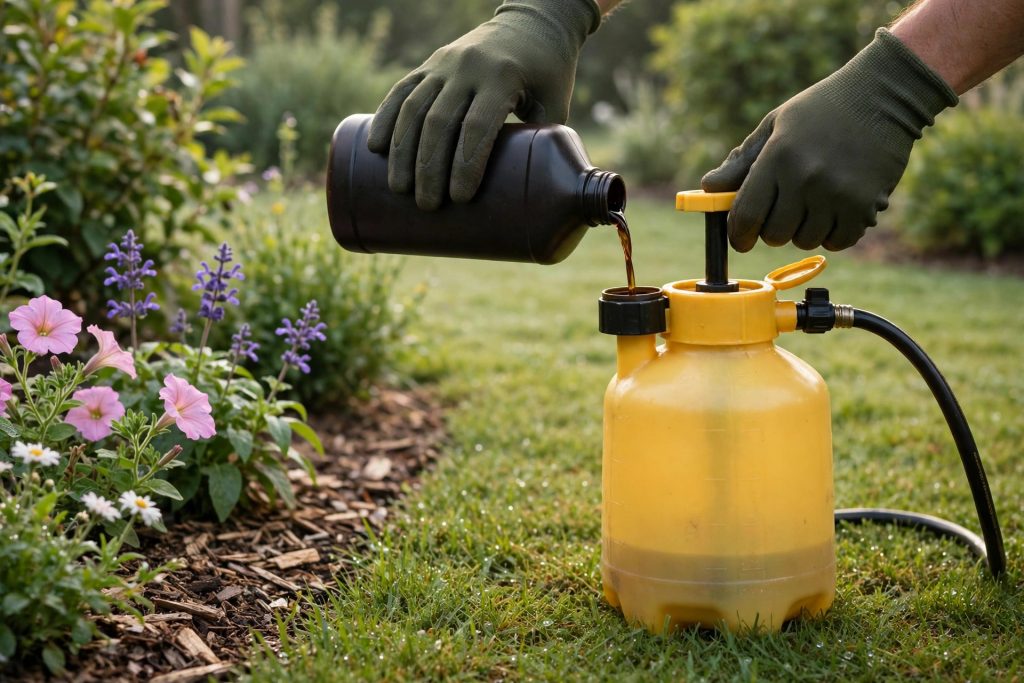
Bobbex has the strongest trial result in this roundup and the most misunderstood label. The product listing cites a Connecticut trial, Human-Wildlife Interactions 4(1):56-66, Spring 2010, in which Bobbex ranked best among the repellents tested. Some blogs quote a 93 percent figure from the same study, but that number is unverified secondary reporting, so this guide does not print it.
The formula blends putrescent egg solids, fish meal, fish oil, garlic, and clove oil, with a sticking agent included; exact percentages were not published. Dilute 1 oz of concentrate to 8 oz of water in the growth season; 14 oz makes 1 gallon.
Coverage is a genuine conflict. Third-party figures for the 32 oz bottle say 5,000 square feet on one site and 10,000 square feet on another, and the official site publishes no square-foot coverage figure on the pages found.
Duration is where most roundups get Bobbex wrong. The official application page says to reapply every 7 to 14 days during peak growth, or when 1 to 2 inches of new growth appears. During the dormant winter season it endures much longer, up to 2 months. The widely quoted “lasts up to two months” is the dormant-season figure, often quoted without that qualifier.
Rain resistance is a real strength. The sticking agent is non-water-soluble, and the product will not wash off in rain or irrigation once dry. It needs about 6 hours of drying time.
The label is firmer than that: it says ‘Not for Use on Food and Feed Crops’ and ‘Do not use on plants intended for human consumption.’ The official application guide adds the timing rule: do not use on food plants when fruits, vegetables or herbs are already developed, though application can continue up to the point fruit develops. Rooted vegetables are acceptable only if the leaves will not be eaten; do not use on leafy vegetables or herbs, and use on fruit only through the bud stage, not the fruit stage. Secondary sources add that it is not designed for most edible leaves and herbs, or for rough-skinned berries such as strawberries and raspberries.
Our rating: 7.5 out of 10. The trial ranking earns the score; the 7 to 14 day summer schedule and conflicting coverage pull it down.
Manufacturer page: bobbex.com
4. Plantskydd Animal Repellent Soluble Powder Concentrate, 1 lb
Best for: Organic gardens, and anyone who wants the longest protection per application.
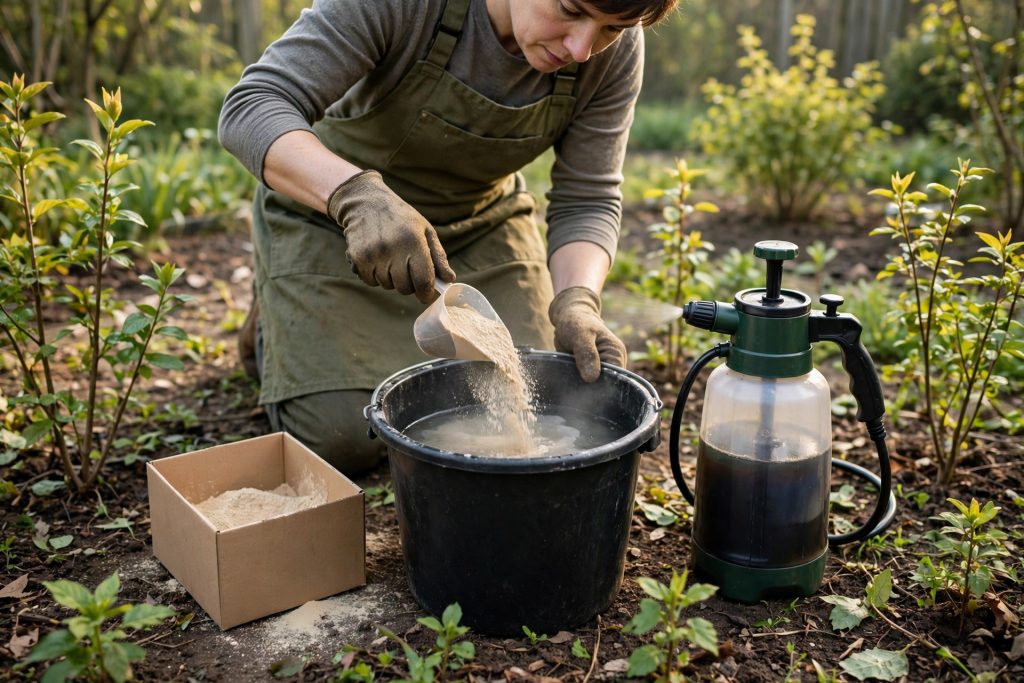
Plantskydd is the simplest formula in this roundup and the highest scoring. The active ingredient is dried blood, porcine or bovine, at 99.84 percent per the Canadian label, plus vegetable oil and water. It is a wettable powder concentrate: 1 lb makes 4 or more quarts of spray.
It is also the only product here with a verified current OMRI listing. The official site says Plantskydd was the first animal repellent OMRI Listed for organic food production.
Coverage comes in two units, and both are manufacturer figures, so both are printed. One pound treats about 400 plants 1 foot high, or 2,000 square feet per manufacturer retailer training.
Duration is the best in this roundup once the garden slows down. In the active growing season, protection lasts 2 to 4 weeks, and you should always treat new growth. In the dormant season it lasts 3 to 6 months. The main page claims up to 6 months over winter and 90 or more days on dormant plants.
Rain is not a problem. The manufacturer says the product is rain resistant, with no reapplication needed after rainfall or irrigation. On food safety, the label is clear: it is safe for use on fruit, vegetables, and other food crops, but do not apply directly onto edible parts 3 to 4 weeks before harvest, and wash fruits and vegetables before eating.
The trade-offs are practical, not chemical. Mixing a powder takes more effort than grabbing a ready-to-use bottle, and you need a sprayer. A granular variant exists too, a 3.5 lb jug.
Our rating: 8.8 out of 10. The OMRI listing, food clearance, and dormant-season duration earn the top score; mixing effort and odor cost points.
Manufacturer page: plantskydd.com
5. I Must Garden Deer Repellent, Mint Scent, 32 oz Ready-To-Use
Best for: Anyone who wants a spray that smells like a garden, not like a barnyard.
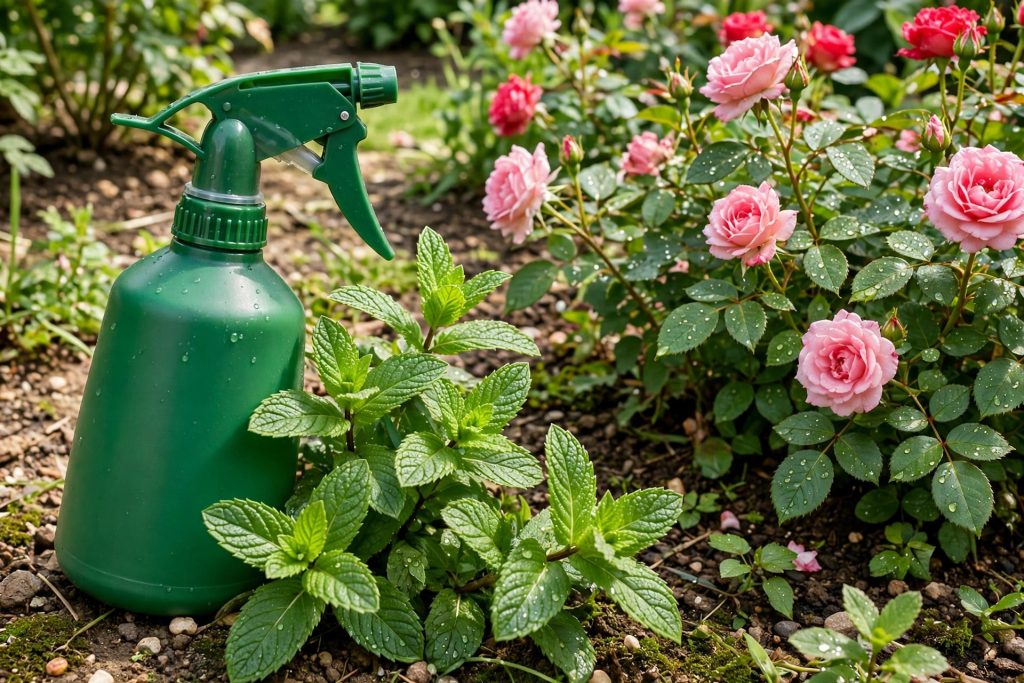
I Must Garden wins the scent category by a wide margin, and it does it without giving up strength. The Mint Scent ready-to-use formula, from its safety data sheet, lists putrescent whole egg solids at 1.50 percent, garlic at 0.75 percent, peppermint oil at 0.24 percent, white pepper at 0.06 percent, lemongrass oil at 0.03 percent, and cinnamon oil at 0.03 percent. The concentrate is 10 times these figures, with egg at 15 percent and garlic at 7.5 percent.
A Spice Scent variant swaps the peppermint and lemongrass for clove-forward oils.
Coverage is the clearest in the roundup, with a figure for every size. The 32 oz ready-to-use bottle covers up to 1,000 square feet. A 1 gallon ready-to-use bottle covers up to 4,000 square feet. The 32 oz concentrate covers up to 10,000 square feet, and the 1 gallon concentrate covers up to 40,000 square feet.
Duration is up to 4 weeks per a retailer listing of the label, and the official site describes the spray as rain proof and long lasting. Allow at least 1 hour of drying before rain or watering.
On certification, no OMRI claim was found. The ingredients are described as EPA-regarded-as-safe, and the product is FIFRA 25(b) exempt per its safety data sheet. It is described as safe for people, pets, and the environment when used as directed. No edibles restriction was found on the pages checked. A granular variant exists too.
Our rating: 8.7 out of 10. The strongest ready-to-use egg formula and mint scent earn the score; the missing OMRI listing costs points.
Manufacturer page: imustgarden.com
6. Nature’s Mace Deer and Rabbit Mace Concentrate, 40 oz
Best for: Big coverage per bottle, and gardens where the spray will touch food crops.
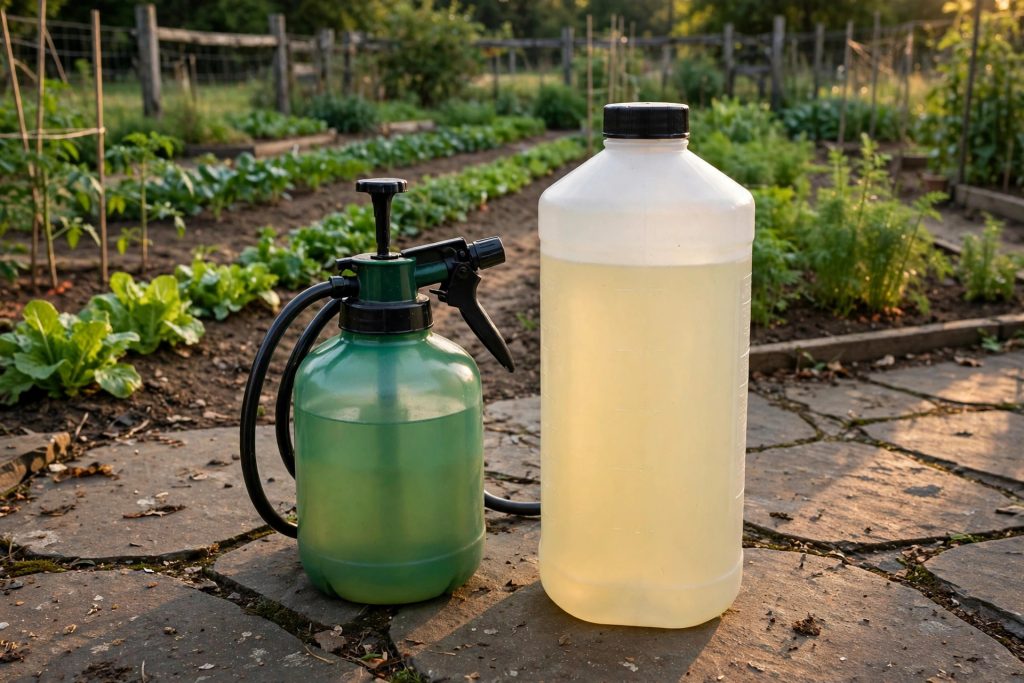
Nature’s Mace carries the heaviest active ingredient load in this roundup. The concentrate safety data sheet from 2021 lists putrescent whole egg solids at 20.00 percent, garlic at 5.00 percent, white pepper at 5.00 percent, peppermint oil at 1.00 percent, sodium lauryl sulfate at 0.50 percent, and potassium sorbate at 0.50 percent.
Twenty percent is the concentrate strength, not the spray strength, so do not compare it directly with ready-to-use percentages.
The 40 oz concentrate makes about 5 gallons of spray and treats up to 28,000 square feet, per the official site.
The schedule is simple: repeat spraying after 7 days, then once per month. Rain resistance is described as weather resistant, with proprietary sticking agents, and it holds up in light to moderate rain.
On safety, no OMRI claim was found. The ingredients are plant-based and biodegradable, per the manufacturer. The food note needs care: the maker’s FAQ says to apply it heavily to the ground and the surrounding areas of edible plants, avoid getting it on edible parts, and always rinse produce before eating. It is not a direct spray onto edible parts.
One claim needs a caution flag. The manufacturer describes the formula as university-backed and says it has more active ingredient than leading brands, but the university study is not named on the pages found, so this guide does not repeat the university claim as fact. A granular variant exists, a 25 lb bag covering 25,000 square feet.
Our rating: 8.4 out of 10. The dense concentrate and 28,000 square foot coverage earn the score; the unverified university claim costs points.
Manufacturer page: naturesmace.com
7. Deer Stopper II Concentrate, 32 oz (Messina Wildlife)
Best for: Large properties, acreage, and long shrub borders.
Deer Stopper II is the acreage product. A 32 oz quart of concentrate covers approximately 10,000 square feet and makes 2.5 gallons of spray. A 1 gallon concentrate covers 40,000 square feet, a full acre, and a 2.5 gallon concentrate covers 100,000 square feet. Mix 1 part concentrate to 9 parts water; 13 oz makes 1 gallon.
The formula changed, and the change matters. The current 2025 label for Deer Stopper II lists putrescent whole egg solids at 7.60 percent, cinnamon oil at 2.20 percent, and clove oil at 1.40 percent. An older Messina safety data sheet lists a different formula for the original Deer Stopper concentrate: putrescent egg at 14.46 percent, mint oil at 1.36 percent, and rosemary oil at 2.04 percent.
Duration comes with a guarantee, which is rare in this category. The label guarantees 30 days of protection per application, and says to repeat as needed, usually every 30 days. Allow 20 minutes of drying before watering. The label describes the product as safe, effective, and weather proof when used according to directions.
The hard limit is food. The label says do not apply to plants grown for human or animal consumption, with an allergy note attached. It may be used on dormant fruit and nut trees, and it can be used as a perimeter application near edible crops. That restriction costs it safety points, and it is the reason this product sits below the garden-safe picks even though its coverage and duration are excellent.
A ready-to-use trigger bottle exists too. No OMRI claim was found, and the product is FIFRA 25(b) exempt.
Our rating: 8.1 out of 10. The acre-scale coverage and 30-day guarantee earn the score; the food-plant restriction is the deduction.
Manufacturer page: messinas.com
8. Ortho Deer B Gon Deer and Rabbit Repellent Ready-To-Spray, 32 oz
Best for: The Saturday morning garden center run, and the easiest application in this roundup.
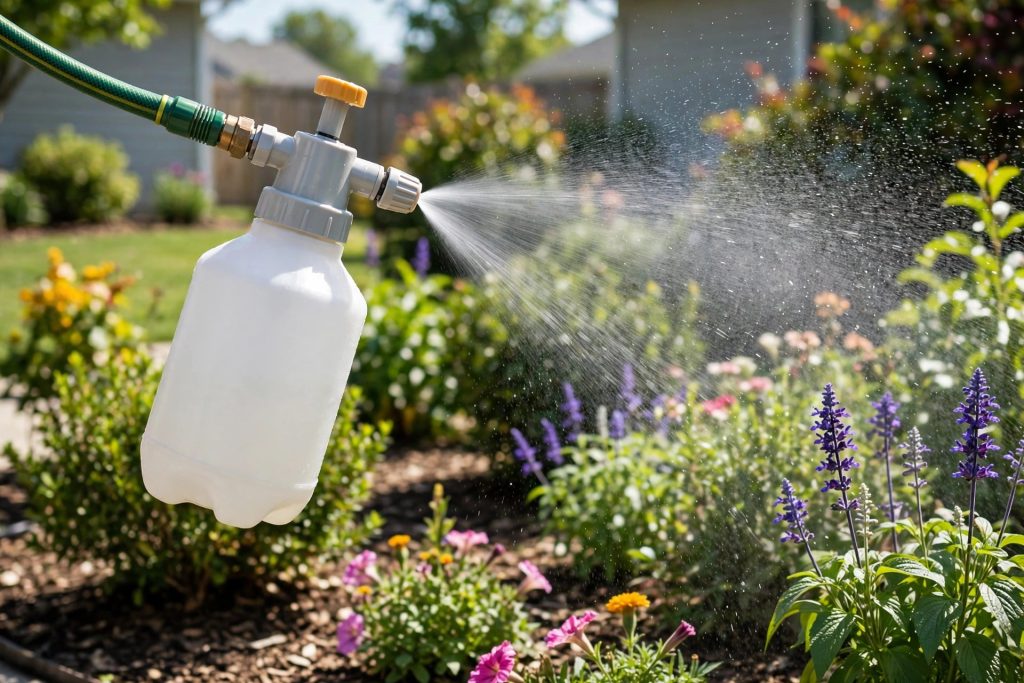
Ortho Deer B Gon is the pick for gardeners who want the job done in ten minutes. It is a hose-end ready-to-spray bottle: you connect it to a garden hose, turn on the water, and walk the beds.
The formula will look familiar if you read the Deer Stopper II entry above. The label lists putrescent whole egg solids at 7.60 percent, cinnamon oil at 2.20 percent, and clove oil at 1.40 percent, the same active profile as Deer Stopper II concentrate. One 32 oz bottle covers approximately 10,000 square feet, per the label.
The schedule is the same family schedule: repeat as needed, usually every 30 days, or at the first sight of new damage. It can be applied in any climate or temperature, as long as the spray head and the liquid are not frozen. Rain resistance is label-stated rather than independently verified: the label describes it as long lasting and rain resistant, and the ready-to-spray label calls it a long-lasting “No Stink” formula.
The food rule is the same as Deer Stopper II, and it is just as firm. When used near edible crops, do not allow the product to contact any plant grown for human or animal consumption. Use it on ornamentals, shrubs, and flowers, or as a perimeter spray around the vegetable garden. No OMRI claim was found, and the product is FIFRA 25(b) exempt, not EPA registered.
A granule variant exists too. No direct retailer product URL was verified in the research pass.
Availability note: the manufacturer site no longer lists this model, and a retailer lists it as discontinued, so check current availability before buying.
Our rating: 8.4 out of 10. The hose-end ease and low odor earn the score; the food-contact restriction is the deduction.
Manufacturer page: ortho.com
9. Bonide Shot-Gun Repels-All Animal Repellent Granules, 3 lb
Best for: Gardeners who hate spraying, and yards with more than one pest.
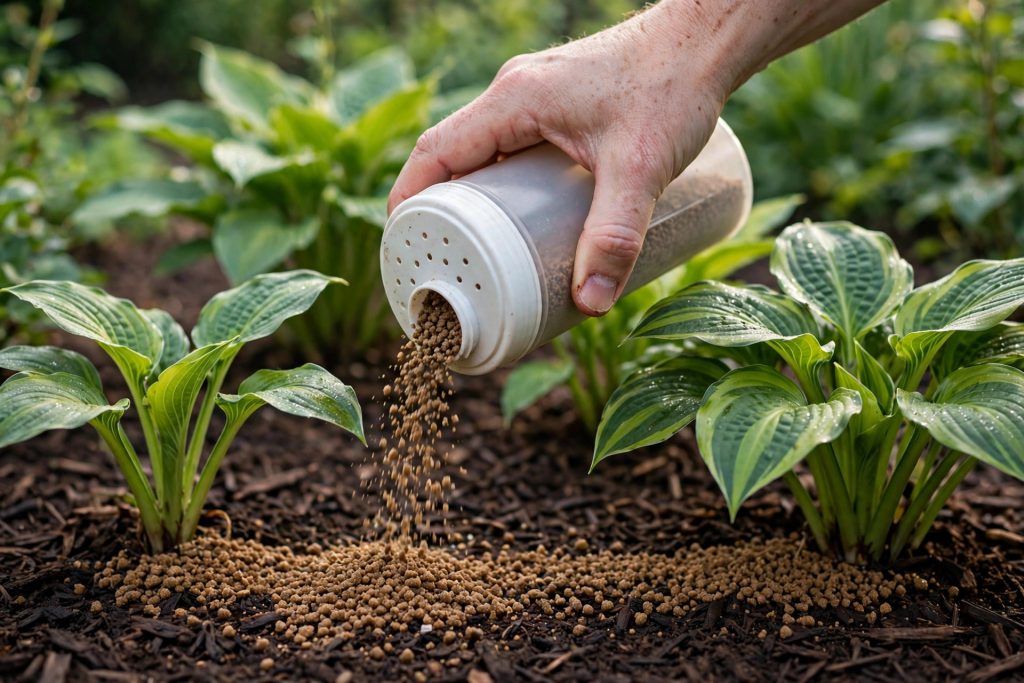
Repels-All is the only granular product in this roundup, and the only one that fights more than deer. The label lists deer, rabbits, squirrels, chipmunks, raccoons, groundhogs, and more.
The actives are putrescent whole egg solids at 1.12 percent, cloves at 0.54 percent, and garlic oil at 0.03 percent. Inert ingredients include fish meal, fish oil, meat meal, diatomaceous earth, wintergreen oil, and vinegar. Granules work differently from sprays: they sit on the soil and release scent, and animals meet them at nose level as they approach.
Application is simple. Shake the granules from the bottle in a broadcast pattern or in a 6 to 8 inch perimeter band around the area you want to protect. A 3 lb container covers up to 1,500 square feet. The label rate is 1 lb per 500 square feet for areas under 1,500 square feet, and 1 lb per 834 square feet for larger areas. Duration is up to 2 months under normal conditions, per the label.
Rain resistance is the one gap. The label does not make a specific rain-resistance claim in the excerpts found, and this guide marks it as not published rather than claiming it. Granules are generally reapplied after heavy rain, so plan on that. No OMRI claim was found, and the product is FIFRA 25(b) exempt.
On food safety, the label says to apply around desirable edibles as a barrier, and that it will not harm lawns, gardens, flowerbeds, or desirable plants when used as directed. It is not for indoor use. It is also sold as a liquid concentrate, ready-to-use spray, and ready-to-spray bottle.
Our rating: 7.7 out of 10. The easy application and wide animal list earn the score; the lower egg load and missing rain claim hold it back.
Manufacturer page: bonide.com
10. Orbit Yard Enforcer Motion-Activated Sprinkler, 62100
Best for: Gardeners who want no chemicals at all, and a second layer behind a spray.
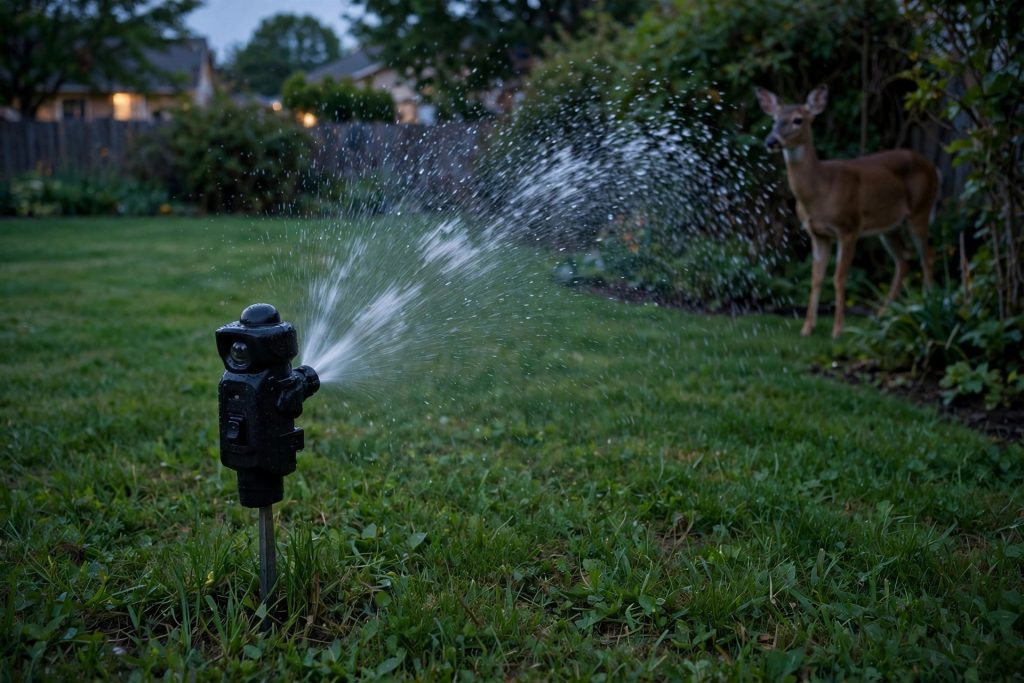
The Orbit Yard Enforcer is the only product here with no active ingredient at all. It is a motion-activated sprinkler: a heat and motion sensor watches the yard, and when a deer walks into range, it fires a burst of water, plus sound and movement, at the animal.
The sensor detects up to 40 feet away, with a 120 degree viewing angle, covering up to 1,600 square feet from a single unit. With add-on expansion sprinklers, coverage reaches 3,840 square feet. Spray distance is up to 35 feet. It doubles as a timed sprinkler with a 30-minute cycle.
Now the honest part. Several reviewers on the official product page report that the sensor triggers reliably only at 10 to 15 feet, rather than the advertised 40 feet. 40 feet is the manufacturer claim; 10 to 15 feet is what owners commonly report.
It runs on 4 AA batteries, not included, and a garden hose connection. You can set it to night only, day only, or 24/7 guard. Rain does not reduce it, because it is a sprinkler, but it needs a hose supply and it does not work below freezing, so bring it in for winter.
The limits are the reason it scores lowest on deterrent strength. Deer can learn the spray zone and approach from behind the sensor, and a startle is not a taste barrier. It works best as part of a layered plan, not as a standalone fix.
Our rating: 7.6 out of 10. The chemical-free design earns the score; the short real-world sensor range and the learning curve hold it back.
Manufacturer page: orbitonline.com
Do Deer Repellents Really Work?
Yes, with limits, and the limits matter more than the yes. That is the honest answer from the university Extension services.
Rutgers NJAES, through extension wildlife specialist Brooke Maslo, says taste- or odor-based repellents “can be effective at discouraging deer in small gardens or beds.” Effectiveness depends on plant palatability, deer hunger, rainfall, and food preference. Only certain products are approved for vegetables or fruit trees, and some have a harvest waiting period.
Iowa State University Extension is blunter. On its page about protecting gardens from deer, it says, “Although repellents are rarely as effective as you would hope!” Taste and odor repellents need reapplication often, and deer quickly become used to them, so alternating scents can help. Iowa State adds the line that matters most: “In many cases repellents are best used in conjunction with other tactics since they are rarely adequate on their own.”
The University of Vermont Extension, through Vern Grubinger, quoted in the Old Farmer’s Almanac, gives the timing rule: “Repellents work best in small plantings. It is important to apply repellents at the first sign of damage, or even before damage occurs.”
Colorado State University Extension, through C.E. Swift, also quoted in the Almanac, sets the ceiling: “Adequate fencing to exclude deer is the only sure way to control deer damage.”
Cooperative Extension notes that most brands use the same core ingredients, putrescent egg solids, capsaicin, and garlic, and that deer get used to one blend, so rotate.
In a small garden, a good spray applied before damage starts, reapplied after rain, and rotated every few weeks will cut your losses a lot. In a large garden or a hard winter, a spray alone will not save your plants.
Deer are only one garden pest, and the rest of the pest list needs its own plan.
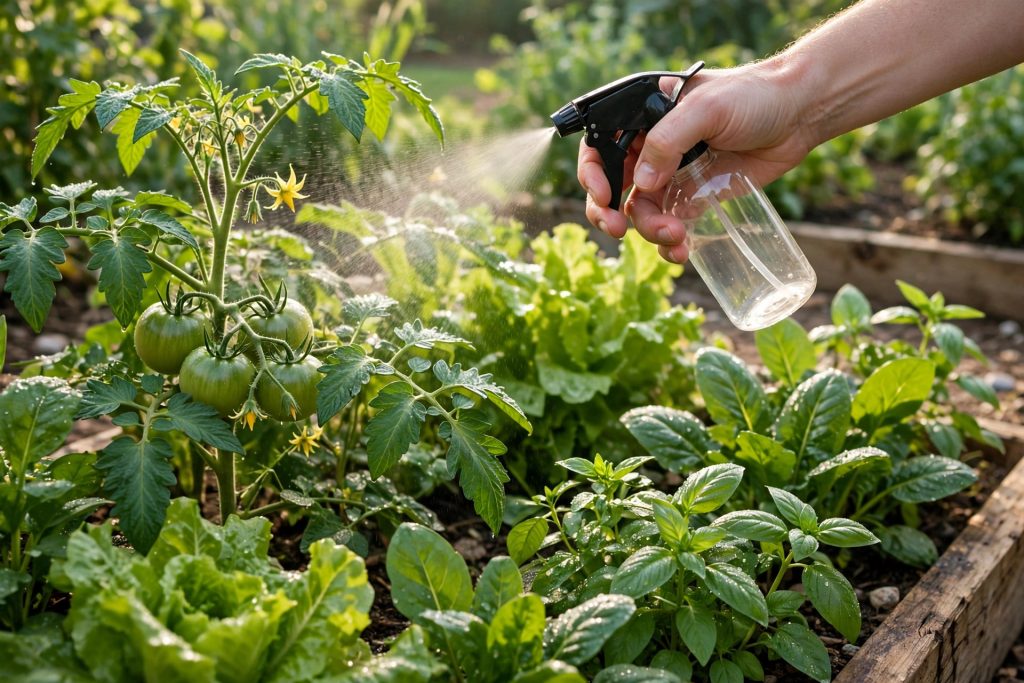
Homemade Deer Repellent Spray That Actually Works
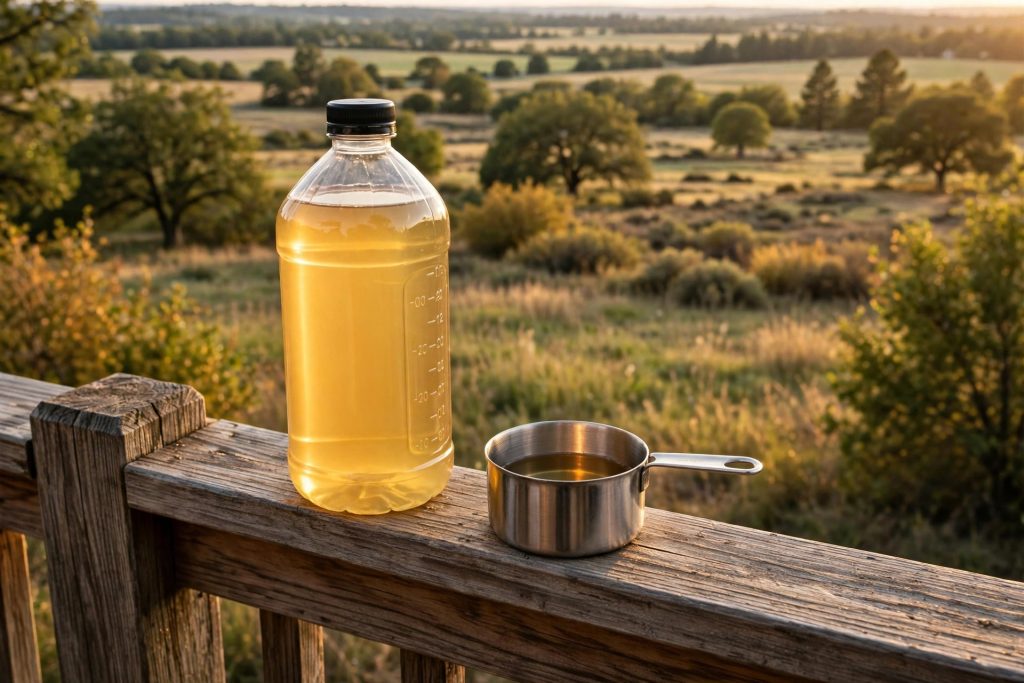
You do not have to buy a bottle to keep deer off your plants. The best-tested homemade deer repellent spray is also the simplest: eggs and water.
The University of Minnesota Extension describes a 1994 study, published as a 1996 master’s thesis by Lutz, that compared commercial repellents with 3 chicken eggs per gallon of water. The home solution was the most effective repellent in the trial. The study estimated it could cover 75 percent or more of average deer repellent needs at minimal cost.
Blend 3 whole eggs thoroughly in water, add water to reach 1 gallon, strain, and spray new growth until wet with a sheen. Reapply every 2 weeks or after rain.
Strain it so egg bits do not clog the sprayer, spray the new growth deer eat first, and reapply every 2 weeks or after rain. The spray works through smell, so it is not effective over winter.
Do not improve the recipe: adding secondary ingredients may mask the egg odor and reduce effectiveness.
Handle the homemade spray with the same care as any food-garden input. Check local guidance before spraying edible parts, and wash all produce well before eating. Mix only as much as you will use and do not keep leftover spray sitting around; clean the spray bottle and sprayer after each use. Test the spray on a small patch of sensitive plants first and watch for leaf damage before spraying the whole bed.
A milder soap spray variant, from Gardening Know How, is 2 tablespoons of gentle liquid dish soap or Castile soap per gallon of water. It is a mild option, not an equal to egg sprays.
Hanging bars of soap is one of the oldest deer tips, and the evidence is weak: Montana State Extension calls hair and bar soap remedies questionable at best, and deer have been reported to eat soap bars.
NC State adds a money-saving note. Christmas tree specialist Jeff Owen found that dried blood and egg powder bought in bulk are as effective as commercial repellents and cost 85 to 90 percent less. For the average homeowner, he says, the pre-made commercial product is adequate, provided repellents are rotated from time to time.
If insects are eating the same plants the deer are after, a neem spray covers the other half of the problem.
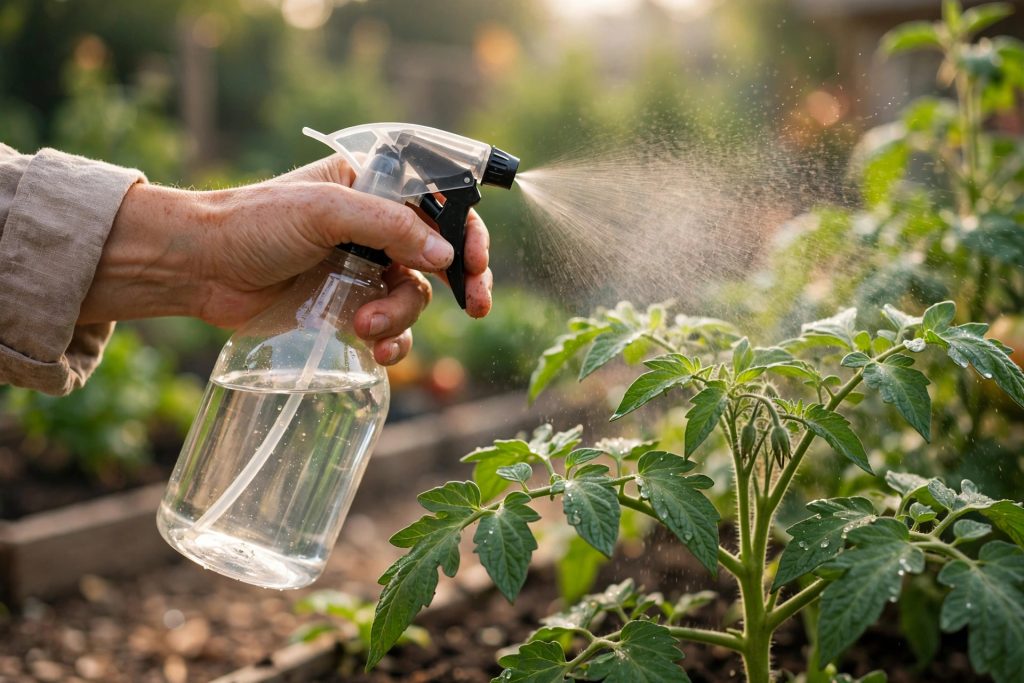
Motion-Activated Deer Deterrents
A motion activated deer deterrent does not taste bad or smell bad. It surprises. A sensor watches the yard, and when a deer steps into range, the device fires water, light, sound, or all three.
The Orbit Yard Enforcer, product 10 above, is the standard product in this category. It fires a burst of water up to 35 feet when its heat and motion sensor trips, covers up to 1,600 square feet from a single unit, and doubles as a timed sprinkler. No extension trial figure for motion sprinklers was found, so no effectiveness percentage is printed here.
Placement decides whether a motion sprinkler helps or wastes water. Put it where deer enter the garden, not in the middle of the beds. Deer follow the same paths every night. Aim the sensor across that path, at deer height, with a clear line of sight.
Iowa State Extension gives the honest limit for all scare devices: they typically provide only temporary relief, often a few weeks, because deer quickly get used to the sound or the intervals, and they learn the boundaries of motion sensors and continue to browse just outside these areas. The fix is the same as with sprays: move the unit every few weeks, change the angle, and pair it with a taste or smell repellent on the plants themselves.
Do not rely on ultrasonic devices. Montana State Extension says they have not proven effective in research trials. A motion sprinkler also guards the garden while you are away. Bring it in before the first freeze.
Deer Resistant Plants to Grow Instead (or As Well)
The cheapest deer repellent is a plant deer do not want to eat. No plant is completely deer proof, and Cornell Cooperative Extension says so in the first line of its list: no plant is completely “deer proof,” particularly when deer densities are high. But some plants are rarely damaged, and planting more of those changes the odds in your favor.
This is the deer resistant plants list, drawn from the Cornell Cooperative Extension ratings, verified on the source page in November 2026.
Woody plants rarely damaged: Common boxwood and spruce.
Annuals rarely damaged: Marigold, snapdragon, sweet alyssum, dusty miller, cleome, morning glory, ageratum, dahlia, and verbena.
Perennials rarely damaged: Astilbe, bleeding heart, beebalm, lavender, daffodil, lamb’s ear, sage, mint, yarrow, butterfly bush, and purple coneflower.
Cornell also names the plants deer destroy first. Frequently severely damaged plants include hosta, daylily, tulips, roses, lilies, and American arborvitae. If you plant a row of hostas and tulips along an unfenced woodland edge, you are planting a deer buffet, and no spray will change that for long.
Rutgers NJAES bulletin E271 is the standard New Jersey rating list. Cornell University also publishes Dr. Mark Bridgen’s list from November 2015, “Plants that Deer Do Not Like to Eat,” in which starred plants were not touched by deer 95 percent of the time in his observations, including boxwood, butterfly bush, spruce, barberry, lavender, and ornamental grasses.
Plant the rarely damaged species on the outside of the bed and the vulnerable plants in the center, behind the resistant ring, and spray those. In a hard winter, a hungry deer will eat plants it normally ignores.
Deer-resistant plant lists are regional guidelines rather than guarantees. Plants that deer rarely browse in one location may be eaten in another, particularly during winter or when food is scarce.
How to Keep Deer Out of Your Garden for Good
Sprays help. Plants help. Motion sprinklers help. But if you want to know how to keep deer out of garden beds for good, the answer is a layered plan, with each layer covering the gaps in the others. No single tactic is enough on its own. Here is the plan, in the order that matters.
- Start with a fence where the pressure is highest. Colorado State says adequate fencing is the only sure way to control deer damage. Rutgers Extension says fencing helps provided the fence is at least 6 feet tall, and notes deer can clear even an 8-foot fence with enough run-up, so a solid privacy fence that blocks their view of the landing zone works better than an open fence of the same height. If a full fence is too much, fence the vegetable garden only, and use cylinders of fencing around individual shrubs and young trees.
- Spray before the damage, not after it. Vermont Extension says to apply repellents at the first sign of damage, or even before damage occurs. Start in early spring, spray on a dry morning, and follow the label schedule: a first spray, a repeat after a week, then monthly. Reapply after heavy rain and whenever new growth appears.
- Rotate your repellents. Deer can become accustomed to one blend, so rotate brands. Use an egg-based spray for a month, then switch to a blood-based one such as Plantskydd, then to a mint-forward one such as Deer Out or I Must Garden.
- Plant resistant species on the outside. Put boxwood, spruce, lavender, marigolds, and daffodils on the outer edge of the bed, and keep hostas, daylilies, and tulips inside, closer to the house.
- Add a motion sprinkler at the entry point. Place it where deer enter the yard, not in the middle of the beds. Move it every few weeks so deer cannot learn its zone.
- Remove the welcome mat. Deer follow the same routes every night. Sacrificial plantings far from the garden can draw them away, and fallen fruit, open compost, and unprotected bird feeders all pull deer in.
- Protect young trees from antler rubbing. Bucks rub their antlers on young trees in fall, stripping bark. Put sturdy stakes, tubes, wraps, or wire cylinders around young trees before the fall rut, and remove them in spring.
None of it works if you do only one item. Put the layers together, and the garden holds.
Slugs work the same beds at night, and the pet-safe bait guide covers them.
Final Thoughts
If you remember one thing from this guide, make it this: the best deer repellent is not a bottle, it is a routine. Pick a spray that fits your garden, apply it before the damage starts, reapply it after rain, rotate it before the deer get used to it, and back it up with resistant plants and, where you can, a fence.
For most gardens, start with the pick that fits your ground: a ready-to-use spray for a small bed, a concentrate for a big property, a sprinkler where you want no chemicals at all. Check the label before anything goes near food.
Spray early, rotate often, plant smart, and fence what matters most.
FAQ
What is the best deer repellent?
For most gardens, Liquid Fence Ready-To-Use is the best overall pick: a proven egg and garlic formula, with a gallon covering 2,000 square feet. Plantskydd scores highest at 8.8 out of 10, and it is the only OMRI Listed product here. If smell matters, I Must Garden Mint Scent is the best smelling option.
Do deer repellents really work?
Yes, with limits. Rutgers Extension says taste- and odor-based repellents can be effective in small gardens or beds, and Iowa State Extension says they are rarely as effective as you would hope. They reduce damage, they do not end it. Fencing is the only sure method, according to Colorado State Extension.
How often do I need to reapply deer repellent?
It depends on the product and the season. Liquid Fence and Nature’s Mace need a repeat spray after 1 week, then about once per month. Bobbex needs reapplication every 7 to 14 days in peak growth, but lasts up to 2 months dormant. Plantskydd lasts 2 to 4 weeks growing and 3 to 6 months dormant. Deer Stopper II and Ortho Deer B Gon are usually every 30 days. Every spray needs reapplication after heavy rain and whenever new growth appears.
Are deer repellents safe for vegetable gardens?
Some are, and some are not, and the label on each bottle decides. Plantskydd is safe for use on fruit, vegetables and other food crops, but its label says not to apply directly onto edible parts 3 to 4 weeks before harvest, and to wash produce before eating. Deer Out is listed for vegetable plants and row crops in Alabama Extension’s ANR-1370 table, and its maker says to spray directly on vegetables and fruit trees, but a retailer listing carries a conflicting direction and the bottle label was not found, so that clearance is unconfirmed. Nature’s Mace is applied to the ground and the area around edible plants, not onto the edible parts, and its maker says to rinse all produce before eating. I Must Garden carries no edible-crop wording on its safety data sheet or product page, neither a clearance nor a restriction, so do not count it as cleared for food gardens until the bottle label is checked. Deer Stopper II, Ortho Deer B Gon and Bobbex must not contact food plants: Deer Stopper II and Ortho say not to let the spray contact plants grown for human or animal consumption, and Bobbex’s label says ‘Not for Use on Food and Feed Crops.’ Bonide Repels-All is a barrier treatment around edibles, not a spray onto them. The Orbit sprinkler only sprays water.
What is the best homemade deer repellent spray?
The 3-egg spray from the University of Minnesota Extension. Blend 3 whole eggs in water, add water to reach 1 gallon, strain, and spray new growth until wet with a sheen. Reapply every 2 weeks or after rain. In a 1994 trial, this home solution was the most effective repellent tested. Do not add extra ingredients. It works through smell, so it is not effective over winter.
What should I do when deer ignore my repellent?
First, check the basics: did you spray before the damage started, repeat after a week, and reapply after rain? If the schedule is right and deer still eat your plants, rotate to a different formula. Then add a layer: a motion sprinkler at the entry point, resistant plants on the bed edge, or fencing around the most valuable plants.
References
1. University of Minnesota Extension, “Protecting plants from deer”: the 1994 trial found the homemade 3-eggs-per-gallon spray the most effective repellent; reapply every 2 weeks or after rain; adding extra ingredients can mask the egg odor and reduce effectiveness. https://extension.umn.edu/about/our-work/regional-partnerships/rsdp-projects/protecting-plants-from-deer
2. Rutgers NJAES, “Deer in the New Jersey Landscape and Garden” (Brooke Maslo): odor and taste repellents can work in small gardens; effectiveness depends on hunger, rainfall and plant palatability; use an integrated approach; check harvest intervals on food crops. https://sebsnjaesnews.rutgers.edu/2016/04/deer-in-the-new-jersey-landscape-and-garden/
3. Cornell Cooperative Extension, “Deer Resistant Plants”: rated plant lists by damage level; no plant is completely deer proof. https://chautauqua.cce.cornell.edu/gardening/deer-resistant-plants
4. Montana State University Extension, “Non-Chemical Deer Control”: 20 percent egg spray is one of the most effective repellents; hair and bar soap home remedies are questionable, deer have been reported to eat soap bars; ultrasonic devices have not proven in trials. http://animalrangeextension.montana.edu/wildlife/prevention_and_control/organic-deer-control.html
5. NC State University via EurekAlert, “Back off, Rudolph”: bulk dried blood and egg powder as effective as commercial repellents at 85 to 90 percent lower cost; rotate repellents for home gardens. https://www.eurekalert.org/news-releases/499975
6. Cooperative Extension, Ask Extension, “Deer repellent”: Extension does not test or endorse brands; most brands share the same core ingredients; rotate blends because deer get used to one. https://ask.extension.org/kb/faq.php?id=890208
7. Plantskydd official site (manufacturer): first animal repellent OMRI Listed; dried blood formula; duration by season. https://plantskydd.com/pages/find-your-repellent/
8. Cornell University, Dr. Mark Bridgen’s deer-resistant plant list (November 2015): starred plants untouched 95% of the time in his observations. http://hort.cornell.edu/bulb/landscape/Mark_Bridgen%27s_Deer_Resistant_Plants_List.pdf
9. Alabama Cooperative Extension ANR-1370, “An Overview and Cost Analysis of Deer Repellents for Homeowners and Landowners”: Table 4 label recommendations (Deer Out for vegetable plants and row crops; Bobbex for ornamental and flowering shrubs only) and Table 3 reapplication timing. https://www.gardenclubbathohio.org/uploads/1/0/1/2/101248940/anr-1370.pdf
10. Liquid Fence, Spectrum Brands: 32 oz ready-to-use product label (2025) and safety data sheet; label scope is ornamental gardens only, with a pollinator warning. Label: https://uat-sc10cdn.spectrumbrands.com/-/media/project/spectrumcommerce/liquidfence/files/labels/new-2026/liquidfencedeerrabbitrepellentreadytouse2label7204125b31aug25hg932461172061232oz.pdf?rev=df71e4dd0c0e4e68a4c61ee99d094ff0&hash=3CC5C7A9A02CEEE35493BB97E04A03C4 ; SDS: https://sc10cdn.spectrumbrands.com/-/media/project/spectrumcommerce/liquidfence/files/sds/liquidfencedeerrabbitrepellentreadytouse27204125b31sdsnov23.pdf?rev=eff136ad9f7745f0b51a44b9d1278f4c&
11. Deer Out: official product page and manufacturer’s safety data sheet (2016). No label PDF was found. Product page: https://www.deerout.com/shop/deer-out-32-oz-concentrate/ ; SDS: http://www.siteone.com/medias/sys_master/PimProductImages/assets/ProductAssets/US/NoBrand/safetyDataSheet/554578011442_sds/554578011442-sds.pdf
12. Bobbex: official application guide, Washington State PICOL label, and safety data sheet. Application guide: https://bobbex.com/when-and-how-to-apply-bobbex/ ; Label: https://picol.cahnrs.wsu.edu/DownloadLabel/41336/WA ; SDS: https://labelsds.com/document.php?file=Bobbex+Deer+Repellent+SDS+8-22-19.pdf&product=8745
13. Plantskydd: product label, safety data sheet (2023), and concentrate range. Label: https://s3-us-west-1.amazonaws.com/agrian-cg-fs1-production/pdfs/Plantskydd_Label1a.pdf ; SDS: https://labelsds.com/images/user_uploads/Plantskydd%20Powder%20SDS%205-29-23.pdf ; Products: https://plantskydd.com/browse/concentrate/
14. I Must Garden: official product page and safety data sheet, Mint Scent (2022). No label PDF was found. Product page: https://www.imustgarden.com/repellents/deer-defense-1 ; SDS: https://www.imustgarden.com/media/wysiwyg/PDF/SDS%20Deer%20Repellent%20(Mint%20Scent).pdf
15. Nature’s Mace: official product page and safety data sheets page. Product page: https://naturesmace.com/products/deer-rabbit-mace-concentrate ; SDS page: https://naturesmace.com/pages/safety-data-sheets
16. Deer Stopper II, Messina Wildlife: official product page, concentrate label (2020), and safety data sheet (2021). Product page: https://www.messinas.com/products/deer-stopper-concentrate ; Label: https://spsonline.com/wp-content/uploads/2024/10/xd-c-032-deerstopperii-liquid-quart-frontback-final-2020-label.pdf ; SDS: https://www.siteone.com/medias/sys_master/PimProductImages/assets/ProductAssets/US/NoBrand/safetyDataSheet/deer-stopper-ii-concentrate—copy-3-/deer-stopper-ii-concentrate-copy-3-.pdf
17. Ortho Deer B Gon: product label (2012) and safety data sheet (2015). The manufacturer page no longer lists the product. Label: https://www.domyown.com/msds/OrthoDeerBGoneProduct_Label.pdf ; SDS: https://assets.unilogcorp.com/187/ITEM/DOC/Ortho_102211252_SDS.pdf
18. Bonide Repels-All Granules: official product page, product label, and safety data sheet (2025). Product page: https://bonide.com/product/repels-all-animal-repellent-granules ; Label: https://bonide.com/wp-content/uploads/2026/09/Repels-All-Animal-Repellent-Granules-25b-3lb-4-2361.pdf ; SDS: https://bonide.com/wp-content/uploads/2026/09/BONIDE-017.pdf
19. Orbit Yard Enforcer: official product page and instruction manual. No safety data sheet exists because it is a sprinkler with no chemical. Product page: https://www.orbitonline.com/products/yard-enforcer-motion-activated-sprinkler ; Manual: https://www.orbitonline.com/cdn/shop/files/Yard_Enforcer_Instruction_Manual.pdf?v=4343448906042757243

Thesis Link : https://saulibrary.edu.bd/daatj/public/uploads/BAU200601_19-Pp_5.pdf
- 10 Best Deer Repellents That Actually Work - November 23, 2026
- 10 Best Microgreen Growing Kits - November 23, 2026
- 10 Best Mosquito Traps for Yards - November 22, 2026