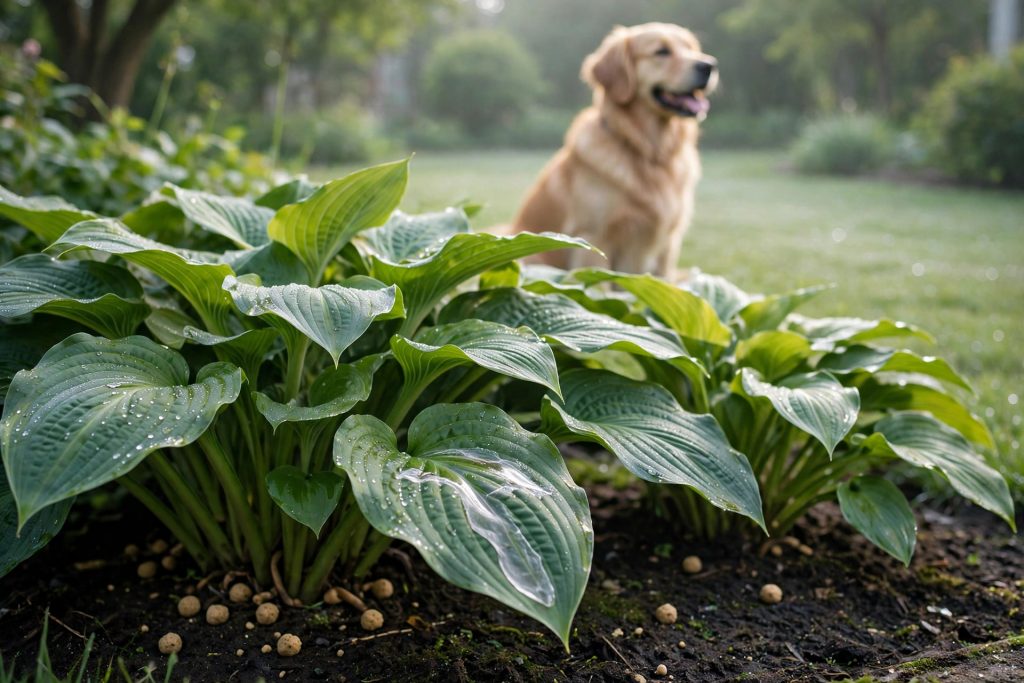

You walk out in the morning and your hostas look like someone took a hole punch to them. The lettuce you planted last week is half gone, and there is a shiny trail across the soil to prove who did it. If you share your garden with a dog or a cat, the usual slug pellets are not an option, because the old metaldehyde formulas can kill a pet that eats them. That is why this guide exists: to find the best slug killer that is safe to use around pets when used as directed, and still strong enough to save your plants.
The short answer is iron phosphate. It is the active ingredient in most of the products below, and university Extension services describe it as safe to use around pets, humans, fish, birds, beneficial insects, and mammals when used as directed. That qualification matters. Pet-safe does not mean harmless in any amount: the pellets are cereal-based, so they can attract a curious dog, and a dog that eats a large amount may suffer stomach upset, vomiting, or diarrhea from the iron. Scatter the bait lightly, never in piles, and store the bag where pets cannot reach it. Slugs eat the pellets, stop feeding almost at once, and die within three to six days, usually out of sight. That is a very different story from metaldehyde, which UC IPM calls particularly poisonous to dogs and cats, and which has no antidote.
We checked every product in this roundup against its label, its EPA registration, or a manufacturer or retailer listing on 2026-11-19. We did not test these products hands-on, and we say so plainly. The scores below come from verified label facts, published Extension guidance, and owner feedback. Where a claim could not be verified, we say that too. No prices and no affiliate links appear anywhere in this article.
Quick Recommendation
If you only read one paragraph, read this one. For most gardens with pets, buy an iron phosphate bait and scatter it lightly, never in piles, around the plants slugs are eating. Safe when used as directed does not mean harmless if a pet eats a large amount, so keep the bag sealed and out of reach.
One more thing before you buy anything: read the active ingredient on the bag, not the front of the bag. Two products can share a brand name and a nearly identical bag while containing completely different chemistry. Corry’s, for example, sells both a metaldehyde formula that can be fatal to dogs and a sodium ferric EDTA formula that is far less risky.
The Best Slug Killer Pet Safe Options at a Glance
| Product | Best For | Active Ingredient | Coverage / Size | Our Rating |
|---|---|---|---|---|
| Monterey Sluggo | Most gardens, all-round use | Iron phosphate 1.0% | 0.5 to 1 lb per 1,000 sq ft; 1, 2.5, 4, 5, 10 lb sizes | 9.2 |
| Bonide Slug Magic | Best value iron phosphate bait | Iron phosphate 1.0% | 1 lb treats 1,000 sq ft; 1 and 3 lb sizes | 9.0 |
| Monterey Sluggo Plus | Slugs plus earwigs and cutworms | Iron phosphate 0.97% + spinosad 0.07% | 0.5 to 1 lb per 1,000 sq ft | 8.9 |
| Monterey Sluggo Maxx | Heavy pressure, large areas | Iron phosphate 3.0% | 2 lb jug; 10 lb size listed by retailers | 8.8 |
| Garden Safe Slug and Snail Bait | Easy to find in big-box stores | Iron phosphate 1.0% | 2 lb bag | 8.7 |
| Natria Slug and Snail Killer Bait | Vegetable gardens, day-of-harvest use | Iron phosphate 1.0% | 1.5 lb bag; 1 tsp per sq yd | 8.6 |
| Ferti-lome Come and Get It | Berries, fruit, and garden centers | Iron phosphate 1.0% | 0.5 to 1 lb per 1,000 sq ft; 1 and 1.25 lb sizes | 8.5 |
| Escar-Go! (Worry Free) | Greenhouses and potted plants | Iron phosphate | Retail sizes vary; follow the label | 8.4 |
| Slug Saloon Beer Trap | Chemical-free trapping | Beer (no pesticide) | One trap per bed; reusable ceramic | 8.3 |
| Corry’s Copper Tape Barrier | Pots and raised beds | Copper barrier (no pesticide) | 15 ft roll; 3/4 in wide | 8.1 |
1. Monterey Sluggo
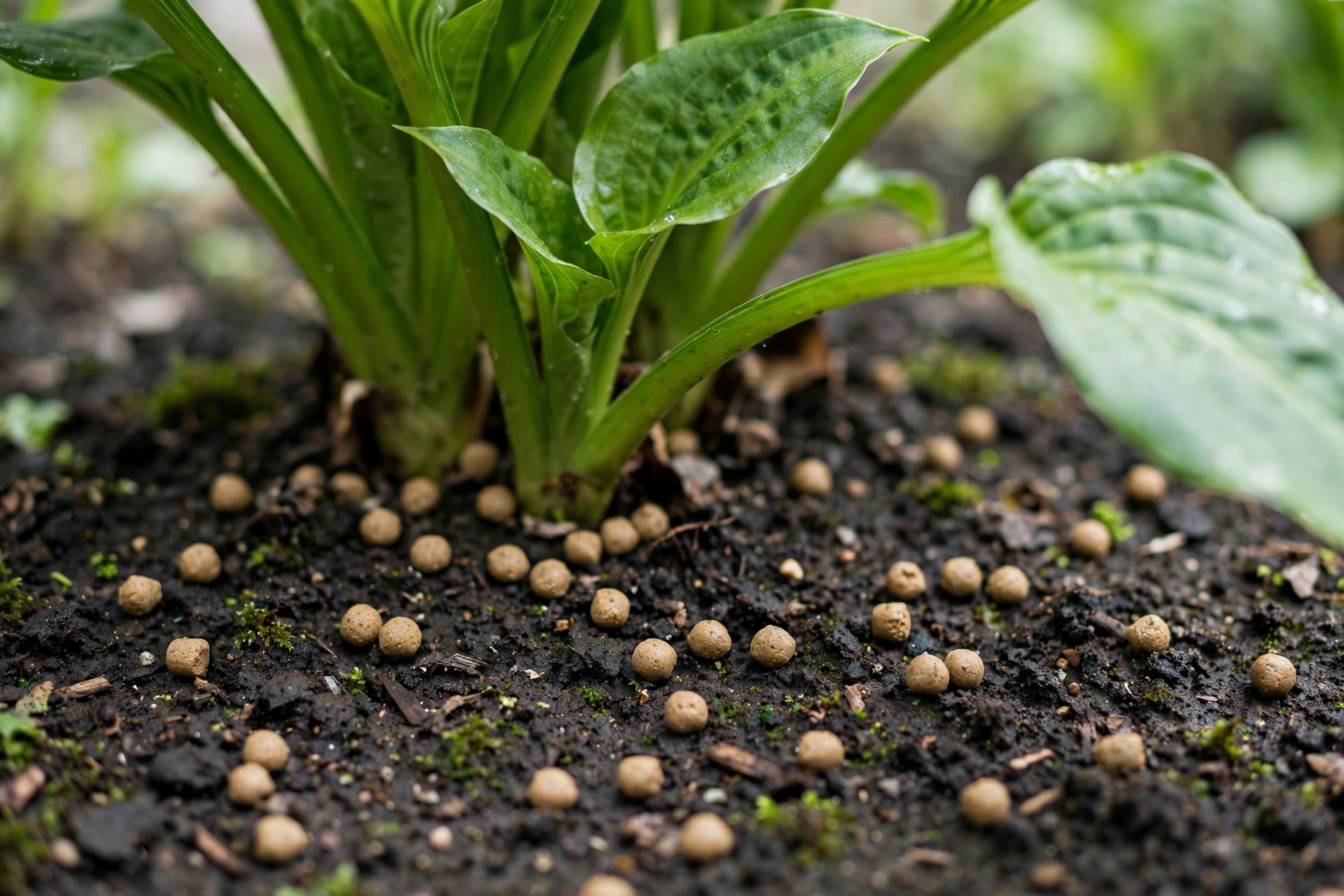
Sluggo is the product that made iron phosphate bait a household name, and it still sets the standard the others are judged against. Monterey has sold it since 1998, and Oregon State Extension names it first among iron phosphate baits. The pellets are a cereal-based bait that slugs find and eat. Once they eat it, they stop feeding almost at once, then crawl away and die within three to six days, usually out of sight, so judge the product by the new growth that stays uneaten, not by dead slugs you can see.
Why it leads this roundup comes down to three label facts. First, the active ingredient is iron phosphate at 1.0%, EPA Registration Number 67702-3-54705, and the product is OMRI Listed for organic gardening. Second, the label covers vegetables, fruit trees, citrus, berries, ornamentals, shrubs, flowers, trees, lawns, gardens, and non-commercial greenhouses, and it can be used up to and including the day of harvest. Third, it stays effective after rain or sprinkling. The label rate is 0.5 to 1 lb per 1,000 square feet, or one level teaspoon per square yard, scattered in a six-inch band around the plants you want to protect. Reapply as the bait is eaten, or at least every two weeks.
Watch out for two things. The cereal bait can attract a curious dog, so scatter it lightly and store the bag where pets cannot reach it. And do not confuse standard Sluggo with Sluggo Maxx, which is a different product at 3.0% iron phosphate. Some secondary roundups list standard Sluggo itself at 3%, which is wrong; the label says 1.0%, and we verified that on the label PDF.
Our rating: 9.2 out of 10. The most trusted, most widely available iron phosphate slug bait we verified, safe around pets when used as directed, with the broadest label and the clearest organic certification.
2. Bonide Slug Magic
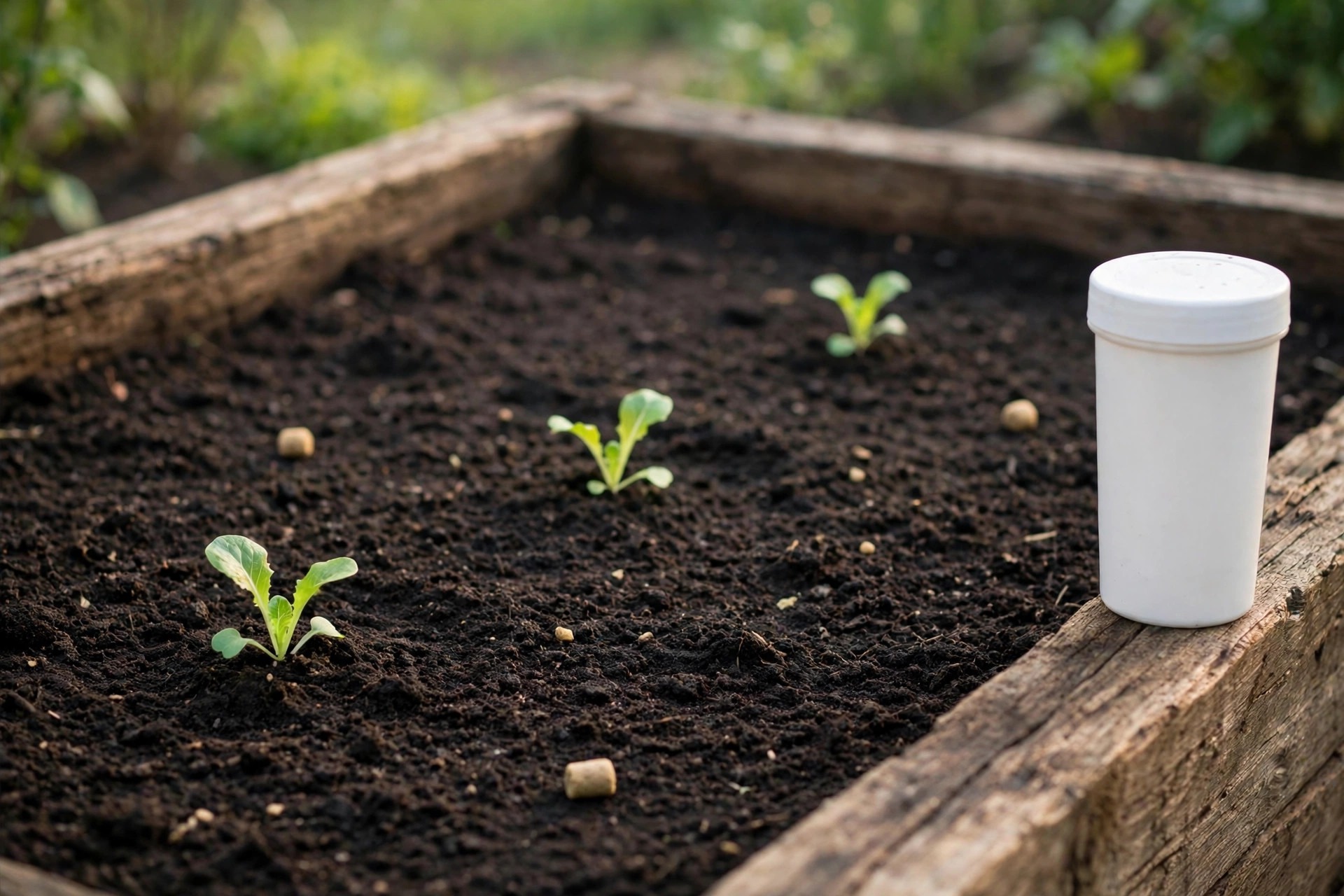
If Sluggo is the original, Slug Magic is the same idea at a friendlier size and a lower cost, and gardeners who have used both report that the results are hard to tell apart. The chemistry is the same: iron phosphate at 1.0%, made with Ferramol slug and snail bait under license from W. Neudorff. The EPA registration is 67702-3-4, and the label says one pound treats 1,000 square feet.
What owners report most often is ease of use. The shaker can makes it simple to scatter a thin, even layer instead of dumping pellets in clumps, and that matters, because UC IPM warns against piling bait: small amounts spread over a wide area work better, since slugs meet the bait while they move. Owners also report that the pellets hold up well in wet weather, which matches the label’s all-weather claim. The product is approved for organic gardening, and it can be used on listed vegetables, fruit trees, citrus, berries, and ornamentals up to and including the day of harvest.
The one thing Slug Magic does not do is anything extra. It kills slugs and snails, and nothing else. If earwigs are also chewing your seedlings, you need Sluggo Plus instead. And like every bait in this roundup, it is not pet food: the pellets are cereal-based, so keep the bag sealed and out of reach, and scatter thinly.
Our rating: 9.0 out of 10. The same proven iron phosphate chemistry as our top pick, in the easiest package to apply, at a value size.
3. Monterey Sluggo Plus
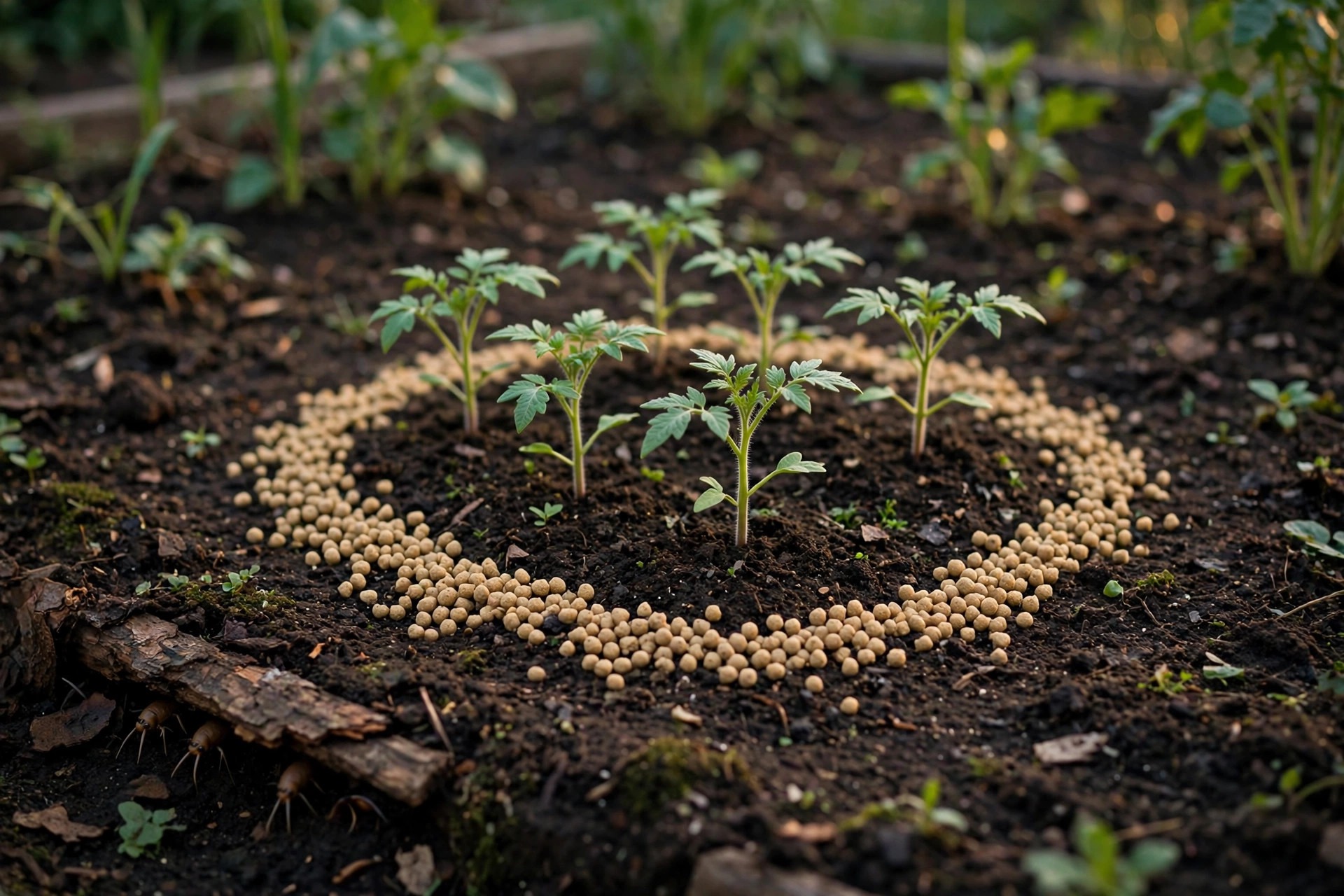
What is it? Sluggo Plus is standard Sluggo with one addition: spinosad at 0.07%, alongside iron phosphate at 0.97%. It is OMRI Listed, EPA Registration Number 67702-24-54705.
What does the extra ingredient buy you? Earwigs, cutworms, sowbugs, pillbugs, and crickets, all listed on the label alongside slugs and snails. If you have found a seedling chewed at the base and blamed slugs, only to find earwigs hiding under a board nearby, this is the product built for that garden.
What should you be careful about? Two things. First, spinosad is harder on bees than plain iron phosphate, so apply it in the evening when pollinators are not active, and keep it off open flowers. Second, judge this product by its own label, not by the iron phosphate alone. The label limits applications to a maximum of three times in 30 days, and it warns not to leave an open container where pets can get into it. The iron phosphate in Sluggo Plus is the same low-toxicity ingredient as in standard Sluggo, but Sluggo Plus is a combination product, and its pet safety comes from the whole label, including the spinosad, not from the iron phosphate part on its own. Use it with a little more care than plain iron phosphate.
Who should buy it? Gardeners who have confirmed, by looking under boards and pots at night, that more than one pest is at work. If slugs are your only problem, standard Sluggo costs less.
Our rating: 8.9 out of 10. The best broad-spectrum pick in this roundup, docked slightly because the spinosad needs more care around bees and pets than plain iron phosphate.
4. Monterey Sluggo Maxx
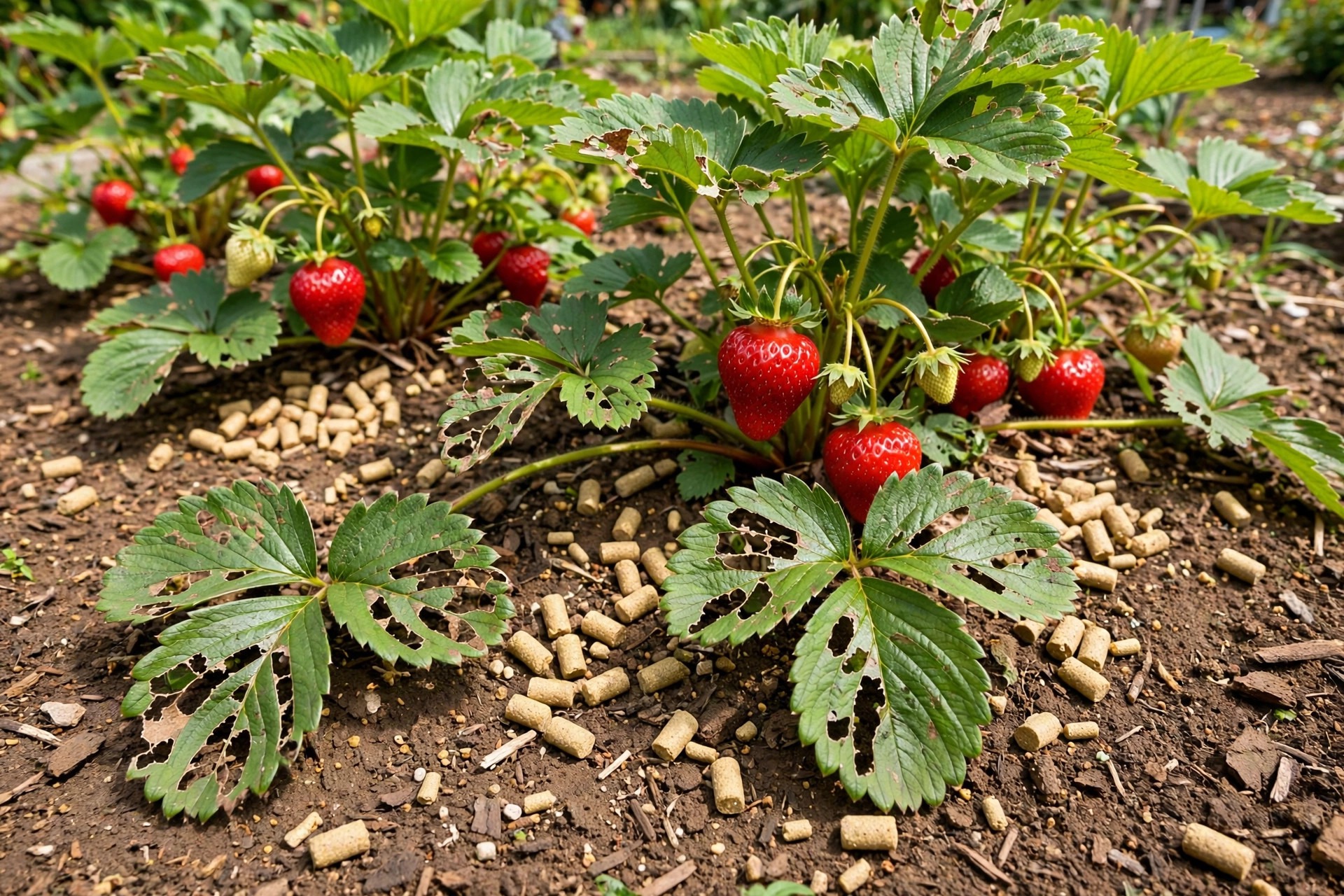
Step up to Sluggo Maxx when you have a large area, heavy slug pressure, and you are going through standard bait faster than you would like. Maxx carries iron phosphate at 3.0%, three times the concentration of standard Sluggo, in the same cereal pellet form. It is OMRI Listed for organic gardening, and retailers list it in 2 lb jugs and 10 lb sizes for bigger properties.
The stronger formula does not change how the bait works. What changes is how much active ingredient each pellet carries, which is why this is the pick for strawberry beds, large hosta borders, and community garden plots. Scatter lightly, do not pile, reapply after heavy rain, and store the container sealed and away from pets.
One honest note: we could not verify a full label application rate for Maxx from the sources we checked at writing time, so follow the rate printed on your own jug rather than copying the standard Sluggo rate. The 3.0% concentration is verified from product listings, and it is the same 3.0% figure that some roundups wrongly attach to standard Sluggo.
Our rating: 8.8 out of 10. The heavy-duty iron phosphate option, best for large gardens and bad slug years.
5. Garden Safe Slug and Snail Bait
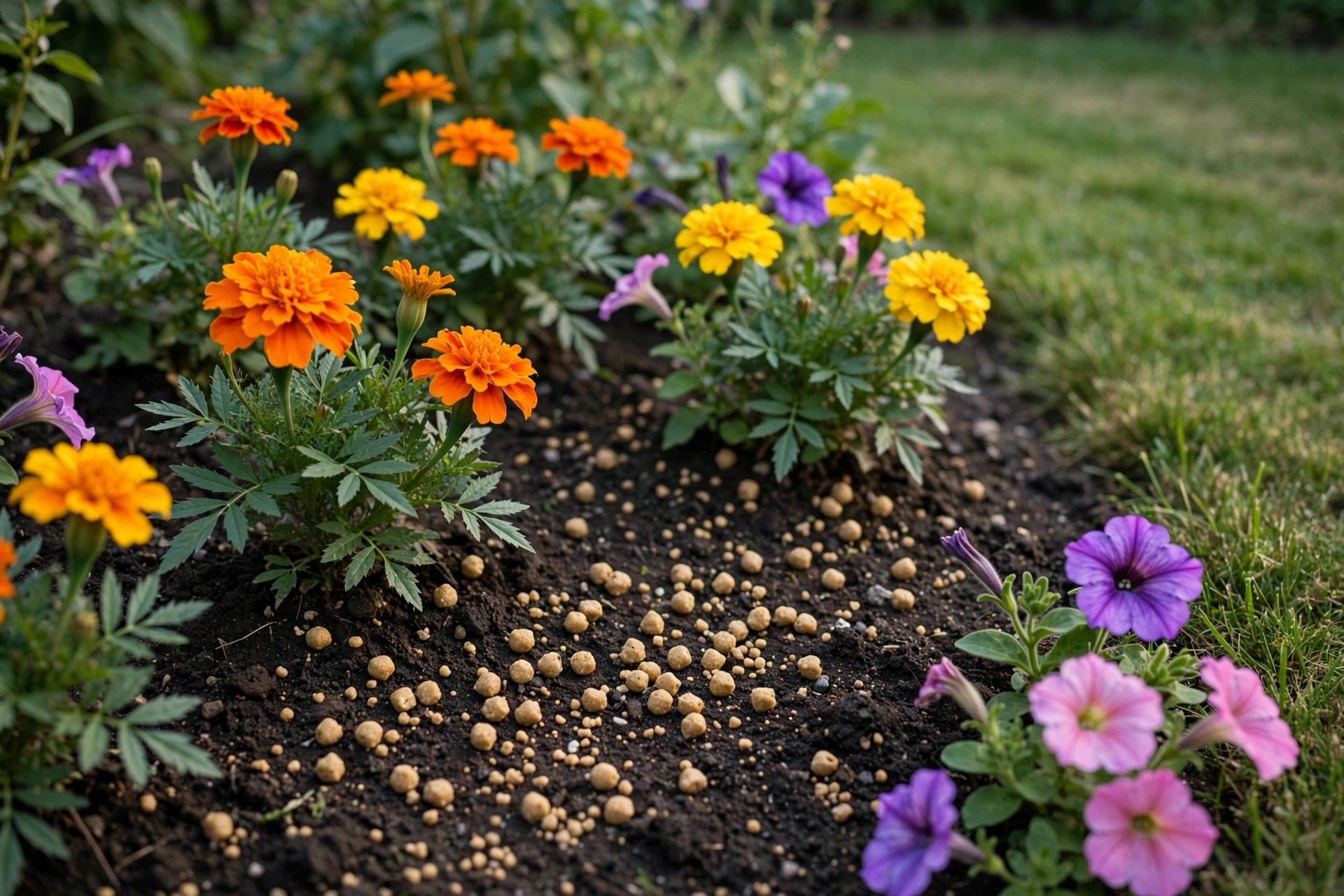
Garden Safe is the bait you are most likely to find without trying. It sits on the shelf in big-box stores and garden centers across the country, and for many gardeners it is the first iron phosphate product they ever buy. The formula is iron phosphate at 1.0%, EPA Registration Number 67702-3-39609, in the same Ferramol family as the other baits here. Retailers list it as OMRI Listed for organic gardening.
Good to know: this product is, chemically, a close cousin of Sluggo and Slug Magic, not a different kind of product. Gardeners sometimes ask whether a cheaper or more available brand works as well, and the honest answer from Extension guidance is that the brand matters less than the active ingredient. If the label says iron phosphate, the mechanism is the same. What differs is availability, package size, and how easy the pellets are to scatter.
The trade-off is information. The manufacturer page we checked gives the active ingredient and the basic directions, but less label detail than Monterey publishes for Sluggo, so confirm the use sites on your own bag before you apply it around vegetables.
Our rating: 8.7 out of 10. The same proven chemistry, in the easiest product to find on a Saturday morning.
6. Natria Slug and Snail Killer Bait
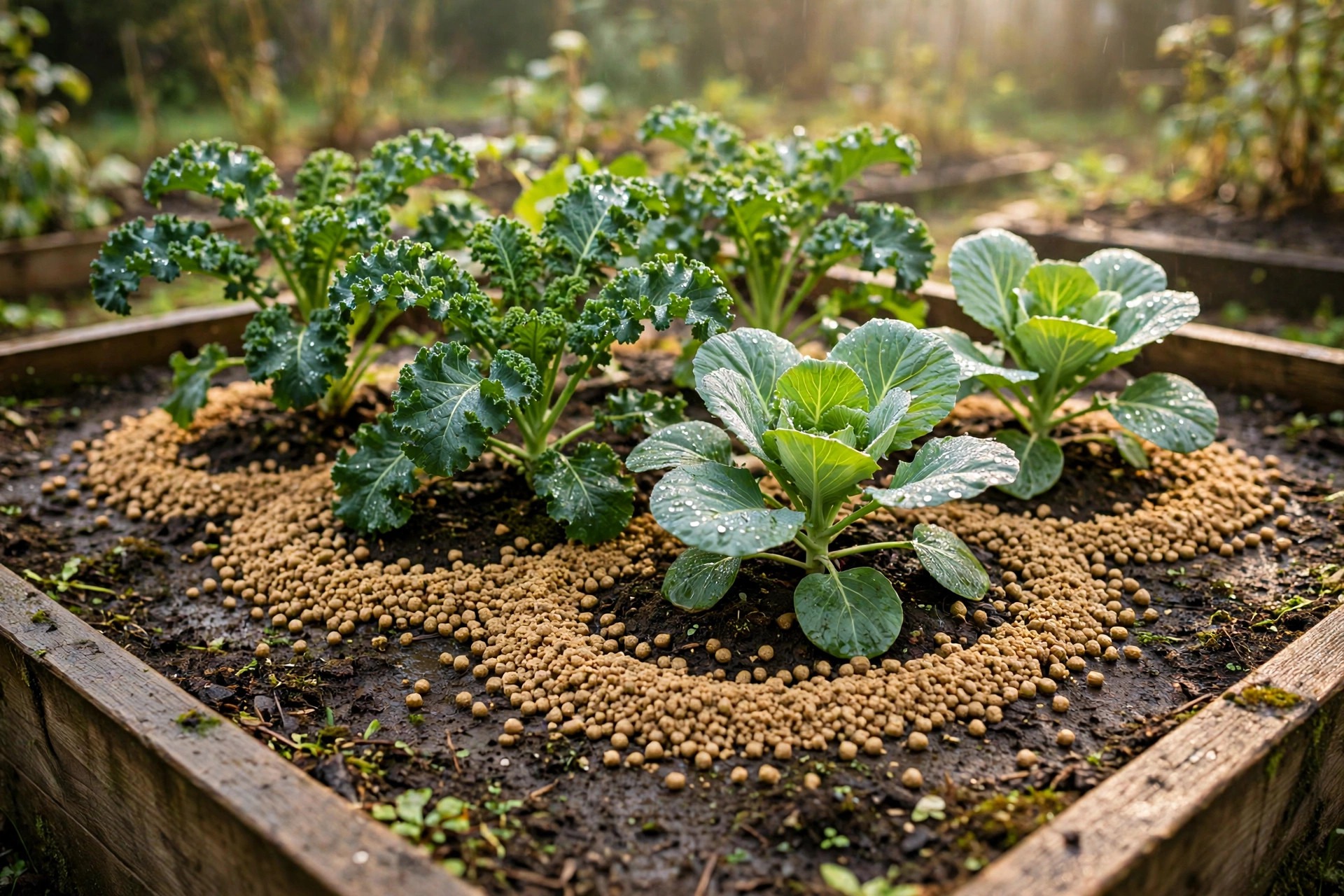
Natria is the iron phosphate bait most often found in home improvement stores, and it is the one we would reach for first in a vegetable garden. The label facts are clear and verified from the EPA-registered label PDF: active ingredient iron phosphate at 1.0%, EPA Registration Number 67702-3-92564, made with Ferramol slug and snail bait, distributed by SBM Life Science Corp. The 1.5 lb bag is the standard size.
- Use sites include lawns, gardens, outdoor ornamentals, vegetable gardens, fruit trees, and citrus plants.
- It may be used up to and including the day of harvest.
- The label rate is one level teaspoon per square yard, scattered in a six-inch circular band around the base of the plant.
One caution about organic certification: we did not find an OMRI listing for Natria in the label or listing sources we checked, so we do not claim one for it. If certified organic status matters to you, pick Sluggo, Sluggo Plus, Sluggo Maxx, Slug Magic, or Garden Safe instead, and check the current OMRI certificate on the bag you buy.
Our rating: 8.6 out of 10. A clear, well-labeled iron phosphate bait, and a strong choice for vegetable beds, with OMRI status unconfirmed.
7. Ferti-lome Come and Get It Slug and Snail Bait
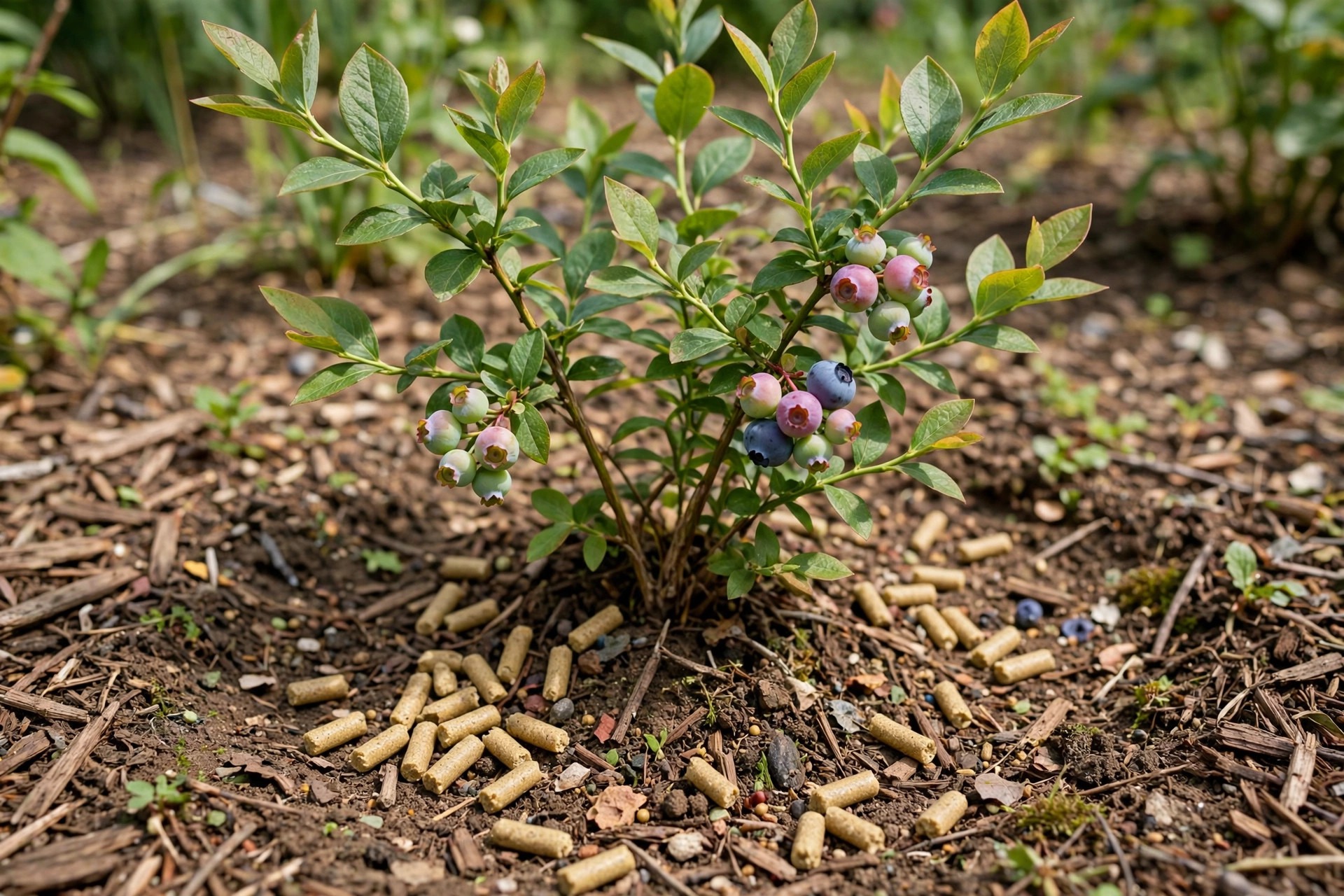
Who should buy this one? Gardeners who shop at independent garden centers, and anyone protecting berries and fruit. Ferti-lome’s Come and Get It is the iron phosphate bait most often stocked by local garden shops, and its label is written for exactly that customer: flowers, gardens, vegetables, and fruit trees, with berries called out by name.
The verified facts: iron phosphate at 1.0%, EPA Registration Number 67702-3-7401, manufactured under license from W. Neudorff, in 1 lb and 1.25 lb sizes. The label rate is the familiar 0.5 to 1 lb per 1,000 square feet, or one level teaspoon per square yard, and the label says to reapply as the bait is eaten or at least every two weeks. Retailer listings describe it as safe to use around domestic animals, pets, and wildlife, and as OMRI Listed for organic gardening, though we flag that OMRI claim as per retailer listing only, since we did not see the certificate itself.
There is a naming trap to avoid here. Ferti-lome also sells a Natural Guard Bug, Slug and Snail Bait that adds spinosad, which is the same combination as Sluggo Plus. If you want plain iron phosphate, buy Come and Get It, and check the active ingredient panel before you leave the store.
Our rating: 8.5 out of 10. A garden-center staple with a clear label and a strong fit for berries and fruit, with the OMRI claim resting on retailer listings.
8. Escar-Go! Slug and Snail Bait

Escar-Go! is the quiet member of this roundup, and it earns its place on one fact: Oregon State Extension names it by name, alongside Sluggo, as an iron phosphate bait. The product is sold under the Worry Free brand, and the Pacific Northwest Pest Management Handbooks list it alongside the other iron phosphate products.
What we could not confirm, and we say so plainly, is the exact iron phosphate percentage and the OMRI status. The label sources we checked at writing time did not give a percentage, and no OMRI certificate turned up in our search. That does not make the product bad; it makes it less documented than the seven baits above it. If you find Escar-Go! on a shelf, read the active ingredient panel, confirm it says iron phosphate, and follow the rate on that label.
Where Escar-Go! fits best is the greenhouse and the potted plant bench. It is a straightforward iron phosphate bait with no added insecticide, so it suits enclosed spaces where you want slug control and nothing else.
Our rating: 8.4 out of 10. Extension-recommended iron phosphate bait, scored a little lower because its percentage and OMRI status could not be verified at writing time.
9. Slug Saloon Beer Trap
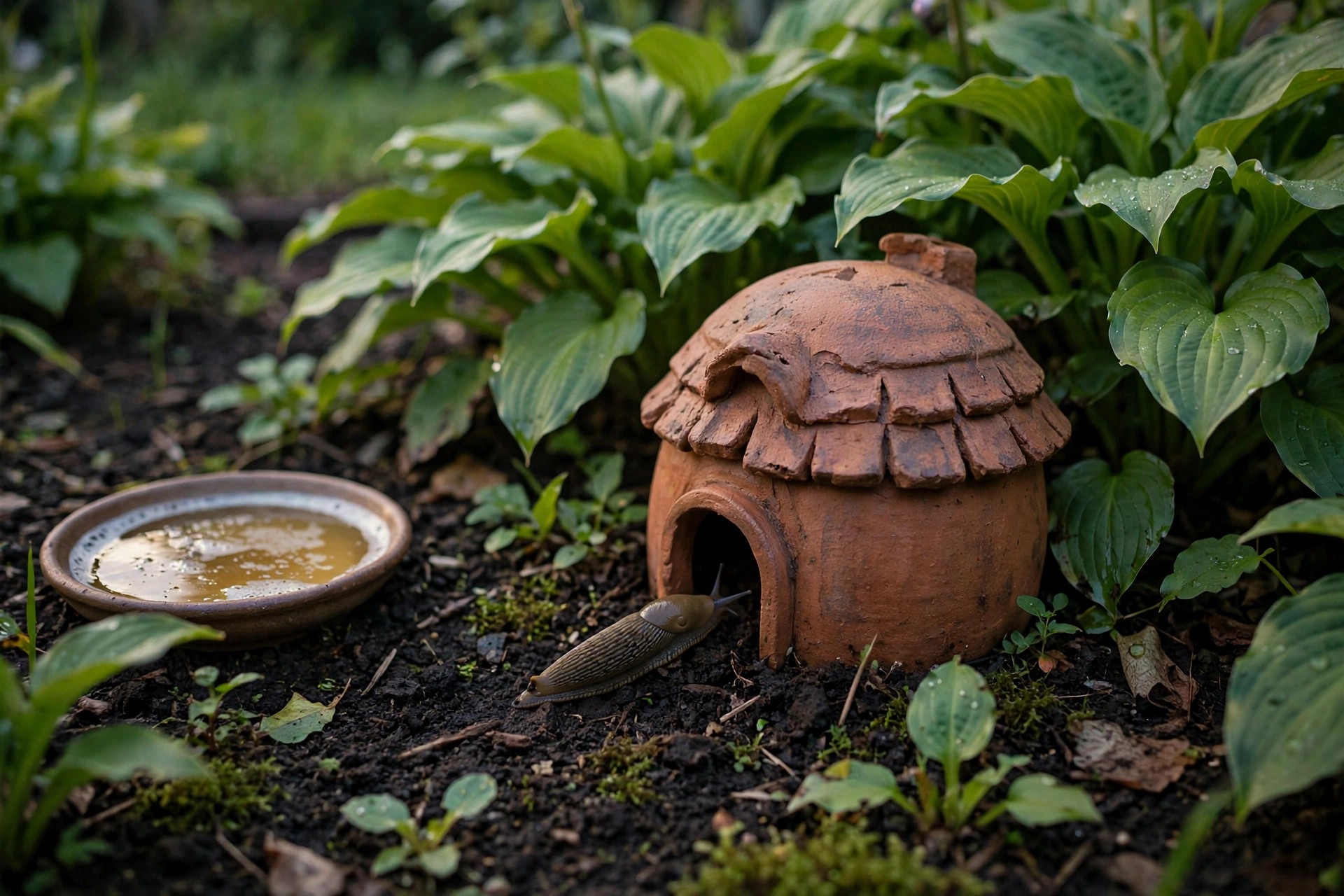
Not everyone wants to scatter bait, even a pet-safe one. The Slug Saloon is for those gardeners. It is a heavy, reusable ceramic trap shaped like a tiny house, with a roof that keeps rain from diluting the beer inside. You fill it with cheap beer, set it in the bed, and slugs follow the yeast smell inside and drown. There is no pesticide in it at all, which is why it is described as chemical-free. That is not the same as safe for pets in every situation: the beer inside can attract a thirsty dog, and the ceramic body can break if it is knocked over or dropped, leaving sharp pieces and spilled beer where a pet can reach them.
- Choose a shady, damp spot near the plants slugs are eating, ideally at the edge of the bed rather than in the middle, so you are drawing slugs away from your plants.
- Sink the trap so its entrance sits at soil level, and fill it with an inch or two of beer. Any cheap lager works; slugs are drawn to the yeast, not the brand.
- Check it every one to three days and refill.
- Use more than one trap in a large bed. Beer traps only attract slugs from a few feet away, so one trap cannot protect a whole garden. Space them a few feet apart along the bed edge.
- Place the trap where pets cannot drink from it, and where a dog cannot knock it over. Check the ceramic for cracks each time you empty it, and replace a cracked trap at once.
The limits are real and worth stating. A beer trap only catches the slugs that find it, so it reduces the population rather than ending the problem, and it needs regular emptying, which is not a job everyone enjoys. The ceramic body can shatter if you drop it on a stone path, and it costs more up front than a bag of pellets. But it lasts for years, it looks at home in a perennial bed, and it is the only pick in this roundup that involves no chemicals of any kind.
Our rating: 8.3 out of 10. The best chemical-free pick, and a genuinely effective trap, held back only by its short range and the chore of emptying it.
10. Corry’s Slug and Snail Copper Tape Barrier
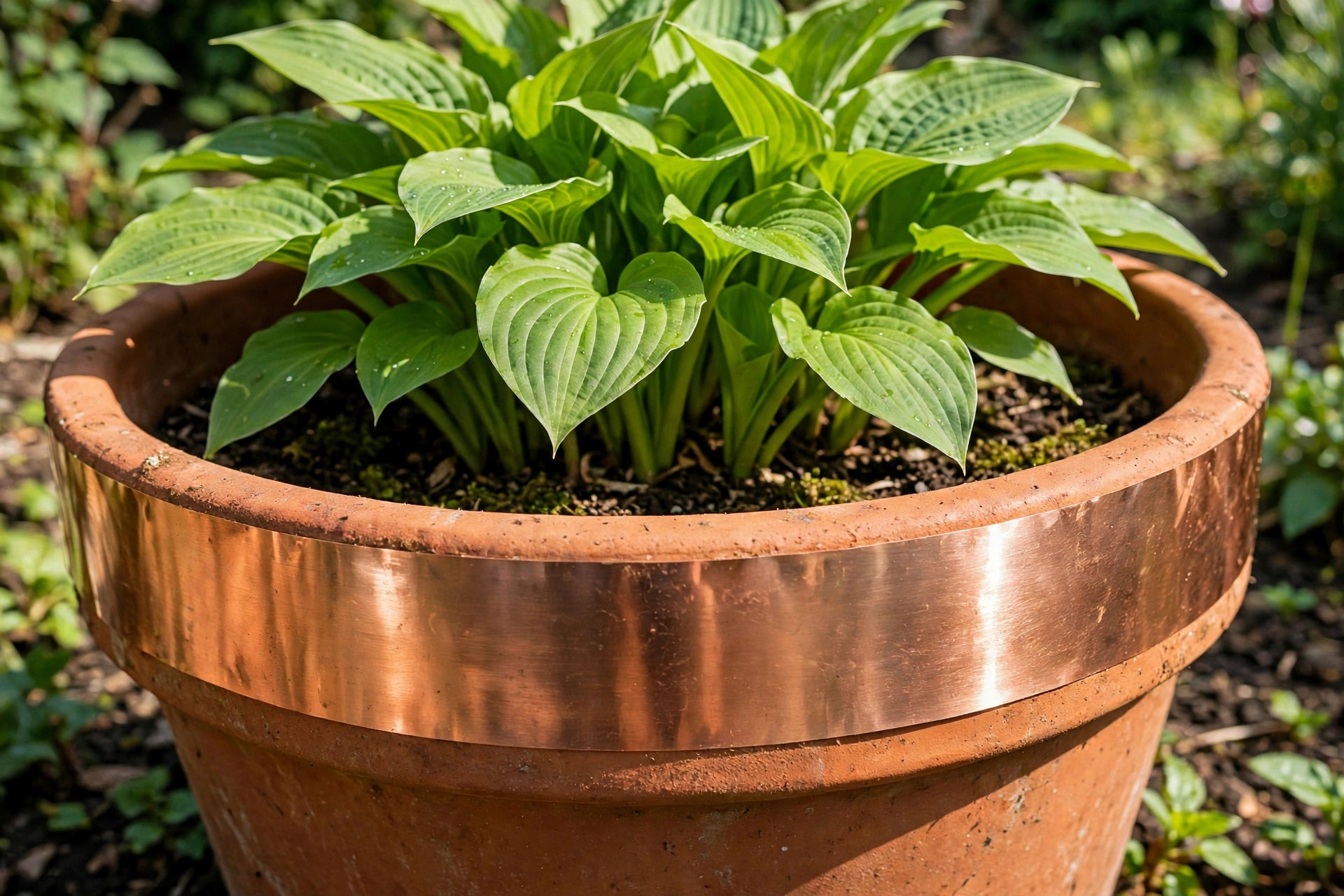
Copper tape is not a killer, and that is the point. It is a barrier. When a slug’s moist body touches copper, the contact sets up a tiny reaction that feels like a mild shock, and the slug turns back. No poison, no bait, nothing for a pet to eat. Corry’s version is the one most often recommended for this job: a 3/4 inch wide pure copper tape, sold in 15 foot rolls, with an adhesive back.
- Clean the surface first. Dust and damp wood stop the tape from sticking, and a loose edge is a gap a slug will use.
- Wrap one unbroken ring around the pot or bed, and overlap the ends by an inch or two. A gap as small as a few millimeters defeats the barrier.
- Keep the tape clear of soil and leaves. If a leaf hangs down over the tape, slugs will use it as a bridge, and if soil spills over the band, they will crawl straight across.
- Check it after rain and at the start of each season, and replace any section that has lifted or corroded.
Where it struggles is open ground. Wrapping a whole vegetable bed in copper tape is expensive and fiddly, and the tape cannot protect plants that slugs can reach from below or from overhanging foliage. Its real home is containers: a potted hosta, a strawberry pot, a raised bed with a clean wooden edge.
One clarification: this is Corry’s copper tape, not Corry’s slug bait. The same brand sells a metaldehyde bait that is toxic to dogs, and a sodium ferric EDTA bait that is not iron phosphate. Always check what you are holding.
Our rating: 8.1 out of 10. The best barrier in this roundup, and the right pick for pots, with a lower score only because it protects one container at a time.
How We Chose the Best Pet-Safe Slug Killers
We did not test these products hands-on, and no score in this article should be read as a laboratory result. The scores come from verified label facts, published Extension guidance, and owner feedback, weighted by the system below. We built the system for this category, because pet safety is the whole point of this roundup, so it carries the largest weight.
| Scoring Factor | Weight | What We Looked For |
|---|---|---|
| Pet safety | 30% | Active ingredient toxicity to dogs and cats, label warnings, and Extension guidance on pet risk |
| Effectiveness | 25% | Whether the active ingredient is proven against slugs and snails, and how quickly feeding stops |
| Ease of use | 15% | How simple the product is to apply, scatter, set, or install, and how often it needs attention |
| Rain resistance | 10% | Whether the product keeps working after rain or sprinkling, or needs reapplying after every shower |
| Organic certification | 10% | OMRI Listed status, verified from the label or the manufacturer, not from a retailer claim alone |
| Value | 10% | Coverage per bag or trap, pack sizes available, and how long one purchase lasts in a normal garden |
| Total | 100% |
Here is every factor score behind each rating, so any reader can check the maths. Multiply each factor score by its weight and add the six results together. Totals are rounded to one decimal place, halves up, and each total matches the rating shown in the comparison table and in the product section.
| Product | Pet safety (30%) | Effectiveness (25%) | Ease of use (15%) | Rain resistance (10%) | Organic certification (10%) | Value (10%) | Weighted total |
|---|---|---|---|---|---|---|---|
| Sluggo | 9 | 9 | 9 | 10 | 10 | 9 | 9.2 |
| Slug Magic | 9 | 9 | 10 | 8.5 | 8.5 | 8 | 9.0 |
| Sluggo Plus | 8.5 | 9.5 | 8.5 | 9 | 10 | 8 | 8.9 |
| Sluggo Maxx | 8.5 | 9 | 8.5 | 9 | 10 | 8.5 | 8.8 |
| Garden Safe | 9 | 9 | 9 | 8 | 8 | 8 | 8.7 |
| Natria | 9 | 9 | 9 | 8 | 7 | 8 | 8.6 |
| Ferti-lome | 9 | 9 | 8.5 | 8 | 8 | 7 | 8.5 |
| Escar-Go | 9 | 8.5 | 8.5 | 8 | 7 | 8 | 8.4 |
| Slug Saloon | 8.5 | 8 | 8 | 8 | 9 | 8.5 | 8.3 |
| Copper Tape | 10 | 6.5 | 8 | 7.5 | 8 | 7 | 8.1 |
A note on the two non-bait picks. The beer trap and the copper tape were scored on the same six factors. The trap earns its pet safety score from having no chemicals at all, held back by the beer inside and the ceramic body that can break. The tape earns a full pet safety score because there is nothing in it for a pet to eat, and it loses on effectiveness because it guards one container at a time.
A few rules shaped every score. Any product whose active ingredient is metaldehyde was excluded entirely, no matter how well it works, because UC IPM describes metaldehyde as particularly poisonous to dogs and cats. A product scored higher when its OMRI status could be verified from the label or the manufacturer, and lower when the claim rested only on a retailer listing. Non-bait products were scored on the same factors, which is why the beer trap and the copper tape score lower on effectiveness: they work in one spot, while a bait works across a whole bed.
We also verified the chemistry behind the names, because the names are misleading. Iron phosphate, sodium ferric EDTA, and metaldehyde are three different active ingredients, and they are not interchangeable. Iron phosphate is the low-toxicity standard in this roundup. Sodium ferric EDTA is a different iron compound used in Safer Brand Slug and Snail Killer (6.00%, per the manufacturer page) and in Corry’s Slug and Snail Killer (5%, EPA Registration Number 67702-33-8119). UC IPM lists both as example products for ferric sodium EDTA, and notes that it works faster than iron phosphate, in about three days instead of up to seven, but it is not labeled for organic use. We did not include either one in the top 10, because both are easy to confuse with iron phosphate products.

Beer Traps vs Slug Pellets
Both work, but they work in different ways, and the honest answer is that most gardens do better with both than with either one alone.
| Beer Traps | Iron Phosphate Pellets | |
|---|---|---|
| How it works | Slugs follow the yeast smell, fall in, and drown | Slugs eat the bait, stop feeding, and die in 3 to 6 days |
| Range | A few feet per trap | The whole treated bed |
| Chemicals | None | Iron phosphate, low toxicity, breaks down into soil nutrients |
| Upkeep | Empty and refill every 1 to 3 days | Reapply as eaten, or at least every 2 weeks |
| Best for | Small beds, pots, gardeners who avoid all pesticides | Large beds, vegetable gardens, heavy slug pressure |
| Weakness | Only catches slugs that find the trap | Needs reapplying after heavy rain; pets must not eat the bait |
Pellets win on coverage. One scattering protects a whole bed, and the bait keeps working for up to two weeks even in wet weather, per Oregon State Extension. Beer traps win on purity: there is nothing in them but beer, so there is nothing for a pet to eat and nothing added to the soil. They also give you visible proof, since you can count the catch each morning, which pellets never do.
Our advice is to pair them: scatter iron phosphate bait lightly around the plants, and set a beer trap at the edge of the same bed. That combination is also the closest thing to what UC IPM recommends, which is never to rely on baits alone, but to combine them with cultural steps like clearing hiding places and watering in the morning. One last warning: use a covered trap like the Slug Saloon rather than an open dish of beer, and keep traps where pets cannot easily reach them.
How to Protect Hostas from Slugs
Hostas are the plant slugs love most, and UC IPM lists them among the plants slugs and snails favor. A hosta bed in a damp, shady corner is a slug restaurant, and a single wet night can leave a prize plant full of holes. Protecting hostas takes a layered plan, not a single product.
First, change the conditions. Slugs need damp shade and daytime hiding places. Water in the morning so the soil surface dries by evening, when slugs come out to feed. Clear away wet leaves, boards, and piles of debris near the hostas, and lift pots off the ground so slugs cannot hide underneath.
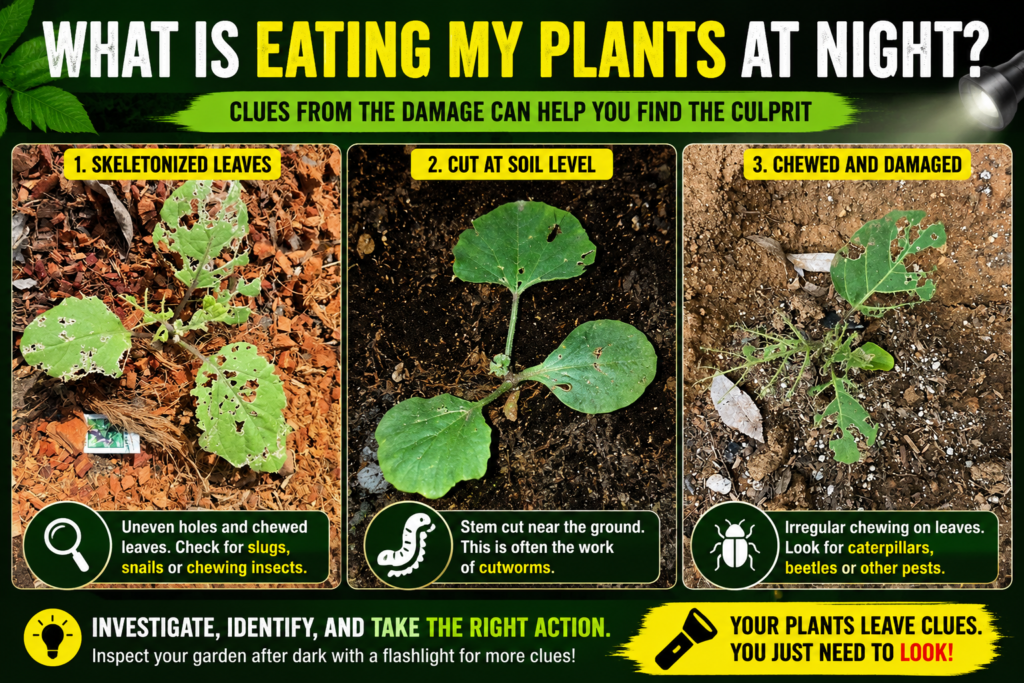
Second, check after dark. Take a flashlight out an hour or two after sunset, when the garden is damp, and look at the undersides of hosta leaves and around the base of the plants. You will see the slugs at work, and in a small bed you can simply pick them off by hand. If you are not sure slugs are the culprit at all, read our guide on what is eating your plants at night, which walks through the clues, including the silvery slime trail that gives slugs away.
Third, put a ring around the plants that matter most. For hostas in pots, copper tape around the rim is the simplest fix, and it lasts for seasons. For hostas in the ground, scatter iron phosphate bait in a six-inch band around the base of each plant, and reapply after heavy rain.
Fourth, set a beer trap at the edge of the bed. It draws slugs away from the hostas and gives you a daily count of how bad the pressure is. When the catch drops to one or two a night, you know the combination is working. And remember that no single night fixes a hosta bed: slugs lay eggs several times a year, and new slugs keep arriving from damp corners of the garden, so repeat the small steps week after week through the wet season.
Diatomaceous Earth for Slugs
Diatomaceous earth for slugs is one of the most searched natural options, and it deserves an honest explanation, because it works very differently from a bait. Diatomaceous earth, usually shortened to DE, is a fine powder made from the fossilized shells of tiny aquatic organisms called diatoms. The powder is full of microscopic sharp edges, and when a soft-bodied slug crawls across it, the powder damages its skin and dries it out.
The product to buy is food-grade DE, and the best-known brand is Harris Food Grade Diatomaceous Earth. The Harris 4 lb bag is 100% ground freshwater diatomaceous earth with no additives or fillers, it is OMRI Listed for organic use, and it comes with a powder duster in the bag. Do not buy pool-grade DE for the garden: pool-grade DE is heat-treated, has a much higher crystalline silica content, and carries real respiratory risks.
Three honest limits matter more than the marketing. First, DE only works when it is dry. One rain shower or one morning of heavy dew turns it into harmless mud, so you must reapply after every wet spell, which is exactly when slugs are most active. Second, it is a barrier, not a bait: it only affects the slugs that crawl across it, so you need a complete, unbroken ring around each plant. Third, it is a fine dust, so wear a mask when you apply it, and keep pets and children away until the dust has settled.
Our verdict: DE is a useful extra layer around a single prized hosta or a row of seedlings in dry weather, and a reasonable choice for gardeners who will not use any bait. It is not a replacement for iron phosphate bait in a wet climate or a large garden, because the reapplication chore defeats it.
Metaldehyde: The Ingredient Pet Owners Must Avoid
Metaldehyde is the active ingredient in the older generation of slug baits, and it is extremely toxic to pets. UC IPM states that metaldehyde baits are particularly poisonous to dogs and cats, that the pellets can attract dogs, and that they should not be used where children and pets could reach them. Oregon State Extension adds that metaldehyde is a leading cause of accidental poisoning and deaths in dogs in the Pacific Northwest, because the cereal-based pellets are attractive to dogs.
Products that contain metaldehyde include Ortho Bug-Geta, Deadline, and the older Corry’s formulas. The EPA label for Corry’s Slug, Snail and Insect Killer (EPA Registration Number 8119-5) lists metaldehyde at 2% plus carbaryl at 5%, and the older Corry’s Slug and Snail 3.25 label (EPA Registration Number 8119-11) warns that the pesticide may be fatal to dogs or other pets if eaten, and that there is no antidote.
What happens if a dog eats metaldehyde bait? The signs, according to the National Pesticide Information Center, can appear within minutes to three hours, and include drooling, vomiting, tremors, and seizures. If you think your pet has eaten any slug bait, contact a veterinarian or the ASPCA Animal Poison Control Center at once, and take the product container with you so the vet can see the active ingredient. In the store, the rule is simple: turn the bag over and read the active ingredient panel. If it says metaldehyde, put it back.
Final Choice
The best slug killer pet safe pick for most gardens is Monterey Sluggo, at 9.2 out of 10, because it is the original OMRI-listed iron phosphate bait, its label is the clearest we verified, and it works on vegetables, fruit, ornamentals, lawns, and greenhouses right up to harvest day. Bonide Slug Magic is the pick if you want the same chemistry in the easiest package, and Sluggo Plus is the pick if earwigs and cutworms are eating your seedlings too.
But the real final choice is not a product, it is a method. No bait alone will control slugs for long, and UC IPM says so plainly. Scatter an iron phosphate bait lightly, set a beer trap at the bed edge, ring your potted hostas with copper tape, water in the morning, and clear the damp hiding places.
Slugs are only one of the pests that visit at night, and a garden that is healthy, well spaced, and watched regularly is harder for every pest to damage.
References
- University of California Statewide Integrated Pest Management Program, Pest Notes: Snails and Slugs. Metaldehyde is particularly poisonous to dogs and cats, iron phosphate is safer around children, pets, birds, and other wildlife, and baits alone will not give long-term control.
- Oregon State University Extension, Managing Slugs and Snails (Clackamas County Master Gardener Association). Iron phosphate makes slugs stop feeding and die in three to six days, is safe around pets, humans, fish, birds, and beneficial insects, and remains active for up to two weeks even with repeat wettings.
- U.S. Environmental Protection Agency, Biopesticides Fact Sheet for Iron Phosphate (Ferric Phosphate). Iron phosphate makes slugs stop eating almost immediately and die three to six days later; it is generally regarded as safe for food use, and it was first registered in 1997.
- Garden Safe Brand, Slug and Snail Bait product page (Spectrum Brands). Manufacturer source for Garden Safe: iron phosphate 1.0%, slugs and snails cease feeding and die within three to six days, for use in lawns, gardens, greenhouses, ornamentals, vegetables, fruits, and berries.
- Safer Brand, Slug and Snail Killer product page (Woodstream). Manufacturer source confirming Safer Brand SB125 uses sodium ferric EDTA at 6.00%, not iron phosphate, which is why it is discussed here as a different chemistry.
Frequently Asked Questions
Is iron phosphate slug bait safe for dogs and cats?
Iron phosphate bait is considered safe to use around pets when used as directed, according to Oregon State Extension and UC IPM, and it is far safer than metaldehyde, which UC IPM calls particularly poisonous to dogs and cats. That does not mean it is harmless in any amount: the cereal bait can attract dogs, and a dog that eats a large amount may suffer stomach upset, vomiting, or diarrhea from the iron. Scatter the bait lightly, never in piles, and store the bag where pets cannot reach it.
What is the best iron phosphate slug bait?
For most gardens, Monterey Sluggo is the best slug killer pet safe pick we verified, because it is the original OMRI-listed formula, its label covers the widest range of plants, and it is sold in sizes from 1 lb to 10 lb. Bonide Slug Magic is the same chemistry at a value size and is the easiest to scatter from its shaker can. If you also have earwigs or cutworms, Sluggo Plus adds spinosad to the same iron phosphate base.
Beer traps vs slug pellets, which works better?
Pellets work better for coverage, because one scattering protects a whole bed for up to two weeks, while a beer trap only catches slugs within a few feet. Beer traps work better for gardeners who want no chemicals at all. Most gardens do best with both: pellets around the plants, and a beer trap at the edge of the bed.
How do I protect hostas from slugs without chemicals?
Use a layered plan: water in the morning so the soil dries by evening, clear damp hiding places near the plants, check the hostas after dark with a flashlight and hand-pick slugs, ring potted hostas with copper tape, and set a beer trap at the edge of the bed. If you will use a bait, iron phosphate is the lowest-risk option.
Does diatomaceous earth kill slugs?
Food-grade diatomaceous earth can kill slugs by drying them out when they crawl across the dry powder, and Harris Food Grade Diatomaceous Earth is OMRI Listed for organic use. But it only works while it stays dry, so one rain shower ends its effect, and it must be reapplied after every wet spell. It is a useful barrier around a single prized plant in dry weather, not a replacement for iron phosphate bait in a wet climate. Never use pool-grade DE in the garden.
Can I use iron phosphate slug bait in a vegetable garden?
Yes. Iron phosphate baits are labeled for use in vegetable gardens, and several products in this roundup, including Sluggo, Slug Magic, and Natria, may be used up to and including the day of harvest. Always confirm that vegetables are listed on the label of the exact product you buy, and follow its rate and directions.

Thesis Link : https://saulibrary.edu.bd/daatj/public/uploads/BAU200601_19-Pp_5.pdf
- 10 Best Heirloom Tomato Seeds - November 20, 2026
- 10 Best Pet-Safe Slug Killers - November 20, 2026
- 10 Best Vegetable Seeds to Buy Online - November 20, 2026