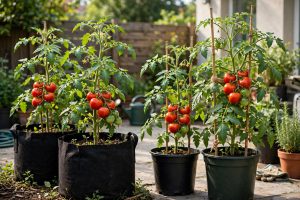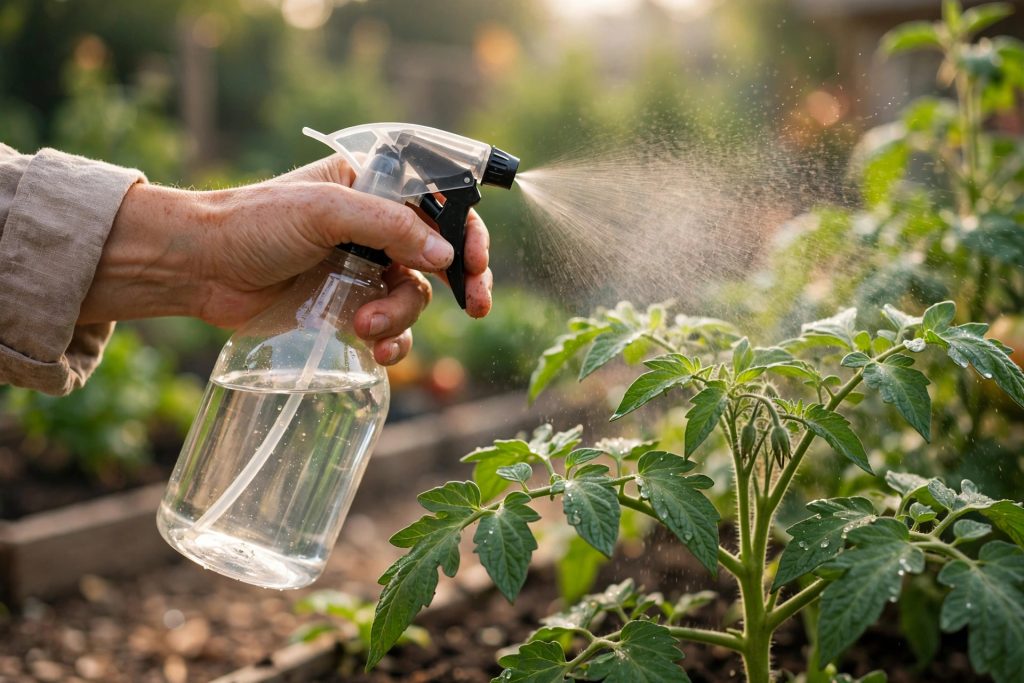

Aphids cluster under the rose leaves, spider mites stipple the tomato foliage, and powdery mildew dusts the squash. The best neem oil for plants is the spray that fits the problem in front of you, and that starts with reading the label, because two bottles that both say neem oil can be two very different products.
One kind is cold-pressed neem oil, pressed straight from neem seeds. It keeps the full range of natural compounds, including azadirachtin. Azadirachtin interferes with insect feeding, growth, development, and reproduction. The other kind is clarified hydrophobic extract of neem oil. The azadirachtin has been removed, and what is left is a fatty oil that kills soft-bodied insects by smothering them on contact and controls fungal disease. Both work, but they work in different ways.
Below are 10 real products, every one verified against its manufacturer label, EPA label, or official product page in November 2026. The scores come from verified label specifications and OMRI status, not from hands-on testing.
Quick Recommendation
Short on time? Start here.
- Best overall: Bonide Captain Jack’s Neem Max. Cold-pressed neem oil at 70%, a 4-in-1 fungicide, insecticide, miticide, and nematicide, and it mixes with water only.
- Best pure cold-pressed oil: Dyna-Gro Pure Neem Oil. It is 100% cold-pressed neem oil with nothing added, OMRI listed, and the best value per mixed gallon here.
- Best new cold-pressed pick: Summit NEEM 85. It carries 84.9% cold-pressed neem oil with a built-in emulsifier, so it mixes easily, and it is OMRI listed.
- Best clarified extract for roses: Garden Safe Neem Oil Extract. A 3-in-1 spray for aphids, mites, and black spot, and you can use it up to the day you harvest.
- Best ready-to-use spray: BioAdvanced Natria Neem Oil. No mixing at all, just point and spray, and the easiest pick for a small garden or a few houseplants.
- Best budget concentrate: Southern Ag Triple Action Neem Oil. The same 70% clarified extract as the big brands, OMRI listed, in a small bottle.
If you only buy one bottle this season, decide first whether you need the insect growth regulator effect of cold-pressed oil or the smothering and disease control of a clarified extract. The first fights insects that keep coming back. The second is the simpler choice for aphids, mites, and powdery mildew.
If you would like to grow the tree this oil comes from, here is our guide to growing a neem tree.

Neem Oil Sprays at a Glance
| Product | Type | Best For | Our Rating |
|---|---|---|---|
| 1. Bonide Captain Jack’s Neem Max | Cold-pressed 70% | Pests plus disease plus nematodes | 9.0 |
| 2. Dyna-Gro Pure Neem Oil | Cold-pressed 100% | Pure oil, best value per gallon | 8.9 |
| 3. Summit NEEM 85 | Cold-pressed 84.9% | Easy mixing, 4-in-1 action | 8.8 |
| 4. Harris Neem Oil | Cold-pressed 100% | Pure oil for roses and vegetables | 8.7 |
| 5. Garden Safe Neem Oil Extract | Clarified extract 70% | Roses, vegetables, houseplants | 8.6 |
| 6. Monterey 70% Neem Oil | Clarified extract 70% | Fruit trees, roses, vegetables | 8.6 |
| 7. Southern Ag Triple Action Neem Oil | Clarified extract 70% | Budget home vegetable gardens | 8.5 |
| 8. Safer Brand Neem Oil Concentrate | Clarified extract 70% | OMRI-listed 3-in-1 spray | 8.5 |
| 9. BioAdvanced Natria Neem Oil | Clarified extract 0.9% RTU | No-mixing spray for small gardens | 8.3 |
| 10. Organic Neem Bliss | Cold-pressed 100% | Pure oil, leaf shine, houseplants | 8.2 |
1. Bonide Captain Jack’s Neem Max Concentrate
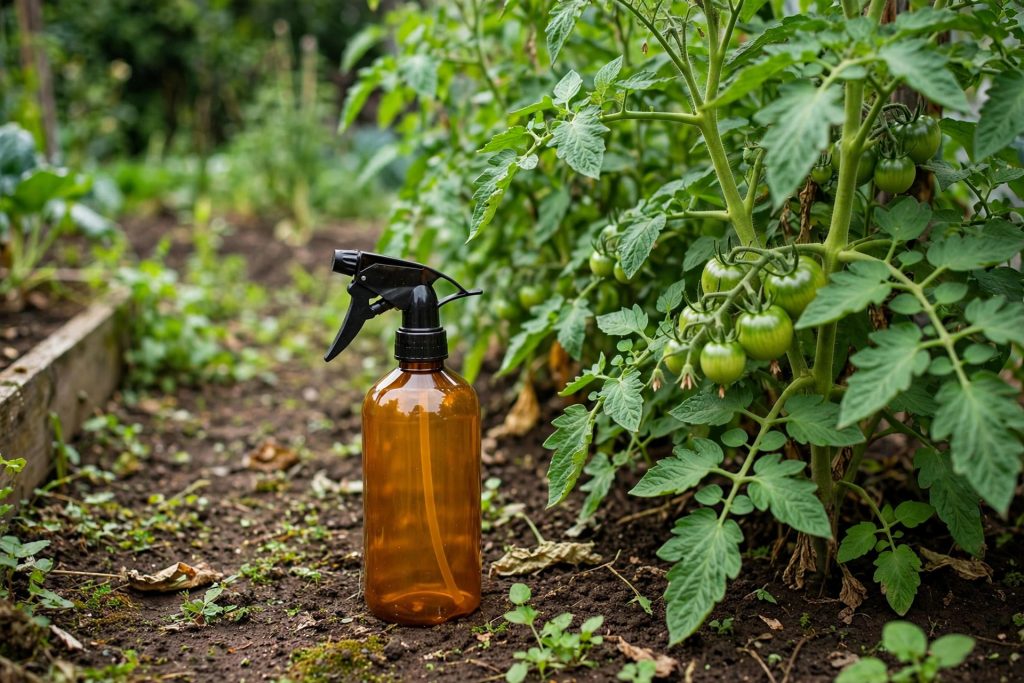
Type: Cold-pressed neem oil, liquid concentrate. Active ingredient: Cold-pressed neem oil, 70%. Azadirachtin content: Naturally present in the cold-pressed oil; Bonide does not publish a ppm figure. Size: 8 fl oz and 16 fl oz concentrates; the 8 fl oz bottle makes up to 20 gallons of spray. EPA Reg. No.: 88760-10-4. Organic status: Approved for organic gardening. Bonide does not publish an OMRI listing for this product.
Cold pressing keeps the full spectrum of natural compounds from the neem seed, including azadirachtin. Azadirachtin interferes with insect feeding, growth, development, and reproduction. The result is a 4-in-1 product: fungicide, insecticide, miticide, and nematicide. The label lists aphids, beetles, stink bugs, caterpillars, leafhoppers, leaf miners, whiteflies, mealybugs, spider mites, nematodes, weevils, scale, and thrips, plus powdery mildew, botrytis, black spot, rust, and scab. It covers vegetables, tree fruits, nuts, vines, citrus, ornamentals, flowers, shrubs, lawns, and houseplants, and it mixes with water only. The label rate for insects or mites is 0.625 to 1.8% in water, on a 7 to 10 day interval.
Quick verdict: Buy this first if you want the full-strength cold-pressed formula and the widest label in the roundup. Pros: Full-spectrum cold-pressed oil with azadirachtin intact. 4-in-1 action, including nematodes. Mixes with water only. Cons: Costs more per ounce than clarified extracts. Same slow action and oil burn risk as other neem products. Best for: Gardens with insects, fungal disease, and soil pests at the same time. Skip if: You only need a simple aphid spray. A clarified extract costs less and does that job.
Our rating: 9.0. The strongest formula and the widest label earn the top score, with points off for cost and the same heat limits as other oils.
2. Dyna-Gro Pure Neem Oil
Type: Cold-pressed neem oil, liquid concentrate. Active ingredient: Cold-pressed neem oil, 100%. Azadirachtin content: Not published as a ppm figure; the oil is unrefined, so the natural compounds are retained. Size: 8 fl oz. Organic status: OMRI listed for organic use.
Dyna-Gro is the purest bottle in this guide: 100% cold-pressed neem oil, with no added chemicals and no emulsifier built in. You get the full natural compound profile, and the oil doubles as a leaf polish that leaves a shine on houseplant leaves. But pure oil does not mix with water on its own. You must add a small amount of mild liquid soap as an emulsifier, use warm water, and shake well. Dyna-Gro’s label rate is 1½ teaspoons per quart of water (1 oz per gallon), plus ½ teaspoon of mild liquid soap per quart as an emulsifier. It can be applied to food crops up to and including the day of harvest.
In short: the best value here if you are comfortable mixing your own spray and want nothing but pure oil in the bottle. Pros: 100% pure, nothing added. OMRI listed. Goes a long way per bottle. Cons: Needs soap as an emulsifier and careful mixing. A bad mix can burn leaves. Best for: Houseplant growers and gardeners who mix their own sprays and want pure cold-pressed oil. Skip if: You want a spray that mixes with water only. Neem Max or Summit NEEM 85 does that.
Our rating: 8.9. Purity and value earn the score, with points off because mixing takes more care than the emulsified concentrates.
3. Summit NEEM 85

Type: Cold-pressed neem oil emulsifiable concentrate. Active ingredient: Cold-pressed neem oil, 84.9%. Azadirachtin content: Naturally present in the cold-pressed oil; Summit does not publish a ppm figure. Size: 32 fl oz (1 quart). EPA Reg. No.: 95993-3-6218. Organic status: OMRI Listed for organic gardening and farming.
NEEM 85 is the newest product here, launched by Summit Responsible Solutions in August 2025, and it fixes the one complaint gardeners have about pure cold-pressed oil: the mixing. The formula is 84.9% cold-pressed neem oil with a proprietary emulsifier and surfactant built in, so it mixes easily with water and will not clog a sprayer the way raw oil can. Like Neem Max, it is a 4-in-1 product: it controls insects, mites, and nematodes and manages listed plant diseases, and Summit states it is labeled to control more pests than the standard 3-in-1 neem oils. The trade-off is the bottle size: it comes in a quart, which is more oil than a small garden needs in a season.
Who it suits: Gardeners who want cold-pressed strength without the mixing fuss of pure oil, and who have enough plants to use a quart. Pros: High cold-pressed content with a built-in emulsifier. 4-in-1 action. OMRI listed. Cons: Only sold in a quart, which is a lot for a small garden. Newer product, so a shorter track record. Best for: Vegetable and flower gardeners who spray often and want easy mixing. Skip if: You have only a few houseplants. A small bottle of Dyna-Gro or a ready-to-use spray fits better.
Our rating: 8.8. The easy-mixing formula earns the score, with points off for the large bottle size and the shorter track record.
4. Harris Neem Oil
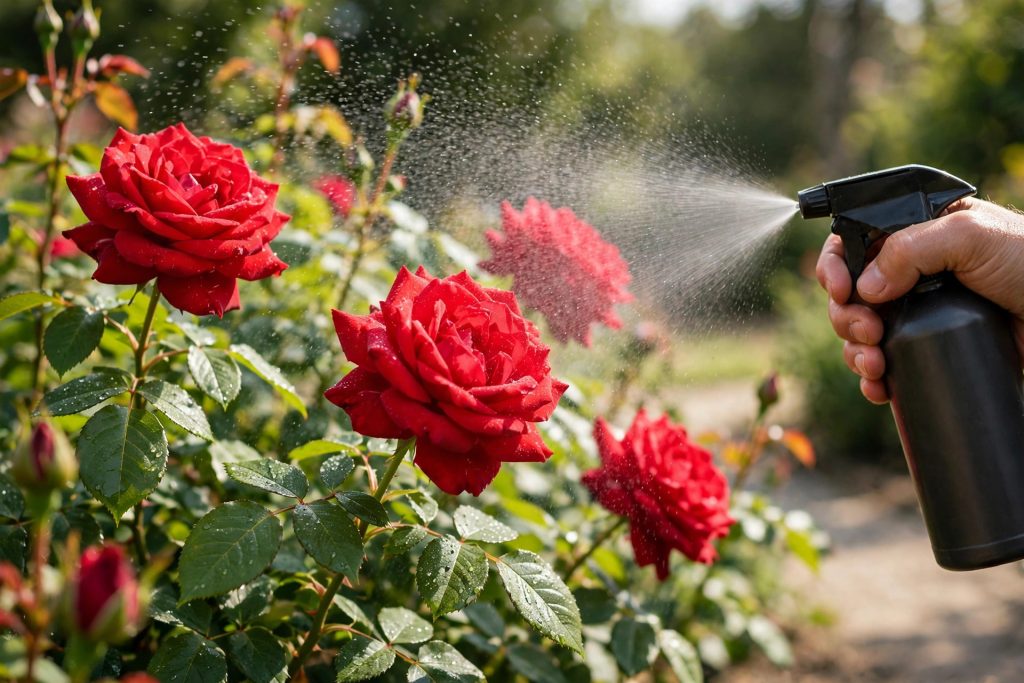
Type: Cold-pressed neem oil, liquid concentrate. Active ingredient: Neem seed oil, 100%. Azadirachtin content: Described by Harris as high azadirachtin content; no ppm figure is published. Size: 12 fl oz concentrate. EPA Reg. No.: 100914-1-3. Harris is a supplemental distributor of Carillon Green’s 100914-1 registration. Organic status: OMRI Listed for organic use, per retailer listings.
Harris is the other pure-oil pick in this guide, and it is an EPA-registered pesticide, which matters: it carries a label with listed pests and diseases, unlike cosmetic-grade neem oils sold for skin care. The oil is 100% cold-pressed and unrefined, with no added chemicals, and it works as a 3-in-1 insecticide, fungicide, and miticide, controlling aphids, whiteflies, mildew, spider mites, and other listed pests and diseases. Like Dyna-Gro, it needs a soap emulsifier and warm water to mix, and it solidifies in cool weather, so warm the bottle in warm water before measuring. Harris also sells a separate water-soluble version, an 8 fl oz concentrate that is 80% cold-pressed oil with a built-in emulsifier and makes up to 12 gallons. Do not confuse the two bottles: this pick is the 100% pure 12 fl oz concentrate.
Quick verdict: A solid pure-oil alternative to Dyna-Gro, with the reassurance of an EPA-registered label. Pros: 100% pure cold-pressed oil. EPA-registered with a listed-pest label. OMRI listed. Cons: Needs soap emulsifier and careful mixing. Solidifies in the cold. Best for: Rose and vegetable gardeners who want pure oil with a proper pesticide label. Skip if: You want a spray that mixes with water only. Choose Neem Max or Summit NEEM 85 instead.
Our rating: 8.7. Purity and the registered label earn the score, with points off for the mixing effort.
5. Garden Safe Neem Oil Extract Concentrate
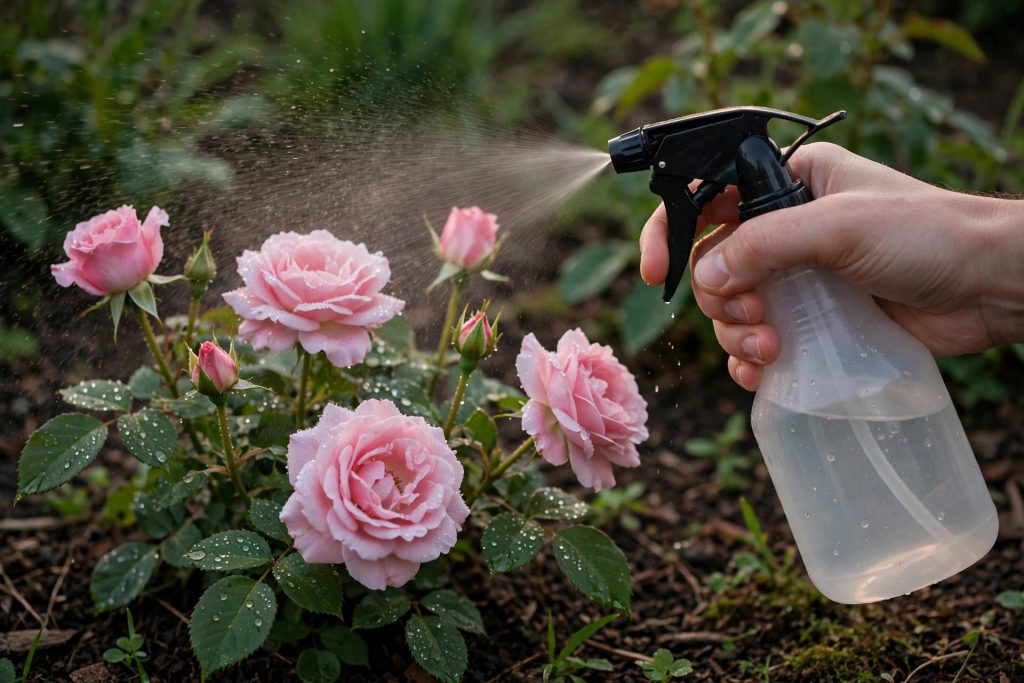
Type: Clarified hydrophobic neem oil extract, liquid concentrate. Active ingredient: Clarified hydrophobic extract of neem oil, 70%. Azadirachtin content: Removed during clarification; this product does not contain azadirachtin. Size: 10 fl oz and 1 gallon concentrates. EPA Reg. No.: 70051-2-39609. Organic status: OMRI listed for organic gardening.
This is the bottle most gardeners reach for first, and it is the most widely sold neem oil in American garden centers. It does three jobs at once: insecticide against aphids, whiteflies, and other listed insects, miticide against spider mites, and fungicide against powdery mildew, black spot, downy mildew, anthracnose, rust, leaf spot, and botrytis. The label covers fruits, vegetables, herbs, roses, houseplants, flowers, trees, and shrubs, and it can be used up to the day of harvest. The honest limit is the one this whole guide turns on: the clarified extract has had the azadirachtin removed, so it kills by smothering insects on contact and has no insect growth regulator effect. The National Pesticide Information Center rates neem oil as practically non-toxic to birds, mammals, bees, and plants, while noting it is slightly toxic to fish.
In short: the best single bottle for a mixed vegetable and flower garden, as long as you know it works by smothering, not by disrupting insect growth. Pros: Three products in one. OMRI listed. Safe to use up to harvest day. Widely available. Cons: No azadirachtin, so no growth-regulator effect. Works slowly. Oil can burn leaves in hot sun, so spray in the evening and never above 90 degrees Fahrenheit. Best for: Gardeners who want one bottle for aphids, mites, and powdery mildew on vegetables and roses. Skip if: Your pest problem keeps coming back generation after generation. A cold-pressed oil with azadirachtin fits better.
Our rating: 8.6. Versatility and availability earn the score, with points off because the azadirachtin is gone.
6. Monterey 70% Neem Oil
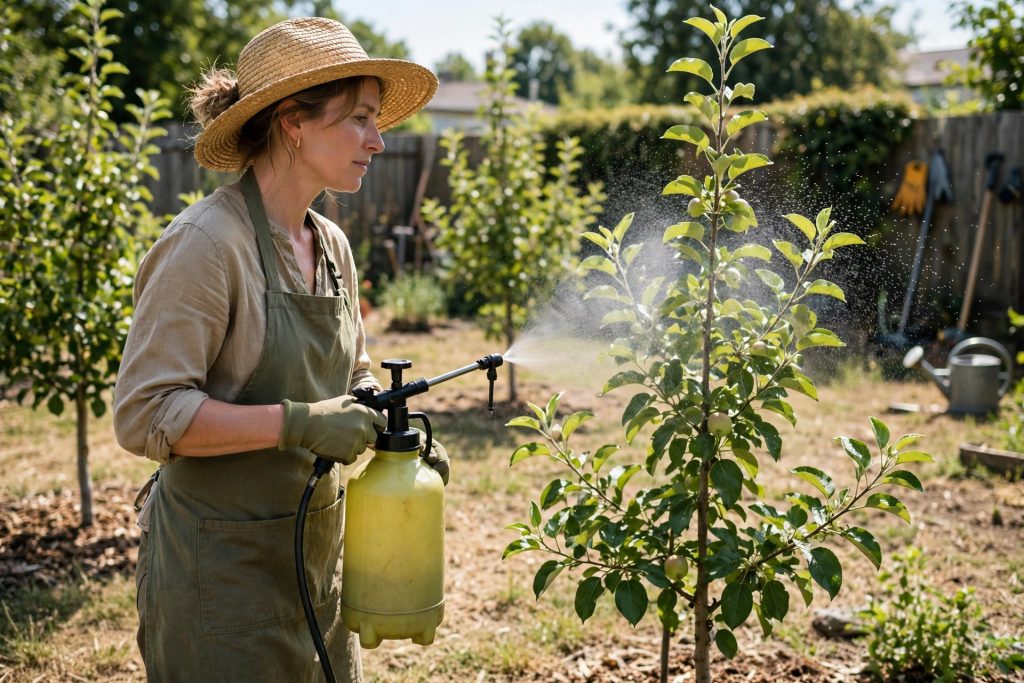
Type: Clarified hydrophobic neem oil extract, liquid concentrate. Active ingredient: Clarified hydrophobic extract of neem oil, 70%. Azadirachtin content: Removed during clarification; this product does not contain azadirachtin. Size: 8 fl oz, 16 fl oz, and 128 fl oz concentrates; also sold as a 32 fl oz ready-to-spray bottle that covers 5,000 square feet. EPA Reg. No.: 70051-2-54705. Organic status: OMRI listed for organic gardening.
Monterey is the same 70% clarified extract formula as Garden Safe, sold under the same EPA registration family, and the choice between them comes down to size and format. Monterey offers the widest range here: a small 8 fl oz bottle for a few pots, a 16 fl oz bottle for a normal garden, a gallon for an orchard, and a ready-to-spray hose-end bottle for large areas. The label rate is 1 to 2 fl oz per gallon of water, 1 fl oz for fungal disease and up to 2 fl oz for insects, sprayed until all plant surfaces, including the undersides of leaves, are wet. As a preventative, apply every 7 to 14 days; for disease already present, spray daily for 7 days until the pressure drops, then return to every 14 days. It can be used up to the day of harvest.
Who it suits: Fruit tree and rose growers who want the same proven extract in the size that fits their garden, including a hose-end option for big areas. Pros: Widest size range here, including a ready-to-spray version. OMRI listed. Clear label rates. Cons: No azadirachtin. Same slow action and heat limits as other clarified extracts. Best for: Orchards, fruit trees, and large rose beds where the bottle size matters. Skip if: You want the growth-regulator effect of cold-pressed oil. Neem Max or Dyna-Gro is the better buy.
Our rating: 8.6. The size range and clear label earn the score, with points off because the azadirachtin is gone.
7. Southern Ag Triple Action Neem Oil
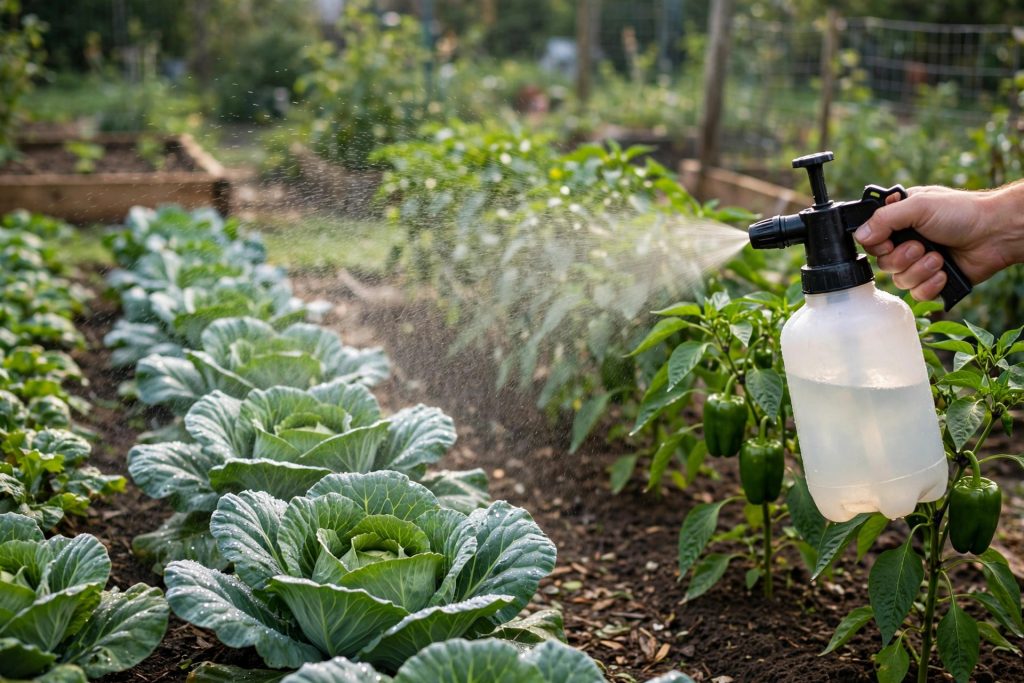
Type: Clarified hydrophobic neem oil extract, liquid concentrate. Active ingredient: Clarified hydrophobic extract of neem oil, 70%. Azadirachtin content: Removed during clarification; this product does not contain azadirachtin. Size: 8 fl oz and 16 fl oz jugs. EPA Reg. No.: 70051-2-829. Organic status: OMRI listed for organic gardening.
Southern Ag is the budget twin of the Garden Safe and Monterey extracts, and the comparison is worth making openly. The active ingredient is identical: 70% clarified hydrophobic extract of neem oil, under the same EPA registration family. The label rate is 2 tablespoons, or 1 fl oz, per gallon of water, sprayed on all plant surfaces including the undersides until wet, mixing frequently as you spray. It is labeled for fruits, nuts, vegetables, herbs, spices, roses, houseplants, flowers, trees, and shrubs, and it stops powdery mildew, black spot, anthracnose, and rust while killing eggs, larvae, and adult insects on contact. The honest difference from the bigger brands is small: a smaller bottle, a simpler label, and usually a lower cost per ounce.
Quick verdict: The same proven extract as the big brands, in the smallest and usually cheapest bottle here. Pros: Same 70% formula as Garden Safe and Monterey. OMRI listed. Economical per ounce. Cons: No azadirachtin. Smaller bottles mean more frequent repurchase for big gardens. Best for: Vegetable gardeners who want the clarified extract at the lowest cost per spray. Skip if: You need the growth-regulator effect of cold-pressed oil, or you spray a large orchard. Monterey’s gallon size fits better.
Our rating: 8.5. Value and the proven formula earn the score, with points off for the small bottle size.
8. Safer Brand Neem Oil Concentrate
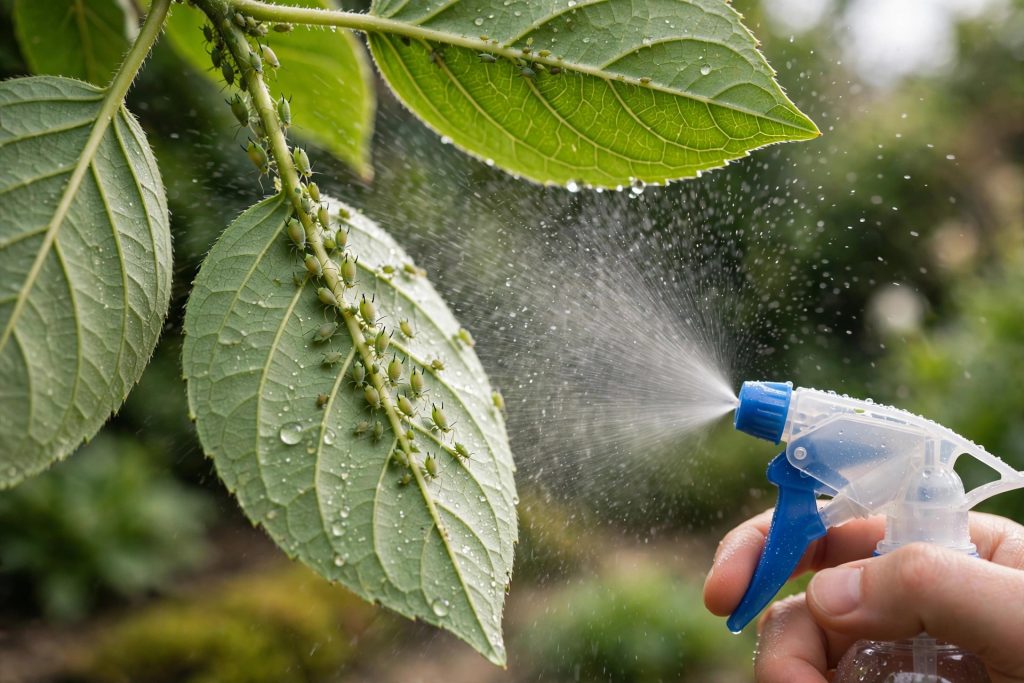
Type: Clarified hydrophobic neem oil extract, liquid concentrate. Active ingredient: Clarified hydrophobic extract of neem oil, 70%. Azadirachtin content: Removed during clarification; this product does not contain azadirachtin. Size: 16 fl oz concentrate, makes up to 16 gallons of spray. EPA Reg. No.: 70051-2-42697. Organic status: OMRI Listed for organic gardening.
Safer Brand is the organic gardener’s familiar name, and its neem oil concentrate is the middle-size option in the clarified extract group: a 16 fl oz bottle that makes up to 16 gallons of mixed spray, which suits a medium garden running an organic program. It is a 3-in-1 spray that kills insects and mites and prevents fungal disease, and it is OMRI Listed for compliant use in organic gardening. The formula comes pre-emulsified, so it mixes with water cleanly and with less effort than a pure oil. Safer also sells a ready-to-use version, a 24 fl oz spray bottle with 0.9% clarified extract. Note the label difference: the concentrate is 70% extract, the ready-to-use bottle is 0.9%, so do not compare the two bottles by the number on the front alone.
In short: a trusted organic brand, a practical middle size, and the easiest mixing of the clarified concentrates. Pros: OMRI listed. Pre-emulsified for easy mixing. Practical 16 fl oz size. Cons: No azadirachtin. Costs a little more per ounce than Southern Ag for the same active ingredient. Best for: Organic gardeners who want a trusted brand and easy mixing. Skip if: You want the lowest cost per ounce. Southern Ag has the same active ingredient for less.
Our rating: 8.5. The brand trust and easy mixing earn the score, with points off for the cost per ounce.
9. BioAdvanced Natria Neem Oil Ready-to-Use

Type: Clarified hydrophobic neem oil extract, ready-to-use spray. Active ingredient: Clarified hydrophobic extract of neem oil, 0.9%. Azadirachtin content: Removed during clarification; this product does not contain azadirachtin. Size: 24 fl oz trigger sprayer and 1 gallon ready-to-use. EPA Reg. No.: 70051-13-92564. Organic status: Labeled for organic gardening. The label carries the line ‘For Organic Use • OMRI.org’, but Natria Neem Oil is not shown as OMRI Listed on the manufacturer’s current product page, and OMRI listing could not be confirmed in OMRI’s Products List. EPA registration is not the same as OMRI listing.
Natria is the only ready-to-use spray in this roundup, and it exists for one kind of gardener: the one with a few plants and no patience for measuring. There is nothing to mix, nothing to shake into an emulsion, and nothing to store as a concentrate. You point and spray. The 0.9% clarified extract is the same active ingredient as the 70% concentrates, already diluted to spray strength, and it works as a 3-in-1 fungicide, miticide, and insecticide that kills eggs, larvae, and adult insects. The label lists whiteflies, mealybugs, armyworms, hornworms, leafhoppers, bagworms, leaf miners, psyllids, loopers, beetles including Japanese beetles, aphids, scales, caterpillars, and mites, plus black spot, powdery mildew, downy mildew, anthracnose, rust, leaf spot, and botrytis. It can be used up to the day of harvest. The honest trade-off is cost: you are paying for water and a sprayer, so a bottle does not go far in a big garden.
Who it suits: Small gardens, balconies, and houseplant collections where a single spray bottle is enough. Pros: No mixing at all. Wide pest and disease list. Use up to harvest day. Cons: The most expensive way to buy neem oil per mixed gallon. A bottle does not last long in a big garden. Best for: Beginners and small-space gardeners who want the simplest possible spray. Skip if: You spray a whole vegetable garden every week. A concentrate costs far less per gallon.
Our rating: 8.3. Simplicity and the wide label earn the score, with points off for the cost per use.
10. Organic Neem Bliss Cold Pressed Neem Oil
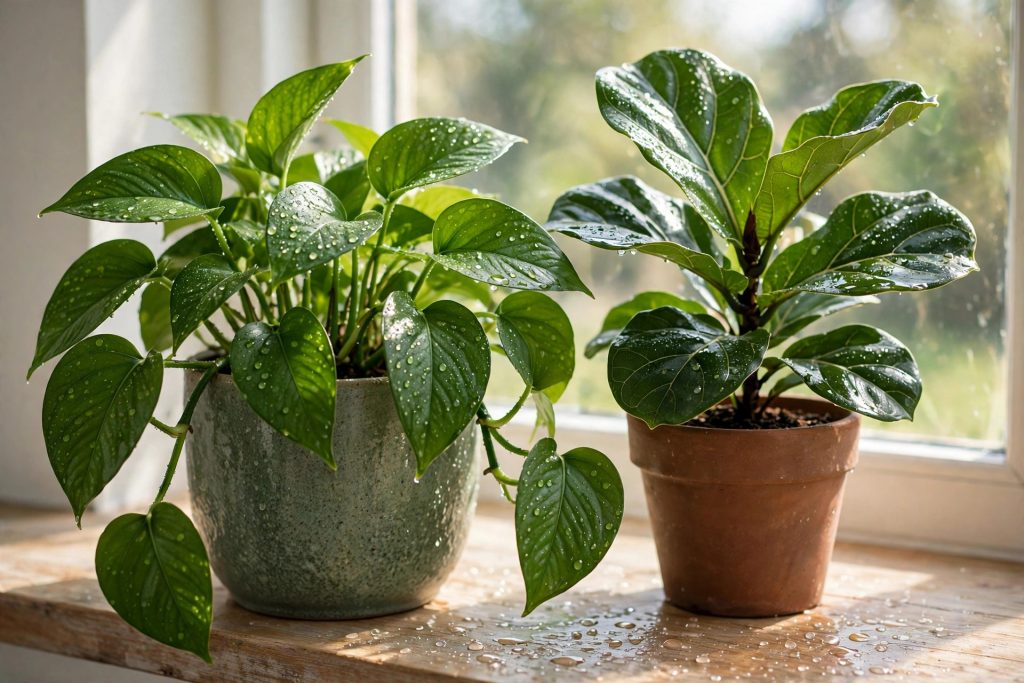
Type: Cold-pressed neem oil, liquid concentrate. Active ingredient: 100% cold-pressed neem seed oil. Azadirachtin content: Described as high azadirachtin content in retailer listings; no ppm figure is published by the maker. Size: 16 fl oz; also sold in 8, 32, and 64 fl oz bottles. Organic status: Some retailers list it as OMRI Listed, but Plantonix’s own page makes no OMRI claim.
Neem Bliss is sold by Plantonix as 100% pure cold-pressed neem seed oil for skin, hair and nail care. It is not an EPA-registered pesticide, it carries no EPA registration number, and Plantonix gives no pesticide mixing or spray-application instructions for it. It is sold as a pure oil, not as a labeled pesticide, so it carries no listed-pest claims and no label mix rate. Gardeners mix it the same way they mix any pure oil, about 1 teaspoon per quart of warm water with a little mild liquid soap as an emulsifier, used at once, as general guidance only, not as Plantonix pesticide instructions. Many gardeners also use it as a leaf polish for houseplants, a common gardener use rather than a manufacturer claim, which is how many buyers first meet it. Some retailers list it as OMRI Listed, but Plantonix’s own page makes no OMRI claim. Buy it for the pure oil and the leaf shine, not for a label that tells you which pests it controls.
In short: pure cold-pressed oil for houseplants and gardeners who mix their own spray, with no pesticide label to lean on. Pros: 100% pure cold-pressed oil. Can be used for leaf shine on houseplants. Cons: Not an EPA-registered pesticide, so no listed pests or label rate. Needs soap emulsifier and careful mixing. Best for: Houseplant growers who want pure oil and a leaf shine. Skip if: You want a label that lists the pests it controls. Dyna-Gro or Harris gives you that.
Our rating: 8.2. Purity earns the score, with points off because there is no pesticide label to follow.
How We Chose: Our Scoring System
Every rating in this guide comes from the same five factors. We did not test these products in our own garden. The scores are editorial judgments built from verified label specifications and OMRI status. No product was scored on claims its label does not make.
| Factor | Weight | What it measures |
|---|---|---|
| Effectiveness on listed pests | 30% | How many common garden pests the label covers, and how fast it acts |
| Safety for people, pets, and pollinators | 25% | Bee toxicity, harvest-day use, residue, and OMRI status |
| Ease of use | 15% | Mixing, coverage, how often it must be reapplied |
| Versatility | 15% | How many crops and pest types one bottle covers |
| Value | 15% | Cost per mixed gallon and how far a bottle goes |
| Total | 100% |
The table below breaks down each product’s score by factor. Totals are rounded half-up to one decimal.
| Product | Effectiveness (30%) | Safety (25%) | Ease of use (15%) | Versatility (15%) | Value (15%) | Total |
|---|---|---|---|---|---|---|
| Bonide Neem Max | 9.5 | 9.0 | 9.0 | 9.0 | 8.0 | 9.0 |
| Dyna-Gro | 9.0 | 9.0 | 7.5 | 9.0 | 9.5 | 8.9 |
| Summit NEEM 85 | 9.0 | 9.0 | 9.0 | 9.0 | 7.5 | 8.8 |
| Harris | 9.0 | 9.0 | 7.5 | 8.5 | 9.0 | 8.7 |
| Garden Safe | 7.5 | 9.0 | 9.0 | 9.0 | 9.0 | 8.6 |
| Monterey | 7.5 | 9.0 | 9.0 | 9.5 | 9.0 | 8.6 |
| Southern Ag | 7.5 | 9.0 | 8.0 | 9.0 | 9.5 | 8.5 |
| Safer | 7.5 | 9.0 | 9.0 | 9.0 | 8.5 | 8.5 |
| Natria | 7.5 | 9.0 | 10.0 | 8.5 | 7.0 | 8.3 |
| Neem Bliss | 8.0 | 9.0 | 7.5 | 8.0 | 8.0 | 8.2 |
A perfect score would need a product that kills every pest fast, harms nothing else, never needs reapplying, and costs almost nothing. No such product exists, which is why the highest score here is 9.0. Owner feedback is not a separate scored factor. The factor scores are editorial assessments based on verified label specifications and OMRI status; no review counts or ratings were used. Note that the Safety 9.0 for Natria and Neem Bliss rests on harvest-day use and low mammalian toxicity, not on OMRI status.
Cold Pressed vs Clarified Neem Oil
This is the one section to read before you buy, because the label rarely explains it plainly. Cold-pressed neem oil is pressed mechanically from neem seeds without heat or solvents. It keeps the full range of natural compounds, including azadirachtin, nimbin, and salannin. Azadirachtin is the most active of them. The National Pesticide Information Center explains that azadirachtin reduces insect feeding, acts as a repellent, and interferes with insect hormone systems, making it harder for insects to grow and lay eggs. Because the effect works through feeding and growth, it is slow: insects stop eating and fail to mature over days, rather than dying on contact.
Clarified hydrophobic extract is made by treating natural neem oil to separate out the azadirachtin. What is left is a fatty oil that kills soft-bodied insects by coating them and blocking the tiny breathing openings on their bodies, and controls fungal disease by coating spores. It works on contact, and it has no effect on insects that arrive after the spray has dried. If your pest problem keeps returning, generation after generation, buy cold-pressed oil with azadirachtin intact. If you need to knock down aphids or mites today and control powdery mildew at the same time, a clarified extract does the job for less money.
For homemade spray recipes that pair well with neem oil, see our guide to natural pesticides for plants.

How to Mix Neem Oil Spray
Neem oil and water do not mix on their own. The oil needs an emulsifier to stay suspended in water, or it floats on the surface in globs that deliver an uneven dose and can burn foliage where the oil concentrates. For the 70% clarified extracts, mixing is simple, because they are pre-emulsified. The label rate for most of them is 1 to 2 fl oz per gallon of water, which is 2 to 4 tablespoons: 1 fl oz for fungal disease, up to 2 fl oz for insects. Mix frequently as you spray, and use water warmer than 45 degrees Fahrenheit.
For pure cold-pressed oil, add a small amount of mild liquid soap first, about 1 teaspoon of soap per gallon of water, then add 1 to 2 tablespoons of oil per gallon, and shake until the liquid turns milky. As general pure-neem-oil guidance, 1 to 2 tablespoons per gallon is the normal range, about 0.4 to 0.8%. A 1% dilution for heavy pest pressure, about 2.7 tablespoons per gallon, sits above that normal range, so do not treat the two figures as the same range. Label rates differ by product: the EPA-registered Trilogy 70% label, for example, directs a 1 to 2% dilution. Dyna-Gro Pure Neem Oil is not EPA-registered as a pesticide, it is sold as a leaf polish, so its label rate is the one to follow for that bottle. Always follow the label on the bottle you bought. Use warm water, around 70 to 80 degrees Fahrenheit. Use the mixed spray at once: azadirachtin breaks down quickly in water, and a mixed batch loses strength within about 8 hours.
Neem Oil for Indoor Plants
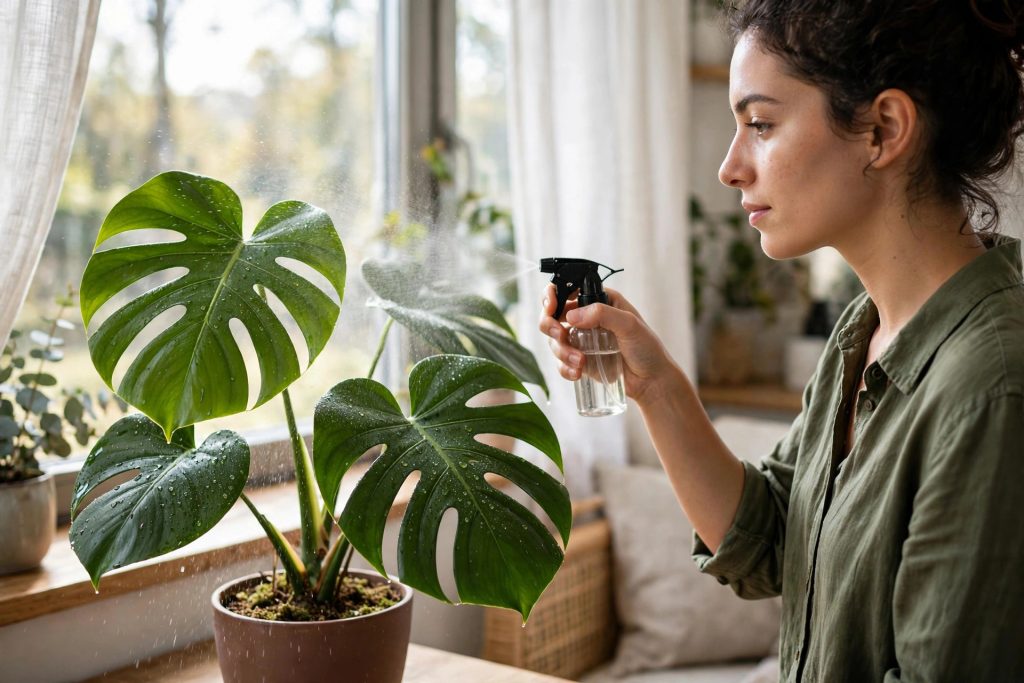
Neem oil is one of the best tools for indoor plants, because the pests are usually the soft-bodied kind it handles well: aphids, spider mites, mealybugs, whiteflies, and fungus gnats. A small spray bottle, a teaspoon of oil, and a drop of soap is all the equipment you need. Spray in the evening or move the plant away from a sunny window until the leaves are dry, because a south-facing window can scorch a sprayed leaf in an afternoon. Cover the undersides of the leaves, where mites and mealybugs hide, and wipe mealybug clusters off with a cotton swab dipped in the spray before you treat the whole plant. For fungus gnats, spray the soil surface as well as the leaves, because the larvae live in the top inch of potting mix.
Test one leaf first and wait 24 hours before treating the whole plant. A plant that is already drought-stressed or recently repotted should not be sprayed at all until it recovers. Keep cats away from treated plants until the spray has dried, as a precaution. The best indoor picks in this guide are Dyna-Gro Pure Neem Oil and Organic Neem Bliss, both pure cold-pressed oils that double as leaf polish, and the ready-to-use Natria spray for anyone who wants no mixing at all.
Does Neem Oil Kill Beneficial Insects
Yes, it can, and the honest answer has two parts. The National Pesticide Information Center (NPIC) states: “Neem oil is practically non-toxic to birds, mammals, bees and plants. Neem oil is slightly toxic to fish and other aquatic organisms. Azadirachtin, a component of neem oil, is moderately toxic to fish and other aquatic animals.” That is NPIC’s general summary in its 2012 fact sheet, not a label guarantee for every product or use, and the “practically non-toxic” wording does not extend to fish. NPIC’s bee conclusion rests on insects having to eat treated foliage: insects must eat the treated plant to be killed by azadirachtin, so bees and other pollinators are not likely to be harmed when they visit a treated plant later. That does not address direct contact with wet spray. A bee or ladybug hit directly by the spray can be harmed, and azadirachtin disrupts feeding and reproduction in any insect it reaches, beneficial or not.
That is why timing matters more than the product you choose. As a precaution, spray in the evening, after bees have stopped foraging, and the spray dries before they return in the morning. Never spray open blooms, even in the evening, because a bee can land on a treated flower later. Spot-treat only the infested shoots instead of spraying the whole garden, so ladybugs and lacewings working nearby are left alone. Keep the spray away from ponds, streams and aquariums, because neem oil is slightly toxic to fish. Neem oil breaks down fast, with a half-life of 1 to 2.5 days on leaves, and it does not persist in the soil.
To learn which insects help your garden, see our guide to beneficial insects.

Neem Oil Application Frequency
How often you spray depends on why you are spraying. As a preventative, the clarified extract labels agree on a 7 to 14 day schedule until the risk of disease has passed. Monterey’s label puts it plainly: every 7 to 14 days as a preventative, and daily for 7 days when disease is already present, then back to every 14 days. Neem Max gives a 7 to 10 day interval for insects and mites. Cold-pressed oil follows the same rhythm, but with a shorter window, because azadirachtin breaks down in sunlight: spray every 7 days while pests are active, and every 14 days as a preventative once they are under control.
Two conditions reset the schedule. Rain washes the oil off the leaves, so spray again after heavy rain. New growth is unprotected, because the spray only covers the leaves it touches, so treat new leaves after a growth flush. Do not spray more often than the label allows to chase a faster result. Neem oil works slowly, and a second spray the next day adds burn risk without adding control.
For a broader look at keeping crops safe, see our pest control methods guide.

Final Choice
If you buy one bottle, buy Bonide Captain Jack’s Neem Max. Its 9.0 score is the highest here because it is the only product that combines cold-pressed oil with azadirachtin intact, a 4-in-1 label, and mixing with water only. It handles the insects, the fungal disease, and the soil pests in one bottle. If you mix your own sprays and want pure oil at the best value, buy Dyna-Gro Pure Neem Oil. It is 100% cold-pressed, OMRI listed, and a single bottle makes many gallons of spray, as long as you add the soap and mix it well. If you want that same cold-pressed strength with easier mixing, Summit NEEM 85 is the newer answer, with its built-in emulsifier.
If your garden is mostly roses and vegetables and you want the simplest proven spray, buy Garden Safe Neem Oil Extract or Southern Ag Triple Action. Both are the same 70% clarified extract, OMRI listed, and they handle aphids, mites, and powdery mildew in one bottle. Choose Garden Safe for the widest availability, Southern Ag for the lowest cost per ounce. Whatever you choose, start with the label, not the front of the bottle, mix it at the label rate, spray in the evening, and check the plants the next day.
References
- National Pesticide Information Center, Oregon State University Extension Services. Bond, C., Buhl, K., and Stone, D. “Neem Oil General Fact Sheet,” 2012. Supports the claims that azadirachtin reduces insect feeding and disrupts growth and reproduction, that neem oil is practically non-toxic to birds, mammals, bees, and plants but slightly toxic to fish, and that azadirachtin breaks down with a half-life of 1 to 2.5 days on leaves.
- Clemson Cooperative Extension, Home and Garden Information Center. “Less Toxic Insecticides.” Supports the claim that organic insecticides are still pesticides and that some organic or natural pesticides may be as toxic as synthetic ones.
- U.S. Environmental Protection Agency, pesticide product label, Neem Oil 70% (EPA Reg. No. 70051-2). Supports the active ingredient, the 70% clarified hydrophobic extract formula, the use up to the day of harvest, and the 7 to 14 day application schedule for the Garden Safe, Monterey, Southern Ag, and Safer extracts.
- Bonide Products, Captain Jack’s Neem Max Concentrate label (EPA Reg. No. 88760-10-4). Supports the 70% cold-pressed neem oil active ingredient, the 4-in-1 action, the listed pests and diseases, and the 0.625 to 1.8% label rate on a 7 to 10 day interval.
- Monterey Lawn and Garden, 70% Neem Oil label (EPA Reg. No. 70051-2-54705). Supports the 70% clarified extract formula, the 1 to 2 fl oz per gallon mix rate, the 7 to 14 day preventative schedule, and the daily-for-7-days schedule for disease already present.
- Bonide Products. Captain Jack’s Neem Max Concentrate (EPA Reg. No. 88760-10-4). Maker source: https://bonide.com/captain-jacks/product/neem-max-conc and https://bonide.com/wp-content/uploads/2026/09/CJ-Neem-Max-Concentrate-8oz-88760-10-4-CLN-LBL.pdf
- Dyna-Gro. Pure Neem Oil. Maker source: https://www.hydrofarm.com/p/dyna-gro-pure-neem-oil/dynem008 and https://bfgsupply.com/Files/DYNNEM100_MSDS.pdf
- Summit Chemical. Summit NEEM 85 Cold-Pressed Neem Oil (EPA Reg. No. 95993-3-6218). Maker source: https://summitchemical.com/products/summit-neem-85-cold-pressed-neem-oil/ and https://summitchemical.com/wp-content/uploads/2025/08/Summit-Neem-85-specimen-label-v1.pdf
- P.F. Harris. Harris 100% Cold-Pressed Filtered Neem Oil (EPA Reg. No. 100914-1-3; Harris is a supplemental distributor of Carillon Green’s 100914-1 registration). Maker source: https://pfharris.com/harris-100-cold-pressed-filtered-neem-oil-insecticide-miticide-fungicide and https://valencia-fl.safecollegessds.com/document/repo/925162ef-57b0-42db-80a8-c4e0700990f0
- Garden Safe. Neem Oil Extract Concentrate (EPA Reg. No. 70051-2-39609). Maker source: https://www.gardensafe.com/products/fungicide/neem-oil-extract-concentrate-1-gal.aspx and https://images.thdstatic.com/catalog/pdfImages/f4/f4440394-7580-469e-9edf-c34f5b8cf064.pdf
- Monterey Lawn and Garden. 70% Neem Oil (EPA Reg. No. 70051-2-54705). Maker source: https://www.montereylawngarden.com/product/70-neem-oil/ and https://cdn.commercev3.net/cdn.arbico-organics.com/downloads/monterey-70-neem-oil-label.pdf
- Southern Ag. Triple Action Neem Oil (EPA Reg. No. 70051-2-829). Maker source: https://southernag.com/wp-content/uploads/2020/06/TRIPLE-ACTION-NEEM-OIL-B3-LABEL.pdf and https://southernag.com/reduced-risk-organic-eco-friendly-products/
- Safer Brand. Safer Brand Neem Oil Concentrate (EPA Reg. No. 70051-2-42697). Maker source: https://www.saferbrand.com/safer-brand-neem-oil-concentrate-16-oz-sb-5182-6 and https://picol.cahnrs.wsu.edu/DownloadLabel/66232/WA/WA_2027_70051-2-42697_Safer%20Brand%20Neem%20Oil%20Concentrate.pdf
- BioAdvanced. Natria Neem Oil Ready-to-Use (EPA Reg. No. 70051-13-92564). Maker source: https://bioadvanced.com/organics-neem-oil-ready-to-use-24-oz-24-oz.html and https://media.tractorsupply.com/is/content/TractorSupplyCompany/tsc/product/2/02/17/63/2021763_Man1.pdf
- Plantonix. Neem Bliss Oil. Maker source: https://www.Plantonix.com/collections/all-products/products/neem-oil and https://cdn.shopify.com/s/files/1/2422/8091/files/Neem_Bliss_Oil_SDS.pdf?v=1702060810
Frequently Asked Questions
What is the best neem oil for plants?
It depends on the pest and the type of oil. Bonide Captain Jack’s Neem Max scores highest in this guide at 9.0, because it is cold-pressed oil with azadirachtin intact and a 4-in-1 label. For the best value in pure oil, Dyna-Gro Pure Neem Oil is 100% cold-pressed and OMRI listed. For a simple spray for aphids, mites, and powdery mildew, Garden Safe Neem Oil Extract is the easiest pick.
What is the difference between cold-pressed neem oil and clarified neem oil?
Cold-pressed neem oil is pressed straight from neem seeds and keeps azadirachtin. Azadirachtin interferes with insect feeding, growth, development, and reproduction. Clarified hydrophobic extract has had the azadirachtin removed, and what is left is a fatty oil that kills soft-bodied insects by smothering them on contact and controls fungal disease. Both work, but only cold-pressed oil has the growth-regulator effect.
How do I mix neem oil spray?
For the 70% clarified extracts, mix 1 to 2 fl oz per gallon of water and spray until the leaves are wet on both sides. For pure cold-pressed oil, add about 1 teaspoon of mild liquid soap per gallon of water first, then 1 to 2 tablespoons of oil, and shake until the liquid turns milky. Use warm water, mix only what you will use that day, and always follow the label on the bottle you hold.
Can I use neem oil on indoor plants?
Yes. Neem oil works well on aphids, spider mites, mealybugs, whiteflies, and fungus gnats. Spray in the evening or move the plant away from a sunny window until the leaves dry, cover the undersides of the leaves, and test one leaf first and wait 24 hours. Dyna-Gro Pure Neem Oil, Organic Neem Bliss, and the ready-to-use Natria spray are the best indoor picks in this guide.
Does neem oil kill beneficial insects?
It can, if they are hit directly by wet spray, because azadirachtin disrupts feeding and reproduction in any insect it reaches. The National Pesticide Information Center rates neem oil as practically non-toxic to bees, because insects must eat treated plant tissue to be harmed. Spray in the evening after bees stop foraging, never spray open blooms, and spot-treat only the infested shoots.
How often should I apply neem oil?
As a preventative, spray every 7 to 14 days. While pests or disease are active, spray every 7 days. Monterey’s label gives daily sprays for 7 days when disease is already present, then back to every 14 days. Spray again after heavy rain, and treat new growth. Do not spray more often than the label allows, because neem oil works slowly and extra sprays add leaf-burn risk.

Thesis Link : https://saulibrary.edu.bd/daatj/public/uploads/BAU200601_19-Pp_5.pdf
- 10 Best Neem Oil Sprays for Plants - November 19, 2026
- 10 Best Raised Bed Soil Mixes for Productive Gardens - November 19, 2026
- 10 Best Organic Pesticides for Gardens - November 19, 2026