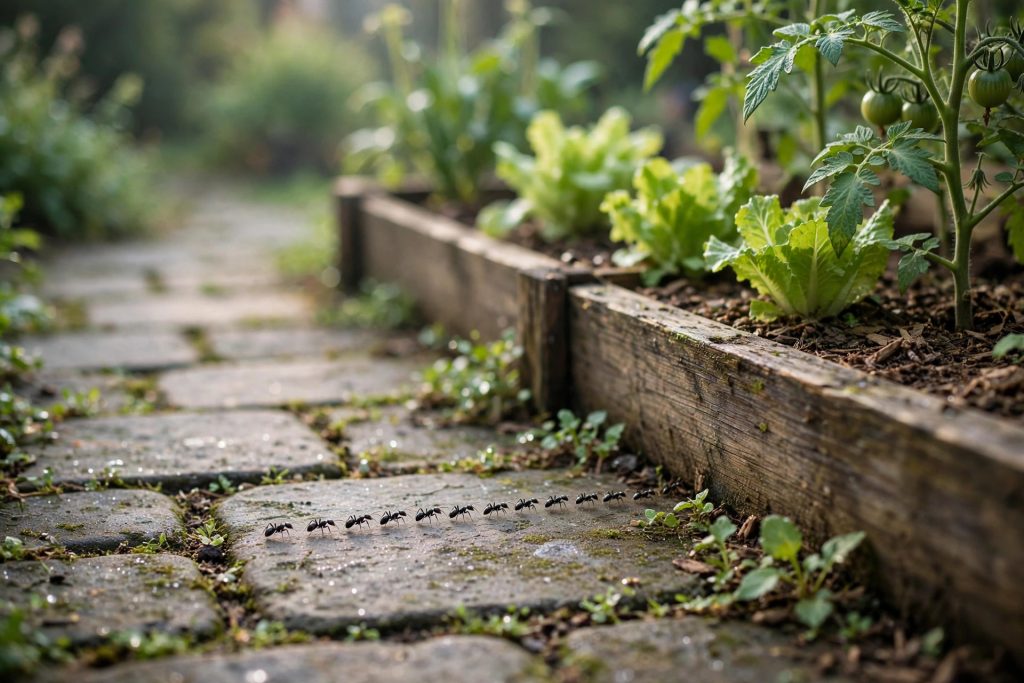

You lift a paving stone and find a river of ants underneath. A week later they are in the kitchen, marching toward the honey jar. A month later there is a fire ant mound the size of a dinner plate in the middle of the lawn, and your kids cannot play barefoot anymore.
Finding the best ant killer garden owners can rely on starts with one honest fact: killing the ants you can see is not the same as killing the colony. A spray that knocks down the foragers on your patio leaves the queen underground, laying eggs, and the trail comes back in a week. A slow bait that the workers carry home reaches the queen. That difference, bait versus contact kill, decides almost everything in this guide.
This guide compares 10 ant killers using the facts printed on their labels and the research published by university Extension services. Every figure below comes from the manufacturer label, the official product page, a safety data sheet, or an EPA label checked in November 2026. Where sources disagreed, the article says so. Where a figure was not published, the article says that too.
One finding matters before you buy anything: several products in this roundup are explicitly prohibited on vegetables, while others do not clearly establish vegetable-bed use on the labels reviewed. Do not apply any product inside a vegetable bed unless its current label specifically permits that use. Two of them, Amdro and Ortho, explicitly forbid it. They belong on the perimeter, the paths, and the lawn around the beds, not in the soil your lettuce grows in.
Quick Recommendation: The Best Ant Killer Garden Picks
Short on time? Start here.
- Best overall: TERRO Liquid Ant Baits, T300. The classic borax bait station, 5.40 percent borax, and the simplest colony killer here. It does not work on fire ants, carpenter ants, pharaoh ants, or harvester ants. Our rating: 7.3 out of 10.
- Highest score, best outdoor bait station: TERRO Outdoor Liquid Ant Bait Stakes, T1813. The same borax bait in a stake you push into the ground, every 10 to 15 feet or right by ant activity. Our rating: 7.5 out of 10.
- Best granular bait, widest ant list: Amdro Ant Block Home Perimeter Ant Bait. Hydramethylnon at 0.88 percent, 25 ant species on the label including fire ants and carpenter ants, and a 24 oz bottle that treats 1,080 linear feet. Our rating: 7.3 out of 10.
- Best gel bait, hardest ant species: Advion Ant Gel Bait. Indoxacarb at 0.05 percent, the only product here whose label covers carpenter ants, pharaoh ants, harvester ants, and foraging red imported fire ants. Our rating: 7.2 out of 10.
- Best enclosed bait station: Combat Max Ant Killing Bait Stations. Fipronil at 0.01 percent in a child-resistant station, and the only bait station here whose label includes fire ants. Our rating: 7.4 out of 10.
- Ortho Fire Ant Killer Broadcast Granules: the best fire ant killer for a whole lawn, and the best for fire ant mounds, too. An 11.5 lb bag covering up to 5,000 square feet, with up to 6 months of broadcast protection from one application.
- Best natural yard spray: Wondercide Outdoor Pest Control, Ready-To-Use. Cedarwood oil at 12.63 percent, up to 5,000 square feet. The manufacturer states that the product can be used around pets and people when applied according to directions. However, pets should not be allowed to lick wet spray, drink treated runoff, or access the product during application. Follow the current label for any restrictions. It kills by contact and repels, so it does not reach the colony. Our rating: 6.5 out of 10.
Ordinary sugar ants: start with a Terro bait. Fire ants in the lawn: start with the Ortho broadcast granules and treat the stubborn mounds with Spectracide. No synthetic insecticide active ingredient at all: Wondercide and the Harris dust are the honest picks, with the clear warning that neither one reaches the queen.
Comparison Table
| Product | Type | Active Ingredient | Colony Kill | Coverage | Speed | Best For |
|---|---|---|---|---|---|---|
| 1. TERRO Liquid Ant Baits, T300 | Indoor liquid bait station | Borax 5.40% | Yes, bait transfer | Not published | Complete control up to 2 weeks | Best overall |
| 2. TERRO Outdoor Liquid Ant Bait Stakes, T1813 | Outdoor liquid bait stake | Borax, percentage not stated on page | Yes, bait transfer | Not published; place every 10 to 15 ft | Reduces populations within days | Best outdoor bait station |
| 3. Amdro Ant Block Home Perimeter Ant Bait, 24 oz | Granular perimeter bait | Hydramethylnon 0.88% | Yes, bait transfer | 1,080 linear ft per 24 oz | Queen and most of mound dead in 1 to 4 weeks | Best granular bait, widest ant list |
| 4. Advion Ant Gel Bait | Gel bait syringe | Indoxacarb 0.05% | Yes, bait transfer | Not published; spot application | Eliminates ants within days | Best gel bait, hardest ant species |
| 5. Combat Max Ant Killing Bait Stations | Enclosed bait station | Fipronil 0.01% | Yes, bait transfer | Not published; one station every 15 to 20 ft | Less activity within a day to a week | Best enclosed bait station |
| 6. Ortho Fire Ant Killer Broadcast Granules, 11.5 lb | Granular broadcast | Bifenthrin 0.20% | Yes — watered-in mound treatment reaches the queen (label claim: “Kills Mounds and The Queen”); contact, no bait transfer | Up to 5,000 sq ft per 11.5 lb | Watered-in mounds in 15 minutes per label; up to 6 months of broadcast protection | Best fire ant broadcast |
| 7. Spectracide Fire Ant Shield Mound Destroyer, 3.5 lb | Granular mound treatment | Lambda-cyhalothrin 0.04% | No, contact kill | Not published; per mound dosing | Starts in minutes; queen and colony in 24 hours (maker claim) | Best fire ant mound treatment |
| 8. Wondercide Outdoor Pest Control, Ready-To-Use | Hose-end yard spray | Cedarwood oil 12.63% | No, contact plus repellent | Up to 5,000 sq ft per bottle | Contact kill; reapply every few days until control | Best natural yard spray |
| 9. EcoSMART Ant and Roach Killer | Aerosol contact spray | Rosemary oil 1.5%, peppermint oil 1.5% | No, contact kill only | Not published | Kills fast by contact | Best plant-oil contact spray |
| 10. Harris Diatomaceous Earth Crawling Insect Killer | Dust, mechanical | Silicon dioxide 85.0% | No, contact only | Not published; up to 70 lb per acre | Ants die within 48 hours of contact | Best mineral-based dust |
How We Chose
No one at Agribloom tested these products hands-on in a garden, and this guide does not claim otherwise. The scores below are editorial scores. Scores are editorial assessments based on verified product-label information, manufacturer specifications, published Extension guidance, application practicality, and the limitations of each product. Where a spec was not published or sources conflicted, the product lost points in that factor instead of getting the benefit of the doubt.
The scoring system
| Factor | Weight | What it measures |
|---|---|---|
| Colony kill | 25% | Does the product reach the queen and the colony through slow bait transfer, or does it only kill the ants it touches |
| Safety for pets, kids and plants | 25% | Label cautions, signal word, pet and child warnings, food-crop clearance, pollinator and fish warnings |
| Coverage | 15% | Area covered per container, using the verified figure only; no published coverage counts against the product |
| Speed | 10% | How fast ants stop appearing, from the label or maker claim, with the honest figure used where sources conflict |
| Ease of use | 15% | Ready-to-use versus mixing, bait station versus syringe spots, granule shaker versus spreader |
| Value | 10% | How much ground or how many placements one container covers, and how long one application lasts |
| Total | 100% |
How the safety scores were determined
Safety is the joint heaviest factor here, at 25 percent, because ant killer goes on the ground where children play, dogs sniff, and vegetables grow. Safety scores come from the product label itself. A product loses points for a CAUTION or Warning signal word, for label directions to keep people and pets out of the area, for toxicity to fish or aquatic life, and for a ban on vegetable use. It gains points for a FIFRA 25(b) minimum-risk exemption, for a maker statement that it is safe around pets when used as directed, and for a verified OMRI listing. No product in this roundup has a verified OMRI listing on its own product page, so no product earns the top safety score on that basis. “Pet safe” on a bottle means safe when used as directed, out of reach, and never in piles. It never means safe to eat.
Per-product factor scores
| Product | Colony (25%) | Safety (25%) | Coverage (15%) | Speed (10%) | Ease (15%) | Value (10%) | Total |
|---|---|---|---|---|---|---|---|
| 1. TERRO Liquid Ant Baits, T300 | 9 | 6 | 5 | 6 | 9 | 8 | 7.3 |
| 2. TERRO Outdoor Liquid Ant Bait Stakes, T1813 | 9 | 6 | 6 | 7 | 9 | 8 | 7.5 |
| 3. Amdro Ant Block Home Perimeter Ant Bait | 9 | 5 | 8 | 7 | 7 | 8 | 7.3 |
| 4. Advion Ant Gel Bait | 10 | 6 | 6 | 8 | 6 | 6 | 7.2 |
| 5. Combat Max Ant Killing Bait Stations | 9 | 6 | 6 | 6 | 9 | 8 | 7.4 |
| 6. Ortho Fire Ant Killer Broadcast Granules | 6 | 4 | 9 | 9 | 8 | 8 | 6.8 |
| 7. Spectracide Fire Ant Shield Mound Destroyer | 6 | 5 | 5 | 9 | 8 | 7 | 6.3 |
| 8. Wondercide Outdoor Pest Control | 3 | 8 | 8 | 7 | 8 | 6 | 6.5 |
| 9. EcoSMART Ant and Roach Killer | 3 | 7 | 4 | 8 | 9 | 7 | 6.0 |
| 10. Harris Diatomaceous Earth Crawling Insect Killer | 3 | 7 | 5 | 5 | 8 | 8 | 5.8 |
Baits lead the scoring because they reach the queen. Contact sprays, granules, and dusts score lower on colony kill even when they work fast, because the ants they miss rebuild the colony. The Harris dust scores lowest overall, and that is honest: it only kills the ants that touch it, it works slowly, and its own label excludes fire, harvester, carpenter, and pharaoh ants. It still earns its place as the mineral-based option for gardeners who want no synthetic active ingredient at all.
The 10 Best Ant Killers for Gardens
1. TERRO Liquid Ant Baits, T300
Best for: Ordinary sugar ants trailing into the house, and the simplest first buy.
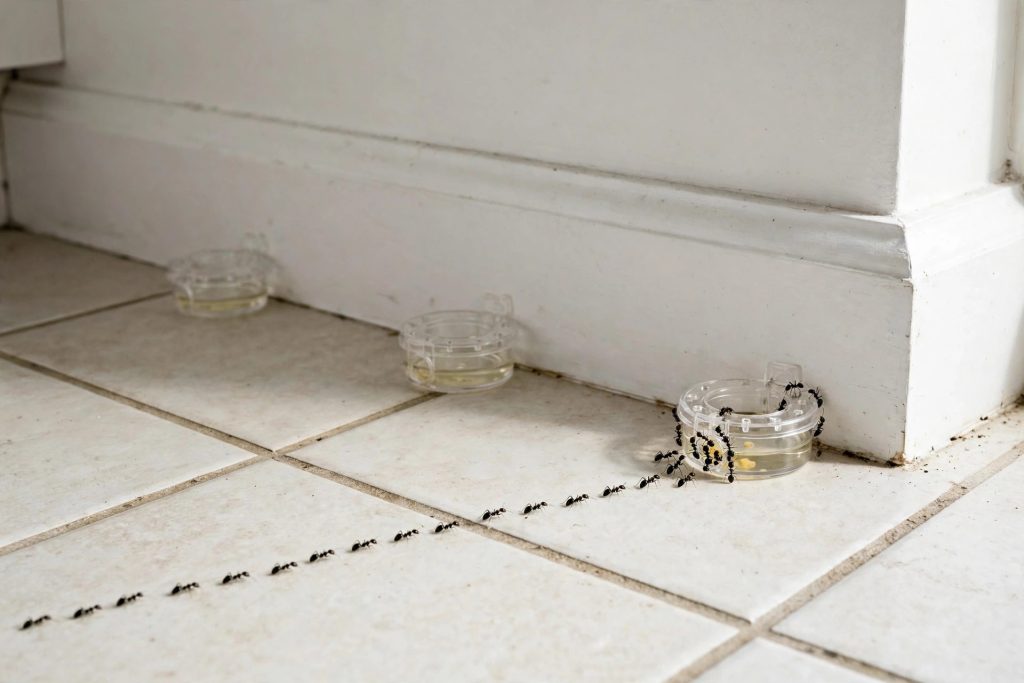
TERRO Liquid Ant Baits are the classic first buy for a sweet-ant trail.
The mechanism is what makes it work. Workers eat the sweet liquid, leave a pheromone trail back to it, and carry the dose home. Borax is slow: it interferes with digestion after the ant has shared the dose, so the bait spreads through the colony before the foragers die. The maker says complete control may take up to two weeks.
These stations are for sweet-eating ants: acrobat, Allegheny, Argentine, big headed, cornfield, crazy, ghost, little black, odorous house, pavement, pyramid, thief, and white footed ants. They are explicitly not for fire ants, pharaoh ants, carpenter ants, or harvester ants.
Remove other food sources first, and do not place stations where insecticide has been sprayed, because sprays are repellent and the ants will not eat contaminated bait. Replace a station when the bait is depleted, and every 3 months once the ants are controlled. The label says to place bait where children and pets cannot reach it, and not where food is commercially prepared or served. EPA-registered, EPA Reg. No. 149-8, with no OMRI claim found. Not labeled for vegetable gardens or raised beds.
Our rating: 7.3 out of 10. The proven borax bait and the dead-simple stations earn the score; the missing coverage figure and the four excluded ant species hold it back.
Manufacturer page: terro.com
2. TERRO Outdoor Liquid Ant Bait Stakes, T1813
Best for: Stopping ants outdoors before they reach the house, along foundations, patios, and garden paths.
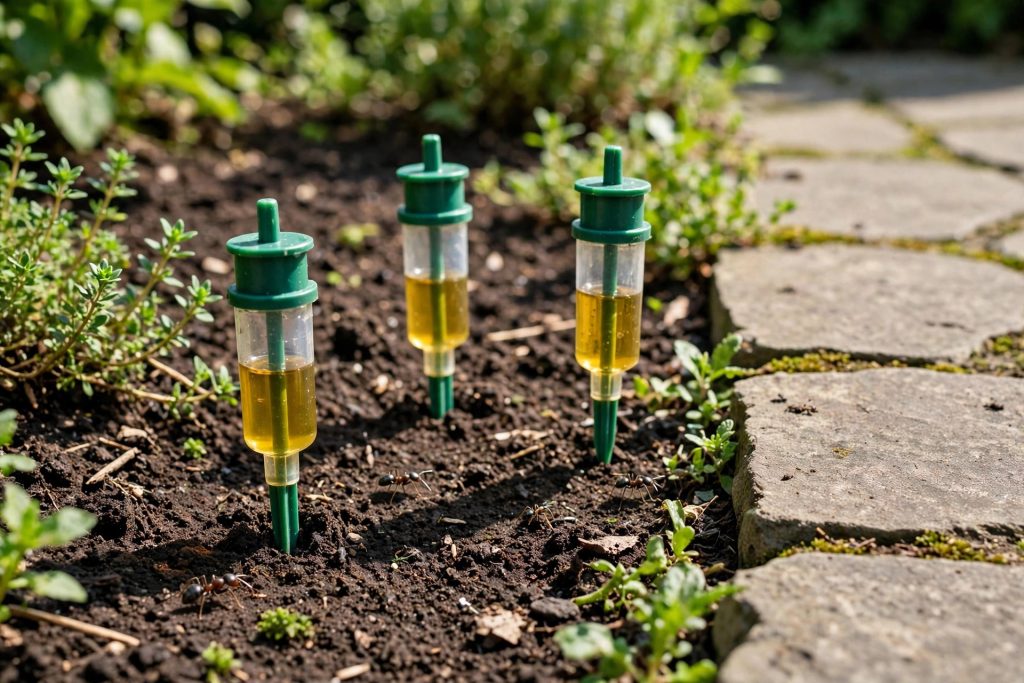
The outdoor stakes are the same idea, moved outside: cut a tab, push the stake into the ground near a nest, a trail, or a home entry point, and leave it undisturbed while the ants feed. Eight stakes come in a pack, with the bait reservoir above ground. The maker says the stakes reduce ant populations within days. Replace them every 3 months once the ants are controlled.
The active ingredient needs a careful note. The T1813 page lists it only as “Borax”, with no percentage. The same formulation under EPA Reg. No. 149-8 is 5.40 percent sodium tetraborate decahydrate, and the sister product, TERRO Outdoor Liquid Ant Baits T1804-6, lists 5.40 percent on its own page. This guide does not print 5.40 percent for the T1813 stakes.
Like the indoor stations, the stake is for common sweet-eating ants, including Argentine, ghost, cornfield, pavement, acrobat, white footed, little black, odorous house, crazy, and big headed ants. Fire ants, pharaoh ants, carpenter ants, and harvester ants are excluded.
Coverage is not published as an area. Terro staff say stakes can be placed every 10 to 15 feet or right by ant activity, inserted about 1 to 2 inches deep with the reservoir above ground. That is a staff answer, not a label direction.
On vegetable gardens, the EPA label lists no use, but a Terro staff answer on the T1813 page, dated March 17, 2025, says: “Yes, you can use it in a vegetable garden, and it will not affect your plants.” That is a customer-service reply, not a label direction. As a conservative precaution, this guide recommends putting the stakes on the outside of the bed, not in the soil — that is this guide’s recommendation, not a label restriction. The EPA label directs placement out of reach of children and pets.
Our rating: 7.5 out of 10. The highest score here, earned by the outdoor-first design and the fast population drop; the unpublished borax percentage and the garden-use confusion cost points.
Manufacturer page: terro.com
3. Amdro Ant Block Home Perimeter Ant Bait, 24 oz
Best for: A whole-house perimeter band, and gardens with more than one ant species, including fire ants and carpenter ants.
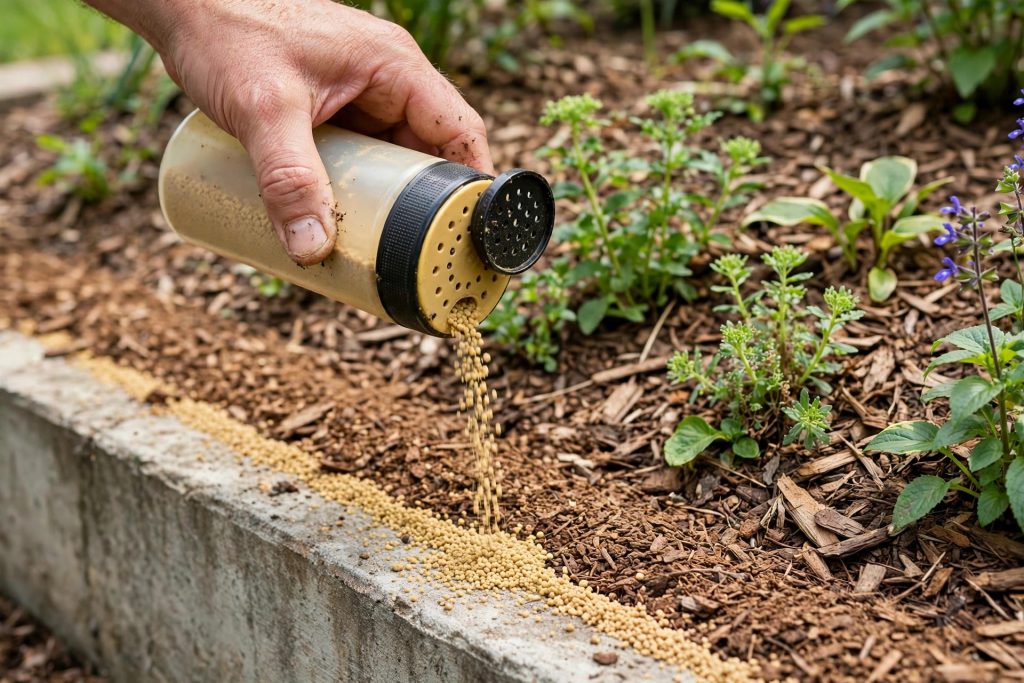
Amdro Ant Block is the broadest bait in this roundup. The active ingredient is hydramethylnon at 0.88 percent, and the label lists 25 ant species, including fire ants, carpenter ants, Texas leafcutting ants, Argentine, acrobat, bigheaded, cornfield, crazy, field, ghost, harvester, odorous house, pavement, Pharaoh, and thief ants.
It is a granular bait, not a broadcast lawn granule. Shake the granules to form a 1-foot-wide band around the outside perimeter of the home, concentrating on trails, cracks, porches, patios, and flower gardens. The rate is 4 to 8 oz per average building, about 2,000 square feet. A 24 oz bottle treats 1,080 linear feet, and the label says one bottle treats the average home over 5 times. Some retailer listings say 540 linear feet; both label copies checked say 1,080.
For individual mounds, sprinkle 1 to 2 and 1/8 oz per mound, onto and around the mound, without disturbing it. Do not apply more than 2.0 lb per acre, to wet ground, if rain is expected within 24 hours, or below 50 degrees Fahrenheit.
Fewer ants are visible within a week, and by the end of one to four weeks, the queen and most of the ants in the mound will have eaten the product and died. Some roundups say it kills the queen within a week; the label does not say that. Check treated mounds 30 to 40 days after treatment, and use the product within 3 months of opening.
The label carries a CAUTION signal word. Keep people and pets out of the area during application. It is toxic to fish and aquatic invertebrates. And the food rule is absolute: “Do not use this product on vegetable or other food crops.” That ban is why Amdro scores 5 on safety despite its excellent colony kill. No dedicated product page on amdro.com was found; specs come from the EPA label.
Our rating: 7.3 out of 10. The 25-species label and the real colony kill earn the score; the strict safety directions and the vegetable ban hold it back.
Manufacturer page: Amdro guide naming the product: amdro.com
4. Advion Ant Gel Bait
Best for: Carpenter ants, pharaoh ants, and harvester ants, the species most other baits exclude, and for precise placement in cracks and crevices.
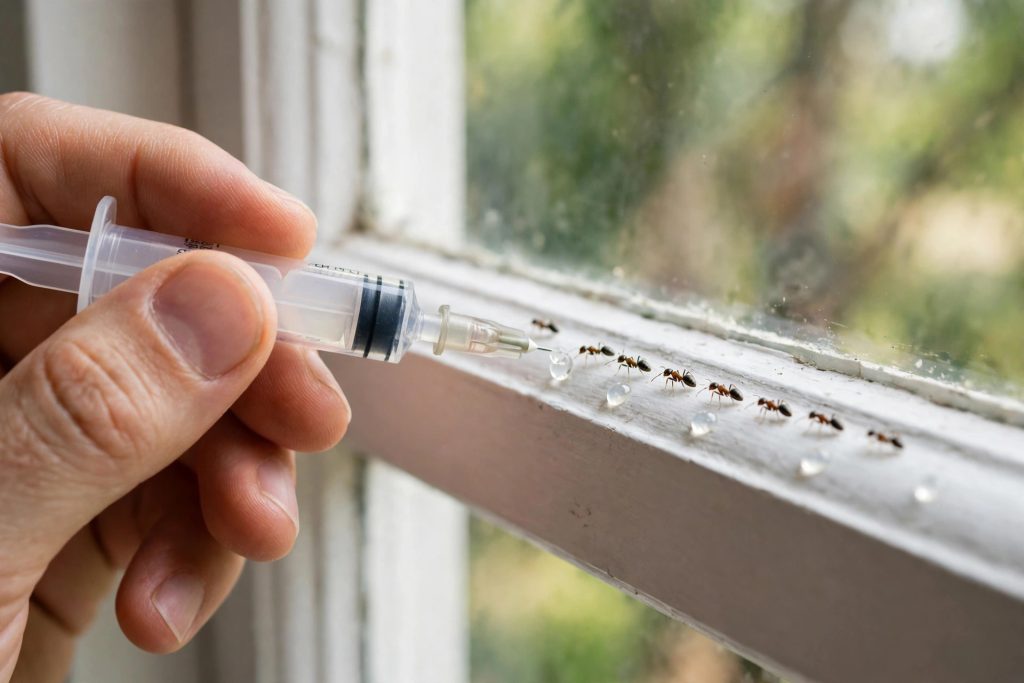
Advion Ant Gel is the specialist in this roundup. The active ingredient is indoxacarb at 0.05 percent, a Group 22A insecticide. It comes as 4 syringes of 1.06 oz each, applied as small spots or thin lines on the trails where ants walk.
The species list is the longest in this guide: acrobat, Argentine, big-headed, carpenter, cornfield, crazy, field, ghost, harvester, honey, little black, odorous house, pavement, pharaoh, pyramid, red imported fire ant foraging, rover, thief, and white-footed ants. For complete control of outdoor nests of pharaoh ants, foraging red imported fire ants, and harvester ants, the label adds to use additional treatments labeled for outdoor nest control.
Indoxacarb is non-repellent, so ants do not avoid it. Foraging ants eat the gel and carry it back, and the molecule is bio-activated by the insect’s own enzymes, then blocks sodium channels, causing paralysis and death. The label says it will help eliminate ants within days.
Apply 0.1 to 1.0 g spots, about 1/4-inch diameter, or lines about 1/8-inch wide by 2 inches long, up to 3 inches for highly active trails. Several small placements beat 1 to 2 large ones. Do not apply to surfaces recently treated with residual sprays, or to surfaces that food contacts, or where the temperature exceeds 120 to 130 degrees Fahrenheit, because the bait can liquefy. There is no fixed reapplication interval: inspect placements and reapply as needed.
The label says: “Do not treat areas that are easily accessible to children and pets.” It is toxic to fish and aquatic invertebrates. EPA-registered, EPA Reg. No. 100-1498, and labeled for food-handling establishments, crack-and-crevice treatment only. Not labeled for vegetable gardens or raised beds.
Version note: the 2013 label is headed “Intended for use by commercial applicators”, while the 2020 label is not. Do not confuse it with Advion Ant Bait Arena, indoxacarb at 0.1 percent.
Our rating: 7.2 out of 10. The unmatched species list and the true colony kill earn the score; the fiddly syringe application and the missing fixed reapplication interval cost points.
Manufacturer source: Syngenta product label (no syngenta-us.com product page was found). Label: agrian-cg-fs1-production
5. Combat Max Ant Killing Bait Stations
Best for: A set-and-forget enclosed station, especially where fire ants are among the visitors.
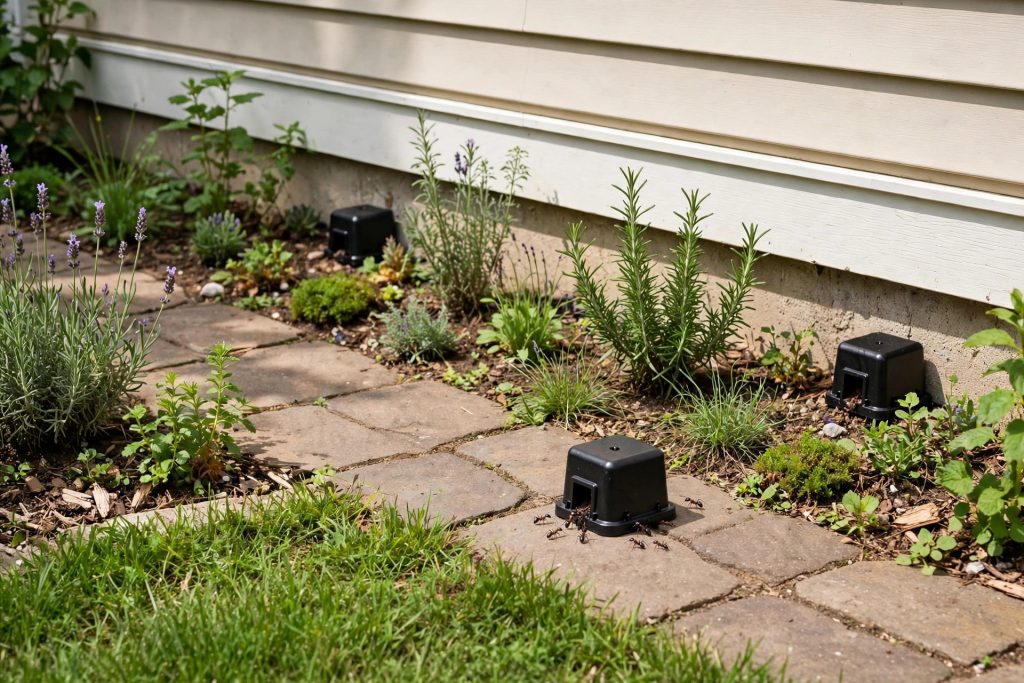
Combat Max is the enclosed station in this roundup, and it has one claim none of the Terro products can make: fire ants are on its label. The registered product name is Combat Ant Bait F1, and the label says it kills the ants which feed on sweet and greasy materials: fire, Argentine, cornfield, little black, odorous house, and pavement ants, and that it kills most ants commonly found in households. The label does not name carpenter, pharaoh, or harvester ants.
The active ingredient is fipronil at 0.01 percent. The stations are child-resistant, break-apart units, and the label allows pack counts of 2, 4, 6, 8, or 12, with 6 the common retail pack.
Workers enter the station, eat, carry the bait back to the nest, and pass it to the queen, destroying the entire colony. The label says to expect less activity within a day, or a few days, or a week. Some roundups say it kills in hours or overnight; the label does not promise that.
Use all the stations in the pack, near trails and entry points. Indoors, they may go in cabinets or next to dishes. Outdoors, place one station every 15 to 20 feet around the home perimeter. Do not spray insecticide on or around the stations, and replace all stations every 3 months.
The label says: “Do not allow children or pets to play with the bait stations.” Fipronil is toxic to birds, fish, and aquatic invertebrates. EPA-registered, EPA Reg. No. 64240-30, with no OMRI claim found. Label use is indoor and outdoor adjacent to the home only, not vegetable gardens or raised beds.
Two confusion warnings. One retailer lists the active ingredient as “Hypochlorite”; the EPA label and safety data sheet both say fipronil at 0.01 percent. Combat Max Ant Killing Gel is a separate product, fipronil at 0.001 percent, replaced after 1 month. No manufacturer product page was found, so the specs here come from the EPA-accepted master label.
Our rating: 7.4 out of 10. The enclosed stations, the fire ant listing, and the easy placement earn the score; the unpublished coverage area and the fipronil warnings hold it back.
Manufacturer page: none verified; specs from the EPA label: epa.gov
6. Ortho Fire Ant Killer Broadcast Granules, 11.5 lb
Best for: A whole lawn full of fire ant mounds, treated in one pass with a spreader.
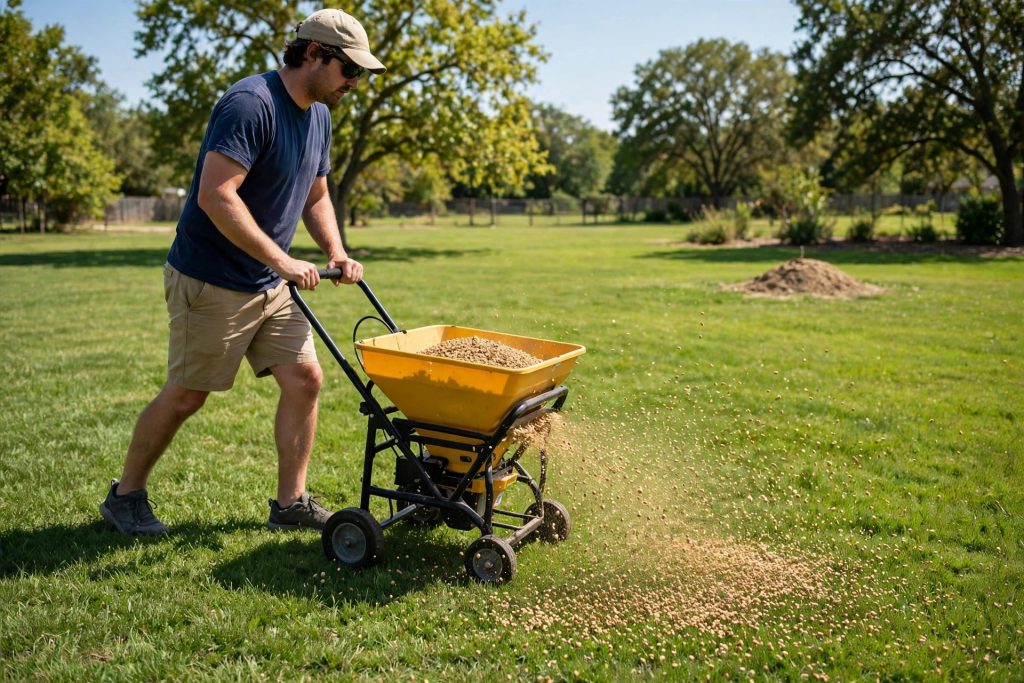
Ortho Fire Ant Killer Broadcast Granules is the lawn-scale answer to fire ants. The active ingredient is bifenthrin at 0.20 percent, a contact pyrethroid with no bait transfer: ants do not carry it back to the colony. The system has two steps. The broadcast application controls foraging workers and newly mated fly-in queens, while the watered-in mound treatment — 1/2 cup over each mound plus a 3-foot circle around it, drenched with 2 gallons of water — kills existing colonies. The label claims it “Kills Mounds and The Queen”.
An 11.5 lb bag covers up to 5,000 square feet, per the manufacturer page and the EPA label. Some retailer listings sell a 13 lb bag treating up to 5,650 square feet, but that size is retailer-sourced.
Apply uniformly over the lawn with a spreader, using the Scotts settings on the label, then water in. For a single mound, use 1/2 cup over the mound plus a 3-foot circle around it, then drench with 2 gallons of water. Best results come in the morning or late evening, at 65 to 80 degrees Fahrenheit. Apply in spring and late summer for extended control. Do not apply during rain, and keep it at least 25 feet from lakes, rivers, and ponds.
The label attaches the 15-minute claim to the watered-in mound treatment — “Kills fire ant mounds in 15 minutes” — while the up-to-6-months claims attach to broadcast application: broadcast “protects the entire lawn from fire ants for up to 6 months” and “controls new fire ant mounds from forming for up to 6 months.” One broadcast application gives up to 6 months of control and prevents new mounds from forming.
The safety section is the strictest in this roundup, which is why Ortho scores 4 on safety. The label carries a CAUTION signal word: harmful if swallowed, absorbed through skin, or inhaled, and causes moderate eye irritation. Wear long sleeves, long pants, shoes plus socks, and waterproof gloves. Do not allow people and pets to re-enter until the granules have been watered in and the area has dried. It is extremely toxic to fish and aquatic invertebrates. And the food rule is absolute: “Do not apply this product to vegetables.”
Do not confuse it with the sibling Mound Treatment, a separate EPA registration with a 3 lb bag and a 2/3 cup mound rate.
Our rating: 6.8 out of 10. The 5,000 square foot coverage, the 15-minute watered-in mound claim, and the 6-month broadcast control earn the score; the contact-only mechanism and the strict safety directions are the deductions.
Manufacturer page: ScottsMiracle-Gro corporate page (no indexed ortho.com product page was found): scottsmiraclegro.com
7. Spectracide Fire Ant Shield Mound Destroyer Granules, 3.5 lb
Best for: One mound, right now, treated on its own instead of the whole lawn.
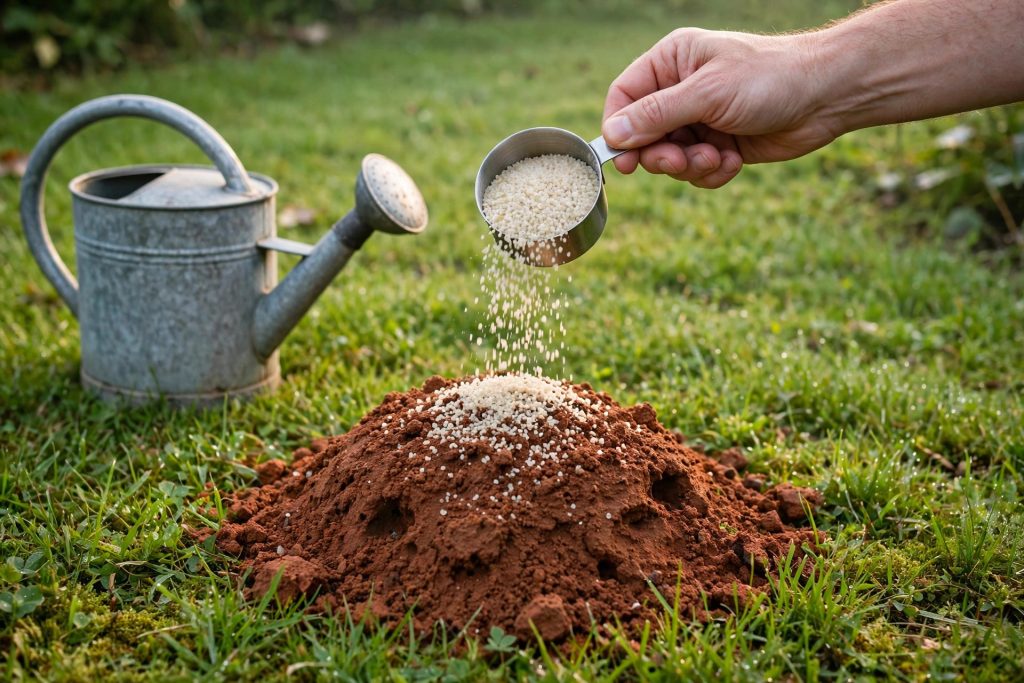
Spectracide Fire Ant Shield Mound Destroyer is the single-mound specialist. The active ingredient is lambda-cyhalothrin at 0.04 percent. The 3.5 lb bag is for individual mounds only. It is not a broadcast product, and this guide does not give it broadcast figures.
Sprinkle 1/2 cup of granules over and 2 feet around each mound, then gently water in with at least 1 gallon of water per mound. A high-pressure spray may disturb the ants and cause migration. For other ants, use 1 to 1 and 1/2 teaspoons over and around each ant hill. Apply in the morning or evening. Do not apply within 24 hours of rain.
The speed is the fastest in this roundup: It starts to kill in minutes. The manufacturer claims that the product kills the queen and colony within 24 hours when used as directed. This is a label-based claim, not an independently verified field result. Duration in months is not published, and this guide does not invent one.
The mechanism is contact kill. The formula is described as deep-reaching, with an exclusive Accelerator II technology to speed the release of the active ingredient into the mound. It is not a bait, so the gentle watering-in step matters: the water carries the active ingredient down to the queen.
The label carries a CAUTION signal word: harmful if swallowed, causes moderate eye irritation. Keep children and pets off treated areas until the product has been watered in and the lawn is dry. It is toxic to aquatic invertebrates.
The food question is the one gap here. The label says to apply the product directly to the lawn or garden area, but it does not state that use on vegetables is allowed, and it does not state a prohibition either. Silence is not permission. Several roundups give this product the figures of its sibling, Yard Protection Granules, a broadcast product at 0.10 percent lambda-cyhalothrin, up to 5,000 square feet, and up to 3 months. Those figures do not belong to Mound Destroyer.
Our rating: 6.3 out of 10. The manufacturer-claimed 24-hour queen and colony kill and the simple per-mound dose earn the score; the contact-only mechanism and the missing coverage and duration figures hold it back.
Manufacturer page: spectracide.com
8. Wondercide Outdoor Pest Control, Ready-To-Use
Best for: Gardeners who want a plant-powered yard spray, and a lawn the kids and the dog use every day.
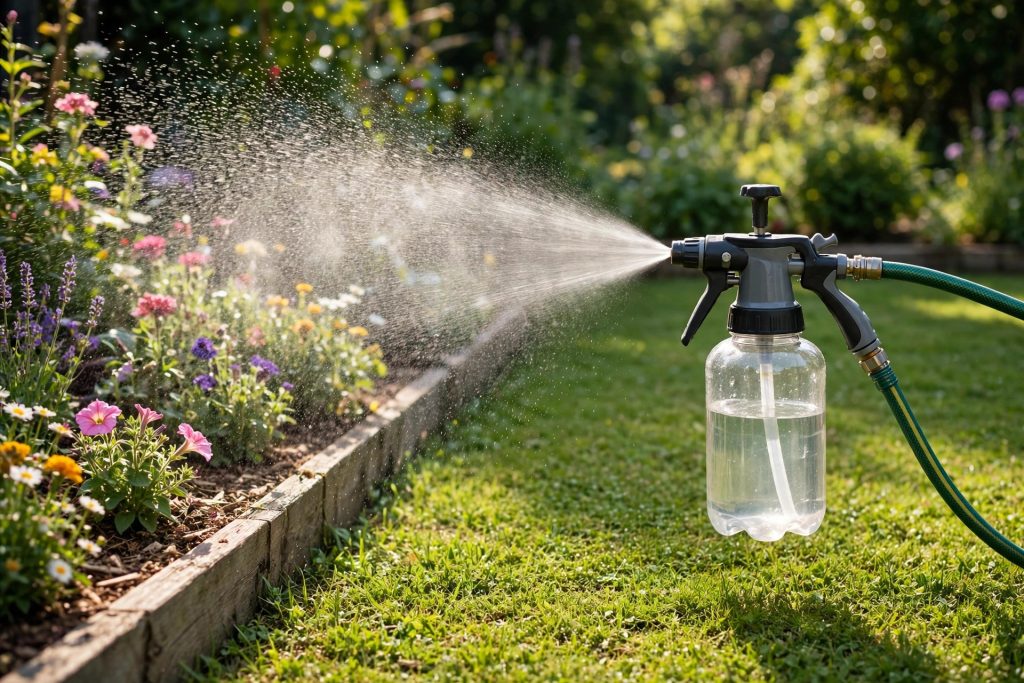
Wondercide Outdoor Pest Control is the natural option with the clearest label in this roundup. It is a hose-end yard spray, sold as a ready-to-use bottle and as a concentrate; this entry is the ready-to-use spray, in cedarwood, lemongrass, peppermint, and rosemary scents.
The active ingredients differ by variant. The ready-to-use bottle lists cedarwood oil at 12.63 percent, sesame oil at 2.73 percent, and sodium lauryl sulfate at 1.09 percent. The concentrate lists cedarwood oil at 40.42 percent.
The ready-to-use bottle treats up to 5,000 square feet for killing fleas, mosquitoes, gnats, no-see-ums, crickets, fire ants, Japanese beetles, and Argentine ants, and 2,500 square feet to kill and repel ticks and repel mosquitoes. The concentrate goes further: 16 oz treats up to 10,000 square feet.
Start at the house and work outward to the property line, slightly overlapping. Apply every few days until control is established, then monthly or as needed, below 90 degrees Fahrenheit and not in direct sunlight. Re-apply after heavy rain.
The maker says it plainly: “Kills by contact and repels.” Cedarwood oil affects octopamine, which the maker says is essential to pheromone-driven pests. There is no bait transfer and no colony reach. The ants it touches die, and the scent pushes the rest away for a while. That is why Wondercide scores 3 on colony kill, even though it scores 8 on safety.
The manufacturer states that the product can be used around pets and people when applied according to directions. However, pets should not be allowed to lick wet spray, drink treated runoff, or access the product during application. Follow the current label for any restrictions. The maker also says “Spray and Play! No wait time after application.” But the outdoor sprays were not formulated or tested for use inside the home or on pets or people. Residue is described as safe for bees and butterflies, per lab testing cited by the maker.
No OMRI claim appears on either manufacturer product page, and no EPA registration number appears either, so this guide claims neither. The food rule is the clearest of any product here. The maker says, verbatim: “Designed for, Outdoor use: yard, ornamental garden, deck, patio. Do not apply to a food-use site, such as fruit and vegetable gardens.” This product is ornamental-garden only.
Our rating: 6.5 out of 10. The pet and people safety, the 5,000 square foot coverage, and the honest label earn the score; the contact-only mechanism and the food-site ban are the deductions.
Manufacturer page: wondercide.com
9. EcoSMART Ant and Roach Killer
Best for: A fast contact spray on the ants you can see, with plant oils instead of a synthetic insecticide active ingredient.
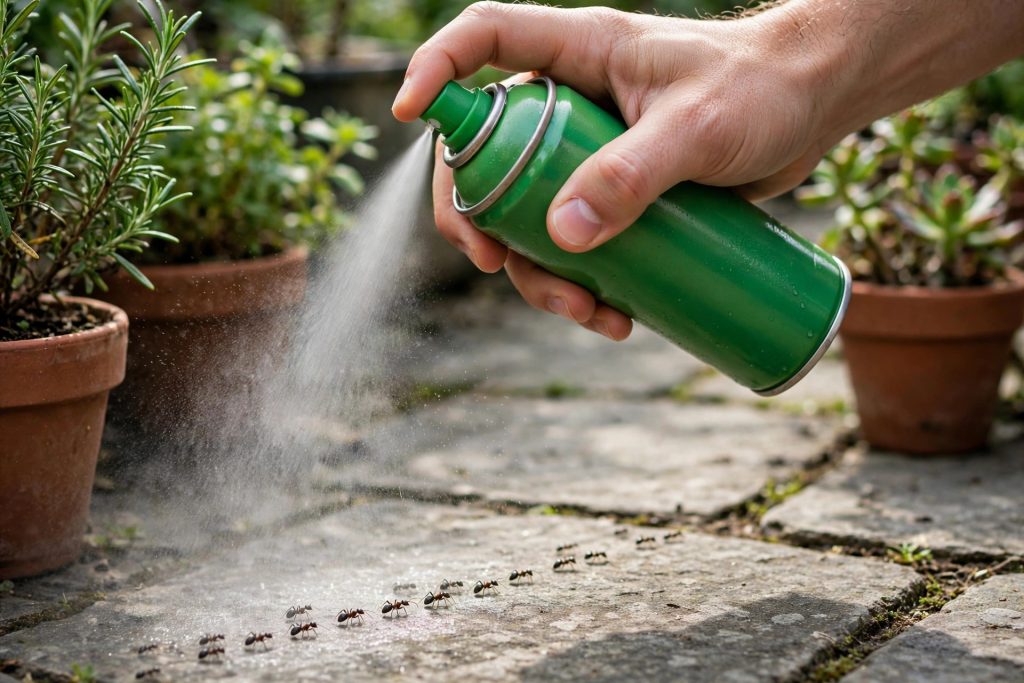
EcoSMART Ant and Roach Killer is an aerosol contact spray, for indoor and outdoor use, built on plant oils. The current safety data sheet lists rosemary oil at 1.5 percent and peppermint oil at 1.5 percent.
Two conflicts: the 2011 safety data sheet is for a 12 oz can, while current listings describe a 14 oz aerosol, so this guide does not pick a size; and an older 2009 sheet lists rosemary oil at 5.0 percent and cinnamon oil at 3.0 percent, so this guide uses the current 1.5 percent and 1.5 percent figures only.
The maker names no ant species for this product, and coverage is not published. There is no reapplication interval on the FAQ for this aerosol, only the general pattern of reapplying as listed pests are seen.
The mechanism is contact kill only. The FAQ states: “Our Ant and Roach Killer is designed to kill fast, but it kills by contact. It does not remain in the environment for weeks or months like synthetic chemicals.” Repellency lasts only while the fragrance dissipates. It kills the ants you spray, and it does not touch the queen.
The FAQ says the products are safe to use around pets when used as directed, but not directly on pets. The safety data sheet tempers the marketing line: its signal word is Warning, for eye irritation, an allergic skin reaction, respiratory irritation, or drowsiness, and it is a flammable aerosol under pressure. On plants, test a small area first, and do not spray cuttings, drought-stressed plants, or blooms, or above 90 degrees Fahrenheit.
No OMRI claim was found on the manufacturer site, and the old “Organic” in the product name is marketing wording, not OMRI Listed status. On EPA status, the product is exempt, not registered: the FAQ says EcoSMART products are classified as minimum-risk pesticides and exempt from federal registration. No manufacturer statement was found allowing use on vegetables. No dedicated product page was found on ecosmart.com.
Our rating: 6.0 out of 10. The fast contact kill, the plant-oil formula, and the easy aerosol earn the score; the missing species list, the missing coverage, and the total lack of colony reach hold it back.
Manufacturer page: FAQ at ecosmart.com
10. Harris Diatomaceous Earth Crawling Insect Killer
Best for: Gardeners who want no synthetic active ingredient at all, and a dust that keeps working as long as it stays dry.
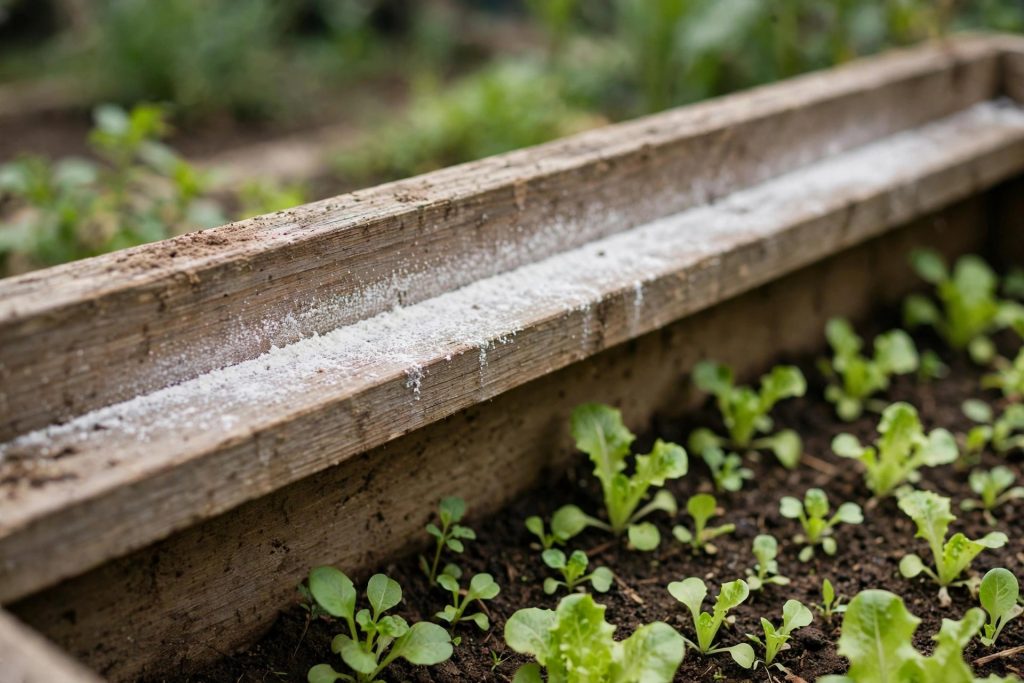
Harris Diatomaceous Earth Crawling Insect Killer is the mechanical option in this roundup. The active ingredient is diatomaceous earth, consisting of silicon dioxide at 85.0 percent. The dust is made of fossilized diatom shells that absorb moisture and damage the insect exoskeleton, causing dehydration. Insects that contact or ingest the powder die within 48 hours, and the label says insects cannot become immune to its action.
The most important fact is what it does not kill. The EPA label says: “Ants (excluding Fire, Harvester, Carpenter and Pharaoh ants).” It kills other crawling ants, plus slugs, beetles, cockroaches, fleas, bed bugs, earwigs, and silverfish.
Do not confuse it with the Harris Food Grade product, a feed additive, not an insecticide; its 89 percent silicon dioxide belongs to the feed additive, not to this product.
Coverage is not published as square footage. The EPA label gives rates instead: up to 70 lb per acre as dust, or a 20 percent solution at 44 gallons per acre as a slurry. The dust is effective and long lasting when kept dry.
Label sites include residential, commercial, and agricultural buildings, food and feed handling establishments, livestock and poultry houses, crops, and stored grain. But the food question is still uncertain: the EPA label says the product may be applied to growing crops generally, but no current label language naming specific vegetables was verified. Check the current label before use in a vegetable bed.
The signal word is CAUTION, and it causes moderate eye irritation. Wear a respirator mask and protective eyewear when applying, and do not call it non-toxic without the CAUTION qualifier. On OMRI status, the Food Grade page carries a maker-stated listing, but this SKU has only a retailer-claimed listing, not maker-verified. EPA-registered, EPA Reg. No. 3-18. No dedicated product page for this SKU was found on pfharris.com.
Our rating: 5.8 out of 10. The lowest score here, and the honest one: no synthetic insecticide active ingredient, long lasting when dry, and easy to dust, but it only kills the ants that touch it, it takes up to 48 hours, and its own label excludes the four hardest ant species.
Manufacturer page: no dedicated product page for this SKU was found on pfharris.com; specs from the EPA label: epa.gov
Pet Safe Ant Killer for Garden: What That Phrase Really Means
“Pet safe ant killer for garden” is the most misunderstood phrase in this whole topic. No ant killer is safe in every amount. What “pet safe” means in practice is narrower: safe when used as directed, placed where pets cannot reach it, and never left in piles a dog can eat.
Borax is the best example of why the phrase needs care. Boric acid is low in toxicity when eaten in small amounts, but the National Pesticide Information Center notes that borax can be corrosive to the eye and irritating to skin, that people who have eaten boric acid have had nausea, vomiting, stomach aches, and diarrhea, and that infants are more sensitive, with nervous system effects and reported deaths from boric acid ingestion. In animals, signs of poisoning can start within 2 hours of eating it. That is why the Terro labels say to place bait where children and pets cannot reach it, and why UC Master Gardeners write: “All pesticides are toxic; that’s how they work. Boric acid, however, has low toxicity to humans, pets, and non-target species when used properly. The key words here are ‘when used properly’.”
Three rules make any ant killer safer around pets. First, use enclosed bait stations, not loose granules or open bait, where a dog can reach. Second, scatter granules thinly and never in piles. Third, store every bag and bottle sealed and out of reach, because the most common pet poisoning is from a chewed bag in the garage. And boric acid is toxic to plants, per UC ANR, so do not pour borax bait on the soil around them.
If you want the lowest-risk option here, it is Wondercide. The manufacturer states that the product can be used around pets and people when applied according to directions. However, pets should not be allowed to lick wet spray, drink treated runoff, or access the product during application. Follow the current label for any restrictions. The other low-risk choice is the Harris dust, used thinly and kept dry. But neither one reaches the colony: the safest products are also the weakest at ending the infestation.
Ants are only one garden pest, and the rest of the pest list needs its own plan.
Best Ant Bait Stations
A bait station is a small box with poisoned food inside and holes only ants can enter. The ants eat, go home, and feed the colony, which is why bait stations beat sprays for a lasting result. The University of Florida Extension puts it plainly: crack-and-crevice treatments and surface sprays are usually a quick fix and ineffective in the long term, because they do not affect the queen. Baits are the most effective way to get toxicant into the nest, because ants rely heavily on trophallaxis, reciprocal feeding.
Three products in this roundup are bait stations. The TERRO Liquid Ant Baits, T300, are indoor stations for sweet-eating ants, 6 to a pack, placed along baseboards and counters. The TERRO Outdoor Liquid Ant Bait Stakes, T1813, are the outdoor version, pushed into the ground every 10 to 15 feet, 8 to a pack. Combat Max Ant Killing Bait Stations are the enclosed, child-resistant option, one every 15 to 20 feet around the home perimeter, and the only station here whose label includes fire ants.
Two rules decide whether any station works. First, never spray insecticide on or around a bait station: sprays are repellent, and if they contaminate the bait, the ants will not eat it. Second, remove competing food: clean the counters, pick up the pet food, and let the bait be the best meal on offer.
Expect patience. Terro says complete control may take up to two weeks, and Combat says less activity within a day, or a few days, or a week. If you still see ants after two weeks, the colony may be a species the bait does not cover, or the bait may be placed too far from the trail. Move the stations closer to the trail, and use all the stations in the pack.
How to Get Rid of Ants in Raised Beds
Ants in a raised bed are usually not eating your vegetables. They are farming aphids on the undersides of the leaves, or nesting in the warm, dry soil under a board, or trailing in from a nest under the bed. The ants are a symptom, and killing the ants inside the bed is rarely the right first move.
Here is the honest finding: several products in this roundup are explicitly prohibited on vegetables, while others do not clearly establish vegetable-bed use on the labels reviewed. Do not apply any product inside a vegetable bed unless its current label specifically permits that use. Amdro and Ortho explicitly forbid vegetable use. Wondercide bans food-use sites outright. EcoSMART has no manufacturer statement allowing vegetable use, and the Harris dust label is unclear on specific vegetables. The Terro outdoor stakes have only a customer-service answer in their favor, not a label direction. Clemson Extension states the rule plainly: only use baits specifically labeled for use in vegetables.
So work the perimeter. Place bait stations on the paths and the ground around the bed, not in the soil. As a conservative precaution, this guide recommends putting Terro stakes or Combat stations along the outside of the bed frame. Use the Harris dust in a thin line along the outside edge, and keep it dry. If the ants are farming aphids, deal with the aphids: a strong jet of water knocks them off, and insecticidal soap kills the ones it touches.
For fire ants in a vegetable bed, Texas A and M Extension recommends products containing spinosad, and Clemson lists spinosad baits such as Come and Get It! and Pay Back, with a 0-day pre-harvest interval, as actually labeled for vegetable gardens. None of those products is in this roundup, but they are the right answer for a vegetable bed.
Two things not to do: do not pour borax or any bait into the bed soil, because boric acid is toxic to plants, per UC ANR, and do not drench the bed with a contact spray. It kills the foragers, leaves the queen, and soaks the soil your food grows in.
If insects are eating the same plants the ants are after, a neem spray covers the other half of the problem.
Borax vs Commercial Ant Killer
Borax is the active ingredient in a popular commercial ant killer, and it is also the ingredient in many homemade ant killer recipes. The question is whether the homemade version works as well as the commercial bait stations in this roundup, and the answer is no.
The differences are practical, not chemical. A commercial bait station is enclosed, measured, and stable: the dose is fixed at 5.40 percent, the station keeps the liquid from drying out or spilling, and the box keeps children and pets from reaching it. A homemade bait is open, unmeasured, and easy to get wrong. Too much borax and the foragers die before they carry it home. Too little and nothing happens.
Commercial products also cover ants a homemade borax bait does not. Borax baits work on sweet-eating ants only, not fire ants, pharaoh ants, carpenter ants, or harvester ants. For those species, the commercial answers are Advion gel, Amdro, or Combat Max. A homemade borax bait has no answer for them.
The honest verdict: if you want borax, buy the station. The Terro T300 costs little, the dose is right, the station is enclosed, and the label tells you exactly where to put it. Make your own only if you are comfortable measuring, you can keep it fully out of reach of children and pets, and you know your ants are sweet-eating ants.
Best Natural Ant Repellent
A natural ant repellent kills or pushes ants away with plant oils or a mineral, instead of a synthetic insecticide active ingredient. Three products in this roundup fit that description: Wondercide, EcoSMART, and Harris diatomaceous earth. They are also the three lowest-scoring products on colony kill, and that is not a coincidence. Natural or plant-derived ingredients are not automatically harmless. Their safety depends on the formulation, exposure, application method, and label directions.
Wondercide is the strongest of the three: cedarwood oil at 12.63 percent in the ready-to-use bottle, up to 5,000 square feet. The manufacturer states that the product can be used around pets and people when applied according to directions. However, pets should not be allowed to lick wet spray, drink treated runoff, or access the product during application. Follow the current label for any restrictions. It kills by contact and repels, but it does not reach the colony, so reapply every few days until control is established, then monthly or as needed.
EcoSMART is the fastest of the three: rosemary oil at 1.5 percent and peppermint oil at 1.5 percent, in an aerosol you point at the ants you can see. It kills fast by contact, and the maker says it does not remain in the environment for weeks or months like some synthetic insecticide active ingredients. No residue means no lasting effect, and no colony reach means the trail returns.
Harris diatomaceous earth is the longest lasting of the three, as long as it stays dry. The dust is fossilized diatom shells that damage the insect exoskeleton and cause dehydration, and insects die within 48 hours of contact. But it only kills the ants that touch it, and its own label excludes fire, harvester, carpenter, and pharaoh ants.
None of the three is OMRI Listed on its own product page. Wondercide and EcoSMART make no OMRI claim, and the Harris SKU has only a retailer-claimed listing, not a maker-verified one. Natural, plant powered, and organic are marketing words, not certifications.
Use a natural product when the ants are a nuisance, not an infestation: a trail on the patio, ants on the deck, a few foragers in the kitchen. Use a bait when you need the colony gone. And do not spray a natural spray around a bait station: it is repellent, and the bait stops working.
Fire Ant Killer for Lawn: Mound Treatment vs Broadcast Bait
Fire ants are a different problem from sugar ants. A fire ant mound is a colony with one or more queens underground, and a treatment that kills the ants on the surface leaves the colony alive. Texas A and M AgriLife Extension says it plainly: most people try to control fire ants by treating individual mounds, but the mound treatment must kill the queen, or the colony will survive. It is usually more effective and less expensive to treat the entire yard with a bait product designed for broadcast application.
The two-step method is the Extension standard. Step 1: broadcast a fire ant bait once or twice a year, which reduces colonies by 80 to 90 percent, and in research trials by 85 to 95 percent. Step 2: treat the nuisance mounds that remain with an individual mound treatment. Clemson says to wait 7 to 10 days after the broadcast, and Texas A and M says no sooner than 24 hours, to allow the ants to consume the bait first.
Two products in this roundup fit the two steps. Ortho Fire Ant Killer Broadcast Granules is the broadcast step: an 11.5 lb bag covering up to 5,000 square feet, with up to 6 months of broadcast protection. Spectracide Fire Ant Shield Mound Destroyer is the mound step: 1/2 cup of granules over and 2 feet around each mound, gently watered in with at least a gallon of water. The manufacturer claims that the product kills the queen and colony within 24 hours when used as directed. This is a label-based claim, not an independently verified field result. Amdro Ant Block is the bait alternative for the mound step, with the colony dead in 1 to 4 weeks.
Three details decide whether it works. First, sprinkle bait around the mound perimeter, not directly on the mound: when disturbed, ants go into defense mode and will not collect bait. Second, apply when ants are foraging, in the morning or late evening, at about 70 degrees Fahrenheit or above, and avoid rain within 24 to 48 hours. Third, never treat a mound with a contact killer and then expect a bait to work on the same mound.
One more warning, from Clemson: never use products containing acephate for mound treatments in the vegetable garden. Acephate is labeled for fire ant mounds in home lawns, but it is not labeled for vegetables. If the fire ants are in a vegetable bed, use a spinosad bait labeled for vegetables, per Texas A and M, not a lawn product.
Slugs work the same beds at night, and the pet-safe bait guide covers them.
Final Choice
If you remember one thing from this guide, make it this: the best ant killer garden owners can buy is a bait, not a spray, because only a bait reaches the queen.
For most gardens, start with a TERRO bait: the indoor stations, T300, for the kitchen trail, or the outdoor stakes, T1813, for the foundation and the paths. The stakes score highest at 7.5 out of 10. If your ants are fire ants, carpenter ants, or pharaoh ants, the Terro products will not work. The honest pick is Advion gel for the hard species, Amdro Ant Block for the widest label, or Combat Max for an enclosed station that covers fire ants.
For fire ants in the lawn, follow the Extension two-step method: broadcast Ortho granules over the whole lawn, then treat the stubborn mounds with Spectracide. For a garden where children and dogs play every day, Wondercide is the natural pick, with the clear understanding that it kills by contact and repels.
Whatever you buy, read the label first. Several products in this roundup are explicitly prohibited on vegetables, while others do not clearly establish vegetable-bed use on the labels reviewed. Do not apply any product inside a vegetable bed unless its current label specifically permits that use. Keep the bait on the perimeter, out of reach of children and pets, and never spray insecticide around a bait station.
FAQ
What is the best ant killer for a garden?
For most gardens, TERRO Outdoor Liquid Ant Bait Stakes, T1813, score highest at 7.5 out of 10: a borax bait the workers carry back to the queen, placed every 10 to 15 feet outdoors. For fire ants in a lawn, Ortho Fire Ant Killer Broadcast Granules are the better pick. No single product wins every situation, because the right one depends on which ant you have.
Do ant bait stations really kill the whole colony?
Yes, when the bait is slow-acting and the ants eat it. Workers carry the bait home and feed it to the colony through trophallaxis, reciprocal feeding, so the toxicant reaches the queen and brood. The University of Florida Extension calls baits the most effective way to get toxicant into the nest. Contact sprays do not do this: they only kill the foragers they touch.
Is borax safe for pets?
Borax is low in toxicity when used properly, but it is not safe in every amount. The National Pesticide Information Center notes it can be corrosive to the eye, irritating to skin, and that infants and animals can suffer serious poisoning from eating it. Always place borax bait in enclosed stations, out of reach of children and pets, and never leave it in open dishes or piles.
How do I get rid of ants in raised beds?
Work the perimeter, not the soil. Place bait stations on the paths and ground around the bed, deal with the aphids the ants are farming, and keep the bed dry and tidy. Several products in this roundup are explicitly prohibited on vegetables, while others do not clearly establish vegetable-bed use on the labels reviewed. Do not apply any product inside a vegetable bed unless its current label specifically permits that use. For fire ants in a vegetable bed, use a spinosad bait specifically labeled for vegetables, per Texas A and M Extension.
What is the best natural ant killer?
Wondercide Outdoor Pest Control is the strongest natural pick here, with cedarwood oil at 12.63 percent in the ready-to-use bottle and up to 5,000 square feet of coverage. EcoSMART is the fastest contact spray, and Harris diatomaceous earth is the longest lasting when dry. None of the three reaches the colony, so expect repeat applications.
What is the best fire ant killer for a lawn?
Follow the Extension two-step method: broadcast a fire ant bait or broadcast granules over the whole lawn once or twice a year, then treat the remaining mounds individually 7 to 10 days later. In this roundup, Ortho Fire Ant Killer Broadcast Granules are the broadcast step, and Spectracide Fire Ant Shield Mound Destroyer is the mound step.
References
- National Pesticide Information Center (Oregon State University), “Boric Acid General Fact Sheet“: borax can be corrosive to the eye; infants are more sensitive, with reported deaths from boric acid ingestion; keep boric acid products out of children’s and pets’ reach.
- UC ANR, UC Master Gardeners, “Boric Acid for Ant Problems“: “All pesticides are toxic; that’s how they work”; low toxicity when used properly; boric acid is toxic to plants.
- Texas A and M AgriLife Extension, “Fire Ant Control: The Two-Step Method and Other Approaches“: broadcast bait once or twice a year reduces colonies by 80 to 90 percent; mound treatments must kill the queen.
- Clemson Cooperative Extension, “Fire Ant Management in the Home Lawn” (HGIC 2502): fire ant baits reduce populations by 85 to 95 percent in research trials; broadcast first, treat problem mounds 7 to 10 days later.
- Clemson Cooperative Extension, “Managing Fire Ants in the Vegetable Garden” (HGIC 1263): only use baits specifically labeled for vegetables; never use acephate in the vegetable garden.
- University of Florida IFAS Extension, ENY203/IG080, “Ants“: surface treatments do not affect the queen; baits are the most effective way to get toxicant into the nest; do not spray insecticide around bait.
- Texas A and M AgriLife Today, “How to get rid of fire ants: Expert tips that work” (Puckett, 2026-03-10): granular bait is the most effective fire ant control; sprinkle bait around the mound perimeter; use spinosad products for vegetable beds.
- TERRO official site (manufacturer): T300 borax 5.40%, species list and exclusions.
- Spectracide official site (manufacturer): Mound Destroyer lambda-cyhalothrin 0.04%, 1/2 cup per mound, queen and colony in 24 hours.
- Wondercide official site (manufacturer): cedarwood oil figures by variant, coverage, and the ban on food-use sites.

Thesis Link : https://saulibrary.edu.bd/daatj/public/uploads/BAU200601_19-Pp_5.pdf
- 10 Best Ant Killers for Gardens - November 24, 2026
- 10 Best Deer Repellents That Actually Work - November 23, 2026
- 10 Best Microgreen Growing Kits - November 23, 2026