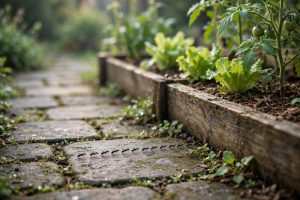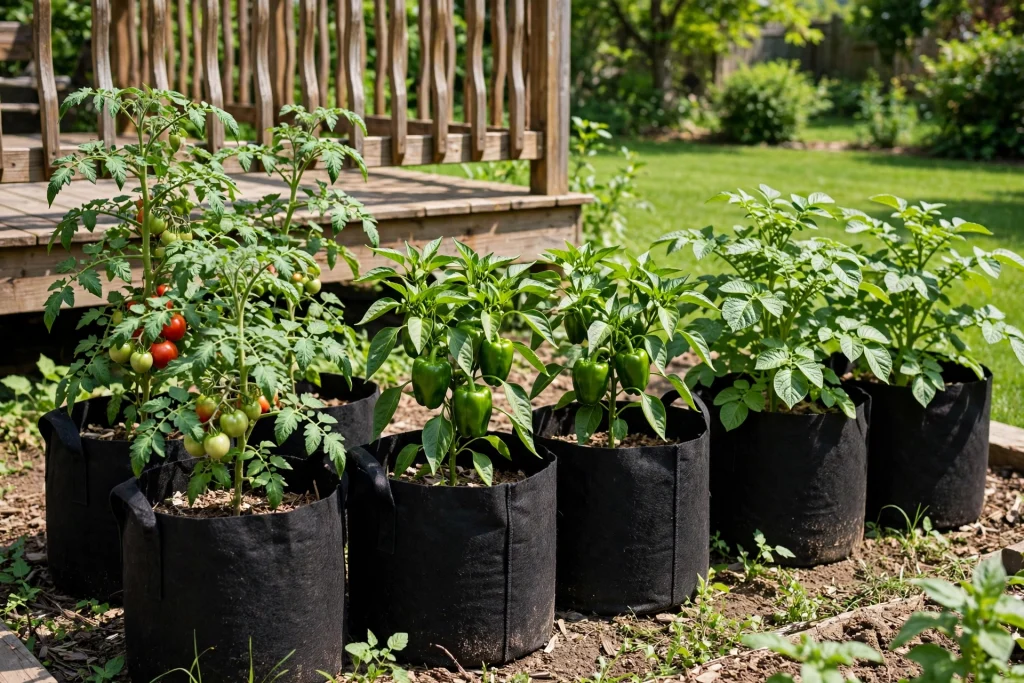
A tomato plant does not ask for much. It asks for sun, water, and enough root room to grow into itself, and a fabric grow bag gives it all three on a patio where no garden bed exists. That is the whole appeal of the best grow bags for vegetables. They turn a balcony, a driveway edge, or a sunny corner of a rental yard into a vegetable patch, and when the season ends they fold flat and disappear onto a shelf.
The catch is that not all grow bags are equal, and the differences are not obvious from a product photo. Fabric weight matters, because a thin bag sags and dries out faster. Size matters more than brand, because a tomato in a 5-gallon bag will never grow like the same plant in a 15-gallon one. Handles matter the first time you try to move a wet, full bag. And gallon ratings are not as honest as they look, because makers do not all use the same gallon, and they measure them differently.
This guide compares the 10 best grow bags for vegetables growers can buy in the United States in 2026, with every fact checked against the maker’s own listing or a major retailer page. Where a maker does not publish a spec, this guide says so. Where sources disagree, it prints the conflict instead of picking the bigger number. Ratings come from verified specifications and owner-feedback patterns, not from hands-on testing, and the scoring system is printed in full in How We Chose so you can check the maths yourself.
Quick Recommendation
If you only want the short answer, start here.
- Best overall for most vegetable gardeners: AC Infinity Heavy Duty Square Fabric Pots, 7 Gallon, 5-Pack, rated 9.0. The 500G fabric is the thickest standard in this guide, the square shape packs tightly on a patio, and the steel rings give you somewhere to tie a tomato stem.
- Best value starter set: VIVOSUN 5-Pack 5 Gallon Grow Bags, rated 8.7. Five bags of 300G fabric with reinforced handles, enough for peppers, herbs, and a compact tomato each, at the lowest cost per bag in this guide.
- Best for a full vegetable row: Gardzen 10-Pack 10 Gallon Grow Bags, rated 8.4. Ten full-size bags in one order, with cross-stitched handles.
- Best premium original: Smart Pot 10 Gallon Fabric Pot with Handles, rated 9.0. Made in the USA since 1984, with the widest size range in this guide and a fabric the maker has not changed in decades.
- Best grow bags for potatoes: Gardzen 6-Pack 10 Gallon Potato Grow Bags with Access Flap, rated 8.0. The Velcro flap lets you check and pick tubers without tipping the whole bag.
- Best for large tomatoes: VIVOSUN 5-Pack 15 Gallon Grow Bags, 500G, rated 8.6. Fifteen gallons of root room with heavy fabric and training rings, for indeterminate varieties that grow five feet tall.
- Best thickest fabric: Gorilla 10 Gallon Fabric Grow Bags, 4-Pack, rated 8.6. The 600G fabric is the heaviest in this guide, with copper grommets for training ties.
If you are buying your first set and you grow the usual mix of tomatoes, peppers, and herbs, buy the VIVOSUN 5-gallon five-pack or the AC Infinity 7-gallon five-pack and go one size bigger than you think you need. A bag that is too small dries out within hours on a hot day, and no amount of watering fixes a root system with nowhere to go.
The 10 Best Grow Bags for Vegetables Compared
| Product | Sizes | Fabric | Best for | Our rating |
|---|---|---|---|---|
| VIVOSUN 5-Pack 5 Gallon Grow Bags | 5 gal (range 1 to 100 gal) | 300G nonwoven, BPA-free | Peppers, herbs, first set | 8.7 |
| AC Infinity Heavy Duty Square Fabric Pots, 7 Gallon, 5-Pack | 7 gal, true 7.66 gal (range 3 to 10 gal) | 500G nonwoven, BPA-free | Best overall, patios | 9.0 |
| Gardzen 10-Pack 10 Gallon Grow Bags | 10 gal (range 5 to 20 gal) | 300G nonwoven, BPA-free | Full vegetable row | 8.4 |
| Smart Pot 10 Gallon Fabric Pot with Handles | 10 gal (range 1 to 400 gal) | Geotextile, BPA and lead free | Premium original | 9.0 |
| GeoPot Self-Supporting Fabric Pot with Handles, 10 Gallon | 10 gal (range 1 to 200 gal) | Nonwoven polypropylene | Quad-stitched durability | 8.9 |
| Root Pouch Boxer Brown 10 Gallon with Handles | 10 gal (range 1 pint to 600 gal) | 250 g/m2 recycled PET | Recycled, food-safe fabric | 8.3 |
| Gardzen 6-Pack 10 Gallon Potato Grow Bags with Access Flap | 10 gal | Nonwoven, BPA-free | Potatoes, root crops | 8.0 |
| JERIA 12-Pack 10 Gallon Grow Bags | 10 gal (range 1 to 10 gal) | 300G nonwoven polyester felt | Large crops, bulk buy | 8.2 |
| VIVOSUN 5-Pack 15 Gallon Grow Bags, 500G | 15 gal (range 1 to 100 gal) | 500G nonwoven, BPA-free | Large tomatoes | 8.6 |
| Gorilla 10 Gallon Fabric Grow Bags, 4-Pack | 10 gal | 600G nonwoven, BPA and PVC free | Thickest fabric | 8.6 |
Read the Sizes column with care. The table above compares the 10 best grow bags for vegetables in this guide by size, fabric, best use and rating. Gallon numbers are not one unit: a trade gallon, the nursery size class, is about three quarters of a US liquid gallon, so 10 trade gallons come to about 7.5 US gallons, or about one cubic foot of potting mix, while 10 US liquid gallons come to about 1.34 cubic feet. Makers do not all use the same gallon: Smart Pot states liquid gallons, Gorilla states gallons to the fill line, and Gardzen’s own fill guidance for its 10-gallon bag is 38 litres, about 1.34 cubic feet. By the makers’ own figures, a 10-gallon bag in this guide holds about 1.3 to 1.5 cubic feet of mix, so compare the diameter and height as well as the gallon number before you buy.
How to Choose a Grow Bag for Vegetables
Best fabric grow bags: what the fabric weight really tells you
Fabric weight is given in grams per square metre, written as GSM or simply G. A higher number means a thicker, stiffer fabric. In this guide the range runs from 250 g/m2 (Root Pouch Boxer Brown) to 600G (Gorilla). The common standard is 300G, used by VIVOSUN, Gardzen, and JERIA. AC Infinity uses 500G, and VIVOSUN’s larger bags also come in 500G.
Thicker fabric usually means a bag that holds its shape when full and wet, resists tearing at the handles, and lasts more seasons. It also costs more and dries a little slower, which can be a help in hot weather. But fabric weight is not a complete measure of quality. Stitching matters as much as thickness: GeoPot quad-stitches its seams with bonded polyester thread, AC Infinity double-stitches its seams, and Gardzen cross-stitches its handles. A thin fabric with strong seams can outlast a thick fabric with weak ones.
Two warnings from the research. First, not every maker publishes a fabric weight. Smart Pot and GeoPot do not publish GSM figures, so this guide records “Not published” for them rather than repeating third-party guesses. Second, one independent bench test found a VIVOSUN 3-gallon bag measured only 2.3 gallons of true volume, about 25 percent under its label, while an AC Infinity bag measured true to its label. That is one test of one size, not a verdict on a brand, but it is a good reason to check the listed dimensions before you buy.
Grow bags vs plastic pots
The honest answer is that each one wins on a different day. Fabric containers can encourage a more fibrous root system through air pruning, although the results depend on the growing conditions, watering practices, and plant species. Which one you should buy depends on how often you can water.
A fabric bag is porous all the way around. Water drains through the walls as well as the base, so it is hard to overwater a bag, and the roots get air from every side. When a root tip reaches the fabric wall it meets dry air, stops growing longer, and branches into fine feeder roots instead. The University of Maryland Extension describes this as air pruning, and says bags improve plant growth this way, because the root system becomes denser and more fibrous instead of circling the inside of a solid pot.
A plastic pot holds moisture longer, costs less per pot over a decade, and does not need daily attention in the same way. Its solid wall means roots can circle, and a dark plastic pot in full sun can heat the root zone more than a fabric bag, because evaporation through fabric cools the mix. Maryland Extension warns that dark colours can create temperatures high enough to injure young, tender roots, and fabric’s evaporative cooling is a real advantage on a hot patio.
The trade-off is water. Fabric dries fastest of the common containers. University of Maryland Extension advises checking containers daily in summer rather than watering on a set schedule, and notes that small containers dry out faster than large ones. Oregon State University Extension adds that containers dry out quickly, especially on sunny patios, and daily watering is often necessary in summer. If you can water every day in July, buy fabric. If you can only water every second or third day, buy plastic, or buy a bigger fabric bag, because a 15-gallon bag forgives a missed day far better than a 5-gallon one.
One measured example shows the size of the trade-off: a Florida nursery trial on holly found fabric containers about 6 degrees Celsius cooler at peak root temperature than plastic, but needing about 66 percent more irrigation water. That trial used nursery shrubs, not vegetables, so treat the numbers as a guide to the trade-off, not as vegetable yields.
What size grow bag for tomatoes
Size is the decision that matters most, and it is the one most gardeners get wrong by buying too small. University of Maryland Extension lists large crops such as tomatoes, peppers, eggplant, cucumbers, and winter squash as needing at least 8 to 10 gallons of mix and 12 to 16 inches of depth. A second Maryland page lists 5 gallons for the same crops, so the two sources disagree, and this guide uses the larger figure as the safer choice.
Agribloom’s own tomato guide, which was built from the same Extension sources, gives variety-specific minimums: 5 gallons for a compact determinate variety (7 gallons recommended), 7 gallons for Roma (10 gallons recommended), and 10 gallons for a tall indeterminate variety (15 gallons recommended). That is the practical rule to follow. One plant per bag is the rule for full-size varieties, because two plants in one bag compete for water, food, and light, and both lose.
Our guide to growing tomatoes from seed in pots gives the variety-by-variety pot sizes this article builds on.
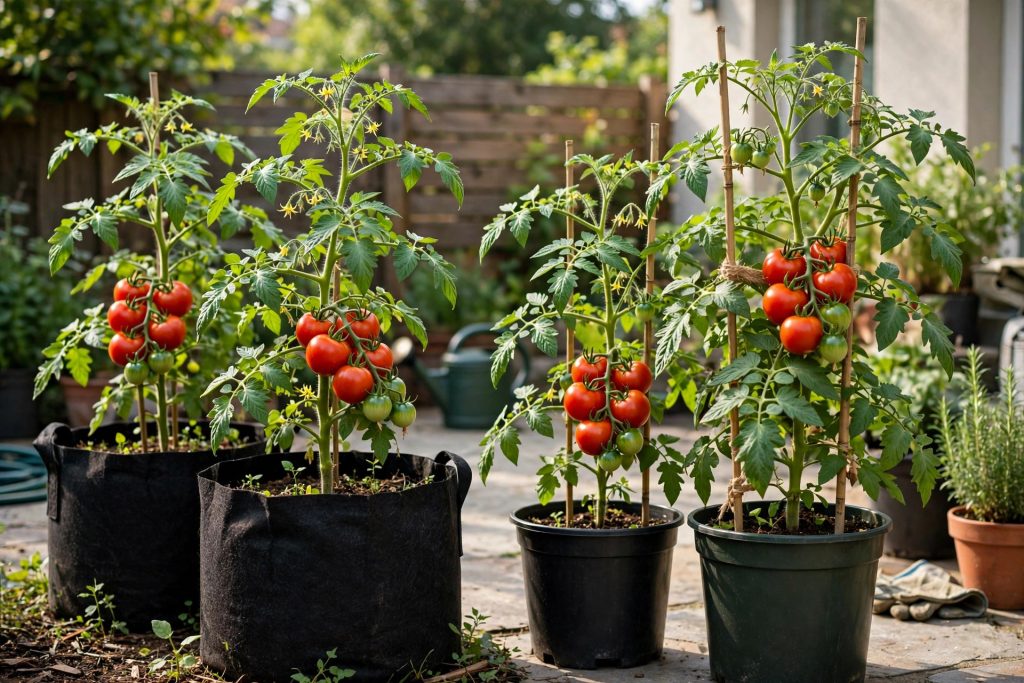
Use this quick size chart as a starting point, then go one size up if you water less than daily or grow in a hot, windy spot.
| Crop | Minimum bag size | Recommended bag size |
|---|---|---|
| Herbs, lettuce, radishes, spinach | 1 to 3 gallons | 3 gallons |
| Peppers, bush beans, carrots, beets | 5 gallons | 5 to 7 gallons |
| Compact determinate tomatoes | 5 gallons | 7 gallons |
| Roma and paste tomatoes | 7 gallons | 10 gallons |
| Indeterminate tomatoes, squash, cucumbers | 10 gallons | 15 gallons |
| Potatoes, sweet potatoes | 10 gallons | 10 to 15 gallons |
Depth matters as much as volume: a wide, shallow 10-gallon bag suits lettuce and herbs, while a tall 10-gallon bag suits potatoes, because potatoes need depth for hilling.
Best grow bags for potatoes
Potatoes are the classic grow bag crop, because the bag solves the two hardest parts of growing them: hilling and harvest. You start with a few inches of mix, set the seed potatoes, and add mix as the stems grow, which is called hilling. At harvest, a normal bag has to be tipped onto a tarp and picked through. A potato bag with a flap lets you open the side, take the tubers you need, and leave the plant growing.
The pick in this guide is the Gardzen potato bag, reviewed in section 7 below, because it is the only one here built specifically for potatoes, with the tallest profile in this guide at 13.7 inches for hilling and a Velcro flap at the base.
A note on size: one Maryland page puts potatoes at about 30 gallons of growing media for a full crop, far more than a single 10-gallon bag. In practice, home gardeners grow a modest potato crop in a 10-gallon bag and accept a smaller harvest for the convenience. If potatoes are your main crop, plant two 10-gallon bags.
How to water grow bags
Watering is the one real drawback of fabric, and it is the habit that decides whether your plants thrive or wilt. The same porous walls that cool the roots also let water escape, so bags dry faster than plastic pots of the same size.
Water when the top inch of mix feels dry, and water until it runs out of the bottom and the sides. Then stop, and let the mix dry somewhat before you water again. Do not water on a fixed schedule, because a cool, cloudy week needs far less water than a hot, windy one. Check the mix with your finger every day in summer, and check small bags twice a day in a heatwave.
Four habits make watering easier. First, group the bags together, because bags placed side by side shade each other’s walls and lose less water. Second, mulch the surface with an inch of straw or shredded leaves, which slows evaporation from the top. Third, set a shallow tray or saucer under the bag in hot weather to catch runoff the mix can soak back up, but empty standing water after an hour so the roots never sit in it. Fourth, go bigger: a 15-gallon bag holds moisture far longer than a 5-gallon one, and that is often the cheapest fix for a watering problem. Fill the bag with bagged potting mix, never garden soil, which is too dense for containers. At the end of the season, empty the bag, let the fabric dry fully, and store it folded flat in a dry place, with fresh mix next spring.
Feeding needs the same attention. Frequent watering washes nutrients out of the mix, so feed little and often with a balanced liquid feed at the strength on the label, once the plants are growing strongly.
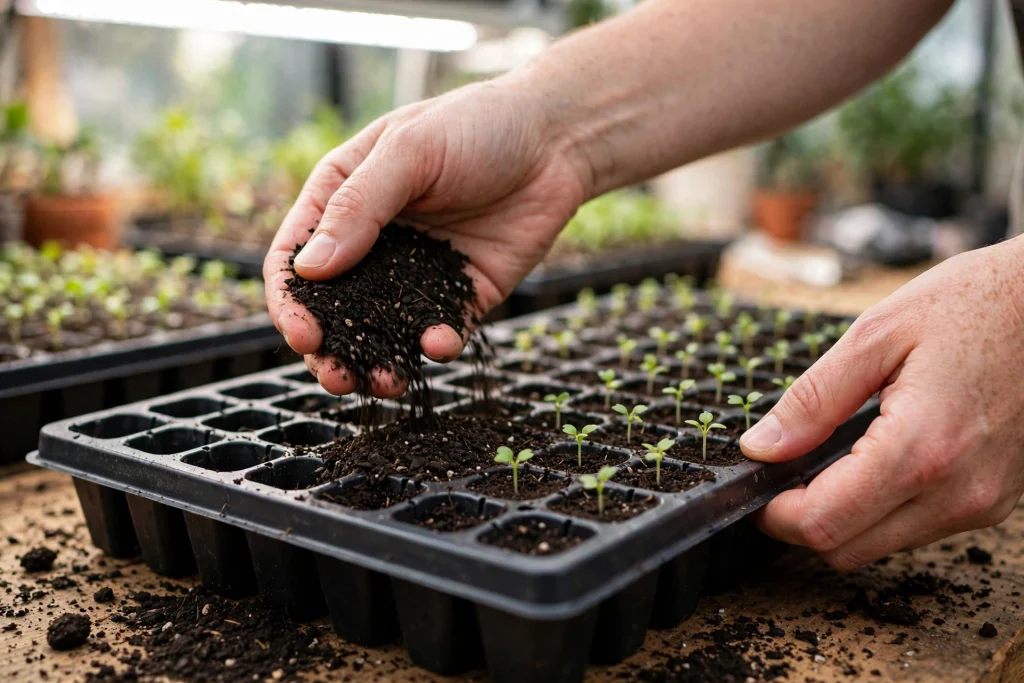
Seed starting mix and potting mix are different jobs, and our seed starting mix guide sorts the mixes for the earliest stage.
Fabric pot pros and cons
The balance sheet is short, and it is worth reading before you buy a dozen bags.
Pros: air pruning gives a denser, more fibrous root system, and Maryland Extension says that improves plant growth. Bags are hard to overwater, because excess water leaves through the whole fabric wall. They are light when empty, easy to move with handles, and they fold flat for winter storage. They cost less per container than a good plastic pot of the same size, and they let you garden on a patio, balcony, or rented yard with no digging.
Cons: bags dry out fastest of the common containers, so they need daily watering in summer and more frequent feeding. They last two to five seasons depending on fabric weight and care, while a good plastic pot can last a decade. They can look untidy as the fabric stains, and a cheap bag can sag or split at the handles when it is full of wet mix. They also lose heat quickly on cold spring nights, so a tender plant in a bag needs the same frost protection as one in any small pot.
The 10 Best Grow Bags for Vegetables
1. VIVOSUN 5-Pack 5 Gallon Grow Bags
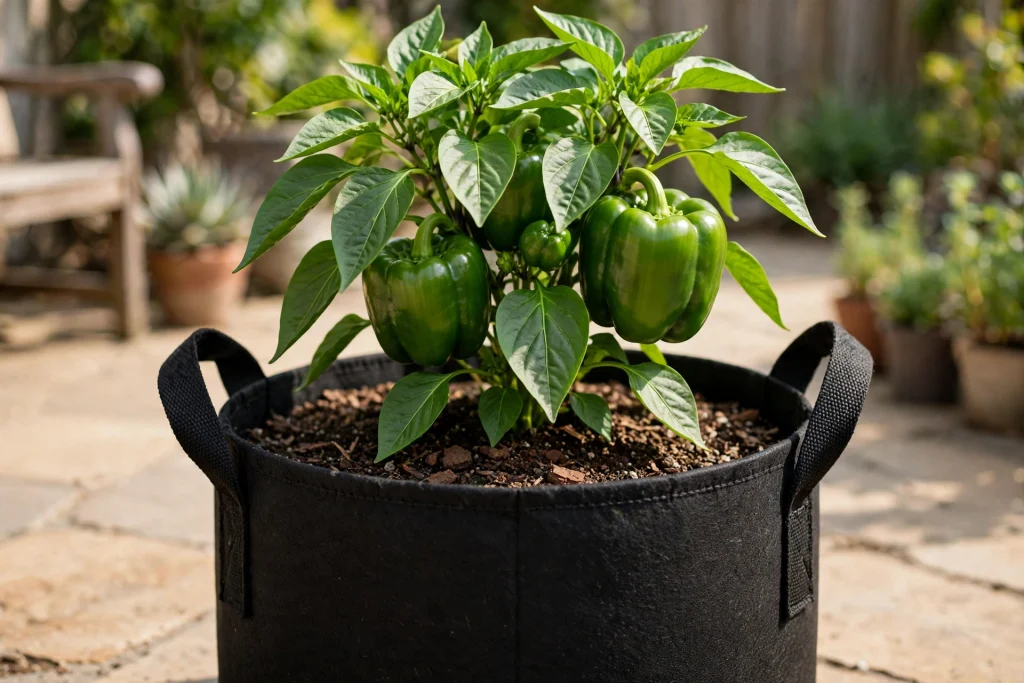
VIVOSUN is the brand most American gardeners meet first, and there is a reason for that. The five-pack of 5-gallon bags is the standard starting point for container vegetables: five round bags in the size that suits peppers, herbs, lettuce, and a compact tomato, made from 300G thickened nonwoven fabric with reinforced handles sewn on with serger stitching. The fabric is listed as BPA-free, which matters for food crops, and the permeable walls drain freely while letting roots air-prune at the edges instead of spiraling around the inside.
Each bag measures about 12.5 inches across and 10 inches tall, and holds 5 gallons as listed. The range runs from 1 gallon for seedlings to 100 gallons for small trees, so you can step up to a bigger size later without changing brands.
The quick verdict: this is the set to buy first if you want five usable bags for the cost of one premium pot. The 300G fabric is the common standard, light and flexible, easy to fold away in winter, and strong enough for a season or two of peppers and herbs.
Pros:
- Five bags in the most useful starter size, at the lowest cost per bag in this guide
- 300G thickened nonwoven fabric, listed BPA-free
- Reinforced handles sewn on with serger stitching
- Wide size range from 1 to 100 gallons if you want to step up
Cons:
- 5 gallons is too small for an indeterminate tomato or a full potato crop
- Some owner reports say the handles wear over time, and the bags can run a little small
- The warranty picture is unclear, see the limitation below
Best for: first-time grow bag gardeners, peppers, herbs, and anyone planting a small patio set. Skip if: you grow indeterminate tomatoes or potatoes as your main crop, because you will need the 10 or 15-gallon sizes instead.
Real-world limitation: VIVOSUN listings mention a 1-year warranty, but the maker’s warranty policy lists grow bags as consumables sold as-is. Do not count on a replacement if a handle fails in year two. Also, one independent bench test measured a VIVOSUN 3-gallon bag at only 2.3 gallons of true volume, about 25 percent under its label. Check the listed dimensions before you buy.
Who should buy: a gardener setting up a first container vegetable patch who wants five bags now. Buy two five-packs if you plant more than five crops.
2. AC Infinity Heavy Duty Square Fabric Pots, 7 Gallon, 5-Pack
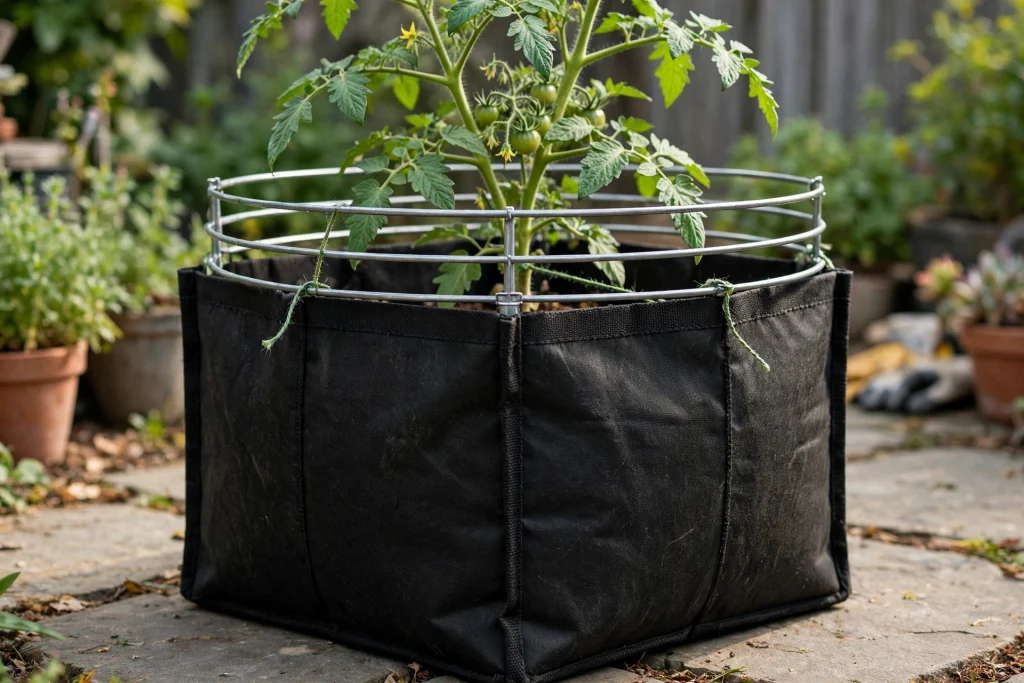
This is the best overall pick in this guide, and the reasons are all in the spec sheet. AC Infinity builds these square pots from 500G nonwoven fabric, noticeably heavier than the 300G standard, with reinforced double stitching and nylon handles. The square footprint packs tightly on a bench, a shelf, or a patio floor, with no wasted gaps between round pots. The listed true capacity is 7.66 gallons, a little more soil than the nominal 7-gallon size suggests, and the maker states the pots are sized to true capacity, so the number on the label is the volume you actually get.
The detail that sets this design apart is the set of steel rings around the rim. They are there for low-stress training: twist ties pass through the rings so you can tie branches down and spread the canopy without clipping anything to the fabric itself. That matters for tomatoes and peppers, where an open canopy means more sun on more fruit and better airflow against disease.
At 12.2 inches square, the pots make spacing simple, and the 7-gallon size suits a Roma tomato or a large pepper plant. The fabric is listed as BPA-free and machine washable, and the range runs from 3 to 10 gallons.
What holds it back from a perfect score is value. Five bags of 500G fabric cost more than five bags of 300G, and the square shape, while efficient, is a little harder to fill evenly in the corners. Some owners also wish there were more training rings around the rim. None of that changes the verdict: if you want one set of bags that will last several seasons and grow the widest range of vegetables well, this is the set.
Best for: gardeners who want the thickest standard fabric, a tidy square layout, and training rings for tomatoes. Skip if: you need a 15-gallon bag for a tall indeterminate tomato, because this line stops at 10 gallons, or if you are buying ten or more bags on a tight budget.
Real-world limitation: the square shape is efficient, but the corners can stay drier than the centre if you water from one side only, so water slowly and evenly. The steel rings are a training aid, not a trellis, so a tall tomato still needs a stake or cage.
Who should buy: a patio or balcony gardener who grows tomatoes and peppers every year and wants a set of bags that will still be going strong in three seasons’ time.
3. Gardzen 10-Pack 10 Gallon Grow Bags
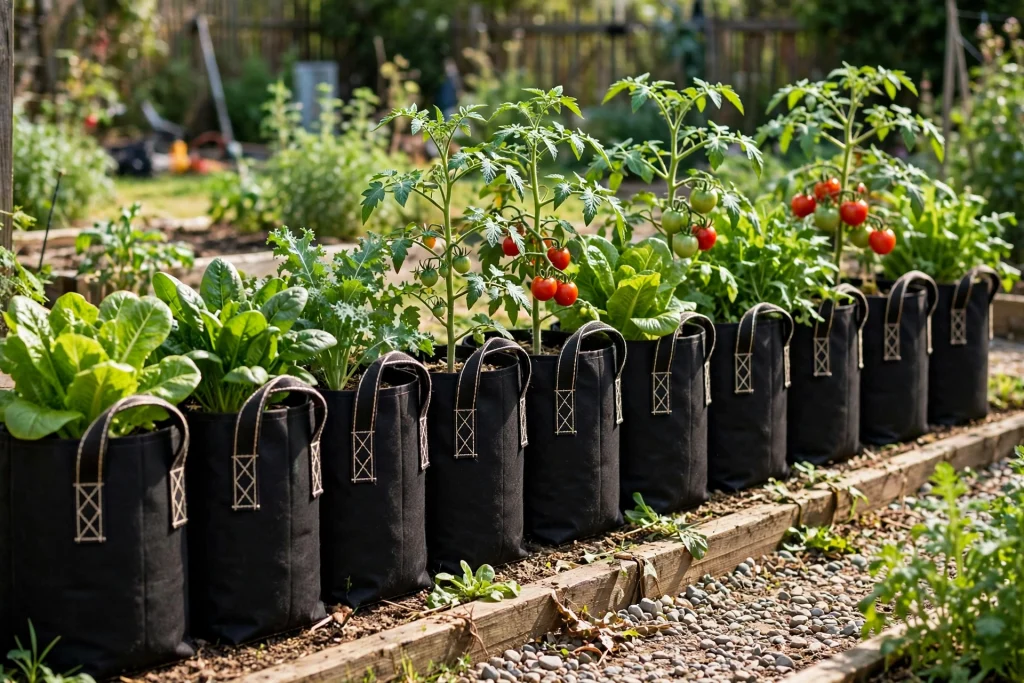
Gardzen’s ten-pack is aimed at gardeners planting a whole bed’s worth of containers at once. Each bag holds 10 gallons as listed, measures 16 inches across and 12 inches tall, and is made from 300G thickened nonwoven fabric listed as BPA-free and AZO-free, with heavy-duty handles cross-stitched for lifting a full bag of wet mix. Ten bags of that size is a serious amount of growing space: ten tomatoes, or a mix of tomatoes, peppers, squash, and potatoes, all in one order.
The fabric is the same 300G standard as the VIVOSUN bags, and it behaves the same way: breathable walls, air pruning, and fast drainage. A 10-gallon Gardzen bag measures 16 inches across and 12 inches tall, which works out to about 1.4 cubic feet of mix, and the maker’s own fill guidance is 38 litres, about 1.34 cubic feet, which is roughly twice the soil of a 5-gallon bag, and that extra soil is what keeps a tomato watered through a hot afternoon. Cross-stitched handles are sewn into the sidewall, so the load spreads across the fabric instead of pulling at one point.
Best for: gardeners planting several vegetables at once, and anyone who wants ten full-size bags in a single order. Skip if: you only have room for two or three bags, because ten 10-gallon bags need a real patch of patio, or if you grow mostly herbs and lettuce, which do not need this much soil.
Real-world limitation: a 10-gallon bag full of wet mix is heavy, around 70 to 80 pounds, so set the bag where it will grow before you fill it. Plan the row before the bags arrive, or ten identical bags will tempt you into ten tomatoes and no peppers.
Who should buy: a gardener with a sunny patio or a backyard corner who wants a full container vegetable patch in one purchase, and who can water ten bags every day in summer.
4. Smart Pot 10 Gallon Fabric Pot with Handles
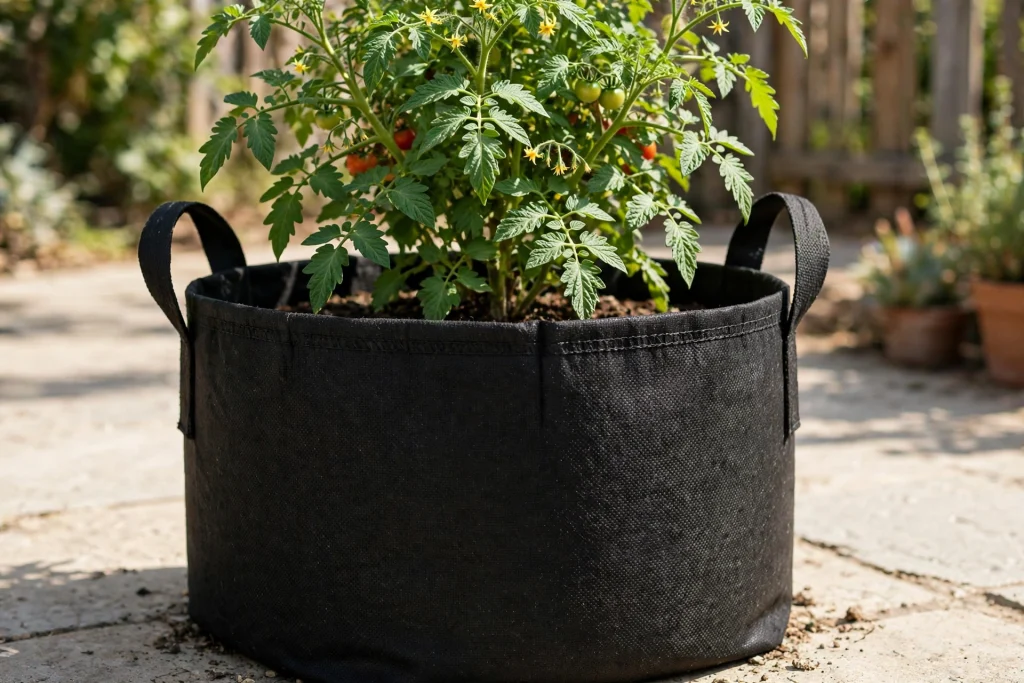
Smart Pot is the original fabric pot, and it still sets the standard other makers copy. The company has made its containers in the USA since 1984, and the fabric is a patented geotextile that the maker has kept consistent for decades. It is BPA-free, lead-free, and phthalate-free, which is a real consideration when you grow food, and the porous walls air-prune roots on contact, producing the dense, fibrous root ball the whole category is named for.
The 10-gallon handled model, PRO10H, measures 16 inches across and 11.5 inches tall and holds 10 liquid gallons. Handles on the 3 to 10-gallon sizes are cut into the rim; from 15 gallons up, the pots get sewn strap handles that carry the weight of a full, wet container. The size range is the widest in this guide, from 1 gallon to 400 gallons, so a gardener who starts with a 10-gallon tomato bag can buy the same fabric in any size later, from a 3-gallon herb pot to a raised bed.
Smart Pot does not publish a fabric weight in GSM, so this guide records “Not published”. The maker states a minimum lifespan of five years when the pot is properly used, stored and maintained, and Smart Pot listings carry a 1-year limited manufacturer warranty.
That is what the Fabric score of 9 rests on, since there is no GSM number to score from: the original patented geotextile fabric, made in the USA since 1984, with a minimum five-year lifespan stated by the maker and a 1-year limited warranty behind it.
The trade-off is value. A single Smart Pot costs more than a single bag from a multi-pack, because you buy them one at a time rather than five or ten at once. You pay for the American manufacturing, the consistent fabric, and the four decades of production history. For a gardener who buys two or three bags a year and keeps them for seasons, that is a fair trade. For a gardener who needs ten bags this weekend, the multi-packs in this guide are cheaper.
Best for: gardeners who want the original American-made fabric pot, a very wide size range, and a bag they can keep for years. Skip if: you need ten bags on a tight budget, because the multi-packs give you more growing space for the same money.
Real-world limitation: the cut handles on the 10-gallon size are loops in the rim, not straps, so they shift a bag a few feet but will not carry a full bag across the yard. The fabric is also softer than the stiff 500G and 600G bags here, so fill the bag to within an inch of the rim and stake the plant at planting time.
Who should buy: a gardener who values material safety and a long production record, and who would rather buy three good bags and keep them than buy ten cheap ones and replace them.
5. GeoPot Self-Supporting Fabric Pot with Handles, 10 Gallon
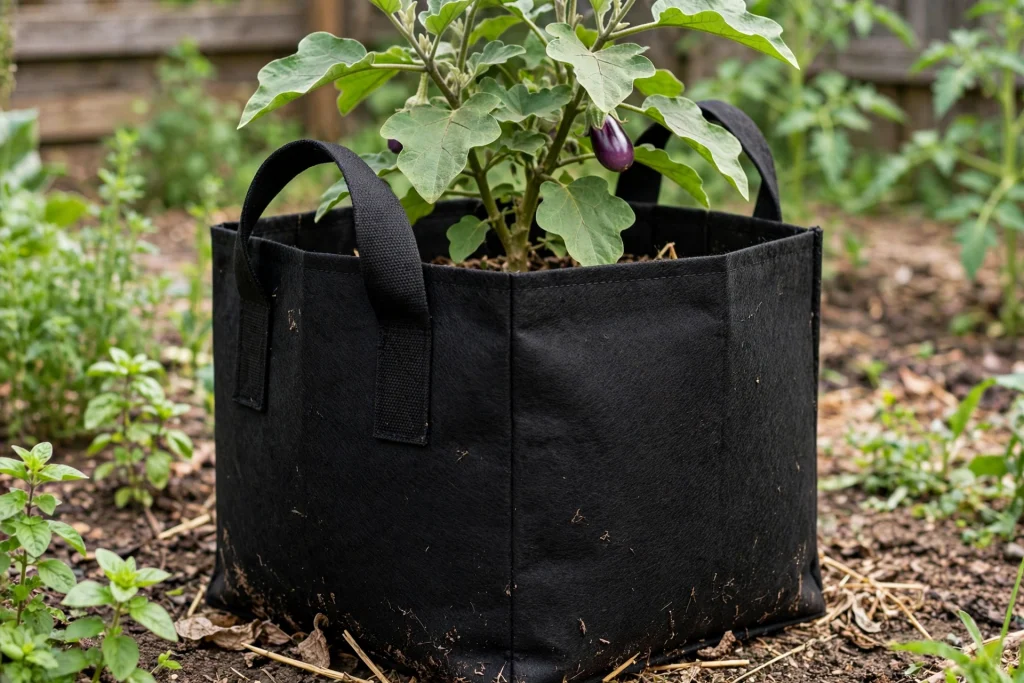
GeoPot is the professional’s choice in this guide, and the construction shows it. The fabric is nonwoven polypropylene, UV stabilized, sewn with bonded polyester thread through quad-stitched seams, which is four passes of stitching where most bags get one or two. The top hem is folded over and stitched, which makes the pot self-supporting: an empty one stands up on a bench while you fill it, with no frame and no second pair of hands. The bottom is square, so the pot sits flat and does not roll.
The handles are the detail to notice. They are stitched into the sidewall seam, so the load runs through the quad-stitched join rather than through the fabric face, which is why they hold a wet root ball instead of tearing out of the wall. Handles are fitted up to the 65-gallon size; above that, the pot is positioned empty rather than carried. The 10-gallon size measures 16 inches across and 12 inches tall and holds 1.40 cubic feet of mix. Sizes run from 1 to 200 gallons in the handled version, and the pots are sold in packs of ten.
GeoPot does not publish a fabric weight in GSM or a warranty term, so this guide records “Not published” for both. The maker’s FAQ states that GeoPot fabric pots can last for at least 5 or 6 growing cycles when kept in good condition and cleaned and stored between use.
That is what the Fabric score of 9 rests on, since there is no GSM number to score from: UV-treated polypropylene geotextile fabric with marine-grade bonded polyester thread stitching, quad-stitched seams, a folded top hem that makes the pot self-supporting, and handles stitched into the sidewall seam so the load runs through the join rather than the fabric face.
Best for: gardeners who move their bags, who fill and empty them every season, and who want the strongest seams in this guide. Skip if: you want the cheapest bag per gallon, because the GeoPot costs more than the budget multi-packs, or if you never move a bag once it is filled, because you will not use the handles you pay for.
Real-world limitation: the first part of these pots to wear is the strap stitching, so check the handles before you reuse a pot that has carried a heavy load. The square bottom is stable, but it takes up a little more floor space than a round bag, so measure your bench before you order ten.
Who should buy: a serious container gardener, a market gardener, or anyone who treats grow bags as equipment to be washed and reused for years rather than as a one-season purchase.
6. Root Pouch Boxer Brown 10 Gallon with Handles
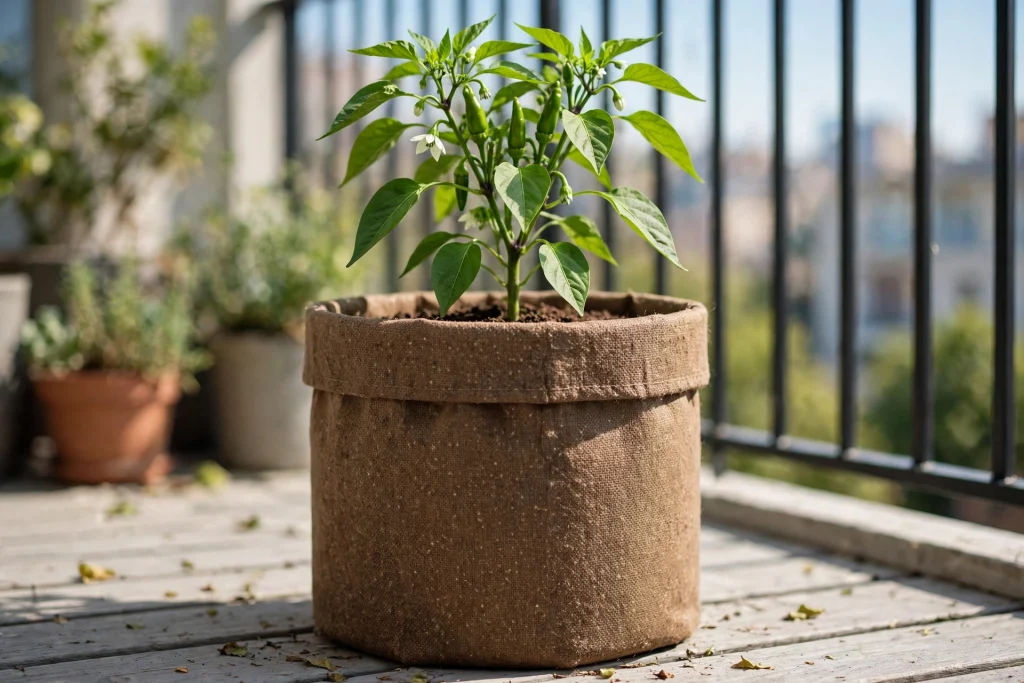
Root Pouch is the most sustainable pick in this guide, and the fabric tells the story. The Boxer Brown line uses a heavyweight 250 g/m2 fabric made from 100 percent recycled PET water bottles, with no new petroleum used in its manufacture. A single 5-gallon pouch uses three to four recycled bottles. The fabric is BPA-free, and the maker states it is independently tested to US FDA guidelines for vessels that come into contact with food, which is the strongest food-safety claim in this guide. That claim is the maker’s own wording, reported here as a maker claim, not as an independent test result seen by this guide.
The 10-gallon size with handles, number 10 in the maker’s sizing, holds 39 litres and measures 16 inches wide by 12 inches tall. The seams are industrial lock-stitched, the strongest stitching style in the Root Pouch line, and the fabric breathes freely, which gives the same air pruning and drainage as the other bags here. The range is enormous, from 1 pint to 600 gallons, and handles are available as an option on most sizes. The maker gives a 4 to 5 year in-ground lifespan for the Black line and multiple seasons above ground for the Brown line.
Best for: organic-minded gardeners, anyone who wants recycled materials and a food-safety claim they can check, and balcony gardeners who like the brown colour. Skip if: you want the cheapest bag or the thickest fabric, because the Root Pouch costs more than the budget packs and its 250 g/m2 fabric is lighter than the 500G and 600G bags here.
Real-world limitation: Root Pouch sizes are numbered by the maker rather than labelled in gallons on every listing, so check the litre figure and the dimensions before you order. A number 10 is 39 litres, not 40.
Who should buy: a gardener who cares where the fabric comes from, who grows food for the family, and who wants a bag with a documented food-safety test behind it.
7. Gardzen 6-Pack 10 Gallon Potato Grow Bags with Access Flap
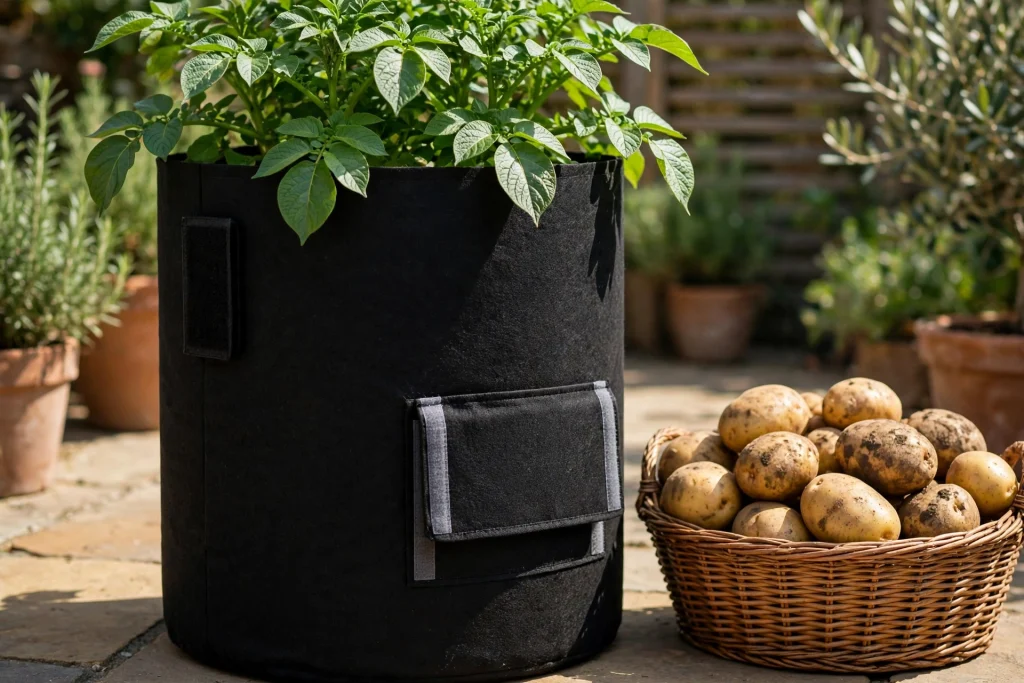
This is the only bag in this guide built specifically for potatoes, and the design shows it in one number: height. The standard Gardzen 10-gallon bag is 16 inches across and 12 inches tall. This potato version is 15.3 inches across and 13.7 inches tall, which gives you more depth than the standard bag for hilling, adding mix as the stems grow so more tubers form along the buried stem. Six bags come in the pack, each holding 10 gallons.
The feature that earns this bag its place is the Velcro access flap at the base. Open it and you can check whether the tubers are ready, or pick the largest ones and leave the smaller ones to keep growing for a few more weeks. That is a real advantage over a standard bag, where harvest means tipping the whole bag onto a tarp and picking through the soil. The flap is a window as well as a door: you can see the tubers without digging, which stops you harvesting too early.
The fabric is nonwoven and listed BPA-free, with reinforced handles. Gardzen does not publish a fabric weight for this model, so this guide records “Not published” rather than transferring the 300G figure from Gardzen’s standard bags. Keep the Velcro clean of soil so it closes properly.
Best for: potatoes, and also for other root crops such as carrots, beets, and onions, where a side flap helps at harvest. Skip if: you only grow tomatoes and peppers, because you will pay for a flap you never open, or if you grow potatoes in a bed already and only need a bag for one plant.
Real-world limitation: the flap works well for picking a few tubers, but a full harvest still means emptying the bag. Do not leave the flap open in bright sun, because light turns exposed tubers green, and green potatoes should not be eaten.
Who should buy: a gardener who grows potatoes on a patio or balcony and wants to check the crop without digging.
8. JERIA 12-Pack 10 Gallon Grow Bags
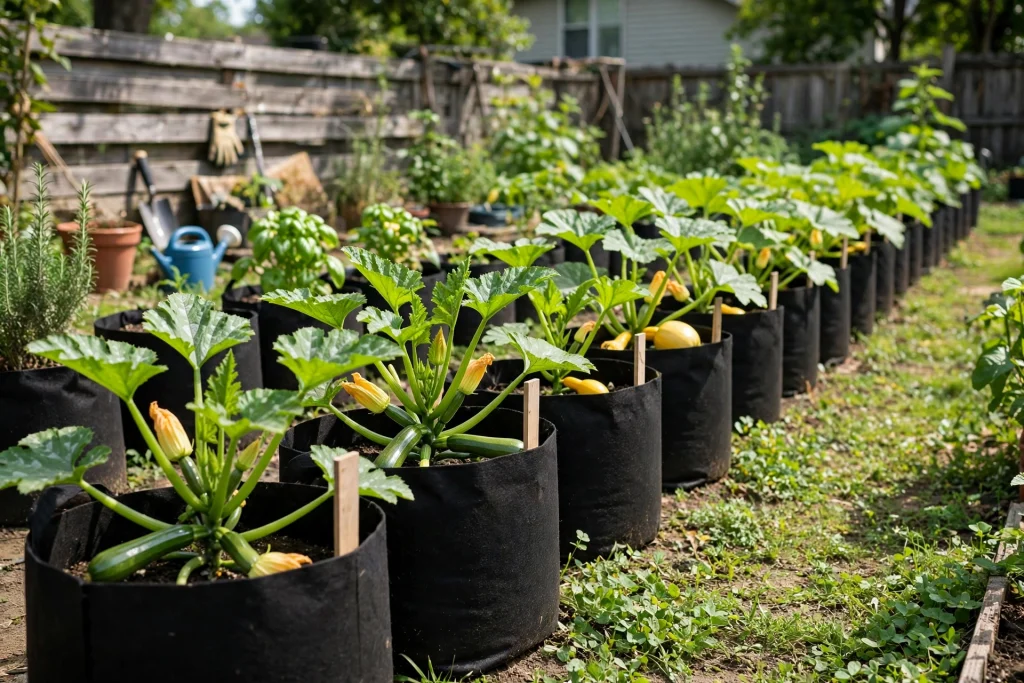
JERIA’s twelve-pack is the bulk buy in this guide, and it is aimed squarely at gardeners planting a large crop in one go. Twelve 10-gallon bags, each 16 inches across and 12 inches tall, made from 300G thickened nonwoven polyester felt with reinforced handles, plus twelve plant labels in the box. That is enough for a full row of tomatoes, or a dozen squash plants, or a mix of everything, without a second order.
The fabric is the familiar 300G standard, breathable and draining, with the same air pruning behaviour as the other bags here. The handles are built-in and sturdy, the bags fold flat for storage, and the listing says to fill to about one and a half to two inches from the top, which is good advice for any bag. The range runs from 1 to 10 gallons, so the 10-gallon size reviewed here is the largest the brand offers.
There is one caution to print plainly. Some owner reports say the bags run smaller than advertised, so check the listed size against the bag you receive. Measure the diameter and height on arrival, before you fill it, and if the bag is short, plant accordingly rather than squeezing in a plant that needs the full volume.
Best for: large crops, community gardens, and anyone planting ten or more containers at once. Skip if: you only need two or three bags, because twelve 10-gallon bags need a lot of patio, or if you grow indeterminate tomatoes, which would be happier in a 15-gallon bag.
Real-world limitation: twelve bags need about sixteen cubic feet of potting mix and daily watering in summer, so the bulk buy only makes sense if you have the soil and the time.
Who should buy: a gardener scaling up, a family planting a full vegetable row, or anyone who wants the lowest cost per 10-gallon bag in this guide and does not mind the plainest packaging.
9. VIVOSUN 5-Pack 15 Gallon Grow Bags, 500G
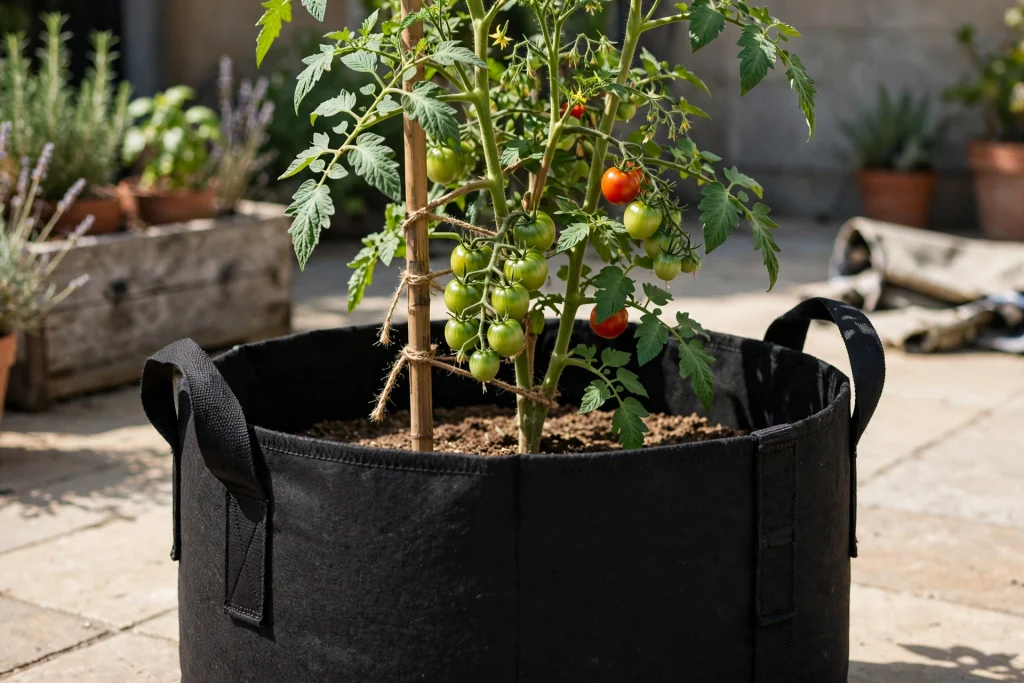
Fifteen gallons is the size for a tomato that means business. An indeterminate variety grows five feet tall or more, fruits until frost, and needs a root system to match. The VIVOSUN 15-gallon five-pack gives it that room in the maker’s heavier 500G thickened nonwoven fabric, with metal rings for low-stress training and a flat base that stands up while you fill it.
The 500G fabric is a clear step up from the 300G standard. It is thicker, stiffer, and holds its shape better when full and wet, which matters more at 15 gallons than at 5, because a 15-gallon bag full of wet mix is heavy enough to sag a thin fabric out of shape. The metal rings work the same way as the AC Infinity rings: twist ties pass through them so you can spread the canopy without clipping anything to the fabric. The maker’s size chart lists the 15-gallon bag at about 20 inches across, which is a wide, stable base for a tall plant.
Best for: indeterminate tomatoes, large squash, and any gardener who has learned the hard way that a 5-gallon bag is too small for a six-foot plant. Skip if: you have a small balcony, because five 15-gallon bags will fill it, or if you grow mostly peppers and herbs, which do not need this much soil.
Real-world limitation: the same warranty conflict as the 5-gallon VIVOSUN bags applies here, so do not count on a replacement. A 15-gallon bag full of wet mix can weigh over 100 pounds, so set it in its final spot before you fill it.
Who should buy: a gardener with a big tomato habit, a sunny patio with room for five large bags, and a watering can that gets used every day.
10. Gorilla 10 Gallon Fabric Grow Bags, 4-Pack
Gorilla’s 10-gallon bag is the heavyweight of this guide, and the number is not close: 600G nonwoven fabric, against 500G for the next thickest and 300G for the standard. The maker lists the fabric as BPA and PVC free, measures the bag at 16.5 inches across and 13 inches tall, and states a true 10-gallon capacity to the fill line, with 12.03 gallons total if you fill it to the brim. That honesty about capacity is rare, and it is worth noting, because most makers print only the nominal size.
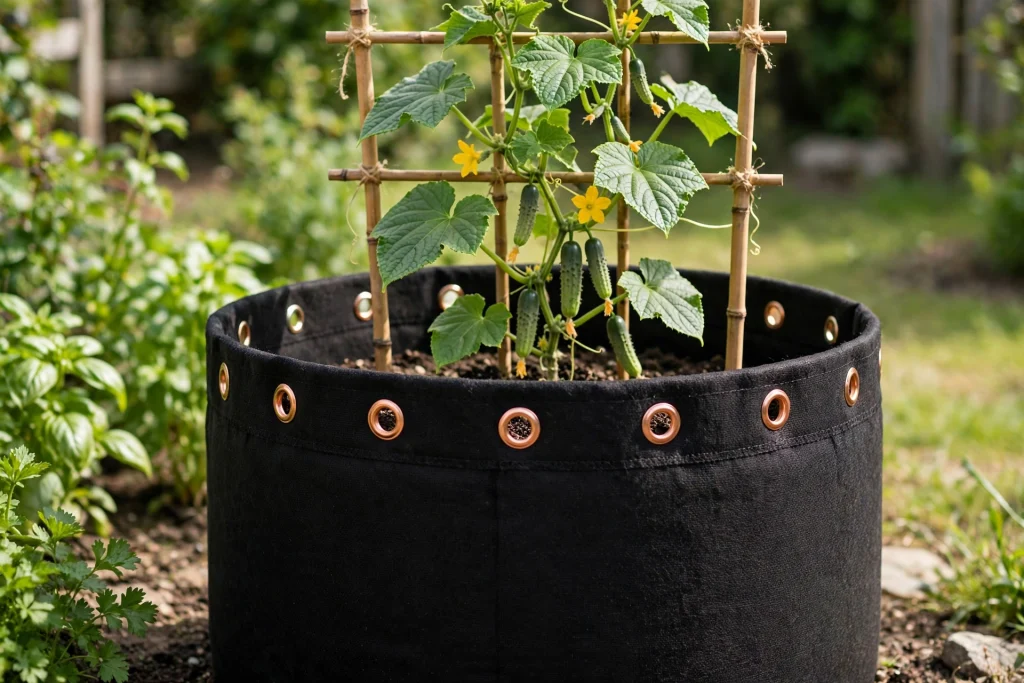
The other distinctive feature is the set of eight copper composite grommets around the rim. They take training ties and trellis strings, so a cucumber or a tomato stem can be tied to the bag itself without a separate stake, at least while the plant is young. The pack holds four pots, which is the smallest pack in this guide, and the bags are designed in California by the team behind Gorilla Grow Tent.
Best for: gardeners who want the thickest fabric available, a bag that holds its shape under a heavy load, and grommets for training. Skip if: you need ten bags on a tight budget, because four thick bags cost more than ten thin ones, or if you want a 15-gallon size for a tall tomato.
Real-world limitation: Gorilla publishes no warranty term for these bags, so the 600G fabric is the guarantee, not a piece of paper. A thick bag still needs daily watering in summer, because the walls are porous by design.
Who should buy: a gardener who has torn a cheap bag at the handles before, who grows heavy crops such as cucumbers and squash, and who would rather buy four bags that last than ten bags that do not.
How We Chose
No hands-on testing was done for this guide. The scores below come from verified maker specifications and owner-feedback patterns reported in the sources listed in References, not from plants grown in these bags by Agribloom. That is an honest limit, and it is printed here rather than hidden. What this guide did instead was check every product against its maker page or a major retailer listing at the time of writing, record the spec exactly as published, and flag every conflict rather than smoothing it over.
The scoring system
Each bag is scored out of 10 on five factors. The weights reflect what matters most for growing vegetables in a fabric bag: the fabric has to last, the roots have to stay healthy, the size has to fit the crop, the bag has to be movable, and the whole set has to be worth its cost.
| Factor | Weight | What it measures |
|---|---|---|
| Fabric and durability | 30% | Fabric weight where published, stitching quality, and expected lifespan |
| Drainage and root health | 25% | Air pruning, drainage through the walls, and root-zone cooling |
| Size range | 15% | Whether the line covers the sizes vegetables need, from 3 to 15 gallons |
| Handles and handling | 15% | Handle strength and design, pack size, and how the bag moves when full |
| Value | 15% | Growing space per bag against the pack size and the fabric quality |
Weights sum to 100 percent. Totals are calculated from the factor scores and rounded to one decimal place, with halves rounded up, so a raw total of 8.95 becomes 9.0 and a raw total of 8.25 becomes 8.3. The factor scores are printed below so any reader can check the maths.
Per-product factor scores
| Product | Fabric 30% | Drainage 25% | Size range 15% | Handles 15% | Value 15% | Weighted total | Our rating |
|---|---|---|---|---|---|---|---|
| VIVOSUN 5-Pack 5 Gallon | 8 | 9 | 9 | 8 | 10 | 8.70 | 8.7 |
| AC Infinity Square 7 Gallon, 5-Pack | 10 | 9 | 8 | 9 | 8 | 9.00 | 9.0 |
| Gardzen 10-Pack 10 Gallon | 8 | 9 | 8 | 8 | 9 | 8.40 | 8.4 |
| Smart Pot 10 Gallon with Handles | 9 | 10 | 10 | 8 | 7 | 8.95 | 9.0 |
| GeoPot with Handles 10 Gallon | 9 | 9 | 10 | 9 | 7 | 8.85 | 8.9 |
| Root Pouch Boxer Brown 10 Gallon | 8 | 9 | 9 | 8 | 7 | 8.25 | 8.3 |
| Gardzen Potato 6-Pack 10 Gallon | 8 | 8 | 7 | 8 | 9 | 8.00 | 8.0 |
| JERIA 12-Pack 10 Gallon | 8 | 8 | 8 | 8 | 9 | 8.15 | 8.2 |
| VIVOSUN 15 Gallon 500G, 5-Pack | 9 | 9 | 8 | 8 | 8 | 8.55 | 8.6 |
| Gorilla 10 Gallon, 4-Pack | 10 | 9 | 7 | 8 | 7 | 8.55 | 8.6 |
Two scores deserve a note. Smart Pot scores 10 on drainage and size range for its long air-pruning record and its 1-to-400-gallon range, but 7 on value because you buy the pots one at a time. Gorilla scores 10 on fabric for its 600G weight, but 7 on size range because the line covers standard vegetable sizes rather than the full range the big brands offer.
The limits of this scoring are worth stating plainly. Fabric weight is not published for Smart Pot or GeoPot, so their fabric scores rest on construction quality, stitching, and reported lifespan rather than a GSM number. Gallon ratings are not comparable across brands, because makers measure them differently, so the size-range score uses the listed dimensions as well as the gallon number. Owner feedback is reported as patterns across the sources checked, not as a counted survey, so a single complaint does not move a score, but a repeated pattern does.
Final Choice
For most vegetable gardeners, the AC Infinity Heavy Duty Square Fabric Pots, 7 Gallon, 5-Pack is the best buy in this guide, rated 9.0. The 500G fabric, the square shape that packs tightly, the true-to-label capacity, and the steel training rings add up to a set of bags that will grow tomatoes and peppers well for several seasons. Buy the 7-gallon size for Roma tomatoes and large peppers, and step up to the 10-gallon size in the same line if you grow indeterminate varieties.
If you want the best value, buy the VIVOSUN 5-Pack 5 Gallon Grow Bags, rated 8.7. Five bags of honest 300G fabric with reinforced handles will plant a first patio garden for the lowest cost per bag here. Just remember the size rule: 5 gallons suits peppers and herbs, not a six-foot tomato.
If you want the original and you plan to keep your bags for years, buy the Smart Pot 10 Gallon Fabric Pot with Handles, rated 9.0. It is made in the USA, the fabric has not changed in decades, and the size range covers anything you will ever plant.
If potatoes are the point, buy the Gardzen 6-Pack 10 Gallon Potato Grow Bags with Access Flap, rated 8.0. The tall profile and the Velcro flap solve the two real problems of growing potatoes in a bag, and six bags is enough for a serious potato crop on a patio.
Whatever you buy, buy one size bigger than you think you need, fill the bag with good potting mix, set it where it will grow before you fill it, and check the moisture every day in summer. The bag is only a container. The watering is the gardening.
Once the bags are chosen, the seed guide below compares the companies to buy the vegetables that will fill them.
References
1. University of Maryland Extension, “Growing Vegetables in Containers and Salad Tables” — fabric bags are relatively inexpensive, reusable, lightweight and portable; air pruning explained; minimum container sizes for vegetables, including 8 to 10 gallons and 12 to 16 inches depth for large crops.
2. Rutgers Cooperative Extension, Fact Sheet FS055, “Container Gardening with Vegetables” — variety selection for containers, synthetic soilless mix recommended, and watering frequency for container vegetables.
3. Root Pouch, “Container Sizes and Specifications” (maker specification sheet) — Boxer Brown 250 g/m2 fabric from recycled PET water bottles, size and dimension tables, 4 to 5 year in-ground lifespan.
4. GeoPot Self-Supporting Fabric Pot with Handles (GrowersHouse product page) — nonwoven polypropylene, quad-stitched seams with bonded polyester thread, handles stitched into the sidewall seam, 10-gallon dimensions and volume. GeoPot FAQ (maker page): UV-treated polypropylene geotextile fabric, marine-grade bonded polyester thread stitching, BPA and heavy metal free, at least 5 or 6 growing cycles.
5. Gorilla Grow Tent, “Gorilla 10 Gallon Fabric Grow Bags” (maker page) — 600G nonwoven fabric, BPA and PVC free, 10 gallons to the fill line and 12.03 gallons total, 8 copper composite grommets.
6. Smart Pot Fabric Planter (maker product page): original fabric planter, made in the USA since 1984, BPA and lead free; 10-gallon size with handles, soil volume 1.3 cubic feet. Smart Pot, “Why Smart Pot” (maker page): minimum lifespan of five years when properly used, stored and maintained; manufactured in the USA; BPA-free.
7. AC Infinity Heavy Duty Square Fabric Pots, 7 Gallon (retailer listing) — 500G thickened nonwoven fabric, true capacity 7.66 gallons, reinforced double stitching, steel rings for low-stress training, model AC-SFP7.
8. VIVOSUN 5-Pack 5 Gallon Grow Bags (maker product page): 300g thickened polyester nonwoven fabric, BPA-free; size 12.5 by 12.5 by 9.9 inches; serger-stitched reinforced handles; the page shows both “Sold as-is with no warranty” and “Warranty: 1-Year Warranty”, which is the warranty conflict the article already reports.
9. VIVOSUN 5-Pack 15 Gallon Grow Bags, 500G (retailer mirror of the Amazon listing, ASIN B0BLBJ3YN1): 500G thick nonwoven fabric, strap handles, built-in metal rings for low-stress training, flat base. No matching 500G product page was found on vivosun.com; the plain 15-gallon page on the maker site shows 300g fabric, so the 500G line is a separate VIVOSUN line and the retailer mirror is the source for its specs.
10. Gardzen 10 Packs Grow Bags (maker product page): 10 Gallon variant 16 inches diameter by 12 inches height; BPA-free and AZO-free nonwoven fabric; material 10 percent nylon plus 90 percent polyester; fill guidance 38 litres of soil for a 10-gallon bag. The maker page publishes no GSM figure, so the article’s 300G figure for Gardzen rests on the retailer listing, not on this page.
11. Gardzen 6 Pack 10 Gallon Potato Grow Bags (maker product page): 6-pack 10-gallon potato bags; BPA-free heavy-duty fabric; strong webbing handles; large Velcro harvest window; diameter 15.3 inches, height 13.7 inches; about 1.5 cubic feet of soil per bag; material 10 percent nylon plus 90 percent polyester.
12. JERIA 12-Pack 10 Gallon Grow Bags (retailer mirror of the Amazon listing, ASIN B089SG6KPP): 300G thickened nonwoven fabric; 12-pack with 12 plant labels; 16-inch diameter by 12-inch height; reinforced handles. No JERIA maker site exists; the brand sells through Amazon, and the Amazon page itself cannot be opened from here, so this desertcart mirror of the same ASIN is the cited source. The 300G figure is carried in the listing title on the desertcart.lk mirror of the same ASIN.
Frequently Asked Questions
What size grow bag is best for tomatoes?
A compact determinate tomato needs a minimum of 5 gallons, with 7 gallons recommended. A Roma or paste tomato needs a minimum of 7 gallons, with 10 gallons recommended. A tall indeterminate tomato needs a minimum of 10 gallons, with 15 gallons recommended. One plant per bag is the rule for full-size varieties.
Are fabric grow bags better than plastic pots for vegetables?
Fabric grows a better root system, because air pruning stops roots circling and builds a denser, fibrous root mass. Plastic holds moisture longer and needs less frequent watering. If you can water every day in summer, fabric is the better choice. If you can only water every second or third day, plastic suits you better, or buy a bigger fabric bag, because a 15-gallon bag forgives a missed day far better than a 5-gallon one.
How often should I water vegetables in grow bags?
Check the mix every day in summer, and water when the top inch feels dry. Water until it runs out of the bottom and the sides, then let the mix dry somewhat before you water again. Small bags in hot, windy weather may need water twice a day. Grouping bags together, mulching the surface, and using a bigger bag all slow drying.
What is the best grow bag for potatoes?
A tall 10-gallon bag with a harvest flap is the best choice, because potatoes need depth for hilling and a flap lets you pick tubers without tipping the bag. The Gardzen 6-Pack 10 Gallon Potato Grow Bags with Access Flap in this guide is built for exactly that job, measuring 15.3 inches across and 13.7 inches tall, with a Velcro flap at the base. A standard 10-gallon bag will also grow potatoes, but harvest means tipping it out.
Do grow bags need drainage holes?
No. Fabric bags drain through the whole wall, which is why they are hard to overwater. That is also why they dry out faster than plastic pots. Do not put a plastic liner inside a fabric bag, because the liner blocks the airflow and drainage that make the bag work.
How long do fabric grow bags last, and how do I store them in winter?
Most fabric bags last two to five seasons, depending on fabric weight and care. Thick 500G and 600G bags usually last longer than thin 300G ones. At the end of the season, empty the bag, let the fabric dry fully, and store it folded flat in a dry place. Use fresh potting mix each season.

Thesis Link : https://saulibrary.edu.bd/daatj/public/uploads/BAU200601_19-Pp_5.pdf
- 10 Best Grow Bags for Vegetables - November 27, 2026
- 10 Best Herb Growing Kits for Beginners - November 26, 2026
- 10 Best Fungicides for Roses - November 25, 2026