
You walk out one June morning and the rose that looked perfect last week has black circles on its lower leaves, each ringed with yellow, and a few leaves have already fallen. By July the bush looks bare from the waist down, and the blooms are smaller than they were in May. That is black spot, and it is the most common reason American rose growers reach for a fungicide. Powdery mildew and rust are the other two regulars, and together the three diseases can strip a bush in a single wet season.
The best fungicide for roses is the one that matches the disease on your bush, the way you like to spray, and how much chemical you are comfortable using. A systemic spray that moves inside the plant suits a gardener fighting an established black spot outbreak. A neem oil or copper spray suits a gardener who wants to stay organic and spray every week or two as prevention. This guide covers both, and every product below was checked against its actual label in November 2026. Each section gives the active ingredient, what it controls, the size, and an editorial score with the reason behind it. The scores come from verified specifications and owner feedback, not from hands-on testing. We did not test these products in our own garden, and we do not claim otherwise.
Quick Recommendation
Short on time? Start here.
- Best overall: BioAdvanced Disease Control for Roses, Flowers and Shrubs. Tebuconazole moves through the plant, stops black spot, powdery mildew, and rust, and stays rainproof once dry; one bottle makes up to 42 gallons.
- Best systemic runner-up: Bonide Infuse Systemic Disease Control. Propiconazole at 1.55 percent, absorbed into the plant, with a 10 day interval for roses with black spot or rust.
- Best all-in-one spray: BioAdvanced 3-in-1 Insect, Disease and Mite Control. One pass covers fungal disease plus aphids, Japanese beetles, and spider mites, with insect protection up to 30 days. Keep it away from blooming flowers while bees are working; it is not sold in New York.
- Best organic rose spray: Bonide Captain Jack’s Rose Rx. A 4-in-1 neem oil spray made for roses, ready to use, and approved for organic gardening. It also handles insects, mites, and nematodes.
- Best fast curative: Spectracide Immunox. Myclobutanil gets into the plant fast and knocks down an active infection, with up to 2 weeks of protection per spray.
- Best OMRI-listed biofungicide: ARBER Organic Bio Fungicide. Bacillus amyloliquefaciens strain F727, OMRI listed, with a hose-end bottle that covers up to 1,200 square feet.
- Best budget organic spray: Garden Safe Fungicide3. A 3-in-1 neem oil spray that is widely sold, easy to find, and lists black spot, powdery mildew, and rust on the label.
If you only buy one bottle, decide first whether your roses are already sick or still healthy: a sick bush needs a systemic fungicide, while a healthy bush needs a preventive spray on a schedule.
Fungicides for Roses at a Glance
| Product | Best For | Type | Diseases Controlled | Our Rating |
|---|---|---|---|---|
| 1. BioAdvanced Disease Control | Best overall systemic | Systemic concentrate | Black spot, powdery mildew, rust | 8.4 |
| 2. Bonide Infuse | Longest systemic protection | Systemic concentrate | Black spot, powdery mildew, rust | 8.3 |
| 3. BioAdvanced 3-in-1 | Disease plus insects and mites | Systemic concentrate | Black spot, powdery mildew, rust, scab | 8.2 |
| 4. Bonide Captain Jack’s Rose Rx | Best organic rose spray | Neem oil, ready to use | Black spot, powdery mildew, rust, downy mildew | 8.1 |
| 5. Spectracide Immunox | Fast curative action | Systemic concentrate | Black spot, powdery mildew, rust | 8.0 |
| 6. ARBER Bio Fungicide | Best OMRI biofungicide | Biofungicide concentrate | Black spot, powdery mildew, rust, botrytis | 7.9 |
| 7. Garden Safe Fungicide3 | Budget organic 3-in-1 | Neem oil, ready to use | Black spot, powdery mildew, rust | 7.9 |
| 8. Bonide Liquid Copper Fungicide | Organic protectant, broad label | Contact concentrate | Black spot, powdery mildew, rust, gray mold | 7.8 |
| 9. Serenade Garden Disease Control | Gentlest OMRI prevention | Biofungicide, ready to use | Black spot, powdery mildew, rust | 7.7 |
| 10. Bonide Sulfur Plant Fungicide | Cheapest preventive powder | Contact powder, spray or dust | Black spot, powdery mildew, rust | 7.3 |
The 3 Rose Diseases That Matter Most
Before you pick a bottle, name the disease: the three below cause almost all the fungal trouble on home roses in the United States, and they do not all respond to the same treatment.
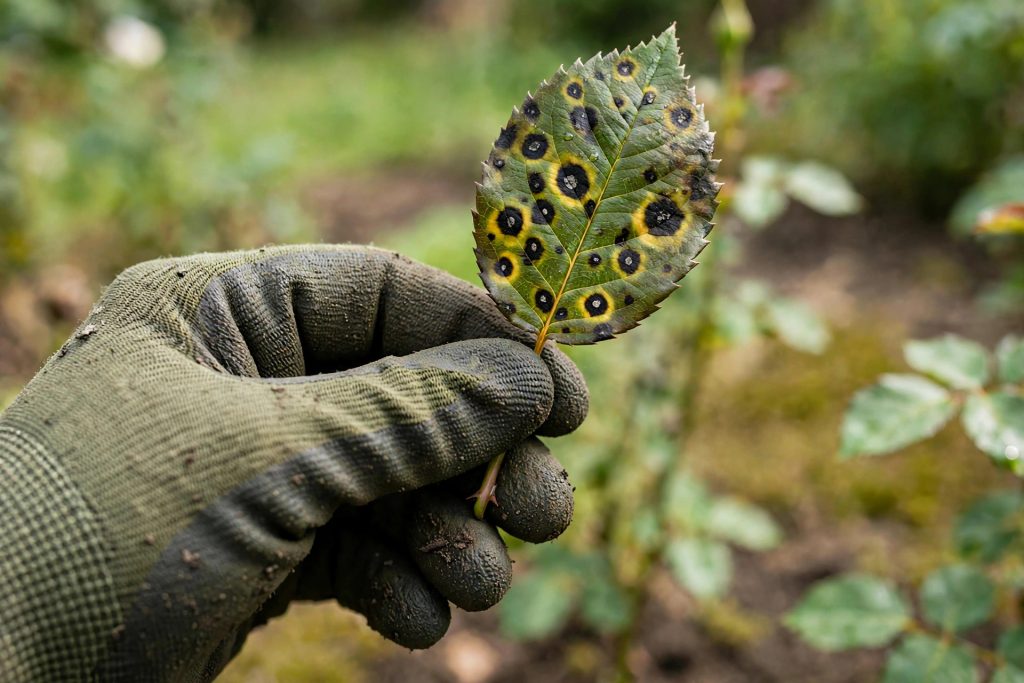
Black spot is the one most gardeners meet first. Clemson Extension calls it a common and serious rose disease that can reach epidemic proportions in a season. The fungus is Diplocarpon rosae. It shows up as circular black spots ringed with yellow on the leaves, usually starting low on the bush, and infected leaves turn yellow and drop; a badly hit plant can lose all its leaves by midsummer. It is worst after long, wet, warm periods in spring. Clemson lists chlorothalonil, copper fungicides, mancozeb, myclobutanil, and propiconazole among the sprays that control it.
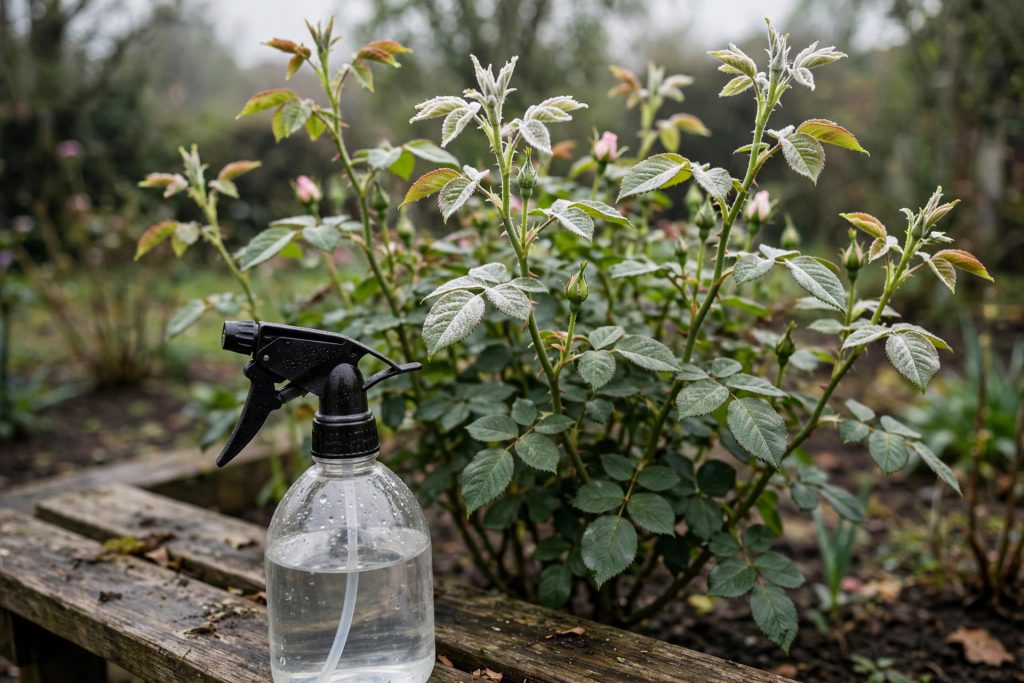
Powdery mildew is the white dust: the fungus Sphaerotheca pannosa var. rosae coats young leaves, shoots, and buds with a grayish white powder, and leaves can distort and drop. Unlike black spot, it does not need wet leaves, and it thrives in warm, dry summer weather. Clemson lists propiconazole, thiophanate-methyl, myclobutanil, sulfur, neem oil as clarified hydrophobic extract, and baking soda mixed with horticultural oil for it.
Rust is the orange one: fungi in the genus Phragmidium cause orange spots on stems and leaves, and in a bad case the spots release an orange, dust-like growth.
The practical point is simple: a product that lists all three diseases on its label is worth more than one that lists only one, and a systemic spray protects new growth that appears after you spray, while a contact spray only protects the leaves it touches.
1. BioAdvanced Disease Control for Roses, Flowers and Shrubs
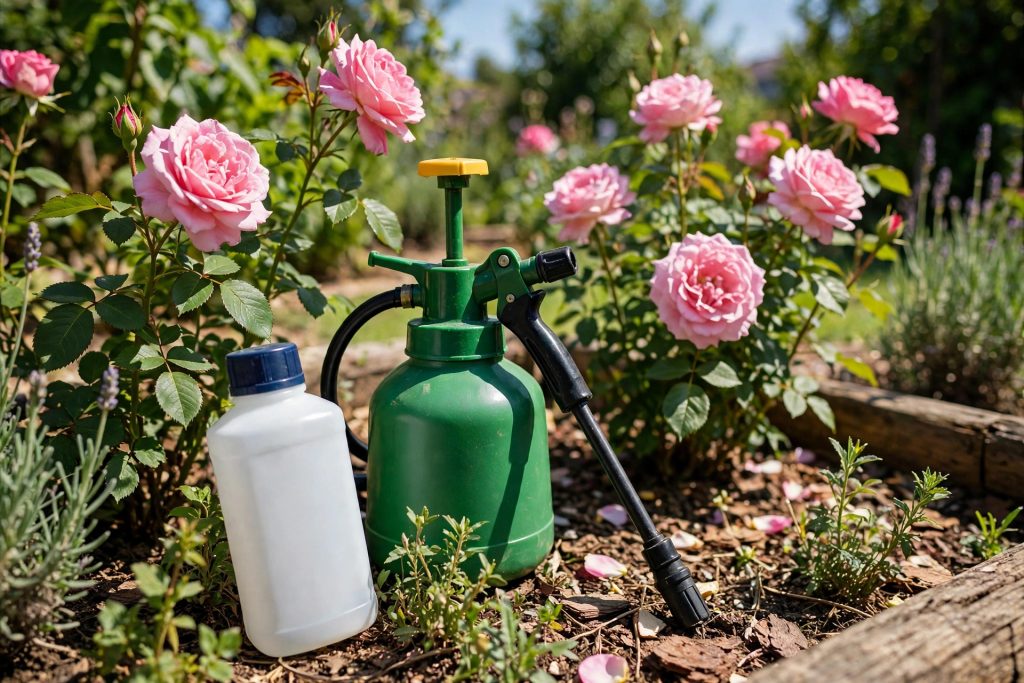
Type: Systemic liquid concentrate. Active ingredient: Tebuconazole 2.9%. Size: 32 fl oz concentrate. EPA Reg. No.: 92564-5. Organic status: Not OMRI Listed.
This is the strongest all-round rose fungicide in the roundup, and it earns the top spot on the strength of its label. Tebuconazole is a systemic fungicide: the plant absorbs it and moves it through its tissues, so it protects new leaves that open after you spray. Once the spray dries, the label says the protection is rainproof and will not wash off.
The label lists black spot, powdery mildew, and rust alongside anthracnose, flower blight, leaf spot, petal blight, scab, southern blight, and boxwood blight. One 32 fl oz bottle makes up to 42 gallons of spray solution, so a single bottle covers a whole rose bed through a season of repeat sprays.
Two honest limits: it is a synthetic chemical, so it is the wrong pick for an organic-only gardener, and the label excerpts we found state no single reapplication interval, so we print none. A secondary guide puts protection at about two weeks, but that is an estimate, not a label fact.
Quick verdict: Buy this first if you want the strongest systemic rose fungicide and you are comfortable with a synthetic product.
Pros: Systemic action protects new growth. Rainproof once dry. Widest disease list here. One bottle makes up to 42 gallons.
Cons: Synthetic, not organic. No reapplication interval confirmed from the label excerpts found.
Best for: An established black spot outbreak on several rose bushes. Skip if: You want an OMRI-listed or organic-only spray; ARBER or Rose Rx fits better.
Our rating: 8.4. The systemic action, rainproof claim, and broad label earn the top score, with points off for the synthetic profile and the unconfirmed reapplication interval.
2. Bonide Infuse Systemic Disease Control
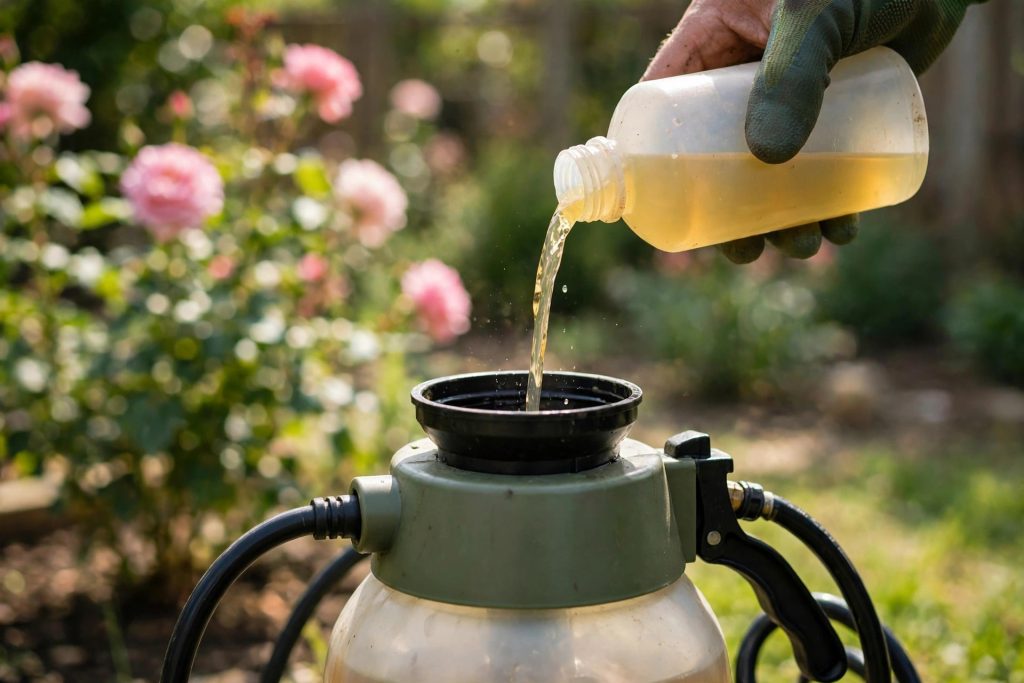
Type: Systemic liquid concentrate. Active ingredient: Propiconazole 1.55%. Size: 16 fl oz concentrate, also sold as a ready-to-spray quart. EPA Reg. No.: 100-773-4 (concentrate), 100-952-4 (ready-to-spray). Organic status: Not OMRI Listed.
Infuse is the other big systemic in this roundup, and it is the one to pick when you want the longest gap between sprays. The front panel says it works for up to 4 weeks on certain diseases, and the label says it is absorbed into the plant and cannot be washed off by rain once dry. For roses, the label is more conservative: every 10 days for black spot, rust, and powdery mildew, and every 21 days generally until the plant recovers. We print the 10 day rose interval because it is the conservative figure; the 4 week claim covers certain lawn diseases, not roses.
The label also lists dollar spot, brown patch, leaf spot, and anthracnose, and it covers roses, flowers, lawns, trees, and shrubs. It is honest about its limit, too: it may not provide 100 percent control of black spot under severe conditions, so a badly infected hybrid tea in a wet June may still need infected leaves picked off by hand.
Do not apply it to African violets, begonias, Boston ferns, or geraniums, and keep people and pets off treated areas until the spray has dried.
Pros: Systemic and rainproof once dry. Longest protection window here. Wide label covering the whole yard.
Cons: The 4 week claim does not apply to roses; the real rose interval is 10 days. May not fully control severe black spot.
Our rating: 8.3. The systemic strength and the long protection window earn the score, with points off because the headline duration figure needs the rose-specific correction above.
3. BioAdvanced 3-in-1 Insect, Disease and Mite Control
Type: Systemic concentrate (also sold ready-to-spray and ready-to-use). Active ingredients: Imidacloprid 0.47%, tau-fluvalinate 0.61%, tebuconazole 0.65% in the concentrate. Size: 32 fl oz concentrate, 32 fl oz ready-to-spray, 24 fl oz ready-to-use. EPA Reg. No.: 92564-31. Organic status: Not OMRI Listed.
This is the bottle for the gardener whose roses have everything wrong at once. Tebuconazole handles black spot, powdery mildew, rust, anthracnose, leaf spot, petal blight, and scab; imidacloprid handles aphids, caterpillars, Japanese beetles, leafminers, and whiteflies for up to 30 days; tau-fluvalinate handles spider mites. One pass does the work of three bottles: the concentrate makes up to 12 gallons of spray, and the ready-to-spray bottle treats up to 192 roses.
The catch is the imidacloprid: it is toxic to bees while the spray is wet and on treated surfaces, so do not spray blooming roses while bees are foraging. Spray in the evening, when pollinators have gone home. It is for non-edible plants only, so it does not belong on roses grown for hips or petals you plan to eat, and it is not sold in New York State or for use on lawns.
Pros: Three products in one. Insect protection up to 30 days. Ready-to-spray version needs no mixing.
Cons: Imidacloprid is toxic to bees on contact and while wet. Not sold in New York. Non-edible plants only.
Best for: Rose beds where aphids or Japanese beetles arrive with black spot. Skip if: You grow roses for edible hips, garden in New York, or want an organic spray.
Our rating: 8.2. The triple action and the 30 day insect protection earn the score, with points off for the bee risk and the state restriction.
4. Bonide Captain Jack’s Rose Rx 4-in-1 Insect and Disease Control
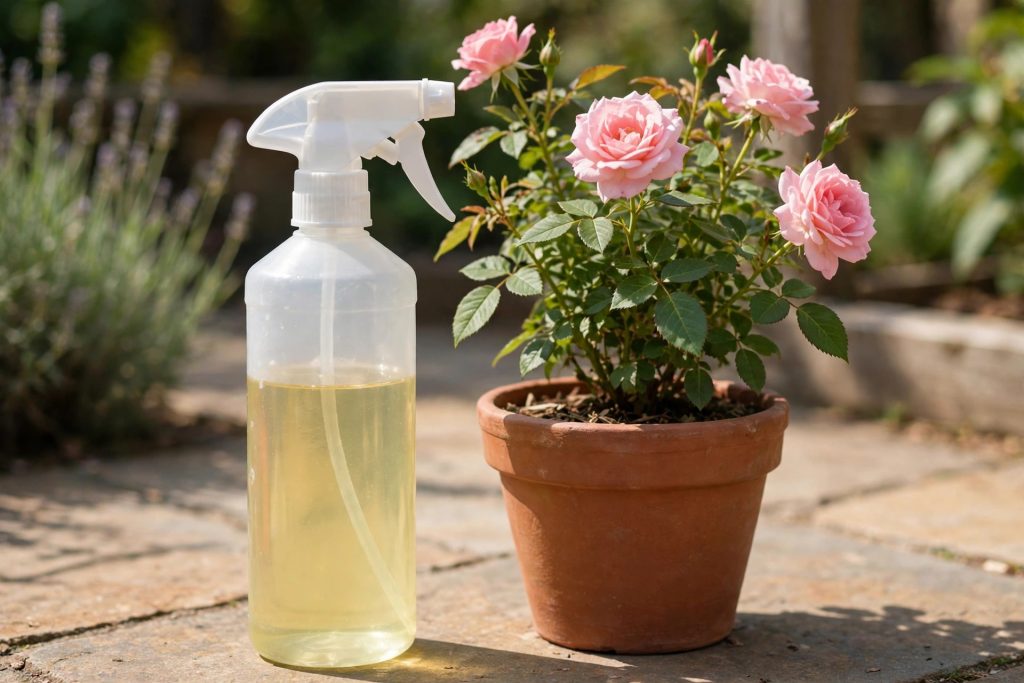
Type: Contact, ready-to-use spray (also sold as a 16 fl oz concentrate). Active ingredient: Clarified hydrophobic extract of neem oil. Size: 32 fl oz ready-to-use spray, 16 fl oz concentrate. EPA Reg. No.: Not confirmed from a primary source; no number printed here. Organic status: Approved for organic gardening. Not confirmed as OMRI Listed.
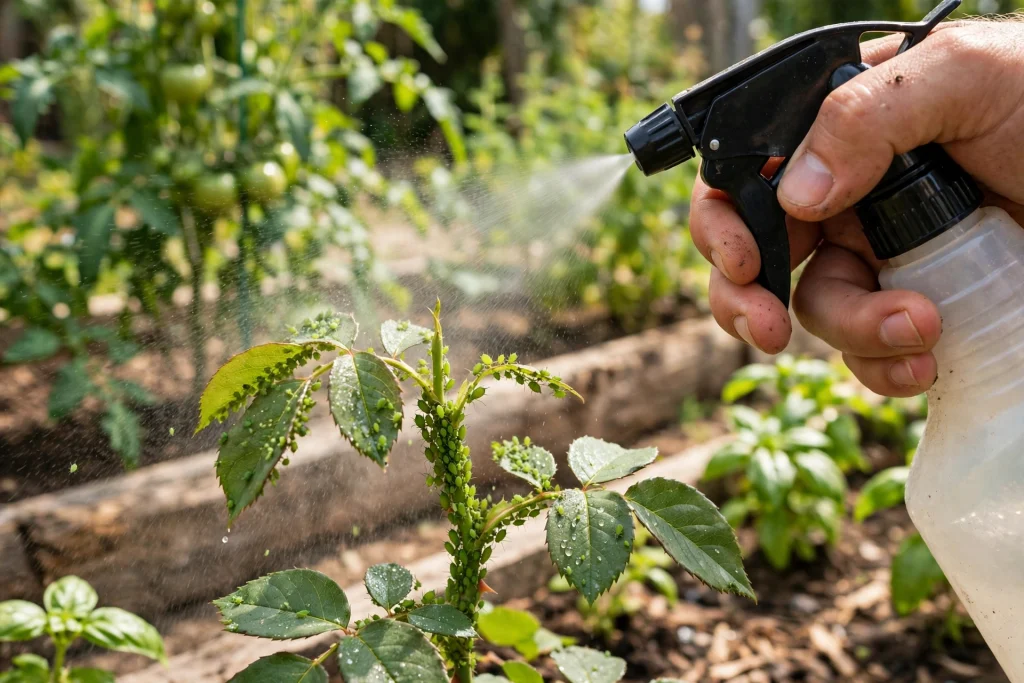
Rose Rx is the only bottle here made specifically for roses. It works as a fungicide, insecticide, miticide, and nematicide in one, and it lists powdery mildew, downy mildew, black spot, rust, leaf spot, anthracnose, scab, and blight. It also kills aphids, mites, caterpillars, mealybugs, and whiteflies at every life stage. You can use it up to the day of harvest on listed edibles.
The active ingredient is clarified hydrophobic extract of neem oil, not cold-pressed neem oil as some blogs claim: the Bonide label says clarified hydrophobic extract, and the two are different products. Clarified extract has most of the azadirachtin removed, so it works by coating and smothering. It is a contact spray, so it only protects the leaves it touches, and you need to repeat it every 7 to 10 days for active pest control and every 10 to 14 days for disease prevention.
One honesty flag: several blogs call Rose Rx OMRI-listed, but no manufacturer page or OMRI listing confirms that, so we print only “approved for organic gardening,” as Bonide and its retailers say.
Our rating: 8.1. The rose-specific label, the 4-in-1 action, and the ready-to-use format earn the score, with points off for the contact-only action and the two unconfirmed details above.
5. Spectracide Immunox Multi-Purpose Fungicide Spray Concentrate
Type: Systemic liquid concentrate. Active ingredient: Myclobutanil 1.55%. Size: 16 fl oz concentrate. EPA Reg. No.: 9688-123-8845. Organic status: Not OMRI Listed.
Immunox is the emergency bottle: myclobutanil is a systemic fungicide known for fast absorption and curative action, so it gets into the plant quickly and can halt an infection that is already spreading. The label lists black spot, powdery mildew, rust, brown patch, blights, leaf spot, mold, and scab on roses, lawns, flowers, trees, and ornamental shrubs. Once absorbed, it protects for up to 2 weeks, and it is rainproof once dry.
That speed is the reason to keep it on the shelf: when black spot is already halfway up the bush, a preventive contact spray will not catch up, and Immunox is the bottle for that week.
Two notes before you buy: it is a concentrate, so you need a pump sprayer and you need to measure it out, and the California Department of Pesticide Regulation record shows this registration inactive in California since the end of 2016, so do not count on finding it there.
Pros: Fast systemic absorption with curative action. Up to 2 weeks of protection. Rainproof once dry.
Cons: Concentrate needs measuring and a sprayer. Registration inactive in California. Synthetic, not organic.
Our rating: 8.0. The speed and the curative action earn the score, with points off for the mixing effort and the California restriction.
6. ARBER Organic Bio Fungicide
Type: Biological (biofungicide) liquid concentrate, also sold as a ready-to-spray hose-end bottle. Active ingredient: Bacillus amyloliquefaciens strain F727 cells and spent fermentation media, 96.4%. Size: 16 fl oz concentrate; ready-to-spray bottle covers up to 1,200 sq ft. EPA Reg. No.: 84059-28-97021. Organic status: OMRI Listed.
ARBER works differently from every synthetic here: it is a living bacterium, Bacillus amyloliquefaciens strain F727, that colonizes root and leaf surfaces and crowds out pathogens before they can take hold, while also secreting antifungal compounds. The label lists black spot of rose, powdery mildew, rust, downy mildew, botrytis, and leaf spot, and it covers roses, vegetables, fruits, flowers, houseplants, and ornamental trees and shrubs, indoors and outdoors.
The concentrate mixes at 1 fl oz per gallon of water, on a 10 to 14 day schedule for general wellness and 5 to 7 days for active disease, per a retailer listing; check the bottle you buy, since that interval comes from the retailer, not the label PDF we found. The ready-to-spray bottle is the easy option: attach it to a hose, walk the bed, and one bottle covers up to 1,200 square feet. Shelf life is 2 years, so do not stockpile it.
Two limits: as a biological it works best as prevention and early treatment rather than as a rescue for a bush that has already lost half its leaves, and black spot of rose is not labeled for this use in California.
Pros: OMRI listed. Hose-end bottle covers a big bed fast. Broad label including botrytis and downy mildew.
Cons: Preventive rather than curative. Short 2 year shelf life. Not labeled for black spot of rose in California.
Our rating: 7.9. The OMRI listing, the hose-end convenience, and the broad label earn the score, with points off because it is weaker on an advanced infection than the systemics above it.
7. Garden Safe Fungicide3
Type: Contact, ready-to-use spray (also sold as a 70% concentrate). Active ingredient: Clarified hydrophobic extract of neem oil, 0.9% in the ready-to-use spray, 70% in the concentrate. Size: 24 fl oz and 32 fl oz ready-to-use; 10 fl oz and 1 gallon concentrates. EPA Reg. No.: 70051-13-39609 (ready-to-use). Organic status: For organic gardening. Not confirmed as OMRI Listed.
Fungicide3 is the bottle most American gardeners will actually find on a store shelf. It is a 3-in-1 fungicide, insecticide, and miticide, and the label lists black spot on roses, powdery mildew, downy mildew, anthracnose, rust, leaf spot, botrytis, needle rust, scab, and flower, twig, and tip blight. It also controls aphids, whiteflies, and spider mites, and it can be used up to the day of harvest.
As a preventive, spray every 7 to 14 days until the disease risk passes; for disease already present, spray every 7 days until the pressure is gone, then every 14 days. For black spot, start at first bud emergence in spring and spray every 14 days through spring and fall. Garden Safe claims it stops powdery mildew in 24 hours; that is the manufacturer’s claim, not a lab result we verified.
Spray in the early morning or late evening, never on wilted or stressed plants, and test a few leaves first, since the label warns some rose flowers are sensitive. One honesty flag: our own published Neem Oil guide calls the Garden Safe neem extract OMRI listed, but the Fungicide3 label copies we found say only “for organic gardening”, so we do not call Fungicide3 OMRI Listed here.
Pros: Widely available. Three products in one. Clear label schedule for black spot prevention.
Cons: Contact only, so it needs repeat sprays and full coverage. OMRI listing not confirmed for this product. Oil can burn leaves in hot sun.
Our rating: 7.9. The availability, the clear schedule, and the 3-in-1 action earn the score, with points off for the contact-only action and the unconfirmed OMRI status.
8. Bonide Liquid Copper Fungicide
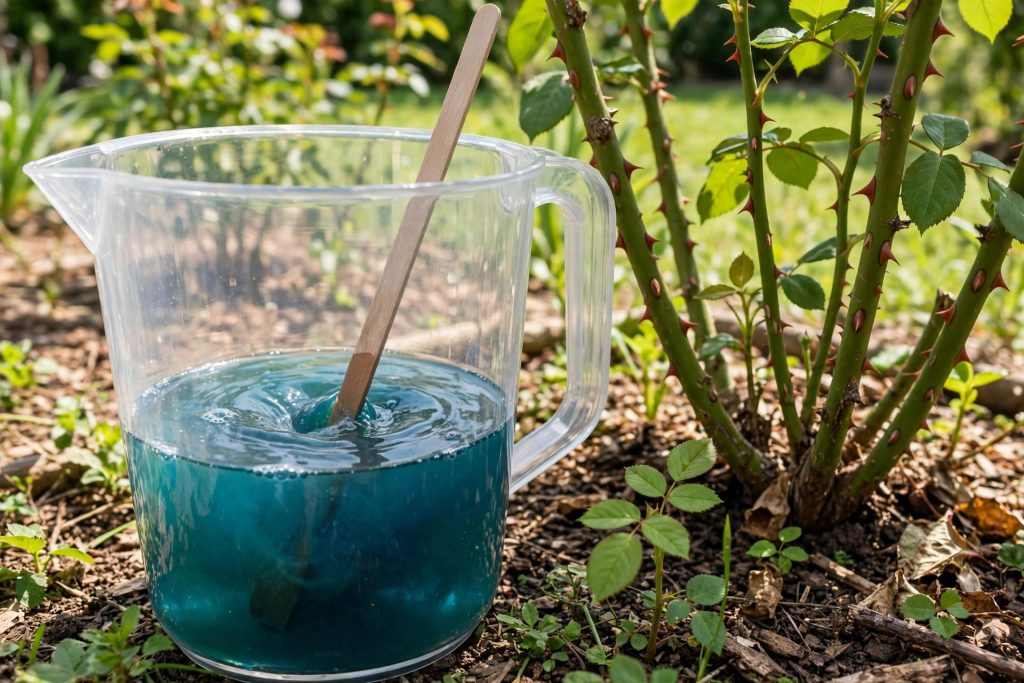
Type: Contact (protectant) liquid concentrate, also sold ready-to-use. Active ingredient: Copper octanoate (copper soap), 10.0% in the concentrate, 1.8% metallic copper equivalent; 0.08% in the ready-to-use. Size: 16 fl oz concentrate, 32 fl oz ready-to-use. EPA Reg. No.: 67702-2-4 (concentrate), 67702-1-4 (ready-to-use). Organic status: For organic gardening and organic production. Not confirmed as OMRI Listed.
Copper is the oldest fungicide in this roundup, and its label is the broadest of the organic options: on roses it lists black spot, downy mildew, gray mold, leaf spots, powdery mildew, and rust. The concentrate mixes at 0.5 to 2.0 fl oz per gallon of water, and the label gives 1.44 fl oz per gallon for rose black spot. On roses, begin when new spring growth emerges and repeat every 7 to 10 days for as long as needed.
Copper is a protectant: it sits on the leaf surface and stops spores from germinating, but it cannot cure an infection already inside the leaf, and rain washes it off, which is why the 7 to 10 day interval is shorter than the systemic intervals.
The honest trade-off is copper toxicity: the label warns it may cause toxicity on some rose varieties, showing as purple spots, so test-spray a few leaves first. One retailer lists the ready-to-use version as discontinued, so the concentrate is the safe pick.
Best for: Organic gardeners who want the broadest organic label, including gray mold. Skip if: You want a spray that works inside the plant, or you grow a copper-sensitive variety.
Pros: Broadest organic label here, including gray mold. For organic gardening. Concentrate is economical per gallon.
Cons: Contact only, washes off, needs 7 to 10 day repeats. Copper toxicity risk on some roses. Ready-to-use availability uncertain.
Our rating: 7.8. The broad label and the organic fit earn the score, with points off for the contact-only action and the toxicity warning.
9. Serenade Garden Disease Control
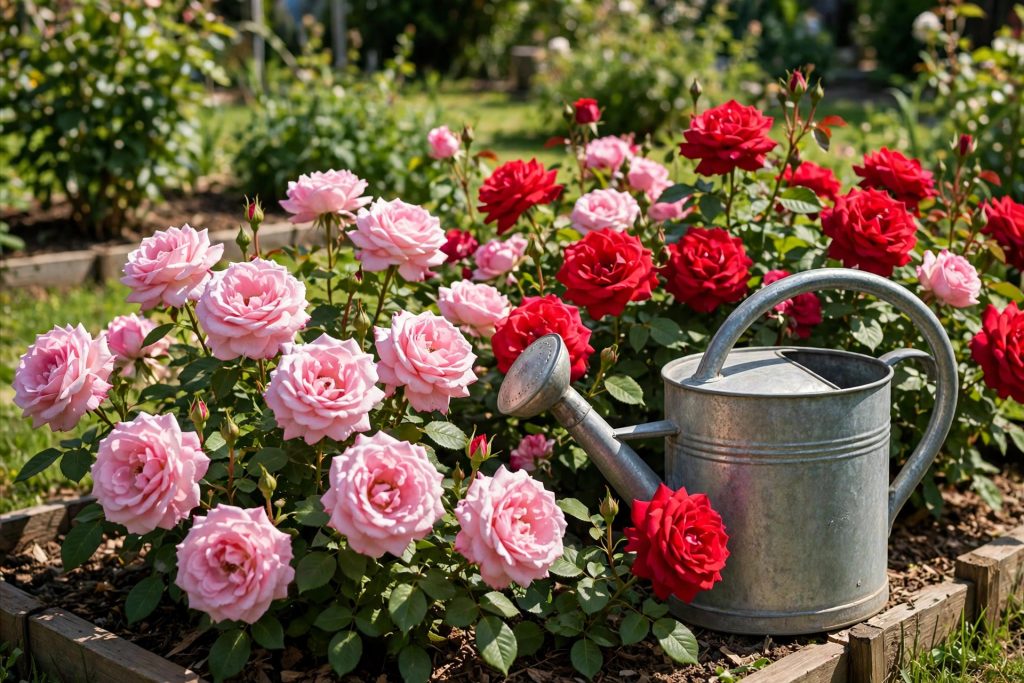
Type: Biological (biofungicide), ready-to-use spray (also sold ready-to-spray and as a concentrate). Active ingredient: QST 713 strain of Bacillus subtilis, 0.074% in the ready-to-use spray, 1.34% in the ready-to-spray. Size: 32 fl oz ready-to-use, 32 fl oz ready-to-spray, 1 quart concentrate. EPA Reg. No.: 69592-16 (ready-to-use), 264-1152 (ready-to-spray). Organic status: OMRI Listed.
Serenade is the gentlest product in this roundup: a biofungicide built on Bacillus subtilis strain QST 713, a naturally occurring soil bacterium, listed for use in organic production by the Organic Materials Review Institute. It controls or suppresses black spot of rose, powdery mildew, rust, gray mold, leaf blight, scab, and bacterial spot, and it can be applied up to the day of harvest.
The key word is preventive: Serenade colonizes leaf surfaces and stops pathogens before they establish, so it is not a curative knockdown for a bush that is already badly spotted. Spray it early and keep spraying through the season. That is also why it scores below the ARBER biofungicide, which carries a curative claim and a hose-end format.
One gap to state plainly: we found no reapplication interval in the label excerpts for Serenade, so we print none. Follow the interval on the bottle you buy.
Our rating: 7.7. The OMRI listing and the gentle safety profile earn the score, with points off because it cannot rescue a sick bush.
10. Bonide Sulfur Plant Fungicide
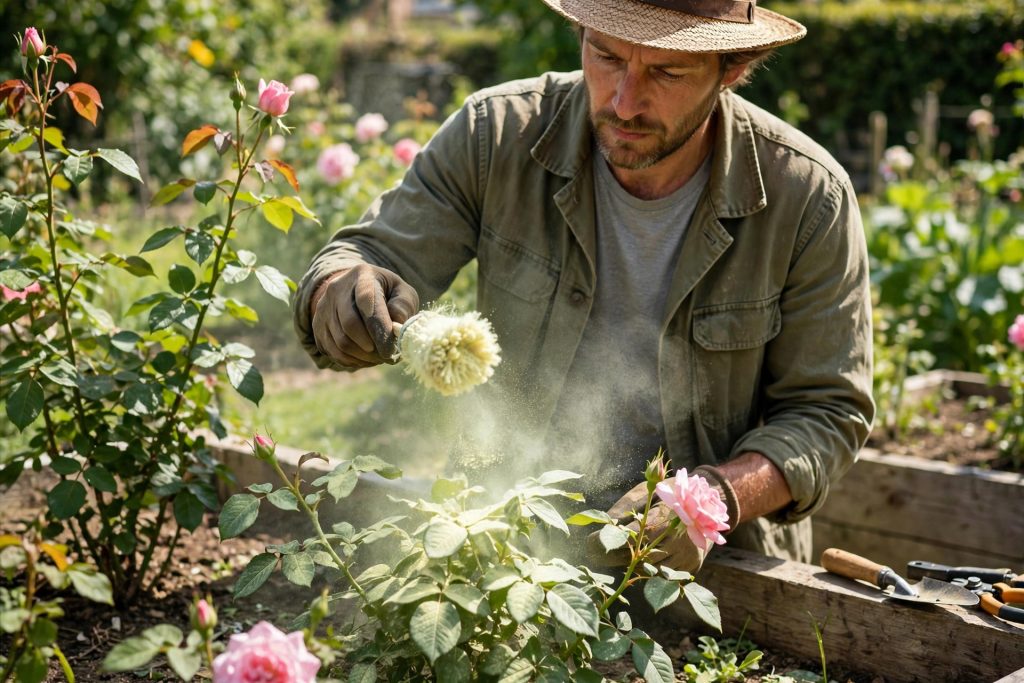
Type: Contact (protectant) micronized powder, spray or dust. Active ingredient: Sulfur 90.00%. Size: 1 lb, also sold as 4 lb. EPA Reg. No.: 4-62. Organic status: For organic gardening. Not confirmed as OMRI Listed.
Sulfur is the cheapest fungicide in this roundup and the oldest idea in it. The micronized powder can be dusted dry or mixed with water and sprayed. On roses, ornamental shrubs, and perennials, the label lists black spot, rust, powdery mildew, and red spider mites. The rose rate is 2 to 2.25 tablespoons per gallon of water, starting when disease appears and repeating at 5 to 10 day intervals and after rains.
Sulfur stops spores from germinating, so it works best before disease develops; it will not cure leaves that are already spotted, and it needs the shortest repeat interval here. It also carries rules the other products do not: do not use it when temperatures are expected to exceed 80 degrees Fahrenheit, do not use it within 2 weeks of an oil spray, and note that the label excludes California for roses, ornamental shrubs, and perennials.
Buy it if: You want the cheapest preventive for powdery mildew and black spot and will spray weekly in cool weather. Skip it if: You garden in California, your summers run hot, or the infection is already established.
Pros: Cheapest option here. Doubles as a spider mite control. For organic gardening. Can be dusted or sprayed.
Cons: Shortest repeat interval here. Heat limit of 80 degrees Fahrenheit. Not for roses in California. Not within 2 weeks of an oil spray.
Our rating: 7.3. The low cost and the dual mite control earn the score, with points off for the heat limit, the California exclusion, and the frequent reapplication.
Best Rose Fungicide Spray: Ready-to-Use or Concentrate
The best rose fungicide spray for a small garden is usually a ready-to-use bottle, and the best one for a big rose bed is usually a concentrate. A ready-to-use spray needs no mixing or measuring, which is why Rose Rx and Fungicide3 suit a gardener with three or four bushes. A concentrate costs less per sprayed gallon: one 32 fl oz bottle of BioAdvanced Disease Control makes up to 42 gallons.
Best Systemic Fungicide for Roses
The best systemic fungicide for roses in this roundup is BioAdvanced Disease Control, with Bonide Infuse a close second and Spectracide Immunox the fastest of the three. All three use a triazole active ingredient: tebuconazole, propiconazole, and myclobutanil. That shared chemistry matters for rotation. The American Rose Society warns that propiconazole and myclobutanil have a similar mode of action to tebuconazole and should not be used together in a fungicide rotation, because rotating between three products that all work the same way does not slow resistance. Rotate a systemic with a contact protectant instead, such as copper or sulfur, or with a biofungicide such as ARBER or Serenade.
Organic Fungicide for Roses
An organic fungicide for roses works best as prevention, not as a rescue. The organic options here are Rose Rx (neem oil), Fungicide3 (neem oil), Liquid Copper Fungicide (copper soap), Sulfur Plant Fungicide (sulfur), ARBER Bio Fungicide (Bacillus amyloliquefaciens), and Serenade Garden Disease Control (Bacillus subtilis). Two of the six are OMRI Listed: ARBER and Serenade. The other four say “for organic gardening” on the label, which is not the same as an OMRI listing. An OMRI listing is a separate third-party review, and being usable in organic gardening is not the same as holding one.
Organic sprays also need more frequent application than systemics: neem oil and copper need 7 to 14 day intervals, sulfur needs 5 to 10 days, and biofungicides need to go on before disease appears. Start at bud break, before you see a single spot, and the organic route works well.
Copper Fungicide vs Neem
Copper fungicide vs neem is the most common organic choice a rose gardener faces, and the answer depends on the disease and the weather. Copper is a mineral protectant that kills spores on contact and works in cool, wet spring weather when black spot is worst, but it washes off in rain and needs 7 to 10 day repeats. It lists gray mold, which neem does not emphasize. Neem oil is a botanical oil that smothers spores and insects together, handling aphids, mites, and whiteflies in the same pass, but it needs 7 to 14 day repeats and can burn leaves in hot sun, so spray it in the evening.
Use copper for black spot in a wet spring and the broadest organic label; use neem for a mix of powdery mildew and insects, or for one bottle for the whole garden. Do not use sulfur within 2 weeks of an oil spray, and that includes neem oil, because the combination can damage foliage.
How to Treat Black Spot on Roses
Here is the routine that works, in order, and it starts before you open any bottle.
First, pick off the infected leaves. Black spot spreads from leaf to leaf and from fallen leaves on the ground, so remove spotted leaves as they appear and rake up fallen leaves in the fall. Clemson Extension advises removing and destroying infected canes and leaves during the growing season, and pruning severely infected plants back in fall or early spring.
Second, fix the conditions: keep the leaves dry, water at the base instead of overhead, and plant roses in full sun with space between them for air to move.
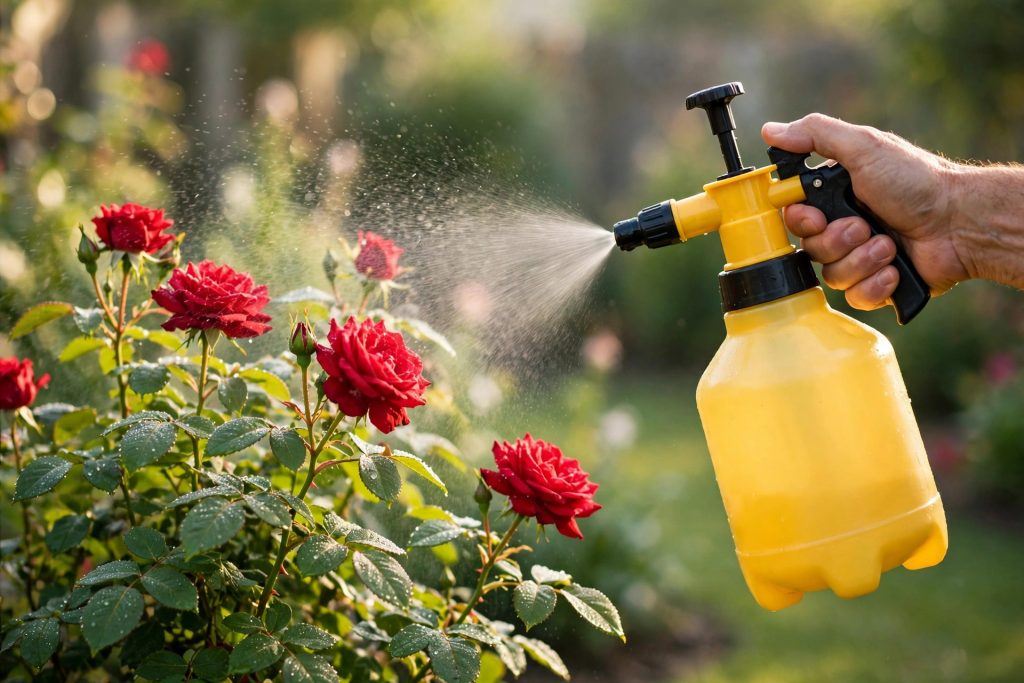
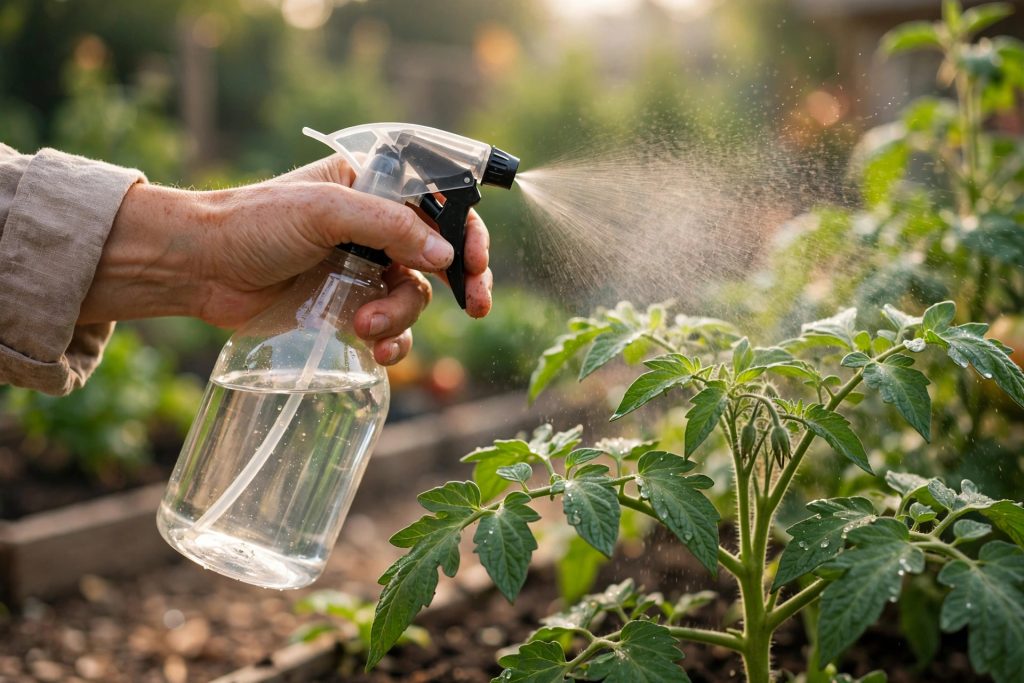
Third, spray. If the bush is already spotted, start with a systemic fungicide such as BioAdvanced Disease Control or Spectracide Immunox, because it moves inside the plant and can stop the infection from spreading to new growth. Spray to the point where the leaves just begin to run off, and cover the undersides of the leaves, not just the tops. If the bush is still healthy, start with a preventive spray such as Rose Rx, Fungicide3, or copper, and keep it up on the label schedule.
Fourth, keep going: repeat on the label interval until the disease pressure passes, and rotate to a different mode of action after two or three sprays so the fungus does not build resistance. A fungicide protects new growth; it does not un-spot a leaf that is already black.
Rose Disease Prevention Schedule
A schedule beats a rescue. This is a practical season plan for a typical American garden, built from the label intervals in this roundup and Extension guidance.
Early spring, at bud break: start spraying. Begin a preventive routine when new growth reaches half an inch: a copper spray, a neem spray, or a biofungicide such as ARBER or Serenade. Pick off any leaves that show spots.
Spring through early summer, every 7 to 14 days: neem oil and copper run on 7 to 14 day intervals, sulfur on 5 to 10 days. Spray in the morning or evening, never in the heat of the day or on wilted plants. After heavy rain, re-spray a contact product, since rain washes it off.
At the first sign of disease: switch to a systemic. If black spot or powdery mildew appears despite prevention, use BioAdvanced Disease Control, Bonide Infuse, or Spectracide Immunox, spray to run-off including the leaf undersides, and remove the worst infected leaves by hand first.
Midsummer: watch for powdery mildew in dry heat, which often peaks after black spot season. A neem oil spray or sulfur fits here.
Fall: clean up. Rake up and destroy all fallen rose leaves, and prune out infected canes, since spores overwinter in both.
How We Chose
We scored each product on five factors, weighted by how much they matter for a home rose grower; the weights add to 100 percent.
| Factor | Weight | What it measures |
|---|---|---|
| Rose disease coverage | 30% | Whether black spot, powdery mildew, and rust are all on the label, plus extra diseases |
| Systemic action and rainfastness | 20% | Whether the product moves inside the plant and stays effective after rain |
| Ease of use and format | 20% | Ready-to-use vs concentrate, mixing effort, hose-end options, coverage per bottle |
| Organic and safety profile | 15% | OMRI listing, organic gardening approval, bee and pollinator warnings, use restrictions |
| Value and availability | 15% | Coverage per bottle, how widely sold it is, and whether the format is still available |
The scores come from verified label specifications and owner feedback, not from hands-on testing. We did not test these products in our own garden, and we do not claim otherwise. No product here was penalized for a fact we could not verify; where a detail was unconfirmed, we say so in its section instead of guessing.
| Product | Coverage (30%) | Action (20%) | Ease (20%) | Organic/Safety (15%) | Value (15%) | Total |
|---|---|---|---|---|---|---|
| BioAdvanced Disease Control | 9.0 | 9.0 | 8.5 | 6.0 | 8.5 | 8.4 |
| Bonide Infuse | 9.0 | 9.0 | 8.0 | 6.0 | 8.5 | 8.3 |
| BioAdvanced 3-in-1 | 9.0 | 8.5 | 9.0 | 5.5 | 8.0 | 8.2 |
| Bonide Captain Jack’s Rose Rx | 8.0 | 7.0 | 9.0 | 9.0 | 7.5 | 8.1 |
| Spectracide Immunox | 9.0 | 8.0 | 8.0 | 6.0 | 8.0 | 8.0 |
| ARBER Bio Fungicide | 8.0 | 7.0 | 8.5 | 9.5 | 6.5 | 7.9 |
| Garden Safe Fungicide3 | 8.0 | 6.5 | 9.0 | 8.0 | 8.0 | 7.9 |
| Bonide Liquid Copper Fungicide | 8.5 | 6.5 | 8.0 | 7.5 | 8.0 | 7.8 |
| Serenade Garden Disease Control | 7.5 | 6.5 | 8.5 | 9.5 | 7.0 | 7.7 |
| Bonide Sulfur Plant Fungicide | 7.5 | 6.0 | 7.0 | 8.0 | 8.5 | 7.3 |
ARBER and Garden Safe Fungicide3 tie at 7.9. ARBER ranks above Fungicide3 on the higher action score (7.0 vs 6.5).
Final Choice
If you buy one bottle, buy BioAdvanced Disease Control for Roses, Flowers and Shrubs. It is the best fungicide for roses in this roundup because tebuconazole moves inside the plant, covers black spot, powdery mildew, and rust, stays rainproof once dry, and one bottle makes up to 42 gallons of spray. Pair it with a contact spray for rotation and pick off infected leaves by hand.
If you want to stay organic, buy Bonide Captain Jack’s Rose Rx for a small rose bed or ARBER Organic Bio Fungicide for a big one. Rose Rx is ready to use and made for roses; ARBER is OMRI Listed and covers up to 1,200 square feet from a hose-end bottle. Start either one at bud break, spray every 7 to 14 days, and do not wait for spots to appear.
If your roses are already sick, buy Spectracide Immunox: its fast systemic action is the best rescue here, and once the outbreak is under control you can switch back to prevention. Whatever you buy, read the label on the bottle you own before you spray.
References
- Clemson Cooperative Extension, Rose Diseases (HGIC 2106). Black spot, powdery mildew, and rust causes and symptoms, cultural prevention, and the fungicide actives Clemson lists for each disease.
- University of Florida IFAS Extension, Blackspot on Roses. Homeowner fungicide products for black spot control, including myclobutanil, copper, sulfur, and chlorothalonil.
- Mississippi State University Extension, The Plant Doctor: How to Spray Fungicides to Protect Residential Landscapes, Gardens, and Turf (Publication P2705). Systemic vs contact fungicides, FRAC groups, and trade names for rose use.
- American Phytopathological Society, Diseases and Abiotic Disorders of Outdoor Roses. Powdery mildew, rust, black spot, botrytis, and downy mildew causes, plus IPM and cultural control.
- American Rose Society, Rethinking Blackspot Management (American Rose, July/August 2021). Fungicide rotation guidance and the warning that propiconazole, myclobutanil, and tebuconazole share a mode of action and should not rotate with each other.
- BioAdvanced Disease Control for Roses, Flowers and Shrubs, product label (SBM Life Science). Tebuconazole 2.9 percent, up to 42 gallons of spray, rainproof once dry, EPA Reg. No. 92564-5.
- Bonide Infuse Systemic Disease Control, product label (Washington State University label library). Propiconazole 1.55 percent, rose directions for black spot and powdery mildew, EPA Reg. No. 100-773-4.
- U.S. EPA, Pesticide Product Label, Serenade Garden Disease Control Ready to Use. Bacillus subtilis QST 713, OMRI listing note, EPA Reg. No. 69592-16.
FAQ
What is the best fungicide for roses with black spot?
A systemic fungicide with tebuconazole, propiconazole, or myclobutanil is the strongest answer, and Clemson Extension lists all three actives for black spot control. Our top pick is BioAdvanced Disease Control, with Bonide Infuse and Spectracide Immunox close behind. Pick off infected leaves first, then spray to run-off on all leaf surfaces including the undersides, and repeat on the label interval. A fungicide protects new growth; it does not un-spot leaves that are already black.
Is neem oil a good fungicide for roses?
Yes, as prevention and for mild infections. Clemson lists neem oil as clarified hydrophobic extract for powdery mildew, and the Garden Safe and Rose Rx labels list black spot, powdery mildew, and rust. Neem oil is a contact spray, so it only protects the leaves it touches, and you need to repeat it every 7 to 14 days. Spray in the early morning or late evening, never on wilted or stressed plants. For an established black spot outbreak, a systemic fungicide works better.
What is the difference between systemic and contact fungicides?
A systemic fungicide is absorbed into the plant and moves through its tissues, so it protects new growth that appears after you spray, and it stays rainproof once dry. A contact fungicide sits on the leaf surface, only protects the leaves it touches, and washes off in rain, so it needs full coverage and more frequent reapplication.
Can I use copper fungicide on roses?
Yes. The Bonide label lists black spot, downy mildew, gray mold, leaf spots, powdery mildew, and rust on roses, and it is labeled for organic gardening. Begin when new spring growth emerges and repeat every 7 to 10 days, and test-spray a few leaves first, since the label warns copper can cause toxicity on some varieties, showing as purple spots.
How often should I spray roses for disease prevention?
Start at bud break in spring and repeat on the label interval for the product you use: every 7 to 14 days for neem oil and copper, every 5 to 10 days for sulfur, and every 10 to 21 days for the systemic fungicides in this roundup. Re-spray contact products after heavy rain, rotate to a different mode of action after two or three sprays, and stop when disease pressure ends in fall.
Are organic fungicides as effective as synthetic ones?
For prevention, yes, when they go on early and on schedule. For an established infection, no: a systemic fungicide is stronger on black spot that has already spread. The best results usually combine cultural control, such as dry leaves and good air flow, with a preventive organic spray and a systemic spray when disease gets severe.

Thesis Link : https://saulibrary.edu.bd/daatj/public/uploads/BAU200601_19-Pp_5.pdf
- 10 Best Fungicides for Roses - November 25, 2026
- 10 Best Dwarf Fruit Trees for Small Yards - November 25, 2026
- 10 Best Ant Killers for Gardens - November 24, 2026