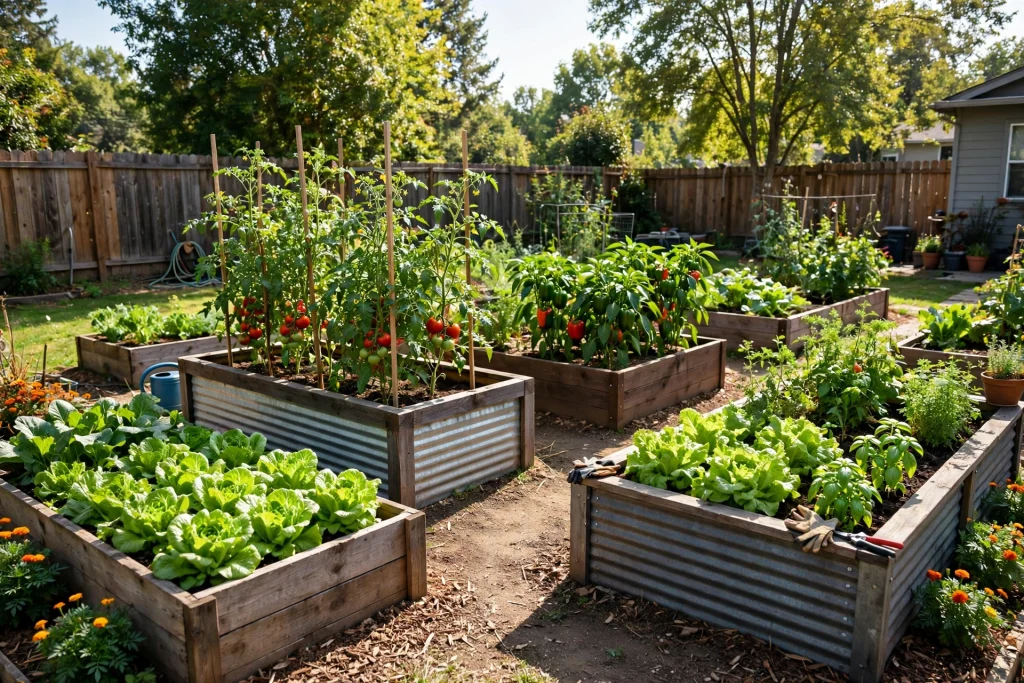

A raised bed is the shortest distance between a patch of lawn and a plate of home grown tomatoes. It lifts the soil out of the ground, warms it earlier in spring, drains the rain that would drown flat beds, and gives a gardener a defined space to fill with good soil instead of fighting whatever the yard came with. The best raised garden bed does all of that for years without rotting, rusting, or warping out of shape, and the difference between a bed that lasts two seasons and one that lasts twenty is usually the material, the depth, and the way it goes together.
The trouble is that raised beds all look similar in a product photo. A cedar kit and a pine kit look the same until the pine starts to rot in year two. A metal bed with thin steel looks identical to one with a proper coating until the rust shows. And depth is the number most listings hide, even though it decides whether a tomato can root properly or spends the summer thirsty in six inches of soil.
This guide compares the 10 best raised garden beds gardeners can buy in the United States in 2026, with every fact checked against the maker’s own page, a major retailer listing, or a university Extension source. Where a maker does not publish a spec, this guide says so. Where sources disagree, it prints the conflict instead of picking the bigger number. Ratings come from verified specifications and owner-feedback patterns, not from hands-on testing, and the scoring system is printed in full in How We Chose so you can check the maths yourself.
Quick Recommendation
If you only want the short answer, start here.
- Best overall for most gardeners: Vego Garden 17 in Tall 9-in-1 Modular Metal Raised Garden Bed, rated 9.2. Seventeen inches of depth, nine layouts from one kit, coated steel the maker claims will last 20-plus years, and a 2-year limited warranty.
- Best premium metal bed: Birdies Original 6-in-1 Raised Garden Bed, rated 9.0. Aluzinc steel in nine colours, six shapes from one kit, and a maker claim of 20-plus years of life.
- Best cedar bed: Gardener’s Supply Deep Root Cedar Raised Bed, 2 x 8 ft, rated 8.4. Fifteen inches deep, SFI-certified Western red cedar on aluminium corners, and the cedar pick in several independent guides.
- Best composite bed: Frame It All Classic Sienna Composite Raised Garden Bed, 4 x 8 ft, rated 8.4. Wood look with no rotting, no staining, and boards that stack to 22 inches.
- Best large bed: Land Guard Galvanized Raised Garden Bed, 8 x 4 x 1.5 ft, rated 8.2. Thirty-two square feet of growing space, 18 inches deep, with drainage holes and reinforced cross bars.
- Best for a patio or balcony: Smart Pots Big Bag Bed, 50 in round, rated 8.2. No assembly at all, folds flat for storage, and a fabric bottom that drains freely.
- Best elevated bed for bad knees: Best Choice Products Mobile Elevated Wood Planter, 48 x 24 x 32 in, rated 6.9. Waist height on locking wheels, with a storage shelf underneath, though owner reports flag the assembly instructions and thin wood.
- Best self-watering bed: Keter Splendor 31.7 Gallon Self-Watering Raised Garden Bed, rated 7.5. An 8-gallon reservoir with a water gauge, so the soil stays moist between waterings.
- Best budget starter bed: Lifetime 60069 HDPE Raised Garden Bed Kit, 4 x 4 ft, 3-Pack, rated 8.0. Three beds in one box, tool-free assembly, and a 5-year limited warranty.
- Best classic cedar kit: Greenes Fence Premium Cedar Raised Garden Bed, 4 x 8 ft, rated 8.1. Untreated North American cedar with dovetail joints and tool-free assembly.
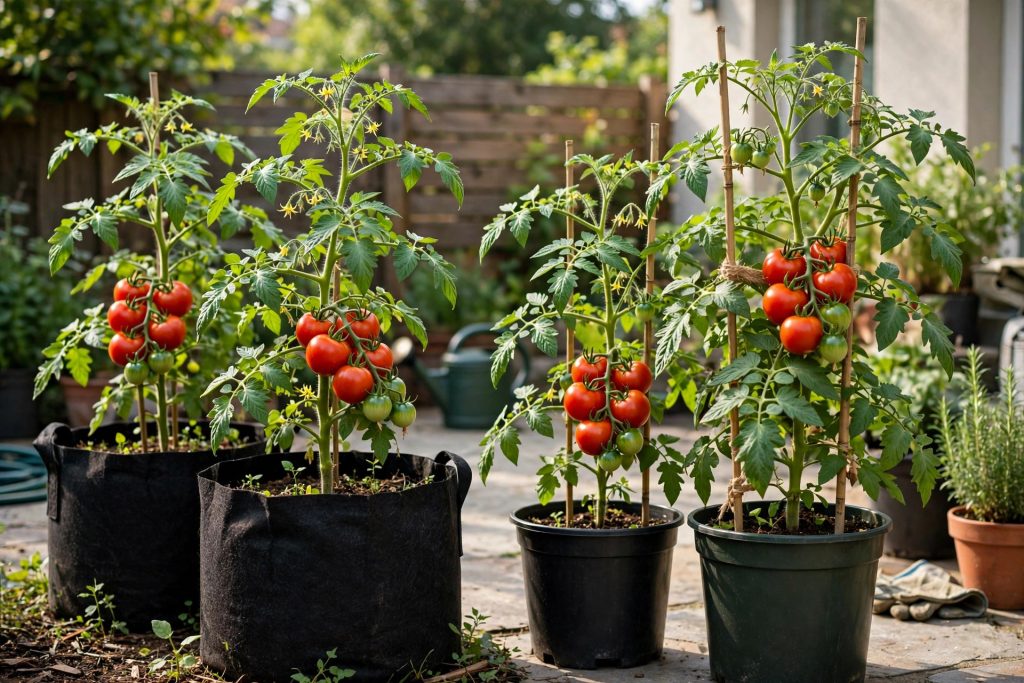
If you are buying your first bed and you grow the usual mix of tomatoes, peppers, and leafy greens, buy the deepest bed your space and budget allow. Ten inches grows lettuce and herbs well. Tomatoes and peppers want 12 to 24 inches of soil on a hard surface, and a bed that is too shallow dries out within hours on a hot day. No amount of watering fixes roots with nowhere to go.
The 10 Best Raised Garden Beds Compared
| Product | Material | Size | Depth | Best for | Our rating |
|---|---|---|---|---|---|
| Vego Garden 17 in Tall 9-in-1 | VZ 2.0 coated steel | 8 x 2 ft (9 layouts) | 17 in | Best overall, deep beds | 9.2 |
| Greenes Fence Premium Cedar 4 x 8 ft | Untreated cedar | 4 x 8 ft | 10.5 in | Classic cedar kit | 8.1 |
| Land Guard Galvanized 8 x 4 ft | Q195 galvanized steel | 8 x 4 ft | 18 in | Large beds | 8.2 |
| Gardener’s Supply Deep Root Cedar 2 x 8 ft | Western red cedar | 2 x 8 ft | 15 in | Best cedar bed | 8.4 |
| Birdies Original 6-in-1 | Aluzinc steel | Up to 5.2 x 3 ft (6 shapes) | 15 in | Premium metal bed | 9.0 |
| Frame It All Classic Sienna 4 x 8 ft | Composite HDPE and wood fibre | 4 x 8 ft | 11 in (stacks to 22 in) | Wood look, no maintenance | 8.4 |
| Best Choice Products Mobile Elevated | Fir wood with liner | 48 x 24 in | 8 in soil, 32 in tall | Bad knees, patios | 6.9 |
| Keter Splendor 31.7 Gallon | Polypropylene resin | 44.9 x 19.4 in | 11.5 in soil, 29.8 in tall | Self-watering | 7.5 |
| Smart Pots Big Bag Bed 50 in | Geotextile fabric | 50 in round | 12 in | Patios, renters | 8.2 |
| Lifetime 60069 HDPE 4 x 4 ft, 3-Pack | UV-protected HDPE | 4 x 4 ft each | 9 in (stacks to 18 in) | Budget starter set | 8.0 |
A note on soil volume: a 4 x 8 ft bed 12 inches deep needs about 32 cubic feet of fill, and the same bed 17 inches deep needs about 45 cubic feet, per the North Carolina State Extension volume formula. Order 10 to 15 percent extra, because the mix settles after the first few waterings. The fill itself matters as much as the frame: about half to two thirds topsoil and a half to a third plant-based compost, per the University of Minnesota Extension, never garden soil alone and never straight compost alone.
How to Choose a Raised Garden Bed
A raised bed is a frame, a volume of soil, and a place to stand. Get those three right and almost any material works. Get one wrong and the bed fights you for its whole life.
Best raised bed material: cedar vs metal vs composite
Start with the material, because it decides the bed’s life, its look, and how much care it needs.
Cedar is the classic choice for a reason. It is naturally rot resistant with no chemical treatment, and the University of Maryland Extension lists cedar among the decay-resistant woods suitable for food beds, alongside black cherry, oak, black locust, Osage orange, and redwood. It looks the best of any material on day one and weathers to a silver grey over time, which is normal and not failure. The cost is higher than pine or fir, and boards eventually need replacing. Expect a cedar bed to last many seasons, not forever.
Galvanized and Aluzinc steel last the longest of any common material. The University of Minnesota Extension calls galvanized steel virtually rust resistant for upwards of 50 years, and both Vego Garden and Birdies claim 20-plus years for their coated steel beds. Steel does not rot, warp, or attract termites. The trade-offs are heat in strong sun, sharp edges on cheap kits, and a small zinc leaching note: the University of Minnesota says zinc from the coating may leach into highly acidic soils, below pH 5, but most garden soils are neutral to alkaline. One more caution from the same source: some prefabricated beds sold online have been found to contain lead, so ask the seller whether the materials were tested for lead.
Composite boards, like the Frame It All Classic Sienna, mix recycled plastic with wood fibre. They resist rot, warping, cracking, and fading with no staining or sealing, and they keep a wood-grain look. The upfront cost runs higher than wood, and hollow boards need care with a shovel inside the bed. Composite suits a gardener who wants the wood look and never wants to paint or seal a board again.
Fabric beds, like the Smart Pots Big Bag Bed, are the cheapest and the simplest. They cost little, need no assembly, fold flat for storage, air prune roots, and drain freely. They also dry out the fastest and last only a few seasons. Fabric suits renters and quick setups, not a permanent bed.
Plastic, in the form of UV-protected HDPE like the Lifetime kit, will not rot, crack, or peel. It is light, cheap, and stackable for depth. At 9 inches a single Lifetime bed is shallow for tomatoes, which is why the stacking matters.
Cedar vs metal raised beds: which wins where
The honest answer is that each wins in a different yard. Cedar wins on looks and on a natural, chemical-free story. Metal wins on life span and on wet climates, where wood rots fastest. In a hot, sunny yard, a metal bed can warm the soil along its edges faster than cedar, which is a small help in spring and a small problem in a heatwave. In a damp climate, cedar boards stay wet and rot sooner, while coated steel barely notices the rain. If you plan to keep the same bed for a decade or more, buy metal. If you want the bed to look like part of a cottage garden and you accept replacing boards one day, buy cedar.
How deep should a raised bed be
Depth is the number that decides what you can grow, and it depends on what sits under the bed. On open ground, 10 to 12 inches of soil suits most vegetables, because roots continue down into the soil below the frame. The frame height is not the whole root zone. On a patio, a driveway, or concrete, the bed is the whole root zone, and the University of Maryland Extension gives hard-surface minimums: at least 8 inches of soil for leafy greens, beans, and cucumbers, and 12 to 24 inches for peppers, tomatoes, and squash. North Carolina State Extension gives 8 to 12 inches as the general bed height. The practical rule is simple: buy deeper than you think you need for tomatoes and peppers, and treat 10 inches as the floor for anything with a real root system.
Best soil for raised beds
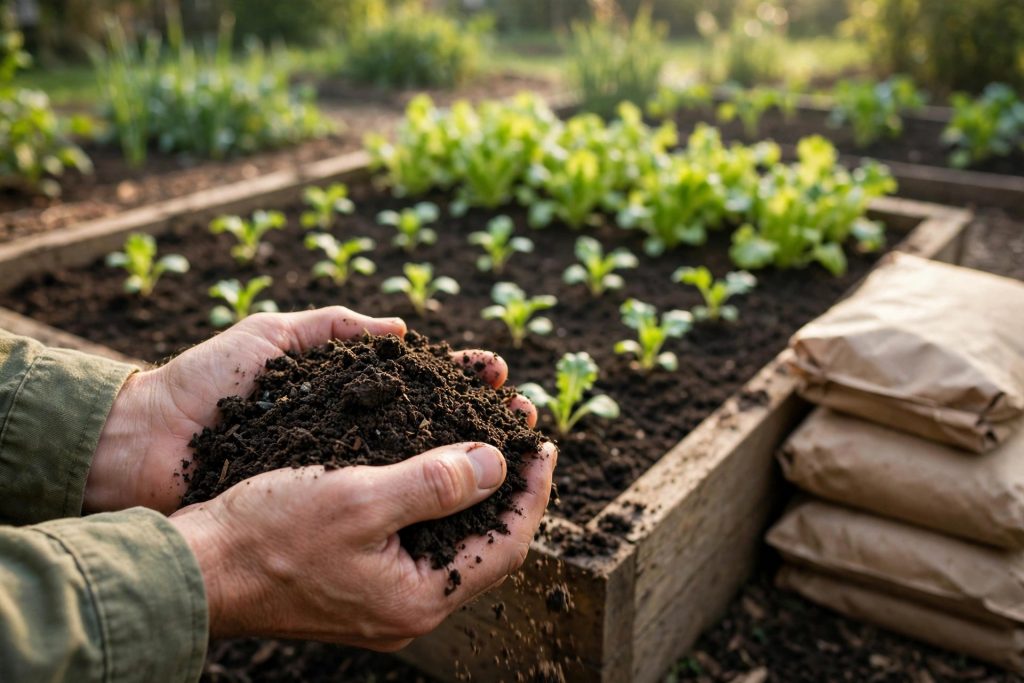
A bed is only as good as its fill. The University of Minnesota Extension recommends about half to two thirds topsoil and a half to a third plant-based compost, with loam or sandy loam preferred, and a soil test on established beds every two to three years. The University of Maryland Extension suggests compost and garden soil, or purchased topsoil, in a 1:2 or 1:1 ratio. Clemson Extension adds that compost should be 10 to 20 percent of the total fill volume.Avoid filling a raised bed with garden soil alone or straight compost alone. Potting mixes can also work in raised beds, but they are often expensive for filling large spaces, and their moisture retention and nutrient content vary depending on their formulation. For most vegetable beds, a properly blended mix of topsoil and compost is a practical and affordable starting point. Choose a mix designed for raised beds and adjust it according to your crops and local conditions. That fill advice is the same whichever frame you buy, and it is why this guide links to a dedicated soil-mix roundup in the internal links below.
Raised bed vs in ground: when a bed is worth it
A raised bed earns its cost in four situations. First, poor native soil: heavy clay, sand, or rubble-filled ground that would take years to fix. Second, drainage: a bed drains well and warms up faster in spring, which is why northern gardeners plant earlier in beds. Third, access: a bed at 17 inches or taller is far easier on knees and backs, and a 27-inch height is generally comfortable for wheelchair users, per the University of Minnesota Extension. Fourth, control: a defined bed keeps paths clear and makes crop rotation simple. In-ground planting wins on cost and on watering, because beds dry out faster than in-ground gardens, and the taller the bed the more often it needs water, per both the University of Minnesota and the University of Maryland. If your soil is already good loam and your back is fine, a bed is a convenience, not a necessity.
Best raised bed kits: what to check before you buy
A kit is worth its price when four things check out. The boards or panels should be thick enough to hold soil without bowing: look for corner braces on long beds and cross bars on metal ones. The hardware should be stainless or coated, because plain screws rust and stain the frame. The assembly should be honest about tools and time: a kit that claims ten minutes and needs a drill is not a ten-minute kit. And the depth should be printed plainly on the listing. If a listing hides the depth, the bed is probably shallow.
The 10 Best Raised Garden Beds
1. Vego Garden 17 in Tall 9-in-1 Modular Metal Raised Garden Bed
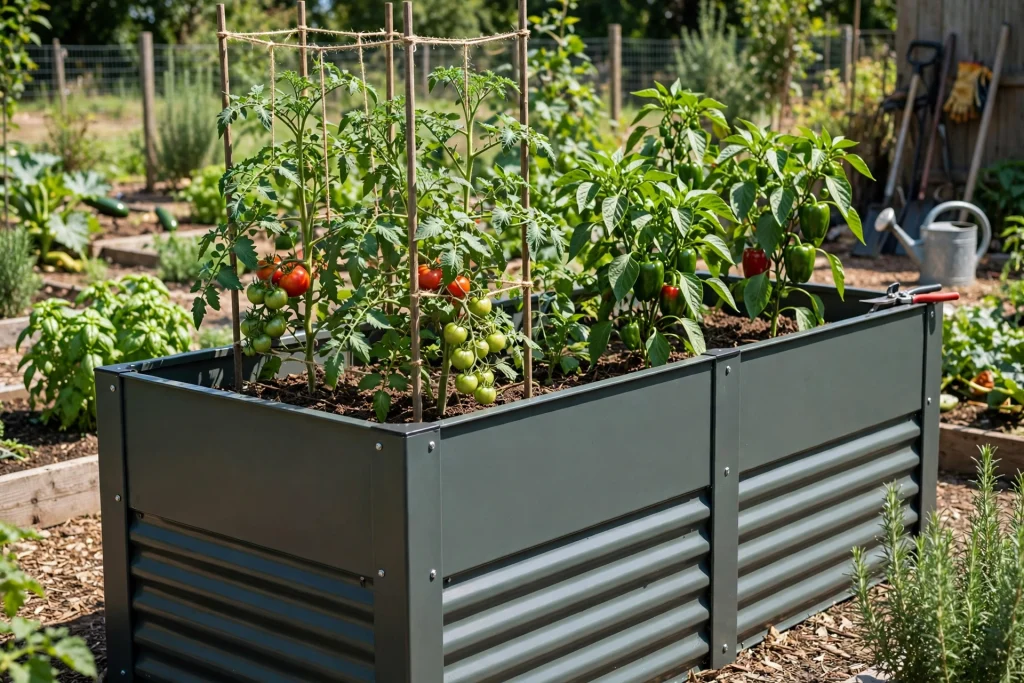
Best overall. Seventeen inches deep, nine layouts from one kit, and coated steel built to outlast the garden.
The Vego Garden 9-in-1 is the bed this guide rates highest, and the reasons are all structural. The reviewed size is 8 x 2 ft, 24 x 96 x 17 in, but one kit reconfigures into nine layouts, from 2 x 2 ft up to 5 x 5 ft, so the same box can become a narrow bed along a fence or a square bed in the middle of a yard. The steel is Vego’s VZ 2.0, a zinc, magnesium, and aluminium coating with an AkzoNobel paint finish, and the hardware is food-grade 304 stainless steel bolts and cap nuts. Rubber edging covers the top rim, which answers the sharp-edge complaint that follows cheap metal beds. Capacity is 23 cubic feet in the 8 x 2 ft layout and 35 cubic feet in the 5 x 5 ft layout. There is no bottom: the bed sits open to the soil below. Assembly bolts together panel by panel with tools included, under 40 minutes per the maker, and long layouts get an internal support brace.
The maker’s lifespan claim is 20-plus years, with a 2-year limited warranty. Treat the 20-year figure as a maker claim, not a measured result: no independent test has run a Vego bed for two decades. Owner-feedback patterns in the guides that recommend it praise the sturdiness of the panels and the clean look of the powder coating, and the recurring complaint is the price per bed, which sits above a basic cedar kit. That is the trade for depth and longevity in one box.
Quick verdict: the one to buy if you want a deep bed that you assemble once and forget about. Best for: most vegetable gardeners, tomato and pepper growers, anyone who wants one bed to serve for years. Skip if: you need a bed under 17 inches deep for a low border, or you want the look of wood.
Real-world limitation: at 17 inches deep, this bed needs a lot of soil, about 23 cubic feet in the 8 x 2 ft layout, and the fill cost can rival the kit cost. Fill the bottom third with coarse, bulky organic material only if you are comfortable with it settling, and top up in year two. Who should buy: a gardener planting tomatoes, peppers, and squash who wants depth, modularity, and a long service life in one purchase.
2. Greenes Fence Premium Cedar Raised Garden Bed, 4 x 8 ft x 10.5 in
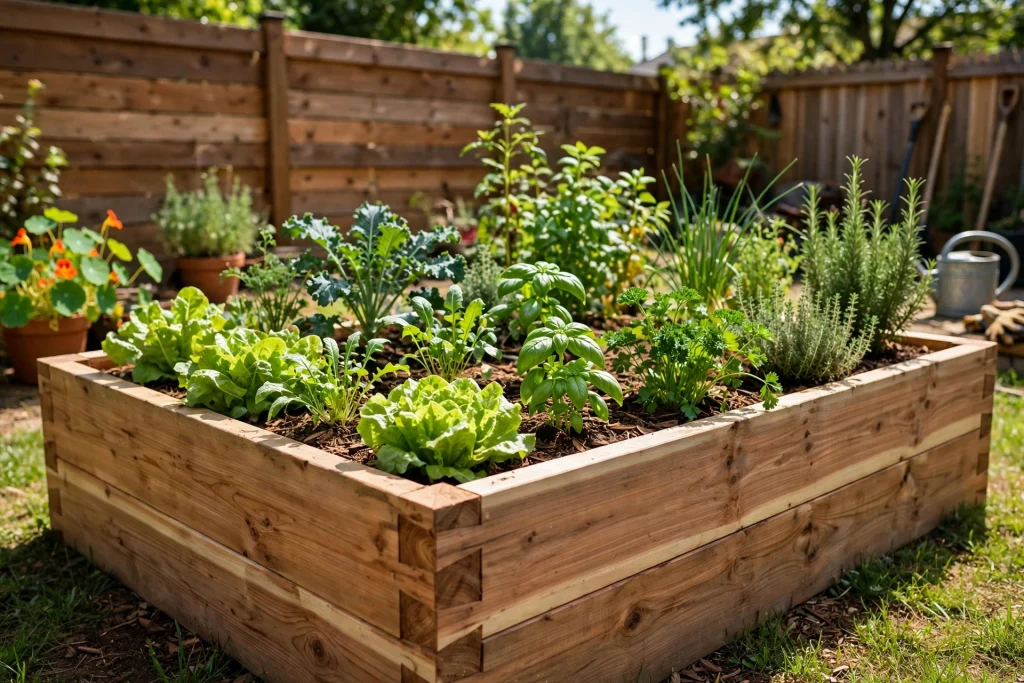
The classic cedar kit. Untreated North American cedar, dovetail joints, and no tools needed.
Greenes Fence has sold this shape of bed for years, and the design has barely changed because it works. The reviewed size is 4 x 8 ft x 10.5 in, with 32 square feet of growing area, built from untreated North American cedar with 2.5-inch square corner posts and dovetail interlocking joints. Assembly is tool-free: the boards slot into the posts and a rubber mallet and a level finish the job in 20 to 30 minutes per the guides. The box states about 25 cubic feet of soil is needed to fill it, and one review lists 28 cubic feet of capacity, so this guide prints the box figure of about 25. There is no bottom, and the wood is chemical-free and made in the USA. The same line comes in 2 x 4, 2 x 8, and 4 x 12 ft sizes, and a taller 17.5-inch version exists.
Two things to check before buying. First, the warranty: one guide lists a 5-year limited warranty and another lists a free 3-year warranty on a different model in the line, so this guide prints no single warranty number. Second, the Premium line is specified with 3/4-inch boards against a Classic line with thinner boards, and the listing for the verified ASIN did not confirm which line that ASIN carries, so confirm the board thickness on the listing you buy from.
Best for: gardeners who want a natural cedar look and a bed that goes together without tools. Not ideal for: tomato growers who need deep soil on a patio, because 10.5 inches is shallow for a hard surface, and for anyone who wants a bed that never needs a board replaced.
Real-world limitation: at 10.5 inches deep, this bed suits lettuce, herbs, and beans on open ground, where roots continue into the soil below, but it is thin for peppers and tomatoes on concrete. Pair it with open ground or a taller sibling for deep-rooted crops. Who should buy: a gardener with decent soil underneath who wants the classic cedar bed and the simplest possible assembly.
3. Land Guard Galvanized Raised Garden Bed, 8 x 4 x 1.5 ft
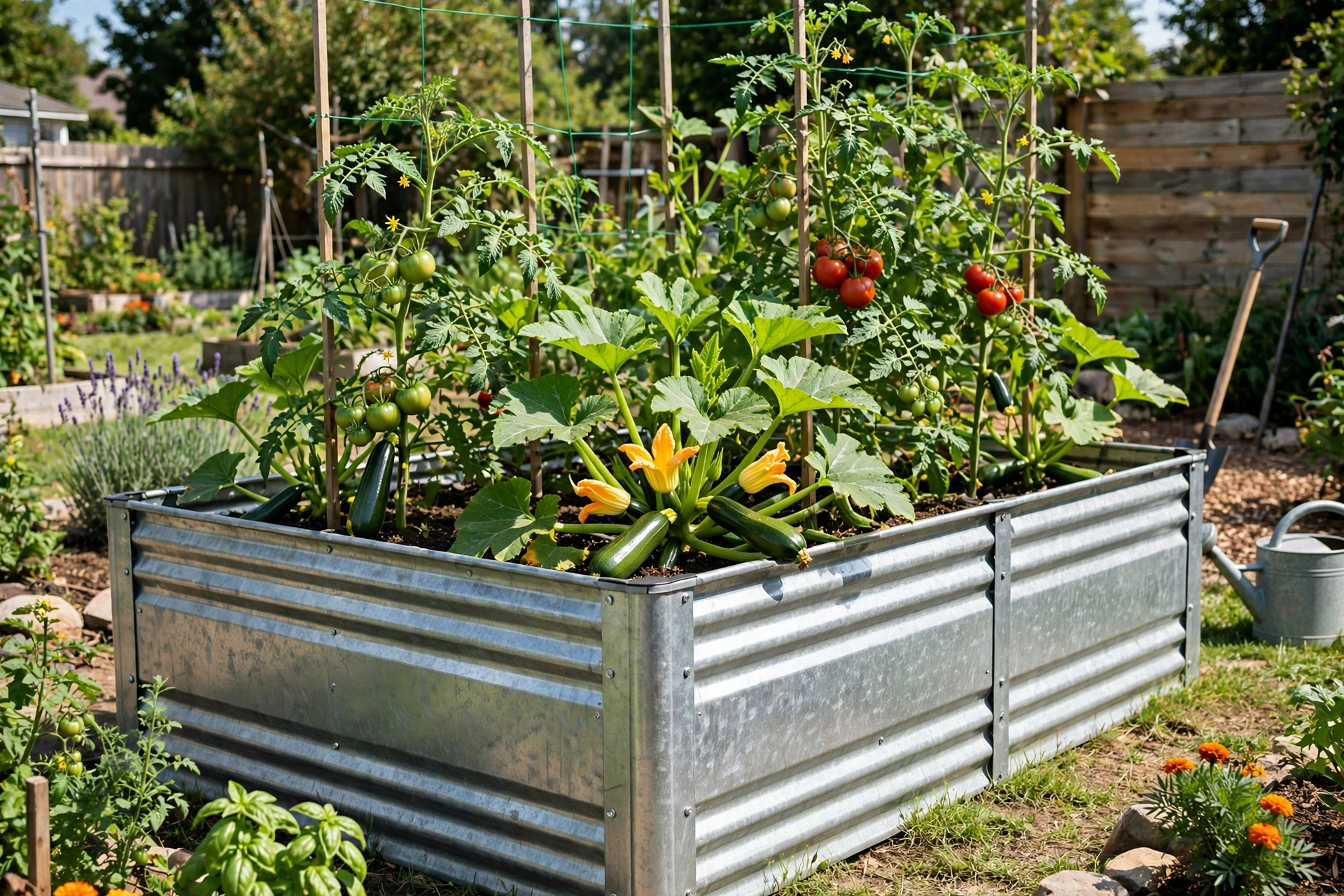
Best large bed. Thirty-two square feet at 18 inches deep, with drainage holes and cross bars.
The Land Guard is the big, straightforward metal bed in this guide. The reviewed size is 8 x 4 x 1.5 ft, 96 x 48 x 18 in, in Q195 galvanized steel sheet at 0.78 mm average thickness, with the thickest part listed at 1.56 mm, double-layer anti-corrosion galvanizing, and an oval shape. It carries drainage holes, reinforced cross bars, and fixed piles, and the paint on all parts is described as environmentally friendly. Capacity is 359 gallons for this exact size, about 48 cubic feet by arithmetic, and there is no bottom. The same line is sold as 8 x 4 x 1 ft, 8 x 4 x 2 ft, and 8 x 4 x 3 ft, with different capacities for each, so check the size on the listing and do not carry a figure from one variant to another.
The warranty is not published by the maker, so this guide prints none. Owner-feedback patterns in the reviews praise the size per dollar and the cross bars that stop long walls from bowing outward under wet soil, and the recurring complaint is that 18 inches deep means a lot of soil to buy, about 48 cubic feet at list capacity.
What stands out: the depth and the size together. Few beds give a full 8 x 4 ft footprint at 18 inches deep, and that combination suits a serious vegetable row rather than a herb patch. What to watch: the fill volume, the lack of a published warranty, and the need for a level site, because a long bed shows every slope in the ground.
Real-world limitation: at 48 cubic feet, filling this bed is a job in itself, and the soil will settle in the first season, so budget for a top-up. Who should buy: a gardener with space for a full 8 x 4 ft bed who grows tomatoes, squash, and root vegetables in quantity.
4. Gardener’s Supply Deep Root Cedar Raised Garden Bed, 2 x 8 ft
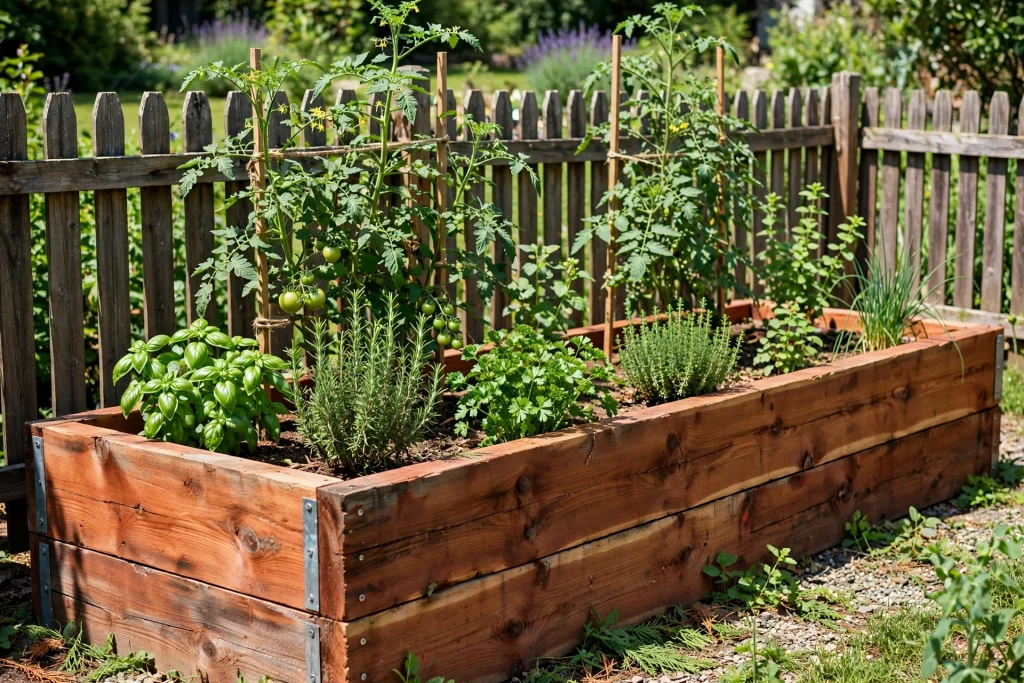
Best cedar bed. Fifteen inches deep, SFI-certified Western red cedar on aluminium corners.
The Deep Root is the cedar bed that the independent guides keep recommending, and the reason is depth. The reviewed size is 2 x 8 ft at 15 inches deep, with about 14.5 inches of planting depth per one guide, which is the figure this guide prints alongside the 15-inch frame height. The wood is SFI-certified untreated Western red cedar, 1.5 inches thick per one guide, screwed to powder-coated aluminium corner brackets with plastic caps. The corners are reusable if the planks are ever replaced, which is a thoughtful detail that most cedar kits miss. The line also comes in 2 x 6 and 4 x 8 ft sizes. Assembly needs a drill and a rubber mallet, and metal reinforcement strips are included in the kit per owner reports. Capacity for the 2 x 8 ft size is not published by the maker, so this guide prints no figure for it. One guide reports a lifetime guarantee on the aluminium corners, while another says cedar beds in this line typically carry 5 years, so this guide prints neither as a whole-bed warranty and notes only the corners guarantee as one guide states it.
The 2-ft width is a deliberate choice, not a limitation. It lets a gardener reach the middle from one side, which matters along a fence or a wall where the far side is out of reach. The trade is growing area: a 2 x 8 ft bed holds half the plants of a 4 x 8 ft bed.
Quick verdict: the best cedar bed in this guide for a gardener who grows tomatoes and peppers and wants real depth in wood. Best for: narrow spaces along fences and walls, deep-rooted vegetables, gardeners who want certified cedar. Skip if: you need a wide 4-ft bed or the lowest price, because this is a premium cedar kit.
Real-world limitation: the 2-ft width limits planting area, and the capacity is unpublished, so soil ordering needs the geometric estimate of about 20 cubic feet for a full fill, with a top-up after settling. Who should buy: a gardener with a fence line or a narrow sunny strip who wants a deep cedar bed and is willing to pay for certified wood and reusable corners.
5. Birdies Original 6-in-1 Raised Garden Bed, 15 in
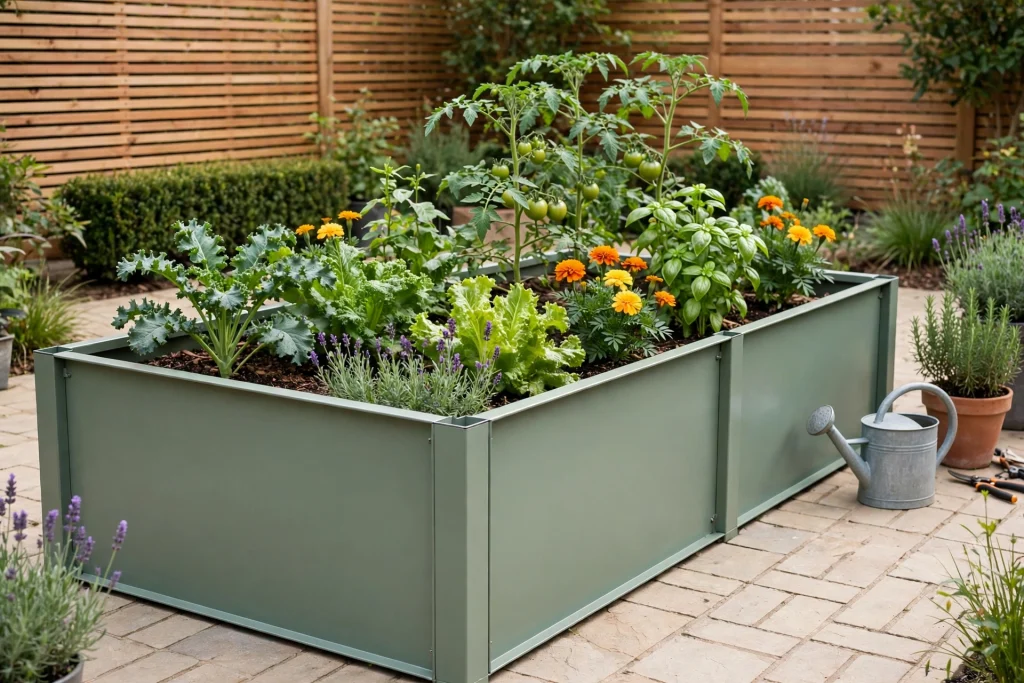
Best premium metal bed. Aluzinc steel in nine colours, six shapes from one kit.
Birdies is the Australian maker whose beds arrived in the United States through Epic Gardening, and the Original 6-in-1 is its flagship. The reviewed size is 15 inches tall, built from Aluzinc cold-rolled steel at 0.6 mm, about 22-gauge, with a food-safe non-toxic powder coating in nine colours and rubber or vinyl safety edging on the top rim. One kit makes six shapes, from 2 x 2 ft up to about 5.2 x 3 ft, with one documented configuration at 51 x 35.4 in. There is no bottom. The maker claims a 20-plus year lifespan, and one retailer guide states a lifetime limited warranty, which this guide attributes as a retailer-stated term because it was not confirmed on the maker’s own pages. Assembly takes about 15 to 20 minutes with the included bolts, and capacity is not published by the maker.
What sets Birdies apart is the finish. The powder coating and the colour range make it the best-looking metal bed in this guide, and the Aluzinc steel is the same family of coating that the University of Minnesota Extension calls virtually rust resistant for upwards of 50 years. Owner-feedback patterns praise the rigidity of the panels and the clean edges, and the recurring complaint is the price, which sits at the premium end of the metal range.
Best for: gardeners who want a metal bed that looks good in a front yard or a visible garden, and who value colour choice and a long service life. Not ideal for: the lowest budget, or a gardener who needs a single large 8 x 4 ft footprint, because the 6-in-1 tops out near 5 ft long.
Real-world limitation: capacity is unpublished, so soil ordering needs a geometric estimate from the chosen layout, and the premium price buys finish and longevity rather than size. Who should buy: a gardener who treats the bed as a permanent garden feature and wants the best-looking metal option with a 20-plus year maker claim behind it.
6. Frame It All Classic Sienna Composite Raised Garden Bed, 4 x 8 ft x 11 in
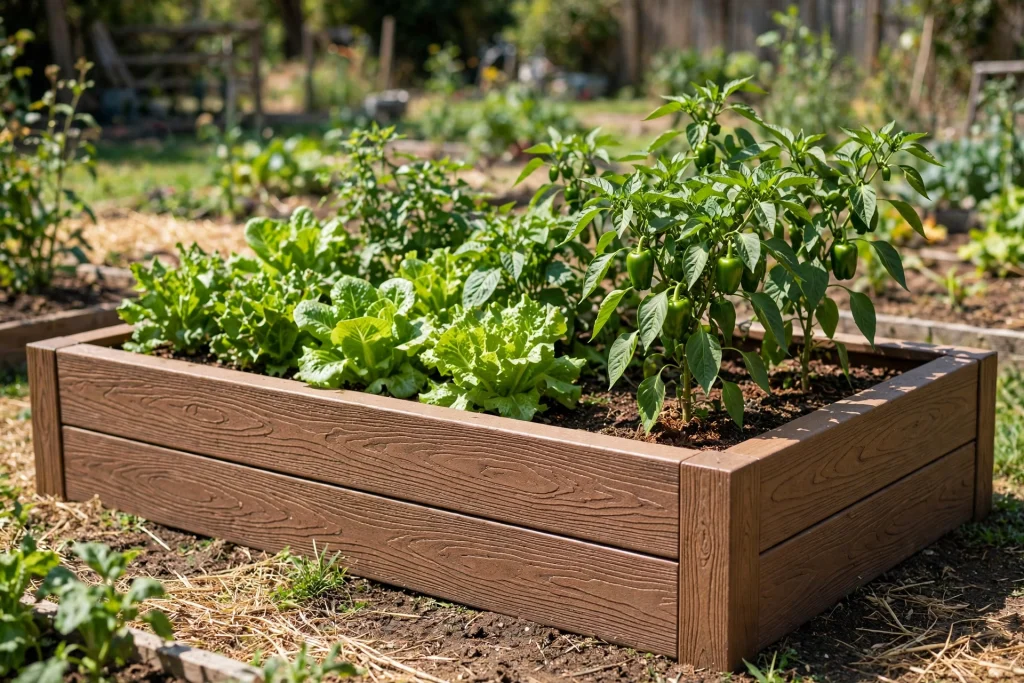
Best composite bed. The wood look with no rotting, no staining, and boards that stack to 22 inches.
Frame It All builds its Classic Sienna bed from composite boards that are 38 percent HDPE plastic and 62 percent certified sustainably sourced wood fibres, with a textured wood-grain finish. The reviewed size is 4 x 8 ft x 11 in, with 32 square feet of growing area and interior dimensions of 44 x 92 in. Capacity at 11 inches is about 29 cubic feet per the maker’s FAQ. There is no bottom. The boards stack in 5.5-inch increments, so the same kit reaches 11, 16.5, or 22 inches, and the boards can be cut to make a 2 x 8 ft bed. Assembly is tool-free: snap-lock brackets pivot 270 degrees for custom shapes, and a basic 4 x 8 ft bed goes together in about 10 to 20 minutes. The warranty is 5 years, or limited lifetime with registration.
The hollow boards trap air and insulate the soil, which helps in shoulder seasons, and they never need staining or sealing. The trade-offs are a higher upfront cost than wood and a hollow board that needs care with a shovel inside the bed. Owner-feedback patterns praise the fast assembly and the clean look, and the recurring note is that the boards feel light for their size, which is the nature of a hollow composite, not a defect.
What stands out: the stacking. No other bed in this guide goes from 11 to 22 inches with the same kit, which makes it the most flexible depth option here. What to watch: the price, and the need to go easy with a shovel against hollow boards.
Real-world limitation: at 11 inches a single-height bed is shallow for tomatoes on a hard surface, so budget for a second layer of boards if you grow deep-rooted crops on a patio. Who should buy: a gardener who wants the wood look, hates maintenance, and values the option to raise the bed later without buying a new kit.
7. Best Choice Products 48 x 24 x 32 in Mobile Elevated Wood Planter
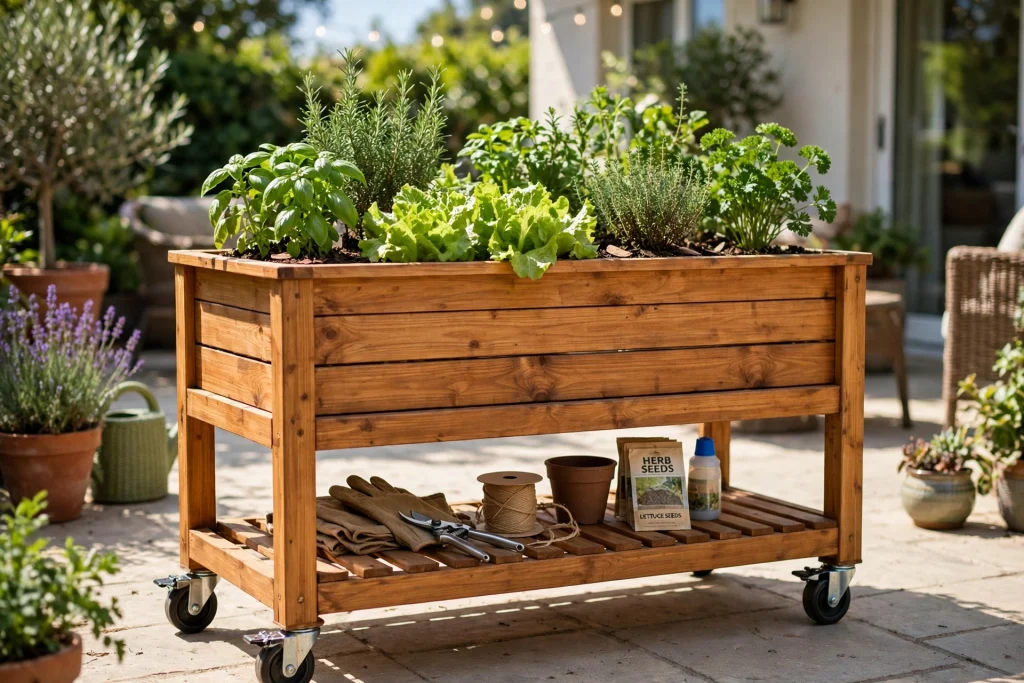
Best elevated bed for bad knees. Waist height on locking wheels, with a storage shelf underneath.
This is the only pick in this guide built for gardeners who cannot kneel or bend, and it is also the lowest rated, so the two facts belong together. The reviewed size is 48 x 24 x 32 in, with the Amazon specification table listing 48 x 23.25 x 32 in. The frame is fir wood with a protective bed liner that separates wood from soil. Soil depth is 8 inches, capacity is 135 quarts, and weight capacity is 100 lbs. It has a bottom, a lined one with four drainage holes, which makes it the pick with a bottom in this guide. Four locking wheels let it roll into the sun or out of a storm, and a built-in storage shelf sits 15 inches off the ground.
The honest problems are in the owner reports. Assembly instructions are described as vague, some owners report wood splitting within a month, and screws breaking during assembly. The warranty is not published by the maker. Those reports are why this bed rates 6.9, the lowest in the guide, even though its concept is the best in its class for accessibility.
Best for: gardeners with bad knees or a bad back, balcony gardeners, and anyone who needs to move the bed. Not ideal for: deep-rooted vegetables, because 8 inches of soil is thin for tomatoes, and for anyone who expects a bed to last a decade, because fir is not cedar and the splitting reports are real.
Real-world limitation: eight inches of soil suits herbs, lettuce, and strawberries, not tomatoes or peppers, and the fir frame needs more care than cedar or metal. Treat it as a comfortable herb and salad bed, not a main vegetable bed. Who should buy: a gardener who needs waist height and wheels above all else, and who grows shallow-rooted crops in it.
8. Keter Splendor 31.7 Gallon Self-Watering Raised Garden Bed
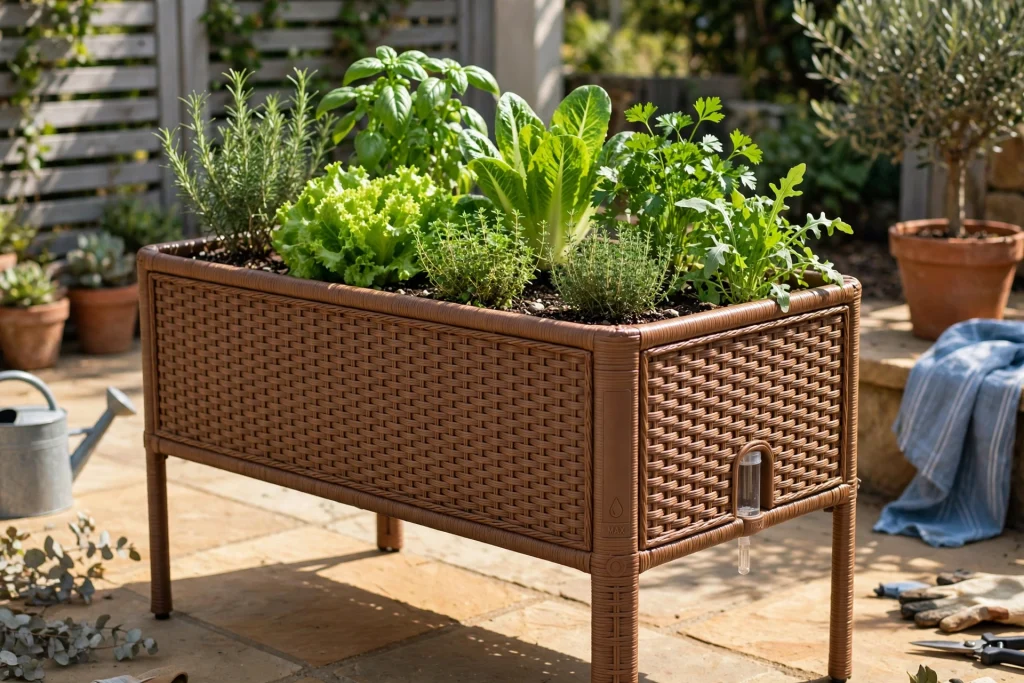
Best self-watering bed. An 8-gallon reservoir with a water gauge, so the soil stays moist between waterings.
The Keter Splendor is the pick for gardeners who travel or who forget to water. The reviewed size is 44.9 x 19.4 x 29.8 in, with the user manual listing 44.8 inches long, a difference this guide notes and sets aside in favour of the listing figure. The body is polypropylene resin with a rattan-look finish in brown or grey. Total capacity is 31.7 gallons, planting depth is 11.5 inches, and the reservoir holds about 8 gallons, with a water-level gauge and a drain plug. It has a bottom, a built-in reservoir bottom on snap-on legs, and the standing height of 29.8 inches puts the soil near waist level. Weight capacity is 264 lbs, and assembly is snap-on legs with no tools typically required. The warranty is not published by the maker.
The reservoir is the whole point. Raised beds dry out faster than in-ground gardens, and the taller the bed the more often it needs water, so a reservoir that feeds the soil from below removes the most common failure in a raised bed: a missed watering on a hot day. The trade is depth and size. At 11.5 inches of soil in a 44.9-inch bed, it suits herbs, lettuce, and peppers better than a full tomato plant, and it is a single-bed purchase rather than a modular system.
Quick verdict: the best bed in this guide for a gardener who is away from home or who wants watering to take care of itself. Best for: patios, balconies, herbs and salads, travellers. Skip if: you grow large tomatoes or you need a big growing area, because this is a compact bed.
Real-world limitation: the reservoir needs the drain plug managed in wet weather, and the 11.5-inch soil depth limits deep-rooted crops. Who should buy: a patio gardener who wants waist height and self-watering in one purchase, and who grows shallow to medium-rooted crops.
9. Smart Pots Big Bag Bed Original, 50 in round
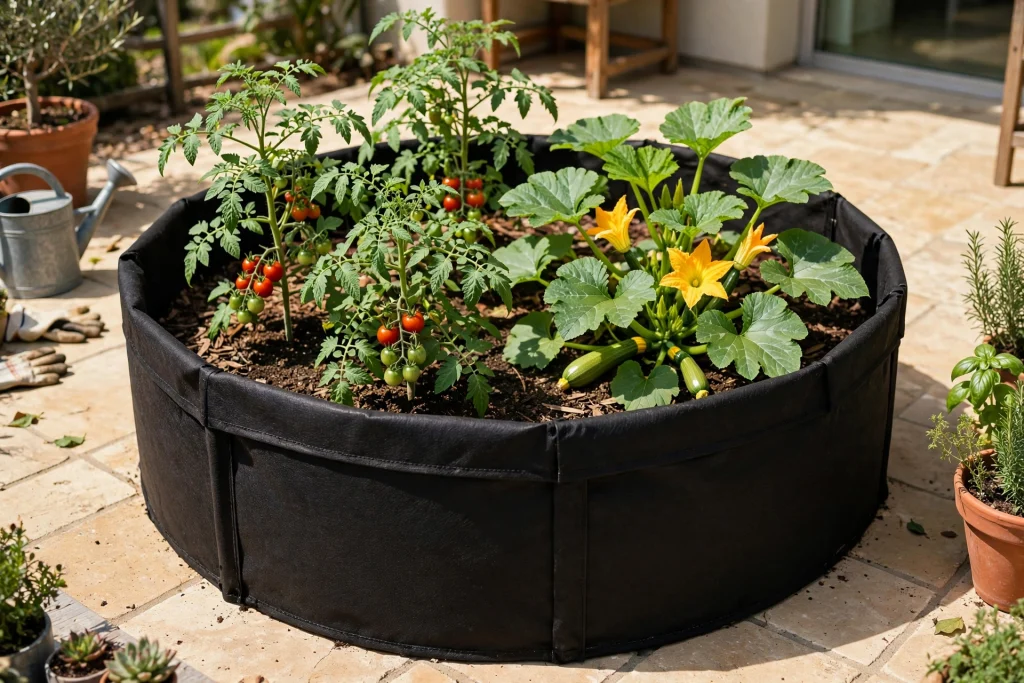
Best for a patio or balcony. No assembly at all, folds flat, and a fabric bottom that drains freely.
The Big Bag Bed is the simplest product in this guide, and simplicity is its whole case. The reviewed size is the Original, 50 inches in diameter by 12 inches tall, in Smart Pot’s patented geotextile aeration fabric, BPA-free, made in the USA since 1984. Growing area is 13.5 square feet and capacity is 100 gallons, or 13.7 cubic feet per the maker. One guide’s chart lists 13.37 cubic feet, a minor difference this guide notes and sets aside in favour of the maker’s figure. The bottom is fabric, so it drains through the fabric, and the maker suggests a plastic sheet or a tray underneath on a wooden deck. Assembly is none: unfold it and fill it. It folds flat for storage. Smaller sizes are the Junior at 36 inches and the Mini at 24 x 8 inches. The warranty is not published by the maker.
Fabric air prunes roots, which keeps plants from circling the pot, and it drains so freely that overwatering is hard. The cost is drying out: fabric beds dry faster than any other material in this guide, and they last only a few seasons rather than decades. Owner-feedback patterns praise the instant setup and the price, and the recurring complaint is watering frequency in summer.
Best for: renters, patios, balconies, and anyone who wants a bed today with no tools and no assembly. Not ideal for: a permanent bed, or a gardener who waters once a week, because fabric dries out the fastest.
Real-world limitation: expect to water daily in hot weather, and expect to replace the bed after a few seasons. Who should buy: a renter or a patio gardener who wants a large growing area for little money and no commitment.
10. Lifetime 60069 HDPE Raised Garden Bed Kit, 4 x 4 ft, 3-Pack
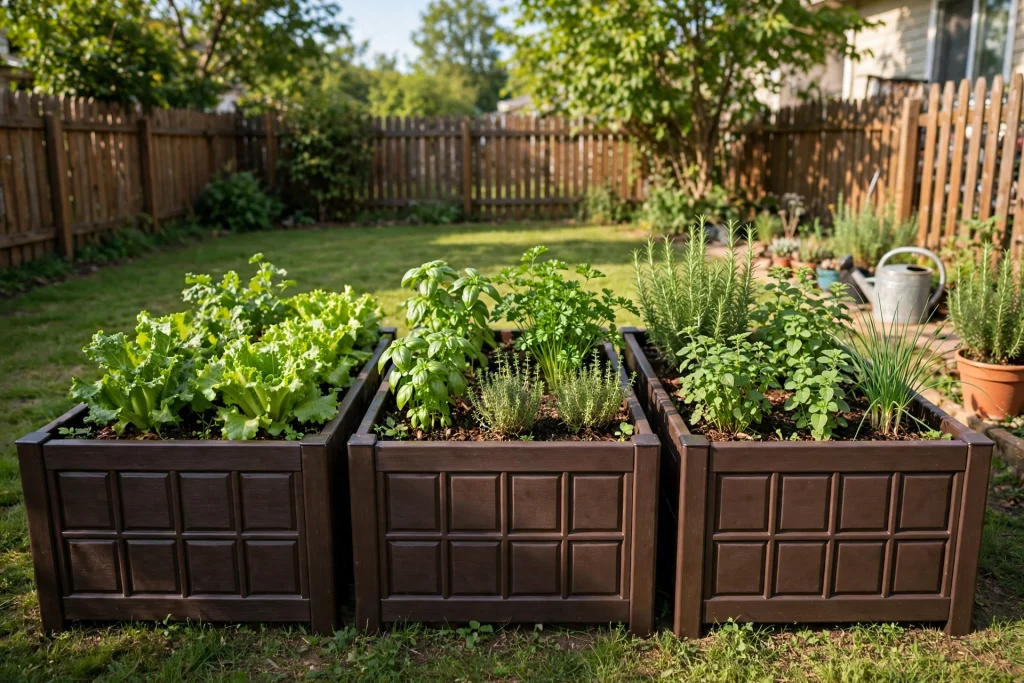
Best budget starter bed. Three beds in one box, tool-free assembly, and a 5-year warranty.
The Lifetime 60069 is the value pick in this guide, and the value comes from the pack: three 4 x 4 ft beds in one box. Each bed has exterior dimensions of 48.75 x 48.75 x 9 in and interior dimensions of 44.5 x 44.5 x 9 in, in UV-protected high-density polyethylene with a simulated wood design. The maker says the material will not rot, crack, or peel. Capacity is about 8 cubic feet of soil per bed per the maker, and the Amazon listing shows 30.93 cubic feet for the 3-pack listing, which is the three beds together and not a per-bed figure, so this guide prints the maker’s 8 cubic feet per bed. The beds stack: two beds stack to 18-inch walls for deep-rooted plants. There is no bottom. Assembly is interlocking panels with no tools, under one hour per the maker, and the warranty is a 5-year limited manufacturer warranty.
Nine inches is shallow, and that is the real limitation. A single Lifetime bed suits lettuce, herbs, and strawberries, and tomatoes need the stacked 18-inch height. But three beds for the price of one cedar kit is a genuine bargain, and the HDPE will not rot while a cheap wood bed would.
What stands out: three beds in one box, a 5-year warranty at a budget price, and stacking that turns a shallow bed into a deep one. What to watch: the 9-inch single height, which is too shallow for tomatoes unless stacked.
Real-world limitation: plan to stack two beds for tomatoes and peppers, which leaves one bed for shallow crops, and remember that a 4 x 4 ft bed is small for a family vegetable patch. Who should buy: a beginner who wants three beds for the price of one, or a gardener who wants a low-commitment way to try raised beds before investing in cedar or metal.
How We Chose
Every bed in this guide was judged on verified maker specifications and owner-feedback patterns reported in the guides and listings cited in the References. No hands-on testing was done. No bed was used in a garden for this guide, and no claim in this article rests on a test that did not happen. Scores are editorial assessments, built from the published specifications and the patterns in owner feedback, and the scoring system is printed below so you can check the maths.
The scoring system
| Factor | Weight | What it measures |
|---|---|---|
| Material and durability | 30% | The frame material, coating, rot and rust resistance, and the maker’s lifespan claims |
| Depth and root room | 25% | Usable soil depth against Extension guidance for the crops a bed should grow |
| Size range and modularity | 15% | The layouts, sizes, and configurations one kit offers |
| Ease of assembly | 15% | Tools needed, time, and the clarity of the instructions |
| Value | 15% | What the bed offers for its place in the market, given its material and life |
Weights sum to 100 percent. Each product scores out of 10 per factor, and the total is the weighted sum, rounded to one decimal place.
Per-product factor scores
| Product | Material 30% | Depth 25% | Size 15% | Assembly 15% | Value 15% | Total |
|---|---|---|---|---|---|---|
| Vego Garden 17 in 9-in-1 | 10 | 9 | 10 | 8 | 8 | 9.2 |
| Greenes Fence Premium Cedar 4 x 8 ft | 8 | 7 | 8 | 10 | 8 | 8.1 |
| Land Guard Galvanized 8 x 4 ft | 8 | 8 | 8 | 8 | 9 | 8.2 |
| Gardener’s Supply Deep Root Cedar 2 x 8 ft | 9 | 9 | 8 | 8 | 7 | 8.4 |
| Birdies Original 6-in-1 | 10 | 9 | 9 | 9 | 7 | 9.0 |
| Frame It All Classic Sienna 4 x 8 ft | 9 | 7 | 9 | 10 | 7 | 8.4 |
| Best Choice Products Mobile Elevated | 6 | 6 | 7 | 8 | 9 | 6.9 |
| Keter Splendor 31.7 Gallon | 8 | 7 | 6 | 9 | 7 | 7.5 |
| Smart Pots Big Bag Bed 50 in | 7 | 8 | 7 | 10 | 10 | 8.2 |
| Lifetime 60069 HDPE 4 x 4 ft, 3-Pack | 8 | 6 | 7 | 10 | 10 | 8.0 |
Two scores deserve a note. The Best Choice planter scores 6 on material because fir is not a rot-resistant wood and owner reports describe splitting within a month, and it scores 6 on depth because 8 inches of soil is thin for vegetables. The Keter Splendor scores 6 on size because it is a single compact bed with no modular range, and it scores 7 on value because the reservoir is useful but the bed is small for its class. Every other score follows the same reading of the verified specifications and the owner-feedback patterns behind each product section.
Final Choice
For most vegetable gardeners, the Vego Garden 17-inch 9-in-1 is the bed to buy first. It is the deepest metal bed in this guide at a price that is not premium, it reconfigures into nine layouts, and its coated steel carries a maker claim of 20-plus years. If you want the best-looking metal bed and you are willing to pay for it, the Birdies Original 6-in-1 is the premium choice, with the same 20-plus year maker claim and a finish no other metal bed here matches.
If you want wood, buy the Gardener’s Supply Deep Root for depth, or the Greenes Fence Premium Cedar for the classic 4 x 8 ft shape and the simplest assembly. If you want the wood look with no maintenance, buy the Frame It All Classic Sienna and stack it to 22 inches for tomatoes. If your knees or your back decide the purchase, buy the Best Choice Products elevated planter for herbs and salads, and accept its limits honestly. If you rent, or you want a bed on a patio today, buy the Smart Pots Big Bag Bed. And if you are starting out and want three beds for the price of one, buy the Lifetime 60069 three-pack and stack two of them for your tomatoes.
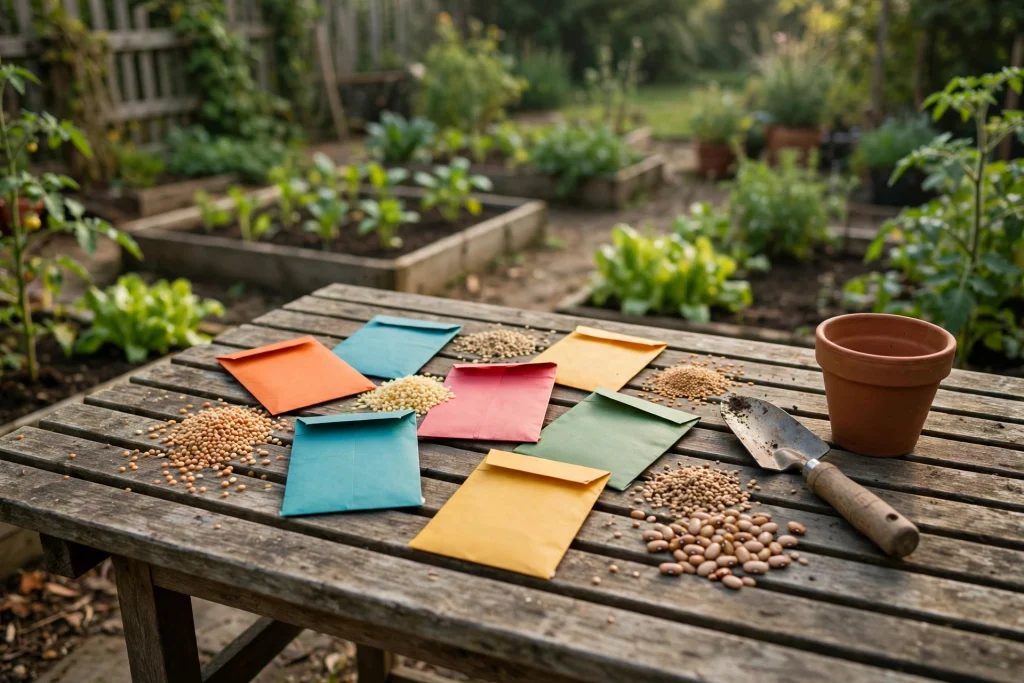
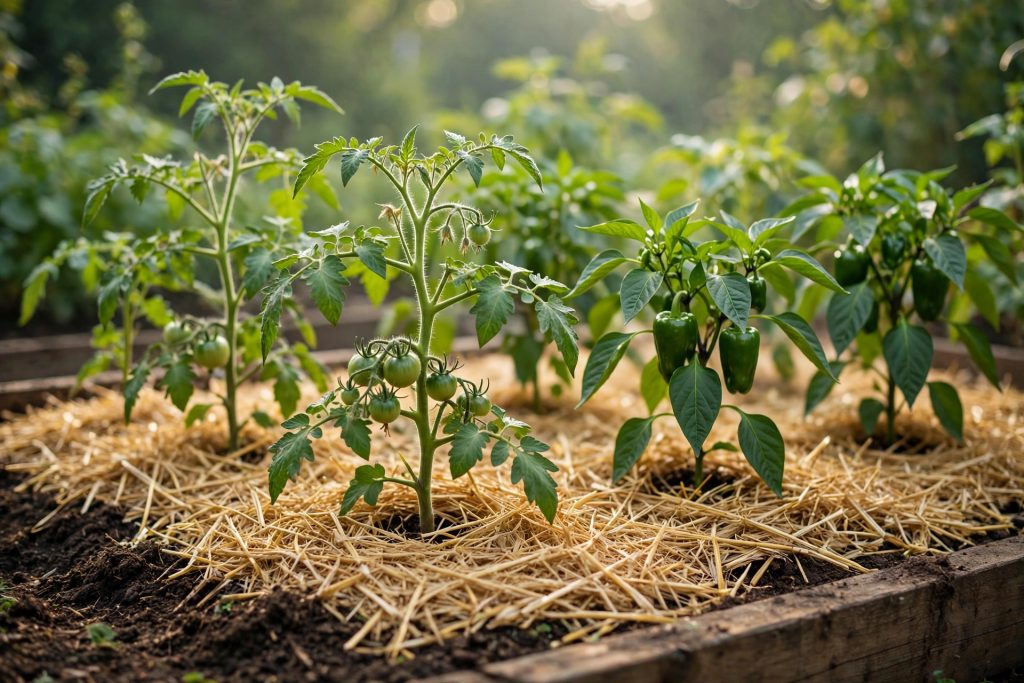
Whichever bed you choose, spend as much care on the fill as on the frame. A good bed filled with poor soil grows poor vegetables, and a cheap bed filled with a proper mix of topsoil and compost will feed a family all summer. Buy the deepest bed your space allows, fill it with the mix the Extension services recommend, and mulch the surface once the plants are up. That is the whole secret, and it works in every bed in this guide.
References
- University of Maryland Extension, “Growing Vegetables in Raised Beds”, updated 26 March 2026. Bed dimensions, materials, treated wood, fill ratios, and hard-surface soil depths.
- University of Maryland Extension, “Building Raised Beds for Vegetable Gardening”, updated 7 November 2023. The standard 4 x 8 x 1 ft bed, enclosure materials, and 1:2 or 1:1 compost-to-soil fill.
- Oregon State University Extension, “Pressure-treated wood for raised bed construction in Oregon”, EM 9879, published 17 April 2026, updated 29 July 2026. Copper-azale leaching study over four growing seasons, with no copper increase found in any of the vegetables and herbs tested.
- University of Minnesota Extension, “Raised bed gardens”. Soil mix, galvanized steel longevity and zinc and lead notes, wheelchair height, barriers, and watering.
- Clemson Cooperative Extension, HGIC 1257, “Raised Beds”, originally published March 1999. Bed width of 3 to 4 ft, compost at 10 to 20 percent of fill, 6-plus hours of sun, and cedar, cypress, and redwood as suitable woods.
- NC State Extension, Extension Gardener Handbook, Chapter 16, “Vegetable Gardening”. Bed height of 8 to 12 in, the soil volume formula, and treated lumber and pallet cautions.
Frequently Asked Questions
How deep should a raised garden bed be?
On open ground, 10 to 12 inches of soil suits most vegetables because roots continue into the soil below the frame. On a patio or concrete, use at least 8 inches for leafy greens, beans, and cucumbers, and 12 to 24 inches for peppers, tomatoes, and squash, per the University of Maryland Extension. North Carolina State Extension gives 8 to 12 inches as the general bed height.
Is cedar safe for growing vegetables in a raised bed?
Yes. Cedar is naturally rot resistant with no chemical treatment, and the University of Maryland Extension lists cedar among the decay-resistant woods suitable for food beds. It weathers to grey over time, and that is normal, not failure. Cedar costs more than pine or fir, but it lasts much longer.
Is pressure-treated lumber safe for a vegetable bed?
Modern copper-based treatments, copper azole, MCA, and ACQ, are considered low risk. Oregon State University Extension ran a study over four growing seasons and found copper rose only within 1 inch of the boards, with no increase found in any of the vegetables and herbs tested. Avoid old CCA-treated lumber and railroad ties, and line the sides with heavy plastic if you want extra caution, per the University of Maryland Extension.
Does a raised bed need a bottom?
Usually no. The University of Minnesota Extension says no barrier is needed in most cases, and a barrier can stunt root growth. Add hardware cloth at the bottom only where burrowing rodents tunnel up. On a patio, use a water-permeable liner along the bottom so soil stays in while water drains out, never non-permeable plastic.
How much soil does a 4 x 8 ft raised bed need?
Thirty-two cubic feet at 12 inches deep, and about 45 cubic feet at 17 inches deep, per the North Carolina State Extension volume formula: length times width times depth in feet, divided by 27 for cubic yards. Order 10 to 15 percent extra because the mix settles after the first few waterings.
What should I fill a raised bed with?
About half to two thirds topsoil and a half to a third plant-based compost, per the University of Minnesota Extension, or compost and topsoil in a 1:2 or 1:1 ratio, per the University of Maryland Extension. Do not fill with garden soil alone, straight compost alone, or potting soil, which dries out too fast in beds.

Thesis Link : https://saulibrary.edu.bd/daatj/public/uploads/BAU200601_19-Pp_5.pdf
- 10 Best Raised Garden Beds - November 28, 2026
- 10 Best Japanese Beetle Traps - November 27, 2026
- 10 Best Grow Bags for Vegetables - November 27, 2026