


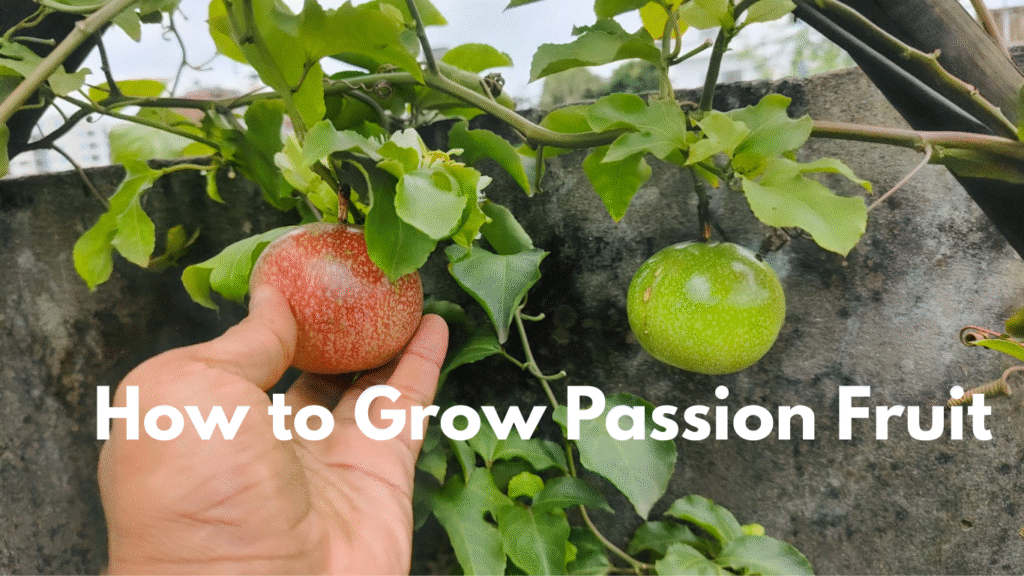

How to Grow Passion Fruit: Easy Guide for Beginners
Passion fruit might look exotic when you see it in the market, but believe me, it’s not that hard to grow if you’ve got the right spot. The vine is vigorous, the flowers are beautiful, and the fruit tastes like a mix of sweet and tangy sunshine. If you’ve ever thought, “Can I really grow passion fruit at home?” the answer is yes. Let’s break it down in a way that feels doable. Learn how to grow passion fruit step by step, whether from seed or cutting. Discover the best soil, sunlight, watering, and care tips to enjoy fresh, sweet passion fruit right from your garden.
Why Passion Fruit Is Worth Growing
At first glance, passion fruit doesn’t look like much. The skin turns wrinkly when it’s ripe, and many people might walk past it without knowing what’s inside. But cut it open, and you’ll find golden pulp with a fragrance that can fill the whole room. It’s sweet, it’s tangy, and it leaves a taste you don’t forget.
More Than Just a Fruit
What makes passion fruit special isn’t only the flavor. It’s actually a nutrient powerhouse. A single serving gives you plenty of vitamin C—good for the immune system and dietary fiber, which helps digestion. It’s also rich in antioxidants, which protect the body from damage caused by stress and pollution.
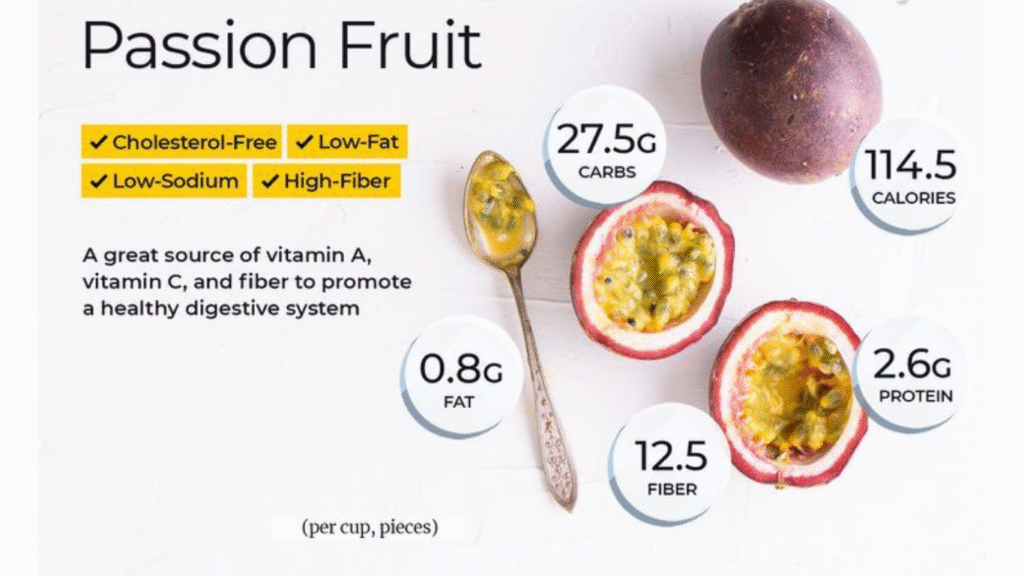
Researchers have been paying attention to this fruit more seriously in recent years. A 2024 review in Frontiers in Plant Science highlighted that passion fruit ranks among the highest tropical fruits in terms of antioxidant content. That’s one reason health conscious consumers are willing to pay extra for it, whether in fresh form or as juice.
The Market Is Changing
Passion fruit is no longer just something you find in home gardens. According to the FAO 2024 report, production is growing quickly in Africa and South Asia. Small farmers in Kenya, Uganda, India, and Bangladesh are seeing better income from passion fruit than from traditional crops like rice or maize.
In Kenya, for example, exports increased by over 15% between 2023 and 2024 (KALRO data). The growth isn’t just because of local demand, juice companies, wellness brands, and even supplement makers are buying more passion fruit. It’s becoming part of a global shift toward foods that are both tasty and healthy.
A Farmer’s Story From the Field
Not long ago, I spoke with a farmer in Gazipur, Bangladesh. His name is Rahman. He had been growing guava for years, but the market was crowded and profits were low. Out of curiosity, he planted a few passion fruit vines along the edge of his land.
When the vines fruited, he wasn’t sure who would buy them. To his surprise, a local supermarket in Dhaka offered him a price much higher than guava. By the end of the first season, his income nearly doubled. “I didn’t expect this,” Rahman admitted. “Now, I’m planting more vines, and even my neighbors are asking for seedlings.”
Stories like his show how passion fruit is slowly changing the lives of small farmers. It doesn’t require huge land, and the returns can be impressive if you have the right market.
Why It’s Worth Considering
- It’s healthy and nutrient rich, so demand is strong.
- The market is expanding beyond fresh fruit to juices, supplements, and wellness products.
- Small landholders can grow it and still make good profits.
- Real farmers are already proving it works.
Passion fruit may not look glamorous at first, but it has real potential both for health and for income. Sometimes the crops that seem “small” end up making the biggest difference.
References
- Kenya Agricultural and Livestock Research Organization (2024). Passion Fruit Production and Export Data.
- FAO (2024). Global Trends in Horticultural Crops. Food and Agriculture Organization.
- Frontiers in Plant Science (2024). Nutritional and Antioxidant Properties of Passion Fruit.
The Right Climate and Soil for Passion Fruit
Passion fruit likes warmth. It does best when the temperature stays between 20–30°C (68–86°F). If the nights get cooler, the vines can handle it, but once frost comes, the plants suffer badly. In colder places, people often grow it inside greenhouses or under simple plastic covers to keep it safe.
A 2024 report in the Journal of Horticultural Science mentioned that farmers in parts of Spain and Italy are now using protected tunnels to grow passion fruit almost year round because the market demand is so strong.
Soil That Works Best
The roots don’t enjoy sitting in wet, sticky ground. Passion fruit grows best in sandy loam or light loam soils, with a pH between 5.5 and 7.5. If you try planting it in heavy clay, the roots may rot quickly, especially in the rainy season.
Researchers at the Indian Institute of Horticultural Research (2024) suggested raising beds about 30–45 cm high and mixing compost with sand or leaf mulch to improve drainage. They found that plants prepared this way flowered earlier and produced more fruit compared to flat planting.
A Simple Real Life Story
My uncle in Sylhet, Bangladesh, tried growing passion fruit a few years ago. He planted vines directly in the backyard soil, which was heavy and held too much water. The plants grew leaves but gave almost no fruit. The next year, he changed his approach. He dug the soil, added sand and compost, and raised the beds a little higher. That small change made a big difference the vines were covered with flowers and the family had so much fruit that neighbors came asking for seedlings. It showed us that sometimes it’s not about planting more, but about planting smarter.
Key Points to Remember
- Warm climate, no frost.
- Soil should be loamy and well drained.
- Ideal pH is 5.5–7.5.
- Raised beds + compost = healthier plants and more fruit.
References
- FAO (2024). Guidelines for Tropical Fruit Production.
- Journal of Horticultural Science (2024). Protected Passion Fruit Cultivation in Southern Europe.
- Indian Institute of Horticultural Research (2024). Soil Preparation Methods for Passion Fruit.
Planting Passion Fruit: Seeds, Cuttings, or Nursery Vines
Starting passion fruit is easier than many think, but the method you choose makes a difference in how soon you’ll get fruit.
From Seeds
The most basic way is from seeds. Take them out of a ripe fruit, rinse off the pulp, and let them dry for a day. Plant them in small pots or trays. Usually, little green shoots appear in 2–3 weeks, depending on temperature and moisture.
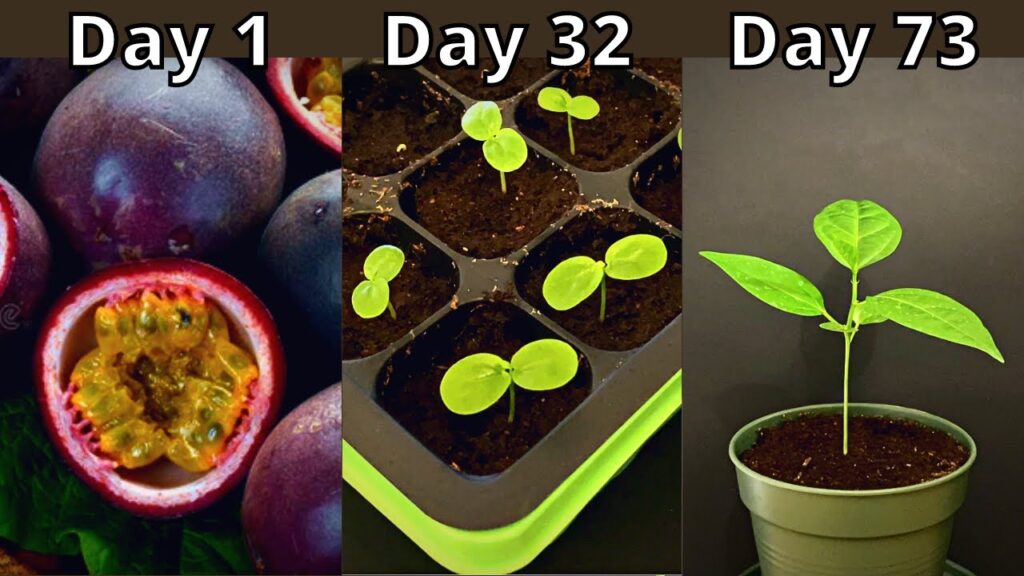
I once tried this in my backyard. Out of ten seeds, only a few sprouted. Even so, it was exciting to watch them grow. Seed grown plants take longer to produce fruit, sometimes 2–3 years, but they are cheap and easy to start.
From Cuttings
Cuttings are faster. Snip a healthy vine with 3–4 nodes, dip the cut end in rooting powder or even mud if you don’t have one, and plant it in moist soil. Roots form quicker than seeds, and these plants are clones of the parent, so the fruit quality is predictable.
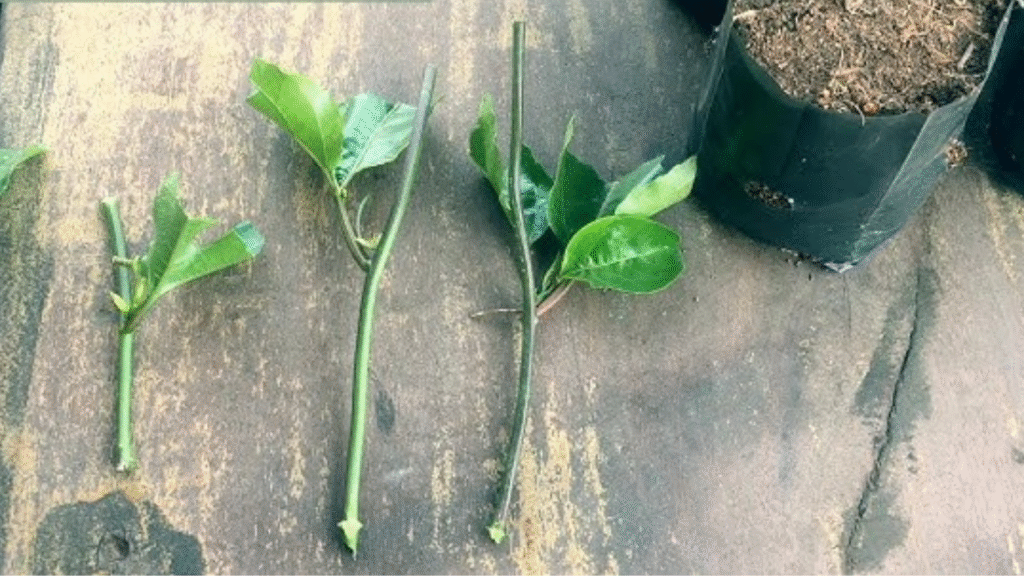
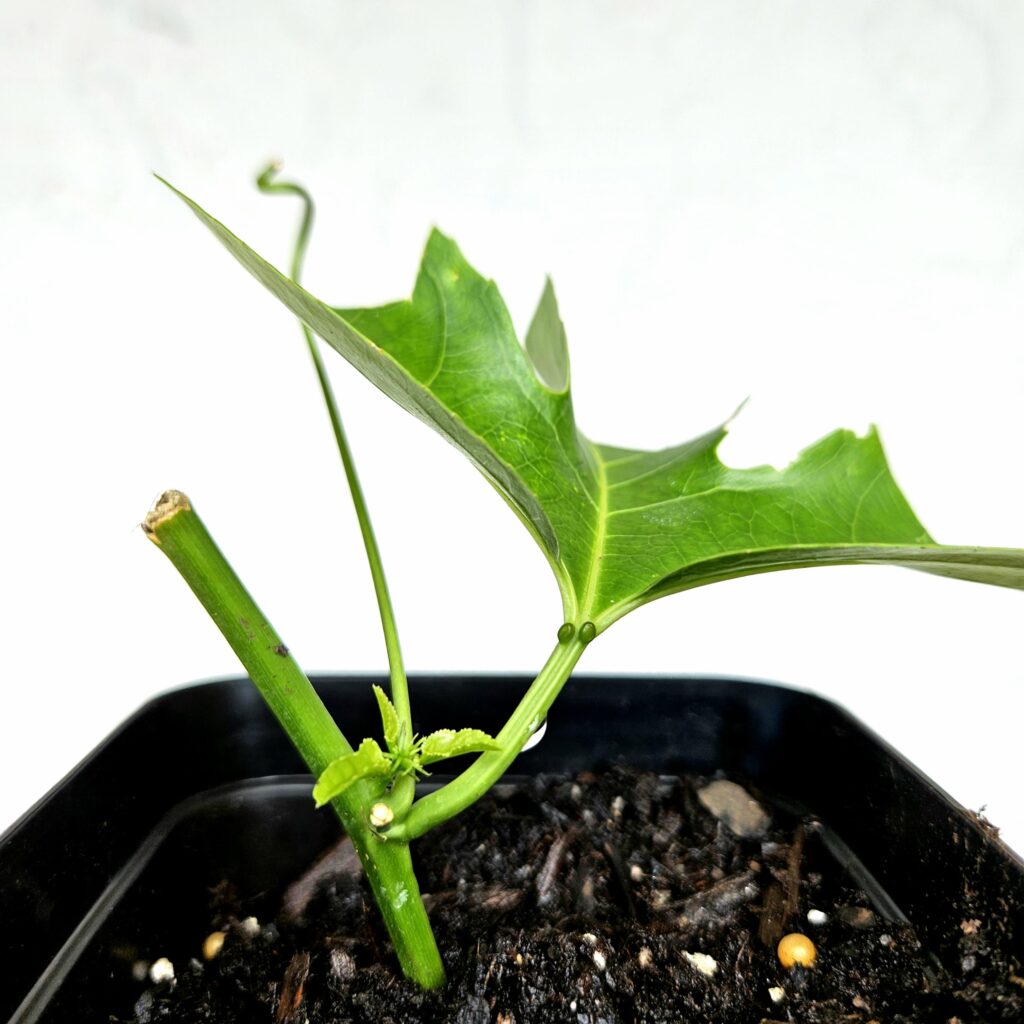
A neighbor in Sylhet used cuttings and had flowering vines in less than a year. He told me, “I saved time and knew exactly what I was getting.”
Grafted or Nursery Bought Plants
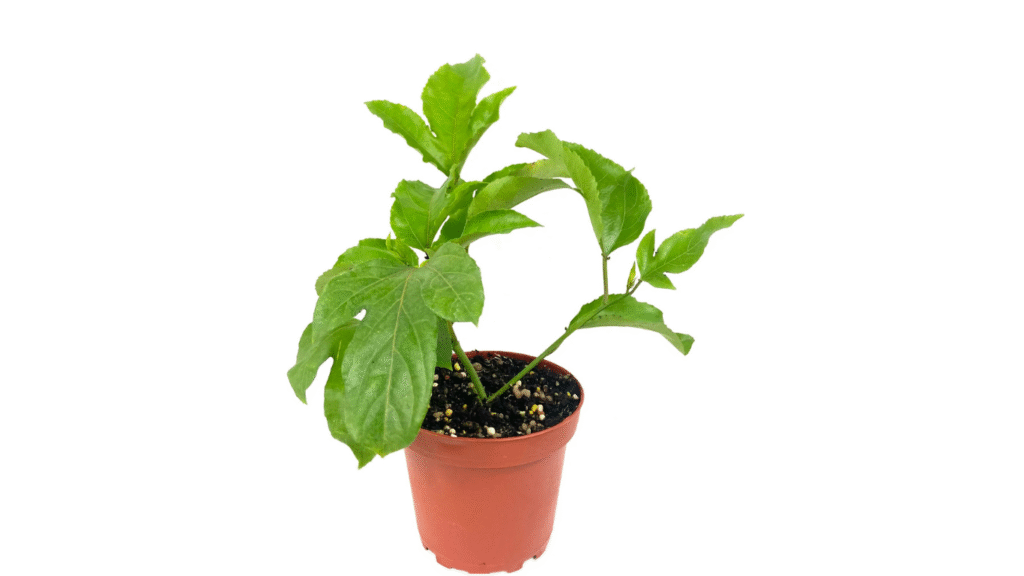
If you want fruit quickly and want to avoid disease, go for grafted or certified nursery plants. These are often resistant to common problems like Fusarium wilt and start bearing fruit in 12–18 months, much faster than seeds. Farmers in Brazil and Bangladesh prefer this method for commercial growing because it’s reliable and reduces losses.
Tips:
- Seeds → cheap, slow, fun for beginners.
- Cuttings → faster, reliable, predictable fruit.
- Grafted/nursery plants → best for serious growers, early harvest, disease resistant.
References:
- FAO (2024). Passion Fruit Production Guidelines.
- University of Queensland (2023). Passion Fruit Propagation and Growth.
- Scientia Horticulturae (2022). Comparison of Grafted and Seed Grown Passion Fruit.
Giving Passion Fruit a Good Home
If you’ve ever seen a passion fruit vine in full growth, you’ll know it’s not the kind of plant that likes to stay small and neat. It’s a climber that wants to stretch, spread, and take over whatever space you give it. That’s why the first thing to think about when planting passion fruit is not the soil or even the watering — it’s giving it a proper home.
A Vine That Loves to Climb
Passion fruit vines can easily run 10–15 meters long. If you just leave them on the ground, they get tangled, pests settle in, and diseases spread quickly. A trellis, pergola, or even a strong fence works much better.
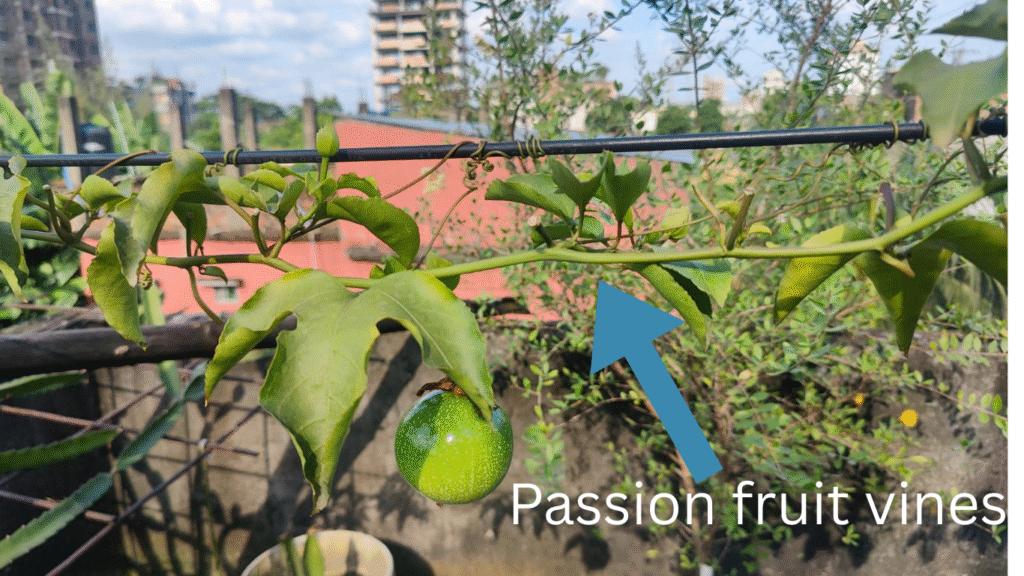
I remember visiting a small farmer in northern Bangladesh who planted his first vines without any support. In the first rainy season, the vines collapsed into a messy heap. The flowers were there, but most of them rotted before fruiting. The next year, he invested in a simple wire trellis between bamboo poles. The difference? He harvested nearly three times more fruit. The structure wasn’t fancy, but it gave the vine what it needed — air, light, and order.
Water: Finding the Balance
Passion fruit doesn’t like extremes. If the soil dries out too much, the flowers drop. If it stays soggy, the roots rot. The balance is somewhere in the middle.
- Farmers often go for drip irrigation because it keeps the soil moist without wasting water.
- Home gardeners can usually manage with a deep soak twice a week during the dry season.
One research note from the University of Queensland found that vines given regular water during the flowering period held on to more fruits compared to those watered irregularly. In plain words: steady watering = better harvest.
Feeding Without Overfeeding
Fertilizer is a bit like cooking. Too much of one spice, and the dish is ruined. For passion fruit, that spice is nitrogen. Overdo it, and you’ll have a jungle of green leaves but almost no fruit.
What works better:
- A good base of compost or manure for soil health.
- Extra potassium, wood ash, banana peel compost, or a K-rich fertilizer to boost flowering and fruiting.
- A little phosphorus early on for root strength.
In Kenya, some growers have started mixing poultry manure with wood ash. Reports show this not only increased the number of fruits but also improved sweetness. It’s a small change, but it makes a big difference.
Summary Table for Fertilizing Passion Fruit Plants at Different Growth Stages:
| Growth Stage | Fertilizer Type | Nutrient Focus | Frequency | Notes |
|---|---|---|---|---|
| Seedling (0–3 months) | Diluted liquid fertilizer / compost tea | Nitrogen (N) for leaf growth | Every 2–3 weeks | Keep doses light to avoid burning young roots. |
| Vegetative Growth (3–8 months) | Balanced NPK (e.g., 10:10:10) + organic compost | Nitrogen & Potassium | Every 4–6 weeks | Mulch with compost or manure to enrich soil. |
| Flowering Stage (8–12 months) | Phosphorus rich fertilizer (e.g., 10:20:10) | Phosphorus (P) for flowers | Every 4 weeks | Avoid excess nitrogen; it delays flowering. |
| Fruit Development (1–3 years & onward) | Potassium rich fertilizer (e.g., 5:10:20) + trace minerals (Mg, Zn, B) | Potassium (K) for fruit size & sweetness | Every 4–6 weeks during fruiting season | Add Epsom salt (magnesium sulfate) once every 2–3 months for better fruit quality. |
| Mature Plant (after 2–3 years) | Well decomposed manure + NPK (low N, high K | Potassium & Micronutrients | Twice yearly + during fruiting | Split feeding: half before rainy season, half mid season. |
Extra Tips:
- Always water the plant before and after applying fertilizer.
- Use mulch (dry grass, straw, leaves) to conserve soil moisture and slowly release nutrients.
- Avoid over fertilizing — excess nitrogen makes vines grow fast but reduces fruiting.
Why It’s Worth the Effort
A passion fruit vine, if cared for, can keep producing for 5–7 years, though the best harvests usually come in the first three. Giving it strong support, balanced water, and the right diet means it will pay you back season after season.
Think of it like this: the vine is a guest in your garden or farm. If you give it space, food, and care, it will return the favor with baskets of fruit. Ignore it, and it will grow wild but give you little in return.
References
- Morton, J. F. (1987). Passionfruit: Fruits of Warm Climates. Miami, FL.
- University of Queensland. (2023). Passionfruit growing guide.
- East African Farmer. (2022). How trellis systems improved passion fruit yields in Uganda.
- Kenya Agricultural & Livestock Research Organization (KALRO). (2021). Nutrient management for fruit crops in East Africa.
Pollination and Fruit Set
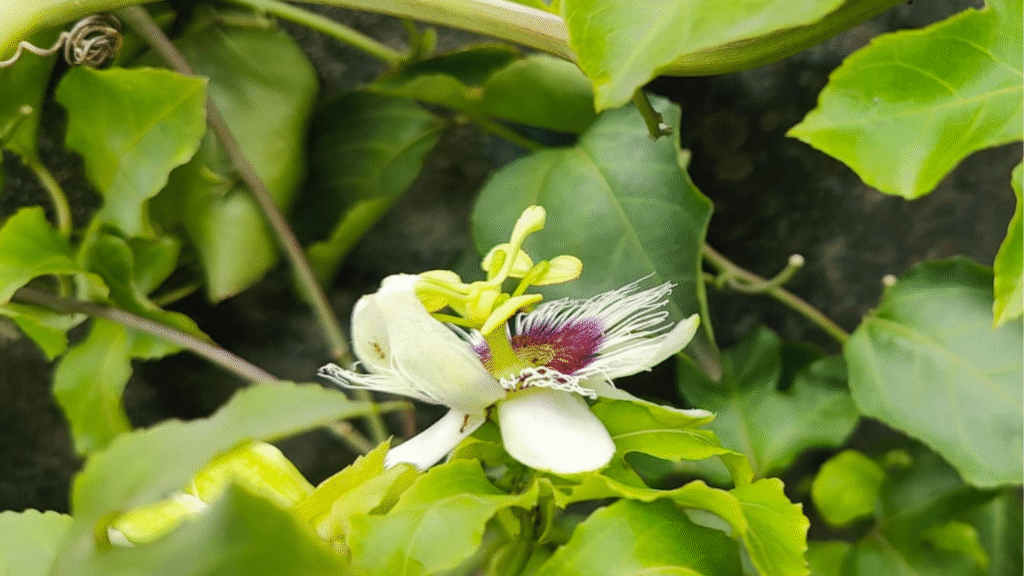
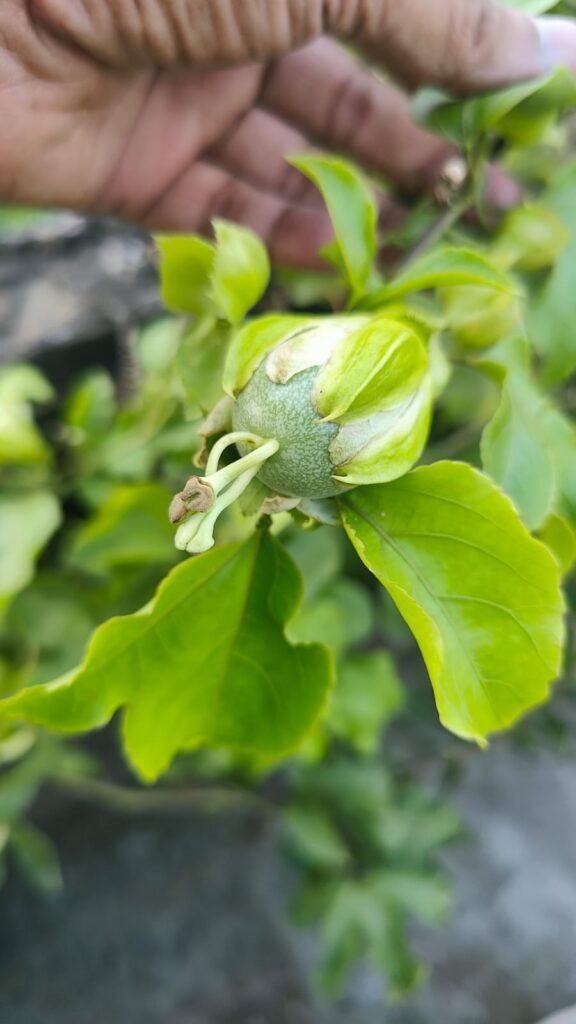
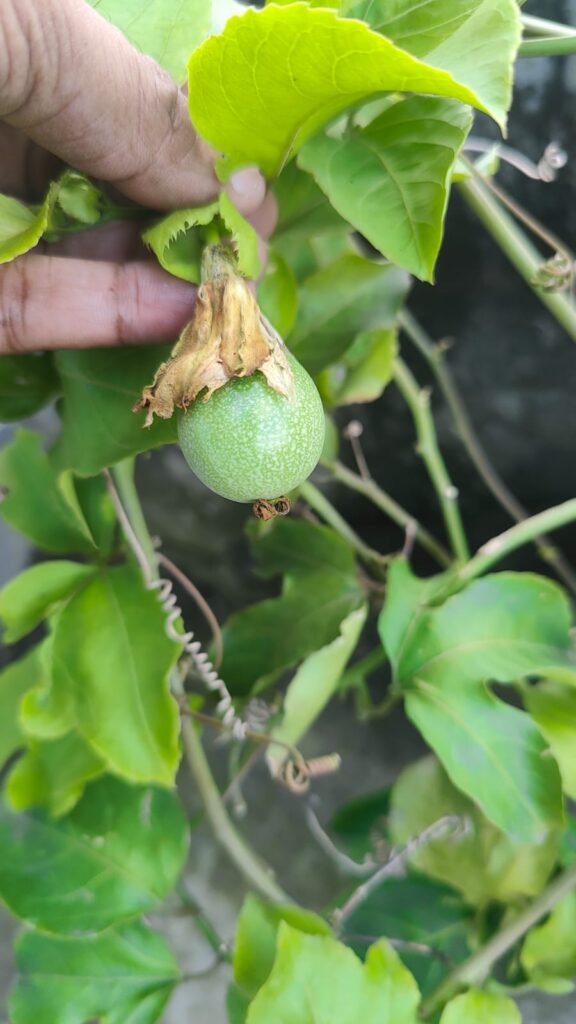
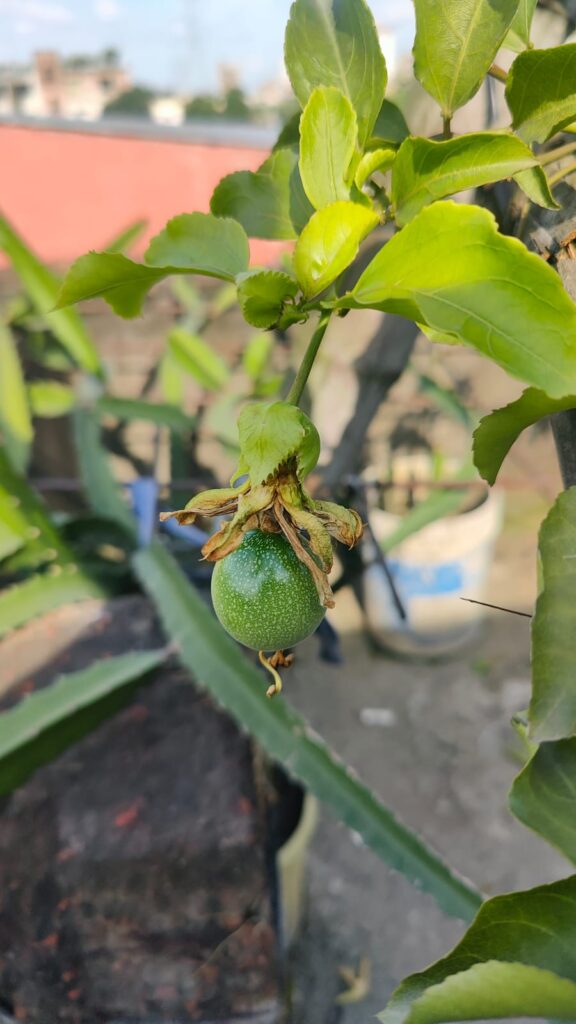
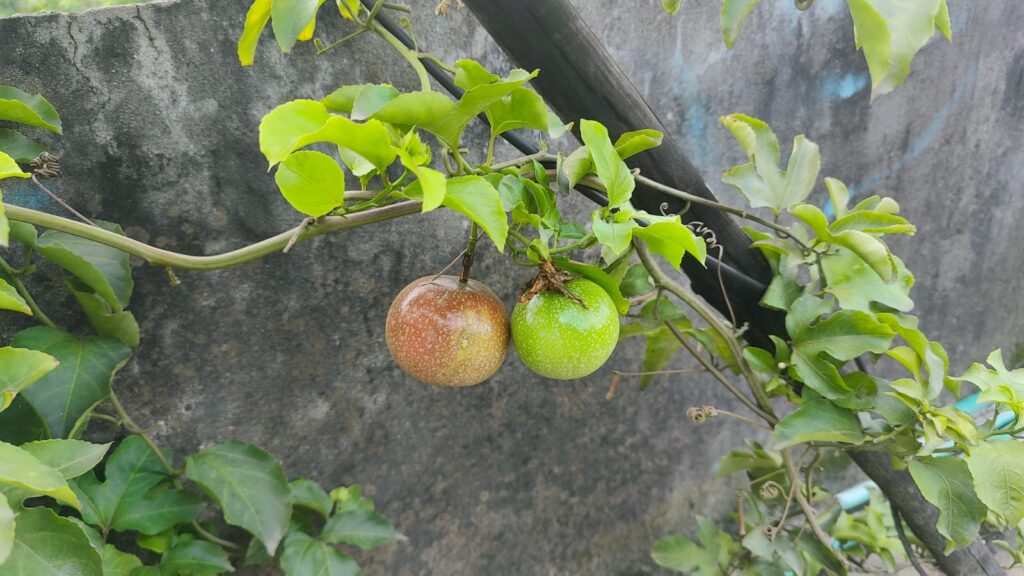
One thing many new growers don’t expect is this: a passion fruit vine can be covered in flowers but still fail to give much fruit. The reason is simple without proper pollination, those flowers just dry up and fall.
Different Vines, Different Needs
Not all passion fruits behave the same way when it comes to pollination.
- Purple passion fruit (Passiflora edulis) can often pollinate itself, but it still needs insects to move pollen around. Carpenter bees are the main helpers here.
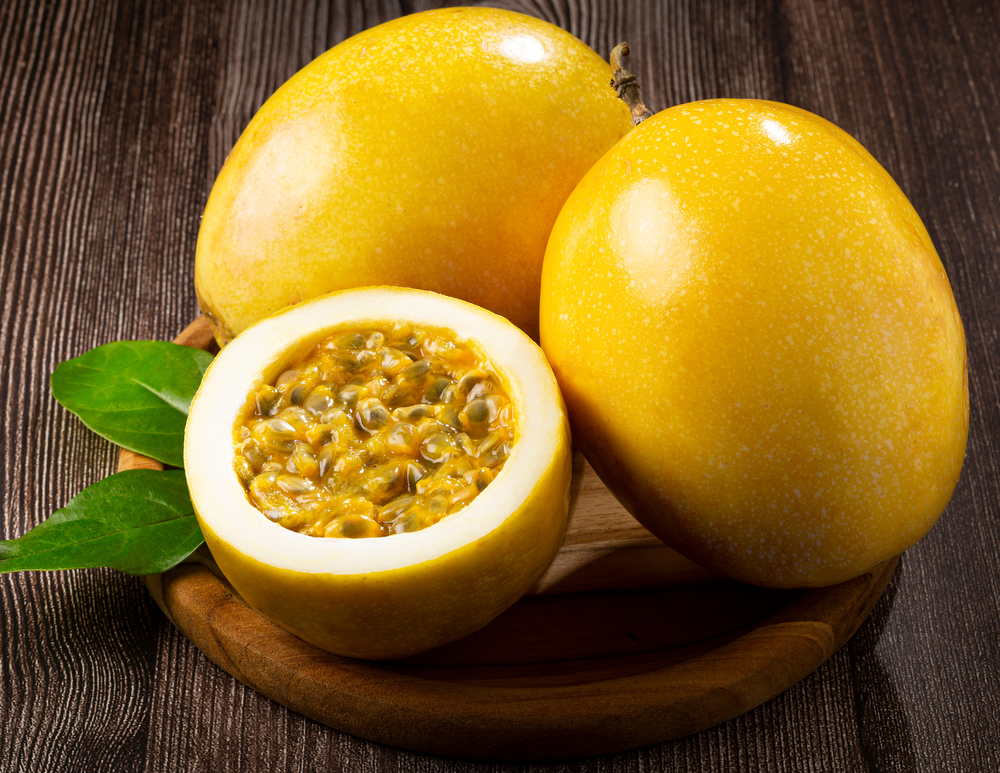
- Yellow passion fruit (Passiflora flavicarpa) is trickier. Most plants can’t pollinate themselves, so they need pollen from another vine. This is why planting just one yellow vine usually leads to disappointment.
I’ve met gardeners who thought something was wrong with their soil or water, but the truth was simple: they just needed another plant nearby.
Why Pollinators Are Critical
In places where carpenter bees are active, passion fruit usually does fine. A study in Brazil showed that farms with strong carpenter bee populations got almost twice as many fruits as farms where bees were missing. That’s how much of a difference pollinators make.
But in towns, or on farms where pesticides are heavily used, these natural pollinators are often scarce. The vines still bloom, but fruit set is poor.
Hand Pollination as a Backup
When bees are missing, growers often step in. Hand pollination isn’t complicated:
- Take a flower in the morning when it’s freshly opened.
- Use a small brush, or even your fingertip.
- Pick up pollen from the yellow anthers and gently dab it onto the sticky stigma in the center.
It doesn’t take long, and even doing this for a portion of flowers can make a big difference. Some commercial farmers in Kenya and India rely on it daily during the flowering season.
A Farmer’s Example
I remember standing with a farmer in western Kenya who showed me two sections of his vineyard. One part was left to the bees, the other he and his family hand pollinated every morning. The contrast was clear — the hand pollinated vines carried almost double the fruit load. He told me with a smile, “If the bees don’t come, I’ll just become the bee.”
References
- Morton, J. F. (1987). Passionfruit: Fruits of Warm Climates. Miami, FL.
- University of São Paulo. (2022). Pollination ecology of passion fruit (Passiflora edulis and P. flavicarpa).
- Queensland Department of Agriculture and Fisheries. (2023). Passionfruit production and management.
- Kenya Agricultural & Livestock Research Organization (KALRO). (2021). Improving pollination efficiency in fruit crops.
Common Problems and How to Fix Them
Growing passion fruit is exciting, but sometimes the vines give you more stress than fruit. The problems come in different shapes, diseases, pests, or just poor harvests. Let’s talk about a few that farmers often face and how people usually deal with them.
Fusarium Wilt & Root Rot
This is the one that really scares most growers. The vine looks fine for weeks, then all of a sudden, it starts yellowing and wilting as if someone pulled the plug on it. What’s happening underground is fungus attacking the roots. If the soil stays soggy, it just gets worse.
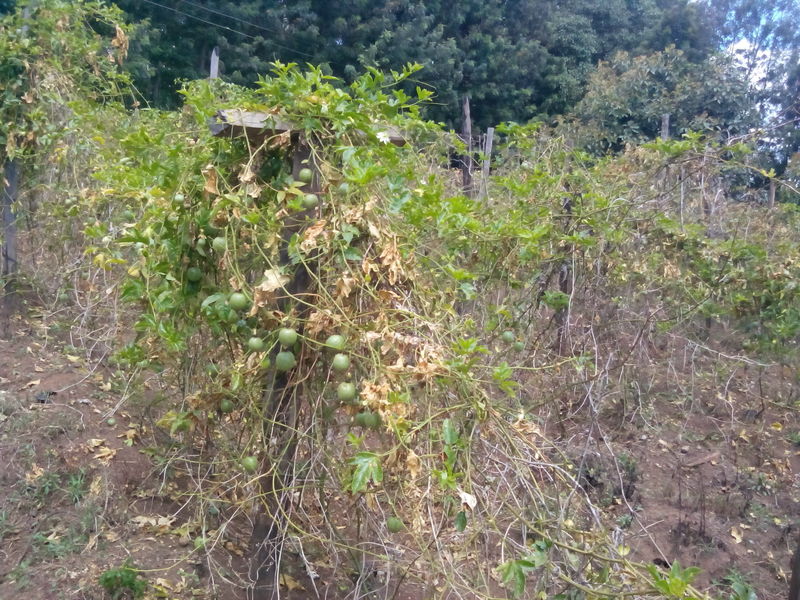
The first rule here is: don’t let water stand around the roots. Many farmers raise the beds a little or plant on gentle slopes so rain drains away. Changing the spot every few years also lowers the risk.
Now here’s something new—research from the University of Queensland in 2023 showed that if you graft purple passion fruit onto the rootstock of the yellow variety, the plant becomes much tougher against Fusarium wilt. Farmers in Australia who tried it saw far fewer losses.
One farmer even told a local magazine that in 2021 he lost nearly half his orchard to wilt. The next season he used grafted vines, and the change was so big he said it felt like “getting his farm back.” Stories like that show how science and practice meet on the ground.
Aphids & Fruit Flies
Then there are the small troublemakers. Aphids gather on new shoots and drain the sap, making the vine weak. Fruit flies are worse—they lay eggs inside the fruit, and by the time you open it, it’s spoiled.
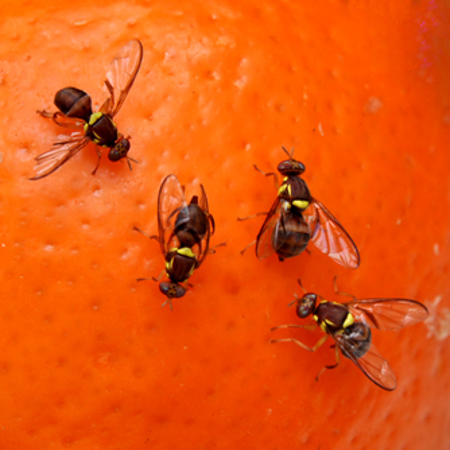
For many small farmers, neem spray works like a charm. It’s cheap, natural, and safe. Some also hang pheromone traps to confuse and catch fruit flies. If the farm has a mix of crops and flowers, ladybugs and lacewings usually show up and do some of the cleaning work too.
Poor Fruiting
Sometimes everything looks green and healthy, but the fruit count is disappointing. Usually, the problem is either too much nitrogen the plant just grows leaves and vines or not enough pollination.
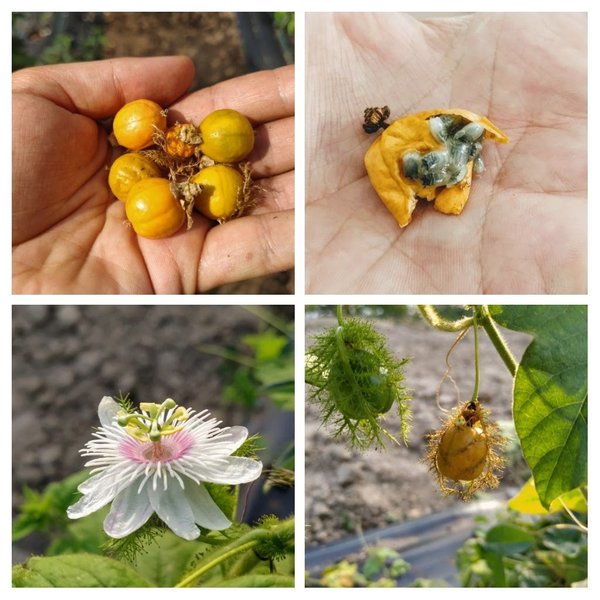
The fix is simple: balance the fertilizer. Potassium and phosphorus encourage flowers and fruits. And if bees are scarce, you can play the bee’s role yourself—hand pollinating with a small brush in the morning often makes a big difference.
References
- FAO. (2021). Integrated Pest Management in Fruit Crops — reduces losses from Fusarium wilt, which is a big problem in commercial farming.
- University of Queensland. (2023). Rootstock solutions for Fusarium wilt in passion fruit.
- Queensland Department of Agriculture and Fisheries. (2022). Practical guide for passionfruit growers.
Harvesting Passion Fruit
One of the nice things about passion fruit is that it tells you when it’s ready. Unlike mangoes or papayas that you often pick before they ripen, passion fruits usually wait until they’re good to go. You’ll know they’re ripe when the skin turns deep purple for purple varieties or golden yellow for yellow varieties and the fruit naturally drops off the vine.
Here’s the fun part: passion fruit actually tastes sweeter after it falls. If you leave them on the kitchen counter for two or three days, the flavor deepens. For longer storage, refrigeration keeps them fresh for a couple of weeks.
New Research on Postharvest Handling
Recent studies are giving farmers better ways to keep passion fruits fresh after harvest. A 2022 study from the International Journal of Postharvest Biology and Technology found that storing passion fruits at cool temperatures (around 8–10°C) with moderate humidity slows down shriveling and extends shelf life by up to three weeks. Another interesting trial in Brazil (2023) showed that an edible coating made from cassava starch reduced weight loss and maintained sweetness during storage. These small innovations could help farmers reduce waste and reach distant markets with fresher fruit.
Real Life Story
In Kenya, passion fruit has turned into more than just a backyard crop. A grower told Farmbiz Africa (2023) that his biggest customers weren’t the village markets but smoothie shops in Nairobi. “Juice bars can’t get enough of it,” he said. By timing his harvest to line up with the off season, he sells at premium prices when supply is low but demand is still strong. Stories like his show how passion fruit isn’t just a fruit anymore—it’s a business opportunity, especially with the rise of health conscious consumers who love fresh juice.
Seasonal Calendar for Passion Fruit Farming
| Month / Season* | Farm Activities | Key Notes |
|---|---|---|
| January – February | Prepare land, test soil, add organic manure | Best time to set up trellis and irrigation before planting |
| March – April | Plant seedlings / grafted vines | Early planting before heavy rains helps strong root establishment |
| May – June | Train vines on trellis, light pruning | Guide young shoots along wires for good structure |
| July – August | Regular watering, pest & disease monitoring | Watch for aphids, fruit flies, and root rot in rainy season |
| September – October | Apply balanced fertilizer (NPK, extra K & P), encourage flowering | Hand pollinate if bee activity is low |
| November – December | First harvest begins (in many regions) | Fruits naturally drop when ripe; collect daily to avoid spoilage |
Adjust timing depending on local climate:
- In tropical areas with year round rainfall, planting is best at the start of the dry season.
- In subtropical areas, avoid frost periods and plant in warmer months.
Summary Table: How to Grow Passion Fruit
| Step | Key Points | Tips & Notes |
|---|---|---|
| Climate & Location | Warm, frost free, 20–30°C | Needs full sun and protection from strong winds |
| Soil | Well drained sandy loam, pH 6.0–7.0 | Avoid waterlogging—raised beds help prevent root rot |
| Planting Material | Seeds or grafted seedlings | Grafted vines (purple on yellow rootstock) are more disease resistant |
| Spacing | 2.5–3 m between plants, 3 m between rows | Allow room for vines to spread and good airflow |
| Support Structure | Trellis, fence, or wires | Strong support is essential—vines are heavy when fruiting |
| Watering | Regular, moderate watering | Avoid standing water; drip irrigation works best |
| Fertilization | Balanced NPK; extra potassium & phosphorus | Too much nitrogen = more leaves, fewer fruits |
| Pollination | Mainly by bees | If bees are scarce, hand pollinate flowers in the morning |
| Pruning | Trim old and tangled shoots | Improves sunlight penetration and fruit set |
| Pest & Disease Management | Watch for aphids, fruit flies, Fusarium wilt | Neem spray, pheromone traps, grafting on resistant rootstocks |
| Harvesting | Fruits drop naturally when ripe (purple/yellow skin) | Sweeter after falling; can store at room temp or refrigerate |
Summary Table for Profit Calculation per Hectare of Passion Fruit Farming (3 years projection, Bangladesh context) based on typical assumptions:
| Year | Yield (t/ha) | Price (BDT/kg) | Revenue (BDT) | Total Costs (BDT) | Net Cash Flow (BDT) |
|---|---|---|---|---|---|
| 1 | 8 | 130 | 1,040,000 | 1,505,165 (includes trellis, irrigation, planting, opex) | 465,165 |
| 2 | 12 | 130 | 1,560,000 | 405,165 | +1,154,835 |
| 3 | 12 | 130 | 1,560,000 | 405,165 | +1,154,835 |
| Total (3 yrs) | 32 | – | 4,160,000 | 2,315,495 | +1,844,505 |
Notes :
- Break even: Achieved during Year 2.
- Net profit over 3 years: ~ 1.84 million BDT/ha.
- Profit Margin (Year 2–3 steady state): ~ 74%.
- Capex (one time, Year 1): Trellis, irrigation, seedlings, land prep ≈ 465k BDT.
Final Thoughts
Passion fruit is one of those crops that gives back more than it takes. Once established, a vine can produce for 3–5 years with good care. Whether you’re growing it in your backyard for fresh juice or thinking about it as a small business, it’s worth the effort.
If you’ve got a sunny spot, a bit of patience, and maybe a carpenter bee or two around, you’re all set.
References
- Food and Agriculture Organization (FAO), 2024. Global Passion Fruit Production Trends.
- University of Queensland, 2023. Passionfruit Rootstock Research for Fusarium Wilt Resistance.
- Farmbiz Africa, 2023. Passion Fruit Farmers Cash in on Juice Market Demand.
- Morton, J. 1987. Passionfruit. In: Fruits of Warm Climates.
- Farmbiz Africa. (2023). Kenyan farmers tap into passion fruit juice boom.
- International Journal of Postharvest Biology and Technology. (2022). Effect of storage conditions on quality and shelf life of passion fruit.
- Silva, R. et al. (2023). Cassava starch based edible coating extends passion fruit shelf life. Brazilian Agricultural Research Institute.
Frequently Asked Questions About Growing Passion Fruit
1. What type of soil do passion fruits prefer?
Passion fruits don’t like “heavy” soil. If the ground stays muddy after rain, that’s not a good sign. They grow better in loose, well drained soil with plenty of compost or organic matter mixed in. Think of soil that holds some moisture but still feels crumbly in your hand.
2. Do passion fruits need full sunlight?
Yes, they really do. If the vine doesn’t get at least six hours of good sunlight, you’ll probably end up with lots of leaves and very few fruits. A sunny spot also keeps the vine healthier and less prone to diseases.
3. How should I water the plant?
When the vine is young, water it often so the roots don’t dry out. As it grows, deep watering two to three times a week is usually enough, unless you’re in a very dry climate. The key is balance—too little water and it won’t flower well, too much and the roots may rot.
4. Do I need a trellis or support for the vine?
Yes, passion fruit is a natural climber. Without support, it will crawl on the ground, which makes it harder to manage and more likely to attract pests. A simple wooden trellis, wire fence, or even a pergola works fine. The stronger the support, the better, because a mature vine gets heavy.
5. How long before I see fruits?
When you grow passion fruit from seed, you’ll need some patience—usually about a year to a year and a half before you see the first fruits. If you plant from a cutting, it may fruit a bit faster. Once established, though, the vine will keep producing for several years if you care for it well.

Thesis Link : https://saulibrary.edu.bd/daatj/public/uploads/BAU200601_19-Pp_5.pdf
- 10 Best Loppers for Thick Branches - October 14, 2026
- Fall Lawn Care Checklist – 9 Jobs Before Winter - October 14, 2026
- 10 Best Garden Tool Sets for Beginners - October 13, 2026



[…] Why Grow Passion Fruit? […]