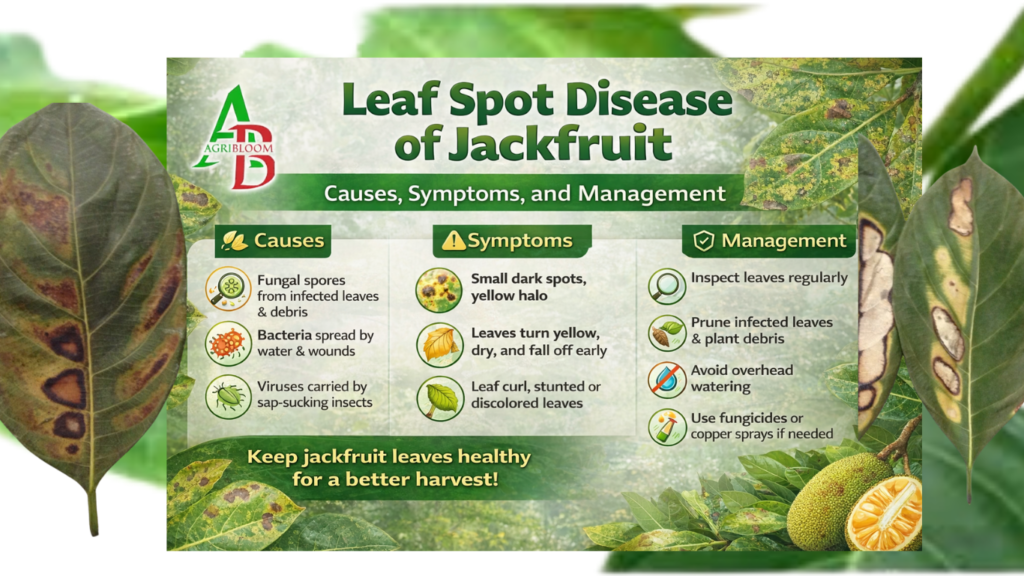
Leaf Spot Disease of Jackfruit – Causes, Symptoms, and Management
Jackfruit, known to botanists as Artocarpus heterophyllus, is loved for its heavy, sweet fruit and its ability to thrive in warm, humid climates. But the tree’s large, leathery leaves are not immune to trouble. Leaf Spot Disease of Jackfruit is one of the most common complaints among growers, and it can slowly drain the tree’s strength when it spreads across the canopy. The problem usually appears as scattered marks that range from tiny specks to larger blotches.
In many orchards the cause is fungal, although bacterial infections can produce similar looking lesions, especially in wet weather. To make diagnosis trickier, nutrient imbalance and harsh growing conditions can create discoloration that looks like a disease even when no pathogen is involved.
What makes jackfruit leaf problems frustrating is how quietly they begin. A few dark dots or a faint yellow ring around a small spot can be easy to overlook until the damage becomes obvious. When leaf spotting is ignored, affected leaves may yellow, dry out, and drop early, leaving the tree thin and stressed. A weakened tree is also more likely to attract secondary pests, which can turn a manageable issue into a season long setback. Consistent monitoring is the grower’s best advantage.
Regular checks of both old and new leaves, along with attention to how quickly symptoms spread, help narrow down the likely cause. This guide walks through the main leaf diseases seen in jackfruit, including fungal, bacterial, and viral issues, as well as nutrient related leaf disorders, and it explains practical, field tested steps to prevent and manage leaf spot effectively.
Disclosure: As an Amazon Associate, I earn from qualifying purchases. This means I may earn a small commission if you buy through links on this page, at no extra cost to you.
Common fungal leaf diseases in jackfruit
Fungal infections are behind many of the leaf problems seen in jackfruit, especially during warm, rainy periods when leaves stay wet for long hours. In the field, these diseases often show up first on older leaves in shaded parts of the canopy, then spread upward if humidity remains high. When you see spots that slowly enlarge, develop defined margins, or carry tiny black specks in the center, a fungal cause becomes more likely.
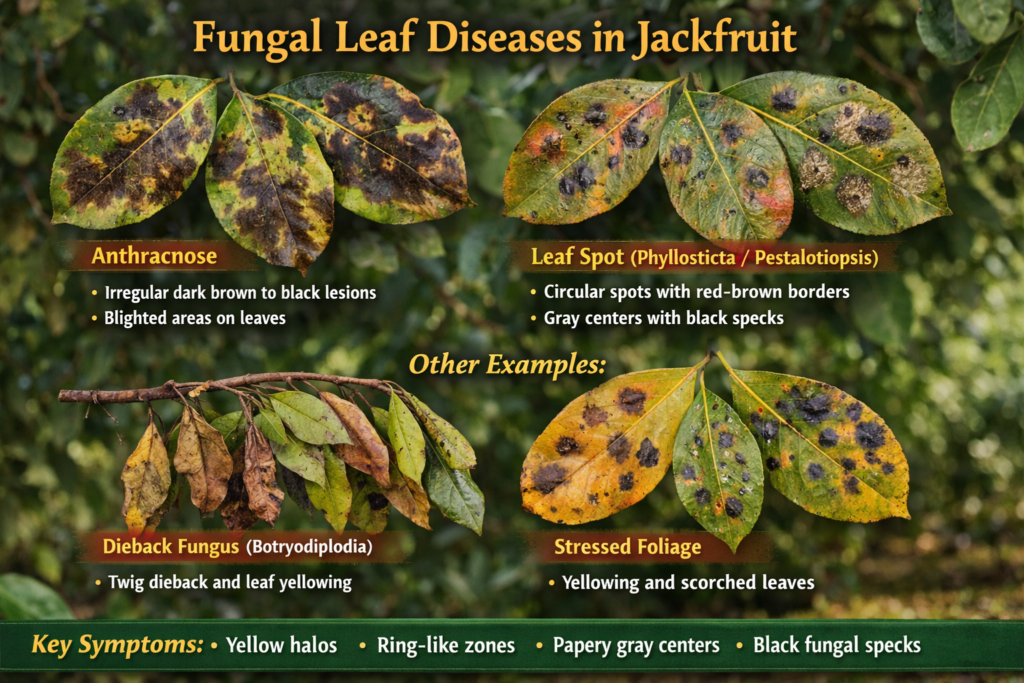
Anthracnose (Colletotrichum species)
Anthracnose is a common leaf disease group in jackfruit caused by Colletotrichum fungi. Symptoms typically include irregular dark brown to black lesions on leaves and sometimes on tender shoots. In humid weather the spots expand and may merge, giving leaves a blighted look. Multiple Colletotrichum species have been reported on jackfruit in different regions, which is why diagnosis is usually based on symptoms plus local history rather than a single species name.
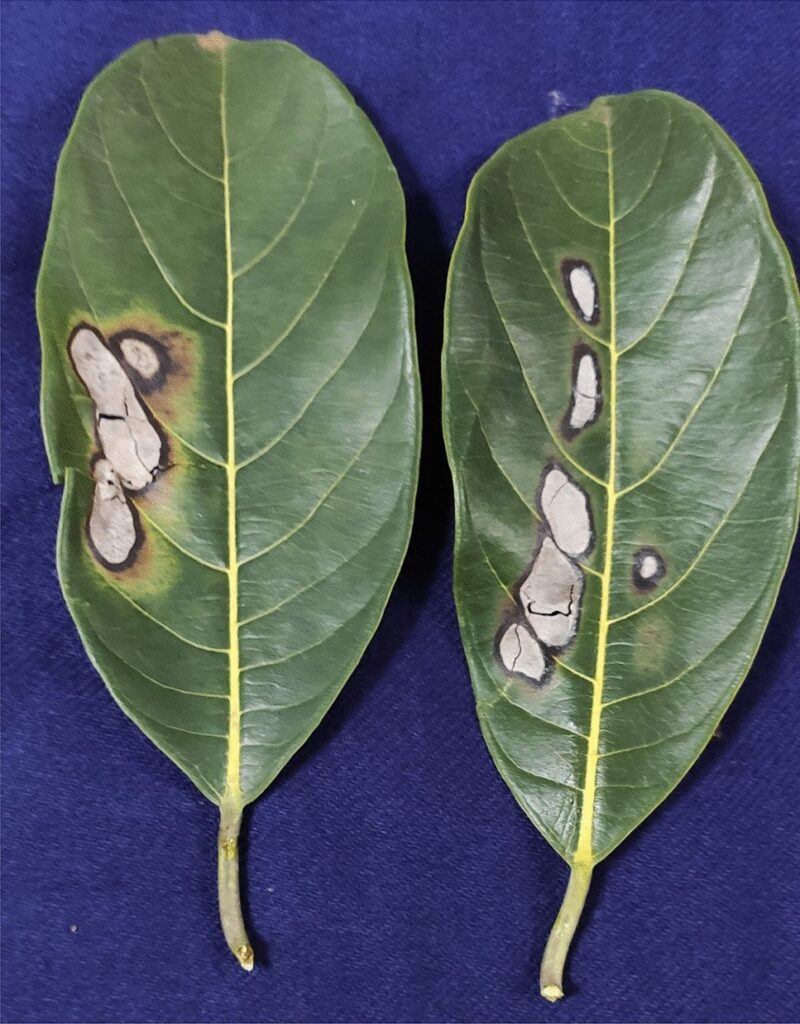
Leaf spot (Phyllosticta and Pestalotiopsis)
Jackfruit leaf spot is often linked with Phyllosticta and Pestalotiopsis type fungi in extension and crop protection guides. Growers commonly notice circular to irregular spots with colored borders. As lesions mature, the centers can turn ash gray and become dotted with pinhead sized dark fruiting bodies. A classic description is dark brick red spotting that later turns grayish with black specks, which is a useful field clue because those specks indicate fungal structures rather than nutrient deficiency.
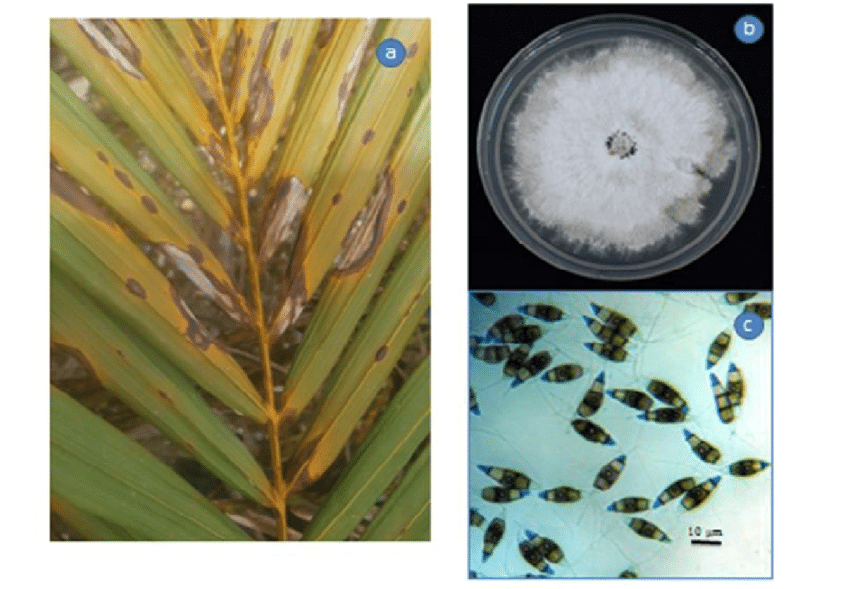
Other fungi that may be involved
In some orchards, dieback fungi such as Botryodiplodia theobromae are discussed alongside leaf diseases because twig infection, canopy stress, and poor airflow often occur together. Even when the primary damage is on shoots, the foliage can thin out due to stress and secondary spotting can follow during prolonged wet weather.
What the symptoms usually look like
Fungal leaf spots often have one or more of these signs: a yellow halo around the lesion, ring like zoning in the spot, a dry papery center, and tiny dark dots at maturity. As spotting increases, leaves may yellow, scorch at the edges, and fall early, which reduces canopy strength over time.
Why it gets worse in some trees
Dense, shaded canopies hold moisture longer after rain or irrigation. That extended leaf wetness, combined with high relative humidity, creates ideal conditions for spore germination and spread. Practical orchard research and extension style recommendations consistently emphasize pruning and training to open the canopy and improve ventilation as a core prevention step.Regular pruning using clean, sharp pruning shears improves airflow and reduces humidity inside the canopy.
References
- BFG Supply guide, “Fungal leaf spots control strategies”
- Plant Disease, APS Journals, report on Colletotrichum causing jackfruit leaf anthracnose.
- Springer, “Characterization of Colletotrichum isolates causing anthracnose on jackfruit.”
- Acta Journal PDF, “Management of insect pests and diseases of jackfruit” (pruning for ventilation, reducing humidity).
Bacterial leaf diseases in jackfruit
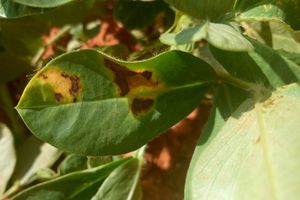
Bacterial problems on jackfruit leaves usually flare up in warm, humid weather, especially when rain or irrigation keeps the canopy wet for long periods. The bacteria move easily with splashing water, wind driven rain, insects, and contaminated pruning tools. A useful field clue is the “greasy” or water soaked look early on, which later turns into dark lesions and quick leaf yellowing.
Bacterial leaf spot
Likely cause
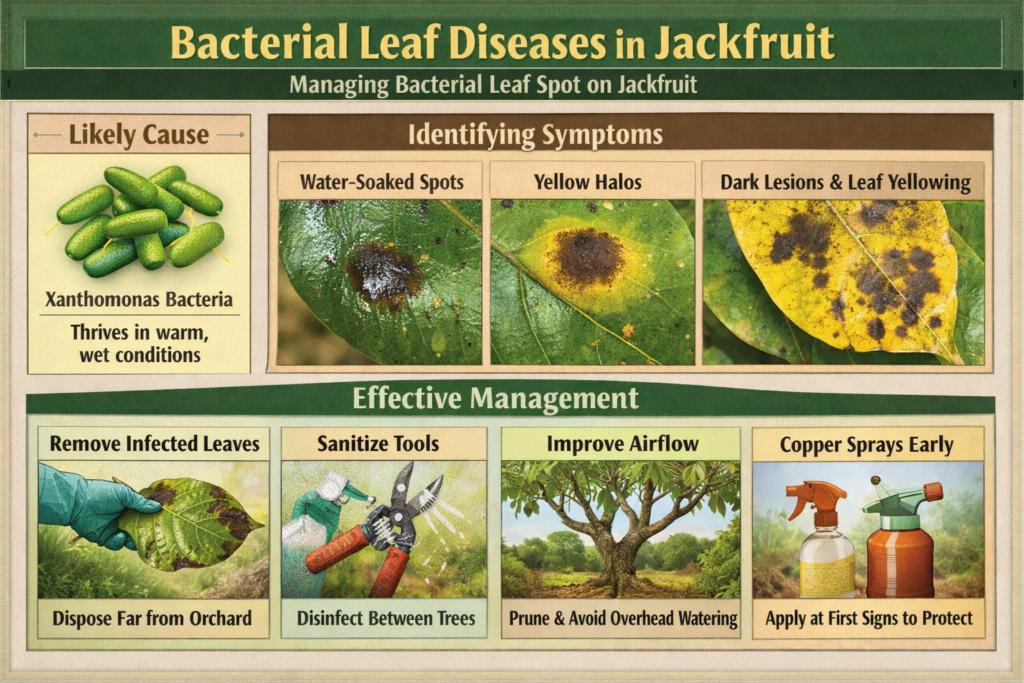
Across many fruit and ornamental crops, bacterial leaf spot is commonly linked with Xanthomonas group bacteria, and the symptom pattern on jackfruit leaves often matches this type of infection in the field. Lab confirmation is ideal when available, because different bacteria can create very similar spotting.
What you will see
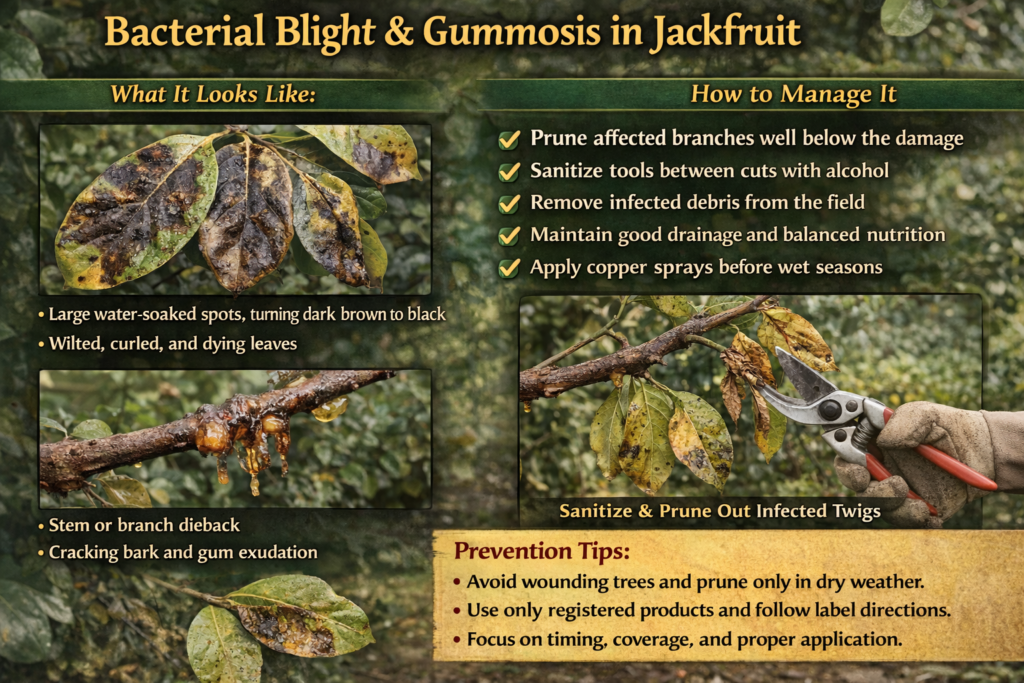
Spots often start as small water soaked patches that look shiny or greasy, then become brown to black. Yellow halos around the lesions are common, and when infection is heavy, leaves turn yellow and drop early.
What actually works in practice
Start with hygiene and moisture control, since bacteria need wet leaf surfaces to spread efficiently. Remove badly affected leaves, dispose of them away from the orchard, and disinfect tools between trees. Reduce leaf wetness by avoiding overhead irrigation and by opening the canopy for airflow. Copper based products can help suppress bacterial spread, but they work best as protectants applied before or at the very early stage of infection, not as a cure once lesions are widespread. Always follow the label for your crop and region.
Bacterial blight and gummosis type infections
What it looks like
Growers often describe a more aggressive form as blight, where larger water soaked areas develop on leaves and tender shoots, followed by wilting, curling, and rapid dieback. If stems or branches are involved, you may see gum exudation and bark cracking, which signals the infection is not limited to the leaf surface anymore. Recent plant pathology work has documented jackfruit gummosis cases associated with bacterial pathogens that damage woody tissue and trigger gum release.
How to manage it
Prioritize prevention and containment. Prune out affected twigs and branches well below the damaged area during dry weather, sanitize tools between cuts, and remove infected debris from the field. Avoid wounding trees and reduce stress with proper drainage and balanced nutrition. Copper sprays are commonly recommended as broad spectrum protectants for bacterial diseases on tree crops, especially when timed ahead of wet seasons and new flush growth, but their success depends heavily on timing and coverage. Use only products registered for your area and crop, and follow label directions.
Use only products registered for your crop and region
References
- NC State Extension, bacterial leaf spot symptoms including water soaked lesions and yellow halos.
- University of Connecticut IPM, bacterial leaf spot progression and defoliation risk.
- UVM Extension, how copper works as a protectant for bacteria and fungi.
- Cornell Vegetable MD Online, notes on copper products and the importance of label guidance for bacterial spot management.
- APS Plant Disease, report on jackfruit gummosis with gum exudation and bark cracking linked to bacterial pathogens.
Viral leaf diseases in jackfruit
Viral problems are not commonly confirmed in jackfruit compared with fungal and bacterial diseases. In fact, at least one broad crop review notes that viral disease has not been clearly documented in jackfruit, even though sap feeding insects such as aphids and mealybugs occur on the crop. Still, it is smart to know what virus like symptoms look like, because they can be mistaken for nutrient stress, herbicide injury, or early leaf spot.
What to watch for
1. Mosaic type symptoms
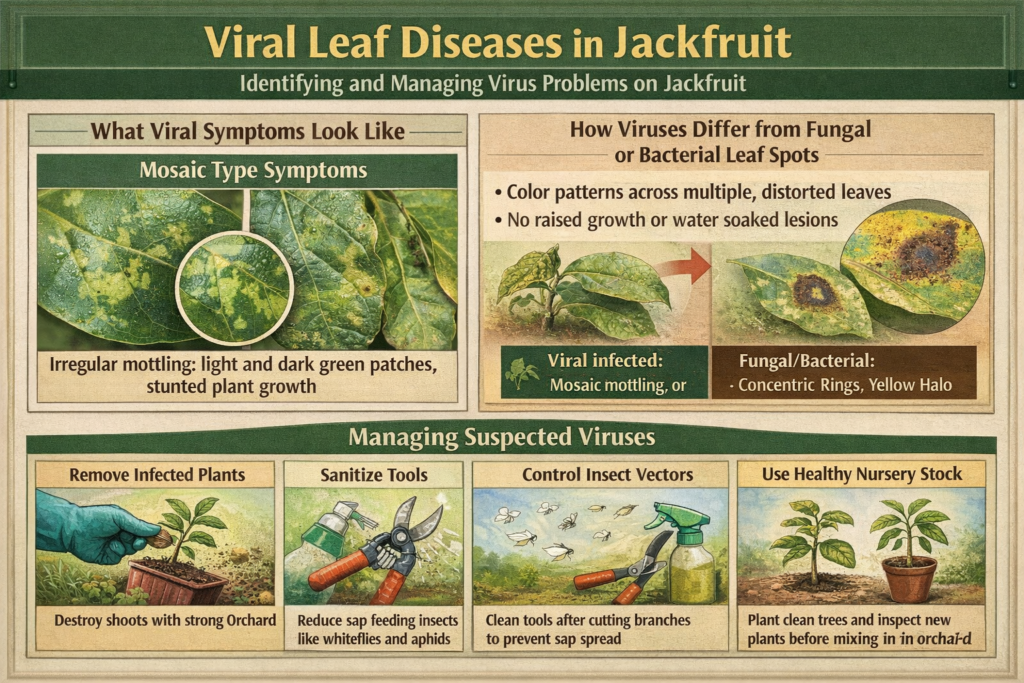
A mosaic pattern usually looks like irregular mottling with light and dark green, sometimes yellow patches. Leaves may look puckered, slightly curled, or smaller than normal, and the plant can appear stunted in more serious cases.
2. Leaf curl and distortion
Some plant viruses cause leaves to cup, twist, or curl tightly. The leaf surface may thicken and become brittle, and edges can yellow or brown. These symptoms often appear unevenly, not as neat circles or spots.
How viral symptoms differ from fungal or bacterial leaf spots
Viral issues typically create color patterns and distortion rather than true lesions. You usually do not see raised fungal growth, concentric rings, or the water soaked look that is common with some bacterial infections. Mosaic patterns also tend to appear across multiple leaves in a scattered but repeating way, rather than starting as a few isolated spots that expand after rain.
What to do if you suspect a virus
There is no chemical cure that removes a virus from an infected plant. Management focuses on stopping spread and protecting healthy trees.
- Remove and destroy clearly affected shoots or young plants when symptoms are strong and persistent, especially if new growth keeps showing mosaic or curl.
- Control insect vectors and reduce their habitat. Many important plant viruses are moved by insects, including whiteflies, which are well known vectors for several damaging virus groups in agriculture.
- Avoid spreading sap through tools. Viruses can be moved mechanically under the right conditions, including by cutting tools used for pruning or grafting.
- Plant clean material. Use healthy nursery stock and keep new plants under observation before mixing them into an orchard.
Recommended Tool for Safe Pruning
Removing infected shoots early helps reduce viral spread. A professional pruning shear with sharp, clean blades makes proper cuts and reduces plant injury.
References
- Britannica. Mosaic plant disease symptoms and characteristics.
- ScienceDirect Topics. Artocarpus heterophyllus overview, note on lack of reported virus infestation in jackfruit.
- Plants MDPI. Review discussing whitefly transmitted plant viruses and their agricultural importance.
- University of Florida IFAS. Principles of plant virus disease management, spread via tools and infected plant material.
Nutrient deficiency symptoms on jackfruit leaves
Not every marked or yellowing jackfruit leaf is infected by a fungus or bacterium. Many times the tree is simply short of a key nutrient, or the roots are stressed by poor drainage, drought, or an imbalanced soil pH. Nutrient problems usually create broad, repeatable patterns across many leaves, rather than distinct spots that slowly expand after rain.
Nitrogen deficiency
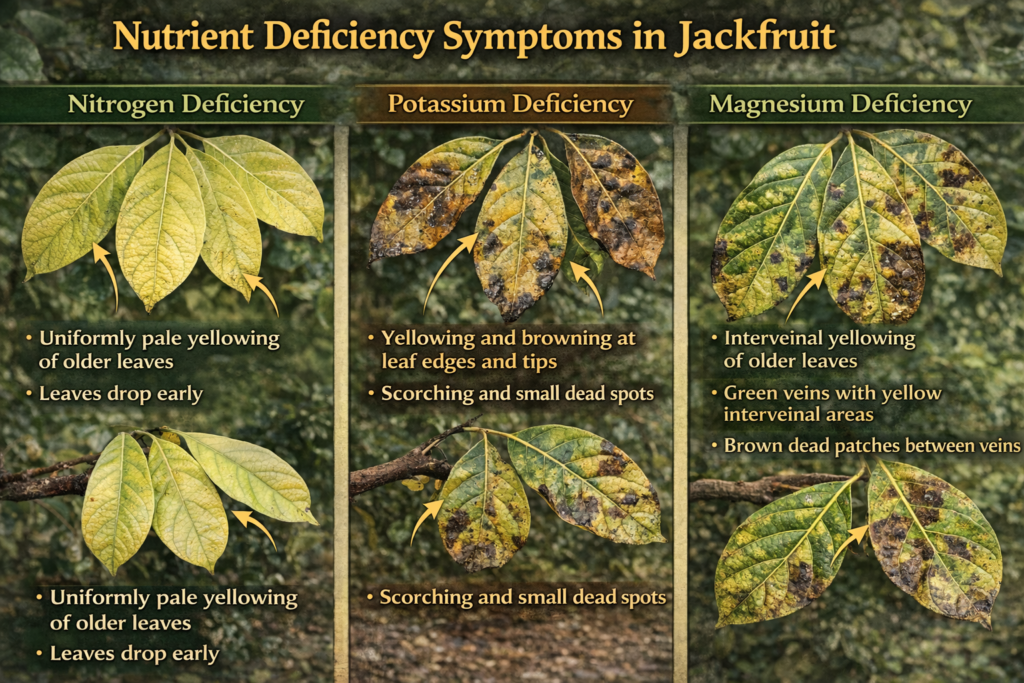
Nitrogen is mobile inside the plant, so the tree shifts it from older leaves to new growth. The first visible sign is often a general paling of older leaves. Instead of patches, the whole leaf loses its green color and the tree can look washed out overall. As the shortage becomes more severe, growth slows and the canopy may thin because older leaves drop earlier than normal.
Potassium deficiency
Potassium shortage also tends to show up first on older leaves. A common look is yellowing at the leaf edges that later turns brown and scorched, especially along the margins and tips. As it progresses, you may see a mix of edge burn, lightening between veins, and small dead areas on older foliage. In fruit trees, this often lines up with weaker growth and reduced performance during heavy fruiting periods.
Magnesium deficiency
Magnesium is another mobile nutrient, so symptoms usually start on lower, older leaves. The classic sign is interveinal chlorosis, meaning the areas between veins turn yellow while the veins stay green. If the deficiency continues, the yellowed areas can develop dead patches, and in some plants the affected tissue may show purpling or bronzing before the leaf drops.
How to separate nutrient issues from leaf spot disease
Leaf spot disease is usually made up of localized lesions with defined borders, such as round or irregular spots that enlarge, merge, and leave clearly dead tissue. Nutrient problems are more likely to look like uniform yellowing, repeated edge scorch, or vein related patterns that appear across many leaves in a similar way. When the cause is unclear, lab testing is the most reliable shortcut. Soil testing helps you understand what is available in the root zone, and tissue testing confirms what the plant is actually absorbing at that moment.
Tools That Help Diagnose Nutrient Problems
If you are unsure whether yellowing is caused by disease or deficiency, basic testing tools can help:
References
- University of Florida IFAS, Plant Nutrient Deficiency Database, Nitrogen deficiency symptoms.
- University of Florida IFAS, Plant Nutrient Deficiency Database, Potassium deficiency symptoms.
- Texas A and M AgriLife, Diagnosing nutritional deficiencies, potassium margin scorch pattern.
- South Dakota State University Extension, magnesium deficiency and interveinal chlorosis on older leaves.
- Washington State University, soil and plant sample testing, tissue testing can confirm suspected deficiencies.
- Michigan State University Extension, plant tissue analysis as a troubleshooting tool for suspected nutrient deficiency.
Causes and disease cycle of jackfruit leaf problems
Most leaf diseases in jackfruit follow a simple pattern. The organism survives somewhere close to the tree, it moves onto fresh foliage when moisture is available, then it multiplies and repeats the cycle each time the weather stays warm and wet.
Where the pathogens survive between seasons
Fungal leaf spot pathogens
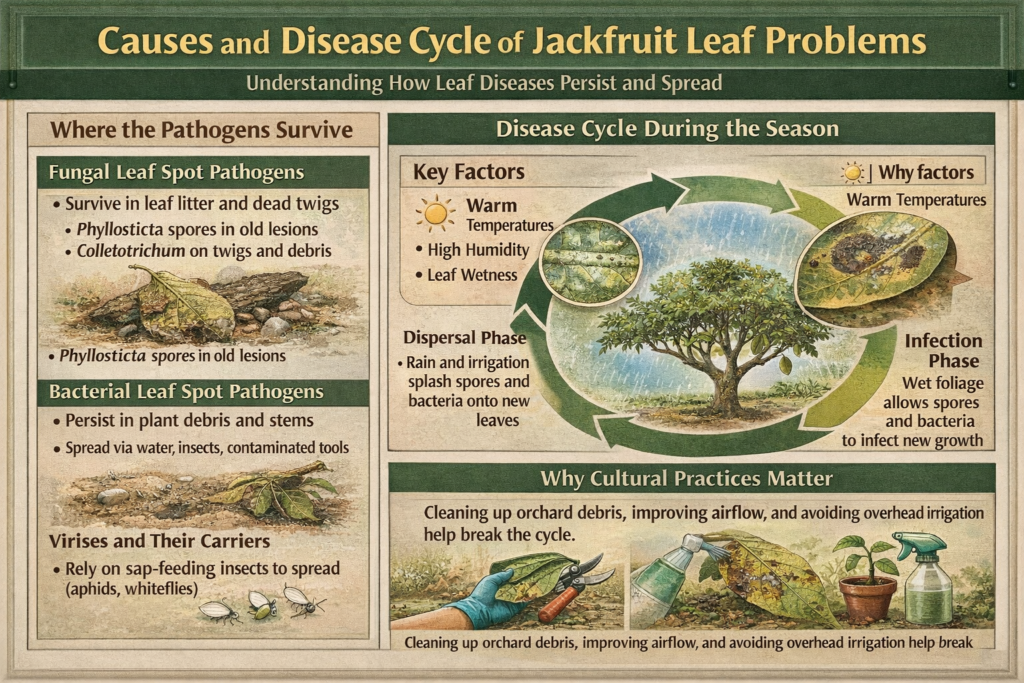
Many fungi that cause leaf spots do not disappear when the leaves fall. They remain active on infected leaf litter and dead twigs, then produce fresh spores when the next wet period arrives. Phyllosticta species are a good example. They commonly overwinter on previously infected leaves, and their spores are produced from small black structures in old lesions. Those spores infect new leaves when humidity is high or leaves stay wet.
Colletotrichum, the group responsible for anthracnose type leaf spotting on many fruit crops, can also overwinter on infected twigs and fallen debris. When conditions turn favorable, spores are produced and spread mainly by rain splash and wind driven moisture onto young, susceptible tissue.
Bacterial leaf spot pathogens
Bacteria that cause spots and blights can persist in diseased plant debris, infected stems, and on certain weeds or alternate hosts. They are commonly moved by splashing water, wind driven rain, insects, and contaminated tools. Entry often happens through natural openings such as stomata or through wounds created by wind damage, pruning, or insect feeding.
Viruses and their carriers
Plant viruses generally rely on vectors for spread. Sap feeding insects, especially aphids and whiteflies, are among the best known groups that move viruses from plant to plant during feeding.
How the cycle plays out during the season
- Survival phase
Infected leaves, twigs, and plant trash under the canopy act as the starting point. Fungi and bacteria remain there until weather conditions allow them to multiply. - Dispersal phase
Rain and irrigation droplets are the main delivery system. Splashing spreads spores and bacterial cells from old material onto healthy leaves. Wind driven rain can carry them deeper into the canopy. - Infection phase
Infection rises sharply when leaves stay wet for long periods and temperatures are warm. High humidity and leaf wetness allow spores to germinate and bacteria to enter through openings or wounds. - Repeat phase
Once spots are established, new spores or bacterial cells form in the affected tissue and the cycle repeats after each wet spell, which is why outbreaks often surge during rainy weeks.
Why cultural practices matter so much
Because the cycle depends on infected debris and repeated leaf wetness, orchard hygiene and canopy management can dramatically reduce disease pressure. Removing fallen leaves, pruning to improve airflow, avoiding frequent overhead irrigation, and keeping tools clean all reduce the amount of pathogen present and the chances it can move onto new foliage.
References
- Purdue Plant Doctor. Phyllosticta leaf spot biology and overwintering in leaf litter.
- Royal Horticultural Society. Phyllosticta presence on fallen leaves and disease development.
- Missouri Botanical Garden. Bacterial spots survive in debris and spread by splashing water and wind.
- Purdue Plant Doctor. Bacteria overwintering sites and entry through wounds and stomata.
- Montana State University Extension fact sheet. Anthracnose overwintering in debris and spread in spring.
Environmental factors that make jackfruit leaf diseases worse
Jackfruit leaf spot and blight problems almost always surge when the weather stays warm and the canopy stays wet. High relative humidity, frequent rain, and long hours of leaf wetness create ideal conditions for spores and bacteria to multiply and infect fresh tissue. In jackfruit, disease guides often point out that outbreaks become more likely when humidity is high and temperatures sit in the mid twenties to low thirties Celsius, especially during rainy periods.
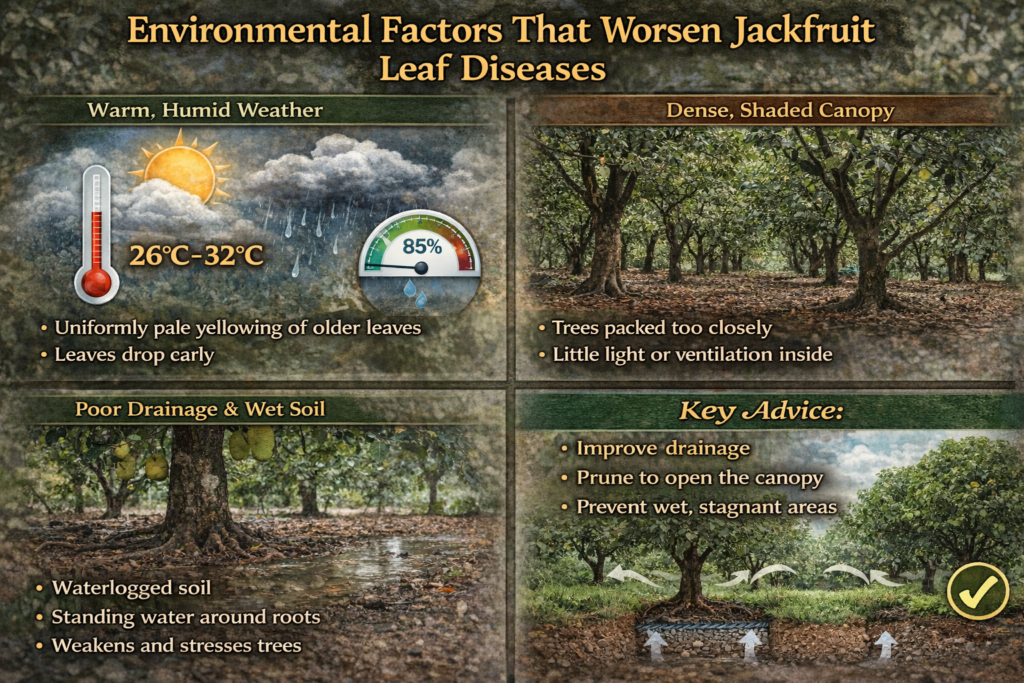
Orchard layout and soil conditions can quietly tip the balance too. Trees packed too closely, or trees that are rarely pruned, hold moisture inside the canopy long after rainfall, so the leaves dry slowly and infections get repeated chances to start. Poor drainage and waterlogged soil add another layer of risk by stressing roots and reducing overall vigor, which makes the tree less able to outgrow damage. The practical takeaway is straightforward: improve drainage, avoid water standing around the root zone, and keep the canopy open enough that sunlight and airflow can dry leaves quickly after rain or irrigation.
Integrated Disease Management for jackfruit leaf spot and blight
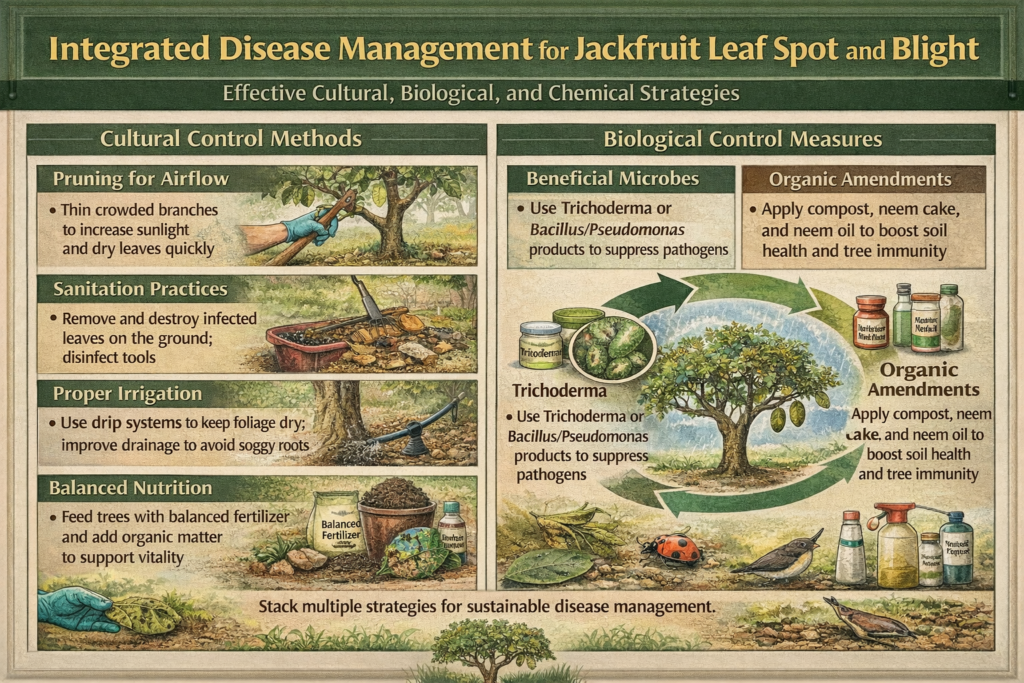
Integrated Disease Management works best because no single action solves leaf diseases for the whole season. The most consistent results come from stacking several small habits: keeping leaves dry when possible, removing sources of infection, strengthening tree health, and using sprays only when weather conditions justify them.
Cultural control methods
Pruning is your first line of defense. An open canopy dries faster, and that alone can reduce repeated infections. Remove crowded, crossing branches, and clear out badly affected twigs during dry weather. Keep trees properly spaced so air can move between canopies, and avoid creating shaded, humid pockets where spotting starts first.
Sanitation matters more than many growers expect. Fungal leaf spot organisms are known to survive on old leaves and plant debris, so collecting and removing heavily infected fallen leaves can reduce the amount of inoculum waiting for the next rainy spell. Also treat tools as a disease pathway: disinfect pruning shears between trees, especially if you are cutting into infected tissue.
Water management is another big lever. If you can, switch from overhead watering to drip or targeted irrigation so the foliage stays dry. When overhead irrigation is unavoidable, water early in the day so leaves dry fast. Improving drainage in low areas helps avoid chronic root stress that can make leaf disease cycles harder to break.
Good nutrition supports recovery. Trees that are pushing steady, balanced growth tend to tolerate spotting better than trees under nutrient stress. Avoid excess nitrogen that encourages very soft, disease prone flush during wet periods, and focus on balanced fertility and organic matter for resilient growth.
Biological control measures
Beneficial microbes are increasingly used as part of sustainable disease programs, particularly where growers want to reduce dependence on repeated chemical sprays. Trichoderma species are widely discussed as biological control agents that can suppress fungal pathogens and also support plant vigor.
Bacterial biocontrol and plant growth promoting groups such as Bacillus and Pseudomonas are also commonly studied and used in agriculture, both for pathogen suppression and for stimulating plant defenses. They are not a quick fix for an active outbreak, but they can be useful as a preventive layer when applied consistently and combined with canopy and sanitation improvements.
Organic amendments like compost can improve soil health and root function over time, which helps the tree cope better during disease pressure. Neem based products are sometimes used by growers as part of an organic program, but treat them as supportive tools rather than a stand alone solution for serious leaf spot.
Chemical control options
When weather turns persistently wet and spotting is spreading, fungicides can protect new growth if timed correctly. Copper based products such as copper oxychloride are commonly listed in jackfruit disease guidance, and mancozeb is another widely recommended protectant in tree crop disease programs.
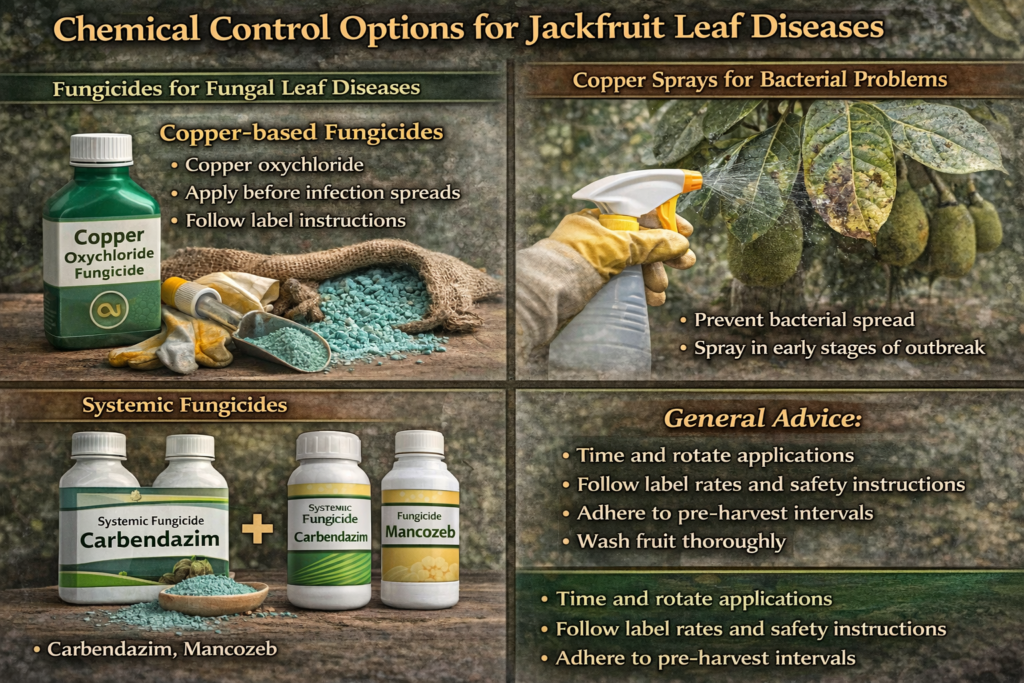
Systemic fungicides such as carbendazim, and combinations that include carbendazim plus mancozeb, have also been evaluated against the Colletotrichum group associated with jackfruit leaf spot and anthracnose type symptoms, with specific test concentrations reported in research. Use this information as a technical reference, but always follow local registration and label directions for your crop and country.
For bacterial leaf spot and blight, copper products are often used as broad spectrum protectants. The key is timing: copper works best before infection spreads, not after leaves are already heavily damaged. Avoid overuse, follow label rates, and rotate modes of action when using fungicides to slow resistance development. Also follow pre harvest intervals and safety instructions, and wash fruit according to good agricultural practice.
References
- TNAU Agritech Portal, copper oxychloride and mancozeb spray recommendations in jackfruit crop protection guidance.
- Biochem Journal PDF, in vitro evaluation of fungicides and bio agents against Colletotrichum gloeosporioides causing leaf spot of jackfruit, including tested concentrations.
- Frontiers in Microbiology, review on Trichoderma in biological control and plant resistance support.
- Springer review, potential and commercialization of Trichoderma, Bacillus, Pseudomonas and other bioagents for disease control.
- APS Plant Disease Note, reports on Colletotrichum species causing leaf anthracnose on jackfruit, supporting pathogen identity and management relevance.
Preventive measures and best practices for jackfruit leaf spot
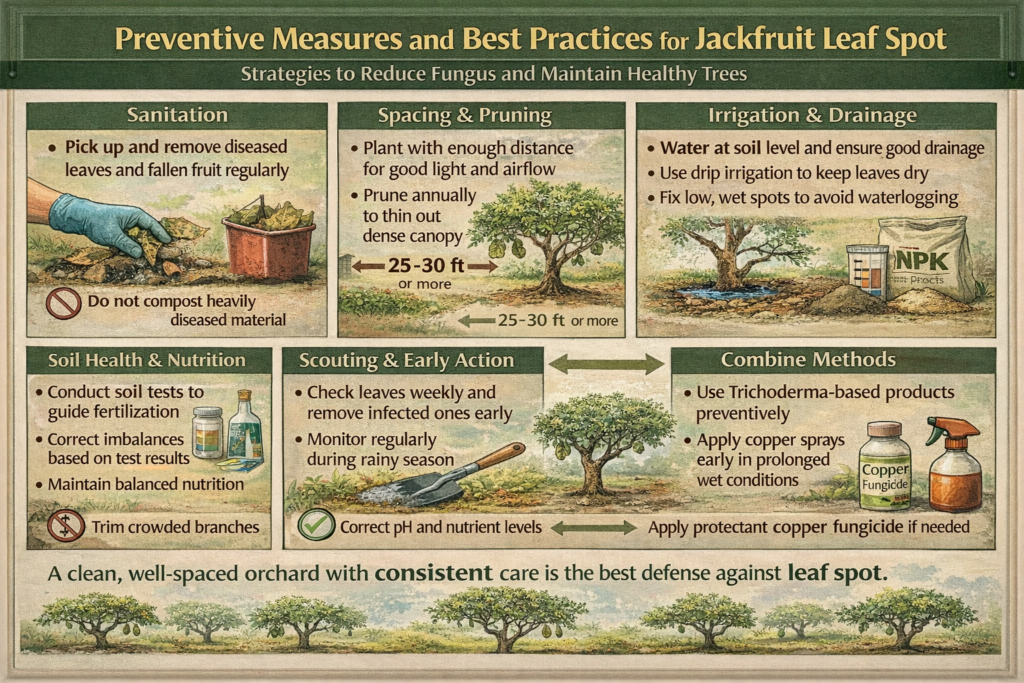
The easiest way to keep leaf spot from becoming a yearly headache is to make the orchard unfriendly to pathogens. Most leaf spot fungi survive on infected leaves and debris left on the ground, then restart infection when rain and humidity return. That is why sanitation is not “extra work” in jackfruit, it is the foundation. Collect heavily infected fallen leaves and dropped fruit regularly and remove them from the orchard area so spores do not keep cycling back onto the canopy.
Give each tree enough space and light to dry quickly after rain. Jackfruit forms a dense canopy, and tight planting traps humidity inside the foliage where spots multiply. Extension guidance for home plantings in Florida recommends keeping jackfruit about 25 to 30 feet away from other trees and buildings, mainly to avoid shading and crowding. Plantation guides commonly describe wider spacing such as 8 by 8 meters or more, which also supports airflow and reduces prolonged leaf wetness.
What to do in the field
Sanitation
- Pick up and remove infected leaves and fruit from the orchard floor on a routine schedule, especially during the rainy season.
- Do not compost heavily diseased material unless your composting process reliably reaches hot compost temperatures.
This reduces the amount of fungus that survives and spreads from old debris.
Spacing and pruning
- Plant with enough distance for sunlight to reach the canopy and for wind to move through it.
- Prune once a year or as needed to thin crowded branches and remove dead or diseased twigs.
- Aim for a canopy that dries fast after rain rather than a tight dome that stays damp.
Adequate spacing and pruning are repeatedly recommended because they lower humidity around leaves and reduce disease pressure.
Irrigation and drainage
- Water at the soil line whenever possible, for example drip irrigation or a hose at the base, so leaves stay dry.
- Avoid watering late in the day because wet leaves overnight increase infection risk.
- Fix drainage in low spots and avoid waterlogged root zones since stressed trees are more vulnerable.
Warm, wet conditions are consistently linked with higher disease incidence in jackfruit.
Soil health and nutrition
- Use soil testing to guide fertilizer and lime decisions rather than guessing, then correct imbalances gradually.
- Keep nutrition balanced so the tree can replace damaged leaves and maintain vigor.
Soil testing is widely recommended in fruit production to determine pH and nutrient needs before applying amendments.
Scouting and early action
- Check trees weekly during rainy months.
- Remove the first few heavily spotted leaves you find and note whether new growth is being affected.
- If you keep simple notes on weather and symptom timing, it becomes much easier to predict when protection is needed.
Combine methods, then spray only when justified
- Preventive bio options such as Trichoderma based products are commonly used to suppress plant pathogens and support plant resilience as part of an integrated program.
- If disease pressure rises during prolonged wet spells, copper based protectant sprays are often used in tree crops, but they work best when applied early and according to label directions.
Trichoderma is widely documented as a biological control agent for plant diseases, and copper products are commonly used as protectants in disease management programs.
References
- USDA NRCS fertilizer recommendation guide, emphasizes fertilizer decisions based on soil testing and research based recommendations.ged orchard environment creates unfavorable conditions for pathogens.
- Vikaspedia, jackfruit diseases and survival of pathogens on leaves and orchard debris.
- UF IFAS Extension, spacing guidance for jackfruit in the home landscape, 25 to 30 feet from other trees and buildings.
- Trees for Life species profile, typical plantation spacing around 8 by 8 meters or more.
- Purdue Extension HO 109, soil testing guidance for determining pH and nutrient levels before fertilizing.
- Frontiers in Microbiology, review of Trichoderma roles in biological control and plant resistance support.
Summary Table for Leaf Spot Disease of Jackfruit
| Topic | Main Cause | Key Symptoms on Leaves | When It Gets Worse | Practical Management |
|---|---|---|---|---|
| Leaf Spot (General) | Fungi or bacteria | Small specks to large blotches, halos, early leaf drop | Warm, humid weather, long leaf wetness | Early scouting, sanitation, airflow, targeted sprays |
| Anthracnose | Colletotrichum spp. (fungus) | Irregular dark brown to black lesions, spots may merge | Rainy season, high humidity, shaded canopy | Prune for airflow, remove infected debris, protectant fungicide when needed |
| Leaf Spot (Fungal types) | Phyllosticta, Pestalotiopsis | Circular to irregular spots, colored margins, gray center with black specks | Dense canopy, frequent rain or overhead watering | Sanitation, canopy opening, avoid leaf wetness, preventive sprays if pressure is high |
| Other Fungal Stress | Botryodiplodia (dieback related) | Canopy thinning, secondary spotting due to stress | Poor airflow, prolonged wet conditions, weak trees | Remove affected twigs, reduce stress, improve orchard hygiene |
| Bacterial Leaf Spot | Often Xanthomonas group | Water soaked or greasy looking spots, yellow halos, quick yellowing and drop | Warm, wet conditions; splash spread; tool spread | Avoid overhead irrigation, disinfect tools, remove infected leaves, copper protectant early |
| Bacterial Blight / Gummosis type | Bacterial infection affecting shoots and bark | Large water soaked lesions, wilting or curling, gum exudation on stems | Wet season plus wounds and stress | Prune well below infection in dry weather, sanitize tools, reduce injury, copper protectant timing |
| Viral like Disorders | Virus suspected but rarely confirmed | Mosaic mottling, puckering, leaf curl and distortion (not true lesions) | Vector insects, infected planting material | Remove strongly affected growth, control vectors, clean tools, use healthy nursery stock |
| Nutrient Deficiency | Low N, K, Mg or root stress | Uniform yellowing, edge scorch, interveinal chlorosis (patterned) | Poor drainage, wrong pH, unbalanced fertilization | Soil and tissue testing, correct nutrition gradually, improve drainage |
| Disease Cycle (Why it repeats) | Survival in debris + spread by rain splash | New spots after each wet spell | Repeated rains, debris under canopy | Remove leaf litter, reduce splashing, keep canopy dry faster |
| Environmental Drivers | Humidity + leaf wetness | Faster spread and repeated infections | Tight spacing, poor pruning, waterlogging | Improve drainage, spacing, sunlight and airflow |
| IDM Strategy (Best overall plan) | Multiple factors | Reduces severity and recurrence | Works best before outbreaks | Combine sanitation + pruning + irrigation control + bio agents + careful chemical use |
| Prevention Best Practices | Orchard management | Fewer outbreaks, healthier canopy | High risk rainy months | Weekly scouting, clean floor, drip irrigation, proper spacing, balanced nutrition, only spray when justified |
| Final Thought | Early action wins | Less defoliation, better yield | Ignoring early symptoms | Keep routine checks, keep trees vigorous, use sprays strategically and legally |
Final Thought
Leaf spot in jackfruit is manageable, but it rarely improves on its own. The growers who keep trees productive are the ones who notice the first signs early and respond before the canopy is heavily affected. Regular scouting during humid months, quick removal of badly infected leaves, and simple orchard hygiene reduce the amount of disease that can build up from one wet spell to the next. An open canopy matters just as much as any spray, because better airflow and faster leaf drying make it harder for fungi and bacteria to keep reinfecting new growth.
A strong tree also recovers faster. Balanced nutrition, good drainage, and avoiding unnecessary stress help jackfruit hold its leaves and continue setting fruit even when disease pressure is present. If weather conditions remain persistently wet and spotting continues to spread, protective products such as copper based sprays or appropriately selected fungicides can be used as part of an integrated plan, always following local recommendations and label directions. When sanitation, canopy management, and timely protection are combined, most orchards can keep leaf spot under control and continue producing clean, high quality jackfruit year after year.
FAQs for Leaf Spot Disease of Jackfruit
Q: What is jackfruit leaf spot disease and what causes it?
A: Leaf spot is a symptom pattern where distinct lesions develop on jackfruit leaves. In jackfruit, it is commonly linked with fungal pathogens that survive on old leaves and spread quickly during wet, humid weather. Typical field descriptions include brick red spots that later turn gray with tiny dark fruiting bodies.
Q: How do I identify it on my tree?
A: Look for round to irregular spots that enlarge over time. Fungal spots often develop a pale to gray center with darker margins, and mature lesions may show pinhead sized black specks. Heavy infection can lead to early leaf drop. Nutrient problems usually cause more uniform yellowing or edge scorch rather than separate, expanding patches.
Q: What are effective treatments?
A: Start with sanitation and canopy management. Remove badly infected leaves, clear fallen debris, and prune to improve airflow. When disease pressure is high in rainy periods, protectant sprays are often used. Guidance sources commonly mention mancozeb or copper oxychloride applied at intervals during risk periods, and research trials in jackfruit leaf spot have evaluated fungicides plus bio agents such as Trichoderma and beneficial bacteria. Use only products registered for your area and follow label directions.
Q: Can nutrition prevent leaf spot?
A: Nutrition cannot replace disease control, but healthy, unstressed trees tolerate damage better and recover faster. Keep fertility balanced and avoid creating overly soft flush growth during wet seasons.
Q: What is the best prevention plan for orchards?
A: Space trees to reduce shading and humidity, prune regularly, avoid overhead irrigation, and keep the orchard floor clean. UF IFAS recommends 25 to 30 feet spacing in home landscapes if little pruning is planned, or closer only with regular pruning.

Thesis Link : https://saulibrary.edu.bd/daatj/public/uploads/BAU200601_19-Pp_5.pdf
- Why Are My Pepper Plant Leaves Curling? 9 Causes & Fixes - September 17, 2026
- Why Are My Zucchini Leaves Turning Yellow? Causes & Fixes - August 31, 2026
- What Is Eating My Plants at Night? - August 27, 2026