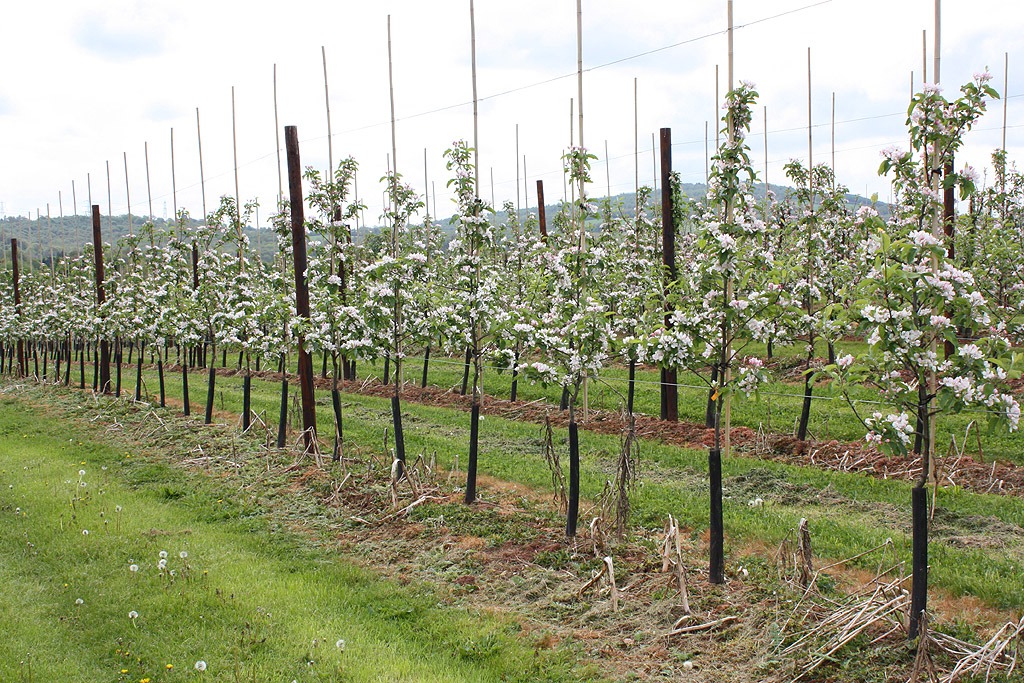

Apple trees are the most widely planted fruit tree in American home orchards, and they are also one of the most disease prone. A healthy apple tree can feed a family for decades, but a tree hit by scab, fire blight or rust in the same season can lose its leaves, drop its fruit and weaken so much that next year’s crop suffers too. Most apple tree diseases are easy to recognise once you know what to look for, and most can be prevented by choosing a resistant variety, pruning for air flow, cleaning up fallen leaves and fruit, and spraying only when the tree’s disease history makes it necessary.
This guide covers the eight apple tree diseases that home growers in the United States meet most often. Disease pressure and the timing of control measures vary by climate, so growers outside the United States, including in Bangladesh, should adapt the timing in this guide to their local conditions and Extension advice. For each disease you will find the symptoms on leaves, fruit and twigs, the conditions that favour it, how it spreads, how to tell it apart from look-alikes, and what to do about it, with cultural control first. All facts come from university Extension publications, listed in References. This guide is based on published Extension guidance, not on field trials by AgriBloom. If you are unsure of a diagnosis, your state Extension office can confirm it from a sample.
Use the table in the next section to narrow the eight apple tree diseases down to one or two suspects before you read the full descriptions.
How to Tell Which Disease Your Apple Tree Has
Start with where the damage is and when it appeared. The table below covers the most common patterns. Read the matching section for the full description before you act, because several diseases look alike at first glance.
| What you see | When it appears | Likely disease |
|---|---|---|
| Olive-green to black velvety spots on young leaves, leaves curl and drop, corky cracked spots on fruit | Spring, after wet weather | Apple scab |
| Blossoms wilt and blacken, shoot tips bend like a shepherd’s crook, dead brown leaves stay attached, sticky ooze on bark | Bloom through early summer, warm and rainy | Fire blight |
| Bright orange-yellow raised spots on leaves, orange cups underneath, fruit spots near the blossom end | Mid to late spring | Cedar apple rust |
| White to grey powdery coating on young leaves, buds and shoots, leaves curl and shoots look stunted | Warm, dry weather | Powdery mildew |
| Purple-edged spots with a tan centre on leaves, sunken reddish cankers on limbs, fruit rots with black and brown rings and then mummifies | Summer, warm seasons | Black rot (frogeye leaf spot) |
| Small brown spots on fruit that sink in fast, concentric rings, pink to salmon spore masses in wet weather | Mid to late summer | Bitter rot |
| Clusters of tiny black dots, or brown to black sooty smudges, on the fruit skin only | Summer, cool and rainy | Flyspeck and sooty blotch |
| Sunken, soft, rotten areas that eat into large parts of the fruit near harvest | Late summer to harvest | Summer fruit rots (white rot and others) |
1. Apple Scab
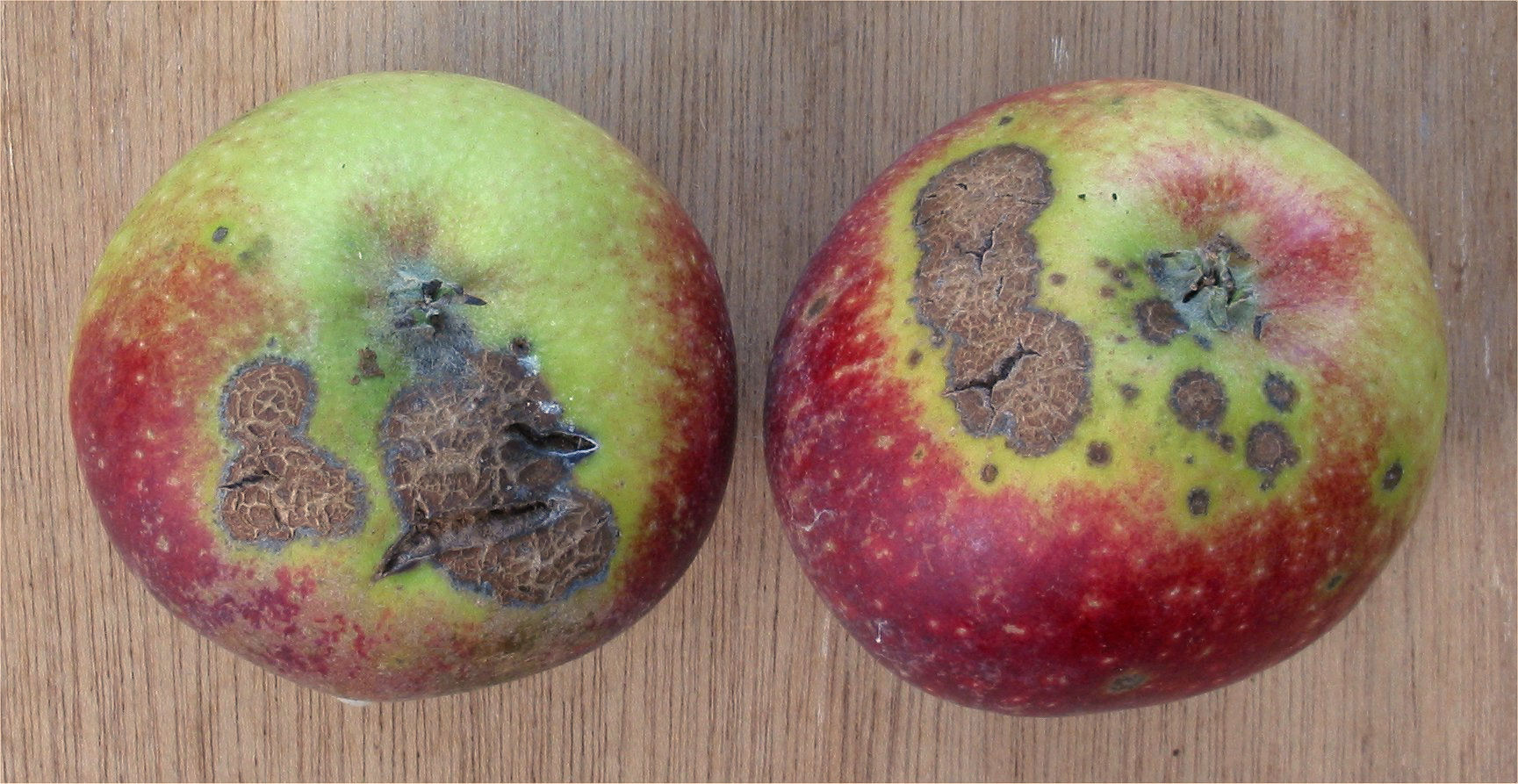
Apple scab is the most common apple disease in the United States, and the one most home growers meet first. Clemson Extension calls it one of the most common diseases of apple, and the Connecticut Agricultural Experiment Station calls it the most important disease of apple in New England. It rarely kills a tree outright, but a severe attack can strip leaves, deform fruit and weaken the tree so much that next year’s fruit set falls.
What causes it
Apple scab is caused by the fungus Venturia inaequalis. The fungus overwinters in dead, fallen leaves under the tree. In spring it produces spores that infect sepals, young leaves and young fruit during periods of rain. Infection can take place at any time after apple growth begins until mid to late June if the weather stays suitable. During summer the fungus produces a second type of spore that causes new infections when splashed onto leaves and fruit by rain. Apple scab does not infect pears, and pear scab does not infect apples, so the two are separate problems even though the symptoms look similar.
Symptoms
On leaves, scab begins in spring as dark, olive-green spots that are less than half an inch across. The spots soon become velvety and olive green, then turn black. Badly infected leaves curl, wither and drop early. Heavy infection early in the season causes severe defoliation, which weakens the tree and results in poor fruit set in the next season. On fruit, slightly raised black spots deform the apples. Early infection causes fruit to become deformed, knotty and cracked, and often to drop early. This lowers fruit quality and causes the greatest loss to the grower.
Conditions that favour it
Scab thrives in cool and humid conditions, like those found in the Midwest during spring. Wet leaves are the trigger: the spores need rain and leaf wetness to infect. Long wet springs make scab years bad, and dry springs keep it light.
Prevention and control
Planting resistant varieties is the best control. Illinois Extension notes that planting scab resistant apple cultivars reduces costs by eliminating the sprays needed for controlling scab. Varieties with strong scab resistance include Liberty, Enterprise, Goldrush, Pristine, Redfree, Freedom and Jonafree (Clemson Extension) and Jonafree, Priscilla, Macfree and Liberty (Connecticut Agricultural Experiment Station). See the resistant varieties table near the end of this guide.
Sanitation is the second line of defence. Rake and remove fallen leaves, because the fungus overwinters in that leaf litter, and remove diseased fruit from the tree and the ground. The University of California home orchard calendar gives the same advice for scab and powdery mildew.
If disease is severe enough to warrant chemical control, Clemson Extension lists captan or sulfur for use on apple trees. Apply all chemicals according to the directions on the label, and check the label for the days to harvest interval and for warnings about mixing with horticultural oil.
How to tell it apart
Scab spots are hard and corky and never turn into a soft rot. That is the key difference from the fruit rots in sections 5, 6 and 8, which are soft and sunken. Early scab on leaves can be mistaken for insect damage, but insect damage does not produce the velvety olive-green spots that darken and spread across the leaf, and it does not cause the same pattern of early leaf drop.
2. Fire Blight
Fire blight is the most feared apple disease in the home orchard, because it moves fast and can kill. It is caused by a bacterium, not a fungus, so fungicides do not control it. Clemson Extension calls it a devastating disease that is very difficult to control, and the Connecticut Agricultural Experiment Station notes that it can destroy individual trees or entire orchard blocks in a single season.
What causes it
Fire blight is caused by the bacterium Erwinia amylovora. The bacteria survive winter in old cankers and in healthy buds. In spring they multiply rapidly and ooze out of tissues. This creamy ooze attracts insects, which carry it to open flower buds, and wind and rain carry the bacteria to open blossoms. Bees can spread it from bloom to bloom.
Symptoms
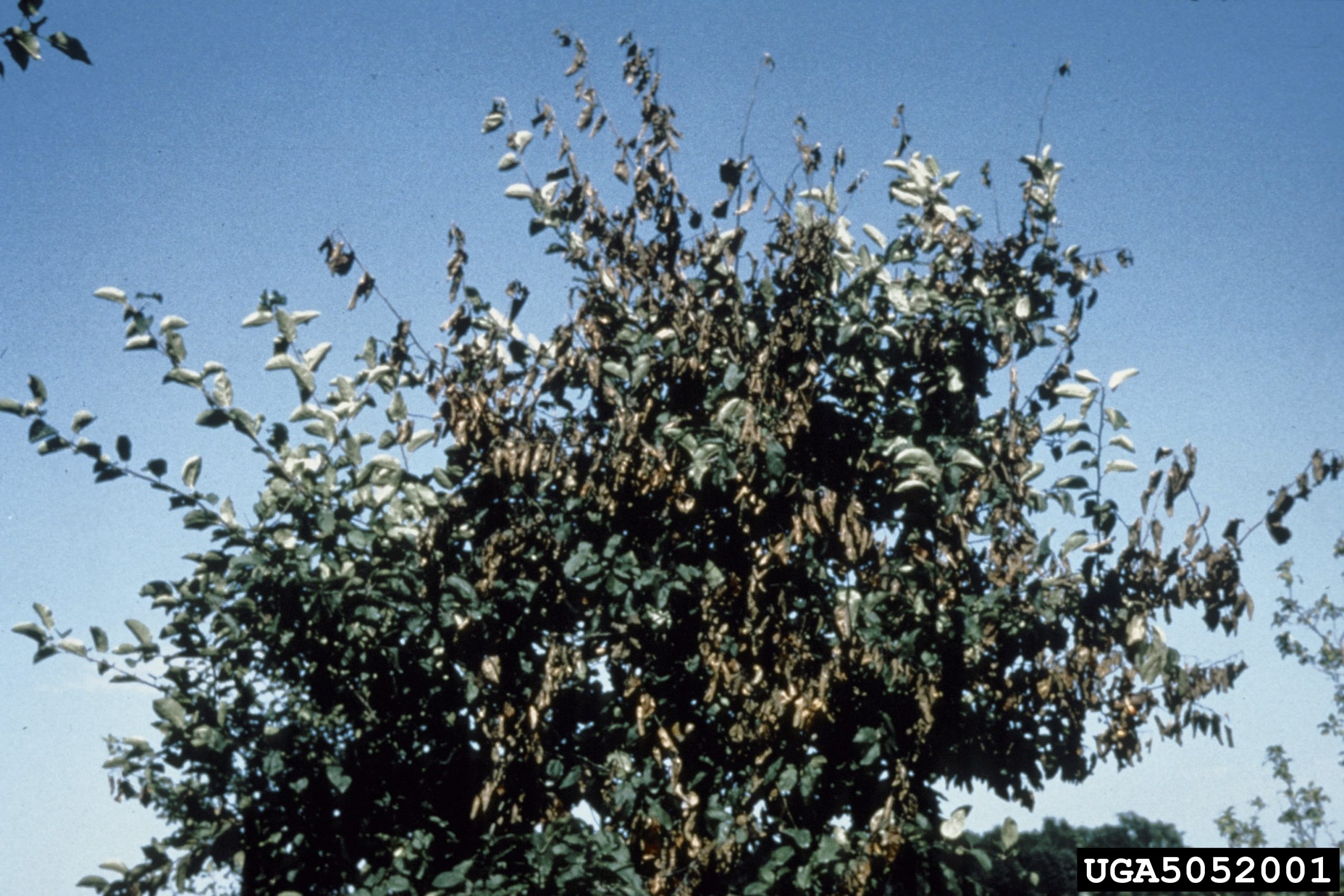
It develops rapidly in early spring, in rainy weather above 60 degrees Fahrenheit while the tree is in bloom. Blossoms and young twigs wilt, shrivel and turn brown to black. Infected shoot tips wilt and die, bending into a shepherd’s crook as the disease moves down the branch. Dead leaves often stay attached, giving the tree a scorched look. In wet weather a milky, sticky liquid containing bacteria appears on stems and branches. Infected fruit shrivels and may stay on the tree. The bacteria move into woody tissue, where water-soaked bark is visible, and branches die back. Fire blight is often followed by black rot and wood decay.
Illinois Extension notes it is especially serious on Jonathan, Lodi and Paulared apples. Cornell Cooperative Extension lists Fuji, Gala, Idared, Jonagold, Jonathan, Lodi, Paulared, Rome, Sir Prize, Spigold, 20-Ounce and York as highly susceptible, and notes that trees on fully dwarfing rootstocks are more at risk.
Conditions that favour it
Warm, wet, humid weather during bloom is the danger period. Succulent new growth is easily infected, especially if it is injured by insects, hail or wind. Heavy nitrogen fertilisation in spring increases succulent growth and makes infection more likely.
Prevention and control
Remove blighted twigs and cankers before growth starts in spring. Make pruning cuts 12 to 18 inches below any sign of infected tissue, according to Clemson Extension. The Connecticut Agricultural Experiment Station gives 8 to 12 inches as the minimum, so cutting further back is safer. Disinfect tools between each cut with 1 part household bleach to 9 parts water, or 70 percent alcohol. Remove prunings from the area and destroy them. The University of California home orchard calendar gives the same rule: cut in healthy wood at least 12 inches below the dead portion.
Avoid high nitrogen fertilisation, which increases succulent growth. Where fire blight is a known problem, plant resistant cultivars such as Liberty, Empire and Winesap, and resistant rootstocks such as MM.111 and M.7 EMLA, per the Connecticut Agricultural Experiment Station.
Chemical control is difficult. Clemson Extension notes that streptomycin can be used during bloom when temperatures are above 60 degrees Fahrenheit and rain is possible, with 3 applications at 3 day intervals from the beginning of bloom, and a 50 day wait to harvest. A copper spray can be made during dormancy, just before buds open, if fire blight is expected to be severe. Apply all chemicals according to the label, and never spray insecticide while trees are in bloom, because it harms pollinators.
Pesticide and fungicide approvals vary by country. Always check local regulations and product labels before applying any chemical treatment.
How to tell it apart
Fire blight strikes in warm, rainy bloom weather, and the combination of blackened blossoms, a shepherd’s crook shoot tip, scorched leaves that stay attached, and bacterial ooze is distinctive. Winter dieback follows cold weather, not bloom, and produces no ooze or scorched blossom clusters. If you see ooze on bark or fruit, treat it as fire blight until your Extension office says otherwise, and disinfect your tools before touching another tree.
3. Cedar Apple Rust
Cedar apple rust is a common and destructive disease wherever apple trees grow near eastern red cedar or ornamental junipers. It rarely kills a tree, but severe defoliation can reduce bloom the next season, and infected fruit is often small and distorted. The disease is famous for its two-host life cycle: it needs both an apple tree and a juniper to complete it.
What causes it
Cedar apple rust is caused by the fungus Gymnosporangium juniperi-virginianae. It requires another host, eastern red cedar (Juniperus virginiana) or other ornamental junipers, to complete its life cycle, spreading from cedar to apple and back to cedar. It can be severe wherever the two grow together, and most ornamental crabapples and apples are susceptible.
Symptoms
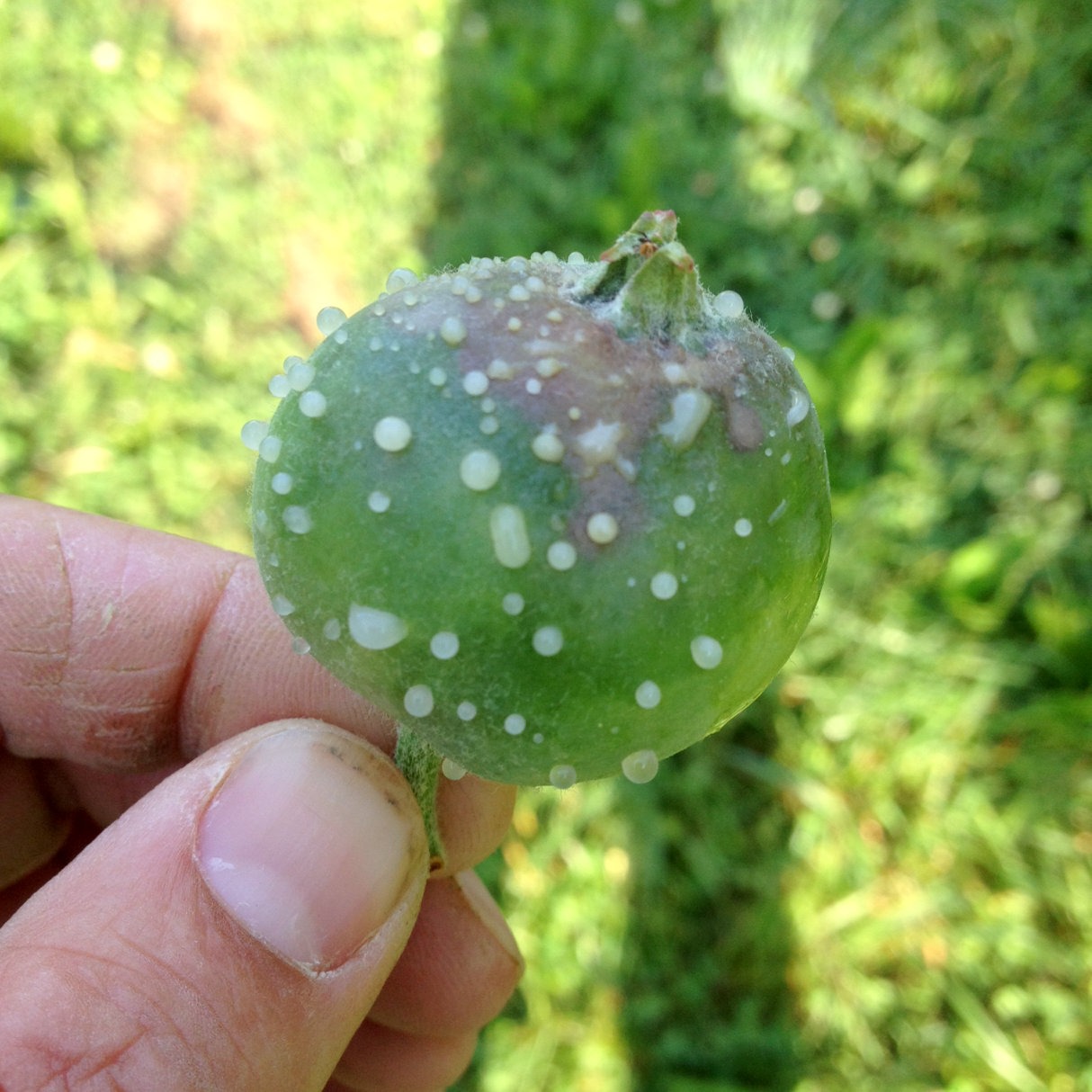
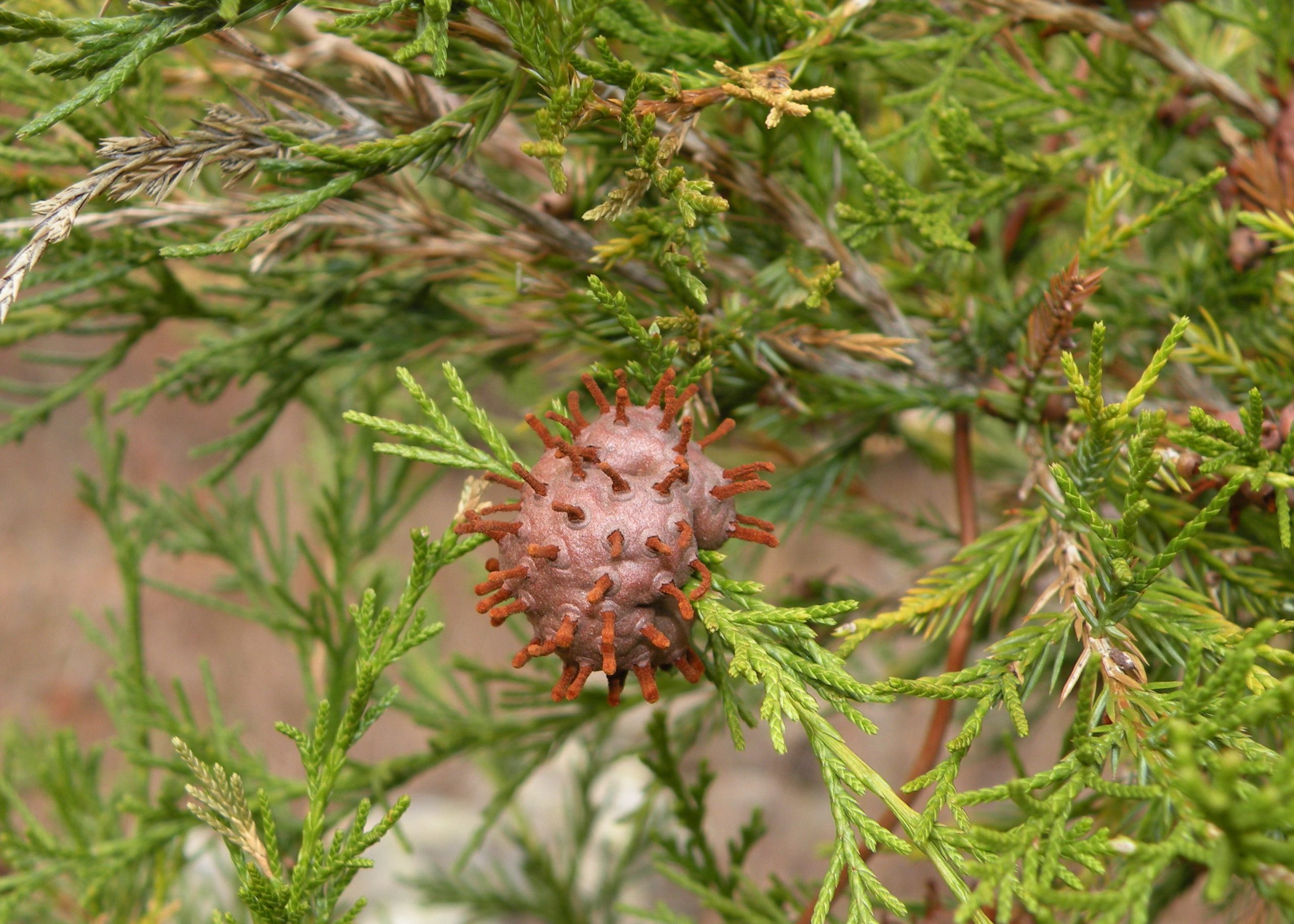
On apple leaves, small pale yellow spots form on the upper surface in May or June. They soon enlarge and turn orange, with black specks in the centre, and a mat of orange-yellow cluster cups appears on the underside. Similar spots, up to three quarters of an inch across, may form on fruit near the calyx end. Early infected fruit may be distorted and drop prematurely, and severe defoliation can reduce bloom the next season.
On eastern red cedar, hard brown galls up to 2 inches across form near branch ends in summer. In spring after rain, the galls produce large, orange, gelatin-like tendrils full of spores, which can blow up to half a mile to infect nearby apple or crabapple trees, according to Clemson Extension. The Connecticut Agricultural Experiment Station notes that removing red cedars up to one mile away usually reduces the spores reaching the tree, although this is often not practical.
Related rusts cause similar damage. Quince rust produces dark green, crater-like spots on apple fruit, with brown, spongy flesh beneath, but it does not infect apple leaves. Hawthorn rust usually infects leaves but can also deform fruit and green stems.
Conditions that favour it
Wet spring weather favours rust, because the cedar galls release spores after rain and the spores need moisture to infect apple leaves. The disease is worst when apple trees and junipers grow close together.
Prevention and control
Planting resistant varieties is the most effective control. Clemson Extension notes that Liberty has high resistance to cedar apple rust, and Freedom is resistant as well. The Connecticut Agricultural Experiment Station lists Delicious, Empire, Jonamac, McIntosh and Paulared as resistant to cedar-apple rust, but warns that resistance to one Gymnosporangium rust does not guarantee resistance to the others: McIntosh, for example, is susceptible to hawthorn rust.
If possible, remove eastern red cedars from the area, or prune out galls on nearby cedars. If disease is severe enough to warrant chemical control, Clemson Extension lists myclobutanil or sulfur for apples. Apply all chemicals according to the directions on the label.
How to tell it apart
Rust spots are bright orange-yellow and raised, which sets them apart from the olive-green to black spots of apple scab and from the purple-edged frogeye spots of black rot. The other giveaway is the host: rust never appears on apples without nearby cedars or junipers, because the fungus needs both hosts. If you find orange spots on apple leaves, look for brown galls on the nearest juniper. If the galls are there, you have found the source.
4. Powdery Mildew
Powdery mildew is a common apple disease that is easy to recognise and, in most home orchards, easy to live with. It is becoming more important on apple and crabapple each year in the Midwest, according to Illinois Extension, but it rarely destroys a crop the way fire blight or scab can. Its main cost is weakened growth and russeted fruit.
What causes it
Powdery mildew of apple is caused by the fungus Podosphaera leucotricha. It overwinters as mycelium, or fungal strands, in dormant buds. As infected buds open in spring, spores called conidia are produced and carried by wind to newly emerging leaves and blossoms.
Symptoms
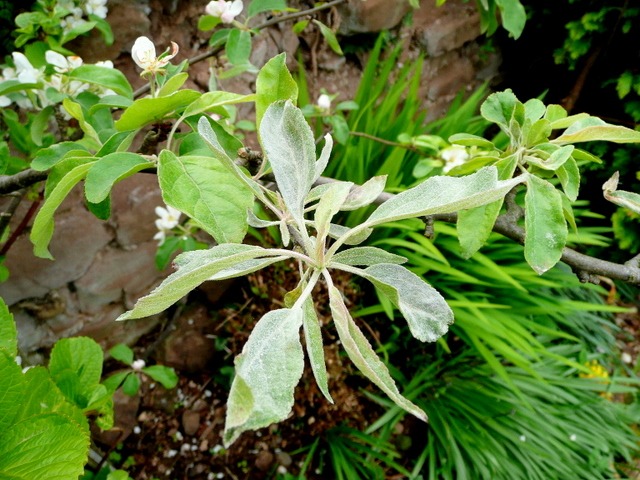
Look for whitish grey, powdery mould or felt-like patches on buds, young leaves, blossoms and green twigs. Leaves may be crinkled or cupped upward, dwarfed, narrow and erect. New shoots appear stunted and rosette-like, and may die back. Fruit on certain varieties shows brown netlike russeting and may crack. Unlike most fungal diseases, which need wet leaves, powdery mildew is most prevalent during dry, hot periods.
Conditions that favour it
Dry, warm weather and dense, crowded branches favour mildew. The fungus spreads by wind, so a thick canopy with poor air circulation gives it many places to settle. Shady, still spots in the tree are hit first.
Prevention and control
Prune out infected branches early in the season, and prune every year to keep the centre open so air flows through it. The University of California home orchard calendar advises raking and removing fallen leaves, and spraying with liquid lime-sulfur or wettable sulfur, first at the green-tip stage and again at the pink bud stage, then every 10 days until rains stop. Clemson Extension lists myclobutanil, a copper fungicide or sulfur for apples and crabapples when disease is severe enough to warrant chemical control, and warns that some of these chemicals can injure the tree if applied at the wrong time. Apply all chemicals according to the label, and do not apply sulfur above 90 degrees Fahrenheit or to drought-stressed plants.
Planting mildew resistant varieties helps a great deal. The Connecticut Agricultural Experiment Station lists Freedom, Jonafree, Liberty and Priscilla as mildew resistant varieties. Illinois Extension notes that Liberty is resistant to powdery mildew, and that Dayton has good resistance to it.
How to tell it apart
Powdery mildew is the only common apple disease that looks like white flour dusted on the leaves. The usual confusion is with downy mildew, a different disease that needs wet conditions and produces greyish growth mainly on leaf undersides. If the white coating sits on the upper surfaces of young leaves and shoots in dry, warm weather, it is powdery mildew. Agribloom’s downy mildew guide covers that disease separately.
5. Black Rot (Frogeye Leaf Spot)
Black rot is a three-part disease: it attacks leaves, fruit and wood. It is most common on stressed or injured trees, and it is often associated with unusually warm seasons. It is also the disease that most often follows fire blight, because the fungus enters through dead wood that fire blight leaves behind.
What causes it
Black rot is caused by the fungus Botryosphaeria obtusa. The fungus overwinters in dead wood, in cankers and in mummied apples. In spring, spores are formed and are spread by splashing raindrops and wind to developing tissues during storms, where they cause infection.
Symptoms
On leaves, it begins as a purple speck that enlarges to a brown or tan centre with a purple margin, which looks like a frog’s eye. The spots are about one eighth to one quarter of an inch across, and heavily infected leaves drop. On limbs it appears as slightly sunken, reddish brown cankers that darken as they grow.
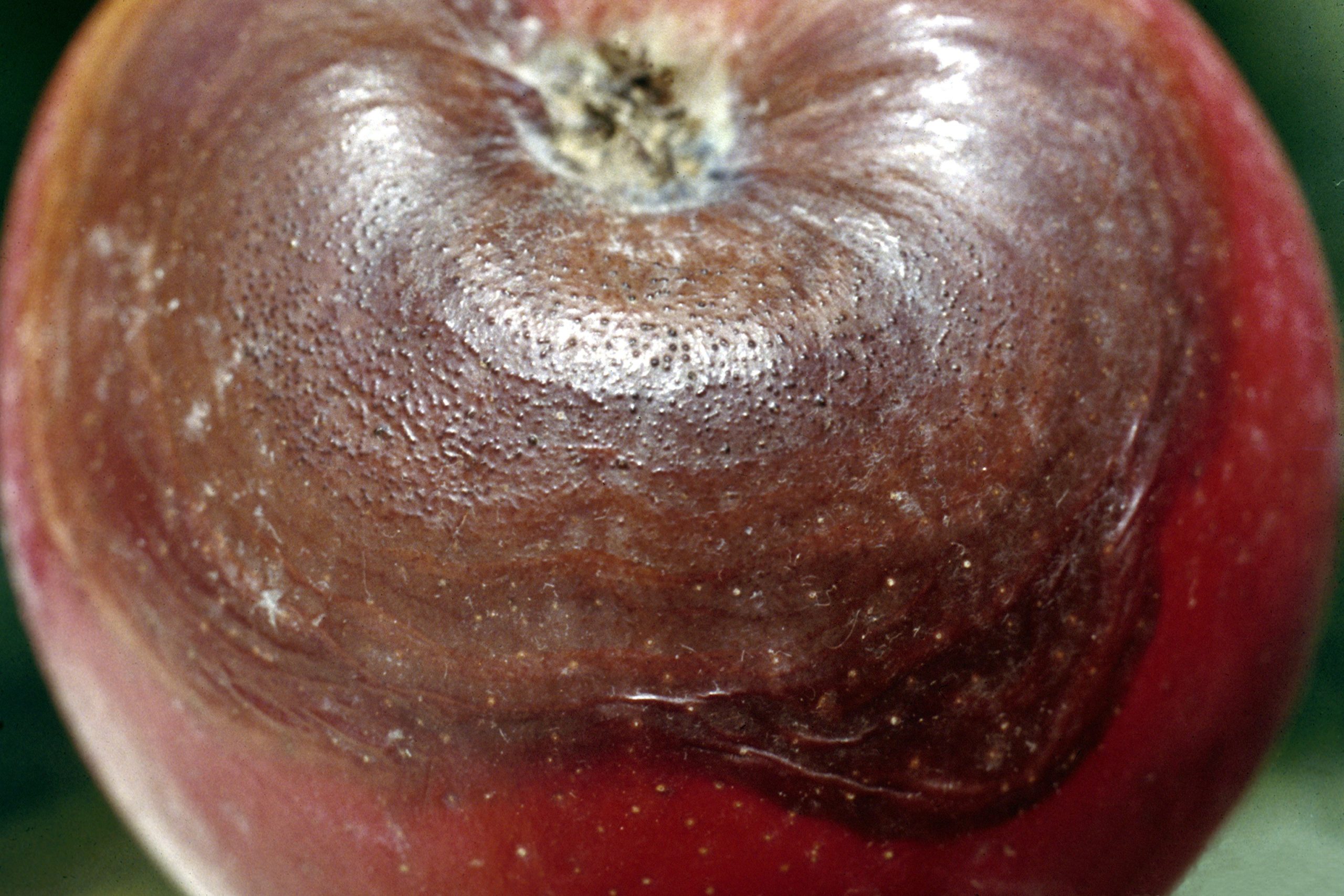
On fruit it begins with tiny red or purple spots at the calyx end, opposite the stem. After a few weeks the spots enlarge with alternating zones of black and brown, and the rot eventually takes the whole fruit, which wrinkles, mummifies and often stays on the tree. The fruit rot is firm and black with concentric rings, and the rotted fruit is covered in tiny black dots, the spore-producing bodies of the fungus.
Conditions that favour it
Warm seasons favour black rot, and the disease is worst on trees that are stressed by drought, winter injury, fire blight or overcropping. Dead wood in the tree is the main source of spores, so a tree that has not been pruned for years is far more likely to develop black rot.
Prevention and control
Sanitation is essential. Remove and discard dead branches and mummied fruit, where the fungus overwinters, and take all prunings away from the tree at once. Do not leave dead wood in the canopy or mummied fruit hanging through winter. Clemson Extension notes that captan is effective if applied early and at regular intervals through the season. Apply all chemicals according to the label.
Keep the tree vigorous with proper watering, mulching and balanced fertilisation, because a stressed tree is a susceptible tree. Avoid overcropping by thinning fruit, since a tree carrying too much fruit is weaker and more open to infection.
How to tell it apart
The frogeye leaf spot is the giveaway: a tan centre with a purple border, about the size of a pencil eraser. The University of Georgia Extension guide notes that frogeye leaf spot can be confused with foliar chemical injury, and that laboratory isolation is needed for a positive identification, so if you sprayed recently and the spots appeared at the same time, consider spray injury as well. On fruit, black rot is firm and black with concentric rings, while bitter rot is softer, sunken and brown with pink spore masses. Black rot starts at the calyx end; bitter rot can start anywhere on the fruit.
6. Bitter Rot
Bitter rot is the summer fruit rot that home growers in warm, humid regions dread most. It can turn a promising crop into mush in weeks, and it can also attack fruit after harvest, so apples that looked clean at picking can rot in storage. It is worst in the Southeast and Mid-Atlantic, and in warm, wet summers anywhere apples grow.
What causes it
Bitter rot is caused by fungi in the genus Colletotrichum, formerly known as Glomerella cingulata in older Extension literature. The fungus can infect fruit any time after petal fall, and the disease is severest as fruit reaches maturity. It also causes Glomerella leaf spot, covered in the look-alike note below, and it can infect twigs and form cankers. Rain or irrigation splash moves spores to other fruit.
Symptoms
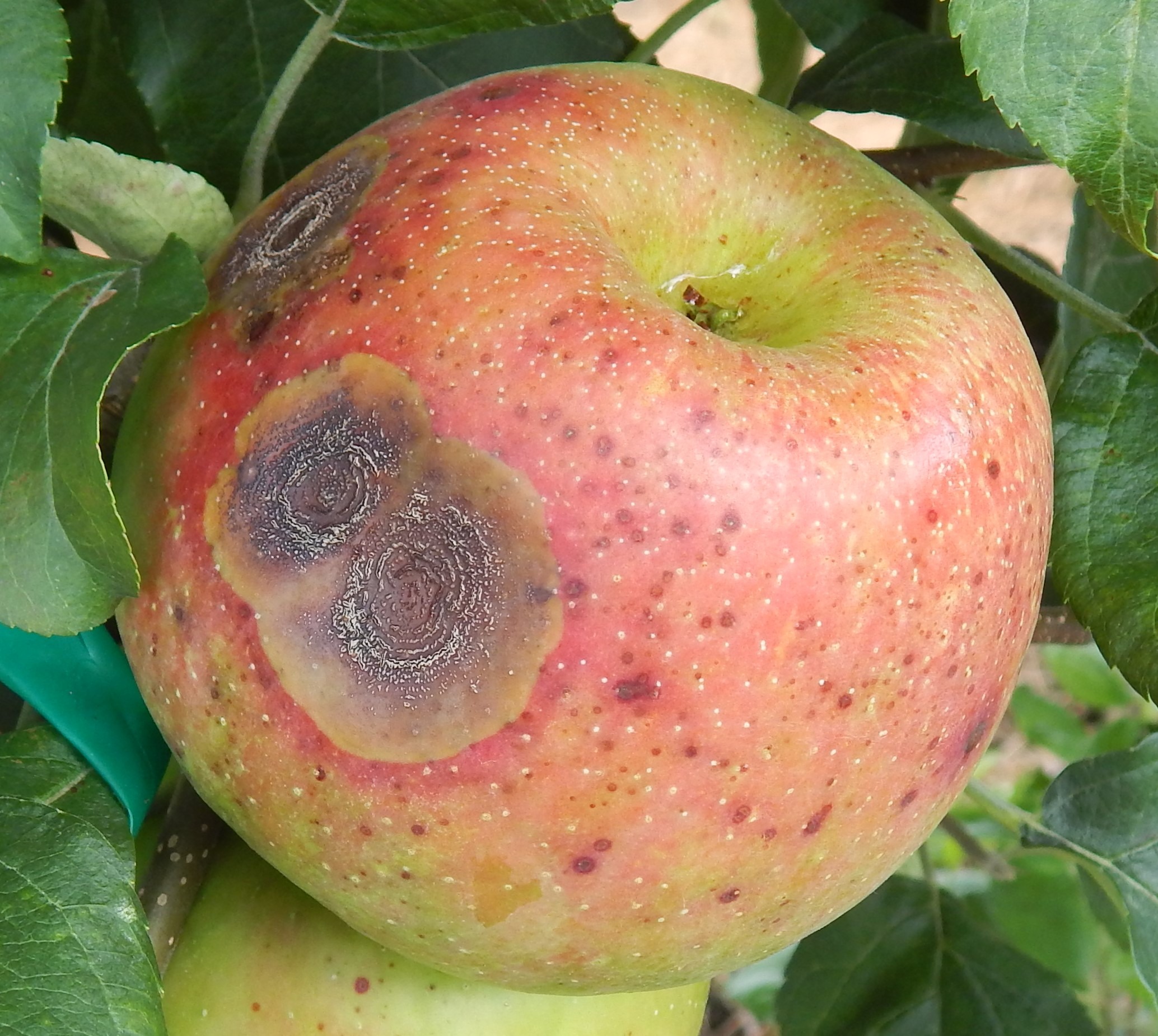
Fruit infections begin as small, light brown spots that enlarge rapidly in warm to hot, moist conditions. The lesion sinks into the fruit surface and becomes covered with rings of pinkish spore masses. The fruit may become soft and watery, then dry to a dark leathery appearance. In humid weather, large numbers of creamy to salmon coloured spores are produced in concentric rings inside the lesion. Symptoms usually appear on the sun-exposed side of the apple. Cut into an infected apple and the rotted flesh is watery, with the lesion in a V-shaped pattern narrowing towards the core, according to Penn State Extension. That V shape is one of the clearest signs of bitter rot.
Conditions that favour it
Warm, wet weather favours bitter rot. Cornell Cooperative Extension notes that it is primarily a problem in warm, wet summers, and Penn State Extension reports that bitter rot has been the primary fruit rot concern in the Mid-Atlantic in recent years. The more mature the fruit, the more susceptible it is. Bruised or wounded fruit is also more susceptible, so rough handling at harvest invites rot.
Prevention and control
Prune in early spring to remove dead wood and promote air circulation. Remove and destroy infected fruit as it appears in summer, from the tree and the ground. Do not let rotting fruit hang in the tree during harvest: Penn State Extension advises dropping it to the ground, which limits spread within the canopy and contamination of fruit picked later.
Harvest at proper maturity, handle fruit carefully to avoid bruising, keep bins clean, minimise soil and debris brought in on bins, and keep fruit cool and shaded after harvest until it is stored or delivered. Penn State Extension notes that captan is an excellent fungicide for bitter rot, but it washes off with heavy rain, and that sulfur and bacterial-based products are among the organic options. Apply all chemicals according to the label, and observe the days to harvest interval.
How to tell it apart
Bitter rot and black rot are the two fruit rots most often confused. Bitter rot lesions are sunken, brown and soft, with pink to salmon spore masses in concentric rings, and the rot is V-shaped inside. Black rot lesions are firm and black with alternating dark and light rings, and they start at the calyx end. Bitter rot also has a leaf phase, Glomerella leaf spot, which starts as purple spots that grow with concentric rings and may coalesce. Penn State Extension warns not to confuse it with necrotic leaf blotch, a physiological disorder, not a disease: necrotic leaf blotch shows irregular brown blotches on leaves, the fruit is not affected, and it needs no fungicide. If the leaves are blotched but the fruit is clean, it is probably necrotic leaf blotch, not bitter rot.
7. Flyspeck and Sooty Blotch
Flyspeck and sooty blotch are two different diseases that almost always appear together, so Extension guides treat them as a pair. They are the most cosmetic of all apple diseases: they blemish the skin and ruin the look of the fruit, but they do not rot it, and the fruit is still edible. They are also the clearest sign that a tree needs pruning, because they thrive in dense, unpruned canopies with poor air circulation.
What causes them
Flyspeck is caused by the fungus Schizothyrium pomi, also named Zygophiala jamaicensis in more recent literature. Sooty blotch is caused by the fungus Gloeodes pomigena, according to Clemson Extension, and the Connecticut Agricultural Experiment Station describes it as a complex of fungi including Peltaster fructicola, Leptodontium elatius and Geastrumia polystigmatis. Both live on the fruit surface and do not invade the flesh.
Symptoms
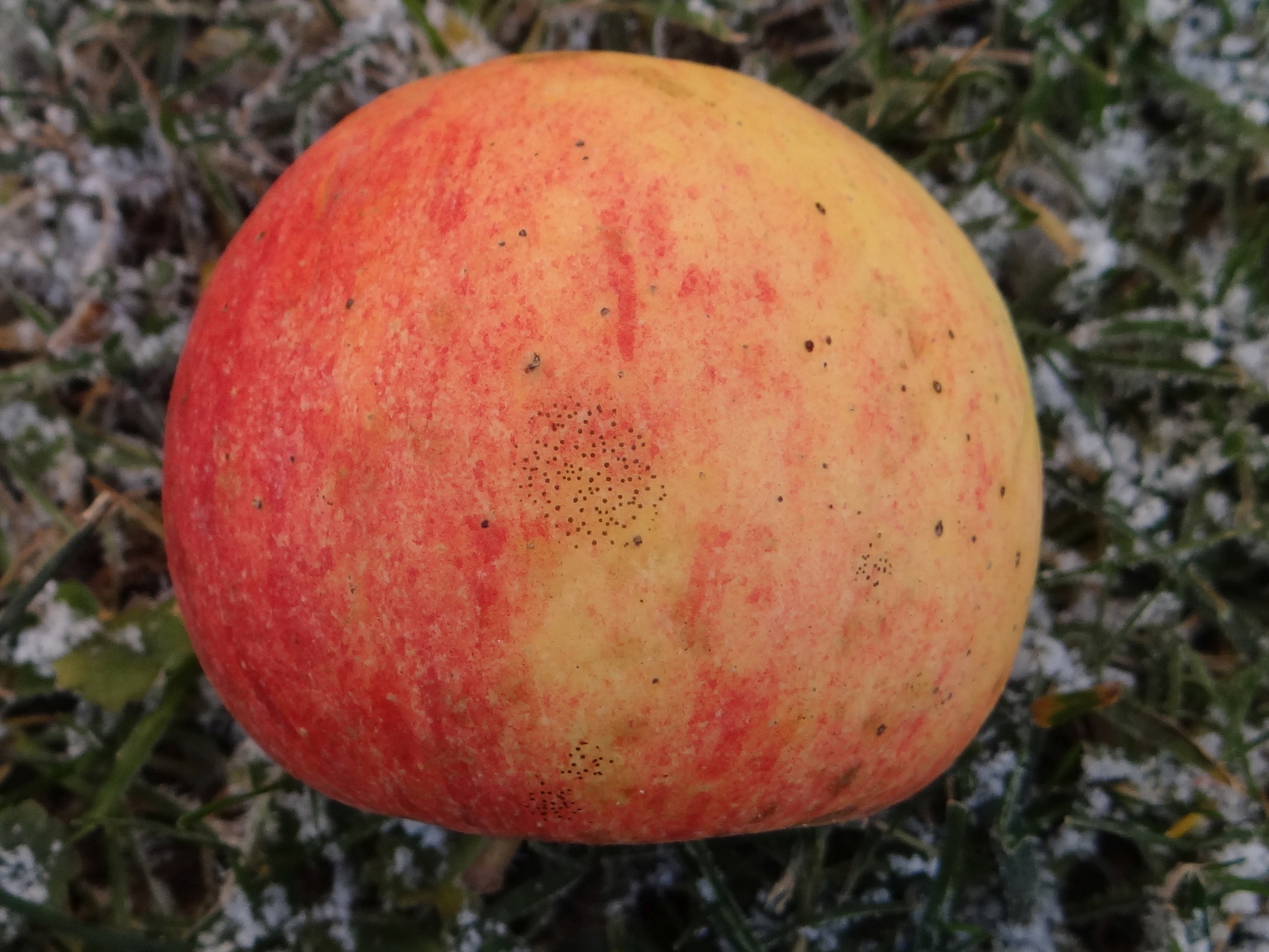
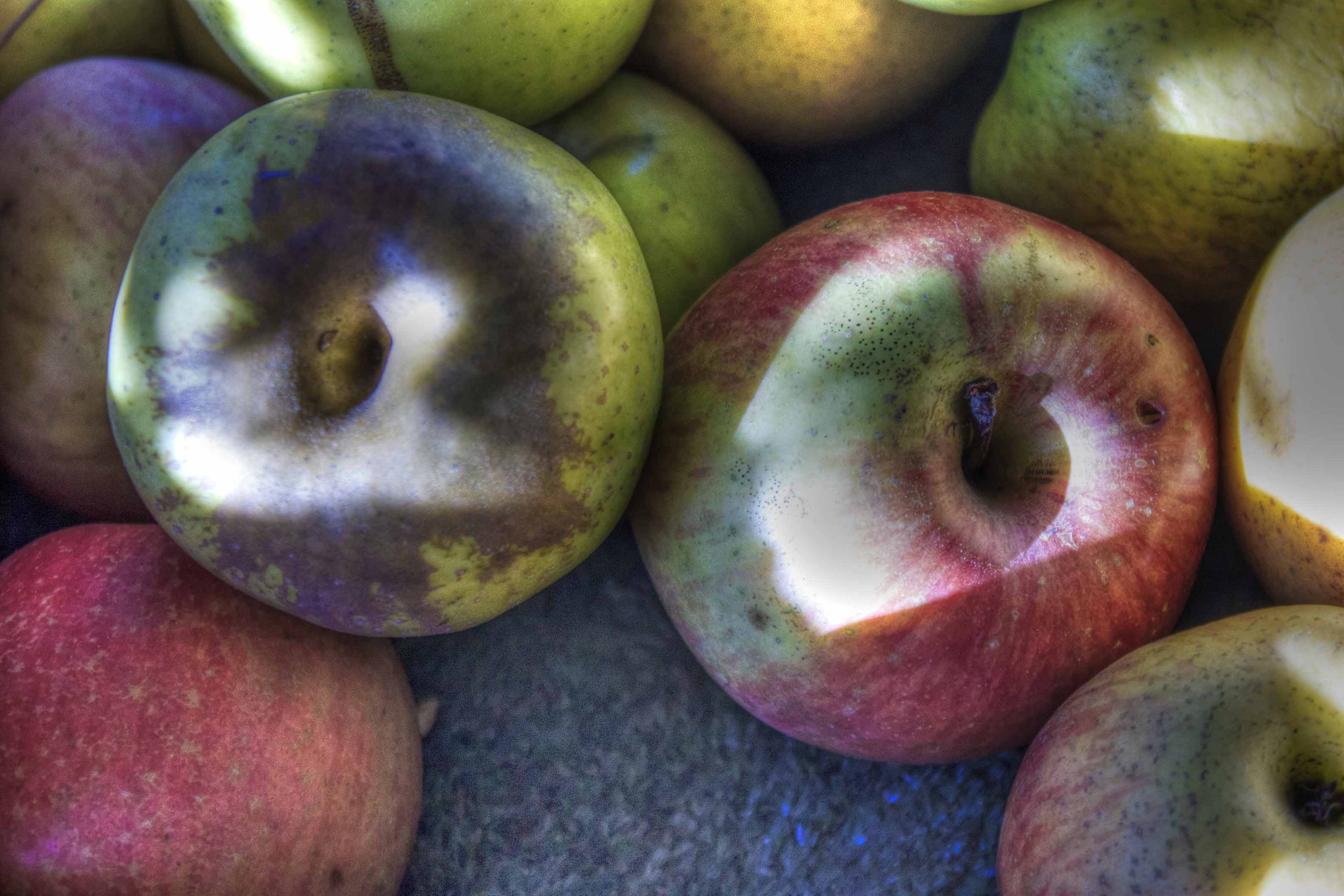
Flyspeck looks like groups of very small, superficial black dots on the fruit surface. The dots are slightly raised and occur in groups of six to 50, as if a fly has speckled the apple. Sooty blotch looks like a brown or black blotch, about a quarter of an inch across, on the fruit. Spots may coalesce to cover the entire fruit, giving it a dirty, soot-smeared look. The fruit is still edible. Sooty blotch wipes off the fruit and flyspeck does not, which is a useful test when you are trying to tell them apart.
Conditions that favour them
These diseases develop in cool, rainy weather, particularly in dense, unpruned trees with poor air circulation. They are worst when rain early in the season continues into summer. The fungi need long periods of leaf and fruit wetness, so a thick canopy that stays damp after rain suits them well.
Prevention and control
Maintain good air circulation by pruning, to keep trees from becoming too dense. Thin fruit as well, because thinned fruit dries faster after rain. Mowing the grass around the tree helps air move under the canopy. The Connecticut Agricultural Experiment Station notes that the infections are superficial and can often be removed with vigorous washing and rubbing, and that pruning and mowing are usually enough to keep these diseases in check.
Clemson Extension lists Pristine and Enterprise as varieties resistant to sooty blotch and flyspeck. If disease is severe enough to warrant chemical control, Clemson lists a copper fungicide, captan or sulfur for apples. Apply all chemicals according to the label.
Clemson University has also tested fruit bagging for home orchards: enclose half to three quarter inch green fruit, typically three weeks after bloom, in a specialty bag, and remove it about three weeks before harvest so the fruit colours properly. Bagging protects fruit from these surface diseases and from insects with very little pesticide input.
How to tell them apart
Flyspeck is dots, sooty blotch is smudges, and they often occur on the same apple. Both sit on the skin only, which separates them from the fruit rots: if you can wipe the mark off, or if the flesh underneath is sound, it is a surface disease, not a rot. Rub the mark with your thumb. Sooty blotch smears and comes off. Flyspeck does not.
8. Summer Fruit Rots: White Rot and Late-Season Rots
The summer rots are a group of related fruit rots that appear from mid-summer to harvest, when fruit is ripening and the weather is warm and wet. Black rot and bitter rot, covered above, are part of this group. White rot is the third member, and the one home growers most often meet without knowing its name.
What causes them
White rot is caused by the fungus Botryosphaeria dothidea, a close relative of the black rot fungus. The two are related and similar, but black rot has a leaf phase, frogeye leaf spot, that white rot does not. The fungi causing fruit rots can be quite stealthy, according to Penn State Extension: spores land on the fruit and cause symptoms after it has been in storage, giving growers a false sense that picked fruit are clean. Penn State also lists Alternaria rot among the late-season rots that growers in the Mid-Atlantic may meet late in the season or in storage.
Symptoms
Summer rots are sunken, soft, rotten areas which sometimes consume large parts of the apple. White rot produces a soft, light brown rot that spreads quickly through the fruit in warm weather. Both black and white rot overwinter on rough bark or in branch crotches, sometimes causing slightly sunken cankers, and white rot cankers sometimes develop a thin, papery bark. Bitter rot typically shows a cone-shaped infection, with the base of the cone on the fruit surface, and its spores sometimes appear in concentric circles and turn salmon pink in advanced stages. These rots are more pervasive in the Southeast than elsewhere, according to the National Center for Appropriate Technology, but they can become problems elsewhere if the growing season is warm and wet.
Conditions that favour them
Warm, wet weather from mid-summer to harvest favours all the summer rots. Overripe fruit is the most susceptible, because the more mature a fruit, the more susceptible it is to storage diseases. Bruised or wounded fruit is also susceptible, so rough handling at harvest opens the door to rot in storage. Warm temperatures after harvest encourage the pathogens to grow, which is why fruit left in the sun or a warm shed rots faster than fruit kept cool.
Prevention and control
The same sanitation that controls black rot controls white rot: remove dead wood and cankers in winter pruning, and remove mummied fruit from the tree and the ground. Prune for air circulation, and thin fruit so it dries quickly after rain.
At harvest, pick at proper maturity, not overripe, and handle fruit gently. Penn State Extension advises keeping fruit cool after harvest, keeping bins in the shade, using clean bins, minimising soil and plant debris, and minimising the time between harvest and delivery or storage. These steps matter as much as any spray, because many summer rots start from spores already on the fruit at picking time and only show symptoms in storage.
Fungicide sprays applied during the summer covers help when a tree has a history of fruit rot. Clemson Extension lists captan for fruit rots in its home orchard table. Apply all chemicals according to the label, and observe the days to harvest interval.
How to tell them apart
Summer rots are told apart mainly by colour, texture and the leaf symptoms that come with them. Bitter rot is brown and sunken with pink spore masses and a V-shaped rot inside. Black rot is firm and black with concentric rings and comes with frogeye leaf spots and cankers. White rot is soft and light brown, with no leaf spot phase. If the fruit is rotting but the leaves are clean and there are no cankers, white rot or bitter rot is more likely than black rot. A sample sent to your state Extension diagnostic clinic will settle it.
Preventing Apple Tree Diseases: A Seasonal Calendar
Apple diseases appear in a fairly regular sequence through the season, depending on the weather and the growth stage of the tree. Working through this calendar in order is the simplest way to keep apple tree diseases from taking hold. The Connecticut Agricultural Experiment Station notes that a season-long program is often necessary to harvest a high percentage of usable fruit. The calendar below follows the spray guide of the Connecticut Agricultural Experiment Station, the home orchard calendar of the University of California, and the spray guide of Clemson Extension. Always read the label on each pesticide before use, and never apply a general purpose spray or an insecticide while trees are in bloom, because it harms pollinators.
| Season and growth stage | What to do | Diseases it targets |
|---|---|---|
| Dormant, before bud swell | Prune out cankers, blighted wood and dead branches. Remove mummied fruit from the tree and the ground. Rake and remove fallen leaves. Apply a copper spray only if fire blight is expected to be severe. | Fire blight, black rot, white rot, apple scab |
| Delayed dormant, half-inch green | Begin scab protection if your tree has a history of scab. Keep the area under the tree clean. | Apple scab |
| Tight cluster to pink bud | Protective sprays for scab, rust, black rot and powdery mildew if needed. Sulfur or liquid lime-sulfur for mildew, first at green tip and again at pink bud. | Apple scab, cedar apple rust, black rot, powdery mildew |
| Bloom | Do not apply general purpose spray or insecticide. For fire blight only, streptomycin during bloom when temperatures are above 60 degrees Fahrenheit and rain is possible, per Clemson Extension. Watch for wilted, blackened blossoms and remove them promptly. | Fire blight |
| Petal fall | Resume protective sprays. Add a rust fungicide if rust is a problem. | Apple scab, cedar apple rust, black rot, powdery mildew |
| First cover, 7 to 10 days after petal fall | Continue cover sprays. Thin fruit to one per cluster and to one fruit every 6 inches of shoot growth. | Apple scab, fruit rots, summer diseases |
| Second to eighth covers, every 7 to 14 days | Continue cover sprays through summer. Remove infected fruit as it appears. Bag fruit if you use bagging. Keep the canopy open and the grass mowed. | Fruit rots, sooty blotch, flyspeck, bitter rot, white rot |
| Harvest | Pick at proper maturity. Handle fruit gently to avoid bruising. Drop rotting fruit to the ground away from the canopy. Keep bins clean and fruit cool and shaded. | Bitter rot, black rot, white rot, storage rots |
| Autumn, after leaf fall | Rake and remove all fallen leaves and fruit. Prune out infected terminals. Do not leave diseased leaves or fruit under the tree over winter. | Apple scab, powdery mildew, black rot, bitter rot |
Apple Varieties Resistant to Apple Tree Diseases
Planting a resistant variety is the single most effective step a home grower can take. Illinois Extension notes that planting scab resistant cultivars eliminates the sprays needed for controlling scab, which saves money and work. The table below lists only resistance that a university Extension source states directly. A blank cell means no Extension source in References states resistance for that variety and disease, not that the variety is susceptible. Check with your local nursery and Extension office for varieties that perform well in your area, because disease pressure and climate vary by region.
| Variety | Apple scab | Cedar apple rust | Powdery mildew | Fire blight | Sooty blotch and flyspeck |
|---|---|---|---|---|---|
| Liberty | Resistant | High resistance | Resistant | Moderate to resistant | |
| Enterprise | Resistant | Resistant | |||
| Goldrush (Gold Rush) | Resistant | ||||
| Pristine | Resistant | Resistant | |||
| Redfree | Resistant | Moderate tolerance | Moderate tolerance | ||
| Freedom | High resistance | Resistant | Somewhat resistant | Somewhat resistant | |
| Jonafree | Resistant | Resistant | Less susceptible than Jonathan | ||
| Priscilla | Resistant | Resistant | Good tolerance | ||
| Empire | Resistant | Resistant | |||
| Winesap | Resistant | ||||
| Macfree | Resistant | ||||
| Dayton | Resistant | Good resistance | Good resistance | ||
| Jonamac | Resistant | ||||
| Delicious | Resistant | ||||
| Paulared | Resistant |
Sources for this table: Clemson Extension (Liberty, Enterprise, Goldrush, Pristine, Redfree, Freedom, Jonafree, Gala Supreme); Illinois Extension (Liberty, Enterprise, Gold Rush, Redfree, Jonafree, Priscilla, Dayton, and the PRI breeding program list); Connecticut Agricultural Experiment Station (Jonafree, Priscilla, Macfree, Liberty for scab; Freedom, Jonafree, Liberty, Priscilla for mildew; Liberty, Empire, Winesap for fire blight; Delicious, Empire, Jonamac, McIntosh, Paulared for cedar-apple rust). Gala Supreme is listed by Clemson Extension as scab resistant but is not included in the table above because no second source confirms it and its resistance to the other diseases is not stated in References. McIntosh is resistant to cedar-apple rust but susceptible to hawthorn rust, so it is not listed as a safe general choice.
The questions below cover the apple tree diseases that home growers ask about most often.
Frequently Asked Questions
What is the most common apple tree disease?
Apple scab is the most common apple disease in the United States. Clemson Extension calls it one of the most common diseases of apple, and the Connecticut Agricultural Experiment Station calls it the most important disease of apple in New England. It appears in spring as olive-green spots on young leaves and corky black spots on fruit. It rarely kills a tree, but severe infections defoliate it and reduce the next year’s crop. Planting a resistant variety such as Liberty or Enterprise, and raking up fallen leaves in autumn, are the two most effective steps against it.
Can you eat apples with flyspeck or sooty blotch?
Yes. Flyspeck and sooty blotch are surface diseases that do not rot the flesh, and the fruit is still edible, according to Clemson Extension. Sooty blotch wipes off with vigorous washing and rubbing, while flyspeck does not. The marks are cosmetic, but they show that the tree needs pruning for better air circulation, because both diseases thrive in dense, damp canopies.
How do you tell fire blight from winter damage?
Fire blight appears in spring during warm, rainy bloom weather, above 60 degrees Fahrenheit. Its signs are wilted, blackened blossoms, shoot tips bent like a shepherd’s crook, dead brown leaves that stay attached, and a milky bacterial ooze on bark or fruit. Winter damage appears after cold weather, not during bloom, and produces no ooze or blackened blossom clusters. If you see ooze, treat it as fire blight, prune well below the damage, and disinfect your tools between cuts.
Do I need to spray my apple tree every year?
Not necessarily. If you plant a disease resistant variety and keep up with sanitation, pruning and leaf cleanup, many home trees produce good fruit with little or no spraying. Clemson Extension advises chemical control only if the disease is severe enough to warrant it, and the Connecticut Agricultural Experiment Station recommends combining culture, sanitation, resistance and sprays, so no single method carries the whole load. If you do spray, always follow the label for the host plant, dose, timing and days to harvest interval.
Will apple scab kill my tree?
Apple scab rarely kills a tree outright. Its damage is cumulative: severe infections cause early leaf drop, which weakens the tree and reduces fruit set the next season, according to Illinois Extension. A tree defoliated year after year becomes weak and more open to other diseases, including black rot. That is why leaf cleanup and resistant varieties matter even though scab itself is not usually fatal.
How far away do cedar trees need to be to stop cedar apple rust?
Cedar apple rust spores can blow up to half a mile from an infected cedar, according to Clemson Extension, and the Connecticut Agricultural Experiment Station notes that removing red cedars up to one mile away usually reduces the spores reaching the tree. In practice, removing every cedar within half a mile is rarely possible, especially in a neighbourhood. That is why Extension guides call planting resistant varieties the most effective control: a resistant tree stays healthy even when cedars are nearby.
Can I compost diseased apple leaves and fruit?
Do not leave diseased leaves and fruit under the tree, because apple scab overwinters in fallen leaves and black rot and bitter rot overwinter in mummied fruit and dead wood. Clemson Extension advises raking and removing leaves to reduce the early spring infection source, and the Connecticut Agricultural Experiment Station advises removing diseased leaves and fruit from the vicinity of the tree. Put them in municipal green waste or dispose of them away from the orchard. A cool home compost pile does not reliably destroy these fungi.
References
- Illinois Extension, Fruit Trees for Home Gardens: Diseases. Symptoms and control of apple scab, cedar apple rust, fire blight and powdery mildew, and the PRI scab resistant cultivar list. https://extension.illinois.edu/fruit-trees/diseases
- Clemson Cooperative Extension, Home and Garden Information Center, Apple and Crabapple Diseases. Apple scab, cedar-apple rust, fire blight, powdery mildew, black rot, flyspeck and sooty blotch, fruit bagging, fungicide table and spray guide. https://hgic.clemson.edu/factsheet/apple-crabapple-diseases/
- Connecticut Agricultural Experiment Station, Sharon M. Douglas, Disease Control for Home Apple Orchards. Apple scab, Gymnosporangium rusts, powdery mildew, black rot, summer diseases, fire blight, control strategies and spray schedule. https://portal.ct.gov/-/media/caes/documents/publications/fact_sheets/plant_pathology_and_ecology/diseasecontrolforhomeappleorchardspdf.pdf
- Penn State Extension, Apple Diseases: Fruit Rots, Control at Apple Harvest (and Postharvest). Bitter rot symptoms and the V-shaped rot pattern, Glomerella leaf spot versus necrotic leaf blotch, and postharvest rot prevention. https://extension.psu.edu/apple-diseases-fruit-rots-control-at-apple-harvest-and-postharvest
- National Center for Appropriate Technology (NCAT/ATTRA), Apple Diseases Identification Sheet. Apple scab, fire blight, cedar apple rust, summer rots, white rot and sooty blotch and flyspeck identification. https://ncat.org/wp-content/uploads/2022/08/apple_diseases_diagnostic_key.pdf
- University of California Agriculture and Natural Resources, Apples and Pears: Calendar of Operations for Home Gardeners, Publication 7258. Seasonal calendar, leaf cleanup for scab and powdery mildew, sulfur sprays, fire blight pruning. https://escholarship.org/content/qt7w93x1gd/qt7w93x1gd_noSplash_5f4faed8f296694a424593dc60d765a1.pdf
- University of California IPM, Fire Blight, Pest Note 7414. Fire blight symptoms, spread by insects, water and tools, and control by prompt removal of infected wood. https://ipm.ucanr.edu/PMG/PESTNOTES/pn7414.html
- University of Georgia Cooperative Extension, Apple Diseases, Bugwood Wiki. Black rot, fire blight, apple scab, bitter rot and white rot descriptions, including the frogeye leaf spot confusion with chemical injury. https://wiki.bugwood.org/Archive:SEIPM/Apple_Diseases
- Cornell Cooperative Extension, Tree Fruit Pest Management, Home Pest Management Cultural Guidelines, Chapter 10. Fire blight susceptible varieties, bitter rot cultural control, and sanitation. https://cropandpestguides.cce.cornell.edu/Guidelines/HomePestCultural/CH10.pdf
Explore More Plant Disease Guides on AgriBloom :



Thesis Link : https://saulibrary.edu.bd/daatj/public/uploads/BAU200601_19-Pp_5.pdf
- Apple Tree Diseases – How to Identify and Treat Them - November 28, 2026
- 10 Best Row Covers for Pest Protection - November 28, 2026
- 10 Best Raised Garden Beds - November 28, 2026