
Disclosure: As an Amazon Associate I earn from qualifying purchases.
You plant the cabbage on a Saturday, and by Wednesday the leaves look like lace. Flea beetles have punched a hundred tiny holes in them, and a cabbage white butterfly is laying the eggs that will become the green caterpillars that finish the job. Spraying helps, but only if the spray lands on the insect, and only until the next rain. A row cover does the job differently. It puts a physical wall between the pest and the plant, and it does it without a single chemical.
The best garden row cover is the one that matches the weight to the job: light fabric for keeping insects out in summer, medium fabric for spring and fall frost, heavy fabric for overwintering. Buy the wrong weight and you get the wrong result. A heavy cover in July can cook the plants it was meant to protect, and a light cover in November will not save a single leaf from frost. This guide ranks the 10 best row covers for pest protection, with every weight, frost figure, and light percentage checked against manufacturer, retailer and university Extension sources in November 2026.
No hands-on testing was done for this guide. Product availability and specifications were verified in November 2026.
Quick Recommendation
Short on time? Start here.
- Best overall: Agribon+ AG-19. The all-round floating row cover: insect barrier plus 2 to 4 degrees of frost protection at 85 percent light.
- Best hoop-supported kit cover: Gardener’s Supply GardenQuilt. Extra-heavy 1.25 oz fabric that protects down to 24 degrees, made to sit on Super Hoops.
- Best medium frost cover: Agribon+ AG-30. 4 to 6 degrees of frost protection down to 26 degrees, for overwintering in moderate climates.
- Best UV-stabilized spunbonded cover: Agfabric 0.9 oz Floating Row Cover. Explicitly UV-stabilized polypropylene at 85 percent light, protection down to 28 degrees.
- Best heavy frost blanket for retail buyers: DeWitt N-Sulate. 1.5 oz reusable blanket, 6 to 8 degrees of protection, UV-treated, sold in garden centres.
- Best heavyweight floating row cover: Agribon+ AG-50. The heaviest Agribon grade: 6 to 8 degrees of protection down to 24 degrees at 50 percent light.
- Best pure insect barrier: Agribon+ AG-15. The lightest fabric here, 90 percent light, sold as an insect barrier only, with no frost claim at all.
- Best garden-centre pick: Gardeneer by Dalen Harvest-Guard. US-made non-woven cover in handy retail sizes, Premium variant rated 6 to 8 degrees down to 29 degrees.
- Best fine-mesh insect netting: ProtekNet 25g. 0.35 mm mesh that excludes aphids, thrips, and whitefly without building up heat.
- Best for raised beds: Agfabric Pop-Up Crop Protector Tent. A pop-up mesh tent sized for a standard 4 by 4 foot bed, with zippered doors.
Row Covers at a Glance
| Product | Best For | Material / Weight | Frost Protection | Light Transmission | Our Rating |
|---|---|---|---|---|---|
| 1. Agribon+ AG-19 | Best overall | Spunbonded polypropylene, 0.55 oz | 2 to 4 degrees, down to 28 F | 85% | 8.8 |
| 2. Gardener’s Supply GardenQuilt | Hoop-supported kit cover | Polypropylene fibers, 1.25 oz | Down to 24 F | 79.3% | 8.7 |
| 3. Agribon+ AG-30 | Medium frost cover | Spunbonded polypropylene, 0.9 oz | 4 to 6 degrees, down to 26 F | 70% | 8.6 |
| 4. Agfabric 0.9 oz Floating Row Cover | UV-stabilized spunbonded cover | Spunbonded polypropylene, 0.9 oz | Down to 28 F | 85% | 8.3 |
| 5. DeWitt N-Sulate | Heavy frost blanket, retail | Spunbond polypropylene, 1.5 oz | 6 to 8 degrees | 50% | 8.2 |
| 6. Agribon+ AG-50 | Heavyweight floating row cover | Spunbonded polypropylene, 1.5 oz | 6 to 8 degrees, down to 24 F | 50% | 8.2 |
| 7. Agribon+ AG-15 | Pure insect barrier | Spunbonded polypropylene, 0.45 oz | Not rated by the distributor for frost protection | 90% | 8.1 |
| 8. Gardeneer by Dalen Harvest-Guard | Garden-centre pick | Non-woven fabric, weight not published | Premium: 6 to 8 degrees, down to 29 F | Not published | 8.1 |
| 9. ProtekNet 25g | Fine-mesh insect netting | Synthetic fiber mesh, 0.74 oz | None | 89% | 7.7 |
| 10. Agfabric Pop-Up Crop Protector Tent | Raised beds | Ultra-fine UV-resistant mesh, weight not published | None | 80% | 7.4 |
Row Cover Thickness Guide: What the Weight Numbers Mean
Row cover is sold by weight in ounces per square yard, and the weight decides what the fabric can do. The University of Maryland Extension lays out the ladder in one table, and every product in this roundup sits somewhere on it.
Lightweight grade, 0.45 oz per square yard, is marketed as an insect barrier. It lets through 90 to 95 percent of the light and gives about 2 degrees of frost protection. It can stay on some crops, such as beets, snap beans, and salad greens, from seeding to harvest. This 2-degree figure is the University of Maryland Extension’s general guidance for the 0.45 oz weight class, while Johnny’s rates the AG-15 product itself as not frost-protective, so the two are different sources for different things.
Medium-weight grade, 0.5 to 1.0 oz per square yard, lets through 70 to 85 percent of the light and gives 4 to 6 degrees of frost protection. It suits spring and fall crops as well as overwintering crops in moderate climates.
Heavyweight grade, 1.5 to 2.2 oz per square yard, lets through only 30 to 50 percent of the light and gives up to 8 degrees of frost protection. It is the grade for overwintering crops.
The honest summary, using the Extension figures: a row cover gives about 2 to 8 degrees of frost protection depending on weight, with the heaviest covers protecting plants down to around 20 degrees. The University of Minnesota puts the floor for the heaviest fabrics at around 20 degrees, and warns that those fabrics block 40 to 50 percent of the sun’s light. That trade is the whole buying decision. More frost protection always costs light, and less light always costs growth.
Two traps catch first-time buyers. The first is buying by the brand name instead of the weight. Agribon alone sells four grades in this roundup, from 0.45 oz to 1.5 oz, and the difference between the lightest and the heaviest is the difference between a summer insect screen and a winter blanket. The second trap is trusting a roundup that mixes the grades up. Several secondary sources we checked credit AG-19 with 0.9 oz and 4 to 6 degrees of frost protection. Those are AG-30’s figures. Johnny’s, the distributor, states AG-19 at 0.55 oz and 2 to 4 degrees, and that is what this article prints.
1. Agribon+ AG-19 Floating Row Cover
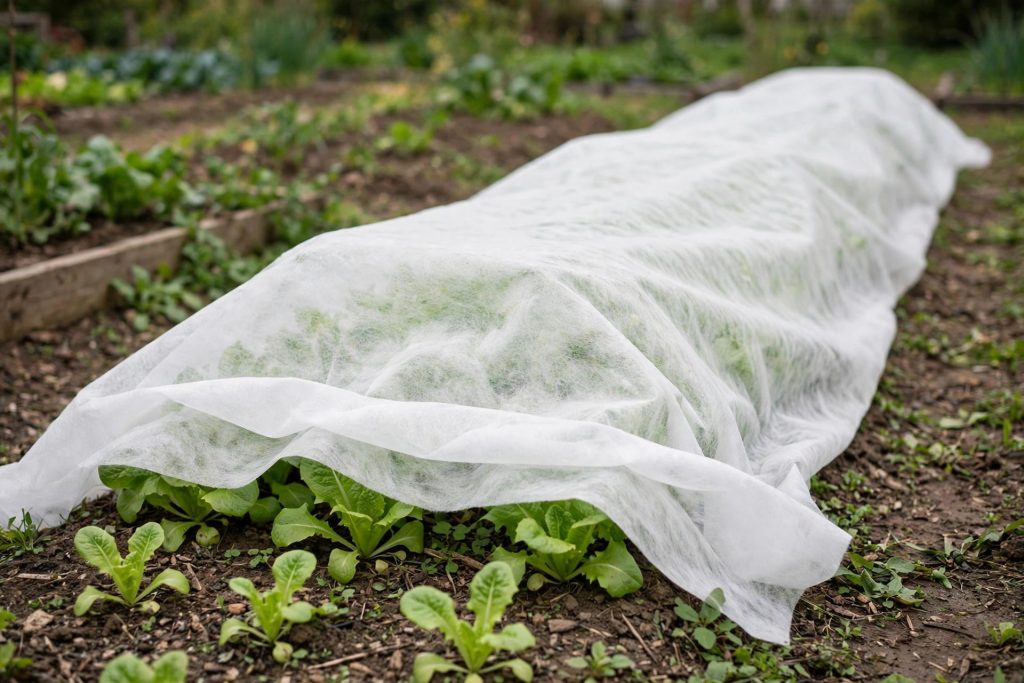
Type: Standard-grade floating row cover. Weight: 0.55 oz per sq yd. Material: Spunbonded polypropylene. Frost protection: 2 to 4 degrees, down to 28 F. Light transmission: 85 percent. Sizes: 83 in by 50 ft up to 30 ft by 100 ft, in 11 roll sizes.
AG-19 is the cover most American gardeners should start with, because it does two jobs at once. It is light enough to float directly on the crop, so there is no frame to build, and it is heavy enough to give a few degrees of frost protection on a cold spring or fall night. At 85 percent light transmission, the plants underneath keep growing at close to full speed. Johnny’s Selected Seeds, the distributor, lists it as the standard grade in its comparison chart, and the figures in this section come from that chart.
The honesty flags on AG-19 are small but worth stating. Johnny’s publishes no UV treatment claim for any Agribon grade, so this article prints none. A third-party retailer listing claims UV stabilizers give AG-19 a field life of 2 to 3 seasons, but that is a retailer claim, not a Johnny’s statement. The University of Maryland gives a useful life of 1 to 3 years for row cover material generally, depending on weight, use, and weather, so plan on replacing the lightest covers sooner than the heaviest ones.
Our rating: 8.8. The best balance in the roundup: real insect protection, a little frost protection, and high light. Points off only for the missing UV claim and the modest frost figure.
2. Gardener’s Supply GardenQuilt Cover
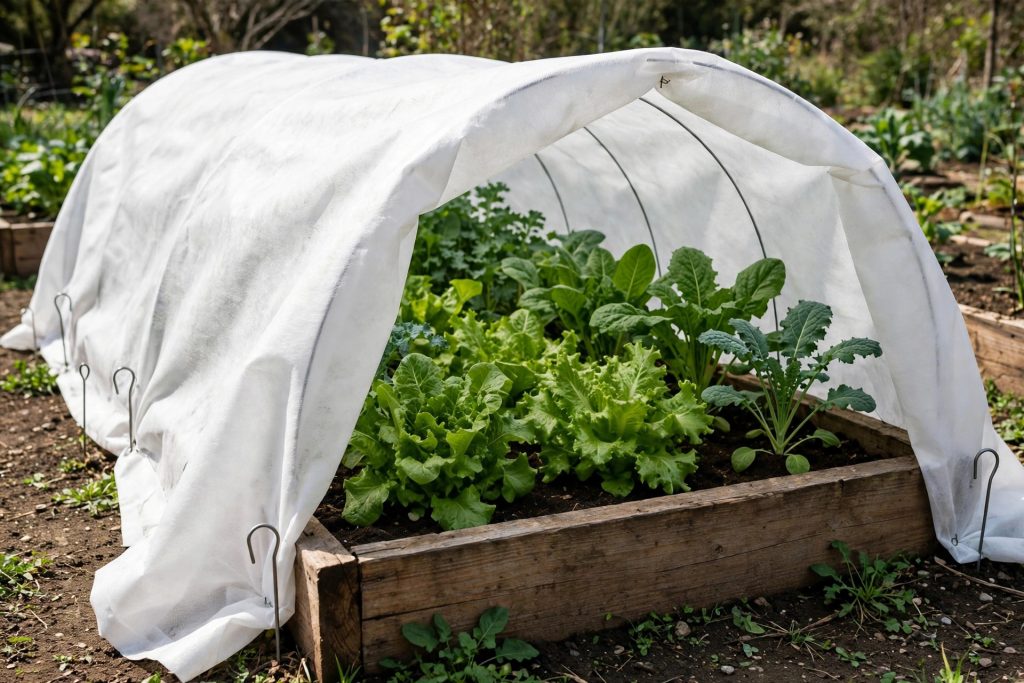
Type: Extra-heavy floating row cover, hoop-supported. Weight: 1.25 oz per sq yd. Material: Polypropylene fibers. Frost protection: Down to 24 F. Light transmission: 79.3 percent. Sizes: 6 ft by 50 ft and 12 ft by 20 ft.
GardenQuilt earns the second spot by being the most honestly documented heavy cover here. Gardener’s Supply states the weight at 1.25 oz, the frost floor at 24 degrees, and the light transmission at 79.3 percent, all on the product page. That light figure is unusually high for a fabric this heavy, which is why the cover works for overwintering without starving the plants underneath. The maker says the fabric lasts for several years, and it is not recommended for summer use, which is the right warning for a cover this warm.
Two things to know before buying. First, GardenQuilt is a hoop cover, not a floating one. The maker guidance is to use it over Super Hoops, which are sold separately, because a 1.25 oz fabric resting directly on tender plants will abrade them in wind. Second, there is a conflict in the maker’s own pages: the product page says 79.3 percent light transmission, while the maker’s own article says the fibers transmit 60 percent of available light. This article uses the product-page figure and notes the article’s figure, because the product page is the spec sheet.
Our rating: 8.7. The strongest frost protection per unit of light in the roundup, with full maker documentation. Points off because the hoops are a separate purchase and the light figure is disputed on the maker’s own site.
3. Agribon+ AG-30 Floating Row Cover
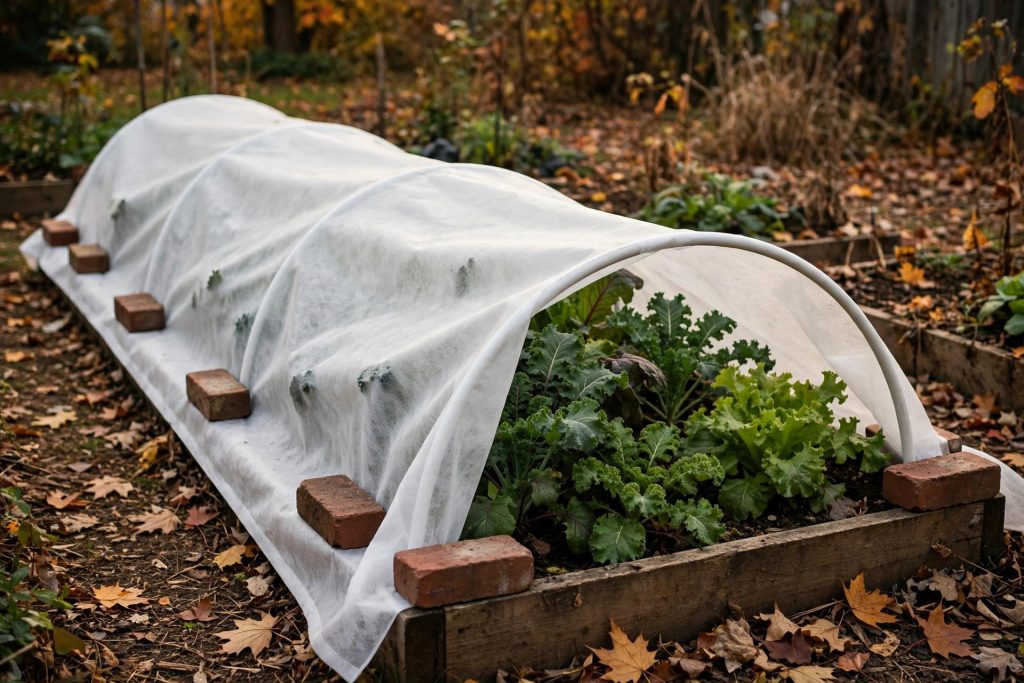
Type: Medium-grade floating row cover. Weight: 0.9 oz per sq yd. Material: Spunbonded polypropylene. Frost protection: 4 to 6 degrees, down to 26 F. Light transmission: 70 percent. Sizes: 83 in by 50 ft up to 14 ft by 800 ft, in 10 roll sizes.
AG-30 is the middle of the Agribon ladder, and the right grade for a gardener who wants to overwinter crops in a moderate climate. Four to six degrees of frost protection covers most fall frosts, and 70 percent light is enough for cool-season crops to keep growing slowly through the cold months. Johnny’s lists it for overwintering in moderate climates, and the 26 degree floor matches the University of Maryland’s medium-weight band.
The conflict to flag is the light figure. Johnny’s states 70 percent. A buying-guide table elsewhere lists AG-30 at 85 percent light, but 85 percent is AG-19’s figure, evidently copied to the wrong row. This article uses Johnny’s 70 percent. A second conflict runs the other way: one garden-gear site credits AG-30 with 6 to 8 degrees of frost protection down to about 24 degrees. Those are AG-50’s figures. Johnny’s 4 to 6 degrees down to 26 degrees is what we print.
Our rating: 8.6. Solid medium frost protection with full maker documentation. Points off for the lower light transmission and the need for hoops on taller crops.
4. Agfabric 0.9 oz Floating Row Cover
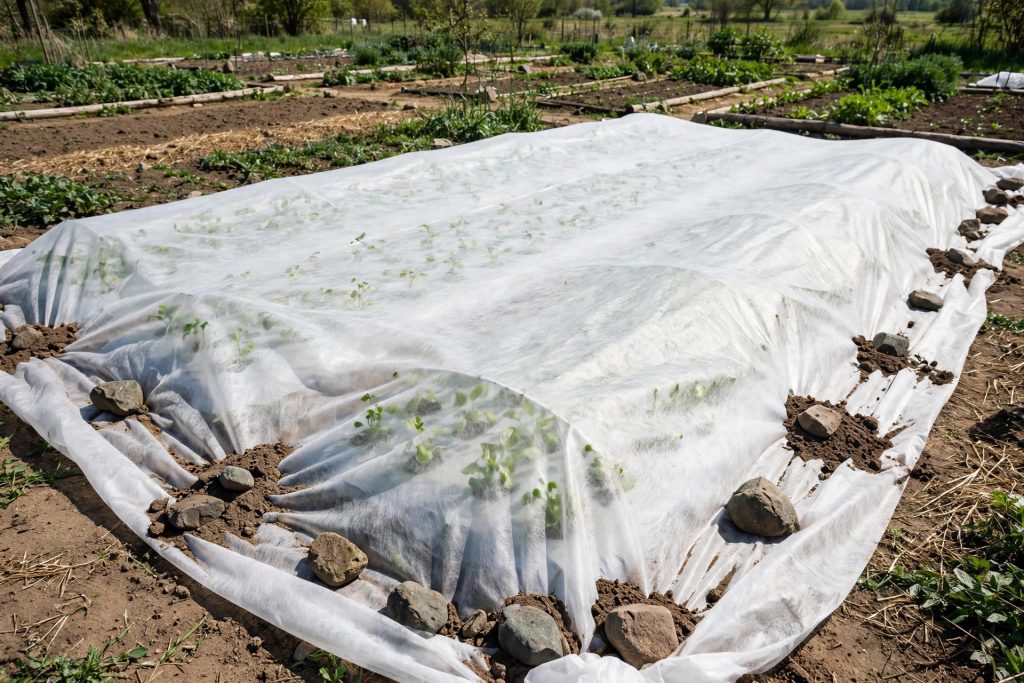
Type: UV-stabilized spunbonded floating row cover. Weight: 0.9 oz per sq yd. Material: Spunbonded polypropylene. Frost protection: Down to 28 F. Light transmission: 85 percent. Sizes: This listing 6 ft by 50 ft; the line runs 5 to 16 ft wide and 10 to 1,000 ft long.
Agfabric is the only product in this roundup whose maker copy states UV stabilization outright: “High quality spun polypropylene fabric is UV stabilized and breathable.” That matters because UV is what breaks row cover fabric down. The University of Maryland notes that weathering and UV radiation degrade the fibers over time, and that lightweight covers degrade more easily than heavyweight ones. A cover that states its UV treatment is a cover you can plan a lifespan around.
The sourcing caveat is real, and this article states it plainly. Agfabric has no standalone US product site, so these specs come from the brand’s listing, not a manufacturer page. Do not treat them as maker-verified on a manufacturer site. There is also a conflict inside the listing itself: the title says 0.9 oz, while the body text says the fabric is 0.95 oz per square yard. This article uses 0.9 oz, the title and grade figure, and notes the body text differs. The frost wording is ambiguous too. The listing says the cover “provides up to 28 degrees F frost protection,” which reads as protection down to 28 degrees, and that is how we print it.
Our rating: 8.3. The explicit UV claim and the high light transmission earn the score. Points off for retailer-only documentation and the weight conflict inside the listing.
5. DeWitt N-Sulate Frost Protection Blanket
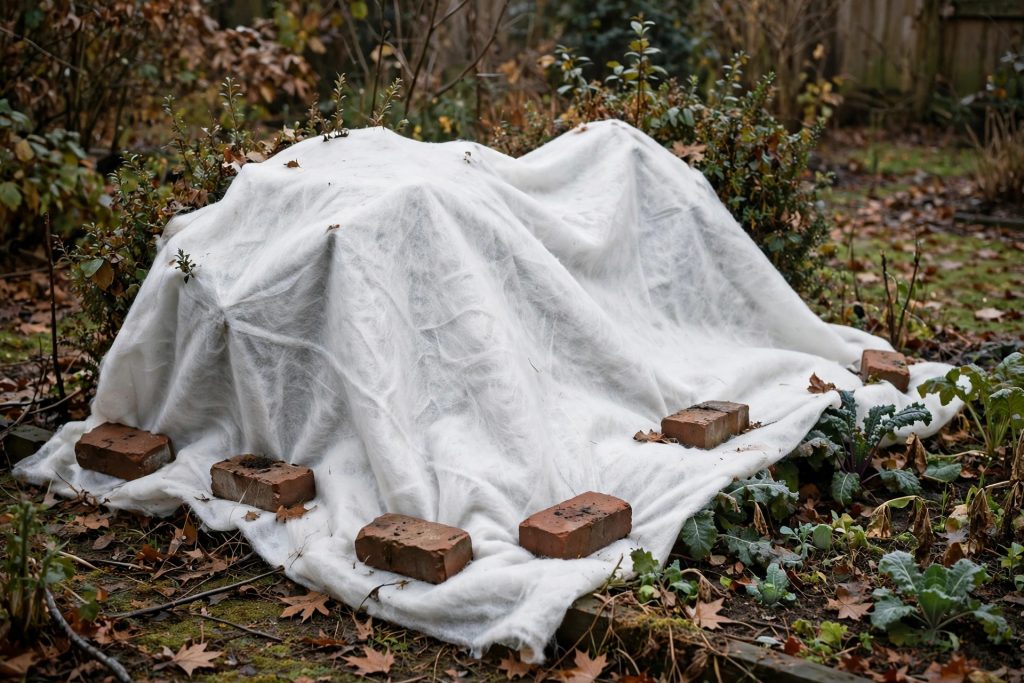
Type: Heavy frost protection blanket, reusable. Weight: 1.5 oz per sq yd. Material: Spunbond polypropylene, white, permeable. Frost protection: 6 to 8 degrees. Light transmission: 50 percent. Sizes: 12 ft by 10 ft retail blanket; 10 ft by 12 ft in 2-packs and 4-packs; 12 ft by 250 ft bulk roll (SKU NS12250).
N-Sulate is the heavy frost blanket most gardeners will actually find on a shelf. DeWitt sells it through garden centres and retailers in handy sizes, including a 12 by 10 foot blanket that fits a shrub or a small bed, and a 250 foot bulk roll for a market garden. DeWitt’s own blog states the protection plainly: “The N-Sulate offer on average about 6 to 8 degrees of protection.” The fabric is spunbond polypropylene, permeable so air and water pass through, and reusable season after season.
The documentation gap is that DeWitt has no dedicated N-Sulate spec page on its own site. The 1.5 oz weight, the 50 percent light figure, and the UV wording (“UV-proof polypropylene fabric,” “formulated to resist UV degradation,” “UV treated” on the packaging) all come from retailer listings and packaging that carry DeWitt’s copy. The 6 to 8 degree figure is the one number on DeWitt’s own site, and it is the number this article leans on. One secondary roundup claims N-Sulate gives “up to 5 degrees” of frost protection and calls it needle-punched. Both claims contradict DeWitt and the retailer copy, and neither is used here.
Our rating: 8.2. The strongest retail heavy blanket, reusable and UV-treated. Points off because the maker has no spec page of its own and the light figure is retailer-sourced.
6. Agribon+ AG-50 Row Cover
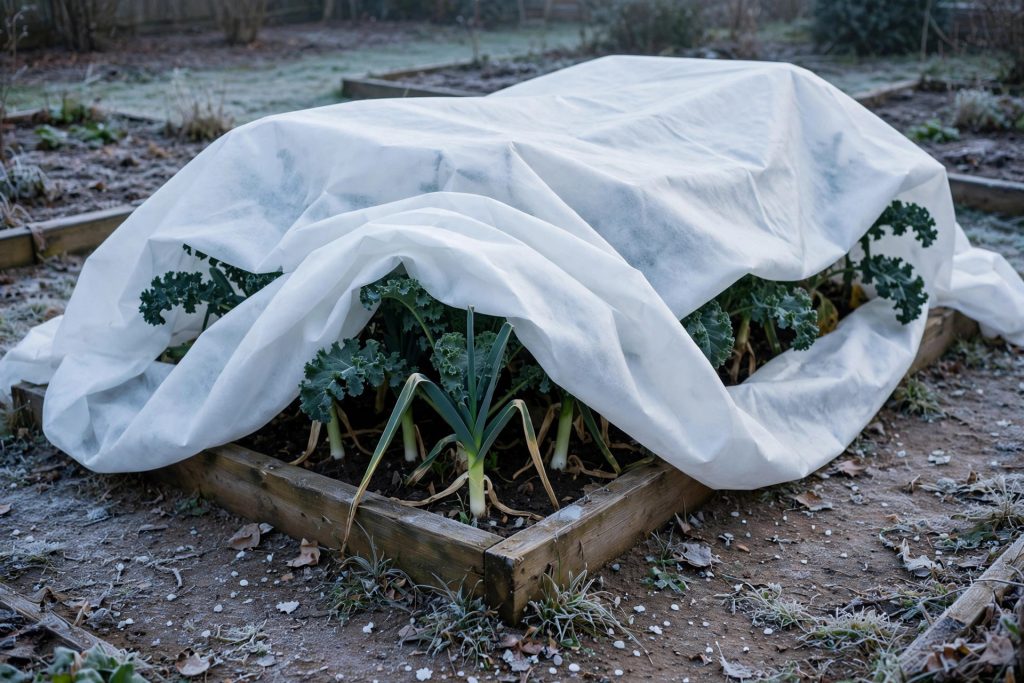
Type: Heavy-grade floating row cover. Weight: 1.5 oz per sq yd. Material: Spunbonded polypropylene. Frost protection: 6 to 8 degrees, down to 24 F. Light transmission: 50 percent. Sizes: 83 in by 50 ft, 83 in by 500 ft, 10 ft by 500 ft, and larger rolls up to 50 ft by 500 ft.
AG-50 is the top of the Agribon ladder and the heaviest floating row cover in this roundup. Six to eight degrees of frost protection down to 24 degrees will carry hardy greens through most winters in the middle of the country, and it is the grade Johnny’s points to for serious overwintering. The cost is light: at 50 percent transmission, the plants underneath grow slowly, and this is a cover for keeping crops alive through winter, not for pushing fast growth.
Two errors circulate about AG-50, and both are corrected here. One low-quality roundup lists AG-50 at 2.0 oz per square yard. That is wrong. 2.0 oz is AG-70, a still heavier grade that is not in this roundup. AG-50 is 1.5 oz. And one roundup gives AG-50 a low-temperature rating of 24 to 26 degrees. Johnny’s manual and Tennessee Extension both say down to 24 degrees, and that is the figure we print.
Our rating: 8.2. The maximum frost protection in the Agribon line with full maker documentation. Points off for the 50 percent light figure and the need for hoop support on anything but the lowest crops.
7. Agribon+ AG-15 Insect Barrier
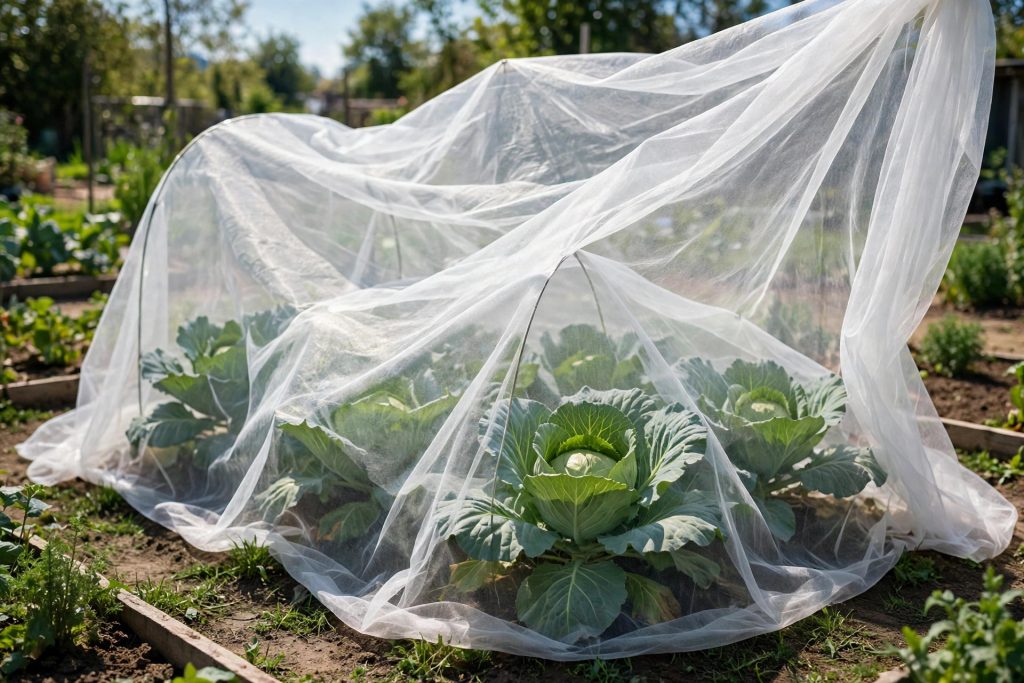
Type: Lightweight floating row cover, insect barrier only. Weight: 0.45 oz per sq yd. Material: Spunbonded polypropylene. Frost protection: Not rated by the distributor for frost protection. Light transmission: 90 percent. Sizes: 118 in wide, in 50, 250, 500, and 1,500 ft rolls.
AG-15 is the purest pest-protection cover in this roundup, and the lightest. At 0.45 oz it floats on the crop like gauze, lets through 90 percent of the light, and keeps flea beetles, cabbage worms, and squash vine borers off the plants from the day it goes on. It is the cover for summer, when the job is insects, not cold.
The one thing to understand about AG-15 is what it does not do. Johnny’s states it verbatim: “Unlike other Agribon weights, AG-15 does not provide protection from frost.” Some secondary sources credit the lightest grade with about 1 to 2 degrees of frost protection, and the University of Maryland’s generic weight table does give the 0.45 oz grade 2 degrees. But Johnny’s, the distributor of this exact product, says none, and this article follows Johnny’s for this product while noting the Extension view. Do not buy AG-15 for frost. Buy it to keep the bugs off, and buy it knowing the fabric is delicate: lightweight covers degrade faster than heavy ones, and a season or two is a realistic life.
Our rating: 8.1. The best pure insect barrier here, with the highest light transmission. Points off because it is not rated for frost protection, which caps its score on the frost factor.
8. Gardeneer by Dalen Harvest-Guard
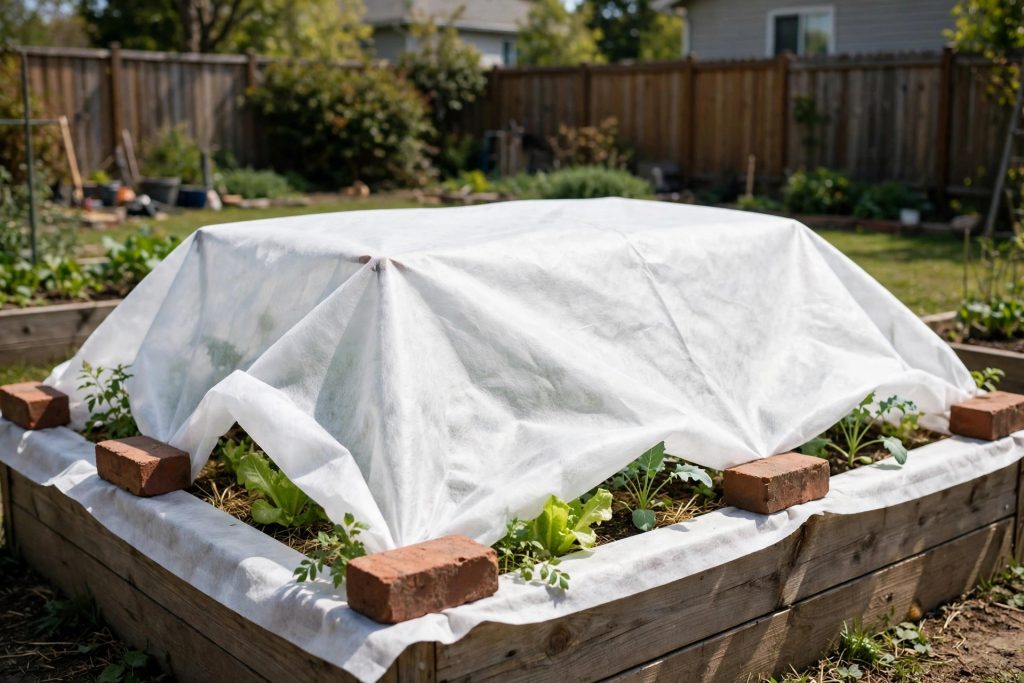
Type: Retail floating row cover blanket. Weight: Not published. Material: Non-woven fabric; fibre not stated by the maker. Frost protection: Premium variant 6 to 8 degrees, down to 29 F; original variant no degree figure. Light transmission: Not published. Sizes: 5 ft by 25 ft, 5 ft by 50 ft, 10 ft by 15 ft standard; 10 ft by 20 ft Premium; 8 ft by 6 ft drawstring bag.
Harvest-Guard is the cover a gardener picks up at the garden centre on the way home, and that is its strength. The sizes are small and practical: a 5 by 25 foot piece covers a single bed, and the 8 by 6 foot drawstring bag fits over one shrub. Dalen makes it in the USA from US-sourced materials, and the Premium variant is double the weight of the original. Dalen’s blog states the Premium figure plainly: it “will protect and insulate your plants from the cold by 6 to 8 degrees, down to 29-degree weather.” Dalen’s own retail copy adds that a single layer protects to 29 degrees and a double layer to 26 degrees.
The documentation gap is the widest in this roundup, and it costs the product points. Dalen publishes no fabric weight in ounces per square yard, no light transmission percentage, no UV claim, and no fibre type. The copy says only that the non-woven fabric “allows sunlight and air to pass through.” Without those numbers, a buyer cannot compare Harvest-Guard to the Agribon ladder on anything but the frost figure. One naming flag: there is no Dalen row-cover product sold under the standalone name “Frost Guard.” That name belongs to a water-filled plant protector, which is not a row cover. The product here is Harvest-Guard.
Our rating: 8.1. The most convenient retail buy, with a real Premium frost figure. Points off for the missing weight, light, UV, and fibre specs.
9. ProtekNet 25g Insect Barrier
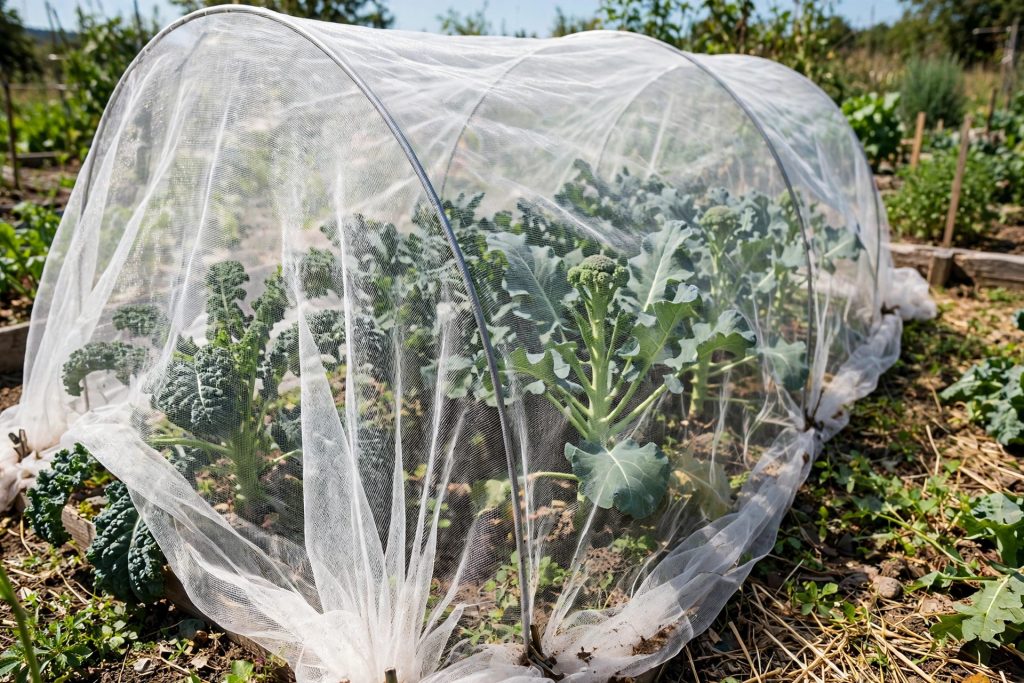
Type: Fine-mesh insect netting, not a spunbonded row cover. Mesh size: 0.35 mm by 0.35 mm. Weight: 0.74 oz per sq yd (25 gsm). Material: Synthetic fiber. Frost protection: None. Light transmission: 89 percent. Sizes: 6.9 ft by 110 ft up to 21 ft by 328 ft.
ProtekNet is the only true netting in this roundup, and it does a job no spunbonded fabric can do. Its 0.35 mm mesh is the finest grade in the ProtekNet line, and Utah State Extension, working from the ProtekNet brochure data, states that only this finest mesh excludes aphids, flea beetles, spider mites, thrips, and whitefly. Coarser grades let those pests through. If aphids or thrips are the problem, this is the product, and the mesh size is the reason.
Netting has a second advantage that matters in summer. The University of Maryland calls insect netting “an excellent choice for protecting crops during the summer when row cover would build up excessive heat,” because netting does not trap heat the way spunbonded fabric does. ProtekNet gives no frost protection at all, so it is a warm-season tool, but at 89 percent light and with no heat build-up, it is the warm-season tool that works. Two small conflicts: Johnny’s manual says 89 percent light, a retailer listing says 90 percent. This article uses Johnny’s 89 percent. The UV resistance and the 3-season lifespan come from the retailer listing; Johnny’s manual does not state them.
Our rating: 7.7. The finest insect exclusion in the roundup, with no heat build-up. Points off because it gives no frost protection and its UV and lifespan claims are retailer-sourced.
10. Agfabric Pop-Up Crop Protector Tent
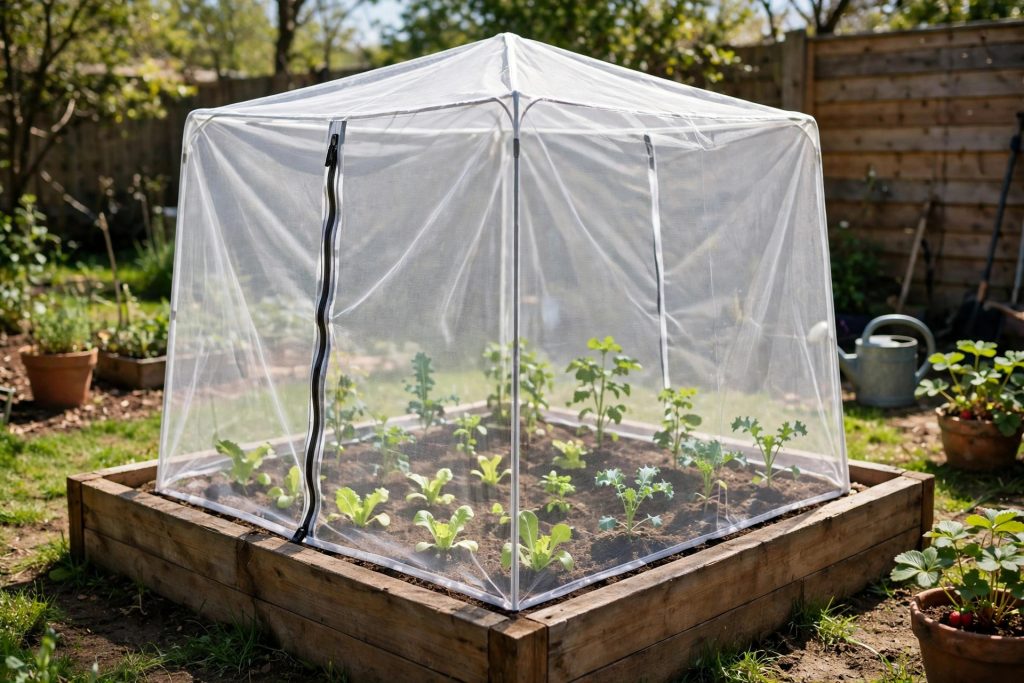
Type: Pop-up mesh tent for raised beds. Size: Fits a standard 4 ft by 4 ft raised bed; also listed as 4 ft by 4 ft by 4 ft and 4 ft by 4 ft by 6 ft. Material: Ultra-fine UV-resistant mesh, pop-up frame. Frost protection: None. Light transmission: 80 percent of sunlight. Other: Built-in pop-up frame, no tools needed; large heavy-duty zippered doors; metal stakes included.
The pop-up tent is the only product here built for one raised bed instead of one row. It pops open, sits over a standard 4 by 4 foot bed, and the zippered doors let you reach in to weed, water, and harvest without lifting the whole cover off. That is a real convenience on a bed you visit every day, and it is why the tent takes the raised-bed slot even though its specs are the weakest documented in the roundup.
The documentation limits are stated plainly. Agfabric has no standalone US product site, so the specs come from roundup coverage of its listing, not a manufacturer page. The roundups disagree on the frame material, fiberglass in one and spring-steel in another, so this article says “pop-up frame” only. They disagree on the mesh size too, 0.8 mm in one and 1/16-inch in another, so this article prints no single mesh figure. What is consistent across the roundups is the UV-resistant mesh, the 80 percent light figure, the zippered doors, and the 4 by 4 foot fit. If the documentation worries you, the verified alternative in this slot is the Gardener’s Supply Pop-Up Crop Cage, in 4 by 4 and 4 by 8 foot footprints, with heavy-duty polyethylene mesh, a spring-steel frame, and dual-zippered doors.
Our rating: 7.4. The easiest raised-bed cover to live with, with zippered access. Points off for roundup-only documentation and the unresolved frame and mesh specs.
How to Secure a Row Cover
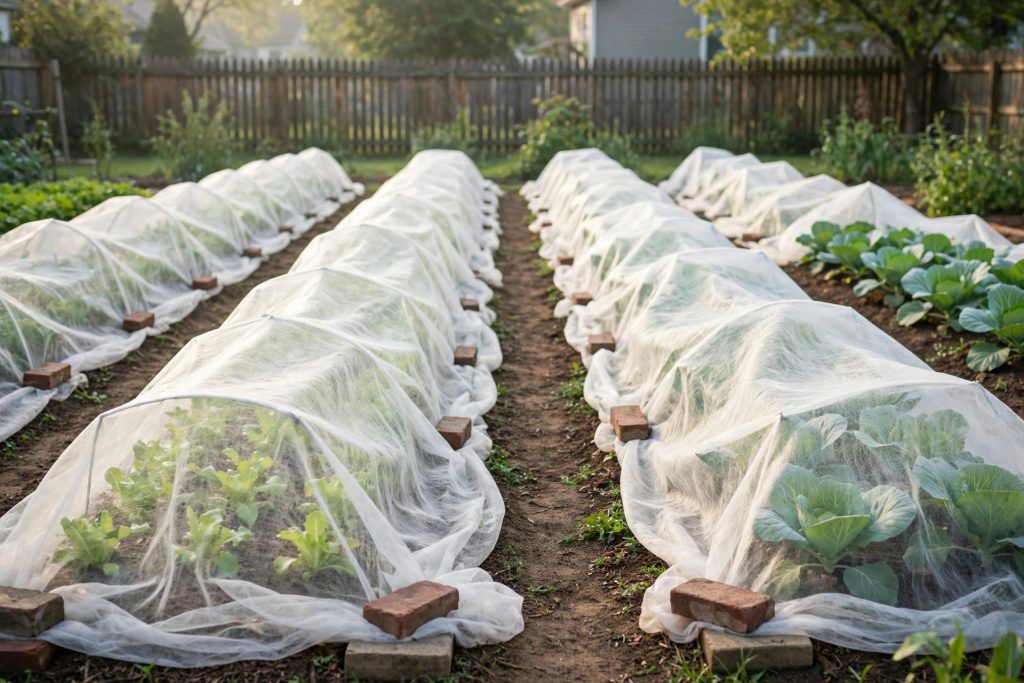
A row cover only works if the edges stay down. A gap at the edge is an open door, and the pests that find it will live and breed under the cover, protected from everything except the gardener. The University of Wisconsin is blunt about this: bury the edges completely when using floating row cover for pest exclusion. The University of Maryland lists the anchors that work: sod pins, boards, bricks, sandbags, rocks, or soil. Utah State adds the spacing: shovel soil or place large rocks every 3 feet or so along each side.
Before putting any cover on, inspect the plants, especially the undersides of leaves, for eggs, larvae or pests already present. Covering a plant that is already infested traps the pests inside under the cover, where they can feed and breed out of reach.
There are two ways to use a cover, and the securing method follows the choice. A floating cover lies directly on the crop, with enough slack for the plants to push it up as they grow. It suits light covers and low crops. A cover on hoops sits above the plants on a frame, and it suits medium and heavy covers, taller crops, and plants that abrade easily, such as spinach. The University of Maryland recommends a frame when using medium-weight and heavyweight covers. Low tunnels run 15 to 30 inches high, with hoops spaced 2 to 4 feet apart, built from wood, PVC pipe, or number 9 wire. The University of Minnesota gives the wire spec: heavy-gauge wire, 9 or 10 gauge, in 3 to 5 foot pieces, ends 16 to 32 inches apart and inserted 6 inches deep, one wire every 3 feet.
Two practical warnings. First, landscape staples can tear the fabric, so use them with care and prefer soil or rocks along the edges. Second, a cover on hoops can be clipped to the frame with binder clips, which makes it easy to lift one side for weeding and watering. Whatever you use, check the cover after every windstorm. A loose edge is how a cabbage white butterfly gets in, and one butterfly trapped under a cover, as the University of Maryland photographs show, can lay the eggs that ruin the crop the cover was meant to save.
Row Cover for Frost Protection: How Much Cold Can It Handle
Two different kinds of frost figure appear in this guide, and they do not mean the same thing. A figure such as 2 to 4 degrees is a lift: it says how many degrees warmer the air stays under the cover than the air outside it. A figure such as down to 28 F is a floor: it is the lowest outside temperature the maker rates the cover for. Real protection also depends on the weather, wind, soil moisture and how the cover is installed, so treat every figure as a guide rather than a promise.
The short answer is 2 to 8 degrees, depending on the weight, and the long answer is that the number on the label is only half the story. The University of Maryland’s weight table gives the ladder: lightweight 0.45 oz gives 2 degrees, medium 0.5 to 1.0 oz gives 4 to 6 degrees, and heavyweight 1.5 to 2.2 oz gives up to 8 degrees. The University of New Hampshire stretches the top end further, saying a heavyweight cover might provide as much as 6 to 10 degrees. The University of Minnesota gives the floor rather than the gain: the heaviest fabrics protect plants against cold around 20 degrees.
Frost protection is not the only thing a heavy cover does to the temperature underneath. The same fabric that holds in a few degrees at night holds in a lot of heat during the day. The University of Maryland says temperatures under a row cover can run 5 to 15 degrees higher than outside, and that the flowers and fruits of beans, tomatoes, and peppers may drop when daytime temperatures top 90 degrees. The University of Wisconsin puts the blossom-drop threshold lower, at 86 degrees for tomatoes and peppers, and notes that heavyweight covers can raise daytime temperatures by 10 degrees or more. The rule that follows is simple: vent on warm days. Peel back the sides, or leave the end of a low tunnel open, and close it again overnight. The University of New Hampshire says to vent by peeling back the sides on warm days, and the University of Minnesota says to leave the end open for ventilation on warm sunny days and gather the fabric again at night.
Removal matters as much as installation. Row covers must come off once plants start to flower, because cucumbers, squash, melons, and pumpkins need bees to reach the flowers. The University of New Hampshire offers a middle path: remove the cover in the morning when bees are most active, and replace it in the afternoon. For cool-season crops, the University of Minnesota says to remove the cover once temperatures are consistently warm, and the University of Maryland notes that covers may need to come off by mid-June to prevent heat build-up and disease. Remove covers gradually to harden the crop off, and pick a cloudy day for the final removal.
Insect Netting vs Row Cover
Insect netting and spunbonded row cover look alike on the shelf, and they solve different problems. A row cover is a non-woven fabric that gives frost protection and builds up heat. Insect netting is a woven mesh that gives no frost protection and builds up almost no heat. The choice between them is a choice between the season and the pest.
Netting wins in summer. The University of Maryland calls it “an excellent choice for protecting crops during the summer when row cover would build up excessive heat.” Under a spunbonded cover, summer temperatures can run 5 to 15 degrees above outside, which is enough to drop the flowers off beans, tomatoes, and peppers. Under netting, the air moves, the heat stays down, and the cover can stay on through the hottest weeks.
Netting also wins on the smallest pests, but only at the finest mesh. Utah State’s mesh table, adapted from the ProtekNet brochure, shows that only the finest grade, 0.35 mm, excludes aphids, flea beetles, spider mites, thrips, and whitefly. The next grade up, 0.85 mm, excludes leafhoppers and root maggot flies but lets aphids, thrips, whitefly, spider mites, and flea beetles through. The coarsest grade still excludes moths, stink bugs, and squash bugs. The lesson is to match the mesh to the pest: a net that stops a cabbage moth may not stop an aphid.
Row cover wins in spring, fall, and winter, because netting gives no frost protection at all. A row cover also wins where the pest is large and the season is cool: flea beetles on spring brassicas, squash vine borers on early squash, cucumber beetles on young cucurbits. The rule of thumb: if the forecast has frost in it, use a row cover. If the forecast has 90 degree days in it, use netting. And whichever you use, put it on at planting. The University of Wisconsin states it plainly: row covers exclude insects from plants, so they must be put on at planting. A cover put on after the pests arrive just locks them in with the crop.
Best Row Cover for Raised Beds
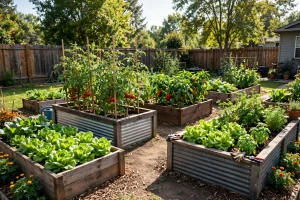
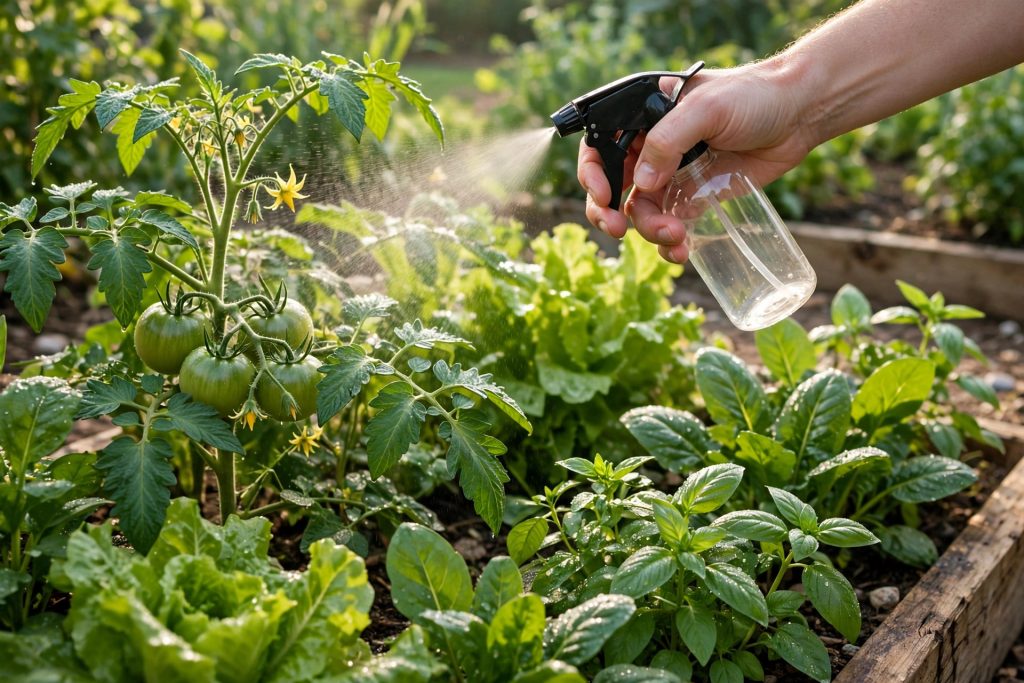
A raised bed is the easiest place to use a row cover well, and the hardest place to use a roll of fabric well. The bed is small, the edges are defined, and a loose roll of fabric will slide off the corners in the first wind. Three approaches work, and the right one depends on how often you need to get in.
The simplest is a pop-up tent, the Agfabric tent in this roundup, which fits a standard 4 by 4 foot bed and opens with zippered doors. It needs no frame and no clips, and the doors mean you can weed and harvest without removing the cover. The trade is documentation: the specs are roundup-reported, not maker-verified, and the frame and mesh figures are unresolved.
The sturdiest is a hoop-supported heavy cover, the GardenQuilt in this roundup, over Super Hoops or a home-made PVC frame. The hoops clamp or screw to the bed frame, the fabric drapes over them, and the edges anchor to the bed sides with soil or clips. It is the best choice for overwintering a raised bed, because it gives real frost protection and the frame keeps the heavy fabric off the plants.
The cheapest is a floating light cover, AG-15 or AG-19, cut to the bed size and anchored with bricks or soil along the bed edges. It works for a month or so of insect protection on a spring bed, and it costs the least. The University of Maryland photographs a floating cover laid on a raised bed protecting mizuna, tatsoi, and rosemary in January, which shows the method works even in winter for hardy greens.
Whichever approach you take, measure the bed before you buy. A 4 by 4 foot bed needs a cover at least 6 feet wide to allow for the drape over the hoops and the anchoring at the edges, and a 4 by 8 foot bed needs a cover at least 10 feet wide. Buying the exact bed size is the most common sizing mistake in this category.

How We Chose
We scored each product on six factors, weighted by how much they matter for a home gardener; the weights add to 100 percent.
| Factor | Weight | What it measures |
|---|---|---|
| Frost protection and weight ladder | 25% | Published degrees of protection, weight grade, maker-stated temperature floor |
| Insect exclusion | 20% | Mesh fineness or barrier type, published pest list, pollinator-removal guidance |
| Light transmission and heat behaviour | 20% | Published light percentage, Extension heat build-up figures, summer usability |
| Ease of use and setup | 15% | Floating vs hoop use, pop-up frame, securing method, reusability |
| Durability and UV treatment | 10% | Published UV claim, stated lifespan or seasons, reusable vs single-season |
| Availability and documentation | 10% | Confirmed currently sold in the USA, manufacturer-page specs vs retailer-only specs |
The scores come from verified label specifications, not from hands-on testing.
| Product | Frost | Insect | Light | Ease | Durability | Availability | Total |
|---|---|---|---|---|---|---|---|
| Agribon+ AG-19 | 8.5 | 9.0 | 9.0 | 9.0 | 7.5 | 9.5 | 8.8 |
| Gardener’s Supply GardenQuilt | 9.5 | 8.5 | 8.5 | 8.0 | 8.0 | 9.0 | 8.7 |
| Agribon+ AG-30 | 9.0 | 9.0 | 8.0 | 8.5 | 7.5 | 9.5 | 8.6 |
| Agfabric 0.9 oz Floating Row Cover | 7.5 | 8.5 | 9.0 | 8.5 | 9.0 | 7.5 | 8.3 |
| DeWitt N-Sulate | 9.5 | 8.5 | 6.5 | 8.0 | 8.5 | 8.0 | 8.2 |
| Agribon+ AG-50 | 9.5 | 8.5 | 6.5 | 7.5 | 7.5 | 9.0 | 8.2 |
| Agribon+ AG-15 | 5.0 | 9.5 | 9.5 | 9.5 | 7.0 | 9.5 | 8.1 |
| Gardeneer by Dalen Harvest-Guard | 8.0 | 8.5 | 7.5 | 9.0 | 7.0 | 8.5 | 8.1 |
| ProtekNet 25g | 4.0 | 10.0 | 9.0 | 8.5 | 8.0 | 8.5 | 7.7 |
| Agfabric Pop-Up Crop Protector Tent | 4.0 | 9.0 | 8.5 | 9.5 | 7.5 | 7.5 | 7.4 |
Frost is scored on the published degrees of protection and the maker temperature floor. AG-30 scores 9.0 because it gives 4 to 6 degrees down to 26 F, while AG-19 scores 8.5 because it gives 2 to 4 degrees down to 28 F. The other factors follow the same published-spec logic. Insect exclusion is scored on mesh and barrier fineness, light on the published percentage, ease on floating use against hoop and pop-up use, durability on published UV and lifespan claims, and availability on confirmed US sale and documentation quality.
Two totals tie at 8.2, and two tie at 8.1. DeWitt N-Sulate ranks above AG-50 because its unrounded total is higher (8.23 against 8.15), on the strength of its ease and durability scores. AG-15 ranks above Dalen Harvest-Guard because its unrounded total is higher (8.13 against 8.10), on the strength of its insect and light scores.
Final Choice
The best garden row cover is the Agribon+ AG-19, with the Gardener’s Supply GardenQuilt as a close second. AG-19 wins on balance: a real insect barrier, a little frost protection, and 85 percent light, all in a fabric light enough to float on the crop with no frame to build. GardenQuilt is the better cover if frost is the main job, because it protects down to 24 degrees at nearly 80 percent light, though it needs hoops and a separate purchase to do it.
If your main enemy is insects in summer, buy differently. The AG-15 is the lightest barrier here and the cheapest way to keep flea beetles off spring brassicas, and the ProtekNet 25g is the only product that stops aphids, thrips, and whitefly, because it is the only one with a fine enough mesh. If your main enemy is frost, buy the AG-30 for moderate climates or the AG-50 and the N-Sulate for real winter, and accept that the plants underneath will grow slowly in the dim light.
One last honest word. A row cover is the most organic pest control there is, because it uses no chemical at all, but it is also the easiest to get wrong. Buy by weight, not by brand. Put it on at planting, bury the edges, vent it on warm days, and take it off when the flowers open. Do that, and the cover will do the job the sprays never quite manage: keep the pests off the plants in the first place.
References
- University of Maryland Extension, “Vegetable Garden Weather and Pest Protection” (updated 2026). Weight table, 2 to 8 degrees frost protection, 5 to 15 degree heat build-up, securing and removal guidance, insect netting.
- University of New Hampshire Extension, “Using Row Covers in the Garden” (2020). Lightweight 2 degrees vs heavyweight 6 to 10 degrees, venting, pollination removal, hoop dimensions.
- University of Wisconsin-Madison Extension, “Floating Row Cover.” 2 to 8 degrees frost protection, bury edges completely, blossom drop above 86 degrees, gradual removal.
- Utah State University Extension, “Row Covers.” Temperature floors, mesh exclusion table, securing every 3 feet, staple tearing warning.
- University of Minnesota Extension, “Row covers.” Heaviest fabrics to around 20 degrees, hoop wire specs, pollination removal, one month typical use.
- Johnny’s Selected Seeds, Agribon row cover comparison chart. AG-15, AG-19, and AG-30 weights, frost figures, and light transmission.
- Gardener’s Supply, GardenQuilt Cover product page. 1.25 oz fabric, down to 24 degrees, 79.3 percent light, several-year lifespan.
- DeWitt Company blog, “Winterizing Your Nursery: Protecting Potted Plants and Shrubs.” N-Sulate 6 to 8 degrees of protection.
- Dalen Products blog, “Cover Up: How and Why to Protect Your Plants from Winter Woes.” Harvest-Guard Premium 6 to 8 degrees, down to 29 degrees.
- Agfabric Floating Row Cover 0.9 oz listing. UV-stabilized spunbonded polypropylene, 85 percent light, protection down to 28 degrees.
Frequently Asked Questions
What is the best garden row cover for pest protection?
The Agribon+ AG-19 is the best all-round choice: it blocks insects, gives 2 to 4 degrees of frost protection, and lets through 85 percent of the light. For pure insect protection in summer, the AG-15 is lighter and lets through 90 percent of the light, and the ProtekNet 25g is the only product here whose 0.35 mm mesh excludes aphids, thrips, and whitefly.
How much frost protection does a row cover give?
About 2 to 8 degrees, depending on the weight. The University of Maryland’s table gives lightweight 0.45 oz fabric 2 degrees, medium 0.5 to 1.0 oz fabric 4 to 6 degrees, and heavyweight 1.5 to 2.2 oz fabric up to 8 degrees. The heaviest covers protect plants down to around 20 degrees, but they block 40 to 50 percent of the light, so growth slows.
Does row cover block pollinators?
Yes, and that is the main thing to plan around. A cover that keeps insects out also keeps bees out. Remove the cover once plants start to flower, so bees can reach the blossoms. The University of New Hampshire suggests removing it in the morning when bees are most active and replacing it in the afternoon. Crops that do not need insect pollination, such as leafy greens and beans, can stay covered until harvest.
Do row covers overheat plants?
They can. Temperatures under a row cover can run 5 to 15 degrees higher than outside, and the flowers and fruits of beans, tomatoes, and peppers may drop when daytime temperatures top 90 degrees. Vent the cover on warm days by peeling back the sides or leaving the end of a low tunnel open, and close it again overnight. For summer insect protection, use fine-mesh insect netting instead, because netting does not build up heat.
Should I float a row cover or use hoops?
Float a light cover directly on low crops, and use hoops for medium and heavy covers, taller crops, and plants that abrade easily. A floating cover needs enough slack for the plants to push it up as they grow. A hoop frame, built from PVC pipe or number 9 wire in a low tunnel 15 to 30 inches high, holds the fabric off the plants and makes it easy to lift one side for weeding and watering.
How long does a row cover last?
The University of Maryland gives a useful life of 1 to 3 years, depending on the weight, use, and weather. Lightweight covers degrade faster than heavyweight ones. Gardener’s Supply says GardenQuilt lasts for several years, and ProtekNet is listed at 3 seasons. Store covers indoors or in tightly sealed containers, because mice can nest in stored fabric and ruin it.

Thesis Link : https://saulibrary.edu.bd/daatj/public/uploads/BAU200601_19-Pp_5.pdf
- Apple Tree Diseases – How to Identify and Treat Them - November 28, 2026
- 10 Best Row Covers for Pest Protection - November 28, 2026
- 10 Best Raised Garden Beds - November 28, 2026