Best slow release fertilizer options feed lawns and garden plants gradually, while a bag that promises a green lawn in a weekend usually delivers exactly that, a weekend. The color surges, the mower works overtime for two weeks, and then the grass fades back to pale. A good slow release fertilizer works the other way. It meters nitrogen out over 8 weeks, 12 weeks, or in a few cases up to 4 months, so growth stays steadier, clippings stay manageable, and far less nitrogen is sitting in solution waiting for a heavy rain to carry it away.
That is the idea behind this list. Every pick below was checked against its manufacturer page or a major retailer listing on 21 October 2026. Where a maker does not publish a figure, this article says Not published instead of guessing. Scores are editorial scores from verified specifications and owner feedback. No product was hands-on tested for this article, and no price or affiliate link appears in the body. Price bands in the comparison table are broad bands only, to help you sort the field before you check a live listing yourself.
If you only remember one rule, make it this: look past the big NPK numbers and find the slow-release share. Michigan State University Extension advises looking for at least 25 percent of the nitrogen in slow-release form. Several picks here clear that bar by a wide margin. One clears 59 percent. One organic pick is 80 percent water-insoluble nitrogen by its label breakdown.
Table of Contents
- Quick Recommendation
- Comparison Table
- How We Chose and Scored
- The 10 Best Slow-Release Fertilizers
- How to Choose the Right Slow-Release Fertilizer
- How to Apply Slow-Release Fertilizer Without Waste
- Safety Storage and Water Protection
- Final Choice
- References
- Frequently Asked Questions
Quick Recommendation
For most home lawns, start with Milorganite. It is forgiving if your spreader overlaps, it carries iron for color without staining concrete, and it feeds for up to 10 weeks.
If you want the longest single lawn application, look at Pennington Full Season Lawn Fertilizer 32-0-5. Its polymer-coated urea is listed by the maker as feeding for up to 4 months.
For a fall application on a larger lawn, GreenView Fairway Formula Fall Fertilizer 30-0-12 is the specialist. It lists 59 percent slow-release nitrogen and feeding for up to 12 weeks.
For flower beds, vegetables and containers rather than a broadcast lawn, Osmocote Smart-Release Flower and Vegetable 14-14-14 is the different tool in this list. It is measured in tablespoons per plant, not pounds per thousand square feet, and it feeds for up to 4 months.
Comparison Table: 10 Slow-Release Fertilizers at a Glance
| Product | Price band | NPK | Slow-release detail | Feeds for | Coverage | Best for | Our rating |
|---|---|---|---|---|---|---|---|
| Milorganite Organic Nitrogen Fertilizer | $$ | 6-4-0 | 4 of 6 percent N is water-insoluble | Up to 8 to 10 weeks | 32 lb covers 2,500 sq ft | Most home lawns, low burn risk | 9.2 |
| Pennington Full Season Lawn Fertilizer | $$ | 32-0-5 | Polymer-coated urea | Up to 4 months | 33.6 lb covers up to 12,000 sq ft | One long lawn feeding | 9.0 |
| GreenView Fairway Formula Fall Fertilizer | $$ | 30-0-12 | 59 percent slow-release N | Up to 12 weeks | 45 lb covers 15,000 sq ft | Fall feeding, large lawns | 8.9 |
| The Andersons PGF Complete | $$$ | 16-4-8 | Quick plus slow-release nitrogen; the slow-release portion is methylene urea (maker label: 4.00 percent slowly available nitrogen, 25 percent of the nitrogen) | Up to 8 weeks | Covers up to 5,000 sq ft per listed bag | Even coverage, fine particles | 8.8 |
| Jonathan Green Veri-Green Nitrogen Rich Lawn Fertilizer | $$ | 29-0-3 | Polymer-coated N, 40 percent slow-release in retailer listing | Up to 3 months | 15 lb covers 5,000 sq ft | Fast green-up without a surge | 8.7 |
| Osmocote Smart-Release Flower and Vegetable | $$ | 14-14-14 | Resin-coated, temperature controlled | Up to 4 months | 1 lb covers 40 sq ft | Beds, vegetables, containers | 8.6 |
| Safer Brand Lawn Restore | $$ | 9-0-2 | Plant-protein based, slow and steady release | Up to 8 weeks | 20 lb covers 5,000 sq ft | Thin lawns, no phosphorus lawns | 8.5 |
| Espoma Organic All Season Lawn Food | $$ | 9-0-0 | 7.2 of 9 percent N is water-insoluble | Seasonal, 4 applications per year | 28 lb covers up to 5,000 sq ft | Organic lawn program with microbes | 8.4 |
| GreenView Fairway Formula Lawn Fertilizer | $$ | 27-0-5 | 63 percent slow-release N in retailer listing | Up to 12 weeks | 16.5 lb covers 5,000 sq ft | All-season lawn feeding, no phosphate | 8.3 |
| Dr. Earth Super Natural Lawn Fertilizer | $$$ | 9-0-5 | Organic ingredients, naturally slow release | Up to 3 months | Not published | Soil biology focused lawns | 8.1 |
Pricing note: bands are a sorting aid only. Check the live listing for your bag size, because the same formula is sold in several weights with very different coverage.
How We Chose and Scored
We started with manufacturer guaranteed analyses, then cross-checked coverage and feeding claims on retailer listings. A product stayed on the list only if its slow-release mechanism could be named: water-insoluble organic nitrogen, polymer-coated urea, resin-coated prills, or a stated slow-release percentage. Products that were only quick-release nitrogen, however high the analysis, were left out.
Scores come from verified specifications and owner feedback, not from hands-on testing. Owner feedback was read where each product is sold: Home Depot reviews for Milorganite, Pennington, Osmocote, Espoma and GreenView 27-0-5; Walmart reviews for The Andersons, sold there by the brand itself; the manufacturers’ own review sections for Safer Brand and Jonathan Green; Do it Best and Target listings for GreenView Fall; and earlier retailer coverage for the Dr. Earth granular bag. The table below shows the weighting, so you can see why a gentle organic product can outscore a stronger synthetic one for a family lawn, and why the longest feeding product does not automatically take first place.
| Factor | Weight | What it means |
|---|---|---|
| Release duration and consistency | 30% | How long it feeds and how evenly the nitrogen is metered |
| Nutrient balance and soil fit | 25% | Whether the NPK matches common lawn or garden needs without forcing excess phosphorus |
| Burn safety and leaching risk | 20% | Salt load, coating or organic form, and how much nitrogen sits in solution at once |
| Ease and coverage clarity | 15% | Whether coverage, rate and spreader guidance are clearly published |
| Value and availability | 10% | Bag choices, US availability and restrictions noted on listings |
No hands-on testing note: Agribloom did not apply these products side by side for this article. Ratings are editorial scores built from the scoring system above.
The 10 Best Slow-Release Fertilizers
1. Milorganite Organic Nitrogen Fertilizer 6-4-0: The Forgiving All-Rounder
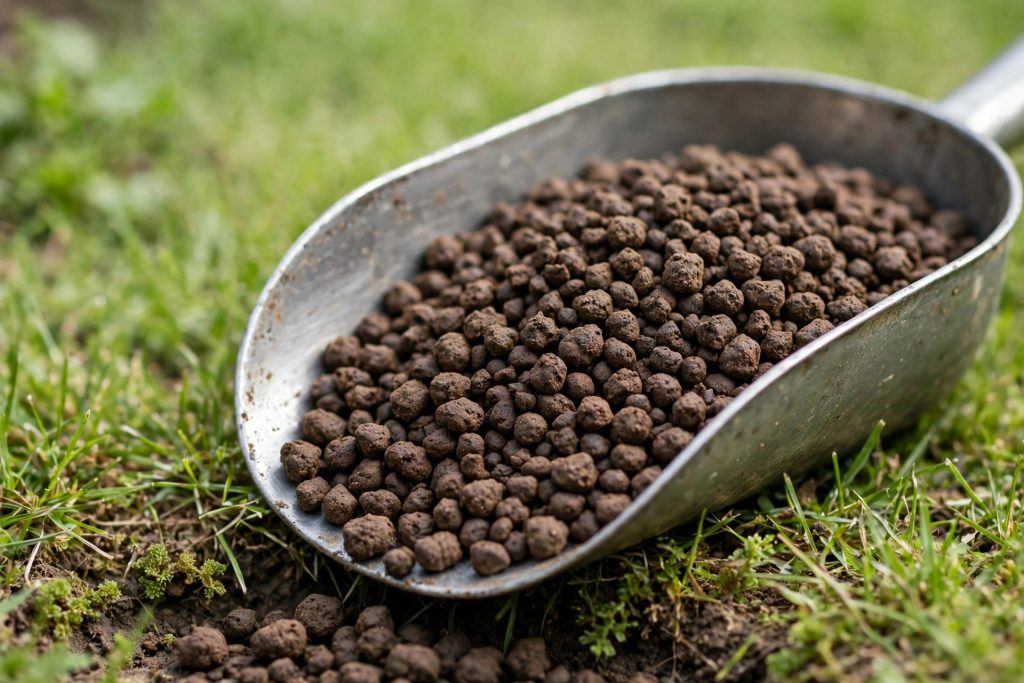
Milorganite has been made from heat-dried biosolids for decades, and its label is unusually plain about how it works. Of its 6 percent nitrogen, 4 percent is water-insoluble, slowly available nitrogen derived from biosolids. The same label lists 4 percent available phosphate and 2.5 percent iron. A 32 lb bag covers 2,500 sq ft and feeds for up to 10 weeks, with retailer summaries putting the window at 8 to 10 weeks.
That low analysis is the trade-off and the point. You carry more pounds per thousand square feet than with a 32 percent product, but the product contains virtually no salts in the maker framing, so streaks and burn are far less likely if a pass overlaps. The organically complex iron greens without the concrete staining that iron salts can cause.
Real-world limitation: the low nitrogen percentage makes it a poor rescue product. A lawn that is badly nitrogen starved will green slowly, over 2 to 4 weeks in owner reports summarized in comparison coverage, not in days. It is also not sold for shipment in every state, with Maine and Connecticut restrictions noted on some listings.
Who should buy: homeowners who want a steady program they can apply in spring, summer or fall without worrying that one heavy hand will scorch the lawn.
Spec source: Milorganite label information via the Agway retailer listing and Target listing checked 21 October 2026, showing 6-4-0, 4 percent water-insoluble nitrogen, 2.5 percent iron, 32 lb and 2,500 sq ft coverage.
2. Pennington Full Season Lawn Fertilizer 32-0-5: One Application, Up to Four Months
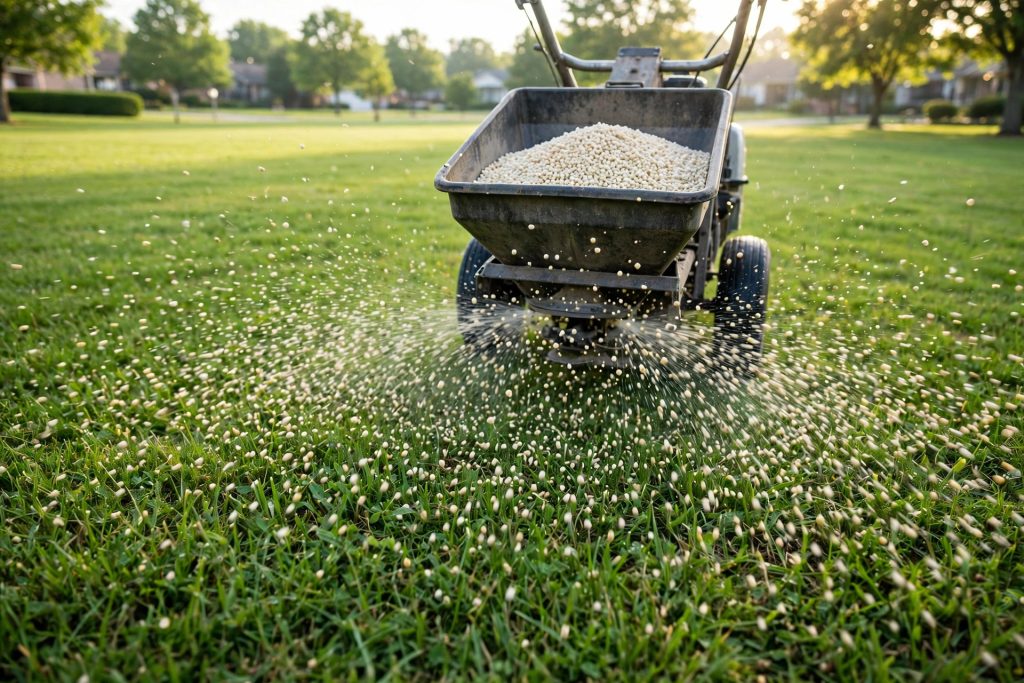
Pennington positions this product on a single promise, and its own Full Season page states it directly: it contains polymer-coated urea that provides controlled release of nitrogen up to 4 months. Retailer coverage of the 33.6 lb bag puts coverage at up to 12,000 sq ft, and the formula carries 5 percent iron, confirmed on Pennington’s own product page and label. The label lists 12.00 percent controlled-release nitrogen from polymer coated urea.
The high 32 percent nitrogen means far less weight to spread over a large lawn. It also means accuracy matters more. A polymer coat slows release, it does not make an overlapped double rate harmless forever.
A different way to read this pick: it suits the homeowner who will realistically fertilize once and then get busy. Four months of metered feeding beats a perfect four-step plan that never happens.
Real-world limitation: it is a lawn product with no phosphorus and only 5 percent potash in the analysis, so it does not correct a soil-test phosphorus or potassium shortage. Do the soil test first if your lawn has never been tested.
Who should buy: owners of larger established lawns who want one long spring or early fall application and will calibrate the spreader carefully.
Spec source: Pennington Full Season maker page checked 21 October 2026 for the polymer-coated urea and up to 4 months claim.
3. GreenView Fairway Formula Fall Fertilizer 30-0-12: The Fall Specialist
Fall is when cool-season grass builds roots and stores energy, and this formula is built for that job. Do it Best lists the 45 lb bag at 15,000 sq ft coverage, with 59 percent slow-release nitrogen feeding for up to 13 weeks in that listing, while GreenView own fall guidance describes up to 12 weeks. This article uses the more conservative 12 weeks in the comparison table and notes the 13 week retailer figure here, rather than printing only the larger number.
The 12 percent potash is the other reason it exists. Potassium supports winter hardiness in the maker framing, and the formula carries no phosphate, which matters where phosphorus runoff is restricted or where a soil test already shows high phosphorus.
Real-world limitation: it is a fall product. Using it as your only spring product misses the point of its analysis, and the 45 lb bag is awkward overkill for a small townhouse lawn. A 22.5 lb size covering 7,500 sq ft appears in retailer listings for smaller properties.
Who should buy: cool-season lawn owners, especially in the northern and transition zones, who want one serious fall feeding.
Spec source: GreenView Fairway Formula Fall Fertilizer official label (manufacturer PDF) checked 21 October 2026, for 30-0-12, 59 percent slow-release nitrogen and coverage; Do it Best listing for the 45 lb bag.
4. The Andersons PGF Complete 16-4-8: Fine Particles, Even Feeding
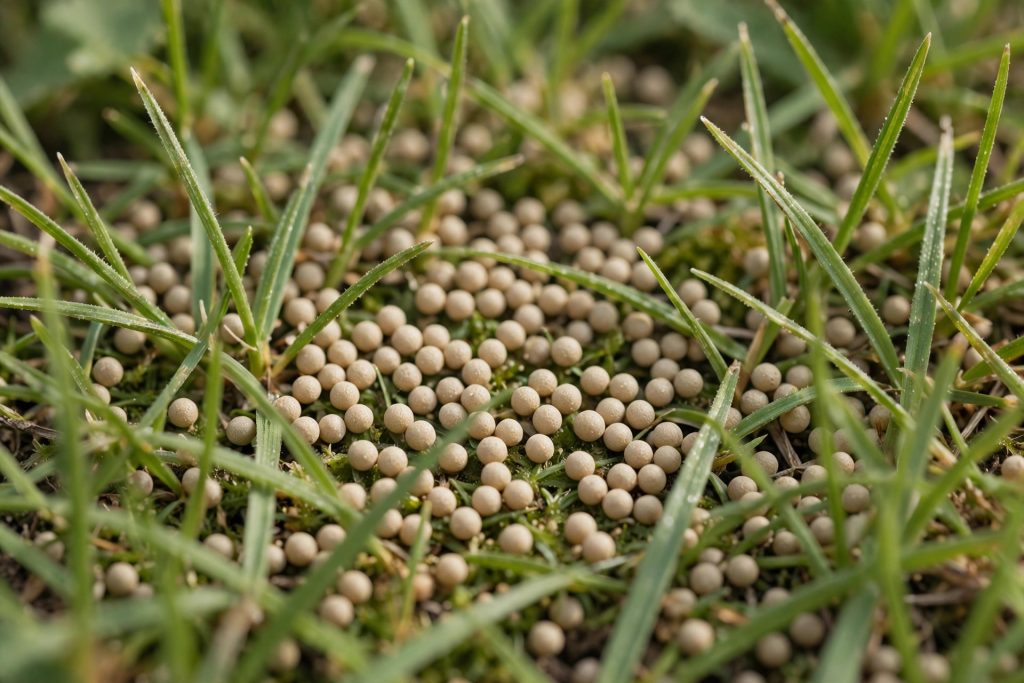
The Andersons sells this as a professional-grade formula in a homeowner bag. Listings describe super-fine particles, roughly twice the particles per square foot compared with standard consumer granules in the brand framing, with quick plus slow-release nitrogen feeding for up to 8 weeks; the slow-release portion is methylene urea (maker label: 4.00 percent slowly available nitrogen, 25 percent of the nitrogen). The analysis is 16-4-8, a 4-1-2 ratio, with 7 percent Humic DG and iron plus micronutrients in the product name and listing text. The listed bag covers up to 5,000 sq ft.
Fine particles are not a cosmetic detail. More particles per square foot means fewer bare gaps between granules, which is where uneven color starts. The trade-off is that fine material demands a spreader in good working order and a calm day.
Real-world limitation: listings note it is not for sale in California. If you are in California, skip to another pick rather than hunting for a workaround listing.
Who should buy: lawn owners who care about evenness, have patchy color from past uneven applications, and want a balanced analysis rather than a nitrogen-only feed.
Spec source: The Andersons PGF Complete listings checked 21 October 2026, for 16-4-8, Humic DG, up to 8 weeks and 5,000 sq ft coverage.
5. Jonathan Green Veri-Green Nitrogen Rich Lawn Fertilizer 29-0-3: Green-Up Without the Surge
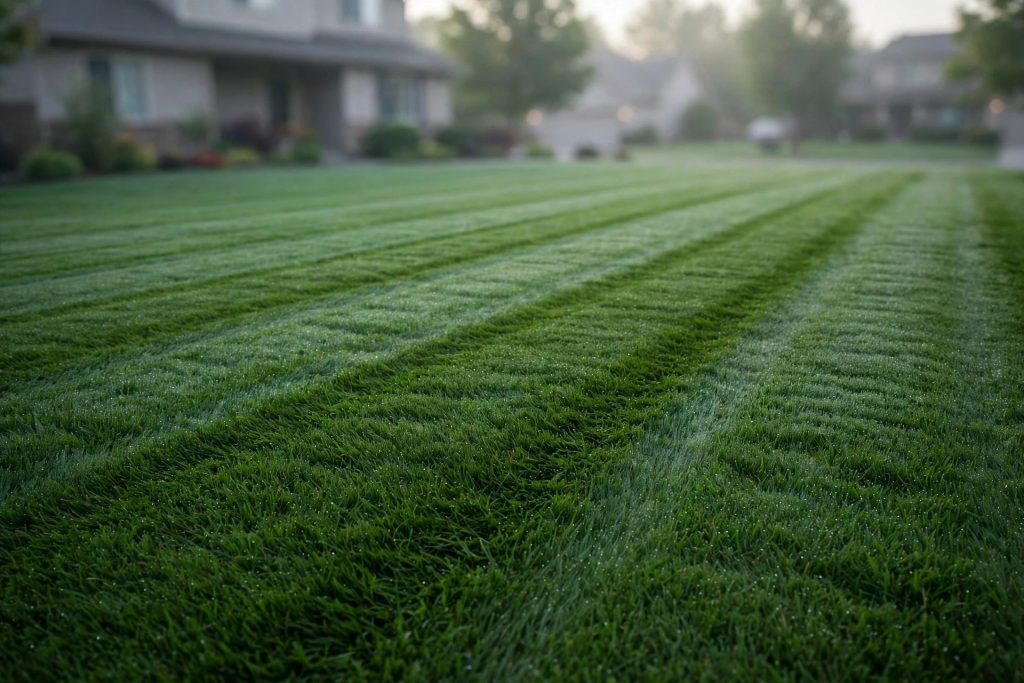
Jonathan Green own product page is clear: Veri-Green contains 29 percent nitrogen, polymer-coated nitrogen for a slow and steady release, and 4 percent iron for maximum greening for up to 3 months. Coverage is 15 lb for up to 5,000 sq ft and 45 lb for up to 15,000 sq ft. A retailer listing adds detail worth noting, Green-Meter Technology with 40 percent slow-release nitrogen feeding for 10 to 12 weeks, plus 3 percent iron in that listing. The iron figures conflict between sources, 4 percent on the maker page and 3 percent in the retailer text, so this article follows the maker page for the headline figure and flags the conflict here instead of hiding it.
Use this when color is the complaint and the lawn is otherwise established. It will not fix compaction, pH or a phosphorus shortage, because it is not trying to.
Real-world limitation: the maker-linked label guidance warns not to apply when turf is under heat and drought stress at 85 degrees or higher, because turf injury may occur. That is a real summer limit, not fine print to ignore.
Who should buy: owners of established lawns of any grass type who want visible green in 7 to 14 days in the label framing, without the flush and crash of a fully soluble product.
Spec source: Jonathan Green Veri-Green maker page checked 21 October 2026, for 29-0-3, polymer-coated nitrogen, iron and coverage. Retailer detail from Do it Best listing.
6. Osmocote Smart-Release Flower and Vegetable 14-14-14: The Bed and Container Choice

Osmocote is the outlier here, and it earns its place because many readers asking for the best slow release fertilizer are feeding tomatoes, perennials and pots, not a lawn. Its Flower and Vegetable formula is 14-14-14, it feeds for up to 4 full months in the retailer description, and 1 lb covers 40 sq ft. The resin coating releases nutrients in response to soil temperature, so release speeds up when plants are growing and slows when they are not. Professional listings put longevity at 3 to 4 months at about 70 degrees, shorter in hotter media.
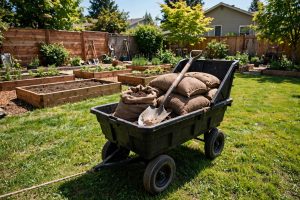
Application is by the plant, not by the acre: for example, retailer directions list a set number of tablespoons per 4 sq ft for tomatoes and peppers, and a teaspoon per small transplant. Read your container for your crop, because rates vary widely by plant size.
Real-world limitation: do not broadcast this on a lawn expecting lawn coverage economics. At 40 sq ft per pound, it is a precision garden product, and using it across 5,000 sq ft would be wasteful and expensive.
Who should buy: vegetable gardeners, perennial growers and container gardeners who want to feed once and then focus on watering.
Spec source: Osmocote Flower and Vegetable retailer listings checked 21 October 2026, for 14-14-14, up to 4 months and 1 lb per 40 sq ft.
7. Safer Brand Lawn Restore 9-0-2: For Thin Lawns and No-Phosphorus Programs
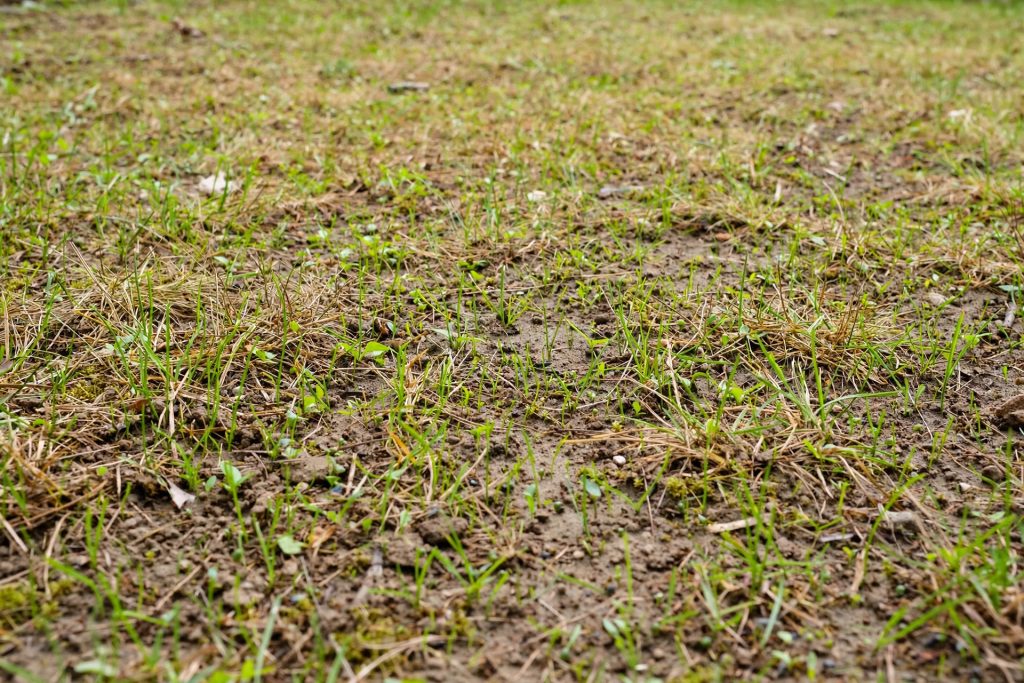
Safer Brand own page lists Lawn Restore at 9-0-2, in a 20 lb bag covering up to 5,000 sq ft, with green-up in 3 to 5 days in the maker framing and a non-burning formula. Retailer text adds that it lasts up to 8 weeks per application. The maker explains the zero phosphorus plainly: the formula is built around nitrogen for growth and 2 percent potash for root strength, without promoting the kind of excess phosphorus many established lawns do not need.
Owner value here is simplicity. It is positioned as one product for revitalizing thin turf, it can be used on new seeding and sod in retailer descriptions, and the maker says children and pets may return after application when used as directed. Note the shipping restrictions on the maker page: it cannot ship to AK, CA, MD, MT, NY or PR, so check your state before ordering.
Real-world limitation: a 9 percent nitrogen product applied at the labeled rate delivers a modest nitrogen dose per application. The maker own program expects repeated applications through the year, four times per year in its one-year supply framing, not a single heroic dose.
Who should buy: homeowners rebuilding a thin lawn who want a gentler, no-phosphorus option and are willing to follow a seasonal program.
Spec source: Safer Brand Lawn Restore maker page checked 21 October 2026, for 9-0-2, 20 lb, 5,000 sq ft and 3 to 5 day green-up claim. Duration from True Value retailer listing.
8. Espoma Organic All Season Lawn Food 9-0-0: Organic Nitrogen Plus Bio-Tone
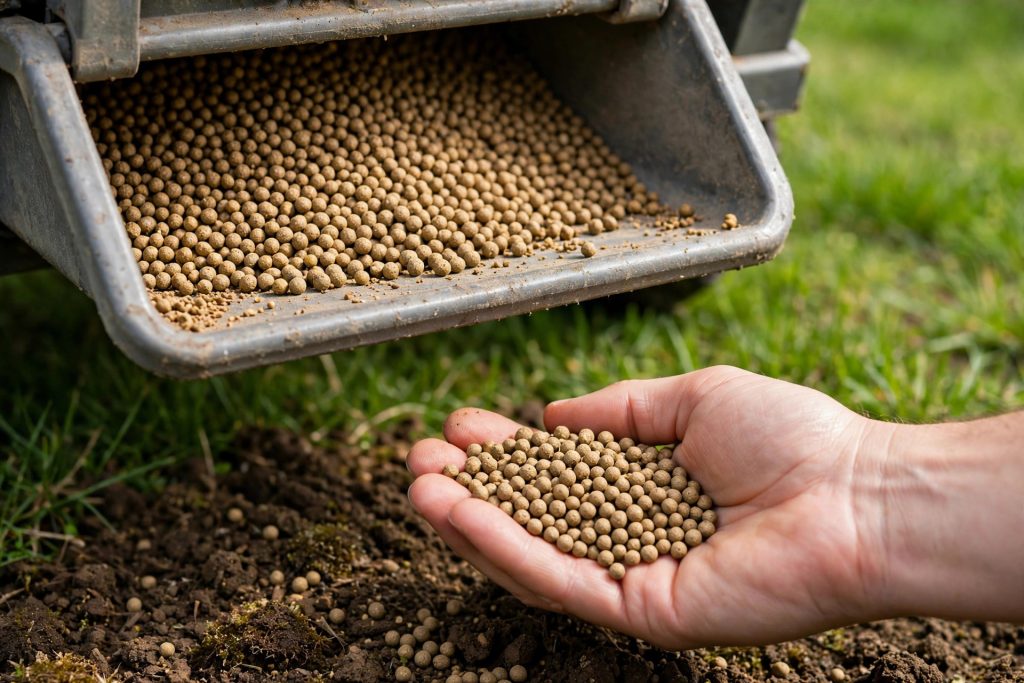
Espoma fact sheet gives the cleanest slow-release breakdown in this whole list: 9 percent total nitrogen made up of 0.5 percent ammoniacal, 1.3 percent other water-soluble, and 7.2 percent water-insoluble nitrogen, with the footnote that the 7.2 percent is slow-release nitrogen from hydrolyzed feather meal and pasteurized poultry manure. That means most of its nitrogen has to be broken down by soil life before the grass can use it.
The same fact sheet lists Bio-Tone beneficial microbes, three Bacillus species at stated colony counts, intended to help make nutrients more available. Espoma catalog material lists the 28 lb class bag as covering up to 5,000 sq ft and positions the product for four applications per year: early spring, late spring, late summer and fall.
Real-world limitation: there is no phosphorus and no potash in the analysis. If a soil test shows your lawn is short of either, this product alone will not correct it, however good its nitrogen story is.
Who should buy: organic-program lawn owners who feed on a schedule, value soil biology, and have a soil test showing phosphorus and potassium are already adequate. Note: the product is now sold as “Espoma Turf-tone All Season Lawn Food” with the same 9-0-0 analysis, so look for that name on the current bag.
Spec source: Espoma Organic Lawn Food 9-0-0 fact sheet checked 21 October 2026, for the nitrogen breakdown and Bio-Tone, plus Espoma catalog coverage.
9. GreenView Fairway Formula Lawn Fertilizer 27-0-5: The All-Season GreenView Option
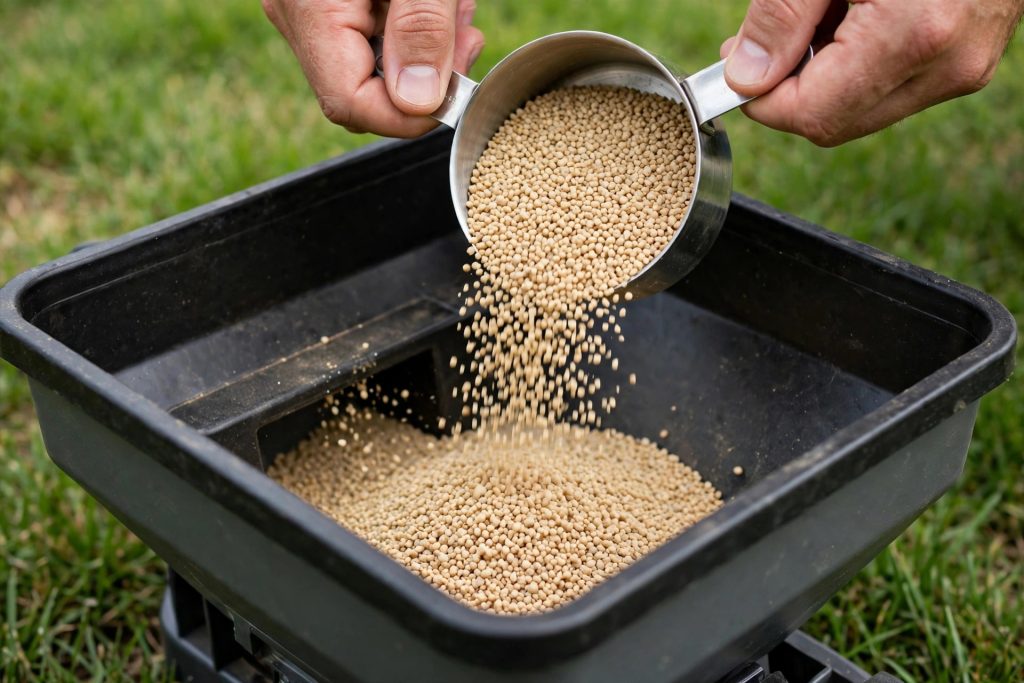
If the fall formula is too seasonal, this is the general Fairway Formula. A retailer listing for the 16.5 lb bag, covering 5,000 sq ft, describes a proprietary blend of 63 percent slow-release nitrogen with no phosphate, feeding continuously for up to 12 weeks, for any grass type, applied any time grass is actively growing. The analysis in that listing is 27-0-5.
Why keep two GreenView products on one list? Because the choice is real. The 27-0-5 is the season-long maintenance option. The 30-0-12 fall formula carries more than double the potash for the pre-winter job. Buying the fall bag for spring use, or the maintenance bag for fall and expecting the same root support, mixes up two different tools.
Real-world limitation: with zero phosphorus and only 5 percent potash, it shares the same soil-test caveat as the other high-nitrogen lawn foods. It maintains, it does not rebuild a deficient soil.
Who should buy: homeowners who want a single no-phosphate maintenance fertilizer with a high slow-release share and a clear 12 week window.
Spec source: GreenView Fairway Formula retailer listing checked 21 October 2026, for 27-0-5, 63 percent slow-release nitrogen, up to 12 weeks and 5,000 sq ft per 16.5 lb bag.
10. Dr. Earth Super Natural Lawn Fertilizer 9-0-5: The Soil Biology Pick
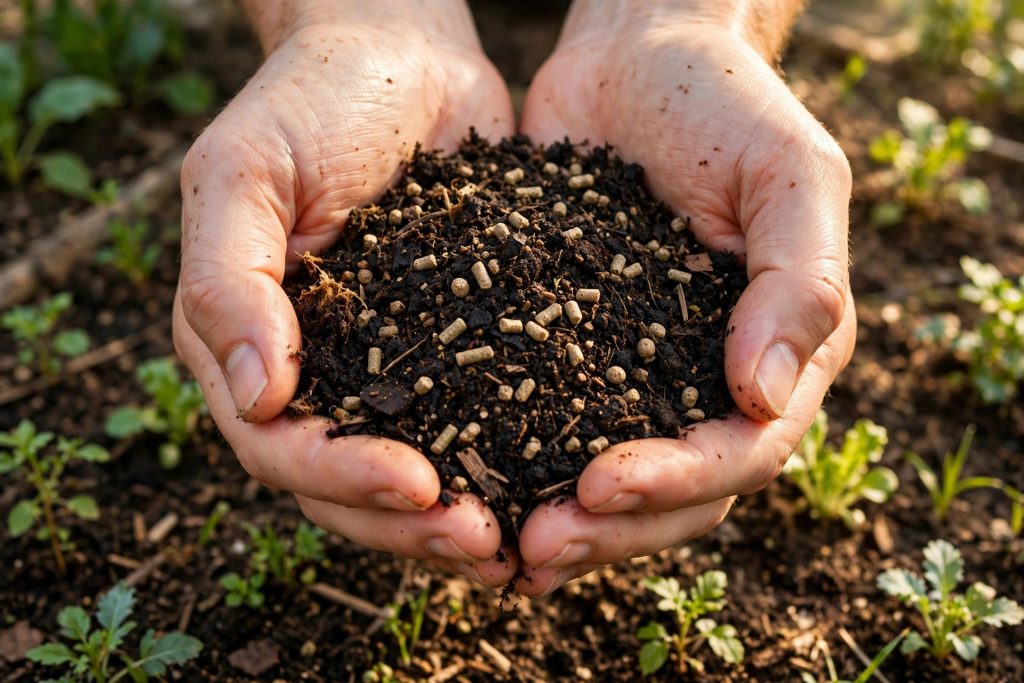
Dr. Earth formula, as described in garden center and review summaries, is a homogenous blend of fish meal, fish bone meal, feather meal, potassium sulfate, alfalfa meal, calcium sulfate and seaweed extract, with mycorrhizae and beneficial soil microbes. Its analysis is listed as 9-0-5 in those summaries, and one review summary puts feeding at up to 3 months, with reapplication every 3 months.
This is the pick where the article is most explicit about a gap: a clear manufacturer coverage figure for the granular lawn bag was Not published in the sources checked for this article. Bag sizes in listings include 18 lb, but you should follow the rate printed on your bag rather than a coverage number borrowed from another product. That honesty matters more than a tidy table cell.
Real-world limitation: fish-based organic ingredients can carry an odor after application, noted in review summaries, and the cost per thousand square feet tends to run higher than synthetic coated products, especially on large lawns.
Who should buy: gardeners who prioritize organic inputs and soil biology over cost per bag, on small to medium lawns where the bag rate is manageable.
Availability note: the granular 9-0-5 bag described here is a legacy product. Dr. Earth’s current Super Natural listing is a liquid spray with a different analysis, so check the analysis on the bag before you buy.
Spec source: Dr. Earth Super Natural summaries from Pesches Garden Center and review coverage checked 21 October 2026, for ingredients and 9-0-5 analysis. Coverage: Not published in sources checked.
How to Choose the Right Slow-Release Fertilizer
Start with a soil test, not a bag. NC State Extension turf guidance stresses slowly available carriers on sandy soils because they are less likely to leach below the root zone, and it warns that quick-release nitrogen on sandy soil should be kept to small doses per application. The same logic applies at home: the sandier your soil and the closer you are to water, the more the slow-release share matters.
Next, match the analysis to the job. A 6-4-0 organic product, a 32-0-5 coated product and a 14-14-14 garden product are not interchangeable. Lawns usually need nitrogen first. Vegetable beds need a balanced analysis. A fall lawn product needs potash. If the middle number is zero, the product is telling you it assumes your soil already has enough phosphorus, which is often true for established lawns and often regulated for good reason.
Then check the feeding window against your real life. If you will apply four times a year happily, an 8 week organic product fits. If you know you will apply once in spring and once in fall, pick a product whose labeled window actually covers that gap, and accept that no fertilizer covers a whole growing season from one spring bag, whatever the marketing implies. Even the longest pick here tops out at up to 4 months.
Finally, read the restriction line. Several products in this list carry state restrictions or heat warnings. Those lines are part of the specification, not legal filler.
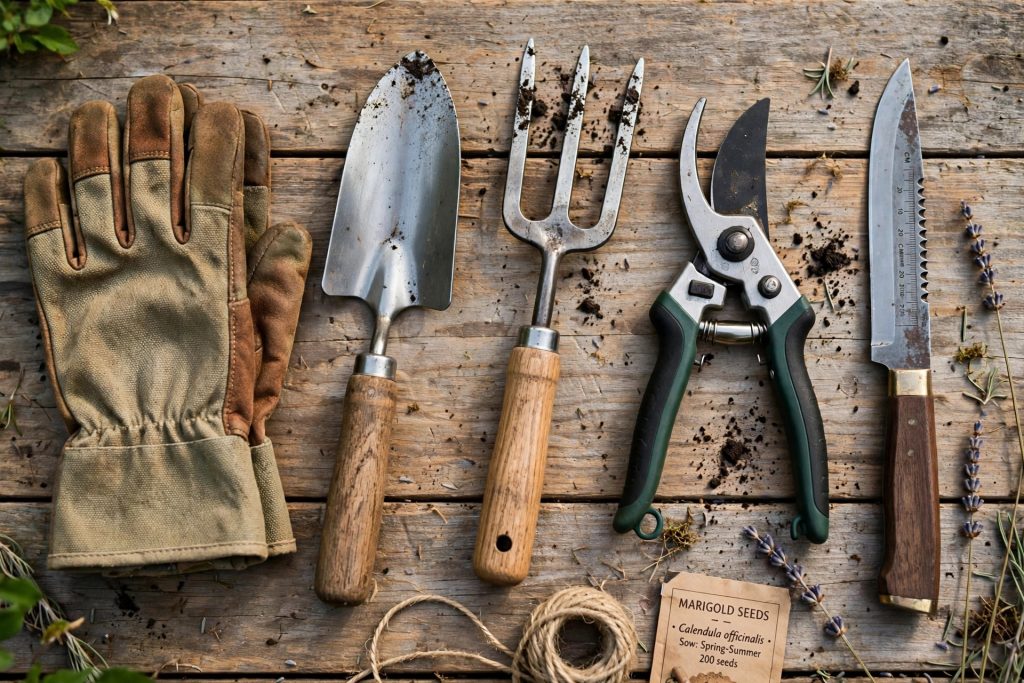
If you want a broader comparison of lawn feeding options, our Best Lawn Fertilizer guide covers the wider field, and the Garden Hand Tools hub groups this article with the rest of the hand tools cluster.
How to Apply Slow-Release Fertilizer Without Waste
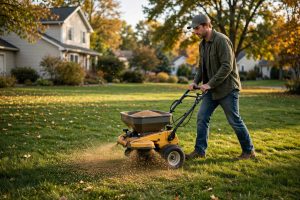
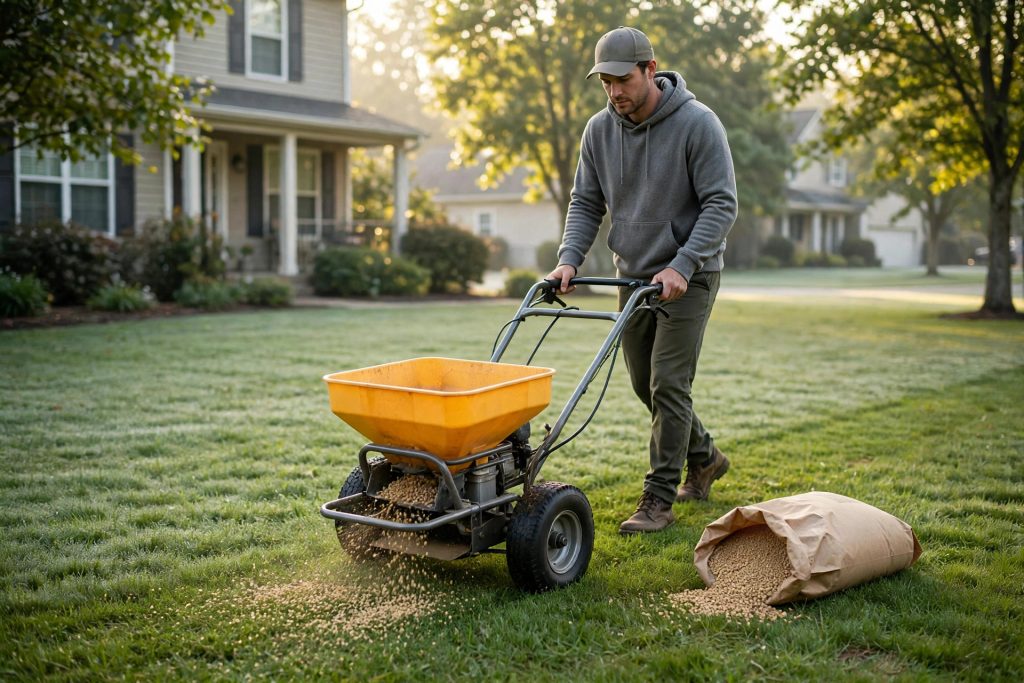
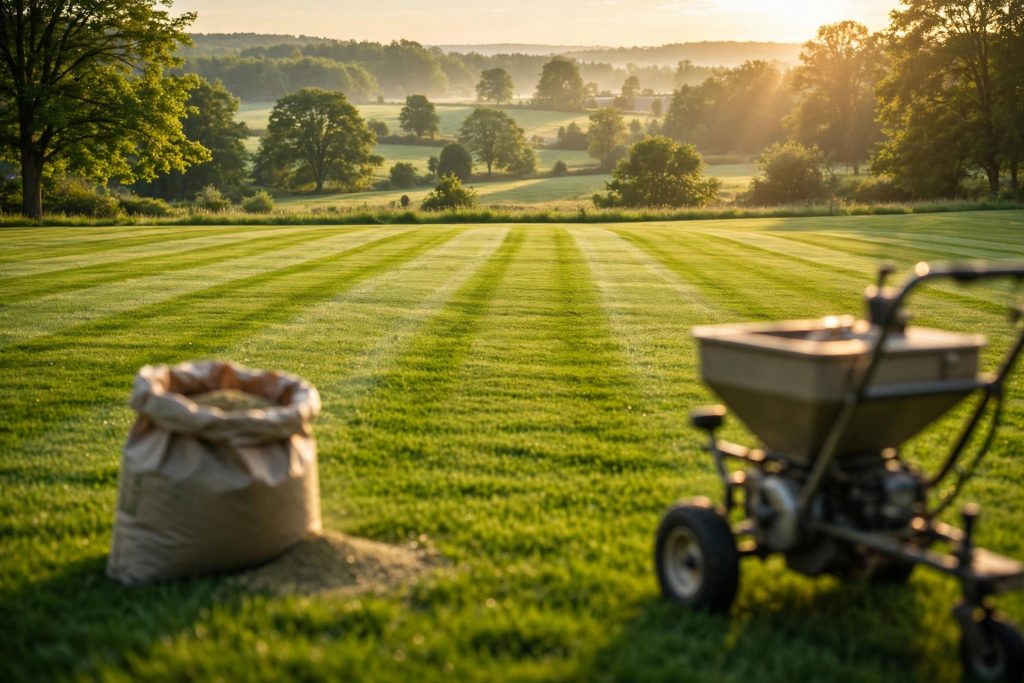
Mow first, apply to dry grass, and use the spreader setting printed for your model. If your spreader is not listed, calibrate it over a measured area rather than guessing, because a 32 percent product punishes a wrong setting far more than a 6 percent one.
Apply around the perimeter first, then work back and forth in straight passes with a slight overlap. Sweep any granules that land on driveways, sidewalks or streets back onto the lawn. NC State Extension guidance makes the same point for water protection: keep granules off hard surfaces and out of ditches and drains, and do not apply before heavy rain.
Water in only as the label directs. Some organic products state they do not need to be watered in. Coated products often benefit from light irrigation to move granules off leaves and into the turf canopy. More water is not better: over-irrigation moves water, and with it nitrogen, below the root zone.
Keep a simple record: date, product, rate, and weather. Next season, that one line will tell you more about your lawn than any generic calendar.
Safety, Storage and Water Protection
Slow release lowers burn risk, it does not erase it. Michigan State University Extension, quoted in trade coverage of its guidance, notes that turf fertilizers with at least 25 percent slow-release nitrogen bring a lower risk of burn, more even growth and less leaching. Lower is the operative word. Piles of any fertilizer against stems, applications to stressed turf in extreme heat, and double rates in overlap zones can still injure grass.
Store bags dry, sealed and out of reach of children and animals. A coated product whose coating is damaged by moisture and crushing in a damp shed will not release as its label intends.
Never apply to frozen ground, never apply before a forecast downpour, and leave an unfertilized buffer beside streams, ponds and drainage ditches. Use a drop spreader near water if you fertilize close to a shoreline at all.
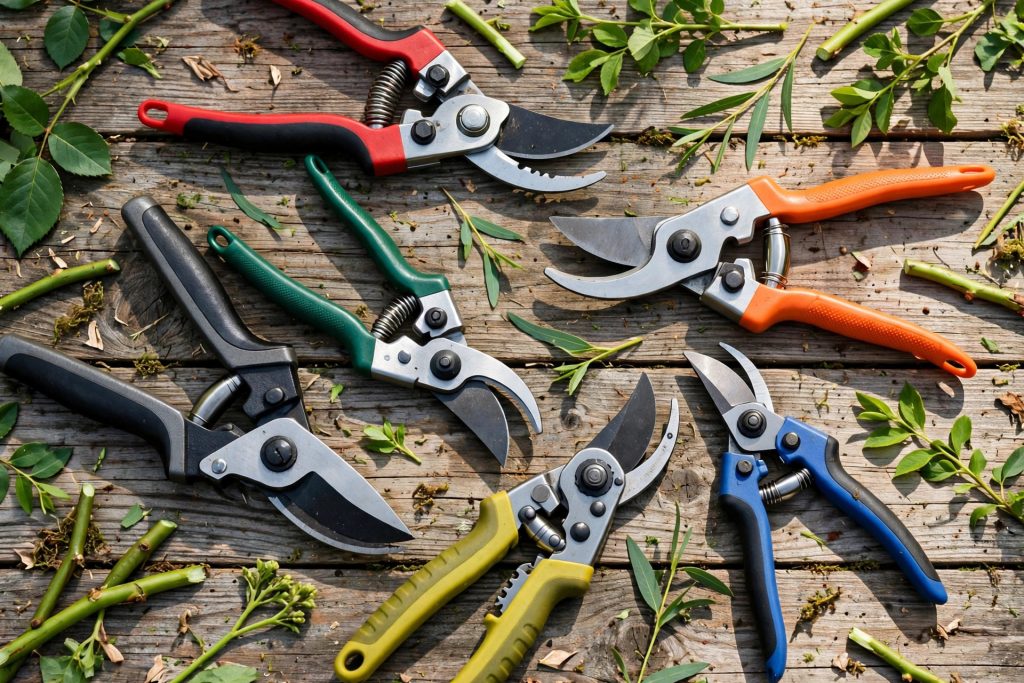
For cutting work that often goes with a feeding and cleanup day, our Pruning Shears roundup is the cluster companion to this guide.
Final Choice
If you buy one product from this list and nothing else, buy Milorganite for a typical home lawn. It will not give you the fastest color, and that is why it wins for most people: steady feeding, iron for color, and a wide margin for human error.
Buy Pennington Full Season instead if your honest constraint is time and your lawn is large. Buy GreenView Fall instead if your next application is the fall one and your lawn is cool-season. Buy Osmocote instead if the plants you are feeding are in beds and pots, not in turf.
Whichever you choose, let the soil test overrule this list. A product that is perfect for a phosphorus-rich lawn in Ohio can be the wrong product for a phosphorus-poor new lawn in Florida. The best slow release fertilizer is the one whose analysis, release share and feeding window match your soil, your grass and your calendar.
References
- Michigan State University Extension, “Benefits of using lawn fertilizers containing slow release nitrogen” – supports the 25 percent slow-release guidance.
- Michigan State University Extension, “Fertilizing Home Lawns to Protect Water Quality” – how slow-release nitrogen is declared on the label.
- NC State Extension, “Water Quality and Professional Turf Managers” – coated controlled-release fertilizers, cost and nitrogen losses.
- GreenView Fairway Formula Fall Fertilizer, official label (manufacturer PDF) – the guaranteed analysis behind the 59 percent slow-release figure.
- The Andersons PGF Complete 16-4-8, official label (manufacturer PDF).
- Espoma All Season Lawn Food, manufacturer fact sheet (PDF) – the 7.2 percent slow-release nitrogen footnote and Bio-tone panel.
- Pennington Full Season, official label (PDF) – 12 percent controlled-release nitrogen and 5 percent iron.
Frequently Asked Questions
What does slow release actually mean on a fertilizer label?
It means part of the nitrogen is in a form that is not immediately soluble. It may be water-insoluble organic nitrogen that soil microbes must break down, or a coated granule that meters nitrogen out through a polymer or resin coat. Look for water-insoluble nitrogen, slowly available nitrogen, or a stated slow-release percentage on the guaranteed analysis.
How long does the best slow release fertilizer feed?
In this list, lawn products feed from up to 8 weeks to up to 4 months, depending on the coating or organic source, soil temperature and moisture. Warmer, wetter soil speeds most release mechanisms up, so a window printed for average conditions will run shorter in a hot, wet summer.
Can slow-release fertilizer burn my lawn?
It is less likely to burn than a fully soluble product at the same nitrogen rate, because less nitrogen is in solution at once. It can still burn if it is piled up, double-applied, or spread on stressed turf in extreme heat. Follow the label rate and any heat warning on the bag.
Is organic slow-release fertilizer better than coated synthetic?
Neither is automatically better. Organic sources such as Milorganite and Espoma feed soil biology and are very forgiving, but they carry lower analyses and need heavier application rates. Coated synthetics such as Pennington Full Season deliver more nitrogen per pound and longer windows. Choose by soil test, lawn size and how often you will apply.
Should I water after applying slow-release fertilizer?
Follow your product label. Some organic products state no watering-in is needed. Many coated lawn products perform best with light irrigation to settle granules into the turf. Avoid heavy watering or applying before heavy rain, which can move nutrients off target.
Do I still need a soil test if I use a slow-release product?
Yes. Slow release controls timing, not balance. Only a soil test tells you whether you need phosphorus, potassium or lime at all. Without one, a zero-phosphorus product could leave a real shortage uncorrected, or a balanced product could add phosphorus your soil already has in excess.

- 10 Best Slow-Release Fertilizers for Lawns and Gardens - October 21, 2026