
Bougainvillea Plant Care: Tips for Year Round Stunning Blooms
Bougainvillea, celebrated for its vibrant and captivating bracts, is a beloved choice among gardeners and landscapers alike. Originating from the lush tropical landscapes of South America , particularly Brazil , this remarkable plant has become a global ornamental favorite, captivating garden enthusiasts and landscape designers with its spectacular colors and remarkable resilience. Known for thriving in warm climates with minimal care requirements, Bougainvillea adds a splash of brilliance to gardens, patios, and outdoor landscapes.
Bougainvillea Care: Why Choose Bougainvillea?

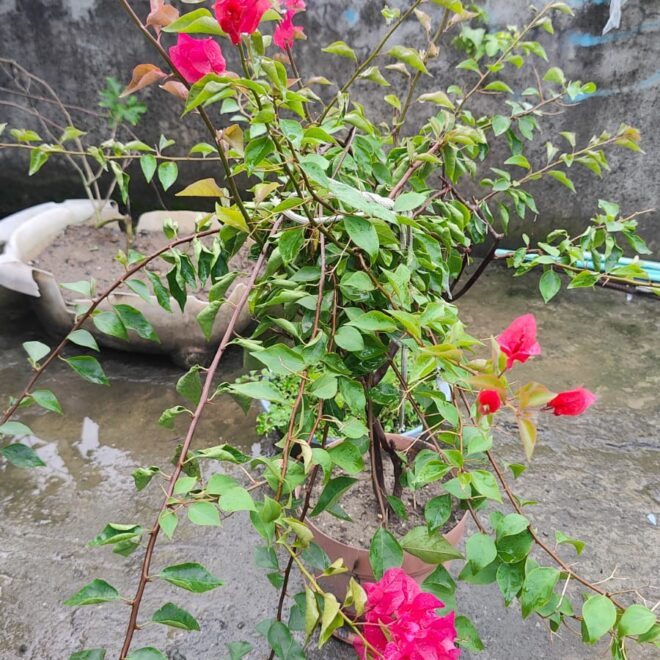
- Incredible Color Palette: Bougainvillea comes in a wide range of colors, from fiery reds and oranges to soft purples, pinks, and whites. The colorful parts are actually modified leaves, called bracts, which surround the small, inconspicuous white flowers.
- Low Maintenance: Bougainvillea thrives with minimal intervention. As long as it receives adequate sunlight and is planted in well draining soil, Bougainvillea will generously reward you with a stunning display of vibrant colors.
- Drought Tolerant: Once established, Bougainvillea showcases impressive drought resistance, making it an ideal choice for regions focused on water conservation and sustainable gardening practices.
- Versatile Growth: Depending on how it’s pruned and trained, Bougainvillea can grow as a vine, shrub, or tree. Its adaptability makes it a great choice for any landscape design.
Bougainvillea Care
Understanding its unique requirements for climate, soil, sunlight, and water is the foundation of good bougainvillea care. Let’s break down each aspect:
Climate and Location: Choosing the Perfect Spot
Bougainvillea is a sun worshiping, heat loving plant that flourishes in warm climates. While it thrives in tropical and subtropical regions, it can also be successfully cultivated in temperate zones with a bit of extra attention and care
- Temperature: Ideally, Bougainvillea should be grown in USDA hardiness zones 9-11, where the temperature doesn’t drop below 60°F (15°C). While it can tolerate short periods of cooler weather, prolonged exposure to freezing temperatures can damage or even kill the plant. For those residing in cooler climates, consider planting Bougainvillea in pots, allowing you the flexibility to bring them indoors during the winter months for optimal protection and continued growth.
Sunlight: The key to a Bougainvillea adorned with vibrant bracts lies in its love for sunlight. This plant thrives on at least 6 hours of direct sunlight daily to achieve an impressive floral display. Insufficient sunlight may lead to lush green leaves, but the result will be a disappointing lack of blooms. - Location: Bougainvillea loves bright, sunny spots with good air circulation. Ideal places include along fences, walls, trellises, or even arbors where the plant can climb and sprawl naturally.
Soil Essentials: The Foundation for Thriving Roots
Bougainvillea thrives best in well draining soil to avoid waterlogging, which can lead to root rot , a common challenge when cultivating this beautiful plant.
Soil Type:
A sandy or loamy soil mix is perfect for Bougainvillea. It’s essential that the soil doesn’t retain water for extended periods, as this can suffocate the roots. If your garden soil is heavy in clay, enhance drainage by mixing in sand, compost, or perlite.
pH Balance:
Bougainvillea prefers slightly acidic to neutral soil, ideally with a pH between 5.5 and 6.5. You can assess your soil’s pH and adjust it with organic amendments as needed to create the ideal environment for growth.
Bougainvillea Care: Watering Tips — How Much Is Too Much?
When it comes to watering Bougainvillea, less is more—especially once it’s settled in. This isn’t a plant that likes pampering, and smart bougainvillea care means holding back the hose. In fact, too much love in the form of frequent watering can do more harm than good.
In the early days
If you’ve just planted your Bougainvillea, it needs regular watering to help those roots take hold. Think of it like getting a new puppy—you’ve got to pay attention in the beginning. Keep the soil slightly moist (not soggy), especially during the first 2–3 months.
Once it’s established
This is where many gardeners trip up. Bougainvillea actually prefers its roots to dry out a bit between waterings. Wait until the top 2–3 inches of soil feel dry to the touch. Then water deeply and let it be. Shallow, frequent watering encourages weak roots and lots of green leaves—but very few flowers.
Pro tip from a nursery owner I spoke with in Sylhet: “The more you ignore it , the better it blooms. Don’t baby it!”
Warning signs of overwatering
If your Bougainvillea looks lush but isn’t flowering, or if the leaves are turning yellow and dropping—chances are, you’re overwatering. Cut back, let it dry, and you’ll likely see a bounce back in blooms.
Bougainvillea Care: Indicators of Overwatering
Be vigilant for signs like yellowing leaves and reduced flowering, which are clear indicators that your bougainvillea care routine may be giving it too much moisture.
How to Propagate Bougainvillea Without Any Fancy Equipment

Want more Bougainvilleas without buying more? You’re in luck—this plant is surprisingly easy to multiply, and you don’t need a greenhouse or special tools. Just a little patience.
Propagating from Cuttings
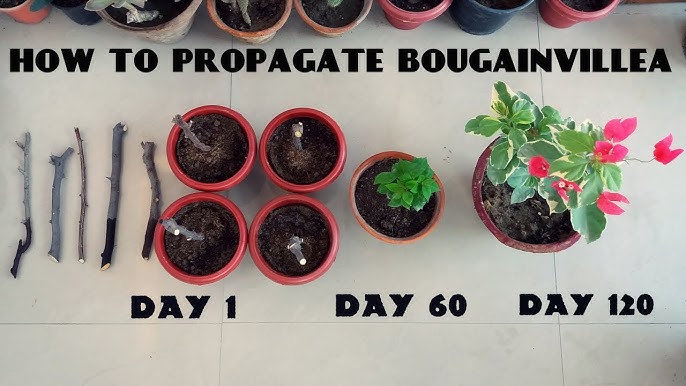
This is the most common method and works well for most home gardeners.
- Snip a 4–6 inch cutting from a healthy stem semi hardwood is best—not too soft, not too woody.
- Remove the lower leaves, leaving just a couple at the top.
- Dip the cut end in rooting hormone.
- Plant it in a well draining mix—something sandy with a bit of perlite works great.
- Keep the soil slightly moist—not soggy—and place the pot somewhere warm and sunny.
In 3–6 weeks, you’ll usually start to see roots forming. Don’t tug on it to check! Wait until you see new leaf growth—that’s your sign it’s rooted.
Air Layering: The Lazy Gardener’s Method
If you’re not in a rush, this one’s super low effort.
- Pick a flexible branch on a healthy Bougainvillea.
- Gently bend it down to the soil and bury part of the stem under a few inches of soil.
- Use a stone or small clip to hold it in place.
- Keep the area slightly moist and wait—in a couple of months, roots will grow from the buried section.
- Once it’s rooted, snip the stem from the mother plant and move your new Bougainvillea baby to its own pot.
Real story: I helped a neighbor in Mymensingh root two plants this way—one for his rooftop, and one for his mother’s house in the village. Both bloomed within a year
Bougainvillea Care: Feeding Bougainvillea
Bougainvillea isn’t a greedy plant, but a little feeding done right, can go a long way when it comes to bigger, brighter blooms.
What kind of fertilizer works best?
Start with a balanced fertilizer like 10-10-10 (nitrogen-phosphorus-potassium) when your plant is just getting established. But here’s the trick most people miss: too much nitrogen = too many leaves, not enough flowers. If your Bougainvillea is turning into a leafy jungle with no color, it’s time to switch.
For serious blooming, go with a “flower booster” fertilizer something like 5-10-10 or even 0-10-10. These are high in phosphorus, which helps push out those vibrant bracts Bougainvillea is famous for.
When and how often should you feed it?
From spring through early fall, feed your plant every 4 to 6 weeks. That’s when it’s actively growing and producing flowers. Use liquid fertilizer or granules, but don’t overdo it, Bougainvillea likes a little tough love.
Come winter, your plant slows down. If you keep feeding it during dormancy, you might confuse it. Let it rest. Skip the fertilizer until things warm up again.
Tip from a home gardener in Chattogram: “When I stopped using fancy fertilizers and just gave my Bougainvillea a light bloom booster every month—it exploded in color.”
Pruning Bougainvillea: Why It Matters and When to Grab the Shears

Here’s the truth: if you want your Bougainvillea to look wild and full of flowers instead of like a leafy tangle, pruning is your best friend. Don’t be afraid to cut it back. In fact, most Bougainvilleas need it to bloom like crazy.
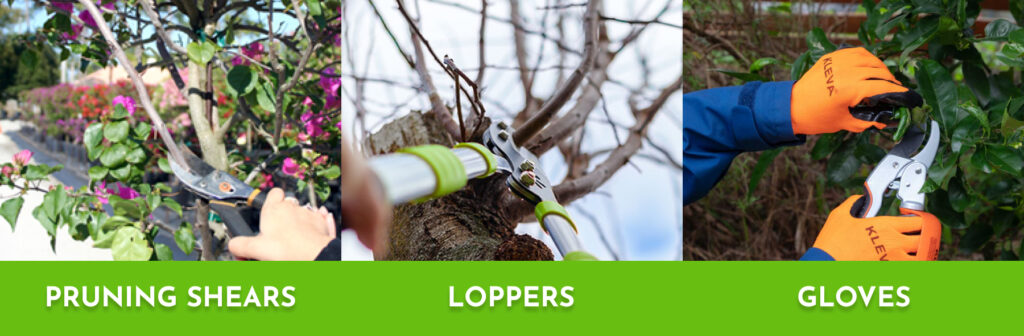
Light trimming = more blooms
After each flowering cycle, do a little “tidy up.” Snip off dead flowers, weak stems, or any twiggy growth that’s not doing much. Think of it like giving your plant a fresh haircut—cleaning it up so it can focus on growing new blooms instead of wasting energy on old growth.
Hard pruning = big reset
Once a year, usually in early spring, it’s time for a more serious trim. Cut it back to shape the plant and remove any woody or dead stems. Don’t worry if it looks a little bare afterward. Bougainvillea flowers on new growth, so this hard pruning actually sets the stage for the best color show of the year.
Real tip from a rooftop gardener in Dhaka: “I used to be scared of cutting it too much. But once I chopped mine down before spring, it bounced back with twice the flowers!”
Training it to climb without snapping the branches
If you’re growing your Bougainvillea along a wall, fence, or trellis, give it some support. Use soft ties to guide the stems. Just don’t force it, it has a brittle streak, and forcing a branch the wrong way can snap it clean off.
Quick Pruning Reminders:
Don’t prune too late in the season if you live in a colder climate; new growth won’t have time to harden before winter.
Always use clean, sharp pruners.
Wear gloves, some varieties have sharp thorns .
Bougainvillea Care: Pests & Problems
Bougainvillea is tough, but like any garden warrior, it’s not invincible. If your plant’s looking sad, yellow leaves, no flowers, sticky stems, it’s time to play plant detective.
Bug Trouble: The Usual Suspects
Even though Bougainvillea doesn’t attract too many pests, certain bugs still sneak in especially during warm, humid months.
- Aphids: Tiny green or black insects that cluster on tender new growth.
- Mealybugs: White, cottony patches on stems or leaf joints.
- Whiteflies: Little fluttering pests that leave behind a sticky mess.
- Caterpillars: Chew holes in leaves and flower bracts.
Fix it:
Grab some neem oil or insecticidal soap, and spray the affected areas in the early morning or late afternoon. Always test on a small spot first to make sure your plant doesn’t react. For caterpillars, hand picking is usually enough.
Home trick from a gardener in Barisal: Mix neem oil with a little dish soap and water spray every few days until the pests disappear.
Fungal Foes
In rainy or humid climates, you might run into:
- Powdery mildew: White, powdery coating on leaves.
- Leaf spot: Brown or black spots that spread on foliage.
What to do:
Trim off affected leaves, improve air circulation, and water at the base . If needed, use an organic fungicide spray but usually, correcting the environment does the trick.
Root Rot: The Silent Killer
This is the big one. Overwatering or poor drainage causes roots to rot, and once that starts, the plant struggles to recover.
Signs: Yellow leaves, mushy stems, no flowering.
Solution:
Stop watering immediately. If it’s in a pot, remove it and check the roots. Cut off the mushy ones and replant in fresh, well draining soil. Water only when the top few inches are dry.
If your Bougainvillea is healthy but not flowering, overwatering is often the hidden reason. Less water = more blooms.
How to Protect Bougainvillea in Winter Without Losing It to the Cold
If you live in a warm place, great , Bougainvillea will likely keep blooming without much fuss. But if you get cold winters, especially below 5–10°C (40–50°F), you’ll need to help your plant ride it out safely.
For Potted Bougainvillea:
- Move it inside or to a protected porch when night temps dip.
- Choose a bright, sunny window, south facing is best.
- Cut back on watering. Let the soil mostly dry out between sips. Overwatering in winter is a fast track to root rot.
- If it drops its leaves indoors, don’t panic. It’s just resting.
For In Ground Bougainvillea:
- Mulch around the base with straw, dry leaves, or bark to insulate roots.
- Cover the plant with frost cloth, burlap, or plastic if a cold snap is coming.
- Avoid pruning in late fall, that can trigger tender new growth just before the cold hits.
A grower in Sylhet shared this tip: “I wrap the base with banana leaves and old cloth during our short cold snaps. Works like a charm!”
With just a bit of bougainvillea care, your plant will make it through winter and bounce back with color when the warmth returns.
Bougainvillea in Containers: How to Keep It Happy on Your Patio or Balcony

Don’t have a garden? No worries—Bougainvillea thrives in pots, making it perfect for balconies, rooftop gardens, and sunny patios. In fact, container grown Bougainvillea often blooms just as beautifully than those in the ground if you get the setup right.
Choose the right pot drainage is everything
This plant hates wet feet. Your pot needs plenty of drainage holes, or you’re asking for root rot. Skip fancy ceramic pots without drainage unless you’re using them as decorative covers.
Tip: Terracotta pots are a great choice they breathe well and help prevent soggy soil.
Soil mix: Think dry and airy
Use a well draining mix , something designed for succulents or cacti works great. You can also mix regular potting soil with sand and perlite to lighten it up. Avoid anything that holds water too long.
Watering containers: Less often than you think
Because pots dry out faster, you’ll water more often than with in ground plants but don’t fall into the trap of overdoing it. Let the top inch or two of soil dry before watering again. If you’re unsure, stick your finger in the soil dry? Water. Damp? Wait.
Pruning in pots: Keep it tidy, keep it blooming
Container Bougainvillea can get leggy if left unchecked. Lightly prune after each bloom cycle to shape it, and give it a hard trim in early spring to encourage fresh growth and more color.
Can it live indoors in winter?
Yes, if you’ve got a bright, sunny window , south facing is ideal. Bougainvillea still needs several hours of light a day to bloom indoors. Don’t overwater, and let it rest during the cooler months.
Real talk from a Dhaka apartment gardener: “I keep mine on the 6th floor balcony year round. It loves the heat, hates rain pooling in the saucer, and rewards simple bougainvillea care with nonstop blooms.”
Bougainvillea Care Summary Table
| Aspect | Details |
|---|---|
| Sunlight | Needs full sun – at least 6 hours daily to bloom well |
| Watering | Water deeply but infrequently; let soil dry out between waterings |
| Soil Type | Prefers well draining soil, slightly acidic to neutral pH (5.5–7.0) |
| Fertilizing | Use low nitrogen fertilizer every 4–6 weeks during growing season |
| Pruning | Prune after each blooming cycle to shape and encourage more flowers |
| Pot/Container Tips | Needs a large pot with good drainage; can become root bound |
| Pests/Diseases | Watch for aphids, caterpillars, and fungal leaf spots |
| Support Needed | Vines may need a trellis or wall to climb if grown vertically |
| Winter Care | Protect from frost; bring indoors or cover in colder zones |
| Blooming Tip | Stress (less water/fertilizer) can trigger better blooming |
Final Thought
There’s something incredibly satisfying about growing a Bougainvillea. It doesn’t beg for attention, but when you give it the right conditions sunlight, well drained soil, a bit of pruning, and just enough tough love it gives back tenfold with fiery color and bold personality.
Whether you’re growing it up a fence, training it in a pot on your rooftop, or keeping it alive through the cold season, Bougainvillea rewards the gardener who learns its rhythm. No, it’s not a delicate flower. It’s a survivor a show off in the best way and once it settles in, it becomes a centerpiece in any space.
So go ahead, propagate a few cuttings, shape it to climb, prune it fearlessly, and let it bloom wild. With a little time and bougainvillea care, you’ll have a burst of tropical color right outside your window, reminding you that beauty can be both bold and low maintenance.
Happy growing and don’t forget, sometimes the most stubborn plants end up being your favorites.
References
- University of Florida IFAS Extension
Bougainvillea Gardening Solutions - North Carolina State University Extension
Bougainvillea (Bougainvillea spp.) - Royal Horticultural Society (UK)
Bougainvillea: How to grow and care for Bougainvillea - Missouri Botanical Garden
Bougainvillea glabra - Texas A&M AgriLife Extension
Earth Kind Landscaping with Bougainvillea
FAQ for Bougainvillea Care
When your Bougainvillea is new, keep the soil a bit moist so it can settle in. After that, wait until the top couple of inches of soil feel dry before watering again. These plants don’t like soggy roots , it’s better to underwater than overwater.
Sunlight is the main thing. If it’s not getting at least 6 hours of full sun, you’ll get lots of leaves but few flowers. Also, too much water or fertilizer high in nitrogen will encourage leaf growth over blooms.
If you live somewhere with frost, it’s tricky. Bougainvillea hates freezing weather. Growing it in pots lets you bring it inside when it’s cold. If planted outside, mulch heavily and cover it when frost threatens.
Good drainage is key. Sandy or loamy soil works best. If your soil is heavy or clayey, mix in sand or organic matter so water doesn’t sit around the roots.
Light pruning right after flowering helps keep it tidy and encourages new blooms. A bigger prune in early spring shapes the plant and gets rid of old or weak branches.

Thesis Link : https://saulibrary.edu.bd/daatj/public/uploads/BAU200601_19-Pp_5.pdf
- 10 Best Crack Weeders for Pavement - October 16, 2026
- How to Aerate a Lawn: Step by Step Guide - October 15, 2026
- 10 Best Loppers for Thick Branches - October 14, 2026