
How to Grow Strawberries: Easy Guide for Beginners
There’s something magical about how to grow strawberries. I’m not talking about the perfectly polished ones you find in supermarkets though those are fine too but the juicy, sun kissed berries you pick straight off the plant. A little misshapen, maybe. Sometimes smaller. But bursting with flavor and pride. That’s what growing strawberries is all about.
Whether you have a backyard, a rooftop, a tiny balcony, or just a few pots to spare, you can grow strawberries. And trust me, it’s not as hard as you might think. With the right approach and a bit of patience, you’ll be harvesting your own little red gems in no time.
Why Grow Strawberries at Home?
Let me start with a quick story.
A few years ago, I visited a friend’s village in Bogura during winter. As we sat on his rooftop with the fog still hanging low, he plucked a tiny red strawberry from a hanging basket and handed it to me. “Try this,” he said with a grin.

It wasn’t store perfect but the taste? Sweet, slightly tangy, juicy, and unlike anything I’d bought from a market. That was the day I decided to try growing strawberries myself.
And here’s what I learned: strawberries are surprisingly forgiving and incredibly rewarding.
You don’t need to be a master gardener. You just need good soil, sunlight, and a little know how. Let’s get into it.
Choosing the Right Strawberry Variety
All strawberries aren’t created equal. Some produce all at once. Others give you a steady supply. So the first step is deciding what type suits your lifestyle.
Types of Strawberries
- June bearing
- Produces one large crop usually in late spring or early summer
- Great if you want a big harvest to make jam, freeze, or share
- Popular varieties: Chandler, Honeoye

2. Everbearing
- Two to three smaller harvests early summer, late summer, fall
- Good for folks who want to snack on berries across the season
- Popular varieties: Ozark Beauty, Quinault

3. Day neutral
- Produces consistently throughout the growing season
- Ideal for small containers or regular picking
- Popular varieties: Albion, Seascape, Mara des Bois

Research Insight:
According to the University of California Agriculture & Natural Resources, day neutral varieties are especially well suited for container gardening and warmer climates (UCANR, 2023).
Finding the Right Spot
Strawberries love the sun. A minimum of 6–8 hours of sunlight per day is essential.
Whether you’re planting in the ground, in pots, or in hanging baskets, make sure your chosen spot gets good light and isn’t prone to waterlogging. If water sits around their roots, they’ll rot faster than you can say “jam.”
Tip from my first season:
I planted a few in a shady corner—and they barely produced. Once I moved them to the sunniest part of the garden, they flourished.
Preparing the Soil
Healthy strawberries start with healthy soil.
Soil Requirements:
- Well draining
- Slightly acidic pH (5.5 to 6.5)
- Rich in organic matter
If you’re not sure about your soil pH, simple home test kits are available. For containers or raised beds, use a mix of:
- Garden soil
- Compost
- Cocopeat or perlite for drainage
Fact Check:
Research published in Horticultural Plant Journal shows that strawberry root development is significantly enhanced in loamy soil enriched with compost compared to plain soil (HPJ, 2019).
When to Plant
In most temperate zones:
- Spring planting after the last frost is best.
- In milder climates, you can also plant in autumn for earlier fruiting.
Container growers: You have more flexibility. Just avoid extreme cold or heat.
Bangladesh Tip:
Mid-November to January is ideal for transplanting strawberry runners in open fields or rooftop beds.
Planting Strawberries


Whether in pots or soil, spacing matters.
In Ground:
- Space plants 12–18 inches apart
- Leave 2 feet between rows
In Pots:

- Use pots that are at least 8–10 inches deep
- Only plant one or two per pot
Planting Depth:
- Don’t bury the crown. That’s the part where the stem meets the roots. It should sit just above the soil.
- Too deep = rot
- Too shallow = dry roots
Visual Tip:
Think of the crown as the strawberry’s “neck.” You want it breathing—half out, not buried like treasure.
Watering and Feeding
Strawberries like moist soil—but not soggy conditions.
- Water consistently, especially when plants are flowering and fruiting.
- Drip irrigation or watering early in the morning is ideal.
- Avoid wetting the leaves to reduce fungal problems.
Fertilizing:
- Use a balanced slow release fertilizer during planting.
- Mid-season, top dress with compost or fish emulsion.
- Avoid high nitrogen fertilizers; they’ll grow big leaves but fewer berries.
Research Tip:
According to the Journal of Agricultural Science, strawberries grown with organic compost produced more flavorful fruits and showed better pest resistance (JAS, 2020).
Pruning, Mulching & Runner Management
Pruning:

- Remove dead leaves and flowers in early growth.
- After the first harvest, trim excess leaves to redirect energy.
Mulching:

- Mulch helps retain moisture, prevent weeds, and keep berries clean.
- Use straw, pine needles, or rice husks.
Runners:


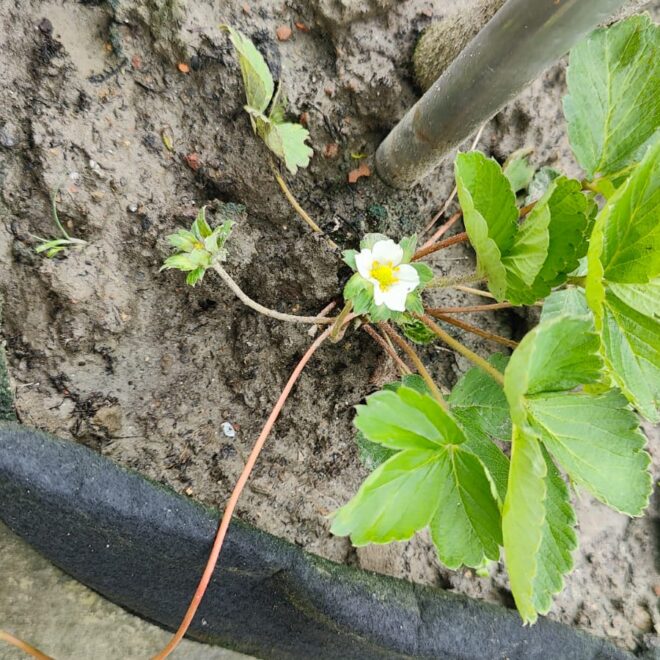
- Runners are offshoots that grow into new plants.
- Cut them off if you want better fruit.
- Let a few grow if you want more plants next year.
Real Life Lesson:
My aunt once let her runners go wild in a rooftop container. It turned into a jungle with barely any fruit. Lesson learned: trim runners early if fruit is your goal.
Pest & Disease Management
Strawberries are sweet. Unfortunately, pests think so too.
Common Pests:
- Aphids
- Slugs
- Spider mites
Diseases:
- Powdery mildew
- Gray mold
- Root rot
Solutions:
- Neem oil spray (weekly)
- Garlic or marigold as companion plants
- Don’t overwater
- Keep the bed tidy and well ventilated
Tip:
Add crushed eggshells around the base. It deters slugs and adds calcium to the soil.
Harvesting Strawberries

This is the fun part
Harvesting Tips:
- Pick when the berry is fully red and ripe
- Twist gently or cut with scissors
- Best picked in the morning when they’re cool and firm
Don’t leave ripe strawberries too long—they rot fast or attract ants.
Pro tip:
Eat within 24 hours or refrigerate them unwashed in a paper lined box.
Post Harvest Ideas
Got a good harvest? Here’s how to enjoy them:
- Fresh with yogurt or cream
- Homemade jam or strawberry chutney
- Smoothies and milkshakes
- Freeze for winter treats
My favorite? Strawberry lassi with a pinch of cardamom.
Real Life Story: A Rooftop Strawberry Garden
During lockdown in 2020, my neighbor started growing strawberries on his rooftop in Dhaka. Using recycled paint buckets, composted kitchen waste, and some day neutral seedlings from a nursery in Savar, he managed to harvest over 2 kg of strawberries by March.
He gave away boxes of fresh strawberries to nearby families. It wasn’t just about food—it was a reminder of joy during tough times.
Summary Table: How to Grow Strawberries
| Step | Details |
|---|---|
| Best Time to Plant | Early spring or late fall (depending on your climate) |
| Ideal Location | Full sun (6–8 hours daily), well draining soil |
| Soil Requirements | Slightly acidic (pH 5.5–6.8), rich in organic matter |
| Propagation Methods | Runners (preferred), seeds (slower), bare root or potted plants |
| Planting Distance | 12–18 inches apart, 3–4 feet between rows |
| Watering Needs | 1–1.5 inches per week, keep soil consistently moist—not soggy |
| Mulching | Use straw, pine needles, or plastic mulch to retain moisture and reduce weeds |
| Fertilizer | Apply balanced fertilizer before planting and again after flowering |
| Common Pests & Diseases | Aphids, slugs, spider mites, powdery mildew, gray mold |
| Pruning Tips | Remove runners (if not propagating), dead leaves, and old flowers regularly |
| Pollination | Mostly self pollinated, but bees help increase yield |
| Harvest Time | 4–6 weeks after flowering; pick when berries are fully red and ripe |
| Storage | Best eaten fresh; refrigerate for 2–3 days or freeze for later use |
| Lifespan of Plant | Typically 3–4 years, but best fruit comes in the first 2 years |
| Companion Plants | Spinach, beans, garlic, lettuce (avoid cabbage family plants) |
Final Thoughts
Growing strawberries isn’t just a hobby—it’s a connection to nature, to patience, and to simple joy. You don’t need a massive field. A few containers, some sunlight, and a bit of daily care are enough.
They may not all be perfect, and you might lose a few to birds or bugs. But when you taste that first homegrown strawberry—you’ll know it was worth it.
References
- UCANR (University of California Agriculture & Natural Resources), 2023. Growing Strawberries in Containers.
- Horticultural Plant Journal, 2019. Soil Composition and Root Development in Strawberry Cultivation.
- Journal of Agricultural Science, 2020. Effect of Organic Fertilizer on Strawberry Yield and Quality.
- The Royal Horticultural Society (RHS), 2022. Strawberry Plant Care.
For more expert advice on Growing Strawberries in Your Home Garden, stay connected with us. We’ll provide valuable tips, strategies, and updates to help you maximize your rooftop garden’s potential all winter long. Stay tuned for more insights .
Common Questions About Growing Strawberries
Yes, Opt for day neutral varieties and provide partial shade in hot summers.
Usually 2–3 years at peak productivity. After that, replace with new plants or runners.
Yes—but they need a bright window or grow lights. Day neutral types are best for this.
Usually due to lack of sunlight, poor soil, or too many runners.
It’s possible but slow. Most gardeners use bare root plants or runners for faster results.

Thesis Link : https://saulibrary.edu.bd/daatj/public/uploads/BAU200601_19-Pp_5.pdf
- 10 Best Loppers for Thick Branches - October 14, 2026
- Fall Lawn Care Checklist – 9 Jobs Before Winter - October 14, 2026
- 10 Best Garden Tool Sets for Beginners - October 13, 2026