$7.99
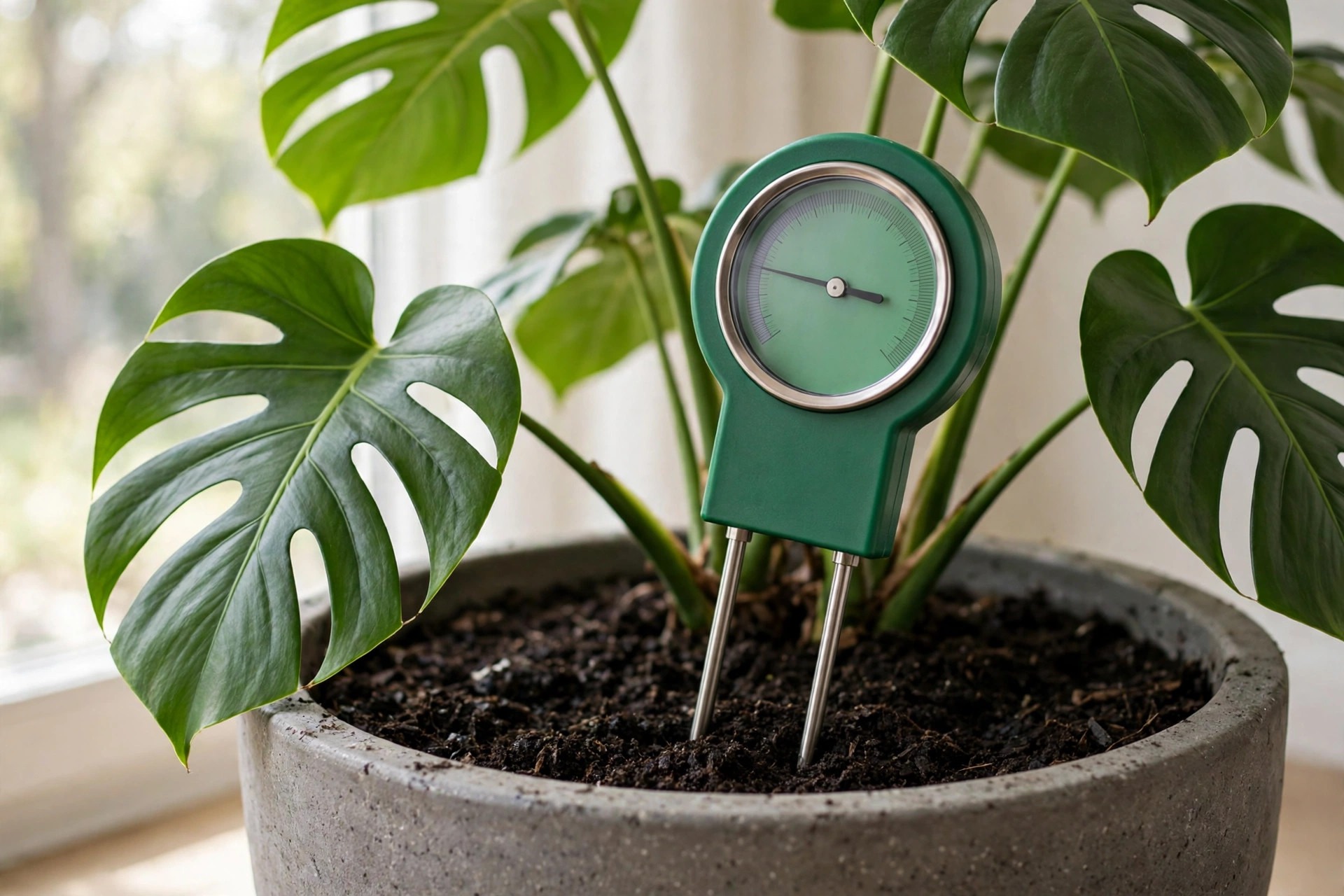
The cheapest meter in the roundup at $7.99: a battery-free 3-in-1 tester for indoor plants, best for moisture and light checks.
Description
Indoor plants hide their problems until the damage shows. A monstera or pothos can look fine on the surface while its roots sit in soil that is too wet, too dry, or too acidic to take up nutrients. A simple tester takes the guessing out of it, and the VIVOSUN 3-in-1 Soil Tester does that for $7.99, the lowest price of any meter in our roundup. It reads pH from 3.5 to 8, moisture from 1 to 10, and light from 0 to 2000 lux, with no battery to buy or replace. It is built for soil only, and it must not be used to test water or other liquids. Its maker does not publish an accuracy figure, so its pH number is a rough guide rather than a lab result. For indoor gardeners who want a cheap first check and a handy moisture and light meter for houseplants, it is a sensible place to start.
Key Features
Three Readings in One Tester
The vivosun 3-in-1 soil tester measures three things: soil pH from 3.5 to 8, moisture from 1 to 10, and light from 0 to 2000 lux. One analog tester covers the three checks an indoor gardener reaches for most, so you do not need a separate tool for each one.
The Cheapest Meter in the Roundup
At $7.99, this is the cheapest meter in our roundup, undercutting even the Atree at $8.49. It costs less than most houseplants it would look after. If you only need a rough sense of your soil, you do not need to spend more.
No Battery Needed
The tester needs no battery at all. There is nothing to charge, nothing to replace, and nothing that dies halfway through a watering round. Pick it up, use it, and put it back on the shelf.
Best for Moisture and Light Checks
Where the VIVOSUN earns its keep is moisture and light. Indoor plants suffer most from overwatering and from sitting too far from a window, and the 1 to 10 moisture scale and the 0 to 2000 lux light scale answer both questions plainly. The pH reading is a bonus at this price, not the reason to buy it.
Soil Only, Never for Liquids
This tester is for soil only. It must not be used to test water or other liquids, which can damage it and give a meaningless reading. Keep it in the soil of your pots, where it belongs, and it will last.
Product Description
The VIVOSUN 3-in-1 Soil Tester is a battery-free analog tester that reads soil pH from 3.5 to 8, moisture from 1 to 10, and light from 0 to 2000 lux. There is no digital display and no battery compartment. It is made for indoor plants, and its natural home is a windowsill or a shelf of houseplants.
The pH range covers the ground most houseplants care about. Monsteras, pothos, fiddle leaf figs, and most common houseplants generally grow best between pH 6.0 and 7.0, and the 3.5 to 8 range brackets that band with room on either side. The moisture scale runs from 1, dry, to 10, wet, and the light scale runs from 0 to 2000 lux, which covers the range from a dim corner to a bright window. Be clear about its limits, though. Its maker does not publish an accuracy figure, so the pH number is a rough guide, not a lab result, and it scored 4.7 in our roundup. If you need a number you can act on with confidence, a digital meter with published accuracy is the better buy. If you need a cheap first check and a reliable moisture and light reading for indoor plants, this tester does the job for $7.99.
One warning matters more than the rest: this tester is for soil only, and it must not be used to test water or other liquids. Dipping it in water will not give a useful reading and can ruin the tester. Use it in potting mix, and only in potting mix.
Benefits of Using This Product
First, it ends the guesswork about watering. Indoor plants are easy to overwater, because the surface dries while the root zone stays wet, and easy to underwater, because a small pot can dry out in a week of heating. A moisture reading from the root zone tells you which it is, and that single habit saves more houseplants than any fertilizer.
Second, it tells you whether your plant gets enough light. A plant that sits too far from a window slowly weakens, and the 0 to 2000 lux scale shows plainly whether the spot is bright enough. That is enough to decide whether to move the plant closer to the window or to accept the spot as it is.
Third, it gives you a rough pH direction for almost nothing. If the reading sits well below 6, your soil leans acidic, and if it sits near 8, it leans alkaline. That is enough to decide whether a repot with fresh mix is worth doing, and then to confirm the change with a more precise test.
Specifications
| pH Range | 3.5 to 8 |
|---|---|
| Moisture Range | 1 to 10 |
| Light Range | 0 to 2000 lux |
| Use | Soil only, must not be used to test water or other liquids |
| Power | No battery needed |
| Accuracy | Not published by the maker |
| Price | $7.99 |
| ASIN | B01DNUIGUY |
| Roundup Rating | 4.7 |
How to Use
Using the vivosun 3-in-1 soil tester takes a minute, and the steps are the same for each of the three readings.
- Water the soil lightly first if it is bone dry, then wait a few minutes so the moisture spreads evenly.
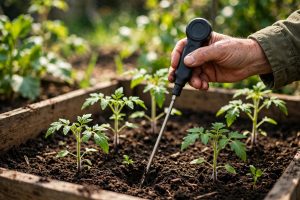
- Insert the tester into the soil to the depth of the root zone, taking care not to force it against stones or the side of the pot.
- Set the tester to the reading you want: pH, moisture, or light.
- Wait for the reading to settle, then read the value.
- Pull the tester out, wipe it clean with a cloth, and store it somewhere dry.
Take the reading in a few spots around the plant if you want a better picture. One spot can mislead, especially in a pot where water pools on one side. For the light reading, let light fall on the tester instead of shading it with your hand. And remember: soil only. Never use it to test water or other liquids.
Why Choose VIVOSUN 3-in-1 Soil Tester?
Choose it for the price and for the moisture and light readings. At $7.99, it is the cheapest meter in our roundup, and it is best for moisture and light checks on indoor plants, where a quick reading before watering or before moving a plant is genuinely useful. It needs no battery, and there is nothing to set up.
Do not choose it if you need a precise pH number. The maker does not publish an accuracy figure, the reading is coarse, and it scored 4.7 in our roundup. For exact pH work, such as adjusting soil for a fussy plant or chasing a nutrient problem, spend more on a digital meter with published accuracy. For a cheap first check and everyday watering and light decisions for houseplants, the VIVOSUN is the sensible budget pick. Just remember it is for soil only, and never use it to test water or other liquids.
Frequently Asked Questions
Can I use it to test water?
No. The vivosun 3-in-1 soil tester is for soil only, and it must not be used to test water or other liquids. Dipping it in water will not give a useful reading and can damage the tester. Use it in potting mix only.
Is the pH reading accurate?
Not in the lab sense. The maker does not publish an accuracy figure, so treat the pH number as a rough guide. It tells you whether your soil leans acidic or alkaline and roughly by how much. If you need an exact number, confirm it with a digital meter or a soil test kit.
Does it need a battery?
No. The vivosun 3-in-1 soil tester needs no battery. It is fully analog, so it works whenever you pick it up, and there is nothing to charge or replace.
What does it measure?
Three things: soil pH from 3.5 to 8, moisture from 1 to 10, and light from 0 to 2000 lux. It is a battery-free analog 3-in-1 tester for indoor plants.
Is it best for indoor plants?
Yes. It is best for moisture and light checks on indoor plants, where overwatering and dim corners cause most problems. The pH reading is a bonus at this price, not the reason to buy it.
Final Thoughts
The vivosun 3-in-1 soil tester is the cheapest meter in the roundup at $7.99, and it is honest about what it offers: a rough pH guide, a genuinely useful moisture reading, and a light check, with no battery to worry about. Its 4.7 rating is a fair reflection of its coarse pH reading and basic build, so buy it for indoor plants and watering and light decisions, not for precision pH work. And keep it in the soil: it must not be used to test water or other liquids. If you want to see how it compares with the other nine meters, including the digital options with published accuracy, read our guide 10 Best Soil pH Meters for Accurate Readings.
Related products
-

Buy Japanese Gardening Tools Set – 6PCS Professional Stainless Steel
$39.99 Buy product -
Buy LawnMaster Electric Corded Lawn Mower – Smart Lawn Care
$114.99 Buy product -

Buy Garden Thatch Rake – 15” Heavy Duty Lawn Dethatcher
$24.99 Buy product -
Buy Soil Moisture Meter 4 in 1 Digital Tester – pH, Temperature & Light Sensor
$32.98 Buy product