
If you only read one paragraph, read this one. DYNOMYCO Granular is the best mycorrhizal fungi product for most vegetable gardeners. It packs 900 propagules per gram of two well studied endo species, it is OMRI listed, and the manufacturer recommends approximately 5 grams for certain seedling and transplant applications, although the required amount increases with container size and planting conditions, so a small pouch goes a long way. Xtreme Gardening Mykos is the best pick if you want a single species with nothing else in the bag. It is the simplest label to read and the easiest product to trust. Myco Bliss is the best powder for seed starting, because its fine form coats seeds and tiny roots evenly. If you water with a can or a drip system, MycoApply Soluble MAXX is the one built for that job. And if you want fertilizer and fungi in one bag at planting time, Espoma Bio-tone Starter Plus does both, though its endo count is low, so treat it as a starter fertilizer first and a fungi product second.
The 10 Best Mycorrhizal Fungi Products Compared
| Product | Form | Mycorrhizae type (endo/ecto) | Key spec | Best for | Our rating |
|---|---|---|---|---|---|
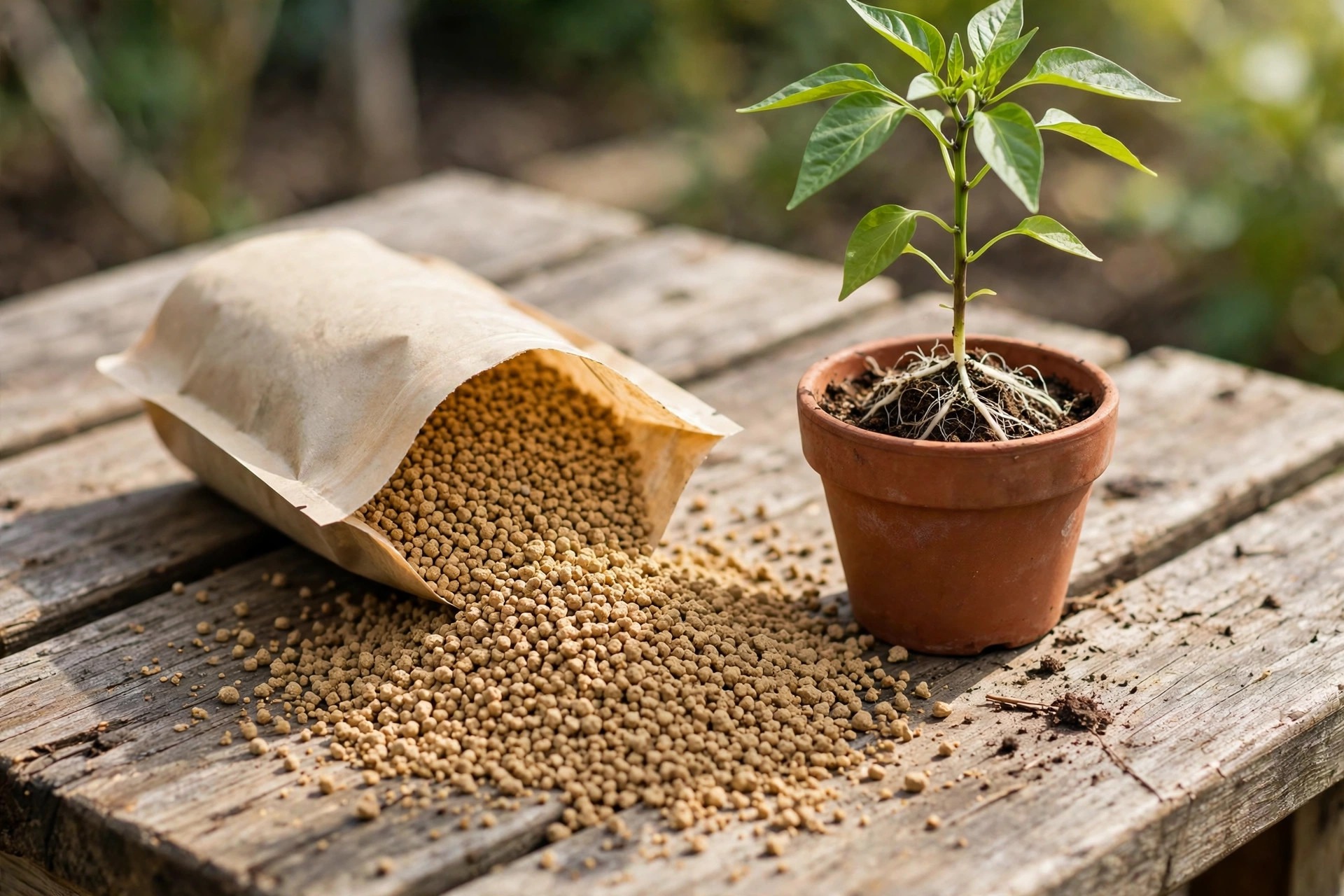 DYNOMYCO Granular | Granular | Endo | 900 propagules per gram, 2 species | Vegetable transplants | 9.5/10 |
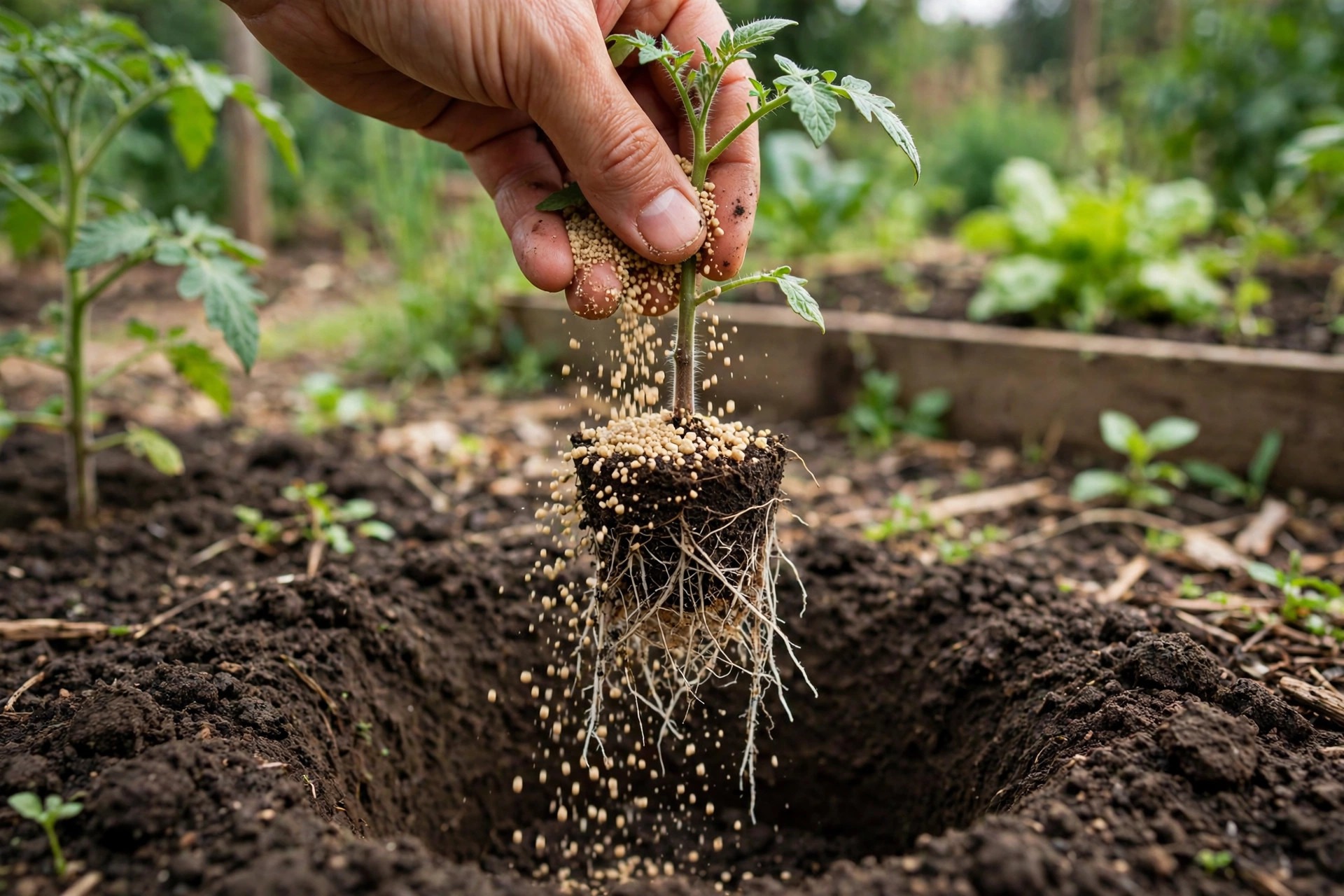 Xtreme Gardening Mykos | Granular | Endo | 300 propagules per gram, 1 species | Simple, pure inoculant | 9.4/10 |
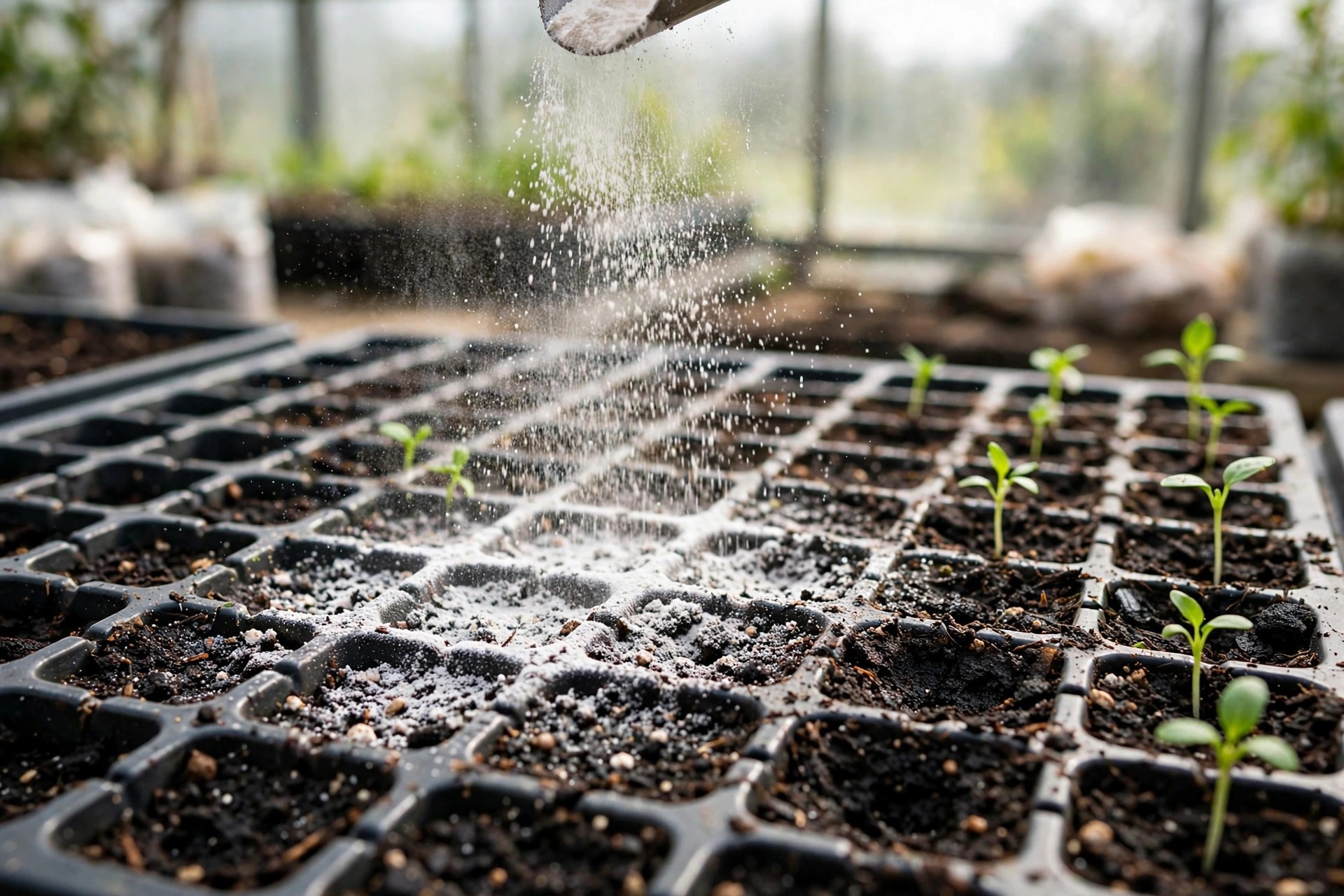 Myco Bliss Powder | Powder | Endo | 1,000 propagules per gram, 5 strains | Seed starting | 9.3/10 |
 Great White Premium Mycorrhizae | Powder | Endo | 24-species blend: 9 endo, 12 bacteria, 2 trichoderma, 1 yeast | All-round garden use | 9.2/10 |
 MycoApply Soluble MAXX | Soluble powder | Endo and ecto | 9 endo and 10 ecto species | Watering in, drip systems | 9.0/10 |
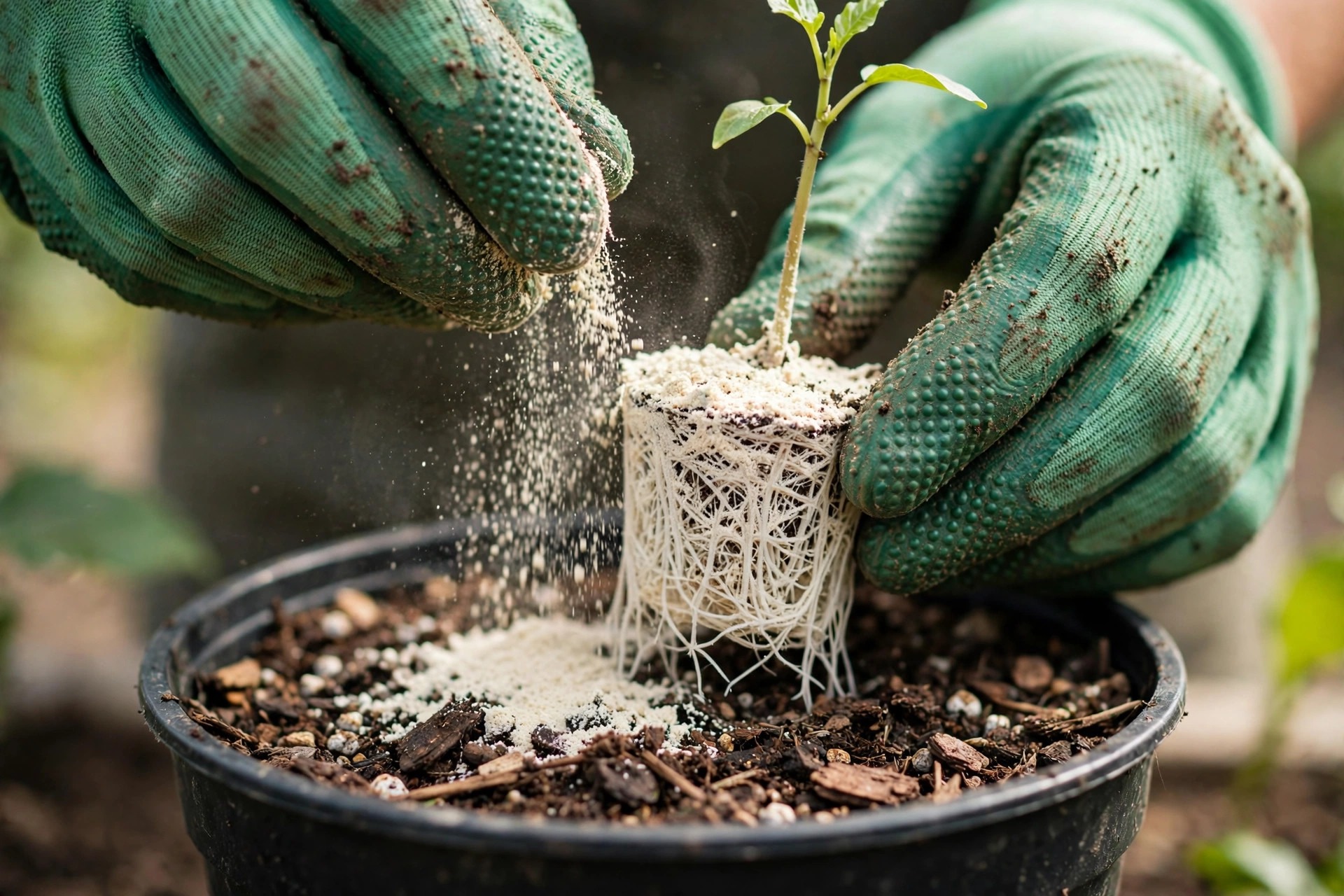 MycoApply Ultrafine Endo | Suspendable powder | Endo | 130,000 propagules per pound, 4 species | Potting mixes, dipping roots | 8.9/10 |
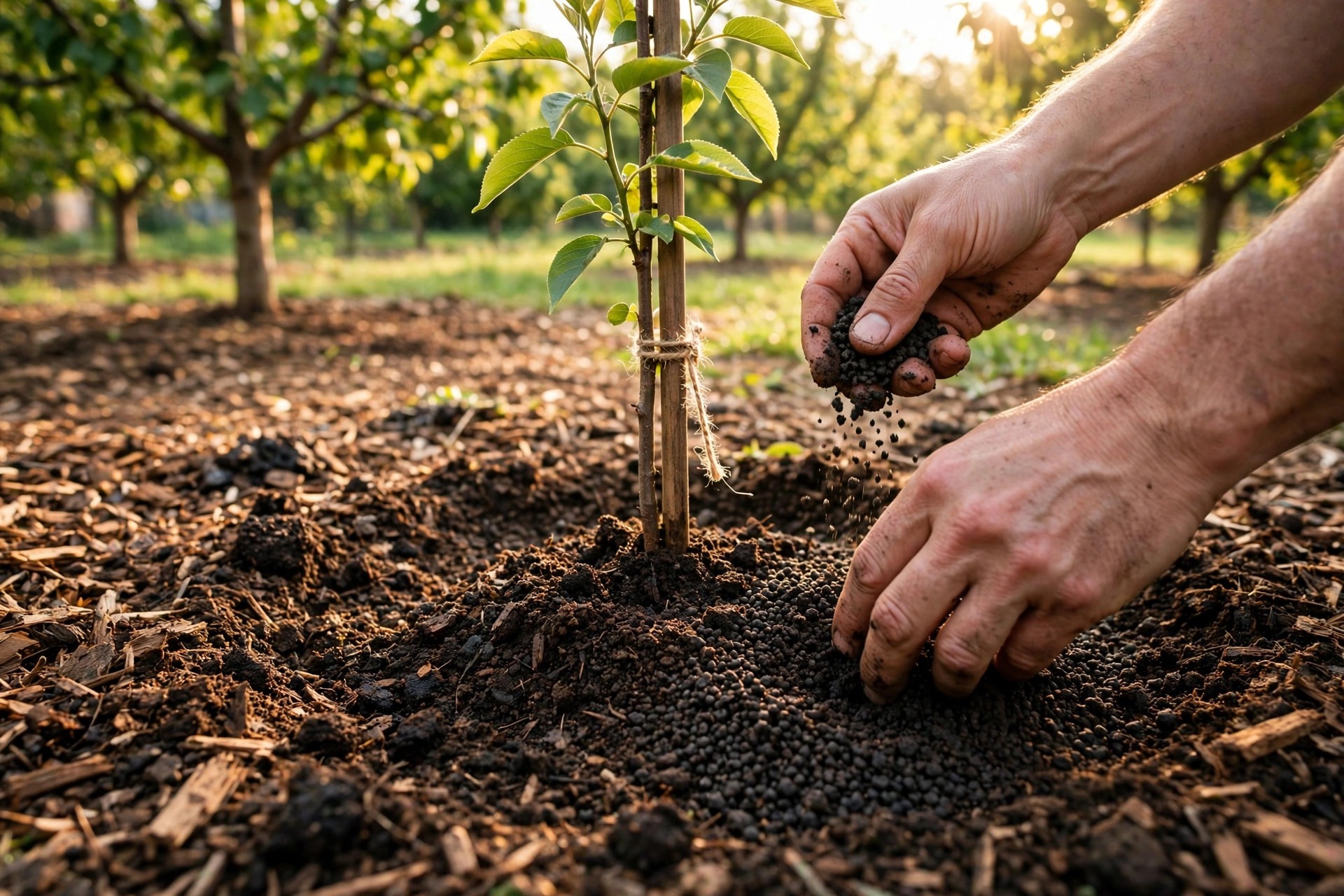 Down To Earth Granular Root Zone | Granular | Endo and ecto | 16 mycorrhizal + 2 trichoderma + 10 bacteria = 28 species | Trees, shrubs, mixed beds | 8.8/10 |
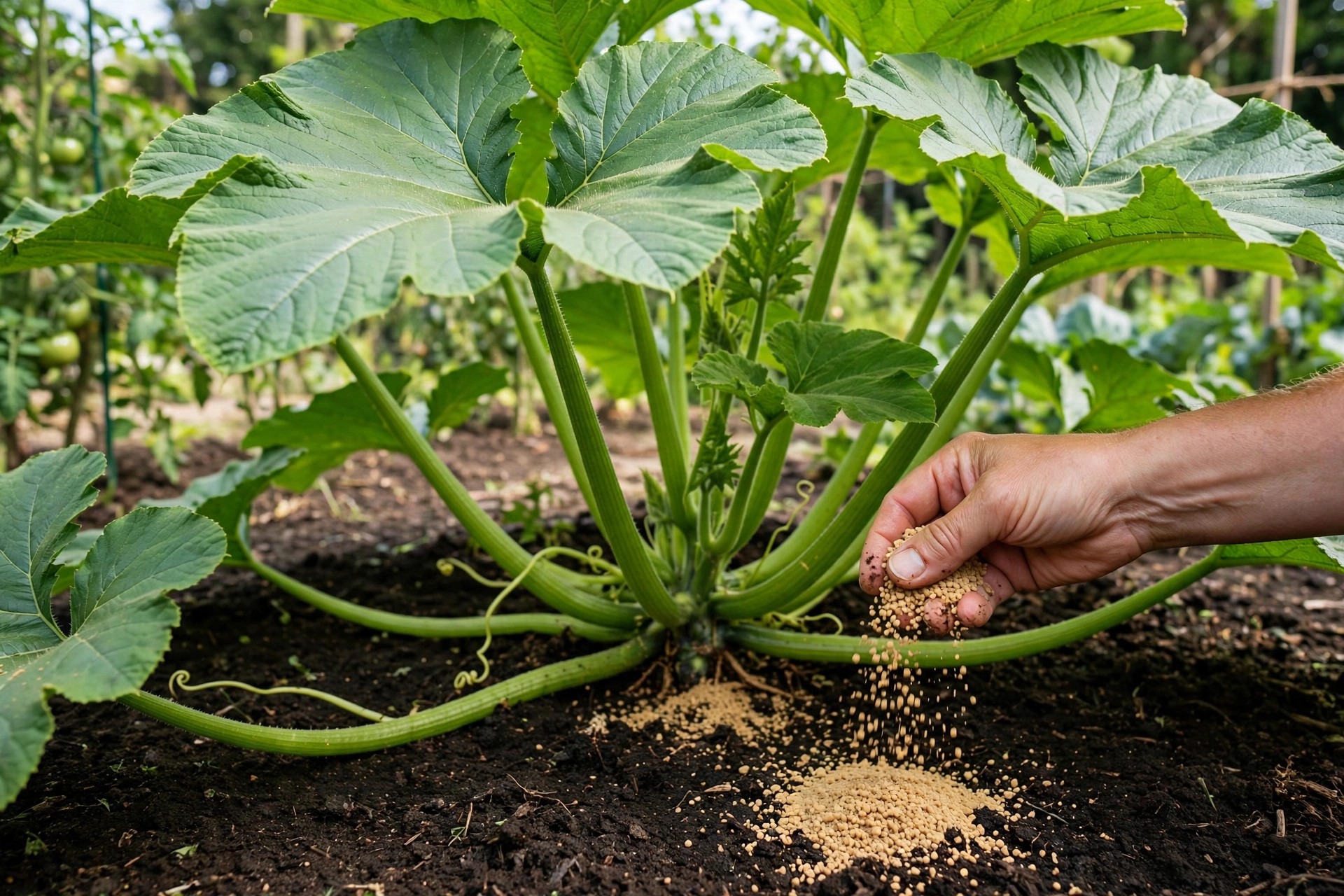 Wallace Organic Wonder Premium | Granular | Endo | 145,000 propagules per pound (about 320 per gram), 1 species | Pumpkins and heavy feeders | 8.7/10 |
 Espoma Bio-tone Starter Plus | Granular fertilizer | Endo and ecto | 4-3-3 fertilizer, endo 2.64 propagules per gram | Planting-time feeding | 8.6/10 |
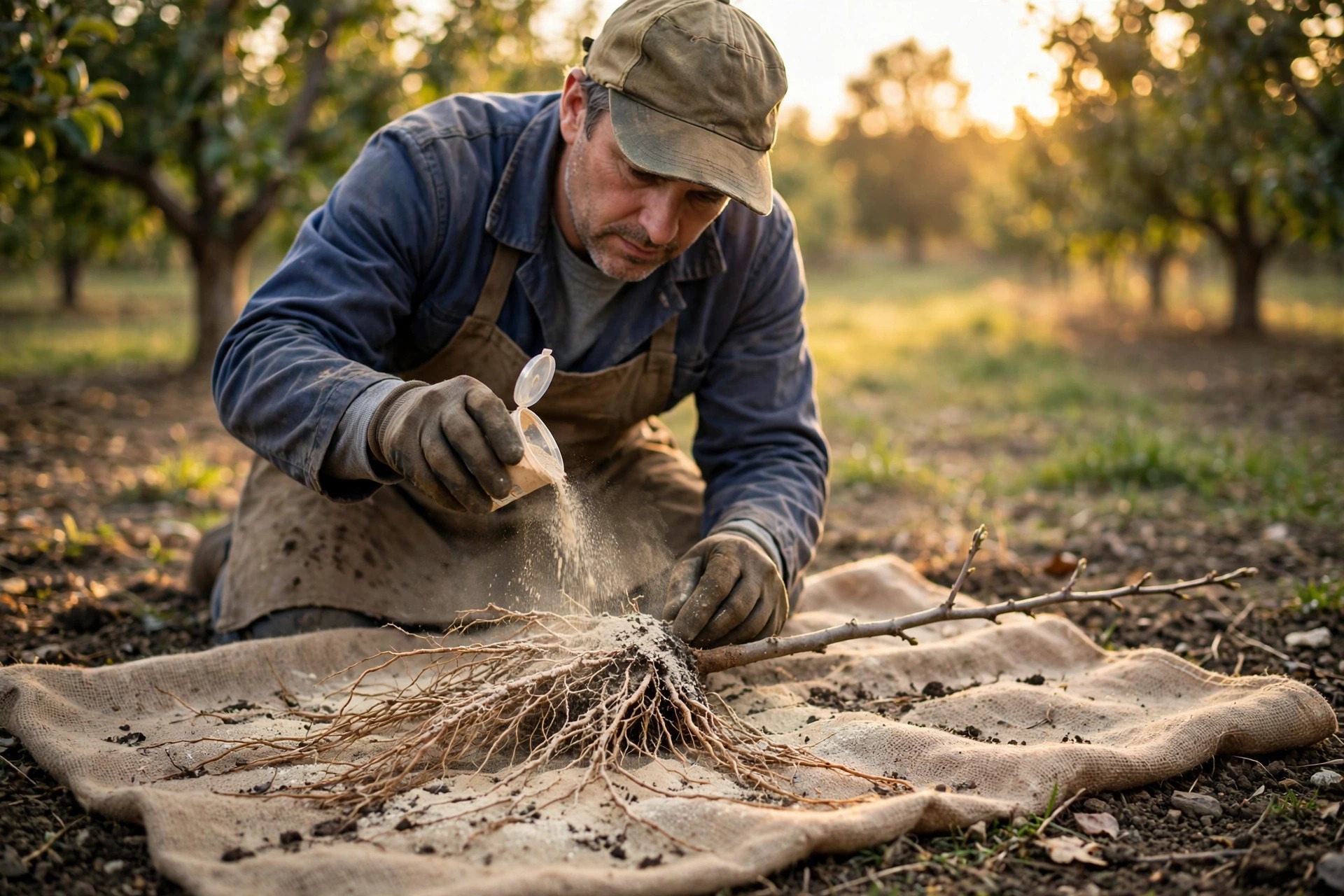 Fungi Perfecti MycoGrow | Granular | Endo and ecto | 8 species, 1 percent humic acid | Fruit trees, bare-root planting | 8.5/10 |
What Are Mycorrhizal Fungi, and Why Do Roots Want Them?
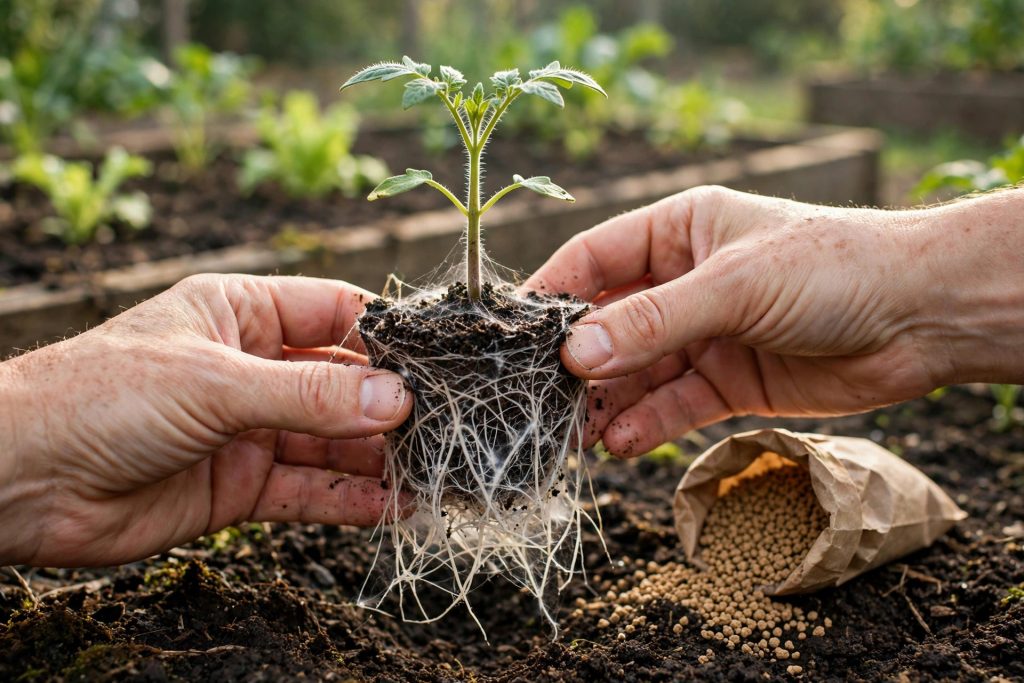
Mycorrhizae means fungus root, and the name is literal. These fungi grow into or around plant roots and then send out hyphae, threads far thinner than any root hair, into the surrounding soil. A root can only reach what it touches. Hyphae reach into pores too small for roots, and they cover far more soil volume. In exchange for sugars from the plant, the fungus delivers water, phosphorus, zinc, copper, and other nutrients back to the root.
The partnership is ancient. More than 80 percent of land plants form mycorrhizal associations. Your tomatoes, peppers, beans, squash, corn, lettuce, strawberries, roses, and fruit trees all partner with endomycorrhizal fungi. A few plant families do not, and the important ones for a vegetable gardener are the brassicas. Most brassicas, including cabbage, kale, broccoli, cauliflower, radish, and mustard, generally do not form effective arbuscular mycorrhizal partnerships. For these crops, mycorrhizal inoculants are usually unnecessary, although research has documented some exceptions. Blueberries and rhododendrons partner with a different group, the ericoid fungi, which none of the products in this roundup contain.
Endo vs Ecto Mycorrhizae: The Difference That Decides Your Purchase
This is the single most important thing to understand before you buy, because it decides whether the fungi in the bag can colonize your plants at all.
Endomycorrhizae, also called arbuscular mycorrhizal fungi, grow inside root cells and form branched structures called arbuscules, where the nutrient trade happens. They partner with most vegetables, fruits, herbs, flowers, grasses, and many shrubs. If you grow food, endo is what you want.
Ectomycorrhizae never enter root cells. They wrap the root tip in a sheath and grow between the cells. They partner mainly with trees: pines, oaks, birches, beeches, spruces, and willows. They do nothing for a tomato or a pepper.
Here is why the distinction matters when you read labels. Ecto spores are cheap to produce in huge numbers. One ecto species, Pisolithus tinctorius, fruits in large puffball-like structures whose spores can be harvested by the trillion. Endo fungi, by contrast, can only be grown on living host roots, which is slow and costly. So a blended product can advertise an enormous total propagule count where nearly all of it is ecto spores that will never colonize a vegetable. The count is real. The function, for most crops, is not. Compare products on their endomycorrhizal propagules per gram, and treat a giant total count with a small endo fraction accordingly. That rule shapes every rating in this roundup.
Mycorrhizae Benefits for Plants
The benefits gardeners actually notice cluster into four groups. First, phosphorus. Phosphorus moves very slowly in soil, and much of it sits locked in forms roots cannot use. Hyphae reach it, and the fungi release enzymes that free it. Research from the University of Guelph found that when phosphorus was low, plants grown with arbuscular mycorrhizal fungi grew nearly twice as much as plants grown without them. Second, water. Under suitable growing conditions, the hyphal network can improve water uptake from soil pores roots cannot easily reach, which may help colonized transplants handle dry spells and transplant shock better, although results vary. Third, soil structure. The fungi produce glomalin, a sticky glycoprotein that binds soil particles together, which can improve aggregation in both clay and sand under suitable growing conditions. Fourth, resilience. Colonized roots tend to establish faster, which gives young plants a head start against stress, though no inoculant replaces good watering, good soil, and the right variety for your climate.
None of this makes mycorrhizae a fertilizer. They do not add nutrients to your soil. They help roots find nutrients that are already there. In rich, heavily fertilized soil, the benefit shrinks, because a plant that already has plenty of phosphorus has little reason to feed a fungal partner.
Does Mycorrhizae Really Work?
Yes, with conditions, and the conditions are worth knowing before you spend money. The research is clearest in low to moderate phosphorus soil, in new beds, in containers with sterile potting mix, and at transplant time. It is weakest in soil that is already rich in phosphorus, because high phosphorus signals the plant to reduce colonization. Some sources put the suppression threshold near 100 parts per million of soil phosphorus, and others note benefits fading well before that. A soil test tells you where you stand, and it costs less than a bag of inoculant you may not need.

There is also an honest caveat from the research. A study cited by UC Agriculture and Natural Resources found that more than half of the commercial products examined were not viable. That is why this roundup leans so hard on labels that name species and count propagules. A product that hides its contents behind a brand name gives you no way to check what you bought. Buy from makers who publish their species and their counts, store the product cool and dry, and check the expiry date on the bag.
Best Mycorrhizae for Vegetables
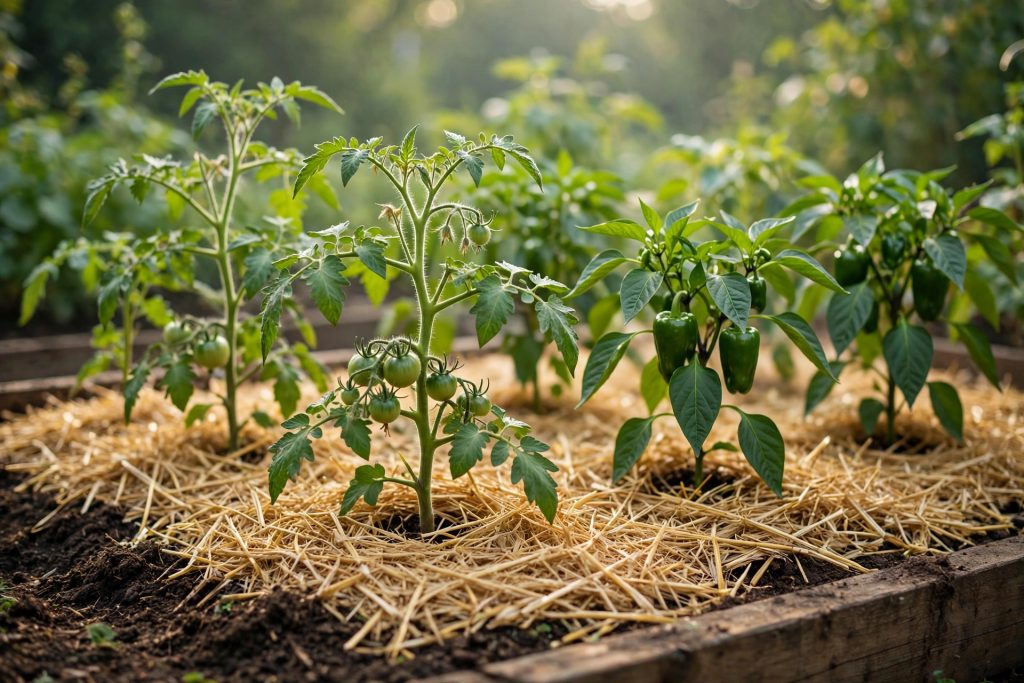
Vegetables partner with endo fungi, so the best mycorrhizae for vegetables is a product with a high endo propagule count, named endo species, and a form you can put directly on the roots. That points to DYNOMYCO Granular, Mykos, and Myco Bliss at the top of this list. Tomatoes, peppers, squash, beans, corn, and eggplant often respond well, and the biggest visible difference usually shows at transplant time, when colonized seedlings may wilt less and may start growing sooner under suitable growing conditions.
Apply at planting, not weeks later. The fungi need living roots to colonize, and young roots colonize fastest. For direct sown crops like beans and squash, put the inoculant in the furrow with the seed. For leafy greens that you harvest young, the benefit is smaller, because the plants are pulled before the partnership fully pays off. Usually skip brassicas, and skip beds you just loaded with high phosphorus fertilizer.
Granular vs Powder Mycorrhizae
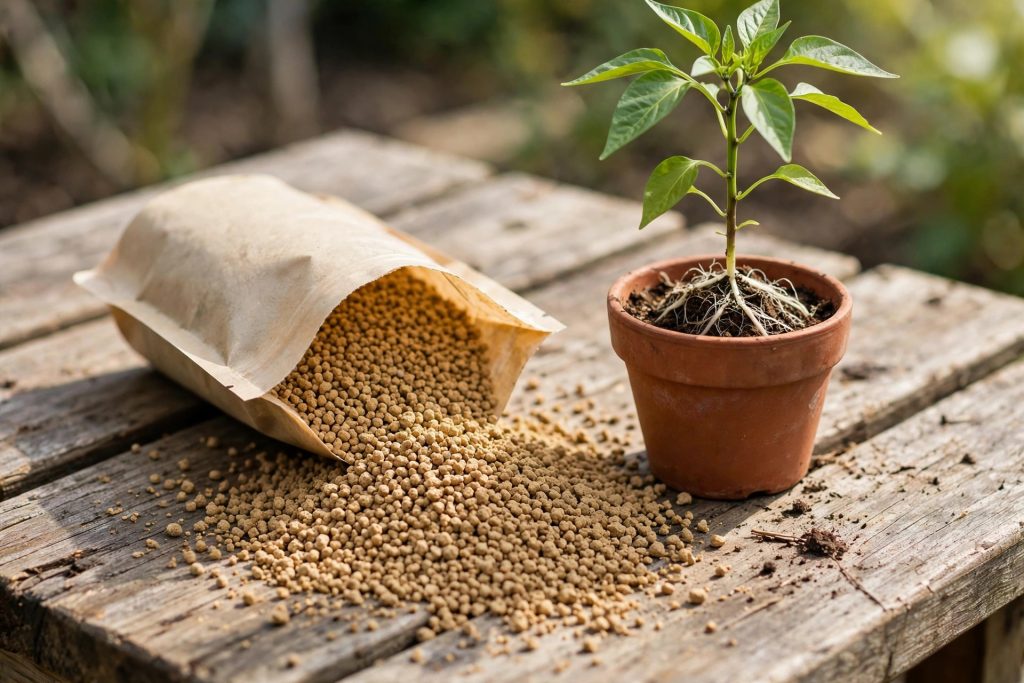
Granules are small clay or mineral pellets carrying the fungi. They are easy to handle, they do not blow away in wind, and they sit in the planting hole exactly where the roots will grow through them. They suit transplants, trees, shrubs, and anything planted one at a time. Their weakness is established beds, where granules scattered on the surface may never reach the roots.
Powders are fine and suspendable. They coat seeds, dust root balls, and mix into potting soil evenly. Wettable powders dissolve into water, so you can drench a bed or run them through a drip system and reach roots that are already in the ground. Their weakness is wind on a dry day, and a powder that lands on leaves instead of roots does nothing.
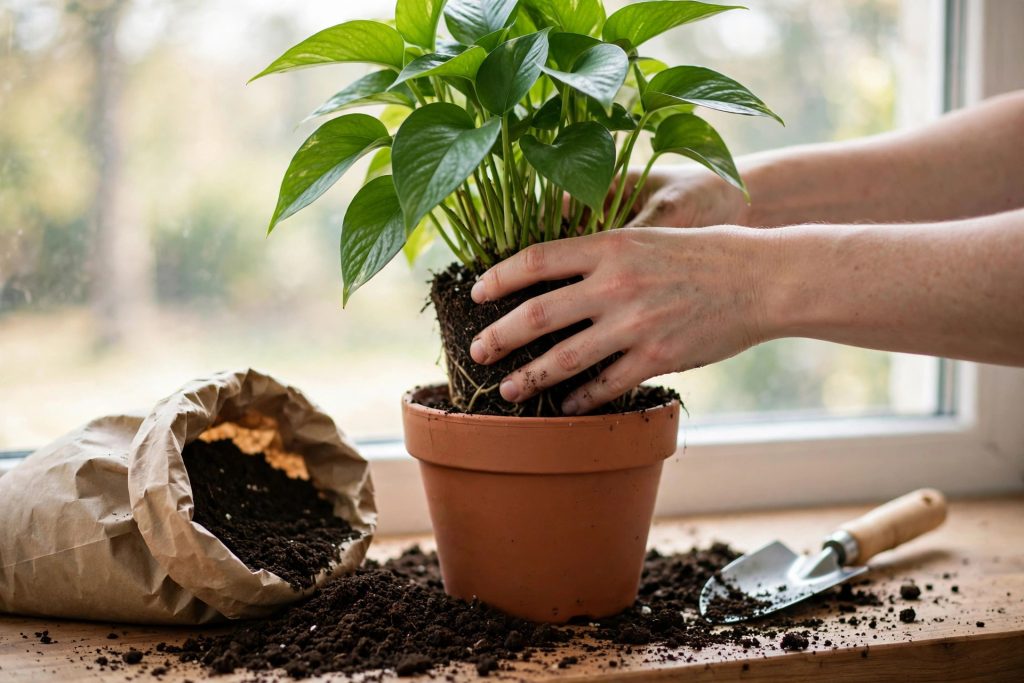
A practical rule: granules for planting holes and pots, powder for seed trays and watering in. If you only buy one product, pick the form that matches how you plant most often.
How to Apply Mycorrhizal Fungi
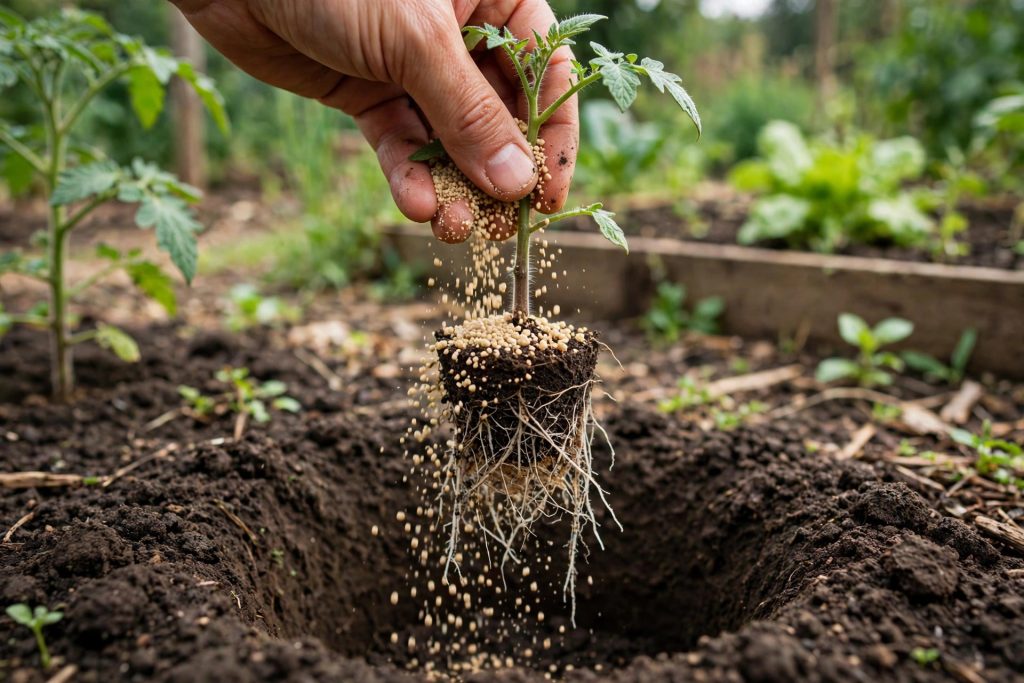
For transplants, put the inoculant in the planting hole and set the root ball directly on it, or dust the root ball before you set it in. For seeds, dust the seed or drop inoculant into the furrow with it. For potted plants, mix powder into the potting mix or dust the root ball at repotting. For established plants, use a soluble powder as a soil drench, watered in well, or push granules into holes poked around the drip line and water them in. For bare-root trees, dip or dust the roots before planting.
A few habits make the difference between money well spent and money wasted. Apply at planting, when roots are young and hungry. Water after applying, so the fungi stay moist and in contact with roots. Do not mix inoculant with fungicide, and do not apply it to soil you just drenched in a high phosphorus starter fertilizer. Check your soil test first if you fertilize heavily. Store the bag sealed, cool, and dry, and use it before the expiry date, because these are living organisms with a shelf life.
The 10 Best Mycorrhizal Fungi Products
Most gardeners feed the plant. The best gardeners feed the soil life that feeds the plant. Mycorrhizal fungi are the oldest gardening partners we have. They attach to roots, grow out into soil the roots will never reach, and trade water and nutrients for sugars the plant makes. A tomato with a good fungal partner can pull phosphorus from soil its own roots cannot touch. A transplant with colonized roots may settle faster and may wilt less on a hot afternoon under suitable growing conditions.
The catch is that not every bag on the shelf holds the same thing. Some products name their species and count their propagules per gram. Others hide behind a big total number that is mostly tree fungi your vegetables will never use. Some are pure fungi. Some are fertilizer with a little fungi mixed in. This guide sorts that out. Every product below was checked against its maker label or a major retailer listing for species, propagule count, form, and organic certification. Where a maker does not publish a number, this article says so instead of guessing.
A note on honesty before we start. Agribloom did not grow side by side trial beds with these ten products. No hands-on testing was done for this roundup. The ratings come from verified manufacturer specifications, published propagule counts, label transparency, organic certification, and owner feedback reported by gardeners. That is the honest basis for the scores, and the scoring system is spelled out in the How We Chose section so you can judge it yourself.
1. DYNOMYCO Granular Mycorrhizal Fungi Inoculant
Our rating: 9.5/10. Form: granular. Type: endo. Key spec: 900 propagules per gram of Glomus intraradices and Glomus mosseae. OMRI listed and Ecocert certified. Maker source: https://www.dynomyco.com/products/dynomyco Pack sizes: 50 g, 100 g, 200 g, 340 g, 750 g, 10 kg, 20 kg. Price (checked 18 November 2026): 50 g $11.95, 100 g $18.95, 200 g $32.00, 340 g $38.95, 750 g $63.95, 10 kg $599.95, 20 kg $949.95. Prices were checked 18 November 2026 and move often; re-check before buying.
DYNOMYCO tops this list because its label is the most honest and its endo count is the highest among the granular products here. Two species, both named, both endo, at 900 viable propagules per gram. The manufacturer recommends approximately 5 grams for certain seedling and transplant applications, although the required amount increases with container size and planting conditions, and a 340 gram pouch treats up to 68 plants, which makes it practical for a whole vegetable garden rather than a few pots. The strains come from Israeli desert research, selected for heat and drought tolerance, which suits the hot summers many US gardeners deal with.
The granular form is the easiest to use at planting time. You drop it in the hole, set the plant on it, and you are done.
The real-world limitation is the price band. High propagule counts cost more per gram than single-species budget options, and the pouch sizes run small, so a large orchard planting would need several pouches. Also note a label conflict worth flagging: one retailer listing shows Glomus intraradices at 600 propagules per gram or more on its own, while the maker states 900 propagules per gram total across both species. This article prints the maker’s total, because that is the number the maker stands behind.
Who should buy it: vegetable gardeners who transplant a lot of tomatoes, peppers, and squash and want the strongest verified endo count in a granular form.
2. Xtreme Gardening Mykos Granular
Our rating: 9.4/10. Form: granular. Type: endo. Key spec: 300 propagules per gram of Rhizophagus intraradices, formerly Glomus intraradices. OMRI listed and CDFA registered. Maker source: https://www.xtreme-gardening.com/ Pack sizes: 1 lb and 2.2 lb. Price (checked 18 November 2026): 1 lb $20.85, 2.2 lb $32.25.
Mykos is the purist’s pick. One species, Rhizophagus intraradices, and nothing else. No trichoderma, no ecto fungi, no filler species, no bacteria. The maker argues, and the research supports, that a single well chosen species colonizes faster because it faces no competition from other microbes in the bag. At 300 propagules per gram it carries a lower count than DYNOMYCO, but every propagule is the same proven endo species, and the count is verified on the label. One tablespoon weighs about 12.5 grams and holds at least 3,750 propagules.
The granules are coarse enough to handle on a windy day, and the product has been on the market since 2006, which is a long track record in this category.
The limitation is scope. A single endo species does nothing for pines, oaks, and other ecto trees, so this is not the product for a mixed orchard. The wettable powder version, Mykos WP, runs a little lower at 250 propagules per gram, so check which version you are buying if you need a soluble form.
Who should buy it: gardeners who want the simplest, most transparent label in the category and grow mostly vegetables, herbs, flowers, and fruit.
3. Myco Bliss Mycorrhizal Fungi Powder
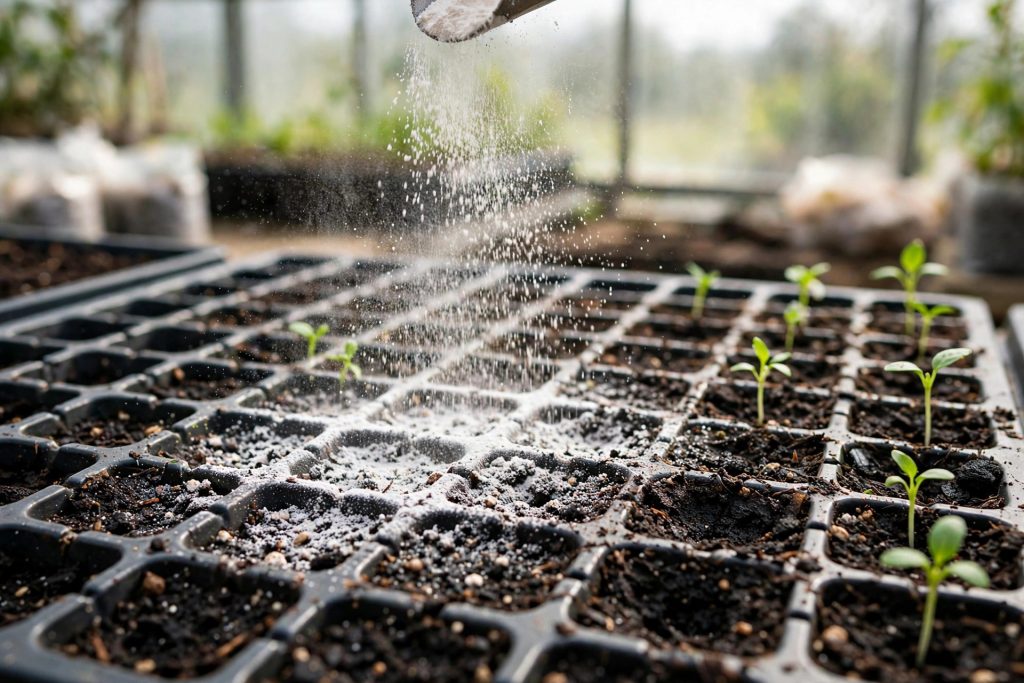
Our rating: 9.3/10. Form: powder. Type: endo. Key spec: 1,000 propagules per gram across 5 strains, treating up to 100 plants per pound. Maker source: https://www.plantonix.com/products/myco-bliss Pack sizes: 200 g, 1 lb, 2 lb, 5 lb, 20 lb. Price (checked 18 November 2026): 1 lb $23.99 (treats up to 100 plants); 200 g $17.99, 2 lb $33.99, 5 lb $77.99, 20 lb $249.99.
Myco Bliss is the best powder in this roundup for seed starting. Its fine form coats seeds and tiny root balls evenly, which is exactly what a granular product cannot do in a seed tray. At 1,000 propagules per gram it carries the highest endo count of any powder here, and the maker says one pound treats up to 100 plants, which makes it good value for gardeners who start everything from seed.
The powder mixes easily into potting mix, so it suits container gardeners who pot up dozens of seedlings in spring.
The honest gap is certification, not transparency. Retail listings usually omit the strain names, but the maker publishes all five on its product page: Rhizophagus irregularis, Rhizophagus aggregatus, Rhizophagus proliferum and Rhizophagus clarus at 200 propagules per gram each, plus Claroideoglomus etunicatum at 200 propagules per gram, for 1,000 propagules per gram in total. The count itself is clear and consistent, and the product is widely stocked. What it lacks next to DYNOMYCO and Mykos is an OMRI listing: no OMRI listing was found for Myco Bliss, while Mykos is OMRI listed and CDFA registered, and that certification gap is why it sits below Mykos despite the higher count.
Who should buy it: seed starters and container gardeners who need a fine powder that coats small roots evenly.
4. Great White Premium Mycorrhizae by Plant Success

Our rating: 9.2/10. Form: powder. Type: endo. Key spec: 24-species blend: nine endomycorrhizal species, twelve strains of beneficial bacteria, two Trichoderma and a working yeast; no ectomycorrhizal species in the current official count. The powder is not OMRI certified (only the separate product Great White Granular 1 is OMRI listed). Maker source: https://greatwhitemyco.com/products/great-white Pack sizes: 1 oz, 4 oz, 8 oz, 32 oz, 5 lb, 25 lb. Price (checked 18 November 2026): official site prices 1 oz $13.95, 4 oz $39.95, 8 oz $71.95, 32 oz $244.95, 5 lb $495.95, 25 lb $2,137.16.
Great White is the kitchen sink product, and it is popular for a reason. The current official Great White listing describes a 24-species blend: nine endomycorrhizal species, twelve strains of beneficial bacteria, two Trichoderma and a working yeast. Older labels listed 16 mycorrhizal species, nine endo and seven ecto, plus bacteria and trichoderma. The current official count does not include ectomycorrhizal species. On the old label, the endo total was 387 propagules per gram and the ecto total was 219,189 per gram, so by propagule count ecto dominated the old formula. It is the broadest blend in this roundup, and it suits a mixed garden where vegetables, flowers, shrubs, and trees all grow in the same beds.
The strength is coverage. One product serves almost everything you plant, and the added bacteria and trichoderma support the root zone in ways pure fungi do not. Its broad blend suits mixed gardens where vegetables, flowers, shrubs and trees grow together.
The weakness is dilution. The endo count per species is low, 83 propagules per gram for the main four and 11 for the rest, so the total endo dose per gram is 387 propagules per gram, far below DYNOMYCO or Myco Bliss. On the old label, much of the headline count came from ecto spores, including Pisolithus tinctorius at 187,875 propagules per gram, which will never colonize a vegetable; the current official listing does not include ectomycorrhizal species. If you grow only vegetables, you are paying for a generalist blend you may not need. The label is fully transparent, which is good, but the numbers themselves tell you this is a generalist, not a vegetable specialist.
Who should buy it: gardeners with mixed beds of vegetables, ornamentals, shrubs, and trees who want one product for everything.
5. MycoApply Soluble MAXX
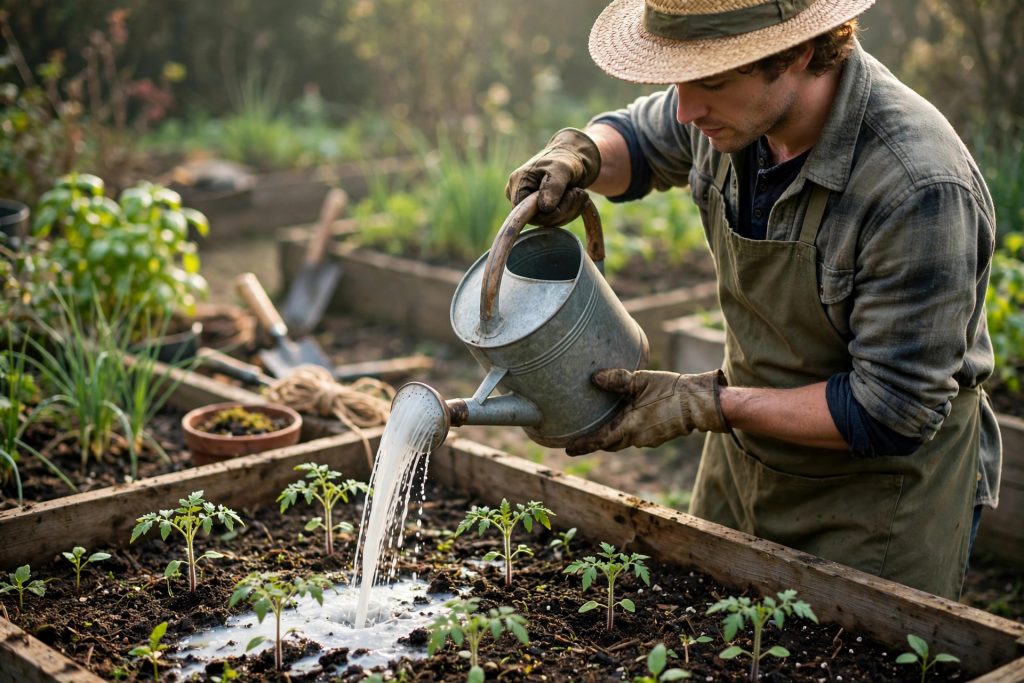
Our rating: 9.0/10. Form: suspendable powder. Type: endo and ecto. Key spec: 9 endo species and 10 ecto species, 201 endo propagules per gram. OMRI listed. Maker source: https://mycorrhizae.com/wp-content/uploads/2019/04/Product-Sheet-MycoApply-Soluble-MAXX-Legacy_August-2026.pdf Pack sizes: 1 lb, case of 10 x 1 lb, 120 lb bulk. Price (checked 18 November 2026): 1 lb $39.00.
Soluble MAXX is the product for gardeners who water their inoculant in. It is a fine powder, under 300 microns, that mixes with water and goes through a watering can, a hose-end sprayer, or a drip system. MycoApply Soluble MAXX is one of the most convenient options for watering mycorrhizal fungi into established beds, particularly when using irrigation or drip systems. MycoApply Ultrafine Endo is another suspendable option, although application instructions and equipment compatibility should be checked before use.
The species list is the widest endo range here: nine endo species, including Glomus intraradices, Glomus mosseae, Glomus aggregatum, and Glomus etunicatum at 34 propagules per gram each. The ecto side is large, about 2.6 million propagules per gram, which again mostly serves trees. The endo total, around 201 propagules per gram, is modest next to DYNOMYCO, but the delivery method is the point. A granular product cannot be watered into an established bed. This one can.
The limitation is that soluble application depends on good watering practice. If the drench does not soak down to the root zone, the fungi sit in the top inch of soil and dry out. It also costs more per endo propagule than the granular leaders, because you are paying for a wide species blend and a soluble carrier.
Who should buy it: gardeners with established beds, drip irrigation, or large areas who need to inoculate plants that are already growing.
6. MycoApply Ultrafine Endo
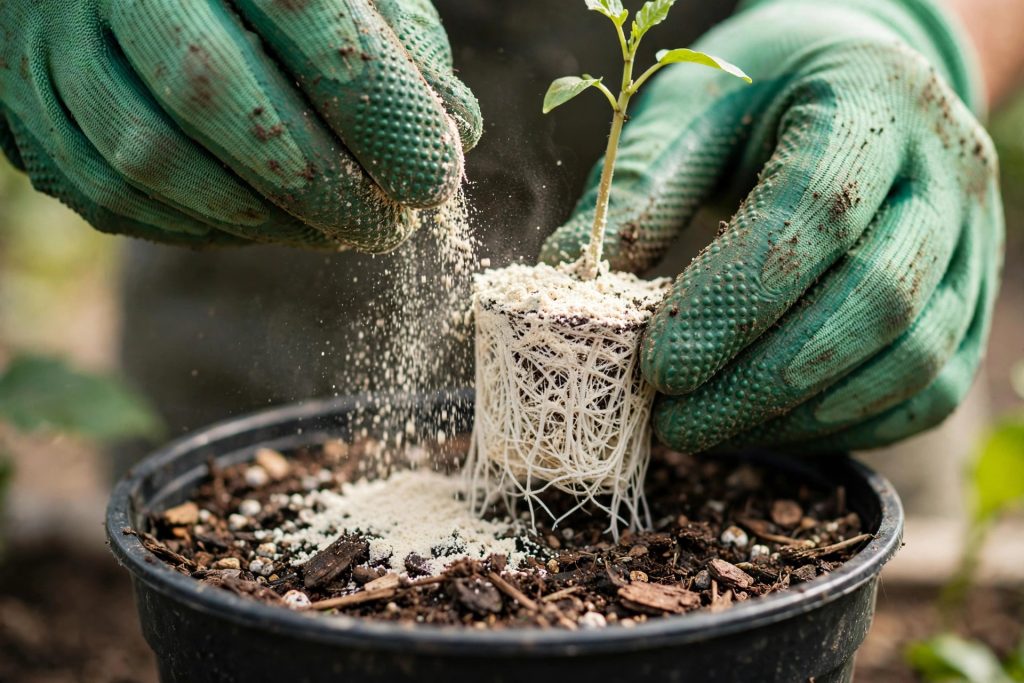
Our rating: 8.9/10. Form: suspendable powder. Type: endo. Key spec: 4 endo species at 130,000 propagules per pound, about 287 per gram. Particle size under 300 microns. OMRI listed. Maker source: https://mycorrhizae.com/mycoapply-ultrafine-endo/ Pack sizes: 1 lb and 20 lb. Price (checked 18 November 2026): 1 lb $29.00-$37.99, 20 lb $311.00-$336.20.
Ultrafine Endo is the professional grower’s version of a pure endo powder. Four named species, Rhizophagus intraradices, Funneliformis mosseae, Claroideoglomus claroideum, and Claroideoglomus etunicatum, in a powder fine enough to pass a 50-mesh screen. It suspends in water, dusts root balls evenly, and mixes into potting media without clumping.
It is the product to choose when you want a pure endo powder with a fully named species list and no ecto filler at all. Nursery growers use it for dipping cuttings and coating plugs, and home gardeners can use it the same way for seedlings and transplants. The label is transparent, and the maker, Mycorrhizal Applications, publishes full product sheets for every formula.
The limitation is availability and pack size. It is sold mainly through horticultural suppliers in larger quantities, so a small home gardener may find it harder to buy in a small bag than Myco Bliss or Great White. The endo count, about 287 propagules per gram, is solid but not chart topping.
Who should buy it: serious propagators, nursery-style growers, and gardeners who mix their own potting soil and want a named, pure endo powder.
7. Down To Earth Granular Root Zone
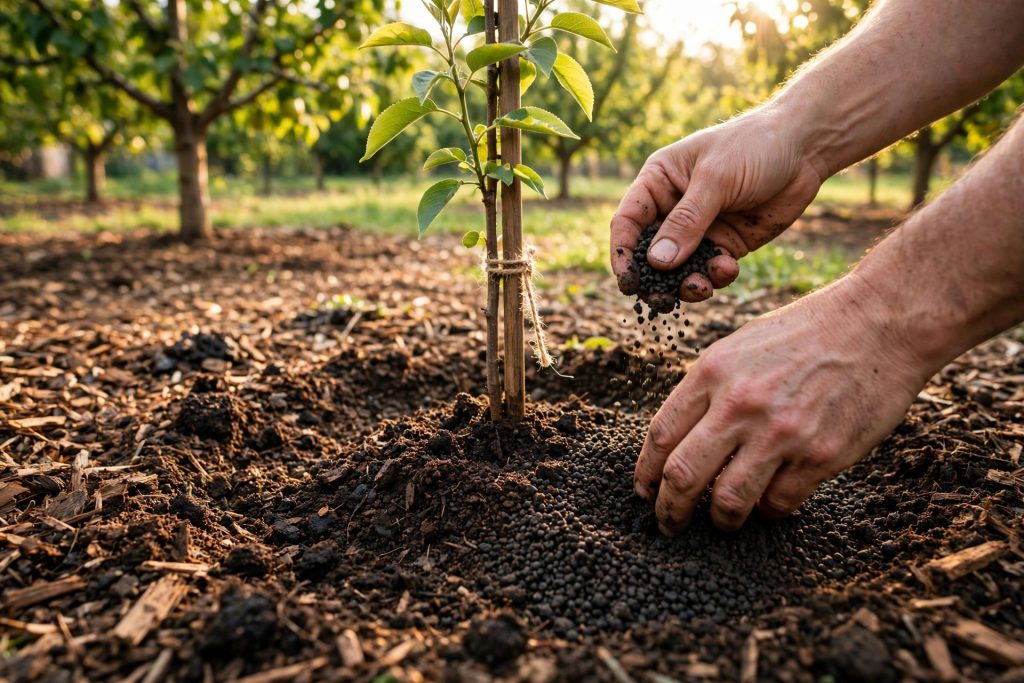
Our rating: 8.8/10. Form: granular. Type: endo and ecto. Key spec: 28 species: 16 mycorrhizal + 2 trichoderma + 10 bacteria = 28 species. OMRI listed. Maker source: https://downtoeartheugene.com/shop/fertilizer/dte-biological-products/granular-root-zone/ Pack sizes: 2 oz, 8 oz, 5 lb, 20 lb. Price (checked 18 November 2026): official prices $13.95-$42.50 for the 2 oz and 8 oz packs.
Root Zone is the broadest biological blend in this roundup. Nine endo species and seven ecto species, plus two trichoderma species and ten bacteria, for 28 species in total (16 mycorrhizal + 2 trichoderma + 10 bacteria = 28 species), all on a granular carrier. The endo total is 30,000 propagules per pound, which works out to about 66 per gram, a modest number, but the product is built as a whole soil biology package rather than a concentrated fungi dose.
It suits mixed plantings and new garden beds where biological diversity itself is the goal. Gardeners planting fruit trees, shrubs, and perennials report good establishment, and the OMRI listing makes it an easy choice for organic growers. Down To Earth is a long established brand in the organic fertilizer world, and the product is widely stocked in garden centers.
The limitation is the same as Great White, only more so. The endo count per gram is low, and the headline species count of 28 includes bacteria and trichoderma, not just mycorrhizae. For a vegetable bed where you want the maximum endo dose per gram, DYNOMYCO or Mykos gives you far more. Root Zone is a diversity product, not a potency product.
Who should buy it: organic gardeners planting trees, shrubs, and mixed beds who want a broad soil biology blend in one bag.
8. Wallace Organic Wonder Premium Mycorrhizal Inoculant
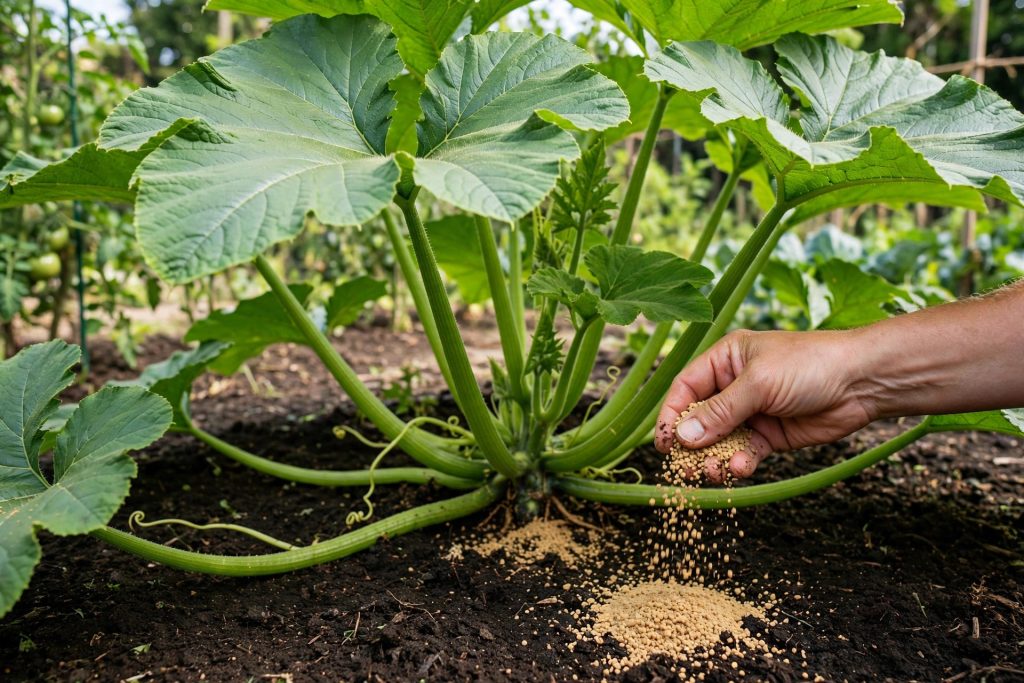
Our rating: 8.7/10. Form: granular. Type: endo. Key spec: Rhizophagus intraradices at a minimum of 145,000 propagules per pound, about 320 per gram (the older figure of 300 per gram is within rounding of this official figure). Maker source: https://wallacewow.com/products/best-mycorrhizae-for-sale-5-10-20-pounds Pack sizes: 1 lb, 5 lb, 10 lb, 20 lb, 50 lb. Price (checked 18 November 2026): 1 lb $25.95 (treats up to 100 plants); 5 lb $73.95, 10 lb $124.95, 20 lb $184.95, 50 lb $429.95.
Wallace Organic Wonder comes from Ron Wallace, a two-time world record holder and three-time world pumpkin champion, and the product was built for growers chasing size. Pumpkins, squash, and other heavy feeders are exactly the plants where a strong root partnership shows up first, and that is where this product earns its place. One named endo species, Rhizophagus intraradices, at a minimum of 145,000 propagules per pound, about 320 per gram (the older figure of 300 per gram is within rounding of this official figure), in a straightforward granular form.
Application rates run generous, up to a cup for a large container, which fits the giant vegetable growing style the brand comes from. Owner feedback from pumpkin and squash growers is positive, with reports of vigorous vines and heavy fruit set, though those reports come from growers who also feed and water heavily, so the fungi share the credit.
The limitation is transparency beyond the headline species. The label names Rhizophagus intraradices at a minimum of 145,000 propagules per pound, about 320 per gram (the older figure of 300 per gram is within rounding of this official figure), but the full ingredient list is harder to verify than the big brands, and the product is less widely stocked. It is also a single-species product, so it does nothing for ecto trees. Note that Wallace also sells Myco Madness, a soluble powder with 9 mycorrhizal species, 15 bacteria, and 2 trichoderma. That is a different product, and this pick is the Premium granular inoculant, not Myco Madness.
Who should buy it: pumpkin, squash, and giant vegetable growers who want a proven single-species granular inoculant from a brand built around big fruit.
9. Espoma Bio-tone Starter Plus 4-3-3
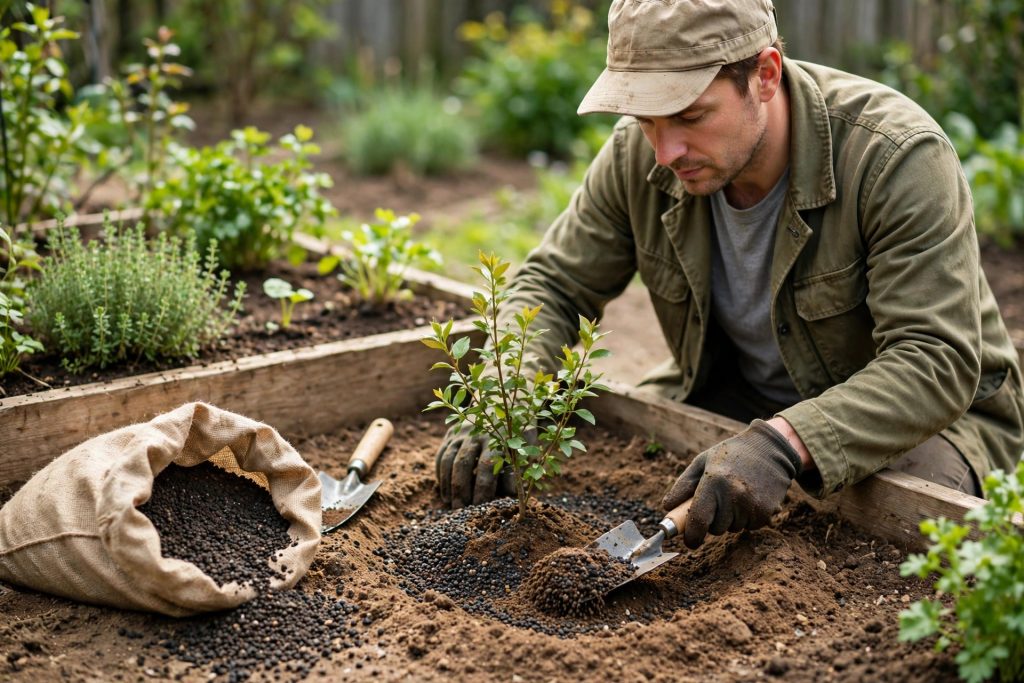
Our rating: 8.6/10. Form: granular fertilizer. Type: endo and ecto. Key spec: 4-3-3 organic fertilizer with endo fungi at 2.64 propagules per gram and ecto fungi at 97,440 propagules per gram. Maker source: https://www.espoma.com/product/bio-tone-starter-plus/ Pack sizes: 4 lb, 8 lb, 18 lb, 25 lb. Price (checked 18 November 2026): 4 lb $8.95-$14.99 across US garden retailers.
Bio-tone is the only product in this roundup that is a fertilizer first and a fungi product second, and it should be judged that way. The 4-3-3 analysis, from feather meal, poultry manure, bone meal, alfalfa meal, and other natural ingredients, feeds a new planting for weeks. The biology, beneficial bacteria, humates, and both endo and ecto mycorrhizae, supports root establishment at the same time. For a gardener planting a shrub or a tree, one product doing both jobs is genuinely convenient, and Espoma is a trusted brand sold in nearly every garden center in the US.
The limitation is the endo count. At 2.64 propagules per gram across two endo species, the fungi dose is far below every pure inoculant in this roundup. The ecto count is huge, 97,440 propagules per gram across eight species, but that serves trees, not vegetables. So Bio-tone works well as a starter fertilizer with some biology, and poorly as a primary mycorrhizal inoculant for a vegetable bed. One more flag: Espoma fact sheets from different years list the bacillus count differently, 936 and 1,341 colony-forming units per gram, so the bacterial figure is not consistent across sources. This article does not print either number as settled.
Who should buy it: gardeners planting trees and shrubs who want one bag that feeds and inoculates at planting time, and who do not need a high endo dose.
10. Fungi Perfecti MycoGrow
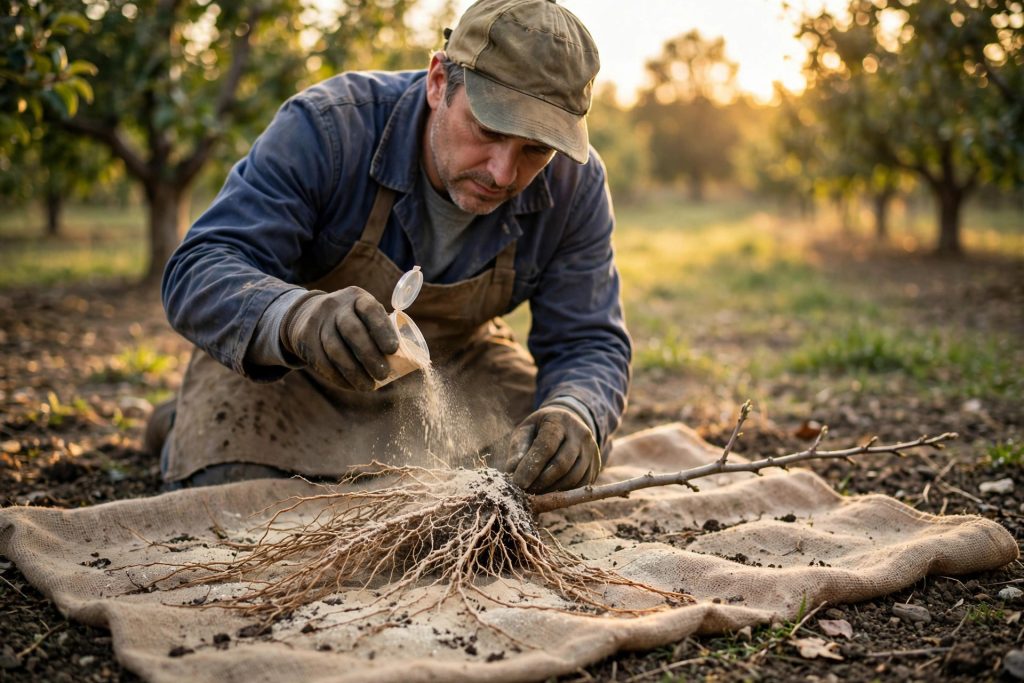
Our rating: 8.5/10. Form: granular. Type: endo and ecto. Key spec: the label lists 8 species of mycorrhizae, 3 endo and 5 ecto, with 1 percent humic acid from leonardite; these label figures could not be re-verified against a live maker page. No maker source link: no live official product page was found for MycoGrow. Price: no current US price found online; check before buying.
MycoGrow comes from Fungi Perfecti, the company founded by mycologist Paul Stamets, and it carries that heritage in its formula. The label lists three endo species, Glomus intraradices, Glomus aggregatum, and Glomus mosseae, plus five ecto species, including Pisolithus tinctorius and Suillus granulatus, with 1 percent humic acid from leonardite; these label figures could not be re-verified against a live maker page. The added humic acid supports soil biology and helps the fungi establish.
It is a solid choice for fruit trees and bare-root planting, where the ecto species finally earn their place alongside the endo species. The label is transparent, the brand has a long history in mycology, and the product is widely available through garden suppliers.
The limitation is the endo dose. The label lists a low endo dose next to the leaders in this roundup, and the ecto side dominates the total count, although these label figures could not be re-verified against a live maker page. For a vegetable garden, most of what you pay for goes to tree fungi. The label also uses spores per cubic centimeter rather than propagules per gram, which makes direct comparison with other labels harder.
Who should buy it: fruit tree and bare-root planters who want a mycology-first brand and a formula that covers both endo and ecto hosts.
How We Chose the Best Mycorrhizal Fungi Products
No hands-on testing was done for this roundup. The scores come from verified manufacturer specifications, published propagule counts, label transparency, organic certification, and owner feedback reported by gardeners. That is the honest basis, and the scoring system below shows exactly how each rating was built, so you can reweight it for your own garden.
| Scoring factor | Weight | What it measures |
|---|---|---|
| Endo propagule transparency | 25% | Named endo species and a published propagules per gram count |
| Species fit for vegetables | 20% | How much of the formula can actually colonize food crops |
| Form and ease of application | 15% | Whether the form fits real planting jobs: holes, trays, drenches |
| Organic certification | 15% | OMRI listing or equivalent organic approval |
| Owner feedback and reputation | 15% | Reported results from gardeners and the maker’s track record |
| Value and coverage | 10% | Plants treated per unit, based on the maker’s own rate |
| Total | 100% |
Species fit for vegetables means endo diversity plus endo share of propagules: a product scores well when most of what it contains can colonize vegetables, counting both how many endo species it names and what share of its propagules are endo. Raw propagule count alone does not decide the score — that is why Myco Bliss, with 1,000 propagules per gram, sits below Mykos, with 300, and DYNOMYCO, with 900: Myco Bliss has no OMRI listing found, while both products above it are OMRI listed, and that certification gap costs it 0.45 points.
Transparency 10 means every species named plus a propagule count per gram published by the maker. Certification 10 means OMRI plus Ecocert or CDFA; 9.5 means OMRI plus one extra; 9 means OMRI; 7 means marketed as natural or organic with no listing found; 5 means no organic claim or certification found. Value is cost per plant from the verified prices in the article.
| Product | Transparency (25%) | Species fit (20%) | Application (15%) | Certification (15%) | Feedback (15%) | Value (10%) | Weighted total |
|---|---|---|---|---|---|---|---|
| DYNOMYCO Granular | 10 | 10 | 9 | 10 | 9 | 8 | 9.5 |
| Xtreme Gardening Mykos | 10 | 10 | 9 | 10 | 9 | 7 | 9.4 |
| Myco Bliss Powder | 10 | 10 | 10 | 7 | 9 | 9 | 9.3 |
| Great White Premium Mycorrhizae | 10 | 8.5 | 10 | 7 | 10 | 9.5 | 9.2 |
| MycoApply Soluble MAXX | 10 | 7.5 | 9 | 10 | 9 | 8 | 9.0 |
| MycoApply Ultrafine Endo | 9 | 10 | 8.5 | 9.5 | 8 | 7.5 | 8.9 |
| Down To Earth Granular Root Zone | 9.5 | 7.5 | 9 | 10 | 8.5 | 8 | 8.8 |
| Wallace Organic Wonder Premium | 8.5 | 10 | 9.5 | 7 | 8 | 9 | 8.7 |
| Espoma Bio-tone Starter Plus | 9 | 6.5 | 10 | 7 | 10 | 10 | 8.6 |
| Fungi Perfecti MycoGrow | 9 | 7.5 | 10 | 5 | 10 | 10 | 8.5 |
Two rules shaped the results. First, products were compared on endomycorrhizal propagules per gram, not on total propagule counts, because ecto spores inflate totals without helping vegetables. Second, a product that does not name its species lost points on transparency, even when its count looked high. That is why Myco Bliss, with 1,000 propagules per gram, sits below Mykos, with 300 propagules per gram: Myco Bliss has no OMRI listing found, while Mykos is OMRI listed and CDFA registered, and that certification gap is why it sits below Mykos despite the higher count.
Final Choice
For most vegetable gardeners, buy DYNOMYCO Granular. It has the highest verified endo count among granular products, two named species, OMRI listing, and the manufacturer recommends approximately 5 grams for certain seedling and transplant applications, although the required amount increases with container size and planting conditions. If you prefer the simplest label and a single proven species, buy Xtreme Gardening Mykos instead. If you start everything from seed, add Myco Bliss powder to your seed starting kit. If you need to treat plants that are already in the ground, MycoApply Soluble MAXX is one of the most convenient choices in this list for plants already in the ground; MycoApply Ultrafine Endo is another suspendable option.
Whichever product you pick, remember the rule that matters more than the brand. Put it on the roots at planting time, water it in, and check your soil phosphorus first. A good inoculant in the right place at the right time beats a great inoculant scattered on dry soil any day.
Summary Table: The 10 Best Mycorrhizal Fungi Products at a Glance
| Product | Form | Type | Key spec | Rating |
|---|---|---|---|---|
DYNOMYCO Granular | Granular | Endo | 900 propagules per gram, 2 species | 9.5/10 |
Xtreme Gardening Mykos | Granular | Endo | 300 propagules per gram, 1 species | 9.4/10 |
Myco Bliss Powder | Powder | Endo | 1,000 propagules per gram, 5 strains | 9.3/10 |
Great White Premium Mycorrhizae | Powder | Endo | 24-species blend: 9 endo, 12 bacteria, 2 trichoderma, 1 yeast | 9.2/10 |
MycoApply Soluble MAXX | Soluble powder | Endo and ecto | 9 endo and 10 ecto species | 9.0/10 |
MycoApply Ultrafine Endo | Suspendable powder | Endo | 130,000 propagules per pound, 4 species | 8.9/10 |
Down To Earth Granular Root Zone | Granular | Endo and ecto | 16 mycorrhizal + 2 trichoderma + 10 bacteria = 28 species | 8.8/10 |
Wallace Organic Wonder Premium | Granular | Endo | 145,000 propagules per pound (about 320 per gram), 1 species | 8.7/10 |
Espoma Bio-tone Starter Plus | Granular fertilizer | Endo and ecto | 4-3-3 fertilizer, endo 2.64 propagules per gram | 8.6/10 |
Fungi Perfecti MycoGrow | Granular | Endo and ecto | 8 species, 1 percent humic acid | 8.5/10 |
References
- University of Guelph, College of Biological Science. Limited Phosphorus Supply? Try Your Friendly Neighbourhood Fungi. Reports University of Guelph research showing arbuscular mycorrhizal fungi nearly doubled growth when phosphorus was low, and had no effect when phosphorus was high.
- Biology LibreTexts. Mycorrhizae: The Symbiotic Relationship between Fungi and Roots. Explains that endomycorrhizae are found in the roots of more than 80 percent of terrestrial plants, while ectomycorrhizae are found mainly in forest trees.
- Xtreme Gardening. What Are Mycorrhizal Propagules? Explains that propagules are the count of spores, hyphae, and root fragments per gram, and that endo fungi partner with over 95 percent of plant species while ecto fungi associate mainly with conifers and oaks.
- DYNOMYCO. Premium Mycorrhizal Inoculants. Maker source for the 900 propagules per gram count, the two species Glomus intraradices and Glomus mosseae, and OMRI listing.
- Mycorrhizal Applications. MycoApply Ultrafine Endo. Maker source for the 4 endo species and 130,000 propagules per pound specification.
- Trautwig et al. 2023, “Reviewing ecological implications of mycorrhizal fungal interactions in the Brassicaceae”, Frontiers in Plant Science 14:1269815. Documents exceptions to the non-mycorrhizal status of Brassicaceae. https://pmc.ncbi.nlm.nih.gov/articles/PMC10698685/
- Xtreme Gardening. Mykos maker homepage. https://www.xtreme-gardening.com/
- Plantonix. Myco Bliss. Maker source for the five named strains and 200 propagules per gram each. https://www.plantonix.com/products/myco-bliss
- Plant Success / Plant Revolution. Great White Premium Mycorrhizae. Maker source for the 24-species blend: nine endomycorrhizal species, twelve beneficial bacteria, two Trichoderma and a working yeast. https://greatwhitemyco.com/products/great-white
- Mycorrhizal Applications. MycoApply Soluble MAXX. Maker product sheet. https://mycorrhizae.com/wp-content/uploads/2019/04/Product-Sheet-MycoApply-Soluble-MAXX-Legacy_August-2026.pdf
- Down To Earth. Granular Root Zone. Maker source for the 28-species blend. https://downtoeartheugene.com/shop/fertilizer/dte-biological-products/granular-root-zone/
- Wallace Organic Wonder. Premium Mycorrhizal Inoculant. Maker source for the 145,000 propagules per pound figure. https://wallacewow.com/products/best-mycorrhizae-for-sale-5-10-20-pounds
- Espoma. Bio-tone Starter Plus maker homepage. https://www.espoma.com/
Frequently Asked Questions
What is the best mycorrhizal fungi product for vegetables?
DYNOMYCO Granular, with 900 propagules per gram of two named endo species and OMRI listing. Xtreme Gardening Mykos is the best single-species alternative, and Myco Bliss is the best powder for seed starting. All three are endo products, which is what vegetables need.
Does mycorrhizae really work?
Yes, in the right conditions. Research shows the clearest benefit in low to moderate phosphorus soil, in new beds, in containers with sterile potting mix, and at transplant time. In soil already rich in phosphorus, the plant reduces colonization and the benefit shrinks. A soil test tells you whether your garden is a good candidate.
How do I apply mycorrhizal fungi?
Put it in direct contact with living roots at planting time. Drop granules in the planting hole, dust the root ball, mix powder into potting soil, or water a soluble powder in as a drench. Water after applying, and do not mix it with fungicide or apply it with a high phosphorus starter fertilizer.
What is the difference between endo and ecto mycorrhizae?
Endo fungi grow inside root cells and partner with most vegetables, fruits, herbs, and flowers. Ecto fungi wrap around root tips and partner mainly with trees like pines, oaks, and birches. For a vegetable garden, buy an endo product and compare products on endo propagules per gram, not on total counts inflated by ecto spores.
Should I use granular or powder mycorrhizae?
Granules suit planting holes, pots, trees, and transplants, because they sit where roots will grow through them and do not blow away. Powders suit seed trays, root dipping, and mixing into potting soil, and soluble powders suit watering in established beds. Pick the form that matches how you plant most often.
Can I use mycorrhizae on all my plants?
No. Most brassicas, including cabbage, kale, broccoli, cauliflower, radish, and mustard, generally do not form effective arbuscular mycorrhizal partnerships. For these crops, mycorrhizal inoculants are usually unnecessary, although research has documented some exceptions. Blueberries and rhododendrons need ericoid fungi, which these products do not contain. Most other vegetables, fruits, herbs, flowers, and grasses do partner with endo fungi.
How these ratings were made: Agribloom did not test these products hands-on and did not commission independent laboratory testing. The ratings are editorial scores built from verified manufacturer specifications, published propagule counts, label transparency, organic certification, and reported gardener experience, using the scoring system in the How We Chose section. Treat them as a buying guide, not as laboratory results.

Thesis Link : https://saulibrary.edu.bd/daatj/public/uploads/BAU200601_19-Pp_5.pdf
- 10 Best Organic Pesticides for Gardens - November 19, 2026
- 10 Best Mycorrhizal Fungi Products - November 18, 2026
- How to Grow Tomatoes from Seed in Pots - November 17, 2026