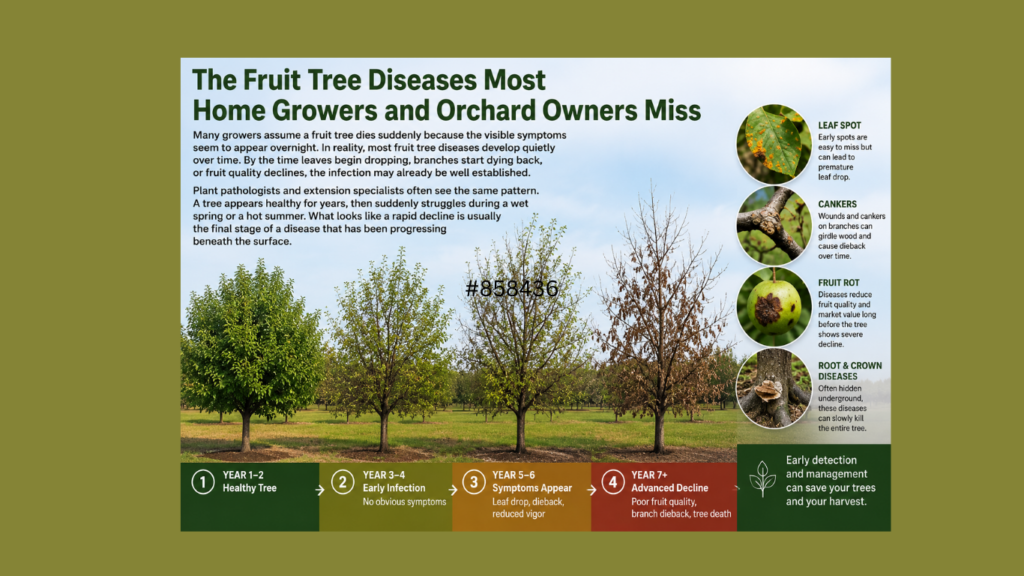

Fruit Tree Diseases Explained – 9 Common Diseases Every Grower Should Know
Most fruit trees do not die overnight. When growers search for answers about why fruit trees die suddenly, they are often surprised to learn that the problem usually begins long before visible symptoms appear. A tree that seems healthy one season and struggles the next is often sending warning signals months or even years in advance. Unfortunately, those early signs are easy to overlook. By the time leaves start dropping, branches begin dying back, or fruit production declines sharply, the disease or stress factor responsible for the damage may already be well established.
Apple scab, peach leaf curl, citrus greening, and Phytophthora root rot are all examples of diseases that can weaken a tree long before visible symptoms become severe. What many people describe as a “sudden” tree death is often the final stage of a problem that has been quietly progressing beneath the bark, inside the canopy, or below the soil surface.
For home gardeners and commercial growers alike, learning to recognize these early warning signs can make the difference between saving a productive tree and losing it entirely. Understanding how common fruit tree diseases develop is the first step toward protecting tree health, improving yields, and preventing costly losses.
Some warning signs should never be ignored:
- Burned looking blossom clusters, blackened shoots, or a hooked “shepherd’s crook” on apple or pear trees are common signs of fire blight.
- Olive green to brown spots on apple leaves, followed by yellowing and premature leaf drop, are often associated with apple scab.
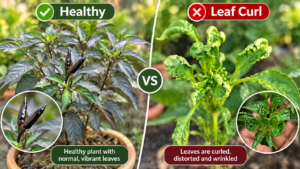
- Thickened, puckered, and reddish leaves appearing on peaches in spring are classic symptoms of peach leaf curl.
- Gray brown spore masses on blossoms, twigs, or stone fruits frequently indicate brown rot.
- Gummy sap, branch dieback, and cankers on peach or cherry trees may signal bacterial canker.
- Orange brown discoloration around the crown or root collar, particularly in wet soils, is a common indicator of Phytophthora root or crown rot.
Recognizing these symptoms early can make the difference between saving a tree and losing it. Regular inspections, proper pruning, good airflow, and well drained soil remain some of the most effective ways to reduce disease pressure and maintain healthy, productive fruit trees.
The Fruit Tree Diseases Most Home Growers and Orchard Owners Miss
Many growers assume a fruit tree dies suddenly because the visible symptoms seem to appear overnight. In reality, most fruit tree diseases develop quietly over time. By the time leaves begin dropping, branches start dying back, or fruit quality declines, the infection may already be well established.
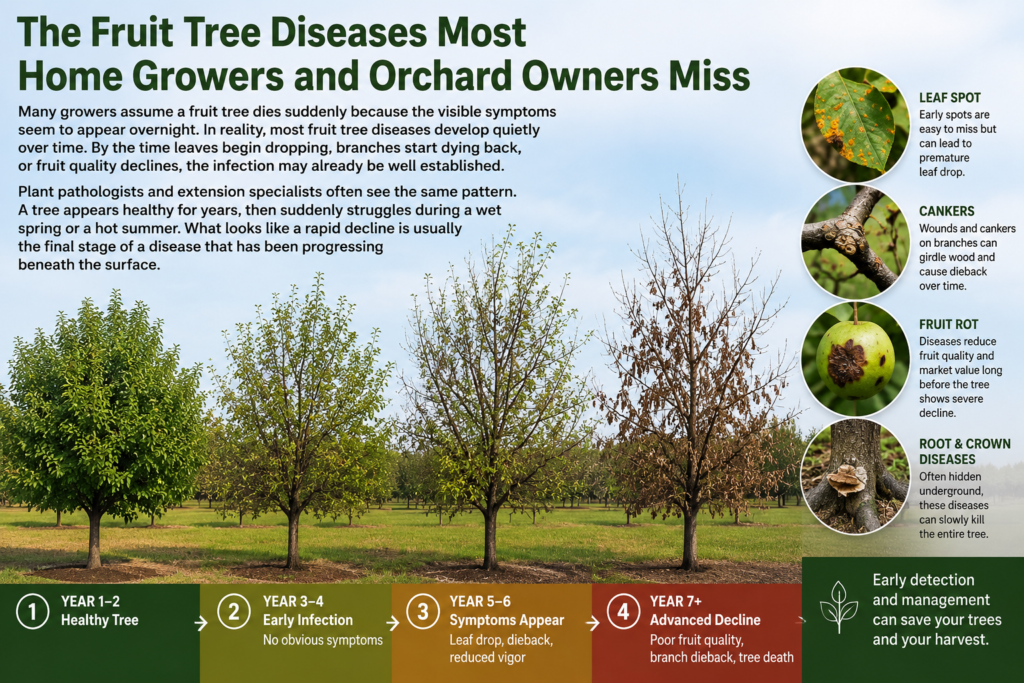
Plant pathologists and extension specialists often see the same pattern. A tree appears healthy for years, then suddenly struggles during a wet spring or a hot summer. What looks like a rapid decline is usually the final stage of a disease that has been progressing beneath the surface.
A Real Story from a Backyard Orchard
A homeowner in Michigan planted four apple trees along the edge of his property. For several seasons, the trees produced fruit without major issues. Then one year, after a rainy spring, he noticed dark shoots curling at the tips and blossom clusters turning black.
At first, he assumed the damage was caused by late frost. By midsummer, however, entire branches had died back. A local extension agent later confirmed the problem was fire blight.
The disease had likely entered through blossoms during bloom and spread through the tree weeks before the symptoms became obvious. What seemed like a sudden problem was actually an infection that had been developing throughout the season.
Stories like this are common across orchards and home gardens throughout the United States.
1. Fire Blight
Fire blight is widely recognized as one of the most serious bacterial diseases affecting apple and pear trees across North America. According to university extension specialists, the disease can damage blossoms, shoots, branches, and in severe cases, entire trees.
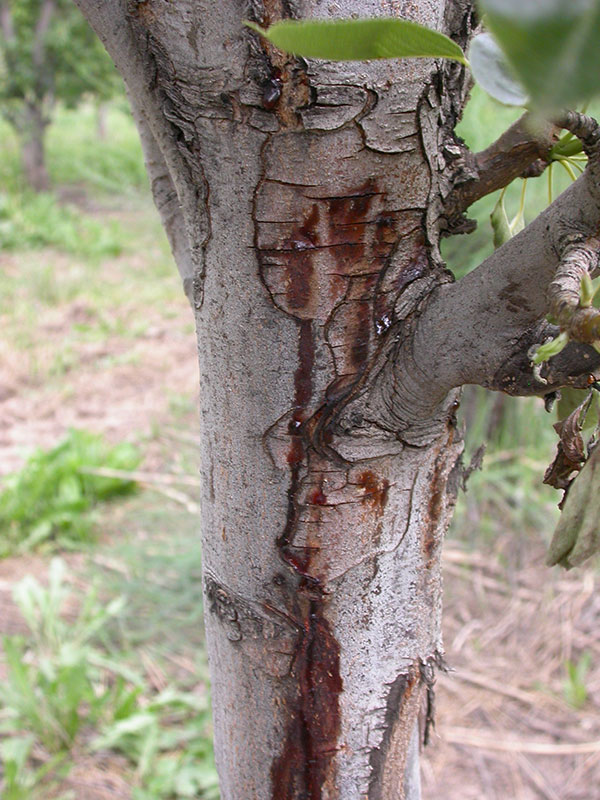
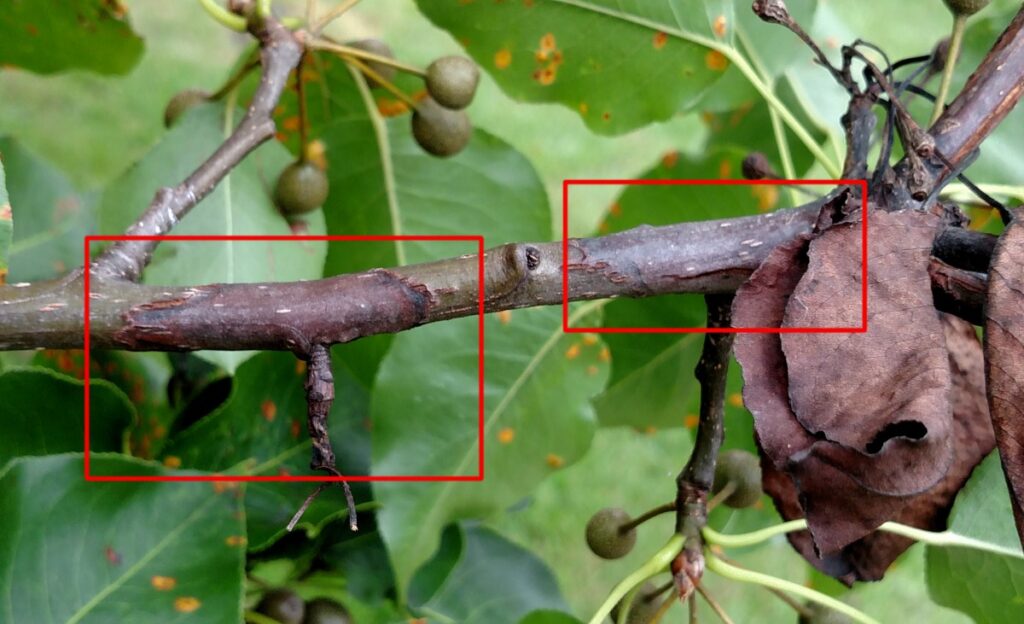
The first symptoms often appear during bloom. Flowers suddenly wilt, turn brown or black, and remain attached to the tree instead of dropping naturally. As the infection spreads, young shoots begin to darken and bend at the tip, creating the characteristic shepherd’s crook appearance that many growers use as an early warning sign.
The bacteria thrive during warm, humid weather and spread easily through rain splash, irrigation water, insects, and pollinating bees. Once established, the infection can move from blossoms into larger branches, where it forms cankers that serve as a source of future outbreaks.
One reason fire blight is so destructive is that symptoms can develop quickly after infection, especially during favorable spring conditions. A tree that appears healthy during bloom may show extensive shoot damage only a few weeks later. Young orchards and highly susceptible apple and pear varieties are particularly vulnerable.
Growers who regularly inspect trees during flowering and early shoot growth are often able to identify infections before major structural damage occurs. Early detection remains one of the most important tools for limiting disease spread and protecting long term orchard productivity.
References
- University of Minnesota Extension
- University of California Integrated Pest Management Program (UC IPM)
- Cornell Cooperative Extension
- USDA National Institute of Food and Agriculture
2. Apple Scab
Why Apple Scab Often Goes Unnoticed
Many apple growers overlook apple scab during the early stages because the first symptoms appear harmless. A few spots on leaves rarely cause concern, especially when the tree otherwise looks healthy. The problem is that the disease rarely stays small for long.
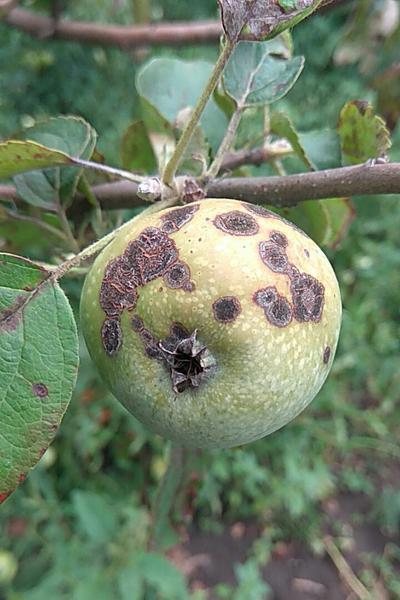
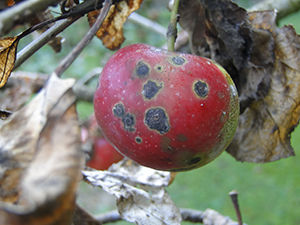
In many orchards and backyard gardens, what begins as minor leaf spotting in spring can develop into a season long issue that affects both fruit quality and tree health.
Early Symptoms to Watch For
The first signs usually appear on young leaves as olive green or velvety spots. As the disease progresses, these spots become darker and more noticeable. During severe infections, leaves may yellow and drop weeks before they normally would.
Fruit can also be affected. Apples often develop rough, corky patches that reduce their appearance and market value. In some cases, the skin cracks as the fruit grows, making it more vulnerable to secondary infections.
The Real Damage Happens Over Time
Apple scab rarely kills a mature tree in a single season. However, repeated infections can slowly weaken even well established trees.
When a tree loses leaves early every year, it loses a significant portion of its ability to produce energy through photosynthesis. Over time, this reduces the tree’s stored reserves, limits flower bud development, and can affect future harvests.
Extension specialists frequently observe that orchards with chronic apple scab problems often experience reduced vigor long before growers notice a major decline.
Conditions That Favor Apple Scab
The disease thrives during cool, wet spring weather. Extended periods of leaf moisture create ideal conditions for fungal spores to infect young tissue.
Trees with dense canopies, poor airflow, or a history of fallen infected leaves are often at greater risk. Once established, the disease can return year after year if proper sanitation and management practices are not followed.
Why Early Detection Matters
The biggest mistake many growers make is waiting until heavy leaf drop begins. By that point, the disease has already completed much of its damage.
Regular monitoring during spring allows growers to identify infections before they spread extensively. Combined with good orchard sanitation and proper canopy management, early action can significantly reduce long term disease pressure and help maintain healthy, productive apple trees.
References
- University of Minnesota Extension
- Cornell Cooperative Extension
- Penn State Extension
- University of California Agriculture and Natural Resources
- USDA Agricultural Research Service
3. Peach Leaf Curl
A Disease Many Growers Recognize Too Late
Peach leaf curl is one of the most recognizable diseases affecting peach trees, yet it is also one of the most misunderstood. Many growers notice the curled leaves in spring and immediately begin searching for a treatment. Unfortunately, by the time symptoms appear, the fungus has already infected the tree months earlier.
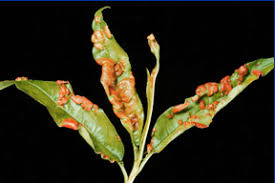
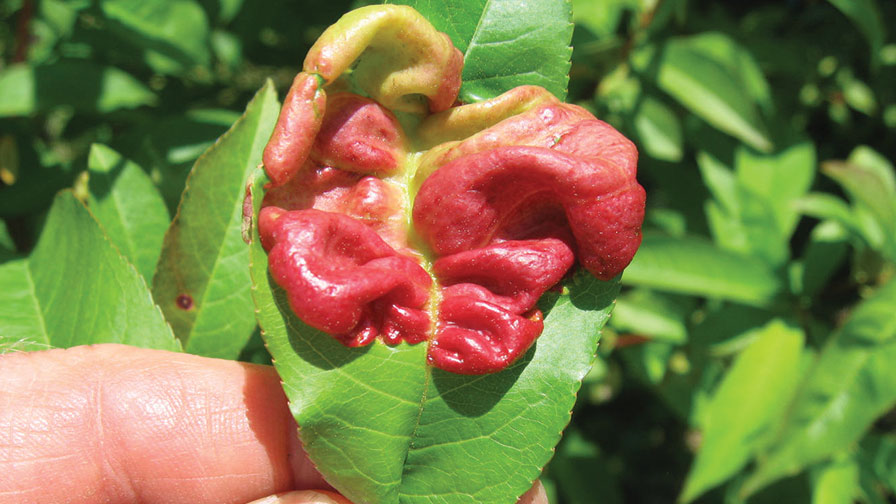
This is why peach leaf curl is often considered a disease of prevention rather than cure.
What Does Peach Leaf Curl Look Like?
The first signs usually appear shortly after bud break. New leaves become thickened, twisted, and distorted. As the infection progresses, foliage may develop shades of red, pink, or yellow before eventually dropping from the tree.
In severe years, entire sections of a tree can lose their leaves long before summer arrives.
Why Repeated Infections Matter
A single outbreak may not kill a peach tree, but repeated infections can gradually weaken it.
When leaves drop early, the tree loses valuable energy producing tissue that cannot contribute to photosynthesis for long. Over multiple seasons, reduced energy reserves can lead to weaker growth, lower yields, and increased susceptibility to other diseases and environmental stress.
Prevention Is More Important Than Treatment
One of the most common mistakes homeowners make is applying fungicides after symptoms appear. Extension specialists consistently emphasize that treatments applied during spring are usually ineffective because infection occurs before leaves emerge.
Successful management depends on preventative applications made during the dormant season before buds begin to swell.
References
- University of California IPM
- Penn State Extension
- University of Wisconsin Extension
- Clemson Cooperative Extension
4. Brown Rot
A Major Threat to Stone Fruit Trees
Brown rot is one of the most damaging diseases affecting peaches, nectarines, plums, apricots, and cherries. In seasons with frequent rainfall, growers can lose significant portions of their crop if the disease is not managed properly.
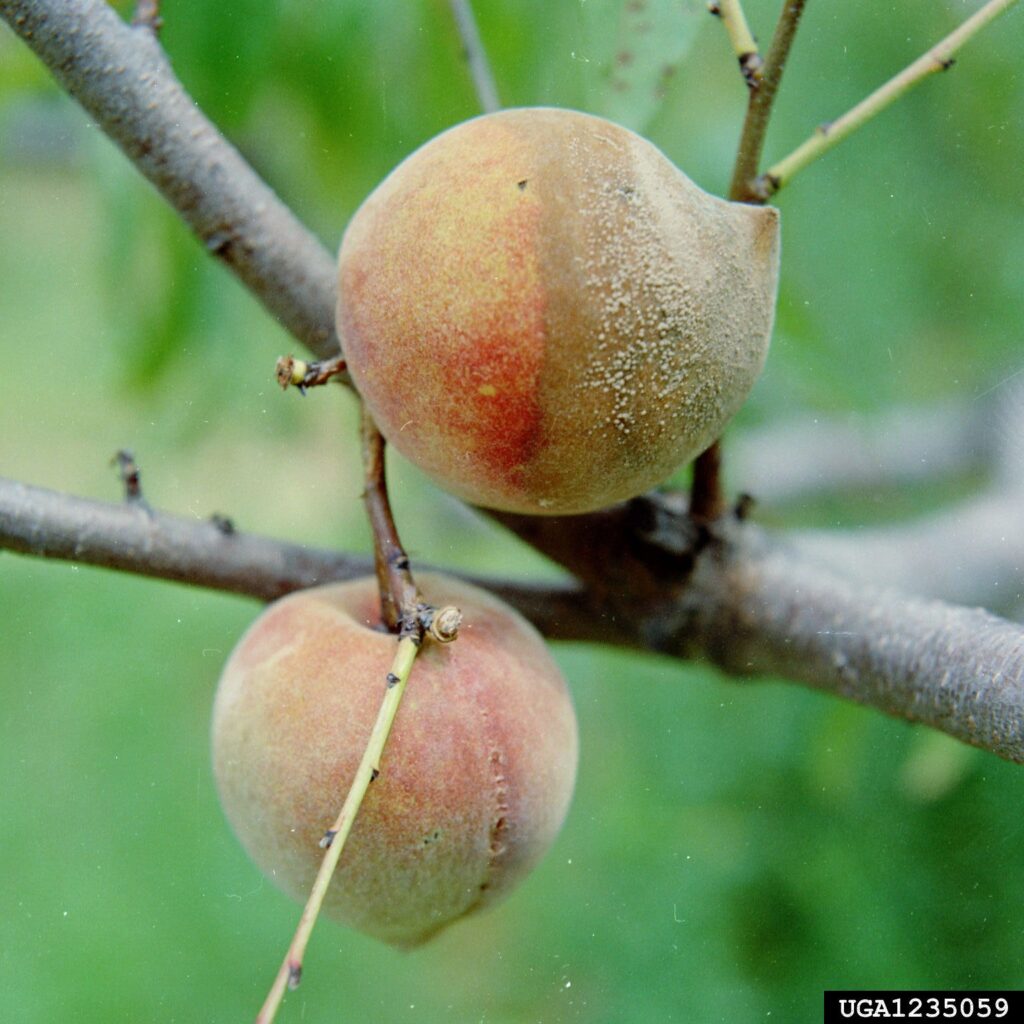
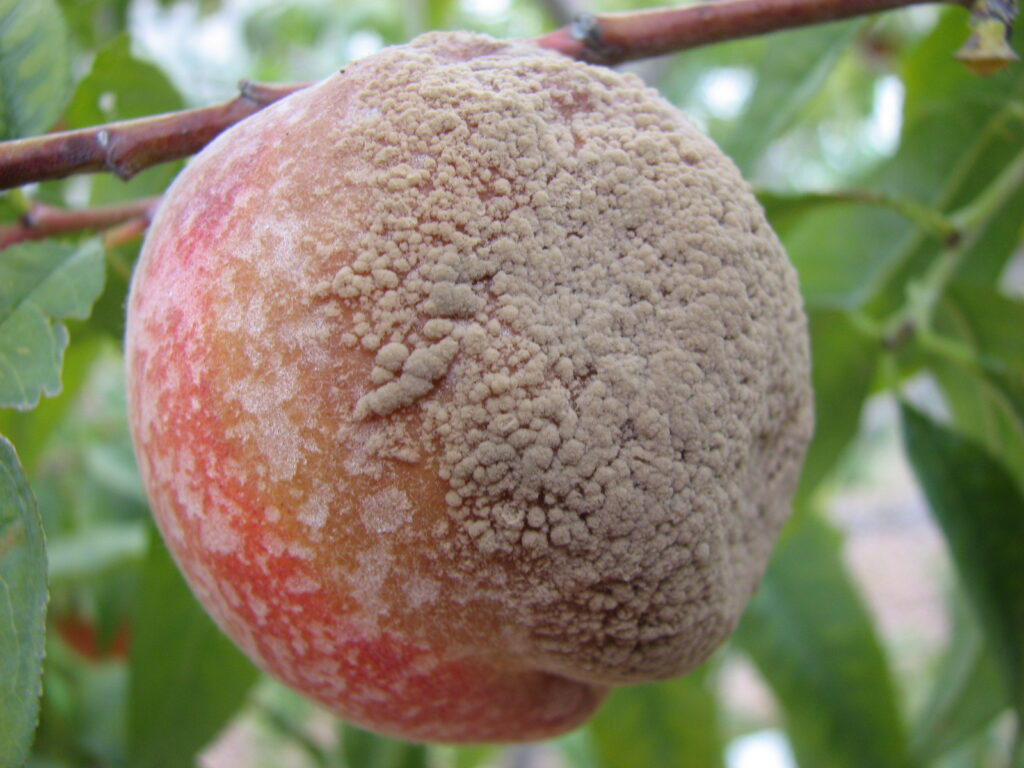
The disease attacks blossoms, shoots, twigs, and fruit, making it a concern throughout the growing season.
Early Warning Signs
Many infections begin during bloom. Flowers wilt and turn brown, while nearby shoots may die back shortly afterward.
As fruit matures, soft brown lesions begin to develop. Within days, infected fruit can become covered with grayish brown fungal spores that spread easily to nearby fruit.
The Hidden Source of Future Infections
One reason brown rot returns year after year is poor orchard sanitation.
Fruit that remains hanging in trees after harvest often shrivels into what growers call “mummies.” These infected fruit can carry the fungus through winter and serve as an important source of infection the following spring.
Removing infected fruit and pruning diseased wood are among the most effective ways to reduce future outbreaks.
Why Orchard Sanitation Matters
Growers sometimes focus entirely on fungicide programs while overlooking sanitation practices. Research has shown that removing infected fruit and plant debris can significantly lower disease pressure and improve overall orchard health.
References
- University of California IPM
- Penn State Extension
- University of Georgia Extension
- USDA Agricultural Research Service
5. Cherry Leaf Spot
The Disease Behind Early Summer Defoliation
Cherry leaf spot is often overlooked until trees begin losing leaves during the middle of the growing season. By that point, the disease may already be affecting tree health and productivity.
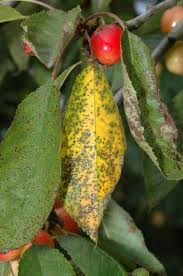
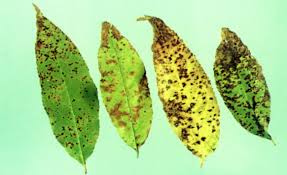
It is considered one of the most important foliar diseases of tart and sweet cherry trees in many growing regions.
How the Disease Develops
Symptoms usually begin as small purple or dark brown spots scattered across the leaf surface. As the season progresses, infected leaves turn yellow and begin falling prematurely.
Severe infections can leave trees partially defoliated long before harvest.
Why Early Leaf Loss Is a Serious Problem
When a cherry tree loses leaves too early, it loses a significant portion of its ability to store energy for the following season.
Trees affected year after year often show reduced vigor, lower yields, and increased sensitivity to winter injury.
Long Term Consequences
Many growers focus on fruit production and overlook foliage health. However, repeated defoliation can shorten the productive life of a cherry tree and increase the risk of additional stress related problems.
References
- University of Wisconsin Extension
- Michigan State University Extension
- Cornell Cooperative Extension
- Penn State Extension
6. Bacterial Canker
A Serious Threat to Cherry and Peach Trees
Bacterial canker is one of the most damaging diseases affecting cherry and peach trees in both commercial orchards and home gardens. The disease can attack young and mature trees alike, but younger trees often suffer the most severe damage.
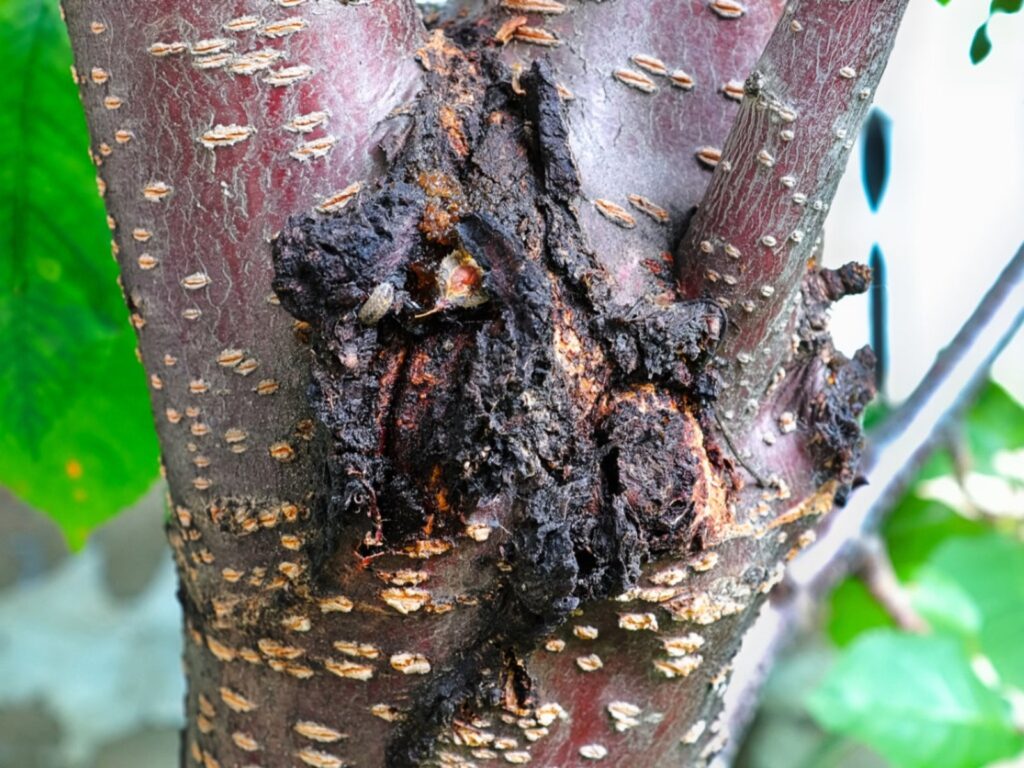
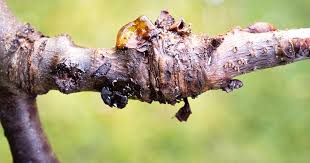
In many cases, growers first notice the problem after branches begin dying back or sticky amber colored gum starts oozing from the trunk and limbs.
Common Symptoms of Bacterial Canker
The disease can appear in several different ways depending on the season and severity of infection.
Early symptoms may include flower death, leaf spots, and small holes in leaves that resemble insect damage. As the disease progresses, sunken cankers develop on branches and trunks. These infected areas often release gummy sap, particularly during spring.
In severe cases, entire limbs may die back unexpectedly.
Why Some Trees Are More Vulnerable
Healthy trees can often tolerate minor infections, but stressed trees face a much greater risk.
Winter injury, drought stress, poor pruning practices, and mechanical wounds create entry points for bacteria. Once inside the tree, the infection can spread through woody tissue and become increasingly difficult to manage.
Long Term Impact on Orchards
Many growers mistake bacterial canker for winter damage because symptoms often become visible after cold weather. However, untreated infections can continue expanding and weaken the tree year after year.
Early diagnosis and proper orchard management remain essential for reducing losses and extending tree lifespan.
References
- University of Wisconsin Extension
- Michigan State University Extension
- Washington State University Extension
- University of California IPM
7. Citrus Greening (HLB)
The Disease That Changed the Citrus Industry
Citrus greening, commonly known as HLB, is widely considered one of the most destructive citrus diseases ever recorded. Plant health experts regard it as a major threat because infected trees gradually decline and there is currently no known cure.
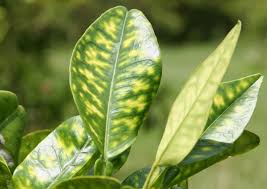
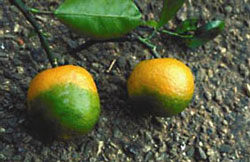
The disease is spread by the Asian citrus psyllid, a small insect that carries the bacteria from one tree to another.
Recognizing the Symptoms
Trees infected with HLB often show uneven yellowing of leaves, reduced vigor, and poor fruit development.
As the disease progresses, fruit may remain partially green even when ripe. Many become misshapen, develop an unpleasant bitter flavor, and drop from the tree before harvest.
Because symptoms develop gradually, infected trees may appear healthy during the early stages of infection.
The Impact on Citrus Production
The effects of citrus greening extend far beyond individual orchards.
According to USDA reports, citrus production in Florida has declined dramatically over the past two decades. Disease pressure combined with environmental challenges has significantly reduced orange production across the state.
For many growers, HLB has transformed citrus production from a predictable industry into a constant management challenge.
Why Early Detection Matters
Although infected trees cannot be cured, early identification remains important. Detecting infections quickly can help slow disease spread and support broader management efforts within citrus growing regions.
References
- USDA APHIS
- USDA Economic Research Service
- USDA National Agricultural Statistics Service
- University of Florida IFAS Extension
8. Citrus Canker
More Than Just Cosmetic Leaf Damage
Citrus canker is often mistaken for a minor leaf spotting problem, especially by home gardeners. However, plant health specialists consider it a significant bacterial disease capable of reducing tree health and fruit production.
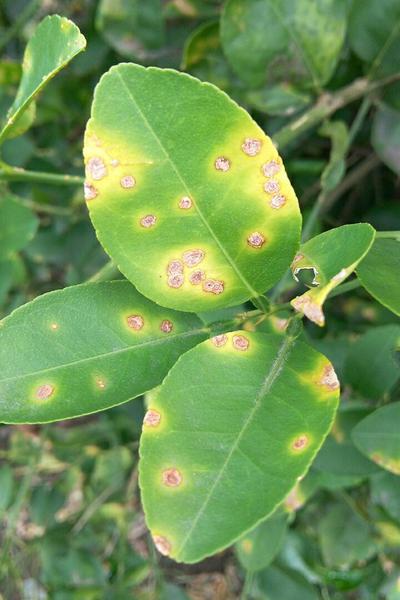
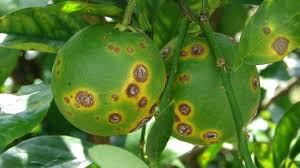
The disease affects leaves, stems, and fruit, particularly during periods of warm and wet weather.
How to Identify Citrus Canker
One of the most recognizable symptoms is the appearance of raised brown lesions surrounded by yellow halos.
These lesions can develop on young leaves, fruit, and green stems. As infections become more severe, trees may lose leaves prematurely and drop fruit before it reaches maturity.
Why Prevention Is So Important
Unlike some plant diseases, citrus canker cannot be cured once infection occurs.
Because of this, disease management focuses on prevention, sanitation, and limiting the movement of infected plant material. Proper monitoring and compliance with local plant health regulations remain critical components of disease control.
References
- USDA APHIS
- University of Florida IFAS Extension
- Texas A&M AgriLife Extension
- University of California Agriculture and Natural Resources
9. Phytophthora Root and Crown Rot
The Hidden Disease Beneath the Soil
Few fruit tree diseases are as deceptive as Phytophthora root and crown rot. Unlike many common diseases that begin with visible leaf or fruit symptoms, this infection starts below the soil surface, where roots and lower trunk tissue are damaged long before growers notice anything wrong.
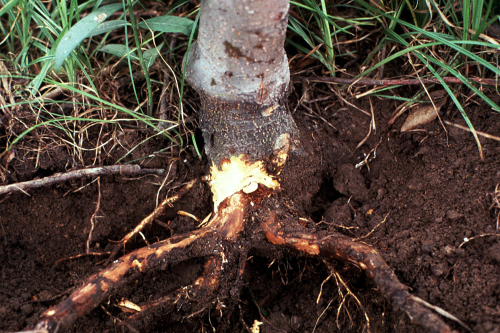
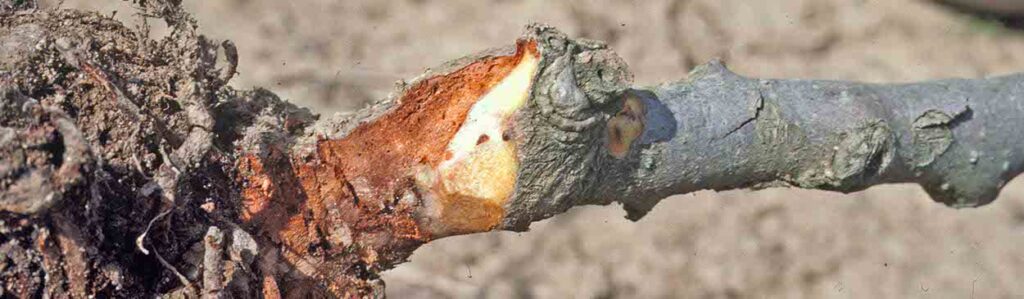
As a result, trees often appear healthy until the disease has already caused significant root loss.
Why Growers Often Misdiagnose the Problem
One reason Phytophthora is frequently overlooked is that its symptoms resemble several other problems.
A tree may show poor growth, yellowing leaves, reduced fruit production, or branch dieback. Many growers initially blame drought, winter injury, nutrient deficiencies, or transplant shock. In reality, the root system may already be struggling to absorb water and nutrients because of infection.
This is why Phytophthora is commonly associated with cases where a fruit tree appears to decline “without warning.”
Key Symptoms to Watch For
Although symptoms in the canopy can vary, one of the most important clues is found near the base of the tree.
When bark is carefully removed around the crown or root collar, infected tissue often appears orange brown instead of healthy creamy white. Excessively wet or poorly drained soil conditions are another warning sign, since the pathogen thrives in saturated environments.
Over time, infected trees may develop sparse foliage, weak shoot growth, and progressive dieback.
A Real World Example
A small orchard owner in Ohio noticed that one of his pear trees consistently lagged behind the others each spring. The leaves were smaller, growth was weaker, and fruit production steadily declined.
Believing the issue was caused by winter damage, he delayed further investigation. Several years later, the tree collapsed shortly after warm weather arrived. When the lower trunk was examined, extensive crown rot was discovered beneath the bark.
The disease had likely been active for years before the final decline became visible.
Why Drainage Matters
Research from university extension programs consistently shows that poor drainage is one of the biggest risk factors for Phytophthora infections.
Trees planted in low areas, heavy clay soils, or locations where water stands after rainfall face a significantly higher risk of disease development. Improving drainage before planting is often more effective than attempting to manage severe infections later.
Long Term Impact on Fruit Trees
Unlike many foliar diseases that primarily affect leaves and fruit, Phytophthora attacks the foundation of the tree itself.
Once a substantial portion of the root system has been damaged, recovery becomes increasingly difficult. Some trees may survive for several years with chronic infection, while others experience rapid decline when environmental conditions place additional stress on weakened roots.
For this reason, root diseases should always be considered when a fruit tree appears unhealthy but no obvious canopy disease is present.
References
- Ohio State University Extension
- University of California IPM
- Washington State University Extension
- Penn State Extension
- USDA Agricultural Research Service
Quick Disease Identification Guide
Many fruit tree diseases share similar symptoms, making diagnosis difficult for home gardeners and even experienced growers. The table below provides a quick reference guide for identifying some of the most common fruit tree diseases found in the United States.
| Disease | Most Common Hosts | Early Warning Signs | Risk Level |
|---|---|---|---|
| Fire Blight | Apple, Pear | Blackened blossoms, shepherd’s crook shoots | High |
| Apple Scab | Apple | Olive green leaf spots, early leaf drop | Medium |
| Peach Leaf Curl | Peach, Nectarine | Curled, thickened red leaves | Medium |
| Brown Rot | Peach, Plum, Cherry, Apricot | Blossom blight, fruit rot | High |
| Cherry Leaf Spot | Cherry | Small purple leaf spots, early defoliation | Medium |
| Bacterial Canker | Cherry, Peach | Gummy sap, cankers, branch dieback | High |
| Citrus Greening (HLB) | Citrus | Yellow shoots, misshapen fruit | Very High |
| Citrus Canker | Citrus | Raised brown lesions with yellow halos | High |
| Phytophthora Root Rot | Many Fruit Trees | Crown discoloration, poor growth | Very High |
Which Fruit Tree Diseases Are Most Likely to Kill a Tree?
Not every fruit tree disease leads to tree death. Some diseases mainly affect fruit quality or cause temporary stress, while others can destroy major branches, root systems, or entire trees.
Based on observations from university extension programs and commercial orchards across the United States, the following diseases are among the most serious threats to long term tree survival:
High Risk Diseases
Fire Blight
Fire blight can spread rapidly through blossoms, shoots, and branches. Severe infections may kill young apple and pear trees within a single growing season.
Phytophthora Root and Crown Rot
Because this disease attacks the root system, it often remains hidden until extensive damage has occurred. Once a large portion of the roots has been destroyed, recovery becomes difficult.
Citrus Greening (HLB)
There is currently no cure for citrus greening. Infected trees gradually decline, produce poor quality fruit, and eventually die.
Moderate Risk Diseases
Bacterial Canker
This disease can kill major limbs and significantly weaken trees, especially peaches and cherries already under stress.
Brown Rot
Brown rot primarily affects blossoms and fruit, but repeated infections can reduce tree vigor and productivity.
Lower Risk Diseases
Apple Scab
Apple scab rarely kills mature trees directly. However, repeated defoliation can weaken trees over time and make them more susceptible to other problems.
Peach Leaf Curl
Most healthy trees survive peach leaf curl, but annual infections can reduce growth and fruit production.
Cherry Leaf Spot
Although it seldom kills trees immediately, repeated defoliation can reduce winter hardiness and long term productivity.
Can a Fruit Tree Be Saved Once Symptoms Appear?
One of the most common questions growers ask is whether a declining fruit tree can still be saved.
The answer depends on how early the problem is identified.
Trees affected by apple scab, peach leaf curl, brown rot, and many bacterial infections often recover when proper management begins early. Pruning infected branches, improving airflow, correcting irrigation issues, and following disease specific treatment recommendations can significantly improve outcomes.
Root diseases are often more challenging. By the time Phytophthora symptoms become visible above ground, substantial root damage may already exist.
For this reason, early detection remains one of the most valuable tools available to growers.
A Lesson from a Commercial Orchard
A commercial apple grower in the Pacific Northwest noticed that several trees were producing smaller fruit and showing sparse foliage compared to the rest of the orchard.
At first glance, the issue appeared minor. The trees still flowered and produced fruit. However, closer inspection revealed repeated apple scab infections that had caused early leaf drop for several consecutive seasons.
The trees were not dying from apple scab alone. Instead, years of reduced photosynthesis weakened their energy reserves and left them vulnerable to drought stress and secondary infections.
This example highlights an important lesson. Fruit trees rarely fail because of a single event. More often, decline results from several seasons of accumulated stress that eventually reach a tipping point.
When Tree Removal May Be the Best Option
In some situations, treatment may no longer be practical.
Consider tree removal when:
- More than half of the canopy has died.
- Severe crown rot surrounds the trunk base.
- Fire blight has spread into major scaffold branches.
- Citrus greening has caused irreversible decline.
- Structural integrity has been compromised.
Removing severely infected trees can help reduce disease pressure and protect nearby healthy trees.
Expert Recommendations for Long Term Fruit Tree Health
Experienced orchard managers often follow the same core principles year after year:
- Inspect trees regularly during spring and summer.
- Remove diseased fruit and fallen leaves promptly.
- Improve air circulation through proper pruning.
- Avoid planting trees in poorly drained soil.
- Select disease resistant varieties whenever possible.
- Monitor blossom health closely during wet springs.
- Investigate unusual leaf drop before it becomes severe.
Most importantly, never assume a fruit tree declined overnight. In nearly every case, the tree provided warning signs long before major damage became visible.
A Simple Fruit Tree Disease Diagnosis Checklist
Before reaching for a fungicide or other treatment, take a few minutes to identify where the first symptoms are appearing.
Are leaves dropping early?
Inspect the tree for signs of apple scab or cherry leaf spot.
Are leaves curled, thickened, or reddish?
Peach leaf curl should be considered, particularly during spring growth.
Are blossoms blackened or shoots bending like a hook?
These symptoms commonly indicate fire blight.
Is fruit rotting while still hanging on the tree?
Brown rot may be responsible, especially during wet periods.
Is sticky gum oozing from branches or the trunk?
Check for bacterial canker.
Does the tree appear weak despite adequate watering?
Examine the crown and root collar area. Orange brown discoloration beneath the bark may indicate Phytophthora root or crown rot.
Fruit Tree Disease Treatment and Prevention
Why Correct Diagnosis Comes Before Treatment
One of the biggest mistakes fruit growers make is treating symptoms without first identifying the actual disease. A fungicide that works for apple scab will not solve fire blight, and a treatment applied at the wrong time may provide little or no benefit.
Plant pathologists often emphasize that successful disease management begins with accurate diagnosis. Understanding which tree is affected, where symptoms first appeared, and how the disease develops can save both time and money.
In many cases, prevention is far more effective than attempting to rescue a heavily infected tree.
Start by Identifying the Host and Symptoms
Before considering any treatment, carefully examine the tree.
Burned blossoms and blackened shoot tips are often associated with fire blight. Olive green leaf spots followed by premature leaf drop commonly point to apple scab. Thick, curled, reddish leaves on peaches suggest peach leaf curl, while mummified fruit hanging on branches is a classic sign of brown rot.
For root diseases, the clues are often less obvious. Trees growing in wet soil that show poor vigor, branch dieback, and crown discoloration may be suffering from Phytophthora root or crown rot.
Accurate identification remains one of the most valuable disease management tools available to growers.
Reduce Disease Sources Before Spraying
Experienced orchard managers know that disease control does not begin with a spray program.
Many pathogens survive from one season to the next on infected leaves, fruit, branches, or cankers. Removing these sources of infection can significantly reduce disease pressure before the growing season begins.
Fallen apple leaves should be removed where practical. Mummified fruit left in trees should be discarded. Fire blight infected shoots should be pruned well below visible symptoms, and diseased wood should be removed whenever appropriate.
These simple sanitation practices often provide benefits that many growers underestimate.
Improve Airflow and Drainage
Environmental conditions play a major role in disease development.
Apple scab, brown rot, and several other fungal diseases thrive when leaves and fruit remain wet for extended periods. Dense canopies restrict airflow and create favorable conditions for infection.
Regular pruning helps increase sunlight penetration and improves air movement throughout the tree. Proper spacing between trees can also reduce humidity levels within the orchard.
Drainage is equally important. Research from university extension programs consistently shows that saturated soils increase the risk of Phytophthora root diseases. Trees planted in poorly drained locations often face greater long term health challenges.
Time Treatments Around Disease Cycles
Many fruit tree diseases can only be managed effectively when treatments are applied at the correct stage of the disease cycle.
Apple scab protection generally begins when new leaves emerge during spring growth. Peach leaf curl management depends on dormant season applications before buds begin to open. Waiting until distorted leaves appear usually means the infection has already occurred.
Brown rot management often focuses on bloom periods and times close to harvest when wet conditions favor disease development.
This is why extension specialists frequently remind growers to treat according to disease biology rather than simply following a calendar date.
Choose Resistant Varieties Whenever Possible
One of the most effective long term strategies for disease prevention begins before a tree is even planted.
Many modern fruit varieties offer improved resistance to common diseases. Certain apple cultivars, for example, show strong resistance to apple scab, while some rootstocks provide better tolerance to soil borne diseases.
Selecting disease resistant cultivars can reduce dependence on chemical controls and make orchard management significantly easier over the life of the tree.
When purchasing new trees, reputable nurseries and certified planting stock should always be prioritized.
A Practical Approach to Organic Disease Management
Organic disease control can be effective, but it works best when combined with strong cultural practices.
Successful organic growers focus heavily on sanitation, pruning, airflow management, and disease prevention. Products such as copper, sulfur, potassium bicarbonate, and other approved materials may provide additional protection when used correctly.
However, even in organic systems, no product can compensate for poor sanitation or improper timing.
The most successful disease management programs rely on a combination of prevention, monitoring, and timely intervention rather than a single treatment solution.
References
- USDA APHIS
- University of Minnesota Extension
- Ohio State University Extension
- University of California Integrated Pest Management Program
- Washington State University Extension
- Oregon State University Extension
- University of Wisconsin Extension
- OMRI Organic Materials Review Institute
Lessons Learned from Real Orchards
Extension specialists frequently report that the biggest losses occur not because diseases are impossible to manage, but because symptoms are ignored during the early stages.
A common example involves apple scab. Many growers notice a few spots on leaves during spring and assume the problem is minor. By midsummer, severe defoliation can leave trees stressed and significantly reduce fruit production.
Another example involves Phytophthora root rot. Trees may show reduced growth for several years before suddenly collapsing. In many cases, examination of the root system reveals damage that had been developing long before visible symptoms appeared.
These situations highlight an important lesson for fruit growers: most trees do not die suddenly. The warning signs are often present long before the final decline becomes obvious.
Seasonal Fruit Tree Disease Prevention Calendar
Late Winter
- Apply dormant treatments for peach leaf curl where recommended.
- Remove mummified fruit remaining in trees.
- Prune dead and diseased branches.
Spring
- Monitor blossoms for fire blight symptoms.
- Watch for early signs of apple scab.
- Improve airflow through proper pruning.
Summer
- Inspect fruit regularly for brown rot.
- Remove infected fruit immediately.
- Avoid excessive irrigation and standing water.
Fall
- Remove fallen leaves beneath apple and cherry trees.
- Dispose of diseased fruit and plant debris.
- Evaluate drainage issues before winter.
Fruit Tree Disease Summary Table
| Disease | Tree Type | Key Symptoms | Long-Term Impact |
|---|---|---|---|
| Fire Blight | Apple, Pear | Black blossoms, shepherd’s crook shoots, branch dieback | Can kill limbs or entire trees |
| Apple Scab | Apple | Olive-green leaf spots, premature leaf drop | Reduced vigor and fruit quality |
| Peach Leaf Curl | Peach, Nectarine | Curled, thickened red leaves | Lower yields and weakened trees |
| Brown Rot | Peach, Plum, Cherry, Apricot | Blossom blight, fruit rot, gray-brown spores | Significant fruit losses |
| Cherry Leaf Spot | Cherry | Purple leaf spots, early defoliation | Reduced productivity and winter hardiness |
| Bacterial Canker | Cherry, Peach | Gummy sap, cankers, branch dieback | Severe limb loss and tree decline |
| Citrus Greening (HLB) | Citrus | Yellow shoots, bitter misshapen fruit | Eventual tree death |
| Citrus Canker | Citrus | Brown lesions with yellow halos | Fruit drop and reduced yields |
| Phytophthora Root Rot | Multiple Fruit Trees | Root damage, crown discoloration, poor growth | Sudden decline and tree death |
Final Thoughts
Fruit trees rarely die without warning. In most cases, what appears to be a sudden decline is actually the result of disease pressure that has been building for months or even years. Whether the problem is fire blight in apples, peach leaf curl in backyard orchards, citrus greening in commercial groves, or Phytophthora root rot below the soil line, the early symptoms are often present long before a tree reaches the point of severe decline.
The good news is that many of the most damaging fruit tree diseases can be managed when they are identified early. Regular inspections, proper sanitation, improved airflow, well, drained planting sites, and timely preventive treatments remain the foundation of successful fruit tree care.
For growers, the most valuable tool is not a fungicide or bactericide. It is the ability to recognize symptoms early and respond before the disease gains a foothold. A few minutes spent inspecting leaves, blossoms, fruit, and the crown area can often prevent years of lost productivity and even save a tree from removal.
Frequently Asked Questions for Why Fruit Trees Die Suddenly
Why do fruit trees seem to die suddenly?
Most fruit trees do not die overnight. What appears to be a sudden collapse is often the final stage of diseases such as fire blight, citrus greening, or Phytophthora root rot that have been developing for months or years before symptoms become obvious.
What is the most common disease found in apple trees?
Apple scab is one of the most common apple tree diseases in the United States. It causes leaf spotting, premature defoliation, and reduced fruit quality, especially during wet spring conditions.
Can a fruit tree recover from peach leaf curl?
Many peach trees can recover from a single infection, but repeated outbreaks weaken the tree over time. Preventive treatments applied during the dormant season are the most effective way to manage peach leaf curl.
Is there a cure for citrus greening (HLB)?
Currently, there is no cure for citrus greening. Infected trees gradually decline and eventually die. Early detection and management of the Asian citrus psyllid are critical for slowing disease spread.
How can I prevent fruit tree diseases naturally?
Good sanitation practices are the first line of defense. Removing fallen leaves, pruning infected branches, improving airflow, avoiding overwatering, and planting disease-resistant varieties can significantly reduce disease pressure without relying solely on chemical treatments.

Thesis Link : https://saulibrary.edu.bd/daatj/public/uploads/BAU200601_19-Pp_5.pdf
- Best Weed Killer for Lawns – 10 Picks That Won’t Kill Grass - October 3, 2026
- Best Lawn Fertilizer – 10 Expert Picks That Actually Work - October 2, 2026
- Best Grass Seed – 10 Top Choices for a Thick Green Lawn - October 1, 2026