


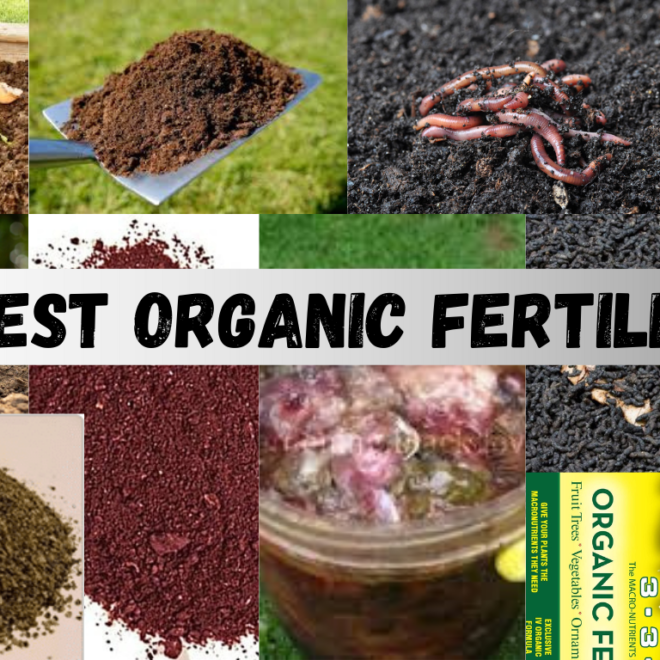
10 Best Organic Fertilizers – Compost, Manure & More
If you’ve ever planted something “the right way” and still watched it struggle, the problem usually isn’t the seed or the sunshine. It’s the soil. Healthy soil is what makes gardening feel easy plants root faster, stay greener, and handle heat or heavy rain without falling apart. That’s why organic gardening begins under your feet. The goal isn’t just to feed the plant for a week; it’s to build soil that keeps improving every season. Whether you’re growing tomatoes in a backyard bed or producing crops on a small organic farm, knowing the 10 best organic fertilizers for healthy soil helps you choose inputs that work with nature, not against it. In the sections ahead, we’ll look at practical organic fertilizer options , how they support soil structure and microbes, and when to apply them for long term results.
Why Organic Fertilizers Help Your Soil Stay Healthy
A lot of people fertilize to “feed the plant.” That makes sense, but it’s only half the story. A garden doesn’t stay productive because you keep adding nutrients. It stays productive when the soil stays alive and workable.

That’s where organic fertilizers shine.
Organic fertilizers come from natural sources , things like composted plants, aged manure, bone meal, seaweed, or mineral based amendments. They don’t behave like chemical fertilizers. Instead of giving plants a fast hit of nutrition, they slowly break down and improve the soil while they’re at it.
When you use organic fertilizers regularly, the soil changes. You can feel it. It stops acting like dead dirt and starts behaving like good growing soil.
Soil becomes easier to work with
Hard soil is a common problem , especially after heavy rain, constant watering, or repeated planting. Organic fertilizers add organic matter, which helps soil hold together in a healthy way. Clay soil loosens up. Sandy soil stops drying out so fast. Water soaks in better, and roots don’t have to fight their way through.
Plants get steadier feeding
Chemical fertilizers can push plants quickly, but that fast growth doesn’t always mean strong growth. Organic fertilizers release nutrients slowly as microbes and earthworms break them down. Plants take what they need over time, not all at once. That’s why organic feeding is usually gentler and less likely to burn roots.
It’s not just “N-P-K”
Most store bought synthetic fertilizers focus on a few big nutrients. But plants also need smaller elements , calcium, magnesium, iron, zinc, and more. Organic fertilizers often contain a wider range of these trace nutrients, which can quietly fix problems that show up as pale leaves, weak stems, or poor flowering.
The soil stays alive
Good soil is full of life: microbes, fungi, and tiny organisms that help plants access nutrients and stay healthier. Organic fertilizers support that whole underground system. When soil life is active, nutrients cycle naturally, roots grow better, and plants often handle stress and disease more easily.
Less harm, fewer surprises
Organic fertilizers are generally safer for gardens because they don’t overload the soil with salts or harsh chemicals. They’re also less likely to wash away and pollute nearby water, since the nutrients are held in the soil and released gradually.
The biggest benefit : your soil improves each year
This is the part most people notice after a season or two. With organic fertilizers, the soil doesn’t just “get through” the growing season. It actually builds up. Beds hold moisture better. Plants look stronger. You don’t have to fight the same issues repeatedly.
Organic fertilizers aren’t magic. They’re just realistic. They work the way nature works slowly, steadily, and with long term results.lf in addition to feeding your plants. Over time, they build up soil organic matter and create a resilient growing environment. Now let’s get into the best options and how to use each one for healthy soil and see how each can benefit your garden.
1. Compost (Black Gold) – The Soil Fix That Keeps Paying Back
If there’s one thing I add to soil almost every year, it’s compost. Not because it’s trendy because it solves the problems gardeners keep fighting: hard soil, poor drainage, weak growth, and beds that dry out too fast.
Compost is broken down organic material like kitchen scraps, leaves, grass, old plant waste, sometimes manure, that turns into a dark, crumbly, earthy mix. It’s used more like a soil builder than a quick “plant food,” and that distinction matters.


What compost actually improves
Compost makes soil less extreme. Clay soil becomes more open and workable. Sandy soil holds moisture longer. That happens because compost increases soil porosity and helps water soak in rather than running off. EPA guidance points out compost can increase soil porosity, improve infiltration, and reduce nutrient loss in runoff.
It also supports soil life. A healthy soil isn’t sterile microbes are doing the heavy lifting, turning organic materials into plant available nutrients. Compost encourages that living system, which is one reason it helps gardens stay productive without constantly “chasing” fertilizers.
And yes compost feeds plants too, just not in a fast, aggressive way. University of California guidance notes that much of compost nitrogen is organic and becomes available gradually as soil microbes mineralize it, so compost functions as a slow-release nutrient source.
How to use compost
For garden beds, you don’t need a huge amount. Spread about 1–2 inches over the surface and mix it lightly into the top layer before planting, or top dress around plants mid season like a mulch. Regular compost use is also commonly recommended by extension educators as a way to keep nutrient availability steady over time.
For containers, compost is helpful, but don’t replace potting mix with it. Blending up to about one third compost into a potting mix is usually plenty more than that can make pots stay wet too long, depending on the compost.
Quick buying tip
Finished compost should smell like clean soil and look fairly uniform. If it still has lots of recognizable scraps, it may keep decomposing in the soil and microbes can temporarily “steal” available nitrogen while they break that material down. UC ANR notes it’s better to compost organic materials before mixing them into soil for exactly that reason.
Compost is “black gold” because it improves the soil’s structure, moisture handling, and biology then quietly feeds plants over time. It’s one of the few inputs that makes next season easier instead of creating new problems.
Best Compost company in the USA
If you want bagged compost , these are commonly recommended by U.S. gardeners because they’re widely available and have clear product lines:
- Coast of Maine – often sold through independent garden centers; they also note they can ship if you don’t have a nearby retailer.
- Espoma – popular “compost mix” style product; Espoma also warns that larger bagged soils are not available everywhere, so location matters.
- Kellogg Garden Organics – national availability; has an official store locator.
- Dr. Earth – Natural Choice All Purpose Compost


Bonus :
- Black Kow (composted cow manure) — widely used as a soil conditioner and has a “Where to Buy” page.
Where to Buy Compost in the USA
1) Local bulk compost – Best Value for Bigger Gardens
If you’re filling raised beds or improving large areas, bulk compost is often cheaper. Oregon State University Extension notes you can buy compost in bulk from landscape supply companies.
Search terms that work well:
- “bulk compost near me”
- “compost delivery near me”
- “landscape supply compost”
2) Find the exact product
Use the brand’s official locator when you want a specific bagged compost:
- Coast of Maine “Find Local”
- Espoma “Where to Buy” they recommend calling ahead; large bagged soils are region limited
- Kellogg store locator
- Dr. Earth “Find & Shop” they explicitly say call first)
3) Big box stores
Many of these brands show up at major retailers, but inventory can change by region so it’s smart to check online pickup or call before driving.
How to Identify Good Compost

1) Look + smell test – 10 seconds
University of Florida IFAS notes finished compost should have a dark, crumbly appearance and an earthy odor. If it’s not ready, it may need a curing period.
Avoid compost that smells:
- sour/rotten (anaerobic)
- strongly ammonia like (“hot”/unfinished)
2) Check the label for clues
Prefer wording like:
- “finished compost”
- “screened compost” fewer big chunks nice for top dressing and containers
3) Do a simple seed test – Great for bulk or unknown compost
A common compost maturity approach is a seed germination test if seeds sprout and seedlings grow normally, the compost is less likely to be immature or phytotoxic. Research reviews note germination tests are widely used to assess compost maturity/toxicity.
4) Ask for testing if you’re buying bulk – best trust signal
The US Composting Council’s STA Certified Compost participant list states that participants are required to provide customers their compost test results upon request.
One USA-Specific “Don’t Mess This Up” Tip
Compost is a soil amendment not a full soil replacement. An OSU compost guide recommends up to ~25% compost by volume when filling the depth of a raised bed
Also, too much compost/manure can create nutrient imbalances and cause plant/environment problems , University of Minnesota Extension explicitly warns about this.
References
- UC ANR (blog) — Don’t incorporate uncomposted organic matter; it can tie up nutrients.
- US EPA — Benefits of using compost (soil porosity, infiltration, reduced runoff/nutrient loss).
- USDA NRCS — Role of organic matter in water/nutrient holding and soil function.
- UC Agriculture & Natural Resources — Compost as slow-release N (microbial mineralization).
- Michigan State University Extension — Compost and water-holding capacity (also notes compost quality varies).
2. Aged Manure — A soil conditioner that feeds plants and fixes tired beds
Manure has been used in gardens for a long time, and it still earns its place, as long as it’s properly aged or composted. Fresh manure is where people get into trouble: it can be “hot” too much readily available nitrogen/ammonia for tender roots, it can carry weed seeds, and it can raise food safety concerns if it’s used carelessly around edible crops. Penn State Extension and other universities consistently recommend treating “raw vs. aged vs. composted” manure differently for exactly these reasons.
Aged manure is manure that has had time to mellow and break down. Composted manure goes a step further: it’s processed under conditions intended to stabilize it and reduce risks. Under USDA organic rules, “composted” manure has specific temperature/time requirements .


Why gardeners like it
It adds nutrition, but not all manures act the same. Poultry litter/manure tends to carry more readily available nitrogen than cattle manure, while cattle manure often has more nitrogen in organic forms that release more slowly. So the “best” manure depends on what you’re growing and how quickly you need the feed to show up.
It improves the soil’s “feel” and function. Manure isn’t just N-P-K—it’s organic matter. Used thoughtfully, manure and composted manure can supply nutrients, support nutrient cycling, and build soil health over time and the same sources also warn about risks like salts or nutrient buildup if you overdo it.
How to use aged manure without headaches
- Choose the finished stuff. Good aged/composted manure looks dark and crumbly and smells earthy not sharp, sour, or “barn strong.” If it still looks fresh, treat it like raw manure.
- Work it in early. A simple approach is spreading a thin layer often around 1–2 inches and mixing it in a few weeks before planting, or applying in fall so it has time to settle. Fall application is commonly recommended for home gardens.
- Use it where it makes sense. Nitrogen hungry crops like corn, brassicas, leafy greens tend to respond well just don’t turn your beds into a manure dump. If you want precision, universities strongly encourage using a soil test and when possible manure analysis because nutrient content varies a lot.
Food Safety Rules
For edible gardens, the safest habit is: use composted manure and give your crops time. University guidance and federal standards repeatedly point to waiting periods when raw manure is used commonly referenced as 120 days for crops that touch soil like many root crops and 90 days for crops that don’t.
Also, avoid manures from animals that pose higher pathogen risks for gardens: dog, cat, pig and human waste should not go into vegetable beds.
Best Aged Manure Brands in the USA
These are widely available, consistent, and easy for U.S. readers to find:
- Black Kow (Composted Cow Manure)
One of the most common “bagged composted manure” products in the U.S., sold as an odor reduced, composted soil conditioner. Their official “Where to Buy” page makes it easy to locate stores. - Espoma Organic Cow Manure
Sold as a soil conditioner/compost blend for vegetables, flowers, trees, and shrubs, and Espoma lists usage guidance plus a “Where to Buy” option. - Local bulk composted cow manure
If you’re filling raised beds or improving large areas, bulk composted manure can be cheaper than bags and many suppliers market it as weed/pathogen free and OMRI listed varies by supplier.


Where to Buy Aged Manure in the USA
1) Big box & farm stores
These usually carry composted cow manure or manure blends inventory varies by location:
- Tractor Supply – often stocks Black Kow products.
- Lowe’s – lists both Espoma cow manure compost blend and Black Kow composted manure.
- Ace Hardware – has a “manure near me” section and notes bagged manure is aged to reduce burn risk .
2) Walmart
Walmart has category pages and listings for composted manure products like Black Kow and Espoma cow manure blends.
3) “store locators”
- Black Kow – Where to Buy
- Dr. Earth – Find & Shop they explicitly say “PLEASE CALL FIRST” because stores carry limited selections.
How to Identify Good Aged Manure

Look + smell
Good aged/composted manure usually:
- looks dark brown to black
- feels crumbly, not slimy or clumpy
- smells earthy, not sharp or “barn strong”
If it has a strong ammonia smell, looks fresh, or feels wet and sticky, treat it like raw manure.
Read the bag label
Look for terms like:
- “composted” / “aged”
- “odor reduced”
- “weed free”
Example: Black Kow is marketed as composted cow manure and positioned as a soil conditioner.
Avoid “unknown fresh manure” for edible beds
If the product doesn’t clearly say composted/aged, or it’s fresh from a farm pile, it’s safer to compost it properly first especially for vegetable gardens.
Ready to paste mini block for your article
Best aged manure brands in the USA: Black Kow and Espoma are two of the easiest to find options.
Where to buy: Tractor Supply, Lowe’s, Ace Hardware, Walmart, and local landscape supply yards commonly carry composted manure or manure/compost blends.
How to spot good aged manure: dark, crumbly, earthy smelling, and clearly labeled “composted” or “aged.”
Quick takeaway
Aged manure is “garden gold” only when it’s handled like a soil amendment not a shortcut. Stick to well aged/composted sources, apply with breathing room before harvest, and your soil will get richer and easier to grow in over time.
References
- University of Minnesota Extension — manure nutrient characteristics + nitrogen form differences; poultry vs cattle note.
- Penn State Extension — safe use + which manures to avoid.
- eCFR (USDA organic rule) — manure timing + compost process requirements.
- FDA (FSMA page) — 90/120-day guidance reference.
- University of Maine Extension — composted manure + temps (140°F guidance).
- University of Arizona Extension publication — benefits + cautions (salts, pathogens, weed seeds).
3. Worm Castings (Vermicompost) – Gentle “worm-made” Fertilizer that Wakes Soil up
Worm castings are what you get after composting worms usually red wigglers digest organic scraps and bedding. What comes out the other end looks like fine, dark soil—and it behaves like a mix of mild fertilizer + soil tonic.
The nice part is how forgiving worm castings are. You’re not trying to spike the soil with quick nutrients. You’re adding something that improves the growing environment and feeds plants steadily.


Why gardeners keep coming back to castings
- Balanced nutrition, plus trace minerals. Castings typically contain a small-but useful NPK range often cited around 1-0-0 up to 5-5-3, depending on what the worms were fed and a long list of micronutrients like iron, magnesium, zinc, copper, calcium, and more.
- A microbial boost. LSU AgCenter notes castings carry rich microbiological colonies that can help fight soil borne disease pathogens and even repel some insects.
- Better soil performance . Reviews on vermicompost report improvements in soil structure/porosity, water retention, microbial activity, and overall crop performance compared with untreated soil.
- More than nutrients. Scientific reviews describe vermicompost as containing humic substances and plant growth regulating compounds often described as hormone like, along with enzymes one reason it’s linked with stronger, steadier growth in many trials.
“Will it burn my plants?”
Many guides describe worm castings as “no burn” and suitable even for delicate plants because nutrients release gently.
That said, University of Maryland Extension notes pure castings can sometimes be high in soluble salts, and they recommend using them sparingly and avoiding direct contact with seedling roots.
So the practical truth is: low risk, but still worth using smartly especially in pots.
Simple ways to use worm castings
- Potting mixes / containers: Mix in roughly 10–20% by volume, and try to stay under 25% a common extension style guideline.
- Planting holes / transplanting: Sprinkle a small handful into the hole and mix with surrounding soil rather than creating a thick “plug” of castings around roots.
- Top dressing: A thin ring around the plant and water it in. This is an easy way to feed without disturbing roots. Maryland Extension also mentions top-dressing as a use.
Some gardeners also steep castings in water and use the liquid to drench soil, but the biggest, most reliable benefit still comes from getting the castings into the soil mix where roots and microbes interact.
Tip if you want a steady supply
If you have kitchen scraps and a small corner indoors, a basic vermicompost bin can produce castings continuously. Penn State and Oregon State Extension both describe vermicomposting as a practical home system using red wigglers to turn food waste into castings.
worm castings are a clean, low drama way to improve soil biology and give plants a steady feed especially useful for seedlings, containers, herbs, and vegetable beds.
Best worm castings company in the USA
“Best” depends on what you value OMRI listed for certified organic growing, lab testing, easy retail availability, bulk/pallet options, etc. Here are reputable, widely used options to consider:
- Wiggle Worm Castings , often OMRI listed; widely sold online
- Urban Worm Company , OMRI listed; publishes testing/biological assay info; bags + bulk/pallet options
- Uncle Jim’s Worm Farm , direct from farm castings; common “workhorse” option online
- Back to the Roots , very easy to find at major retailers; convenient smaller bags
- Worm Power , well known vermicompost producer; especially common in commercial/liquid extract channels
- Impact Organics , sold through established organic gardening retailers


Tip: if you garden organically and want fewer surprises, prioritize brands that are OMRI listed or publish lab results / test methods. OMRI maintains product lists and search tools for materials allowed in organic production.


Where to buy worm castings in the USA
Online :
- direct – often freshest + bulk options : Urban Worm Company, Uncle Jim’s, Wiggle Worm
- Amazon – easy shipping, lots of sizes; check seller + storage : Back to the Roots, Urban Worm Company, Uncle Jim’s
- Big-box marketplaces – easy pickup/ship: Walmart commonly carries Back to the Roots .
- Organic garden retailers – often higher end inputs + tech docs : e.g., Arbico Organics carries Impact Organics castings
In person :
- Independent nurseries/garden centers
- Hydroponic stores castings are common in living soil circles
- Farm & garden supply stores varies by region
How to identify good worm castings

What good castings look
- Dark brown/black, fine, crumbly, like coffee grounds or rich soil
- Earthy smell – forest soil smell, not sour, rotten, or ammonia like
- Mostly uniform: minimal recognizable food scraps, plastic bits, or big woody chunks
What to avoid
- Funky odors, slimy texture, or lots of visible unprocessed scraps
- Overly wet, clumpy, or compacted product , can go anaerobic in the bag
- Lots of debris — a sign of poor screening/quality control
The “seedling safety” check – salts matter
Even though castings are generally gentle, soluble salts can still be an issue in some batches seedlings are the most sensitive. University of Maryland Extension specifically warns that pure castings may be high in soluble salts and recommends using them sparingly and avoiding direct contact with seedling roots.
If a company provides lab data, look for EC (electrical conductivity) it’s a standard indicator of soluble salt level in composts, and high salts can injure plants .
“Trust signals” when shopping
- OMRI listing if you care about certified organic inputs
- Testing transparency: references to recognized compost test methods e.g., TMECC or published analysis
- Reasonable storage guidance
References
- LSU AgCenter — “Composting Series: Worm Castings”
- University of Maryland Extension — “Indoor Worm Composting or Vermicomposting”
- Penn State Extension — “Vermicomposting Puts Worms to Work”
- MDPI Agronomy review on vermicompost
- Wageningen University & Research report (free PDF)
4. Bone Meal — A phosphorus Option
Bone meal is ground, steam processed bone. People mainly buy it for phosphorus, especially when planting bulbs, root crops, or anything you want to establish with a strong root system.


Here’s the part many blogs skip: bone meal isn’t automatically useful everywhere. Colorado State University Extension notes that phosphorus from bone meal is only available to plants when soil pH is below 7.0. So if your soil is neutral to alkaline, you might be paying for phosphorus your plants can’t access.
It’s also worth remembering that many gardens already have enough phosphorus especially if you regularly add compost or manure. CSU even mentions that if you’re making annual manure/compost applications for nitrogen, you may already have sufficient phosphorus.
Best bone meal product in the USA
These are widely available, reputable bone meal options most are “steamed/pasteurized” style products; check the label :
- Down To Earth Bone Meal (3-15-0) — popular organic-input product; OMRI-listed.
- Espoma Organic Bone Meal (4-12-0) — very common at big-box retailers and online.
- Jobe’s Organics Bone Meal (2-14-0) — OMRI listed; straightforward “works everywhere bone meal is appropriate” product.
- Burpee Natural Organic Bone Meal (6-8-0) — OMRI labeled; easy to find through Burpee + big marketplaces.
- Dr. Earth Fish Bone Meal (3-18-0) — technically fish bone meal, but same “phosphorus + calcium for roots/blooms” role; sold in mainstream channels.


If you want the “safer bet” for organic gardening rules, use OMRI Search / OMRI Products List to confirm the exact product.
Where to buy bone meal in the USA
Big box retail :
- Lowe’s – commonly carries Espoma; often carries Dr. Earth fish bone meal.
- Walmart – often carries Espoma and Burpee bone meal.
- Target – often carries Espoma bone meal .
Organic garden suppliers :
- Arbico Organics e.g., Down To Earth Bone Meal 3-15-0
Direct :
- Down To Earth product pages + OMRI certificate docs
- Jobe’s product page for guaranteed analysis
- Burpee product page
- Dr. Earth product page
How to identify good bone meal

A) Confirm it’ll actually work in your soil
Colorado State University Extension reminds that bone meal P becomes plant available mainly when soil pH is below 7.0, so alkaline soils can make it a poor value.
Also: a soil test is the smart move before adding phosphorus, and CSU’s phosphorus guidance emphasizes testing.
B) Check the label for the “tell tales”
Look for:
- Guaranteed Analysis (N-P-K) with a high middle number common examples: 2-14-0, 3-15-0, 4-12-0).
- “Steamed,” “pasteurized,” or similar processing wording , most retail bone meals are steam processed before grinding.
- OMRI Listed / OMRI Search confirmation if organic compliance matters to you.
C) What it should look
CSU notes bone meal is typically a finely ground powder with a consistency similar to baking flour .
Avoid bags that are:
- Wet/clumped with a sour odor
- Full of obvious filler chunks
D) Practical “quality of life” cautions
Bone meal can attract digging animals because of the smell mixing it into soil helps.
How to use it :
Mix it into the soil near where roots will grow. And before you add any phosphorus product, a basic soil test saves you from overdoing it.
Quick caution: Too much phosphorus doesn’t just waste money over application can increase the risk of phosphorus moving off site and contributing to water quality issues.
5. Blood Meal – Strong Nitrogen, Easy to Overdo
Blood meal is dried slaughterhouse by product, and it’s one of the highest non synthetic nitrogen sources you’ll see on a shelf.
Many products are around 12% nitrogen often labeled 12-0-0, which is why it greens things up fast when plants are truly nitrogen hungry.

But “strong” is also the risk. CSU warns that if blood meal is over applied, it can burn plants due to excessive ammonia.
Extension answers also warn it can burn seedlings/young roots, so it’s not something to dump into a transplant hole.
Best blood meal product in the USA
These are all widely sold and have clear labeling (NPK/usage), which matters with a “strong” input like blood meal:
- Down To Earth Blood Meal (12-0-0) OMRI listed; lots of bag sizes
- Espoma Organic Blood Meal – states “no sludges or fillers”
- Jobe’s Organics Blood Meal Granular (12-0-0) – OMRI listed
- Ferti-lome Blood Meal (12-0-0) – clear application rates on label page
- Greenway Biotech Organic Blood Meal (13-0-0) -slightly higher N than the common 12-0-0 products.


Where to buy blood meal in the USA
Big box / easy pickup
- Home Depot – commonly carries Jobe’s and Espoma blood meal
- Walmart – commonly carries Down To Earth and Jobe’s blood meal
Online – biggest selection
- Amazon – Espoma / Jobe’s / Down To Earth are commonly listed
- Organic garden retailers like Arbico Organics carries Down To Earth Blood Meal 12-0-0
Local garden centers / farm stores
- Many stock blood meal alongside organic amendments; look for bags with a clear guaranteed analysis (12-0-0, 13-0-0, etc.). CSU notes organic fertilizers are commonly available at garden centers and horticultural suppliers.
How to identify good blood meal
A) Read the bag like a “strong fertilizer” label
- Look for a guaranteed analysis around 12-0-0 or similar some are higher, e.g., 13-0-0.
- Prefer products that clearly say blood meal as the main ingredient and avoid vague “blends” if your goal is a clean nitrogen calculation.
B) If you care about organic compliance, confirm OMRI
- Down To Earth and Jobe’s both market their blood meal as OMRI listed/allowed depending on the exact product.
C) Avoid rookie “burn” mistakes
- CSU’s vegetable garden fertilizing guidance emphasizes watering after applying and avoiding dry fertilizer on foliage because burning can occur.
- For seedlings/potting mixes: MOFGA cautions that in potting mixes the mix should sit a few weeks to avoid ammonia toxicity and to avoid direct root contact because it can burn.
D) Do the clean math so you don’t overdo it
UNH shows the simple conversion logic for nitrogen only sources like blood meal: if blood meal is 12% N, then:
- Blood meal needed (lbs) = nitrogen needed (lbs) ÷ 0.12
UNH’s example: to supply 2 lbs of N per 1,000 sq ft, you’d use 16.7 lbs of blood meal (12% N)—so for 1 lb N, it’s about 8.3 lbs blood meal per 1,000 sq ft.
E) Quality of life safety check
Many fertilizers containing blood meal/bone meal are attractive to dogs; ASPCA notes fertilizer ingestion is common and many products include these animal meal ingredients.
How to use it :
Use small amounts, mix it into soil , and water afterward. If you want a clean way to calculate a safe rate, UNH Extension shows how to convert nitrogen needs into pounds of blood meal based on its ~12% N content.
6. Fish Emulsion – Quick, Gentle Feeding when Plants need a Boost
Fish emulsion is a soluble, liquid fertilizer made from fish waste that’s typically processed with heat and acid and yes, it’s famous for the smell.
There are also “hydrolyzed” fish products made with enzymes instead of heat/acid CSU notes these can retain more proteins, enzymes, vitamins, and micronutrients than standard emulsions.


Fish emulsion is popular because it’s fast to apply and easy to correct mild deficiencies mid-season. University of Illinois Extension notes fish emulsion nutrient ratios vary, and gives a typical example plus mentions it can contain micronutrients such as calcium and magnesium .
How to use it :
Dilute it and use it as a soil drench or foliar feed if your label allows. For a very practical home garden rate, UNH Extension lists 1–2 tablespoons per gallon as an example dilution for fish emulsion.
For newly set transplants, University of Georgia also mentions mixing fish emulsion with water, using 2–4 tablespoons per gallon for early establishment.
Small reality check: Foliar feeding gets talked up a lot, but Illinois Extension notes studies in sweet pepper didn’t show a yield difference from fish emulsion foliar sprays so it’s useful, but not magic.
References
- Ask Extension (extra caution about blood meal burning seedlings; practical guidance).
- Colorado State University Extension, CMG GardenNotes #234
- CSU Extension publication on phosphorus and runoff/eutrophication risk from over-application.
- University of New Hampshire Extension
- University of Georgia .
- University of Illinois Extension
7) Kelp Meal (Seaweed Fertilizer) – A Mineral “Seasoning,” not a Miracle
Kelp meal is dried seaweed often Ascophyllum nodosum ground into flakes or powder. Many gardeners like it because it brings a little potassium plus a wide mix of minor elements, and it’s gentle enough that it won’t scorch roots. A typical product label will show a low N-P-K for example, 1-0.1-2 and recommend light, regular applications.


What kelp meal is good at: topping up potassium and adding small amounts of “extras” that aren’t always present in basic N-P-K fertilizers. OSU Extension lists kelp meal as one organic potassium source their range is broad because products differ.
What kelp meal is often oversold for: the “biostimulant” claims. Seaweed products are marketed as stress reducers and growth enhancers because seaweeds can contain plant hormones , auxins/cytokinins/gibberellins, but a Washington State University Linda Chalker Scott review notes there’s no research substantiated benefit in home gardens/landscapes, and stresses that better basics – watering, mulching, plant choice matter more.
At the same time, research in agriculture does show seaweed extracts can sometimes help plants handle stresses and disease pressure just don’t expect that to automatically translate to big, visible wins in every backyard bed.
A real world caution most blogs skip: where the kelp came from and what it accumulated. The WSU review points out wild kelp harvesting can damage kelp ecosystems and also raises the issue that some seaweeds can accumulate heavy metals , so repeated use especially in edible beds deserves common sense label reading and occasional soil testing.
8) Bat Guano – Powerful, but Handle with respect
Bat guano is famous because it can be nutrient dense, but the chemistry varies a lot by bat diet and how old the guano is. Reviews note insect eating bats tend to produce guano higher in nitrogen, while fruit eating bats can be higher in phosphorus and overall composition shifts with location, age, and species.


Two things matter as much as the N-P-K:
Safety: Bat and bird droppings can be linked to histoplasmosis exposure when dust is disturbed. The CDC specifically flags activities that disturb soil containing bird/bat droppings as increasing risk and recommends avoiding creating airborne dust.
There are also medical reports of severe including fatal histoplasmosis associated with bat guano exposure.
Practical rule: if you use guano, use a sealed/pelletized product when possible, avoid breathing dust, dampen before applying, and don’t use it in enclosed spaces.
Sustainability: Guano harvesting can disturb bat colonies and cave ecosystems. Bat Conservation International warns that scaling guano extraction can threaten bats and that sustainable protocols are needed.
There are even formal guidelines created to reduce harm from guano mining because of widespread bat population losses tied to unsustainable harvesting.
9) Alfalfa Meal – Gentle Plant Based Feeding
If you want an animal free option that still adds nutrients and organic matter, alfalfa meal is one of the easiest picks. University of Maine Cooperative Extension describes it as a common organic amendment with a low N-P-K around the 3-1-2 range, plus the soil-texture benefits of extra organic matter.

You’ll often hear rose growers talk about alfalfa like it’s magic. The more honest version: alfalfa contains triacontanol, a natural compound associated with plant growth stimulation, but UMaine notes the effect at home garden scale is likely modest nice, not miraculous.
Older published reports describe triacontanol as the “active principle” isolated from alfalfa hay that drew attention for growth effects.
Modern reviews still discuss triacontanol as a plant growth regulator linked to improved stress tolerance and photosynthetic performance in some settings.
How people actually use it: scratch a small amount into the top few inches of soil, water it in, and let microbes do the rest.
One important “pro” habit: watch for persistent herbicide carryover in hay/manure/compost supply chains. NC State Extension explains that herbicides like aminopyralid/clopyralid/picloram can persist unusually long in hay, manure, and even finished compost and can badly injure sensitive broadleaf crops.
10) All Purpose Organic Blends – The Easiest Way to Stay Balanced
All-purpose organic blends are basically “pre mixed recipes” often combining meals, minerals, and composted ingredients so you don’t have to play backyard chemist.

Here’s how to make them work without guessing:
- Read the N-P-K like a label, not a slogan. OSU Extension explains those numbers are percentages of nitrogen, phosphorus, and potassium.
- Expect slow feeding because microbes control the release. UF/IFAS notes slow-release fertilizers depend on microbial activity, which rises and falls with soil moisture and temperature.
- Don’t “fix” what isn’t broken. If your soil already tests high in phosphorus, for example, a “balanced” blend could still be the wrong move.
- Use blends to support compost, not replace it. Compost builds the house; fertilizer is more like paying the electricity bill.
References
- Herbicide carryover in hay/manure/compost (NC State Extension)
- Kelp meal product label + application rates (Down To Earth) Down To Earth Fertilizer
- Evidence + environmental cautions on kelp products (Chalker-Scott review PDF)
- Seaweed extracts and stress resilience (Frontiers, 2024)
- Fertilizer labels + kelp meal as potassium source (OSU Extension)
- Guano harvesting guidelines (IUCN library PDF)
Some quality all purpose organic fertilizer include Espoma Plant Tone (5-3-3), Jobe’s Organic All Purpose, Down to Earth All Natural Mix, and Dr. Earth Home Grown (4-6-3). These often contain alfalfa meal, poultry manure, compost, and other goodies all blended. Check the label, if you see a diversity of inputs, that’s a good sign of a comprehensive product.
While these mixes are great, it’s still wise to do a soil test occasionally and observe your plants. You might find certain plants benefit from extra of something e.g. maybe add a bit more bone meal for your bulbs or more blood meal for your lettuce. But as a base, an all-purpose blend simplifies your routine and ensures your soil gets general enrichment.
Summary Table: 10 Best Organic Fertilizers for Healthy Soil
| Sl. No. | Organic Fertilizer | Main Benefit | Best For | How to Use (Simple) | Key Caution |
|---|---|---|---|---|---|
| 1 | Compost | Builds soil structure + feeds microbes + slow nutrients | All gardens, beds, containers (mixed) | Top-dress 1–2 in or mix into top soil; use 1–2x/year | Unfinished compost can tie up nitrogen |
| 2 | Aged/Composted Manure | Adds organic matter + balanced nutrients | Veg beds, heavy feeders, improving “tired” soil | Apply like compost 1–2 in, mix in weeks before planting | Avoid fresh manure near harvest; follow food-safety timing |
| 3 | Worm Castings | Gentle feed + strong microbial boost | Seedlings, pots, herbs, raised beds | Mix 10–20% into soil or top dress lightly | Pure castings can be salty don’t pack against seedling roots |
| 4 | Bone Meal | Slow-release phosphorus + calcium | Bulbs, roots, flowering/fruiting (if soil needs P) | Mix into planting hole or root zone | Not useful if soil already high P; works best in soil pH < 7 |
| 5 | Blood Meal | Fast, strong nitrogen boost | Leafy crops, lawns, N-deficient beds | Use small amounts; scratch in + water | Easy to overdo can burn plants/seedlings |
| 6 | Fish Emulsion | Quick, gentle liquid feeding | Quick recovery, early growth, containers | Dilute and water in every 2–4 weeks | Smell; don’t rely on foliar feeding as a “miracle fix” |
| 7 | Kelp Meal | Micronutrients + mild potassium support | Overall plant resilience, trace minerals | Mix into soil at planting or add to compost/soil mix | Not a full fertilizer; watch sourcing/heavy metal concerns |
| 8 | Bat Guano | Concentrated nutrients (varies by type) | Fast feeding (use sparingly) | Use small doses; water in; optional “tea” | Dust hazard + sustainability concerns; handle carefully |
| 9 | Alfalfa Meal | Plant-based nutrition + soil food for microbes | Roses, shrubs, general soil improvement | Scratch into soil + water; can be used seasonally | Watch for herbicide carryover in hay based products |
| 10 | All-Purpose Organic Blends | Balanced nutrition in one bag | Beginners, general garden feeding | Mix at planting + top dress mid season | Don’t apply blindly soil tests prevent excess phosphorus |
Final Thought – Nurture Your Soil for a Thriving Organic Garden
Healthy soil is the real “secret” behind healthy plants. When you use organic fertilizers, you’re not just chasing quick green growth , you’re building a soil that holds water better, drains better, and stays productive longer. Compost and other organic inputs add organic matter, which helps soil absorb and retain moisture and can reduce runoff and nutrient loss.
That long term improvement is what makes organic feeding different. Instead of dumping nutrients all at once, organic materials break down gradually, and plants get a steadier supply over time as the soil ecosystem does its work. In other words, you’re feeding the microbes and the structure of the soil then the soil feeds your plants.
The best approach is to think of these fertilizers like tools, not “magic products.” Compost and aged manure are your foundation builders. Meals and liquids like blood meal, fish emulsion, kelp products are more like targeted helpers when a plant needs a specific push. And if you’re ever unsure, don’t guess soil testing prevents you from overloading nutrients, especially phosphorus, and helps you choose the right amendment for what your soil actually lacks.
One more thing that experienced gardeners learn fast: organic gardening is a pattern you build over seasons. Try a simple plan, watch how plants respond, and tweak it. A garden that gets consistent organic matter and gentle feeding usually becomes easier to manage every year because the soil becomes richer, more stable, and more alive.
And honestly, that’s the most satisfying part. You’re not forcing growth you’re improving the ground itself, and the results keep compounding.
FAQs about 10 Best Organic Fertilizers
1) If I can only buy one organic fertilizer, what should it be?
Go with compost. It’s the closest thing gardening has to a “fix everything slowly” input. Even if it doesn’t act like an instant fertilizer, it changes the soil so plants grow better with less drama better moisture, better texture, better root space.
2) Can organic fertilizers burn plants?
Yes… some can. Blood meal is the big one because it’s concentrated nitrogen. Fresh manure can also be too strong and can damage roots. But things like worm castings, compost, and kelp meal are usually forgiving. If you’re nervous, start light. You can always add more later, but you can’t un burn a plant.
3) How do I know what my soil actually needs?
The honest answer: you don’t, unless you test it. A lot of gardens already have plenty of phosphorus, so people add bone meal “for roots” and end up wasting money. If a soil test feels like too much, at least pay attention to plant signals yellowing leaves, slow growth, poor flowering and adjust gradually.
4) Is “all purpose organic fertilizer” enough on its own?
It can be especially for beginners. A good blend is basically convenience in a bag. But it’s not a replacement for compost. Compost builds the soil. Blends mainly feed plants. If you want your garden to improve year after year, use both: compost as your base, blend as your helper.
5) What’s the biggest mistake people make with organic fertilizers?
Overdoing it and mixing everything at once. Organic doesn’t mean unlimited. Too much of anything especially strong meals or guano can throw your soil out of balance. The better approach is boring but it works : build with compost, add one targeted fertilizer if a plant needs it, and watch what happens.

Thesis Link : https://saulibrary.edu.bd/daatj/public/uploads/BAU200601_19-Pp_5.pdf
- Why Are My Zucchini Leaves Turning Yellow? Causes & Fixes - August 31, 2026
- What Is Eating My Plants at Night? - August 27, 2026
- Why Are My Tomato Leaves Curling Up? Causes & Fixes - August 20, 2026

[…] more 10 Best Organic Fertilizers – For Healthy Soil and Strong Roots Car Insurance Agents – Expert Agents Ready to Help […]
[…] more 10 Best Organic Fertilizers – For Healthy Soil and Strong Roots Best Time to Travel to Ireland – Season Guide & […]
[…] Read more Affordable Car Insurance That Fits Any Budget 10 Best Organic Fertilizers – For Healthy Soil and Strong Roots […]