


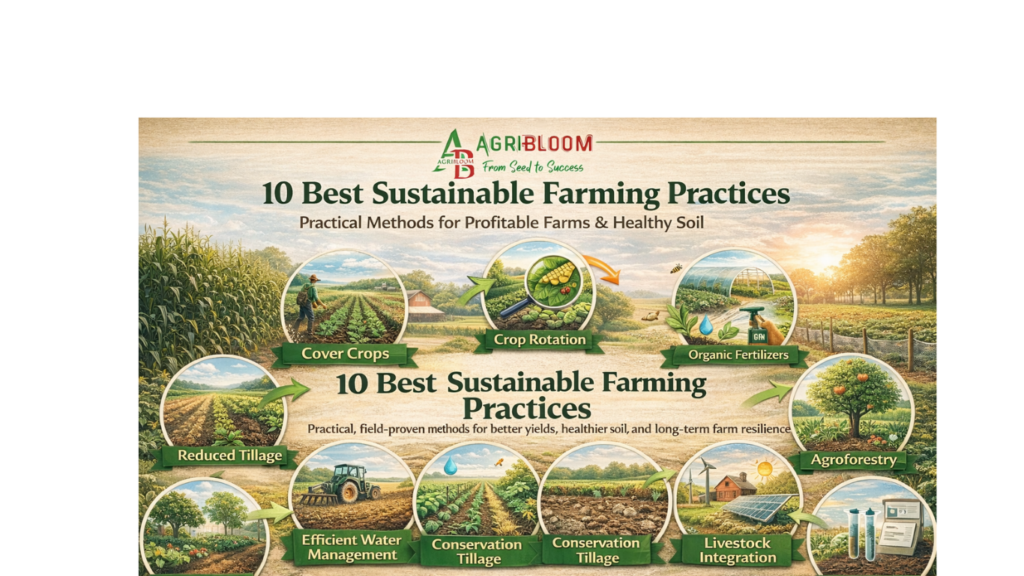

10 Best Sustainable Farming Practices
Sustainable agriculture isn’t a buzzword anymore it’s the difference between farming that survives the next few decades and farming that doesn’t. Across the world, growers are dealing with the same ugly mix of pressures: unpredictable rainfall, hotter seasons, shrinking groundwater, rising input costs, and soils that don’t behave the way they used to. At the same time, the job hasn’t changed: produce reliable harvests, year after year, without breaking the land that makes it possible. That’s exactly why more growers are turning to Best Sustainable Farming Practices not as a trend, but as a practical way to protect yields, cut waste, and keep their land productive for the long run.
That’s why sustainable farming practices matter. Not because they sound good in a brochure, but because they solve real problems erosion, nutrient loss, pest resistance, falling organic matter, and long term profitability. The best approaches don’t ask farmers to “go backwards.” They simply use biology, timing, and smarter systems to get more stability from the same acres.
Below are the 10 best sustainable farming practices. They’re widely supported by research, but more importantly, they’re used by farmers who care about results.
What are sustainable farming practices
Sustainable farming practices are ways of growing crops and raising animals that satisfy today’s food needs while protecting the land, water, and communities that farming depends on. The simplest test is this: if a method boosts production this season but leaves the soil poorer, the water dirtier, or the farmer trapped in rising costs, it is not sustainable.
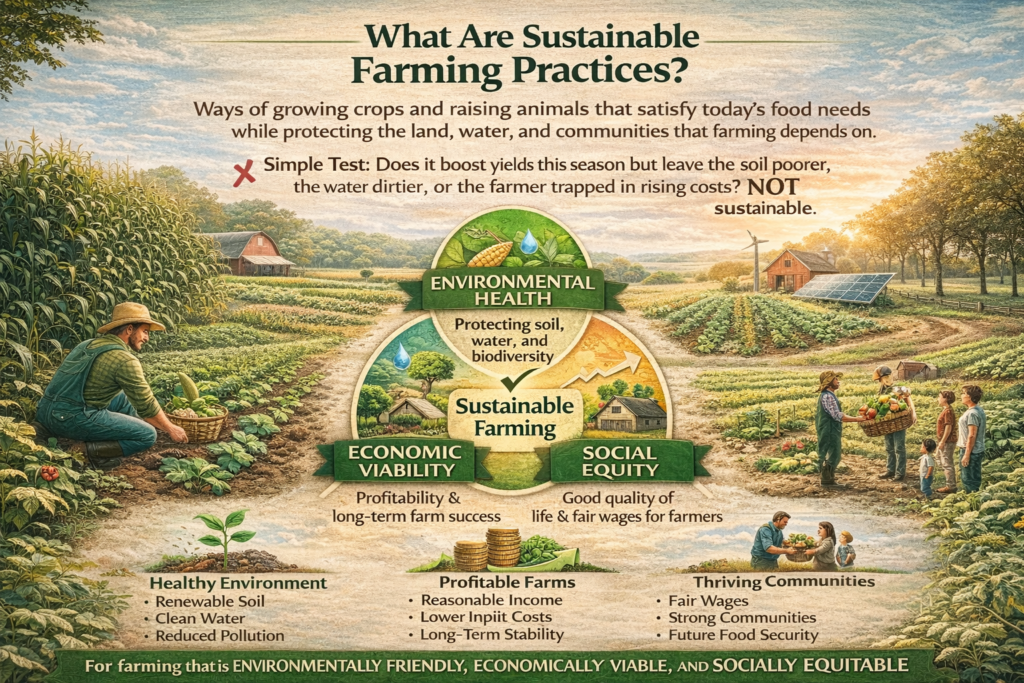
Most credible definitions lean on three connected priorities: environmental health, economic viability, and social equity. FAO describes sustainable agriculture as meeting the needs of present and future generations while ensuring profitability, environmental health, and social and economic equity. A similar framework is used by the United States Department of Agriculture, which emphasizes environmental quality, economic viability, and quality of life for farmers and society.
Core goals of sustainable agriculture
- Improve soil health and fertility so crops can perform well with fewer surprises
- Conserve water and protect biodiversity, including pollinators and beneficial insects
- Reduce greenhouse gas emissions and build resilience to climate extremes
- Minimize chemical inputs by preventing problems before they explode
- Support farmer livelihoods through stable yields, lower risk, and smarter input use
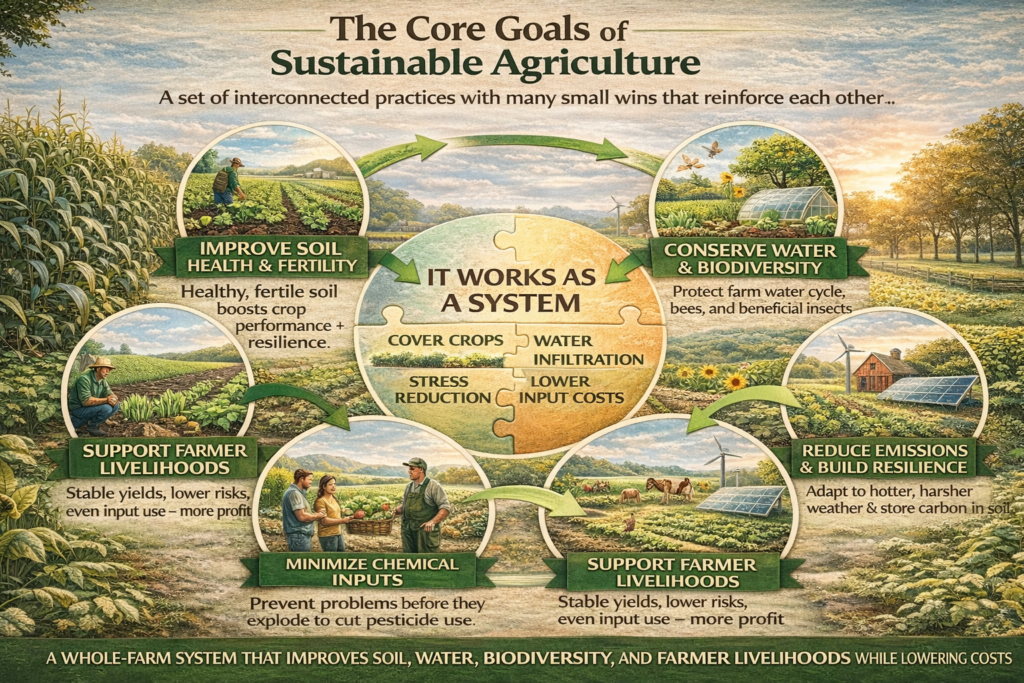
One important point gets missed in many blogs: the best sustainable farming practices work as a system. Cover crops support soil biology, which improves water infiltration, which reduces stress, which lowers pest pressure, which reduces pesticide use. It is rarely one magic technique. It is a set of small wins that reinforce each other.
Why sustainable farming matters
By 2026, the conversation has shifted from “Should we do this?” to “How fast can we make it work?” Soil, water, and climate pressures are not theoretical anymore, and they show up directly in farm budgets and yield reliability.
FAO notes that nearly one third of the world’s soils are degraded, which is a direct threat to food security and long term productivity. This is consistent with FAO and ITPS work summarized in the Status of the World’s Soil Resources report. When soil structure breaks down and organic matter declines, farms often need more fertilizer, more irrigation, and more pest control just to maintain the same output.
Sustainable agriculture matters because it tackles these root causes instead of treating symptoms. FAO also links sustainable food and agriculture to the four pillars of food security: availability, access, utilization, and stability. In plain language, sustainability is not only about the environment. It is also about keeping production stable and predictable enough that communities can rely on it.
Key benefits that tend to show up on real farms
- Long term yield stability, especially in dry years or heat waves
- Lower production costs over time through better nutrient and water efficiency
- Stronger climate resilience because healthier soils hold more water and support deeper roots
- Improved food quality potential through better soil nutrition and reduced stress
- Stronger rural economies when farms remain profitable and less vulnerable to shocks
References
- FAO, Sustainable Food and Agriculture overview and definition.
- USDA, Definitions: Sustainability and Food Systems.
- FAO, Evaluation highlight on soils noting nearly one third of soils are degraded.
- FAO and ITPS, Status of the World’s Soil Resources, Main Report, 2015.
Now, let’s explore the 10 Best Sustainable Farming Practices that are shaping the future of agriculture.
1. Crop Rotation
Crop rotation is one of those practices that has survived every farming era for a reason. It works. Instead of planting the same crop on the same field season after season, growers change what is grown in a planned sequence. The crops are chosen on purpose, not randomly, so each season sets up the next one for better performance.
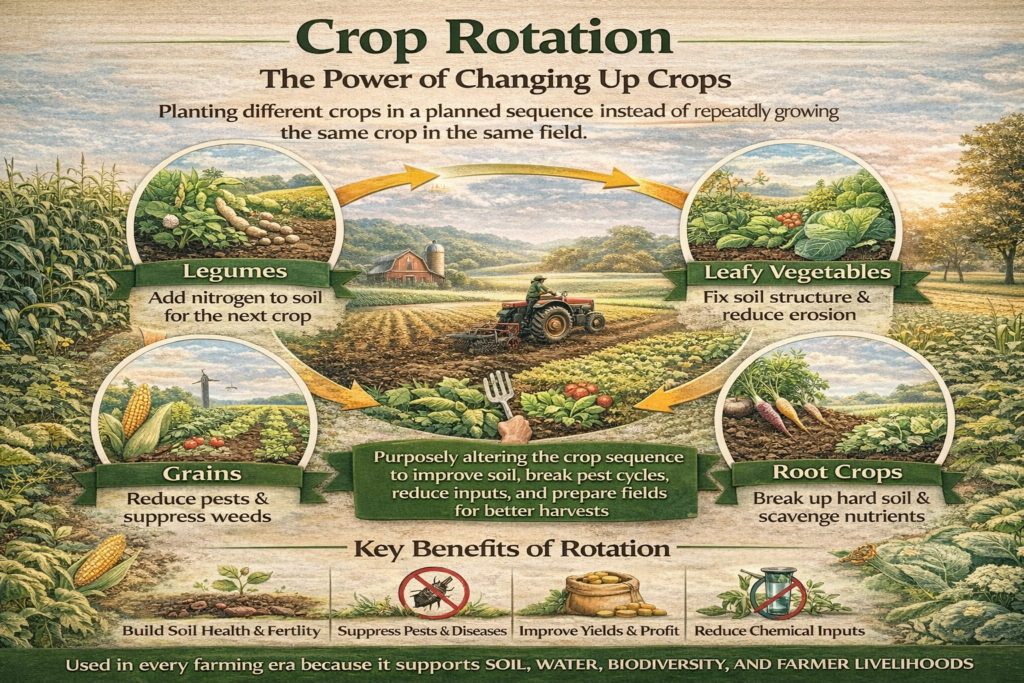
What crop rotation means in real farm terms
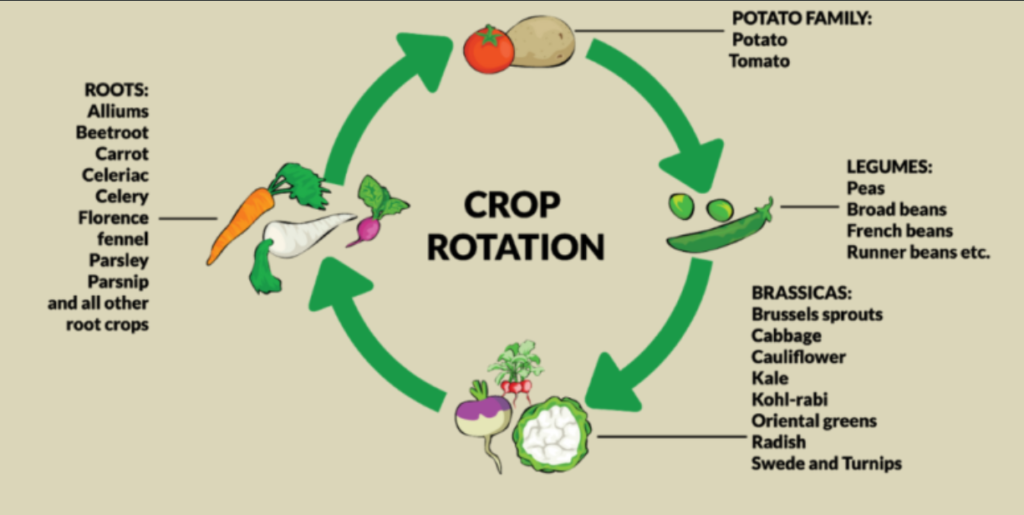
A rotation is simply a schedule. One year a field might be planted to a cereal crop, the next year a legume, then perhaps an oilseed or a forage crop. The point is to avoid repeating the same crop family too often, because many pests and diseases are crop specific and can build up when they keep finding the same host.
Why farmers keep coming back to rotations
Crop rotation supports sustainability because it improves the parts of the system that usually cost money when they go wrong.
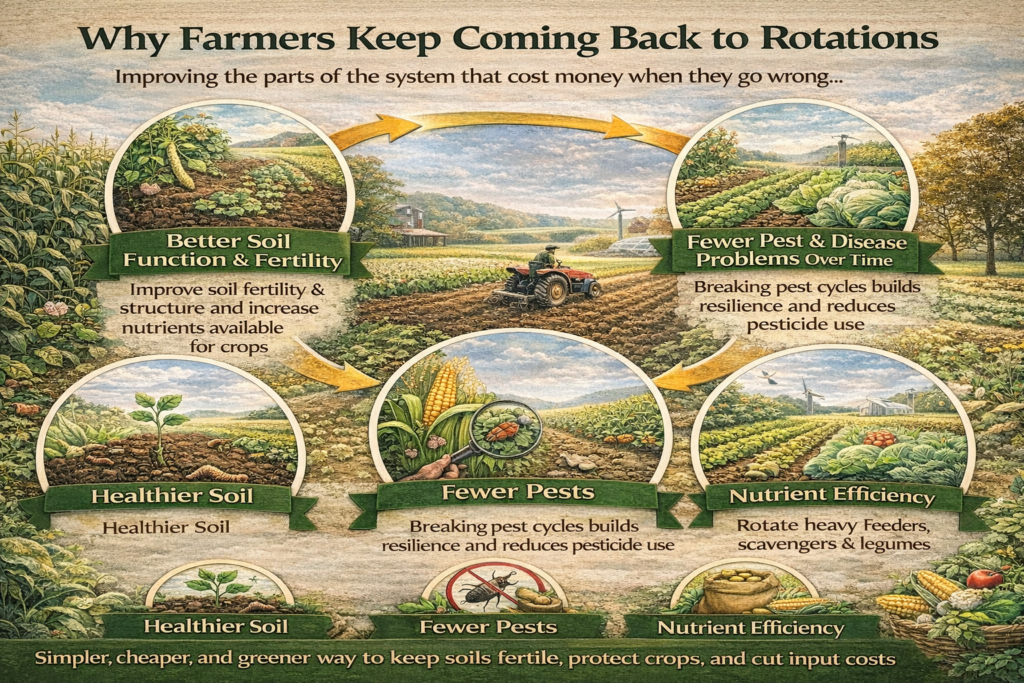
- Better soil function and fertility
Rotations help manage soil fertility, improve overall soil health, and increase nutrients available to crops. Many conservation guides highlight improved workability, reduced crusting, and better water availability as common outcomes. - Fewer pest and disease problems over time
When you change crops, you interrupt life cycles. Many crop diseases can persist in soil and many insect pests are tied to specific host crops, so removing that host for a season can reduce pressure and lower reliance on pesticides. - More efficient nutrient use
A good rotation balances nutrient demand across seasons. Some crops are heavy feeders, others are better at scavenging leftover nutrients, and legumes can contribute nitrogen to the system through their relationship with nitrogen fixing bacteria.
The classic example, legumes followed by cereals
Rotations that include legumes are widely used because legumes can add nitrogen that benefits the following crop. That is why systems such as soybean then corn, or clover then wheat, show up in so many regions.
It is worth being precise here for credibility. Not every legume automatically leaves a huge nitrogen gift behind. The nitrogen benefit depends on the species, biomass produced, and how residues are managed. Extension guidance often emphasizes thinking of legumes as one tool inside a nitrogen management plan, not a shortcut that replaces all fertilizer decisions.
How to make crop rotation work better
A rotation is strongest when it is planned around goals, not tradition.
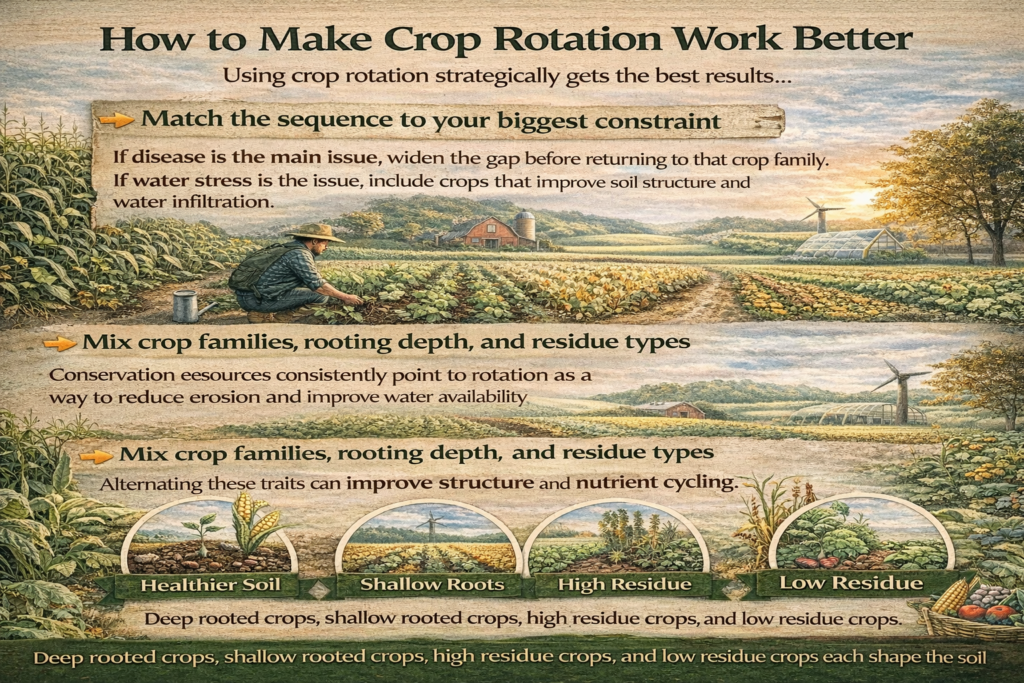
Match the sequence to your biggest constraint
If disease is the main issue, widen the gap before returning to that crop family. If water stress is the issue, include crops that improve soil structure and water infiltration. Conservation resources consistently point to rotation as a way to reduce erosion and improve water availability in the root zone.
Mix crop families, rooting depth, and residue types
Deep rooted crops, shallow rooted crops, high residue crops, and low residue crops each shape the soil differently. Alternating these traits can improve structure and nutrient cycling.
Why it remains a top sustainable practice worldwide
Crop rotation is foundational because it reduces dependency on expensive fixes later. It is prevention built into the calendar. When rotations are paired with other soil focused practices such as cover crops and reduced tillage, the system becomes even more resilient and easier to manage across variable seasons.
References
- USDA NRCS, Rotations and Soil Fertility information sheet.
- USDA NRCS, Conservation Crop Rotation fact sheet, pest and disease disruption and soil health benefits.
- Encyclopaedia Britannica, definition and overview of crop rotation.
- University of Missouri Extension, legumes in crop rotation and nitrogen contribution.
- Penn State Extension, legume nitrogen fixation basics and nitrogen addition in rotations.
- MDPI Agronomy review, rotation strategies including legumes and impacts on fertility and pest cycles.
2. Cover cropping
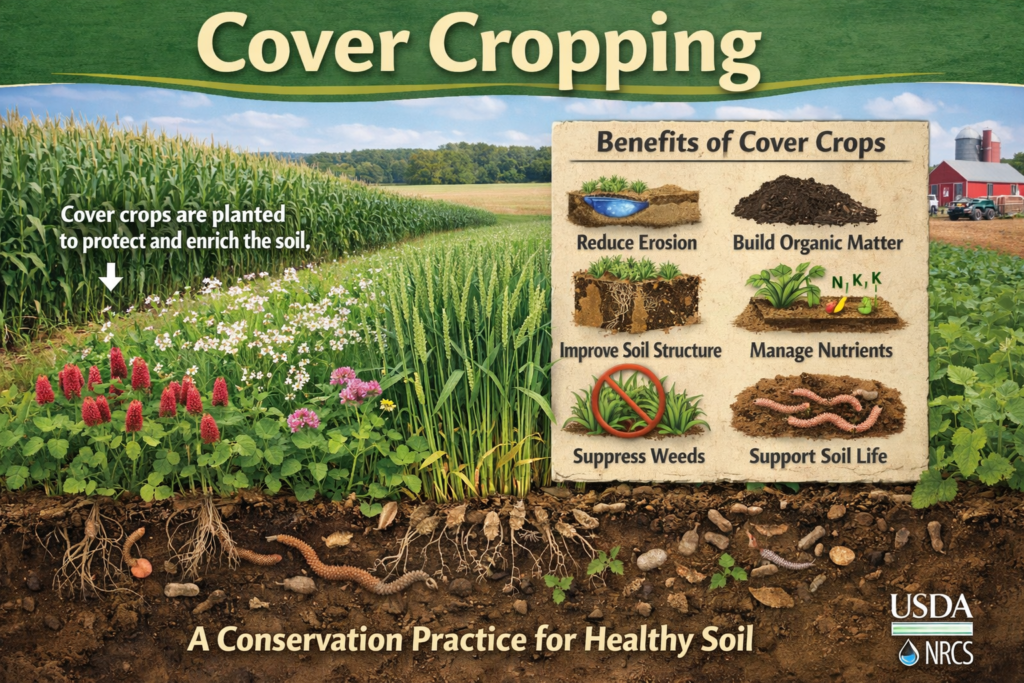
Cover crops are plants grown to serve the soil first. You plant them between cash crops, or alongside them in some systems, not to sell the harvest but to keep the ground protected and biologically active. USDA NRCS describes cover crops as a conservation practice used to reduce erosion, build soil organic matter, improve soil structure, help manage nutrients, suppress weeds, and support soil organisms.
Common cover crops farmers use
Many farms start with a short list because these species are widely available and dependable.
- Clover
- Rye
- Vetch
- Mustard

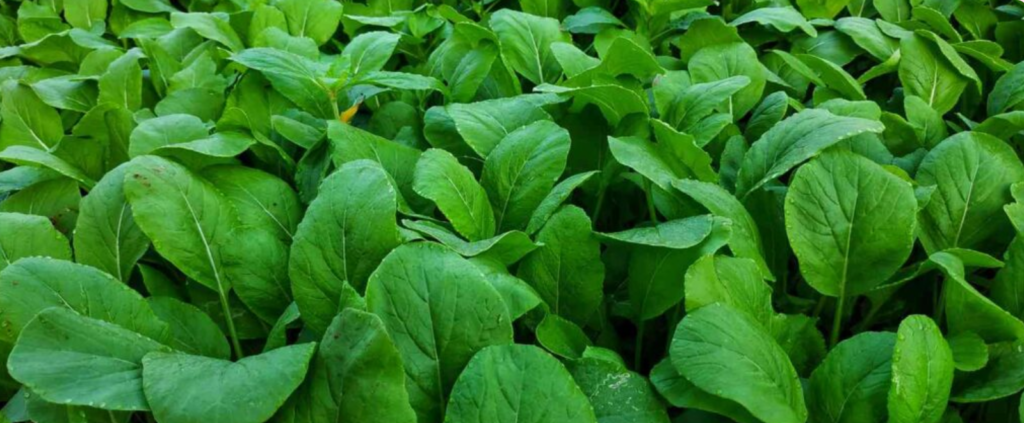
Legumes such as clovers and vetch are often chosen when nitrogen is a priority, while grasses such as rye are popular for erosion control and biomass. Broadleaf species like mustard can be useful for specific rotation goals depending on climate and management.
Why cover crops matter
Cover crops earn their place by solving problems that quietly drain yield and money over time.
Soil stays in place
Research summaries from SARE report that cover crops can greatly reduce erosion and sediment loss and help keep nutrients on the field rather than in waterways.
Soil organic matter builds gradually
SARE also highlights cover crops as a proven strategy for increasing soil organic matter, which supports fertility and broader soil health.
Water moves into the soil more effectively
NRCS materials note improved soil aggregate stability and increased water infiltration as common outcomes when cover crops are selected and managed well.
Weeds face more competition
NRCS identifies weed pressure reduction as a purpose of the cover crop conservation standard, and management guides discuss how higher biomass cover can reduce certain weed growth.
Do cover crops increase yields?
This is where good blogging needs nuance. Yield response depends on weather, soil moisture, species choice, termination timing, and how the next crop is managed.
In farmer survey data highlighted by USDA, fields planted after cover crops showed average yield increases of about 3.1 percent for corn and 4.3 percent for soybeans compared with similar fields without cover crops.
Large research syntheses also find that the average effect can be modest but positive overall. One global meta analysis summary reported a net yield increase of about 2.6 percent on average, with stronger benefits in some conditions.
In other words, it is reasonable to say cover cropping can raise yields over time, but it is not guaranteed and the size of the increase varies widely. Some analyses show larger gains in specific situations, such as when legumes are used or when residue management supports the following crop.
What experienced growers focus on
Most cover crop success comes down to management, not slogans.
- Pick the cover crop based on your goal, such as erosion control, nitrogen support, weed suppression, or water management.
- Time termination well so the cover crop helps the system without competing with the cash crop for moisture or nutrients.
- Start simple, measure results, then expand. Many farmers begin with one field or one species and refine from there.
References
- USDA NRCS, Cover Crop conservation practice purposes and management considerations.
- SARE, evidence on erosion control, infiltration, nutrient retention, and soil organic matter.
- USDA blog summary of farmer survey results reporting corn and soybean yield changes following cover crops.
- Global synthesis and meta analysis reporting overall yield effects and variability by context.
- MDPI meta analysis discussing conditions where yield response is higher, including legumes and residue management.
3. Conservation tillage reduced tillage, strip tillage, and no till farming
Conservation tillage is a way of planting crops while disturbing the soil as little as possible. The goal is to keep soil structure intact, keep crop residue on the surface, and reduce the damage that frequent soil turning can cause over time. USDA NRCS formalizes these approaches through conservation practice standards for reduced till and no till systems, including guidance on managing residue and integrating other practices for long term soil health.
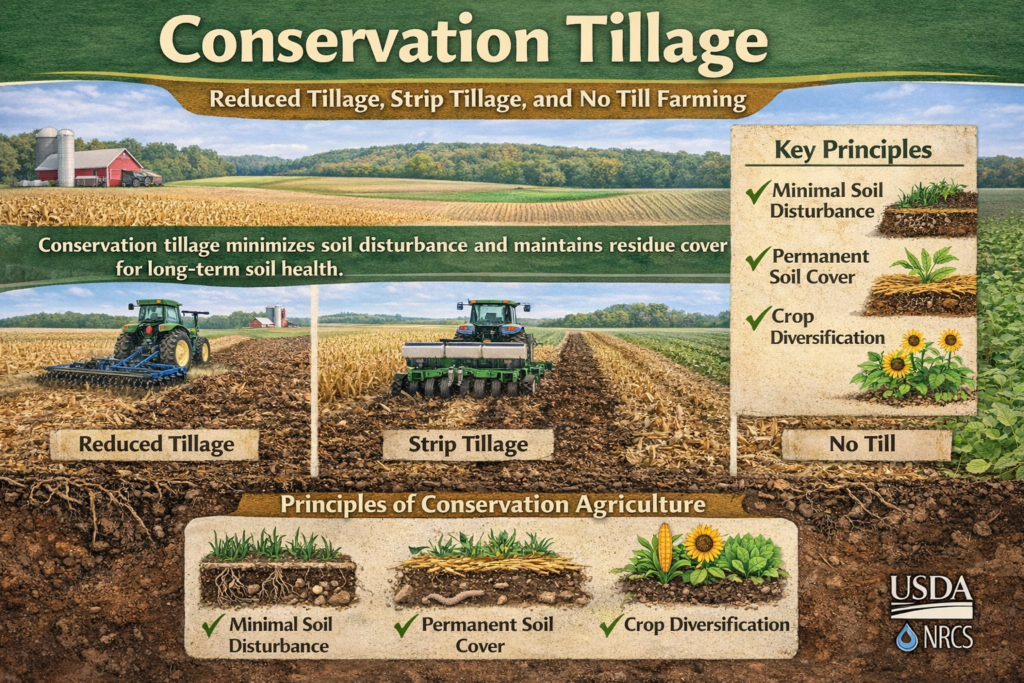
This idea also sits at the heart of conservation agriculture. FAO describes conservation agriculture as a farming system built on minimum soil disturbance, permanent soil cover, and crop diversification.
What it looks like in the field
Conservation tillage is not one single method. It is a spectrum.
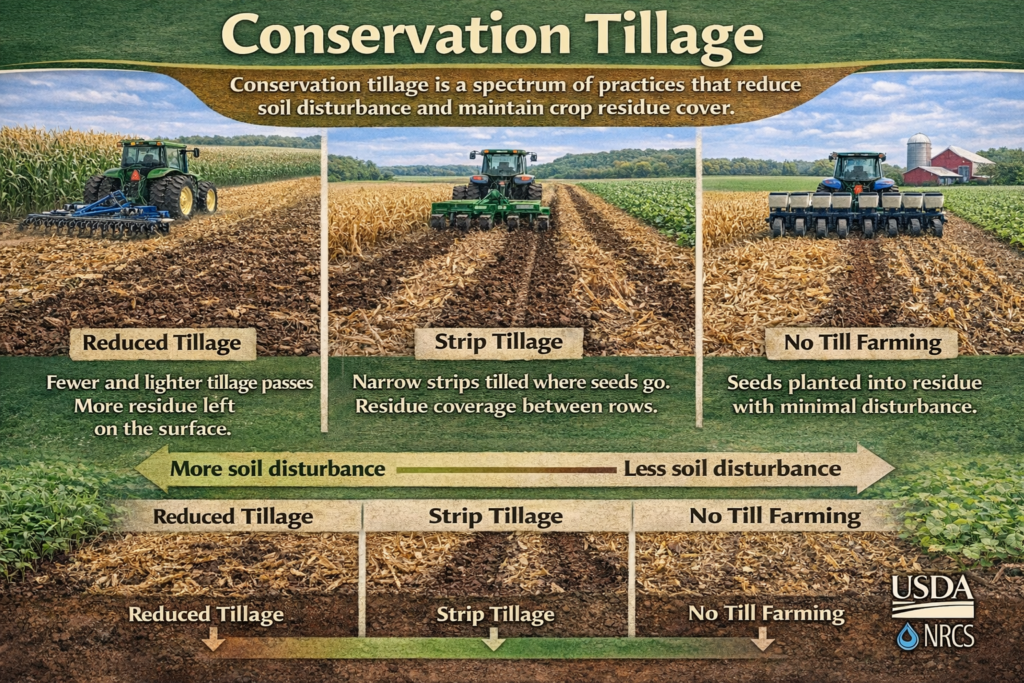
- Reduced tillage
Fewer and lighter tillage passes than conventional systems. Soil is still worked, but less often and less aggressively, with more residue left on the surface. - Strip tillage
Only a narrow strip where the seed will go is disturbed. The space between rows stays covered with residue, which helps protect soil and reduce erosion risk. - No till farming
Seeds are placed directly into residue from the previous crop with minimal disturbance. NRCS describes no till within residue and tillage management standards, emphasizing residue protection and system planning with nutrient management and rotations.
Why conservation tillage is considered climate smart
When soil is disturbed less, more carbon can stay stored in the soil rather than being released. NRCS includes no till and reduced till practices among climate smart mitigation activities and notes that they may increase soil carbon sequestration while reducing emissions, improving moisture availability, and supporting water quality.
This is one reason no till systems are often highlighted in climate smart agriculture discussions: they aim to produce stable yields while lowering environmental impact through better soil function.
Advantages farmers care about most
- Protection of soil structure
Less disturbance helps preserve aggregation and pore space, which supports root growth and water infiltration. Over time, that can translate into better performance during dry spells. - Lower erosion risk
Keeping residue on the surface reduces the impact of wind and heavy rain, helping keep topsoil in the field where it belongs. - Potential for improved carbon storage
NRCS explicitly connects reduced disturbance practices to lower soil carbon release and increased sequestration compared with more intensive disturbance. - Fuel and labor savings
Fewer passes across a field usually means less fuel burned and less time in the tractor. USDA has summarized evidence that continuous no till can save fuel, including an estimate of about 3.6 gallons per acre compared with conventional tillage in CEAP related reporting.
Practical notes that make the difference
Conservation tillage works best when it is treated as a system, not a single switch.
- Residue management matters
Good residue distribution helps planting quality, soil cover, and weed suppression. NRCS standards discuss practices that support adequate residue, including high residue crops and cover crops. - Weed control shifts from steel to strategy
When soil is not being turned, weed management relies more on crop rotation, cover crops, scouting, and well timed control decisions. NRCS guidance also points to integrating pest management and crop rotation into no till and strip till systems. - Start with the right field
Fields with severe compaction or drainage issues may need a transition plan. Many producers start with a lower risk field and build experience before expanding.
Why it belongs on any list of top sustainable practices
Conservation tillage protects the farm’s most valuable asset, the soil, while also reducing erosion and saving work across the season. It can also support climate goals by improving soil carbon outcomes and lowering emissions tied to intensive disturbance.
References
- FAO, Conservation Agriculture principles and definition.
- USDA NRCS, Residue and Tillage Management, No Till practice standard.
- USDA NRCS, Residue and Tillage Management, Reduced Till practice standard.
- USDA NRCS, Climate smart mitigation activities noting no till and reduced till carbon and moisture benefits.
- USDA Farmers.gov, fuel savings estimate tied to continuous no till and CEAP reporting.
- USDA blog, economics of no till including erosion reduction and soil organic matter improvements.
4. Integrated pest management IPM
Integrated pest management, usually called IPM, is a practical way to keep pests under control without leaning on routine spraying. The core idea is simple: use biology, good agronomy, and careful decision making first, then use pesticides only when monitoring shows they are truly needed. The US Environmental Protection Agency describes IPM as an effective, environmentally sensitive approach that uses knowledge of pest life cycles and a combination of methods to manage damage with the least possible hazard.
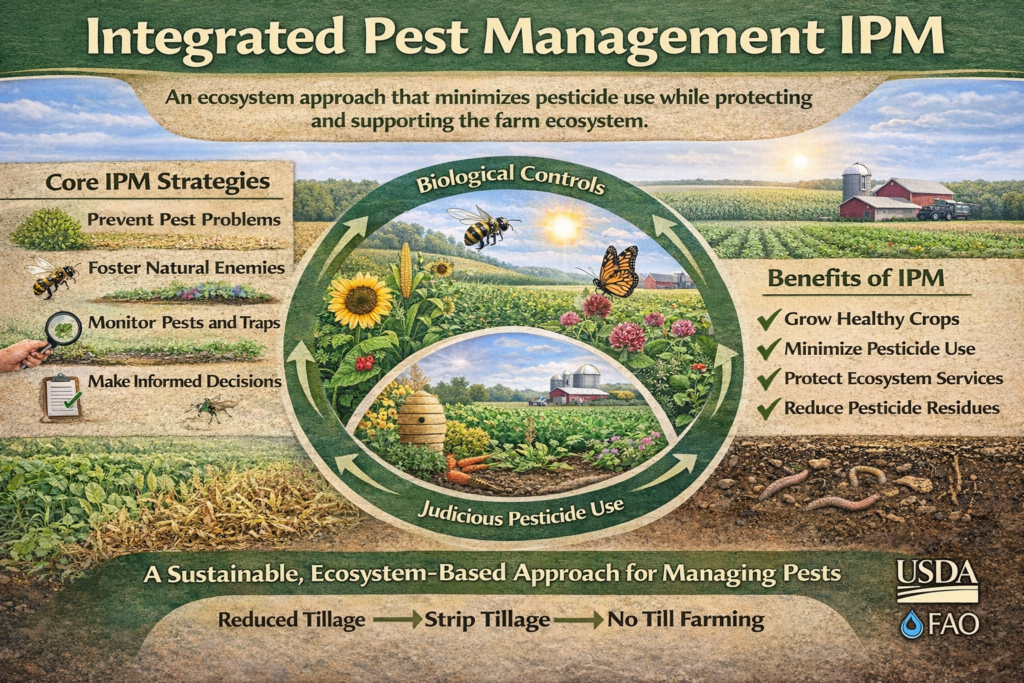
FAO frames IPM as an ecosystem approach that combines different strategies to grow healthy crops while minimizing pesticide use, and it highlights benefits such as protecting ecosystem services and reducing residues.
What IPM looks like on a working farm
A good IPM program is not a single product or a one time fix. It is a repeatable process that farmers refine season after season.
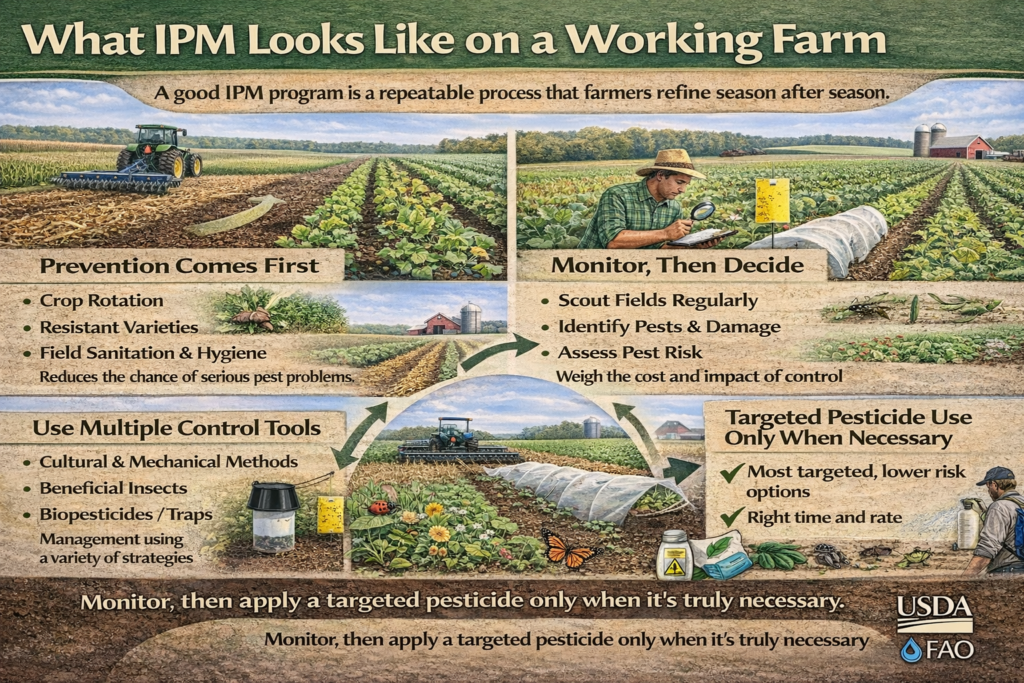
- Prevention comes first
This includes crop rotation, resistant varieties when available, sanitation, and field hygiene. These steps reduce the chance of pests becoming a serious problem in the first place. - Monitor, then decide
Scouting and pest monitoring are central. NRCS notes that scouting helps identify the pest, its development stage, and the likely damage, then that risk is weighed against the cost and impact of control. - Use multiple control tools
IPM uses cultural, mechanical, biological, and chemical options in combination. Extension guidance emphasizes that the goal is management rather than eradication, using a variety of measures selected to fit the situation. - Targeted pesticide use only when necessary
When intervention is justified, IPM favors the most targeted and lower risk option that still works, applied at the right time and rate. USDA also cites the legal definition of IPM as combining biological, cultural, physical, and chemical tools to minimize economic, health, and environmental risks.
Why IPM is a sustainability winner
Reduced pesticide resistance
Overuse of a single control approach pushes pests to adapt. NRCS planning guidance explicitly includes reducing pest resistance as a goal of IPM systems built on prevention, avoidance, monitoring, and suppression.
Lower input costs over time
IPM reduces unnecessary applications and focuses spending where it produces a return. That shift can matter as input prices rise, especially when farms use thresholds and scouting to avoid automatic treatments.
Safer food production and healthier ecosystems
FAO notes that reducing pesticide use can reduce residues and support food and water safety, while also protecting services such as pest predation and pollination.
A quick credibility note
IPM works best when it is local. Pest pressure, climate, crop variety, and natural enemies differ by region. NRCS recommends using land grant university or other science based resources to build an IPM plan adapted to the crop and location. If you are writing this for growers, mentioning local extension recommendations and scouting thresholds adds real trust.
References
- US Environmental Protection Agency, Integrated pest management principles.
- Food and Agriculture Organization of the United Nations, IPM role in sustainable agriculture and ecosystem services.
- USDA, Office of Pest Management Policy, legal definition and federal promotion of IPM.
- USDA NRCS, Pest Management and IPM planning guidance including scouting and decision making.
- Clemson University Extension, IPM overview including monitoring, thresholds, and control methods.
5. Organic farming
Organic farming is a method of producing food with strict rules about what can be used on the farm and how the system is managed. In plain terms, it avoids most synthetic fertilizers and pesticides, and it does not allow genetic engineering in organic production. USDA describes organic as a labeling term backed by standards, and explains that organic production relies on cultural, biological, and mechanical practices that foster resource cycling, promote ecological balance, and conserve biodiversity.
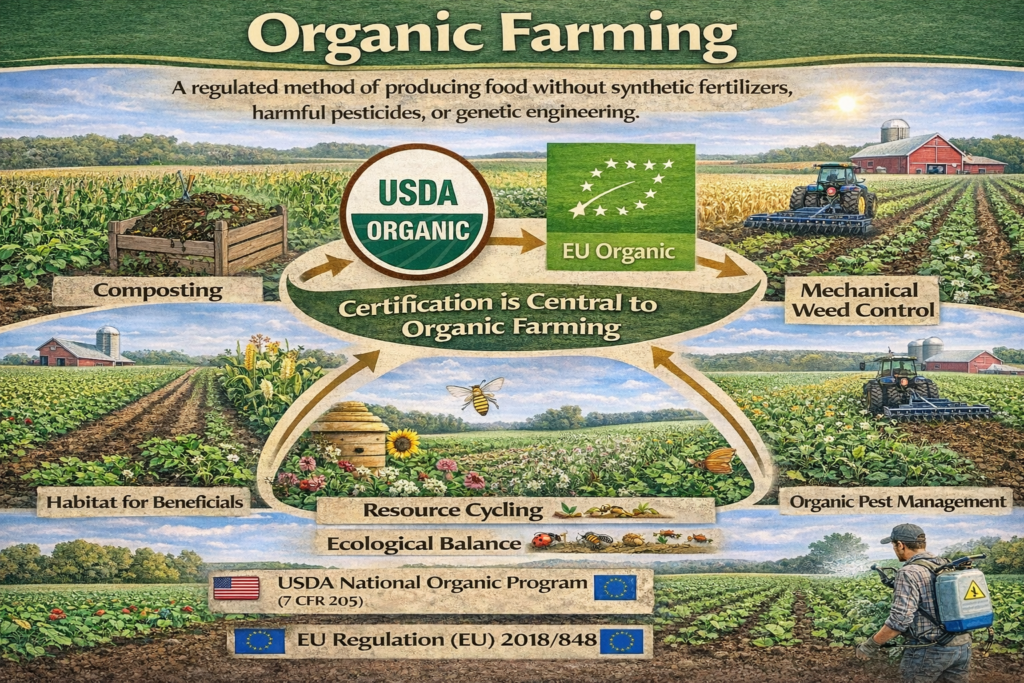
Organic is not a vague lifestyle claim. In major markets, it is regulated and verified. United States, this is governed by the USDA National Organic Program under 7 CFR Part 205, which includes requirements for certification, inspections, and traceable recordkeeping. In the European Union, Regulation (EU) 2018/848 sets the legal framework for organic production and labeling.
Core principles behind organic production
Most organic systems revolve around the same practical priorities.
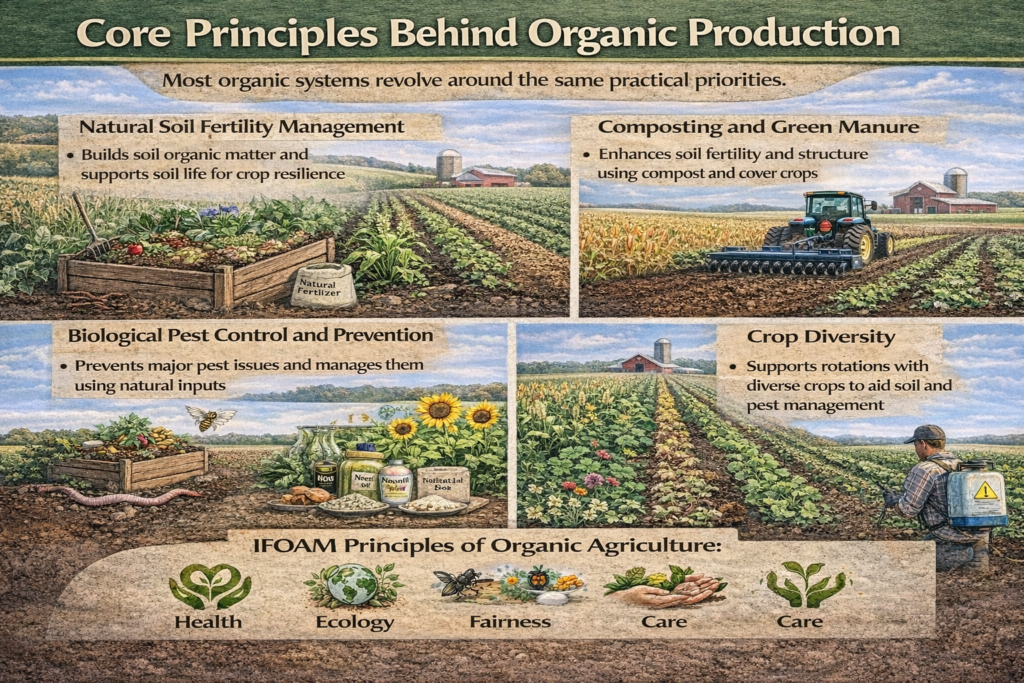
- Natural soil fertility management
Organic farms focus on building soil organic matter and soil life so nutrients are released steadily and crops stay resilient. This aligns with USDA’s description of organic methods supporting resource cycling and ecological balance. - Composting and green manure
Compost and cover crop residues are common tools for improving soil structure and fertility. The exact approach depends on climate, soil type, and the crop grown. - Biological pest control and prevention
Organic pest control is built around prevention first, using rotation, habitat for beneficial insects, sanitation, and careful monitoring. When inputs are needed, only materials allowed under the organic rules can be used, and the farm must show it is following the standard. - Crop diversity
Diverse rotations are a backbone of organic systems because they help manage weeds, pests, and nutrient demand without relying on routine chemical fixes.
If you want a principle based explanation that readers trust, the IFOAM Principles of Organic Agriculture are widely cited in organic education and policy discussions.
Why organic farming matters
It supports soil biodiversity
Many growers pursue organic because healthy soil biology is a competitive advantage. A peer reviewed meta analysis in PLOS ONE found organic cropping systems are associated with higher soil microbial abundance and activity compared with conventional systems, which can support nutrient cycling and soil function.
It can improve environmental outcomes, including water related risks
Organic standards restrict many synthetic pesticides and emphasize whole system management. Evidence reviews often report environmental benefits in multiple categories, while also noting outcomes depend on context and management.
It can improve farm economics through market premiums
Organic products typically sell at a premium, reflecting both production costs and consumer willingness to pay. USDA ERS has documented retail price premiums across commonly purchased products and continues to track organic market trends.
It builds consumer trust through verification
Consumer trust is largely tied to the inspection and documentation behind the label. For example, USDA organic rules require certified operations to maintain auditable records and keep them for a defined period, supporting traceability.
The honest part about certification
Organic certification is a commitment. It requires planning, consistent compliance, and paperwork that can feel heavy at first. On the upside, the structure can also improve farm management because it forces clear tracking of inputs, field activities, and product flow. USDA also provides organic market and economic information intended to help producers evaluate the opportunity realistically.

References
- USDA Agricultural Marketing Service, Organic Production and Handling Standards overview.
- Electronic Code of Federal Regulations, 7 CFR Part 205 National Organic Program.
- eCFR, recordkeeping requirements for certified operations, 7 CFR 205.103.
- European Union, Regulation (EU) 2018/848 on organic production and labeling.
- IFOAM, Four Principles of Organic Agriculture.
- PLOS ONE, meta analysis on organic farming and soil microbial abundance and activity.
- USDA ERS, Organic Agriculture topic page and retail premium analysis.
- USDA ERS, Organic Situation Report 2025 Edition.
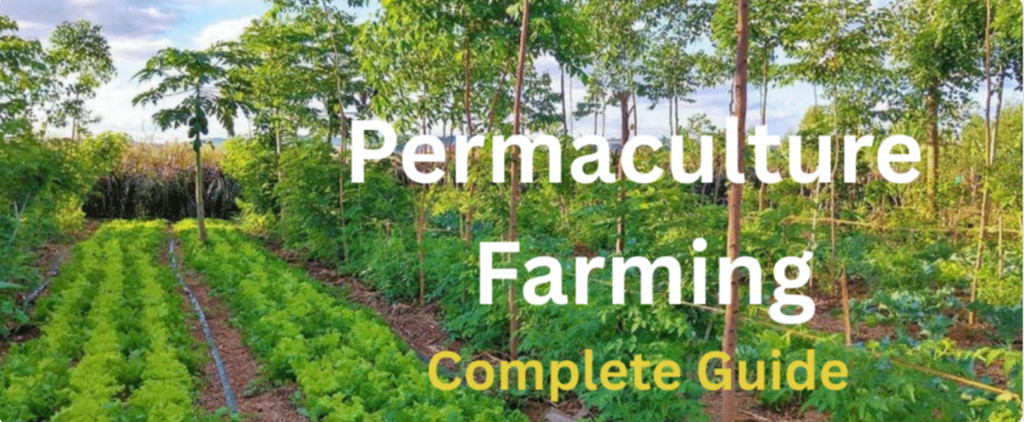
6. Agroforestry systems
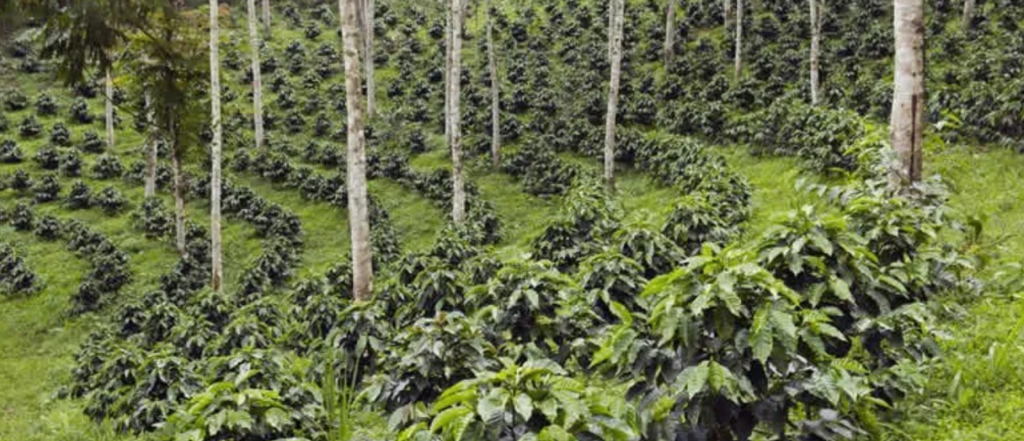
Agroforestry is the deliberate use of trees and shrubs on working farmland so they support crops, livestock, and the land itself. Instead of treating trees as something separate from agriculture, agroforestry designs them into the production system so the different parts help each other. The USDA National Agroforestry Center explains agroforestry as growing trees and shrubs together with crops and or livestock to gain interactive benefits.
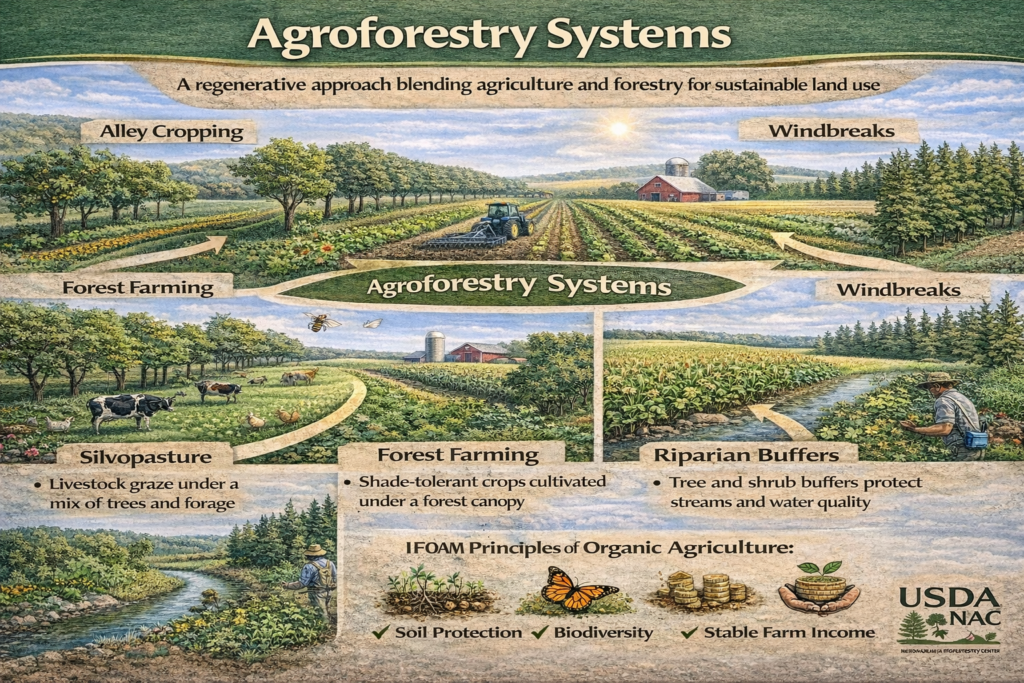
You will often see agroforestry described as a regenerative approach because it can improve soil protection, strengthen biodiversity, and create more stable farm income, all while keeping land in active production.
What agroforestry looks like on real farms
In temperate regions, USDA commonly groups agroforestry into five related practices: windbreaks, riparian forest buffers, alley cropping, silvopasture, and forest farming.
Your list matches four of the most widely used types, and they are easy to explain to readers.
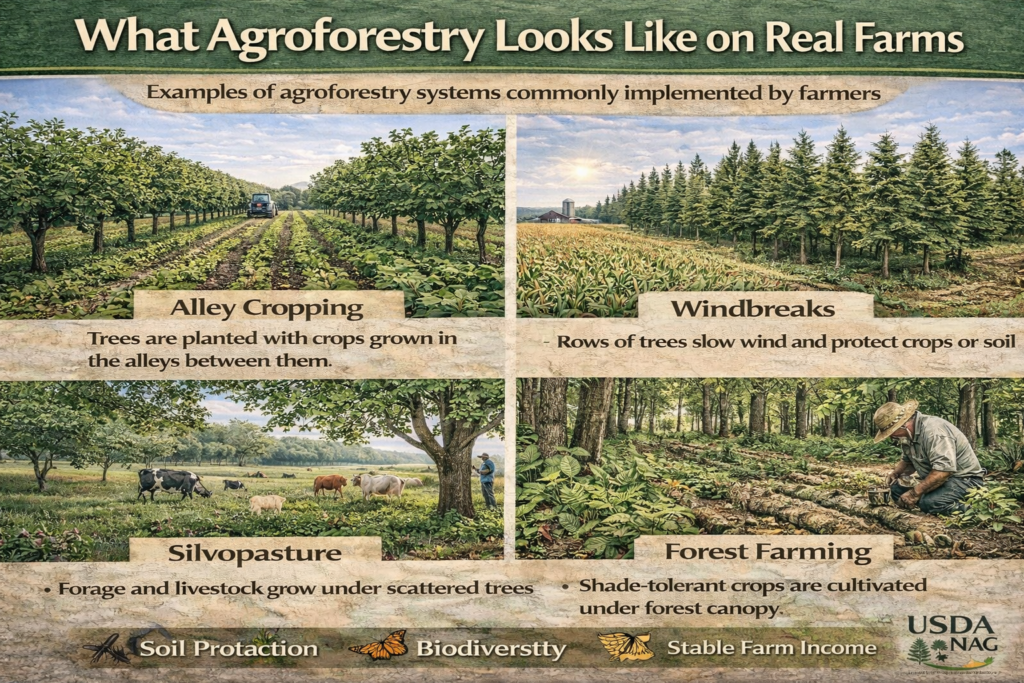
- Alley cropping
Rows of trees are planted with crops grown in the alleys between them. The USDA Forest Service describes alley cropping as placing trees within cropland systems, often to produce multiple products from the same acreage. - Windbreaks
Trees or shrubs are planted to slow wind, protect soil, reduce crop stress, and improve field conditions. USDA includes windbreaks as a core agroforestry practice. - Silvopasture
Trees, forage, and livestock share the same land in a managed design. USDA describes silvopasture as combining trees with livestock and forage on one piece of land. - Forest farming
High value crops such as herbs, mushrooms, or decorative plants are grown under a managed forest canopy. USDA notes that forest farming grows food, herbal, botanical, or decorative crops under a canopy that is managed for the right shade levels and additional products.
Why agroforestry matters
Agroforestry earns attention because it improves the farm system in several directions at once.
- More biodiversity where it counts
Adding trees and shrubs creates habitat and structural diversity, which can support beneficial insects, birds, and soil life. World Agroforestry emphasizes the multiple benefits of using trees in agriculture to meet local and national goals, including environmental outcomes. - Better microclimates for crops and animals
Windbreaks and tree cover can reduce wind stress, moderate heat, and create more stable conditions across the field or pasture. These changes are one reason agroforestry is used in climate resilience planning. - Less erosion and better water protection
Trees and shrubs slow wind and water movement, helping keep soil in place and reducing runoff risks. USDA lists riparian buffers and windbreaks as key practices partly because they protect soil and water resources. - Income diversification without buying more land
Agroforestry can produce timber, fruit, nuts, forage, specialty crops, or other products alongside the main farm enterprise. USDA highlights that these systems can be designed to produce many different products depending on the layout.
References
- USDA National Agroforestry Center, agroforestry practices overview and the five main practices in temperate regions.
- USDA National Agroforestry Center, agroforestry conservation practice standards page.
- USDA, overview of agroforestry systems including silvopasture and forest farming descriptions.
- USDA Forest Service, alley cropping agroforestry note describing trees within cropland systems.
- FAO, agroforestry program overview and scaling support.
- World Agroforestry, explanation of using trees in agriculture for multiple benefits.
7. Efficient water management
Water is now one of the tightest limits on farm productivity. In many regions the challenge is not only drought, it is irregular rainfall, falling groundwater, higher pumping costs, and stricter competition for the same freshwater. FAO notes that irrigated agriculture is both contributing to and affected by growing pressure on freshwater resources, and that improving water use efficiency is central to addressing water scarcity.
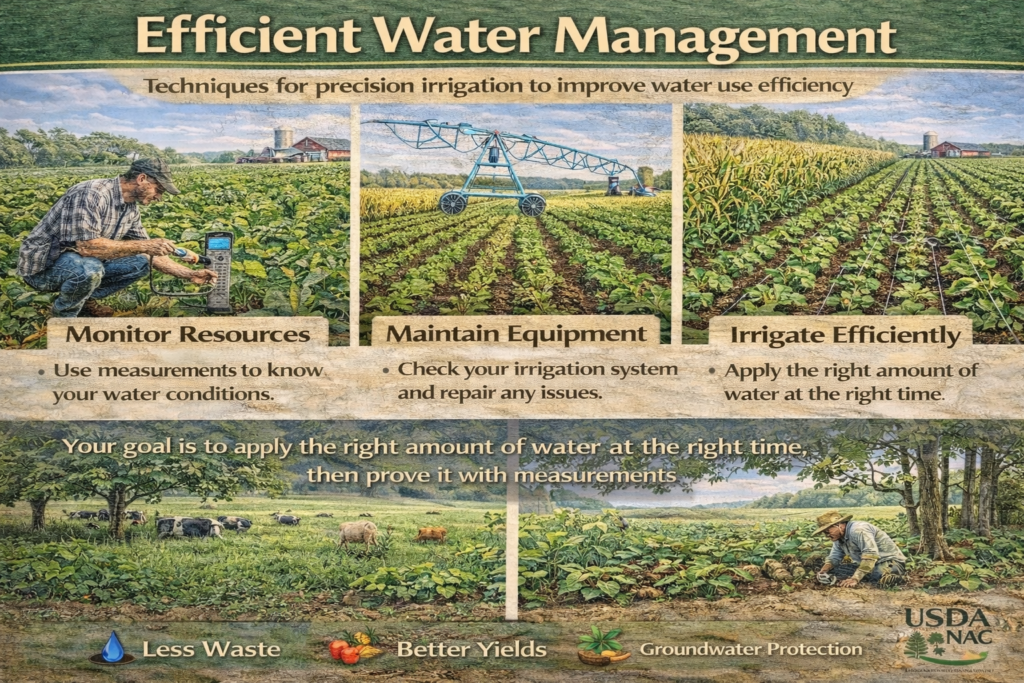
Efficient water management is simply the habit of applying the right amount of water at the right time, then proving it with measurements. It is less about fancy equipment and more about making irrigation a controlled decision instead of a guess.
Practical sustainable water practices farmers use
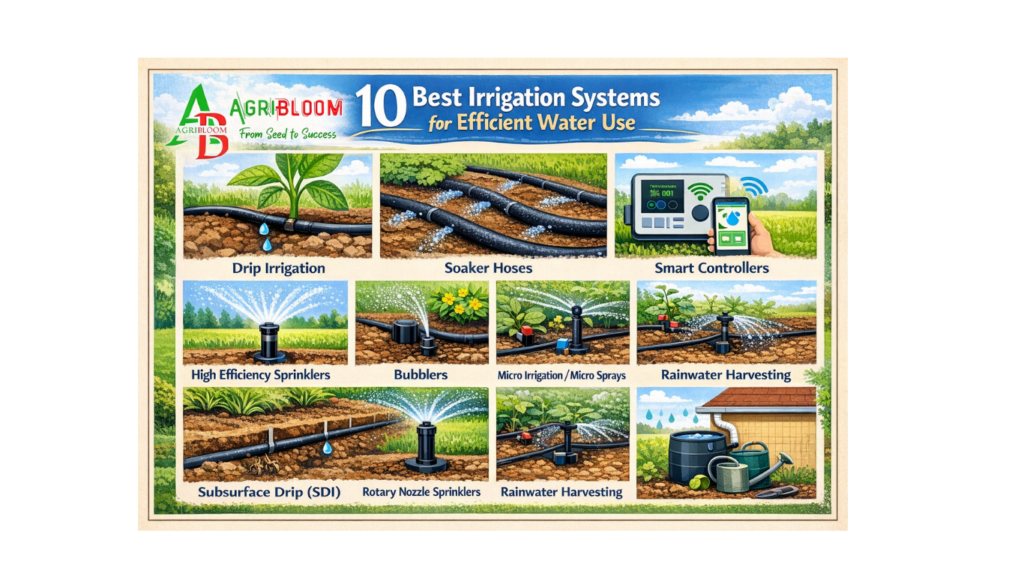
1. Drip irrigation where it fits
Drip systems deliver water close to the root zone, which can reduce losses from evaporation and runoff when designed and maintained well. Reviews in the journal Water summarize that drip irrigation often improves water use efficiency and can support yield and quality gains depending on crop and management.
A realistic note for credibility: improving on farm efficiency does not automatically mean a river basin saves water. FAO has published work explaining that water “saved” on a field may be used elsewhere or lead to expanded irrigation, so the real outcome depends on governance and how withdrawals are managed.
2. Rainwater harvesting and small storage
Rainwater harvesting captures runoff and stores it for later use, often for supplemental irrigation during dry spells. FAO describes water harvesting and small storage as key interventions that can rapidly improve yields of rainfed crops and increase production reliability.
FAO also hosts practical guidelines designed to help planners and extension teams select and integrate water harvesting technologies effectively.
3. Soil moisture monitoring and irrigation scheduling
If you only adopt one habit, make it measuring soil moisture. Monitoring tells you when the crop actually needs water and how deep irrigation is reaching. USDA NRCS practice guidance for Irrigation Water Management includes using current soil moisture status, soil water holding capacity, crop growth stage, and irrigation system performance to decide the water depth for each irrigation event.
NRCS also provides materials describing how soil moisture sensors can be mapped, installed, and used to make informed irrigation decisions through the season.
4. Mulching to reduce evaporation and protect soil
Mulching, whether with crop residues or organic materials, reduces surface evaporation, buffers soil temperature, and helps keep infiltration steady during heavy rain. It is a low tech practice, but it supports the same outcome as high tech systems: more usable water stays in the root zone.
What efficient water management delivers
- Reduced water waste through better timing and application
- Improved crop productivity and fewer stress periods, especially during heat events
- Lower energy use because pumping and irrigation hours drop when scheduling improves
- Better climate resilience because the farm can stretch limited water further during dry spells.
References
- FAO, Overcoming water scarcity with sustainable irrigation and the need to improve water use efficiency.
- USDA NRCS, Conservation Practice Standard Irrigation Water Management Code 449, soil moisture status and scheduling criteria.
- USDA NRCS, Intermediate irrigation water management guidance using soil moisture or water level monitoring equipment.
- FAO, Water harvesting and small storage benefits for rainfed yield reliability.
- FAO, Water harvesting guidelines to good practice.
8. Soil health management
Soil health management is the day to day work of keeping soil functioning like a living system, not just a place to hold plants upright. USDA NRCS defines soil health as the continued capacity of soil to function as a vital living ecosystem that sustains plants, animals, and humans.

When farmers talk about “good soil,” they usually mean a soil that absorbs rain quickly, holds moisture into the dry weeks, feeds crops steadily, and supports strong roots without needing constant rescue inputs. Those outcomes are not luck. They are built through consistent choices over seasons.
What healthy soil does for a farm
NRCS links soil health systems to higher organic matter, more diverse soil organisms, reduced compaction, and improved nutrient storage and cycling. It also notes that healthy soils absorb and retain more water, reducing runoff and erosion while making more water available to crops.
FAO explains the same idea from a biology angle: healthy soils support diverse organisms that recycle nutrients, improve soil structure, and increase water and nutrient holding capacity, which ultimately supports crop production.
Practical strategies that actually move soil health
1. Add organic matter on purpose
Organic matter is not just “extra.” It directly affects structure, porosity, infiltration, moisture holding capacity, biological activity, and nutrient availability, according to FAO.
Farm level ways to build it include returning crop residues where possible, using cover crops, applying compost, and managing rotations so the soil gets regular carbon inputs.
2. Use compost and manure carefully
Compost and manure can be valuable tools for improving soil biology and structure, but they work best when they are treated like a nutrient source with a plan. This is where credibility matters: good soil health management includes knowing what is being applied, when it is applied, and how it fits crop needs and environmental risk.
NRCS soil health assessment materials emphasize that indicators like soil organic matter relate to nutrient retention, structure, stability, and erosion resistance, which is exactly why amendments should be tracked and evaluated.
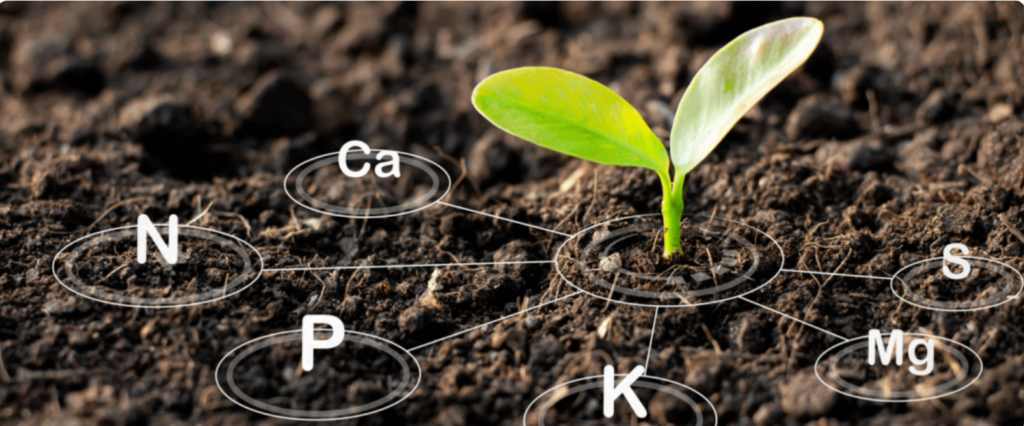
3. Balance nutrients instead of chasing yield with one input
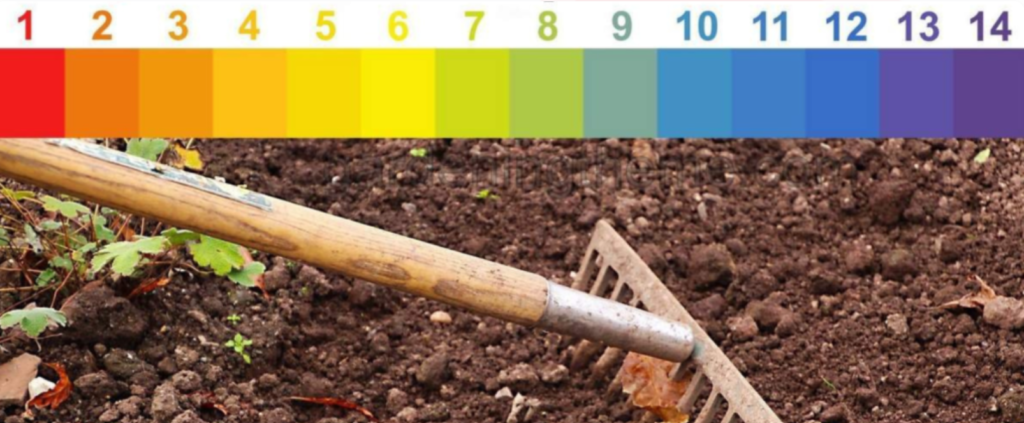
Balanced nutrient management means making decisions from measurements, not habits. NRCS guidance on soil health testing provides a structured way to interpret lab indicators and use them for conservation planning.
A simple, trustworthy message for readers is this: test the soil, match nutrients to crop demand and timing, and adjust based on results. That is how farms reduce waste and keep fertility stable without overspending.
4. Prevent compaction before it becomes a permanent problem
Compaction is one of the fastest ways to reduce root growth and water infiltration. NRCS lists reduced compaction as a benefit of implementing soil health management systems, and it includes compaction related indicators in soil health assessment frameworks.
In practice, compaction prevention usually comes down to traffic timing, avoiding field operations when soils are too wet, protecting soil with residues and cover, and improving structure so soil can carry equipment loads better.
The soil health principles that tie it together
NRCS teaches four core principles that guide soil health management systems:
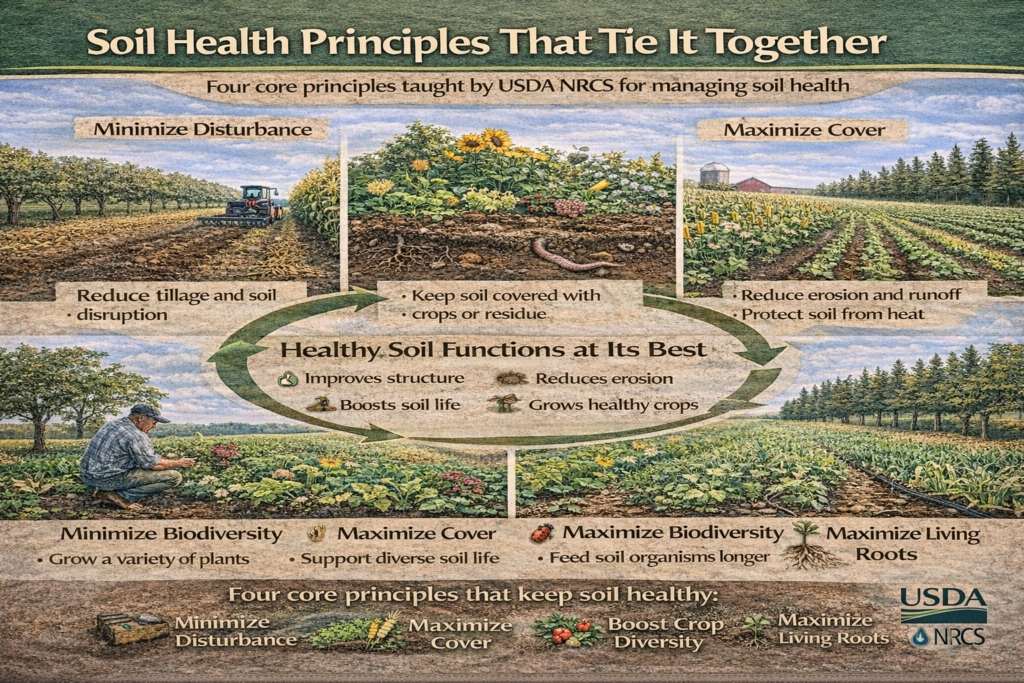
- Minimize disturbance
- Maximize cover
- Maximize biodiversity
- Maximize continuous living roots
These principles are useful because they translate into practical decisions. Less disturbance protects structure. More cover reduces erosion. More diversity feeds a wider range of soil organisms. Living roots keep the soil biology working for more months of the year.
Why soil centered farming keeps showing up in sustainable agriculture
Healthy soil makes the whole farm more stable. It holds water longer, cycles nutrients more effectively, supports stronger roots, and can reduce the need for constant corrective inputs. USDA ARS summarizes soil health research as a way to optimize crop production and ecosystem function, which is why soil health is now treated as a central performance factor, not a side topic.
References
- USDA NRCS, Soil Health overview and benefits.
- USDA NRCS, Principles of Soil Health module and factsheet.
- USDA NRCS, Soil Health Assessment indicators and interpretation.
- FAO, Healthy soils and their role in nutrient cycling, structure, and water holding capacity.
- USDA ARS, Soil Health issue paper summarizing definitions and research focus.
9. Livestock integration
Livestock integration means designing crops and animals to support each other on the same farm, rather than running them as separate worlds. In an integrated system, plant residues and forage become feed, animals return nutrients to the soil through manure, and the farm relies more on internal cycling and less on purchased inputs. FAO notes that integrated crop livestock systems can improve nutrient use efficiency through better nutrient recycling, increased soil organic matter, and more effective soil and water conservation.
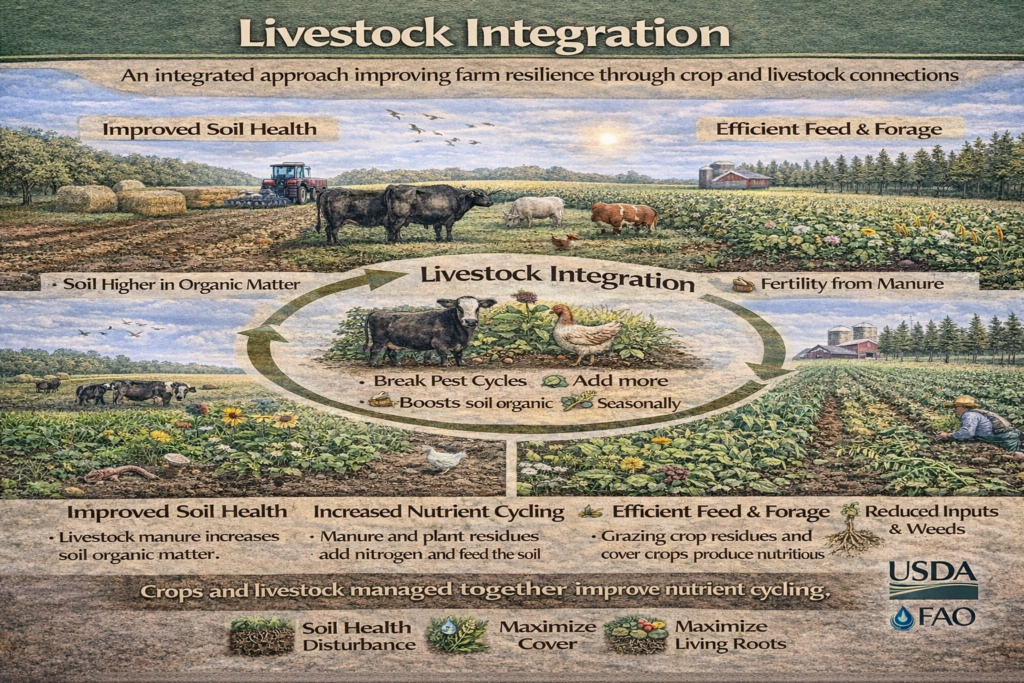
This is not a nostalgic idea. It is a practical strategy many farms use to improve resilience when fertilizer prices rise, weather becomes less predictable, or weed pressure grows.
How integration helps a farm
1. Manure supports soil fertility when it is managed correctly
Manure is a valuable nutrient source, but it is also a material that needs planning. USDA NRCS emphasizes that nutrient management should consider manure, soil amendments, and organic by products while protecting air, soil, and water quality.
On a working farm, the best approach is simple: test what you have, apply at agronomic rates, and match timing to crop uptake to reduce losses.
2. Animals can help with weed and residue management
When grazing is planned, livestock can reduce certain weeds and help convert crop residues and cover crops into fertility. ATTRA’s guidance on integrating livestock and crops highlights weed and pest control benefits, soil organic matter improvements, and reduced chemical and fertilizer expenditures when integration is done well.
3. Lower feed and fertilizer costs through smarter cycling
Feeding residues, grazing cover crops, and recycling nutrients can reduce dependence on purchased feed and synthetic fertilizer. FAO links integrated systems to improved bioeconomic performance through more efficient nutrient recycling and reduced nutrient losses.
4. Stronger resilience through diversification
Integration spreads risk. If one enterprise struggles, another can carry income or cash flow. Research on integrated crop livestock systems also describes these systems as potentially more climate resilient than specialized systems because of the synergy between crops, forages, and animals.
Why rotational grazing is often the centerpiece
Rotational grazing works because it turns grazing into a planned tool rather than continuous pressure on the same plants. USDA NRCS describes prescribed grazing as managing livestock numbers and grazing periods to meet planned objectives for plant communities, animals, and associated resources.
NRCS also promotes management intensive rotational grazing within its conservation stewardship framework, highlighting goals such as better manure distribution and improved pasture function.
The management guidance includes building a written plan and monitoring soil function indicators such as ground cover and infiltration, which is exactly the kind of measurable detail that makes this practice credible.
A realistic note that builds trust
Livestock integration is powerful, but it is not automatic. Poor manure timing can increase nutrient losses, and poorly planned grazing can reduce plant recovery. That is why reputable guidance consistently ties integration to nutrient management planning and written grazing plans.
When it is done thoughtfully, livestock integration helps farms close nutrient loops, cut unnecessary inputs, and keep soils productive under tougher conditions. That is why rotational grazing and integrated crop livestock systems show up so often in sustainable and regenerative agriculture programs.
References
- FAO, Economy of integrated crop livestock systems and nutrient recycling benefits.
- USDA NRCS, Nutrient management overview including manure and water quality considerations.
- USDA NRCS, Grazing management practice standard and objectives.
- USDA NRCS, Management intensive rotational grazing enhancement details and monitoring expectations.
- ATTRA, Integrating livestock and crops benefits, challenges, and practical tips.
- Peer reviewed research on integrated crop livestock systems and resilience.
10. Precision agriculture and technology
Precision agriculture is the practical side of smart farming. It uses measurements and maps to guide everyday decisions, so inputs go where they are needed and not where they are wasted. Instead of treating a whole field like one uniform block, precision tools help farmers respond to the differences inside the field, such as soil texture, moisture, slope, and crop vigor.
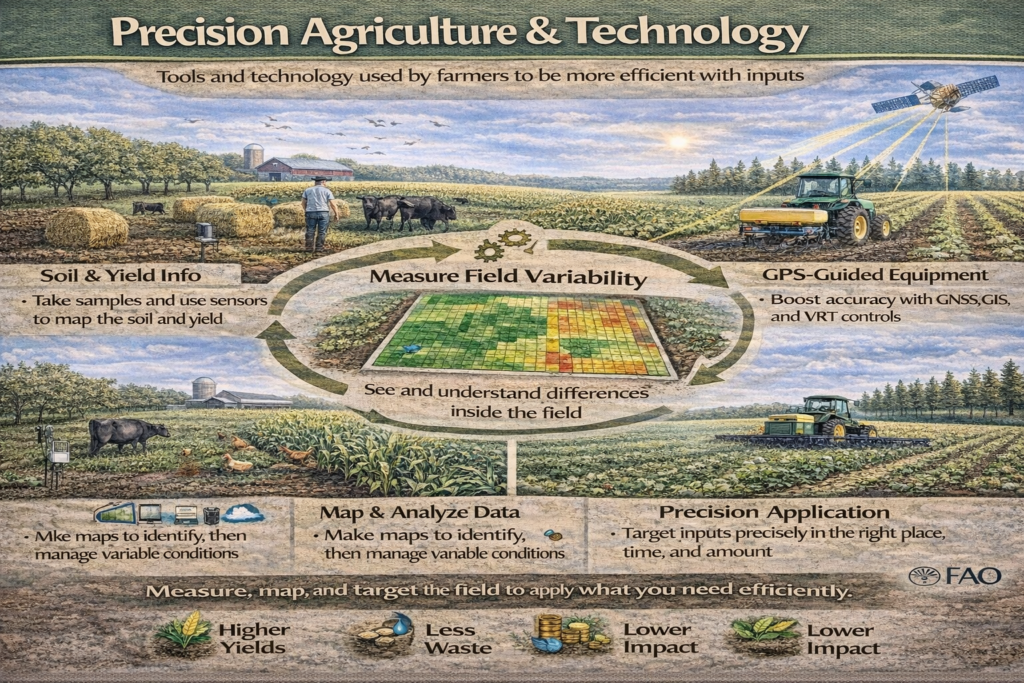
FAO describes precision agriculture as a data driven approach that can raise productivity while reducing the need for inputs such as water and fertilizers and pesticides, lowering the environmental footprint.
What tools farmers are actually using
GPS guided equipment
Auto guidance and steering reduce overlap during planting, fertilizing, and spraying. That means fewer passes, better placement, and less fuel burned. Economic reviews from USDA ERS track the adoption of guidance, mapping, and variable rate tools and link them to profit and efficiency gains when they are used correctly.
Soil and crop sensors
Soil moisture sensors, electrical conductivity sensors, and yield monitors create a more honest picture of what is happening underground and during harvest. This data is most useful when it is paired with good agronomy, such as soil testing and field scouting, so the farm is not chasing numbers without context.
Drones and satellite imaging
Drones help farmers see patterns that are invisible from the ground, such as early disease stress, uneven emergence, lodging risk, or irrigation problems. Remote sensing also comes from satellites, which can support monitoring at large scale.
NASA explains how satellite data can be turned into practical maps that help track crop conditions and agricultural water use, including evapotranspiration, a measure linked to how much water crops are using.
AI based crop monitoring
AI based tools typically combine imagery, weather data, and field observations to flag unusual changes, predict risk, and support timing decisions. The best systems do not replace agronomists or farmers. They help prioritize where to scout and what to check first.
Why precision agriculture supports sustainability
- Optimized input use
Variable rate application and targeted timing can reduce excess fertilizer and pesticide use while maintaining yield goals. A recent life cycle focused review found that precision agriculture practices reduced environmental impacts compared with conventional practices across many impact categories. - Less waste, fewer losses
Using data to avoid overlap and apply only what is needed can reduce runoff risk and improve efficiency. A US Government Accountability Office technology assessment notes that precision agriculture can deliver environmental benefits such as reducing fertilizer runoff, while also highlighting barriers like complexity and high upfront costs. - Higher efficiency with real operational savings
When machinery follows accurate guidance and applications are better timed, farms can save fuel, labor hours, and product costs. USDA ERS summarizes how guidance, mapping, and variable rate technologies have been adopted to improve profitability and farm management efficiency. - Lower environmental impact through better water decisions
Remote sensing and soil moisture monitoring improve irrigation scheduling and help avoid over watering. NASA and USGS examples show how satellite based evapotranspiration tools can support irrigation planning and water management decisions.
A credibility note that readers trust
Precision tools are powerful, but they work best when the farm has a clear goal. For example, reduce nitrogen loss, improve irrigation timing, or tighten spray coverage. Without a goal, data piles up and nothing changes. The GAO assessment also emphasizes that adoption can be limited by cost, skills, connectivity, and the effort needed to interpret data, which is why starting with one clear use case is often the most successful path.
References
- Food and Agriculture Organization of the United Nations, overview of precision agriculture and its role in reducing inputs and environmental footprint.
- USDA Economic Research Service, research on adoption and farm profit impacts of precision agriculture technologies.
- US Government Accountability Office, technology assessment on benefits and challenges of precision agriculture adoption.
- NASA and USGS resources on satellite based agricultural monitoring and evapotranspiration tools for water management.

How farmers and policymakers can adopt these practices
Sustainable practices stick when they feel doable, pay back over time, and come with support. Adoption is less about motivation and more about reducing risk, building skills, and measuring what changes on the ground.
For farmers
- Start with one field, one season, one goal
Pick the practice that solves your biggest pain point right now, such as erosion after heavy rain, rising fertilizer bills, or weed pressure. A smaller trial makes it easier to learn without gambling the whole farm. Programs that provide technical guidance are built around this idea of planning and practice by practice implementation. - Stack practices that support each other
Some combinations reduce headaches instead of creating them. For example, cover crops plus reduced tillage often improves water infiltration and residue cover. Rotation plus scouting makes pest control simpler. When practices work as a system, you usually get more stability than when you try isolated changes. - Track results in a way that matters to your farm
Keep it practical. Record yield, input costs, fuel passes, irrigation hours, and a few soil indicators like infiltration or organic matter trends. This turns sustainability into farm management, not a slogan. Research programs focused on sustainable systems emphasize assessing outcomes over time, not just one harvest. - Use extension, technical assistance, and farmer led learning
Many farmers adopt faster when they can see local examples and talk through details. In the United States, NRCS Conservation Technical Assistance exists specifically to help producers plan and implement conservation practices with on the ground support.
SARE also funds and shares farmer driven research and education, which can be useful if you want trials, demonstrations, or peer learning.
Globally, Farmer Field Schools are an established approach for practical, season long learning in real fields.
For policymakers
- Make adoption less risky in the first two years
Transitions often fail early because costs show up before benefits do. Well designed incentives can cover part of the learning curve, equipment adjustments, and short term yield risk. OECD highlights biodiversity positive subsidies, grants, tax incentives, and payments for ecosystem services as tools that can drive conservation and restoration outcomes. - Pay for outcomes, not just actions, when possible
Results based approaches can reward measurable improvements such as reduced nutrient loss, improved soil cover, or better water efficiency. OECD also points to improving effectiveness by monitoring and evaluating policies over time. - Invest in education, advisory services, and applied research
Adoption scales when farmers can access trusted training and local support. Public investment in research and extension type services helps practices fit real conditions, not generic guidelines. - Build the rural infrastructure that makes sustainability practical
Some practices depend on basics: reliable roads to move diverse products, cold storage, processing capacity, connectivity for precision tools, and water systems that can be managed efficiently. The World Bank frames scaling climate smart agriculture as a mix of investment, policy reform, financing tools, and enabling conditions that help farmers adopt new approaches. - Align climate and agriculture planning instead of running them separately
Climate smart agriculture investment planning is often used to identify concrete actions governments can take, both in investments and policy design, so adoption is not fragmented.
Summary Table: 10 Best Sustainable Farming Practices
| No. | Practice | What it is (simple) | Key benefits | Quick starting step |
|---|---|---|---|---|
| 1 | Crop Rotation | Growing different crops in a planned sequence | Better soil fertility, fewer pests and diseases, improved nutrient balance | Add one extra crop into the current rotation |
| 2 | Cover Cropping | Planting crops mainly to protect and feed soil between seasons | Less erosion, more organic matter, better water holding, weed suppression | Start with one cover crop on one field |
| 3 | Conservation Tillage | Reducing soil disturbance during planting | Stronger soil structure, less erosion, more soil carbon potential, lower fuel use | Try reduced till on a low risk field |
| 4 | Integrated Pest Management (IPM) | Managing pests with monitoring and prevention first | Lower pesticide use, less resistance, reduced costs, healthier ecosystems | Begin regular scouting and use thresholds |
| 5 | Organic Farming | Farming under organic rules with approved inputs | Soil biology support, fewer synthetic residues, market premiums, consumer trust | Learn certification rules and pilot a transition plot |
| 6 | Agroforestry | Adding trees and shrubs into farm production | Biodiversity, erosion control, better microclimate, extra income streams | Plant a windbreak or trial silvopasture area |
| 7 | Efficient Water Management | Using water precisely and measuring needs | Less water waste, stronger yields, lower energy use, drought resilience | Use soil moisture checks before irrigating |
| 8 | Soil Health Management | Building living soil through structure and biology | Better water retention, stronger roots, fewer fertilizer needs, stable yields | Add organic matter and reduce compaction risk |
| 9 | Livestock Integration | Using animals to cycle nutrients and manage land | Manure fertility, weed control, lower feed and fertilizer costs, resilience | Start rotational grazing with a simple plan |
| 10 | Precision Agriculture | Using data tools to apply inputs accurately | Reduced waste, higher efficiency, targeted decisions, lower impact | Start with GPS guidance or basic field mapping |
Adoption Summary Table: Farmers and Policymakers
| Group | What to do | Why it helps |
|---|---|---|
| Farmers | Start small, one field at a time | Lowers risk and makes learning easier |
| Farmers | Combine practices as a system | Bigger results than single changes |
| Farmers | Track yield, costs, soil, water yearly | Shows what is improving and what is not |
| Farmers | Use extension and training support | Faster adoption with fewer mistakes |
| Policymakers | Incentives and transition support | Helps cover early costs and risk |
| Policymakers | Fund education and applied research | Improves local fit and farmer confidence |
| Policymakers | Promote climate smart programs | Aligns farming with resilience goals |
| Policymakers | Invest in rural infrastructure | Makes sustainable systems workable at scale |
Final Thoughts
Farming is heading into a tougher era, and the old “do what worked last year” approach will not be enough. The practices in this guide are practical ways to keep land productive while protecting the basics that farming relies on: living soil, clean water, and stable ecosystems. None of these methods is a silver bullet, but together they reduce risk, cut waste, and make yields more reliable when weather and costs swing. The smartest path is to start with one change, measure what improves, then build from there. If this guide helped, pass it to a grower, a student, or a decision maker, and keep the discussion focused on real results in the field.
FAQs – Sustainable Farming Practices
1. What are the most effective sustainable farming practices?
Crop rotation, cover cropping, conservation tillage, and integrated pest management are among the most effective Sustainable Farming Practices.
2. Can sustainable farming be profitable?
Yes. Long term studies show reduced input costs and stable yields increase farm profitability.
3. Is sustainable farming suitable for small farmers?
Absolutely. Many Best Sustainable Farming Practices require low investment and work well for smallholders.
4. How does sustainable farming help climate change?
It reduces emissions, increases carbon sequestration, and builds climate-resilient systems.

Thesis Link : https://saulibrary.edu.bd/daatj/public/uploads/BAU200601_19-Pp_5.pdf
- 10 Best Loppers for Thick Branches - October 14, 2026
- Fall Lawn Care Checklist – 9 Jobs Before Winter - October 14, 2026
- 10 Best Garden Tool Sets for Beginners - October 13, 2026



[…] 10 Best Sustainable Farming Practices – Growing for the Future […]
[…] 10 Best Sustainable Farming Practices – Growing for the Future […]