


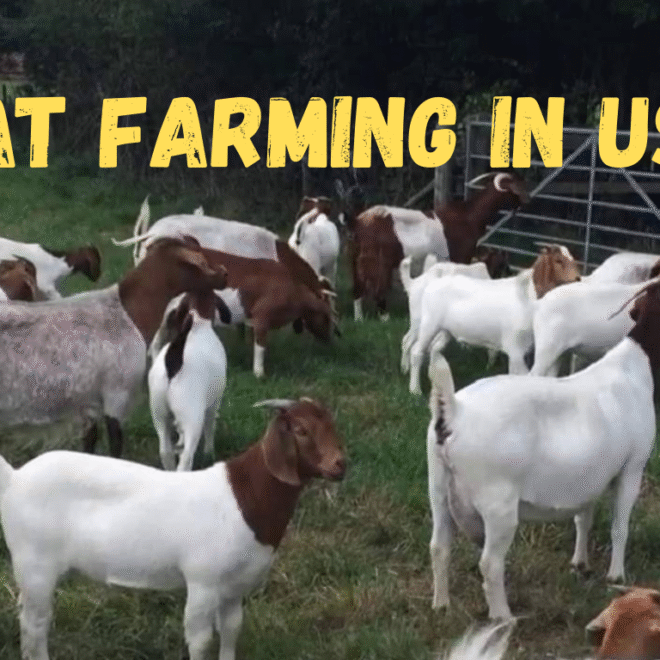
Goat Farming in USA : A Real Farmer’s Guide
This isn’t theory. It’s the kind of practical guide you’d get from a neighbor who already wrestled goats, patched fences at midnight, and figured out what works. It’s long, because real goat farming has details but if you stick with it, you’ll have a 360° picture of how to start, survive, and thrive with goats in today’s U.S. market. Learn how to start goat farming in USA with simple steps. Discover breeds, care, marketing, and USDA support programs to build a healthy herd and a profitable goat business.
Why Goats Make Sense in 2026
Cows and chickens get most of the attention in American agriculture, but goats are slowly carving out their own space. It’s not flashy growth, but it’s steady and in farming, steady counts.
According to the USDA, as of January 1, 2026, there are 2.51 million goats in the U.S. That’s about 1% more than last year. Of those, 1.98 million are meat and “all other” goats, and roughly 430,000 are dairy goats, which actually saw a solid 4% bump in 2024–25.
These aren’t earth shattering numbers compared to cattle, but in a niche market, small shifts mean a lot. It shows buyers are asking for more goat products, and farmers are answering.
Demand Is Coming From Two Directions
Cultural Demand
Goat meat has always had a home on the tables of Caribbean, African, Latinx, Middle Eastern, and South Asian families. The difference now is scale: these communities are bigger, better connected, and their buying power is showing up in the market. What used to be “specialty demand” is becoming consistent and mainstream.
Curiosity in Dairy
Goat cheese, kefir, cajeta , foods once found only in specialty shops are now part of regular grocery store shelves. Dairy goats are no longer an oddity. For small farms, this opens the door to local cheesemaking, yogurt, and other value added products.
Goats Work Where Cattle Don’t
One of the biggest selling points of goats? They’ll eat what cattle won’t. Scrub, brambles, vines , goats turn weeds into protein. That means land that would never carry a cow can still feed a herd of goats.
If you’ve got hillsides, brushy lots, or patches of land too rough for row crops, goats make that acreage useful. In 2026, with feed prices bouncing and climate pressure rising, flexibility like that is worth a lot.
A Story From the Ground
I heard from a farmer in Texas who inherited some scrubby pasture dotted with mesquite and thorny vines. Cattle just wouldn’t thrive there.
“I bought a small group of Boer goats and within weeks they were clearing brush I’d been fighting for years. Now, I sell kids at the local auction, mostly to buyers looking for fresh goat meat. A cheesemaker in town even picks up some milk when my does are in production. It’s not without headaches — finding a slaughterhouse that handles goats properly is tough but per acre, these goats are paying better than cattle ever did.”
Stories like his aren’t rare anymore. From Texas to Georgia and even up into the Northeast, small producers are turning “problem land” into productive goat country.
What the Market Says
- Meat demand is growing. Texas A&M AgriLife researchers point out that demand for goat meat is rising year after year, especially around holidays and cultural events, but also through steady, everyday buying
- Dairy goats are on the upswing. A 4% increase in just one year shows consumer interest in goat milk products isn’t just a trend , it’s becoming a steady part of the dairy sector.
- Feed pressures may ease. USDA economists expect grain and feed prices to moderate in 2026 after several volatile years
Not All Smooth Sailing
Of course, goats aren’t a magic bullet. Producers face real obstacles:
- Limited processing plants that can handle goats efficiently.
- Parasite management and veterinary challenges.
- Lack of economies of scale — most herds are 20–30 head.
- Financial support programs that are still geared toward cattle, not goats.
But challenges also signal opportunity. Entrepreneurs and policymakers who solve these problems stand to unlock serious growth.
Why 2026 Feels Like a Turning Point
The numbers aren’t huge, but the direction is clear. Herds are growing, demand is stronger, and consumers are more curious than ever. Add in goats’ ability to thrive on marginal land, and it’s easy to see why more farmers are giving them a try.
In a farming world where risk is constant, goats offer something simple but valuable: resilience.
References
- Texas A&M AgriLife – Demand for Meat Goats Continues to Grow
- USDA Goat Inventory 2026 (PDF)
- USDA ERS Feed Outlook 2026
The U.S. Goat Industry Snapshot
If you’re trying to get a feel for goats in America right now, here’s a quick snapshot worth keeping handy:
- Texas is goat country. More than a third of all goats in the U.S. are in Texas. It’s the heart of the industry , from meat goats to dairy herds to the mohair fiber trade. If goats had a capital, it’d be somewhere between San Angelo and Austin.
- Meat rules the herd. While you’ll find goat dairies making cheese and kefir, the bulk of U.S. goats are raised for meat. For many small farms, meat goats are the first step in, because demand is steady and entry costs are relatively lower compared to dairy.
- Dairy goats are steady players. With around 430,000 head nationwide (USDA, 2026), the dairy side isn’t exploding in numbers, but products like chèvre and cajeta are creeping into mainstream groceries. That steady niche growth matters.
- Prices rise with the calendar. Goat markets spike around holidays like Ramadan, Easter, and Christmas. Savvy producers don’t just breed goats , they plan breeding cycles backward so kids hit the right weight at the right season. USDA market reports confirm these seasonal highs.
- Parasites remain the biggest battle. The American Consortium for Small Ruminant Parasite Control (wormx.org) keeps reminding the industry that internal parasites are still the 1 health issue for U.S. goats. It’s not glamorous, but good parasite management makes the difference between profit and loss.
Takeaway
The U.S. goat industry isn’t huge compared to cattle or poultry, but it’s holding its own and carving out space where demand is real. From Texas ranches to small farms in the Midwest, goats are proving they belong — whether it’s for meat, milk, or mohair.
References :
- USDA Goat Inventory 2026 (PDF)
- USDA Goat Market Reports
- American Consortium for Small Ruminant Parasite Control – WormX
A Real Life Story: Maria & Ben’s Three Year Goat Journey
Let’s humanize this. Meet Maria and Ben a composite farm story based on real people across the U.S.
Year 1: Setup and Sweat
They buy 18 acres outside a mid size town. Half pasture, half tangly brush. They figure goats might turn weeds into income.
- They attend two Extension workshops.
- Their NRCS conservationist walks the land, marking where water lines and paddocks should go.
- They install woven wire fencing (4×4) with hot wires high and low.
- They build three sided sheds with dry bedding.
They also march into the USDA Service Center, apply for a farm number, and start a cheap spiral notebook for records.
Year 2: First Kids, First Lessons
They stock hardy Kiko Spanish does and add a Boer buck. The logic: resilient moms, sale barn friendly kids.
They learn FAMACHA® eye scoring, rotate pastures, and ditch the old school “deworm everyone every month” routine. They lose one doe to parasites anyway. Hard lesson.
But by fall, they’ve sold their first batch of kids, and the goat check covers their fence loan.
Year 3: Dialing In
They plan breeding so kids weigh 60–80 lbs right before Ramadan and Easter. They sell halves directly to families and move culls through the auction barn when prices are hot.
Are they rich? No. Are they building equity in fence and learning fast? Yes. Goats are now paying for hay, minerals, and even part of the mortgage.
Goat Breeds in Plain Talk
There are plenty of glossy brochures about goat breeds. Most of them make every breed sound perfect. Out here in the real world, goats all come with strengths and quirks. Here’s the no nonsense version.
Boer
The muscle goats. They grow fast, pack on meat, and look the part. But in humid regions they can struggle with parasites, so be ready for extra management if you live in the Southeast or Gulf states.

Kiko
Hardy stock from New Zealand. These goats were bred to thrive on rough country, and it shows. Tough against parasites, good moms, and less drama in the barn.

Spanish
The old brush goats of the South. Not fancy, but they’ll eat what others won’t and keep on ticking. Perfect for rough land and folks who don’t want high maintenance animals.

Myotonic (Fainting Goats)
Yes, the “fainting goat.” Beyond the novelty, they sometimes carry lower worm loads, and their meat has a distinctive flavor. Not everyone’s first choice, but they hold a niche.

Nubian
If you like rich milk, this is your goat. Nubians are famous for high butterfat milk — great for cheese and ice cream. Be warned: they’re also famous for being loud.

Saanen / Alpine
The workhorses of the dairy world. These breeds are known for volume — steady, heavy milkers. They’re often the backbone of commercial goat dairies.

LaMancha
The “no eared” goats. Don’t worry, that’s just how they’re bred. They produce steady milk, have calm temperaments, and are usually easy to handle.

Angora
Different lane altogether: fiber goats. They produce mohair, which has its own market. Not really a meat or dairy breed, but worth mentioning.

A Common Sense Crossbreeding Formula
If you’re in a humid region and want meat goats, here’s the mix a lot of experienced farmers use:
- Kiko or Spanish type does (hardy, parasite resistant, strong mothers)
- Bred to a Boer buck (for fast growing, marketable kids)
That gives you toughness from the mom’s side and good carcass traits from the dad’s side. It’s not complicated, but it works.
References :
- USDA Goat Resources
- American Goat Federation – Breed Resources
- Langston University Goat Research & Extension
Land, Fencing, and Shelter: The “Boring” Stuff That Makes Money
Most folks dream about fat, healthy kids at auction or jars of creamy chèvre on a market table. That’s the fun side of goats. But here’s the truth: if you ignore land, fences, and shelter, you’ll bleed money before you sell your first goat.
This is the “boring” side of goat farming, but it’s also where profits are won or lost.
Stocking Rate: How Many Goats Per Acre?
The number of goats you can run depends entirely on your climate and pasture.
- Humid regions with good rain and improved pasture: Plan for 6–8 goats per acre if you rotate them properly.
- Semi arid regions: It drops fast. In some areas, it’s closer to 1 goat for every 3–5 acres.
A handy rule is to think in Animal Units (AU). One mature cow is 1 AU. A goat is about 0.2 AU. That keeps you grounded when comparing grazing capacity across livestock.
Overcrowd your land, and you’ll have sick goats, bare dirt, and a parasite nightmare. Undercrowd it, and you leave money on the table.
Fencing: Keep Goats In, Keep Predators Out
If you cut corners here, goats will teach you why that was a mistake.
- Perimeter fencing: Goats respect strong boundaries. Use woven wire with 4×4 openings, plus a strand of hot wire low and another high. That keeps goats from crawling under and predators from climbing in.
- Interior fencing: For rotational grazing, electro netting works well. Just remember — it has to stay hot and clear of weeds, or goats will walk right through it.
Every goat that escapes or gets taken by a predator costs you more than a few extra T-posts ever would.
Shelter: Simple but Necessary
Goats don’t need fancy barns, but they do need somewhere dry and safe.
- Basic shelter: A three sided shed with good airflow and dry bedding works in most climates.
- Space requirements:
- Meat or general herds: 10–15 square feet per goat in open housing.
- Dairy goats: 20–25 square feet per doe, plus exercise or loafing lots.
The main point: goats hate being wet and drafty. A small, well ventilated shed is cheap insurance against pneumonia and stress.
Think of it this way: a $200 goat lost to predators or parasites costs more than the “extra” money you didn’t want to spend on fencing or shelter.
References
- American Goat Federation – Producer Resources
- USDA Natural Resources Conservation Service – Pasture & Grazing Management
- Langston University Goat Research Extension
Goat Farming Agriculture Information
Goats can be hardy, profitable animals — but only if you manage the details. Feed, water, health, and records aren’t glamorous, but they’re what separate thriving herds from struggling ones. Here’s the down to earth version of what you really need to know.
Nutrition: Start With What They Do Best
Goats are natural browsers. Their diet should be based on pasture, brush, and browse whenever possible. Grain has its place, but don’t make it the foundation of the diet.
- When to use grain: late pregnancy, peak lactation, or finishing kids for market.
- Minerals: always offer loose minerals with copper. Blocks don’t work — goats won’t get enough.
- Watch the pasture height: goats need forage, not bare dirt.
Healthy goats start with forage. Grain is a supplement, not a crutch.
Water: Simple but Critical
Goats are picky about water. A dirty trough might as well be empty.
- Keep troughs clean and fresh.
- Place water where goats can reach it easily but not soil it.
Don’t underestimate this. Goats will walk away from dirty water and lose condition faster than you think.
Records: Write It Down or Forget It Later
The best goat farmers I know all have one thing in common: they keep records.
- Births
- Treatments
- Sales
- Weights
- Pasture moves
It doesn’t matter if it’s a cheap notebook in your pocket or a Google Sheet on your phone. What matters is consistency. Records save you from repeating mistakes and show you which goats are actually paying their way.
Parasites: The Constant Battle
Internal parasites are the 1 health issue for goats in the U.S. If you don’t get a handle on this, nothing else matters.
- Learn to use FAMACHA® scoring to check anemia levels.
- Rotate pastures and don’t graze shorter than 3–4 inches.
- Cull goats that are always “wormy.” A goat that can’t handle parasites will cost you year after year.
For deeper guidance, check the American Consortium for Small Ruminant Parasite Control (ACSRCP) — their 2024 Best Management Practices update is one of the best resources available (wormx.info).
References
- American Consortium for Small Ruminant Parasite Control – Best Practices
- Langston University Goat Research Extension
- USDA Natural Resources Conservation Service – Grazing Resources
Parasites: Your Biggest Day to Day Challenge
Predators get the headlines, but ask any experienced goat producer and they’ll tell you the real killer is much smaller: the barber pole worm (Haemonchus contortus). This parasite causes anemia, “bottle jaw,” weight loss, and in many cases, sudden death. In the U.S., it claims more goats each year than coyotes or stray dogs ever will.
The frustrating part? The old ways of worm control don’t work anymore. Blanket drenching every 30 days has only created drug resistant worms. In 2026, parasite management requires strategy, not just medicine.
Best Practices for 2026
Here’s what experts and successful farmers are doing today:
- Use FAMACHA® scoring. Don’t just dose every goat. Learn to check eyelid color for signs of anemia and treat only those that need it. This preserves dewormer effectiveness.
- Keep refugia. Leaving part of the herd untreated maintains a population of “susceptible” worms. It feels counterintuitive, but it slows down resistance.
- Work with your vet on multi drug approaches. Sometimes, combining dewormers is the only way to save a goat, but it must be done carefully to avoid accelerating resistance.
- Graze smarter. Don’t let goats scalp pastures. Keeping forage above 3–4 inches reduces the risk of them ingesting worm larvae. Rotational grazing helps too.
- Cull the repeat offenders. Some goats are genetically better at handling worms. If a doe needs treatment every month, she’s costing you money. Replacing her with hardier stock builds a stronger herd over time.
The Hard Truth
The days of cheap, easy deworming are gone. Resistance is real and spreading fast. That’s why organizations like the American Consortium for Small Ruminant Parasite Control (ACSRCP) keep hammering home the importance of targeted, evidence based strategies (wormx.info).
Good parasite management is more than keeping goats alive — it’s the difference between profit and loss.
Think long term: save your best genetics, keep pastures healthy, and use medicine wisely. That’s how you build a goat operation that lasts.
References :
- American Consortium for Small Ruminant Parasite Control – WormX
- Langston University Goat Research & Extension
- USDA Agricultural Research Service – Parasite Control Research
Marketing Goats: Practical Paths to Profit
Raising goats is one thing. Selling them profitably is another. Too many new producers raise good animals, only to stumble when it comes time to market. The good news? You don’t need a giant operation to find your buyers — you just need to understand where goats fit in today’s market.
Here are three proven avenues.
1. Direct to Families
Many families — especially from Caribbean, African, Middle Eastern, South Asian, and Hispanic backgrounds — want a 60–80 lb goat for holidays and celebrations.
The key here is trust. Families buying direct want to know the animal was raised clean, healthy, and handled with respect. Once you earn their confidence, they’ll likely return year after year.
Tip: Keep clear records of weights and treatments. When a buyer asks, “What’s this goat been fed?” or “How old is it?” you can answer with confidence. That builds credibility fast.
2. Auction Barns
Auction barns are the consistent outlet for meat goats in the U.S. Even if you’re selling mostly direct, auctions are a safety valve when you need to move animals.
But don’t just load up the trailer when it’s convenient. Learn to watch the USDA Goat Market Reports (AMS USDA). Prices spike around Ramadan, Easter, and Christmas. If you plan your breeding so kids are the right weight at those times, you’ll put more money in your pocket.
Example: Breeding in late fall often puts kids at market weight just in time for spring holidays.
3. Value Added Products
If you’re raising dairy goats, the real profits may come from what you do with the milk. Options include:
- Cheese – chevre, feta, specialty cheeses
- Kefir and yogurt
- Goat milk soap and skincare products
- Agritourism – farm tours, goat yoga, cheesemaking workshops
The catch? Regulations. Most states lean on the FDA’s Pasteurized Milk Ordinance (PMO), which has strict requirements for dairies. Before you start bottling milk or making cheese, check your state’s Department of Agriculture website. Rules vary, but compliance is non negotiable.
Put as much thought into your marketing plan as you do into fencing and feed. That’s how goat farming moves from hobby to profit.
References:
- USDA AMS Goat Market Reports
- FDA Pasteurized Milk Ordinance (PMO)
- American Goat Federation – Marketing Resources
Goat Farming Regulations and Compliance: What You Need to Know
Goat farming isn’t just about fencing, feed, and finding buyers. If you plan to sell animals across state lines, market breeding stock, or offer processed meat, you’ll run into rules that can’t be ignored. The good news is, most of them are straightforward once you know what’s required.
Scrapie Tags: Official ID Matters
If you’re selling breeding stock or moving goats across state lines, your animals need official identification. For most herds, that means scrapie tags.
- New herds can request up to 100 free tags from USDA APHIS, while funds last.
- These tags link your herd to the national traceability system in case of a disease outbreak.
Even if you’re just getting started, it’s worth applying early so you’re set up before you sell your first goat.
Learn more at USDA APHIS – Scrapie Program
Health Papers: Certificates for Travel
Any time goats move across state lines, you’ll likely need a Certificate of Veterinary Inspection (CVI).
- Your veterinarian issues the CVI, but you need to provide the goat’s official ID such as scrapie tags.
- Each state sets its own requirements, so check with your state Department of Agriculture before moving animals.
Skipping this step can result in fines, delays, or even having your animals turned away.
Slaughter Rules: Know the Difference
Here’s where many new producers get tripped up.
- If you’re selling processed meat cuts, the goats must be slaughtered and processed under a USDA or state inspected facility. That ensures food safety and legality for resale.
- If you’re selling live goats for personal use (for example, a family purchasing an animal for a holiday meal), it’s a different matter. The buyer is responsible for what happens after purchase.
Document the sale clearly, and don’t offer advice on home slaughter unless you fully understand your state’s laws. Regulations vary widely, and liability is real.
Check USDA Food Safety & Inspection Service for more details on meat sales.
The upfront effort saves you from headaches later and it keeps your operation professional in the eyes of buyers.
References :
Budgets and Business Planning for Goat Farming
Dreams are nice, but numbers tell the truth. Every goat farm, whether it’s five head or five hundred, runs on a budget. Without one, you’re just guessing.
The good news? You don’t have to build it from scratch. Most state Extension services — places like Oregon State University or Texas A&M AgriLife Extension — publish enterprise budgets for goat production. These are real world tools that list out the costs, revenues, and assumptions behind running goats. All you need to do is plug in your own numbers.
Where the Money Goes
- Fencing and Guard Dogs: These don’t just cost money — they save money. Every goat that escapes or gets taken by predators is an avoidable loss. Invest here first.
- Parasites and Predation: These are your two biggest leaks. Worms drain profits through lost growth and vet bills, while predators take goats outright. Managing both is non negotiable.
- Timing Sales: Selling when it’s convenient is a beginner’s mistake. Prices climb around Ramadan, Easter, and Christmas, as USDA market reports show. Planning your breeding so kids hit market weight during these windows pays more than flashy pedigrees ever will.
Why Budgets Matter
A goat budget doesn’t lie. It forces you to see:
- Where your cash is tied up – fence posts, feed, minerals.
- Where your risks live worms, coyotes, drought.
- Where the money actually comes from holidays, niche dairy products, loyal buyers.
Without numbers, it’s easy to tell yourself a story. With a budget, you’ll know if that story is profitable.
References :
- USDA AMS Goat Market Reports
- Texas A&M AgriLife Extension – Meat Goat Resources
- Oregon State University Extension – Small Ruminant Budgets
Agriculture Goat Farm Subsidy
If you’re hoping for a “goat only” subsidy program, you’ll be disappointed — there isn’t one. But that doesn’t mean goat farmers are left out. The USDA has several programs that apply to infrastructure, disaster recovery, insurance, and value added projects. You just need to know where to look.
Cost Share Programs
EQIP (Environmental Quality Incentives Program) – through NRCS (Natural Resources Conservation Service)
- Helps pay for practical improvements like fencing, cross fencing, water systems, and heavy use pads around feeders or gates.
- Usually a cost share, meaning USDA pays part and you pay part.
Great for setting up rotational grazing or predator proof fencing.
Disaster Assistance (FSA)
When things go wrong — storms, drought, predators — the Farm Service Agency (FSA) has safety nets.
- LIP (Livestock Indemnity Program): Covers losses from extreme weather and predation.
- LFP (Livestock Forage Disaster Program): Helps if drought wipes out your grazing.
- ELAP (Emergency Assistance for Livestock, Honey Bees, and Farm Raised Fish): Reimburses costs for hauling feed and water during tough times.
- NAP (Non Insured Crop Disaster Assistance Program): Provides insurance coverage for forage crops not covered under traditional crop insurance.
These aren’t handouts — they’re lifelines when the unexpected hits.
Grants and Value Added Support
- VAPG (Value Added Producer Grant): Supports projects like goat cheese, bottled milk, or agritourism.
- LAMP (Local Agriculture Market Program): Helps with farmers markets, direct to consumer sales, and local food promotion.
- REAP (Rural Energy for America Program): Cost share for solar panels, energy efficient equipment, and renewable energy systems.
These grants are competitive, but they’re designed to help small farms grow beyond raw commodity sales.
The trick is simple: treat your goat operation like a business. Document losses, keep records, and be ready to show how your project meets USDA goals.
References :
- USDA NRCS – EQIP Program
- USDA FSA – Disaster Assistance Programs
- USDA Rural Development – VAPG
- USDA Rural Development – REAP
How to Get a Loan for Goat Farming
Goat farming doesn’t just take sweat and good pasture — it takes cash. Fencing, feed, barns, breeding stock… it all adds up fast. If you don’t have the savings, the USDA Farm Service Agency (FSA) has loan programs that can help. These aren’t handouts, but they are designed for folks like us who are building or expanding a farm.
Three Loan Types That Actually Fit Goat Farmers
1. Operating Loans
Think short term needs. This loan can cover:
- Feed and minerals
- Buying a breeding buck or new does
- Fence supplies, water troughs, or small equipment
It’s basically money to keep the farm rolling when cash flow is tight.
2. Microloans
This one is gold for beginners. The paperwork is lighter, the loan amounts are smaller, and approval is often quicker. Perfect if you’re just getting into goats or testing the waters before going big.
3. Ownership Loans
These are the long haul loans. If you want to buy land, drill a well, or build a barn, this is the one. It’s a bigger commitment, but it’s how many small farms take the step from renting land to truly owning it.
What They’ll Want to See
Walking into the FSA office without a plan is a mistake. Here’s what will make or break your application:
- Farm number: Register your land with USDA. It’s free, but it proves you’re a real farm in the system.
- Budget: Don’t just say “I need money for goats.” Show the numbers — how much for fencing, feed, breeding stock, and how sales will pay it back.
- Management plan: Goats aren’t easy. Lenders know that. Be ready to explain how you’ll handle parasites, predators, and drought. Even a simple, written plan shows you’ve thought it through.
Straight Talk
A loan won’t make a bad plan profitable. But if you’ve done the math and know your market, FSA loans can be the difference between staying stuck and moving forward.
- Microloans get beginners started.
- Operating loans smooth out the bumps.
- Ownership loans let you put down roots.
The bottom line? Show them you’ve got a plan, not just a dream. That’s what turns a “maybe” into an approval.
Where to start:
Choosing Land for Goat Farming
Starting a goat farm doesn’t begin with buying goats—it begins with the land. Good land makes everything easier: healthier animals, fewer vet bills, and lower feed costs. Here’s what to look for, why it matters, and how real farmers handle it day to day.
1) Water You Can Count On
What to look for: a pond, creek, well, or a place where a small tank and pipeline can be set up easily.
Why it matters: goats drink more than most people think—especially when it’s hot or they’re milking. A typical adult goat may need roughly 1–3 gallons (4–11 L) per day, and lactating does need more. If you’re hauling water, costs (and burnout) add up fast.
Quick check: If you can stand at your proposed goat area and point to where water comes from in dry season, you’re on the right track.
Research : Unlimited, clean water is a must; needs climb with heat and milk production. goats.extension.org+1
2) Shade + Dry Ground
What to look for: scattered trees or simple shade structures, and soils that drain quickly after rain.
Why it matters: goats handle heat better than some livestock, but heat stress still hurts growth, fertility, and milk. Dry footing also prevents hoof problems. Plan for airflow, afternoon shade, and a dry, bedded rest area.
Field tip: walk the land the day after rain. If your shoes sink, your goats’ hooves will suffer there.
Research : Heat stress reduces performance; shade, ventilation, and water access are proven mitigations. Wet ground raises foot rot risk. extensionpubs.unl.edu+2MDPI+2
3) Brush = Cheap Feed
What to look for: briars, shrubs, saplings, field edges, fencerows—“messy” areas are gold for goats.
Why it matters: goats are browsers, not lawn mowers. Brushy acreage means free feed and less purchased hay. Managed right, goats clean up invasive brush and open understory.
How to use it: rotate goats through brushy blocks; let areas rest so plants (and soil) recover.
Research : Extension trials show goats are effective biological brush control on neglected pastures and timber edges. Iowa State University Extension
4) Good Neighbors & Predator Plans
What to look for: fences you can share, neighbors who understand livestock, and room for a livestock guardian dog (LGD) if predators are an issue.
Why it matters: predation (wild or stray dogs) can wipe out kids in a night. LGDs, used correctly, dramatically reduce losses. Talk to neighbors before you bring in a guardian dog so they expect barking at night and know the dog is working, not roaming.
Real world note: news reports continue to highlight stray dog livestock kills in some regions—planning ahead isn’t optional. The Times of India
Research snapshot: Long term projects show LGDs improve lamb/kid survival and cut predator pressure when integrated with fencing and night penning. sanangelo.tamu.edu
5) Start Small Watch the Grass
What to do: begin with a small herd; learn fencing, minerals, and rotations; then scale.
Why it matters: land tells you what it can carry. As a rule of thumb, about six mature goats ≈ one cow unit on decent pasture, but browse quality and rainfall change everything. If the grass and brush disappear faster than they recover, you’re overstocked—reduce numbers or increase rest periods. goats.extension.org
Research : Use carrying capacity math and seasonal utilization; adjust for brush, rainfall, and rest periods. goats.extension.org
6) Quiet Health Wins: Parasites & Hooves
What to plan for: rotational grazing with rest, FAMACHA scoring, targeted deworming, and routine hoof care.
Why it matters: internal parasites especially Haemonchus are the 1 health drain in warm seasons, and drug resistance is real. The most effective “medicine” is management: rotation, mixed grazing where possible, and only deworming animals that need it. Keep hooves dry and trimmed. UGA Extension+2nwdistrict.ifas.ufl.edu+2
Research (2023–2024): current extension guidance stresses integrated parasite management, pasture rest, and selective treatment to slow resistance. UGA Extension+1
Mini Case Study: “Two Acres, Twelve Goats—What I Learned”
When I took over my uncle’s two acre patch, it looked perfect: a hand dug well, a clump of bamboo for shade, and waist high brush everywhere. I started with six mixed breed does and a wether.
- Water: in May, I measured buckets. On the hottest days, the group drank roughly 15–18 gallons. That’s when I added a second trough near the shade so timid does didn’t have to push to drink. goats.extension.org
- Shade & dry: a surprise storm turned one corner into soup. I shifted the loafing area to the high side and laid down gravel under pallets for a dry bed. Fewer soft hooves, fewer trims. Alabama Cooperative Extension System
- Brush: the goats loved wild lantana and thorny vines. I divided the land with step in posts and moved them every 4–5 days. After two rotations, sunlight reached the ground and grasses came back. Iowa State University Extension+1
- Neighbors & dogs: I told the nearest households I’d be bringing an LGD and shared my number. The first week, the dog barked at 2 a.m.; instead of complaints, I got texts—“Your dog’s doing his job.” We lost zero kids that season. sanangelo.tamu.edu
- Start small: when the browse started thinning, I didn’t add goats—I added rest. That decision saved me on feed and kept parasites down. nwdistrict.ifas.ufl.edu
Quick Land-Check Checklist
- Parasite plan (rotation + targeted deworming); hoof plan (dry + trim). UGA Extension+2nwdistrict.ifas.ufl.edu+2 pears, you’re overstocked.
- Water source year round or easy tank/pipeline setup. goats.extension.org
- Natural shade or simple shade roof; pick high, well drained spots for housing. extensionpubs.unl.edu+1
- Real brush, not just short lawn. Iowa State University Extension
- Neighbor conversation before guardian dogs; plan fencing. UC Agriculture and Natural Resources+1
- Start with fewer goats; expand only if the land stays green between rotations. goats.extension.org
“Ministry of Agriculture” Goat Farming
In some countries, farmers go to a “Ministry of Agriculture” for help. In the U.S., that job belongs to the U.S. Department of Agriculture (USDA). If you raise goats, you’ll deal with different USDA offices depending on what you need. Here’s a plain explanation of who does what.
FSA – Farm Service Agency
This is the office to visit if you need money to get started. They offer loans for land, equipment, fencing, and livestock. They also step in when bad weather—like drought or floods—causes losses.
Example: A neighbor in Texas told me he couldn’t get a bank loan when he first started. The FSA microloan program gave him just enough to buy 15 does and build a perimeter fence.
Research snapshot: As of 2024, FSA microloans remain one of the most popular tools for small scale goat farmers, since they cap at $50,000 and have simpler paperwork compared to larger loans.
Farmer note: Many beginners who can’t get traditional bank loans use FSA to buy their first 20–40 head of goats.
NRCS – Natural Resources Conservation Service
NRCS focuses on the land. They have programs that help pay for conservation work like fencing, pipelines, or rotational grazing setups. If you’re trying to improve pastures or protect water, this is the place to go.
Example: A farmer I met at a goat expo said NRCS covered part of the cost for his cross fencing. Without it, he couldn’t have rotated goats, and parasites had been a constant battle.
Research snapshot: In 2023, NRCS added more emphasis on climate smart practices, like rotational grazing systems that reduce erosion and improve carbon storage.
Tip: Many goat producers apply for help installing perimeter fences and water lines—two of the biggest startup costs.
AMS – Agricultural Marketing Service
AMS helps with market information. They track goat and lamb prices across the country and publish reports online. This is useful if you want to time your sales around peak demand.
Example: In 2024, AMS reported strong goat prices around Easter and Eid. A friend in Georgia checked those reports before hauling goats to auction and made a better profit than usual.
Research snapshot: In 2024, AMS began highlighting ethnic holiday demand spikes for goat meat (e.g., Easter, Eid, and Hispanic holidays), giving producers better insight into seasonal pricing.
Farmer note: Small farmers often check AMS price reports before hauling goats to auction to avoid selling in a low week.
RMA – Risk Management Agency
RMA is about insurance. They don’t insure goats directly, but they do insure the land that feeds them. Programs like Pasture, Rangeland, and Forage (PRF) insurance pay out when rainfall is lower than average.
Example: In Oklahoma, one producer said PRF insurance helped cover feed bills during a dry summer when his pastures stopped growing.
Research snapshot: PRF insurance adoption has grown, especially in goat heavy states like Texas and Oklahoma, where drought risk is high. Subsidies cover a large share of premiums, making it more accessible.
Tip: Think of RMA programs as “protection for your pastures,” not just for your herd.
APHIS – Animal and Plant Health Inspection Service
APHIS deals with animal health. For goat owners, this usually means scrapie tags—the official ID tags required for selling goats across state lines. They mail the tags to you for free.
Example: A beginner in Kentucky told me he almost missed his first sale because he didn’t know about scrapie tags. After a quick call, APHIS sent him a box of tags, and he’s been set ever since.
Research snapshot: As of 2023, APHIS is pushing toward electronic ID (EID) for goats and sheep, which makes tracking and traceability easier for producers and regulators alike.
Tip: Applying for scrapie tags is free, and they ship directly to your farm—worth doing early.
A Real Story: Maria’s First Stop at the USDA
Maria bought ten goats in Georgia. At first, she didn’t know where to begin. She walked into her local USDA Service Center and found:
- FSA helped her get a small loan for fencing.
- NRCS signed her up for cost share on water lines.
- AMS showed her when local goat prices were highest.
- RMA explained pasture insurance in case of drought.
- APHIS mailed her a set of scrapie tags free of charge.
Her advice was simple: “Don’t be shy—just walk in and ask. Each office has something for goat farmers.”
Health and Welfare: Shortcuts That Save Money
Goat farming is full of hidden costs, but many of them can be avoided with a few simple habits. The best farmers don’t spend more—they spend smarter.
Parasites: Watch and Cull
Worms can drain goats fast. Instead of dosing the whole herd, check eyelids with FAMACHA®, rotate pastures, and don’t keep goats that are always wormy. Over time, culling weak animals saves more than buying endless medicine.
Real life note: A farmer friend in Mississippi once said, “The cheapest goats I own are the ones that never need a drench.”
Latest note: Extension research in 2023 shows selective treatment slows down drug resistance, saving money on dewormers and keeping them effective longer.
Kidding: Clean and Ready
Most kidding problems come from dirty pens or poor prep. Keep bedding fresh, dip umbilical cords right away, and have your vet’s number handy. A single call in time can save a doe or a kid.
Example: One spring, I lost a kid because I thought I could handle a tough birth alone. The next year, I kept my vet on speed dial. That one change made the season smooth.
Latest note: Recent farm surveys found that simple cord dipping reduces navel infections by more than 80%. That’s a cheap fix compared to treating sick kids.
Hooves: Small Work, Big Payoff
Goats can’t thrive on sore feet. Trim hooves regularly—more often in wet weather. Wet ground makes hooves soft and infections spread faster. A sharp trimmer and 10 minutes per goat is cheaper than medicine later.
Latest note: Studies show goats on well drained ground need fewer trims and have lower lameness rates. Prevention is cheaper than antibiotics or losing a goat to chronic foot problems.
Real story: I once visited a herd where goats hobbled like old men because hooves hadn’t been trimmed in months. The owner admitted he spent more on vet bills than it would’ve cost him in time with a $20 hoof trimmer.
Biosecurity: Quarantine First
New goats are the biggest risk. A simple 30 day quarantine can prevent years of trouble. Watch for weight loss, coughs, abscesses, or parasite issues before mixing them with the herd.
Latest note: Many goat health programs stress that most herd wide disease outbreaks trace back to skipping quarantine. One careless shortcut can set a farm back years.
Real story: A neighbor once skipped quarantine for a “bargain” buck. Within months, half the herd had abscesses from caseous lymphadenitis (CL). He later said it was the most expensive mistake of his farming life.
A 12 Month Goat Plan You Can Print and Use
Running goats works best when you follow the seasons. This simple calendar keeps you on track, month by month.
January–February: Get Ready Before the Rush
- Walk the fences and patch weak spots. Goats will test them as soon as grass starts greening.
- Plan your breeding goals: which does to keep, which bucks to use, and when you want kids born.
- Order tags early. APHIS scrapie tags are still free, but shipping can take weeks.
Farmer note: I learned the hard way that waiting until March to order tags means kidding comes before the box arrives. Now I order every winter.
March–April: Kidding Season
- Keep pens clean and dry to cut down on infections.
- Dip umbilical cords right after birth with iodine or chlorhexidine.
- Tag kids while they’re still easy to handle.
Research tip: Recent extension studies show dipping cords drops navel infections by over 80%. A $5 bottle of iodine can save hundreds in vet bills.
May–June: Parasite Season
- This is when worms explode in warm, wet weather.
- Use FAMACHA® scoring to decide which goats need treatment.
- Rotate pastures every 2–3 weeks to break parasite cycles.
Real life: A friend in Louisiana said May used to wipe him out with dead kids. Now he rotates paddocks, culls chronic wormers, and hasn’t lost one in three years.
July–August: Beat the Heat
- Goats need shade and plenty of water.
- Add extra troughs so timid goats don’t get pushed away.
- Keep bedding fresh; heat and humidity raise parasite and fly pressure.
Latest research: Studies confirm heat stress lowers fertility and milk yield. Shade—whether trees or simple roofs is one of the cheapest fixes.
September–October: Breeding Time
- Most does cycle naturally in fall.
- Pair them with bucks for spring kids when hay is cheaper and pasture is coming in.
- Cull weak stock: sell goats that stay sick, don’t raise kids well, or can’t keep weight.
Farmer note: My neighbor says, “Cull in the fall, or you’ll just be feeding trouble all winter.”
November–December: Winter Prep
- Sell culls before hay bills pile up.
- Stock hay while prices are lower in early winter.
- Patch barns and sheds to keep out drafts and leaks.
- Review your year’s notes—what worked, what didn’t.
Tip: USDA market data shows goat prices often peak before major holidays. Selling culls before then means better prices and fewer mouths to feed through the cold months.
Goat Farming in USA – Summary Table
| Category | Key Points |
|---|---|
| Climate & Land | Works best with dry ground, shade, and access to water; stocking 6–8 goats/acre in humid areas. |
| Popular Breeds | Meat: Boer, Kiko, Spanish. Dairy: Nubian, Alpine, Saanen. Crossbreeds for toughness + growth. |
| Housing Needs | Dry, draft-free shelter; simple sheds or barns with good ventilation. |
| Feeding | Pasture, browse, hay, minerals; goats prefer brush and shrubs over grass. |
| Health Care | Parasite control (FAMACHA®, rotation), hoof trimming, biosecurity, vaccinations. |
| Breeding Season | Natural breeding in fall (Sep–Oct); kidding mainly in spring (Mar–Apr). |
| Markets & Sales | Demand peaks around Easter, Eid, Christmas; 60–80 lb kids fetch best prices. |
| USDA Support | FSA loans, NRCS cost-share, AMS market reports, RMA insurance, APHIS tags. |
| Start-Up Tips | Begin small, build strong fences, talk to neighbors about dogs, keep records. |
Final Words
Goat farming isn’t glamorous. It’s fixing fence in the rain, pulling a stuck kid at midnight, and sweating through worm season. But it’s also kids bouncing at dusk, cheese on the table, and a farm business that turns weeds into cash.
Start small. Learn fast. Use USDA programs. Keep records. Sell on the right week.
Goat Farming FAQ: Simple Answers
Q: How many goats can I run on an acre?
A: On good grass with rotation, about 6–8 goats per acre in humid areas. In dry country, it’s less. Always watch the pasture—if it’s thinning out, you’ve got too many.
Q: What breed is best for meat?
A: Most folks like hardy does such as Kiko or Spanish, crossed with a Boer buck. The mix gives you kids that grow well and handle rough ground.
Q: Do I really need tags?
A: Yes. If you sell breeders or move goats across state lines, scrapie tags are required. They’re free from USDA—just order ahead of time.
Q: When should I sell kids?
A: Prices jump around big holidays—Eid, Easter, Christmas. Aim for 60–80 pounds live weight; buyers pay best then.
Q: Can a new farmer get a loan?
A: Yes. The USDA’s Farm Service Agency (FSA) has small Microloans for beginners, plus bigger loans for operating or buying land.
Q: Is insurance worth it?
A: Some farms use it. PRF insurance helps if pasture dries up in a drought. For mixed farms, Whole Farm Revenue Protection can fit better.

Thesis Link : https://saulibrary.edu.bd/daatj/public/uploads/BAU200601_19-Pp_5.pdf
- 10 Best Loppers for Thick Branches - October 14, 2026
- Fall Lawn Care Checklist – 9 Jobs Before Winter - October 14, 2026
- 10 Best Garden Tool Sets for Beginners - October 13, 2026



[…] more Goat Farming in USA – A Simple and Easy Guide for Beginners Car Insurance Made Easy – Get Better Coverage […]