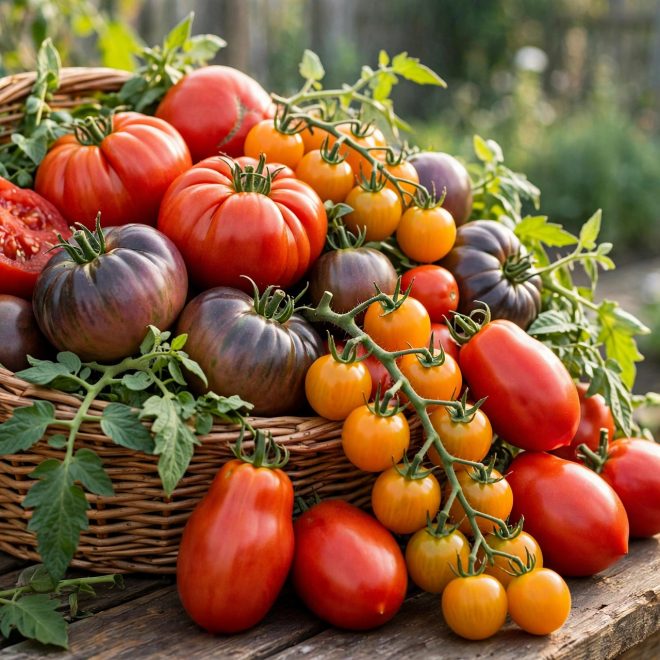

The seed catalog arrives in January, and suddenly you are choosing between 40 tomato varieties that all promise the best flavor you ever tasted. Some will ripen before your first frost and some will still be green when it hits. Some will shrug off the soil diseases that killed last year’s plants, and some will collapse by August. Choosing the right variety is one of the most important decisions you make before planting tomatoes.
This guide compares the best tomato varieties to grow from seed, ten proven picks: fast cherries, big slicers, a paste tomato for sauce, a compact bush for containers, and disease resistant hybrids. Every fact below was checked against university Extension pages and breeder listings at the time of writing. Where sources disagreed, this guide prints the range and says so.
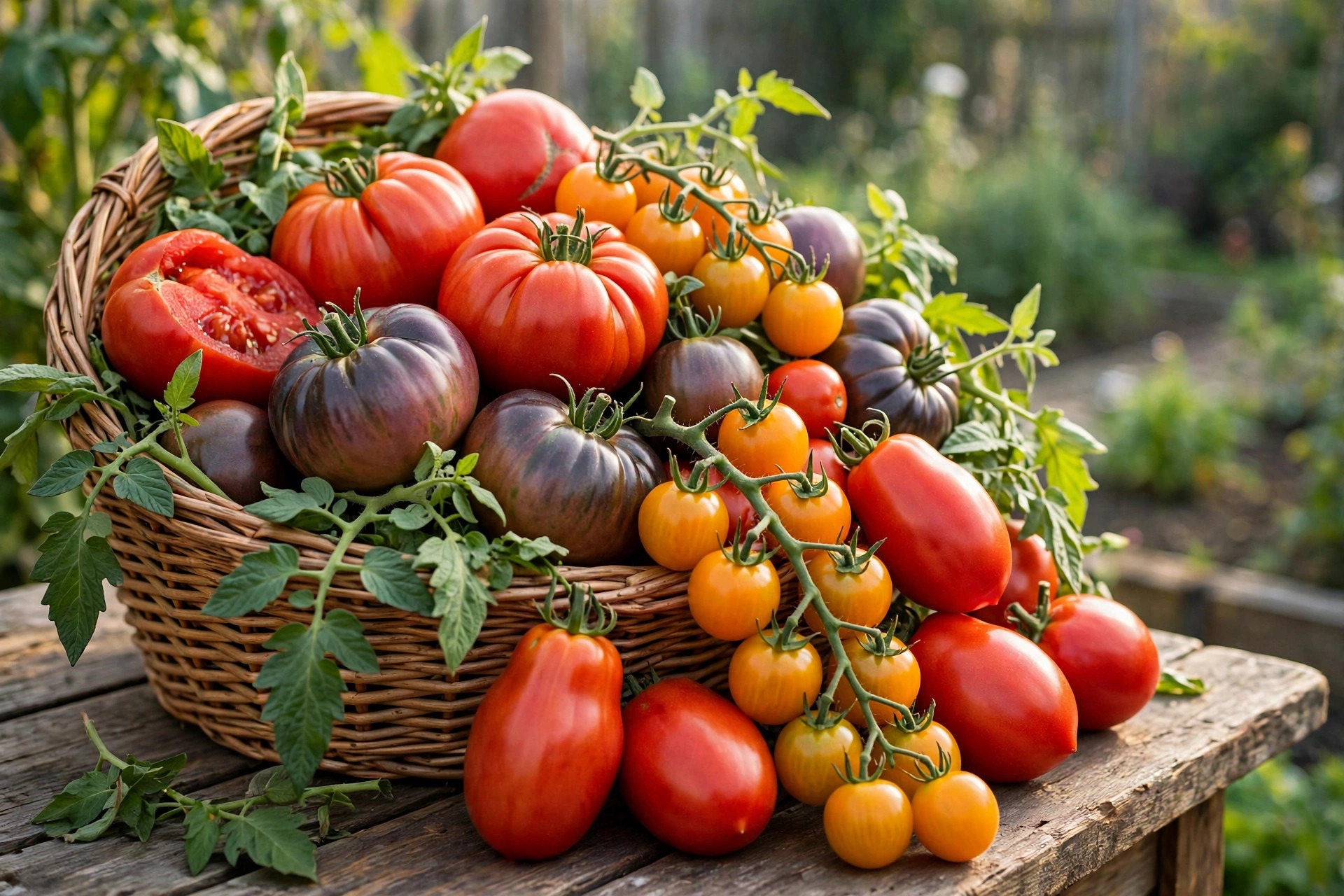
Quick Recommendation
If you only want the short answer, start here.
- First time growing from seed: Celebrity F1. It is compact, forgiving, and carries one of the broadest disease resistance packages of any home garden tomato.
- Fastest tomatoes on the table: Early Girl F1, at about 57 to 60 days from transplant, with Sungold F1 close behind.
- Best flavor, if you have a long season: Brandywine for rich slicing flavor, or Cherokee Purple for a smoky, complex taste.
- Best for snacking straight off the vine: Sungold F1, with famously sweet golden orange cherries.
- Best for sauce and canning: San Marzano, with thick flesh and few seeds.
- Best for a container or small space: Celebrity F1, which stays around 3 to 4 feet tall and fits a large pot.
- Best for a garden where disease strikes every year: Big Beef F1, with the broadest resistance package in this guide.
- Best for impressing the neighbors: Mortgage Lifter, with pink beefsteaks that routinely reach 1 to 2 pounds.
A good rule for a first year: grow three varieties, not ten. One cherry, one slicer, and one paste or extra slicer.
How to Pick a Tomato Variety
Choosing gets much easier once you understand four things: growth habit, days to maturity, disease resistance codes, and the hybrid versus heirloom trade off.
Determinate vs Indeterminate: How the Plant Grows
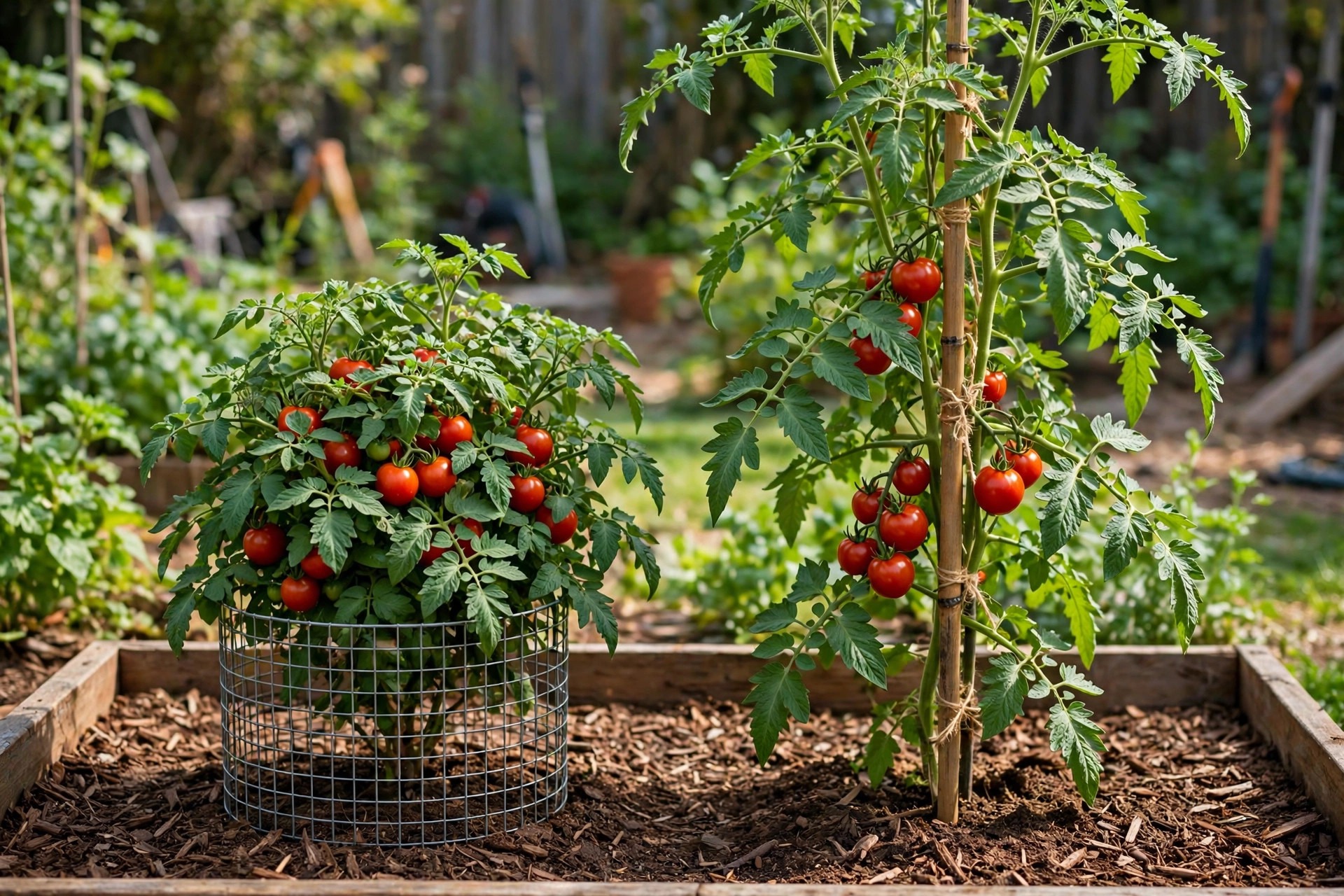
Determinate tomatoes, also called bush types, grow to a set height, usually 3 to 4 feet, then stop. They set most of their fruit in a concentrated window of a few weeks and then they are done, which makes them the right choice for containers and canning.
Indeterminate tomatoes are vines. They keep growing, flowering, and setting fruit until frost, disease, or bad weather stops them. A single plant can reach 6 to 9 feet tall, so it needs a tall stake, a sturdy cage, or a trellis from day one. Most varieties in this guide are indeterminate. The payoff is a steady harvest all season instead of one big flush.
Days to Maturity: Reading the Calendar
Days to maturity means the number of days from transplanting outdoors to the first ripe fruit. It does not count the 6 to 8 weeks your seedlings spend growing indoors. Cornell’s tomato guide sorts varieties into three groups: early (65 days or less), mid-season (65 to 80 days), and late-season (80 days or more).
That number is a planning tool, not a promise. Cool, cloudy weather slows ripening, and a stressed transplant can sit still for a week before it starts growing again. In a short season area, early varieties are the safe bet.
Disease Resistance Codes: What the Letters Mean
Seed packets carry letter codes that tell you which diseases a variety was bred to resist. The most common codes, as defined in Cornell’s vegetable trial publications, are V for verticillium wilt, F for fusarium wilt, N for root-knot nematodes, T for tobacco mosaic virus, A for alternaria stem canker, St for gray leaf spot, and TSWV for tomato spotted wilt virus.
Resistance is not immunity. A variety coded VFN can still get early blight, late blight, or blossom end rot. What the codes buy you is insurance against the specific soil diseases that are hardest to fix once they appear. If fusarium wilt killed your tomatoes last year, a variety with an F code is worth more than a variety with better flavor and no resistance. Ask your local Extension office which diseases are common in your county.
Hybrid vs Heirloom: The Real Trade Off
Hybrids, labeled F1, are crosses of two parent lines bred to combine traits like disease resistance, uniform fruit, and heavy yields. Sungold, Celebrity, Early Girl, Better Boy, Sweet Million, and Big Beef are all F1 hybrids. Their seed will not grow true to type if you save it, so you buy fresh seed each year. In return you get vigor and resistance packages that heirlooms rarely match.
Heirlooms are open pollinated varieties passed down for decades, sometimes for more than a century. Cherokee Purple, Brandywine, San Marzano, and Mortgage Lifter are heirlooms. You can save their seed, and many gardeners say their flavor is richer and more complex. The trade off is real: heirlooms usually carry little or no built-in disease resistance, they ripen later, and their yields are often lower and less even. A smart seed order mixes the two: a hybrid or two for reliability, and an heirloom or two for flavor.
Region and Zone Notes
Tomatoes are warm season annuals, so what matters is your frost free season and summer heat, not your USDA zone number. Cornell advises sowing seed indoors 6 to 8 weeks before transplanting, and waiting until at least a week or two after the last frost, with nights consistently above 45 F.
- Short seasons (Zones 3 to 5): lean on Early Girl, Sungold, and Sweet Million. Skip the 90 day heirlooms unless you have a greenhouse.
- Hot, humid summers (Zones 7 to 9): disease pressure is the main enemy. Big Beef, Celebrity, and Better Boy earn their place here.
- Hot, dry summers (Southwest): heat above 90 F can stop fruit from setting, so early and mid-season varieties often outperform late ones.
- Containers and balconies: any determinate or semi-determinate variety works in a pot of at least 5 gallons. Clemson Extension’s container tomato guide says a five-gallon bucket with drainage holes works for compact cultivars, and Celebrity is one of the most compact slicers in this guide.
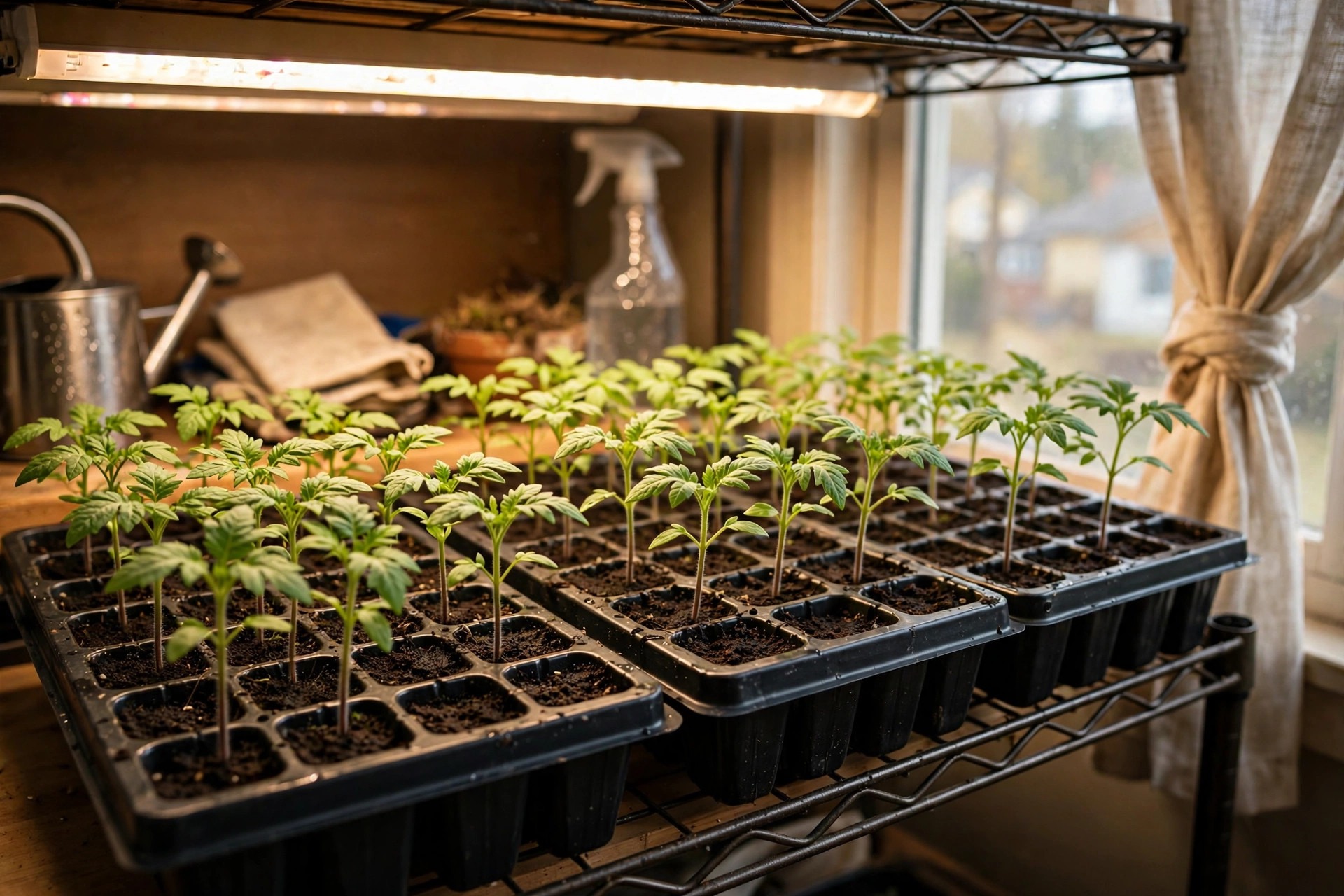
If you are new to starting tomatoes from seed, read the step by step guide first so your seedlings are strong before they ever reach the garden.
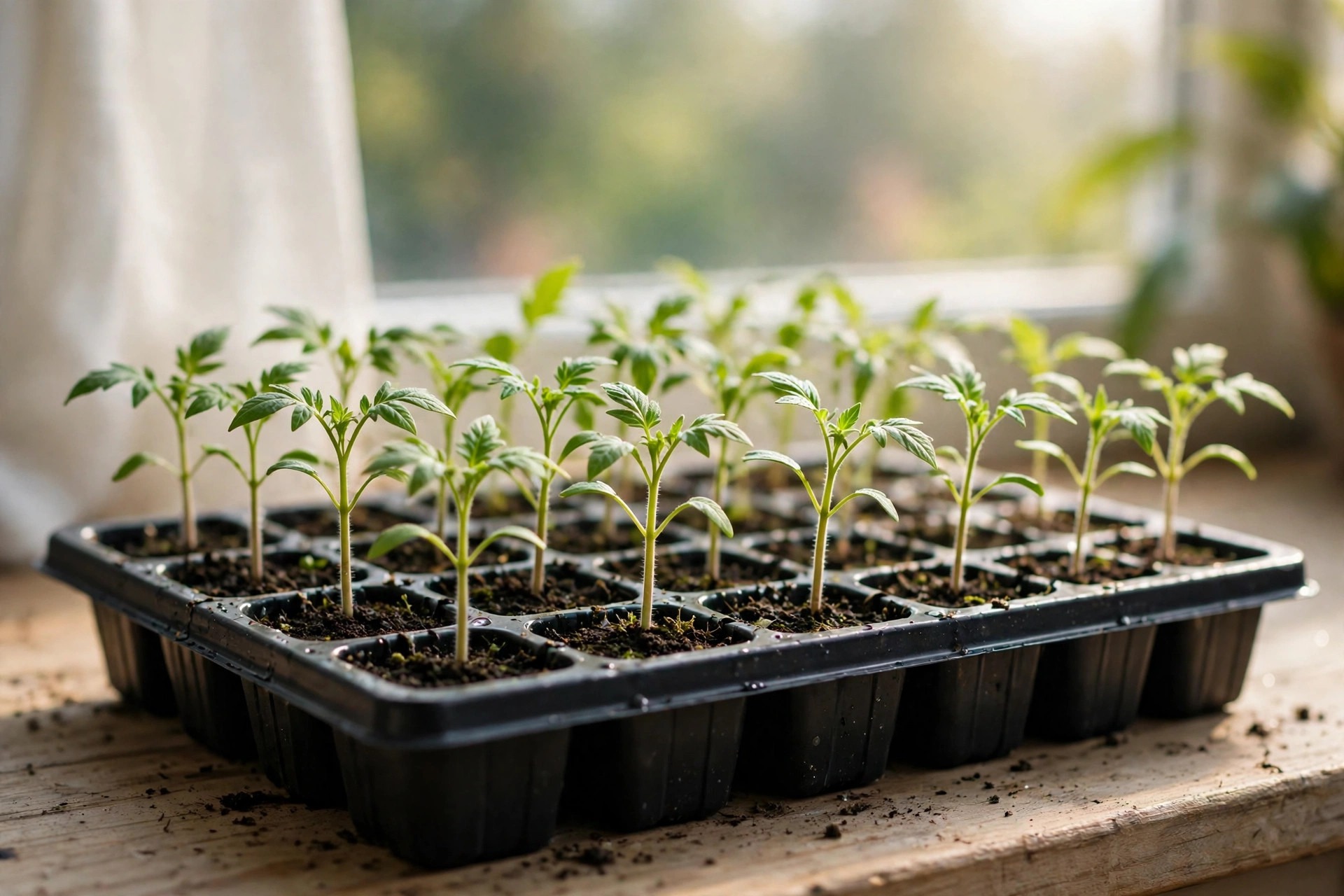
The Best Tomato Varieties to Grow from Seed at a Glance
Here are the best tomato varieties to grow from seed, the whole lineup in one place. Days to maturity are counted from transplanting outdoors, not from sowing seed.
| Variety | Type | Habit | Days to Maturity | Disease Resistance | Best For |
|---|---|---|---|---|---|
| Sungold F1 | Cherry | Indeterminate | 57-60 | TMV, Fusarium race 1 | Snacking, sweetest cherry |
| Cherokee Purple | Slicer | Indeterminate | 80 | None listed | Heirloom flavor, sandwiches |
| Brandywine | Slicer | Indeterminate | 80-90 | None listed | Rich flavor, caprese |
| Celebrity F1 | Slicer | Semi-determinate | 70-75 | V, F1-2, N, T | Beginners, containers |
| Early Girl F1 | Slicer | Indeterminate | 57-60 | V, F1-2 | Short seasons, first harvest |
| San Marzano | Paste | Indeterminate* | 75-90 | None listed | Sauce, canning, drying |
| Better Boy F1 | Slicer | Indeterminate | 70-75 | V, F, N | Heavy yields, all purpose |
| Sweet Million F1 | Cherry | Indeterminate | 65 | F1, TMV | Huge cherry harvests |
| Mortgage Lifter | Slicer | Indeterminate | 80-85 | None listed | Giant beefsteaks, sandwiches |
| Big Beef F1 | Beefsteak | Indeterminate | 70-75 | V, FF, N, T, A, St | Disease prone gardens |
*Most San Marzano seed sold today is the classic indeterminate strain. Determinate strains exist too, so check the packet before you buy.
1. Sungold F1: The Sweetest Cherry You Will Grow
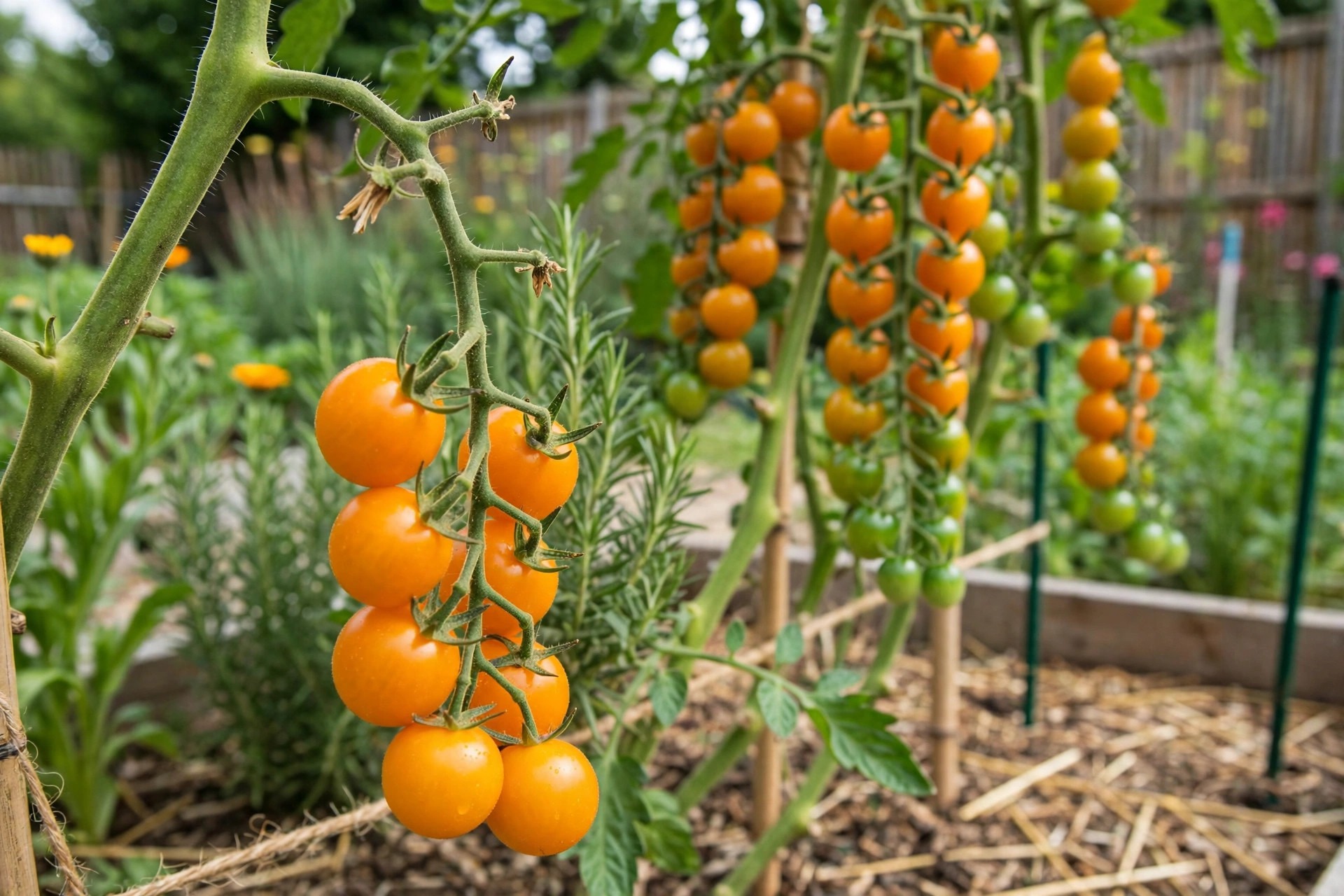
Sungold is the cherry tomato experienced gardeners name most often. It is an F1 hybrid cherry with golden orange fruit about 1 to 1.5 inches across, and its flavor is the reason it wins taste tests year after year: intensely sweet with just enough acidity to keep it from tasting flat.
Cornell lists Sungold at 57 to 60 days from transplant, and Johnny’s Selected Seeds lists 57 days, which makes it one of the earliest cherries you can grow. West Coast Seeds lists 65 days, and several other catalogs print a 57 to 65 day range. The difference is not a different strain: Sungold F1 is one hybrid, bred by the Tokita Seed Company of Japan in 1992, and sellers report different figures from their own trial conditions and counting methods. Plan on 57 to 60 days in a warm season, and closer to 65 in a cool spring. The plant is a vigorous indeterminate vine that needs a tall cage or stake, and it produces long clusters of fruit all season until frost. Resistance covers tomato mosaic virus and fusarium wilt race 1.
Two things to know: saved seed will not grow true, and very ripe fruit can split after a sudden rain, so pick fruit as soon as it turns fully gold.
Quick facts: Cherry, indeterminate, 57-60 days (65 in a cool spring), golden orange fruit, resistance TMV and Fusarium race 1, best for snacking, salads, and lunchboxes.
2. Cherokee Purple: Smoky Heirloom Flavor
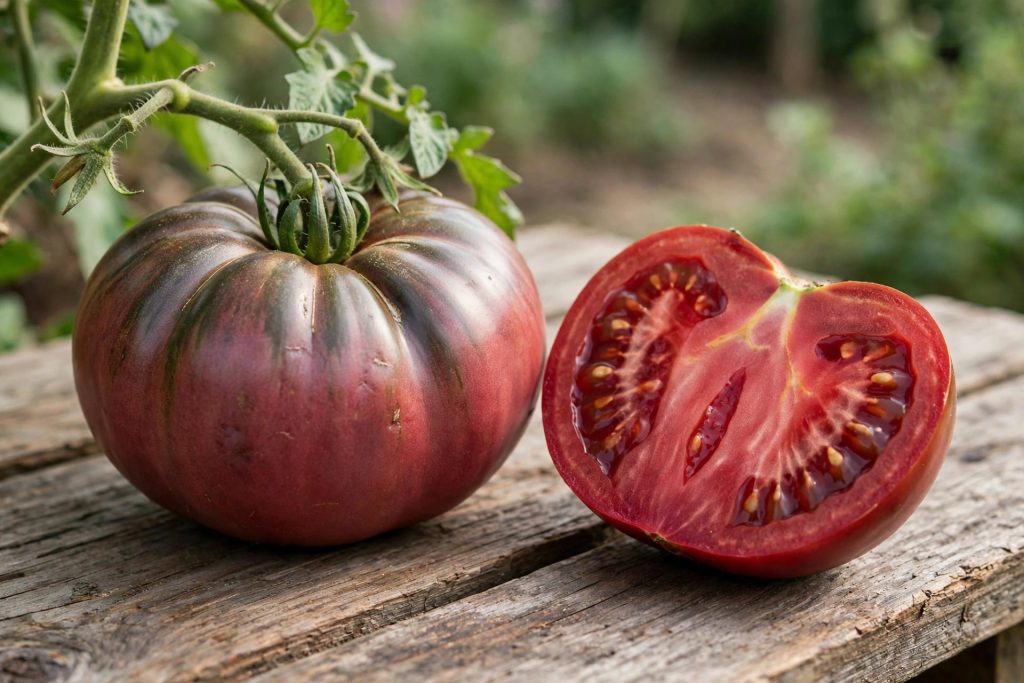
Cherokee Purple is the heirloom that converts people who think all tomatoes taste the same. Its fruit is large, slightly flattened, and dusky rose purple with green shoulders that never fully disappear, even when the tomato is ripe. Cut one open and the flesh is deep red and meaty, with a rich, smoky, almost wine-like flavor and low acidity. Baker Creek lists it as a pre-1890 Cherokee heirloom.
The numbers: indeterminate, about 80 days from transplant, fruit commonly 10 to 12 ounces. Some sources give a range of 75 to 90 days, so treat 80 as the planning figure and watch the color rather than the calendar. There is no built-in disease resistance, which is the honest trade off for the flavor. In a humid summer it picks up leaf diseases more easily than a hybrid, so give it wide spacing, mulch the soil, and water at the base instead of overhead.
Watch the green shoulders: they never fully disappear, so pick when the fruit feels slightly soft and the purple has deepened. If your season runs long and warm, it may become the tomato you grow every year.
3. Brandywine: The Flavor Benchmark
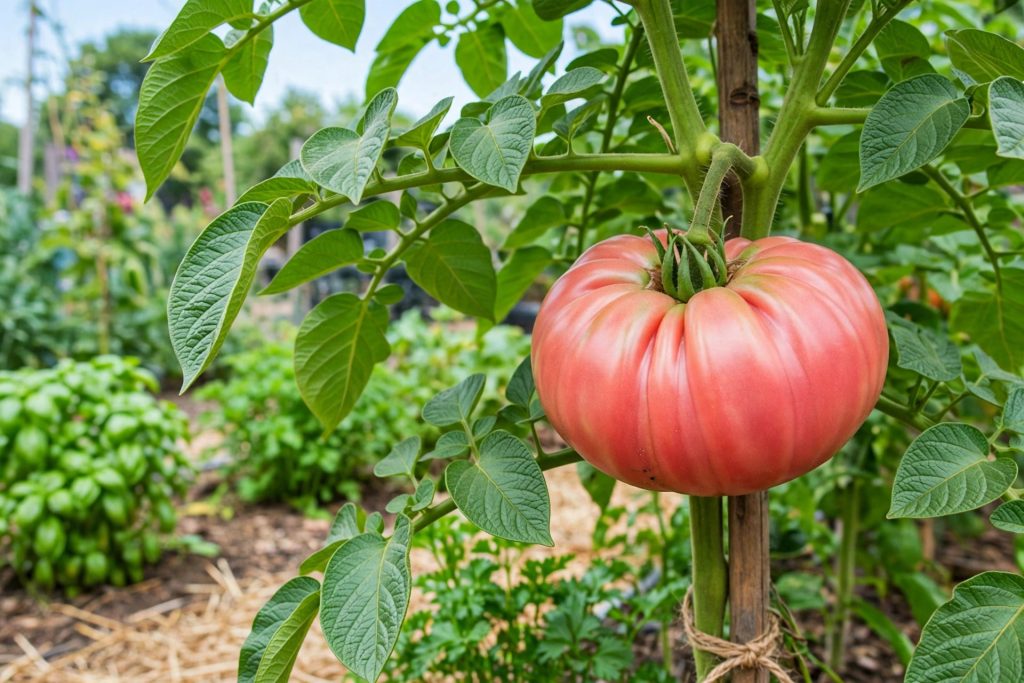
If tomato flavor had a benchmark, Brandywine would be it. This pink, potato leaf heirloom produces large beefsteak fruit, commonly 10 to 16 ounces and sometimes over a pound, with a sweet, complex, old fashioned taste that seed catalogs and taste panels have praised for decades. One slice covers a whole sandwich.
Brandywine is also the slowest variety in this guide, and that is the catch. Cornell lists it at 80 to 90 days, while several other sources give 80 to 100 days, because different strains mature at slightly different speeds. Plan on 80 to 90 days for the common pink potato leaf strain. The plant is indeterminate and vigorous, often 6 to 7 feet tall, and it yields fewer fruit than a hybrid of the same size. With no disease resistance, it does best with good airflow, rotation away from last year’s tomato bed, and consistent watering.
For a gardener with a long, warm season who grows tomatoes mainly to eat fresh, it is worth it. For a gardener with a short season or heavy disease pressure, the same space will produce more reliable tomatoes from Celebrity or Big Beef, and you can still grow one Brandywine plant for flavor.
4. Celebrity F1: The Reliable All Rounder
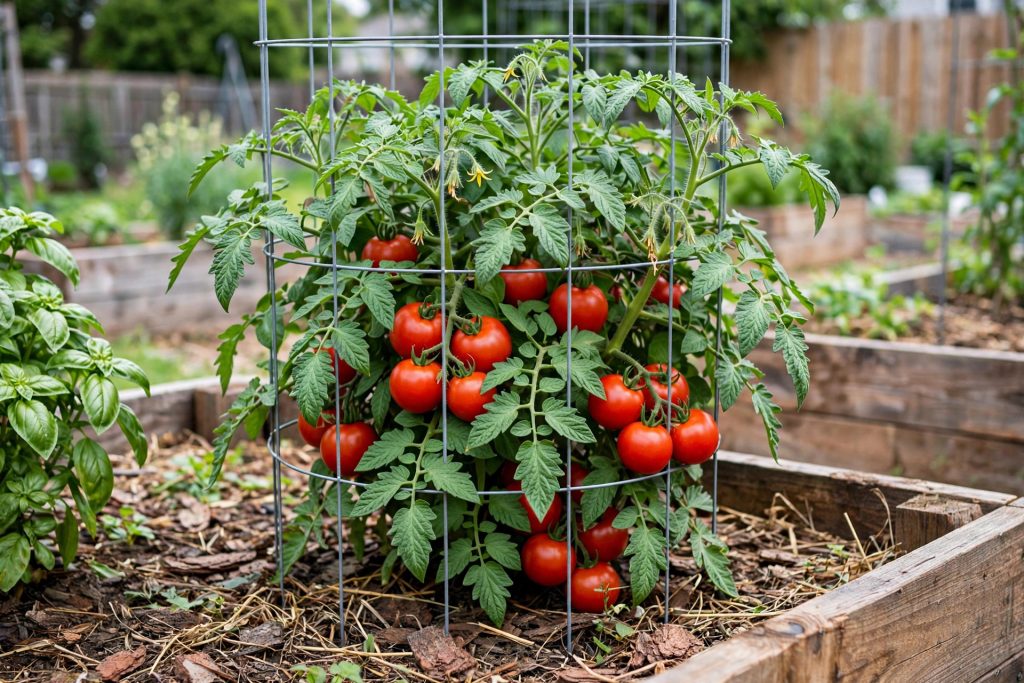
Celebrity F1 is the variety this guide recommends most often to beginners, and the reason is simple: it forgives mistakes. It is a 1984 All-America Selections winner, bred to resist verticillium wilt (V), fusarium wilt races 1 and 2 (F1-2), root-knot nematodes (N), and tobacco mosaic virus (T), a package written as V, F1-2, N, T. That is the same listing Bonnie Plants prints for Celebrity. Cornell’s variety page lists fusarium wilt race 1 only and adds alternaria stem canker, so the two sources differ on those two points, and this guide prints the Bonnie listing. Cornell describes it as a compact, determinate plant producing 7 to 10 ounce red fruit in about 70 to 75 days.
In practice, Celebrity behaves like a semi-determinate. It stays bushy, around 3 to 4 feet tall, and sets most of its crop over several weeks, but it often keeps producing until frost in a good year. That compact habit makes it the best container pick in this guide: one plant in a 5 gallon pot or larger, with a short cage, will feed a household through the summer. Clemson Extension’s container tomato guide says a five-gallon bucket with drainage holes works for compact cultivars, and Celebrity is one of the most compact slicers in this guide. The fruit is firm, crack resistant, and evenly red with no green shoulders, good for slicing, salads, salsa, and canning alike.
One honest flag: a few growers report it ripens slower than the catalog figure in cool summers, sometimes closer to 90 days.
5. Early Girl F1: First Tomatoes of Summer
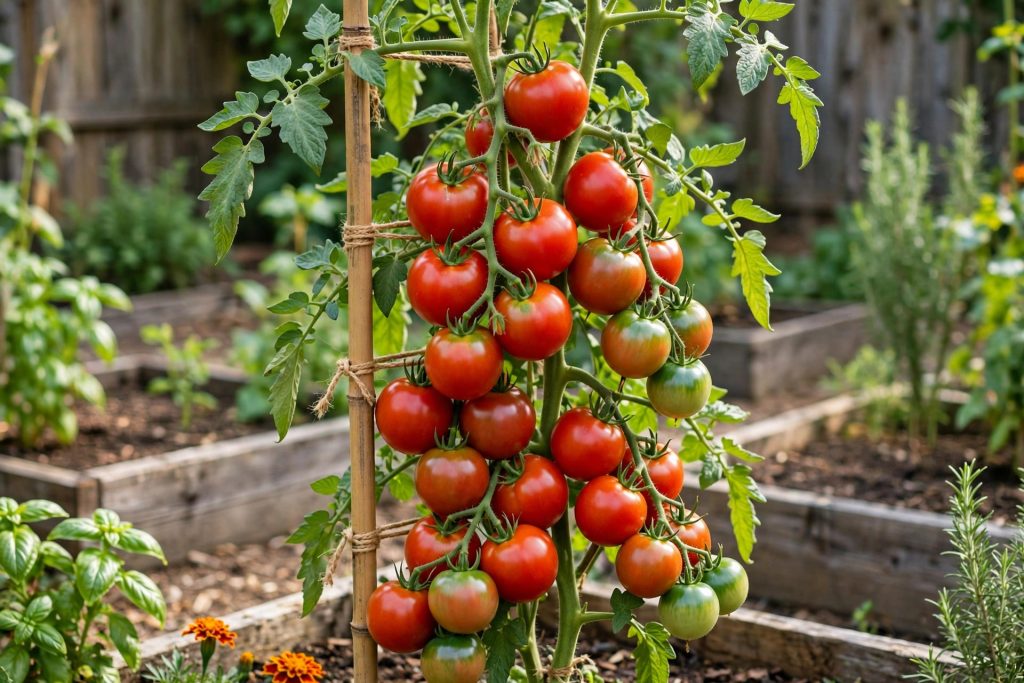
Every garden needs one variety that ripens while the others are still thinking about it, and Early Girl F1 has filled that role for decades. It is an indeterminate F1 hybrid slicer with medium, globe shaped red fruit of about 4 to 6 ounces, and it is famous for one thing: speed. Cornell places it at roughly 57 to 63 days from transplant, Burpee lists 59 days, and other sources give a range of 50 to 62 days. This guide prints 57 to 60 days as the planning figure, because that is where the most reliable sources converge.
Early Girl is a vigorous vine, not a bush, so do not skip the stake. It grows tall, needs a cage or stake, and keeps producing all season once it starts. Its resistance covers verticillium wilt and fusarium wilt races 1 and 2. Flavor is good and balanced, though not in the same league as Brandywine or Cherokee Purple. That is the trade for tomatoes weeks earlier.
Where it earns its place: short season gardens, and anyone who wants a slicer on the table in early summer. Plant one Early Girl and one mid-season slicer, and you will rarely have a gap in the harvest.
6. San Marzano: The Sauce Tomato
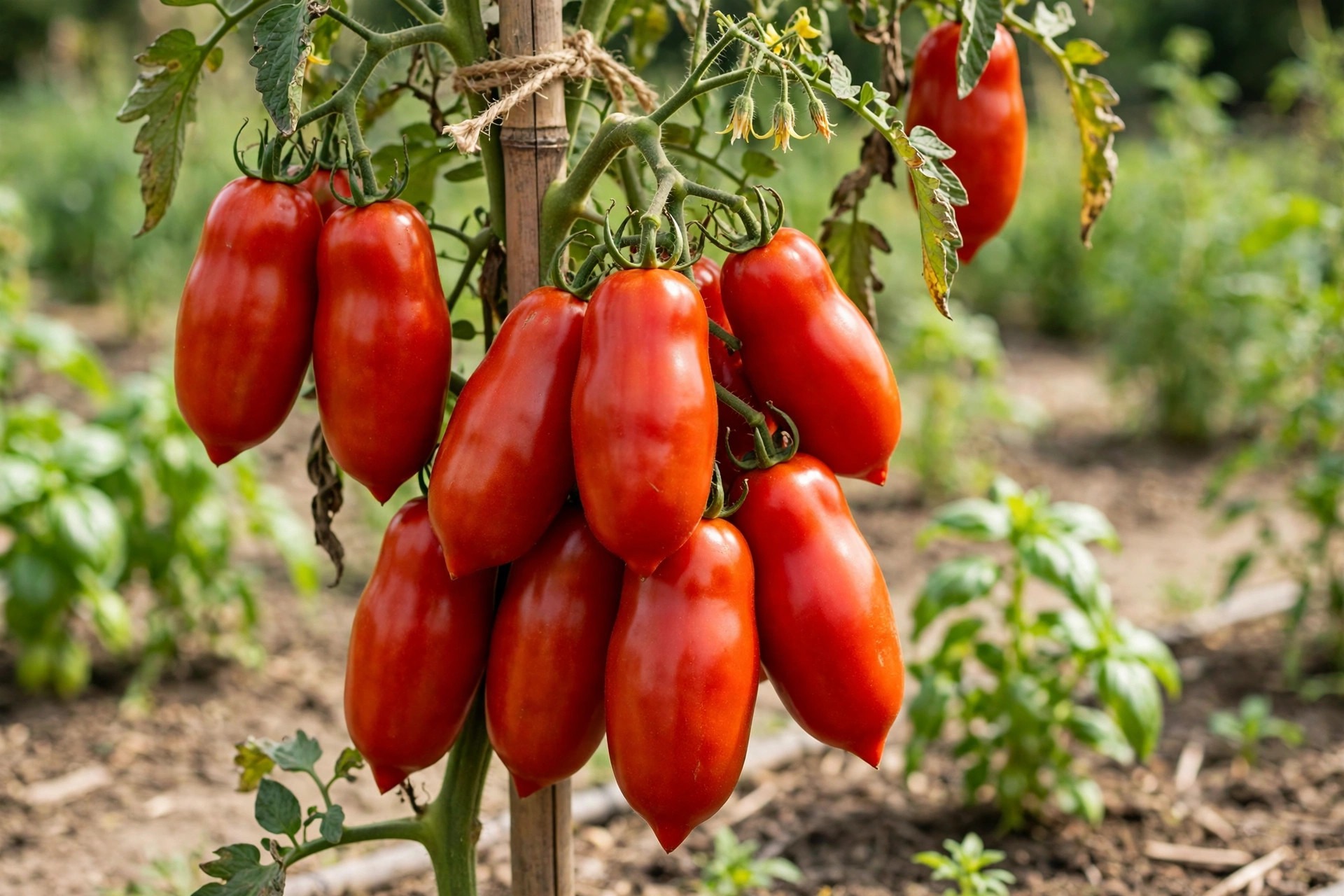
San Marzano is the tomato you grow when you plan to cook. Its fruit is a 3 inch oblong plum, usually 3 to 6 ounces, with thick meaty walls, very few seeds, and almost no watery gel. That is exactly what sauce needs: less cooking time, thicker results, and no watery separation in the jar.
The classic strain is an indeterminate heirloom that matures in 75 to 90 days, according to Gardener’s Path, with fruit borne in clusters of six to eight. Because it ripens over the whole season rather than in one flush, you need a plan for preserving: either plant enough that a worthwhile batch ripens together, or chop and freeze the fruit as it comes in until you have enough for a pot of sauce. About five pounds of fresh tomatoes makes roughly a quart of thin sauce, so a sauce garden needs more plants than a salad garden.
One caution: the name covers several strains, and most are indeterminate, but determinate “short vine” strains are sold too. Check the packet to confirm which type you are buying. Give the vines strong support, because a cluster of six to eight fruit is heavy.
7. Better Boy F1: The Workhorse Slicer
Better Boy F1 is the tomato for a gardener who wants a lot of big, classic red slicers and does not want to fuss over them. It is an indeterminate F1 hybrid, an All-America Selections winner from 1955, producing round, bright red fruit of 12 to 16 ounces, with some reaching a full pound. Days to maturity run 70 to 75 days, and the vines grow 5 to 8 feet tall, so a tall cage or stake is not optional.
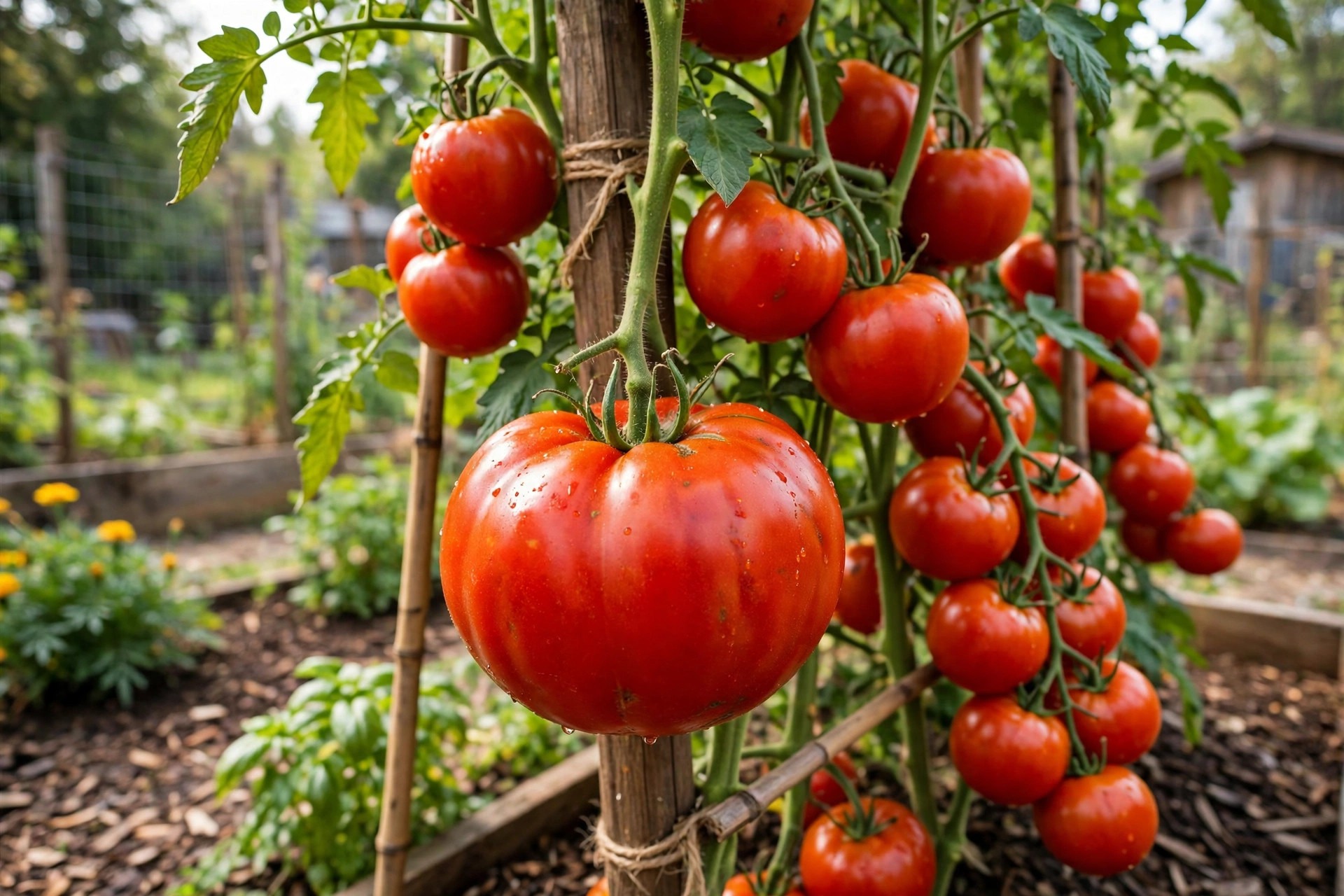
Its resistance package is VFN: verticillium wilt, fusarium wilt, and root-knot nematodes. Burpee’s own resistance chart lists Better Boy as V, F, N, and Bonnie Plants lists the same three. The listings that name a fusarium race give race 1 only, so this guide does not claim race 2 resistance. Some other listings add tobacco mosaic virus (T), which is why you may also see it written as VFNT, but neither Burpee’s chart nor Bonnie’s listing includes T for this variety.
Better Boy also holds a piece of tomato history. One plant famously produced more than 340 pounds of fruit, a Guinness World Record. Your plant will not do that, but it points to the real strength here: a vigorous, heavy yielding plant that keeps producing from midseason until frost. If you could only grow one slicer, and you wanted reliability above all else, this is a strong candidate.
8. Sweet Million F1: Hundreds of Cherries From One Plant
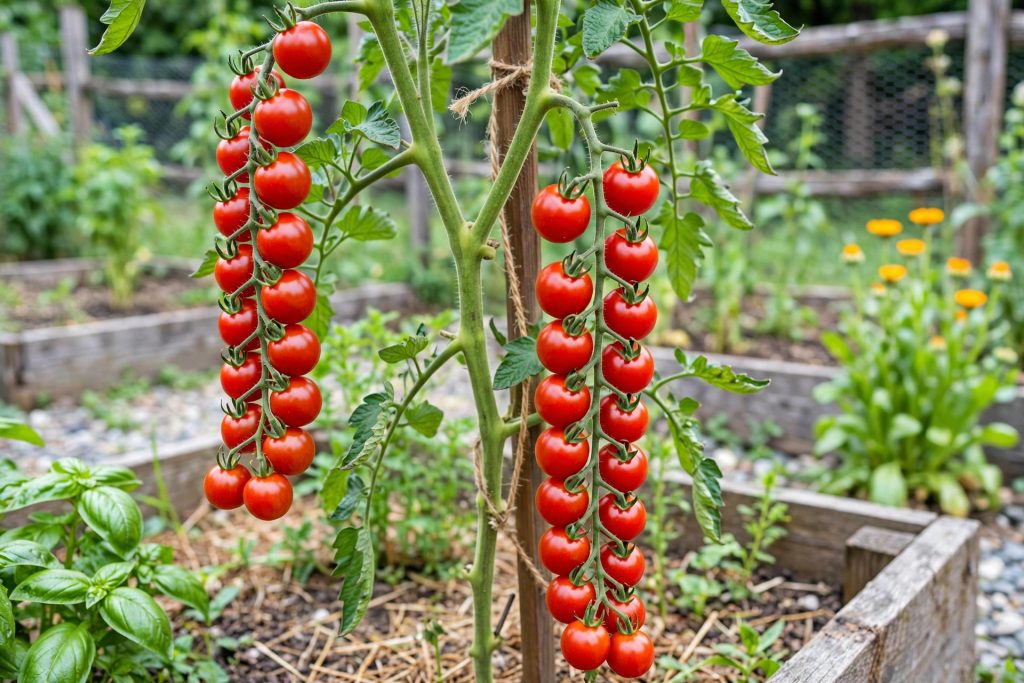
Sweet Million F1 is the cherry tomato for a gardener who wants volume. It is an indeterminate F1 hybrid that produces long trusses of about 15 to 20 small, bright red, crack resistant fruit, and a single healthy plant can produce hundreds of them over a season. The fruit is about an inch across, sweet, and firm enough to hold up in salads and lunchboxes without splitting.
Days to maturity are about 65 days from transplant, with some sources giving 65 to 70 days, so it is a mid-season cherry rather than an early one. Resistance covers fusarium wilt race 1 and tobacco mosaic virus. Stake the vigorous vines well and prune suckers lightly for airflow.
Compared with Sungold, Sweet Million is red instead of gold, a little less sweet, and much more productive. If you grow for snacking, Sungold wins on flavor. If you grow for a family that eats cherries by the handful, Sweet Million gives you more fruit per plant. Growing both stretches the cherry season.
9. Mortgage Lifter: The Tomato With a Story
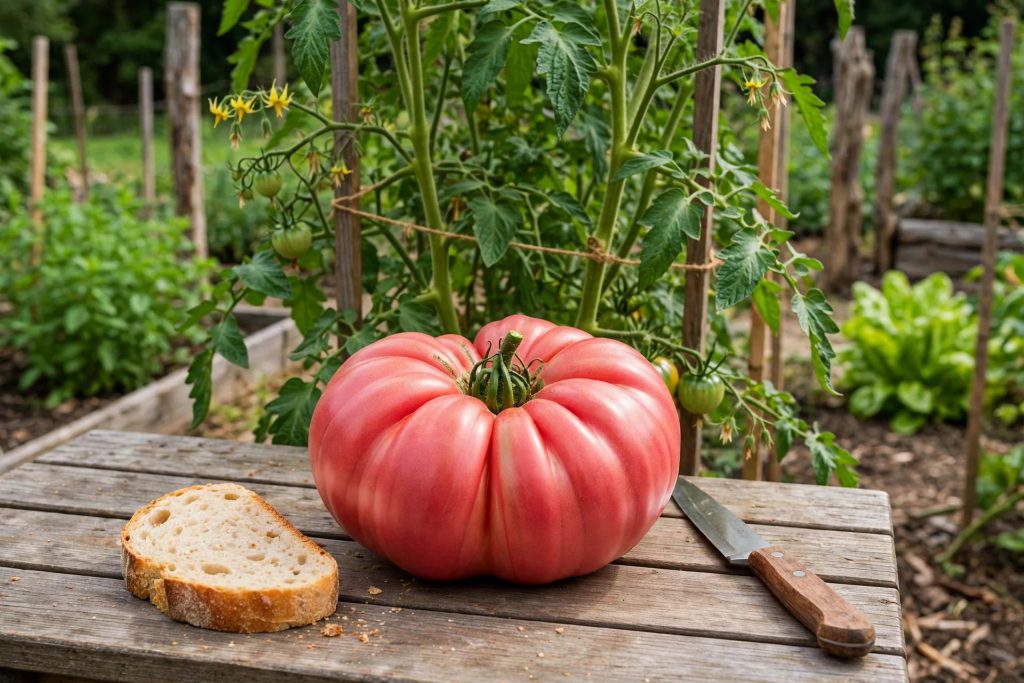
Mortgage Lifter comes with the best story in the tomato world, and it happens to be true. In the 1930s, a West Virginia mechanic named M.C. Byles, known as Radiator Charlie, crossed several large varieties and sold seedlings until he had paid off his 6,000 dollar mortgage. The tomato he created is a pink to pinkish red beefsteak, meaty with few seeds, and very large: commonly 1 to 2 pounds per fruit, with Cornell noting that some reach 2.5 pounds or more.
It is an open pollinated heirloom on indeterminate vines that reach 6 to 9 feet, and it matures in about 80 to 85 days, with some sources giving up to 90 days depending on the strain. The flavor is rich and meaty with low acidity, and one slice covers a sandwich.
Mortgage Lifter needs what all big heirlooms need: a long warm season, a very strong support, and patience. Plant it beside a fast hybrid like Early Girl, and you will have tomatoes to eat while the big pink beefsteaks are still sizing up.
10. Big Beef F1: The Toughest Hybrid in the Guide
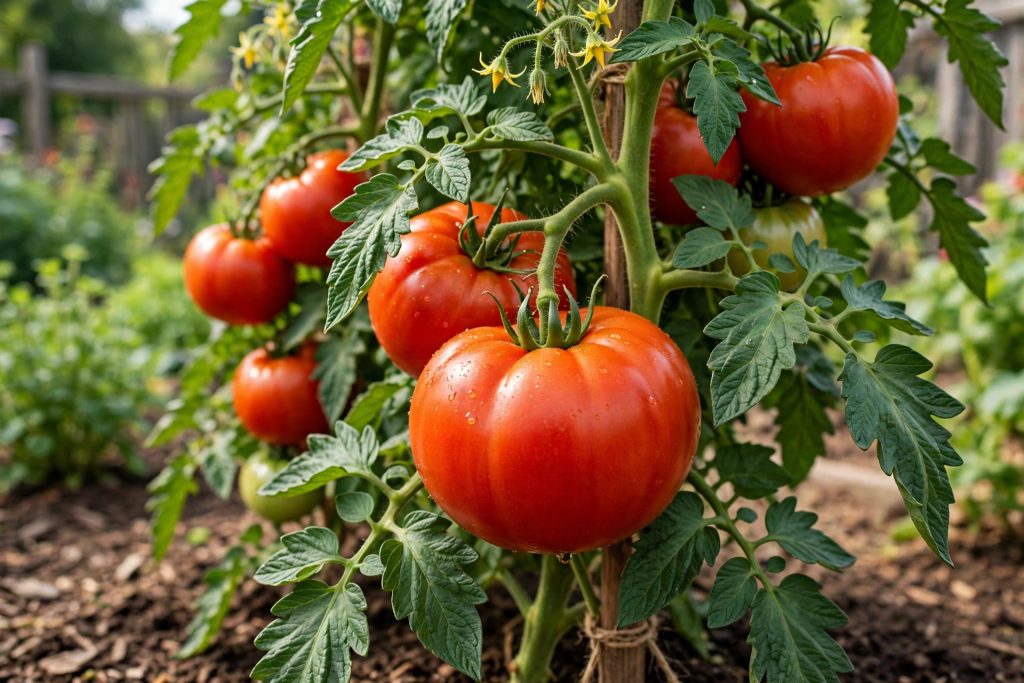
Big Beef F1 is the variety to plant when your garden has a history of tomato disease. It is an indeterminate F1 hybrid beefsteak and a 1994 All-America Selections winner, and it carries the broadest resistance package in this guide: verticillium wilt, fusarium wilt races 1 and 2, nematodes, tobacco mosaic virus, alternaria stem canker, and gray leaf spot, usually written as VFFNTASt. Cornell’s variety database lists it at 70 to 75 days to maturity, with fruit of 8 to 12 ounces, globe shaped and slightly acidic, and notes that it resists cracking.
The flavor is good, old fashioned, and slightly acidic, though most growers would rank it a step below Brandywine and Cherokee Purple. What it gives up in flavor it returns in reliability: the vines are vigorous, often 6 to 7 feet tall, they keep producing until frost, and the plants stay healthy in gardens where heirlooms give up by August.
If your soil has fusarium or verticillium wilt, or you simply want the highest chance of a full harvest with the least worry, Big Beef is the pick.
How We Chose These 10 Varieties
This guide was not built from hands-on testing. No one on our team grew all ten of the best tomato varieties to grow from seed side by side in a trial garden. Instead, each variety was scored from verified breeder and seed company specifications, university Extension variety descriptions, and published owner feedback, including Cornell’s gardener review database.
| Factor | Weight | What It Covers |
|---|---|---|
| Flavor | 25% | Sweetness, acidity balance, texture, and how often gardeners praise the taste |
| Yield and reliability | 25% | How much fruit a plant produces and how steadily it produces through the season |
| Disease resistance | 20% | The breadth of the resistance package and how it matches common garden diseases |
| Ease from seed | 15% | Germination vigor, seedling strength, and how forgiving the variety is for a new grower |
| Region fit | 15% | How well the variety suits short seasons, hot humid summers, and container growing |
A variety did not need to score highly on every factor to make the list. Brandywine scores at the top on flavor and low on disease resistance. Celebrity scores the other way round.
Growing Tips and Common Mistakes
Picking the best tomato varieties to grow from seed is half the job. The other half is giving them a good start.
Start seed at the right time. Sow indoors 6 to 8 weeks before your last frost date. Sowing earlier gives you only tall, leggy seedlings. Keep the grow light 2 to 3 inches above the leaves and raise it as the plants grow.
Harden off before transplanting. Move seedlings outdoors for a few hours a day over 7 to 10 days. Plants put straight from a windowsill into full sun will wilt and stop growing for a week or more.
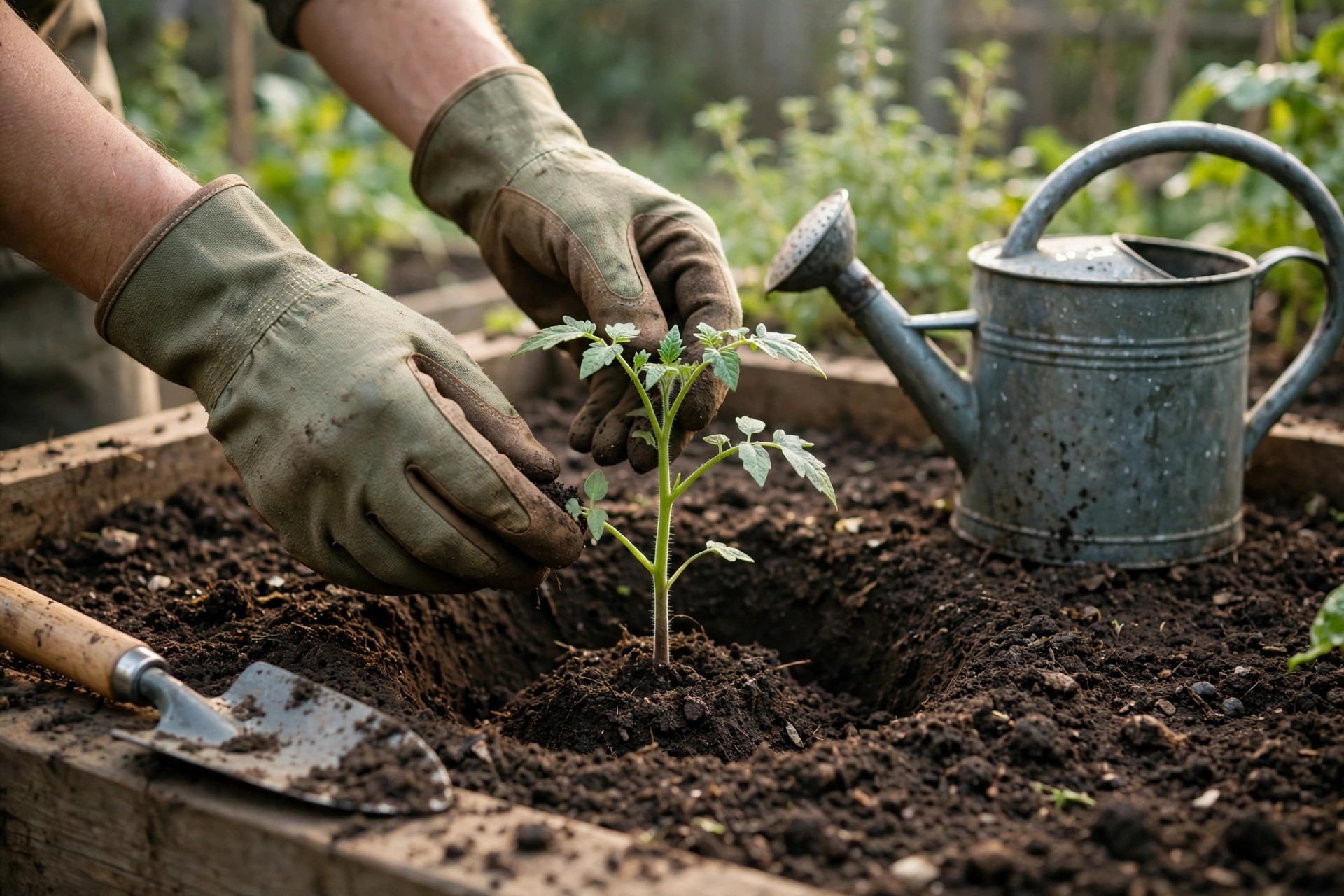
Plant deep. Tomatoes form roots all along a buried stem, so set the transplant deep enough that the soil sits just below the lowest leaves.
Water the soil, not the leaves. Wet leaves invite early blight and septoria leaf spot, so water at the base in the morning and keep the soil evenly moist. Uneven watering is the main cause of blossom end rot and cracked fruit.
Mulch after the soil warms. A 2 to 3 inch layer of straw or shredded leaves holds moisture and keeps soil from splashing onto lower leaves.
Support early. Put the stake or cage in at planting time, not when the plant is already leaning.
Do not overfeed with nitrogen. Too much nitrogen grows a big leafy plant with few fruit. A balanced fertilizer at planting, plus a side dressing when fruit is about an inch across, is enough for most gardens. The University of Georgia Extension bulletin Georgia Homegrown Tomatoes (B-1271) gives exactly this schedule: work a complete 10-10-10 fertilizer into the bed before planting, then side-dress with 10-10-10 when the first fruit is about the size of a quarter, and repeat every 3 to 4 weeks. Clemson Extension’s tomato guide (HGIC 1323) times the side dressing 3 to 4 weeks after planting.
If your seedlings went tall and pale indoors, the cause is almost always weak light. The fix is covered in the leggy seedlings guide.
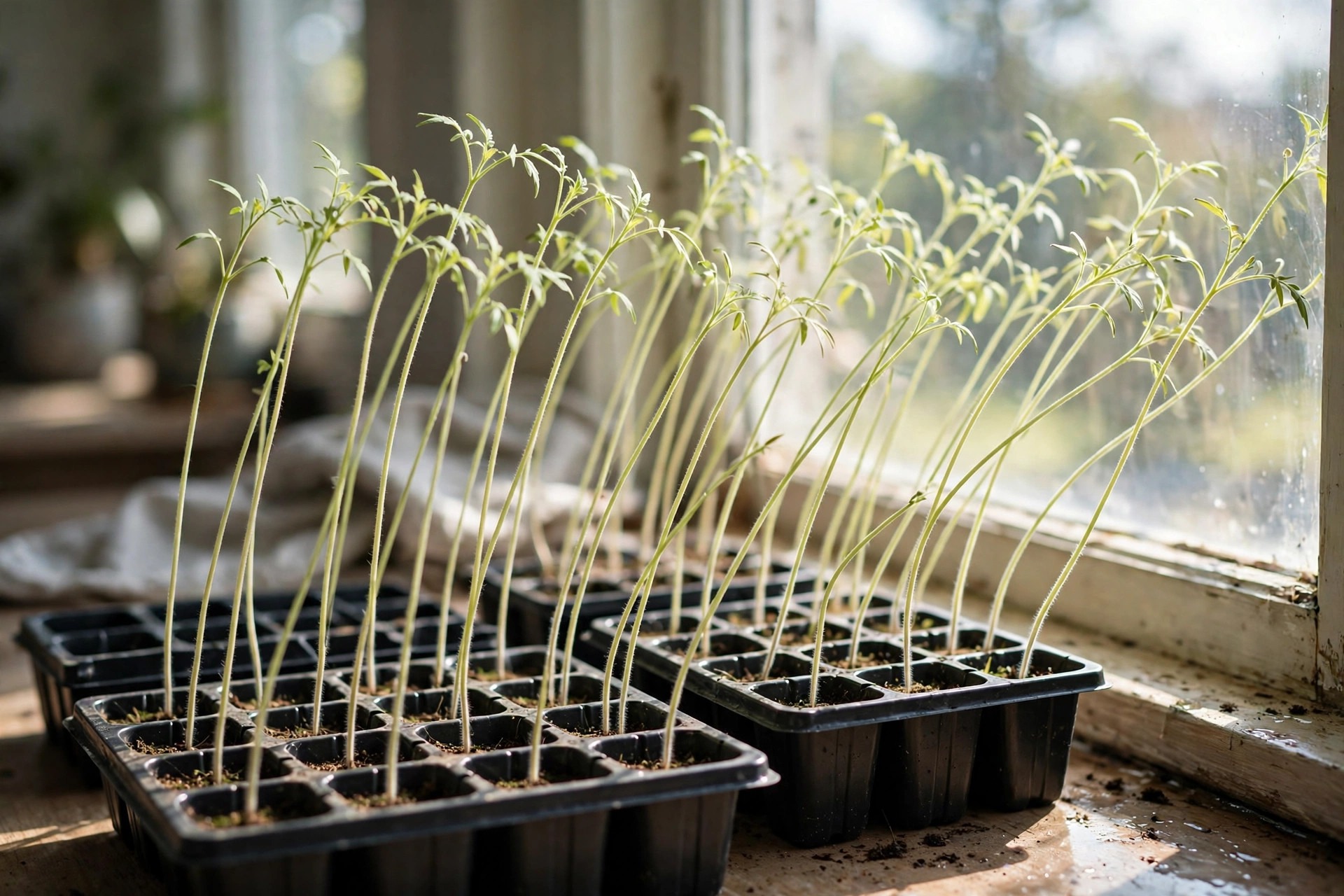
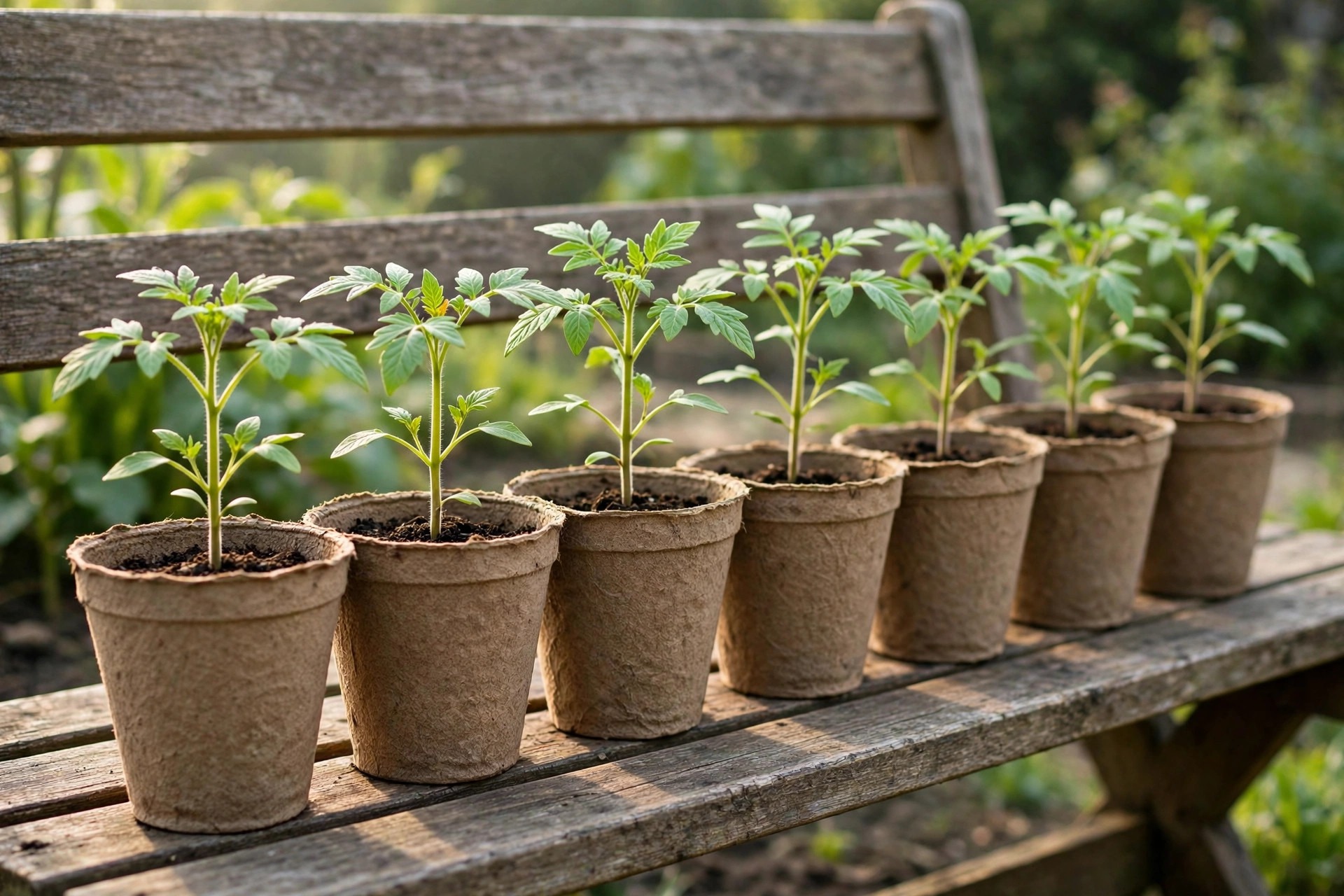
When your seedlings are ready to go outside, the transplanting guide walks through hardening off, spacing, and planting depth.
Feeding matters too, once fruit starts to set. The fertilizer guide explains what tomatoes need and when to apply it.

Common mistakes, in short: starting seed too early, skipping hardening off, planting in cold soil, watering from above, and crowding plants. Cornell advises rotating tomatoes away from beds that grew tomatoes, potatoes, peppers, or eggplant for at least two years, because those crops share soil diseases.
Best Tomato Varieties to Grow from Seed: A Quick Recap
| Variety | Best Use |
|---|---|
| Sungold F1 | Sweetest cherry for snacking and salads |
| Cherokee Purple | Heirloom flavor for sandwiches and fresh eating |
| Brandywine | Richest flavor for caprese and slicing |
| Celebrity F1 | Reliable all rounder, beginners and containers |
| Early Girl F1 | First slicer of summer, short seasons |
| San Marzano | Sauce, canning, drying, and roasting |
| Better Boy F1 | Heavy yields of big classic slicers |
| Sweet Million F1 | Huge harvests of red cherries |
| Mortgage Lifter | Giant pink beefsteaks with a story |
| Big Beef F1 | Disease prone gardens, reliable main crop |
Final Thoughts
The best tomato varieties to grow from seed are the ones that fit your season, your space, and the way you cook. A gardener with a short season and a balcony needs Early Girl and Celebrity. A gardener with a long, warm summer and a big bed can grow Brandywine and Mortgage Lifter beside a disease resistant hybrid. There is no single best tomato, only the best tomato for your garden.
If you are starting out, keep it simple: one cherry, one slicer, and one more of your choice. Sungold, Celebrity, and San Marzano would cover snacking, slicing, and sauce in one small bed. Grow them, take notes on what thrived and what struggled, and let next year’s seed order be guided by your own garden.
References
- Cornell University, Home Gardening: Tomatoes Growing Guide Supports the days to maturity classes, sowing and transplant timing, spacing, planting depth, and determinate versus indeterminate habits.
- Cornell Cooperative Extension, Vegetable Varieties for Gardeners Supports the variety details for Sungold (57 to 60 days), Celebrity (70 to 75 days, 7 to 10 ounce fruit, AAS 1984), Brandywine (80 to 90 days, 10 to 24 ounce fruit), and Big Beef (70 to 75 days, 8 to 12 ounce fruit, AAS 1994).
- Cornell Cooperative Extension, VegEdge, Vol. 22, Issue 01, January 2026 Supports the definitions of the disease resistance codes used in this guide.
- Gardener’s Path, Tips for Growing San Marzano Tomatoes Supports San Marzano maturing in 75 to 90 days and that most strains are indeterminate while determinate strains also exist.
- Baker Creek Heirloom Seeds, Cherokee Purple Tomato Seeds Supports Cherokee Purple as a pre-1890 heirloom, indeterminate, 80 days to maturity.
- University of Georgia Extension, Georgia Homegrown Tomatoes (Bulletin 1271, Robert R. Westerfield). Supports working a complete 10-10-10 fertilizer into the bed before planting and side-dressing with 10-10-10 when the first fruit is about the size of a quarter, repeated every 3 to 4 weeks.
- Clemson Cooperative Extension, Tomatoes in Containers. Supports a five-gallon bucket with drainage holes for compact tomato cultivars.
- Bonnie Plants, Celebrity Tomato. Supports Celebrity resistance to verticillium wilt (V), fusarium wilt races 1 and 2 (F), nematodes (N), and tobacco mosaic virus (T).
- Burpee Customer Service Center, Tomato Disease Resistance Chart. Lists Better Boy Hybrid as V, F, N. Bonnie Plants, Better Boy Tomato, lists the same three: verticillium wilt (V), fusarium wilt (F), and nematodes (N).
- Cornell Cooperative Extension, Vegetable Varieties for Gardeners, Celebrity variety page. Lists Celebrity resistance as fusarium wilt race 1, verticillium wilt, nematodes, alternaria, and tobacco mosaic virus, the listing this guide notes as differing from Bonnie Plants.
Frequently Asked Questions
What is the best tomato variety for beginners to grow from seed?
Celebrity F1 is the safest first pick. It is compact and semi-determinate, it resists verticillium wilt, fusarium wilt, nematodes, and tobacco mosaic virus, and its 7 to 10 ounce fruit is good for slicing and canning. Early Girl F1 is the other strong beginner choice, because it ripens fast.
Which tomato variety is best for containers or a small space?
Celebrity F1, because its semi-determinate habit stays around 3 to 4 feet tall and fits a 5 gallon pot or larger with a short cage. Cherry types also do well in pots. Avoid big indeterminate beefsteaks like Mortgage Lifter and Brandywine in containers. That is why Celebrity tops the list of the best tomato varieties to grow from seed for small spaces. Clemson Extension’s container tomato guide says a five-gallon bucket with drainage holes works for compact cultivars, and Celebrity is one of the most compact slicers in this guide.
What is the best tomato variety for sauce?
San Marzano. Its thick flesh, few seeds, and low water content mean less cooking time and thicker sauce than a slicer can give. Plant several: about five pounds of fresh tomatoes makes roughly a quart of thin sauce. If your season is short, look for a determinate strain or a faster paste type, because the classic strain needs 75 to 90 days.
How many tomato varieties should I grow in one season?
Three is a good number for most home gardens: one cherry, one slicer, and one paste type or second slicer. That gives you variety without turning watering and staking into a second job. Experienced gardeners with a large bed often grow five or six, but each added variety adds work.
Which tomato varieties resist disease best?
Big Beef F1 carries the broadest resistance in this guide, covering verticillium wilt, fusarium wilt, nematodes, tobacco mosaic virus, alternaria stem canker, and gray leaf spot. Celebrity F1 is close behind with V, F1-2, N, T resistance. Remember that resistance is not immunity: even resistant varieties can get early blight, late blight, and blossom end rot, so rotate beds and water at the base.
Should I grow heirloom or hybrid tomatoes from seed?
Grow both. Hybrids like Sungold, Celebrity, and Big Beef give you disease resistance, uniform fruit, and reliable yields, but their seed will not grow true if you save it. Heirlooms like Cherokee Purple, Brandywine, and Mortgage Lifter give you richer flavor and seed you can save, but they ripen later and carry little disease resistance. A mixed planting gives you a reliable harvest and the best tasting fruit.

Thesis Link : https://saulibrary.edu.bd/daatj/public/uploads/BAU200601_19-Pp_5.pdf
- Best Tomato Varieties to Grow from Seed - November 15, 2026
- Why Are My Tomato Seedlings Leggy - November 15, 2026
- 10 Best Mulches for Vegetable Gardens - November 14, 2026