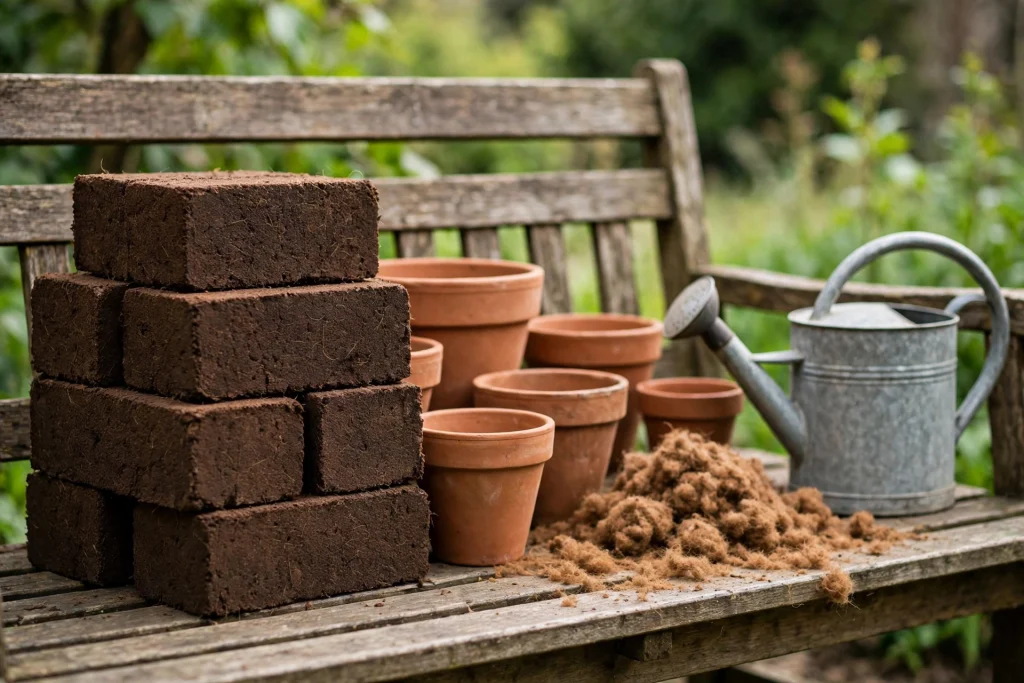

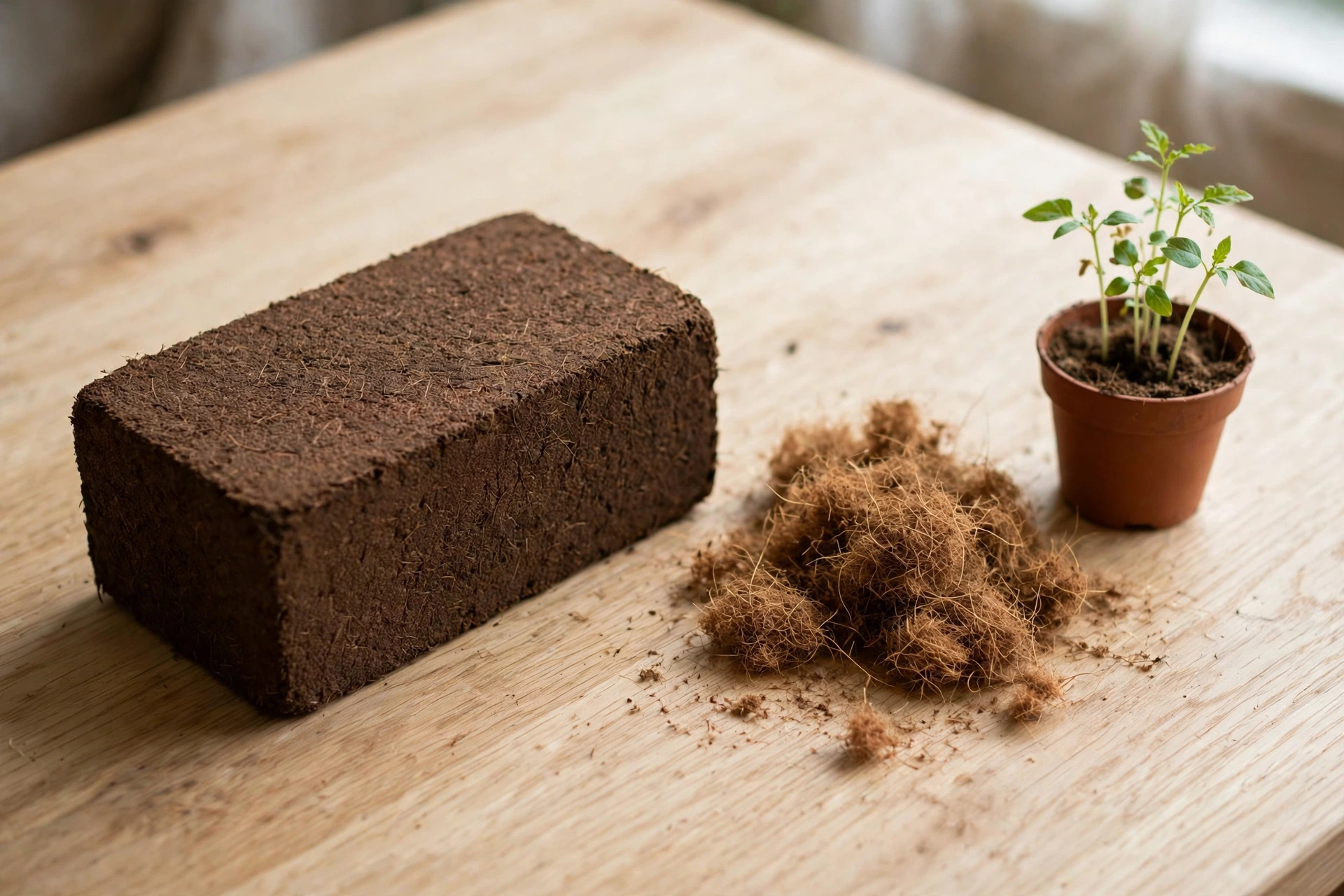
A coco coir brick looks like nothing much on the shelf. It is a hard, flat block about the size of a paperback book, and it weighs about as much as a bag of sugar. Add warm water, wait half an hour, and that same block opens into a bucket of soft, dark, springy growing medium. No bag of damp soil to haul, no dust cloud in the car, no peat bog dug up to fill your pots.
That convenience is why the best coco coir bricks have become a staple for American gardeners. They store on a shelf for years, they travel light, and a single brick fills several pots or a whole seed tray. But not every brick is equal. Some are washed and buffered and ready to plant the same day. Others still carry enough salt from the coconut husk to stress young roots, and they need a rinse and a soak in calcium before they are safe. The difference matters most for seedlings and for plants fed with liquid fertilizer, where salt and calcium problems show up fast.
This roundup compares ten coco coir bricks you can buy in the United States, using manufacturer specifications and owner feedback. Every expansion figure, certification and buffering claim below comes from the maker’s own listing or a retailer page, and where sources disagree we say so instead of printing the bigger number. No brick here was tested in our own garden. Scores are editorial, worked out from the scoring system in the How We Chose section.
Quick Recommendation
Short on time? Here is the fast answer.
- Best overall: Coco Bliss 650g Bricks from Plantonix. OMRI listed, pre-rinsed and pre-screened, and the 650g size is the most useful brick in the garden. One brick makes about 2 gallons, enough for a seed tray or two medium pots.
- Best buffered brick: CANNA Coco Brick. Washed and buffered at the factory, RHP certified, and each 10-liter cube expands to 20 liters, and the two-cube package makes 40 liters. If you grow in pure coco and feed liquid nutrients, this is the brick that asks the least of you.
- Best bulk block: Nutrifield Coco Mega Brick, 5 kg. About 55 liters from one block, pre-buffered with calcium, and the cheapest way to fill raised beds and big containers.
- Best for seed starting: Burpee Organic Coconut Coir Concentrated Seed Starting Mix. Two small bricks, 16 quarts total, made for trays and tiny pots.
- Best budget multi-pack: Legigo 10-Pack. Ten 650g bricks, low EC and pH balanced, so you can keep a stack on the shelf and open one whenever a pot needs filling.
If you only buy one product from this list, buy the Coco Bliss 650g 5-pack. It is the brick most gardeners will reach for most often, and it is the easiest to use well.
Best Coco Coir Bricks Compared
| Product | Brick size | Expands to | Buffered | Best for | Our rating |
|---|---|---|---|---|---|
 Coco Bliss 650g Bricks (Plantonix) | 650 g | 9 L (about 2.4 gal) per brick | Pre-rinsed, not pre-buffered | Everyday pots and seed trays | 9.6 |
 CANNA Coco Brick | 10 L compressed per cube | 20 L per cube, 40 L per package (about 1.4 cu ft) | Yes, washed and buffered | Pure coco growing, hydroponics | 9.5 |
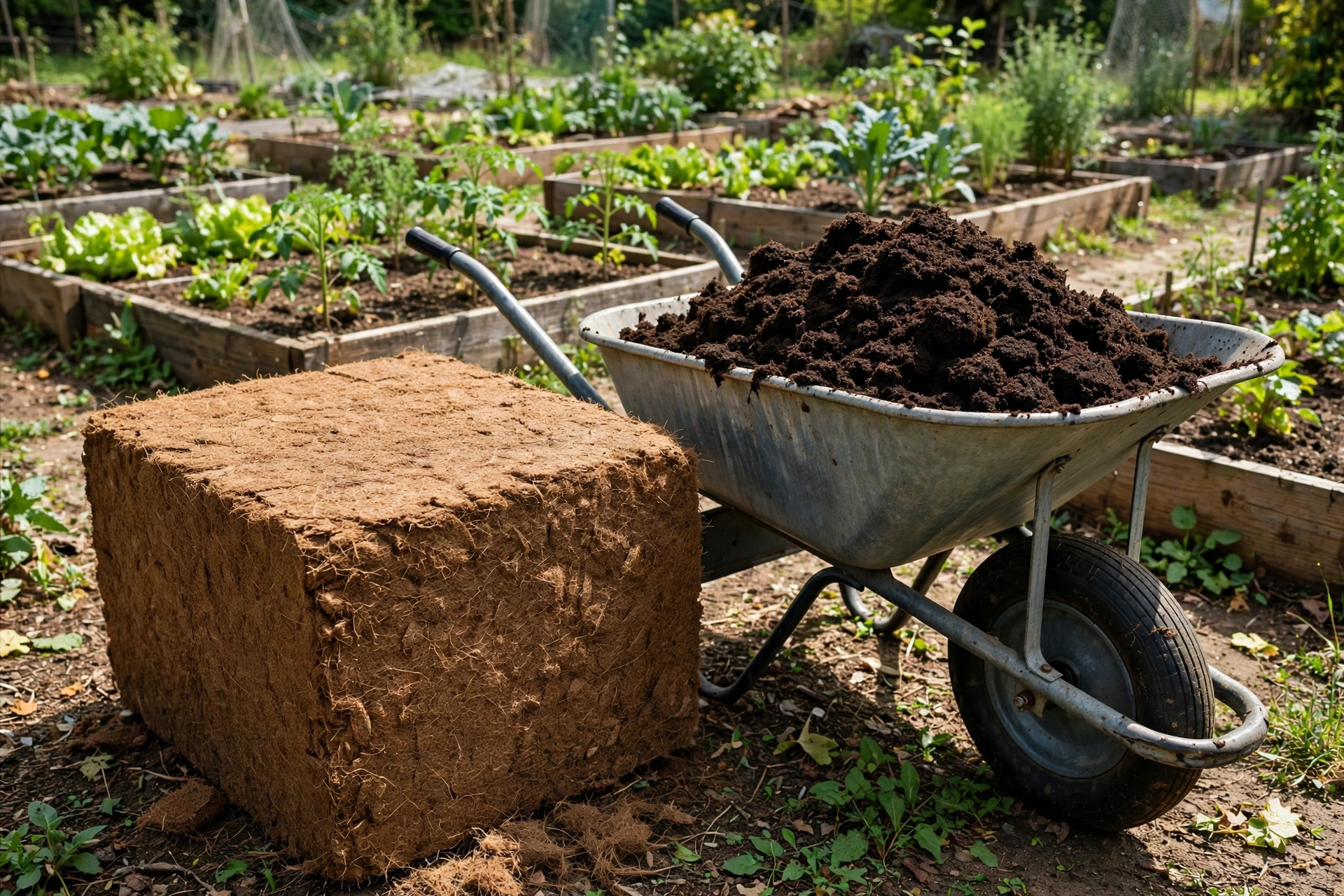 Nutrifield Coco Mega Brick | 5 kg (11 lb) | About 55 L (about 1.9 cu ft) | Yes, pre-buffered with calcium | Bulk fills, raised beds | 9.4 |
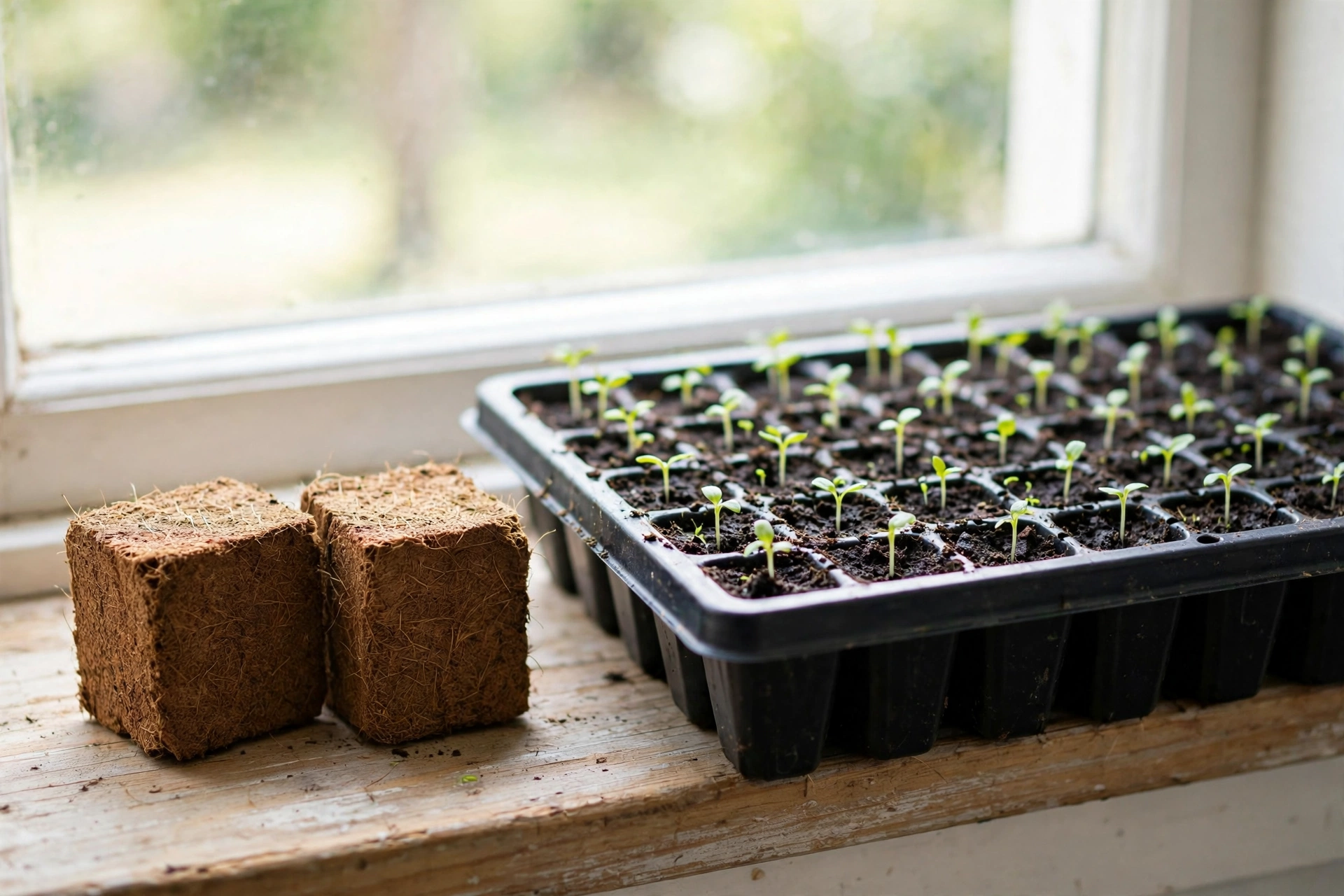 Burpee Organic Coconut Coir Seed Starting Mix | 2 bricks, 650 g each | 16 qt total (8 qt per brick) | Not stated | Seed starting | 9.3 |
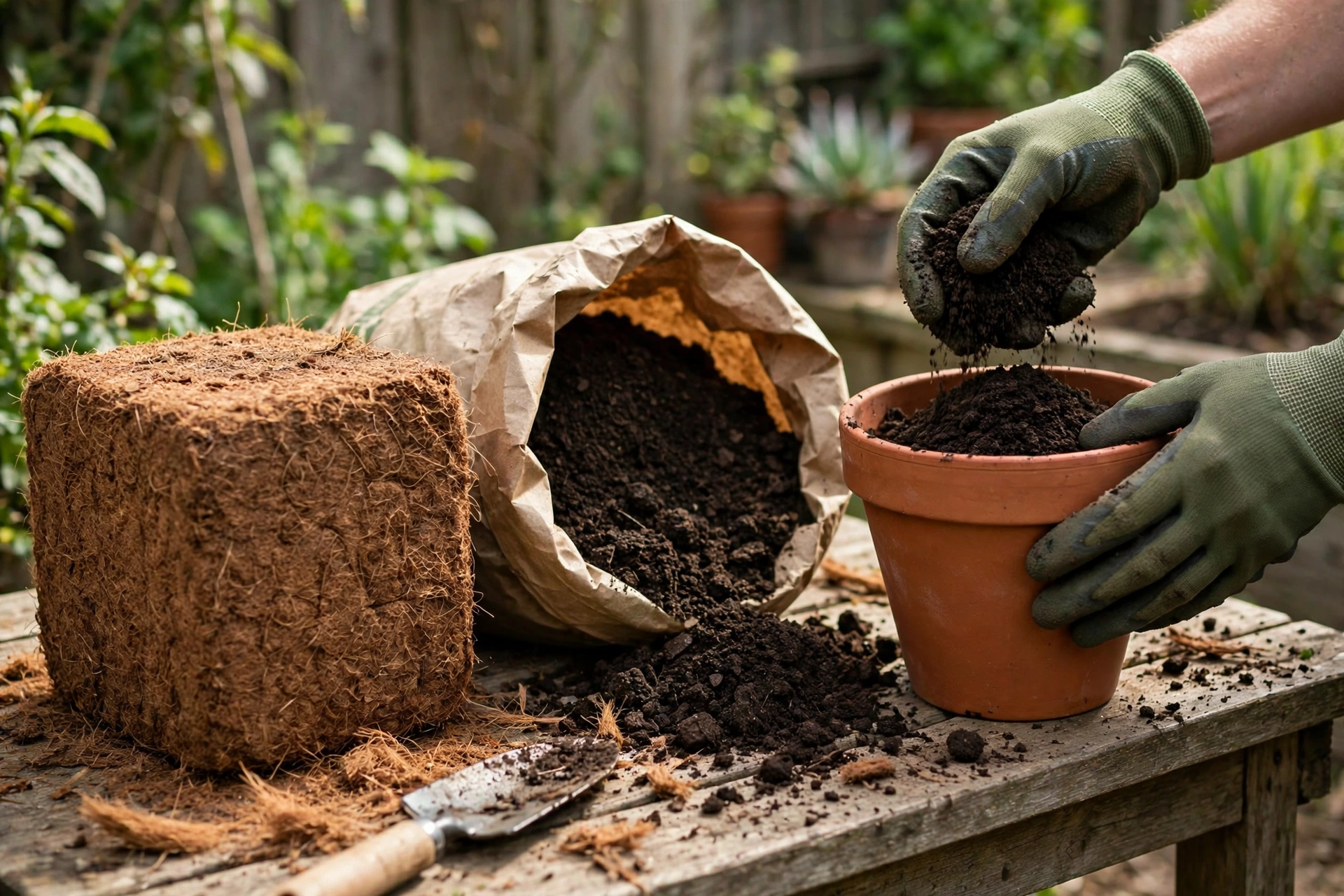 Back to the Roots Organic Coir | 10 lb block | 51 qt (about 1.7 cu ft) | No, buffer before use | Potting mixes, big containers | 9.2 |
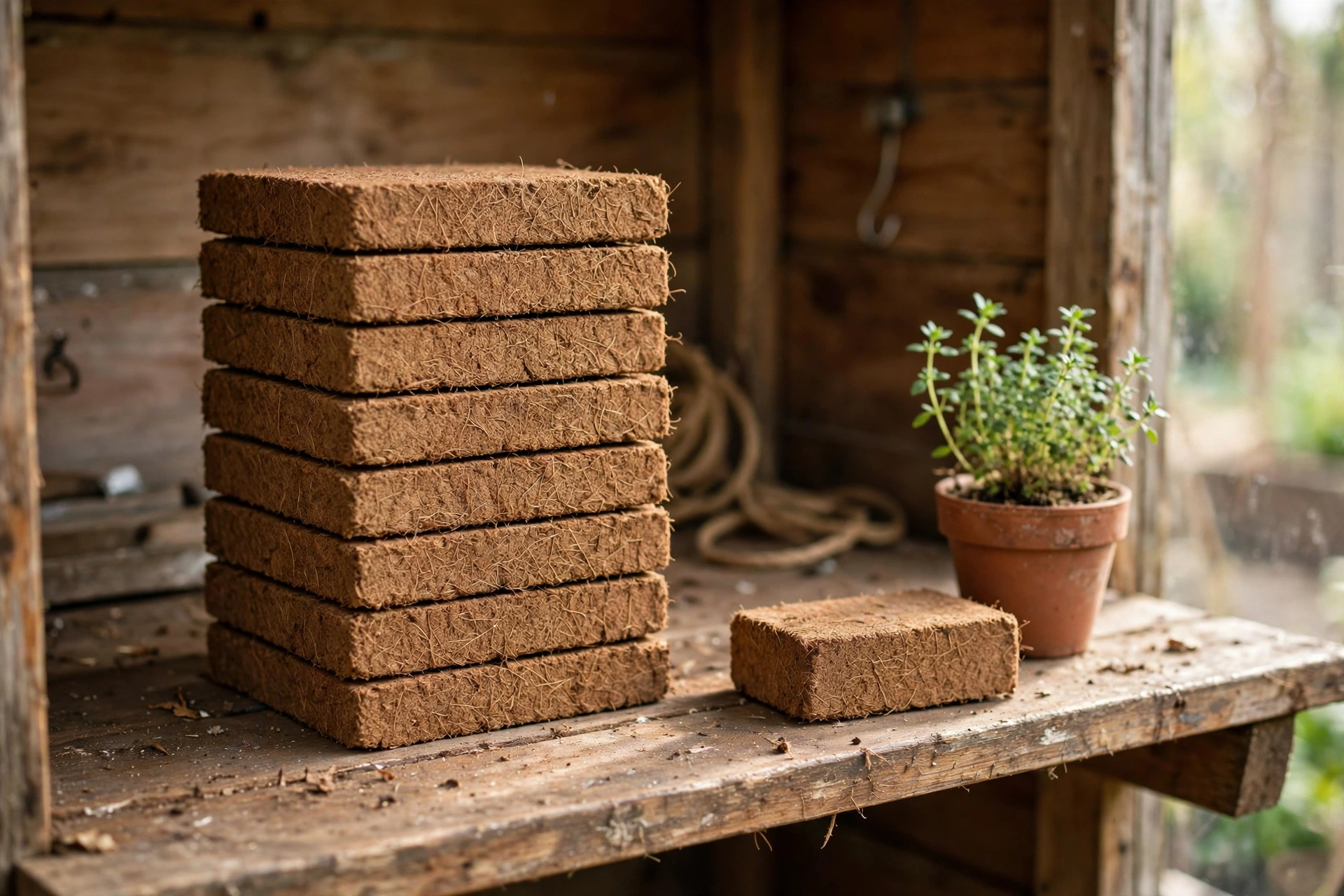 Legigo Coco Coir Bricks, 10-Pack | 650 g per brick | 9 L (about 2.4 gal) per brick | Not stated | Budget multi-pack, general use | 9.1 |
 Nutrifield Coco Mini Brick | 650 g | 9 L (2.4 gal) | Yes, pre-buffered with calcium | Small batches, ready to plant | 9.0 |
 GrowByCoco Coco Coir Brick | 650 g | 7 to 9 L per brick | Washed, low EC | Single-brick buys, houseplants | 8.9 |
 Vivlly Coco Coir Bricks, 5-Pack | 650 g per brick | 9 L (about 2.4 gal) per brick | Not stated | Seed starting, mushrooms, bedding | 8.8 |
 Gro-Med Coco Coir Brick, 5 kg | 5 kg (11 lb) | 20 gal or more (80 qt) | Triple-washed, low EC | Large volumes, mushroom substrate | 8.7 |
Ratings are editorial scores from the How We Chose system at the end of this article. They are not lab results, and they are not star ratings copied from a retailer.
The 10 Best Coco Coir Bricks
1. Coco Bliss 650g Bricks (Plantonix)
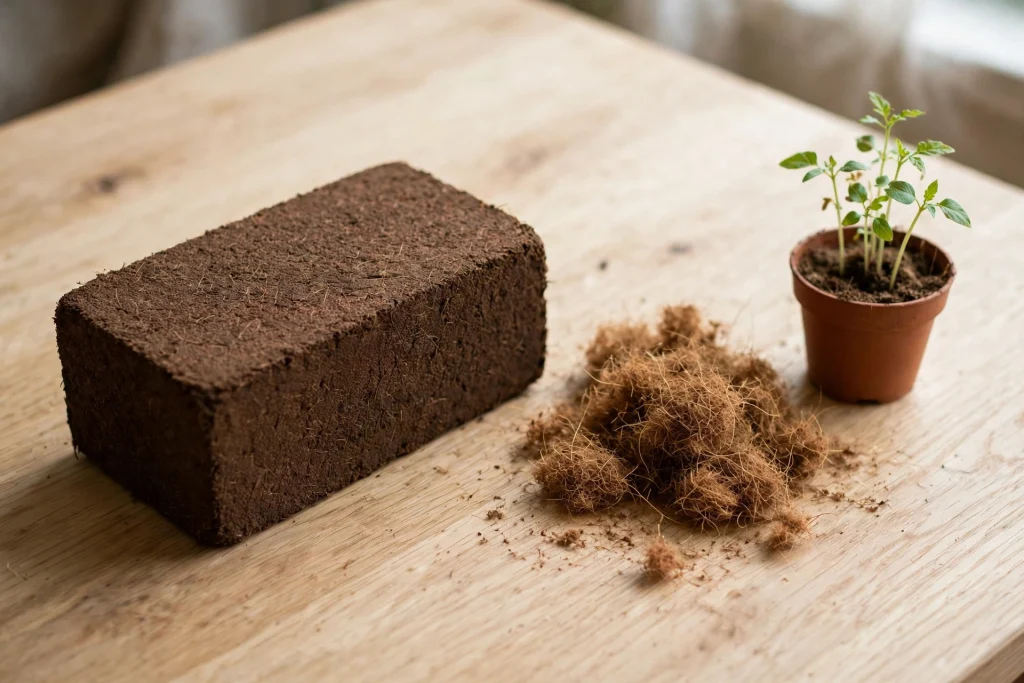
Best overall. Coco Bliss is the brick this roundup keeps coming back to. Plantonix presses it from coconut husk pith, pre-rinses it and screens it through a fine filter to take out fiber, sand and rock, and the finished brick carries an OMRI listing for organic gardening. Each 650g brick measures 20 by 10 by 5 cm, and Plantonix rates its expansion at 9 liters, about 2.4 gallons, with an 8 to 1 compression ratio. Retail listings round that down to about 2 gallons per brick, so plan on 2 gallons and treat anything more as a bonus.
What makes it the top pick is not any single number. It is the combination. The brick is small enough to soak in a 5-gallon bucket, big enough to fill a standard seed tray, and consistent enough that one brick behaves like the next. Owner feedback: Target buyers rate the 20-pack 4.8 out of 5 from 37 reviews. One reviewer calls it ‘the best coco fiber I have ever used especially for my plant starters,’ and another says it does ‘a fantastic job at water retention’ in a raised bed garden. Plantonix’s own store shows 4.27 out of 5 from 11 reviews. The one repeated complaint is that expansion can take longer than expected, even in warm water, so give it the full 30 to 40 minutes Plantonix suggests instead of rushing it.
Rating rationale: Coco Bliss tops the list even though it is not pre-buffered, because for the soil mixes and seed starting it is bought for, buffering matters less than texture, consistency and size, and it leads on all three. Pure-coco growers should still buffer it or buy the separate Buffered Coco Bliss block.
One honest flag: standard Coco Bliss is pre-rinsed, not pre-buffered. If you grow in pure coco with liquid feed, you still need to buffer it, or buy the separate Buffered Coco Bliss 10 lb block, which Plantonix sells pre-buffered. For soil mixes and seed starting, the standard brick is ready after a soak.
Quick verdict: The most useful brick in this roundup, and the one most gardeners should buy first.
Pros: OMRI listed; pre-rinsed and pre-screened; consistent texture; handy 650g size; widely available in 5, 6 and 10-brick packs.
Cons: Not pre-buffered, so pure-coco growers must buffer it; expansion is slower than some rivals.
Best for: Everyday pots, seed trays, mixing into potting soil.
Not ideal for: Hydroponic growers who want a brick that is ready to plant with no prep.
Price and value: The 20-pack costs $99.99 at Target as of November 2026, which is $5.00 per brick. At 9 liters per brick, that works out to about $0.56 per liter of expanded coir. We could not verify a current price for the 5-pack.
Real-world limitation: The brick needs 30 to 40 minutes in warm water to open fully. Cold water and a rushed schedule leave dry pockets in the middle.
Who should buy: Any home gardener who wants one reliable brick for most jobs.
Specification source: Plantonix product page (brick 20 by 10 by 5 cm, 650 g, 8 to 1 compression, 9 liters expanded).
2. CANNA Coco Brick
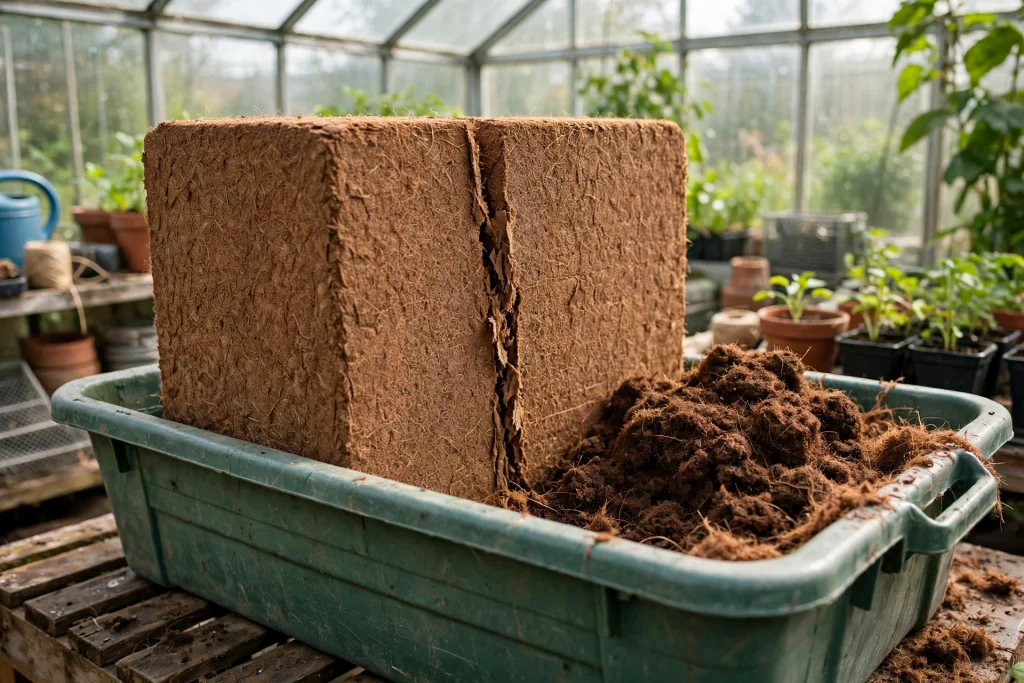
Best buffered brick. CANNA is the name serious coco growers mention first, and the brick is the reason. It is the compressed form of the same coco CANNA sells in 50 liter bags: washed in fresh water so no salts remain, fully buffered, and carrying the RHP quality mark, which covers inspection from the raw material to the bag. It is not steam sterilized, a deliberate choice by CANNA, which controls the process instead.
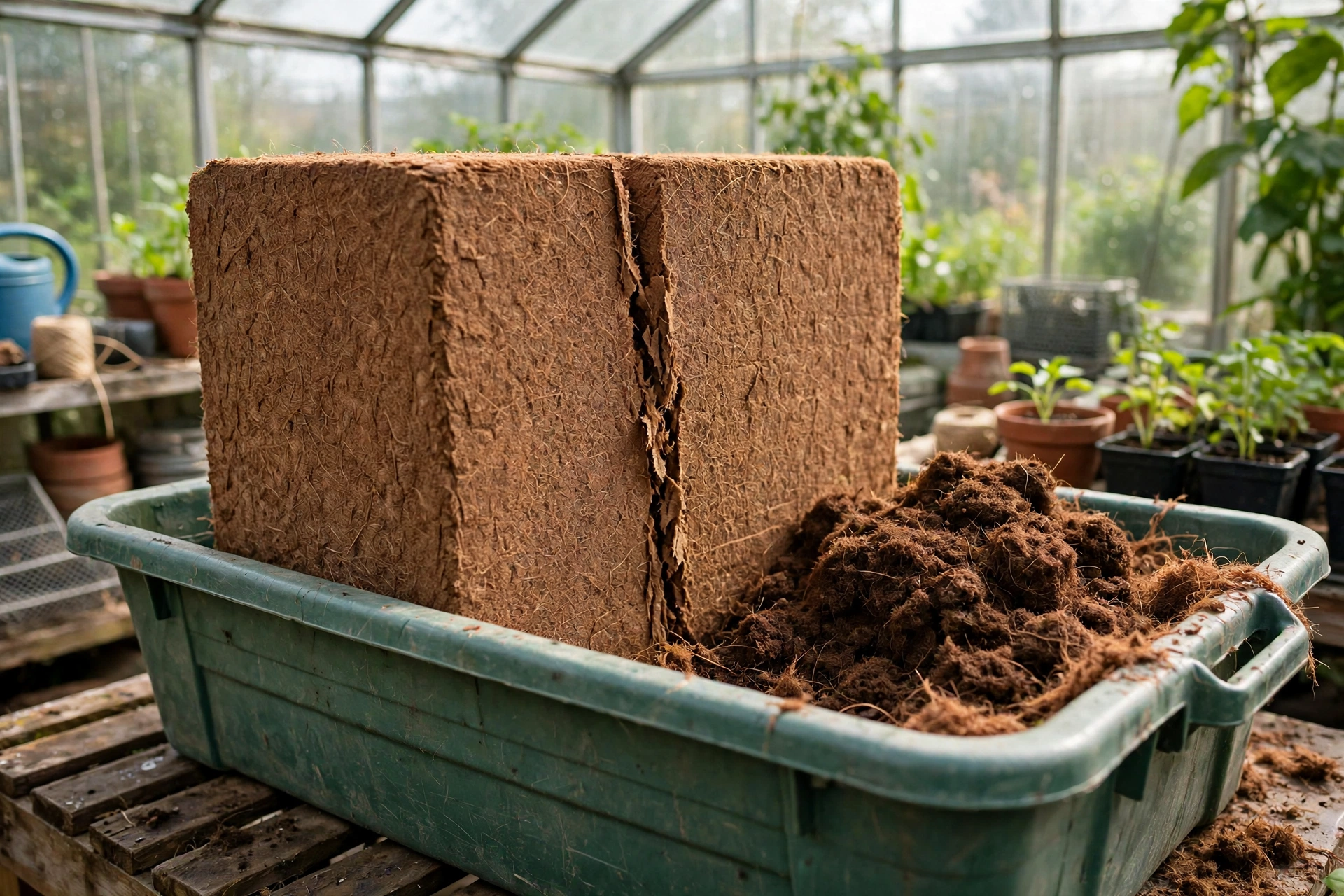
The numbers are straightforward. One 10-liter compressed cube expands to 20 liters; the package holds two cubes and makes 40 liters in total. A fracture line down the middle lets you break a brick in half if you only want 10 liters at a time. Because it arrives buffered, you soak it and plant. No Cal-Mag soak, no waiting a day.
The trade-off is yield per dollar and per brick. Forty liters fills only about two 5-gallon pots, and a single brick costs more than a whole multi-pack of garden bricks. That is the price of the washing, the buffering and the certification. For a gardener filling raised beds with a soil mix, the bulk blocks in this roundup give more medium for the money. For a grower running pure coco, the CANNA brick is the one that removes the most risk.
Quick verdict: The safest brick for pure coco growing, and the best choice when buffering matters more than bulk.
Pros: Washed and buffered at the factory; RHP certified; consistent structure; fracture line for half-brick use; ready to plant after soaking.
Cons: Lower volume per brick than bulk blocks; costs more per liter than garden bricks.
Best for: Pure coco growing, hydroponics, growers feeding liquid nutrients.
Not ideal for: Filling large raised beds on a budget.
Price and value: One package (two cubes, 40 liters total) costs $17.35 at GrowersHouse as of November 2026, which works out to about $0.43 per liter of expanded coir.
Owner feedback: GrowersHouse buyers rate it 4.7 out of 5, but from only 3 reviews, so that is a small base rather than broad owner feedback.
Rating rationale: CANNA is second because it is the only brick here that is washed, buffered and RHP certified, with consistent expansion verified against the maker’s own brochure. It loses points on value and ease, because the package makes 40 liters at once, which is too much for a small gardener.
Real-world limitation: Forty liters sounds like a lot until you pot it up. Measure your containers before you buy, because one cube covers about one 5-gallon pot; the full package covers about two.
Who should buy: Growers who feed in coco and want to skip the buffering step entirely.
Specification source: CANNA product information via the CANNA Coco Professional Plus Cube brochure (washed and buffered, RHP certified, One 10-liter compressed brick expands to 20 liters).
3. Nutrifield Coco Mega Brick
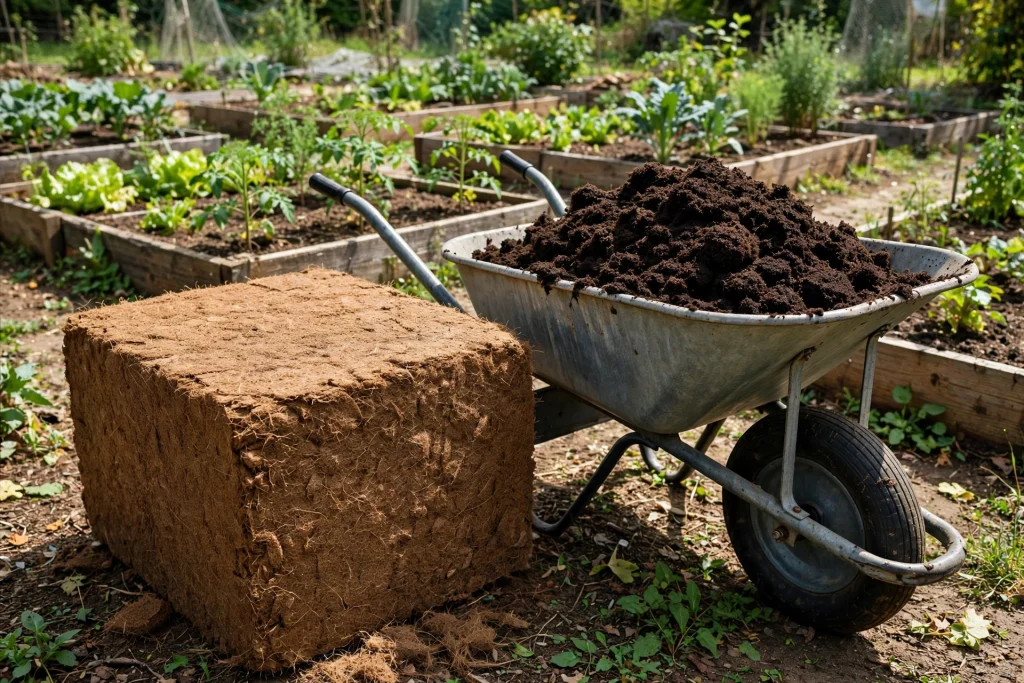
Best bulk block. The Nutrifield Coco Mega Brick is a 5 kg, 11 lb block that trades convenience for volume. According to its listing it expands to about 55 liters, roughly 1.9 cubic feet, which is enough to fill three or four 5-gallon pots from a single block. It is pre-buffered with calcium, so it is closer to plant-ready than the unbuffered garden bricks, and it is pre-washed.
This is the block to buy when the job is big: topping up raised beds, filling a row of grow bags, or mixing a large batch of potting soil in a wheelbarrow. A 5 kg block stores on a shelf like a book and replaces a bulky bag of potting mix that would take the same space in the car. The catch is the soak. A block this size needs a large tub, several gallons of warm water, and time. Do not try to hydrate it in a small bucket, and do not expect it to open in ten minutes.
Nutrifield also sells a smaller 650g Mini Brick, covered at number 7 below, which carries the same pre-buffered treatment in a handier size.
Quick verdict: The best value per liter in this roundup for big jobs, with buffering already done.
Pros: About 55 liters per block; pre-buffered with calcium; pre-washed; compact to store and ship.
Cons: Needs a large tub and plenty of water to hydrate; heavy at 5 kg before soaking.
Best for: Raised beds, grow bags, large batches of potting mix.
Not ideal for: A single small pot or a quick seed tray.
Price and value: We could not verify a current US price for this brick at the time of writing.
Owner feedback: We found no independent owner reviews for this brick outside Amazon, so the rating here rests on the published specs: 55 liters, pre-buffered with calcium, and RHP certified.
Rating rationale: The Mega is third on the biggest yield of any buffered brick, 55 liters from one block, with pre-buffering with calcium and RHP certification. It loses on ease, because it needs a large tub and several gallons of warm water, and a 5-gallon bucket is too small.
Real-world limitation: You need a tub big enough to hold the block plus room for it to swell to five times its size. A 5-gallon bucket is too small.
Who should buy: Gardeners filling beds and big containers who want buffered coir in bulk.
Specification source: Nutrifield listing via retailer comparison (5 kg, about 55 liters expanded, pre-buffered with calcium).
4. Burpee Organic Coconut Coir Seed Starting Mix
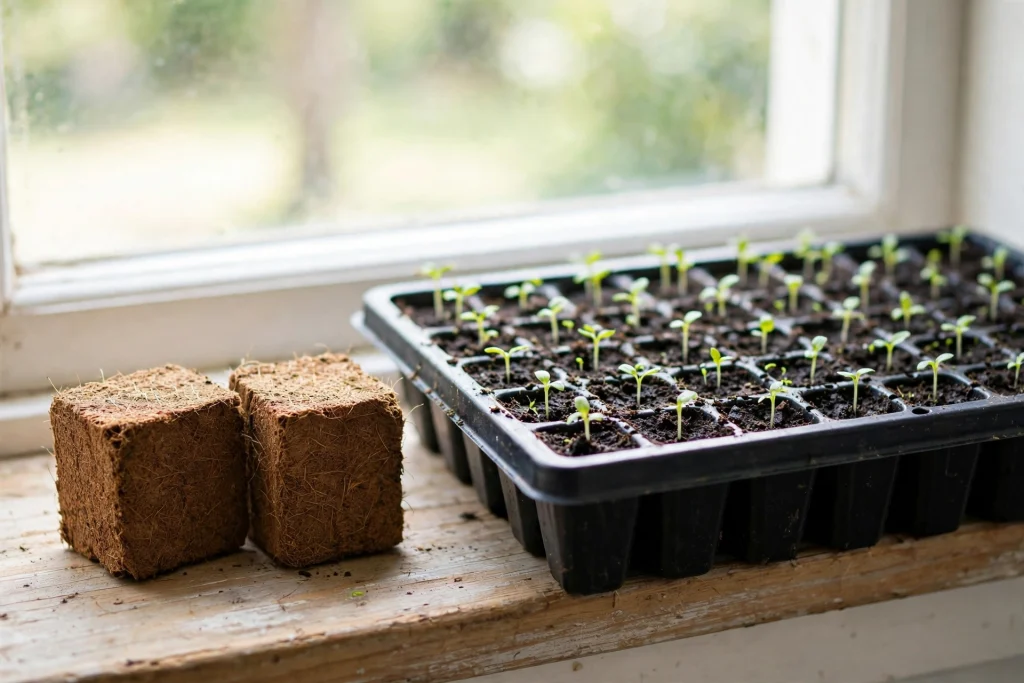
Best for seed starting. Burpee takes a different approach from the rest of this list. Instead of selling a bare brick, it sells a seed starting mix in brick form: two compressed bricks that expand into 16 quarts of mix, 8 quarts per brick. The coir is the base, and the mix is made for the job seedlings need most, a fine, even texture that holds moisture around tiny roots without staying soggy.
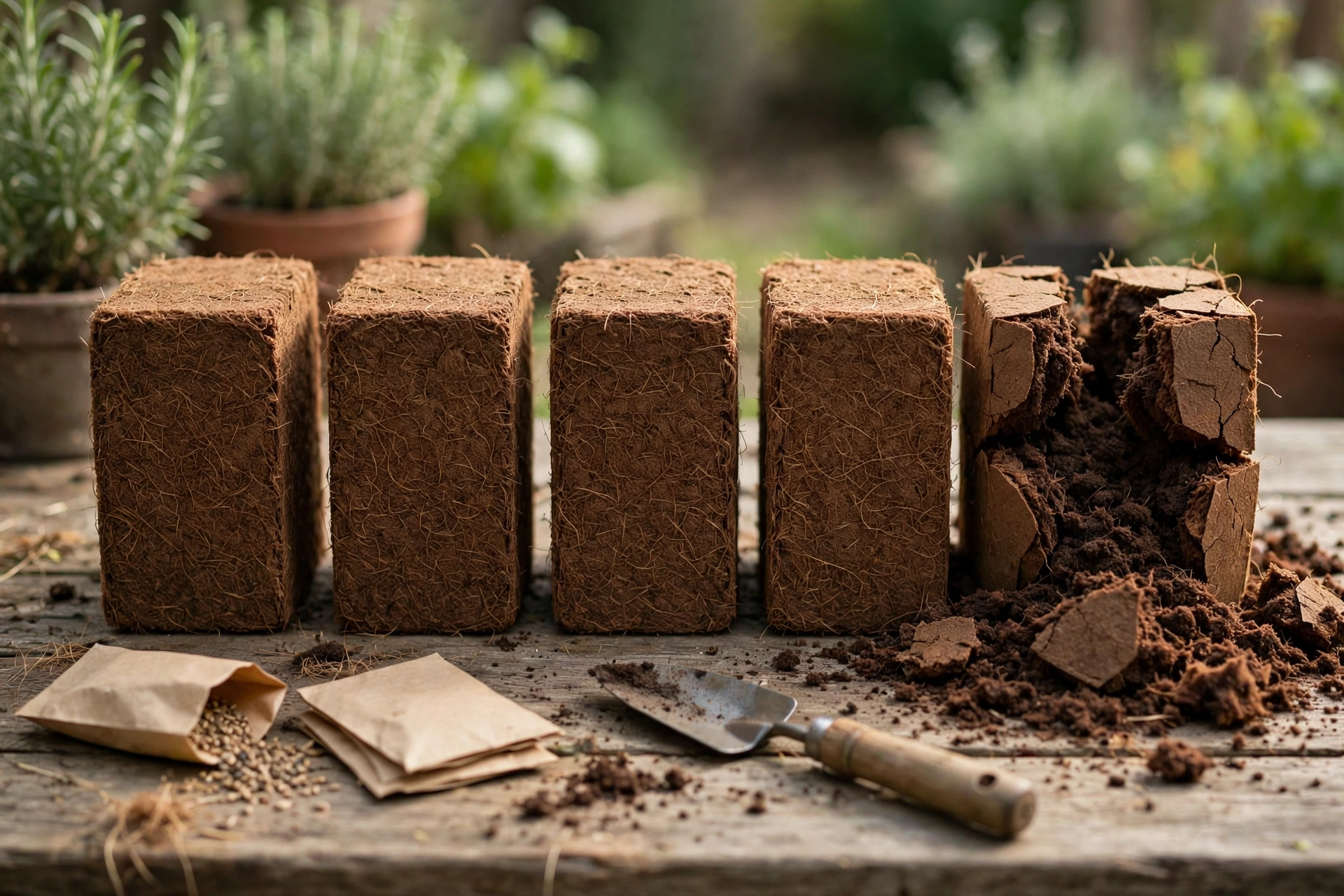
Seed starting is where coco coir earns its keep. Coir holds water well, it drains freely, and it is naturally low in the damping-off problems that plague heavy seed mixes. A 650g brick is the right size for a standard tray, and two bricks cover a full sowing session for most home gardeners. Because the mix is aimed at seedlings, the fine texture matters more than bulk volume, and Burpee’s brick delivers it.
The limitation is scope. Sixteen quarts is plenty for trays and small pots, but it will not fill a raised bed or a row of containers. Buy this one for the windowsill and the greenhouse bench, and buy a bulk block for the beds.
Quick verdict: The best brick in this roundup for starting seeds, with a fine texture made for trays.
Pros: Made for seed starting; fine, even texture; two bricks cover a full sowing session; trusted garden brand.
Cons: Only 16 quarts total, so it is not a bulk option; buffering not stated on the listing.
Best for: Seed trays, cuttings, small pots on the windowsill.
Not ideal for: Filling raised beds or large containers.
Price and value: The 2-pack (16 quarts total) costs $14.95 at Burpee.com as of November 2026, and a single 8-quart brick costs $9.95. That works out to about $0.99 per liter for the 2-pack, or about $1.31 per liter for a single brick.
Owner feedback: We found no independent owner reviews for this mix outside Amazon. Editorial mentions are strong: Bob Vila names it the best coconut coir seed starting mix, and Rachael’s Raw Food calls it ‘the better choice for anyone who wants a blend tuned for germination rather than general potting.’
Rating rationale: Burpee is fourth on the best texture for its job, a fine seed-starting mix from a trusted seed brand, and Bob Vila’s pick for coconut coir seed starting. It loses on yield, 16 quarts total, the smallest volume in the roundup, and the maker does not state whether it is buffered.
Real-world limitation: A seed starting mix is a starting medium, not a complete diet. Seedlings need feeding once their first true leaves appear, because coir itself carries almost no nutrients.
Who should buy: Gardeners who start most of their plants from seed indoors.
Specification source: Burpee listing (two bricks, each expands to 8 quarts, 16 quarts total).
5. Back to the Roots Organic Coir
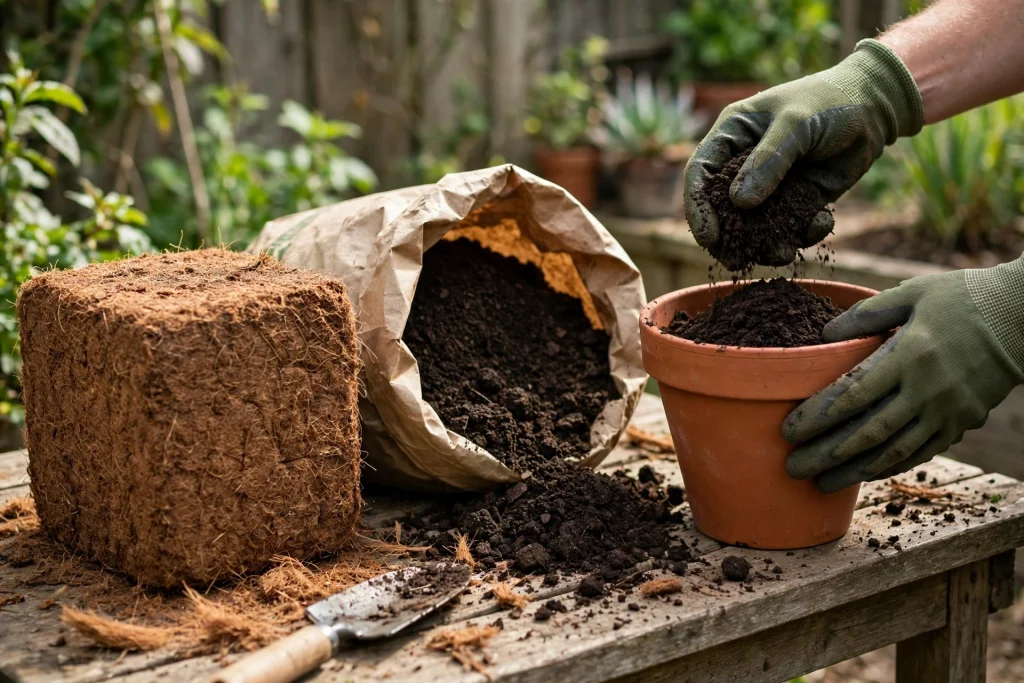
Best value block for potting mixes. Back to the Roots sells a 10 lb block that expands to 51 quarts, about 1.7 cubic feet, of potting soil. It is OMRI listed, pH balanced, and sold as an all-purpose medium: use it alone or mix it with soil for vegetables, flowers, herbs and seed starting. For a gardener who mixes their own potting soil, that volume at this size is hard to beat.
Owner feedback: A roundup that aggregates buyer feedback rates it 4.6 out of 5. Buyers report that the block expands reliably in warm water in 10 to 15 minutes, that it can be tricky to break apart evenly if you only need a portion, and that a few users report slightly more fine particles than premium-grade buffered coir.
Rating rationale: Back to the Roots is fifth on the biggest volume for soil mixes, 51 quarts, with an OMRI listing and balanced pH. It loses on buffering, which the maker does not claim, and on ease, because a 10 lb block is hard to split for partial use.
The important honest note is about buffering. The maker does not claim this block is buffered, and owner feedback notes that it needs buffering for uses that demand it. If you grow in pure coco with liquid feed, soak it in a Cal-Mag solution first. If you mix it into soil or potting mix, a soak in plain water is enough.
Quick verdict: A big, affordable block for gardeners who mix their own soil and do not mind a little prep.
Pros: 51 quarts from one block; OMRI listed; pH balanced; expands reliably in warm water.
Cons: Not buffered, so pure-coco growers must buffer it; hard to split for partial use; some fine particles.
Best for: Potting mixes, container gardening, seed starting in soil blends.
Not ideal for: Hydroponic reservoirs, where fine particles can settle.
Price and value: We could not verify a current US price for this block at the time of writing.
Real-world limitation: Hydrate the whole block at once. Trying to chip a dry piece off a 10 lb block is a chore, and the piece will not hydrate evenly.
Who should buy: Gardeners who mix their own potting soil in batches and want volume for the money.
Specification source: Back to the Roots listing (10 lb block, expands to 51 quarts, OMRI listed, pH balanced).
6. Legigo Coco Coir Bricks, 10-Pack
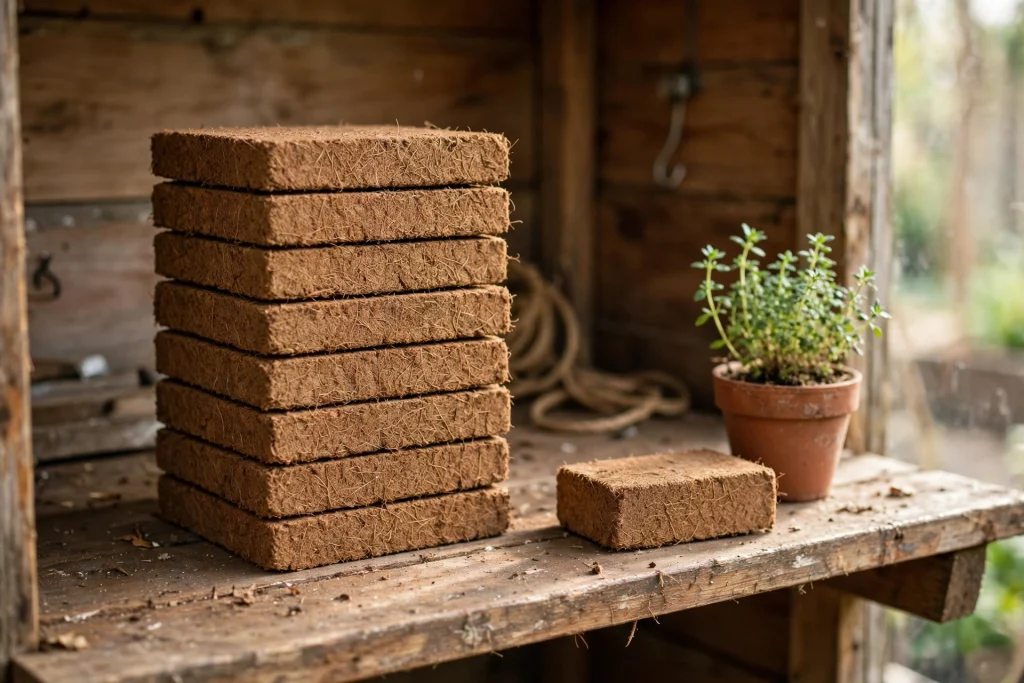
Best budget multi-pack. Legigo’s 10-pack is the workhorse buy of this roundup. Ten 650g bricks, each about 8 by 4 by 2 inches and about 1.4 lb, low EC and pH balanced, made from 100 percent natural coconut fiber. Open one brick when a pot needs filling, and the other nine stay dry on the shelf until you need them.
That is the real advantage of a multi-pack of small bricks over one big block. You hydrate only what you need, when you need it, and nothing goes stale in a half-used bag. For a gardener who pots up plants through the season, that flexibility is worth more than a slightly higher volume per brick. The bricks expand like other 650g bricks, to roughly 2 gallons each, so the pack covers about 20 gallons of medium in total.
Legigo does not state buffering on its listing, so treat these bricks like other garden bricks: soak, and buffer if you grow in pure coco. The low EC claim means the bricks are washed, which is the more important half of the prep for soil mixes.
Quick verdict: Ten handy bricks for the price of a few bags of soil, and the easiest way to keep coir on hand all season.
Pros: Ten bricks in one pack; hydrate only what you need; low EC and pH balanced; compact storage.
Cons: Buffering not stated, so pure-coco growers must buffer; expansion per brick not printed on the listing.
Best for: General garden use, potting up through the season, keeping a shelf stock.
Not ideal for: Growers who need a certified buffered brick out of the box.
Price and value: The 10-pack costs $29.99 as of November 2026, which works out to about $0.33 to $0.40 per liter of expanded coir, depending on whether each brick opens to 9 liters or about 8 quarts.
Owner feedback: The retailer Glass Jungle Terrariums shows 4.15 out of 5 from 130 reviews, the lowest verified rating in this roundup. Rachael’s Raw Food notes each brick needs 15 to 30 minutes of hydration and that pure coir holds more moisture than some seedlings like, so blending with perlite helps.
Rating rationale: Legigo is sixth on the lowest verified cost per liter and the flexible one-brick-at-a-time format. It loses on buffering, which is not stated, and on expansion, for which the listing gives no printed figure.
Real-world limitation: Ten bricks is a lot of medium once hydrated. Keep the dry bricks sealed and dry, because a damp brick in storage can grow mold.
Who should buy: Gardeners who pot up plants all season and want coir always on the shelf.
Specification source: Legigo listing (10-pack, each brick 8 by 4 by 2 inches, about 1.4 lb, low EC, pH balanced).
7. Nutrifield Coco Mini Brick
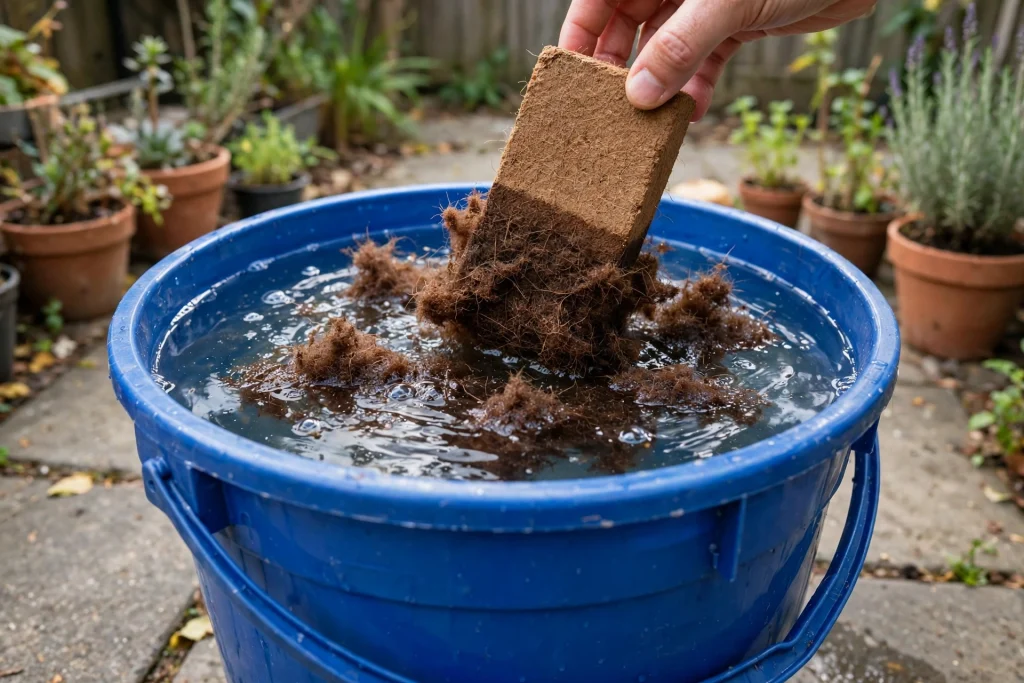
Best small buffered brick. The Mini Brick is the small version of the Mega Brick at number 3, and it solves the big block’s main problem. At 650g it fits in a 5-gallon bucket, it opens to 9 liters (about 2.4 gallons), and it carries the same treatment: RHP certified and pre-buffered with calcium, with low EC. For a gardener who wants a buffered brick but only needs a tray or two of medium, this is the right size.
RHP certification is worth a word here. It is the Dutch quality mark for horticultural substrates, and it covers inspection from the raw material to the bag. A brick that carries it has been checked for salts, weed seeds and consistency in a way an uncertified brick has not. That is why the Mini Brick costs more per liter than the unbranded 650g packs, and why it is worth it for seedlings and for plants that are sensitive to salt.
Buy the Mini Brick when you want the Mega Brick’s quality in a single-serving size.
Quick verdict: Buffered, certified and bucket-sized. The best small brick for gardeners who want no prep at all.
Pros: RHP certified; pre-buffered with calcium; low EC; handy 650g size; ready to plant after soaking.
Cons: Costs more per liter than unbuffered garden bricks; 9 liters is a small batch.
Best for: Seed starting, small batches, salt-sensitive plants.
Not ideal for: Filling beds or large containers, where the Mega Brick is cheaper per liter.
Price and value: We could not verify a current US price for this brick at the time of writing.
Owner feedback: We found no independent owner reviews for this brick outside Amazon, so the rating rests on the published specs: RHP certified, pre-buffered with calcium, low EC, and 9 liters per brick.
Rating rationale: The Mini is seventh on the same RHP certified, pre-buffered treatment as the Mega in a bucket-sized 650g brick that opens to 9 liters. It loses on value, because 9 liters is a small batch, so it costs more per liter than the Mega.
Real-world limitation: Nine liters fills about two 1-gallon pots. Count your pots before you buy, because a small brick goes fast.
Who should buy: Gardeners who want certified, buffered coir in a size that fits a bucket.
Specification source: Nutrifield listing via retailer comparison (650 g, expands to 9 liters, RHP certified, pre-buffered with calcium, low EC).
8. GrowByCoco Coco Coir Brick
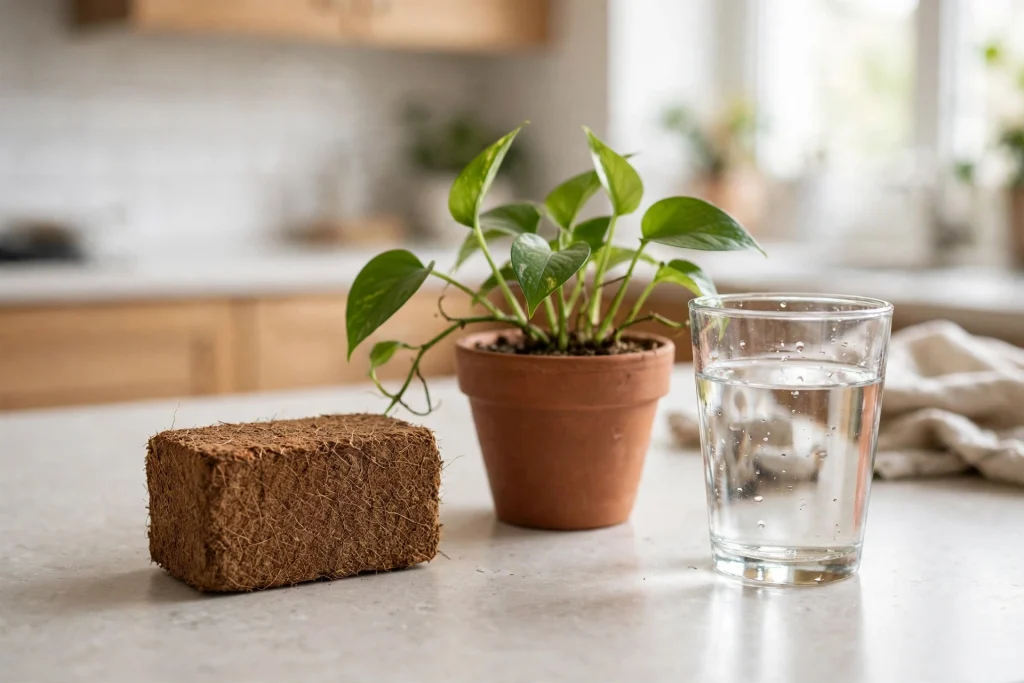
Best single-brick buy. Sometimes you need one brick, not ten. GrowByCoco sells its 650g brick singly, washed with fresh water to take out excess salts and minerals, low EC, and pH balanced. One brick yields 7 to 9 liters of medium, which covers a few medium pots or a seed tray with room to spare.
The single-brick format is the honest pick for a small-space gardener, a houseplant grower, or anyone trying coco coir for the first time. There is no multi-pack commitment and no big block to store. The brick measures 7.87 by 3.94 by 1.97 inches, so it fits in a kitchen drawer until you need it.
The trade is value. Bought one at a time, the cost per liter is higher than the multi-packs. But for a first try, or for a windowsill grower who uses a brick a month, that is a fair price for not storing ten bricks.
Quick verdict: The best way to try coco coir, or to keep one brick on hand for houseplants.
Pros: Sold singly; washed with fresh water; low EC; pH balanced; small enough to store anywhere.
Cons: Higher cost per liter than multi-packs; 7 to 9 liters is a small batch.
Best for: Houseplants, first-time coir users, small spaces.
Not ideal for: Bulk jobs or filling beds.
Price and value: We could not verify a current US price for this brick at the time of writing.
Owner feedback: We found no independent owner reviews for this brick outside Amazon. The only outside score is an editorial one: OneClearWinner lists it at 9.5 out of 10.
Rating rationale: GrowByCoco is eighth on single-brick convenience, washed with fresh water, low EC and balanced pH. It loses on value, bought one at a time, and on expansion precision, 7 to 9 liters, the widest range in the roundup.
Real-world limitation: A single brick covers a few pots. If you like the results, the multi-packs in this roundup are the next buy.
Who should buy: Houseplant growers and anyone trying coco coir for the first time.
Specification source: GrowByCoco manufacturer’s listing (650 g, 7 to 9 liters per brick, washed, low EC, pH balanced).
9. Vivlly Coco Coir Bricks, 5-Pack
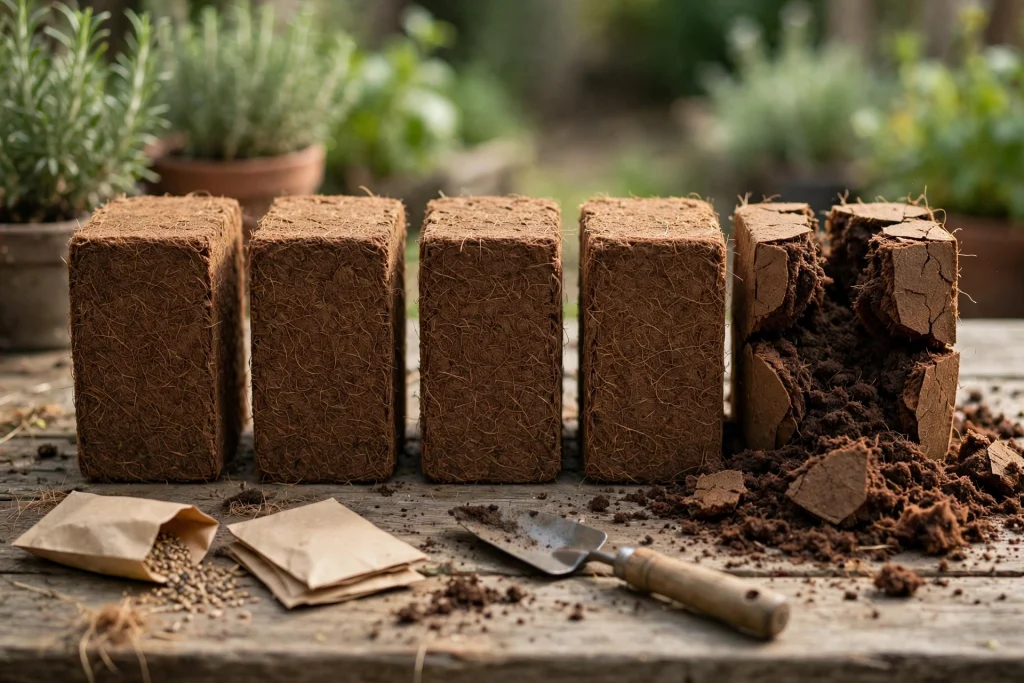
Best for seed starting and multi-use. Vivlly’s 5-pack is a straightforward 650g brick set: low EC and pH balanced, each brick about 7.8 by 3.95 by 2 inches, sold in packs of 5, 10, 15 and 20. The listing pitches it for seed starting, potting mix, hydroponics, mushroom substrate and reptile bedding, which tells you something useful about the texture. It is a fine, even pith that works anywhere a soft, moisture-holding medium is needed.
For the garden, that fine texture is the point. It makes a good seed starting medium and a good amendment for potting mixes, where it holds water without clumping. The 5-pack size is a sensible middle ground between a single brick and a 10-pack: enough for a sowing session and a few pots, without a shelf full of spares.
As with the other garden bricks in this list, buffering is not stated, so buffer before pure-coco use. And the expansion figure is the usual 650g range, about 2 gallons per brick, rather than a printed number on the listing.
Quick verdict: A flexible 5-pack for seed starting and general potting, with pack sizes to suit any shelf.
Pros: Low EC and pH balanced; fine texture for seeds; pack sizes from 5 to 20; good multi-use medium.
Cons: Buffering not stated; no printed expansion figure on the listing.
Best for: Seed starting, potting mixes, mushroom substrate.
Not ideal for: Pure coco growing without a buffering step.
Price and value: We could not verify a current US price for this 5-pack at the time of writing.
Owner feedback: We found no independent owner reviews for this 5-pack outside Amazon. The only outside scores are editorial: Top5Best rates the 5-pack 9.1 to 9.4 out of 10.
Rating rationale: Vivlly is ninth on fine texture, low EC, balanced pH and flexible pack sizes. It loses on buffering, which is not stated, and on expansion, for which the listing gives no printed figure, and no independent owner feedback was found.
Real-world limitation: Fine pith holds a lot of water. In a pot with no drainage, it stays wet longer than a chunky mix, so pair it with perlite for plants that hate wet feet.
Who should buy: Gardeners who want a mid-size pack for seeds and potting, with spares on the shelf.
Specification source: Vivlly retailer listing (5-pack, 650 g each, low EC, pH balanced, 7.8 by 3.95 by 2 inches).
10. Gro-Med Coco Coir Brick, 5 kg
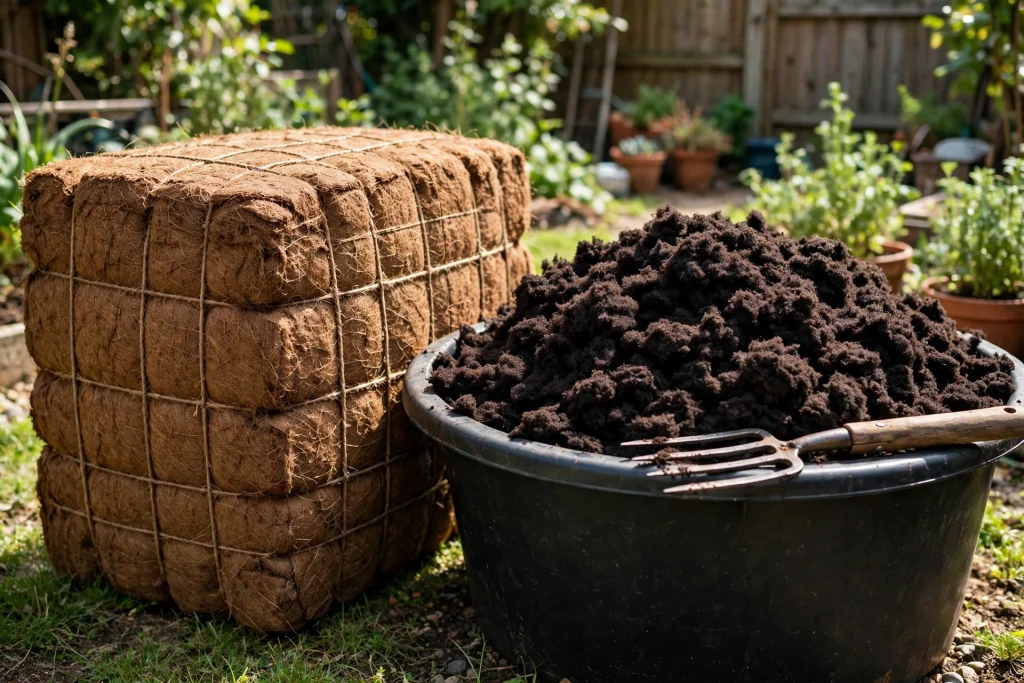
Best large block for volume. Gro-Med’s 5 kg brick is the biggest yield in this roundup. One compressed 10 lb brick expands to more than 20 gallons, about 80 quarts, of clean substrate with a pH of about 5.8 to 6.5. It is triple-washed, low EC and OMRI listed, and it is sold as the standard base for mushroom substrate, which is a demanding use: the medium must be clean, consistent and free of contaminants.
That mushroom pedigree is useful for gardeners too. A brick made for substrate work is washed harder than a garden brick, and the triple wash shows in the low EC claim. The 650g version of the same brick expands to about 10 quarts, so the line covers both small and large jobs.
The honest caveat is the same as for the other big blocks. You need a large tub, several gallons of warm water, and patience. And while the brick is triple-washed, Gro-Med does not claim it is buffered, so pure-coco growers should still buffer it before planting.
Quick verdict: The most medium per brick in this roundup, washed hard and ready for big jobs.
Pros: More than 20 gallons per block; triple-washed; low EC; OMRI listed; also sold as a 650g brick.
Cons: Not stated as buffered; needs a large tub and time to hydrate.
Best for: Large volumes, mushroom substrate, big batches of potting mix.
Not ideal for: A single pot or a quick seed tray.
Price and value: A single 5 kg brick costs $14.99 at Midwest Grow Kits as of November 2026. At more than 20 gallons per brick, that works out to at most $0.20 per liter of expanded coir, the lowest verified cost per liter in this roundup.
Owner feedback: Midwest Grow Kits buyers rate it 5.00 out of 5 from 63 reviews, the strongest verified owner rating in this roundup. The retailer notes the October 2026 shipment ‘expands easier and has smaller husk fibers.’
Rating rationale: Gro-Med is last even though it has the biggest yield and the cleanest wash in this roundup, because a 5 kg block that needs a large tub and a Cal-Mag soak is the wrong tool for most home gardeners, and the scoring system weights ease and buffering at 40 percent combined.
Real-world limitation: Twenty gallons is a wheelbarrow full. Hydrate it where you will use it, because a tub of wet coir is heavy to carry.
Who should buy: Gardeners and mushroom growers who need a lot of clean coir at once.
Specification source: Gro-Med listing (5 kg brick, expands to more than 20 gallons, triple-washed, low EC, OMRI listed).
How to Use Coco Coir Bricks
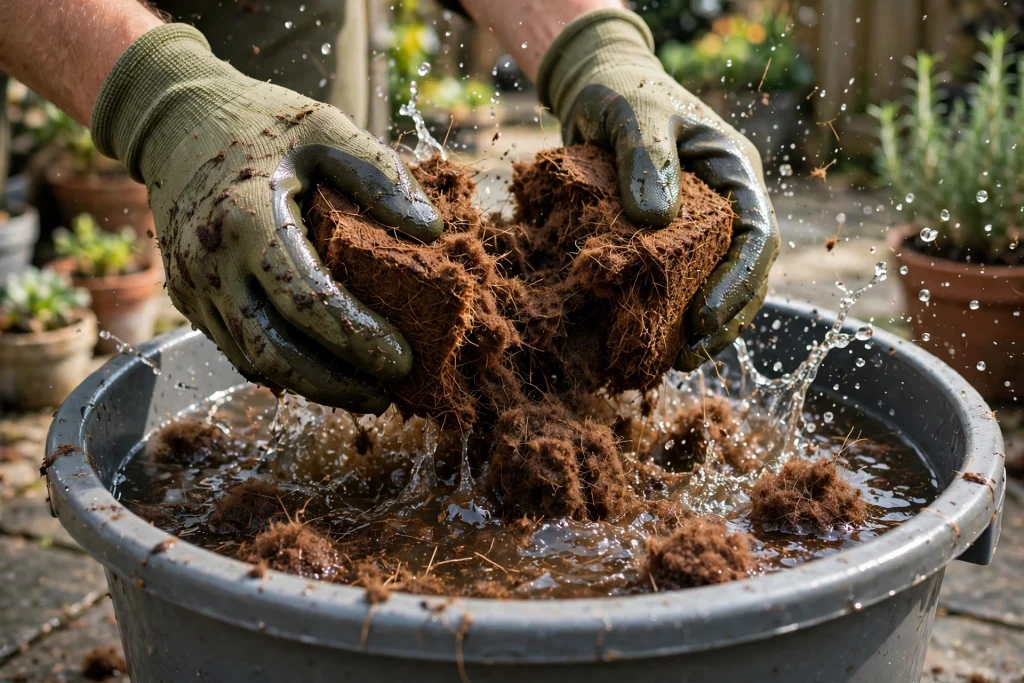
Rehydrating a coco coir brick is simple, but the details decide whether the result is fluffy and even or a soggy lump with a dry core. Here is the method that works for any brick in this roundup.
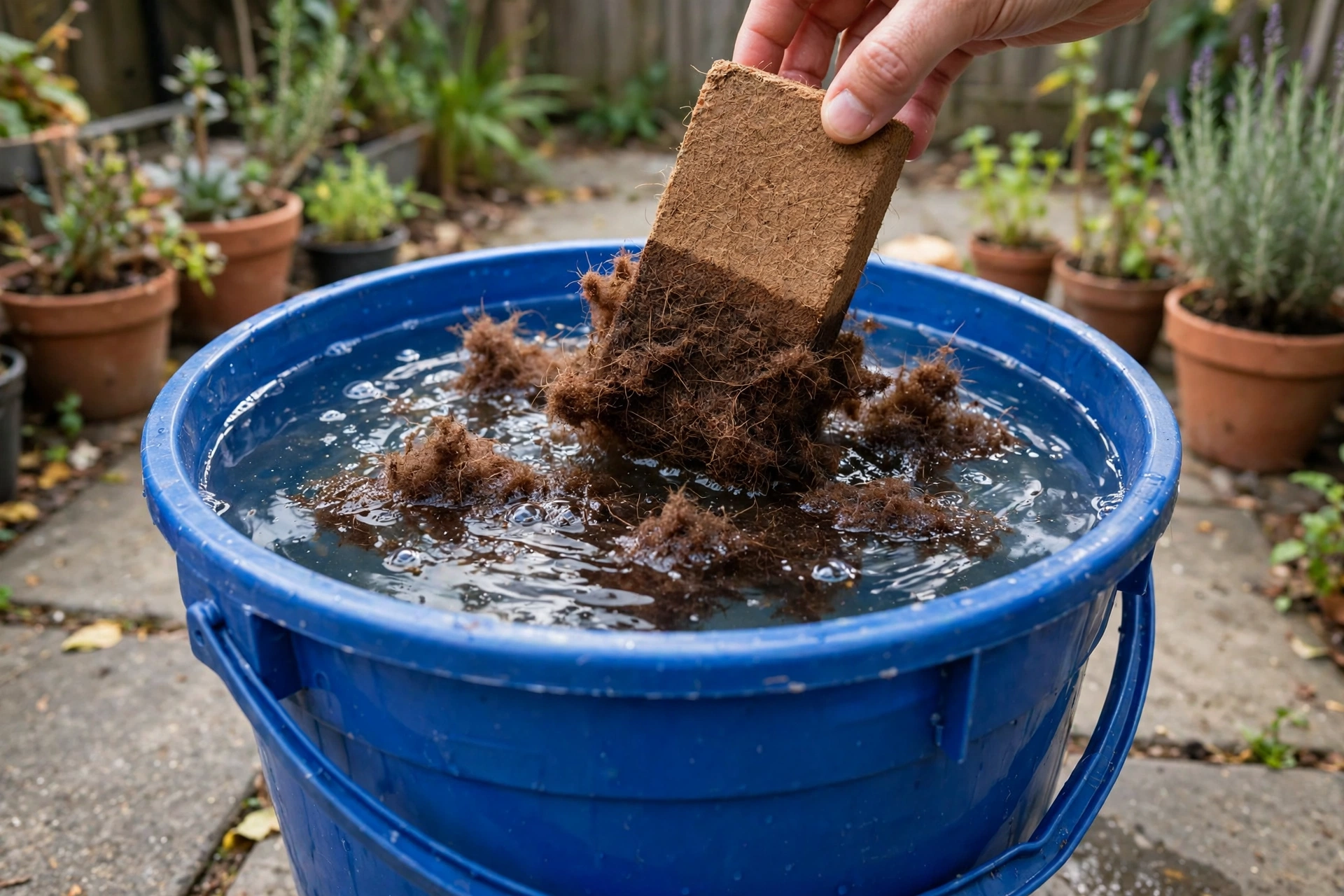
- Pick a container with room to spare. A 650g brick expands five to seven times its dry volume, so a 5-gallon bucket is right for one brick. A 5 kg block needs a large tub or a wheelbarrow.
- Add warm water a little at a time. Use about 1 to 1.5 gallons (4 to 6 liters) of warm water for a 650g brick. Warm water opens the fibers faster than cold water. Do not use boiling water, and keep it under 100 degrees Fahrenheit.
- Wait 15 to 30 minutes for most bricks, or 30 to 40 minutes for Coco Bliss, which is Plantonix’s own instruction, breaking the brick apart with your hands as it softens. Warm water speeds the process and stops dry pockets forming in the middle.
- Fluff and check. When the brick has opened fully, break up any clumps by hand until the coir is light and springy. Squeeze a handful. It should feel damp, not dripping. If water runs out, let it drain before you pot with it.
Two more steps apply when the brick is unbuffered and you plan to grow in pure coco. First, rinse the expanded coir with fresh water to wash out remaining salts. Then soak it in a Cal-Mag solution for 8 to 24 hours and drain it before planting. Buffered bricks, like the CANNA and Nutrifield picks above, skip this step.
Coco coir carries almost no nutrients of its own, so it is a medium, not a fertilizer. Mix it with compost for soil beds, or feed it with a balanced liquid fertilizer for containers. A common starting mix is one part coir to one part compost and one part perlite, which gives water retention, biology and drainage in one pot.
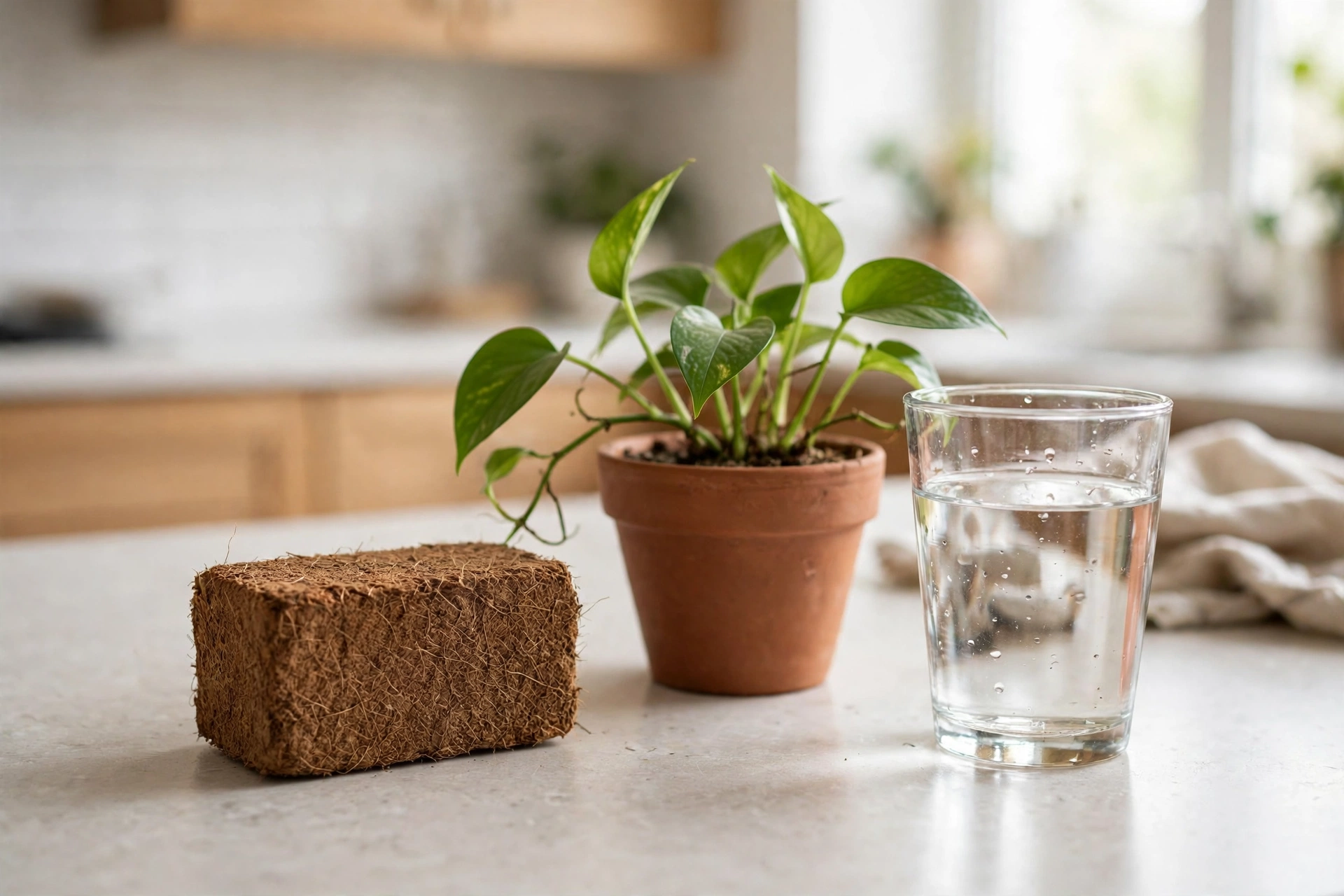
For indoor pots, coir works best as part of a balanced potting mix.

Coco Coir vs Peat Moss
Coco coir vs peat moss is the comparison most gardeners ask about first, and the honest answer is that coir matches peat on performance and beats it on renewability.
Peat moss comes from bogs that took thousands of years to form. Once a bog is harvested, it does not come back in a human lifetime, and harvesting releases stored carbon. Coir comes from coconut husks, a byproduct of a crop already grown for food. That is why the University of Saskatchewan calls peat essentially a non-renewable resource and lists coir as a renewable alternative, and why Oregon State University Extension has made the case for coir over peat on sustainability grounds.
On performance, the two are close. Research from Auburn University and the University of Arkansas, cited by Oregon State Extension, found coir performed on par with peat as a soil amendment. The University of Arkansas measured water retention at 73 to 80 percent of volume for coir, slightly higher than the 60 to 68 percent measured for sphagnum peat. Coir holds up to 8 to 10 times its weight in water, it rehydrates easily after drying out, and its pH runs near neutral, around 6.0 to 6.5, so it does not acidify your soil the way peat can.
Peat still has two edges. It is cheaper in most US garden centers, and it is reliably available in big bales. Coir is mostly shipped from Sri Lanka, India and the Philippines, so transport adds cost and a carbon footprint of its own. Coir can also carry more salt than peat, especially the cheap unwashed bricks, and its high potassium can interfere with calcium uptake if the coir is not washed and buffered.
| Feature | Coco coir | Peat moss |
|---|---|---|
| Source | Coconut husk byproduct | Harvested peat bogs |
| Renewable | Yes, a crop byproduct | No, takes thousands of years to form |
| Water retention | 73 to 80 percent of volume | 60 to 68 percent of volume |
| pH | Near neutral, about 6.0 to 6.5 | Acidic, about 3.5 to 4.5 |
| Rehydrates after drying | Yes, easily | Slowly, can turn hydrophobic |
| Salt risk | Yes, wash and buffer unbranded bricks | Low |
| Nutrients | Almost none, feed your plants | Almost none, feed your plants |
The practical takeaway is simple. If you want a peat-free garden, coir is the closest one-to-one replacement. If you already buy peat, try coir for seed starting and containers first, where its water handling shines, and keep peat for the jobs where it is already working.
Before you amend a bed with coir, a soil test tells you what the bed actually needs.

Two Extension sources back the same conclusion. Hennepin County Master Gardeners at the University of Minnesota Extension call coconut coir the top sustainable peat alternative, noting that researchers at Auburn University and the University of Arkansas compared peat and coir and found the two on par as soil amendments, and that coir is less acidic than peat. Piedmont Master Gardeners at Virginia Cooperative Extension call coconut coir the most-recommended non-peat component across Extension recommendations, with the honest caveat that coir is imported from Asia and Central America, which is the shipping footprint this article already flags.
Buffered vs Unbuffered Coco Coir: What to Know
Buffered coco coir is the single most confusing label in this roundup, so here is the plain version. Coconut palms grow near salt water, and raw coir carries sodium and potassium from the husk. Those salts sit on the coir’s exchange sites, and when you plant into unbuffered coir, they swap places with the calcium and magnesium in your feed. The plant ends up short of calcium and magnesium even though you fed it, and the leaves show it.
Washing takes the loose salts out. Buffering goes further: the coir is soaked in a calcium and magnesium solution first, so those exchange sites are already loaded with the nutrients your plants need. A buffered brick is ready to plant after a soak in plain water. An unbuffered brick needs a rinse and a Cal-Mag soak of 8 to 24 hours before planting in pure coco.
Three rules of thumb cover most cases. First, if you mix coir into soil or potting mix, buffering matters less, because the soil supplies calcium and magnesium. Second, if you grow in pure coco and feed liquid nutrients, buffering is not optional, and a buffered brick like the CANNA or Nutrifield picks is the easy answer. Third, if a listing does not say buffered, assume it is not. The words to look for are buffered, pre-buffered, washed, low EC and RHP certified. A brick that prints none of those is a brick you should rinse and buffer yourself.
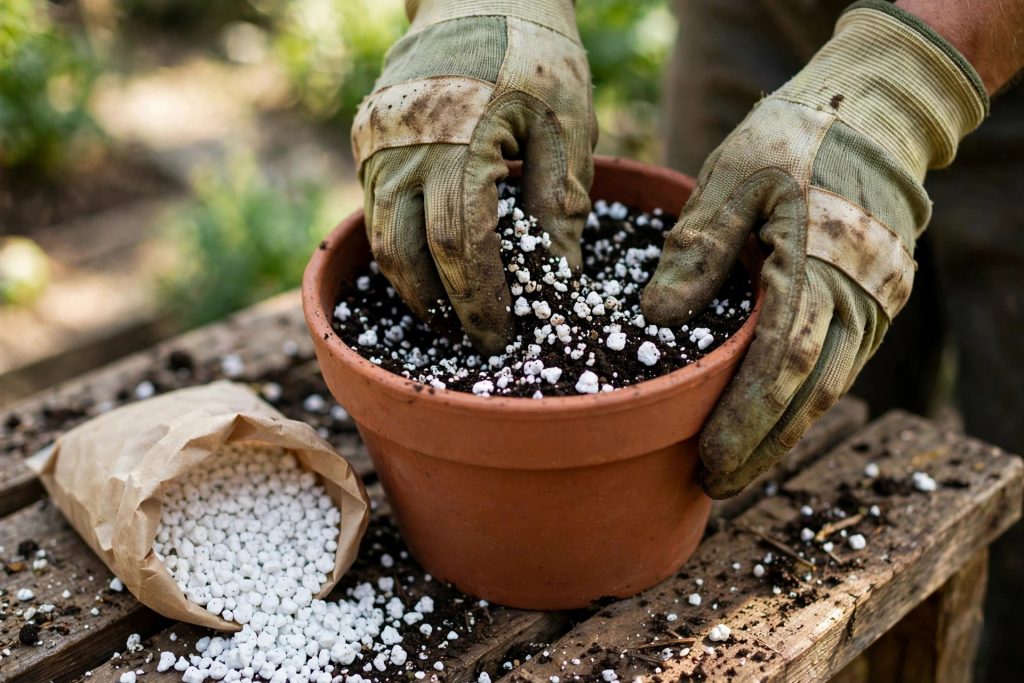
Perlite is the usual partner for coir in a container mix, because it adds the drainage coir lacks.
How We Chose
No brick in this roundup was tested in our garden. Scores come from an editorial analysis of manufacturer specifications and owner feedback, worked out against the same five factors for every pick. The weights add to 100 percent.
| Factor | Weight | What we looked for |
|---|---|---|
| Expansion and yield | 25% | Expanded volume per brick, and whether the maker’s figure is consistent across listings |
| Salt and buffering | 25% | Washed, low EC, buffered, or certified, and how much prep the buyer must do |
| Texture and consistency | 20% | Even pith, screening, and owner feedback on clumps, dust and fine particles |
| Ease of use | 15% | Brick size, soak time, and whether the format fits a bucket or needs a tub |
| Value | 15% | Volume per pack and per brick, judged without prices, on pack size and yield |
A brick scores well when its specs are published and consistent, when it is washed or buffered, when owners report even texture, and when its size fits the job it claims to serve. A brick loses points when its expansion figure changes between listings, when buffering is unstated, or when its format fights the gardener, like a 5 kg block sold for a single pot.
Why the scores came out this way. Coco Bliss leads at 9.6 even though it is not pre-buffered, because for the soil mixes and seed starting it is bought for, buffering matters less than texture, consistency and size, and it leads on all three. CANNA is second at 9.5 as the only brick that is washed, buffered and RHP certified. Nutrifield Mega is third at 9.4 on the biggest yield of any buffered brick. Gro-Med is last at 8.7 even though it has the biggest yield and the cleanest wash, because ease and buffering together are 40 percent of the score, and a 5 kg block that needs a large tub and a Cal-Mag soak is the wrong tool for most home gardeners.
The ratings in the comparison table are editorial scores on that system. They are not laboratory measurements, not retailer star ratings, and not a claim that we grew plants in each brick. Treat them as a guide to which brick fits which job, not as a verdict on your garden.
Final Choice
If you buy one brick from this list, buy the Coco Bliss 650g 5-pack. It is OMRI listed, pre-rinsed and consistent, and the 650g size is the most useful brick a home gardener can own. Soak one brick in a bucket, and you have enough medium for a seed tray or two medium pots, with four bricks left on the shelf.
If you grow in pure coco and feed liquid nutrients, buy the CANNA Coco Brick instead. It is washed, buffered and RHP certified, and it removes the one prep step that causes the most trouble for new coco growers. If you fill beds and big containers, buy the Nutrifield Coco Mega Brick, which gives about 55 liters of pre-buffered coir from a single block.
Whichever brick you choose, remember the two rules that matter most. Soak it properly, and feed your plants, because coir is a home for roots, not a meal. Do those two things, and a ten-dollar brick will carry a season of seedlings, pots and containers.
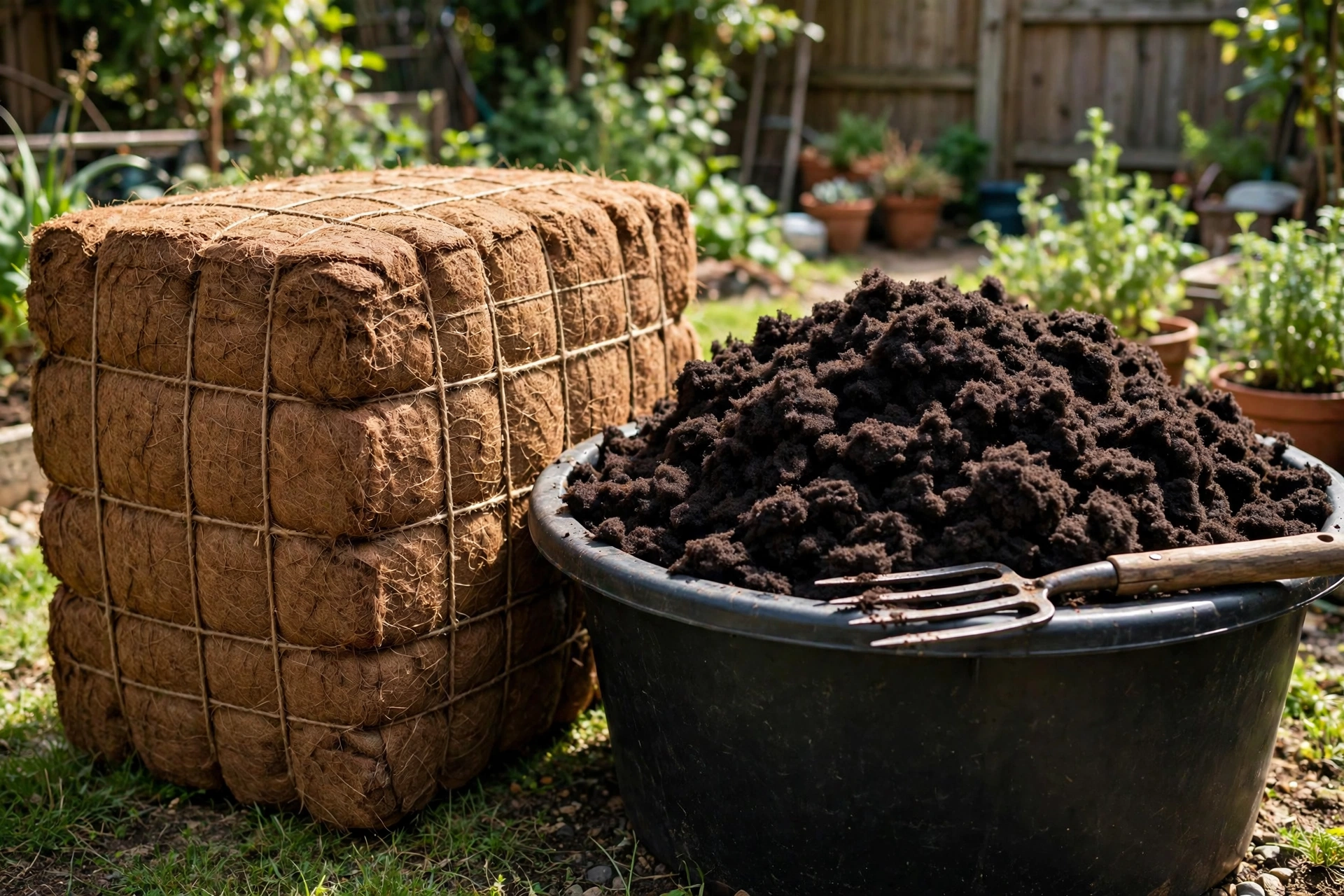
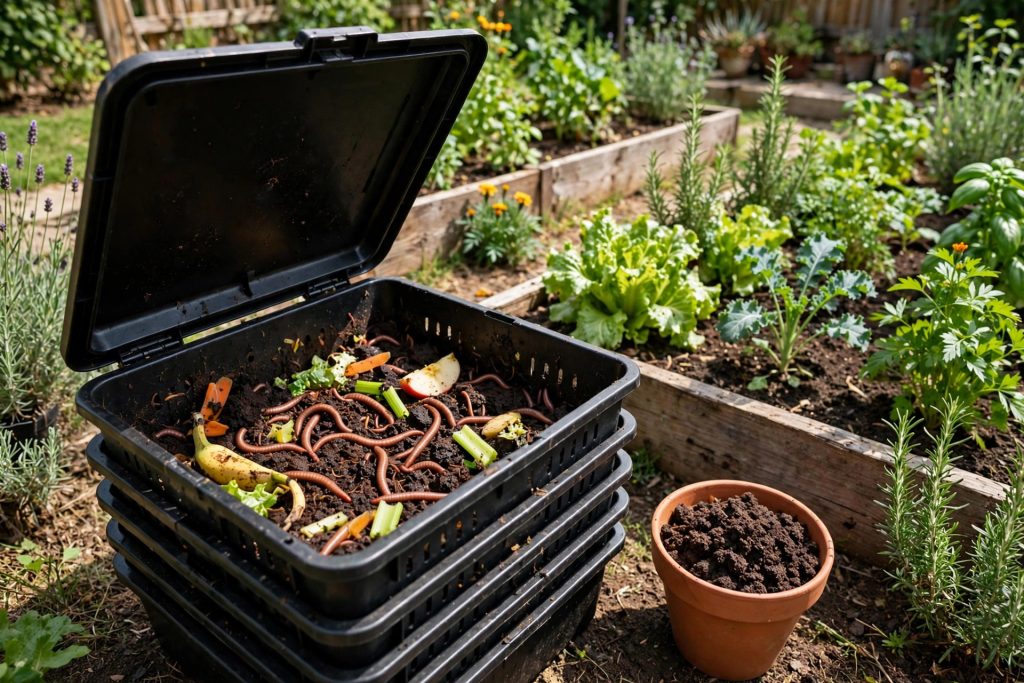
Coir and finished compost are the two amendments this garden uses most.



References
- University of Saskatchewan, Gardening at USask. Peat and Peat Alternatives.
- Planet Natural. Peat Moss vs Coco Coir.
- Old Farmer’s Almanac. 7 Peat Moss Alternatives and Why to Switch.
- CANNA. Coco Professional Plus Cube brochure (washed and buffered, RHP certified, one 10-liter cube expands to 20 liters; a package of two cubes makes 40 liters).
- Plantonix. Coco Bliss 650g Coco Coir Bricks, product specifications.
- Hennepin County Master Gardeners (University of Minnesota Extension), “No-Peat Potting Soil Options.” Supports coir as the top sustainable peat alternative, the Auburn and Arkansas comparison, and coir being less acidic than peat.
- Piedmont Master Gardeners (Virginia Cooperative Extension), “Peat-free Potting Mix: What are the Best Options?” Supports coir as the most-recommended non-peat component and notes the shipping footprint from Asia and Central America.
Frequently Asked Questions
How do you rehydrate a coco coir brick?
Put the brick in a container with room to spare, a 5-gallon bucket is right for a 650g brick, and add about 1 to 1.5 gallons of warm water a little at a time. Wait 15 to 30 minutes for most bricks, or 30 to 40 minutes for Coco Bliss, which is Plantonix’s own instruction, breaking the brick apart with your hands as it softens. Then fluff the coir until it is light and springy. Squeeze a handful. It should feel damp, not dripping.
Is buffered coco coir better than unbuffered?
For pure coco growing with liquid feed, yes. Buffered coir has its exchange sites pre-loaded with calcium and magnesium, so it will not steal those nutrients from your feed. For coir mixed into soil or potting mix, buffering matters less, because the soil supplies calcium and magnesium. If a listing does not say buffered, assume it is not.
Can you use coco coir for seedlings?
Yes, coir is one of the best media for seed starting. It holds water well, drains freely, and its fine texture suits tiny roots. Use a fine pith brick like the Burpee mix or the Coco Bliss 650g, and start feeding once the first true leaves appear, because coir itself carries almost no nutrients.
Is coco coir sustainable?
Coir is a byproduct of the coconut industry, so it does not drive new land conversion, and it is renewable in a way peat moss is not. Peat bogs take thousands of years to form. The main sustainability question for coir is shipping, since most coir comes from Sri Lanka, India or the Philippines. Even with shipping, lifecycle analyses generally favor coir over mined peat.
How much does a 650g coco coir brick expand?
A standard 650g brick expands to about 2 gallons, roughly 8 to 9 liters, of loose coir. Larger blocks expand further: a 5 kg block makes about 55 liters, and a 10 lb block makes about 51 quarts. Figures vary a little between brands, so check the maker’s listing for the brick you buy.
How long does coco coir last, and can you reuse it?
Coir breaks down slowly and can be reused for several growing cycles. Rinse it between uses, remove old roots, and refresh it with compost or fresh coir. Replace it when the texture turns to fine dust and stops draining, which usually takes a few seasons of heavy use.

Thesis Link : https://saulibrary.edu.bd/daatj/public/uploads/BAU200601_19-Pp_5.pdf
- 10 Best Mulches for Vegetable Gardens - November 14, 2026
- 10 Best Coco Coir Bricks for Gardens, Pots and Seed Starting - November 14, 2026
- 10 Best Perlite Brands for Potting Mix - November 10, 2026