
If your pots stay soggy days after watering, the problem is rarely how much you water. It is the mix: heavy potting soil holds water in every pore, and roots sitting in it start to suffocate. That is where perlite earns its place. Perlite is expanded volcanic glass, heated until it pops into light, white, porous granules that add permanent air pockets to a mix, never break down, and weigh almost nothing. The best perlite for plants is the one that matches your pots, your plants, and the grade you actually need, because a fine grade for seed trays and a chunky grade for cactus pots do very different jobs
This roundup compares 10 perlite brands sold in the United States right now, from small 8-quart bags for a windowsill collection to 4-cubic-foot bulk bags for a greenhouse. Every product fact below was verified against live manufacturer or major-retailer pages on the day of writing, and where a maker does not publish a specification, this article says so plainly instead of guessing. Ratings are editorial scores from verified specifications and owner feedback, not from hands-on testing. No prices appear here, because prices change often and a roundup that quotes them goes stale fast.
Table of Contents
- Quick Recommendation
- Best Perlite for Plants Comparison Table
- 1. Espoma Organic Perlite
- 2. Miracle-Gro Perlite with Plant Food
- 3. Mother Earth Perlite, Size 3 Large and Coarse
- 4. Hoffman Horticultural Perlite 16504
- 5. PVP Industries Organic Perlite
- 6. Perfect Plants Organic Perlite
- 7. Harris Premium Horticultural Perlite
- 8. FoxFarm Big and Chunky Perlite
- 9. Legigo Organic Horticultural Perlite
- 10. Cz Garden Supply Organic Perlite
- How We Chose the Best Perlite for Plants
- Perlite vs Vermiculite: What Is the Difference
- How to Use Perlite in Potting Mix
- Coarse vs Fine Perlite: Which Grade Do You Need
- Is Perlite Safe for Plants?
- Perlite Alternatives
- Final Choice
- References
- Frequently Asked Questions
Quick Recommendation
Short on time? Here is the fast version. Buy Espoma Organic Perlite if you want one bag that works for almost everything and carries an OMRI listing. Pick Mother Earth Perlite Size 3 if you grow succulents, cacti, or orchids and need big chunks that keep a mix open. Grab PVP Industries 4 cu ft if you repot often or fill raised beds. Choose Miracle-Gro Perlite with Plant Food if you are new to container gardening and want a bag that also feeds plants. For seed starting, Espoma is the pick, with a fine-to-medium grade the maker lists for seed trays. For cuttings and orchid mixes, Harris is the pick. For the chunkiest drainage possible, FoxFarm Big and Chunky Perlite is the one.
Best Perlite for Plants Comparison Table
| Product | Grade | Bag Sizes | Best For | Our Rating |
|---|---|---|---|---|
| Espoma Organic Perlite | Fine to medium | 8 qt | Overall organic pick | 9.6/10 |
| Miracle-Gro Perlite with Plant Food | Not published | 8 qt | Beginners | 9.2/10 |
| Mother Earth Perlite, Size 3 Large and Coarse | Coarse, about 1/2 inch | 4 cu ft | Succulents and hydroponics | 9.4/10 |
| Hoffman Horticultural Perlite 16504 | Not published | 18 qt | Best value | 9.0/10 |
| PVP Industries Organic Perlite | Coarse | 4 cu ft | Bulk buying | 9.3/10 |
| Perfect Plants Organic Perlite | Fine to medium | 8 qt | Indoor plants | 8.9/10 |
| Harris Premium Horticultural Perlite | Coarse (chunky) | 8 qt | Cuttings and orchids | 8.8/10 |
| FoxFarm Big and Chunky Perlite | Extra coarse | 4 cu ft | Maximum drainage | 9.1/10 |
| Legigo Organic Horticultural Perlite | Coarse | 2 qt, 4 qt, 6 qt, 8 qt, 10 qt | Small-bag pick | 8.7/10 |
| Cz Garden Supply Organic Perlite | Coarse | Not published | Orchids and cactus | 8.8/10 |
1. Espoma Organic Perlite
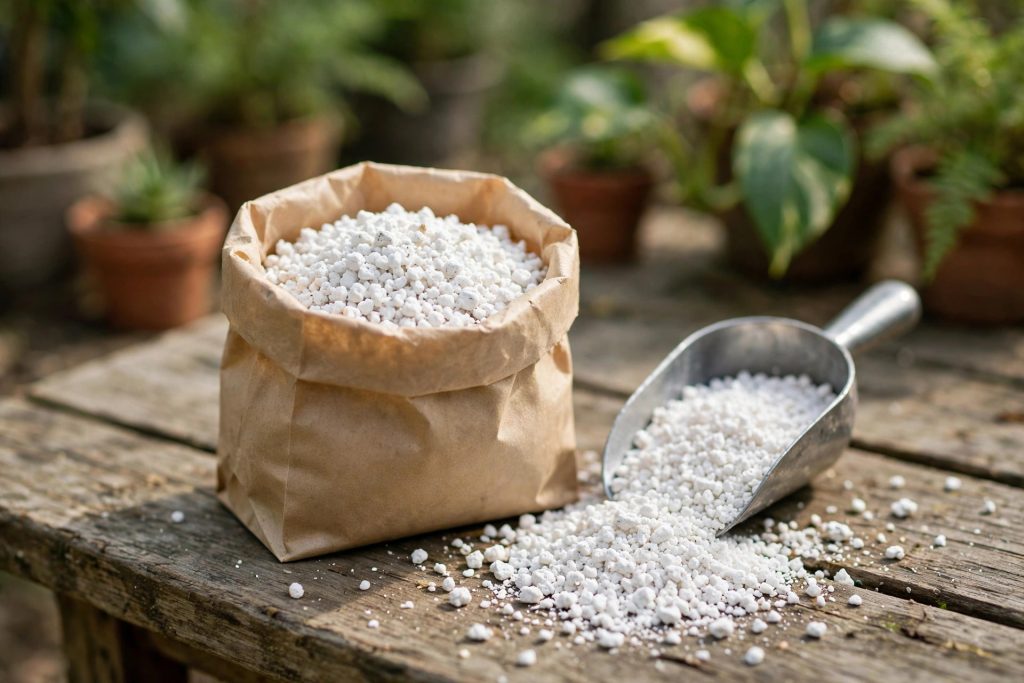
Espoma is the safe first choice in this roundup, and it earns the top rating for a simple reason: it does everything well and its claims check out. The bag is OMRI listed, which matters if you sell produce or plant starts as organic, and the perlite itself is 100 percent natural with no additives or fillers. The grade runs fine to medium, so it works for seed starting trays, tomato containers, and houseplant repotting alike.
Key facts, verified: 8-quart bag (UPC 050197701082). A 2-cubic-foot bag could not be verified on any live listing checked, so it is marked as not published rather than listed. The maker describes it as ideal for seed starting or blending a custom potting mix, and for loosening heavy soil so it stops compacting. What buyers report: 4.9 out of 5 stars from 15 ratings on Walmart.
Real-world limitation: the fine-to-medium grade is not the right tool for plants that demand fast drainage. In a cactus or orchid mix, these smaller granules can wash down and pack together over a season, so succulent growers will get better results from a coarse grade.
Who should buy: gardeners who want one organic-listed bag that covers seed starting, containers, and houseplants without thinking about grades.
2. Miracle-Gro Perlite with Plant Food
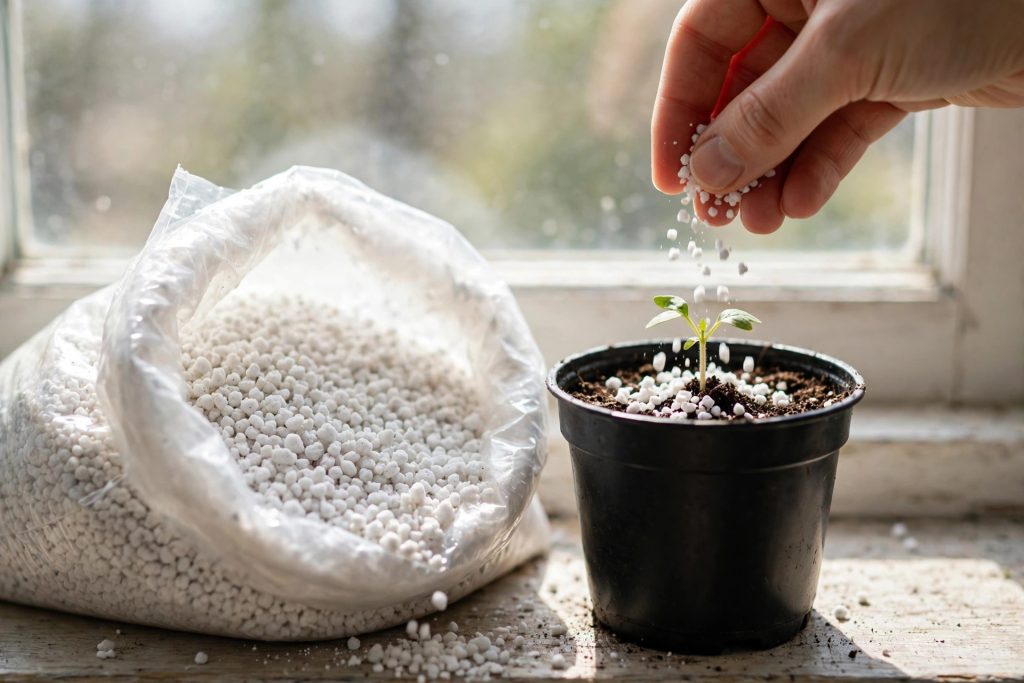
Walk into almost any garden center in the United States and this is the perlite on the shelf. Miracle-Gro Perlite is enriched with Miracle-Gro plant food, so it does two jobs at once: it opens up a potting mix and it feeds the plant. For a beginner potting their first tomatoes or petunias, that combination removes a step and a decision.
Verified facts: 8-quart bag, model number VB00003, manufacturer number 74278430, UPC 073561000031. The maker says it helps prevent soil compaction, promotes strong root development, and suits container plants and root cuttings. It is also sold in 2-pack and 3-pack bundles of 8-quart bags. What buyers report: 4.7 out of 5 stars from 360 ratings on Walmart.
The trade-off is the plant food itself. Because this perlite carries fertilizer, it is not the right choice for seedlings that prefer a lean start, for carnivorous plants, or for anyone growing strictly organic. The maker does not publish a grade for this product, so buyers cannot tell from the bag whether they are getting fine, medium, or coarse granules.
Real-world limitation: the added plant food means you should not use this perlite where you want full control over feeding, and the unpublished grade makes it a poor pick when particle size matters.
Who should buy: new container gardeners who want one bag that drains and feeds, and anyone who values finding the same product at any local store.
3. Mother Earth Perlite, Size 3 Large and Coarse
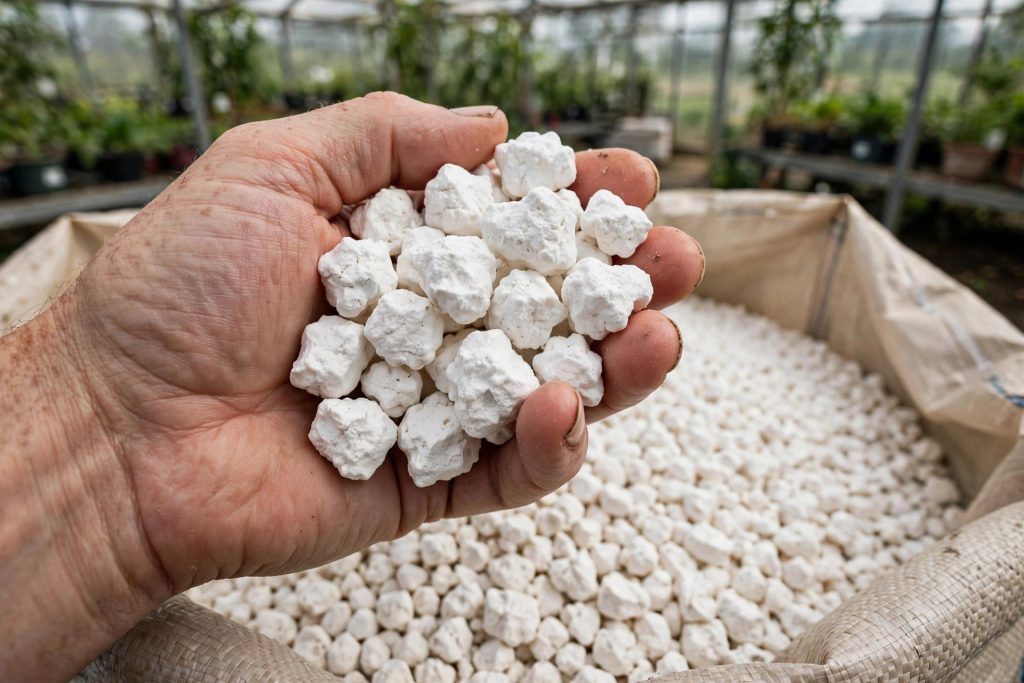
If you grow succulents, this is the perlite to look at first. Mother Earth Perlite Size 3 is screened to about half an inch per piece, which is large enough to stay visible in a mix and to hold big air pockets open around roots. The bag holds 4 cubic feet, it is sterile, and its pH is 7.0, neutral. The maker kilns naturally occurring siliceous rock at 1600 degrees Fahrenheit until it expands up to 20 times its original volume.
Verified facts: 4-cubic-foot bag, SKU HGC715008, UPC 849969000177. The line also runs a plain Coarse grade at 1/8 to 1/4 inch and a Size 4 grade at about 1 inch, so Size 3 sits in the middle of the range. The product page lists it for hydroponic use as well as soil mixes, and a single bag covers a lot of pots.
Real-world limitation: the bag is big and the granules are big. A gardener with three houseplants will not use 4 cubic feet, and the half-inch pieces look out of place in a small seed tray or a 4-inch pot.
Who should buy: succulent and cactus growers, orchid growers, hydroponic gardeners, and anyone mixing large batches of fast-draining soil.
4. Hoffman Horticultural Perlite 16504
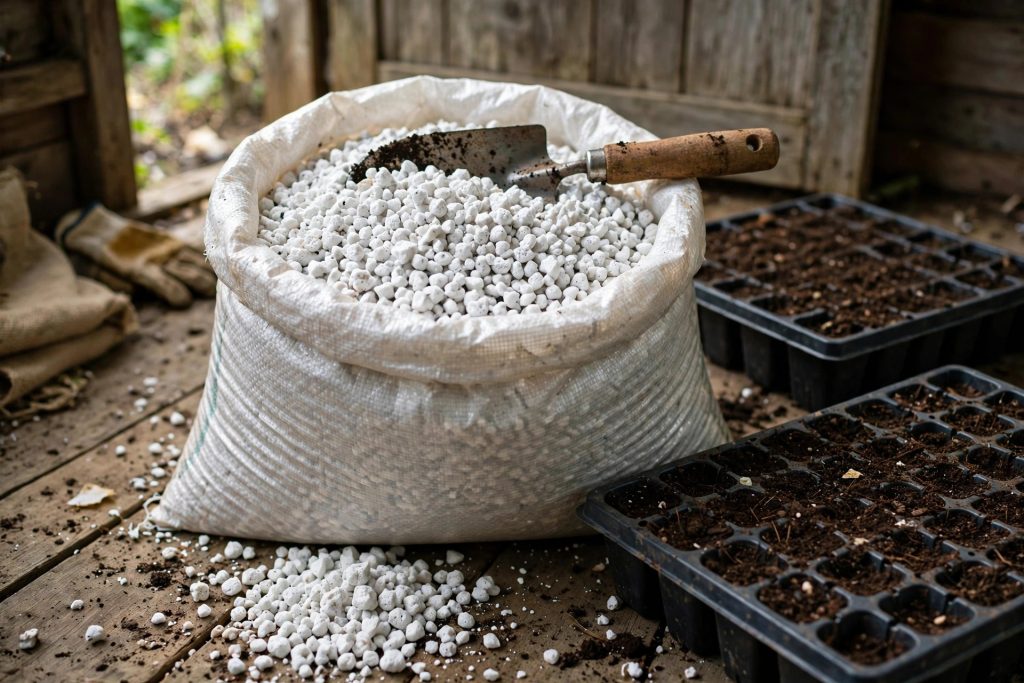
Hoffman has sold horticultural perlite for decades, and the 16504 is the workhorse size: 18 quarts, more than double a standard 8-quart bag. That size hits a sweet spot: enough for a full afternoon of seed starting or repotting a shelf of houseplants, but still a bag one person can carry and store on a garage shelf.
Verified facts: 18-quart bag, model 16504. The maker describes it as a lightweight soil conditioner that loosens clay soil, reduces caking, and improves drainage and aeration. It blends with peat moss for a custom soil-less mix, and the maker lists seed starting, propagating cuttings, and storing bulbs among its uses. The grade is not published by the maker, and the ASIN for the 18-quart model is also not published, so this article does not attach an ASIN to this size. What buyers report: 4.8 out of 5 stars from 37 ratings on Walmart.
Owner feedback reports consistent quality: clean, uniform granules with less dust than the cheapest bulk options.
Real-world limitation: the unpublished grade is a real gap. If you need a guaranteed coarse or fine grade, you cannot confirm it from the bag. The 18-quart size is also more perlite than a two-pot houseplant owner needs.
Who should buy: gardeners who start a lot of seeds, propagate cuttings, or repot in volume each spring and want a trusted brand in a practical size.
5. PVP Industries Organic Perlite
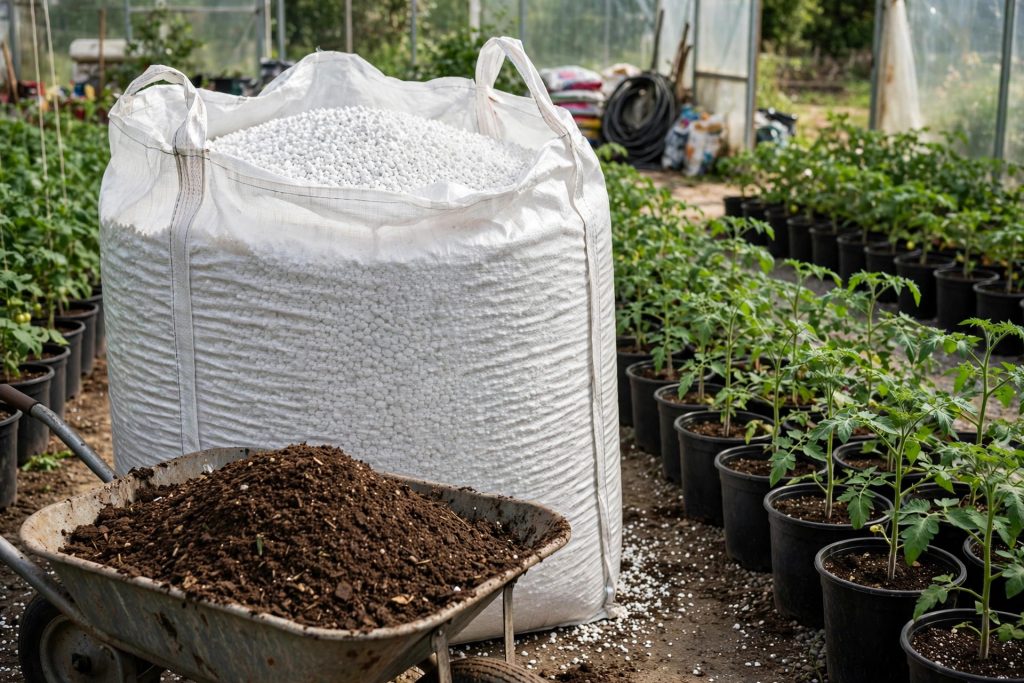
When the job is measured in wheelbarrows rather than pots, PVP Industries is the bulk answer. The 4-cubic-foot bag is the same volume as the Mother Earth bag, but PVP has been a perlite maker since 1984, and its technical data sheets publish real numbers: pH 6.5 to 7.5, bulk density 4 to 6 pounds per cubic foot.
Verified facts: 4-cubic-foot bag, model PVP105408, ASIN B07S4FTPYB, coarse grade. The maker describes horticultural perlite as clean, sterile, pH neutral, non-flammable, odorless, and non-toxic, and notes that it neither decays nor shrinks, so it keeps working in a mix season after season. One honesty note: the listing title says 102 quarts while the maker’s own description text says 120 quarts, so this article quotes the bag as 4 cubic feet only. What buyers report: 4.8 out of 5 stars from 103 ratings on Walmart.
For scale, 4 cubic feet is about 30 gallons of perlite, enough to make about 60 gallons of mix at a 50 percent perlite ratio, which covers a season of raised-bed top-ups or a greenhouse full of containers.
Real-world limitation: bulk is a commitment. The bag is large, it sheds dust when poured, and it needs dry storage. A gardener with a balcony and four pots should not buy 4 cubic feet.
Who should buy: greenhouse growers, raised-bed gardeners, and anyone who mixes potting soil in bulk.
6. Perfect Plants Organic Perlite
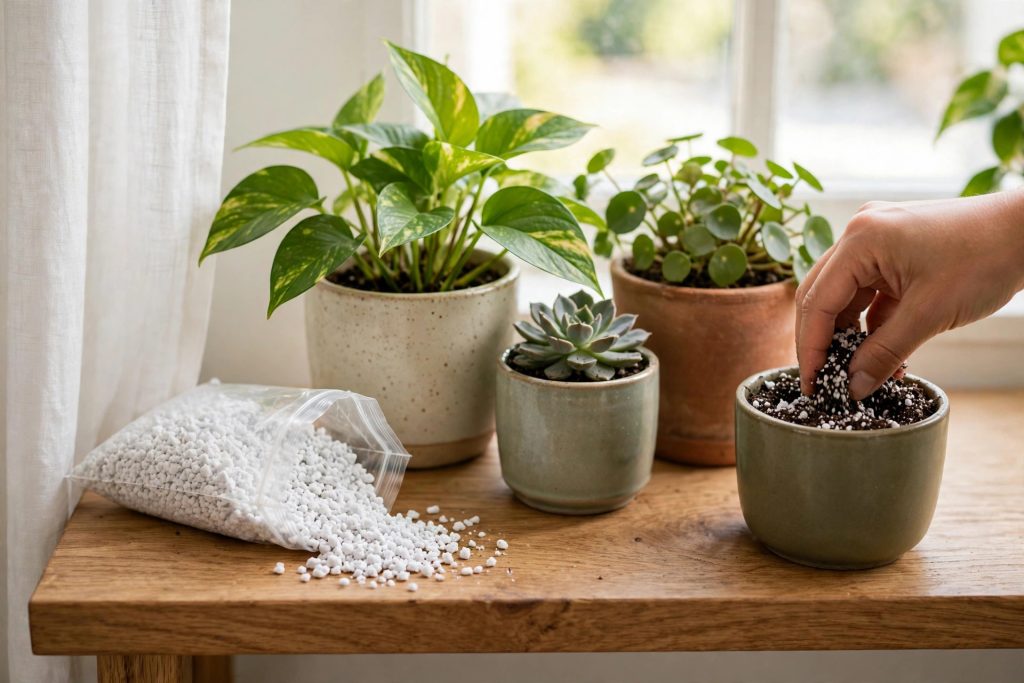
Indoor plants are where perlite quietly does its best work. A pothos or pilea in a ceramic pot with no drainage hole is one overwatering away from root rot, and a handful of perlite in the mix is often the difference. Perfect Plants Organic Perlite is built for that job. It is a horticultural-grade perlite in the fine-to-medium range, sold in an 8-quart bag that fits on a shelf and lasts a houseplant owner most of a year.
Verified facts: 8-quart bag, horticultural grade, fine to medium particles, made for indoor and outdoor container plants. The maker positions it as a drainage and aeration amendment that resists compaction and stays effective across seasons. Its OMRI status is not published, and no ASIN was verified for this listing, so neither is claimed What buyers report: 4.7 out of 5 stars from 32 ratings on Walmart.
Owners report an even particle size that mixes smoothly into bagged potting mix without clumping, which matters indoors, where pots are small and one oversized chunk can tilt a plant.
Real-world limitation: this is a small-bag, general-purpose product. It is not coarse enough for a cactus mix, and the missing OMRI listing means certified organic growers should pick Espoma instead.
Who should buy: houseplant owners who repot a few plants at a time and want a clean, even perlite that behaves well in small pots.
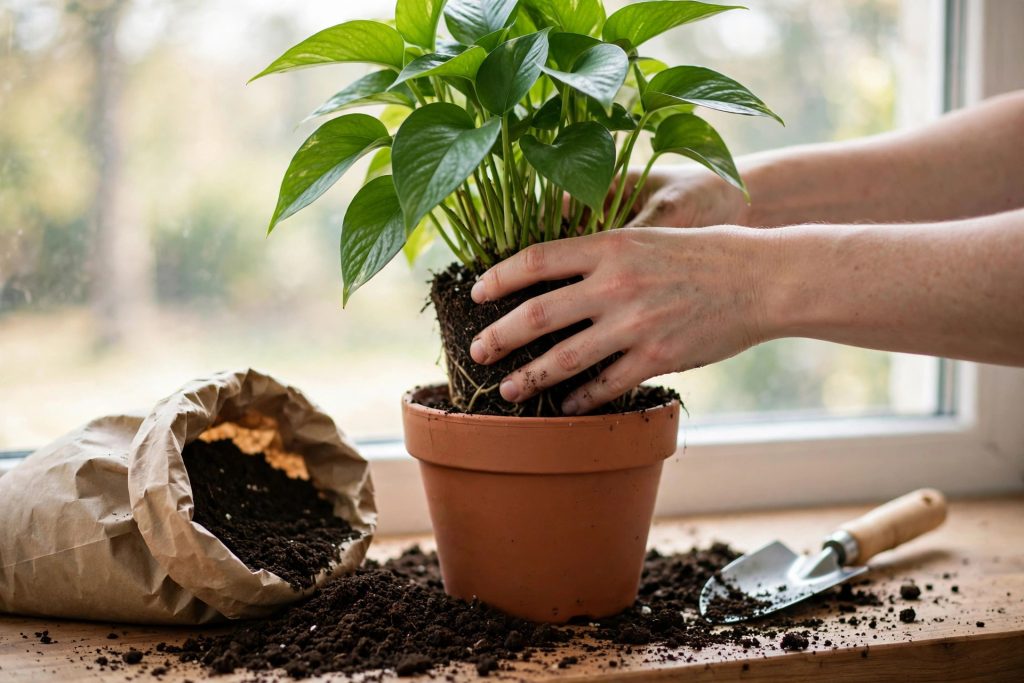
A good perlite only helps if the potting soil under it is right, so match your mix to the plants on your windowsill.
7. Harris Premium Horticultural Perlite
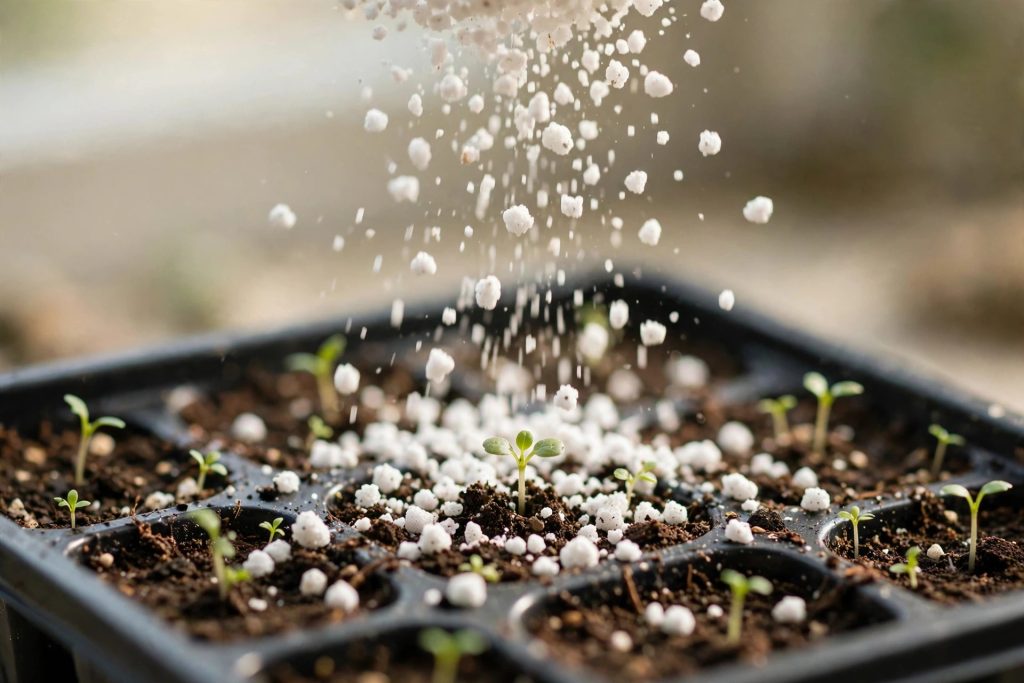
Harris takes a different angle from the fine-grade seed starters. Its premium horticultural perlite is described by the maker as chunky and coarse, in an 8-quart bag, and it is aimed at mixes that like to stay on the drier side: orchids, cactus, succulents, and hydroponic setups. It is coarse enough to open a cactus mix, yet clean and consistent enough to top a seed tray.
Verified facts: 8-quart bag, ASIN B08K9BWJ9R. The maker lists it as pH neutral, non-flammable, and non-toxic, and notes that it will not shrink or decay over time. It helps soil retain moisture and nutrients while preventing root compaction, and it is commonly used with coco coir bricks, soil, and pellets. What buyers report: 5.0 out of 5 stars from 1 review on PF Harris.
For cuttings, the coarse structure is the point: a cutting in a perlite-heavy mix gets air at the cut end, which keeps the stem from rotting before roots form.
Real-world limitation: the chunky grade cuts both ways. In a small seed cell, a large granule can crowd out a tiny seedling, so this is not the best bag for sowing lettuce or basil in 72-cell trays.
Who should buy: propagators who root cuttings, orchid and cactus growers who want a coarse bag without buying 4 cubic feet, and hydroponic gardeners who use perlite as a standalone medium.
8. FoxFarm Big and Chunky Perlite
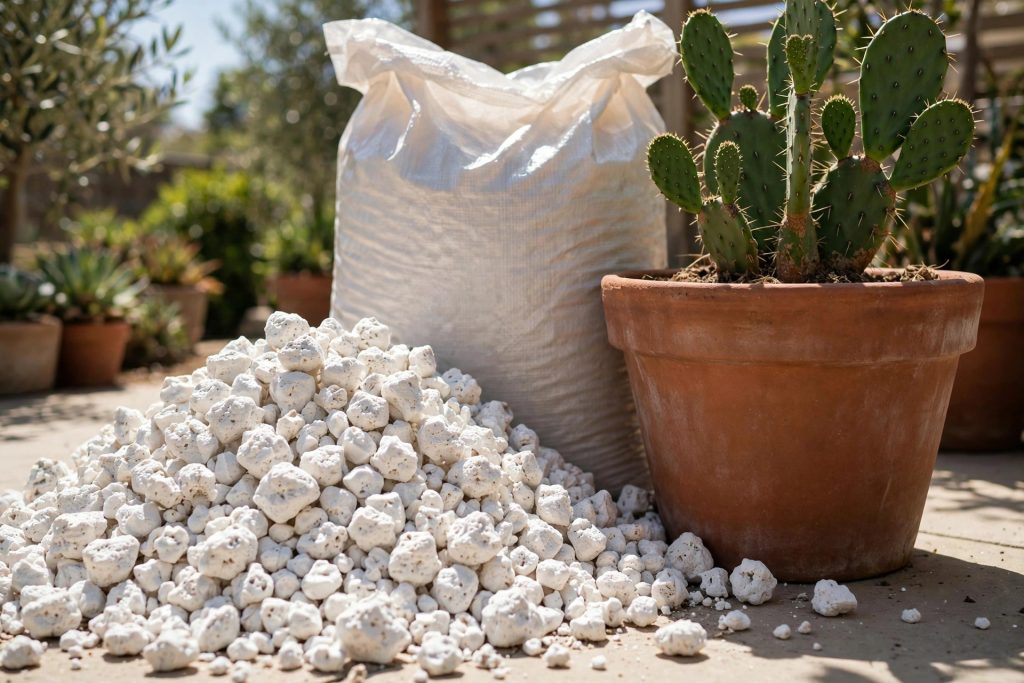
Some plants do not forgive wet feet, and for those plants the answer is much bigger perlite. FoxFarm Big and Chunky Perlite is the extra-large grade in this roundup. Its particles are the largest here, and the maker says the extra-large size lets more air flow through the mix and keeps soil from packing down.
Verified facts: 4-cubic-foot bag. FoxFarm’s own directions say to mix 1 part Big and Chunky Perlite with 4 parts potting soil, about 20 percent perlite, and to put a one-inch layer along the bottom of the pot. For germination and cloning, the maker says to mix 1 part Big and Chunky Perlite with 2 parts Light Warrior. The maker notes that it works in both soil and hydroponic systems. Other bag sizes are not published on the pages checked, so only the 4-cubic-foot size is listed here.
In practice, this is the perlite to reach for when a mix has already failed. If a bagged cactus mix still holds water for days, blending in a third of Big and Chunky Perlite by volume often helps, but only as a rescue step for an already waterlogged cactus or succulent mix, and only if the pot drains freely and watering is cut back. A third is above the maker’s general direction of 1 part perlite to 4 parts potting soil, so use it only for a fast-draining cactus or succulent mix, not as a general mix. It cannot fix a pot with no drainage or a mix that is already rotted. The large particles create channels that water follows straight through.
Real-world limitation: the same size that makes it drain fast makes it a poor general-purpose perlite. It is too coarse for seed starting, and a 4-cubic-foot bag is a lot of material for a gardener with two cacti.
Who should buy: cactus and succulent collectors, orchid growers mixing their own bark blends, and hydroponic gardeners who need maximum air flow.
9. Legigo Organic Horticultural Perlite
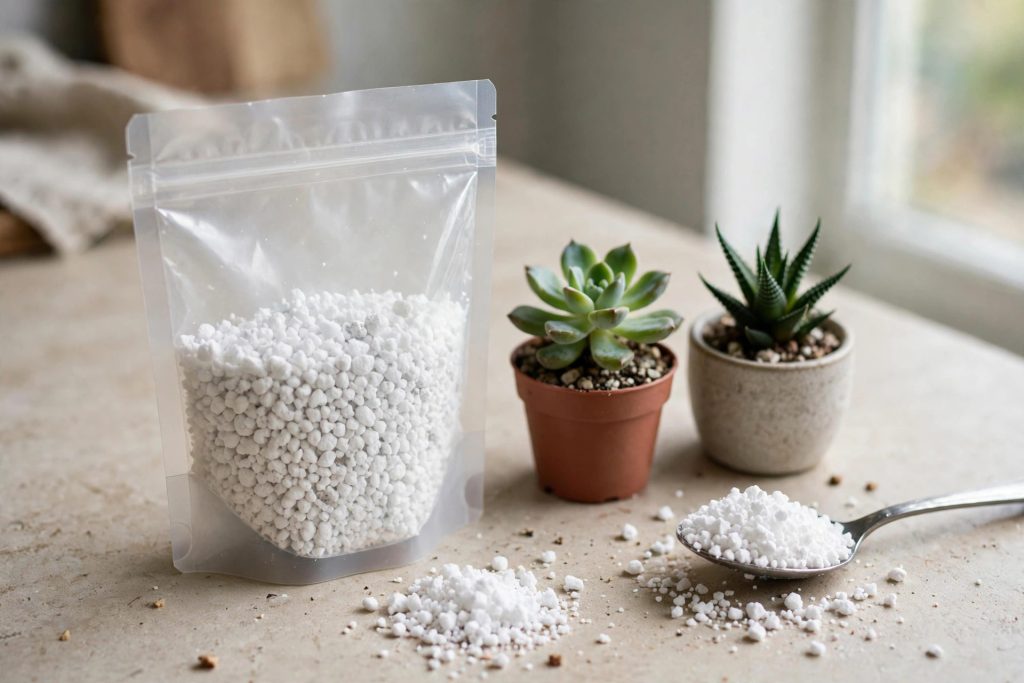
Not every gardener needs a bag they have to store in the garage. Legigo sells perlite in small pouches, and that is its whole appeal. The granules are coarse and evenly sized, the pouch reseals so the rest stays dry, and the amount is right for repotting a handful of succulents on a kitchen counter.
Verified facts: coarse grade, pH neutral, 100 percent natural perlite with no added chemicals. Verified sizes are 2 quarts (model L-CA-Garden Perlite-2qt) and 4 quarts (ASIN B0BC883X92), with 6, 8 and 10 quart sizes also listed on Walmart. The maker recommends them for succulents, cactus mixes, and carnivorous plant soils, and as a top dressing that keeps a pot looking tidy. What buyers report: 4.5 out of 5 stars from 89 ratings on Walmart.
Real-world limitation: small bags cost more per quart than bulk, and the coarse grade is not ideal for seed starting. A gardener repotting twenty plants will go through several pouches.
Who should buy: apartment gardeners, succulent collectors with a small collection, and anyone who wants a tidy pouch they can open, use, and reseal without a potting bench.
10. Cz Garden Supply Organic Perlite
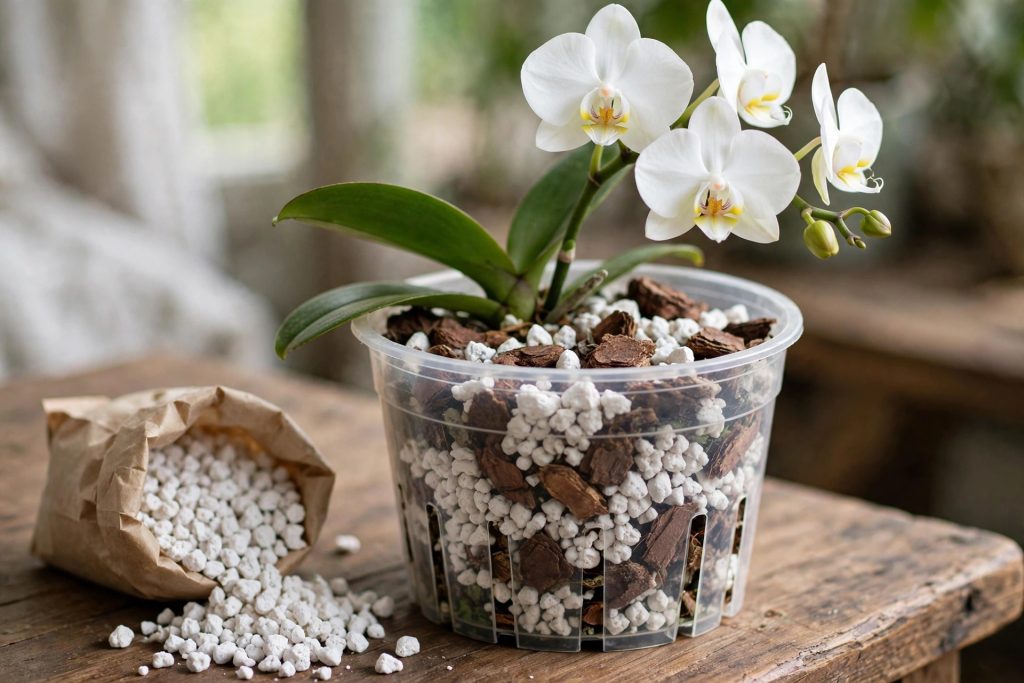
Cz Garden Supply rounds out the list with a product that orchid and cactus growers keep coming back to. It is sold by volume in liters rather than quarts, which is unusual on a US shelf, and it comes in more than one grade. The Premium Grade is the general-purpose option, the Coarse grade is the chunky one for orchids and cactus, and an XL Coarse Number 4 grade is sold in smaller packs for growers who want the biggest pieces.
Verified facts: the 8-liter size is not published. The maker lists Premium Grade perlite, ASIN B0085MYVK0, made in the USA, as a horticultural soil amendment and growing medium for succulents, orchids, and hydroponics. The grade to choose for orchids and cactus is the Coarse grade, not the Premium Grade, so buyers should check the grade on the listing before ordering. The 8-liter and 2-liter pack sizes could not be verified on any live manufacturer or major-retailer page checked, so they are marked as not published rather than listed.
Orchid roots need air more than water, and a bark mix with coarse perlite holds its structure for a year or more without collapsing.
Real-world limitation: the liter sizing and several grades under one brand name make this the easiest product in the roundup to order wrong. A buyer who picks the Premium Grade expecting chunky pieces will be disappointed, and the bag is a modest size, so a big repotting day needs more than one bag.
Who should buy: orchid growers and cactus collectors who want a coarse, US-made perlite in a modest size and read the grade on the listing before they order.
How We Chose the Best Perlite for Plants
A roundup is only as honest as its method, so here is ours, in full. We started with the brands US gardeners actually buy, then checked every product fact against a live manufacturer page or a major retailer’s listing on the day of writing. Where a maker did not publish a specification, this article says “Not published” instead of filling the gap with a guess. Prices were left out on purpose, because they change weekly.
The ratings in the comparison table and in each product section are weighted editorial scores, worked out from the scoring system below. Each rating is the weighted editorial score from verified specifications and buyer feedback, and the weighting table below is the source of the numbers. Scores reflect verified specifications and owner feedback. No hands-on testing was done for this article, and no product was grown in or compared in a garden by the author. No rating is a lab result.
| Scoring Factor | Weight | What It Measures |
|---|---|---|
| Drainage and aeration | 30% | Drainage and air at the roots |
| Grade consistency | 20% | Even particle size, grade published by the maker |
| Dust and cleanliness | 15% | Low dust and clean granules |
| Value and bag-size range | 15% | Useful sizes for small and large jobs |
| Versatility | 10% | Jobs it suits, from seed starting to hydroponics |
| Availability | 10% | Easy to find at US garden centers and online |
| Total | 100% |
Drainage and aeration carry the heaviest weight because that is the only job perlite has, and grade consistency comes second because a bag that mixes sizes at random makes a mix unpredictable.
Perlite vs Vermiculite: What Is the Difference
New gardeners mix these two up constantly, and the bags look alike on a shelf. Both are minerals heated until they expand, both are light and sterile, and both go into potting mixes. The difference is what they do with water.
Perlite is expanded volcanic glass. It is full of tiny closed air pockets, so it holds very little water. Its job is drainage and aeration. It keeps a mix open, lets excess water run through, and never breaks down. Vermiculite is a mineral from the mica family that expands into layered flakes. Those flakes hold water and nutrients like a sponge, so its job is moisture retention. A mix with vermiculite stays damp longer. A mix with perlite dries faster.
The choice follows the plant. Succulents, cacti, and orchids want perlite, because they rot in damp mix. Seedlings and moisture-loving houseplants often want vermiculite, or a blend of both. Penn State Extension puts it plainly in its potting media guidance: perlite provides great drainage but cannot hold or retain water, while vermiculite holds water, nutrients, and air.
| Feature | Perlite | Vermiculite |
|---|---|---|
| Made from | Volcanic glass, heated until it expands | Mica mineral, heated until it expands |
| Main job | Drainage and aeration | Moisture and nutrient retention |
| Water holding | Very low | High |
| pH | Neutral, about 7.0 | Slightly alkaline, about 6.5 to 7.2 |
| Breaks down | No, it is permanent | Slowly, over seasons |
| Best for | Succulents, cacti, orchids, containers that stay wet | Seed starting, moisture-loving plants, cuttings |
| Watch out for | Dust when dry, floats to the surface | Can hold too much water for succulents |
How to Use Perlite in Potting Mix
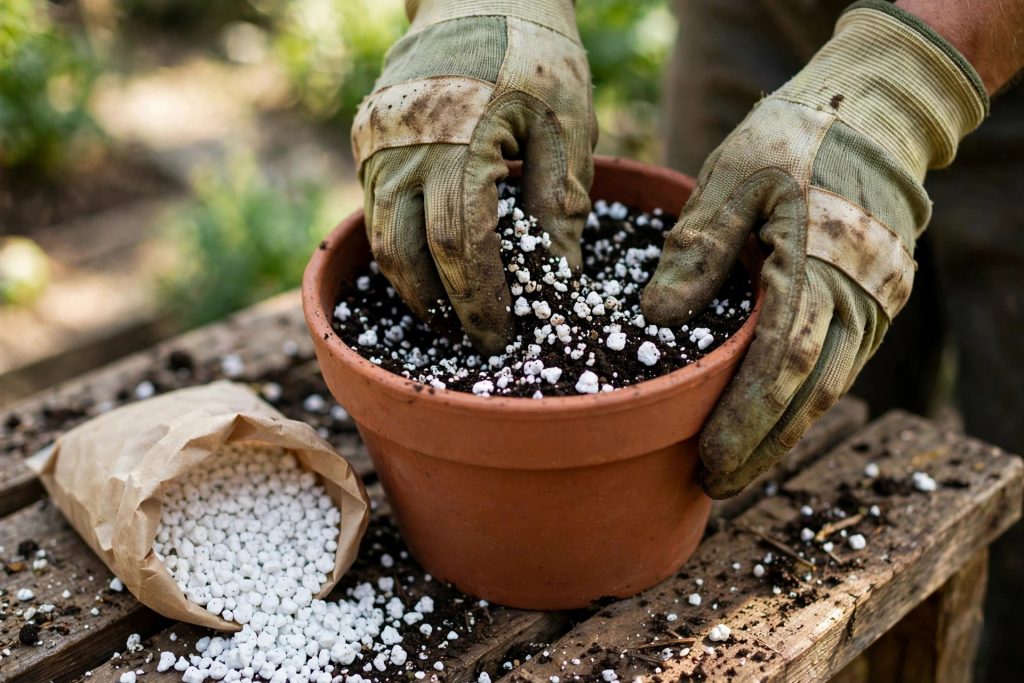
Perlite works by volume, not by weight, so measure it with a scoop or a cup, not a scale. Mix it into damp potting soil, not dry, because dampening it first keeps the dust down. Wear a dust mask and work outdoors or in a ventilated space when you open a dry bag.
Ratios by plant type. Use each ratio as a starting point and adjust it to how fast your mix dries and what your plants need:
- General containers and houseplants: 1 part perlite to 3 parts potting soil, which is about 25 percent perlite. This is the starting ratio for most plants, including pothos, philodendron, peace lilies, and herbs in pots.
- Succulents and cacti: 1 part perlite to 1 part potting soil, about 50 percent perlite, is a common starting point. Some extension recipes use far less perlite, so treat this as a starting point and adjust to how fast your pots dry. Use a coarse grade here, such as Mother Earth Size 3 or FoxFarm Big and Chunky Perlite, so the mix drains more freely.
- Seed starting: 1 part fine perlite to 1 part seed starting mix, about 50 percent perlite, or a soilless mix of half peat and half perlite, as a starting point.
- Orchids: 1 part coarse perlite to 2 parts bark, about a third perlite. The perlite holds the bark mix open and keeps air at the roots between waterings.
- Raised beds and large containers: 1 part perlite to 4 parts soil, about 20 percent perlite. This loosens a heavy mix without turning it into a sieve.
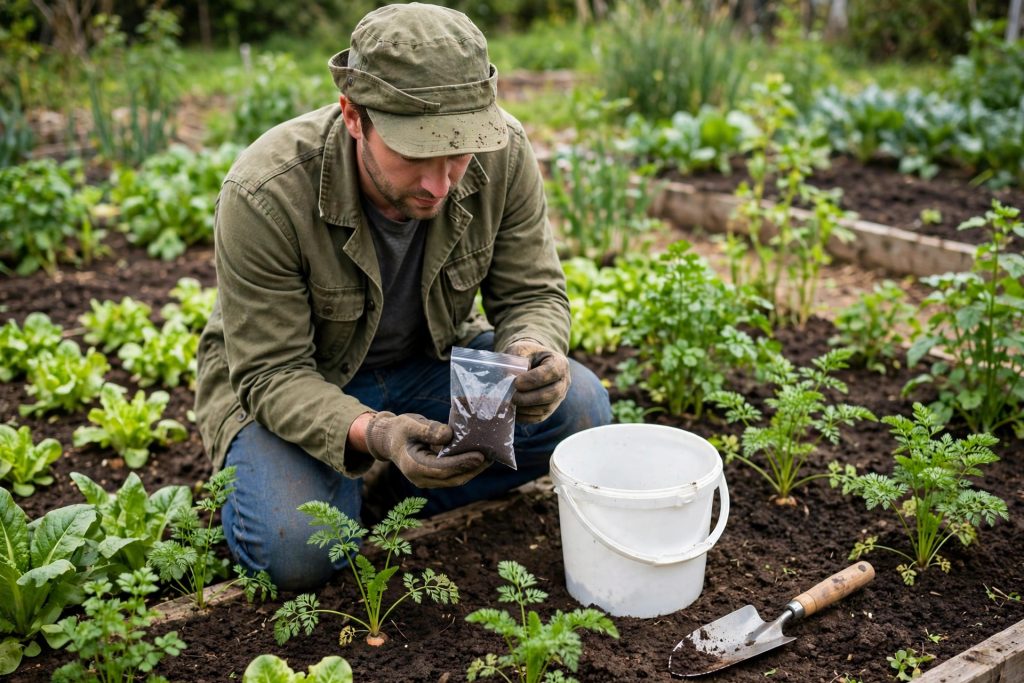
Before you buy a bag, check whether your soil needs testing first.
Coarse vs Fine Perlite: Which Grade Do You Need
Perlite comes in three broad grades, and the grade decides what the bag is good for. Fine perlite has small granules, roughly an eighth of an inch and under. Medium perlite runs from about an eighth to a quarter inch. Coarse perlite runs from a quarter inch up to half an inch and beyond, and extra-coarse grades like FoxFarm Big and Chunky Perlite go larger still.
Fine perlite suits seed starting and cuttings. The small granules nestle around tiny roots and hold a little more moisture than coarse grades, which helps a seed stay damp while it germinates.
Medium perlite is the all-purpose grade. It suits general containers, houseplants, and vegetable pots, and most 8-quart bags for home gardeners sit in the fine-to-medium range, which is why they work for so many jobs.
Coarse perlite suits plants that must dry fast. Succulents, cacti, orchids, and plants in large outdoor containers need the big air pockets that only large granules create. It also works as a standalone hydroponic medium and as a top dressing, because the pieces are heavy enough to stay put.
Match the grade to the pot size: fine for cells and small pots, medium for standard containers, coarse for large pots and fast-draining plants. In a 4-inch pot, a half-inch granule is a boulder.
Is Perlite Safe for Plants?
Yes, perlite is safe for plants when you use horticultural-grade material and handle it sensibly. It is a sterile mineral that carries no nutrients, no salts worth worrying about, and no weed seeds. Its pH is neutral, about 7.0, so it does not push a mix acidic or alkaline. It does not break down, it does not rot, and insects and fungi cannot eat it.
The one real precaution is dust. Dry perlite gives off a fine white dust when you pour it, and that dust irritates eyes and lungs. Iowa State University Extension warns to use caution when handling dry perlite because it can be very dusty, and Penn State Extension notes that perlite dust is harmful if inhaled and should be moistened before mixing. The fix is simple: wear a dust mask and dampen the perlite lightly before you mix it.
Perlite also floats: after watering, the white granules rise to the top of the pot. That is normal and harmless, and mixing the perlite through the soil rather than layering it helps. Texas A and M AgriLife Extension also notes that perlite has been shown to contain potentially toxic levels of fluorine, though ordinary container use at normal ratios is not a concern for home gardeners. If you grow fluoride-sensitive plants such as spider plants and you see brown leaf tips, try watering with rainwater rather than blaming the perlite alone.
Perlite Alternatives
Perlite is the standard, but it is not the only way to open a potting mix. Four alternatives cover most situations.
Pumice is the closest substitute. It is also volcanic, heavier than perlite so it does not float, and it holds a little more water. Bonsai growers love it, but a pot full of pumice is noticeably heavier and it costs more per quart.
Vermiculite is the moisture-holding cousin described above. Use it when the problem is a mix that dries too fast rather than one that stays wet.
Rice hulls are a newer option. They are light, they add air-filled pores like perlite, and they are a renewable byproduct of rice milling. Iowa State Extension notes that rice hulls work well for short-term crops such as seedlings, but they decompose too quickly for houseplants.
Bark, especially composted pine bark, adds air and structure and breaks down slowly. It suits orchids and large containers, but fresh bark ties up nitrogen as it decomposes, so a bark-heavy mix needs a little extra feeding.
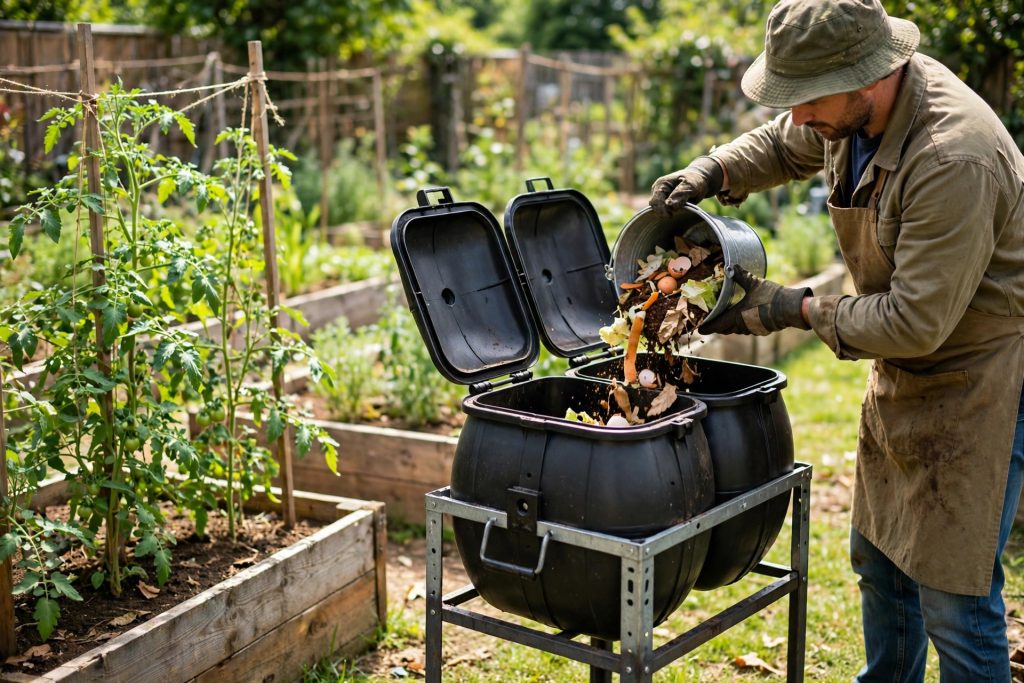
Home compost also improves a mix, adding structure and biology.
Final Choice
After weighing drainage, grade consistency, dust, value, versatility, and availability, the best perlite for plants overall is Espoma Organic Perlite. Its OMRI listing is verified, its fine-to-medium grade suits the widest range of jobs, and its 8-quart bag suits most home gardeners.
The other winners by situation: Mother Earth Perlite Size 3 for succulents, cacti, and hydroponics. PVP Industries Organic Perlite for bulk mixing and greenhouse work. Miracle-Gro Perlite with Plant Food for beginners who want feeding built in. Harris Premium Horticultural Perlite for cuttings and orchid mixes. FoxFarm Big and Chunky Perlite for the fastest drainage possible. Legigo Organic Horticultural Perlite for small collections and tidy pouches. Cz Garden Supply Organic Perlite for orchid growers who read the grade first.
Whatever you buy, match the grade to the plant and dampen the perlite before you mix it. Get those two right and any bag here should do its job well, because the perlite itself does not break down. A mix’s drainage also depends on the other ingredients breaking down over time, so the perlite keeps working as long as the rest of the mix holds up, with normal repotting.
References
- Potting Media and Plant Propagation, Penn State Extension – Supports the claim that potting mixes combine peat moss, vermiculite or perlite, and compost, and that buyers should check for an OMRI listing on commercial mixes.
- Potting Media: Components and Handling, Iowa State University Extension – Supports the claim that perlite adds long-lasting air-filled pores to a mix, that dry perlite is very dusty, and that rice hulls are a short-term alternative.
- Starting your garden and containers off right, University of Minnesota Extension – Supports the claim that potting mixes are soilless media made of peat moss, compost, perlite, and vermiculite, and that garden soil is too heavy for pots.
- Growing Media, Texas A and M AgriLife Extension – Supports the claim that perlite is dusty when dry, tends to float to the top of a container, and that standard soilless mixes use ratios such as 2 parts peat to 1 part perlite.
Frequently Asked Questions
What is the best perlite for succulents?
A coarse grade is the best perlite for succulents, because succulents rot when their roots sit in damp mix. Mother Earth Perlite Size 3, at about half an inch per piece, and FoxFarm Big and Chunky Perlite are the two strongest picks in this roundup. Mix either one at about 50 percent perlite to 50 percent potting soil.
How much perlite should I add to potting soil?
For general containers and houseplants, use 1 part perlite to 3 parts potting soil, about 25 percent perlite. For succulents and cacti, go to 1 part perlite to 1 part potting soil, about 50 percent, and for seed starting, use about 50 percent fine perlite.
Is perlite better than vermiculite?
Neither is better in general: they do opposite jobs. Perlite drains and aerates, while vermiculite holds water and nutrients. Use perlite for succulents, cacti, and pots that stay wet, and vermiculite for seedlings and moisture-loving plants.
Can I use perlite alone as a growing medium?
Yes, perlite works as a standalone medium in hydroponics and for rooting cuttings, because it is sterile and holds air well. It carries no nutrients, so plants grown in pure perlite need a complete fertilizer with every watering.
Why does perlite float to the top of my pots?
Perlite is very light, so watering lifts the granules to the surface. That is normal and harmless. To reduce it, mix the perlite evenly through the soil, use a coarser grade, and water gently.
Do I need to wear a mask when handling perlite?
Yes, wear a dust mask when you open a dry bag or mix a large amount. Dry perlite gives off fine dust that irritates eyes and lungs. Dampen the perlite lightly with a spray bottle before mixing, and work outdoors or in a ventilated space.

Thesis Link : https://saulibrary.edu.bd/daatj/public/uploads/BAU200601_19-Pp_5.pdf
- 10 Best Perlite Brands for Potting Mix - November 10, 2026
- How to Transplant Pepper Seedlings Outdoors - November 9, 2026
- Best Worm Composters for Home Use: 10 Picks That Turn Scraps Into Black Gold - November 8, 2026