The seed catalog arrives in January, and suddenly you are choosing between 40 pepper varieties that all promise the best flavor you ever tasted. Some will ripen before your first frost and some will still be green when it hits. Some are sweet enough for a child to eat raw, and some are hot enough to make a grown cook reach for the milk. The variety you pick matters more than almost any other decision in the garden, and it is the one decision you make before a single seed goes into soil.
This guide compares the best pepper varieties to grow from seed, ten proven picks: thick-walled bells for stuffing, sweet frying peppers, a snacking pepper for containers, a mild roasting pepper, and hot peppers from jalapeño to habanero. Every fact below was checked against university Extension pages and breeder listings at the time of writing. Where sources disagreed, this guide prints the range and says so.
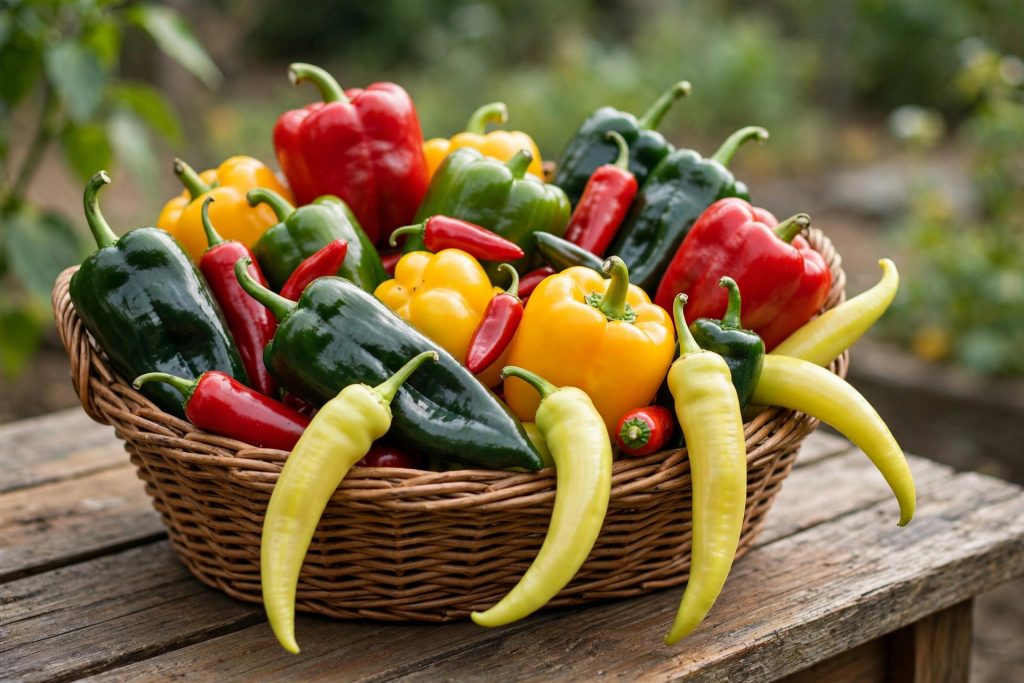
Quick Recommendation
If you only want the short answer, start here.
- First time growing from seed: California Wonder. It is the classic bell, forgiving, productive, and good for stuffing, salads, and slicing.
- Fastest peppers on the table: Lunchbox, with green fruit from about 55 days (Red) to 60 days (Orange), and Cubanelle and Sweet Banana at about 65 to 70 days to green fruit.
- Best flavor, if you love sweet peppers: Jimmy Nardello for frying, or a fully red California Wonder for slicing.
- Best for snacking straight off the plant: Lunchbox, with small, sweet, crunchy fruit in red, yellow, and orange.
- Best for roasting and stuffing: Poblano, with thick, dark green fruit that turns red and sweet.
- Best for salsa: Jalapeño M, with medium heat and thick walls that hold up in the jar.
- Best for drying and hot sauce: Cayenne, with thin fruit that dries fast and grinds into a clean powder.
- Best for serious heat: Habanero, with fruity flavor and 100,000 to 350,000 Scoville units. One plant is enough for most cooks.
- Best for a container or small space: Lunchbox, with tall, strong plants that produce heavily in a 5 gallon pot.
- Best for a short season: Cubanelle, Sweet Banana, and Lunchbox, with green fruit ready in about 55 to 70 days.
A good rule for a first year: grow three varieties, not ten. One sweet bell, one mild frying pepper, and one hot pepper.
How to Pick a Pepper Variety
Choosing gets much easier once you understand four things: sweet versus hot, days to maturity, plant size and habit, and how your season shapes the choice.
Sweet or Hot: Reading the Scoville Scale
Pepper heat is measured in Scoville Heat Units, or SHU, a scale that counts capsaicin, the compound that makes peppers taste hot. A sweet bell measures 0. A jalapeño measures 2,500 to 8,000. A habanero measures 100,000 to 350,000. The scale was developed by pharmacist Wilbur Scoville in 1912, and today it is measured in a lab, but the numbers still work as a practical guide: each step up the scale is a real jump in heat, not a small one.
Capsaicinoids, the compounds that make peppers taste hot, are made in glands on the placenta, the whitish membrane inside the fruit that holds the seeds. The seeds themselves do not make capsaicin; they only pick up heat by touching the placenta. Removing the membrane, with the seeds, cuts the heat sharply. Wear gloves when you handle hot peppers, and wash your hands before touching your eyes.
One more thing the numbers do not tell you: heat is not fixed. The same variety can taste hotter in a dry, stressful summer than in a mild, well watered one. (New Mexico State University notes that weather and growing conditions affect capsaicinoid levels.) If two peppers on the same plant taste different, the weather and the watering explain it more often than the variety name does. Treat the SHU ranges in this guide as a guide, not a guarantee: your garden will shift them a little either way.
Days to Maturity: Reading the Calendar
Seed listings usually count days to maturity to the first full-size green fruit, not to the final color change. Where a variety is picked green and also ripens to color, this guide gives both figures: days to green harvest first, then days to fully ripe fruit. The figures do not count the 8 to 10 weeks your seedlings spend growing indoors. Clemson Cooperative Extension gives a useful rule: add about a month, 28 to 35 days, for ripening after a fruit reaches full size, with the wait shorter in a warm summer and longer in a cool one.
This is a planning tool, not a promise. Peppers grow faster in warm, sunny weather, so a slow start outdoors can push the first harvest back by a week or two. Some varieties ripen all their fruit at once, while a fast frying pepper like Cubanelle needs only 65 to 70 days to green fruit and keeps producing until frost.
Plant Size and Habit: How Much Room Each Plant Needs
Pepper plants stay smaller than tomato plants, but they still vary a lot. Lunchbox grows tall and strong for a snacking pepper, 18 to 24 inches, and fits a 5 gallon pot. A full-size bell like California Wonder reaches 18 to 24 inches too, but spreads wider and carries heavier fruit, so it needs a short stake or small cage. A tall habanero can reach 3 feet or more and needs support once it loads up with fruit.
Spacing follows size. The transplanting guide on this site spaces bell and sweet peppers 18 to 24 inches apart and hot peppers 12 to 18 inches apart, with rows 30 to 36 inches apart. Cornell’s pepper guide gives 12 to 24 inches apart in rows 24 to 36 inches apart, or about 14 to 16 inches apart in raised beds. Crowding is the most common spacing mistake: plants that touch each other stay damp, and damp leaves invite disease.
Region and Zone Notes
Peppers are warm season annuals, so what matters is your frost free season and summer heat, not your USDA zone number. Cornell advises sowing seed indoors 8 to 10 weeks before transplanting, and setting plants out 2 to 3 weeks after the last frost, when the soil has warmed and the weather has settled.
Days to maturity count from the day you set the transplant outdoors, not from sowing. The 6 to 8 weeks the seedling spends indoors do not use up frost-free days. A variety that needs 80 to 90 days from transplant to ripe fruit needs at least 80 to 90 frost-free days after setting out, and in practice a little more: cool nights slow growth, so allow about two extra weeks as a safety buffer. That is why roughly 100 or more frost-free days is the comfortable figure for an 80 to 90 day variety. In a shorter season, pick the same variety green, or choose a faster one.
- Short seasons (Zones 3 to 5): lean on Cubanelle, Sweet Banana, and Lunchbox. Skip habanero unless you have a greenhouse, because it needs 90 to 100 days after transplanting.
- Hot, humid summers (Zones 7 to 9): heat is not the problem, but disease and blossom drop can be. Smaller fruited peppers handle both cool and hot weather better than big bells, a point University of Minnesota Extension makes in its pepper guide, so a mix of banana, jalapeño, and cherry types is more reliable than a bed of bells alone.
- Hot, dry summers (Southwest): steady watering matters more than variety choice. Peppers drop their flowers when nights fall below 60 degrees, and very hot weather stresses fruit set too, so mulch and even moisture help more than any single variety.
- Containers and balconies: any compact variety works in a pot of at least 5 gallons. Lunchbox is the best pick in this guide, and Sweet Banana does well in a large pot too. Avoid habanero in a small pot, because it needs deep soil and a long season.
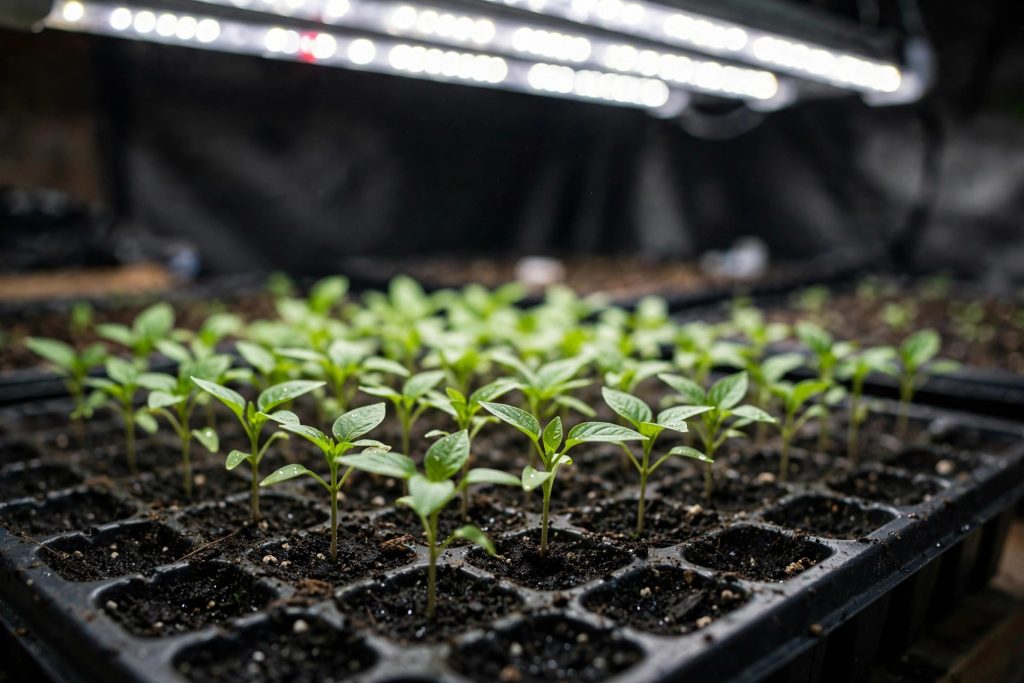
If you are new to starting peppers from seed, read the step by step guide first so your seedlings are strong before they ever reach the garden.
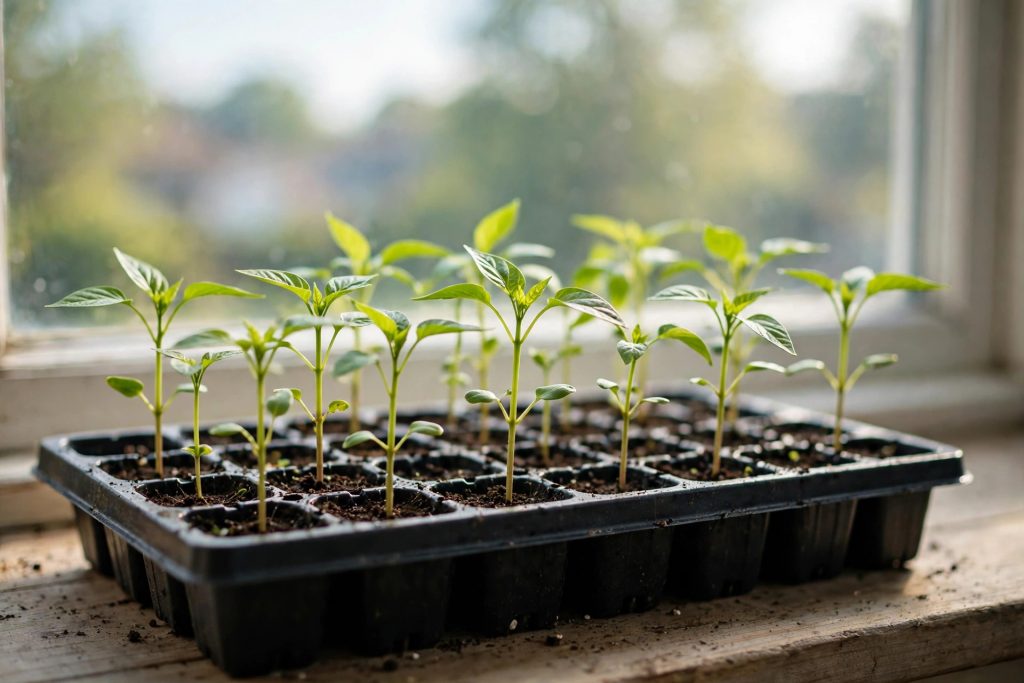
The Best Pepper Varieties to Grow from Seed at a Glance
Here are the best pepper varieties to grow from seed, the whole lineup in one place. Where two figures are given, the first is days to green harvest and the second is days to fully ripe fruit. Days to maturity are counted from transplanting outdoors, not from sowing seed. Heat is given in Scoville Heat Units, or SHU.
| Variety | Type | Heat (SHU) | Days to Maturity | Plant Size | Best For |
|---|---|---|---|---|---|
| California Wonder | Sweet bell | 0 | 70-75 green; 95-100 red | 18-24 in | Stuffing, salads, slicing |
| Sweet Banana | Sweet banana | 0-500 | 72 (yellow harvest); red later | 18-24 in | Frying, pickling |
| Cubanelle | Sweet frying | 0-1,000 | 65 green; about 85 red | About 24 in | Frying, roasting, sofrito |
| Jimmy Nardello | Sweet frying | 0 | 80-90 | 24-30 in | Frying, sweetest flavor |
| Lunchbox | Sweet snacking | 0 | Orange 60/80; Red 55/75; Yellow 63/83 | 18-24 in | Snacking, containers |
| Poblano (Ancho) | Mild to medium | 1,000-2,000 | 65-75 (green); about 90 (red) | 24-36 in | Roasting, stuffing |
| Jalapeño M | Hot | 2,500-8,000 | 70 (green harvest) | 18-24 in | Salsa, pickling |
| Serrano | Hot | 10,000-23,000 | 75 (green harvest); red about 85-90 days | 24-36 in | Fresh salsa, pico de gallo |
| Cayenne | Hot | 30,000-50,000 | 70-75 (red ripe) | 24-36 in | Drying, hot sauce, powder |
| Habanero | Very hot | 100,000-350,000 | 90-100 (fully ripe, orange) | 24-36 in | Hot sauce, for heat lovers |
Heat ranges follow the breeder listings and the Extension sources in the References.
1. California Wonder: The Classic Bell
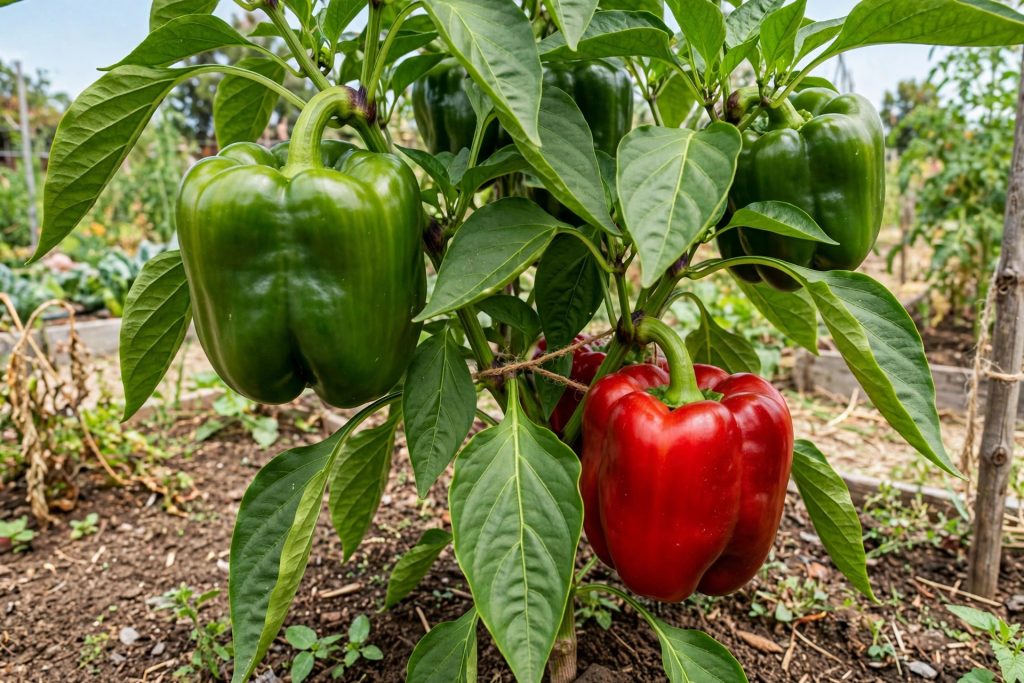
California Wonder is the bell pepper most gardeners picture when they hear the word pepper. It is an open pollinated heirloom, grown since the 1920s, with large, thick-walled, blocky fruit, usually 4 inches long and 3 to 4 inches wide, with four lobes and smooth skin. Pick it green for a crisp, slightly grassy flavor, or leave it on the plant until it turns red, when it becomes much sweeter. The plant is vigorous and upright, 18 to 24 inches tall, and it carries a TMV resistance that the seed listings note.
The numbers: about 70 to 75 days from transplant to green fruit, with fully red fruit needing another 3 to 4 weeks, about 95 to 100 days in total. Some sources give 72 days to green fruit, so treat 70 to 75 as the planning figure and watch the color rather than the calendar. The fruit is excellent for stuffing, salads, and slicing, and it freezes well, which is why it has stayed popular for a century.
Two things to know: big bells are the slowest peppers to ripen in this guide, and they are the most likely to sit still in a cool summer. Give the plant full sun, steady water, and a short stake once the fruit starts to size up, because a loaded branch can snap. If your season is short, pick the first fruit green and let the later fruit ripen red.
Quick facts: Sweet bell, open pollinated, 70-75 days green; 95-100 days red, 0 SHU, 18-24 in plants, best for stuffing, salads, and slicing.
Sources: Park Seed lists 75 days to maturity, 28 to 30 inch plants, and tobacco mosaic virus resistance.
2. Sweet Banana: The Frying and Pickling Favorite
Sweet Banana is the pepper for the frying pan and the pickle jar. Its fruit is long, curved, and banana shaped, 4 to 6 inches long, with thin walls and a mild, sweet taste with just a little tang. It starts pale green, turns bright yellow, and finishes orange-red if you leave it long enough. Pick it yellow for frying and pickling, or let it go red for a sweeter, more complex flavor.
The numbers: about 65 to 70 days from transplant, with some sources giving 70 days and a few giving up to 75. True Leaf Market lists it at 70 days from transplant, with 0 to 500 Scoville units, and notes it as a 1941 All-America Selections winner. The plant is compact, 18 to 24 inches tall, and very productive: a single plant can carry dozens of fruit over the season, and picking the first fruit encourages more to set.
One honest flag: do not confuse it with Hot Banana or Hungarian Wax, which look almost the same but measure 5,000 to 10,000 Scoville units. Buy seed labeled Sweet Banana, and check the packet before you sow. If you want heat, grow the hot one on purpose, not by accident.
Quick facts: Sweet banana, open pollinated, 65-70 days, 0-500 SHU, 18-24 in plants, best for frying, pickling, and salads.
Sources: Burpee lists 72 days to maturity, 24 inch plants, and yellow fruit turning brilliant red.
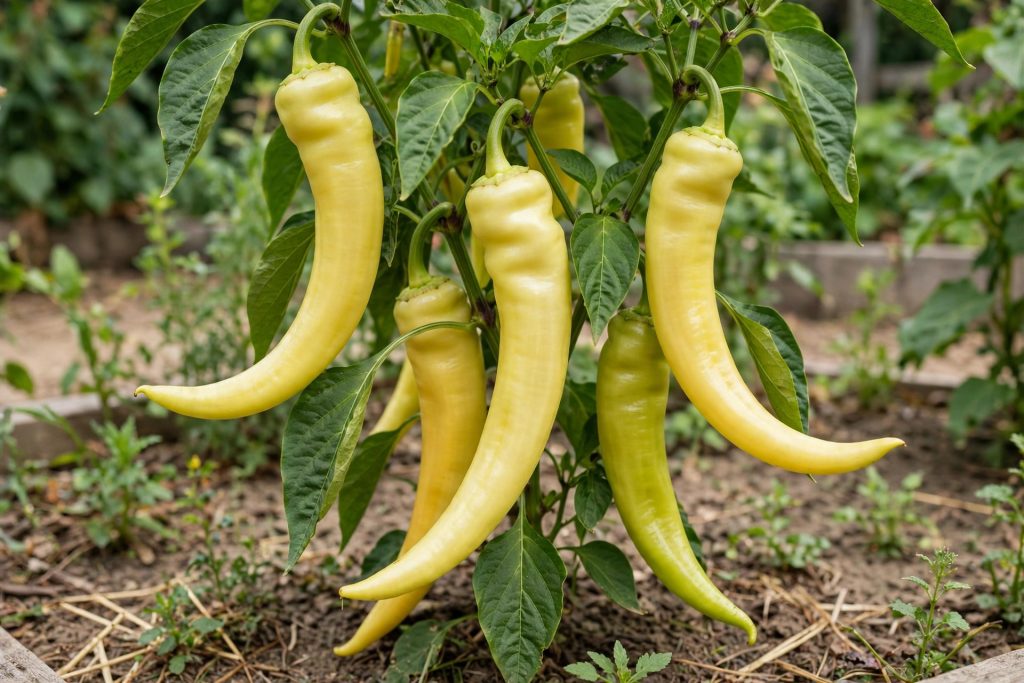
3. Cubanelle: The Sweet Frying Pepper
Cubanelle is the sweet pepper that cooks reach for when a bell is too thick and a hot pepper is too much. Its fruit is long and slightly wrinkled, about 6 inches, with thin walls and a sweet, fruity flavor that comes alive in a hot pan with a little olive oil. It is the traditional pepper of sofrito in Cuban, Puerto Rican, and Dominican cooking, and it is just as good roasted, stuffed, or sliced onto a pizza.
The numbers: about 65 days from transplant to green fruit, with fully red fruit about 3 weeks later, around 85 days. Kitchen Garden Seeds lists 62 to 70 days, and other sources give 65 to 75, so 65 days to green fruit is the safe planning figure. The plant grows about 2 feet tall and is very productive. Heat is barely there: about 0 to 1,000 Scoville units, with the University of Florida Extension reporting around 1,000.
Pick Cubanelle when the fruit is yellow-green for frying, or leave it to turn orange-red for a sweeter ripe stage. It needs at least 10 weeks of hot weather to produce well, so in a cool summer it is slower than the catalog figure suggests. Give it full sun and regular feeding, and pick often, because a plant that is picked keeps setting new fruit.
Quick facts: Sweet frying, open pollinated, 65 days green; about 85 days red, 0-1,000 SHU, about 24 in plants, best for frying, roasting, and sofrito.
Sources: the Yakima Master Gardener variety list gives 65 days from transplant, 2 foot plants, and 100 to 1,000 SHU; Gardening Know How gives 24 to 30 inch plants.
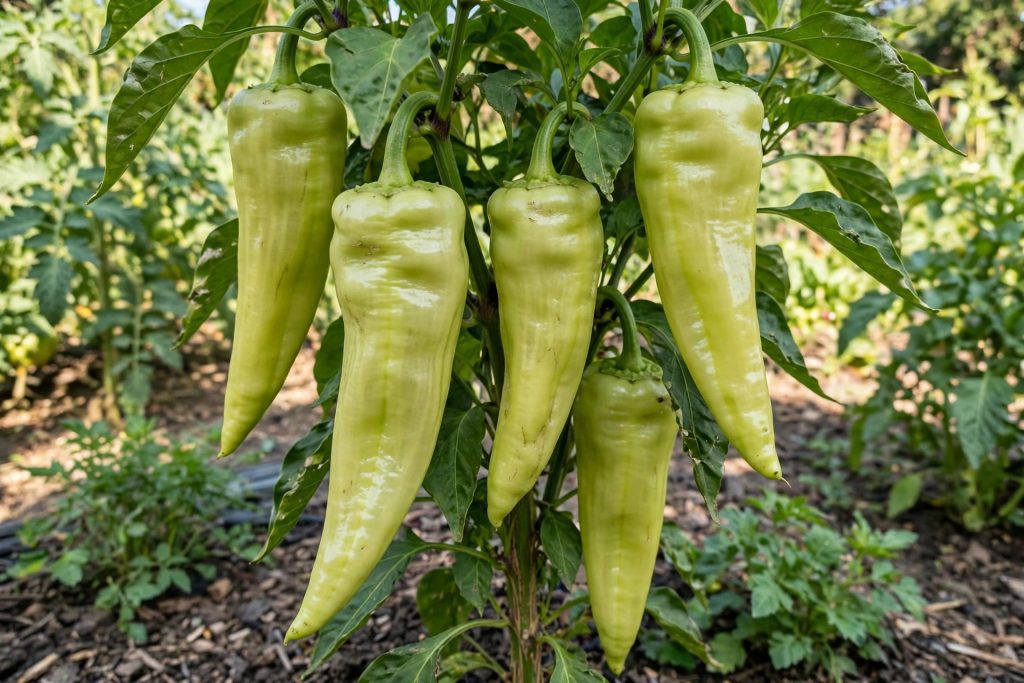
4. Jimmy Nardello: The Sweetest Frying Pepper
Jimmy Nardello is the sweetest pepper in this guide, and it comes with the best story. It is an Italian frying pepper, long, thin, and wrinkled, whose seeds were brought to the United States in 1887 by Jimmy Nardello’s mother, who emigrated with her husband Giuseppe from the Basilicata region of southern Italy. Jimmy later shared the seeds with Seed Savers Exchange, and the variety entered their catalog in 1995. Fried in olive oil with a little salt, it tastes almost like candy, with no heat at all and a rich, sweet flavor that no bell pepper matches.
The numbers: about 80 to 90 days from transplant to fully ripe red fruit, which makes it one of the slowest peppers in this guide to ripen, not one of the fastest. Green fruit appears earlier, but the signature sweetness only develops once the pods turn fully red. The plant grows 24 to 30 inches tall and produces heavily once it starts. The fruit is thin walled, so it cooks in minutes and is best picked when it turns red, though it is sweet at every stage from green to red.
One honest flag: the thin walls that make it so good for frying also mean it does not store as long as a thick bell. Pick it, cook it, and eat it the same day if you can. If you grow only one sweet pepper for flavor, this is the one most experienced gardeners would pick.
Quick facts: Sweet frying, open pollinated heirloom, 80-90 days, 0 SHU, 24-30 in plants, best for frying and fresh eating.
Sources: Cornell Vegetable Varieties gives 80 to 90 days; Seed Savers Exchange records the 1887 arrival and the 1995 catalog introduction.
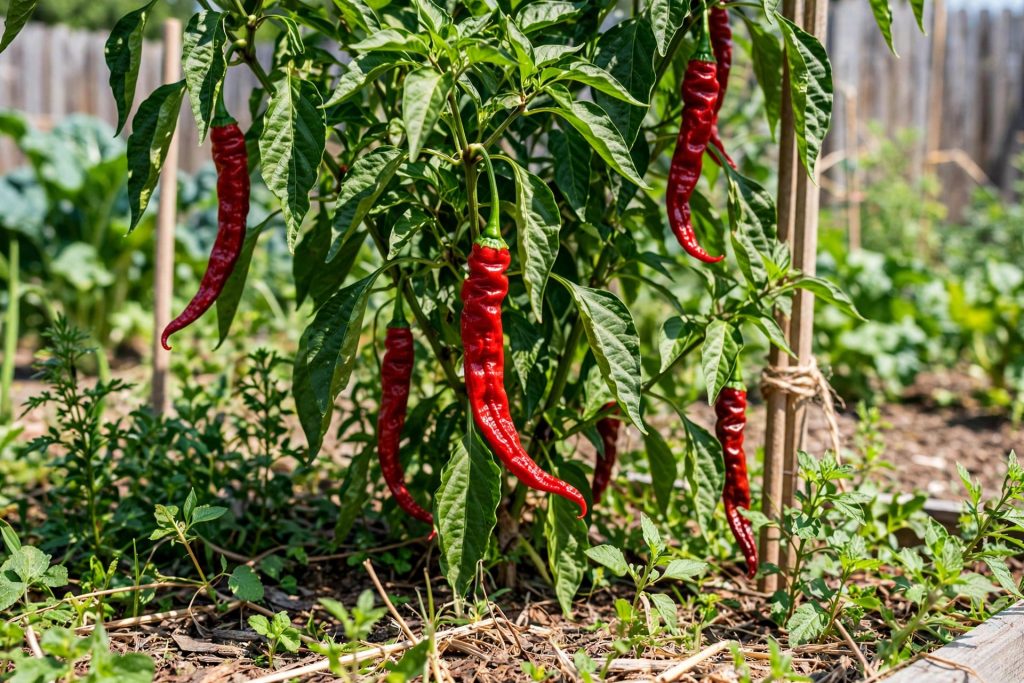
5. Lunchbox: The Snacking Pepper for Kids and Containers
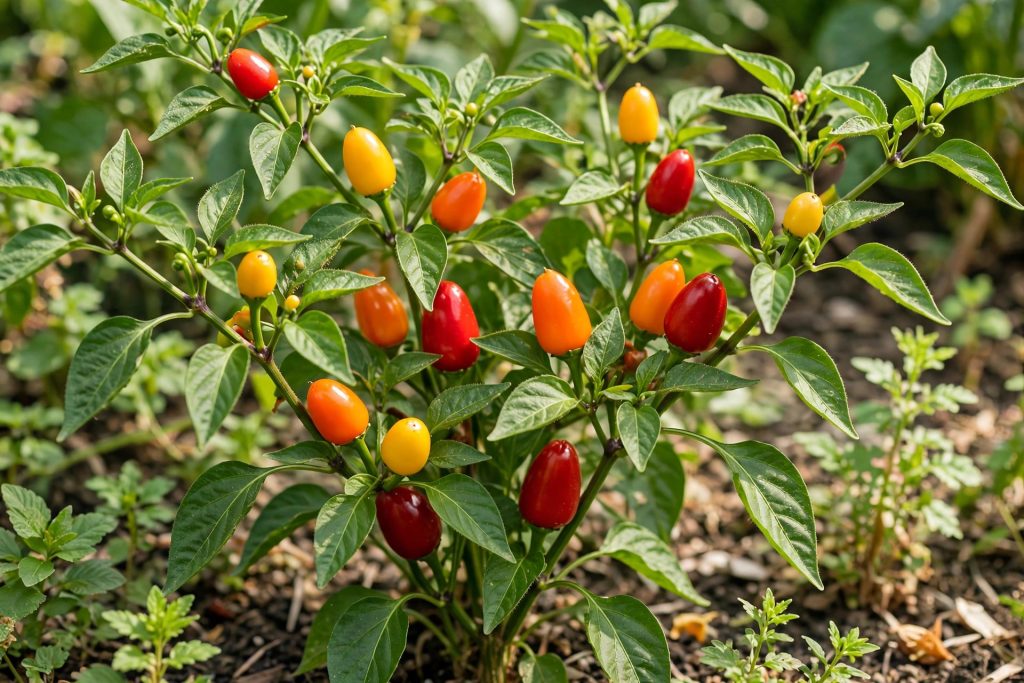
Lunchbox is the pepper you grow for snacking straight off the plant. It is not one variety but a mix of three: red, yellow, and orange mini sweet peppers, each 1 to 3 inches long, with thick walls, a small seed core, and a big crunch. They are remarkably sweet, with no heat at all, and a child can eat one like an apple. The name comes from the size: they fit in a lunchbox without slicing or wrapping.
The numbers: Orange ripens at 60 days green and 80 days orange ripe; Red at 55 days green and 75 days red ripe; Yellow at 63 days green and 83 days yellow ripe, per Johnny’s Selected Seeds and the Purdue trial. Johnny’s Selected Seeds lists its Lunchbox Orange at 60 days green and 80 days orange ripe, and West Virginia University Extension gives 60 to 70 days depending on temperature. The plants are tall and strong for a snacking pepper, 18 to 24 inches, and they yield well for their size. All three colors come from the same breeding program at Johnny’s, and the seed is sold as a mix or as single colors.
Lunchbox is the best container pick in this guide. A Lunchbox plant can produce fruit throughout the growing season in a 5-gallon pot when it receives enough sunlight, water, and nutrients. It is also the best pepper in this guide for a gardener with a short season, because the small fruit ripens faster than a full-size bell.
Quick facts: Sweet snacking, mix of red, yellow, and orange, Orange 60 green/80 ripe; Red 55/75; Yellow 63/83, 0 SHU, 18-24 in plants, best for snacking, salads, and containers.
Sources: Johnny’s Selected Seeds lists 55 to 63 days green and 75 to 83 days to color, on tall, strong plants; the Purdue 2015 trial gives maturity per color.
6. Poblano (Ancho): The Roasting Pepper
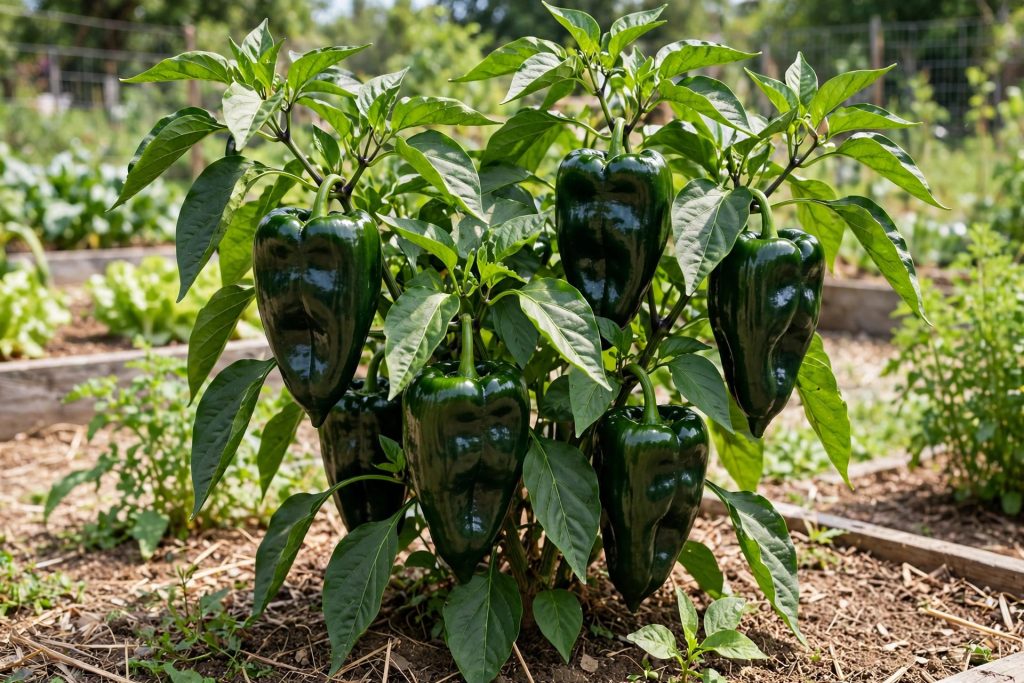
Poblano is the pepper for roasting, stuffing, and drying. Its fruit is dark green, heart shaped, and 4 to 6 inches long, with thick walls and a mild, earthy flavor. Roast it over an open flame until the skin blisters, peel it, and you have the base for chiles rellenos. Dry it, and it becomes an ancho chile, the backbone of mole sauce. It is the mildest hot pepper in this guide, with just enough warmth to notice.
The numbers: about 65 days from transplant to green fruit, with fully red fruit at about 90 days. Some strains run a little longer, up to 85 or 90 days to full color. Heat is 1,000 to 2,000 Scoville units, though some lists give 1,000 to 1,500 and a few give up to 3,000 for the Ancho type. The plant grows 24 to 36 inches tall and produces steadily all season.
One thing to know: poblanos get slightly hotter as they ripen to red, so a green poblano is milder than a red one. Pick them green for stuffing and roasting, and leave a few to turn red for drying. If you want a stuffing pepper without the heat of a jalapeño, this is the one to grow.
Quick facts: Mild to medium, open pollinated, 65 days green; about 90 days red, 1,000-2,000 SHU, 24-36 in plants, best for roasting, stuffing, and drying.
Sources: True Leaf Market lists 70 to 79 days from transplant, 18 to 24 inch plants, and 1,000 to 1,500 SHU; Organo Republic gives green harvest at 65 to 75 days and red at about 90 days.
7. Jalapeño M: The Salsa Pepper
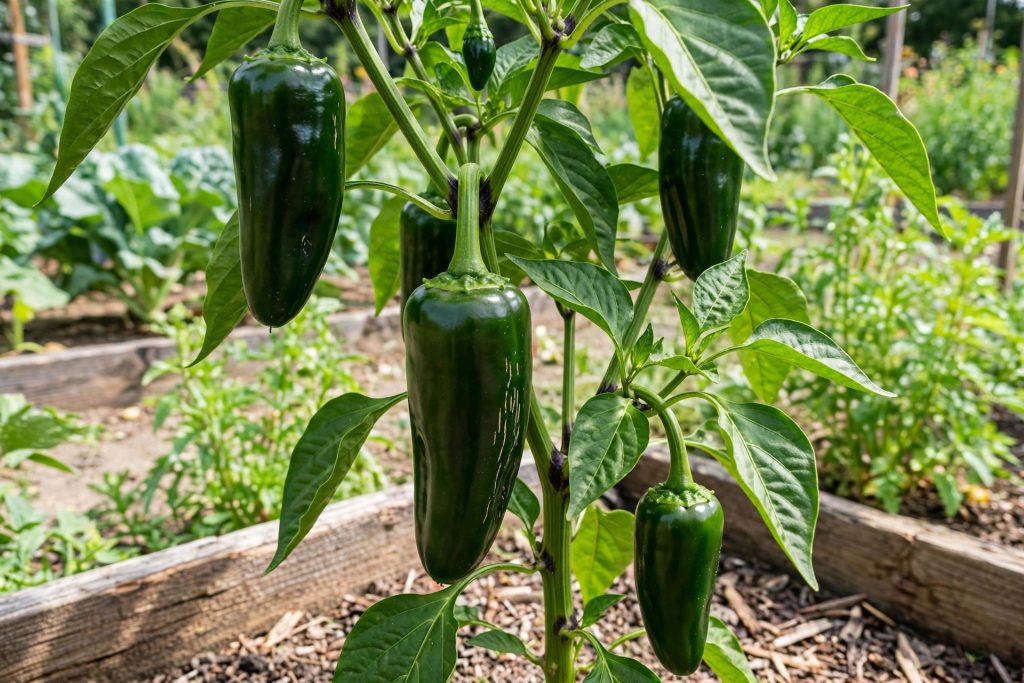
Jalapeño M is the hot pepper most American gardens grow, and for good reason. Its fruit is thick walled, 2 to 3 inches long, and dark green, with a clean, bright heat that works in salsa, pickles, poppers, and hot sauce. Pick it green for a crisp, grassy bite, or leave it to turn red, when it becomes sweeter and a little hotter. The M strain is the standard open pollinated type, bred for uniform fruit and reliable yields.
The numbers: about 70 days from transplant, with early strains listed at 65 to 70 days. Heat is 2,500 to 8,000 Scoville units, which puts it in the medium range: hot enough to notice, mild enough to eat. The plant is compact, 18 to 24 inches tall, and very productive, so one or two plants give a household all the jalapeños it needs.
Two things to know: The brown lines that sometimes appear on jalapeño skin are called corking. They are usually caused by changes in moisture and temperature. Corking does not necessarily mean the pepper is hotter, and it does not usually affect its edibility. And the heat varies with the weather: a dry, stressful summer makes hotter peppers than a mild, wet one. Wear gloves when you slice them, and remove the seeds and membrane if you want the flavor with less fire.
Quick facts: Hot, open pollinated, 70 days, 2,500-8,000 SHU, 18-24 in plants, best for salsa, pickling, and poppers.
Sources: Park Seed lists 73 days, 26 inch plants, ready to pick dark green, 4,750 SHU; True Leaf Market lists 70 to 80 days from transplant and 2,500 to 8,000 SHU.
8. Serrano: The Sharp Salsa Pepper
Serrano is the pepper for cooks who find jalapeño too mild. Its fruit is smaller and thinner walled than a jalapeño, about 1 to 2 inches long, with a sharp, clean, almost citrusy heat that hits fast and fades cleanly. It is the pepper of fresh pico de gallo, ceviche, and guacamole, where its thin skin needs no peeling and its bright flavor cuts through rich food.
The numbers: about 75 days from transplant, with some sources giving 70 to 80 days. Heat is 10,000 to 23,000 Scoville units, roughly two to five times hotter than a jalapeño. The plant grows 24 to 36 inches tall, bears heavily, and keeps producing until frost. A single healthy plant can produce dozens of peppers over the season.
Pick serrano green for a fresh, crisp bite, or leave it to ripen red for a sweeter, fruitier flavor. How hot a pod gets varies by cultivar and growing conditions, so color alone is not a reliable heat guide. It is also one of the most reliable hot peppers in a short season, because the small fruit ripens faster than a big bell. If your salsa needs more bite than a jalapeño gives, grow serrano beside it and compare.
Quick facts: Hot, open pollinated, 75 days, 10,000-23,000 SHU, 24-36 in plants, best for fresh salsa, pico de gallo, and guacamole.
Sources: The Spruce lists 57 to 77 days to maturity and 10,000 to 23,000 SHU, picked green or ripened red.
9. Cayenne: The Drying Pepper
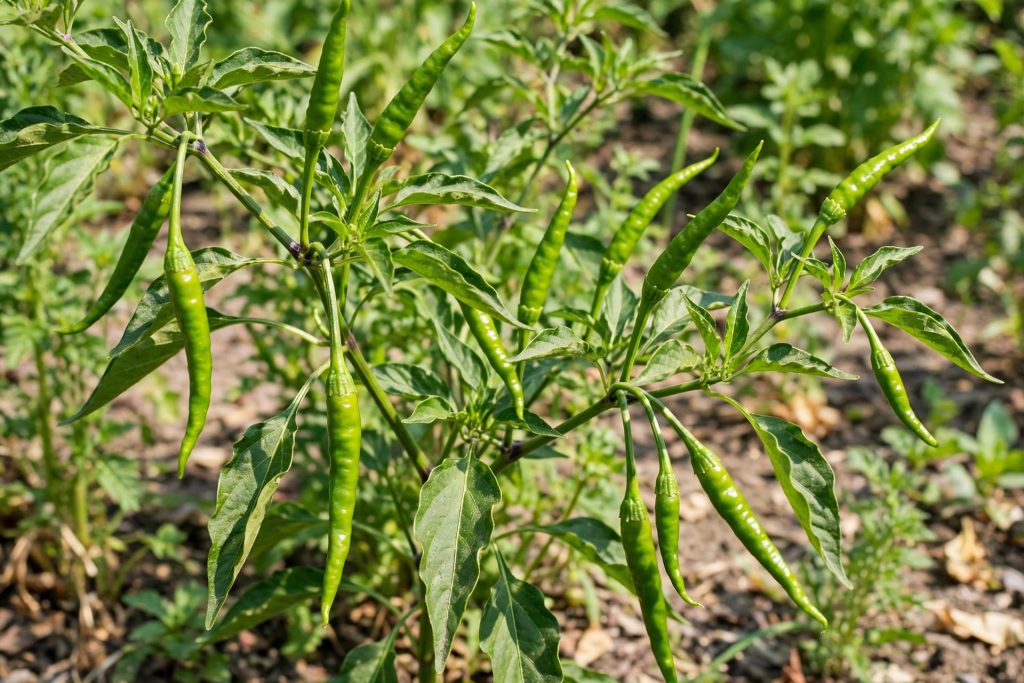
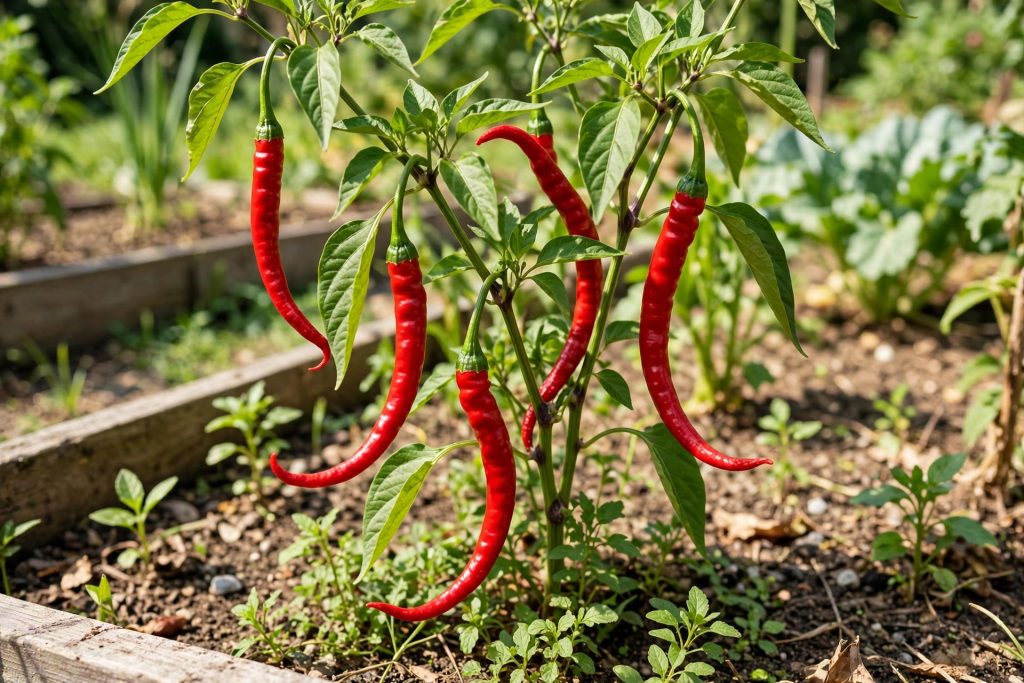
Cayenne is the pepper you grow when you want to make your own spice. Its fruit is long, thin, and wrinkled, 4 to 6 inches, and it dries fast, grinds into a clean, sharp powder, and keeps for a year in a jar. Fresh, it goes into hot sauce and stir fries. Dried, it becomes the cayenne powder in your spice rack, and a little goes a long way.
The numbers: about 70 to 75 days from transplant, with the Piedmont Master Gardeners table giving 70 days. Heat is 30,000 to 50,000 Scoville units, which puts it well above serrano and well below habanero. The plant grows 24 to 36 inches tall and produces heavily: a single plant can fill a drying rack several times over.
Harvest cayenne when the fruit turns fully red and feels firm, then dry it whole in a dehydrator or a warm, airy spot until it snaps. Wear gloves and keep the drying peppers away from small children and pets, because the powder is fine enough to drift. If you have never grown a hot pepper before, cayenne is a forgiving first one: it germinates and grows like a jalapeño, just hotter.
Quick facts: Hot, open pollinated, 70-75 days, 30,000-50,000 SHU, 24-36 in plants, best for drying, powder, and hot sauce.
Sources: True Leaf Market lists 70 to 79 days from transplant, 18 to 24 inch plants, and 30,000 to 50,000 SHU, harvested bright red.
10. Habanero: The Hot Sauce Pepper
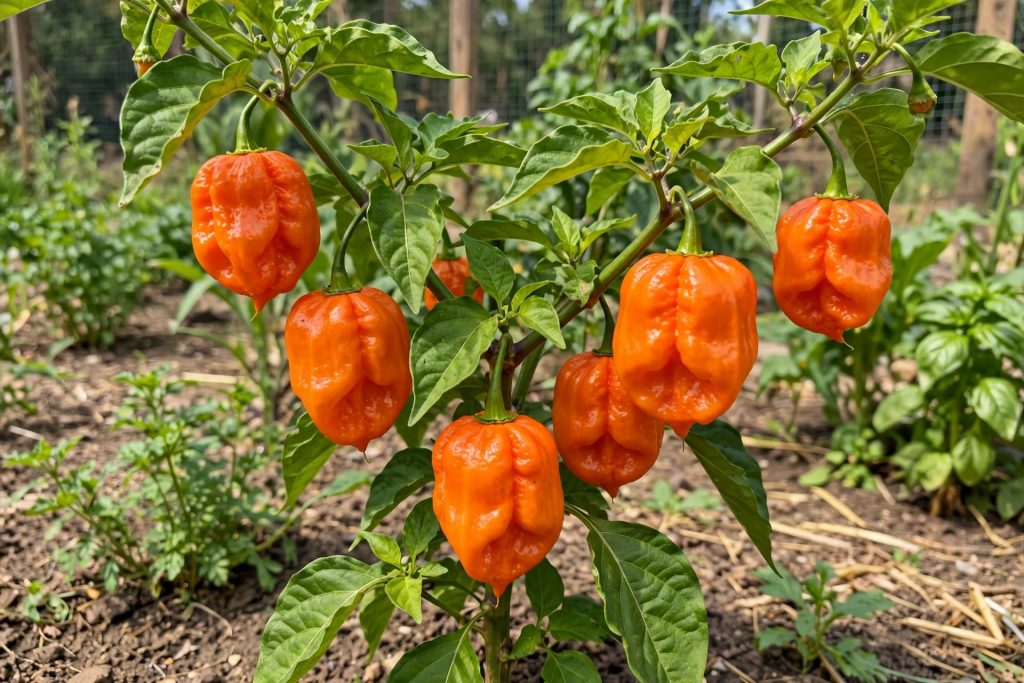
Habanero is the pepper for cooks who want serious heat with real flavor. Its fruit is small, lantern shaped, and thin skinned, in orange, red, or yellow, with a fruity, almost apricot-like taste under the fire. It is the pepper of Caribbean jerk marinades, fruit-based hot sauces, and small-batch salsas, where a little goes a long way: start with an eighth of a pepper, not a whole one.
The numbers: about 90 to 100 days from transplant, with the Piedmont Master Gardeners table giving 95 days. Heat is 100,000 to 350,000 Scoville units, which is 12 to 40 times hotter than a jalapeño. The plant grows 24 to 36 inches tall and needs a long, warm season, full sun, and steady water. In a short season it may not ripen before frost, so start it first, at the early end of the sowing window, and grow it in the warmest spot in the garden.
Handle habanero with respect. Wear gloves, wash your hands, and keep the fruit away from your eyes and away from children. The heat is made in glands on the placenta, the whitish membrane inside the fruit, not in the seeds, so removing the membrane cuts the fire sharply while keeping the fruity flavor. One plant is enough for most cooks: a single habanero plant can produce dozens of fruit, and each one seasons a whole pot.
Quick facts: Very hot, open pollinated, 90-100 days, 100,000-350,000 SHU, 24-36 in plants, best for hot sauce and jerk marinades, for heat lovers only.
Sources: Organo Republic gives 90 to 100 days to ripe orange fruit and 100,000 to 350,000 SHU; True Leaf Market lists 100 to 109 days, with ripe fruit at 90 to 100 days.
How We Chose These 10 Varieties
This guide was not built from hands-on testing. No one on our team grew all ten of the best pepper varieties to grow from seed side by side in a trial garden. Instead, each variety was picked from verified breeder and seed company specifications, university Extension variety descriptions, and published owner feedback, including Cornell’s gardener review database and the variety pages of the seed companies named in the References.
| Factor | Weight | What It Covers |
|---|---|---|
| Flavor | 25% | Sweetness or heat character, texture, and how often gardeners praise the taste |
| Yield and reliability | 25% | How much fruit a plant produces and how steadily it produces through the season |
| Heat fit | 20% | How well the heat level matches its cooking use, from no heat to very hot |
| Ease from seed | 15% | Germination vigor, seedling strength, and how forgiving the variety is for a new grower |
| Region and container fit | 15% | How well the variety suits short seasons, hot humid summers, and container growing |
The ratings below are editorial judgments drawn from the breeder and Extension sources cited in this guide, not results from a side-by-side trial. A blank cell means this guide makes no separate claim for that variety on that factor.
These ten were chosen because they are reliable producers, so most score High on yield and ease. The table separates them on flavor, heat fit, and season fit instead. Ratings are editorial, based on the breeder and Extension sources cited in each variety section.
| Variety | Flavor (25%) | Yield and reliability (25%) | Heat fit (20%) | Ease from seed (15%) | Region and container fit (15%) |
|---|---|---|---|---|---|
| California Wonder | High, thick-walled and sweet, the classic bell | High, heavy-bearing and vigorous | High, 0 SHU, the sweet baseline | High, vigorous and tobacco mosaic resistant | Medium, red fruit needs a long, warm season |
| Sweet Banana | High, mild and sweet, a pickling favorite | High, prolific heavy sets | High, 0 SHU sweet | High, fast at 72 days | High, early and compact at 24 inches, pots well |
| Cubanelle | High, sweet and rich, a frying favorite | High, productive, needs support | High, 100 to 1,000 SHU, mild | High, easy at 65 days | High, early and container-friendly |
| Jimmy Nardello | High, the sweetest frying pepper | High, prolific thin-walled sets | High, 0 SHU sweet | High, easy from seed | Medium, 80 to 90 days for ripe red, pick green in short seasons |
| Lunchbox | High, remarkably sweet, made for snacking | High, yields well, per Johnny’s | High, 0 SHU sweet | High, easiest, fast, compact and forgiving in pots | High, bred for containers |
| Poblano | High, rich and earthy, made for roasting | High, bushy and productive | High, 1,000 to 2,000 SHU, mild | High, easy and vigorous | Medium, needs a big pot and a long season for red fruit |
| Jalapeño M | High, the classic salsa flavor | High, borne in great numbers | High, 2,500 to 8,000 SHU, the salsa standard | High, vigorous and forgiving | High, adaptable and patio-friendly |
| Serrano | High, sharp bright salsa heat | High, prolific small fruit | High, 10,000 to 23,000 SHU | High, vigorous and fast | High, fast and container-friendly |
| Cayenne | Medium, heat first, best dried or flaked | High, heavy sets for drying | High, 30,000 to 50,000 SHU, the drying standard | High, heat and drought tolerant | High, tolerates heat, containers well |
| Habanero | High, fruity and citrusy, hot-sauce flavor | Medium, needs heat and a long season to yield well | High, 100,000 to 350,000 SHU | Medium, slow to germinate, needs warm soil and patience | Medium, needs the longest, hottest season |
A variety did not need to score highly on every factor to make the list. Habanero scores at the top on flavor and low on ease from seed, because it is slow and needs a long season. Lunchbox scores the other way round: modest flavor complexity, but the easiest pepper in this guide to grow and eat.
Growing Tips and Common Mistakes
Picking the best pepper varieties to grow from seed is half the job. The other half is giving them a good start.
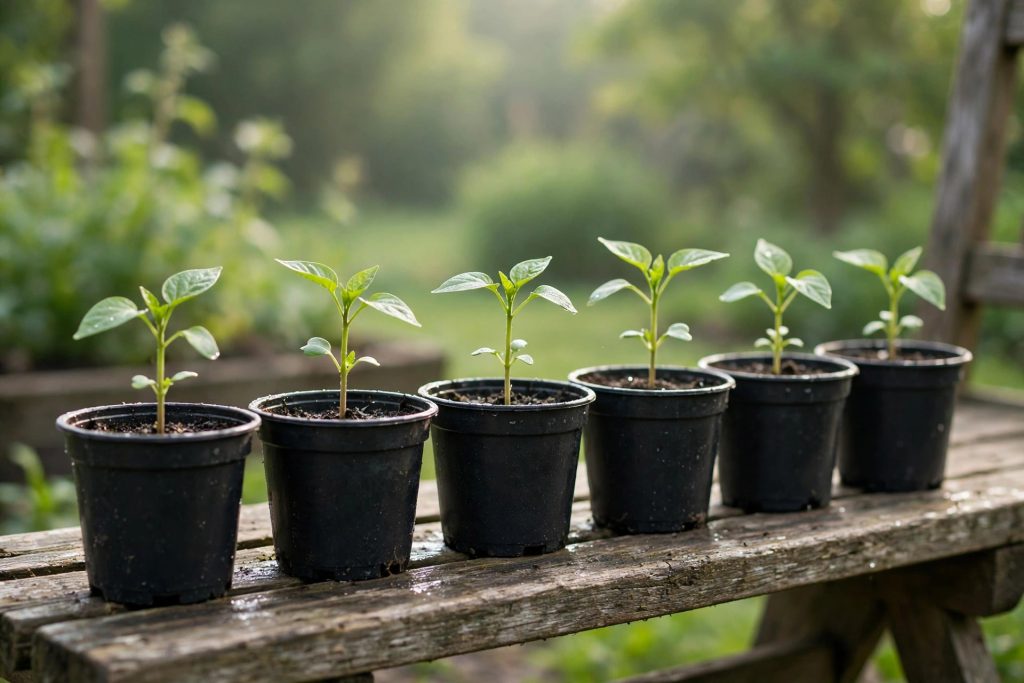
Start seed at the right time. Sow indoors 8 to 10 weeks before your last frost date, with hot peppers at the early end of the window because they germinate more slowly than sweet bells. Sow two seeds per cell, a quarter inch deep, in sterile seed-starting mix. Keep the soil warm, 80 to 85 degrees, until they sprout, which takes 7 to 14 days, and up to 21 days for slow hot varieties. Cornell notes that pepper seed will not germinate below 55 degrees, and it germinates best when the soil is 80 degrees or warmer.
Give them strong light from day one. The moment seedlings emerge, give them 14 to 16 hours of bright light a day, with the fixture 2 to 4 inches above the leaves. Raise the light as the plants grow, keeping that same small gap. Cornell is blunt about it: lack of light will produce leggy, unproductive transplants.
Harden off before transplanting. Move seedlings outdoors for a few hours a day over 7 to 10 days. Plants put straight from a windowsill into full sun will wilt and stop growing for a week or more.
Wait for warm soil. Peppers are the most cold-sensitive crop in the summer garden, more so than tomatoes. Transplant 2 to 3 weeks after your average last frost, when the soil has warmed to 65 degrees and night temperatures stay above 55 degrees, ideally above 60. Cold soil weakens peppers so much they may never fully recover.
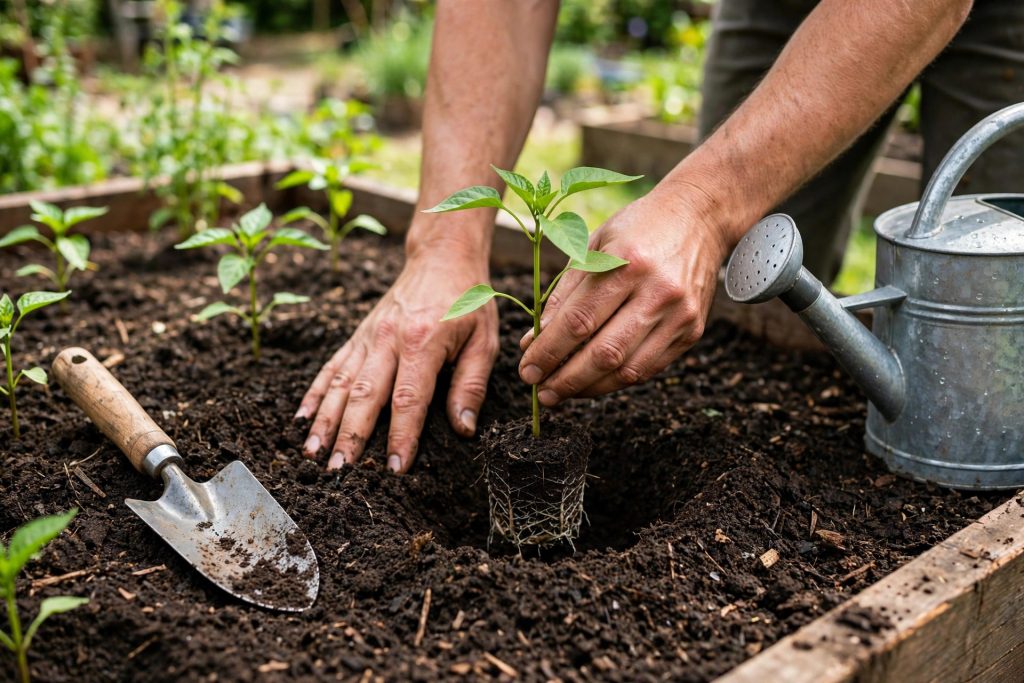
Plant at the same depth. A tomato grows roots along a buried stem, but a pepper stem buried in soil may rot, so peppers go in at exactly the depth they grew in the pot. This is the one habit every tomato grower has to unlearn.
Water the soil, not the leaves. Wet leaves invite bacterial spot and other leaf diseases, so water at the base in the morning and keep the soil evenly moist. Uneven watering is the main cause of blossom end rot and cracked fruit.
Mulch after the soil warms. A 2 to 3 inch layer of straw or shredded leaves holds moisture and keeps soil from splashing onto lower leaves.
Support early. Put the stake or small cage in at planting time, not when the plant is already leaning under a load of fruit.
Do not overfeed with nitrogen. Too much nitrogen grows a big leafy plant with few fruit. A balanced fertilizer at planting, plus a side dressing when fruit is about an inch across, is enough for most gardens.
Pick often. Picking ripe fruit encourages the plant to set more. A plant that is picked keeps producing until frost, while a plant loaded with overripe fruit slows down.
If your peppers flower but no fruit sets, the cause is almost always temperature. Cornell notes that fruit set suffers when nights fall below 60 degrees or climb too high, so a cold snap or a heat wave can drop every flower in a week. The flowers will return when the nights settle.
When your seedlings are ready to go outside, the transplanting guide walks through soil temperature, spacing, and planting depth.
Peppers also grow well under cover, and the greenhouse guide explains which crops pay best in a protected bed.

Hot peppers need their own page in your garden plan, because the same family that gives you bells also gives you chilli diseases. The chilli guide covers the family and its problems.

Common mistakes, in short: starting seed too early, skipping hardening off, planting in cold soil, burying the stem like a tomato, watering from above, and crowding plants. Cornell advises rotating peppers away from beds that grew tomatoes, potatoes, peppers, or eggplant for at least two years, because those crops share soil diseases.
Best Pepper Varieties to Grow from Seed: A Quick Recap
| Variety | Best Use |
|---|---|
| California Wonder | Classic bell for stuffing, salads, and slicing |
| Sweet Banana | Frying, pickling, and salads |
| Cubanelle | Frying, roasting, and sofrito |
| Jimmy Nardello | Sweetest frying pepper, fresh eating |
| Lunchbox | Snacking, salads, and containers |
| Poblano (Ancho) | Roasting, stuffing, and drying |
| Jalapeño M | Salsa, pickling, and poppers |
| Serrano | Fresh salsa, pico de gallo, and guacamole |
| Cayenne | Drying, powder, and hot sauce |
| Habanero | Hot sauce and jerk marinades, for heat lovers |
Final Thoughts
The best pepper varieties to grow from seed are the ones that fit your season, your space, and the way you cook. A gardener with a short season and a balcony needs Cubanelle and Lunchbox. A gardener with a long, warm summer and a big bed can grow California Wonder and Habanero beside a jalapeño. There is no single best pepper, only the best pepper for your garden.
If you are starting out, keep it simple: one sweet bell, one mild frying pepper, and one hot pepper. California Wonder, Cubanelle, and Jalapeño M would cover stuffing, frying, and salsa in one small bed. Grow them, take notes on what thrived and what struggled, and let next year’s seed order be guided by your own garden.
References
- Cornell University, Home Gardening: Peppers Growing Guide. Supports the sowing timing, germination temperatures, days to emergence, spacing, transplant timing, and fruit set notes. http://gardening.cornell.edu/homegardening/scene9c8a.html
- University of Minnesota Extension, Growing Peppers. Supports starting seed about eight weeks before planting outside, transplanting after night lows above 50 degrees, soil pH 6.5 to 7.0, smaller fruited peppers tolerating cool and hot weather better. https://extension.umn.edu/garden-and-home/yard-and-garden/gardening-in-minnesota/growing-peppers
- Piedmont Master Gardeners, Peppers: Peter Piper’s Piquant Patience Payoff. Supports the Scoville ranges and days to maturity for Serrano (75 days), Cayenne (70 days), and Habanero (95 days). https://www.piedmontmastergardeners.org/article/peppers-peter-pipers-piquant-patience-payoff/
- Johnny’s Selected Seeds, Lunchbox Orange Organic Snack Pepper. Supports Lunchbox at 60 days green and 80 days orange ripe, with 2.5 to 3 inch fruit on tall, strong plants. https://www.johnnyseeds.com/vegetables/peppers/sweet-peppers/lunchbox-orange-organic-snack-pepper-seed-3030G.html?cgid=sweet-peppers
- True Leaf Market, Sweet Banana Sweet Pepper Seeds. Supports Sweet Banana at 70 days from transplant, 0 to 500 Scoville units, and its 1941 All-America Selections win. https://trueleafmarket.com/products/pepper-sweet-banana-seeds?variant=3910833504
- Cornell University, Vegetable Varieties for Gardeners, Jimmy Nardello variety details. Supports 80 to 90 days to maturity from transplant. http://vegvariety.cce.cornell.edu/main/detail.php?variety_id=2152&filterBy=0
- Seed Savers Exchange, Jimmy Nardello’s Pepper. Supports the 1887 arrival with Giuseppe and his wife from Basilicata, Jimmy sharing the seeds, and the 1995 catalog introduction. https://shop.seedsavers.org/jimmy-nardellos-pepper
- Iowa State University Extension, Why do my peppers have brown lines on them? Supports corking caused by variations in moisture and temperature, with no notable effect on palatability. https://yardandgarden.extension.iastate.edu/faq/why-do-my-peppers-have-brown-lines-them
- Purdue University, Midwest Vegetable Trial Report for 2015. Supports Lunchbox Orange 60 days green and 80 days ripe, Red 55 and 75, Yellow 63 and 83, and tall, strong plants. https://docs.lib.purdue.edu/cgi/viewcontent.cgi?article=1063&context=fvtrials
- New Mexico State University Extension, Growing Chile Peppers in New Mexico Gardens (Guide H-240). Supports capsaicinoids made in glands on the placenta, with seeds picking up heat only by contact. https://pubs.nmsu.edu/_h/H240/index.html
- Park Seed, California Wonder Organic Pepper Seeds. https://www.parkseed.com/collections/sweet-peppers/products/california-wonder-organic-pepper-seeds-05844
- Burpee, Sweet Banana Pepper. https://www.burpee.com/vegetables/peppers/pepper-sweet-banana-prod000821.html
- Yakima Master Gardener Foundation, Vegetable Variety Descriptions 2026. https://yakima.mastergardenerfoundation.org/wp-content/uploads/sites/29/2026/02/2026-Veggies.pdf
- Gardening Know How, Cubanelle Pepper Facts and Uses. https://www.gardeningknowhow.com/edible/vegetables/pepper/cubanelle-pepper-growing.htm
- Johnny’s Selected Seeds, Lunchbox Pepper Mix. https://www.johnnyseeds.com/vegetables/peppers/sweet-peppers/lunchbox-pepper-mix-organic-snack-pepper-seed-3515G.html
- True Leaf Market, Poblano Organic Pepper Seeds. https://store.trueleafmarket.com/collections/all-market-seeds/products/pepper-seeds-hot-poblano-organic
- Organo Republic, How to Grow Poblano Pepper from Seed. https://organorepublic.com/blogs/growing-guides/poblano-mild-pepper
- Park Seed, Jalapeño M Pepper Seeds. https://www.parkseed.com/products/jalapentildeo-m-pepper-seeds-05259
- True Leaf Market, Jalapeno M Pepper Seeds. https://trueleafmarket.com/en-cn/products/pepper-hot-jalapeno-m-seeds
- The Spruce, 27 Types of Peppers You Can Grow in Your Garden. https://www.thespruce.com/types-of-peppers-7629495
- True Leaf Market, Cayenne Long Red Thin Organic Pepper Seeds. https://store.trueleafmarket.com/collections/organic-garden-seed/products/pepper-seeds-hot-cayenne-long-red-thin-organic
- Organo Republic, How to Grow Habanero Pepper from Seed. https://organorepublic.com/blogs/growing-guides/habanero-hot-pepper
- True Leaf Market, Habanero Orange Organic Pepper Seeds. https://store.trueleafmarket.com/collections/all-market-seeds/products/organic-habanero-orange-pepper
Frequently Asked Questions
What is the best pepper variety for beginners to grow from seed?
California Wonder is the safest first pick. It is a classic bell, forgiving and productive, with thick-walled fruit good for stuffing, salads, and slicing. Sweet Banana is the other strong beginner choice, because it ripens fast and produces heavily. That is why both top the list of the best pepper varieties to grow from seed for new growers.
Which pepper variety is best for containers or a small space?
Lunchbox, because its plants stay around 18 to 24 inches tall and produce heavily in a 5 gallon pot or larger, with small, sweet fruit you can eat straight off the plant. Sweet Banana also does well in a large pot. Avoid habanero in a small pot, because it needs deep soil and a long season.
How hot is a jalapeño compared to a habanero?
A jalapeño measures 2,500 to 8,000 Scoville units. A habanero measures 100,000 to 350,000, which is roughly 12 to 40 times hotter. The gap is real: one habanero can season a whole pot, while a jalapeño seasons a single bowl of salsa. Start with an eighth of a habanero, not a whole one.
How many pepper varieties should I grow in one season?
Three is a good number for most home gardens: one sweet bell, one mild frying pepper, and one hot pepper. That gives you variety without turning watering and staking into a second job. Experienced gardeners with a large bed often grow five or six, but each added variety adds work.
When should I start pepper seeds indoors?
Sow indoors 8 to 10 weeks before your average last frost date, with hot peppers at the early end of the window because they germinate more slowly than sweet bells. Keep the soil at 80 to 85 degrees until they sprout, which takes 7 to 14 days, and up to 21 days for slow hot varieties. Cornell notes that pepper seed will not germinate below 55 degrees.
Why are my peppers flowering but not setting fruit?
The cause is almost always temperature. Cornell notes that peppers set fruit poorly when nights fall below 60 degrees or climb too high, so a cold snap or a heat wave can drop every flower in a week. Keep watering even, mulch the bed, and wait: the flowers return when the nights settle into the 60 to 70 degree range.

Thesis Link : https://saulibrary.edu.bd/daatj/public/uploads/BAU200601_19-Pp_5.pdf
- Best Pepper Varieties to Grow from Seed - November 16, 2026
- Best Tomato Varieties to Grow from Seed - November 15, 2026
- Why Are My Tomato Seedlings Leggy - November 15, 2026