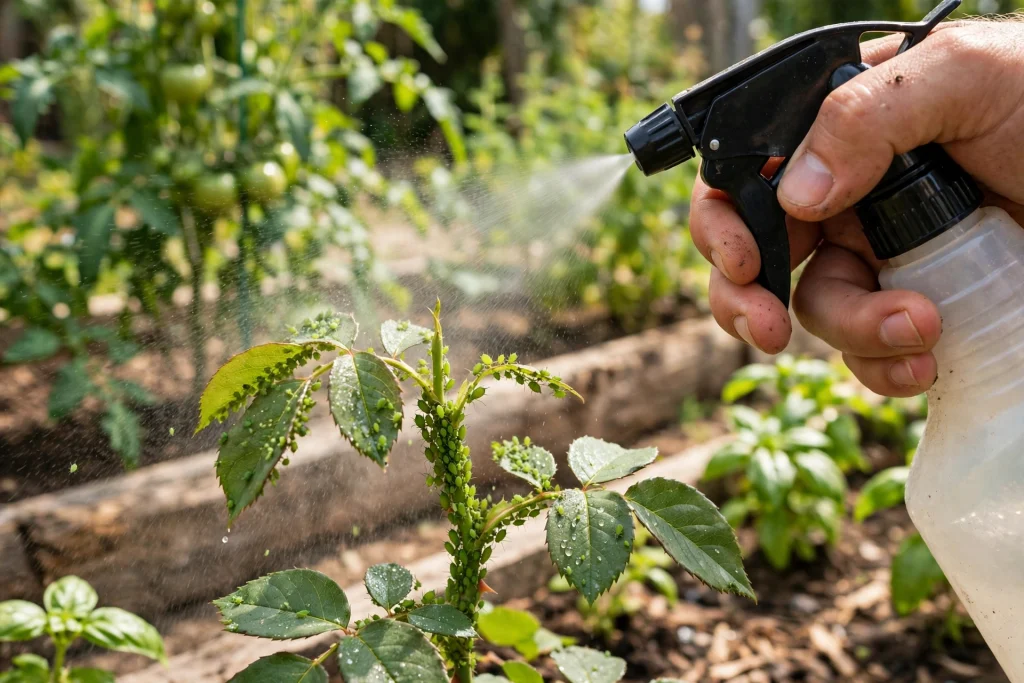

Aphids crowd the undersides of the rose leaves, whiteflies puff up from the tomato plants every time you brush past, and spider mites stipple the bean foliage yellow. The best insecticidal soap is the spray that fits the problem in front of you, and that starts with reading the label, because two bottles that both say insecticidal soap can be two very different products.
Insecticidal soap is one of the oldest tools in the garden shed. The active ingredient in nearly every bottle is the same: potassium salts of fatty acids, a soap made by reacting plant or animal fats with potassium hydroxide. Insecticidal soaps kill susceptible soft-bodied insects through direct contact by disrupting cellular and protective surface functions. Their effectiveness depends on thoroughly wetting the insect, and they generally have little residual activity after drying. It works only on contact, and only while the spray is still wet. Insecticidal soap generally has little residual insecticidal activity once it dries, making it less persistent than many conventional insecticides. However, direct exposure can still harm beneficial insects, and plant sensitivity, application conditions and product-specific label instructions matter. Always follow the label, especially when spraying edible plants, around pets, or near pollinators.
Below are 10 real products, every one verified against its manufacturer label, EPA label, safety data sheet, or official product page in November 2026. Each section gives the active ingredient, what it controls, the size it comes in, and an editorial score with the reason behind it. The scores come from verified specifications and owner feedback, not
from hands-on testing. We did not test these products in our own garden, and we do not claim otherwise.
Quick Recommendation
Short on time? Start here. These are the best insecticidal soap picks for the most common garden situations.
- Best overall: Safer Brand Insect Killing Soap Concentrate. At 49.52% active ingredient in the concentrate, this is one of the most concentrated insecticidal soap formulations in this roundup. Its dilution rate, labeled pests and application instructions determine how it should be used, rather than concentration alone. OMRI Listed, and one 16 fl oz bottle makes up to 6 gallons of spray.
- Best ready-to-use spray: Safer Brand Insect Killing Soap Ready-to-Use. The same trusted formula pre-mixed at 2%, with seaweed extract, and no measuring at all.
- Best value ready-to-use: Bonide Insecticidal Soap Ready-to-Use. A 32 fl oz bottle at 1% that covers vegetables, fruit trees, houseplants, and ornamentals, indoors and out.
- Best dual-purpose spray: Safer Brand 3-in-1 Garden Spray. Soap plus sulfur, so it fights insects and powdery mildew in the same pass.
- Best budget bottle: Garden Safe Insecticidal Soap Insect Killer. A simple 1% ready-to-use spray for organic gardening, widely sold and easy to find.
- Best for houseplants: Ferti-lome Houseplant Hero Insecticidal Soap. A small 8 fl oz bottle made for indoor plants, with a fine mist that suits a windowsill collection.
If you only buy one bottle this season, decide first whether you will spray often or once in a while. A concentrate is the better buy for a full vegetable garden, because one bottle makes gallons. A ready-to-use bottle is the better buy for a few pots or one aphid outbreak, because there is nothing to mix and nothing to store.
Insecticidal Soaps at a Glance
| Product | Best For | Type | Active Ingredient | Our Rating |
|---|---|---|---|---|
 Safer Brand Insect Killing Soap Concentrate | Best overall, large gardens | Concentrate | Potassium salts of fatty acids 49.52% | 8.9 |
 Safer Brand Insect Killing Soap Ready-to-Use | No-mixing spray | Ready-to-use | Potassium salts of fatty acids 2% | 8.7 |
 Bonide Insecticidal Soap Ready-to-Use | Best value ready-to-use | Ready-to-use | Potassium salts of fatty acids 1% | 8.6 |
 Bonide Insecticidal Soap Concentrate | Mixing your own spray | Concentrate | Potassium salts of fatty acids 47% | 8.5 |
 Safer Brand 3-in-1 Garden Spray Concentrate | Insects plus powdery mildew | Concentrate, soap plus sulfur | Potassium salts of fatty acids 12.38%, sulfur 6.48% | 8.5 |
 Garden Safe Insecticidal Soap Insect Killer | Budget organic gardening | Ready-to-use | Potassium salts of fatty acids 1% | 8.4 |
 Natria Insecticidal Soap Ready-to-Use | OMRI-listed ready-to-use | Ready-to-use | Potassium salts of fatty acids 1% | 8.4 |
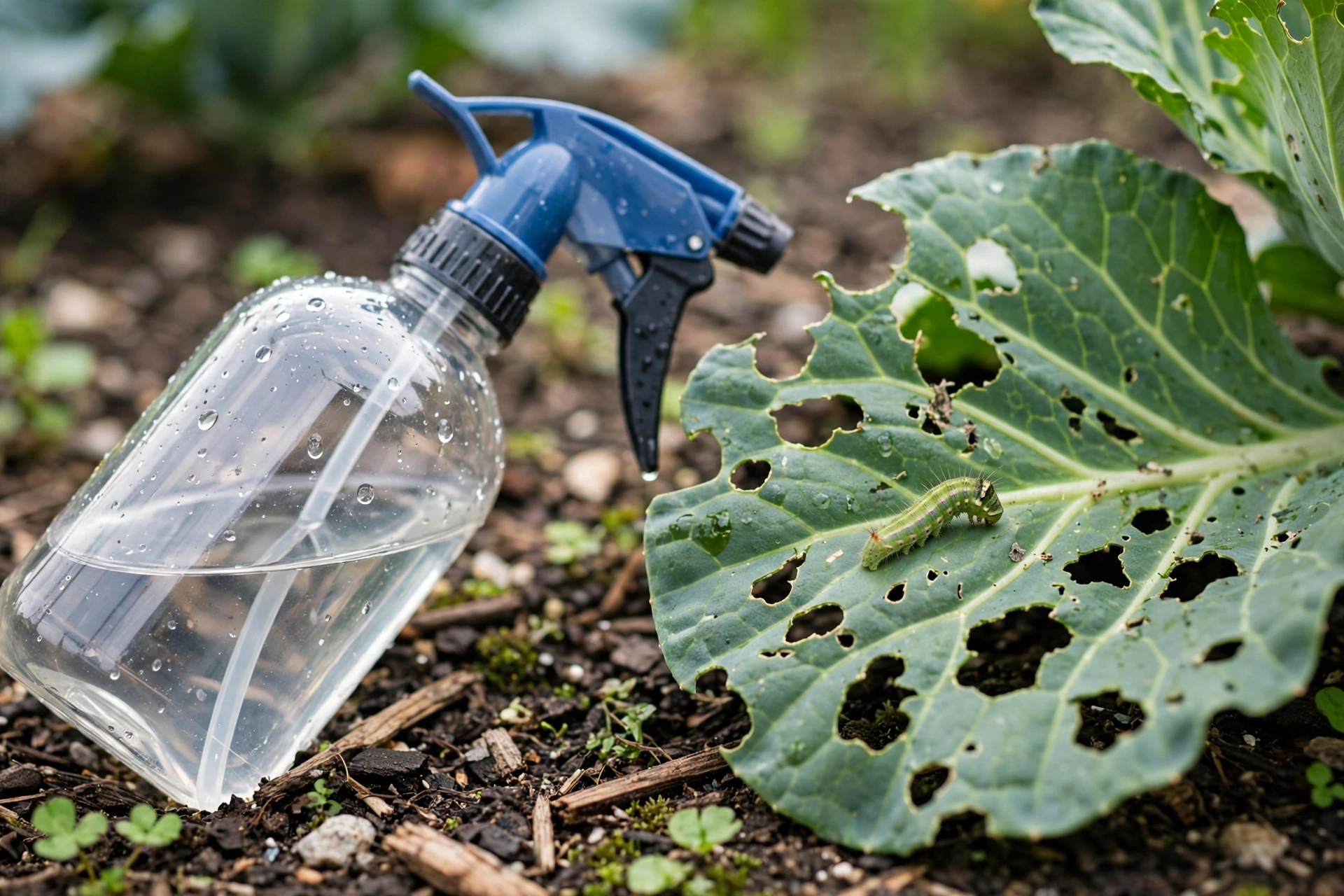 Bonide Insecticidal Super Soap Ready-to-Use | Soap plus caterpillar control | Ready-to-use, soap plus spinosad | Potassium salts of fatty acids 0.94%, spinosad 0.005% | 8.3 |
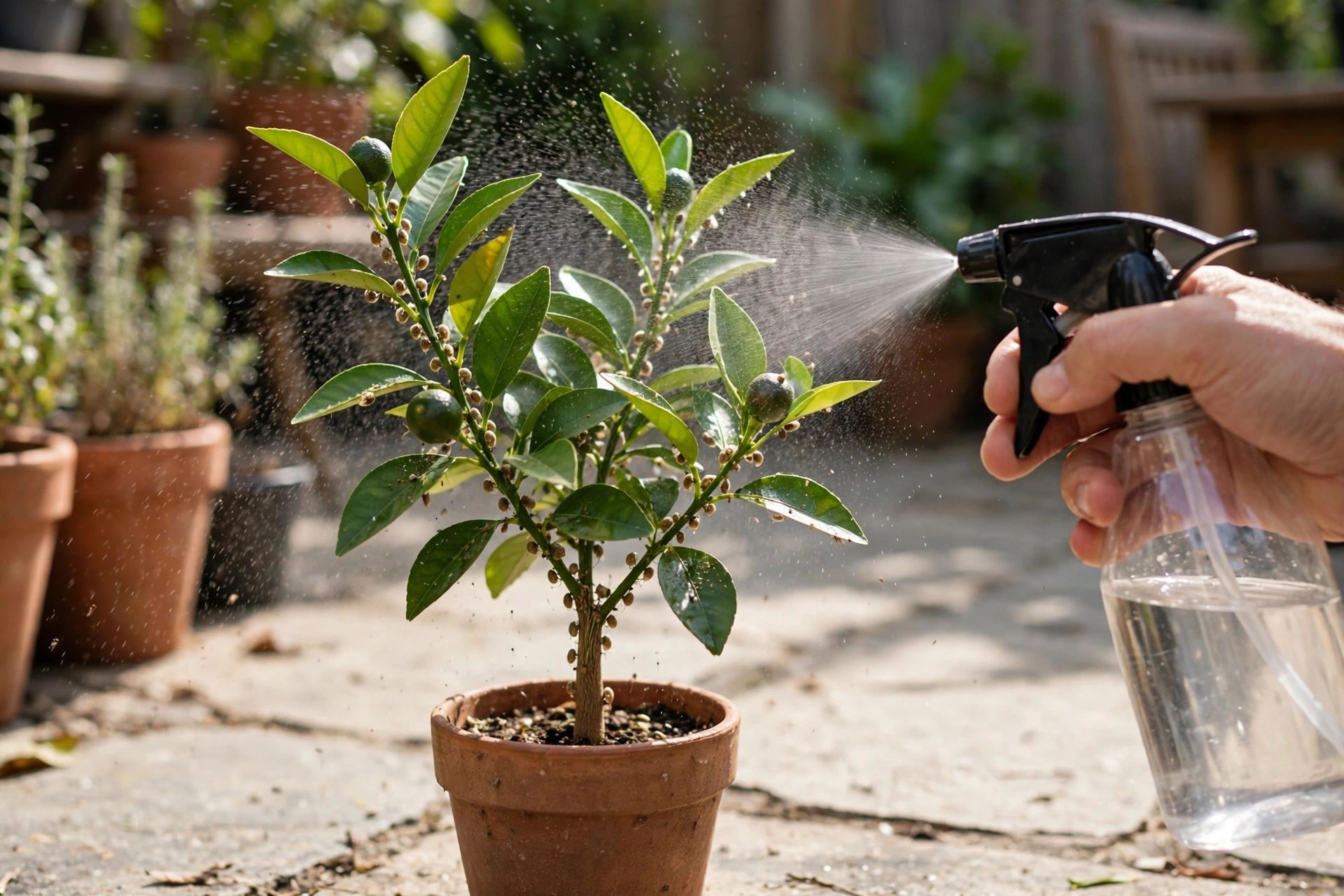 Monterey Insecticidal Soap Ready-to-Use | Vegetables, fruit, ornamentals | Ready-to-use | Potassium salts of fatty acids 1% | 8.2 |
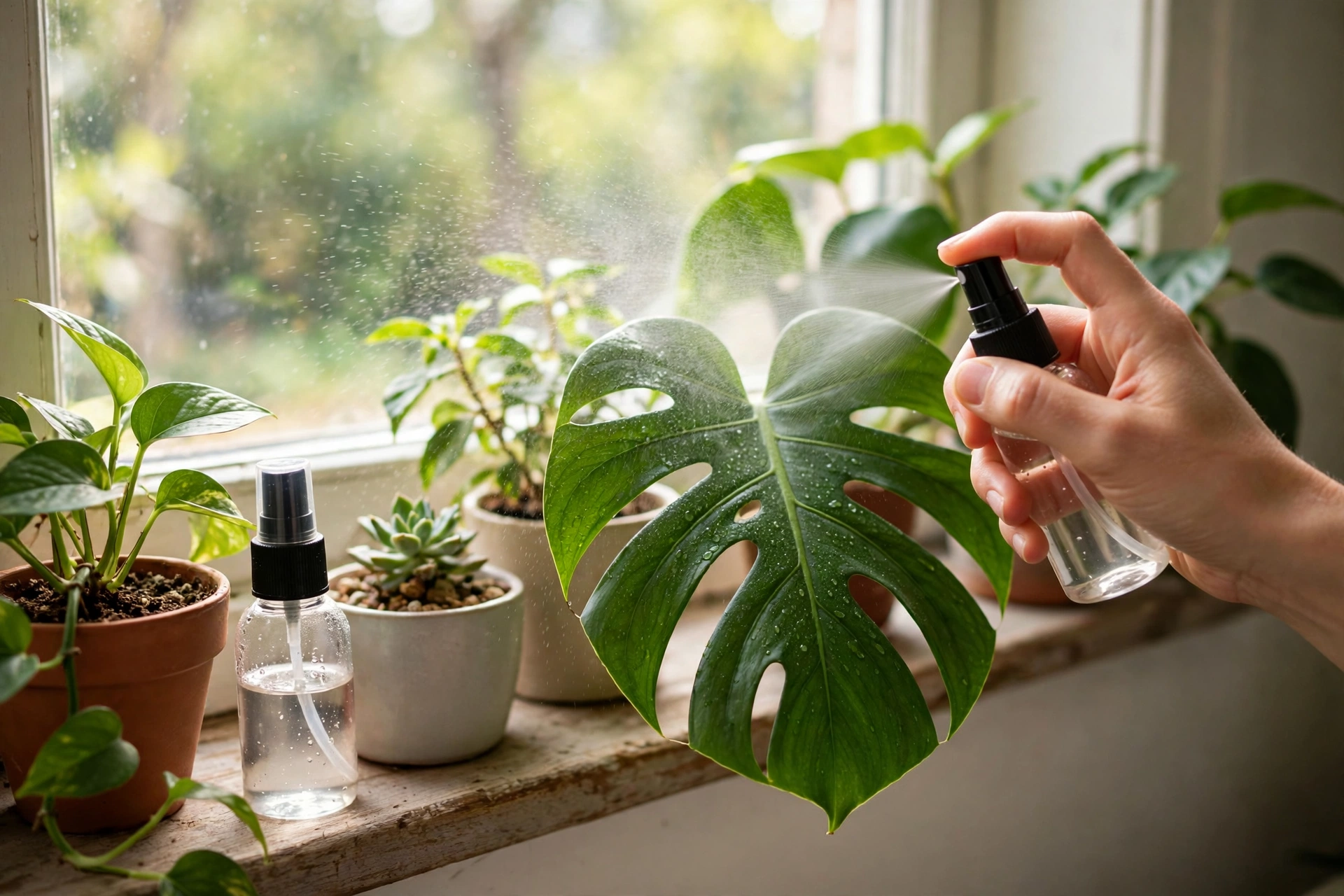 Ferti-lome Houseplant Hero Insecticidal Soap | Houseplants indoors | Ready-to-use | Potassium salts of fatty acids 1% | 8.0 |
1. Safer Brand Insect Killing Soap Concentrate
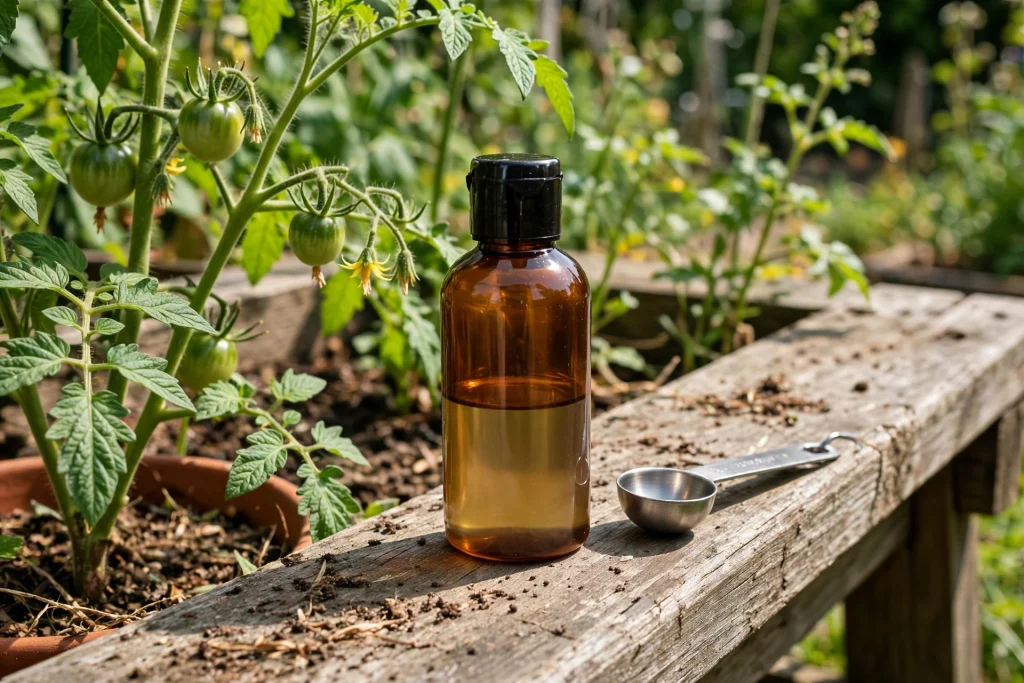
Type: Insecticidal soap, liquid concentrate. Active ingredient: Potassium salts of fatty acids, 49.52%. Size: 16 fl oz concentrate, makes up to 6 gallons of spray and covers up to 1,600 square feet of plantings. EPA Reg. No.: 42697-60. Organic status: OMRI Listed and compliant for use in organic gardening.
Safer Brand is the name most gardeners reach for first, and the concentrate is the reason. At 49.52% active ingredient it is far stronger in the bottle than any ready-to-use spray here, which is why a little goes a long way. You mix it with water, usually 2 to 5 tablespoons per gallon depending on the pest, and spray until the leaves drip. The label lists aphids, earwigs, grasshoppers, harlequin bugs, leafhoppers, mealybugs, mites, plant bugs, psyllids, sawfly larvae, soft scales, spider mites, and whiteflies, and it can be used up to the day of harvest on fruits, vegetables, flowers, houseplants, trees, shrubs, and ornamentals. The formula also contains seaweed extract, and the manufacturer says it will not persist in the environment.
The label carries the signal word WARNING, calls for protective eyewear, and says to test sensitive plants first. It rules out Crown of Thorns and says to test other euphorbias before a full spray.
Quick verdict: Buy this first if you spray often or garden on any real scale. Pros: One of the most concentrated formulas in this roundup. OMRI Listed. Safe to use up to harvest day. One bottle makes 6 gallons. Cons: You must measure and mix it yourself. WARNING signal word, so wear eye protection. Not for Crown of Thorns. Best for: Vegetable gardeners and anyone who sprays more than once a month. Skip if: You only have two houseplants and one aphid outbreak. A ready-to-use bottle is simpler.
Our rating: 8.9. The high concentration, the OMRI listing, and the value per gallon earn the top score, with points off because mixing takes care and the label demands eye protection.
2. Safer Brand Insect Killing Soap Ready-to-Use
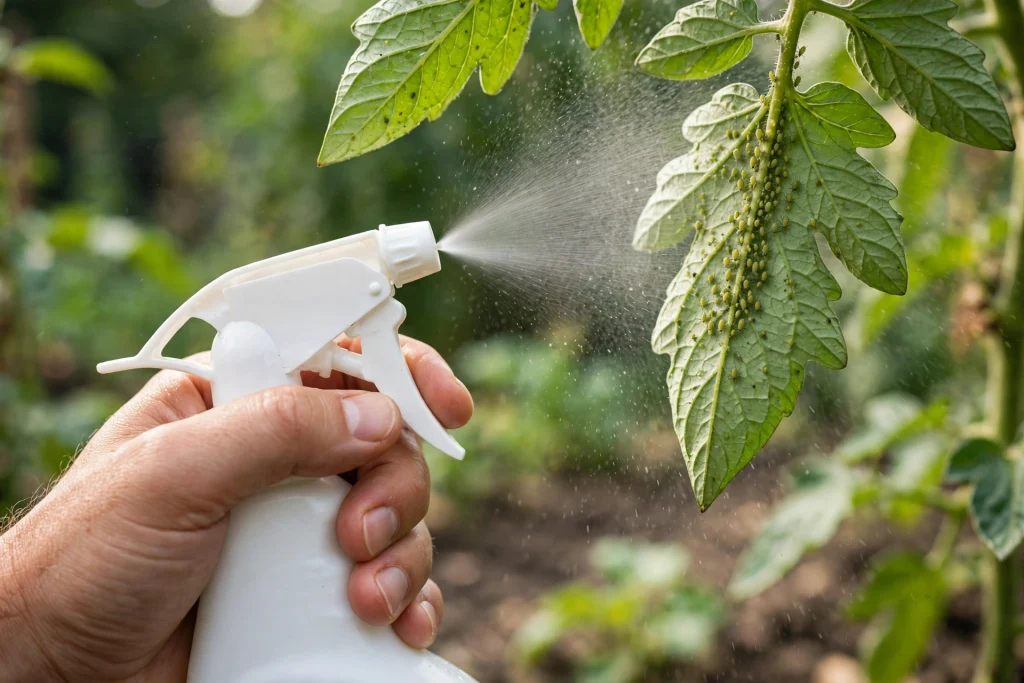
Type: Insecticidal soap, ready-to-use spray. Active ingredient: Potassium salts of fatty acids, 2%, with seaweed extract. Size: 32 fl oz ready-to-use spray bottle. EPA Reg. No.: 42697-59. Organic status: OMRI Listed and compliant for use in organic gardening.
This is the same trusted Safer formula, already mixed at the right strength. At 2% it is twice the concentration of most ready-to-use soaps here, which are 1%, and that shows in how fast it knocks down a visible aphid colony. You pick it up, shake it, and spray. There is no measuring cup, no jug, and no leftover mix going stale in the shed. It covers the same pest list as the concentrate, aphids, mealybugs, spider mites, thrips, whiteflies, and scales, and it can be used up to the day of harvest.
The trade-off is simple arithmetic. A ready-to-use bottle holds a fixed amount of spray, and a big garden will go through it fast. For a balcony, a few raised beds, or a houseplant shelf, that does not matter. For a full vegetable plot in aphid season, the concentrate is the cheaper way to keep spraying.
Who it suits: a gardener who wants the highest-concentration ready-to-use soap in this roundup and does not want to think about dilution.
Our rating: 8.7. The 2% strength and OMRI listing earn the score, with points off because a ready-to-use bottle costs more per sprayed gallon than the concentrate.
3. Bonide Insecticidal Soap Ready to Use
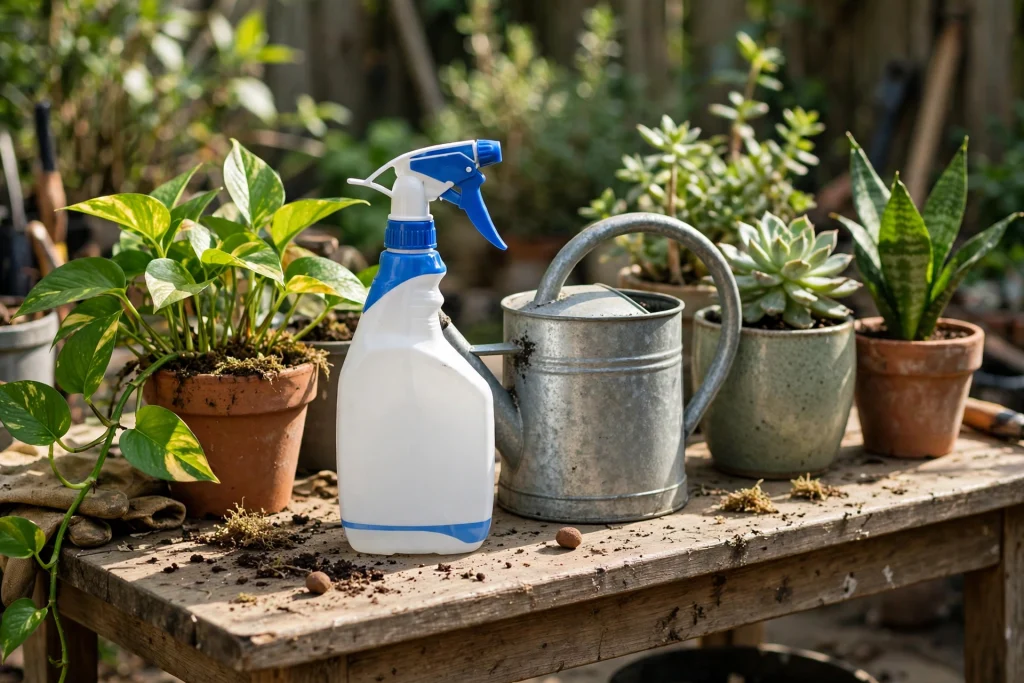
Type: Insecticidal soap, ready-to-use spray. Active ingredient: Potassium salts of fatty acids, 1%. Size: 32 fl oz ready-to-use spray bottle, with a 12 fl oz version sold as Captain Jack’s Insecticidal Soap for houseplants. EPA Reg. No.: 67702-13-4. Organic status: Labeled for organic gardening. No OMRI listing found for this product, which is not the same as an OMRI listing.
Bonide’s ready-to-use soap is made with Neudosan insecticidal soap, the same German formulation behind several of the bottles in this roundup. The label covers adelgids, aphids, earwigs, grasshoppers, lacebugs, mealybugs, mites, plant bugs, psyllids, sawfly larvae, scale insects, tent caterpillars, thrips, and whiteflies, plus powdery mildew, on vegetables, fruit and nut trees, citrus, berries, ornamentals, shrubs, flowers, and trees, in homes, gardens, and greenhouses. It can be used up to the day of harvest.
What sets it apart is availability and range. It is the bottle most likely to be on the shelf at a garden center or hardware store, and the 12 fl oz houseplant version is one of the few soaps labeled specifically for indoor plants.
Our rating: 8.6. Wide availability, the houseplant size, and the broad label earn the score, with a point off because it is not OMRI Listed and a point off because 1% is weaker than the Safer ready-to-use at 2%.
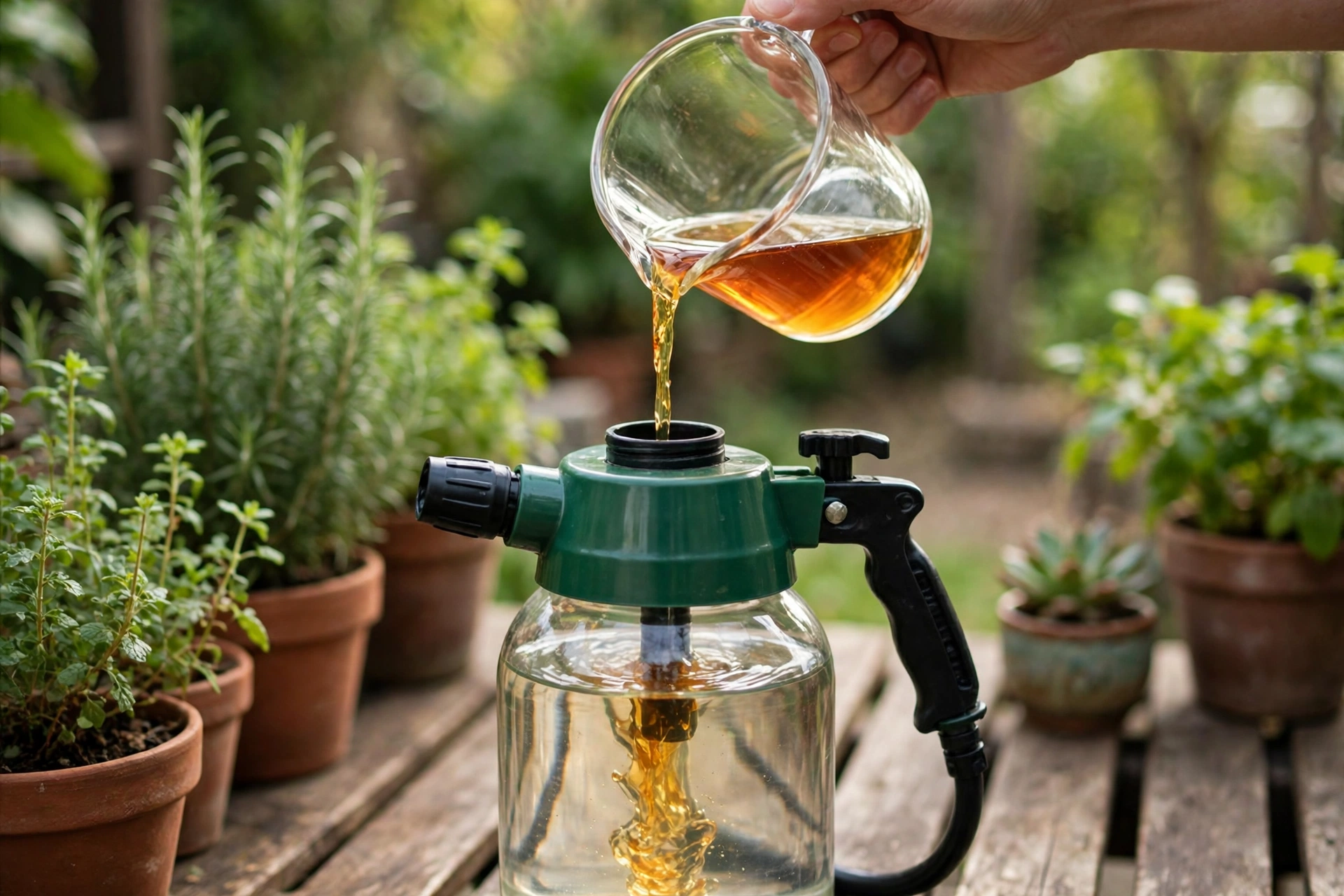
4. Bonide Insecticidal Soap Concentrate
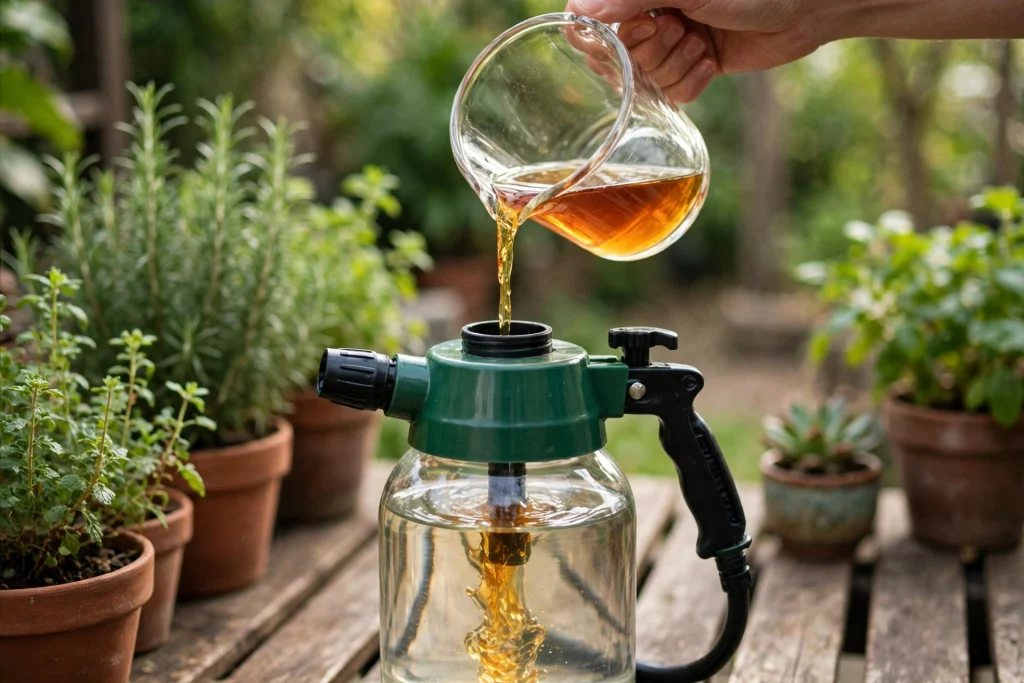
Type: Insecticidal soap, liquid concentrate. Active ingredient: Potassium salts of fatty acids, 47%. Size: Not published on the label copies found; the concentrate mixes with water for use in a hand or pump sprayer. EPA Reg. No.: Not published on the SDS or label copies found (manufacturer product code 67702114). Organic status: Not confirmed; Bonide does not publish an OMRI listing for this product.
This is the concentrate version of the Bonide spray above, and it is the quiet workhorse of the roundup. At 47% active ingredient it is nearly as strong in the bottle as the Safer concentrate, so a small bottle makes many gallons of spray. It uses the same Neudosan formulation and the same pest list: aphids, mites, whiteflies, mealybugs, scale crawlers, thrips, and the rest of the soft-bodied crowd, on vegetables, fruit trees, ornamentals, and houseplants.
Two honesty flags belong here, and we are not hiding them. First, we could not confirm the EPA registration number from the safety data sheet or the label copies we found, so we print the manufacturer product code instead and leave the number blank rather than guessing. Second, we could not confirm the bottle size from a primary source, so we do not print one. Neither gap changes how the product works, but a buyer should check the label on the bottle they buy.
Buy it if: you already like the Bonide ready-to-use spray and want the same formula in a cheaper per-gallon form for a bigger garden. Skip it if: you want an OMRI-listed concentrate, because the Safer concentrate carries that listing and this one does not, as far as we could verify.
Our rating: 8.5. The strong formula and good value earn the score, with points off for the two unverified details above and the missing OMRI listing.
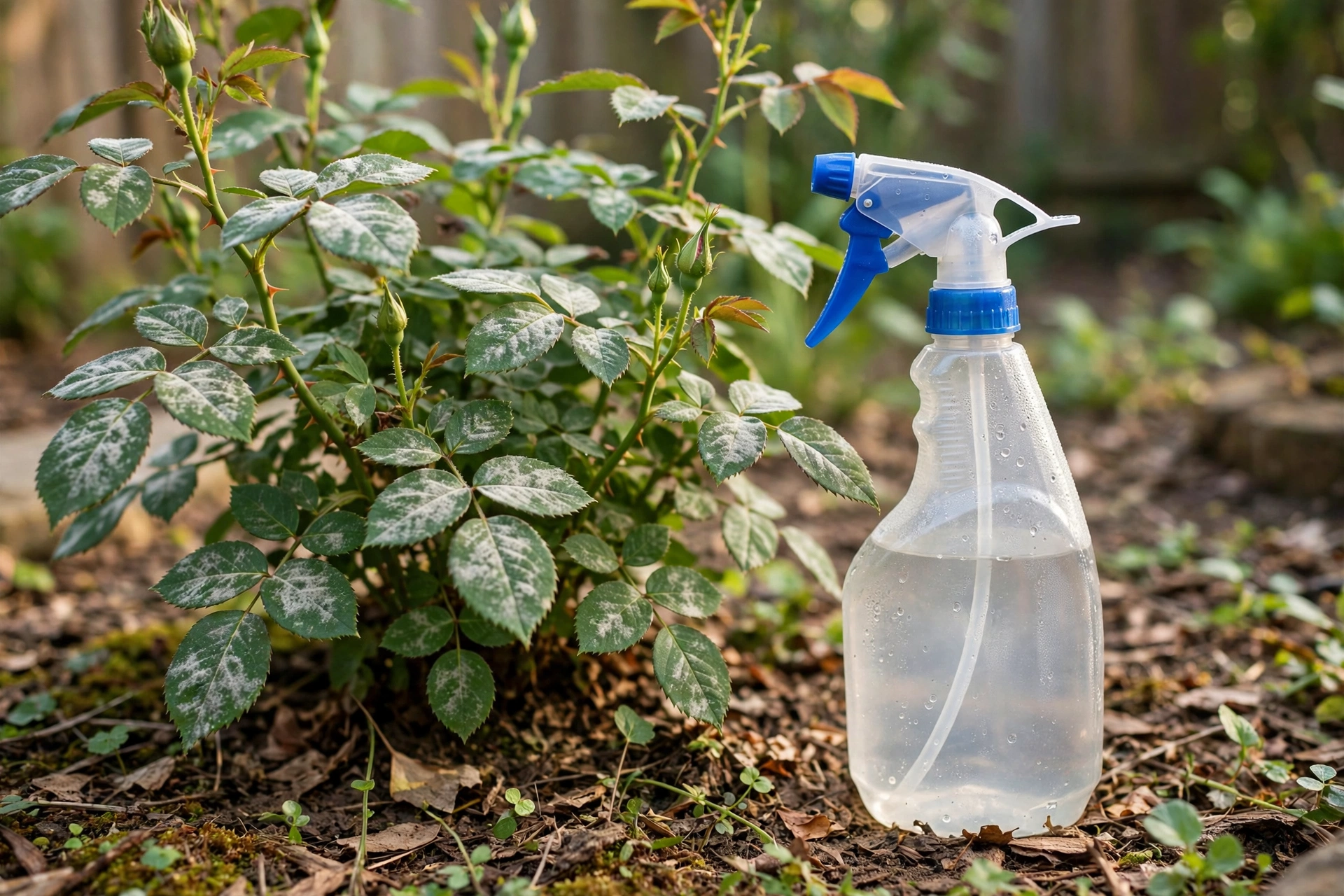
5. Safer Brand 3-in-1 Garden Spray Concentrate
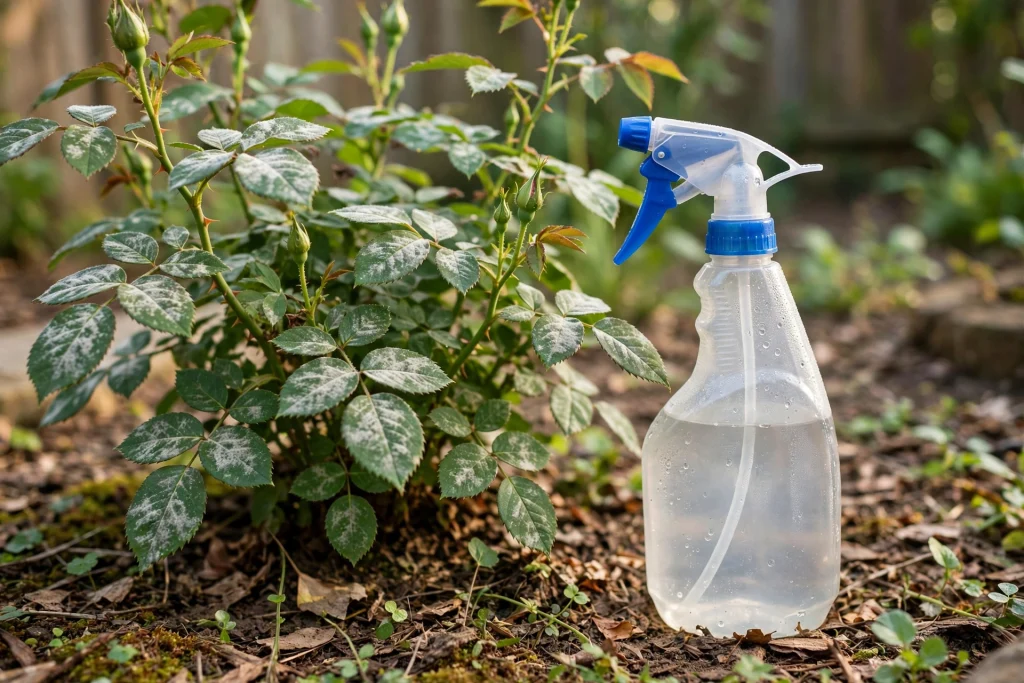
mildew together.
Type: Insecticidal soap plus sulfur, liquid concentrate. Active ingredients: Potassium salts of fatty acids, 12.38%, and sulfur, 6.48%. Size: 16 fl oz, 1 quart, and 1 gallon concentrates. EPA Reg. No.: 59913-13. Organic status: OMRI Listed and compliant for use in organic gardening.
This is the only bottle in the roundup that does two jobs at once. The soap kills soft-bodied insects on contact, and the sulfur controls fungal disease, including powdery mildew, black spot, and rust. That matters on roses, squash, and cucumbers, where aphids and powdery mildew often show up in the same week. One spray pass covers both problems, and the label covers fruits, vegetables, flowers, houseplants, trees, and shrubs, up to the day of harvest.
The sulfur brings rules the plain soaps do not have. Do not mix it with oil sprays. Apply insecticidal soap during cooler parts of the day, when plants are not under heat or drought stress. Avoid spraying in hot, direct sunlight, and check the product label for any specific temperature restrictions. High temperatures can increase the risk of leaf burn on sensitive plants. Do not use it on sulfur-sensitive plants.
Quick verdict: The best bottle here when insects and mildew arrive together. Pros: Two products in one. OMRI Listed. Three concentrate sizes. Cons: Sulfur rules add care: no oil nearby, no hot sun, some plants are sensitive. Best for: Rose growers and squash growers fighting aphids and powdery mildew at the same time. Skip if: You only have insects. A plain soap is simpler and cheaper.
Our rating: 8.5. The dual action and OMRI listing earn the score, with points off because sulfur needs more care than soap alone.
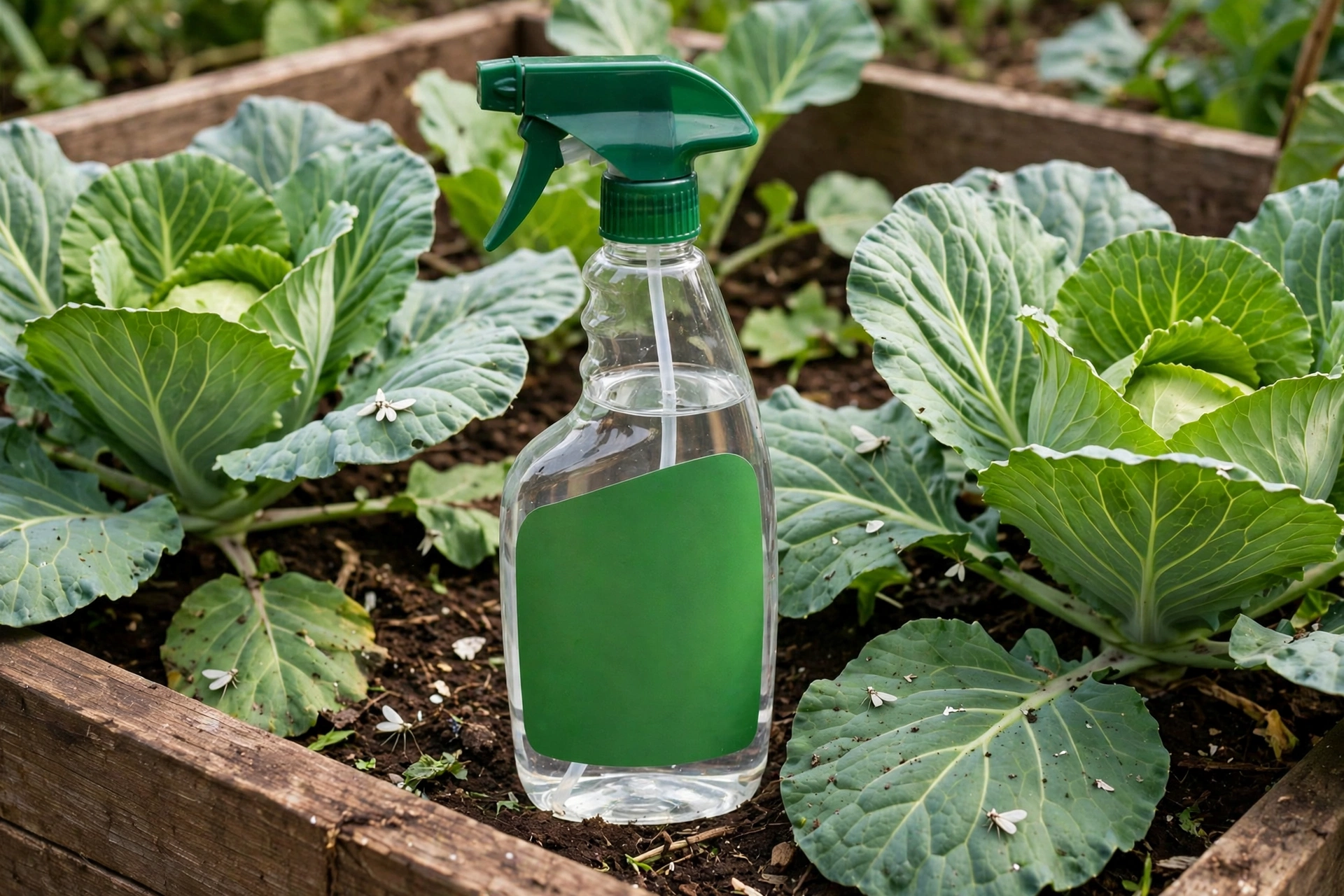
6. Garden Safe Insecticidal Soap Insect Killer
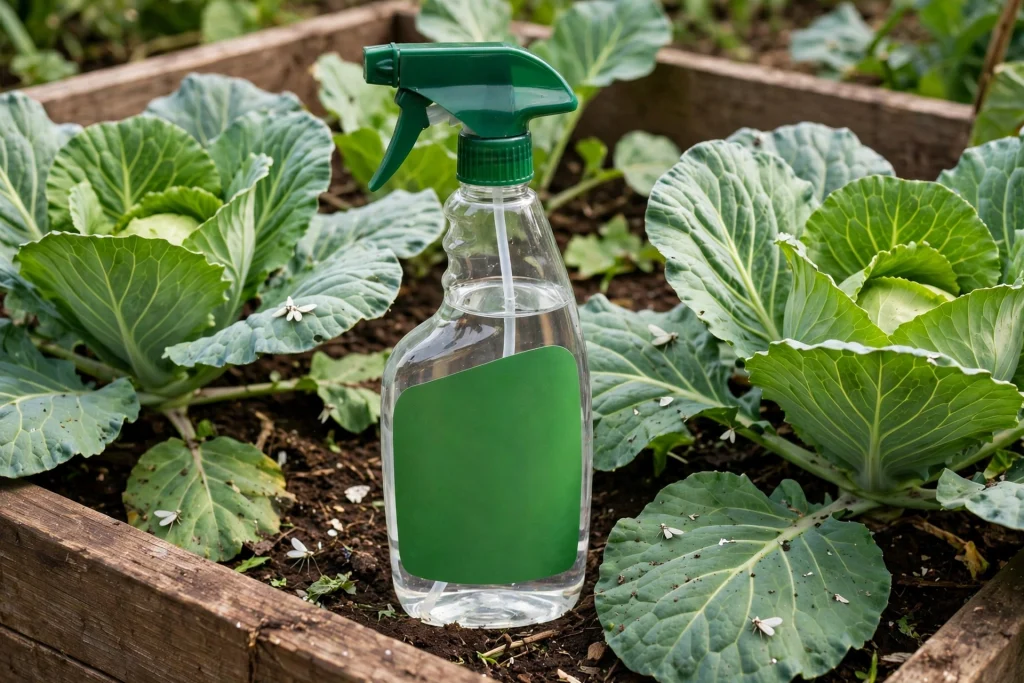
Type: Insecticidal soap, ready to use spray. Active ingredient: Potassium salts of fatty acids, 1%. Size: 32 fl oz ready to use spray bottle. EPA Reg. No.: 67702-13-39609. Organic status: Labeled as a ready to use pest control solution for organic gardening. No OMRI listing found for this product.
Garden Safe is the plain, honest bottle in this roundup. It is the same 1% Neudosan-based formula as the Bonide and Monterey ready to use sprays, with the same pest list: adelgids, aphids, earwigs, grasshoppers, lacebugs, leafhoppers, mealybugs, mites, plant bugs, psyllids, sawfly larvae, scale insects, spider mites, tent caterpillars, thrips, and whitefly, plus powdery mildew. It works indoors, outdoors, and in greenhouses, on fruit and nut trees, vegetables, berries, citrus, houseplants, and ornamentals, and it can be used up to the day of harvest.
It is widely sold, easy to find, and easy to use: point, spray until the leaves drip, and repeat in 5 to 7 days. The difference from the Bonide bottle is mostly the label and the shelf it sits on, not what is inside it.
Our rating: 8.4. Simplicity, availability, and a fair bottle earn the score, with points off because it is not OMRI Listed and 1% is the weakest strength in this roundup.
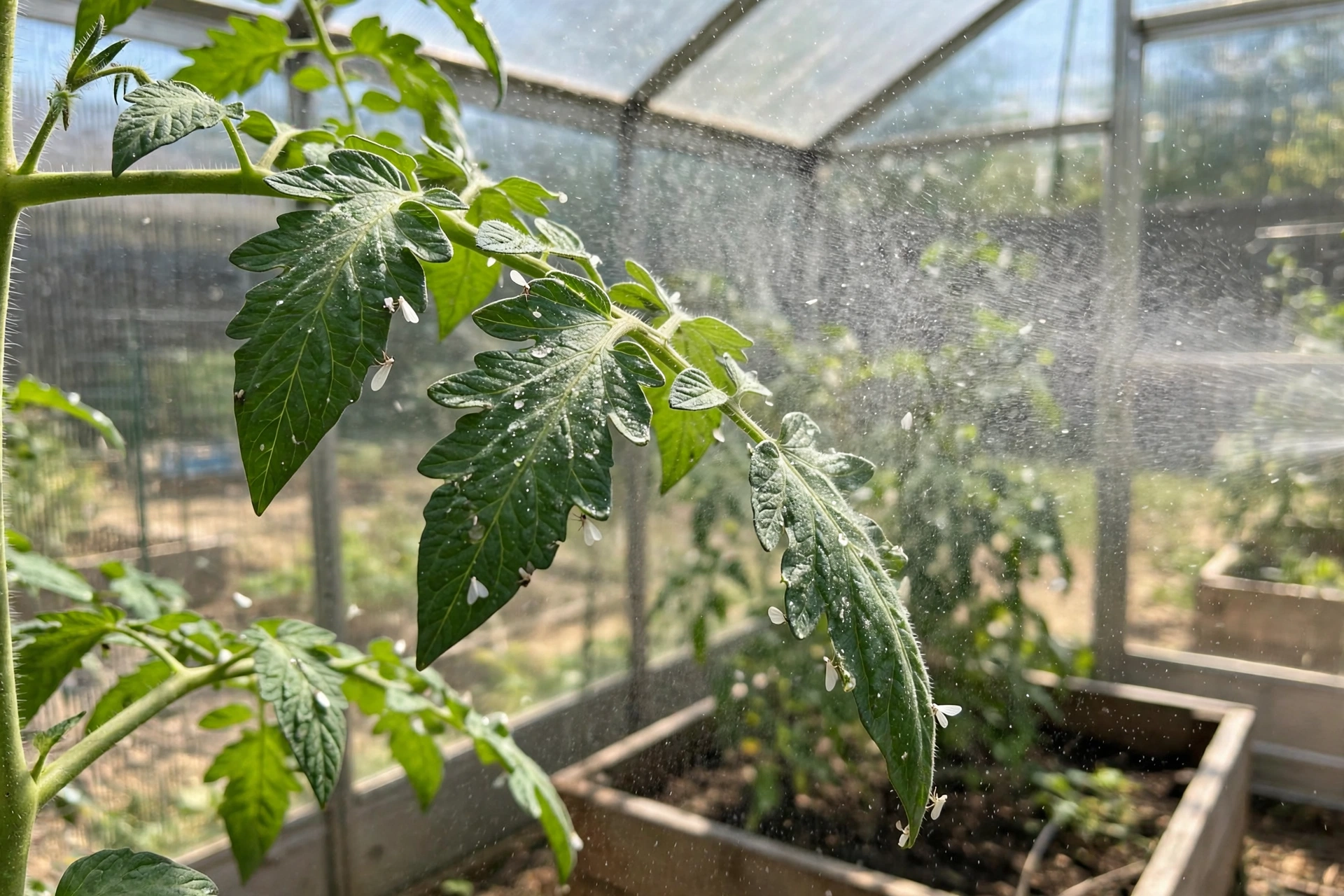
7. Natria Insecticidal Soap Ready to Use
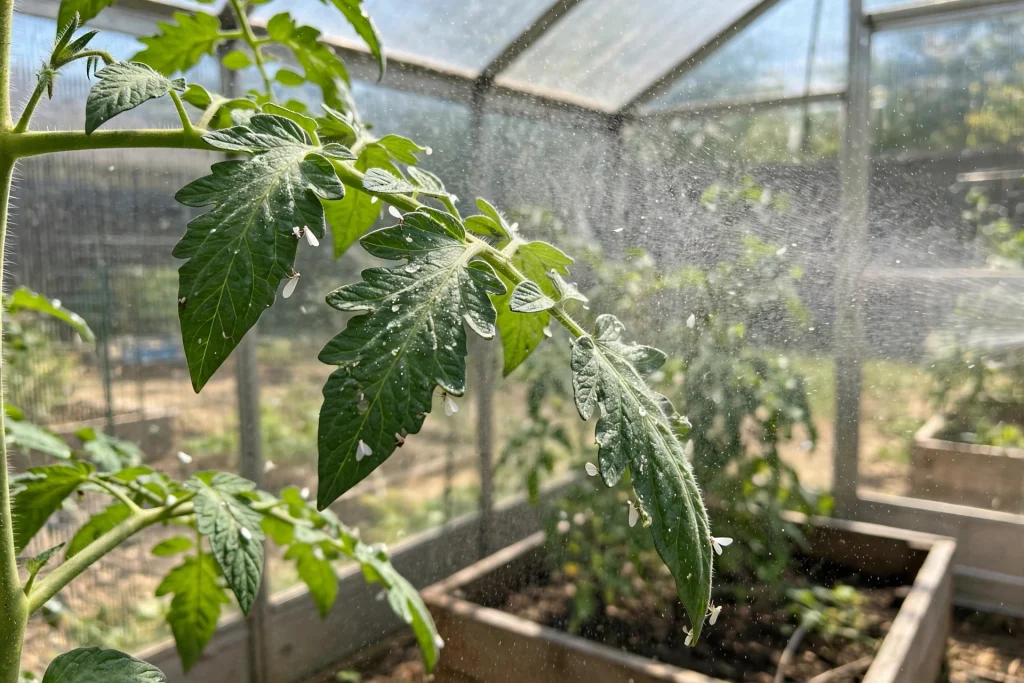
Type: Insecticidal soap, ready-to-use spray. Active ingredient: Potassium salts of fatty acids, 1%. Size: 24 fl oz ready-to-use spray bottle. EPA Reg. No.: 67702-21-92564. Organic status: OMRI Listed. The label carries “For Organic Use” with the OMRI mark.
Natria is the home garden brand of SBM Life Science, the company behind the BioAdvanced line, and its insecticidal soap is the OMRI-listed answer to the 1% ready-to-use bottles. The label lists aphids, mealybugs, mites, whiteflies, and other listed pests, and it can be used up to the day of harvest. The 24 fl oz bottle is smaller than the 32 fl oz bottles here, which suits a small garden or a houseplant collection better than a full vegetable plot.
Why pick this one over the Garden Safe or Bonide bottle at the same 1%? The OMRI listing. If you garden to organic standards, or you sell at a farmers market and your customers ask, the listing is the proof on the bottle. Everything else about it, the strength, the pest list, the way it works, is the same as its 1% rivals, so the choice comes down to that listing and the smaller bottle.
Our rating: 8.4. The OMRI listing on a ready to use bottle earns the score, with points off because the 24 fl oz bottle is smaller than its rivals and 1% is the weakest strength here.
8. Bonide Insecticidal Super Soap Ready-to-Use
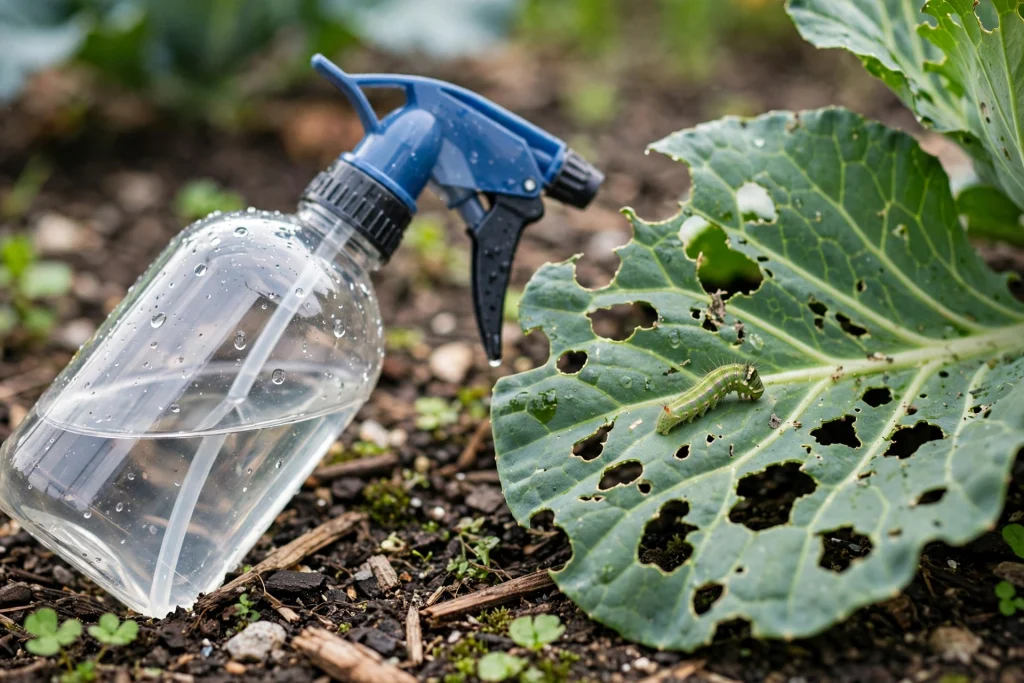
Type: Insecticidal soap plus spinosad, ready-to-use spray. Active ingredients: Potassium salts of fatty acids, 0.94%, and spinosad, 0.005%. Size: 32 fl oz ready to use spray bottle. EPA Reg. No.: 67702-45-4. Organic status: NOP compliant, labeled for organic gardening. No OMRI listing found for this product.
Super Soap is the bottle for the garden where soap alone is not enough. The soap kills soft-bodied insects on contact, and the spinosad kills caterpillars and thrips that keep eating after the soap dries. Soap plus spinosad covers two pest families. The label claims 30 insects, mites, and powdery mildew, and it covers vegetables, citrus, and berries. Check the product label to confirm the pest and crop uses are approved for your situation, as spinosad may control caterpillars, but not every formulation or label approves the same pest and crop uses.
The spinosad changes the safety picture, and this is the one bottle in the roundup where the bee warning matters most. Spinosad is highly toxic to bees when the spray is wet. Insecticidal soap generally has little residual insecticidal activity once it dries, making it less persistent than many conventional insecticides. However, direct exposure can still harm beneficial insects, and plant sensitivity, application conditions and product-specific label instructions matter. Always follow the label, especially when spraying edible plants, around pets, or near pollinators. If bees are your main worry, choose a different bottle.
Quick verdict: Buy this when caterpillars and aphids attack the same bed. Pros: Soap plus spinosad covers two pest families. NOP compliant. Ready to spray. Cons: Spinosad is toxic to bees while wet, so timing matters more. Not for blooming plants. Best for: Cabbage, kale, and tomato beds with caterpillars and aphids together. Skip if: Your only pest is aphids. A plain soap does that job with less risk to bees.
Our rating: 8.3. The wider pest list earns the score, with points off for the bee warning while the spray is wet.
9. Monterey Insecticidal Soap Ready to Use
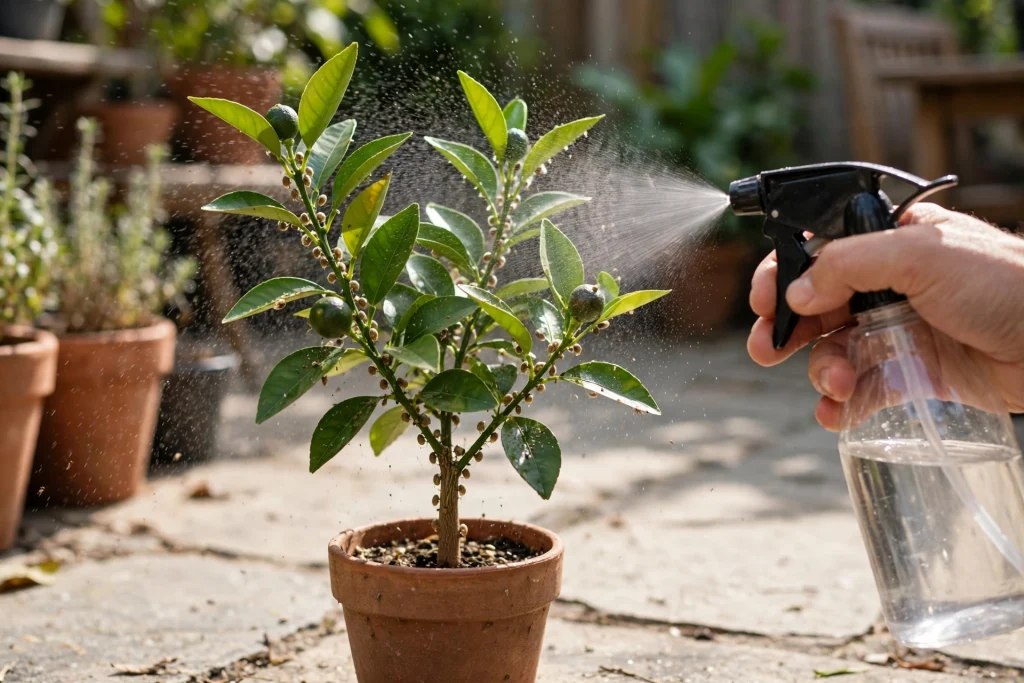
Type: Insecticidal soap, ready to use spray. Active ingredient: Potassium salts of fatty acids, 1%. Size: 32 fl oz ready to use spray bottle. EPA Reg. No.: 67702-21-54705. Organic status: Labeled “For Organic Gardening”. No OMRI listing found for this product.
Monterey’s soap is another 1% Neudosan-based spray, and it does the same job as the Garden Safe and Bonide bottles: aphids, lacebugs, mealybugs, mites, grasshoppers, leafhoppers, scale insects, plant bugs, sawfly larvae, psyllids, tent caterpillars, thrips, spider mites, earwigs, and whitefly, plus powdery mildew, on vegetables, fruit and nut trees, citrus, berries, houseplants, and ornamentals, indoors and outdoors. It can be used up to the day of harvest.
Monterey is a brand many West Coast gardeners know from the nursery trade, and its soap turns up most often in independent garden centers rather than big-box stores. There is no feature here that the Garden Safe bottle lacks, so the choice between them is usually which one your local store stocks.
Our rating: 8.2. A solid, widely trusted bottle earns the score, with points off because it is not OMRI Listed and it offers nothing the cheaper 1% sprays do not.
10. Ferti-lome Houseplant Hero Insecticidal Soap
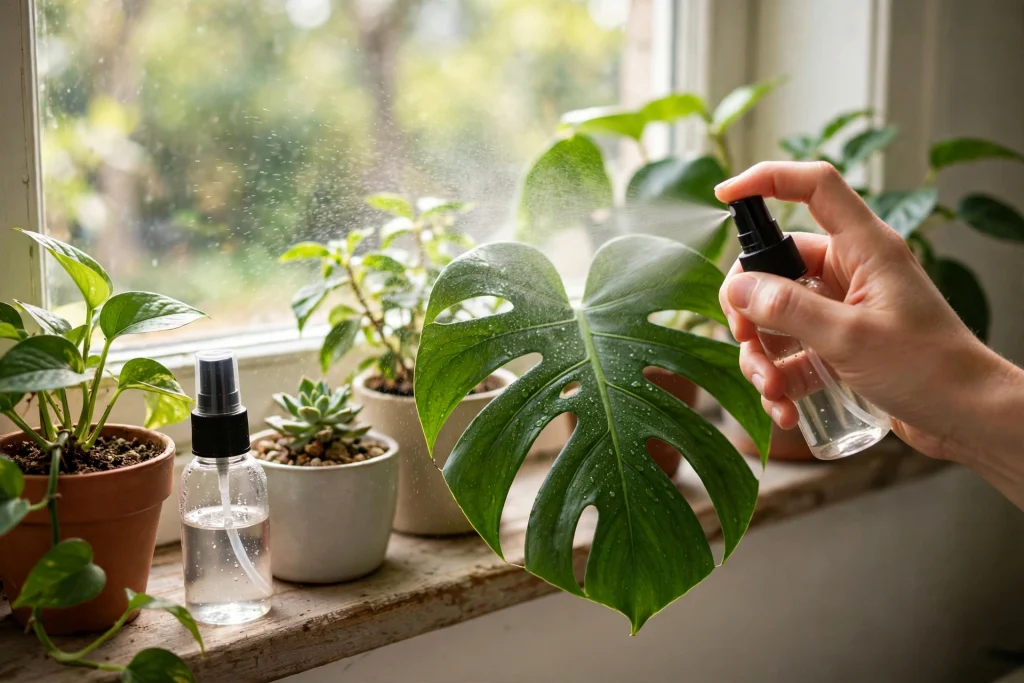
Type: Insecticidal soap, ready to use spray. Active ingredient: Potassium salts of fatty acids, 1%. Size: 8 fl oz ready to use spray bottle. EPA Reg. No.: 67702-21-7401. Organic status: Not confirmed; no OMRI listing found for this product.
Houseplant Hero is the smallest bottle in this roundup, and that is exactly why it belongs here. An 8 fl oz bottle is the right size for a windowsill collection, and the fine mist suits indoor leaves better than a big garden sprayer. The label covers aphids, whiteflies, mealybugs, spider mites, thrips, and other listed pests, plus powdery mildew, on houseplants and other listed plants, and it can be used up to the day of harvest.
The small size is also its limit. Eight fluid ounces will not go far in a garden, and a gardener with a full vegetable plot would empty it in one afternoon. It is a houseplant tool, not a garden tool, and it should be bought as one. For a shelf of pothos, monstera, and ferns with a mealybug problem, it is the most practical bottle here.
Who it suits: indoor gardeners who want a small, dedicated bottle that lives next to the plants instead of in the shed. Watch out for the same soap rules: spray the undersides of the leaves, where mealybugs and mites hide, and check again in a week, because eggs survive the first spray.
Our rating: 8.0. The right size and fine mist for houseplants earn the score, with points off because the tiny bottle is poor value for outdoor use and no OMRI listing was found.
How We Chose
We scored every product on the same six factors, using the verified label and the owner feedback we could find, to find the best insecticidal soap for a home garden. No product here was tested in our own garden. We did not spray these bottles ourselves, and we do not claim otherwise. The scores reflect what the label proves and what owners report, not hands-on trials.
| Factor | Weight | What it covers |
|---|---|---|
| Effectiveness on labeled pests | 25% | How many listed pests the label covers, and how strong the active ingredient is |
| Label clarity and safety information | 20% | Clear mixing rates, pest and plant lists, warnings, and harvest intervals on the label |
| Organic status | 15% | OMRI Listed, labeled for organic gardening, or neither, kept distinct |
| Ease of use | 15% | Ready-to-use versus concentrate, bottle size, and how simple it is to apply |
| Value | 15% | How much spray a bottle makes, and how far it goes in a real garden |
| Owner feedback breadth | 10% | How consistent the reported results are across many owners, not one review |
| Total | 100% |
A note on organic status, because it matters and it is easy to get wrong. OMRI Listed means a third-party review found the product compliant with USDA National Organic Program input standards. “Labeled for organic gardening” means the manufacturer says it fits organic gardening, but no OMRI review is shown. The two are not the same, and this roundup keeps them apart.
How to Use Insecticidal Soap
The best insecticidal soap works only where it touches the pest, so how you spray matters more than which bottle you buy. Start by identifying the pest. Soap controls aphids, whiteflies, mealybugs, spider mites, thrips, young scale crawlers, psyllids, and sawfly larvae. It does almost nothing to caterpillars, beetles, or any insect with a hard shell, and it does not kill eggs. If the pest is not on the label, pick a different tool.
Shake the bottle well, or mix the concentrate exactly as the label says. Do not mix it stronger than the label says, and do not add dish soap, detergent, or oil to the mix. Apply insecticidal soap during cooler parts of the day, when plants are not under heat or drought stress. Avoid spraying in hot, direct sunlight, and check the product label for any specific temperature restrictions. High temperatures can increase the risk of leaf burn on sensitive plants. Do not spray a plant that is wilted or water-stressed.
Test first. Spray a few leaves, wait 24 to 48 hours, and check for burn before you spray the whole plant. Some plants are sensitive, including ferns, nasturtiums, sweet peas, and some roses, and the label lists the ones to watch. Repeat every 5 to 7 days while insects are present, because eggs hatch after the first spray and the new insects need to be hit too.
Insecticidal Soap vs Neem Oil
When gardeners compare the best insecticidal soap against neem oil, they are comparing two sprays that work in different ways. Soap kills on contact by breaking down the insect’s outer layer, and it stops working once it dries. Neem oil smothers soft-bodied insects and, in its cold-pressed form, disrupts feeding, growth, and egg laying over days.
| Feature | Insecticidal Soap | Neem Oil |
|---|---|---|
| How it kills | Breaks down cell membranes on contact | Smothers on contact, plus disrupts feeding and growth |
| Speed | Fast, while the spray is wet | Slower, over days |
| Residual effect | None once dry | Some, until it breaks down |
| Best pests | Aphids, whiteflies, mites, mealybugs | Aphids, mites, whiteflies, scale, thrips |
| Disease control | Some labels list powdery mildew | Powdery mildew, black spot, rust |
| Bee risk (UC IPM rating) | Rating III, no bee precaution beyond the label | Rating II, apply sunset to midnight where the label allows |
| Heat limit | Avoid spraying in hot, direct sunlight. Check the product label for any temperature restrictions. | Avoid spraying in hot, direct sunlight. Check the product label for any temperature restrictions, as oil can burn leaves. |
| When to pick it | Visible insects you can wet right now | Ongoing pressure, plus fungal disease |
These UC IPM ratings cover the active ingredients as listed in UC IPM’s Bee Precaution Pesticide Ratings database, not every neem or soap product, and they are not the pollinator precautionary statements on product labels, so always follow the label. Rating III is not a guarantee that a spray is harmless to bees. For a deeper comparison of neem oil sprays, including cold-pressed versus clarified extract, see our guide to the best neem oil sprays for plants.
Best Insecticidal Soap for Aphids
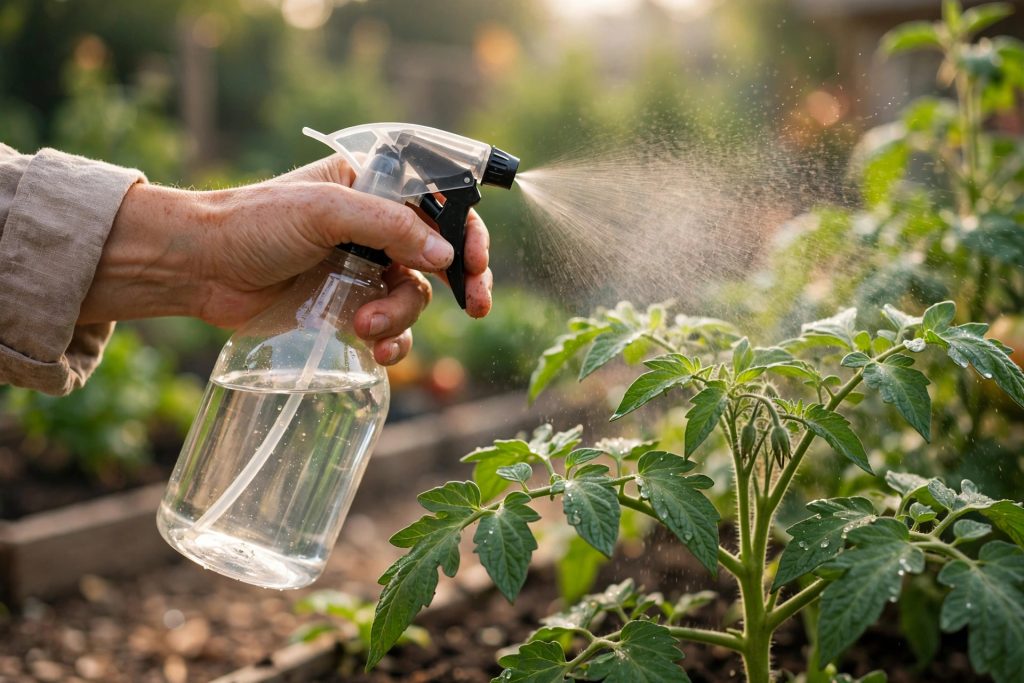
Aphids are the pest insecticidal soap was made for. They are soft, slow, and clustered in plain sight, usually on new growth and the undersides of leaves, and a soap spray that wets the whole colony kills them the same day. UC IPM calls insecticidal soaps and oils the best choices for aphids in most garden situations, and our own pick follows that guidance.
For aphids, buy the Safer Brand Insect Killing Soap Concentrate if you have a vegetable garden, or the Safer ready to use spray if you have a few plants. Both are OMRI Listed, both are strong enough to clear a colony in one pass, and both are safe to use up to the day of harvest. Spray the colony directly, coat the undersides of the leaves, and check again in 5 to 7 days, because aphids reproduce fast and the survivors will rebuild the colony in a week.
Start with water first: a strong stream from the hose knocks most aphids off, and many never climb back. Prune out curled leaves where aphids hide inside, because no spray reaches them there. And leave the ladybugs alone: lady beetles, lacewing larvae, and parasitic wasps eat aphids for a living, and soap leaves no residue to harm them once it dries.
Homemade Insecticidal Soap Recipe
A homemade spray can work in a pinch, but it is not the same as a labeled product, and the extension services say so plainly. Colorado State University Extension states that homemade soap solutions are not recommended for insect control, because home remedies are not consistently formulated or tested. Commercial soaps use specific fatty acid chain lengths that kill insects with minimum plant injury. A kitchen soap does not.
If you still want to mix your own, use only pure liquid castile soap, with no fragrance, moisturizer, or antibacterial additives. Never use dish soap or laundry detergent. Those are detergents, not soaps, and they strip the waxy coating from leaves and burn the plant.
If you choose to experiment with a homemade soap solution, use caution. Some gardeners use diluted pure liquid soap, but household formulations are not standardized or tested for use on plants. Even mild soaps can damage leaves under certain conditions. Test any solution on a small area first and wait 24 to 48 hours before treating the entire plant. A labeled commercial insecticidal soap is generally the more predictable option. Some gardeners use 1 teaspoon of pure liquid castile soap per quart of water, which is about 4 teaspoons per gallon. Mix it in a clean spray bottle, shake gently, and spray the insects directly until the leaves drip, including the undersides. Test a few leaves first and wait 24 to 48 hours. If the leaves look fine, spray the rest. Repeat every 5 to 7 days while insects are present, and stop if you see leaf burn. Use it the same day you mix it, and do not store it.
For more natural recipes, including garlic, chili, and neem mixes, see our guide to natural pesticides for plants.

Is Insecticidal Soap Safe for Bees?
The best insecticidal soap is one of the safest sprays for bees, but safe does not mean harmless, and timing is what makes the difference. UC IPM gives insecticidal soap its lowest bee precaution rating, rating III, which means no bee precaution beyond what the label says. The reason is simple: soap has no residual effect. Once the spray dries, it stops working, so a bee that lands on a treated leaf the next morning meets no poison.
The risk is to a bee hit directly by wet spray, so spray in the evening after bees have stopped foraging, when the spray can dry overnight before they return. Never spray a plant in bloom, and that includes the flowering weeds beside it.
The one exception in this roundup is the Bonide Super Soap, which adds spinosad. Spinosad is highly toxic to bees while the spray is wet, so that bottle needs the evening timing even more, and it should never go on a blooming plant. The plain soaps are the safer choice when bees are working the garden.
When to Spray Insecticidal Soap
With the best insecticidal soap, spray when you see the pest, not on a schedule. Soap has no residual effect, so a preventive spray does nothing: it dries, and the next insect that arrives is untouched. Walk the garden, look under the leaves, and spray the colonies you can see.
Apply insecticidal soap during cooler parts of the day, when plants are not under heat or drought stress. Avoid spraying in hot, direct sunlight, and check the product label for any specific temperature restrictions. High temperatures can increase the risk of leaf burn on sensitive plants. Midday sun on wet, soapy leaves burns them.
Repeat every 5 to 7 days while insects are present. Eggs survive the first spray, and the new insects need to be hit when they hatch. Repeated applications may be necessary to control an aphid or whitefly infestation. Inspect the plants after each treatment and repeat only as directed on the product label. The number of applications needed depends on pest pressure, coverage and how quickly new insects hatch. If the pest is still there after repeated applications, the problem is coverage, not the bottle: you missed the undersides, or the spray dried before it touched the insects.
Other garden pests need other tools. Slugs, for example, are not insects at all, and no soap spray will stop them. For slugs, the answer is a pet-safe bait or trap, not a spray bottle.
Final Choice
If you buy one bottle, buy the Safer Brand Insect Killing Soap Concentrate. At 49.52% active ingredient in the concentrate, it is one of the most concentrated insecticidal soap formulations in this roundup. It is OMRI Listed, one bottle makes up to 6 gallons of spray, and it costs less per gallon than any ready-to-use bottle here.
If you do not want to mix anything, buy the Safer ready to use spray instead. It is the same formula at 2%, already mixed, and it is the highest-concentration ready-to-use soap in this roundup. If the budget matters more than the brand, the Garden Safe bottle does the same job at 1% for less money, and if insects and powdery mildew arrive together, the Safer 3-in-1 is the only bottle that fights both in one pass.
Whichever bottle you choose, remember the three rules that decide whether it works: wet the insect, including the undersides of the leaves; spray in the cool of the evening; and come back in 5 to 7 days for the ones that hatched after.
For the wider picture, including spinosad, Bt, neem oil, and pyrethrin, see our guide to the best organic pesticides for gardens.
References
- University of California IPM, Aphids (Pest Notes: Quick Tips). Aphids cluster on new growth, produce honeydew, and can be knocked off with water; insecticidal soaps and oils are listed among the controls when numbers are high.
- Colorado State University Extension, Insect Control: Soaps and Detergents, Fact Sheet 5.547 (Cranshaw). Soaps act strictly as contact insecticides with no residual effect; homemade soap solutions are not recommended for insect control.
- University of Connecticut Extension, Insecticidal Soaps (Pundt, updated 2020). Insecticidal soaps are potassium salts of fatty acids, work only on direct contact, and have no residual activity once the spray has dried.
- Safer Brand, Insect Killing Soap Concentrate (official product page). Potassium salts of fatty acids 49.52%, 16 fl oz makes up to 6 gallons, OMRI Listed, use up to the day of harvest.
- Garden Safe, Insecticidal Soap Insect Killer 32 oz (official product page). Potassium salts of fatty acids 1%, ready-to-use, labeled for organic gardening.
FAQ
What is the best insecticidal soap for aphids?
The Safer Brand Insect Killing Soap Concentrate is our pick for aphids. At 49.52% active ingredient in the concentrate, it is one of the most concentrated insecticidal soap formulations in this roundup. It is OMRI Listed, and one bottle makes up to 6 gallons of spray. Spray the colony directly, coat the undersides of the leaves, and repeat in 5 to 7 days.
How do you use insecticidal soap correctly?
Shake or mix the product exactly as the label says, then spray in the morning or evening. Apply insecticidal soap during cooler parts of the day, when plants are not under heat or drought stress. Avoid spraying in hot, direct sunlight, and check the product label for any specific temperature restrictions. High temperatures can increase the risk of leaf burn on sensitive plants. Wet the whole plant, especially the undersides of leaves, until the liquid drips. Test a few leaves first and wait 24 to 48 hours before spraying the whole plant.
Can I make insecticidal soap at home?
Homemade soap solutions are not recommended by extension services, and household formulations are not standardized or tested for use on plants. If you still choose to experiment, use pure liquid castile soap only, 1 teaspoon per quart of water, about 4 teaspoons per gallon, and test on a small area first. Never use dish soap or laundry detergent, because they strip the waxy coating from leaves and burn the plant. Extension services recommend a labeled commercial soap over a homemade mix, because it is formulated and tested for plant safety.
Is insecticidal soap safe for bees?
It is one of the safest sprays for bees, because it has no residual effect once dry. UC IPM gives it the lowest bee precaution rating. Spray in the evening after bees stop foraging, and never spray a plant in bloom. The Bonide Super Soap is the exception here, because its spinosad is highly toxic to bees while the spray is wet.
How often should I spray insecticidal soap?
Repeat every 5 to 7 days while insects are present. The first spray kills the insects it touches, but eggs survive, so the next pass catches the newly hatched insects. Repeated applications may be necessary to control an aphid or whitefly infestation. Inspect the plants after each treatment and repeat only as directed on the product label. The number of applications needed depends on pest pressure, coverage and how quickly new insects hatch.
Does insecticidal soap kill caterpillars or beetles?
No. Soap works on small, soft-bodied insects such as aphids, whiteflies, mealybugs, spider mites, and thrips. Caterpillars and beetles have tougher bodies and are generally not affected. For caterpillars, use Bt or a spinosad spray instead.

Thesis Link : https://saulibrary.edu.bd/daatj/public/uploads/BAU200601_19-Pp_5.pdf
- 10 Best Mosquito Traps for Yards - November 22, 2026
- 10 Best Insecticidal Soaps - November 22, 2026
- 10 Best Wildflower Seed Mixes for Pollinators - November 21, 2026