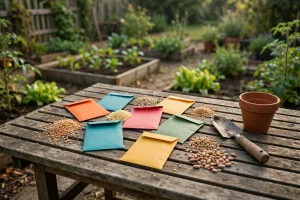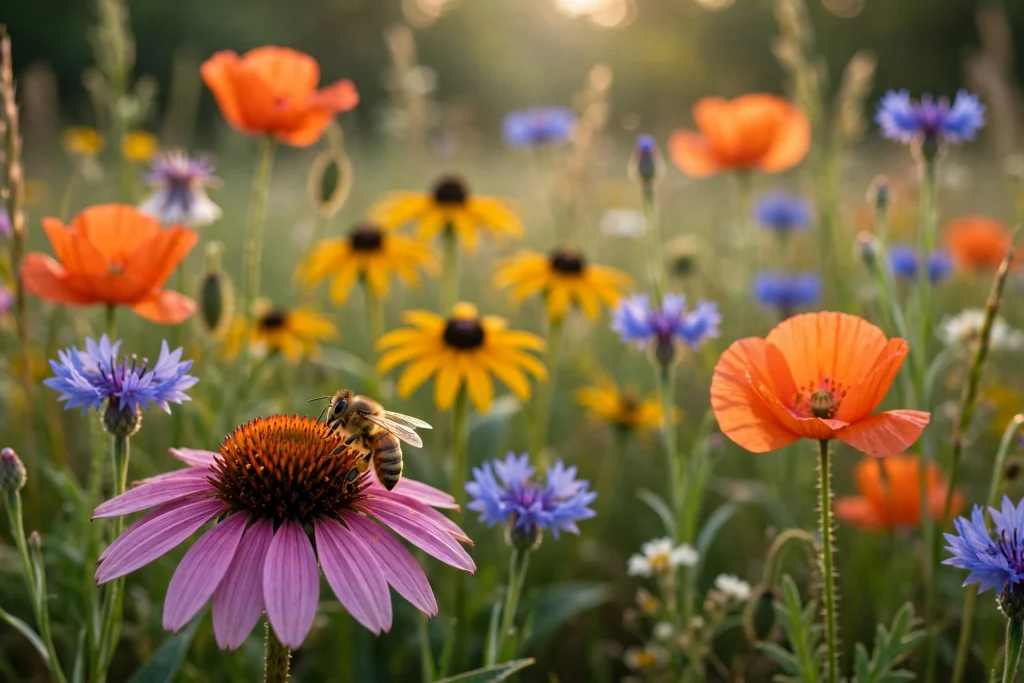
A single packet of seed can turn a bare patch of lawn into a buffet for bees, butterflies and hummingbirds. A good blend does that job with species that bloom in turn from spring to frost, so pollinators always find nectar and pollen close by. The wrong mix gives you a burst of colour in year one and bare soil in year two, or flowers that never belonged in your region in the first place.
This guide compares 10 real, buyable wildflower seed mixes, all verified against manufacturer or major retailer pages in November 2026. Every species count, coverage figure and sowing rate below comes from what the maker publishes. Where a maker does not publish a figure, this guide says so instead of guessing. No prices appear here, because seed prices change with the season, and no product was tested hands-on. Scores come from an analysis of manufacturer specifications and published product information only, using the scoring system in the How We Chose section.
If you already grow a pollinator patch, the principles in our pollinator gardens guide still apply, and this roundup is the seed-buying companion to it.

Quick Recommendation
Here is the short answer before the detail: the right mix for your garden depends on your region, your area, and how much patience you have for perennials.
- Best overall for the Northeast: American Meadows Northeast Regional Pollinator Wildflower Seed Mix. Nineteen species chosen for the region: 8 annuals, 7 perennials and 4 biennials.
- Best bulk buy for a large sunny area: Burpee Wildflower 25,000 Bulk Pollinator Garden Mix. At least 25,000 seeds across 18 varieties, listed to cover up to 1,000 square feet.
- Best no-filler mix: Eden Brothers Pollinator Wildflower Seed Mix. 100 percent pure, non-GMO seed with no inert filler, and a 1 pound bag listed to cover 1,000-2,000 square feet.
- Best for a fully published species list: Outsidepride Pollinator Wildflower Seed Mix. Twenty-seven named species, with a published sowing rate and a 7 to 30 day germination window.
- Best for beekeepers and large plots: Ferry-Morse Bee Feed Wildflower Seed Mix. A 1 pound bag holds roughly 680,000 to 720,000 seeds and covers 3,623 to 7,247 square feet, with the full contents published by percentage.
- Best for eastern native plantings: Hancock Seed Eastern Pollinator Wildflower Seed Mix. Mostly native species for the eastern United States and southeast Canada, including 3 native legumes.
- Best for restoration-style meadows: Ernst Conservation Seeds Mesic to Dry Native Pollinator Mix. Built to Penn State Center for Pollinator Research guidelines, with milkweed for monarchs.
- Best for Texas: Nature’s Seed Texas Pollinator Wildflower Mix. Eight native Texas species, including Texas bluebonnet and butterfly milkweed.
- Best for the widest species list in one bag: Vermont Wildflower Farm Deluxe Pollinator Wildflower Seed Mix. Twenty-nine listed entries (28 distinct species) for zones 2 to 9, non-GMO and neonicotinoid-free.
- Best first mix for a beginner: Burpee, because the sowing instructions are simple and one bag covers a generous area.
Comparison Table: 10 Best Wildflower Seed Mixes
| Product | Best For | Mix Type | Coverage | Our Rating |
|---|---|---|---|---|
| American Meadows Northeast Regional Pollinator Wildflower Seed Mix | Northeast gardens | Annual and perennial | Not published | 9.0/10 |
| Burpee Wildflower 25,000 Bulk Pollinator Garden Mix | Large sunny areas | Annual and perennial | Up to 1,000 sq ft | 8.8/10 |
| Eden Brothers Pollinator Wildflower Seed Mix | No-filler purity | Annual and perennial | 1 lb: 1,000-2,000 sq ft | 8.7/10 |
| Outsidepride Pollinator Wildflower Seed Mix | Fully published species list | Annual and perennial | 1/4 lb per 625-1,250 sq ft | 8.6/10 |
| Ferry-Morse Bee Feed Wildflower Seed Mix | Beekeepers, large plots | Annual and perennial | 1 lb covers 3,623-7,247 sq ft | 8.5/10 |
| Hancock Seed Eastern Pollinator Wildflower Seed Mix | Eastern native planting | Annual and perennial | 2 lb per 4,000 sq ft | 8.4/10 |
| Applewood Seed Eastern Pollinator Mix | Native eastern meadows | Annual and perennial | Not published | 8.3/10 |
| Ernst Conservation Seeds Mesic to Dry Native Pollinator Mix | Restoration meadows | Mostly perennial native | 20 lb per acre | 8.2/10 |
| Nature’s Seed Texas Pollinator Wildflower Mix | Texas gardens | Native annual and perennial | 0.5 lb per 1,000 sq ft | 8.1/10 |
| Vermont Wildflower Farm Deluxe Pollinator Wildflower Seed Mix | Widest species list | Annual and perennial | 1 lb covers 1,000-2,000 sq ft | 8.0/10 |
A note on coverage figures: makers state coverage differently. Some give a single area per bag, some give a sowing rate range, and some give a range for dense versus sparse sowing. The table repeats each maker’s own figure exactly, so compare the numbers with that in mind. Where a maker gives a range, the product sections explain the range instead of printing a single number.
1. American Meadows Northeast Regional Pollinator Wildflower Seed Mix
Our rating: 9.0/10
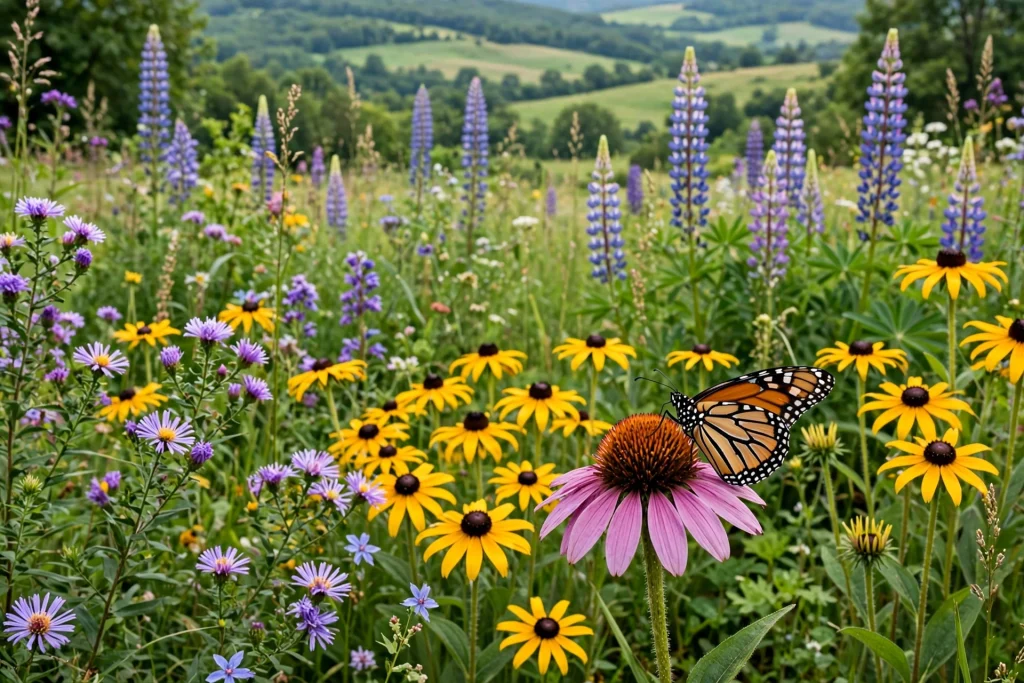
For Northeast gardeners, this is the one to buy. American Meadows formulates its regional mix with 19 species: 8 annuals, 7 perennials and 4 biennials. American Meadows’ headline counts the biennials with the perennials, giving ‘8 annuals + 11 perennials’. Named species include New England aster, perennial lupine, purple coneflower, black-eyed Susan, lance-leaved coreopsis, Indian blanket and wild blue flax.
The regional logic is the point. A regional mix can improve the chances of success because its species are selected with local growing conditions in mind. A generic blend may contain flowers that are less suited to your climate. This one is built for Connecticut, Delaware, Maine, Maryland, Massachusetts, New Hampshire, New Jersey, New York, Pennsylvania, Rhode Island, Vermont and West Virginia. The mix blooms from spring until frost, so bees emerging in April and butterflies flying in September both find food.
Verified specifications: 19 species: 8 annuals, 7 perennials and 4 biennials. American Meadows’ headline counts the biennials with the perennials, giving ‘8 annuals + 11 perennials’. Region: Northeast United States. Bloom: spring to frost. 100 percent pure seed, no filler. Source: regional mix comparison chart, Cornell Cooperative Extension Suffolk County and American Meadows product page.
Real-world limitation: American Meadows does not publish a single coverage figure for this pollinator mix, so you cannot work out exactly how many bags a given area needs from the product page alone. Ask the seller for the sowing rate for your area before ordering, and expect a first year that leans heavily on the annuals while the perennials establish.
Who should buy: Northeast gardeners planting a meadow or a large border who want a mix suited to their region and are willing to wait a season for the perennials to show their full value.
2. Burpee Wildflower 25,000 Bulk Pollinator Garden Mix
Our rating: 8.8/10
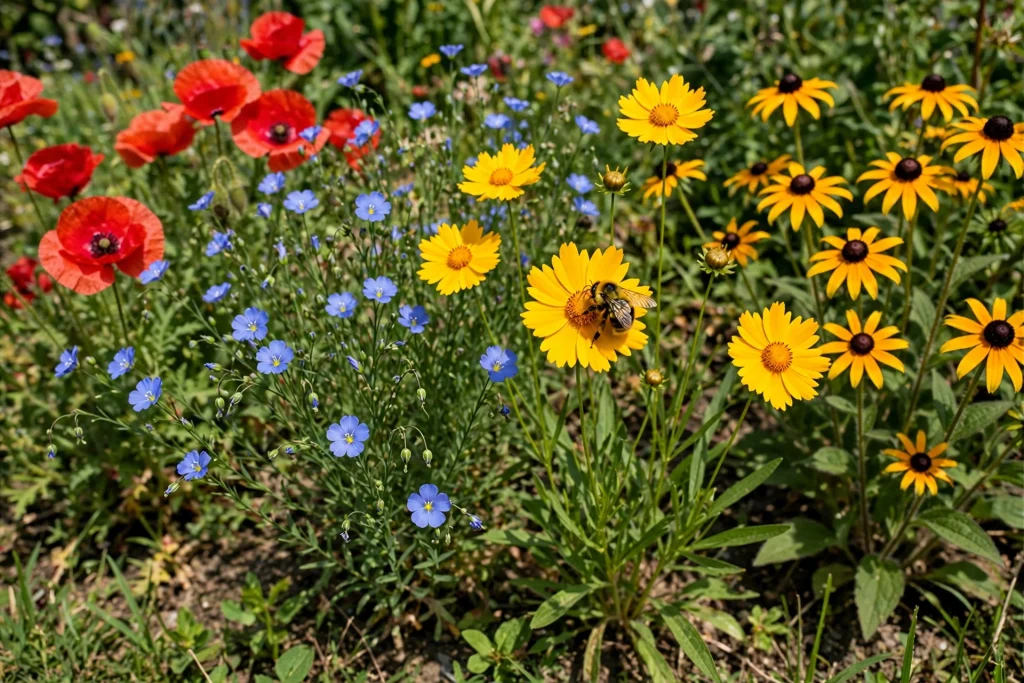
Burpee is the straightforward single-bag choice, and it is also the mix Agribloom already covers on its own product page. One bag holds at least 25,000 non-GMO seeds across 18 varieties, listed to cover up to 1,000 square feet. The named varieties are Yarrow, Alyssum, English Daisy, Calendula, Siberian Wallflower, Shasta Daisy, Coreopsis, Sweet William, Purple Coneflower, California Poppy, Perennial Gaillardia, Annual Baby’s Breath, Blue Flax, Perennial Lupine, Iceland Poppy, Prairie Coneflower, Black-Eyed Susan and Viola. It is a blend of annuals and perennials, so colour starts in year one and the perennials keep the bed going.
Burpee states its germination rates run 35 percent higher than industry standards. That is a maker claim, not an independent measurement, and it should be read as one. The mix needs full sun and moderate watering, with the soil kept moist for the first few weeks while seedlings establish. For a beginner, this is the easiest first buy in the roundup: the sowing instructions are simple, the bag covers a real area, and the species are familiar garden flowers.
Verified specifications: 18 varieties, at least 25,000 seeds per bag, coverage up to 1,000 sq ft, full sun, non-GMO. Amazon ASIN: B077X5J87W. Agribloom product page: https://sayedzahurahmed.com/product/burpee-wildflower-seeds/ Source: Amazon listing.
Real-world limitation: The mix is a general blend, not a regional one, so some species will suit your climate better than others. In a hot, dry yard or a cold northern one, expect a few varieties to underperform while the hardy ones dominate. It also needs full sun, so a partly shaded bed is the wrong place for it.
Who should buy: Gardeners with a large sunny patch who want maximum coverage from one bag, and beginners who want the simplest possible first wildflower sowing.
3. Eden Brothers Pollinator Wildflower Seed Mix
Our rating: 8.7/10
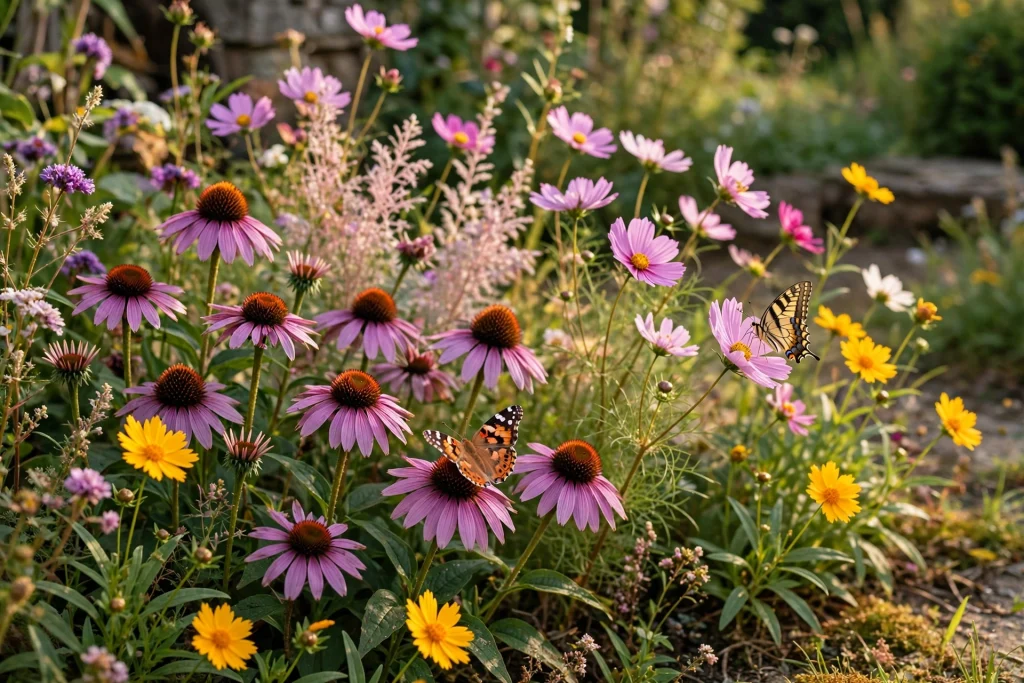
Eden Brothers’ no-filler blend makes its case on purity. It is 100 percent pure, non-GMO seed with no inert fillers, which means the weight you buy is all seed. That matters more than it sounds, because some bulk mixes are padded with carrier material that adds weight without adding flowers. The blend mixes annuals and perennials chosen to bloom in succession from spring through autumn, with named favourites including purple coneflower, cosmos and lance-leaf coreopsis.
The headline figure is coverage. Eden Brothers lists 1 pound of this mix as covering 1,000-2,000 square feet, roughly double the coverage Burpee claims per bag, though the two bags hold different amounts of seed. The mix suits zones 3 to 9 and can be sown in spring or fall. Eden Brothers also publishes a full range of regional mixes, Northeast, Midwest, Southeast, Western and others, each with its own species list, so check whether a regional version fits your garden better before you order.
Verified specifications: 18 varieties, published on the Eden Brothers product page, 50% annual / 50% perennial, with the full species list printed. 100 percent pure, non-GMO seed, no fillers. 1 lb covers 1,000-2,000 sq ft. Zones 3-9. Spring or fall sowing. Source: Eden Brothers product page.
Real-world limitation: The Bees Knees Pollinator Wildflower Seed Mix covers approximately 1,000 to 2,000 square feet, depending on the sowing rate. Gardeners aiming for a dense, meadow-style display may need to use more seed and cover less ground than the maximum coverage figure suggests. Although the mix lists 18 varieties with a 50/50 annual-to-perennial balance, gardeners should still check the species list to make sure the flowers are suitable for their local growing conditions.
Who should buy: Gardeners who want pure seed with no filler and a high coverage figure, and anyone sowing a large area where seed weight per square foot is the deciding factor.
4. Outsidepride Pollinator Wildflower Seed Mix
Our rating: 8.6/10
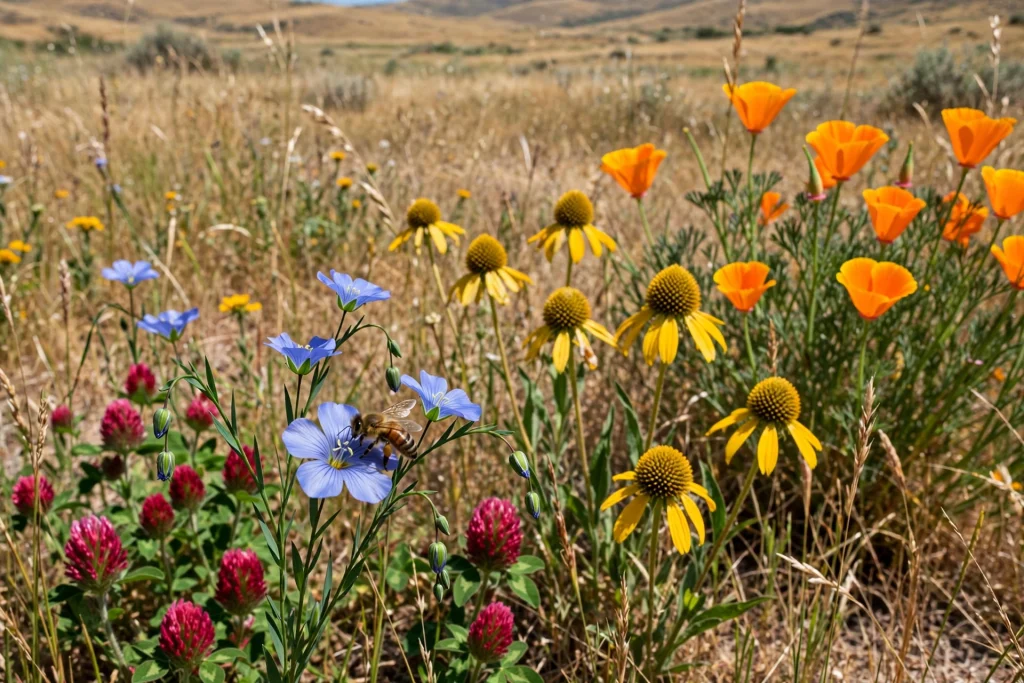
Outsidepride earns its place here on transparency. Its mix lists 27 named species with percentages, from blue flax at 7 percent and carousel sunflower at 6 percent down to butterfly milkweed, wild bergamot and prairie aster at 1 percent each. Few makers publish that level of detail. The mix also includes crimson clover, cosmos, partridge pea, black-eyed Susan, lacy phacelia, lemon bee balm and New England aster.
The growing facts are equally complete. Plants reach 24 to 36 inches, the mix suits full sun to partial shade, it covers USDA zones 3 to 10, and germination takes 7 to 30 days at soil temperatures above 55 degrees Fahrenheit. The sowing rate is 1/4 pound per 625 to 1,250 square feet. Seed goes no deeper than 1/4 inch, and the soil must stay moist until germination. That completeness is why this mix scores well despite a lower profile than Burpee or Eden Brothers.
Verified specifications: 27 named species. Height 24-36 in. Zones 3-10. Full sun to partial shade. Sowing rate 1/4 lb per 625-1,250 sq ft. Germination 7-30 days. Sowing depth 1/4 in or less. Source: Outsidepride product page.
Real-world limitation: With 27 species in one bag, a small sowing will not show all of them. Some species will dominate in your soil while others barely appear, so the meadow you get is a sample of the list rather than the full list. The mix also needs steady moisture until germination, which means a dry spring sowing can fail without watering.
Who should buy: Gardeners who want a fully published species list, and anyone who wants every species and its percentage printed.
5. Ferry-Morse Bee Feed Wildflower Seed Mix
Our rating: 8.5/10
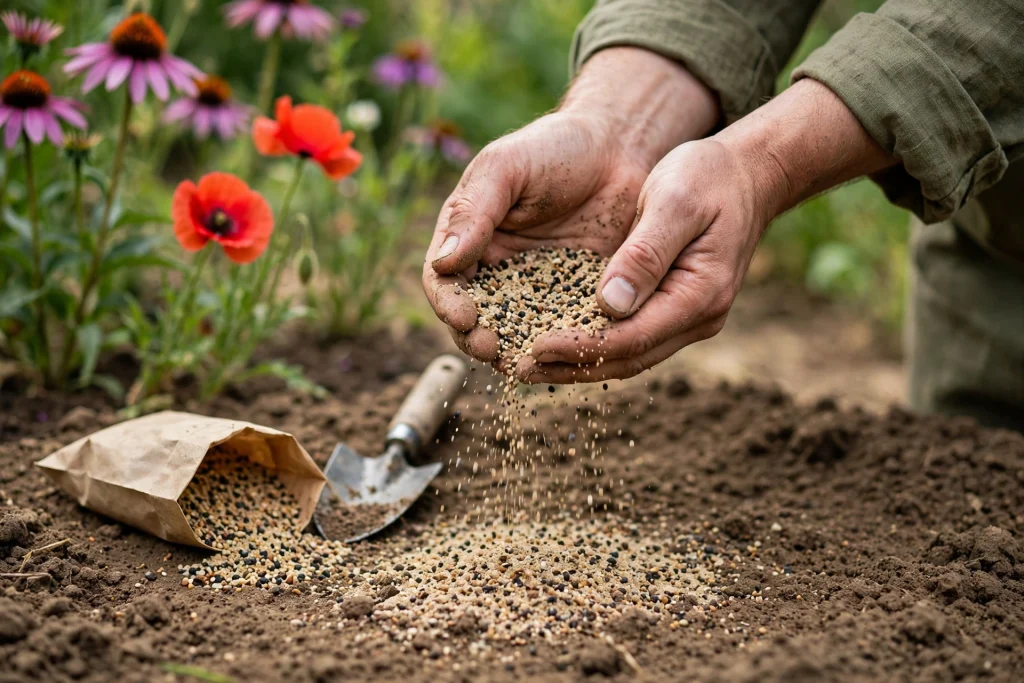
Ferry-Morse built this one for bees first. It holds annual and perennial flowers, with a mix of species that bloom in early, mid and late season. The mix holds 17 species, named by percentage, starting with 20 percent Chinese forget-me-not, 15 percent corn poppy, 13 percent annual flax and 10 percent purple coneflower.
The numbers are the strongest in this roundup for large plots. A 1 pound bag holds approximately 680,000 to 720,000 seeds and covers 3,623 to 7,247 square feet, depending on sowing density. Ferry-Morse states the range as high-density to low-density sowing: 3,623 sq ft at dense sowing, 7,247 sq ft at sparse sowing.
Verified specifications: 1 lb bag, approximately 680,000-720,000 seeds, 1 lb coverage 3,623-7,247 sq ft per the manufacturer. Published contents by percentage. Early, mid and late bloom. Non-GMO, neonicotinoid-free. Source: Ferry-Morse product page.
Real-world limitation: Buy for the lower end of the range if you want dense cover, because the manufacturer’s range runs from high-density to low-density sowing. The mix is also weighted toward small-seeded species, so the flowers are mostly light, airy types rather than big showy blooms, and the first year can look sparse until the perennials fill in.
Who should buy: Beekeepers looking for a mix for large plots, especially anyone who wants a published seed count and a per-species contents list.
6. Hancock Seed Eastern Pollinator Wildflower Seed Mix
Our rating: 8.4/10
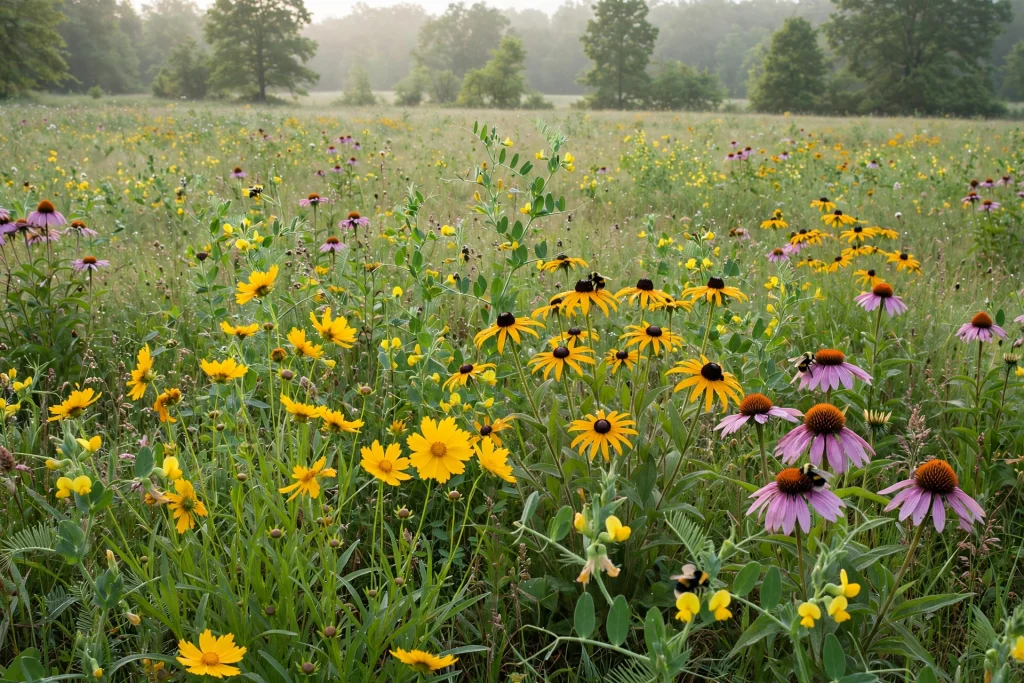
Hancock Seed aims this blend squarely at pollinator conservation in the eastern United States and southeast Canada, with the western boundary drawn as a line straight south from the eastern borders of North and South Dakota. The blend is mostly native flowers, with annuals and perennials mixed so nectar and pollen are available through the growing season, and it includes 3 native legumes. Named contents include lanceleaf coreopsis, bachelor’s buttons, perennial lupine, purple coneflower, partridge pea, rocket larkspur, corn poppy, Indian blanket, lemon mint, California poppy, black-eyed Susan and Dwarf Blue.
The sowing rate is 2 pounds per 4,000 square feet, or 22 to 26 pounds per acre. That is a heavier rate than the garden-scale mixes in this roundup, which tells you who it is for: larger plantings, field edges and conservation plots rather than a single small bed. The seed is non-GMO. Hancock notes that the exact varieties in a lot can change with seed availability, so check the current lot label if a particular species matters to you.
Verified specifications: 2 lb per 4,000 sq ft, or 22-26 lb per acre. Mostly native species, eastern US and southeast Canada. Includes 3 native legumes. Annuals and perennials. Non-GMO. Source: Hancock Seed product page.
Real-world limitation: The heavier sowing rate makes this an expensive choice for a small garden bed, and the lot-to-lot variation means the exact species you receive can differ from the published list.
Who should buy: Eastern gardeners who want a blend for native conservation planting on a large area, rather than just colour.
7. Applewood Seed Eastern Pollinator Mix
Our rating: 8.3/10
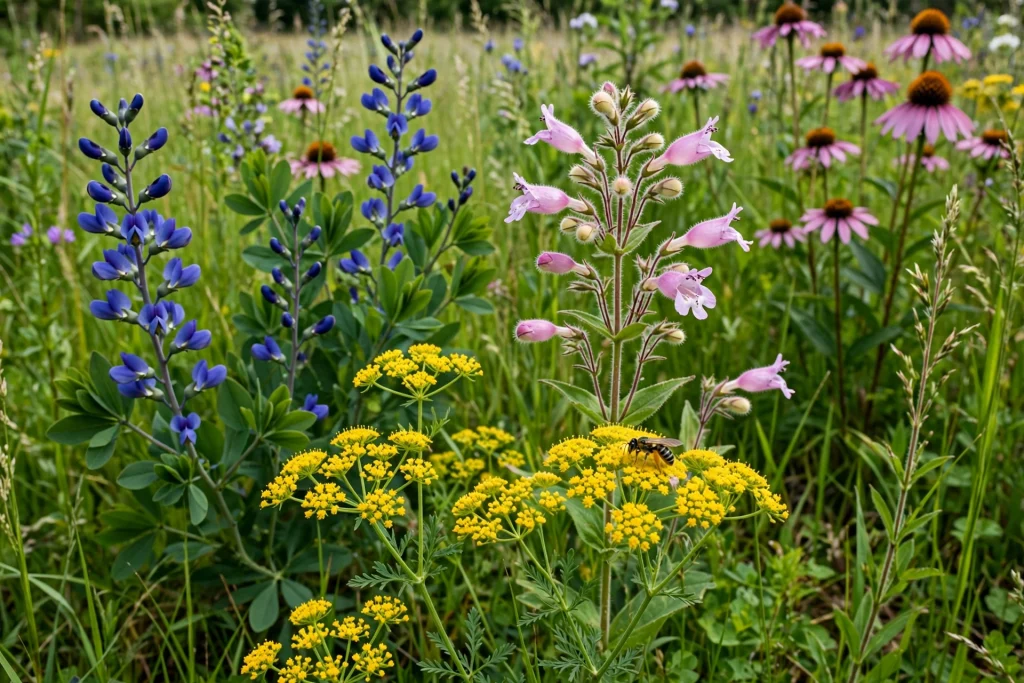
Applewood Seed Company has spent years testing which flowers different pollinators actually visit, and its Eastern Pollinator Mix shows that work. The published list holds 18 native annuals and perennials for the eastern United States and southeastern Canada, including black-eyed Susan, blue wild indigo, brown-eyed Susan, evening primrose, golden Alexander, gray goldenrod, hairy beardtongue, Indian blanket, lance-leaved coreopsis, lavender hyssop, lemon mint, New England aster, Ohio spiderwort, partridge pea, plains coreopsis, purple coneflower, showy tick trefoil and spotted beebalm.
Applewood’s own guidance on pollinator mixes is worth reading alongside the product. The company notes that diverse mixes beat single-species plantings for bees, and that a good mix needs early, mid and late blooming flowers plus varied flower shapes and sizes to serve the widest range of pollinators. Planting times are spring and fall.
Verified specifications: 18 species. Planting times: spring and fall. Full sun. Source: Alliance of Native Seedkeepers species record, Applewood’s pollinator guide and Applewood product page.
Real-world limitation: Applewood’s own notes say mixture contents can vary with species availability, so the published 18 may shift between lots. The mix is sold for larger areas, so small packets are uneconomical.
Who should buy: Eastern gardeners who want a native-only meadow, backed by pollinator research.
8. Ernst Conservation Seeds Mesic to Dry Native Pollinator Mix
Our rating: 8.2/10
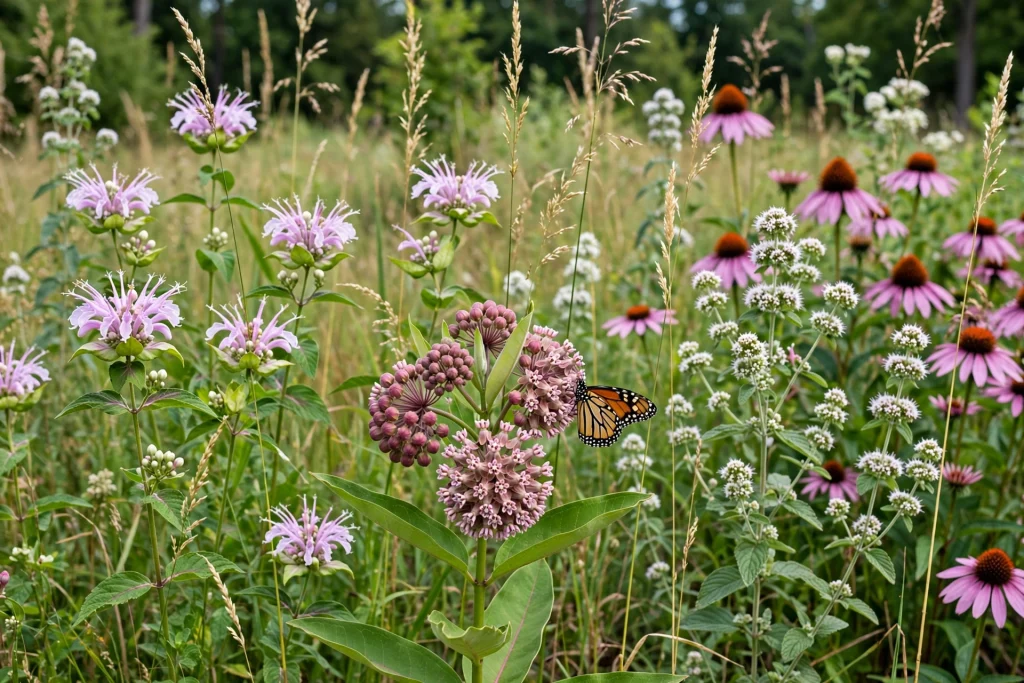
Ernst Conservation Seeds is the conservation professional’s choice at restoration scale. The Mesic to Dry Native Pollinator Mix is built for mesic to dry sites in full sun or light shade, and Ernst designs its pollinator mixes to the guidelines of Penn State’s Center for Pollinator Research. Those guidelines call for a mix with more than five plant families, more than three species blooming in each season, milkweed for monarch butterflies, and a target of around 26 species.
The July 2026 Ernst mix sheet ERNMX-105 lists the top species by weight: Little Bluestem ‘Camper’ 29.5%, Virginia Wildrye 20%, Indiangrass 14%, Deertongue 5%, Purple Coneflower 7.5%, Tall White Beardtongue 3.5%, Lanceleaf Coreopsis 3%, Blackeyed Susan 3%, Blue Vervain 2.7% and Oxeye Sunflower 1.5%. Golden Alexanders is one of the earliest blooming species Ernst carries, sometimes flowering before the snow has finished, which makes it a key early-season food source. This is not a casual garden purchase: Ernst sells by the pound for restoration-scale plantings.
Verified specifications: 29 species (4 grasses, 25 forbs), seeding rate about 20 lb per acre, per the July 2026 Ernst mix sheet ERNMX-105. Follows Penn State Center for Pollinator Research guidelines. Mesic to dry sites, full sun to light shade. Includes milkweed for monarchs. Bloom spring through first frost. Source: Ernst product page and ERNMX-105 mix sheet.
Real-world limitation: Ernst publishes a restoration-scale rate (20 lb per acre) and a full mix sheet, but no per-bag garden coverage figure, so a garden buyer still cannot work out bags-per-bed from the product page. The restoration-scale packaging suits large projects better than a single bed. Ask Ernst for the current lot details before ordering.
Who should buy: Landowners and groups who want a blend for restoration-scale planting in the eastern United States, especially where monarch habitat is part of the goal.
9. Nature’s Seed Texas Pollinator Wildflower Mix
Our rating: 8.1/10
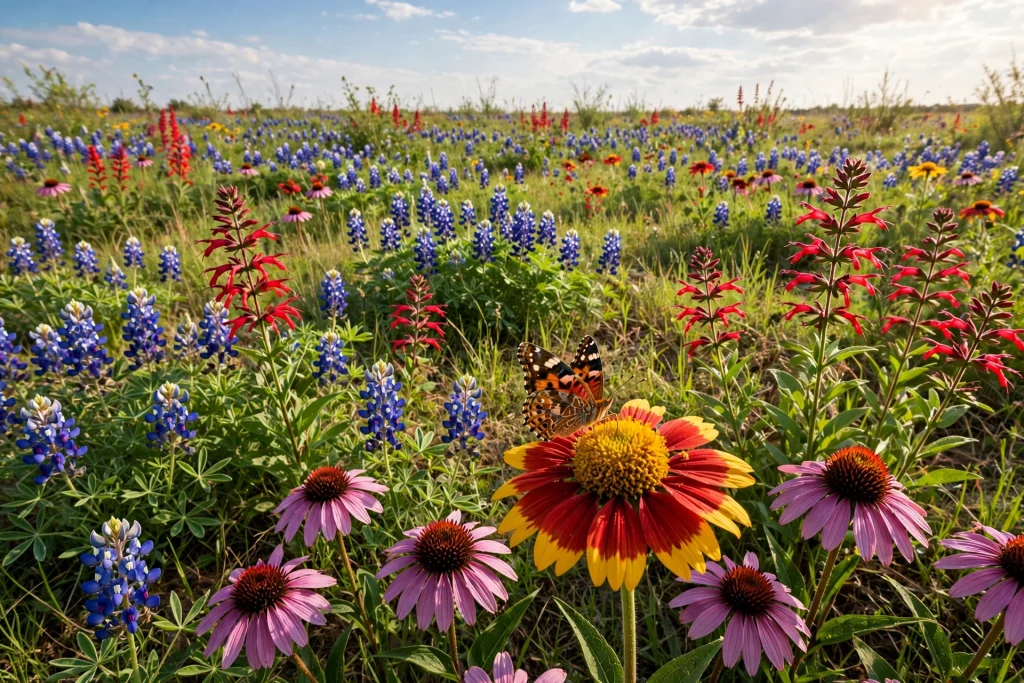
This is the most regionally specific Texas mix in this roundup, and it is also the smallest list, with only 8 species. The species are listed as: Indian Blanket 18%, Texas Bluebonnet 15%, Lemon Beebalm 15%, Butterfly Milkweed 12%, Purple Coneflower 12%, Spiked Gayfeather 10%, Scarlet Sage 10%, Partridge Pea 8%, as listed on the Nature’s Seed product page, November 2026. The page’s ‘What’s in This Mix’ box shows a conflicting 7-entry breakdown, so this article follows the 8-species list the page states in its questions section and body text.
The small list is a deliberate choice. Each species has a job in the bloom calendar. Texas bluebonnet opens the season in spring. Lemon beebalm, Indian blanket and scarlet sage carry spring and summer. Purple coneflower and spiked gayfeather hold through the summer heat. Partridge pea adds late-summer resources. Monarch caterpillars depend on milkweed in the genus Asclepias; butterfly milkweed (Asclepias tuberosa) is one of them (Monarch Joint Venture). Lemon beebalm draws native bees; scarlet sage draws hummingbirds. Plants range from 6 inches to 5 feet tall, so the finished meadow has real layers.
Verified specifications: 8 species with published percentages. Seeding rate: 0.5 lb per 1,000 sq ft (approximately 125 sq ft per ounce). Height: 6 in to 5 ft. All species are native to or adapted for Texas. Seed lot composition may vary, so check the packet label before sowing. Source: Nature’s Seed product page.
Real-world limitation: Eight species is a narrow palette, and the mix is useless outside Texas and similar climates. If you garden in Texas but want a wider variety of flowers, this mix will feel plain next to a 19 or 27 species blend. Its strength is regional fit, not diversity.
Who should buy: Texas gardeners who want a mix for their state, especially anyone planting for monarchs, native bees and hummingbirds together.
10. Vermont Wildflower Farm Deluxe Pollinator Wildflower Seed Mix
Our rating: 8.0/10
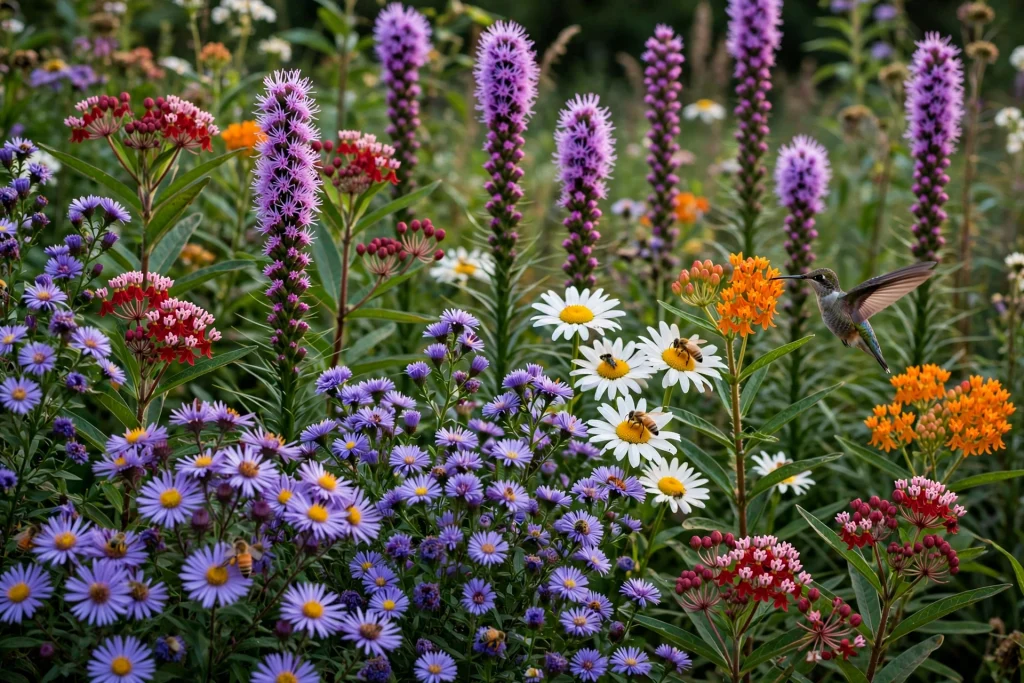
Vermont Wildflower Farm takes its standard regional mix and adds late blooming perennials, natives and rarer species to build its cold-climate blend, including New England aster, perennial sunflower, showy red milkweed and butterfly weed. The result is the Deluxe Pollinator Wildflower Seed Mix, with 29 listed entries (28 distinct species, Siberian wallflower appears twice in the maker’s own table), 14 perennials, 10 annuals and 4 biennials, with a higher share of perennials than the standard mix. It is hand packed with 100 percent pure, fresh seed that is non-GMO and neonicotinoid and chemical free.
The published species table names each flower with its life cycle and height, from red milkweed at 2 to 5 feet and butterfly weed at 2 to 3 feet to Shasta daisy, lance-leaf coreopsis, purple coneflower, gayfeather, perennial lupine and wild cosmos. Coverage is 1 pound per 1,000 to 2,000 square feet, or 30 pounds per acre, and the mix suits zones 2 to 9, the widest cold tolerance in this roundup. That cold tolerance is the real reason to pick it: gardeners in zones 2 and 3 have few wildflower mixes to choose from, and this one is built for them.
Verified specifications: 29 listed entries (28 distinct species, Siberian wallflower appears twice in the maker’s own table), 14 perennials, 10 annuals and 4 biennials. Coverage 1 lb per 1,000-2,000 sq ft, 30 lb per acre. Zones 2-9. Non-GMO, neonicotinoid-free, 100 percent pure seed. Source: Vermont Wildflower Farm product page.
Real-world limitation: The mix is a Vermont farm product with a regional heart, so gardeners far outside the Northeast may find some species less at home, even with the wide zone rating. The coverage range is also broad, 1,000 to 2,000 square feet per pound, so the amount you need depends heavily on how dense you sow.
Who should buy: Cold-climate gardeners who want a mix for zones 2 to 4, and anyone who wants the highest species count in this roundup with a strong perennial backbone.
Best Wildflower Mix for Bees
Bees are the reason most gardeners sow wildflowers in the first place, and not all mixes serve them equally. A mix that serves bees well has three qualities: a long bloom sequence, varied flower shapes, and species that native bees actually use.
Bloom sequence comes first. Different bee species emerge at different times of the year, so a mix that flowers only in July leaves spring bees hungry and autumn bees with nothing. Look for mixes that name early, mid and late blooming species, as Ferry-Morse Bee Feed does, or that state a bloom period of spring to frost, as American Meadows and Outsidepride do.
Flower shape comes second. Short-tongued native bees feed best on open, daisy-like flowers such as coreopsis, black-eyed Susan and coneflower. Long-tongued bumblebees and butterflies can work deeper, tubular flowers such as beardtongue, bergamot and lupine. A mix with both shapes feeds both groups. The Xerces Society’s Upper Midwest plants for native bees fact sheet puts it plainly: ‘Bees are all different sizes, have different tongue lengths, and will feed on different shaped flowers. Consequently, providing a range of flower shapes means more bees can benefit.’
Native species come third. The Xerces Society notes that native plantings support far more pollinator species than ornamental cultivar beds, and university Extension guidance consistently recommends native-heavy mixes for pollinator habitat. The Xerces Society’s Upper Midwest plants for native bees fact sheet reports that research suggests native plants are four times more attractive to native bees than exotic flowers. Two practical notes: never spray a pollinator patch with insecticide while flowers are open, and leave the patch standing through winter, since many native bees nest in hollow stems and bare ground. The Xerces Society’s guide, ‘How to Maximize Benefits to Pollinators in Cities and Towns‘, notes that ‘native plants do the best job of supporting the widest array of native pollinators’ and that ‘roughly one-third of bee species will only collect pollen from particular native plants.’ The same guide advises leaving flower gardens intact over winter and pruning them back in spring at heights of 6 to 12 inches.
Regional Wildflower Seed Mixes
A regional version of a seed mix is the single biggest upgrade over a generic packet. The difference is not just the name on the bag: regional mixes are built from species that can handle your winters, your summers and your soil. They bloom at the right time for your pollinators, and they keep reseeding in your climate. A generic mix may contain species that are poorly suited to your local growing conditions, while some non-native species can become problematic in certain regions. Checking the species list against local recommendations helps reduce these risks.
Start with your USDA zone and your state, then look for a mix named for your region. American Meadows sells Northeast, Southeast, Midwest, West and other regional mixes. Eden Brothers does the same, with regional versions alongside its general pollinator mix. Several makers sell regional versions as well. For vegetable gardeners, the same regional thinking applies to food crops, and our roundup of the best vegetable seeds to buy online follows the same principle of matching the variety to the garden.
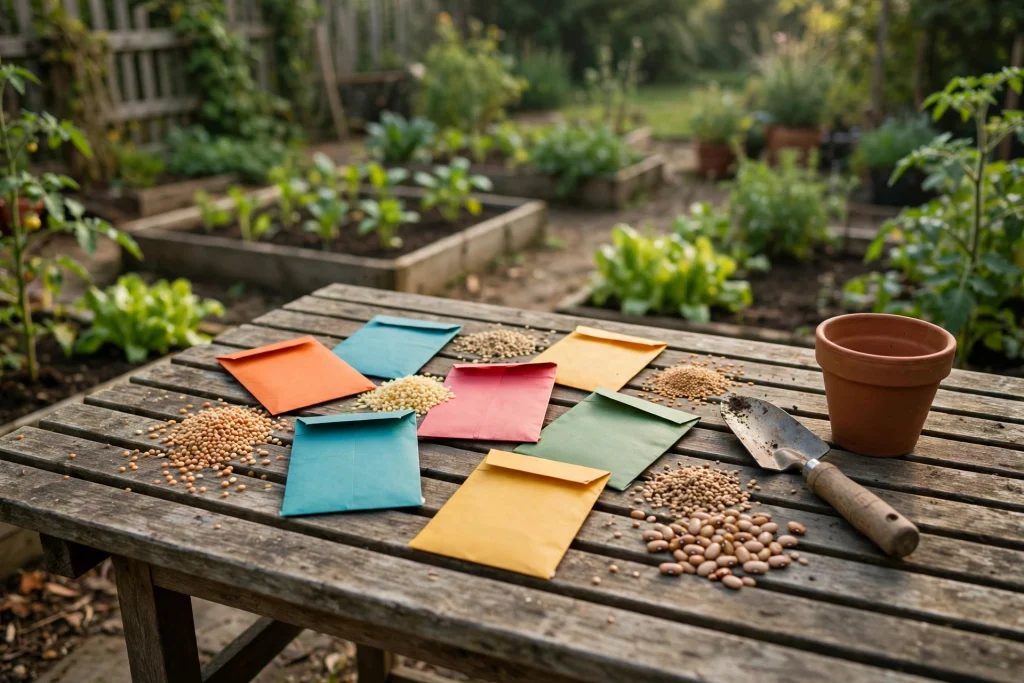
A warning: a mix labelled “wildflower” is not automatically regional or native. Some cheap mixes are mostly annuals from other continents, chosen for bright colour rather than local fit. Check the species list of any mix, and if the maker does not publish one, treat that as a gap. If a species on the list is listed as invasive in your state, do not sow it. Your state Extension service publishes invasive lists, and a quick check costs nothing.
Regional mixes are formulated for the growing conditions of a particular region, but that does not automatically mean every species in the blend is native to that area. 5 of the 19 species are Eurasian (cornflower, Siberian wallflower, sweet William, red poppy, catchfly) and 2 more (four o’clock, plains coreopsis) are native elsewhere in the Americas, not the Northeast.
How to Plant a Wildflower Meadow
Planting a wildflower meadow from the right mix for your region is mostly preparation. The seed itself is the easy part. What decides whether you get a meadow or a patch of weeds is the ground you sow into, the timing, and the first few weeks of care. The steps below work for every mix in this roundup, from the small Texas mix to the restoration-scale Ernst mix.
Step 1: Choose the site. Pick open ground with full sun for most of the mixes in this roundup. The University of New Hampshire Extension fact sheet on establishing a wildflower meadow from seed says to consider 400 square feet to be a minimal size, since that space can support a good diversity of species, though a smaller patch is still valuable. Wildflowers generally prefer low fertility sites, so rich, heavily fertilised ground is not an advantage. Avoid places with a history of pre-emergent herbicide use, since residues can stop germination.
Step 2: Clear the ground. Remove existing grass and weeds completely. The Xerces Society guide on establishing pollinator meadows from seed is blunt about this: site preparation cannot be overemphasised, and one to two years of preparation may be needed on weedy ground. Smothering with black plastic over a summer, repeated shallow tilling, or sod removal all work. For a small patch, a sod cutter rented from a hardware store is the fastest honest method.
Step 3: Prepare a firm seedbed. Rake the bare soil smooth and firm it by walking over it or rolling it. Wildflower seed needs good contact with the soil, but it must not be buried. Most species germinate on or just below the surface.
Step 4: Mix and sow. Mix the seed with dry sand or vermiculite, about 2 to 3 parts carrier per part seed by volume, so you can see where it lands. Sow the pollinator mix at the rate on the packet. If you start flowers indoors, our guide to the best seed starting mix covers the soil and containers for that job.
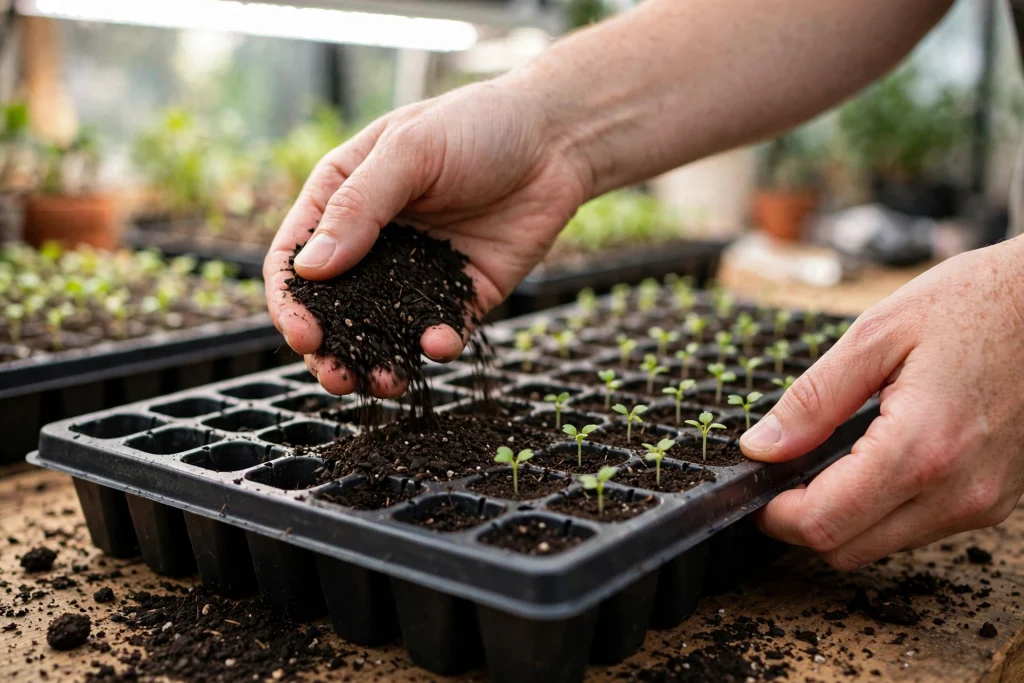
Step 5: Press, do not bury. Walk over the sown area or roll it lightly so the seed touches the soil. Most wildflower seed should sit no deeper than 1/4 inch. Burying it is the most common beginner mistake.
Step 6: Water gently. Keep the area lightly moist until germination, which takes 7 to 30 days for most species in these mixes. A fine mist or gentle sprinkler is right. A hard jet washes seed away.
When to Sow Wildflower Seeds
There are two reliable windows for sowing, and the right one depends on what is in your mix.
Fall sowing, late September to December. This is the preferred method for perennial mixes in most of the United States. Many native perennial seeds need cold stratification, a period of cold, moist conditions, before they germinate. Fall sowing gives them that winter chilling for free. The University of New Hampshire Extension puts the New England fall window at late September through early December. In the Northeast, American Meadows recommends dormant seeding in November to December, after the first frost but before heavy snow. In warmer zones, sow later in the season, November to December in zones 8 to 10.
Spring sowing, after the last frost. This works well for annual mixes and for gardeners who missed the fall window. Sow when the soil has warmed, typically mid-April to May in zones 6 and 7, and May to early June in zones 3 to 5. Annuals sown in spring bloom the same year. Perennials sown in spring may germinate slowly or unevenly, because they missed their winter chilling, and many will not flower until the following year.
A practical rule: if your mix is mostly perennials, sow in fall. If it is mostly annuals, sow in spring. If it is a balanced mix, either window works, though fall gives the perennials a head start.
Annual vs Perennial Wildflowers
Annual wildflowers complete their life in one season. They germinate, flower, set seed and die in a single year. Perennials live for several years, returning from the same roots each spring. Biennials sit between the two, growing leaves in year one and flowering in year two.
Annuals give instant colour. Corn poppy, cosmos, cornflower and plains coreopsis can flower within weeks of sowing, which is why every mix in this roundup includes some. They also self-sow if you let the flowers go to seed, so a patch can renew itself without replanting. Their weakness is that they need bare soil to reseed, so a thick perennial stand can crowd them out over time.
Perennials are slow and then generous. Purple coneflower, black-eyed Susan, lupine, gayfeather and New England aster often spend their first year building roots and flower lightly or not at all. In year two and beyond, they bloom heavily and return every season with almost no work. Their weakness is patience: a perennial-only sowing looks thin in year one, and a gardener who expects instant meadow will be disappointed.
For many home gardens, a mix of annuals and perennials offers a practical balance between first-year colour and longer-term blooms. However, the ideal composition depends on the region, growing conditions and the gardener’s goals. The American Meadows Northeast mix does this openly, with 8 annuals, 7 perennials and 4 biennials. Vermont Wildflower Farm states the same logic for its Deluxe mix, with a higher perennial share for gardeners who want staying power.
Wildflower Lawn Alternative
A wildflower patch can replace part of a lawn, but it is not a drop-in swap. The trade is real, and it is worth stating plainly.
What you gain: far less mowing, no fertiliser, almost no watering once established, and a yard that feeds pollinators instead of just covering ground. A dense, diverse meadow also needs virtually no inputs after establishment, according to University of New Hampshire researchers who ran wildflower meadow trials for nearly a decade.
What you lose: a surface you can walk on, play on, or sit on. Wildflower meadows are not lawns. The plants grow 2 to 5 feet tall, the ground is uneven, and the look is informal, even untidy at times. The University of New Hampshire Extension advises siting a meadow where it will be viewed from a distance of several metres, and keeping a mowed border around it so the planting reads as intentional rather than neglected.
The practical middle ground is a partial replacement. Convert a sunny strip, a slope that is hard to mow, or a back corner, and keep the lawn where people actually walk. Start with 400 square feet of a pollinator mix suited to your region if you can, but even 100 square feet of wildflowers feeds pollinators. If the patch sits in a raised bed area, the soil you fill it with matters too, and our guide to the best raised bed soil mixes covers that side of the job.
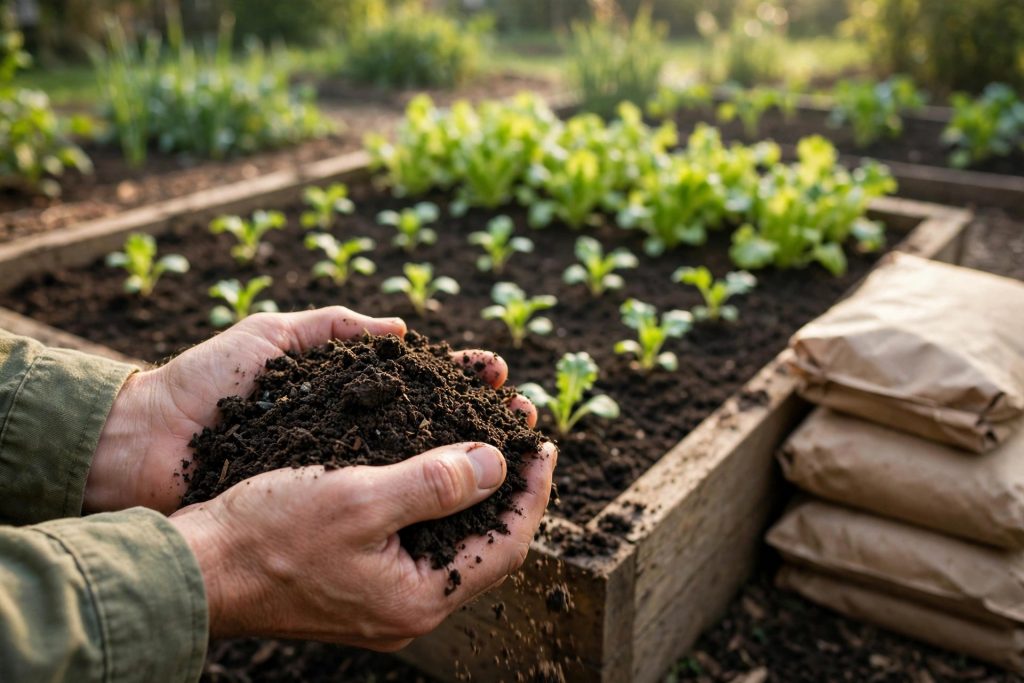
One caution: check local rules before you convert a front yard. Some towns and homeowners associations have height limits for plantings, and a mowed edge and a small sign naming the planting as pollinator habitat usually keep neighbours friendly.
How We Chose the Best Wildflower Seed Mix
We did not test these mixes hands-on. No seeds were sown for this guide, and no germination counts were taken. Scores come from an analysis of manufacturer specifications and published product information only, using the factor weights below. No hands-on testing was done and no retailer review scores were used in the ratings. That is the honest basis for every rating in this article, and it is stated here rather than hidden.
Scoring system
| Factor | Weight | What it measures |
|---|---|---|
| Species diversity | 25% | Number of named species and the balance of annuals and perennials |
| Regional fit | 20% | Whether the mix is formulated for a specific region or is a general blend |
| Pollinator value | 20% | Bloom sequence, flower shape variety, and native and milkweed content |
| Germination and coverage clarity | 15% | Whether the maker publishes germination, sowing rate and coverage figures |
| Ease of sowing | 10% | How simple the sowing instructions are for a beginner |
| Value | 10% | Seed count and coverage per bag relative to the range in this roundup, judged on each maker’s own stated figures. No prices are used, so value here means how much seed and coverage a bag gives, not cost per square foot. |
| Total | 100% |
Scoring breakdown
| Product | Diversity | Regional fit | Pollinator value | Germination and coverage | Ease of sowing | Value | Weighted total |
|---|---|---|---|---|---|---|---|
| American Meadows Northeast Regional Pollinator | 9 | 10 | 9 | 8 | 9 | 8 | 9.0 |
| Burpee Wildflower 25,000 Bulk Pollinator Garden | 9 | 7 | 9 | 9 | 10 | 10 | 8.8 |
| Eden Brothers Pollinator | 9 | 8 | 9 | 8 | 9 | 9 | 8.7 |
| Outsidepride Pollinator | 9 | 8 | 9 | 8 | 8 | 9 | 8.6 |
| Ferry-Morse Bee Feed | 8 | 7 | 9 | 10 | 9 | 9 | 8.5 |
| Hancock Seed Eastern Pollinator | 8 | 9 | 8 | 8 | 9 | 9 | 8.4 |
| Applewood Seed Eastern Pollinator | 8 | 9 | 8 | 8 | 8 | 9 | 8.3 |
| Ernst Mesic to Dry Native Pollinator | 9 | 8 | 9 | 7 | 7 | 8 | 8.2 |
| Nature’s Seed Texas Pollinator | 6 | 10 | 8 | 8 | 9 | 9 | 8.1 |
| Vermont Wildflower Farm Deluxe Pollinator | 9 | 6 | 9 | 8 | 8 | 7 | 8.0 |
Factor scores run from 1 to 10. The weighted total is the sum of each factor score multiplied by its weight, rounded to one decimal place. A low score on germination and coverage clarity usually means the maker does not publish the figure, not that the seed is poor. Regional fit rewards mixes built for a named region, which is why the Texas mix scores a 10 on that factor despite its small species list, and why the Vermont mix scores a 6 there despite its 29 species.
The gap between 9.0 and 8.8 is narrow, and it comes down to one factor. American Meadows leads on regional fit (10 against Burpee’s 7), which is worth 0.6 of a point at that factor’s 20 percent weight. Burpee claws most of it back on ease of sowing (10 against 9) and value (10 against 8). So the ranking says American Meadows is the better pick for a Northeast garden, while Burpee is effectively tied for any garden where region matters less, and it is the simpler first purchase.
Coverage figures are not directly comparable across mixes. Makers state them in different units, square feet per bag, square feet per pound, pounds per acre, or seeds per bag, and at different sowing densities, dense versus sparse. The table repeats each maker’s own figure exactly, and the value scores compare those stated figures within this roundup, not a lab-measured cost per square foot. Treat a 0.2 gap as effectively tied unless one mix clearly fits your region or plot better.
Final Choice
If you garden in the Northeast, buy the American Meadows Northeast Regional Pollinator Wildflower Seed Mix. It is the only pick in this roundup built species by species for one region, and its 9.0 rating reflects that fit. Sow it in late fall for the strongest stand.
If you garden anywhere else, Burpee is the simplest first purchase: the Burpee Wildflower 25,000 Bulk Pollinator Garden Mix. One bag covers up to 1,000 square feet, the species are familiar, and the sowing instructions are the easiest here.
If you are a beekeeper, the Ferry-Morse Bee Feed mix is the pick for a large plot, and budget for the lower end of its coverage range. If you garden in Texas, the Nature’s Seed Texas Pollinator mix is the pick for your state, because nothing else in this roundup is tuned to your state.
Whichever mix you choose, the planting advice matters more than the brand. Clear the ground properly, sow at the packet rate, press the seed in rather than burying it, and give the perennials a full year before you judge them. A wildflower meadow is a three-year project with a first-year payoff, and the gardeners who enjoy it most are the ones who expect that rhythm from the start.
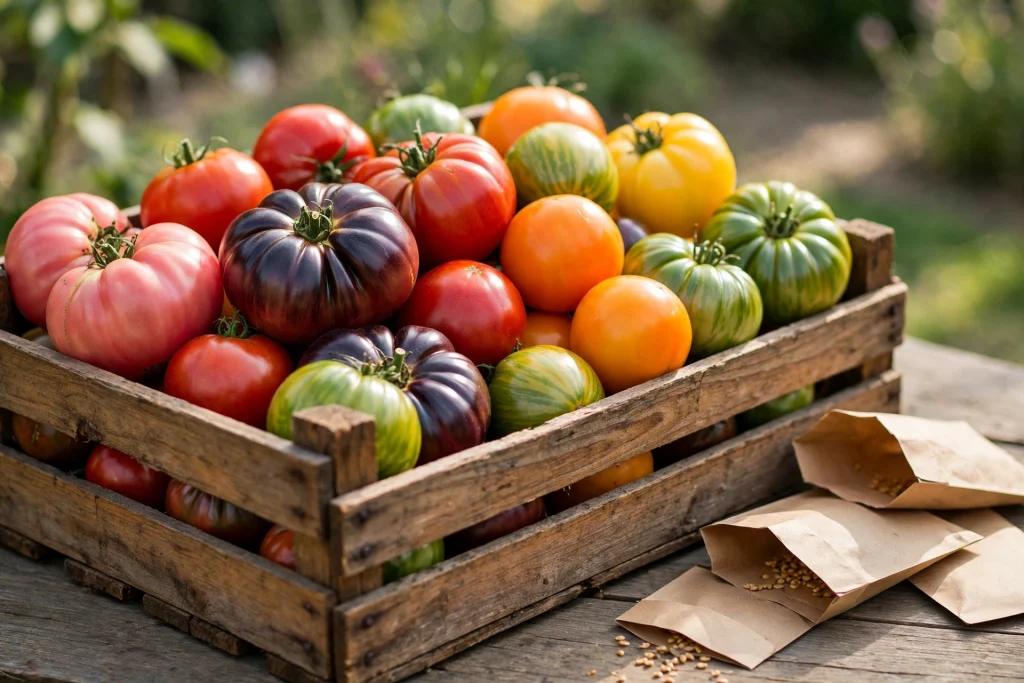
Our companion guide, 10 Best Heirloom Tomato Seeds [2026], covers the varieties worth growing alongside a wildflower patch.
References
- University of New Hampshire Extension, Planting for Pollinators: Establishing a Wildflower Meadow from Seed. Supports the 400 square foot minimum meadow size, low fertility preference, fall sowing window of late September through early December in New England, and the advice to site a meadow for viewing from a distance.
- Xerces Society for Invertebrate Conservation, Establishing Pollinator Meadows from Seed. Supports the five-step establishment process, the need for thorough site preparation and weed control, and the sowing method of mixing seed with carrier and sowing in two directions.
- American Meadows, Regional Wildflower Seed Mix Comparison Chart. Supports the species counts and annual to perennial splits for regional wildflower mixes, including 16 or more species in regional pollinator mixes.
- Ernst Conservation Seeds, Making Use of Pollinator Seed Mixes for the East Coast. Supports the Penn State Center for Pollinator Research guidelines for pollinator mixes, the key east coast species, and the role of milkweed for monarchs.
- Cornell Cooperative Extension Suffolk County, Plants for Pollinators. Supports the Northeast Pollinator Mix formulation of 19 wildflowers, 8 annuals for first-year colour and 11 perennials for later years, blooming from spring until frost.
- Monarch Joint Venture, Monarch Life Cycle. Supports the monarch caterpillar and milkweed statement in this guide.
- Nature’s Seed, Texas Pollinator Wildflower Mix. Supports the eight species and percentages in the Nature’s Seed section.
- Ernst Conservation Seeds, ERNMX-105 Mix Sheet (PDF). Supports the 29 species, the seeding rate of about 20 lb per acre and the top species by weight in the Ernst section.
- Eden Brothers, Pollinator Wildflower Seed Mix. Supports the 18 varieties, the 50% annual / 50% perennial split and the 1,000-2,000 sq ft coverage in the Eden Brothers section.
- Ferry-Morse, Bee Feed Wildflower Seed Mix. Supports the 17 species, the seed count and the 3,623 to 7,247 sq ft coverage in the Ferry-Morse section.
- Xerces Society, Upper Midwest Plants for Native Bees. Supports the claim that native plants are four times more attractive to native bees than exotic flowers, and the advice to provide a range of flower shapes for bees of different sizes and tongue lengths.
- The Xerces Society for Invertebrate Conservation, How to Maximize Benefits to Pollinators in Cities and Towns. Supports the native-plants findings and the winter-care guidance in the Best Wildflower Mix for Bees section.
Frequently Asked Questions
What is the best wildflower seed mix for pollinators?
The best wildflower seed mix for pollinators depends on your region. For the Northeast, the American Meadows Northeast Regional Pollinator mix leads this roundup at 9.0 out of 10, with 19 species and a spring to frost bloom sequence. For a general sunny garden, the Burpee Wildflower 25,000 Bulk mix is the simplest strong choice. Always pick a mix with early, mid and late blooming species so pollinators find food all season.
When should I sow wildflower seeds?
Sow in fall, from late September to December, for perennial mixes, so the seed gets natural cold stratification over winter. Sow in spring, after the last frost, for annual mixes and for gardeners who missed the fall window. In the Northeast, late fall dormant seeding in November to December works well. Do not sow in midsummer, when hot, dry soil harms germination.
How much wildflower seed do I need?
Follow the rate on the packet for your mix, because rates differ by species and seed size. As a general guide, the Xerces Society recommends 40 to 60 seeds per square foot for wildflowers and other herbaceous plants, with the exact rate set by your seed vendor. The mixes in this roundup range from 1/4 pound per 625 to 1,250 square feet for Outsidepride to 1 pound per 3,623 to 7,247 square feet for Ferry-Morse Bee Feed, so the packet rate always wins over a general rule.
Will wildflowers come back every year?
Perennials come back every year from the same roots, while annuals die after one season but often self-sow if you let the flowers set seed. A mixed blend gives you colour in year one from the annuals and a returning meadow from the perennials in year two and beyond. Perennials may flower lightly or not at all in their first year, which is normal.
Can I plant wildflowers over my existing lawn?
Wildflower seeds generally do not establish well when sown directly into an intact lawn because existing grass competes for light, water and nutrients. Although some overseeding methods can work with careful preparation, removing or suppressing the grass usually improves establishment.
Are wildflower seed mixes good for bees?
Yes, when the mix is chosen well. A good mix has a long bloom sequence, varied flower shapes for different bee species, and native species that local pollinators evolved with. Mixes with milkweed also support monarch butterflies. Avoid spraying any insecticide on a pollinator patch while flowers are open, and leave stems standing over winter for native bee nesting habitat.

Thesis Link : https://saulibrary.edu.bd/daatj/public/uploads/BAU200601_19-Pp_5.pdf
- 10 Best Wildflower Seed Mixes for Pollinators - November 21, 2026
- 10 Best Heirloom Tomato Seeds - November 20, 2026
- 10 Best Pet-Safe Slug Killers - November 20, 2026