
You set out the chairs, light the grill, and within five minutes the mosquitoes find you. Spray helps for an evening, but it does nothing about the mosquitoes living in the shrubs at the edge of your lawn. That is the job a trap is built for: to pull mosquitoes away from you and catch them, night after night, all season long.
Finding the best mosquito trap yard owners can rely on takes more care than picking the brightest light on the shelf. Mosquitoes hunt by following the carbon dioxide in your breath, your body heat, and the scent of your skin. A trap that copies those signals catches mosquitoes. A trap that only shines a light mostly catches moths. This guide sorts out the difference.
Below are 10 real traps, every one verified against its manufacturer page, instruction manual, or official product listing in November 2026. The scores come from verified specifications and published product information, not from hands-on testing. No hands-on testing was done and no retailer review scores were used in the ratings. No prices and no affiliate links appear anywhere in this article.
A trap will not make your yard mosquito free. No trap does that. What a good trap does is cut the number of mosquitoes near your patio, especially when you also remove standing water and run the trap every day. Keep that honest limit in mind as you read, and pick the trap that fits your yard, not the one with the biggest number on the box.
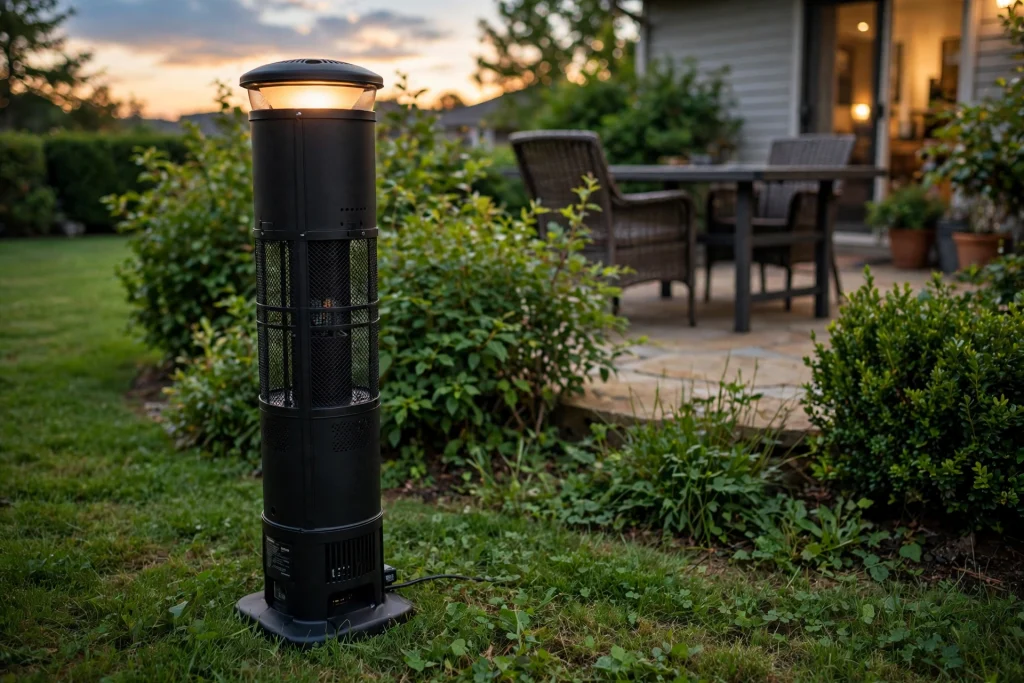
Quick Recommendation
Short on time? Start here.
- Best overall: Mosquito Magnet Executive. Cordless, smart fuel saving modes, and the strongest mosquito specific lure in this roundup. It covers up to 1 acre and you can place it exactly where the mosquitoes rest.
- Best plug in propane trap: Mosquito Magnet Patriot Plus. The same proven carbon dioxide system with a 50 foot power cord and a large rigid net, for yards with an outdoor outlet near the mosquito zone.
- Best for yards with no outlet: Mosquito Magnet Independence. It runs on 4 C batteries and a propane tank, so it goes anywhere, even at the far end of a large lot.
- Best low power scent trap: Biogents BG-Mosquitaire. It uses only 5 watts, catches mainly mosquitoes instead of moths and bees, and targets tiger mosquitoes in particular.
- Best large electric trap: DynaTrap DT2000XL. No propane and no attractant to buy, with up to 1 acre of coverage for a big yard.
- Best budget zapper: Flowtron BK-40D. A 40 watt UV bulb plus an octenol cartridge and a 5,600 volt grid, for about 1 acre.
- Skip if you want proof it works: Spartan Mosquito Eradicator. It is cheap and needs no power, but an independent study found no significant reduction in mosquitoes, and the company faces a class action lawsuit over its claims. It scores last here for that reason.
If you only buy one trap this season, match the trap type to your mosquitoes first. A propane carbon dioxide trap fits a large yard with heavy pressure. An electric fan trap fits a smaller yard where you want no fuel to manage. A zapper fits a yard where you mainly want fewer flying insects in general, not fewer mosquito bites in particular. Choosing the best mosquito trap yard setup for your space matters more than chasing the highest score on the page.
The Best Outdoor Mosquito Trap at a Glance
| Product | Best For | Type | Coverage | Our Rating |
|---|---|---|---|---|
| 1. Mosquito Magnet Executive | Large yards, no outlet nearby | Propane CO2, cordless | Up to 1 acre | 8.5 |
| 2. Mosquito Magnet Patriot Plus | Large yards with an outlet | Propane CO2, plug in | Up to 1 acre | 8.3 |
| 3. Mosquito Magnet Independence | Far corners, no power at all | Propane CO2, battery | Up to 1 acre | 8.2 |
| 4. Biogents BG-Mosquitaire | Tiger mosquitoes, low power | Scent lure and fan | Up to 300 sq yd | 7.8 |
| 5. DynaTrap DT2000XL | Big yards, no fuel | Electric UV and fan | Up to 1 acre | 7.5 |
| 6. Flowtron BK-80D | Very large yards | Electric UV zapper | Up to 1.5 acres | 7.4 |
| 7. DynaTrap DT1750 | Mid size yards, brighter lure | Electric UV and fan | Up to 3/4 acre | 7.3 |
| 8. DynaTrap DT1050 | Small yards and patios | Electric UV and fan | Up to 1/2 acre | 7.1 |
| 9. Flowtron BK-40D | General flying insects, 1 acre | Electric UV zapper | Up to 1 acre | 7.0 |
| 10. Spartan Mosquito Eradicator | No power, low cost trial | Yeast CO2 tube | Up to 1 acre per set | 6.0 |
1. Mosquito Magnet Executive
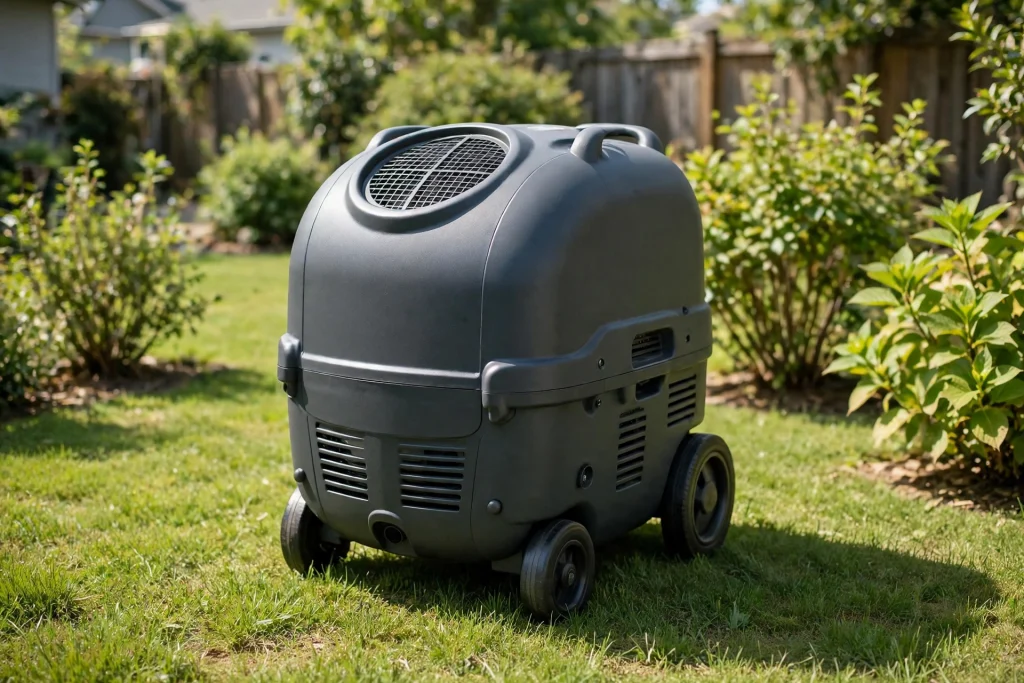
The Executive is the most complete mosquito trap in this roundup, and it earns the top score for one simple reason: it copies the signals mosquitoes actually follow, and it does it without a cord tying it to your house.
Type: Propane carbon dioxide trap, cordless. Coverage: Up to 1 acre. Power: Rechargeable nickel metal hydride battery, one charge lasts the season per the manufacturer. Attractant: Octenol, R-Octenol, or Lurex3 cartridges, plus heat and moisture. Warranty: 1 year limited.
The trap converts propane into carbon dioxide, heat, and moisture, the same plume a breathing person gives off. Its patented CounterFlow Technology pushes that plume out while a vacuum pulls mosquitoes into a rigid net, where they dehydrate and die within 24 hours. Using an attractant cartridge can increase the catch rate by up to 10 times, according to the manufacturer.
What sets the Executive apart from the Patriot Plus below is its Smart Technology. Four fuel saving modes, set from an LCD panel, let the trap shut itself down when the temperature drops below 50 degrees Fahrenheit, since mosquitoes are not active in the cold. The manufacturer states these modes can extend propane and attractant life by up to 40 percent. It also has a child safe control lockout and signals when the propane runs out or the nozzle clogs.
The trade offs are real. You still need a 20 lb propane tank, which is not included, and you still replace the propane, attractant, and net about every 21 days. It is also the largest and heaviest style of trap here, so set it on level ground and use the wheels to move it.
Our rating: 8.5 out of 10. The strongest mosquito specific lure here, cordless placement, and smart fuel saving earn the top score. Points off for the ongoing propane and attractant routine and the size of the unit.
2. Mosquito Magnet Patriot Plus
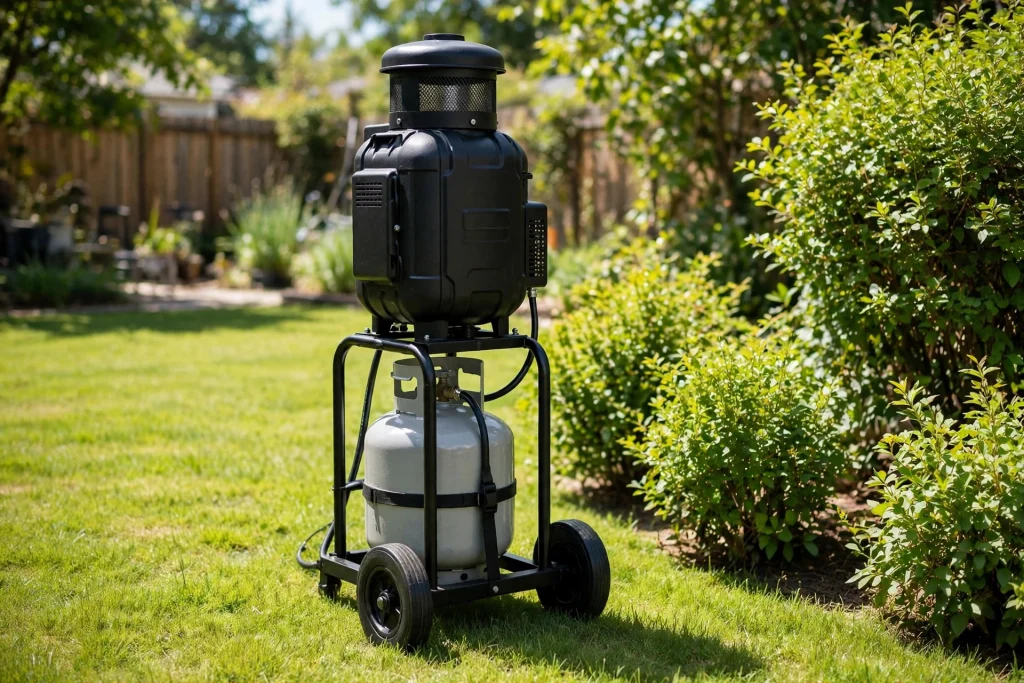
The Patriot Plus is the workhorse of the Mosquito Magnet line: the same CounterFlow carbon dioxide system as the Executive, in a simpler plug in package with the longest cord here.
Type: Propane carbon dioxide trap, plug in. Coverage: Up to 1 acre. Power: Low energy 12 volt power supply, 50 foot power cord included. Attractant: Octenol, R-Octenol, or Lurex3 cartridges. Weight: 22.7 lb. Warranty: 1 year limited.
The trap sits on a sturdy base that holds a 20 lb propane tank, which is not included. It converts the propane to carbon dioxide, adds heat and moisture, and uses its vacuum to pull mosquitoes into a large rigid net. The manufacturer states results in 7 to 10 days of continuous running, and the trap is built to run 24 hours a day, 7 days a week, to break the breeding cycle.
The 50 foot cord is the practical advantage. You can place the trap 30 to 40 feet from where people gather, near the shrubs and damp ground where mosquitoes rest, and still reach an outdoor outlet. The large net holds more mosquitoes between changes than the smaller models.
Quick verdict: Buy this first if you have an outdoor outlet within 50 feet of the mosquito zone and you want the proven propane system without the cordless premium. Pros: Proven carbon dioxide lure. Longest cord here. Large rigid net. Cons: Needs an outlet. Propane tank not included. Net, propane, and attractant need changing about every 21 days.
Our rating: 8.3 out of 10. The same strong lure as the Executive, docked slightly because the cord limits placement and it has no fuel saving modes.
3. Mosquito Magnet Independence
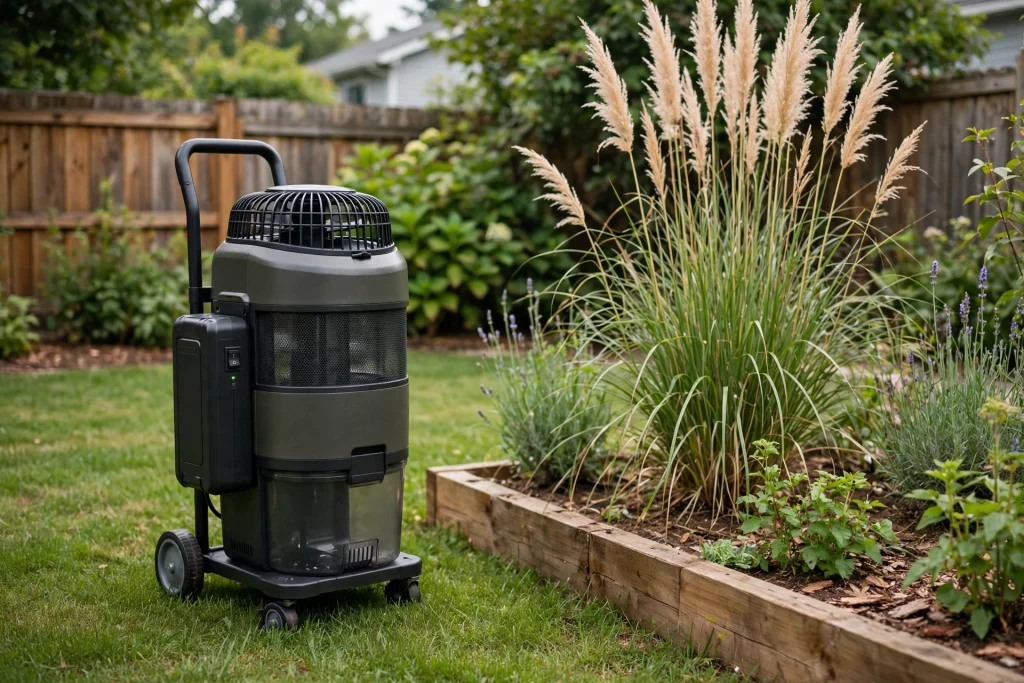
The Independence solves the placement problem a different way: it needs no outlet and no rechargeable battery, so it can sit at the far end of a large lot, right beside the brush pile or the damp corner where mosquitoes breed.
Type: Propane carbon dioxide trap, cordless. Coverage: Up to 1 acre. Power: 4 C batteries (included) plus a propane tank. Attractant: Octenol cartridge included. Weight: 32.93 lb. Warranty: 1 year limited.
The manufacturer support page lists the same CounterFlow system as the other Mosquito Magnet traps: propane converted to carbon dioxide, heat, and moisture, with a vacuum that draws mosquitoes into a self contained net. It is built from heavy duty plastics and marine grade metals for all weather use, and it has wheels to move it around the yard.
Because it runs on disposable C batteries instead of a rechargeable pack, there is no charger to keep track of and no cord to run across the lawn. The cost is the weight: at nearly 33 lb it is the heaviest trap here, and you will still change the propane, attractant, and net about every 21 days.
Who it suits: Homeowners with a large lot, a wooded edge, or a wet corner far from the house, where no outlet reaches. If your mosquito problem lives 100 feet from your back door, this is the Mosquito Magnet built for that spot.
Our rating: 8.2 out of 10. The same proven lure with true anywhere placement. Points off for the weight and the battery changes on top of the propane routine.
4. Biogents BG-Mosquitaire
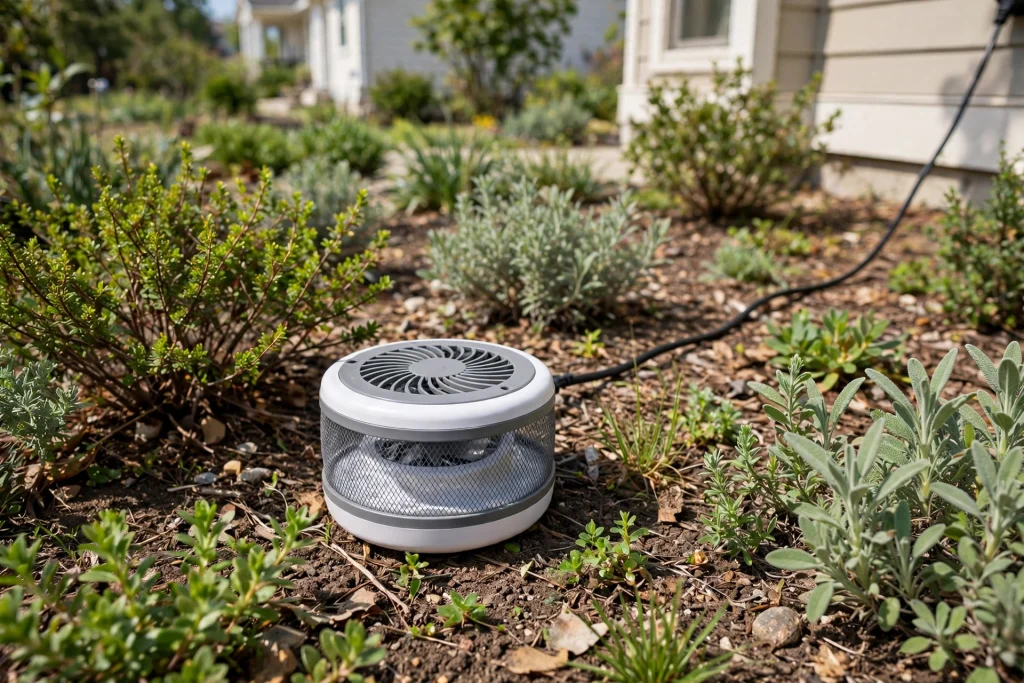
The BG-Mosquitaire is the most selective trap in this roundup. It was designed to catch mosquitoes, especially the Asian tiger mosquito, and to leave bees, butterflies, and ladybugs alone. That is a real difference from the UV traps below, which catch whatever flies toward the light.
Type: Scent lure and fan trap, electric. Coverage: Up to 300 square yards, per the US Biogents shop. Power: 5 watts, with a 33 foot extension cord included. Attractant: BG-Sweetscent, a patented insecticide free scent lure, with an optional carbon dioxide booster. Weight: 4.6 lb. Size: 15 in x 15 in x 11.8 in.
The trap sits on the ground and uses a fan to pull in mosquitoes drawn by the scent lure, which mimics human skin odor. It uses no propane, no ultraviolet light, and no insecticide. At 5 watts it costs very little to run around the clock, and the manufacturer states it can cut bites by up to 87 percent in its own testing. Treat that figure as the maker’s claim, not independent proof, since it comes from Biogents itself.
A note on the coverage figure: the US shop states up to 300 square yards, while the European Biogents FAQ states up to 300 square meters without carbon dioxide and up to 700 square meters with it. We print the US figure and flag the difference, since the two pages do not agree. Either way, this is a smaller area trap than the 1 acre propane models, and a large yard may need more than one.
Best for: Smaller yards, patios, and gardens where tiger mosquitoes bite during the day, and households that want a low power, no propane trap that spares pollinators. Skip if: You need to cover a full acre with one unit. The propane traps above cover far more ground.
Our rating: 7.8 out of 10. The selective catch, tiny power use, and tiger mosquito focus earn the score. Points off for the smaller coverage and the conflicting coverage figures on the maker’s own pages.
5. DynaTrap DT2000XL
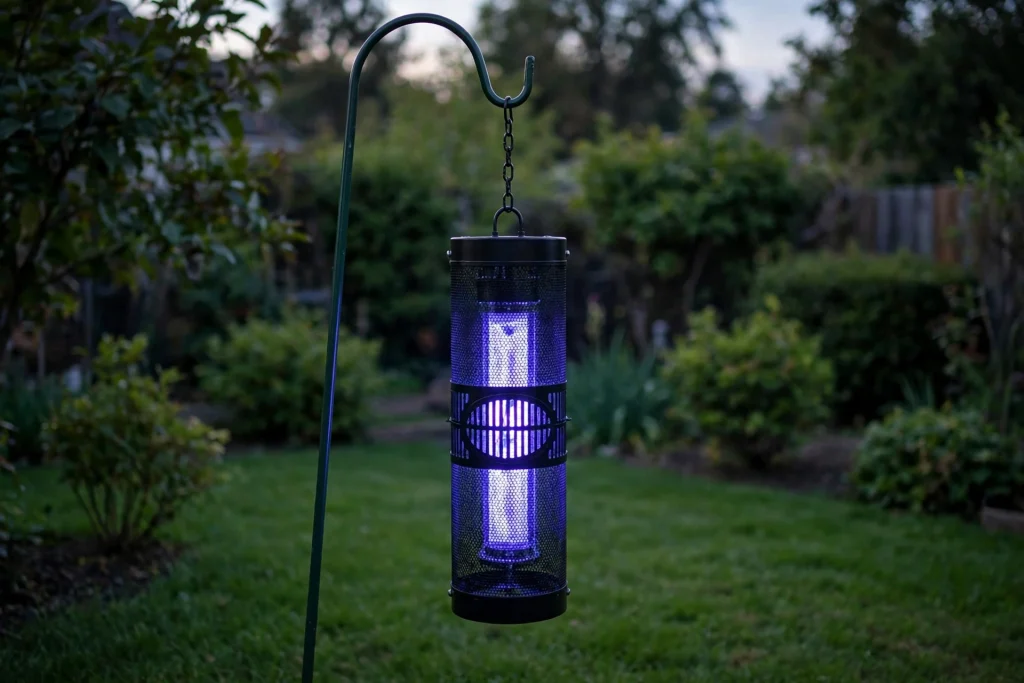
The DT2000XL is the largest DynaTrap and the simplest big yard trap here: plug it in, hang it up, and leave it running. No propane, no attractant to buy, and nothing to refill.
Type: Electric UV light and fan trap. Coverage: Up to 1 acre. Power: Standard 110 volt outlet, corded electric. Bulbs: Two fluorescent UV bulbs, rated for 3,000 hours. Weight: 9.2 lb. Warranty: 1 year limited.
DynaTrap calls its system 3 way protection. A UV bulb draws insects in, a titanium dioxide coated surface produces carbon dioxide that mimics human breath, and a whisper quiet fan pulls insects into a retaining cage where they dehydrate and die. The unit is built for all weather use and is meant to run 24 hours a day. The manufacturer recommends placing it 20 to 40 feet from where people sit, and 3 to 6 feet above the ground.
The honest limit is the light itself. Mosquitoes are only weakly attracted to UV light, so a large share of what this trap catches will be moths and other night flying insects, not mosquitoes. The carbon dioxide from the coated surface helps, but it is a faint signal compared with a propane burner. Expect it to reduce mosquitoes gradually over weeks, not to clear a patio in an evening.
One figure we did not print: the cord length. Sources disagree, with one review stating 7 feet and another stating 10 feet, and the manufacturer text we checked does not state it. Measure your outlet distance before you buy, and plan on an outdoor rated extension cord if needed.
Our rating: 7.5 out of 10. Full acre coverage with no fuel or refills earns the score. Points off because UV light is a weak mosquito lure and the catch includes many non biting insects.
6. Flowtron BK-80D
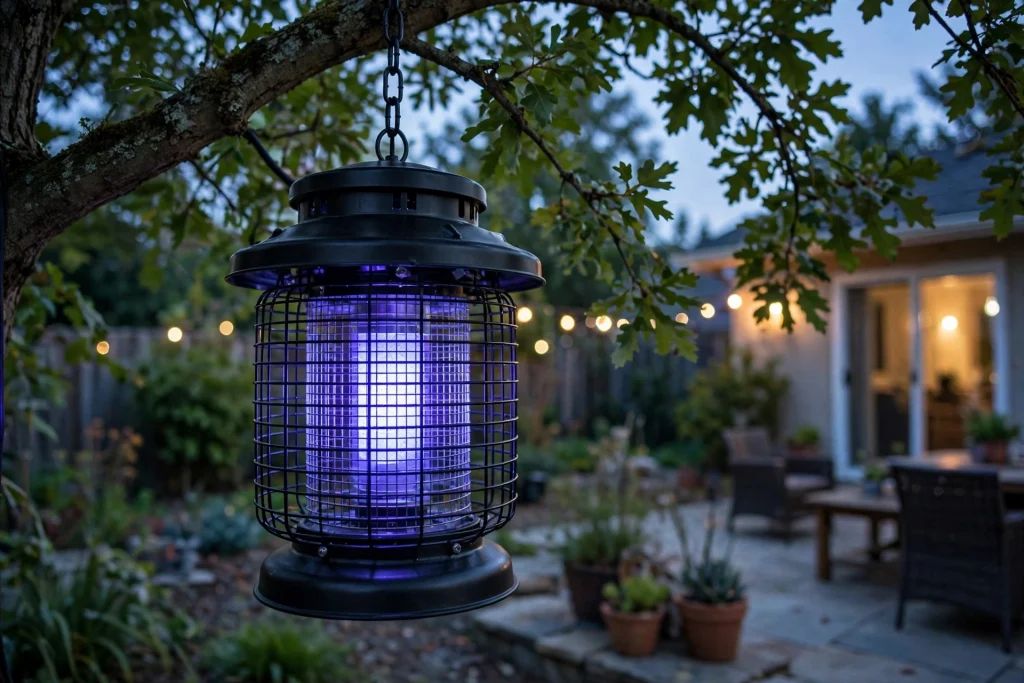
The BK-80D is the biggest zapper here, built for very large yards and farmsteads where one small trap cannot cover the ground.
Type: Electric UV zapper with octenol attractant. Coverage: Up to 1.5 acres. Power: Two 40 watt UV bulbs, 80 watts total, corded electric. Grid: 5,600 volt non clogging grid. Weight: 9 lb. Height: 18.5 in.
Two 40 watt ultraviolet bulbs give this unit its reach, and an included octenol cartridge adds a mosquito specific scent that plain UV light lacks. Each octenol cartridge provides up to 30 days of slow release coverage. Insects that touch the grid are killed on contact and fall to the ground instead of collecting inside the lantern, which keeps the unit cleaner than tray style zappers. The housing is weatherproof polycarbonate, and the unit is UL listed and EPA registered, and made in the USA.
Hang it about 25 feet from your outdoor living space, away from other light sources, so it draws insects away from you rather than toward you. One caution: a bright zapper near a patio can pull moths and beetles toward the seating area if it hangs too close, so distance matters more with this unit than with the fan traps above.
In short: the widest coverage of any electric trap here, at the cost of the brightest light and the most non target insects killed. Pros: Largest electric coverage here. Octenol cartridge included. Non clogging grid, no tray to empty. Cons: UV light draws mostly moths and beetles, not mosquitoes. Bright and bulky. Needs an outlet and regular bulb and cartridge changes.
Our rating: 7.4 out of 10. The coverage and the octenol lure earn the score. Points off for the weak mosquito specificity of UV light and the toll on beneficial night insects.
7. DynaTrap DT1750
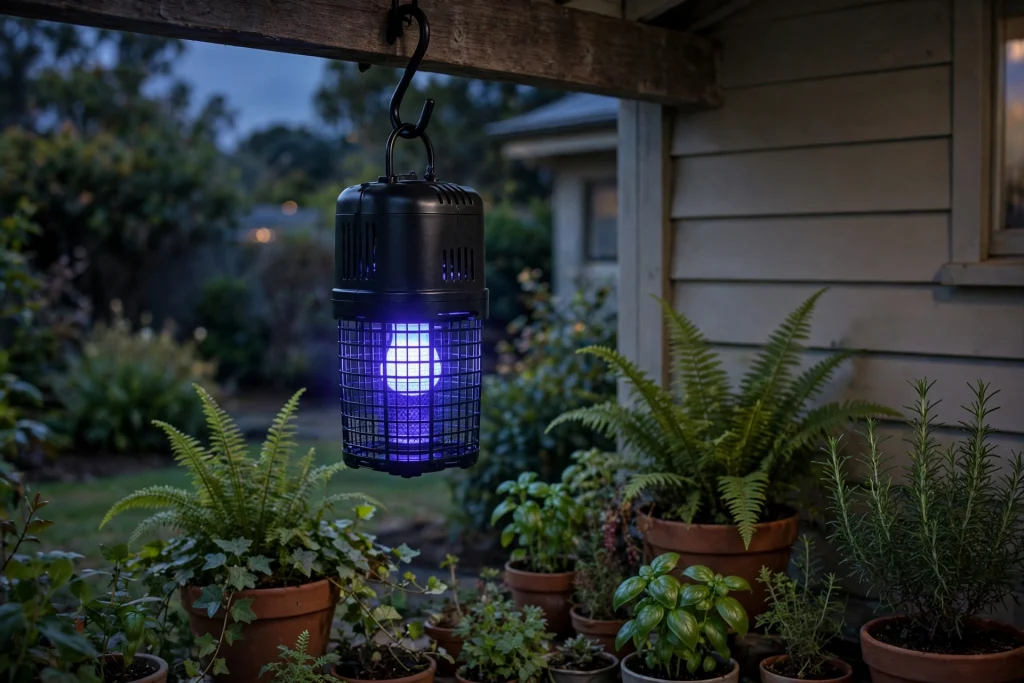
The DT1750 sits between the big DT2000XL and the small DT1050: a mid size trap with a brighter bulb for a mid size yard.
Type: Electric UV light and fan trap. Coverage: Up to 3/4 acre. Power: Standard 110 volt outlet, corded electric. Bulb: AtraktaGlo fluorescent UV bulb with a light enhancing diffuser, replacement bulb model 43050. Warranty: 1 year limited.
Like the DT2000XL, it uses the same 3 way system: UV light, a titanium dioxide coated surface that releases carbon dioxide, and a quiet fan that pulls insects into the catch basket. The AtraktaGlo bulb is the difference from the DT1050 below: a brighter bulb with a diffuser that spreads the light further, which is why this model covers three quarters of an acre instead of half.
This is a good fit for a typical suburban lot, where a full acre trap is more than you need and a half acre trap is slightly less. Hang it from a porch hook or a shepherd hook, 20 to 40 feet from seating, and leave it running through the season. Empty the catch basket regularly, since a full basket blocks the fan and cuts the catch.
Our rating: 7.3 out of 10. The brighter lure and mid size coverage earn the score, with the same UV limits as the other DynaTrap models.
8. DynaTrap DT1050
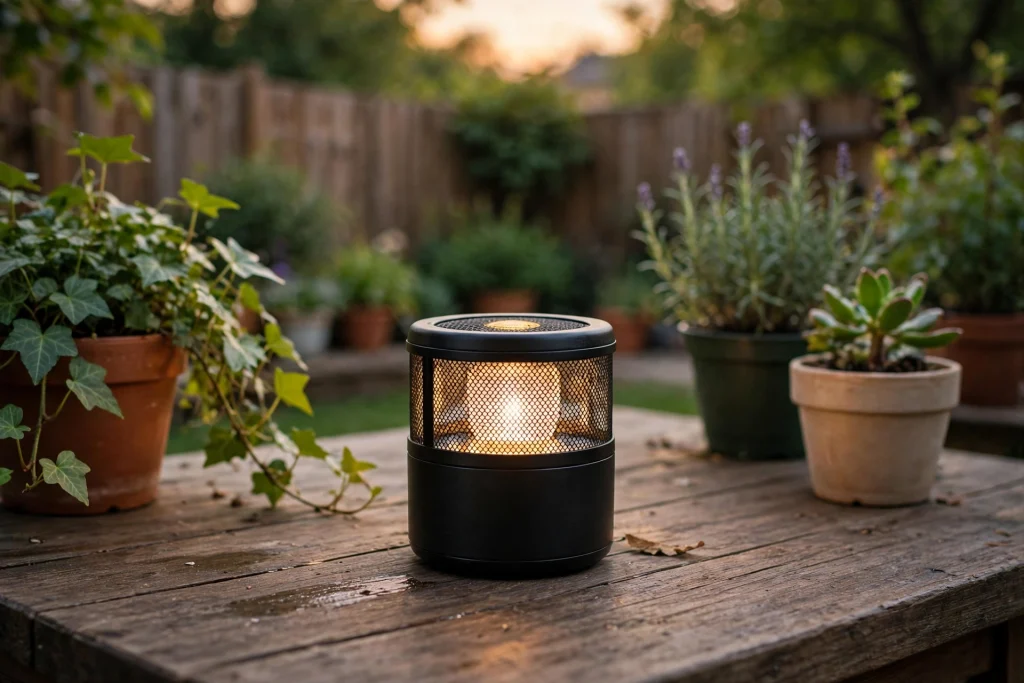
The DT1050 is the smallest DynaTrap in this roundup, and the easiest to live with: light enough to move with one hand, quiet, and simple to hang or set on a table.
Type: Electric UV light and fan trap. Coverage: Up to 1/2 acre. Power: Standard 110 volt outlet, corded electric. Weight: 3.5 lb. Warranty: 1 year limited.
It uses the same 3 way protection as its larger siblings: a UV bulb, a titanium dioxide coated surface that gives off carbon dioxide, and a whisper quiet fan that draws insects into the retaining cage. A twist on and off feature makes it easy to switch off when you bring it inside, and it comes in black, tungsten, and stone finishes to suit a patio.
The small size is both the appeal and the limit. Half an acre is plenty for a patio, a small lawn, or a courtyard, but it will not cover a large lot. If your yard is bigger than half an acre, step up to the DT1750 or the DT2000XL instead of buying two of these.
Best for: Small yards, patios, and courtyards where you want a quiet, no fuel trap that blends in. Skip if: Your lot is larger than half an acre, or your mosquito pressure is severe. A propane trap will do more there.
Our rating: 7.1 out of 10. Simple, quiet, and cheap to run, with the same UV limits as the other fan traps and the smallest coverage here.
9. Flowtron BK-40D
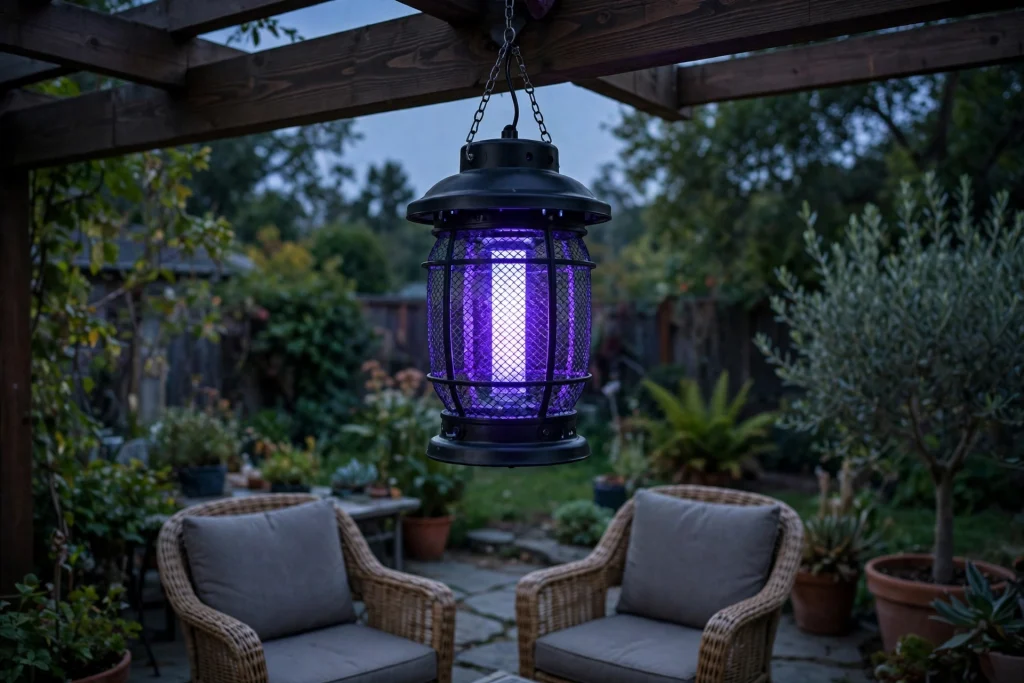
The BK-40D is the standard size Flowtron zapper: one 40 watt UV bulb, the same 5,600 volt grid as the larger BK-80D, and coverage for about 1 acre.
Type: Electric UV zapper with octenol attractant. Coverage: Up to 1 acre. Power: 40 watt UV bulb, corded electric. Grid: 5,600 volt non clogging grid. Attractant: Octenol cartridge included, up to 30 days per cartridge. Weight: 5 lb.
The manufacturer describes a dual lure: the 40 watt ultraviolet bulb draws light seeking insects, and the octenol cartridge adds a mosquito scent that plain light lacks. The grid is coated so insects fall to the ground instead of sticking to it, and the unit is weatherproof, UL listed, and EPA registered. Hang it about 25 feet from your outdoor living space for best results.
A note on the grid voltage: the manufacturer and most listings state 5,600 volts, while one comparison site lists 5,500 volts for this model. We print 5,600 volts per the manufacturer listing and flag the difference.
Like every zapper here, the honest limit is the catch itself. In field studies of residential zappers, mosquitoes made up only a small share of the insects killed, often under 5 percent, while moths and beetles made up the rest. If your main goal is fewer mosquito bites, a carbon dioxide trap or a scent trap will serve you better than this zapper. If your goal is fewer flying insects in general around a patio, this unit does that job well for its size.
Our rating: 7.0 out of 10. A solid, well built zapper for general flying insects at a fair size. Points off because UV light is a poor mosquito lure and the kill includes many beneficial insects.
10. Spartan Mosquito Eradicator
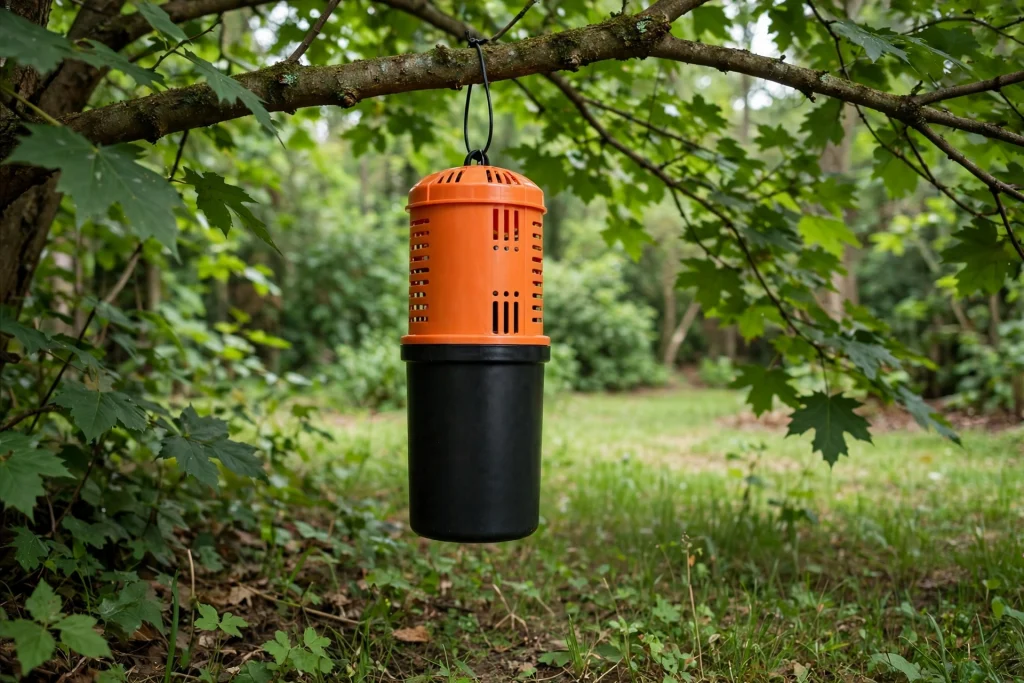
The Spartan Mosquito Eradicator is the cheapest and simplest product here, and it is also the one we recommend least. It earns its place in this roundup because many readers ask about it, and the honest answer matters more than a quiet omission.
Type: Yeast generated carbon dioxide tube, no power. Coverage: Deploy tubes no more than 180 feet apart to form a barrier, per the company. Duration: Up to 90 days per deployment, per the company. Ingredients: Sugar, salt, and yeast, mixed with warm water.
The tube hangs from a tree branch about 6 feet off the ground, in the shade. The yeast eats the sugar and gives off carbon dioxide, which attracts mosquitoes. The mosquitoes are meant to enter through small holes in the cap, feed on the sweet mixture, and die later. No outlet, no propane, and no bulb are needed.
Here is the problem. A peer reviewed study of this exact product found no significant mortality of adult mosquitoes in the laboratory and no significant reduction in mosquito numbers in the field, compared with untreated areas. A class action lawsuit against the company alleges the devices do not work at all. The company’s own commissioned research, disclosed in the lawsuit filings, reached the same conclusion. We include those findings because they are the best independent evidence available, and they point the other way from the company’s claims.
Our rating: 6.0 out of 10. The low cost, zero power use, and simple setup earn what points it gets. The lack of credible evidence that it reduces mosquitoes keeps it last by a clear margin. If you try it, treat it as an experiment, not as your mosquito plan, and pair it with standing water removal and repellent.
How We Chose
No hands-on testing was done and no retailer review scores were used in the ratings. The scores come from verified specifications, manufacturer claims checked against the source page, and published product information. Where a claim could not be verified, we say so in the product section.
We scored each trap on five factors. The weights add up to 100 percent.
| Factor | Weight | What it measures |
|---|---|---|
| Mosquito attraction | 30% | How closely the lure copies what mosquitoes follow: carbon dioxide, heat, moisture, and skin scent |
| Coverage area | 20% | The manufacturer stated area, checked against the source page |
| Ease of use and upkeep | 20% | Setup effort, refill routine, and how often the trap needs attention |
| Durability and weatherproofing | 15% | Build quality, all weather design, and warranty |
| Safety and selectivity | 15% | Risk to pets and children, and whether the trap spares bees, butterflies, and other beneficial insects |
One limit to note: coverage scores use the manufacturer’s stated area, and one maker’s 1-acre claim is not necessarily equal to another maker’s 1-acre claim in real-world performance. Coverage here is a stated figure, checked against the source page, not a tested result.
Scoring breakdown
| Product | Attraction (30%) | Coverage (20%) | Ease (20%) | Durability (15%) | Safety (15%) | Total |
|---|---|---|---|---|---|---|
| 1. Mosquito Magnet Executive | 9 | 9 | 8 | 8 | 8 | 8.5 |
| 2. Mosquito Magnet Patriot Plus | 9 | 9 | 7 | 8 | 8 | 8.3 |
| 3. Mosquito Magnet Independence | 9 | 9 | 7 | 7 | 8 | 8.2 |
| 4. Biogents BG-Mosquitaire | 8 | 6 | 8 | 8 | 9 | 7.8 |
| 5. DynaTrap DT2000XL | 6 | 9 | 9 | 8 | 6 | 7.5 |
| 6. Flowtron BK-80D | 6 | 10 | 8 | 8 | 5 | 7.4 |
| 7. DynaTrap DT1750 | 6 | 8 | 9 | 8 | 6 | 7.3 |
| 8. DynaTrap DT1050 | 6 | 7 | 9 | 8 | 6 | 7.1 |
| 9. Flowtron BK-40D | 6 | 8 | 8 | 8 | 5 | 7.0 |
| 10. Spartan Mosquito Eradicator | 4 | 5 | 9 | 6 | 7 | 6.0 |
The safety score reflects four things. Scent traps score highest because they use no insecticide and no propane. Propane traps sit just below them: they burn fuel, so the tank and the trap must stay outdoors and away from play areas. The Spartan tube sits in the middle: no grid, no fuel, and no light, but the bait must hang away from where people gather and out of reach. UV fan traps sit lower because the light draws non-target insects as well as mosquitoes. UV zappers score lowest because they add a live electric grid that must hang out of reach of children and pets, and they kill the most non-target insects. Attractant cartridges count too: where the label calls for careful handling and storage out of reach, the score reflects that.
Attraction carries the most weight because it decides whether the trap catches mosquitoes at all. A trap that covers a full acre but lures mainly moths scores lower than a trap that covers less ground but lures the insect you actually want to catch.
How Do Mosquito Traps Work
Female mosquitoes find you by following a trail of signals. First comes carbon dioxide, which you breathe out with every breath and which a mosquito can sense from a long way off. Then come body heat, moisture, and the scent of your skin, including lactic acid and other compounds. Light matters very little to a hungry female mosquito, which is why a bright UV bulb alone catches so few of them.
Traps copy some or all of those signals. A propane trap burns propane to make a steady plume of carbon dioxide, heat, and moisture, then adds a scent cartridge such as octenol. A fan trap uses a scent lure and a fan to pull mosquitoes into a net or a cage. A UV trap uses light, sometimes with a small amount of carbon dioxide from a coated surface, and a fan or an electric grid to kill what arrives.
Once the mosquito gets close, the trap has to hold it. Fan traps pull the insect into a cage or a net where it dehydrates and dies. Zappers kill on contact with an electrified grid. Sugar bait tubes rely on the mosquito eating the bait and dying later, which is the weakest capture method of the three.
Two things make any trap work better. Run it continuously, day and night, for weeks, so it catches mosquitoes before they breed. And place it between the mosquitoes’ resting spots and your patio, not beside your chair, so it pulls them away from you instead of toward you.
Propane vs Electric Mosquito Traps
Propane traps and electric traps solve the same problem in different ways, and the right choice depends on your yard.
Propane traps (the three Mosquito Magnet models here) burn propane to produce carbon dioxide, heat, and moisture. That plume is the closest copy of a breathing person that a consumer trap can make, and it is why these traps score highest on attraction. They cover up to 1 acre each and they keep working through the season if you keep them running. The cost is the routine: a 20 lb propane tank about every 21 days, as the manufacturer recommends, an attractant cartridge about every 21 days, and a net change on the same cycle. The tank is not included with any of them. You also need to keep the trap outdoors, since it burns fuel.
Actual replacement intervals may vary with weather, mosquito pressure, trap settings, and usage. Follow the manufacturer’s maintenance instructions.
Electric traps (the DynaTrap, Flowtron, and Biogents models here) plug into an outlet and need no fuel. The fan models are quiet and simple: plug in, hang up, empty the basket. The zappers add a grid that kills on contact. The Biogents model is the most mosquito focused of the electric group because it uses a scent lure instead of light. The weakness of the electric group is the lure itself. UV light is a poor mosquito signal, so the UV models catch far more moths and beetles than mosquitoes. They are also tied to an outlet, unless you run an outdoor rated extension cord.
A short comparison:
| Propane CO2 trap | Electric trap | |
|---|---|---|
| Mosquito lure | Strong, copies breath, heat, and scent | Weak to moderate, light or scent only |
| Coverage | Up to 1 acre | 1/2 acre to 1.5 acres |
| Running cost | Propane plus attractant, about every 21 days | Electricity, bulbs, and cartridges |
| Placement | Anywhere, cordless models need no outlet | Near an outlet, or use an extension cord |
| Upkeep | Tank, cartridge, and net changes | Basket emptying, bulb and cartridge changes |
| Best for | Large yards with heavy mosquito pressure | Small yards, patios, and light pressure |
If your yard has heavy mosquito pressure and you can manage the propane routine, a propane trap is the stronger tool. If you want the simplest possible trap and your pressure is light, an electric fan trap is enough. A zapper is the weakest choice for mosquito bites specifically, even though it kills the most insects overall. So the best mosquito trap yard choice is the type that matches your pressure and the routine you will actually keep up.
Mosquito Trap Placement Tips
Placement decides whether a trap helps you or hurts you. A trap set beside your chair pulls mosquitoes toward your chair. A trap set in the right spot pulls them away.
- Set it 20 to 40 feet from seating. The manufacturers of the DynaTrap and Flowtron models state this distance, and Mosquito Magnet gives 30 to 40 feet. The trap should sit between the mosquito zone and your patio, not beside the grill.
- Put it near resting spots. Mosquitoes rest in shade, in shrubs, in tall grass, and near damp ground during the heat of the day. Place the trap within 5 to 6 feet of that cover, so it intercepts them where they already gather.
- Keep it out of direct sun and strong wind. Shade keeps a yeast tube alive and keeps a propane trap from overheating. Wind scatters the carbon dioxide plume, so a sheltered spot catches more.
- Raise a hanging trap 3 to 6 feet off the ground. That is the height mosquitoes fly at when they hunt, and it keeps the trap clear of pets and lawn equipment.
- Run it 24 hours a day, all season. Traps work by catching mosquitoes before they breed, not by clearing a patio in an hour. The manufacturers state it takes 3 to 6 weeks to break the breeding cycle, so start early in the season and leave the trap running.
- Empty the catch often. A full net or basket blocks the fan, and a blocked fan catches nothing. Check the net at least once a week in peak season.
- Do not put a zapper over a dining table. The grid kills insects that fall, and a zapper hung above food drops them onto the table. Hang it at the edge of the yard instead.
Are Mosquito Traps Worth It
The honest answer is that it depends on what you expect. If you expect a mosquito free yard, no trap is worth it, because no trap can do that. Mosquitoes fly in from neighboring yards, from wooded edges, and from any damp spot within a few hundred feet. A single trap cannot hold a line against all of them.
If you expect fewer mosquitoes near your patio, a good trap is worth it, especially a propane or scent trap that lures mosquitoes specifically. The manufacturers report visible results in 7 to 10 days for the propane models, and a real drop in numbers after 4 to 6 weeks of continuous running, once the breeding cycle starts to break. Those figures come from the makers, so read them as the best case, not a promise.
The evidence also sets a clear limit. Colorado State University Extension states that no controlled scientific study has shown UV only zappers reduce mosquito biting rates outdoors. In a University of Delaware study, only 31 of 13,789 insects killed by zappers over a summer were biting flies. The American Mosquito Control Association reports similar figures: mosquitoes made up only 4.1 and 6.4 percent of the catch in two season long studies, with no significant difference in biting between yards with and without zappers.
That is why the UV traps score lower here, even though they are popular and easy to buy. They kill a lot of insects. They just do not kill many mosquitoes, and the insects they do kill include moths, fireflies, and other beneficial night insects.
A trap is worth it when it is one part of a plan: remove standing water first, run a mosquito specific trap continuously, and use repellent on yourself when you sit outside at dawn and dusk. On its own, any trap will disappoint you. As part of that plan, a good trap earns its place.
Traps are only one part of garden pest control. Sprays and baits handle the pests a trap cannot reach, and the guide below covers the organic options.

Natural Mosquito Control for Your Yard
A trap works best in a yard that gives mosquitoes nowhere to breed. A natural mosquito control yard plan starts with water, and the most effective mosquito control costs nothing.
Tip and toss, every week. All mosquitoes need standing water to breed, and the larval stage can last as little as 5 to 6 days in warm weather. Once a week, empty and scrub, turn over, cover, or throw out anything that holds water: tires, buckets, toys, pools, birdbaths, flowerpot saucers, and trash containers. The CDC gives the same advice: check water holding containers indoors and outdoors once a week. Even a bottle cap of water can breed mosquitoes.
Treat water you cannot dump. Birdbaths, rain barrels, and ornamental ponds can be treated with Bti, a naturally occurring bacterium sold as mosquito dunks. Bti kills mosquito larvae and is safe for pets, plants, and people when used as directed. University of Georgia Extension recommends it for larval habitats that cannot be eliminated.
Cut the resting spots. Keep grass mowed and shrubbery trimmed. Mosquitoes rest in tall grass, dense shrubs, and shady ground cover during the day, so thinning those spots takes away their shelter. The UGA Extension guide lists this alongside water removal as the core of yard mosquito control.
Neem oil is another gentle tool for the garden, though it fights aphids, mites, and fungal disease rather than mosquitoes. The guide below compares the best neem oils for plants.

Use repellent on yourself. The CDC recommends EPA registered repellents with DEET, picaridin, IR3535, oil of lemon eucalyptus, para-menthane-diol, or 2-undecanone. Wear long sleeves and pants at dawn and dusk, when mosquitoes feed most, and treat clothing with permethrin for extra protection. Do not apply permethrin directly to skin.
Plant choices help a little, not a lot. Citronella, lavender, and other scented plants smell pleasant, but the plants themselves do not keep mosquitoes away from a patio. The oils in them can repel mosquitoes for a short time when applied to skin, but a potted plant on a table does very little. Do not count on plants as your mosquito plan.
A fan helps more than a candle. Mosquitoes are weak fliers, and a steady breeze from a patio fan makes it hard for them to land on you. The UGA Extension guide notes that sitting by a fan will repel mosquitoes. It is a simple, honest trick for an evening outside.
If you want a deeper guide to natural pest control for the whole garden, our natural pesticide recipes use neem oil, garlic, and soap sprays that are safe around pollinators when used as directed.

Final Choice
For most yards, the Mosquito Magnet Executive is the best mosquito trap yard owners can buy: the strongest mosquito specific lure, cordless placement, and fuel saving modes that stretch each propane tank. If you have an outdoor outlet near the mosquito zone and you would rather not pay for the cordless design, the Patriot Plus gives you the same lure for less, with a 50 foot cord that reaches most yards. If your mosquito problem lives far from the house, the Independence goes where no cord can reach.
If you will not manage propane, the Biogents BG-Mosquitaire is the best electric choice for real mosquito control, because its scent lure targets mosquitoes instead of moths. The DynaTrap DT2000XL is the best no fuel choice for a large yard, as long as you accept that a UV trap catches many insects that never bite. The Flowtron BK-80D covers the most ground of any electric trap, but it is a zapper first and a mosquito trap second.
Skip the Spartan Mosquito Eradicator unless you are running an experiment. The independent evidence says it does not reduce mosquito numbers, and a trap that does not catch mosquitoes is not a bargain at any cost.
Whatever you buy, remember the two rules that matter more than the model: remove standing water every week, and run the trap continuously from early in the season. A trap in a yard full of breeding water is fighting with one hand tied behind its back.
Final Thoughts
Mosquitoes are a yard problem, not a trap problem, and the best mosquito trap yard owners can choose is the one that fits how their yard actually works. A large wooded lot needs a propane trap placed at the mosquito edge. A small patio needs a quiet fan trap and a weekly walk to dump standing water. A zapper needs distance from the chairs, or it will draw more insects toward you than away.
Buy the trap for the mosquitoes you have, not the coverage number on the box. Set it 20 to 40 feet from where you sit, near the shrubs and damp ground where mosquitoes rest. Run it every day, empty it every week, and dump every container that holds water. Do those things together and your evenings outside will get noticeably better, even if no trap can ever make the mosquitoes disappear entirely.
References
- Centers for Disease Control and Prevention, “Preventing Mosquito Bites”: EPA registered repellents, protective clothing, and weekly removal of standing water.
- University of Georgia Cooperative Extension, “Controlling Mosquitoes Around Our Homes and Neighborhoods” by Elmer Gray and Ray Noblet: standing water removal, repellents, Bti larvicide, and why electronic bug killers are not proven effective.
- Mosquito Magnet, “Patriot Plus Mosquito Trap (MM4200B)”: coverage up to 1 acre, 50 foot power cord, CounterFlow Technology, propane and attractant cycle.
- Biogents, “BG-Mosquitaire Outdoor Mosquito Trap”: 5 watt power use, up to 300 square yards coverage, BG-Sweetscent attractant, 33 foot extension cord included.
- University of Georgia Extension, “Mosquito Control Around the Home” (Circular 1266): integrated mosquito management, tip and toss, Bti dunks, and adult mosquito control.
- Mosquito Magnet, “Mosquito Magnet Executive Mosquito Trap (MM3300B)”: cordless rechargeable trap, up to 1 acre.
- Mosquito Magnet, “Mosquito Magnet Independence Information (MM3200)”: up to 1 acre, runs on 4 C batteries. Official product information page; the trap is no longer listed for sale in the maker’s store.
- DynaTrap, “DynaTrap DT2000XL Flying Insect Trap Owner’s Manual”: up to 1 acre, TiO2 coating, fan, replacement bulbs part 32050. The maker no longer lists this model on dynatrap.com, so the manufacturer’s own manual is the source (via Manuals+).
- Flowtron, “Flowtron Bug Zapper 1-1/2 Acre Coverage (BK-80D)”: 80W, SKU FLWBK80D, 5,600V kill grid.
- DynaTrap, “DynaTrap DT1750 Owner’s Manual and Safety Instructions”: 3/4 acre, replacement bulb 43050, TiO2 and fan. The maker no longer lists this model on dynatrap.com, so the manmanufacturer’s own manual is the source (via Manuals+).
- DynaTrap DT1050, Home Depot listing “Dynatrap UV 1/2-Acre Black Insect and Mosquito Trap DT1050”: 1/2 acre. Reliable retailer listing; the maker no longer lists this model on dynatrap.com.
- Flowtron, “Flowtron Bug Zapper 1 Acre Coverage (BK-40D)”: 40W, SKU FLWBK40D, 5,600V kill grid, octenol cartridge.
- Spartan Mosquito Eradicator, DoMyOwn listing: sodium chloride 11.48%, sucrose 88.34%, yeast 0.18%, lasts 90 days. Reliable retailer listing; the listing marks it Discontinued, and the maker now sells the Pro Tech version instead.
FAQ
How do mosquito traps work?
A trap copies the signals a hungry female mosquito follows: carbon dioxide from breath, body heat, moisture, and skin scent. Propane traps burn propane to make carbon dioxide, heat, and moisture. Scent traps use a lure such as octenol or BG-Sweetscent. A fan or a vacuum then pulls the mosquito into a net or a cage, where it dehydrates and dies. UV light traps work differently: they draw insects with light and kill them on a grid or catch them with a fan, but mosquitoes are only weakly attracted to light. This is why the best mosquito trap yard models copy breath signals rather than relying on light alone.
Propane vs electric mosquito trap, which is better?
A propane trap is better for mosquito control specifically, because its carbon dioxide plume copies human breath and attracts far more mosquitoes than light does. An electric trap is better for simplicity: no propane tank to change, no attractant to buy, just plug it in and empty the basket. Choose propane for a large yard with heavy pressure, and electric for a small yard or a patio where you want the easiest possible trap.
Where should I place a mosquito trap in my yard?
Place it 20 to 40 feet from where people sit, between the mosquito resting spots and your patio, not beside your chair. Put it within 5 to 6 feet of shrubs, tall grass, or damp ground where mosquitoes rest during the day. Keep it in light shade, out of strong wind, and hang a hanging trap 3 to 6 feet off the ground. Run it 24 hours a day, all season, and empty the catch at least once a week.
Are mosquito traps worth it?
They are worth it as one part of a plan, not on their own. A good propane or scent trap run continuously can cut the number of mosquitoes near a patio over several weeks, especially when you also remove standing water every week. No trap eliminates mosquitoes, and UV only zappers have not been shown to reduce biting rates outdoors. Pair the trap with water removal and repellent for the best result.
What is the best natural mosquito control for a yard?
Removing standing water is the most effective natural control: empty, scrub, turn over, or cover every container that holds water once a week. Treat water you cannot dump with Bti mosquito dunks, which kill larvae and are safe for pets and plants. Keep grass mowed and shrubs trimmed to remove resting spots, and use a patio fan in the evening, since mosquitoes are weak fliers. Scented plants alone do very little.
Are mosquito traps safe for pets and children?
Most traps are safe when used as directed, but check the type. Propane traps burn fuel and should stay outdoors, away from play areas, and the propane tank must be stored upright. Electric zappers have a live grid, so hang them out of reach of children and pets. Scent and fan traps such as the Biogents model use no insecticide and no propane, which makes them the gentlest option around kids and pets. Always read the label and keep attractant cartridges and nets out of reach.

Thesis Link : https://saulibrary.edu.bd/daatj/public/uploads/BAU200601_19-Pp_5.pdf
- 10 Best Mosquito Traps for Yards - November 22, 2026
- 10 Best Insecticidal Soaps - November 22, 2026
- 10 Best Wildflower Seed Mixes for Pollinators - November 21, 2026