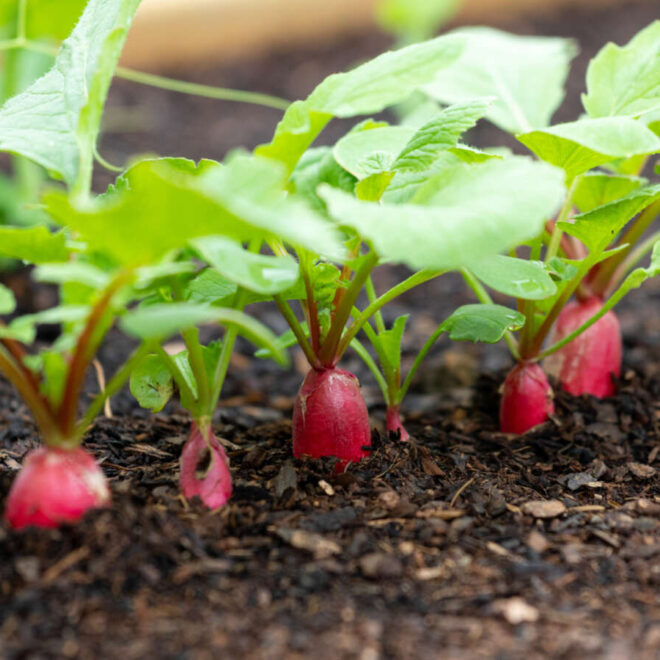

How to Grow Radishes: Easy Guide for Beginners
Radishes are like the sprinters of the gardening world, they grow super fast and are incredibly easy to take care of. If you’re new to gardening or just looking for a quick crop to boost your confidence, radishes might just be your new best friend. Plus, they’re crunchy, delicious, and surprisingly versatile in the kitchen. So, let’s talk about how to grow radishes little root wonders, step by step.
Why Radishes?
Radishes might just be the easiest little crop you’ll ever grow. They don’t demand perfect conditions, and they won’t throw a tantrum if you miss a day of watering. Honestly, they’re like that one friend who’s happy with whatever’s on the menu, they grow fast, adjust to different soils, and don’t take up much space. That’s a win for any gardener, especially beginners.
From Seed to Salad in 3 Weeks
One of the coolest things about radishes is how fast they grow. Some varieties, like ‘Cherry Belle’, can go from seed to harvest in just 21 to 30 days (University of Minnesota Extension). Think about that. In the time it takes to finish a Netflix season or wait for your online order to arrive, you could be munching on crisp, homegrown radishes.

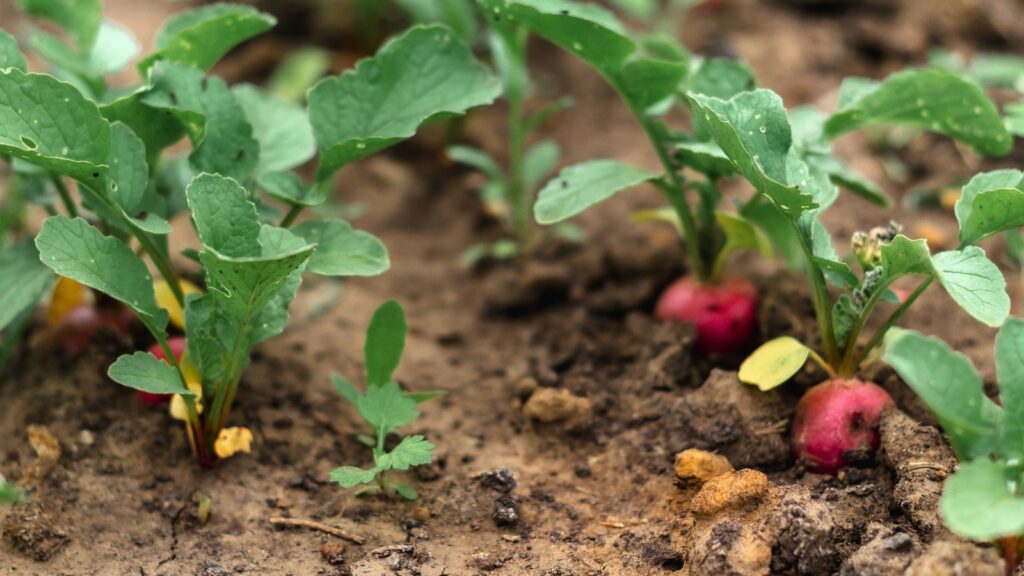
This speed also makes radishes a great “indicator crop.” Farmers and urban gardeners sometimes plant them alongside slower growing veggies like carrots or beets. The radishes sprout and mature early, letting you know how well your soil and moisture are doing.
Real Life: How My Uncle Learned to Garden from Radishes
Let me share a quick story. My uncle, who’s always been more into cricket than compost, once asked me how he could grow anything in his dusty backyard patch in Dhaka. I gave him a packet of radish seeds, told him to loosen the soil a bit, sprinkle them in rows, and water once every day or two. No fertilizers. No fuss.
Two weeks later, he sent me a photo: a full row of little green leaves standing tall. “I didn’t think this would actually work,” he texted. By day 25, he had radishes, bright red and peppery. He proudly tossed them into a salad and hasn’t stopped gardening since. That’s the kind of confidence boost radishes can offer.
Science Says They’re Easy
Research backs this up too. Radishes are known for their shallow root system, which makes them suitable for raised beds, containers, and loose loamy soils (FAO, 2010). Their short lifecycle makes them less prone to long term pest and disease buildup, and they thrive with minimal nitrogen application, especially if organic compost is added during planting (PennState Extension).
They also have allelopathic effects — a fancy term meaning they can suppress weed growth around them due to natural biochemicals they release into the soil. Another bonus.
Why Growing Radishes
- Great way to teach kids and adults about plant growth
- Super quick results
- Ideal for balconies, backyards, or kitchen pots
- Easy to mix with other crops
- Less pest prone than many vegetables
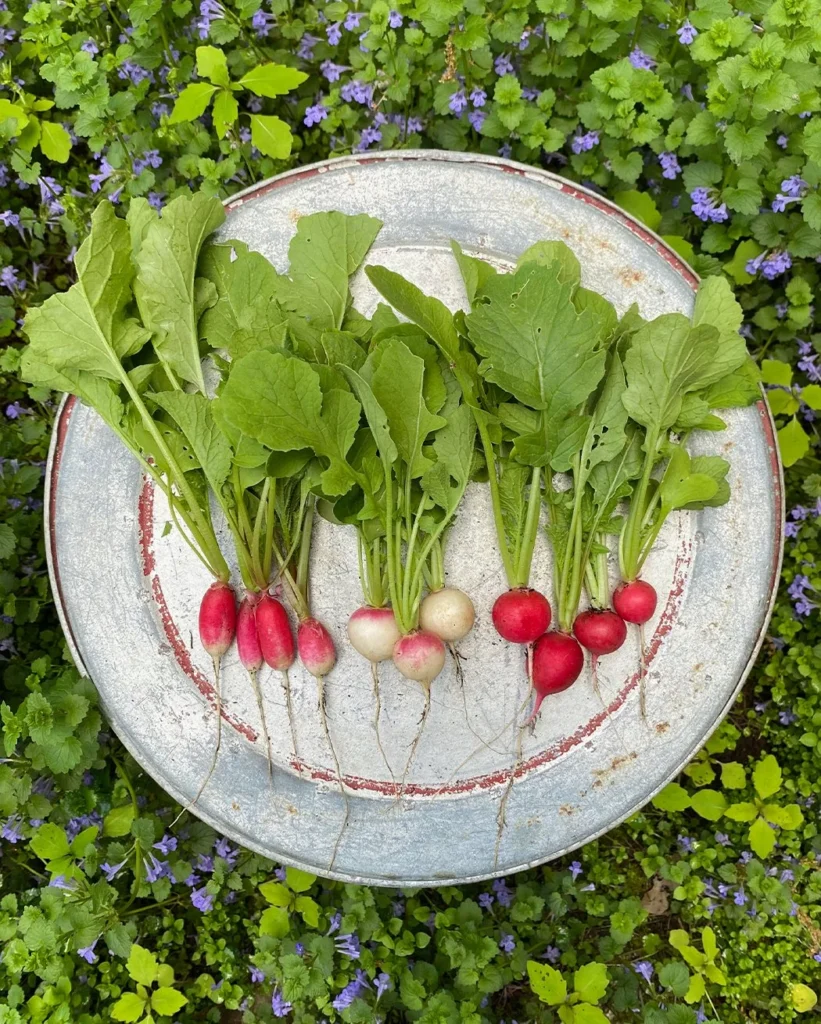
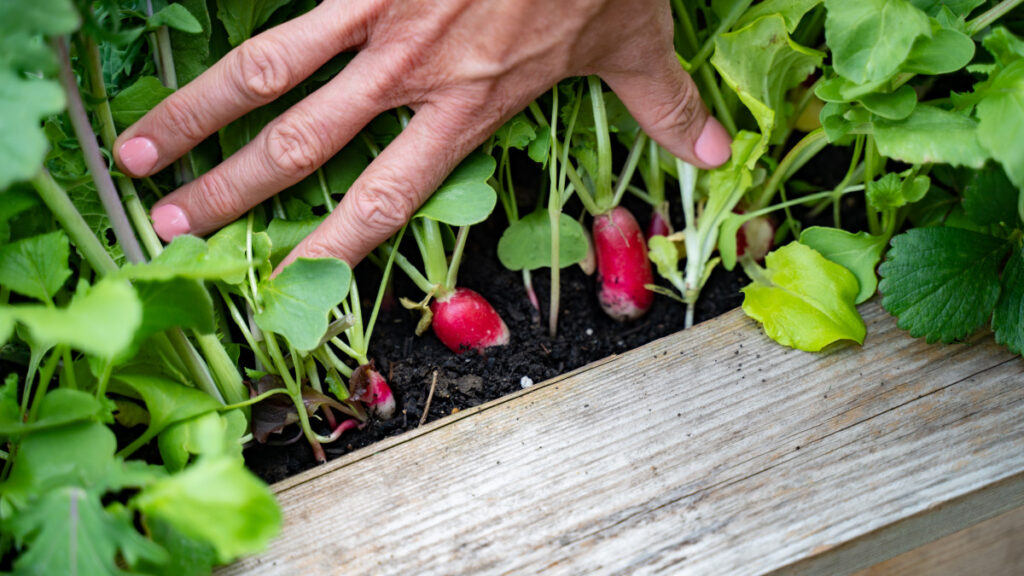
How to Grow Radishes: A Down to Earth Guide for First Time Gardeners
Radishes are the kind of crop that doesn’t ask too many questions. You put the seeds in the soil, give them a bit of care, and in just a few weeks boom, fresh radishes. For beginner gardeners, they’re often the first success story, and that makes them special.
Let me walk you through the real way to grow radishes, with personal stories, hands on advice, and lessons I learned the hard way, not textbook perfect, just practical.
Step 1: Find a Spot with Decent Sunlight
Radishes might seem low maintenance and they are, but they do have one demand: sunlight. Not scorching desert heat but a good 4 to 6 hours of direct light daily.
Back in 2021, I gave my niece a packet of radish seeds and told her to try growing them on her Dhaka apartment’s balcony. She only had a medium sized clay pot and about four hours of morning sun. Still, they sprouted, and she had a handful of radishes in under a month. Were they perfect? No. But edible and crisp? Definitely.
If you’re planting in containers, make sure they’re at least 6 inches deep, radish roots grow down fast and wide.
Practical Insight: According to RHS, insufficient light leads to poor root formation and leaf dominance. That’s why sunny spots matter, especially in winter gardens.
Step 2: Prep the Soil—Don’t Complicate It
You don’t need fancy soil mixes. Just make sure the ground isn’t hard or sticky. Radish roots need space to swell, so go for loose, crumbly soil. Even if it’s not rich, just adding some compost or well rotted cow dung is enough.
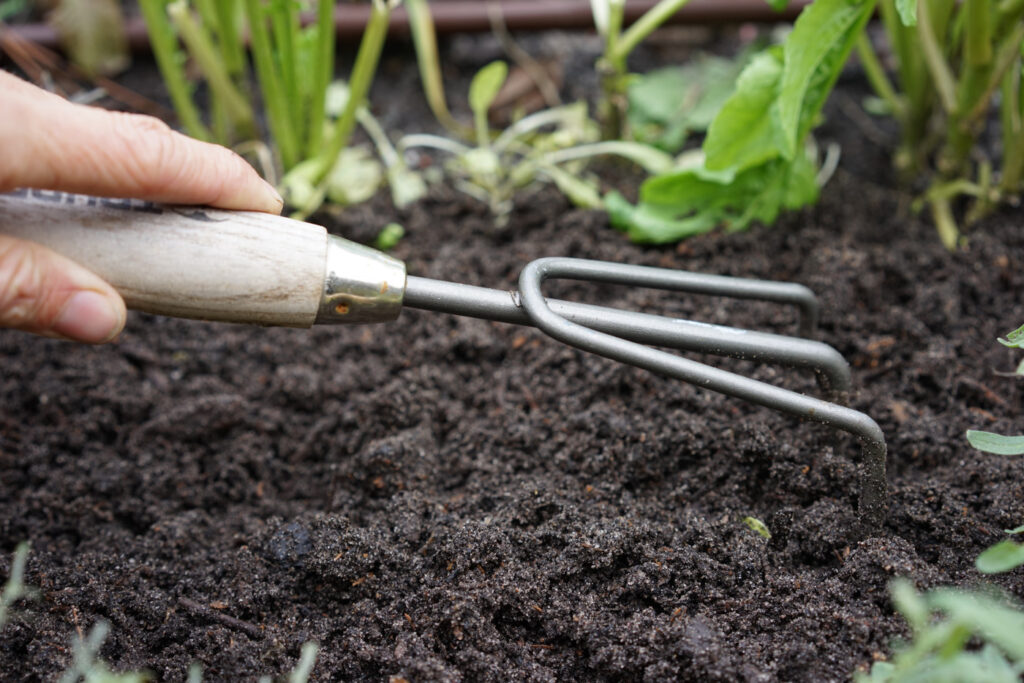
Avoid adding urea or nitrogen rich fertilizer here. Trust me, I made that mistake once on a demo farm near Mymensingh. The leaves were so lush and green that I thought I’d hit the jackpot. But under the soil? Spindly little roots that looked like white wires. Lesson learned.
Loosen the soil about 6–8 inches deep with a hand fork or even a stick if that’s what you’ve got. Remove stones. That’s it.
Reference: University of Minnesota Extension advises light soils for good root expansion. Heavy clay soils restrict growth and lead to misshapen or split radishes.
Step 3: Time to Sow—No Need to Overthink It
Radish seeds are tiny. Sprinkle them in rows or circles, depending on your space. Keep them about an inch apart, you can always thin them later.
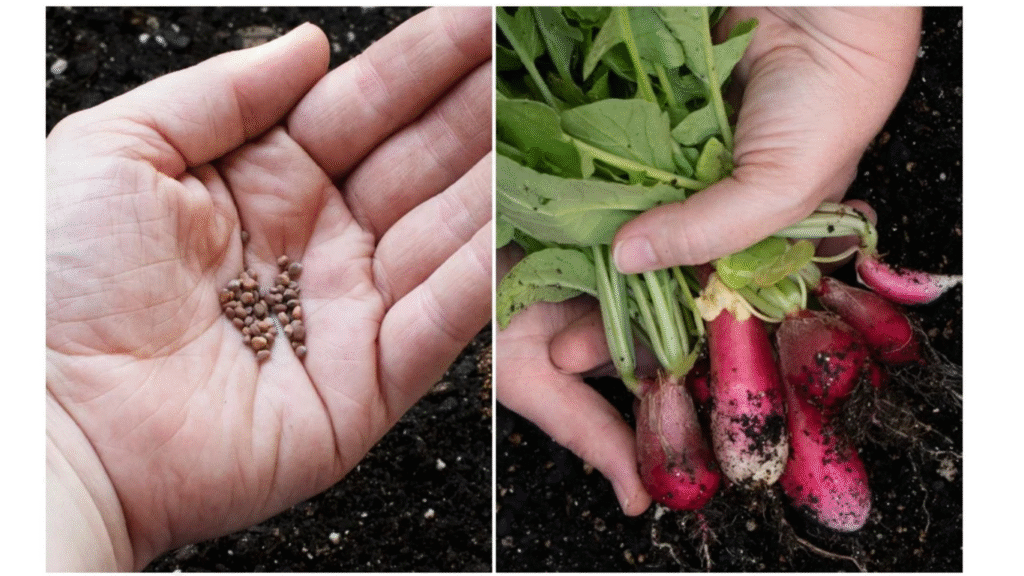
- Depth: Half an inch deep.
- Spacing: 1 inch initially, thin to 2 inches later.
- Water: Light watering after sowing to settle the soil.
Here’s something we do at AgriBloom: sow radishes every 2 weeks in small batches. That way, you don’t get flooded with too many radishes at once, and you always have a fresh batch coming up.
Step 4: Water Gently and Watch for Sprouts
This part’s easy. Keep the soil consistently moist, not soggy, not bone dry. Think of how a sponge feels after you squeeze it once. That’s the ideal moisture.
If it dries out completely, especially during early growth, the roots might split later on when you water again. That’s a common issue I’ve seen in rooftop gardens during dry spells.
Expect germination within 3 to 5 days, sometimes even faster if the weather’s warm.
Expert Note: Fleisher (2018) in “Vegetable Gardening in Containers” highlights the importance of steady moisture for even root development in short cycle crops like radish.
Step 5: Thinning Radishes
This part breaks hearts, but it’s important.
Once your seedlings are about 2–3 inches tall, remove every second one. You need 2 inches of space between plants for the roots to grow properly. If you skip this, you’ll end up with skinny radishes or tangled roots.
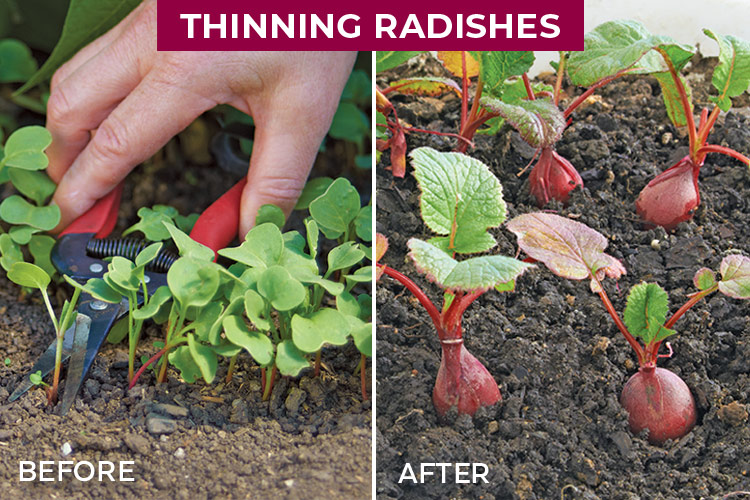
I once met an old farmer in Manikganj who said, “If you can’t thin out seedlings, you’re not ready to harvest.” He was right.
Use your fingers. Pinch or gently pull them out. It’s not wasteful, you can even eat the young greens in a salad or stir fry.
Step 6: Fertilizer Application for Growing Radish
General Rule:
Radishes don’t need heavy feeding. In fact, too much nitrogen can lead to lush leaves and poor root development. What they do need is a balanced, compost rich soil with moderate phosphorus and potassium.
Recommended Fertilizer Practice:
| Stage | Fertilizer Type | Rate/Application | Notes |
|---|---|---|---|
| Before Sowing | Well rotted compost or cow dung | 5–10 tons/acre or a 1 inch layer in home beds | Mix thoroughly with top 6 inches of soil |
| At Planting | Balanced NPK (e.g., 10-10-10) or 5-10-10 | 150–200 kg/ha (15–20g/m²) | Use low nitrogen formula to promote root growth |
| Top Dressing (Optional) | Wood ash / bone meal / vermicompost | Light sprinkling after 10–15 days | Especially in poor soils; enhances root formation |
| For Container Plants | Liquid organic fertilizer like seaweed or fish emulsion | Every 10–14 days in small amounts | Use at half strength to avoid overfeeding |
What to Avoid:
- Excess nitrogen → causes leafy tops and no roots.
- Fresh poultry manure or urea before sowing → causes burning or excessive foliage.
- Over fertilizing late in the cycle → woody or spicy tasting radishes.
Field Experience Tip:
“In our rooftop beds in Dhaka, we use only compost and a pinch of bone meal. Nothing fancy, just healthy roots every time. Too much urea once gave us jungle leaves and thread like roots.” Zahur Ahmed, AgriBloom Trials
Fertilizer Timing Chart
| Days After Sowing | What to Apply | How |
|---|---|---|
| 0 days | Compost + light NPK | Mixed into soil |
| 10–15 days | Optional organic booster | Side dressing or liquid feed |
| 20+ days | No further feeding | Focus on consistent watering |
References:
- PennState Extension – Radishes
- RHS – Growing Radishes
- FAO – Vegetable Crop Management Manual
Step 7: Harvest Before They Turn Bitter
The best time to harvest is when the radish top is bulging out of the soil and is about the size of a marble or small ball. This usually happens between 20 to 30 days, depending on the variety and weather.
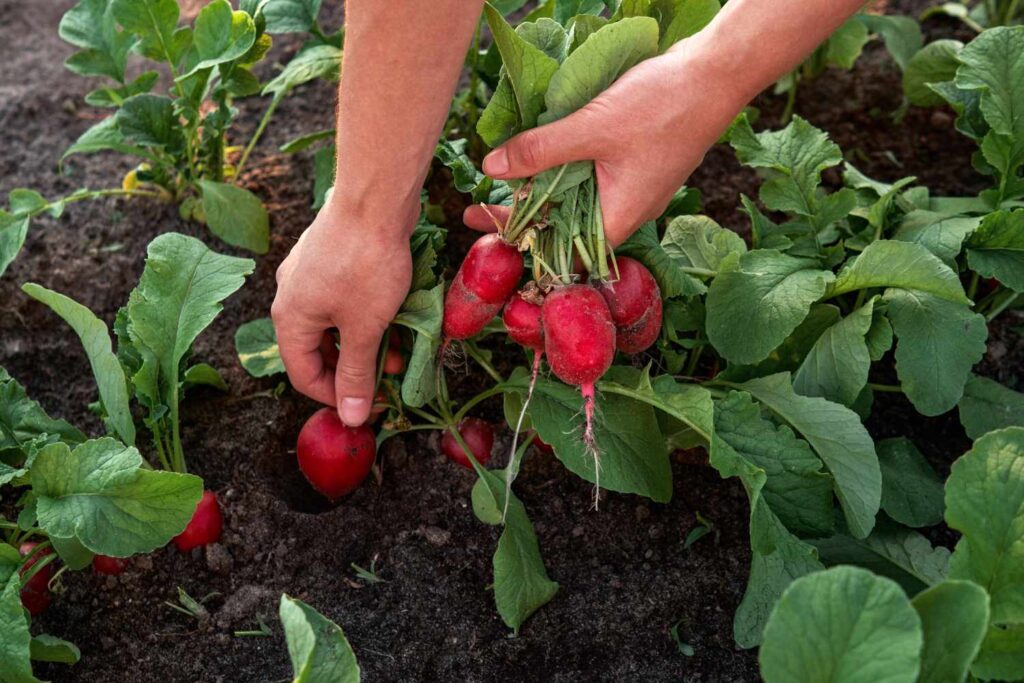
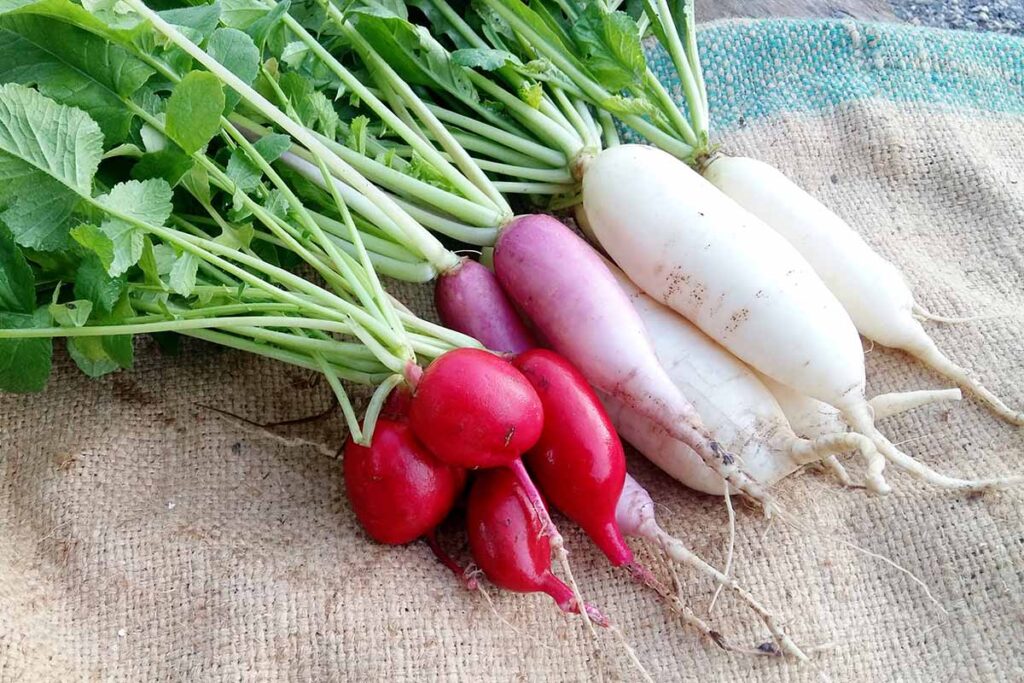
Don’t leave them in too long. Overripe radishes turn woody and pungent, and the texture gets tough.
To harvest, gently twist and pull from the base of the leaves. If you’re in loose soil, they’ll pop right out.
Tip: For large types like Daikon (mooli), allow 45–50 days and looser soil beds. For fast types like Cherry Belle, 20–25 days is often enough.
Common Problems of Radish
You’d think something as simple and fast as radishes wouldn’t give you trouble but trust me, even radishes have their off days. I’ve grown them in backyard beds, balcony pots, and even school gardens and every time, one or two plants try to act up.
Let’s break down the most common problems you might face while growing radishes, why they happen, and what you can actually do about them.
Problem 1: Cracked Roots
What it looks like: You pull up a radish and it’s split open like someone took a knife to it. Sometimes it’s just a surface crack, but other times, it’s completely burst.
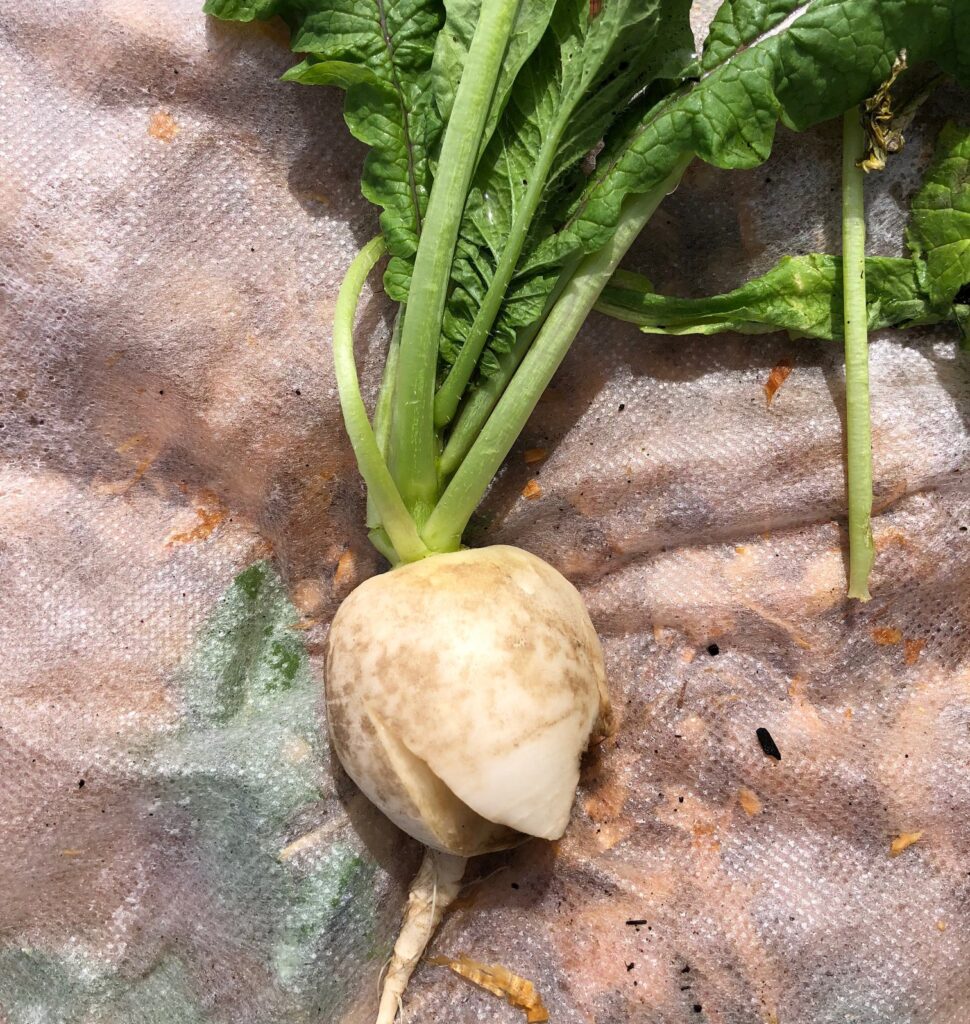
Why it happens: Cracking usually happens when the plant goes dry for a while, then suddenly gets a lot of water. The root swells too quickly and splits open. It’s kind of like when you overinflate a balloon.
How to prevent it:
- Keep your watering even and consistent, don’t let the soil dry out completely.
- During hot weather, water daily in small amounts rather than flooding the bed every few days.
Reference: University of Maryland Extension notes that fluctuating moisture is the top cause of split or cracked radishes.
Problem 2: Tiny or No Roots
What it looks like: You’ve got lush green leaves, but when you pull the plant, nothing. Just a sad little thread of a root.
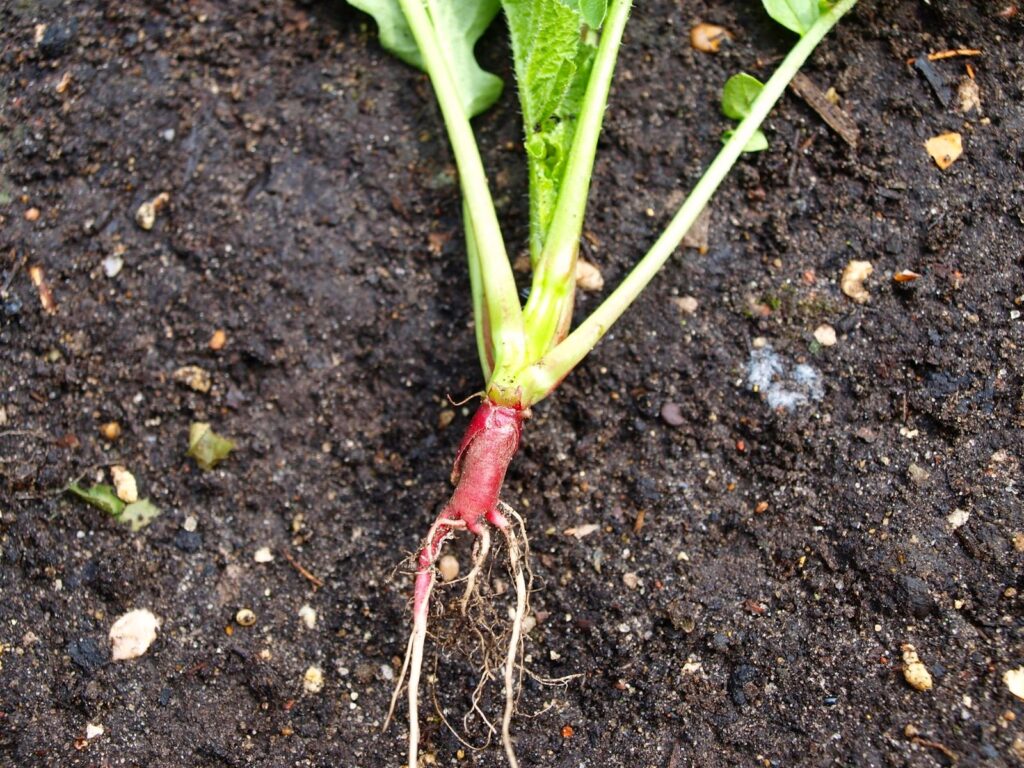
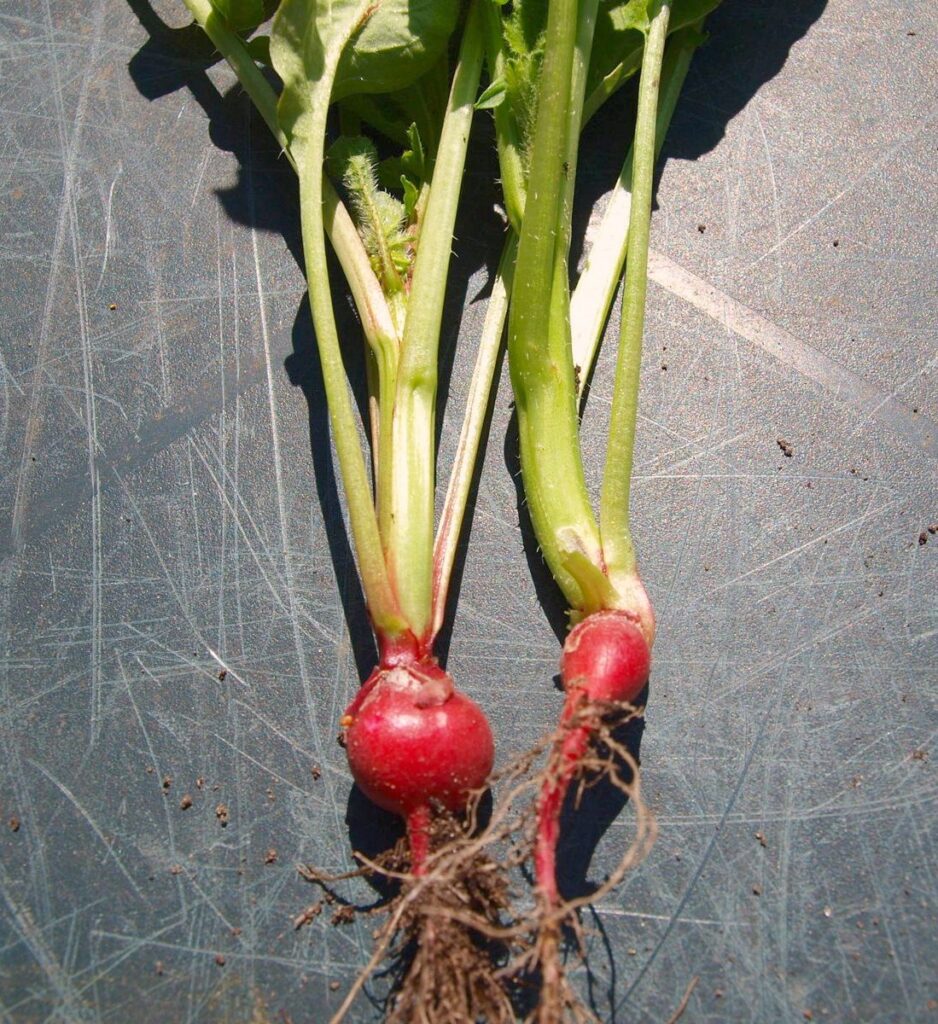
Why it happens: This is usually due to too much nitrogen in the soil. Nitrogen promotes leaf growth, which is great for spinach, not radishes. Overusing urea or poultry manure can lead to leafy tops and stunted roots.
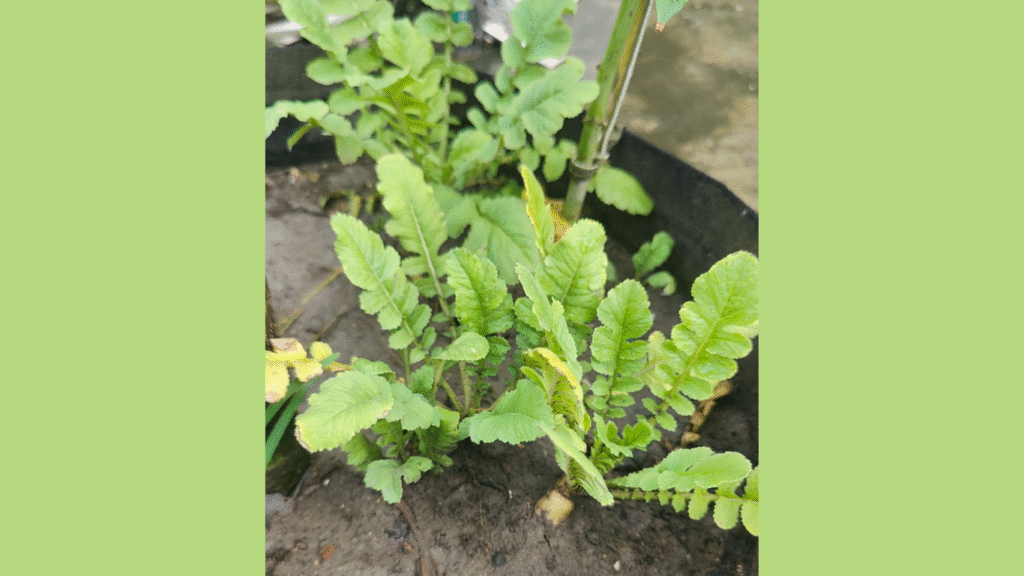
How to prevent it:
- Use well rotted compost or vermicompost instead of chemical fertilizers.
- If your soil is very rich, skip fertilizing altogether, radishes don’t need much to begin with.
Field Note: I once applied excess urea to a test row in Tangail just to see what happened. The leaves looked like a jungle but below ground? Nothing. Just white threads. That was my first hard lesson in balance over boost.
Research Insight: The RHS warns that excessive nitrogen causes “lush tops with poor root development,” especially in root vegetables.
Problem 3: Flea Beetles and Leaf Holes
What it looks like: Tiny little holes all over the leaves like someone sprinkled them with a hole punch.
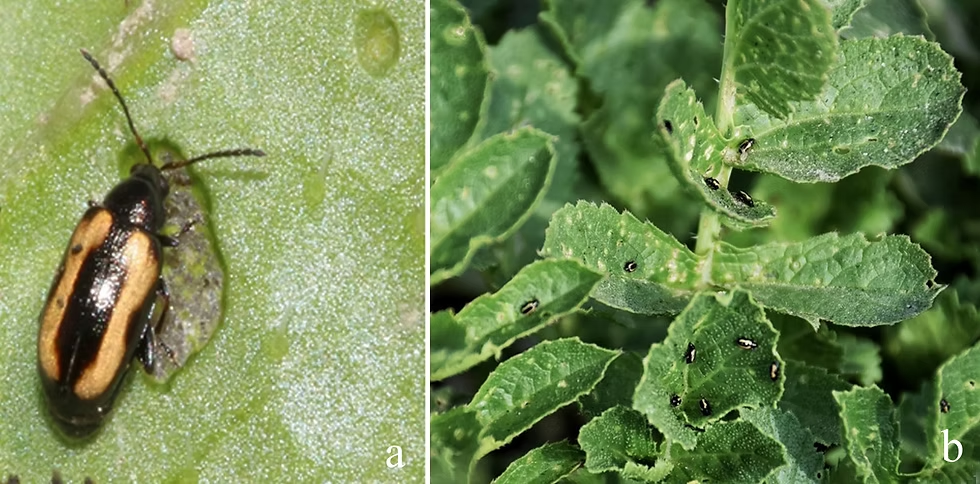
Why it happens: That’s the work of flea beetles, small jumping insects that love radish leaves. They feed on the foliage, and while they don’t usually ruin the root, they can slow growth, especially in seedlings.
How to prevent it:
- Cover your crop with floating row covers to stop beetles from landing.
- Spray with neem oil once or twice a week if beetles show up.
- Some gardeners also use a light dusting of wood ash as a natural repellent.
Research Tip: According to University of California IPM, neem oil (azadirachtin based) is effective against soft bodied pests like flea beetles, especially when applied early in the morning.
Bonus Problem: Bolting Flowering Too Early
What it looks like: Instead of forming roots, your radish sends up a flower stalk and turns bitter.
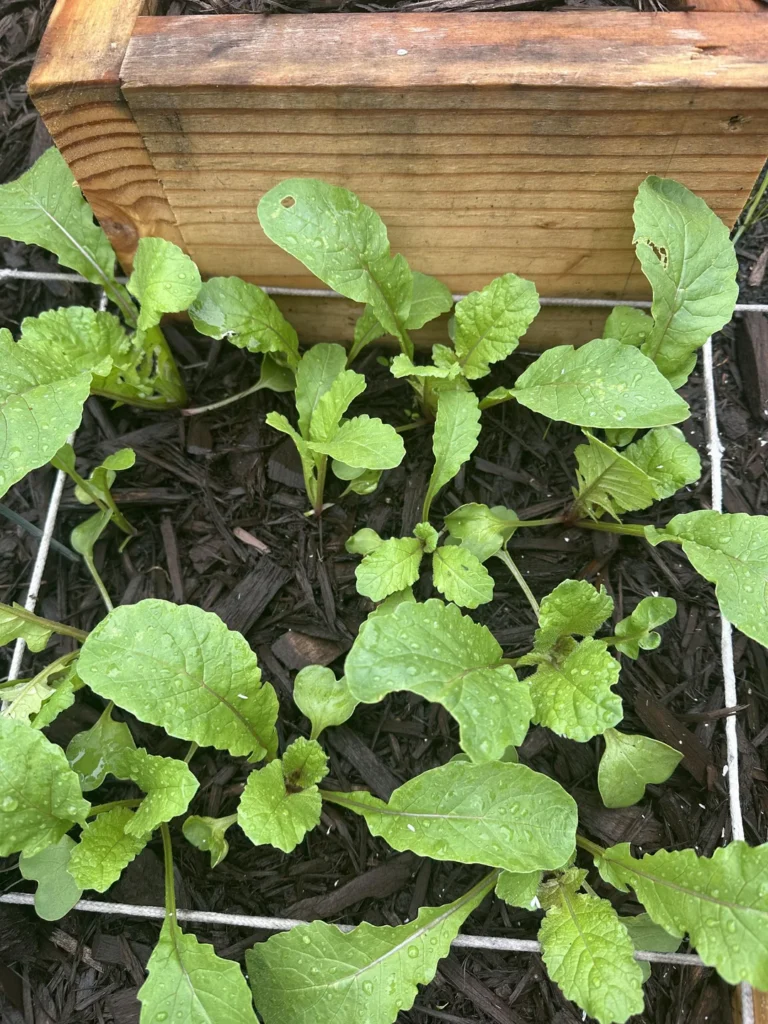
Why it happens: Radishes are cool weather crops. If you plant them in hot weather or they get stressed like drought, they might decide it’s time to reproduce and that means no root, just flowers.
How to prevent it:
- Sow radishes in early spring or late autumn when the weather is mild.
- Don’t let the soil dry out, stress speeds up bolting.
- Try bolt resistant varieties like ‘Rover’ or ‘Saxa 2’.
Summary Table: Common Radish Problems & Solutions
| Problem | Symptoms | Cause | Solution |
|---|---|---|---|
| Cracked Roots | Radishes split open or have surface cracks | Irregular watering – dry spell followed by excess water | Keep watering consistent; avoid sudden flooding after dryness |
| Tiny or No Roots | Big leafy tops but no or very small radish root | Too much nitrogen (e.g., urea or fresh manure) | Use balanced compost, avoid nitrogen rich fertilizers |
| Hollow Centers | Roots look fine outside but have gaps or air pockets inside | Overmaturity or heat stress during growth | Harvest on time; plant in cooler weather |
| Pungent or Woody Texture | Tough, spicy, or fibrous radish | Overgrown or stressed plants (old age, drought) | Harvest at correct size (20–30 days); keep soil moist |
| Bolting (Flowering Early) | Long stalk with flowers, no root growth | Hot weather, drought, or overcrowding | Plant in cool seasons; keep soil moist; use bolt resistant varieties |
| Flea Beetle Damage | Tiny holes in leaves, slow seedling growth | Flea beetles feeding on foliage | Use neem spray, floating row covers, or dust with wood ash |
| Root Rot | Yellow leaves, mushy roots | Poor drainage or overly wet soil | Improve soil drainage; water only when topsoil dries slightly |
Real Life Snapshot: My Mistake, Their Lunch
During one of our workshops in Cumilla, a school garden had radishes with nothing but leaves. The kids were frustrated. When we dug into the soil test later, we found that the nearby poultry shed had leached too much nitrogen into the garden soil.
So, the kids did something smart. Instead of tossing the tops, they washed and stir fried the radish leaves with garlic and mustard oil a typical Bengali side dish. They may not have gotten roots that day, but they still harvested something. And that’s gardening for you, not every mistake is a failure if you know how to use it.
Bonus Tip: Eat the Greens
Let me let you in on a small but mighty secret: radish greens are edible, and not just edible, they’re delicious.
Most folks pull out a beautiful radish, toss the leafy tops into the compost, and never think twice. But those slightly fuzzy, peppery greens are full of flavor and packed with nutrition. In fact, radish leaves contain more calcium, vitamin C, and iron than the root itself (Journal of Food Science and Technology, 2015).
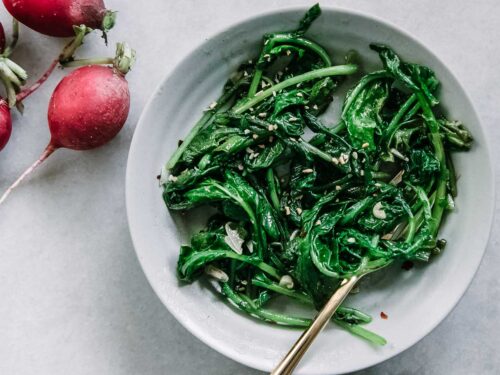
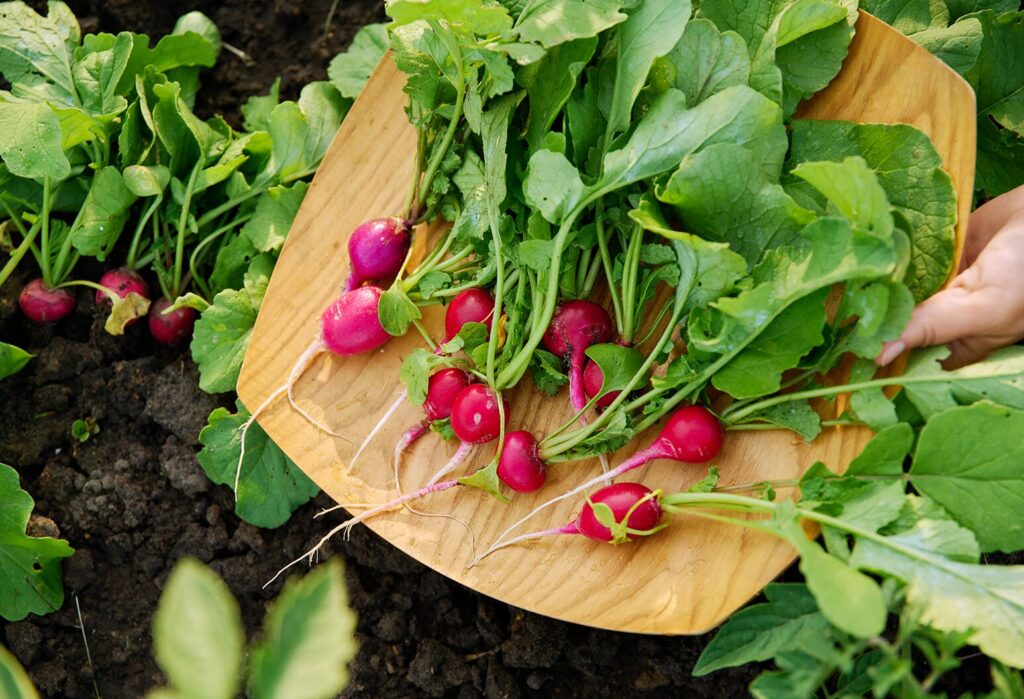
You can sauté them with garlic like spinach, toss them raw into a salad, or my personal favorite, blend them into a spicy radish leaf chutney with mustard seeds and green chilies.
Real Life: My Mother’s Radish Leaf Recipe
I still remember one winter morning in Rangpur when my mother cooked shorshe shaag (mustard leaf curry) but swapped in fresh radish tops instead. I was skeptical, weren’t those supposed to be “waste”?
Turns out, it was one of the most flavorful greens I’d ever had. Slightly bitter, rich, and full of texture. She had grown the radishes in clay pots on the roof, and nothing went to waste. From that day on, we’ve cooked the leaves every winter.
Pro Tip: Use young leaves for salads and older ones for sautéing or boiling, they soften beautifully with heat.
Why You’ll Fall in Love with Growing Radishes
There’s something beautifully satisfying about growing a plant that doesn’t play hard to get.
Radishes are:
- Fast growing harvest in as little as 3 weeks
- Low maintenance
- Perfect for small spaces, windowsills, grow bags, or old buckets
- Great for kids and new gardeners
- Fully edible, root and leaf
- Excellent intercropping partner e.g., with carrots, spinach, or lettuce
Once you experience the joy of pulling up that first plump, red root from the soil, you’ll understand why radishes are a garden classic. They don’t ask for much, but they give you a whole lot back.
According to PennState Extension, radishes are one of the easiest crops to grow and offer an ideal confidence building experience for beginner gardeners.
Summary Table: How to Grow Radishes
| Step | Task | Key Actions | Tips |
|---|---|---|---|
| 1 | Choose a Planting Spot | Select a sunny area (4–6 hrs of light/day) | Balcony, backyard, or pot (6 inch deep minimum) |
| 2 | Prepare the Soil | Loosen soil, mix with compost | Avoid heavy clay; skip high nitrogen fertilizers |
| 3 | Sow the Seeds | Plant ½ inch deep, 1 inch apart | Sow in rows or small patches; replant every 2 weeks for continuous harvest |
| 4 | Water Regularly | Keep soil evenly moist, not soggy | Light, daily watering prevents cracking & stress |
| 5 | Thin Seedlings | Remove extra sprouts to leave 2 inches between plants | Helps roots develop properly and avoid crowding |
| 6 | Monitor Growth | Watch for pests, overwatering, or bolting | Neem spray or row covers for pests like flea beetles |
| 7 | Harvest on Time | Ready in 20–30 days; roots should be marble sized | Don’t wait too long, overripe roots turn woody |
| 8 | Use the Greens | Harvest leaves for cooking or salad | Leaves are rich in nutrients, don’t waste them |
Final Thought: Start Small, Grow Big
Radishes may be small, but they teach big lessons about patience, care, timing, and joy.
If you’re new to gardening, this could be the very crop that gets your hands dirty and your heart invested. With just a little sun, a patch of soil or even a pot, and a sprinkle of seeds, you’ll be amazed how quickly nature rewards you.
And if it doesn’t go perfectly the first time? That’s part of the process. Like my uncle in Dhaka or the school kids in Cumilla, each harvest brings not just food, but experience.
So go ahead. Grow a few radishes. Harvest confidence. And maybe even stir fry the greens like my mother does.
References – Where the Facts Came From
- University of Minnesota Extension – Growing radishes
https://extension.umn.edu/vegetables/growing radishes - PennState Extension – Radishes in the garden
https://extension.psu.edu/radishes in the garden - University of Maryland Extension – Radish crop troubleshooting
https://extension.umd.edu/resource/radishes - RHS (Royal Horticultural Society) – Growing radishes
https://www.rhs.org.uk/vegetables/radishes/grow your own - University of California IPM – Managing flea beetles
http://ipm.ucanr.edu/PMG/r108301111.html - Journal of Food Science and Technology (2015) – Nutritional profile of radish leaves
https://link.springer.com/article/10.1007/s13197-014-1437-7 - FAO (2010) – Root and tuber development in small gardens
http://www.fao.org/docrep/ (access through FAO archives) - Fleisher, D. (2018) – Vegetable Gardening in Containers, Urban Growers Press
FAQ – Growing Radishes
Yes, Radishes grow very well in containers. Just make sure the pot is at least 6 inches deep, and place it where it gets 4–6 hours of sunlight daily.
Most common types like Cherry Belle or French Breakfast mature in 21–30 days. Larger varieties like Daikon may take 45–50 days.
This usually means your soil has too much nitrogen. Use balanced compost and avoid chemical fertilizers high in nitrogen like urea.
Radishes are cool season crops. They grow best in spring or autumn. Summer heat often causes bolting, making the roots bitter or nonexistent.
Absolutely. Radish greens are high in vitamins A, C, and iron. Sauté them, add to salads, or turn them into chutneys. Just wash well before eating.
Not really. If you prepare your soil with compost or rotted manure, that’s enough. Too much fertilizer especially nitrogen can hurt root development.

Thesis Link : https://saulibrary.edu.bd/daatj/public/uploads/BAU200601_19-Pp_5.pdf
- 10 Best Hori Hori Knives for Digging, Weeding and Planting - October 23, 2026
- How to Kill Crabgrass and Keep It From Coming Back - October 22, 2026
- Lawn Fertilizer Schedule by Grass Type - October 21, 2026